Home Blog Page 604

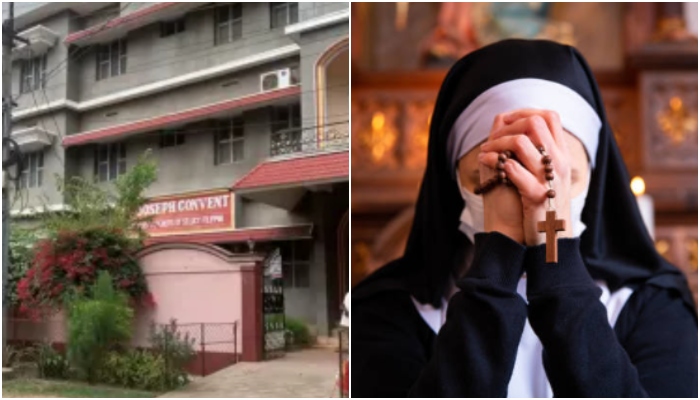
Andhra Pradesh: Trainee Christian nun at St.Joseph Convent Hostel delivers child, kills by throwing newborn out of window

0

In a shocking incident, a newborn baby was thrown out of a window by a young teenage mother at St.Joseph Convent Hostel, run by the Diocese of Eluru in Andhra Pradesh. The incident has sent shock waves in the nearby area raising serious concerns about the oversight and accountability of church-run institutions.

As per the initial reports, the teenage mother from Nandyal is a second-year intermediate student who has been residing at the hostel in the church-run institution. On 8th December, the girl gave birth to a child and threw it immediately out of the window resulting in its death. The Police were immediately informed after the body of the infant wrapped in its umbilical cord was found on the campus.

Following this, the police team led by 2-Town Circle Inspector Ramana reached the spot and began an investigation into the case. The officials from the Women and Child Welfare Department were also informed later.

DSP Shravan Kumar who is looking into the case interrogated the hostel administrators. They said that the girl was under training to become a nun at the convent institution. However, she got involved with a trainee Christian padre. The girl after giving birth to the child faced deteriorating health after which she was taken to the Sarvajana Hospital for medical care.

Further, the dead body of the child was also sent to the hospital for further examination. The suspect in the case, a trainee Christian Father has been taken into custody and is being questioned. The girl’s roommates and friends are also being interrogated.

It is crucial to note that the incident has raised concerns over the operations of the Convent Hostel. It reflects the failure of the institution and the administration to monitor the lifestyle of the students. It is believed that the fellow residents of the girl and others at the Hostel helped the girl and concealed the pregnancy, despite health issues. The residents did not report the incident to the authorities, further making the entire incident look worse.

DSP in the given case confirmed meanwhile that a police case has been filed and suspects have been detained.

As per the report, St. Joseph Convent in Eluru, Andhra Pradesh is run under and looked after by the Diocese of Eluru. It is a part of a broader network of Christian missionary institutions in India. The institution operates to provide education and religious training to young students. It further trains them to become nuns and Fathers in accordance with Christian values. However, the death of a newborn baby at the convent has raised serious concerns about administrative oversight, particularly given the institution’s mission to uphold moral and ethical standards rooted in Christian principles. The incident has also raised severe questions about sthe afety of women in such institutes.

Gujarat: Health workers Shehzad Ajmeri and Zahir Solanki sterilized unmarried Hindu man after forcing him to drink alcohol to achieve their ‘target’

In Gujarat’s Mehsana district, a shocking sterilisation scandal has been uncovered, wherein, health workers Zaheer Solanki and Shehzad Ajmeri sterilized two youths without their consent to meet their ‘target’. One of the victims, a 30-year-old man named Govind Dhantari, who was about to get married in a month, was sterilized by the accused under pretense. Consequently, the bride’s family called the marriage off.

Reports say that health worker Shehzad Ajmeri lured Govind Dhantari, a resident of Navi Shedhavi village in Mehsana, with the promise of a job and told Govind that he would be taken to work in the fields. However, instead, he was taken to Adalaj Hospital. After reaching the hospital, Govind was made to drink alcohol and his thumb impression was taken on a consent form for sterilization. He was shown as married on the papers so that the violation of rules could be concealed.

Narrating his ordeal, victim Govind said, “The ordeal began when I was lured with the promise of picking guava and jujube trees. The next day, I was taken to a village in a government vehicle and forced to drink alcohol. Later, under the pretext of visiting a guava site in Joranag village, I was given alcohol worth Rs. 100, which left me unconscious. In that state, I was taken to Adalaj hospital. When I returned home the following day, I felt severe pain while urinating and noticed signs of an operation or a vein cut done without my knowledge or consent.”

Shehzad was one operation short of his ‘target’ for sterilization operations, to achieve that, he and Zaheer sterilized Govind. Both the health workers are now suspended. Shehzad claimed that he was innocent and it was Zaheer who brought the Hindu man and got the operation done.

This incident has exposed the target-based sterilization campaign in the department, and Health Officer GB Gadhvi admitted that 375 operations were carried out on a target basis in Sabarkantha. However, Health Minister Rishikesh Patel refuted these allegations and said that sterilization is completely voluntary.

The department, however, took action against the accused Shehzad Ajmeri, and has suspended him. Further, he has been transferred from Dhanali Health Center in Mehsana to Kheralu Health Center. Meanwhile, the Health Department has issued notices to 8 other employees and ordered a detailed investigation of the matter. After this scandal, the department started investigating all 28 sterilization operations that took place on 22nd November 2024 at Adalaj Hospital.

Meanwhile, Mehsana District Health Officer Dr Mahesh Kapadia said, “The NSV sterilization camps are running statewide in Gujarat, adhering to government guidelines. In the Mehsana district alone, 28 beneficiaries underwent the procedure since November 22, with necessary family consent typically required. However, in this case, our employee failed to secure consent from the beneficiary’s wife or his family member, as mandated, and proceeded despite the beneficiary being unmarried…”

UP: Cow smuggler Umar dressed as Hindu sadhu, wearing saffron and holding Trishul, UP police arrest gang of 7

0

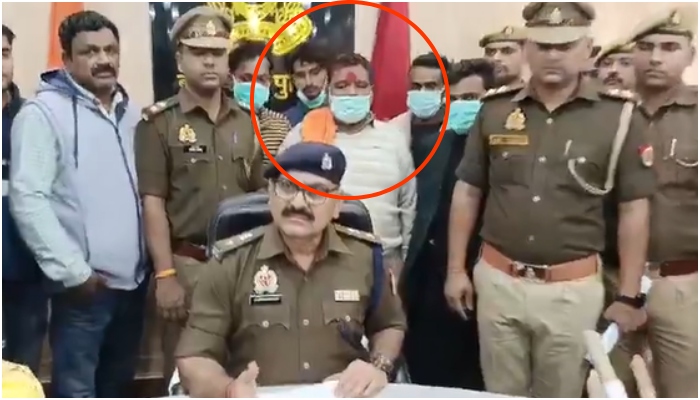
On Monday, 9th December, the Uttar Pradesh Police in the Barabanki area of the state arrested 7 individuals for smuggling cows. As per the initial reports, a shootout broke out in the region as the accused persons were trying to flee from the spot. Two of the accused were shot in the legs by the police in due course. The arrested persons are Sarwar, Gufran, Umar, Ankul Gupta, Irfan, Navijan, and Aziz. The police also meanwhile revealed that one of the accused persons, Umar used to dress up like Hindu sadhu to avoid suspicion.

Umar wore a tilak on the forehead, a saffron scarf around the neck, and held a trident in his hand to pose like a Hindu Sadhu to avoid suspicion. The image of the accused is making rounds on social media.

According to local reports, the Sathrikh Police in Barabanki were informed about a suspicious vehicle moving towards the jungle from the Guriya Ghat road area. The Police immediately reached the spot to investigate the matter and discovered that the suspicious pick-up van had harmful weapons, such as a knife, belt, and cutter, stored in it.

In the meantime, the accused cow smugglers saw the police moving towards the vehicle so they hid in the nearby jungle. Later when they saw the police investigating the vehicle, they began firing at the officers from the jungle, following which a shootout broke out. The police teams also then launched retaliatory firing injuring two of the smugglers identified as Sarvar and Gufran.

The other accused cow smugglers were arrested by the police while they made efforts to flee from the spot and the two injured were sent to the hospital for treatment. The smugglers have notably been shot in their legs.

Barabanki Additional Superintendent of Police South, Dr Akhilesh Narayan Singh commented on the matter and said that two illegal pistols, two used cartridges and three live cartridges were recovered from the possession of injured smugglers Sarwar and Gufran.

“The accused are vicious criminals and are involved in heinous crimes like cow smuggling. Some of these also have a long criminal history in different police stations. An iron chapad, a knife, a wooden stick, two sticks, 9 bread packets, a pickup vehicle, an eco van, and a motorcycle have been recovered from the possession of the arrested smugglers,” he added.

Telangana High Court strips former BRS MLA Chennamaneni Ramesh of Indian citizenship, imposes fine of Rs 30 lakh

On 9th December, the Telangana High Court, in its judgment, stripped former Bharat Rashtra Samithi (BRS) MLA Chennamaneni Ramesh of his Indian citizenship and declared him a German citizen. Furthermore, the court imposed a fine of Rs 30 lakh on Chennamaneni for concealing information about his German citizenship and misleading the judiciary. This judgment marked the first instance in Indian history where a former legislator lost Indian citizenship.

In the judgment, Justice B. Vijaysen Reddy noted that Chennamaneni’s actions since 2009 deprived genuine Indian citizens of their right to contest elections. Notably, the Ministry of Home Affairs had already cancelled his Indian citizenship due to his status as a German citizen. The decision of the Union Home Ministry was upheld by the Telangana High Court.

A writ petition was filed by Chennamaneni in the High Court challenging the Central Government’s 2019 order stripping him of Indian citizenship. However, the High Court found that the decision of the Union Ministry was in accordance with the law. Notably, Rs 25 lakh of the Rs 30 lakh fine is to be paid to the current Vemulawada MLA, Aadi Srinivas, who has consistently fought a legal battle against Chennamaneni for several years, challenging his citizenship.

The remaining Rs 5 lakh will go to the Telangana State Legal Services Authority, as per court orders. The court further noted that Chennamaneni failed to present any documents from Germany confirming that he was not a German citizen, as he had claimed in court.

The court observed that Chennamaneni had travelled multiple times to Germany and had served as the MLA for Vemulawada despite being a German citizen. The detailed copy of the judgment is yet to be uploaded on the High Court’s website.

Congress leader Aadi Srinivas, through Advocate V. Rohith, argued in court that Chennamaneni had naturalised as a German citizen in the 1990s after settling there. Chennamaneni worked, married, and raised his family in Germany, according to Rohith. Chennamaneni entered politics in 2009 and has since been elected as MLA from Vemulawada four times.

Notably, Srinivas has consistently claimed that Ramesh was a German citizen and accused him of concealing this information to contest elections in the state. In a post on social media platform X, Aadi Srinivas wrote, “The High Court dealt a blow to former BRS MLA Chennamaneni Ramesh, who was found to have been elected as an MLA using false documents while holding German citizenship. The court imposed a fine of Rs 30 lakh on Ramesh, directing him to pay Rs 25 lakh to petitioner Adi Srinivas and Rs 5 lakh to the Legal Services Authority.”

An inquiry initiated against Ramesh by the Home Ministry revealed that he retained his German passport and citizenship despite acquiring Indian citizenship in 2008. The central government, in 2020, informed the Telegana High Court that his German passport was valid till 2023 and an order to revoke his citizenship was already in process.

Chennamaneni’s father, Ch. Rajeshwara Rao, was the CPI floor leader in undivided Andhra Pradesh. Later, he joined the Telugu Desam Party (TDP). Chennamaneni was first elected as an MLA in 2009 on a TDP ticket. In 2010, he shifted to the BRS (then TRS) and won the by-elections. He became an MLA on a BRS ticket in the 2014 and 2019 Assembly polls.

In 2009, Aadi Srinivas contested against Chennamaneni but was defeated by a narrow margin of 1.5% votes. He later contested against Chennamaneni on a BJP ticket and lost again. In 2018, he faced defeat once more. However, in 2023, he won the election against the BRS nominee, Chalimeda Laxmi Narasimha Rao. By that time, Chennamaneni’s citizenship issue had become a significant topic in Telangana’s political landscape, and he was denied a ticket by the BRS. However, he remained in key positions within the party.

Chhattisgarh: Man commits suicide after accusing wife and in-laws of forcing to convert to Christianity

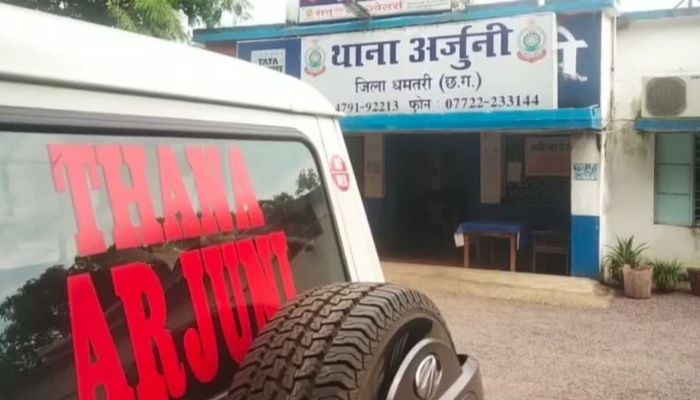
In Chhattisgarh, a 30-year-old man committed suicide on Saturday (7th December), after being fed up with the alleged harassment by his wife and in-laws to convert to Christianity. The victim’s dead body was found at his house in Potiadh village under the Arjuni police station precinct.

A social media post purportedly published by the deceased victim Linesh Sahu stated that his wife Karuna and his in-laws were harassing and pressuring him to undergo religious conversion to Christianity. The police learnt the reason behind Sahu’s suicide after checking his mobile and found that he had put up a WhatsApp status revealing his ordeal before ending his life.

“I am fed up with my wife. She harassed me a lot to change my religion. When I got to my in-law’s place, her mother and two sisters also harassed me to change my religion, saying they would later convince my mother and father (to change their religion),” Sahu wrote in his WhatsApp status.

The victim got married in September 2023. The police said that Sahu’s wife Karuna (27), her sister Kiran (31) and parents Gauri (48) and Rajkumar Sahu (54) have been arrested and have been booked on charges of abetment of suicide under Section 108 of the Bhartiya Nyay Sanhita (BNS). Meanwhile, efforts are on to trace Karuna’s younger sister Kanishka.

Speaking about the matter, ASP Manishankar Chandra said, “Initial investigations revealed that the victim was deeply troubled by his wife and in-laws’ alleged pressure for religious conversion. After posting his ordeal on social media, he took the extreme step.”

India Foreign Secretary Vikram Misri raises concerns over attack on Hindus during his meeting with Bangladesh FS

Foreign Secretary Vikram Misri, during his Bangladesh visit, held several high-profile engagements highlighting India’s support for Dhaka, while also raising New Delhi’s concerns over attacks against religious minorities and their places of worship.

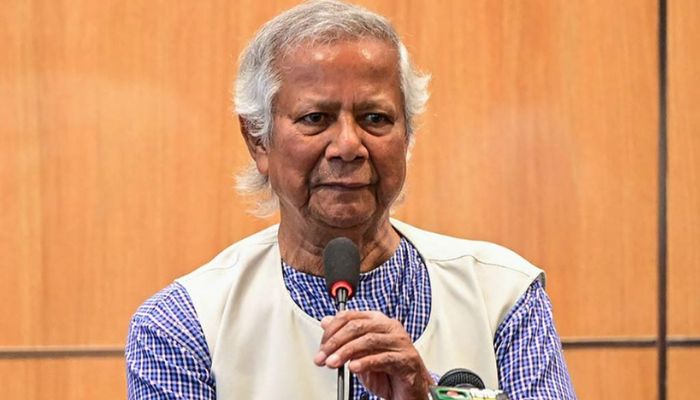
FS Misri called on the Chief Adviser of the Interim Government of Bangladesh, Muhammad Yunus and the Foreign Affairs Adviser, Md Touhid Hossain. He also held Foreign Office Consultations with the Foreign Secretary of Bangladesh, Jashim Uddin.

Notably, there have been multiple attacks on Hindus and other minorities by extremist elements in Bangladesh. There also have been cases of arson and looting of minorities’ homes and vandalism and desecration of deities and temples.

A Hindu temple was allegedly set on fire in the outskirts of Dhaka. The Mahabhagya Lakshminarayan Mandir, at Dhor village, in North of Dhaka came under attack on late Friday night.

Earlier, the arrest of Hindu priest Chinmoy Krishna Das in Chittagong on October 25 on sedition charges led to heavy protests.

Meanwhile, Bangladesh FS Jashim Uddin, during the meeting with his Indian counterpart, reaffirmed that the safety and security of the minorities in Bangladesh, regardless of their faith, religion, or ethnicity, was the “priority” of the interim government.

Bangladesh’s Foreign Secretary Mohammad Jashim Uddin, on Monday reaffirmed that the safety and security of the minorities in Bangladesh, regardless of their faith, religion, or ethnicity, was the interim government’s “priority.”

He also conveyed Dhaka’s concern over the recent incident at the premises of the Assistant High Commission of Bangladesh in Agartala, the Bangladesh Foreign Ministry said in a statement.

“Ambassador Jashim Uddin conveyed Bangladesh’s concern on recent violent incident on the premises of Assistant High Commission of Bangladesh in Agartala. On the issues of minorities, he emphasized that Bangladesh Government is committed to ensuring the safety and security of the people of Bangladesh, irrespective of their faiths, religions and ethnicities and that it is an internal matter of Bangladesh,” the statement read.

Misri noted India’s strong support for a “democratic, stable, peaceful, progressive, and inclusive” Bangladesh and emphasized India’s commitment to building a “positive and constructive relationship” with Bangladesh, based on “mutual trust, respect, and sensitivity to each other’s concerns and interests.”

“Foreign Secretary also discussed certain recent developments and issues and conveyed India’s concerns, especially those related to the safety and welfare of minorities. He also raised some regrettable incidents of attacks on cultural, religious, and diplomatic properties,” the MEA statement read.

During the FOC, both Foreign Secretaries highlighted the importance of expanding collaboration in sectors such as border security, water resources, trade, commerce, and consular matters and discussed regional and multilateral cooperation.

The Bangladeshi Foreign Secretary reiterated that Bangladesh seeks a constructive relationship with India based on fairness, mutual respect, and equity and stressed that both countries should focus on advancing a people-centric approach that prioritises the welfare of their citizens.

“The FOC provides a crucial platform for engaging in discussions to review various bilateral issues and explore new areas of mutual interest for the benefits of the two countries. The two Foreign Secretaries discussed to enhance cooperation in various important areas including border and security, water sector, trade and commerce, and consular issues. The two sides also discussed on issues related to regional and multilateral cooperation,” the statement from Bangladesh’s Ministry of Foreign Affairs read.

Discussions between the two Foreign Secretaries further covered sub-regional, regional, and multilateral issues, with both sides agreeing to enhance consultations to promote regional integration, particularly under the BIMSTEC framework.

Bangladesh’s Foreign Secretary also highlighted the need to initiate discussions for the renewal of the 1996 Ganges Water Sharing Treaty, along with the early conclusion of the Teesta water-sharing agreement and other water-sharing accords for common rivers.

Jashim Uddin.also emphasised the importance of normalising Indian visa services to enhance people-to-people connectivity.

According to MEA, India and Bangladesh, also exchanged views on sub-regional, regional, and multilateral issues and agreed to enhance consultations and cooperation to advance regional integration, including under the BIMSTEC framework

“During the Foreign Office Consultations, both sides held comprehensive discussions on a wide range of issues covering political and security matters, border management, trade, commerce and connectivity, cooperation in water, power and energy sectors, development cooperation, consular, cultural, and people-to-people ties. They also exchanged views on sub-regional, regional, and multilateral issues and agreed to enhance consultations and cooperation to advance regional integration, including under the BIMSTEC framework,” the statement read.

Meanwhile, on regional cooperation, the Bangladesh Foreign Secretary called for the revitalisation of SAARC (South Asian Association for Regional Cooperation) and further regional cooperation within the frameworks of both SAARC and BIMSTEC.

“Bangladesh looks forward to support from India on the issue of the repatriation of Rohingyas to their homeland. Ambassador Jashim Uddin called for the revitalisation of SAARC and regional cooperation within the provisions of SAARC and BIMSTEC,” the Bangladesh MFA said.

India had on November 26 noted with deep concern the arrest and denial of bail to Shri Chinmoy Krishna Das, who is also the spokesperson of the Bangladesh Sammilit Sanatan Jagran Jote.

India had urged Bangladesh authorities to ensure the safety and security of Hindus and all minorities, including their right of freedom of peaceful assembly and expression. 

(This news report is published from a syndicated feed. Except for the headline, the content has not been written or edited by OpIndia staff)


Police downplay Islamist attack against Lord Ayyappa devotees in Rayachoti? How hate crimes against Hindus are swept under the carpet

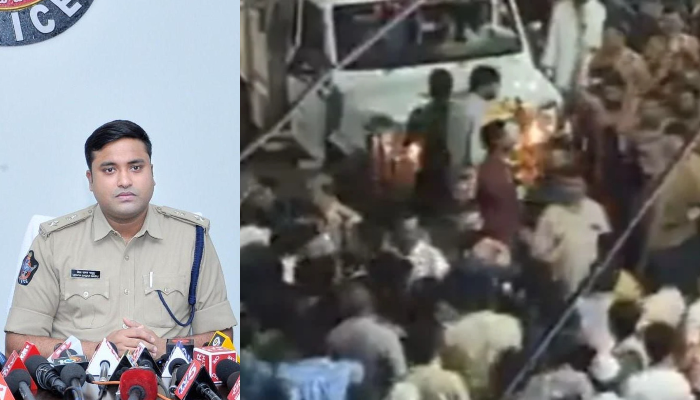
A bus carrying devotees of Lord Ayyappa was allegedly attacked by extremists in Andhra Pradesh’s Rayachoti town. The former played devotional songs and the mob claimed that the music was too loud. They demanded that the bhajans be shut down and also assaulted the Hindus including the driver. Now, the authorities have once again chosen to protect ‘secularism’ under the guise of combating misleading information rather than defending the victims.

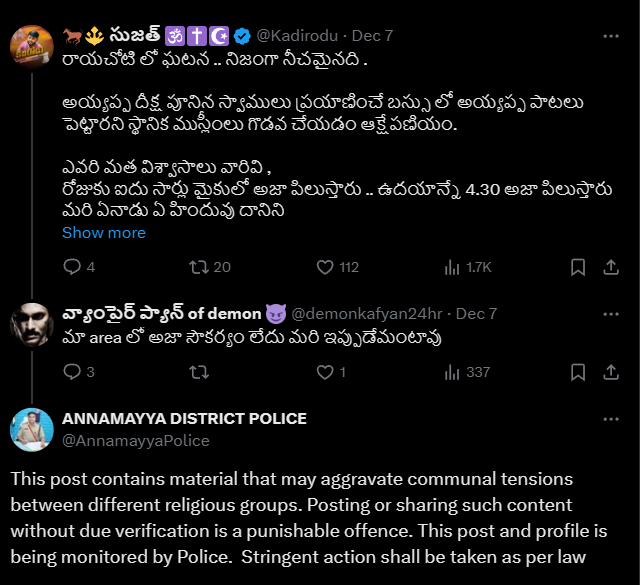
While acknowledging that the anti-Hindu incident did occur, the Annamayya district police prioritized intimidating netizens who raised the issue on social media. “Strict action for spreading false information. What happened in Rayachoti is a sensitive matter, but false stories are being spread on social media. Such people would not be spared,” they declared on X (formerly Twitter).

Of course, it is crucial to impose control over notorious elements who engage in these kinds of activities and prevent the spread of false information to keep the situation from deteriorating.  However, such social media vigilance speaks volumes about stopping people from discussing the news, which could damage the reputation of the authorities, in addition to just curbing misinformation.

Notably, the authorities acknowledged that the car carrying the Ayyappa devotees was stranded in front of a mosque, following which agitated Muslims emerged and allegedly began yelling slogans. They also confirmed that a “peace committee” was formed “to ease tensions” with members of both communities (Hindus and Muslims). How, in the absence of communal violence, could there be any tensions between people of the two faiths? Regrettably, some questions are destined to remain unanswered. Furthermore, the visuals also conveyed the truth of the instance. However, the police are hesitant to call it a communal incident, as they always do.

These disclosures make it abundantly evident that a confrontation between the Muslim and Hindu communities did transpire which was followed by a “peace committee” which would not be necessary without the conflict itself. Meanwhile, the police are making every effort to deny this as amplified by another instance in which an individual referred to the occurrence as “really despicable” and added that it is unacceptable that the local Muslims complained about the playing of Ayyappa songs on the bus transporting the devotees.

The user then chose to state some uncomfortable truths and expressed, “Muslims do namaz on loudspeakers for Allah five times a day. It happens even at 4:30 in the morning but no Hindu ever labelled it as disturbance. Followers of no religion should behave in this manner which can disturb the religious harmony. It is not good for this country.” However, the police were quick to respond to the statement and termed the condemning of the attack on Hindus as “material that may aggravate communal tensions between different religious groups.”

Instead of keeping an eye on the conditions on the ground that resulted in the assault, the police declared to monitor the person’s post and profile as well as even threatened harsh action. “Posting or sharing such content without due verification is a punishable offence,” they added. Now, it’s crucial to remember that the remark wasn’t disseminating any false information, rather, only submitted a reasonable question, which the police took as a challenge to law and order.

Unfortunately, the authorities are now cracking down on social media users discussing the incident as though they were responsible for the attack in a desperate attempt to refute that a Muslim mob did attack Hindus.

Why do police seldom recognize a communal angle in such instances?

The authorities frequently allege that there was “no communal angle” to the crime or reject that it was in any way motivated by a religious bias in situations like these, where the motivation is clear but not implied explicitly. Hence, many might wonder why the police repeatedly shy away from calling a spade a spade. This could be due to a variety of reasons. Low-level communal occurrences are frequently minimized by the police because they cast doubt on their authority. They also dismiss it because they don’t want one incident to trigger another in the area or lead to further tensions, which is often a possibility.

The Left media, leftist intellectuals and their entire ecosystem work like an extended arm of Islamists are also prone to emphasize the banal “no communal angle” routine, particularly in cases when the victim of the crime is a Hindu. Nevertheless, a police statement or a media story alone, for example, is insufficient to ascertain whether the crime includes a communal angle and therefore ground realities must be evaluated to ascertain if the crime is communal or not.

For instance, the unholy Islamist-leftist union attempted to propagate that there was no communal component to the 2021 murder of Rinku Sharma, a Bajrang Dal activist who was brutally stabbed in his home in front of his family in Delhi’s Mangolpuri neighbourhood. The fact that the crime was communal was rejected even by the police. Opindia, however, spoke with several individuals who were there with the victim’s family and they unveiled that there is an obvious feeling of communal hostility in the region. According to Rinku Sharma’s family, the Muslims in the neighbourhood have harboured animosity toward him ever since he welcomed the historic Ram Mandir decision.

The fact that it is only one among thousands of anti-Hindu hate crimes that occur routinely in India and then downplayed in the name of ‘secularism’ must be remembered. This tracker will document cases like Rinku Sharma’s where the victim’s family or relatives’ testimonies clearly show that there was a clear religious bias that gave rise to the crime, even if the police have denied a communal angle or the leftist media has gone to great lengths to promote the “no communal angle” trope. Likewise, the attack on Ayyappa devotees has been recorded as a hate crime against Hindus because the police statement and the video both attest to its religious motivation.

Chhatrapati Sambhajinagar: AIMIM-linked Afsar, Salim assault Hindu women and claim ownership of their farmland, video goes viral

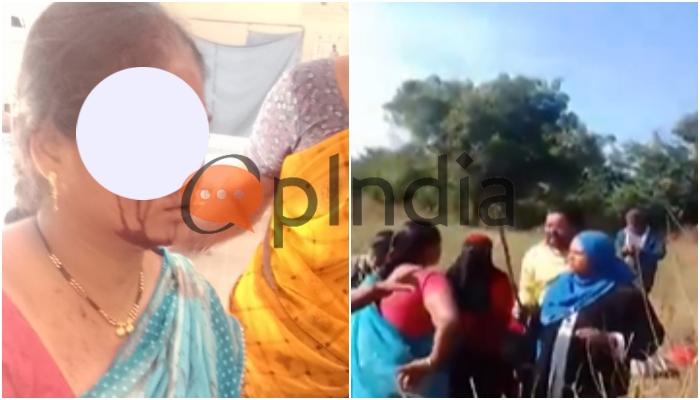
On Sunday, 8th December, the Maharashtra Police in Chhatrapati Sambhajinagar district filed a police complaint against two individuals identified as Afsar Pathan and Salim Sayyed and three other unidentified women for forcefully claiming the ownership rights of land belonging to Hindus and assaulting the Hindu women.

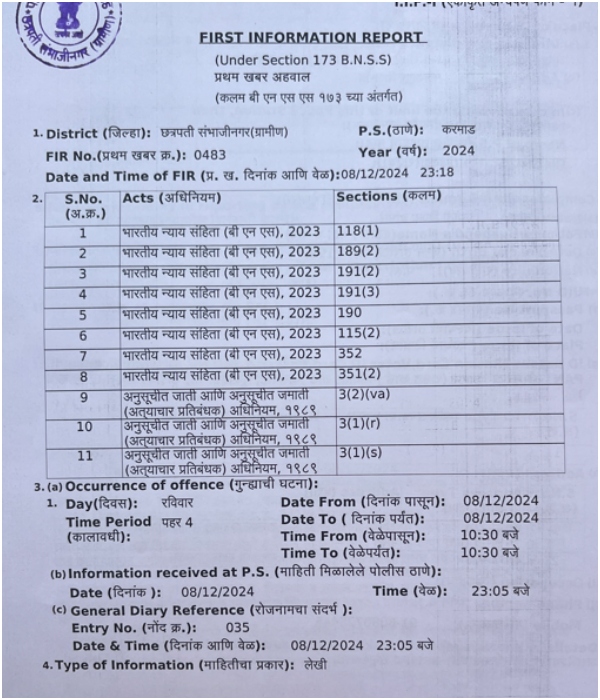
As per the FIR copy obtained by OpIndia, the incident happened on 8th December when the Hindu women were working with lentil crops on their 2-acre disputed farmland. The accused persons with their claimed wives arrived in the fields and began abusing the Hindu women claiming that the land on which the women were working belonged to them.

The complainant in the FIR mentioned that the land in the subject is yet to be transferred in the name of the victim’s family. However, the accused from nowhere began claiming the ownership of the land. “It is because of this that the land has not yet been transferred in our name and the case in the administration office stands pending. But this is our land. Pathan and Sayyed have no take in this,” the Hindu complainant’s family stated in the FIR.

As per the report, the women in the burqa who accompanied the accused men slapped the Hindu women and abused them. Meanwhile, the accused persons used the sticks to physically assault the women. The men also threatened the Hindu ladies and asked them to vacate the premises. As per the Sudarshan news, the accused persons are closely associated with the AIMIM party.

The FIR against the accused persons has been filed under sections 118(1), 189(2), 191(2), 191(3), 190, 115(2), 352, 351(2) of the Bharatiya Nyay Samhita, 2024 and sections 3(2)(va), 3(1)(r) and 3(1)(s) of the SC/ST Act. So far no arrests have been made. Further probe is underway.

250 protected monuments registered as ‘Waqf properties’, ASI to approach JPC seeking reinstatement of its control

0

In an alarming revelation in the internal survey of the Archaeological Survey of India (ASI), it has emerged that nearly 250 of its protected monuments are currently registered as Waqf properties, in a clear violation of the law. The ASI is set to approach the Joint Parliamentary Committee (JPC) that reviewing the Waqf (Amendment) Bill to apprise them about these facts and demand that its control on these monuments be reinstated.

Citing sources, Indian Express reported that the ASI’s list mentions many monuments named in the 2006 Sachar Committee report on the Social, Economic and Educational Status of the Muslim Community of India. This report listed “Waqf properties in India under unauthorised possession of ASI”.

Although not of all the 172 sites named in the ASI’s list are nationally recognised monuments, some notable sites in Delhi include the Jama Masjid at Ferozeshah Kotla, the Chhoti Gumti makbara in RK Puram, as well as Hauz Khas Masjid and Idgah.  During the 4th JPC meeting in September, the ASI estimated a total of 120 monuments currently registered as Waqf properties, however, upon receiving details from its various circles, the ASI revised the number to 250.

Furthermore, the ASI is likely to inform the JPC about the difficulties this causes in the maintenance and conservation measures of the ASI-protected but Waqf-controlled sites.

Chhattisgarh: 500 Bangladeshi infiltrators from Bastar, 350 from Kawardha sent back, HM vows to deport illegal immigrants

0

On 9th December, the Home Minister of Chhattisgarh, Vijay Sharma, said that the authorities have deported around 850 illegal Bangladeshi infiltrators from the state. Sharma was speaking at a public meeting in Bhilai where he assured that all infiltrators would be identified and deported. Notably, he pointed out that around 500 illegal Bangladeshis have already been deported from Bastar and 350 have been removed from Kawardha.

Furthermore, 46 infiltrators from Kondagaon are currently in custody, awaiting deportation. Sharma assured that whenever such individuals are reported, the authorities will take swift action. He added that the state police are working tirelessly to identify and detain illegal immigrants.

Adivasi protests over illegal infiltrators in Bastar

The matter of illegal Bangladeshi immigrants in Chhattisgarh has been brewing for months. In August 2024, the Sarv Adivasi Samaj called for a complete shutdown to protest against the unchecked influx of illegal Bangladeshis in the district. The tribal group alleged that the infiltrators came to India because of the political unrest in Bangladesh. They added that the infiltrators settled in villages, towns and cities while accusing the authorities of not taking any action against them. As a result, there was a widespread closure of shops and businesses. Only emergency services were operational during that time. The protestors demanded immediate identification and deportation of the illegal immigrants, as their presence risks the demography and cultural integrity of the region.

Bastar and Kondagaon declared Naxal-free

In other news, Chhattisgarh also achieved a significant milestone in its fight against Naxals. According to Bastar IG Sundar Raj P., both Bastar and Kondagaon districts were declared Naxal-free after decades of insurgency. He said in a statement that sustained development efforts in the interior regions of the state, combined with intensified security operations, significantly weakened the activities of Naxals in the area, which led to the historic achievement.

BJP’s 2023 victory should be credited for decisive governance

BJP’s decisive governance in the state should get the credit for both developments. It shows that there has been a notable impact of BJP coming to power in the December 2023 Assembly Elections. Under the leadership of the Chief Minister of Chhattisgarh, Vishnu Deo Sai, the administration has visibly pushed the efforts to address long-standing issues of naxals and illegal infiltrators. This has also been reflected in the statement given by state Home Minister Vijay Sharma, who assured that any information about illegal immigrants will be swiftly checked and acted upon.