The Bahrain authorities have taken legal action against Pakistanis who held anti-India protests after the Eid prayers. The protests in Bahrain were held against the Indian government’s decision to abrogate Article 370 in the erstwhile state of Jammu and Kashmir.
Bahrain’s Ministry of Interiors, in a tweet, urged the citizens to not exploit religious occasions politically.
Capital Police: legal proceedings were taken against some Asians for gathering in a way that violated the law after Eid prayer. The case referred to the Public Prosecution. It urges citizens and residents to not politically exploit religious occasions.
The Indian government on 5th August abrogated Article 370 that gave separate status to erstwhile state of Jammu and Kashmir and bifurcated the state into union territories of Jammu & Kashmir and Ladakh. While most people have welcomed the decision, the separatists and the Pakistanis have been opposing the move. A few Congress leaders were also not too happy with the idea of Jammu and Kashmir being fully integrated into India without any terms and conditions and riders attached.
The Ministry of Home Affairs (MHA) has written to Twitter, asking them to block at least eight accounts on its the micro-blogging platform, for allegedly spreading rumours about the prevailing situation in Kashmir.
The Union home secretary recommended the closure of few Twitter accounts for “spreading rumours and misinformation to disturb the peace and calm in the Valley.”
The list of Twitter accounts recommended for suspension include:
@kashmir787 – Voice of Kashmir
@Red4Kashmir – MadihaShakil Khan
@arsched – Arshad Sharif
@mscully94 – Mary Scully
@sageelaniii – Syed Ali Geelani
@sadaf2k19
@RiazKha61370907
@RiazKha723
The list included one account allegedly belonging to separatist leader Syed Ali Geelani. Moreover, Arshad Sharif, whose name also appears in the list, is a journalist with ARY News, while Mary Scully is with Pakistan Today.
As the situation in Jammu and Kashmir is gradually coming back to normal, some elements, especially Pakistanis are having a hard time to digest that normalcy is prevailing in the Valley.
Today, one Pakistani journalist, Waj Khan, in order to continue to paint gloom in Kashmir was exposed by CRPF for spreading fake news and misinformation about the condition in the state.
Khan had tweeted that there is a rift between the Jammu and Kashmir Police and the CRPF personnel in the state as one Muslim Kashmiri Policeman killed 5 CRPF soldiers for not allowing a pregnant woman to travel as she didn’t have a curfew pass.
However, the official Twitter account of CRPF was quick to admonish the malicious lies peddled by the Pakistani journalist. Kashmir police had also dismissed the claim and have stated that the Pakistani journalist’s malicious tweet has been reported to Twitter.
Taking into account such malicious attempts by fearmongers, Jammu and Kashmir principal secretary Rohit Kansal said in a press release that a malicious campaign has been unleashed on social media and international media to project a negative image of the situation in Kashmir.
“There have been some reports in the media about firing by security agencies and deaths, the police carried out a detailed briefing and I would like to reiterate and categorically deny that any firing incident has happened in Jammu and Kashmir,” said Rohit Kansal.
He further asserted that “not a single bullet has been fired by the security agencies nor has there been any casualty.”
Rohit Kansal, J&K Principal Secy (Planning Commission): There have been some reports in the media about firing by security agencies & deaths, the police carried out a detailed briefing & I would like to reiterate & categorically deny that any firing incident has happened in J&K. pic.twitter.com/BGfaehNaiO
Pakistan is thoroughly rattled by India’s decision to abrogate Article 370. Pakistan PM Imran Khan had warned that Pulwama kind of attacks might happen again after India’s decision. Pakistan also took its fulminations to the UNSC, only to be snubbed by its chief. The UNSC chief reminded Pakistan of the Shimla Agreement and refused to intervene in the matter claiming it’s a bilateral issue between India and Pakistan.
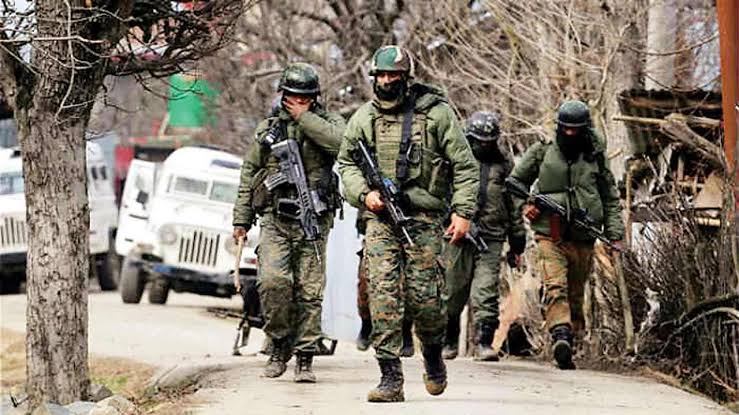
Last week, on Monday, August 6, India struck down the partition relic of Article 370 and bifurcated the state of Jammu and Kashmir into two Union Territories. A curfew was imposed in the state to prevent chaos and disorder. The curfew is being relaxed or tightened in many areas in the state based on the ground situation as assessed by the security agencies.
On Monday, National Security Advisor Ajit Doval also conducted an aerial survey of Srinagar and South Kashmir areas to take stock of the security situation.
Officials confirmed that police chief Dilbag Singh and Army commanders also undertook separate aerial visits of various parts of the Kashmir Valley and found the situation in the Valley to be absolutely fine.
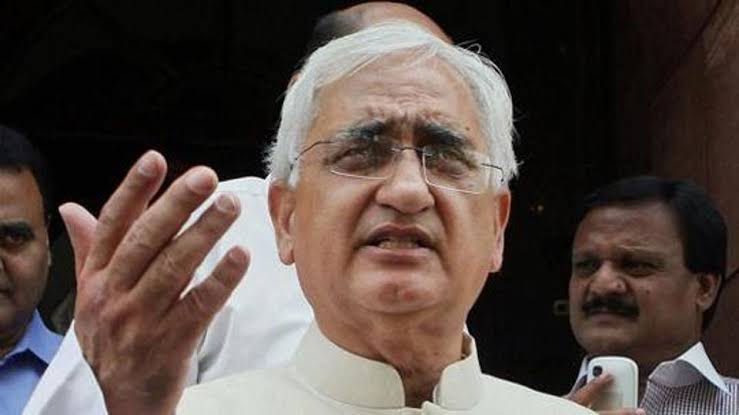
The issue of abrogation of Article 370 has ripped apart the Congress party with one faction supporting the government’s momentous move while the other vehemently criticizing the government for its decision to strip the state of the separate status. Now, Senior Congress leader Salman Khurshid has concurred with the BJP government’s epoch-making move claiming Congress too would have aspired to revoke the Article 370.
Speaking to media, Khurshid said, “370 has a historical place. The article was never permanent. We know it was never permanent. We too would have aspired to remove 370. The purpose of 370 was to keep Kashmir linked with India irretrievably and that what must remain.”
However, Khurshid raised concerns about the manner in which the objective of doing away with the Article 370 was achieved by the government. Khurshid stated that the government didn’t “cover us with glory” in the manner in which the Article was abrogated without the consultation of the state government and by doing it with a stroke of a pen.
Prior to Khurshid, several other Congress leaders have expressed their support for the abrogation of Article 370. Senior Congress leader and a close aide of Rahul Gandhi, Jyotiraditya Scindia also backed the government in its decision of revoking the partition relic. Scindia tweeted that the move was in the country’s interest and therefore he supports it.
Deepender Hooda too extended his support for the abrogation saying that Jammu and Kashmir is an integral part of India and such a move will be beneficial to Kashmiris. Another senior Congress leader Janardan Dwivedi, a close aide of former Congress President and currently UPA chairperson Sonia Gandhi, too went against the party’s stand and welcomed the move.
Congress’ chief whip Bhubaneswar Kalita had also resigned from Rajya Sabha because he was upset over Congress’ stand to oppose Centre’s move to dilute Article 370. He stated that Congress’ stand on this issue was “against the people’s feelings” and that the party seemed “ hell-bent on political suicide.” He later joined the BJP.
With the situation remaining calm but tense in Jammu and Kashmir after the abrogation of Articles 370 and 35A, there has been a concerted effort to portray that large-scale protests are going on in the state and Indian security forces are using brute force to contain the same. After several international media houses reported firing by police on protesters which was denied by Jammu and Kashmir police, several persons from Pakistan are older videos from other places to claim they are from Jammu and Kashmir.
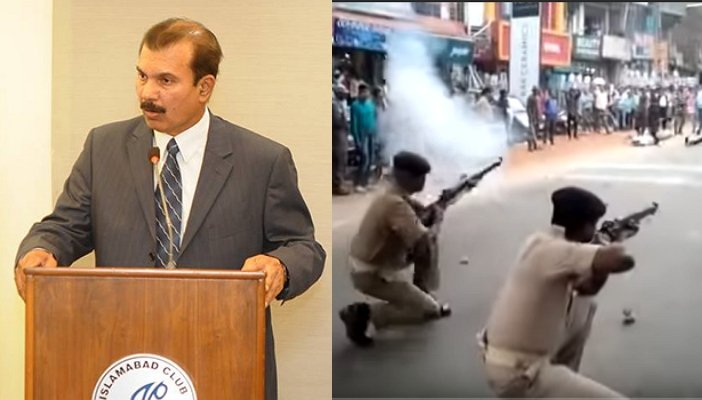
Air Marshall Shahid Latif, a retired air marshal of the Pakistan Air Force, tweeted a video on 9th August claiming it shows how Indian occupation forces are firing straight bullets on unarmed civilians who were protesting against human rights violation in Jammu and Kashmir. He said it may be old or new, and criticised UN for remaining silent.
This video can be old or recent. The world must watch how Indian occupation forces are firing straight bullets on unarmed civilians who are out on streets against violation of the human rights in Indian Occupied Jammu and Kashmir. Criminal silence of the UN has no justification. pic.twitter.com/NBqv3PH2Fl
— Air Marshall Shahid Latif – (Retd) (@AMShahidLatif) August 9, 2019
The video shows few policemen firing on a group of people standing on a middle of a street, and 3-4 persons fall to the ground after the firing. They are then taken away by security forces on stretchers to an ambulance.
The video has been shared by several Twitter users with the same claim, that captures India Army firing on unarmed protesters.
But the fact is, the video is not recent, it is not from Jammu and Kashmir, and most importantly, it does not show any real firing on protesters by police. The video actually shows a mock drill conducted by Jharkhand Police in Khunti. The video was uploaded on Youtube on 1 November 2017.
Although few people fell down and other ‘protesters’ escape after the firing, lots of people keep standing on both sides of the street watching what is going on. It is evident that they were watching the mock drill, if it was real firing, nobody would be standing calmly as there is a chance of getting hit by stray bullets. Moreover, there is a public announcement towards the end of the video, which makes it clear that it is a drill. The announcement says, “Let me repeat this once more. This is a demo through which Khunti Police has demonstrated that we are prepared and ready to deal with any situation”.
This is not the first time the Jharkhand police drill video was used as real incidents elsewhere. Last year also several people from Pakistan had shared the video claiming it to be from Jammu and Kashmir. The same video was also shared as police firing on farmers protesting in Madhya Pradesh.
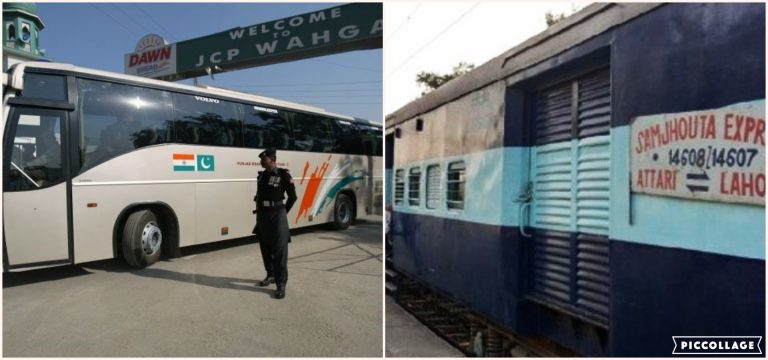
In response to Pakistan’s decision to suspend bus service to India in the wake of India revoking Jammu and Kashmir’s separate status, Delhi Transport Corporation (DTC) has on Monday announced the cancellation of the Delhi to Lahore bus service from its end.
A Delhi Transport Corporation (DTC) bus was scheduled to leave for Lahore on Monday at 6 am. However, it did not leave due to Pakistan’s decision to suspend the bus service, an official said.
“Consequent to Pakistan’s decision to suspend the Delhi-Lahore bus service, DTC is not able to send bus (from Delhi to Lahore) from August 12,” said a statement from DTC.
This decision came after Pakistan NSA had decided to suspend the bus service to India from Monday. On Saturday, a Pakistan Tourism Development Corporation (PTDC) bus made its way from Amritsar to Lahore for the last time. The decision to scrap was announced Friday evening.
The bus service was first started in February 1999. It was suspended after the 2001 Parliament attack and restarted in July 2003. Former prime minister Atal Bihari Vajpayee had travelled on the historic inaugural run on 19 February 1999 from Delhi to Lahore.
Moreover, the Indian Railways had also confirmed on Sunday that the Samjhauta Express running at its end of the international border will stand cancelled. This decision came in days after Pakistan suspended services on its side.
“Consequent to Pakistan’s decision to cancel Samjhauta Express 14607/14608 running between Lahore and Atari, the link express train number 14001/14002 running between Delhi and Atari also stands cancelled (sic),” Deepak Kumar, Chief Public Relations Officer of Northern Railway, said.
Islamabad had on Thursday announced it was suspending the bi-weekly Samjhauta train service connecting Lahore and Delhi as part of downgrading of diplomatic ties with India in response to the full integration of Jammu & Kashmir into India
Spooked by the audacious decision taken by the Indian government to repeal the contentious Article 370 and bifurcate Jammu and Kashmir into two Union Territories, Pakistan’s PM Imran Khan has taken several hasty and ineffectual decisions which would ultimately cost the parody nation dearly.
Not being able to digest the shock, the Pakistan Rangers at the Attari-Wagah border today, declined to receive sweets and exchange greetings with BSF to mark the religious occasion of Eid, which has been a long drawn traditional bonhomie between Border Security Force (BSF) and Pakistan Rangers, border guarding forces of India and Pakistan respectively.
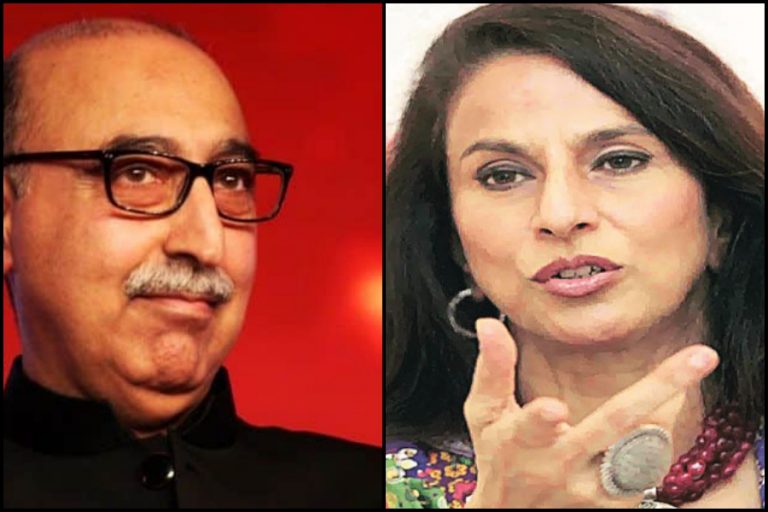
In the aftermath of the abrogation of Article 370, it has become evident that the narrative peddled by a certain section of liberals is extremely conducive to Pakistani interests. Furthermore, it was revealed earlier today by none other than Abdul Basit, former Pakistani High Commissioner to India, that he had managed to influence Shobhaa De into furthering the Pakistani agenda in an article and advocating for plebiscite in Kashmir.
In an earlier article, we had demonstrated how certain sections of the political fraternity and media community appear to be working in tandem with Pakistan and undermining Indian national interests. Now, people have started questioning and have been indulging in speculations regarding why Abdul Basit chose that particular moment to give up someone who had collaborated with him.
Basit was clever by half there. He knows most big guns in Indian media are sympathetic to Kashmir’s “Azadi gang” & Pakistan. He deliberately threw only a minion like De under the bus shielding others who matter more to Pak
Because @DeShobhaa has served the purpose and others more useful have picked up the baton and are serving their masters now. Useful idiots are useful only up to a point after which other useful idiots are recruited https://t.co/P4I2nFqUVk
Well @DeShobhaa is what she is. Interesting thing is why did Abdul Basit expose only her? Many more Indian journalists speak Pak language on almost every issue. @BDUTT is working hard against #Article370
Still why only Shobha De is being exposed? What was the reason for fallout?
The speculations above assume that Pakistan is a rational actor. There’s a significant reason to doubt that particular assumption, however, we have to concede that Pakistan does operate along rational lines at least at an extremely basic sense as far as spreading propaganda against India is concerned. Therefore, we have to ask ourselves the question here, why did Basit give up one of his contacts?
In a game of chess, there are only two reasons why one sacrifices one of his own pieces. Firstly, the piece might have become a liability. Or, the individual stands to gain more by sacrificing it. In this particular instance, the former appears unlikely although one has to admit there might be internal conflicts we may not be aware of. The latter, however, is an extremely likely possibility.
It is perhaps an unsaid threat to others who have collaborated with them in the past. Pakistan is isolated globally today and even the Muslim world appears to have abandoned them. Under such circumstances, some Indians who have collaborated with them in the past might have gotten the idea that they could pursue a hard bargain with Pakistan in exchange for their services. They were under the impression that they could take advantage of a desperate Pakistani establishment.
If that is indeed the case, the move by Pakistani is simultaneously reckless and effective. One hand, they have driven home the message that collaborators should not take them for granted and there were definitive ways in which they could still hurt their credentials. On the other hand, they have probably alienated some who were open to the idea of working with them for benefits.
All things considered, it does appear to be the move of a mafia that has its back against the wall and is desperate to retain the few allies that it already has. We have to entertain the possibility that there are numerous other significant people in Khan Market, with considerably more influence, who have collaborated with Pakistan in the past. Pulling the rug on Shobhaa De, who no longer wields any influence, was Pakistan’s way of sending a message to the rest. Thus, Pakistan appears to have made strategic gains by sacrificing one of its pieces.
For Indian authorities, it means that there are certainly big players in Khan Market who have been covertly undermining Indian national interests at Pakistan’s behest. Indian intelligence agencies, and the Home Ministry, certainly have their own ideas on the identity of these individuals.
Another aspect of things that the Indian government ought to consider is the possibility of Indian politicians collaborating with Pakistanis. On the basis of certain statements that have been made, it appears that some politicians consider power to be more important than national interests. More so than media personalities, politicians stand to gain significantly by collaborating with foreign interests. Therefore, it’s even more important that these individuals are identified.
Nevertheless, Abdul Basit’s statement is reason enough for the Indian government to initiate high-level investigations into Pakistani collaborators in India. It is important that Pakistanis moles are identified and prevented access to any significant authority within the government. Since 2014, the Indian government appears to have been fairly successful in doing that.
Politicians with a troubling affinity toward Pakistan have been exposed and their political parties have suffered the consequences in elections. Likewise, the media personalities no longer carry the same weight as they did prior to 2014. However, it might time to initiate legal proceedings against such individuals for undermining national interests and collaborating with a sworn enemy of the Indian state.
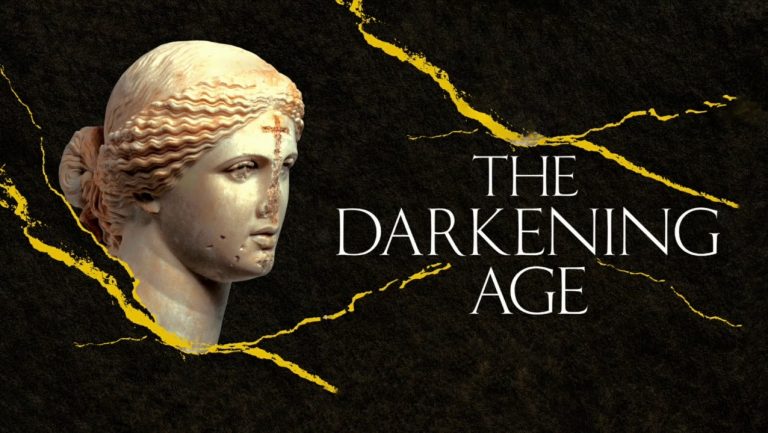
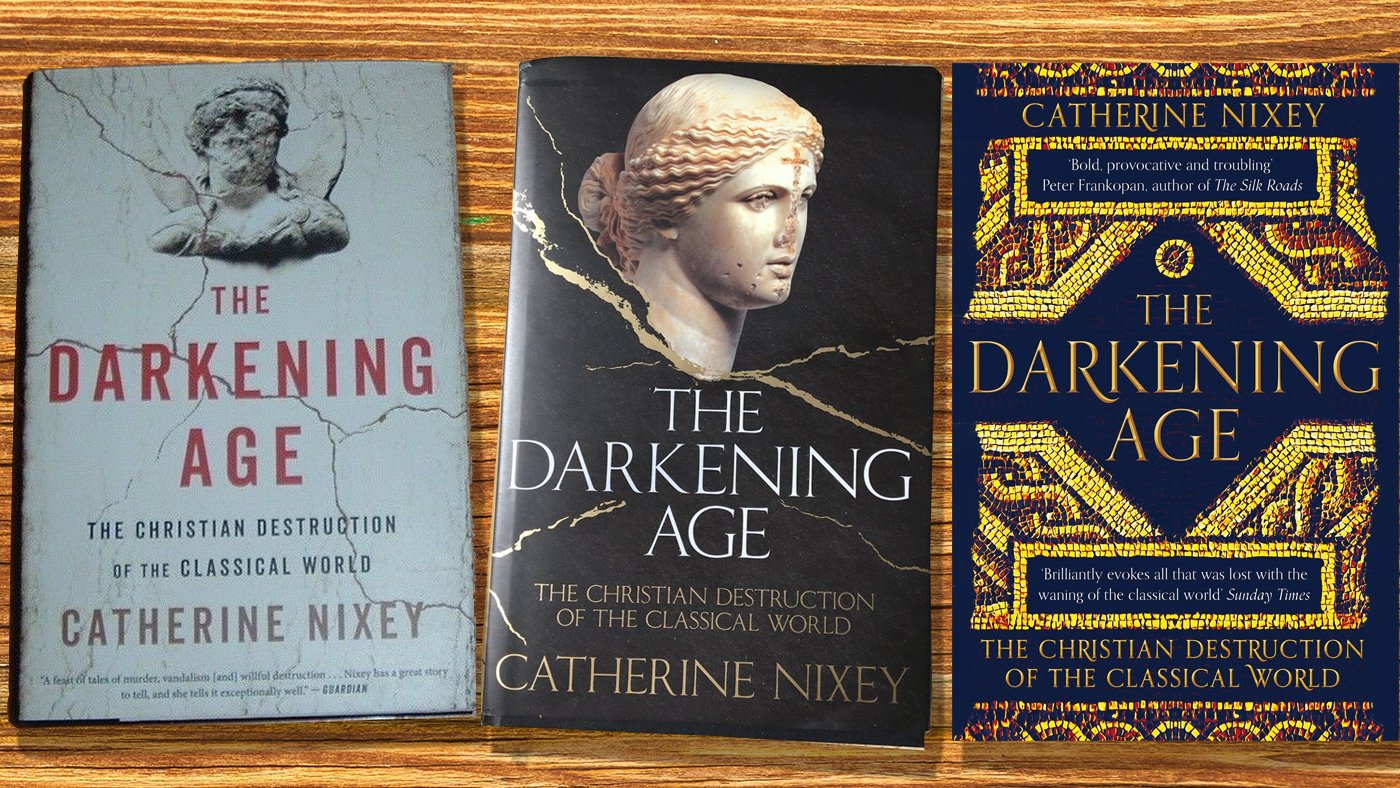
In times of conflict, even the act of speaking the simplest of the truth is an act of bravery. And in the age of hypocrisy, even an act of chanting a religious chant is a war cry. That is what they have turned ‘Jai Shri Ram’ into- a violent, war cry. As I read ‘The Darkening Age: The Christian Destruction of the Classical World’, I find uncanny resemblance to our times and our world.
The old Hindu India which has long been the most accommodative and peaceful of all the people, is suddenly being demonized. Between the two monotheist religions out to conquer the world, Hinduism with acceptance of all faiths, openness to believe in several dimensions of a single truth, has stood like a sore thumb. Much like Paganism of Romans about which Catherine Nixey has written so elegantly written in this book of hers, Hinduism is not able to understand the hatred of those who attack it. We think it is politics, hypocrisy, intellectual opportunism. We call it all names except what it is. Monotheists hate any competing faith. While polytheism is not by nature very orthodox, fanatical and dogmatic; for monotheism, any faith which is not that faith is a sin. When one says it, it offends many. But this actually explains the amount of antagonism that attacks Hinduism, every day, day after day.
Monotheist cannot understand a religion which does not think any other competing religion as sin, which does not want to win more geographies. For them, for imperialistic religions, a faith steeped in philosophy is strange. Apart of confusion which prompts negative narratives, there is a tried and tested way to convert people from the competing faiths and eventually erase them from the face of earth. What this book tells us is that not only is the erstwhile religion erased from the Earth, the memories of the brazen and brutal act itself has been erased from public memories. Although factually, we can historically put the finger on the actual arrival of both Islam and Christianity, is it not amusing that when we look at historical evidence of any religion pre-dating them, we largely encounter darkness and silence. Very little has survived the Christian onslaught in terms of literature and history from the Roman times, in terms of religion. If one reads through the largely sanitized literature from Roman times, one would believe that either they had no religion or faith or that they abandoned it en-masse out of free will. Nothing can be further from the truth as we read this book, which stands out not only for the brilliant writing but also for extraordinary honesty.
Author Catherine Nixey
We are generally made to believe that while the Christians braved all kinds of atrocities at the hands of the Pagans; Christians, once they attained a position of power, merely relied on logical debate and inherent dissatisfaction of the Pagans to get them converted in such numbers that no Pagan was left behind. This book destroys the myth. We have often been made to believe that the demolishing of temples by the past Islamist invaders had nothing to do with religion. But when we read the Roman History, we can see the pattern. Although our historians who try too hard to make us forget the religious fanaticism of the invaders, it is not too difficult to imagine with immeasurable wealth, plenty of lands and a rich supply of artisan; why they did not try to build the monuments of their faith afresh in Ayodhya, Mathura or Kashi, considered by Hindus to be an axis to Hindu faith. Hinduism as a faith, hinges significantly on buildings, idols and structures. When you break these structures, you trample on a faith. This explains also the adamant opposition of the return of Ayodhya, Kashi and Mathura. Amid all the big talks of secularism, the comparative significance of the three sites for Hindus and Muslims. All three have great religious significance for Hindus while for Muslims, they are at best of historic significance. These structures for the Muslims are nothing but a brutal reminder of the age when they ruled over the majority. None have been erected by any of the Islamic religious figures, all three are connected deeply to Hindu faith.
When I read the prologue of the book, which starts on one afternoon in Palymra, in 385AD, with the demolition of the grand temple of Athena, I could see in my mind, the reflection of Kashi Vishvanath by the Armies of Aurangzeb. She writes, “Great stone columns that had stood for centuries collapsed in an afternoon; statues which had stood for half a millennium had their faces mutilated; temples that had seen the rise of the Roman empire fell in a single day.” I often wonder how the day after would have been for the citizens of Palmyra or the Citizens of Kashi.
Further, what makes it exceptionally great read is the quotes which often appear at the beginning of chapters. It shows the clearly secular view of the Pagans and blatantly bigoted view of the early Christians. For instance she quotes Pagan author Symmachus- “We see the same sky, the sky shared by us all, the same world surrounds us. What does it matter what wisdom a person uses to seek for the truth.”; and in contrast, we read St. Augustine- “That all superstition of Pagans and heathens should be annihilated is what God wants, God commands, God proclaims.”
The Darkening Age- The Christian Destruction of the Classical World
While Pagans advocate accommodation, Christians advocate annihilation. It always begins slowly, silently. The first Christian emperor, Constantine, did not ask all the non-Christians to be annihilated as St Augustine wanted. He spoke of coexistence, asked for the Pagans to be ‘spared’. That was some Ganga Jamuni civilization in AD 312. But what he did do was stop supporting the Pagan Temples, annexed their riches, taxed their festival, made the Church exempt of taxes. It was too early for brute establishment of the empire so it worked from the other side. It made the practice of Paganism difficult, incentivized the conversion to Christianity. In the next two centuries, supported by the State, Christianity flourished and Paganism declined.
In AD391, Law was passed by Emperor Theodosius stating- ‘No person shall be granted rights to perform sacrifices; no person shall go around the temples, no person shall revere the shrines.’ In AD 399 came another law, which said, ‘If there should be any temples in the Country districts, they shall be torn down without disturbance and tumult. For when they are torn down, the material basis for all superstitions will be destroyed.’ Do we hear the echoes of Deepavali firecracker bans, Jalikattu and Sabarimala here? Do you see how science serves the believers? By 527 AD, the annihilation was complete, when one dark night the academy (yes, the one where once Plato taught) was closed and Damascius with his band of Philosophers escaped the civilization of the Book, where nothing was left for debate or discussion.
In AD529 came the Royal decree, that “all those who laboured under the insanity of Paganism- would no longer be allowed to teach. It was further mandated that anyone who had not yet baptized was to come forward and make themselves known at the holy churches immediately, or face exile. And if anyone allowed themselves to be baptized and then slipped back into their old Pagan ways, they would be executed.” So for Damascius and fellow philosophers, it meant they could no longer worship their Gods, make their living. In the year 532AD, they eventually moved and thus the curtain of darkness rolled over a religion which had lived in Rome since eternity. Most of what Damascius wrote has been erased (Macaulay was not doing something new. The path Romila Thapar and gang pursued was long tried and tested), but occasional quotes remain. At one place he wrote that his entire way of life was being ‘swept by the torrent.’ Another philosopher from the time wrote- “We are men reduced to ashes..for today everything is turned upside down.”
The Pagans did not die at one stroke. They watched, they tried to reason, they suffered and then gave away. Nothing that was written then remains in original form. Catherine calls what poses as original roman writing as Palimpsest. How often do we see Indologists lament non-availability of original Vedic scripture? It is not only because much wasn’t written. It is also because most of what was written was either erased or mistranslated, leaving us with our own Palimpsest. The last copy of Cicero’s De Republica was written over by St Augustine. The work of Democritius was erased. Do we know when Missionaries arrived in Kerala, they launched a set of four Christian Vedas? Blame Brahmins for all their orthodoxy, but unlike Damascius, they were able to preserve Indian history and thought. That could be a reason for being the target of all the hatred.
This is how a great Civilization fell. It wasn’t an easy win. Romans, writes Ms. Nixey, were no Christians-in-waiting. The discrimination started slow, and was practiced with impunity under the garb of inherent secularism of a polytheist faith. In AD 312, the Church was exempt of taxes, Bishops were paid five times as much as the Professors and six times as much as the doctors. Apart from economic measures, efforts were made to discredit the tradition. Catherine Nixey mentions Augustine’s quote- “All the pagans where under the power of demons. Temples were built to demons, altars were set up to demons, priests ordained for the service of demons.” I can almost hear a John Dayal sermonizing on Sabarimala.
Just like PFI to the SDPI, the Church started setting up their own militia, the dreaded parabalani. And in AD 415, they did an act which was to stand like an ultimatum to the intellectuals in Christian world. A famed philosopher and renowned mathematician, Hypatia of Alexandria was mob-lynched in the most dreaded fashion on the streets of the city. The great Temple of Serapis was already razed to ground. Hypatia was charged with Atheizing Alexandria. The men of church, grabbed her in the street, the greatest woman intellectual of her times, stripped her naked, dragger her to a church, used broken pieces of pottery to flay her skin and while she gasped for her life, gouged her eyes.
A pagan India in Rigvedic period had Devahuti, daughter of Manu, contributing hymns to the Vedas. When you have to discredit a Pagan religion like Hinduism, you have to write fiction like Leila; when you have to understand the truth of a fanatic faith, you just need to read the truth. I did check some reviews of the book. They were recommendatory but hesitating. Possibly, Christianity allows for liberalism only up to a point. For instance, The Guardian review is largely positive, but then, the complaint- the book does not talk of atrocities on early Christian. In reality, Catherine Nixey does mention that. She explains how the atrocities against the early Christians was much hyped.
Secondly, this book was about why the Pagan religion disappeared, in spite of atrocities supposedly committed by Romans against early Christian. How did they suddenly gained such power as to wipe out an ancient faith? She does explain that the most of the atrocities were in the reign of Nero and he was cruel equally to both Romans and Christians. The review in NY Times is much more forgiving and laudatory. Bettany Hughes writes about Catherine Nixey- “She wears her righteousness on her sleeve. This is scholarship as polemic. Nixey writes up a storm. Each sentence is rich, textured, evocative, felt. And I totally agree. I once read that a great book is one, having read which one wants to call up the writer and congratulate. This is one such book.
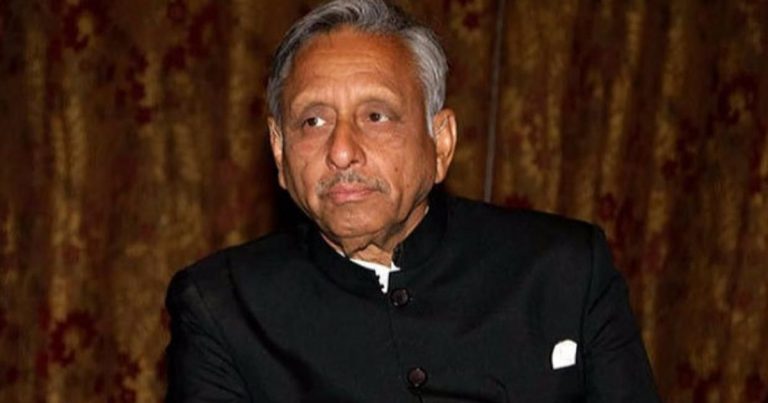
Senior Congress leader Mani Shankar Aiyer has now emerged from obscurity to put out a controversial statement on the historic event of abrogation of Article 370 and bifurcation of the Jammu and Kashmir.
Venting out his anger, Congress’ election-time wonder Mani Shankar Aiyar equatedKashmir’s situation to Palestine while claiming that Prime Minister Narendra Modi and Home Minister Amit Shah extinguished the rights of the Kashmiris.
In an article written in Indian Express titled “Who are we to teach Kashmiris the virtues of democracy?”, Mani Shankar Aiyar has lamented over the Modi government’s decision to scrap special status to Kashmir. In doing so, Aiyar has brought up the reference of Palestine to bring equivalence to Kashmir issue.
Aiyar claims that Modi-Shah duo has learned their lessons from their mentor, Benjamin Netanyahu and the Zionists, including former Israel Prime Minister Menachem Begin. Aiyar also added that PM Modi and Amit Shah have learnt to trample on the freedom, dignity and self-respect of the Kashmiris similar to Israel, who he claims had tried to get away with seven decades of merciless oppression of the Palestinians.
Furthering his hateful propaganda, Mani Shankar Aiyer, whose hearts often bleeds for Pakistan and its terrorists, wrote that Modi-Shah has promised the Kashmiris “development” in exchange for forced integration at the point of the rifle and pellet shots into the eyes of their children.
This is not the first time that Aiyer has stood behind the terrorist state of Pakistan to foul-mouth his own country. In 2018, Congress leader Mani Shankar Aiyar had courted a controversy after he had claimed that he was happy with Pakistan’s policy and sad with India’s approach on the India-Pakistan issue.
Aiyer is known for his Pakistan love. In his 2015 interview to a Pakistani news channel, Aiyar had famously asked for Pakistan’s help to ‘remove’ PM Modi and bring a Congress government to power.
Following India’s historic move to strip Article Article 370, which granted a separate status to Jammu and Kashmir state and a subsequent bill aimed to bifurcate the state into two Union Territories, a certain political establishment, media and intelligentsia in the country seemed to be unhappy. The cabal of the Congress party and its cronies resorted to inciting the people of Jammu and Kashmir by deliberately toeing the Pakistani line over the issue.
With this comment, Mani Shankar Aiyer has joined the long line of Congress leaders who have started sounding like Pakistan’s spokespersons.
Earlier, Adhir Ranjan Chowdhry, the Congress party’s leader in Lok Sabha had kicked up a storm in the Assembly today after he parroted the lines of Pakistan by questioning the government whether Article 370 and the state of Jammu and Kashmir was an internal matter.
The Congress party also feared to take a stand on the issue and pandered to the sentiments of Pakistan. Digvijaya Singh had also toed the line of Pakistan by bringing equivalence to the bifurcation of Jammu and Kashmir and the breaking up of Pakistan to form Bangladesh.
After parroting the lines of Pakistan by questioning the Indian government over Article 370 and the state of Jammu and Kashmir, senior Congress leader Ghulam Nabi Azad made an atrocious comment about NSA Ajit Doval to Shopian saying he had paid money to few Kashmiris on his visit to Shopian.
Earlier today, former Union Minister and senior Congress leader P Chidambaram played his communal card when he said that the BJP scrapped special status because J&K is a Muslim majority in Kashmir. He added that had it been a Hindu majority state, the BJP would not have touched it.
As the situation in Jammu and Kashmir is gradually coming back to normal, some elements, especially Pakistanis are having a hard time to digest that normalcy is prevailing in the Valley. One Pakistani journalist, Waj Khan, in order to continue to paint gloom in Kashmir was exposed by CRPF for spreading fake news and misinformation about the condition in the state.
The malicious content of this tweet is absolutely baseless and untrue. As always, all the security forces of India are working with coordination and bonhomie. Patriotism and our tricolour lie at the core of our hearts and existence, even when the color of our uniforms may differ. pic.twitter.com/1Rhrm09dPN
Khan had tweeted that there is a rift between the Jammu and Kashmir Police and the CRPF personnel in the state as one Muslim Kashmiri Policeman killed 5 CRPF soldiers for not allowing a pregnant woman to travel as she didn’t have a curfew pass.
However, the official Twitter account of CRPF was quick to admonish the malicious lies peddled by the Pakistani journalist. Asserting that tricolour beats in the heart of all the law enforcement agencies in the country, even though their uniforms may differ, CRPF stated that the news propagated by the said Pakistani journalist is absolutely baseless and untrue. It also stated that all security agencies work in tandem and share bonhomie with each other.
Kashmir police have also dismissed the claim and have stated that the Pakistani journalist’s malicious tweet has been reported to Twitter.
Pakistan is thoroughly rattled by India’s decision to abrogate Article 370. Pakistan PM Imran Khan had warned that Pulwama kind of attacks might happen again after India’s decision. Pakistan also took its fulminations to the UNSC, only to be snubbed by its chief. The UNSC chief reminded Pakistan of the Shimla Agreement and refused to intervene in the matter claiming it’s a bilateral issue between India and Pakistan.
Last week, on Monday, August 6, India struck down the partition relic of Article 370 and bifurcated the state of Jammu and Kashmir into two Union Territories. A curfew was imposed in the state to prevent chaos and disorder. The curfew is being relaxed or tightened in many areas in the state based on the ground situation as assessed by the security agencies.
Honestly, I am surprised, agitated, furious and even puzzled at recent focus around the 110-basis point cut in repo rates since January 2019. A recent article by Dr Bhalla for the Indian Express (you can read it by clicking here) summarized the fallacy of articles that have supported the decision of the MPC to cut policy rates by 35 basis points.
All of us should be worried and concerned regarding the way monetary policy is being formulated in the country, more so the government which is trying to revive growth through a combination of policy instruments. Without support from our monetary bosses, the job of North Block is twice as hard. In their ways, it’s trying to compensate for the same but at some point, our monetary masters will have to correct for their mistakes.
For now, let’s remind ourselves with the first lesson of economics- always look at real variables rather than nominal ones. This is extremely important for the MPC as it keeps looking at the nominal repo rates while we continue to have one of the highest real interest rates in the world.
A recent article by a commentator in Hindustan Times caught my attention as it mentioned that the MPC had little ability to stimulate growth. The author argued that a 110-basis point cut has failed to stimulate economic growth so far and therefore the monetary policy is likely to have little impact. Now here’s where I have a problem with this assessment- it’s comparing nominal interest cuts with real economic growth and trying to draw an inference. One of the reasons why the 110-bps cut have not had an impact on growth rates is because the cuts have been far too little. Let’s look at the real repo rates for instance, and the moment we look at them we find that despite the 110 bps cuts since January 2019, real repo rates have averaged higher than between May 2018 and December 2018. (refer to an earlier article on this issue by clicking here.)
Yes, real repo rates have as a matter of fact increased because inflation since January has been lower than last year. India’s real interest rates are at 2.2 per cent down from 3.43 per cent in April 2019. The average real repo rate was at 2.8 per cent during the first half of this financial year. Would someone explain how will the monetary policy have an impact on growth when instead of lowering real interest rates we have in fact increased them?
Another assertion made in the article is to do with aggregate demand being a week and therefore lowering interest rates can only have a limited role in the revival. One must remember that in the United States during the early 2000s when interest rates were lowered it led to a massive surge in consumption expenditure. The economy expanded for several years until the North Atlantic Financial Crisis occurred but there are different reasons behind the 2008 crisis. There’s evidence that cutting rates (real rates) can have a significant impact in improving consumption expenditure.
In the case of India, one must remember that while consumption has grown by approximately 50 per cent between 2013 and 2017, household debt (or personal loans) have increased by almost 90 per cent. Further, EMIs formulate a sizable proportion of expenditure for the households and therefore once real interest rates reduce, and EMIs are brought down we will have more money with households available to spend. Doing so would require EMIs and lending rates to be linked to real policy rates and therefore some banking reforms would be required to improve monetary transmission.
Irrespective of the reform, the fact remains that despite a 110-basis point cut our real interest rates have shot up and therefore we should start asking the MPC some serious questions. As far as revival of growth is concerned, one shouldn’t write off the important role of monetary policy. Getting our monetary policy is a necessary condition for sustaining a high growth rate and therefore the MPC should take a good look at the real policy rates across the world.