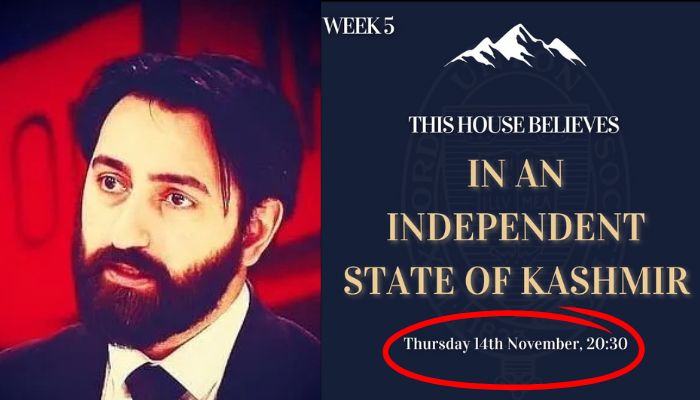
The Oxford Union has invited controversial Pakistani-origin ‘activist’ Muzzammil Ayyub Thakur, known for peddling disinformation on Jammu and Kashmir, to debate over the ‘need for independence’ of India’s integral territory. The event is scheduled for Thursday (14th November).
Muzzammil is infamous for parroting the Pakistani narrative on India’s Union territory with active backing from the military establishment and will speak for the motion ‘This House Believes in the Independent State of Kashmir’.
The Oxford Union in its Instagram post alleged, “The continued push for Kashmiri independence has sustained a long-standing struggle, rooted in the region’s quest for self-determination and autonomy. This has led to persistent unrest, human rights concerns, and renewed demand for autonomy among the Kashmiris.“
The ‘student society’ further claimed, “While nuclear-armed neighbours vie for control and geopolitical influence, the desire for peace among the population remains strong. Could an independent Kashmir be the answer to this enduring crisis?”
For the unversed, Muzzammil is the son of London-based ISI agent Ayyub Thakur. The latter had founded both ‘The Justice Foundation’ and ‘World Kashmir Freedom Movement’, which is now being run by Muzzammil.
During his lifetime, Ayyub Thakur was involved in lobbying for Jammu and Kashmir. He also channelled funds from Pakistan’s ISI to Islamic terrorists in the region including £70000 to Hizbul Mujahideen terrorist Syed Salahuddin.
Screengrab of the tweet by Muzzamil Ayyub Thakur
In an interview in 2015 for ‘Only Kashmir’ YouTube channel, Muzzammil acknowledged his father’s pro-terrorism stance on Jammu and Kashmir. He pointed out how Ayyub Thakur funded terrorism in the region and considered it as ‘Jihad’.
Just like his father, Muzzammil was seen endorsing terrorists after they were neutralised by the Indian security forces. “Final words of smiling Kashmiri shaheeds (martyrs)…A lesson for all of us,’ he tweeted in November 2021.
Interestingly, he was earlier spotted alongside Nitasha Kaul – an anti-India activist who was invited by the Karnataka Congress government in February 2024 but deported after landing in Bengaluru.
Nitasha Kaul has shared the stage with anti-India individuals and organizations. She is well acquainted with ISI agents like Muzzammil Ayyub Thakur, whose father used to bring ISI funds to Kashmir. She attends multiple such anti-India seminars with Muzzammil. (11/13) pic.twitter.com/g502F7F6cg
In May 2022, the Jammu and Kashmir police booked Muzzammil under the Unlawful Activities (Prevention) Act for carrying out anti-national activities and threatening an Indian advocate named Syed Zeeshan.
A police spokesperson said, “Thakur, through his social media account and other platforms, is indulging in activities which are prejudicial to the sovereignty, integrity and unity of India.”
He added, “This apart, a proper complaint was lodged by Advocate Syed Zeeshan before Srinagar Police against Muzzamzil Ayyub Thakur and others. In the complaint, it is alleged by him that Muzzammil Ayyub at the behest of ISI and ISPR is threatening, harassing, carrying out criminal intimidation, besides being involved in cyber-crimes against the complainant.”
Muzzammil had also threatened a Kashmiri woman named Tasleema for exposing Pakistan’s propaganda at the United Nations. His X (formerly Twitter) account has been withheld in India.
Repeating Pakistani talking points on J&K
He had collaborated with the Islamabad Policy Research Institute (IPRI) on several occasions to disseminate Pakistani narrative on the Indian territory of Jammu and Kashmir.
“Post-August 5, 2019, when India illegally annexed occupied Kashmir, turning it from a de facto occupation to a de jure occupation, bifurcating the state and then turning it into a union territory, one of the lies was to bring development to Kashmir, make it prosper. The reality is that India has turned Kashmir into another East India Trading Company, making it open season for Indian businesses and so-called investors to loot, and in the process, destroy even ecology on the way,” Muzzamil said during one of his deranged rants.
In 2020, he was roped in by Turkish state-owned media ‘TRT World’ to spread canards about the situation at ground zero in Jammu and Kashmir.
Muzzammil had previously tried to create global outrage over the ‘Kashmir issue’ at the 52nd Session of the United Nations Human Rights Council (UNHRC) and had endorsed an anti-India magazine by the name of ‘Kashmir Inside.’
Poster featuring Muzzammil Ayyub Thakur as guest speaker in anti-India event
In October 2023, Muzzammil was seen pleading with the British government to interfere in India’s internal affairs during a roundtable conference hosted by ‘Tehreek-e-Kashmir’ in the British Parliament.
He also highlighted the importance of narrative-building exercises and public advocacy to tarnish India’s image and further Pakistan’s agenda among the youth. It partly explains what led to his thrashing during an anti-India event in London on 9th August 2024.
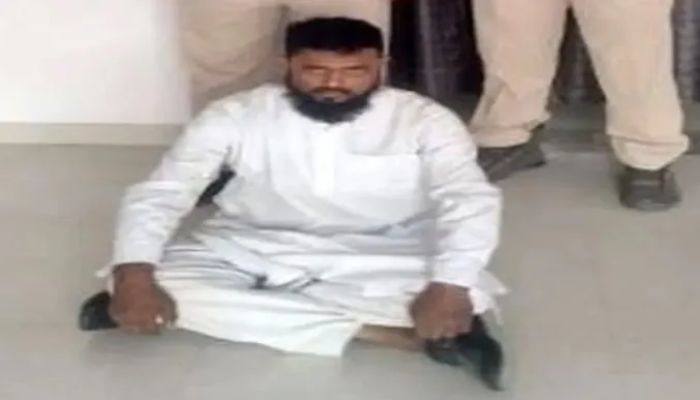
In Rajasthan’s Jhunjhunu, Rafiq alias Ali Khan, a Muslim ‘Aalim’ has been arrested on the accusation of sexually exploiting women by luring them with false promises. According to reports, Rafiq would draw them in by scaring them with ghosts before exploiting them. A victim filed a complaint, and the police arrested him.
An investigation indicated that Rafiq, a West Bengal resident, first attracted girls and obtained all of their information before physically and financially exploiting them. An investigation revealed that Rafiq, who targeted young girls and women, already had two wives. The accused always carried bones with him so he could deceive anyone.
Notably, while our report mentions that the man accused of violating women is Rafiq alias Ali Khan, the media, in reporting on this case, refers to him as a ‘Tantrik’ and uses terms like tantra-mantra. Apart from that, it has written Bengali Baba in the headline leaving the readers with the impression that the arrested accused is a Hindu ‘baba’ and conveniently covering up his Muslim identity.
Tantrik, Tantra-Mantra, and Baba are all related to Hinduism. Other religions have specific terminology for occult practices and occultists, therefore the right wing has long opposed using the term Tantrik to describe a Muslim Aalim involved in criminal activities. Despite the objections, the mainstream media is not refraining from using misleading terms like Tantrik and Baba for Muslim exorcists in such cases.
This is not the first time that the mainstream media passed off a Muslim godman as ‘Tantrik’. In February this year, OpIndia reported how Hindustan Times published a report about the filing of an FIR against accused Muslim ‘godman’ Abubakar with a misleading headline: “Tantrik booked for duping women by offering a cure for cancer, helping secure US visa”. The publication did not mention the name of the accused in the headline and simply wrote ‘Tantrik’ to perhaps ‘secularise’ the crime and give the impression that the accused is a Hindu man who duped the complainant in the name of ‘Tantra-Mantra’.
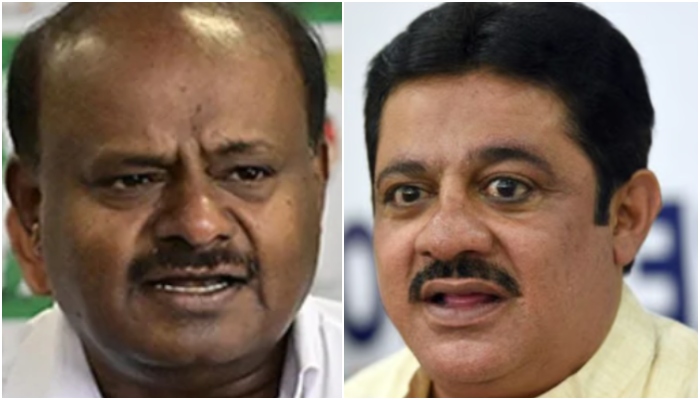
On Sunday, 10th November, Zameer Ahmed Khan, a Karnataka Minister and Congress leader, sparked controversy shortly after he passed racist comments against JD(S) leader HD Kumaraswamy. Referring to the Union Minister, Khan used the term ‘K*aliya’, a derogatory epithet meant for someone with a dark complexion.
Speaking at a campaign gathering in Karnataka’s Channapatna on Sunday, 10th November Khan said, “K*aliya Kumaraswamy is more dangerous than the BJP,” which prompted sharp criticism from opposition leaders.
ಚನ್ನಪಟ್ಟಣ ಉಪಚುನಾವಣೆ ಪ್ರಚಾರದ ವೇಳೆ ವಸತಿ ಖಾತೆ ಸಚಿವ @BZZameerAhmedK ಜನಾಂಗೀಯ ನಿಂದನೆ ಮಾಡಿದ್ದಾರೆ.
ಚನ್ನಪಟ್ಟಣ ವಿಧಾನಸಭಾ ಕ್ಷೇತ್ರದಲ್ಲಿ ಭಾನುವಾರ (10-11-2024) ರಾತ್ರಿ ಪ್ರಚಾರದ ವೇಳೆ ಬಹಿರಂಗ ಸಭೆಯಲ್ಲಿ ಸಾರ್ವಜನಿಕವಾಗಿ ಕೇಂದ್ರ ಸಚಿವರಾದ ಶ್ರೀ ಹೆಚ್.ಡಿ. ಕುಮಾರಸ್ವಾಮಿ ಅವರನ್ನು, ಜಮೀರ್ ಅಹ್ಮದ್ ಖಾನ್ "ಕಾಲಾ… pic.twitter.com/fPOGcbgBgX
“Due to some differences in our Congress party, CP Yogeshwar contested as an Independent. He had no option but to join the BJP. He was not ready to join the JD(S) because ‘K*aliya Kumaraswamy’ was more dangerous than the BJP. Now he (Yogeshwar) has come back home,” Khan said.
Yogeshwar switched affiliation from the BJP to the Congress before the Channapatna by-poll, which came about after Kumaraswamy resigned as the constituency’s MLA to join the Union. The JD(S) was enraged and objected to Khan’s statements, demanding that the Congress immediately remove the minister from the Karnataka Cabinet for his racist slur.
“Your power and greed that you will buy the family of Deve Gowda who brought you up politically will not last long,” JD(S) said in a post on X. The party also inquired about the colour of Congress leaders like Mallikarjun Kharge, HC Mahadevappa, Satish Jarakiholi, Priyanka Kharge, and KH Muniyappa.
ವರ್ಣನಿಂದಕ, ಜನಾಂಗೀಯ ದ್ವೇಷಿ ಮಿಸ್ಟರ್ ಜಮೀರ್,
ನಿನ್ನನ್ನು ರಾಜಕೀಯವಾಗಿ ಬೆಳೆಸಿದ್ದ ದೇವೇಗೌಡರ ಕುಟುಂಬವನ್ನೇ ಖರೀದಿ ಮಾಡುತ್ತೇನೆ ಎನ್ನುವ ನಿನ್ನ ಅಧಿಕಾರ ಮತ್ತು ದುಡ್ಡಿನ ದರ್ಪ ಹೆಚ್ಚು ದಿನ ಉಳಿಯಲ್ಲ.. ನಿನ್ನ ಸೊಕ್ಕಿನ ಮಾತಿಗೆ, ಕಪ್ಪು ವರ್ಣದ ಬಗ್ಗೆ ನಿನಗಿರುವ ಹೊಲಸು ಮನಸ್ಥಿತಿಗೆ ರಾಜ್ಯದ ಜನರು ತಕ್ಕ ಉತ್ತರ ನೀಡುತ್ತಾರೆ.
“The nation vehemently condemns the disgraceful and racially charged remarks by Zameer Ahmed against HD Kumaraswamy. This kind of hateful language marks a new low in political discourse and has no place in a civilized society. We demand accountability from leaders who choose divisive attacks over constructive dialogue,” it added in another post.
The nation vehemently condemns the disgraceful and racially charged remarks by Zameer Ahmed against HD Kumaraswamy. This kind of hateful language marks a new low in political discourse and has no place in a civilized society. We demand accountability from leaders who choose… https://t.co/teH4kZbzmN
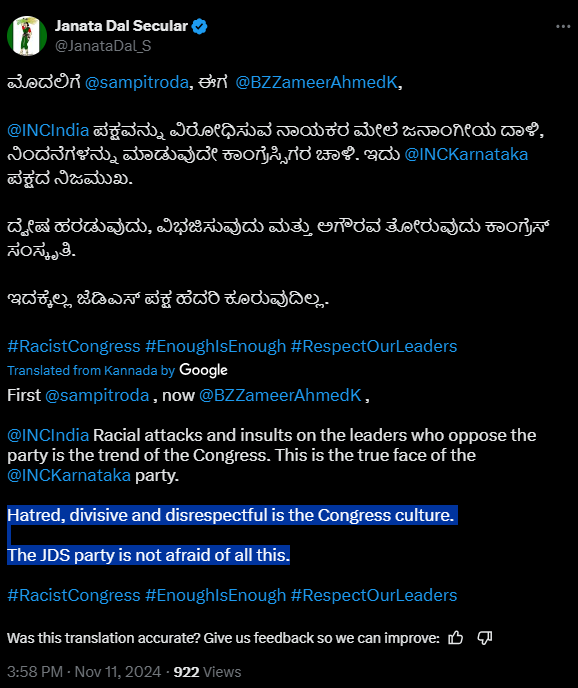
“Racial attacks and insults on the leaders who oppose the party is the trend of the Congress. This is the true face of the Karnataka Congress. Hatred, divisive, and disrespectful is the Congress culture. The JDS party is not afraid of all this. Enough is Enough,” the party said in yet another post.
Meanwhile, Kiren Rijiju, a Union minister and senior BJP leader, also criticized Khan’s racist remarks. “I strongly deplore Congress Minister Zameer Ahmed calling Union Minister & Ex CM of Karnataka Sh. Kumaraswamy as ‘Kaalia Kumaraswamy’. This is a racist remark, same as Rahul Gandhi’s adviser calling South Indians look like Africans, North East as Chinese, North Indians as Arabs,” Rijiju wrote on X.
I strongly deplore Congress Minister Zameer Ahmed calling Union Minister & Ex CM of Karnataka Sh. Kumaraswamy as 'Kaalia Kumaraswamy'. This is a racist remark, same as Rahul Gandhi's adviser calling South Indians look like Africans, North East as Chinese, North Indians as Arabs.
In the Channapatna assembly by-poll, Yogeeshwara will face Kumaraswamy’s son Nikhil Kumaraswamy, who is seeking office as an NDA candidate on the JD(S) ticket. Khan further alleged that Kumaraswamy indicated he didn’t need Muslim votes. He also challenged Kumaraswamy saying that the Muslim community would buy his entire clan. “Aye Kumaraswamy, tell me your bidding amount. The Muslim community will generate funds that can buy your entire clan,” Khan said amid cheers from the crowd.
Notably, this is not the first time that Khan has commented on the color of Kumaraswamy. He had made similar remarks 3 years ago in Bidar. “I’m short, and God made me short. God made him dark, so he is kala (black). If I called a fair person black, that would be wrong. But black will remain black, isn’t it?” he was quoted as saying.
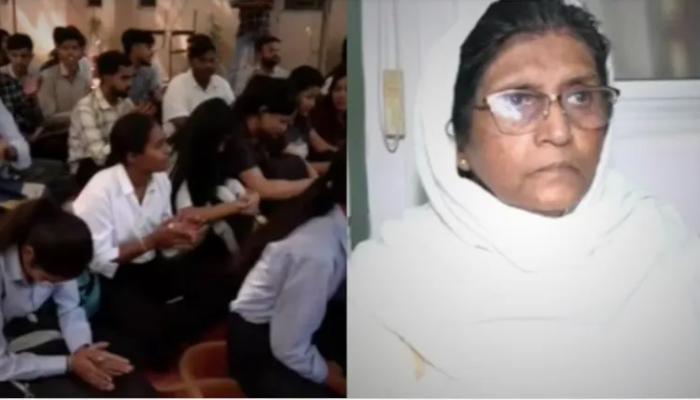
The female students residing in the hostel of the Barkatullah University of Bhopal, Madhya Pradesh, were harassed and made to write an apology letter for going to the temple and reciting the Sunderkand. Following this incident, the Akhil Bharatiya Vidyarthi Parishad (ABVP) launched a protest in opposition to this decision.
The girls shared that the hostel’s chief warden Ayesha Rais said that the Hindu girls would first have to get permission from the university administration before visiting the temple.
Hindu organisations have expressed their outrage over the incident. They have warned that they would take to the streets if appropriate action is not taken in the matter against the warden.
“The ban on Sunderkand and religious events will not be tolerated under the rule of Chief Minister Dr Mohan Yadav”, Rashtriya Swayamsevak Sangh’s affiliated student wing ABVP agitated in the university. Students associated with ABVP gathered at the main gate of the campus and arranged Ramdhun. They offered prayers hoping for wisdom of the administration.
An ABVP leader said that the action of stopping the students from going to the temple and participating in religious programs, is condemnable, and ABVP’s protest against this unfair decree of the warden will continue.
In response to the escalating dispute, Chief Warden Ayesha Rais claimed that students are permitted to take part in cultural events hosted on campus in response to the escalating dispute. According to her, the matter has to do with security and discipline. She further added, “This is not a religious issue. It was resolved. The matter is not about going anywhere, but about discipline. The Vice Chancellor has formed a committee and it will investigate. The girls are like our children. Nothing should happen to them. They live away from their parents. We give them so much love. We provide them with security so that they can enjoy their studies.”
“It is our job to act as guardians. We maintain a register regarding the arrival and departure times of the students. We also keep an eye on the girls to return to the hostel on time. They are also warned to be on time when they get late. The issue has been settled and the girls have agreed. They have completed their entry,” Ayesha Rais alleged.
Sunderkand was reportedly organized on the university campus and girls also took part in it. They reached the hostel late due to this. The hostel warden had instructed them to return to the hostel by the designated hour, which was 7:00 to 7:30 pm. They were told to take permission from the university if there was further delay.
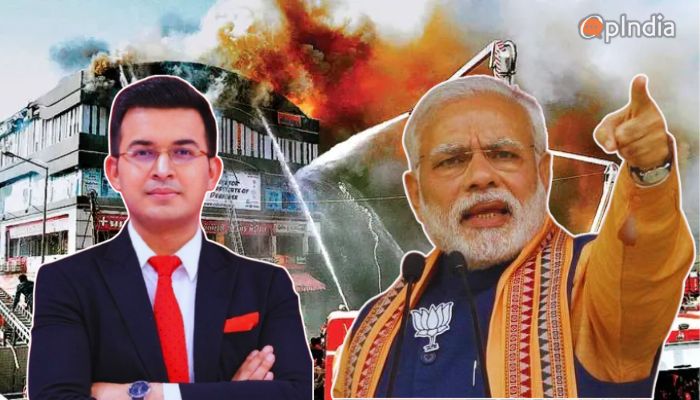
In a podcast released on 10th November, featuring actor Vikrant Massey, journalist Shubhankar Mishra spoke about how the mainstream media spins narratives around an incident which influences perception about the incident or people involved. Mishra revealed that back in 2019, the television news channel where he worked as a reporter then had asked him to visit the house of one of the victims of the Surat coaching fire accident which claimed 22 lives and get a bite from them blaming Prime Minister Narendra Modi for the incident.
The fire accident at the coaching centre in a commercial complex in Surat’s Jakatnaka area transpired on 24th May 2019. The fire broke due to a short circuit in the air conditioning system. The building did not have a fire safety certificate. Escape routes were blocked trapping the students.
“I was in Gujarat when an incident happened in Surat wherein students were falling from a building to save themselves from fire. Several disturbing videos of girls jumping from the building had emerged back then. It was a tragic incident and we did reporting from there for two days. The coaching centre was sealed, the accused were arrested and the matter came to a closure. Two days after, there was a big leader’s show in Ahmedabad, I asked my editor if I should go to Ahmedabad since the culprits in this case had been arrested, and coaching had been sealed what shall I do. But he (the editor), said no! when the whole world will telecast the rally, you go to the houses of [Surat coaching fire] victims. Grab a child and get a bite from him saying “Modi uncle what did you do?” Mishra said.
He further delved into what could have been the outcome of getting such a statement from the victims and how making the victims say “What did you do Modi uncle, get me my sister back” would have defined the public perception of the incident and Prime Minister Modi.
Notably, while Shubhankar Mishra did not explicitly name which news channel or the editor he was talking about, Mishra’s LinkedIn profile and old videos of coverage of the Surat coaching fire incident confirm that he was working at TV9 Bharatvarsh. Although Mishra did not name the editor who asked him to get a statement against PM Modi, from the coaching fire tragedy victims, netizens are speculating that it may have been Vinod Kapri or Ajit Anjum who worked at TV9 Bharatvarsh in 2019 and are rabid Modi haters.
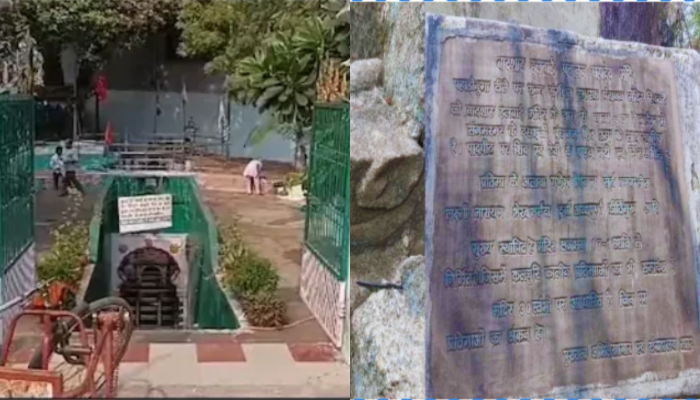
An ongoing matter of grabbing the land of the Gayatri Bal Mandir (temple) to build a mosque in Madai of Ranjhi area of Jabalpur, Madhya Pradesh came to light recently. Meanwhile, the issue of a very old stepwell built on Gwarighat Road has now surfaced. The stepwell of Badshah Halwai Mandir installed during the period of Queen Durgavati of Gondwana has been converted into a mausoleum. Furthermore, the stepwell has been painted with a green colour to incorporate it into the Muslim faith. The development also shocked the Hindu Seva Parishad which observed the fresh changes when they witnessed the green-painted stepwell and the influx of followers of Muslim religion there.
The Hindu Seva Parishad made a video after closely examining the stepwell. They asserted that the statue of Nandi Maharaj, Shivlinga, the Swastika sign and the Shri Yantra are visible at the entry and represent the Sanatan culture. The group’s officials have charged that Muslims have been encroaching upon the land in the past few years and also built a shrine there. The topic of ‘land jihad’ has resurfaced in Jabalpur following the revelation of the stepwell’s altered appearance.
According to the Hindu group, a plot was hatched to erect a mausoleum thereafter members of the Muslim community seized it due to land jihad. Hindu Seva Parishad’s district chief Atul Jaiswani, along with dozens of Hindu activists, protested at the Police Control Room Ghantaghar on 9th November. They unveiled that Urs has also been organised at the location. On the other hand, Hindus have been doing puja at this stepwell for many years, and it has an old temple of archaeological significance.
People reportedly reduced their movement after seeing the increasing interference of the Muslim community and the conflict. Hindu Seva Parishad handed over a memorandum to the sub-divisional magistrate (SDM) in the name of the collector. The Hindu Seva Parishad has submitted a memo to the district administration against the move and demanded to free the stepwell from occupation within thirty days and return to its original form.
Additionally, it warned that the outfit would paint the stepwell saffron if the unlawful occupation was not removed. They have also threatened a major agitation if the administration does not take the matter seriously or initiate any action against it. Badshah Halwai temple and the stepwell are under the Archaeological Department. It has long been a site of worship for the adherents of Sanatan Dharma and it also contains the remains of Hindu idols.
Notably, on 26th September, workers from the Vishva Hindu Parishad (VHP) and Bajrang Dal gathered in large numbers to protest the mosque spanning 3,000 square feet built on the disputed site at Gayatri Mandir According to the Hindu activists, the mosque was built on the grounds of the Hindu religious place. They added that the government had provided the mosque with water and electrical connections as a sizable number of Muslims from all across the city had been gathering covertly at the mosque. The demonstrators challenged the structure on the temple’s property and presented supporting documentation. The Hindu groups have repeatedly protested at the place to oppose the illicit mosque.
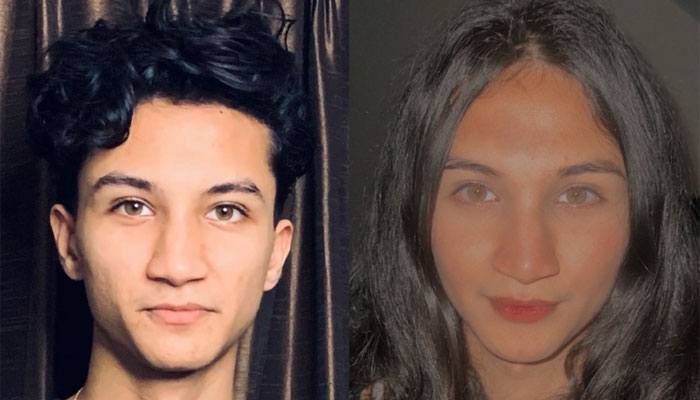
Anaya Bangar, formerly known as Aryan Bangar, child of former Indian cricketer Sanjay Bangar, is making headlines after sharing her journey as a transgender woman. Before becoming Anaya through Hormone Replacement Therapy (HRT) in 2023, she was active in the field of cricket.
However, both the International Cricket Council (ICC) and the England and Wales Cricket Board (ECB) introduced rules barring any transgender person from participating in women’s cricket. In a now-deleted video, Anaya shared her photos before surgery with several prominent names in cricket and wrote, “Chasing my dream of playing cricket professionally has been a journey filled with sacrifices, resilience, and unwavering dedication. From early mornings on the field to facing the doubts and judgments of others, every step has demanded strength.”
Sanjay Bangar's son undergoes harmone replacement surgery.
In a recent video shared by Anaya on Instagram, she mentioned that during the 11 months of HRT, she has lost muscle and her body has changed significantly. However, she claimed that she felt happy, and the therapy has reduced her dysphoria. For those unaware, dysphoria can be described as a feeling of profound unhappiness, distress or dissatisfaction, where a person feels uncomfortable in their own body or as if they are in the wrong body.
On 27 October, she shared a report from 20th October in which the ECB announced the banning of transgender women from women’s professional cricket. In the post, she wrote, “It sucks being a trans athlete.”
In August 2024, when Anaya Bangar was nine months into HRT, she shared a post describing her journey and how she had to disconnect from cricket, which had been a significant part of her life.
In the post, Anaya wrote: “From a young age, cricket has always been a part of my life. Growing up, I watched my dad with awe as he represented and coached the country, and it wasn’t long before I started dreaming of following in his footsteps. The passion, the discipline, and the dedication he showed to the sport were deeply inspiring to me. Cricket became my love, my ambition, and my future. I’ve spent my entire life honing my skills, hoping that one day, I would get the chance to represent my country, just like him. I never thought I’d have to consider giving up the sport that has been my passion, my love, and my escape. But here I am, facing a painful reality. As a trans woman on hormone replacement therapy (HRT), my body has changed drastically. I’ve been losing the muscle mass, strength, muscle memory, and athletic abilities I once relied on. The game I’ve loved for so long is slipping away from me.”
Anaya Bangar further expressed that it hurt her more because there are no proper regulations for trans women in cricket. She added: “It feels like the system is forcing me out, not because I lack the drive or talent, but because the rules haven’t caught up with the reality of who I am. My testosterone levels are down to 0.5 nmol, the lowest it can be for an average cisgender woman. Despite this, I still don’t have a place to represent my country or play at a professional level as my authentic self.”
“To make matters worse, the system says that to compete in women’s sports, I should have transitioned before male puberty. But here’s the contradiction: society and the legal system make it illegal to transition as a minor. So, what am I supposed to do? The system is forcing me into an impossible situation, setting standards I couldn’t have met even if I’d wanted to. It’s heartbreaking that the body I’ve worked so hard to align with my true self is now seen as a barrier to continuing my cricket journey in the women’s category. We need policies that don’t make us choose between our identity and our passions. Trans women deserve the right to compete, play, and thrive”, she said.
ICC regulations on trans participation
While Anaya Bangar decided to undergo a gender reassignment surgery followed by HRT, the regulations regarding the participation of trans persons in cricket were clear. Notably, the ICC had previously allowed trans women to participate in women’s cricket. Twenty-nine-year-old Danielle McGahey was the first transgender player to feature in international cricket in early 2023. However, her participation drew significant criticism, leading to nine months of consultations among ICC members. Finally, on 21st November 2023, the ICC Board approved new gender eligibility regulations for the international game in consultation with stakeholders.
According to the media release, the new policy was based on the principles of protecting the integrity of the women’s game, safety, fairness, and inclusion. This means that any male-to-female participants who have undergone any form of male puberty will not be eligible to participate in international women’s cricket, regardless of any surgery or gender reassignment treatment they may have undertaken.
The review of the policy was led by the ICC Medical Advisory Committee, chaired by Dr Peter Harcourt. The media release specified that it related solely to gender eligibility for international women’s cricket. The board clarified that gender eligibility at the domestic level is a matter for each individual Member Board and may be influenced by local legislation.
At the time, ICC Chief Executive Geoff Allardice said, “The changes to the gender eligibility regulations resulted from an extensive consultation process and are founded in science and aligned with the core principles developed during the review. Inclusivity is incredibly important to us as a sport, but our priority was to protect the integrity of the international women’s game and the safety of players.”
The policy will be reviewed again in 2026.
ECB’s domestic regulation changes
As the policy clearly mentioned that the decision to allow transgender women to play in women’s teams at the domestic level was a matter for each individual Member Board, Anaya Bangar, who currently plays in the United Kingdom, was still able to play for the ECB. However, in October 2024, the England and Wales Cricket Board decided not to allow transgender women to feature in the top two tiers of the new women’s domestic structure or the women’s Hundred.
In a press release, the ECB stated that it had consulted “relevant science and medical evidence” and considered “fairness, safety, and inclusion.” Trans women, however, will be able to participate in tier three of the new domestic system, which will be launched in 2025. Furthermore, they will be allowed to participate in recreational cricket as well.
Other sports regulations
World Athletics, the international governing organisation for athletics, banned transgender women (men who have transitioned to women) from competing in the female category at international events in march 2023. The decision came after several instances came to fore where male athletes competed in women’s tournaments claiming they identify as “women”.
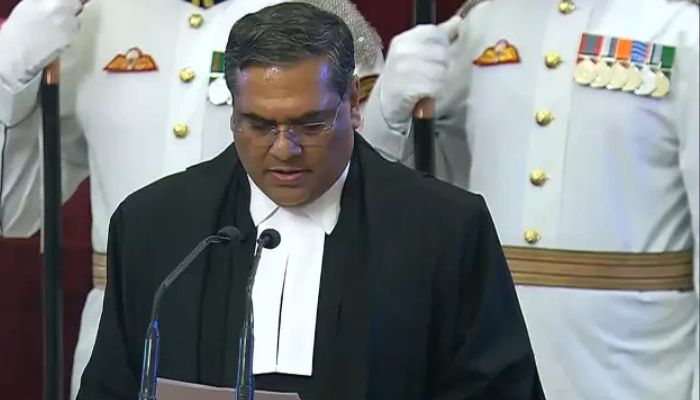
On Monday (11th November), Supreme Court judge Sanjiv Khanna was sworn in as the 51st Chief Justice of India (CJI). He succeeds the retired CJI DY Chandrachud, the erstwhile left-liberal hero now villainised by the same ecosystem in India.
Justice Sanjiv Khanna is the nephew of former Supreme Court Judge Hans Raj Khanna, who infamously took on Indira Gandhi’s government in 1976. In a dissenting judgment, he ruled that the right to life and personal liberty could not be suspended, even during an Emergency.
This cost Justice Hans Raj Khanna his appointment as CJI. Indira Gandhi broke the convention of appointing the seniormost judge as the Chief Justice of India, promoting Justice Hans Raj Khanna to resign.
Inspired by his uncle, Justice Sanjiv Khanna enrolled at the Bar Council of Delhi in 1983 and was appointed to the Delhi High Court as an Additional Judge in 2005.
Justice Khanna was thereafter elevated to the Supreme Court in January 2019. He is set to serve in the capacity of Chief Justice of India for a brief period of 6 months until 13th May 2025.
Key Judgments as Supreme Court Judge
The newly appointed CJI was a part of the 7-Judge Bench that overruled the 1967 Azeez Basha case, which denied minority status to Aligarh Muslim University.
Justice Sanjiv Khanna and three other judges directed that the status of AMU be freshly determined based on the tests laid down in that particular case (Aligarh Muslim University Through its Registrar Faizan Mustafa v Naresh Agarwal).
In April 2024, he along with Justice Dipankar Dutta shot down [pdf] a petition filed by the Association for Democratic Reforms (ADR), seeking 100% VVPAT verification of votes cast on Electronic Voting Machines (EVMs).
He noted that bank officials are aware of the identities of the donors who purchased the bonds. Justice Khanna was previously part of the 2019 Bench that increased the number of booths, which undergo VVPAT physical verification, from 1 to 5 per Assembly Segment.
In February this year, Justice Khanna was part of a 5-judge bench that dubbed the electoral bond scheme ‘unconstitutional.’ Justice Khanna in a concurring judgment dismissed the argument that donor privacy applied to donations made through banks.
He was part of the 5-Judge Bench that unanimously upheld the constitutionality of abrogation of Article 370. In a concurring judgment, Justice Khanna stated that the removal of Article 370 did not undermine India’s federal structure.
In 2019, Justice Khanna did not interfere with the decision of the Election Commission of India (ECI), which stalled the release of Prime Minister Narendra Modi’s biopic amid the enforcement of the Model Code of Conduct (MCC).
He was also part of the Bench which rejected the Centre’s petition to increase the compensation given to victims of the 1984 Bhopal Gas Tragedy. The apex court contended that the settlement could be set aside only on grounds of ‘fraud’, which was not pleaded by the Centre.
He along with 4 other Judges also upheld that the Supreme Court has the authority to grant divorce to couples using its discretionary powers under Article 142 of the Indian Constitution without the need to approach lower courts. (Shilpa Sailesh v Varun Sreenivasan)
In 2018, Justice Khanna also ruled in favour of the decriminalisation of adultery in Joseph Shine v Union of India.
Key cases where the decision is pending
He is also part of the 2-Judge Bench of the Supreme Court, deciding the constitutionality of the Triple Talaq law enacted by the Modi government.
Justice Sanjiv Khanna is also hearing the case (Youth For Equality v State Of Bihar) to determine the validity of the caste-based survey carried out by the JDU-RJD government in 2023.
He is also part of a Bench tasked to decide the validity of the Chief Election Commissioner and Other Election Commissioner Act enacted by the Modi government. The law removed the CJI from the 3-panel committee meant to choose the Chief Election Commissioner.
Justice Khana is also heading a Bench on a case (Durga Dutt v Union of India) seeking to make Fundamental Duties, which was introduced by the Indira Gandhi govt in 1976, enforceable in India.
He along with two other Judges will also assess the 2006 Nagaraj judgment, which validated reservation in promotions. The newly appointed CJI will also hear the 2023 case, concerning the ban on BBC’s propaganda documentary against PM Modi.
Justice Khanna is also part of a 2-Judge Bench, which will decide if certain provisions of The National Commission for Minority Educational Institutions Act of 2004 and The National Commission for Minorities Act of 1992 are constitutionally valid.
He will further decide whether minority status should be given based on State population or nationwide population.
Conclusion
Justice Sanjiv Khanna has ruled in favour of the Modi government over the abrogation of Article 370 and against it in the electoral bond case.
He has drawn the praise of the left-liberal lobby for decriminalising adultery, declaring electoral bonds invalid, and not interfering with the decision of the Election Commission of India to stall the release of PM Modi’s biopic.
The newly appointed CJI was hailed by the same ecosystem for paving the path for Aligarh Muslim University to attain minority status.
He had occasionally drawn ire from the coterie over holding abrogation of Article 370 constitutional and not entertaining their demand of a 100% EVM-VVPAT match.
As mentioned above, Justice Khanna is part of several Benches which are yet to decide key constitutional matters such as the validity of the Triple Talaq law, Bihar caste census, and legislation pertaining to the appointment of Election Commissioners.
If the incumbent CJI finds merits in the arguments presented by the government and rules in its favour, Justice Sanjiv Khanna will be equally demonised by the left-liberal ecosystem as it did with his predecessor Justice (retd.) DY Chandrachud.
The cabal spares none unless they give favourable verdicts in all cases. They demand a judiciary committed to their ideals like the one once espoused by Indira Gandhi.
In the weeks leading up to the assembly elections in the state of Jharkhand, the Bharatiya Janata Party (BJP) is constantly exposing the ruling Jharkhand Mukti Morcha (JMM) and the corruption under Chief Minister Hemant Soren’s government. The BJP’s key campaigners, including Prime Minister Narendra Modi, Home Minister Amit Shah, and Uttar Pradesh Chief Minister Yogi Adityanath, have hammered the incumbent government on corruption and illegal infiltration.
Prime Minister Narendra Modi addressed an election rally for the Jharkhand Assembly polls in Bokaro on Sunday, November 10th, and promised the people that the BJP would ensure corruption-free government in the state. PM Modi also slammed the JMM for playing caste politics by trying to mobilise the OBCs. Earlier, on 4th November, he stated that the JMM, Congress, and the RJD have crossed all the limits of corruption.
On 5th November, CM Yogi Adityanath, while addressing an election rally in Koderma, accused the JMM of fostering corruption and protecting mafia activities across the state. Union Minister Shivraj Singh Chouhan, on 2nd November, also accused the JMM of corruption in the name of government schemes.
Notably, the Enforcement Directorate (ED), to date, has sent 47 First Information Reports (FIR), 24 intimation letters, and 11 reminders to the top officials in Jharkhand accusing them of scams in the land, mining, sand, and MNREGA sectors. These notices have been sent by the central agency in just the past two years.
As per an exclusive report by News18, these notices have been sent to higher authorities in the state including at least three ministers, four senior IAS officers, and multiple district mining officers (DMO). Meanwhile, the officials who have received the reminders include the chief secretary, Director General of Police (DGP), Director General (DG) of the Anti-Corruption Bureau (ACB), and key principal secretaries.
As these notices remained unresponsive in the due period, the agency filed a comprehensive 140-page writ petition, including 10 annexures, in the Jharkhand High Court last week. The ED shared extensive documentation with the state, presenting evidence of alleged ‘criminal’ mismanagement and corruption in connection with at least five major scams from September 2022 to September 2024. These included counterfeiting government stamps, corruption in coal and MSME allotments, illegal sand mining and sales, irregularities in MNREGA, rural development scams, forged land deeds, and other land-related frauds.
“Despite the evidence, the Jharkhand government reportedly stonewalled the investigations, by not taking action or registering fresh FIRs, leaving the corruption network untouched and operational. This calculated inaction not only calls into question the accountability of the state’s highest offices but also raises alarm over systemic corruption that appears to be sheltered by those in power,” ED said in the petition.
“With each ignored intimation and FIR, the Jharkhand government has seemingly reinforced its complicity, allowing a culture of impunity to thrive. The state’s decision to turn a blind eye to such damning evidence threatens to further undermine public trust in governance, drawing serious questions about its commitment to law and order,” it added.
The state of Jharkhand governed by the JMM has been in the news for major corruption scams that looted the taxpayers for massive sums. Here are a few cases that were widely reported and that shook the system forcing central agencies to interfere:
Embezzlement of MNREGA funds
The Khunti district MNREGA scam in Jharkhand is one of the high-profile scams which actually dates back to Jharkhand in the 2010s. Recently, in April 2024, the SC dismissed a plea of suspended Jharkhand cadre IAS officer Pooja Singhal seeking bail in a money laundering case linked to the alleged embezzlement of MNREGA funds and other charges. A bench of Justices Sanjiv Khanna and Dipankar Datta declined the bail plea saying it’s an ‘extraordinary case’.
The top court was hearing an appeal filed by Singhal against the Jharkhand High Court order dismissing her bail plea. The Enforcement Directorate has accused Singhal of money laundering, saying more than Rs. 36 crore cash, linked to alleged illegal mining, was seized by its teams as part of two separate money laundering investigations.
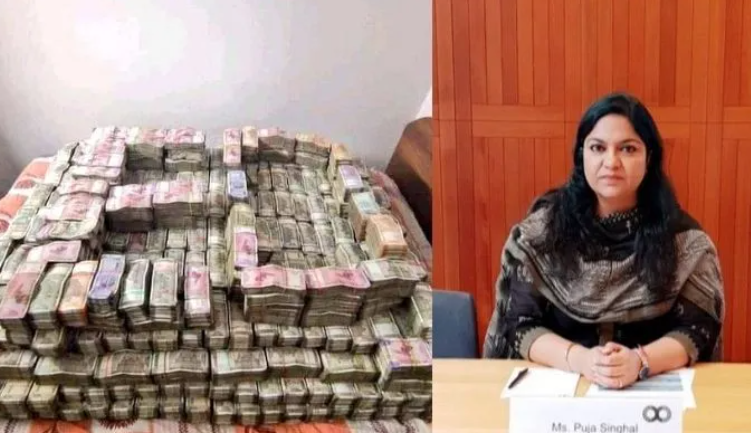
IAS officer Pooja Singhal
Apart from the 2000-batch IAS officer, her businessman husband, a chartered accountant associated with the couple, and others were also raided by the ED as part of a money laundering probe linked to a case of alleged corruption in the MNREGA scheme. Singhal was arrested in 2022 after the ED stated that it had credible evidence of her connection with CA Suman Kumar from whom the ED had recovered more than Rs 25 crores of cash.
It all started when a money laundering case was filed against a former junior engineer in the Jharkhand government, Ram Binod Prasad Sinha. In June 2020, Sinha was arrested from the North 24 Parganas district of West Bengal by the ED after PMLA charges were filed against him in 2012.
Sinha was reported to have told the investigators that Pooja Singhal had obliged two NGOs, Welfare Point and Prerna Niketan, with Rs 6 crores fund and had granted a mining lease on 83 acres of forest land in contravention of the environmental regulations. She was accused of having committed irregularities in the MNRGEA. Singhal was the secretary of the Department of Mines and Geology and the managing director of Jharkhand State Mineral Development Corporation Limited (JSMDC). A detailed report regarding this case was covered by OpInida. The same can be read here.
Land scam involving Jharkhand CM Hemant Soren
In June this year, Jharkhand CM Hemant Soren was granted bail by the High Court after he was arrested in a major land scam case. According to an official statement, the ED had opened a probe into three cases of land fraud based on numerous FIRs filed by the Jharkhand Police and the West Bengal Police against Pradip Bagchi, Bishnu Kumar Agarwal, Bhanu Pratap Prasad as well as others under various Indian Penal Code sections.
It was alleged that a massive mafia racket transferred land ownership illegally in Jharkhand. The government notification stated that “these criminal elements used to forge the legacy records in Ranchi and Kolkata.” Additionally, it was discovered that dishonest government employees had fabricated land ownership records to curry favor with the aforementioned land mafia. Around 14 individuals were arrested in this case by January 2024 including Bhanu Pratap Prasad, the Revenue Deputy Inspector of Badgai region in Ranchi.
During a raid on Prasad’s residence, the ED seized a substantial amount of government documents along with several suspicious documents retrieved from his mobile phone. The agency conducted more than 40 searches and over 5 surveys concerning the case.
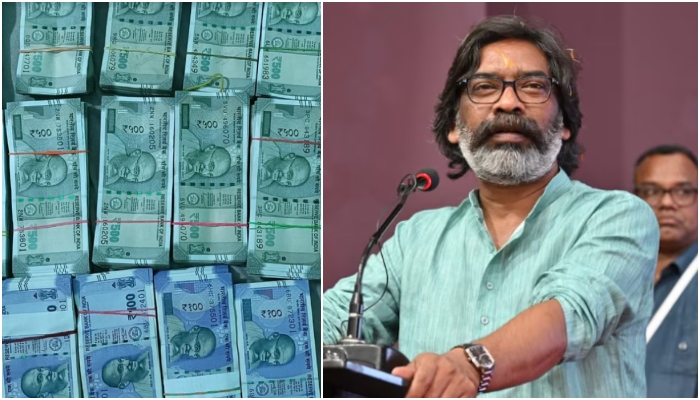
CM Hemant Soren was grilled and arrested by the ED in land scam (NDTV)
Meanwhile, on 1st September 2023, the ED officials had attached three plots worth over Rs 161.64 crore in Ranchi in this case. It was alleged that these land parcels were fraudulently altered to the advantage of land mafias with the help of Land Revenue Department personnel. It was the second attachment in the case taking the total value of the assets that have been attached to a staggering Rs 236 crore.
In September, the ED also filed a second chargesheet in the case. The first prosecution complaint had previously been lodged on 12th June 2023. Notably, 14 accused arrested in the case included Pradip Bagchi, Afshar Ali, Saddam Hussain, Imtiaz Ahmed, Talha Khan, Faiyaaz Khan, Bhanu Pratap Prasad, 2011-batch IAS officer Chhavi Ranjan (Ex DC Ranchi), Dilip Kumar Ghosh, Amit Kumar Agarwal, Bishnu Kumar Agarwal, Rajesh Rai, Bharat Prasad, and Prem Prakash.
The CM of the state was also arrested in the case on January 31st after his name was mentioned in the statements of businessman Vishnu Agarwal and Revenue Sub-Inspector of Bargain Circle Bhanu Pratap Prasad. The ED had accused him of running a scheme to manipulate records, via fictitious transactions and forged documents, and acquiring 8.86 acres of land in Ranchi worth crores. However, later he was released.
Jharkhand Mining Scam
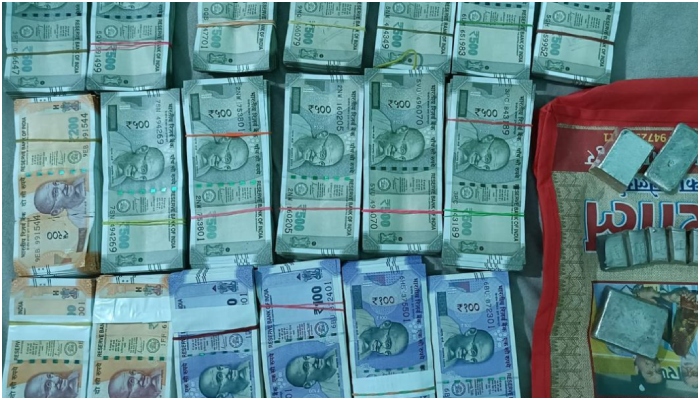
The CBI recently, on 5th November, conducted searches at 16 locations across three states, including election-bound Jharkhand, as part of its investigation into an illegal stone mining scam at Nimbu Pahar, where a political aide to Chief Minister Hemant Soren is reportedly under scrutiny. The searches were carried out in Jharkhand, West Bengal, and Bihar, covering 11 locations in Jharkhand’s Sahibganj, three in Ranchi, and one each in Patna and Kolkata, targeting premises of suspects and their associates. During the raids, the CBI seized Rs 50 lakh in cash, one kilogram of gold, one kilogram of silver, and property documents worth several crores. The agency filed this case on November 23, 2023, following directives from the Jharkhand High Court.
Cash collected in Jharkhand illegal mining scam (The Hindu)
In an earlier FIR from November 20, 2022, the CBI’s Ranchi unit booked Pankaj Mishra, a reported political aide to Chief Minister Soren, along with Pavitra Kumar Yadav, Rajesh Yadav, Sanjay Kumar Yadav, Bachhu Yadav, Sanjay Yadav, and Suvesh Mandal, for their alleged involvement in pilferage and illegal extraction of stone at Nimbu Pahar in Sahibganj.
Following the preliminary inquiry, the CBI assumed control of the FIR filed by Sahibganj Police against the eight accused. During a hearing, the Enforcement Directorate (ED) reported that Mishra was responsible for the illegal stone mining and transportation operations in Sahibganj, noting that the National Green Tribunal (NGT) had also raised serious concerns over illegal mining in the area.
The high court noted the ED’s assertion that Pankaj Mishra, a representative of the Jharkhand chief minister and a highly influential figure, was directly involved in illegal mining in Sahibganj and neighbouring areas. The court added that Mishra, already arrested under the Prevention of Money Laundering Act (PMLA) and held in jail, appeared to benefit from political protection, hindering a thorough investigation.
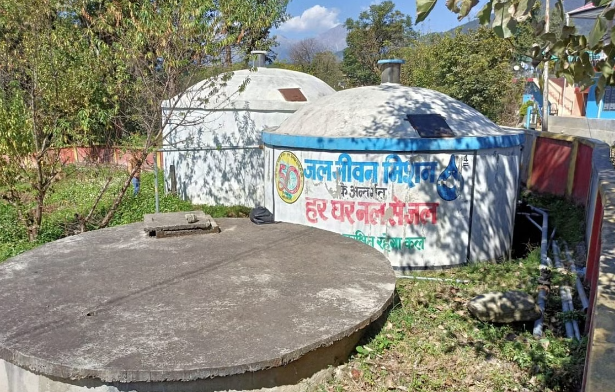
Jal Jeevan Mission Scam
In the month of October, the Enforcement Directorate (ED) conducted simultaneous raids at 20 locations in connection with a multi-crore scam involving the Jal Jeevan Mission under the Department of Drinking Water and Sanitation. Among those facing the raids were IAS officer Manish Ranjan, Drinking Water and Sanitation Minister Mithlesh Thakur, and his associates.
Reports indicate that these raids are part of an investigation into alleged irregularities in the Jal Jeevan Mission, the scam allegedly exceeding around Rs 4,000 crore. A Public Interest Litigation (PIL) has already been filed regarding these allegations. During the Lok Sabha election campaign, Prime Minister Narendra Modi and senior BJP leaders also highlighted the scam, which involves a central scheme aimed at providing piped drinking water to every household.
Image- Amar Ujala
Raids took place at the premises of Vinay Thakur, Minister Mithlesh Thakur’s brother; Harendra Singh, his personal secretary; and several department engineers, with locations including Indrapuri, Ratu Road, Harmu, and Morhabadi in Ranchi, as well as Chaibasa and Garhwa in Jharkhand. It is crucial to note that Mithlesh Thakur, a contractor-turned-politician, is an important figure in the current administration. IAS officer Manish Ranjan, who previously faced ED scrutiny over a rural development scam, served as the department’s secretary for an extended period.
Tender Scam in Jharkhand
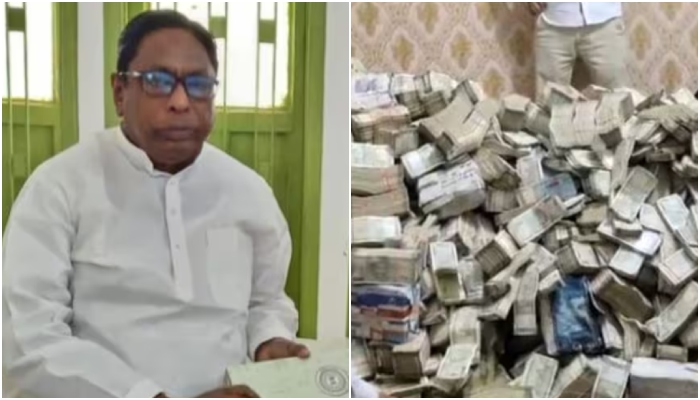
On 30th October, the ED accused former Jharkhand rural development minister Alamgir Alam of pressurising the department’s chief engineer to collect a “commission” from each tender. The ED filed a prosecution complaint at the Prevention of Money Laundering Act (PMLA) court in Ranchi and stated that Alamgir Alam and his associates generated proceeds of crime totaling up to Rs 56 crore.
The agency reported that the chief engineer, responsible for final decisions on department tenders, was compelled to collect 3 percent of each approved contract’s value as a commission for the rural development department. Of this amount, around 1.35 percent was allegedly funneled to Alam’s aides on his behalf, with the remaining portion distributed among engineers and other officials.
Alamgir Alam has been held in jail since his arrest by the ED on May 15th. Later, in June, he resigned as cabinet minister and Congress Legislative Party (CLP) leader in the Jharkhand Assembly. A four-time MLA, Alam has not been fielded as a candidate by the Congress, which forms part of the ruling alliance with the Jharkhand Mukti Morcha in the state. Instead, his wife Nishat is running for his seat in Pakur.
Alamgir Alam (Image- Aaj Tak)
The case by ED against Alamgir Alam is based on two First Information Reports (FIRs) one of which was by the Jharkhand Anti-Corruption Bureau (ACB) in 2019, and another by the Delhi Police’s Economic Offences Wing (EOW) in 2023. The 2019 FIR, filed by the Jharkhand ACB, resulted in a chargesheet against Suresh Prasad Verma from Jamshedpur and his tenant Alok Ranjan, with Rs 2.67 crore being recovered. Following this, the ED filed an Enforcement Complaint Information Report (ECIR) in 2020, alleging that the funds recovered from Alok Ranjan were part of a ‘commission’ collected by then-chief engineer Veerendra Kumar Ram from the rural development department.
In a separate investigation, the Delhi Police EOW further charged chartered accountant Mukesh Mittal for allegedly assisting Ram in laundering illicit funds into the bank accounts of Ram’s relatives. In May, the ED conducted searches at properties linked to Alamgir Alam’s private secretary Sanjeev Kumar Lal, domestic helper Jahangir Alam, and real estate associate Munna Singh, who allegedly gathered commissions on Lal’s behalf. The ED claimed that Rs 32.20 crore seized during a search at Jahangir Alam’s residence in Ranchi was concealed there by Lal on Alamgir Alam’s instructions.
Over a span of three days, from May 6th to May 8th, the ED seized Rs 37.55 crore in cash. Statements from Ram and Alamgir Alam’s secretary, Lal, made under Section 50 of the Prevention of Money Laundering Act (PMLA), revealed that a commission of 3-4% of the total value of tenders awarded to contractors was extracted for departmental projects. The ED further alleged in its complaint that Alamgir Alam was directly involved in possessing and concealing at least Rs 35 crore in proceeds of crime through Sanjeev Kumar Lal, and in acquiring and hiding an additional Rs 56 crore of illicit funds.
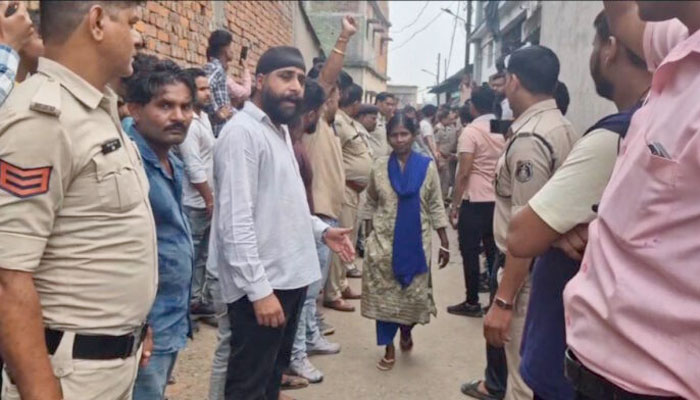
On Sunday, 10th November, a case of alleged forced Christian conversion stirred tension in Raigarh, Chhattisgarh. According to media reports, members of Hindu organisations, including the Vishwa Hindu Parishad, gathered outside a house where the alleged conversion was taking place in the name of mass prayers. They raised slogans against the people involved in the matter, and the police were called.
Women and children were safely evacuated from the three-storey building. Two persons, identified as Saul Naga and Indrajeet Khare, were arrested by the police, while ten others were detained for questioning for their alleged involvement in the forced conversion.
Accusations of inducements for conversion
Several Hindu organisations’ activists accused the organisers of the event of luring Hindu men and women to convert to Christianity with promises of financial and health benefits. Over 100 people, including women and children, were present at the event. The police were called by the Hindu organisations to stop the “prayer meeting”. The in-charge CSP and SDM, along with around 30 police personnel, arrived at the scene to maintain law and order.
Police intervention and investigation
All the women and children present at the event were evacuated. In-charge CSP Akhilesh Kaushik said in a statement that the police had received complaints in the past. The investigation into the matter is underway, and several individuals were taken to the police station for questioning.
Community concerns and prior complaints
The Kotwali police station in Raigarh had been receiving complaints about suspected forced conversion for the past 15 days. The recent incident in the Jutmill police station area intensified local outrage. Residents reported that regular prayer meetings were being held four times a week and that people from afar were participating. The locals expressed frustration over alleged police inaction despite repeated complaints.
Legal implications of forced conversion
Notably, under the Chhattisgarh Freedom of Religion Act 1968, forcibly or fraudulently converting anyone, or doing so through inducements, is a criminal offence punishable by up to one year in prison, a fine of up to ₹5,000, or both. In cases where minors, women, or those from Scheduled Castes or Tribes are lured, penalties double to two years of imprisonment and a ₹10,000 fine. Sections 298 to 302 of the Bharatiya Nyaya Sanhita, 2023, outline crimes affecting religious sentiments. Religious conversion through coercion is a non-bailable and non-compoundable offence, carrying strict penalties.