Home Blog Page 6807

Indira Gandhi killed democracy, Rahul Gandhi killed decency

0

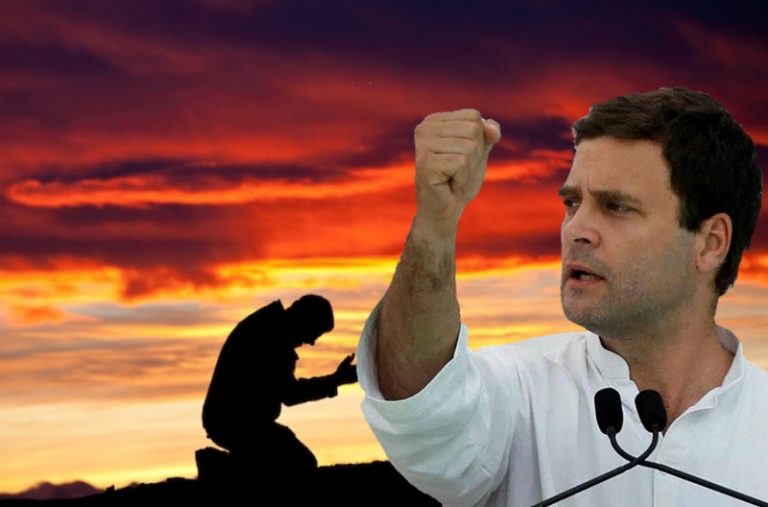
Congress President Rahul Gandhi published a tweet today which was open to various interpretations and insinuations, listing out high profile politicised deaths claiming ‘no one killed them’.


The names mentioned by Rahul Gandhi are certainly interesting.

Former Gujarat Minister Haren Pandya was assassinated by Islamist radicals on 26th March 2003. Sohrabuddin Shaikh, a notorious gangster was accused of having killed the former minister. Sheikh was an underworld criminal with links to the Sharifkhan Pathan alias Chhota Dawood and Abdul Latif gangs, and with Rasool Parti and Brajesh Singh, both known to be close to India’s underworld kingpin Dawood Ibrahim. Tulsiram Prajapati was Sohrabuddin Sheikh’s close aide. It is believed that Prajapati was an eyewitness in Sohrabuddin encounter case.

Shaikh was killed in an encounter on November 26, 2005, near Ahmedabad along with his wife Kauser Bi. A year later, on December 27, 2006, Prajapati was also shot dead by Gujarat and Rajasthan police in an encounter near Chapri on Gujarat-Rajasthan border. A special CBI court yesterday acquitted all accused in the case.

Special CBI judge, Judge Loya, who was hearing the Sohrabuddin encounter case, died of cardiac arrest on 1st December 2014 in Nagpur. A report published by Caravan last year raised quite a few eyebrows on his death, but the propaganda that Judge Loya was murdered was duly busted.

Congress had alleged that retired district Prakash Thombre and advocate Shrikant Khandalkar ‘died under mysterious circumstances’. However, despite the allegations, the Supreme Court called the petitions ‘scandalous’ and ordered no probe in Judge Loya’s death. In fact, the judicial ‘whistleblowers’ used by Congress in the Judge Loya case have extremely questionable past.

However, by politicising these unfortunate deaths, Congress has killed decency. Rahul Gandhi’s tweet casting aspersions on these deaths, despite the law having taken its course on them is a very low form of humanity the Congress President has displayed today.

It shows how in politics, no one really ‘dies’. They are all kept alive so that whenever the need arises, they are brought alive to perpetuate the propaganda.

To further the agenda, Congress sides with criminals, calling their encounters extra-judicial killing, finds a conspiracy when there are none, puts up allegations and accusation which the Supreme Court also throws out. And when that happens, Congress goes on rhetoric, building a narrative that all independent agencies, including the judiciary, are ‘compromised’. They are not ‘compromised’ when judgements are in their favour like EVMs were not hacked when Congress won in Chhattisgarh, Madhya Pradesh and Rajasthan.

We saw the exact same narrative with the Rafale case as well. Rahul Gandhi screamed “chowkidaar chor hai” from the rooftops. His allegations were baseless and were debunked several times. Yet, his rhetoric continued. Unfortunately, Rahul’s lies did not stop even after the Supreme Court and the Chief Justice of India himself delivered a verdict saying that the Rafale deal was clean and a matter of national security.

It is often said that Congress is more dangerous out of power than in power. While in power, they will devise bills like the Communal Violence Bill which proclaimed that only Muslims could be victims in communal cases and shamelessly further the concocted “Hindu terror narrative”. While out of power, they will dance for the electorate. Make promises they can’t keep. Create fantastical lies even if it means compromising national security like in the case of Rafale and Doklam and proudly tout their sympathy for terrorists, thieves, gangsters etc smartly packaging it with frills called social justice.

This is exactly what Rahul Gandhi and his lackeys have been doing for the past 4 years and their delusions seem to have no end. Today as well, Rahul Gandhi, despite court verdicts, insinuated conspiracy and sympathised with gangsters and terrorists. In the race to occupy the seats of political power again, the Congress clearly is willing to disregard every fibre of decency, morality and responsibility. Whether that gets them political dividends, we will know only in 2019.
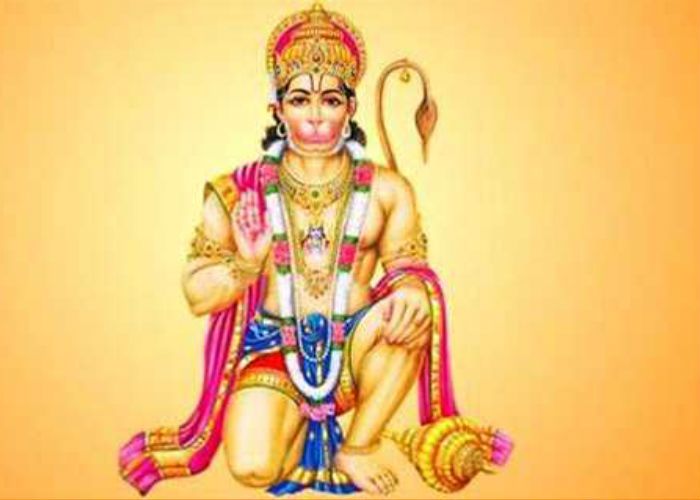
Lord Hanuman: The latest God that politicians wish to exploit, all the while, making a fool of themselves

A lot is being said about Hanuman ji in recent days. First, there was a manufactured controversy where UP CM Yogi Adityanath was misquoted by media. Media reports claimed that Yogi Adityanath has said Hanuman ji was a Dalit, which was soon found to be gross misquotation and misrepresentation of facts.

Indian political scenario nowadays competes and sometimes defeats Bollywood in absurdity and drama content. More often than not, we find ourselves checking whether a news portal is real or a parody one, because, such is our predicament that parodies sound real while real sounds increasingly like parody these days.

Another glimpse of it was witnessed yesterday when BJP legislator Bukkal Nawab claimed that Hanuman ji was a Muslim. Though he did not claim copyrights over Bajrangbali, he said that he thinks Hanuman ji was a Muslim. His reasoning, all Muslim names like Rehman, Suleiman, Farman are inspired from Hanuman.


Twitter users had some more ideas to further the reasoning of deep secrets behind rhyming vocabulary.

Via Twitter
Via Twitter

We Hindus believe that Hanuman ji is immortal and he has been present all along since Treta Yug to modern days. Now another BJP leader has claimed that Hanuman ji is probably Jaat, considering his ‘nature’. Recently, there was also a claim of Hanuman ji being a Jain.

It is not even the first time that Hanuman ji is being discussed in a political context. Not long ago, images of Hanuman ji, created by artist Karan Acharya went immensely popular all over the country. Soon, secular, liberal intellectuals started complaining how the ‘Angry Hanuman’ represents a ‘militant-Hindu’ stereotype and is fanning communalism in India.

Now that Hanuman ji’s caste, nature and probably political affiliations are being discussed, let us elaborate the issue a bit.

Hanuman ji is the son of a King, Kesari and his wife, Anjana. Now, regarding his birthplace, many believe that he was born in Gokarna in Karnataka, some say he was born on the Anjeneya hill near Hampi, also in Karnataka. Before the Karnataka government stakes a claim over Hanuman ji’s home state status, let it be known that Maharashtra too claims that Hanuman ji was born at a place called Anjaneri mountain in Nasik district.

What if Hanuman ji is a Kannadiga first, well the rioting people in Bengaluru who torched a hundred buses in 2016 during the Kaveri agitation did imitate some of his activities on a minuscule scale. But Hanuman ji is vegetarian, so we don’t think he will be motivated to burn anything for a plate of biriyani.

While people in the Hindi-belt can argue over Hanuman ji being Jaat, Muslim or Gujjar, the newly formed government in Sri Lanka might sue him and claim compensation for burning their capital city to ashes. considering they had to lease an entire port to China recently, the financial prospects might motivate our neighbours in the south to sue our beloved god.

Since Maharashtra also seems to claim his birthplace, an all-out inter-state war between Karnataka and Maharashtra for claiming Hanuman ji as their own cannot be ruled out either. Imagine a situation where Mrs Fadnavis goes on a selfie-clicking spree with Bajrangbali while HD Kumaraswamy visits 10 Janpath to seek Sonia ji’s advice on what to do next.

Any Hindu who has read Ramayan and believes in Hanuman ji knows that he is beyond the narrow definitions of caste, creed, region, and language. Born as a Rudra Avatar, Hanuman ji, who, as per Hindu scriptures, could threaten the very existence of the sun in his childhood, represents the greatness that lies beyond these narrow identities.

Like Yogi Adityanath actually said, Hanuman ji represents every Indian from north to south, rich to poor, regardless of what caste or religion they conform to. He was a war strategist, a bureaucrat, a skilled diplomat, a loyal soldier, and a fierce warrior.

If we Indians want to relate ourselves to any ‘activity’ of Hanuman ji, it should be the shedding of self-doubt and believing in our inner strength that we are capable of greater things. Like Hanuman ji was once cursed to forget his strength to cross the ocean in a single leap, we seem to have forgotten our true identities in narrow lanes of casteism and regionalism. Jai Hanuman.

Despite Congress promises, Rajasthan farmers unlikely to get waiver certificate till after 2019 elections: Report

The farmers of Rajasthan may have to wait many more months to realise their dream of loans being waived-off as a report by the DNA claims that the Rajasthan government may take a longer time to implement the scheme of the loan-waiver in the state.

The report suggests that there is no clear timeline yet on how to proceed regarding the loan-waiver scheme and it will take a lot more time than expected to distribute loan waiver certificates to the farmers. Officials have added that there are practical issues and even during the previous government, the first set of certificates could only be issued in June this year after the loan waiver had been announced in February.

The loan waiver scheme announced two days back by the Congress government will have an additional burden of Rs 18,000 crore on the state exchequer. Rajasthan CM Ashok Gehlot has claimed that the previous BJP government’s farm waiver announcement, which hadn’t been executed fully, will also add to the burden to the government.

“Our government also has to bear a major part of the fiscal burden of the scheme announced by the previous BJP government, amounting to Rs 6,000 crore, taking the total loan burden to Rs 24,000 crore,” Ashok Gehlot said.

Reportedly, some loans, around Rs 10.5-crore borrowings of 27 lakh farmers have been taken from cooperative banks, while nearly 24 lakh farmers have defaulted on repayment of their loans to the nationalised banks.

The state government officials who had worked to implement such waiver announced by the previous Vasundhara Raje government said that the policy implementation will take time.

“When the last government declared a waiver of Rs 8,000 crore for small and marginal farmers in February, it took about a quarter of this fiscal to conceive and start issuing the first batch of waiver certificates,” an official said.

The officials said that the loan amount to waive-off is about three times the amount promised earlier and hence the distribution of loan waiver certificates to farmers will be delayed unless the government convinces the banks to avail funds in the coming months to ensure the implementation before the general elections due in May.

As the model code of conduct for the election is expected to enforced in March, it is very difficult to clear the dues of 50 lakh farmers by then, the official added.

The state finance department is reportedly looking for options to proceed over the waiving of farm loans in the state. The report says that the Rajasthan government has two options, the first is to lean on the government guarantee to the banks and the other being the inclusion of loan waiver into the state budget, which will take a toll the fiscal health of the state and increase the state’s fiscal deficit.

“Last time the National Cooperative Development Corporation (NCDC) had agreed to give a loan of Rs 5,000 crore after the state government gave a guarantee to Rajasthan State Cooperative Bank for writing off farmer debts during Raje government,” an official was quoted saying in the DNA report.

A senior official said that if the government includes this loan waiver in its budget, it shall have to delay some projects and divert money from them into the implementation of the loan waiver scheme. The loan waiver amount of Rs 24,000 crore is estimated to be 11 percent of the total revenue outlay of Rs 2,12,325 crore. The loan waiver will increase the state’s fiscal deficit, which has already reached at Rs 28,011 crore in 2018-19, said an official.

The Rajasthan government seems to be following the footsteps of Madhya Pradesh government of inserting new clauses against farm loan waive-off contrary to unconditional waive-off boasted by Congress party president Rahul Gandhi. A farmer has already lost his life in Madhya Pradesh due to the politics of loan-waivers after he found that he was not eligible for a waiver.

Similarly, two farmers have ended their lives in the past week after the Congress-JDS led Karnataka government failed to waive-off the farm loans and several others have now received repayment notices against the claims of Rahul Gandhi who had said that they have completely written off loans in the state of Karnataka.

Chandrababu Naidu disagrees with MK Stalin’s endorsement of Rahul Gandhi as PM candidate

While speaking at the India Today Conclave South 2018, Andhra Pradesh Chief Minister Chandrababu Naidu stated that he does not support DMK Chief M K Stalin’s stand of projecting Congress President Rahul Gandhi as the Prime Ministerial candidate of the Mahagathbandhan.

He said, “I made it very clear, we should not announce a candidate today. My stand is, post-elections we will decide”, he added calling Stalin’s remark “his party’s stand” and not that of the opposition.

Naidu said that the BJP does not respect the democratic institutions. He accused PM Modi of misusing the government agencies like CBI and ED against his MPs, MLAs and other functionaries. When told by the journalist that according to Centre his MPs are allegedly involved in corruption, therefore, they are being raided, Naidu taunted, “Their MPs (BJP MPs) have not come from heaven. How many cases are there against Amit Shah”, he questioned.

Naidu said that all the like-minded people and the citizens of the country need to come together to form an anti-BJP front, as he calls it, to save the fundamental right to freedom for which so many people had sacrificed their lives. He urged people to fight against PM Narendra Modi, Amit Shah, and the BJP.

He talked about how there are ideological compulsions, political compulsions, and democratic compulsions. He gave the example of CPM fighting elections against Congress party in States and yet supporting it in the Centre due to ideological compulsion. He called his party’s decision of supporting BJP and opposing Congress as a political compulsion. Similarly, according to him, the coming together of the opposition parties is a “democratic compulsion”.

Naidu has become a vocal critic of BJP after he pulled his party out of the NDA earlier this year. For the Telangana assembly elections, TDP had allied with Congress. However, the alliance did not do either party much good as K Chandrasekhara Rao’s won Telangana with a decisive mandate. Many senior Congress and TDP leaders were reportedly critical of the alliance.

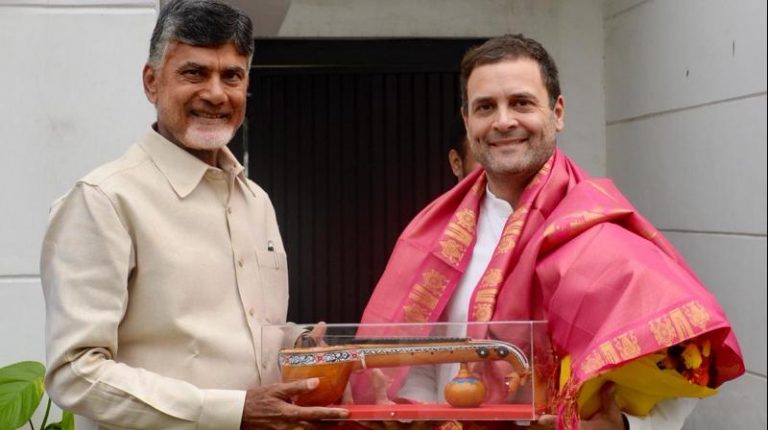
It is notable here that MK Stalin’s remarks were criticised by TMC too. Mamata Banerjee’s party had stated that Stalin’s announcement was wrong and the PM Candidate should be announced only after elections.

Earlier, other key political leaders like Sharad Pawar, Mayawati and Akhilesh Yadav too, either directly or through their party’s stand, have hinted they might not accept Rahul Gandhi as a PM candidate.

AgustaWestland case: Delhi court rejects plea of Christian Michel seeking a separate cell in Tihar jail

0

Christian Michel, the AgustaWestland middleman, who has been kept in Tihar jail, after the Patiala House court sent him on 10-days judicial custody till December 28, was produced before the court on Saturday. The court disposed of an application whereby Michel had sought a separate cell in the Tihar jail.

The Delhi court on Friday had asked the jail authorities to respond to the application filed by Michel through his advocate, Aljo K Joseph and Vishnu Shankar, seeking a direction to the “Superintendent of Tihar Jail to allocate a separate cell to accused Christian James Michel”.

In his plea, Michel argued that some of his inmates would be released soon and any incorrect statement made by them outside might go against his interest and also may interfere in the free and fair investigation of the case.

The Delhi court, today, quashed the appeal as his counsel stated that he was already provided with a private cell in Tihar. The court instead directed Tihar authorities to ensure Michel’s safety.

Christian Michel, one of the three alleged middlemen (the other two accused are Guido Haschke and Carlo Gerosa), being probed in the case by the Enforcement Directorate (ED) and the CBI, is a British businessman, accused of money laundering, bribery, and fraud in connection with the Rs 3,600 crore worth AgustaWestland VVIP chopper scam. He is being accused of paying bribes to several politicians, bureaucrats and officials in exchange to get this deal.

Michel was arrested in the UAE and extradited to India on December 4, 2018. Earlier, the Delhi court had sent Christian Michel to 5-day CBI custody for interrogation and later extended it for another four days. On December 19, the court had extended his judicial custody till December 28, and reserved for December 22 its order on the bail plea of Christian Michel.

Facts, No Fiction: Recent farm loan waiver prove that Congress hasn’t learnt from its past mistakes that drove fiscal deficit up

The recent trend of populist announcements in the run-up to elections by the Congress for petty political gains indicates a reluctant party that is unwilling to learn from its macroeconomic blunders. To be fair to them, such bad Economics always makes for good politics as voters tend to handsomely reward them for such announcements however, the long-term costs of such politics is way too high which is why it is important to discuss this issue at length.

It has been the case that UPA has been fiscally reckless while the NDA has historically been more prudent at the handling of fiscal deficits. Be it the NDA-1 which enacted the FRBM Act or the NDA-2 which modified the act and has demonstrated its staunch commitment towards fiscal consolidation, both these governments have given a lot of importance to strong macroeconomic fundamentals. This is in contrast with the UPA era where fiscal deficit, current account deficit, inflation and interest rates were all significantly high.

The recent slowdown in economic growth under the UPA from 2011 onwards is just one example where populist policies by the Congress led to a complete collapse of growth. There is a direct relationship between fiscal deficits and inflation and thus, high fiscal deficits result in the acceleration of inflation. Thus, the increase in inflation post-2011 can be attributed to the high fiscal deficits Congress maintained from 2008 onwards and this high fiscal deficit in 2008 was largely due to the farm loan waiver that Congress had announced for direct electoral considerations in 2009.

What we are witnessing today with the Congress going around town announcing farm loan waivers is no different than what we witnessed in 2008 but the question worth asking is if farm loan waivers are effective and the answer to this is a definite no. Thus, the Congress is knowingly pushing for a policy that will not address the problem of volatility in farm incomes but it will cost the state exchequer a significant amount of money and it will only cause inflation in the medium run.

But it is not a new phenomenon whereby reckless spending by the state for political purposes was witnessed under the Congress government. The episode of 2008-2014 reminds me of the entire growth that India experienced in the 1980s. This growth also came with the backdrop of a widening fiscal deficit and the deficit only increased further during the Rajiv Gandhi’s tenure. While this widening of the deficit did lead to growth, the inflation accelerated further, and this growth also led to a widening current account deficit.

“Current Account deficit is defined as the current account consists of the balance of trade, net primary income or factor income and net cash transfers, that have taken place over a given period of time.”

The reason why current account deficit widened is that the growth led to a trend of importing goods for consumption needs while our exports didn’t increase to compensate for the increase in imports. Thus, the deficit-financed growth under Rajiv Gandhi induced a major problem for India which always maintains a twin-deficit; which is a simultaneous fiscal and current account deficit.

This experiment of deficit financing of growth ultimately led to the balance of payment crisis in 1991 when India finally decided to open its economy and get rid of the rigid state control over economic activity. The point, however, remains that anytime a government follows a populist fiscal policy it is bound to have some repercussions and a prolonged fiscal expansion is bound to result in deterioration of macroeconomic fundamentals for a nation which can swiftly escalate and become a full-blown economic or financial crisis.

Despite the experience of the unstable nature of growth in the 1980s and from 2009-2011, the recent populist policies of the Congress indicate two things; it’s an unwillingness to learn from past economic mistakes and secondly the lack of a sound policy agenda to resolve some of the long-standing issues of Indian farmers.

While farm loan waivers result in great photo ops, but they do little to resolve the problem at hand. In fact, they only further complicate the situation further as they drain out potential resources which could have been allocated for rural infrastructural development. With adequate evidence of farm loan waivers being rendered as an ineffective measure to stabilize farm incomes, the fascination for them is largely due to the political rewards that such measures deliver.

Indeed, populist policies do give handsome political returns, but these returns are not only small but also extremely short-term while the costs of such policies are huge and tend to show in the medium to long-term. The crisis of 1991 and high inflation from 2011-2014 is evidence of the costs that these policies induce upon the citizens and the economy so it’d be wise to advise the Congress to learn from its past mistakes and put the economic interests ahead of its political interest. At the same time, it is important that voters realize that there are no free lunches and it is ultimately the voter who ends up paying for such reckless spending by political parties. It is about time that we learn from the past and stops rewarding bad economic policymaking politically as for only then will the good economic policy be the norm and not an exception.

Indian High Commission officials in Islamabad complain of harassment by Pakistani agencies

However hard the Pakistan Prime Minister Imran Khan tries to create an eyewash by window dressing Pakistan’s intentions over remoulding relationships between India and Pakistan, be it by creating a facade over the groundbreaking ceremony of the Kartarpur corridor, or by hogging limelight for the release of Hamid Nehal Ansari, Pakistan cannot restrain itself from projecting its acrimonious shenanigans.

According to reports, Indian consular officials in Pakistan have once again claimed harassment by Pakistani agencies.

Officials of the Indian High Commission in Pakistan have reported that they are being harassed deliberately as their internet connections are being blocked, gas connections are not being issued and even electricity supply is being cut off. Many diplomats have also alleged that guests visiting them are being harassed too.

The officials had reported in November that even several essential Indian websites, including websites for application and issue of Indian visa, are not opening in the Indian HC.

Earlier this year, there were also reports of Indian officials being stalked and their children being harassed on their way to schools.

Earlier in this month, it was also reported that an intruder tried to barge inside the house of a diplomat in Islamabad.

The Ministry of External Affairs has reportedly taken up the matter with their Pakistani counterpart. India has shown strong resentment and is considering this to be a breach of the Vienna Convention and the 1961 bilateral code of conduct, which both the countries had mutually agreed to follow, earlier this year.

Earlier in the year, there were reports of Indian officials being followed in vehicles and their families including children being harassed on the way to their schools.

In November, New Delhi had lodged a strong protest with the Government of Pakistan over harassment of Consular officials of the High Commission of India in Islamabad and denial of access to Sikh shrines to meet Indian Sikh pilgrims visiting Pakistan.

Compelled by their secessionist tendencies, Pakistan had in the past too, snubbed Indian diplomats by restricting them from meeting Sikh pilgrims.

From ringing the doorbell in the middle of the night and running away, obscene phone calls, cutting off the power supply and water supply, car chases, to aggressive confrontations and intimidation of children, Indian diplomats in Pakistan are at the continuous receiving end of severe hostility and sustaining constant threat.

Days after Congress govt in MP ‘waives off’ loans, farmer commits suicide because he wasn’t eligible

After the politics of ‘loan-waivers’ consumed lives in the Congress-JDS ruled Karnataka, this time a farmer from Congress-ruled Madhya Pradesh has committed suicide after he found out that he was not entitled to the loan waiver scheme announced by the Chief Minister of Madhya Pradesh Kamal Nath, reported Times Now

According to the report, a farmer belonging to Khandwa, Madhya Pradesh had obtained a loan of Rs.3 lakh for agricultural purposes. The family of the deceased farmer alleges that he ended his life as he was not entitled to the farm loan waive-off promised by the newly elected Chief Minister Kamal Nath.

Reportedly, the farmer had obtained a loan after March 31st, which is the cut-off date for ‘waive-off’ of the loans taken by the farmers in the state. Anybody, who had taken the loan after March 31s,t 2018 would not be eligible, as per the new government’s order, contrary to unconditional loan waive-off promised by Congress president Rahul Gandhi.

One of the new conditions set up by the Kamal Nath government to sanction the so-called farmer loan waiver in Madhya Pradesh is an upper ceiling of Rs 2 lakh as the maximum amount up to which a farmer can have his loan waived off.

In Karnataka, which is another Congress-ruled state, farmers have been complaining against the government after several instances of farmers receiving repayment notices came to light despite Congress’ claims to have waived-off farm loans.

Within the last five days, two farmers in Karnataka have committed suicide after they failed to repay their farm loans.

From secularism to social justice, every ‘liberal’ principle in India is sacrificed at the feet of the Congress Party

Two days ago, it came to light that 52 unfortunate people, members of Dalit and tribal communities, had been held in slave-like conditions in Karnataka, some for as many as three years. Some were made to work as labourers for 19 hours a day, hardly ever paid any wages and the women were exploited sexually as well.

Untitled.png

As we come to terms with the realities of this shocking tale of barbarism, the most deafening of all is the silence of the social justice warriors and sections of the political, media and NGO complex that claim to speak for the marginalized and oppressed in our society.

The reason is not far to seek. Karnataka, after all, has been a Congress/JDS ruled state for about six years now. There is no BJP to blame. One can easily compare with the tenor and intensity of the media coverage and political outrage that followed a shocking caste atrocity against Dalits in Gujarat’s Una in 2016.

This is only the latest reason to conclude that every purported liberal principle in India lies stretched out at the feet of the Congress Party.

What are the so-called liberal principles that our elites claim as their own?

Is social justice one of these liberal principles? Then, how come the social justice crowd has nothing to say about this barbaric act that has come to light in Karnataka? Why have all the ‘caravans’ of social justice that are active on Twitter and outside done a U-turn and driven away? Why is the radical anti-caste rhetoric limited to headline catching placards and photo ops with global CEOs? And to anti-Hindu sloganeering by Communist student activists who have probably never had a non-upper caste leader in seven decades?

Someone said on Twitter that this incident in Karnataka would have made it to the pages of New York Times, Washington Post and Guardian if only it had happened in UP or Gujarat. Can anybody deny this?

How about feminism then? Anybody remember Bishop Franco Mulakkal? Took the Kerala Police three months to initiate some action against him. Meanwhile, the aggrieved nuns ran from pillar to post begging to be heard even as powerful church officials and politicians spread the worst possible smears about their character. And then, in three short weeks, Bishop Franco Mulakkal got bail and walked out to a hero’s welcome by the Church in Jalandhar. India’s liberals could not care less. Because Bishop Franco was wearing three levels of magic armour: he worked for the Catholic Church, the crime allegedly happened in CPI(M) ruled Kerala and Franco now resides in Congress-ruled Punjab! Soon after Bishop Franco walked out on bail, a key witness in the case died under mysterious circumstances. That was news … for about half a day.

What else can we expect in a country where the Editor’s Guild waited five years to suspend Tarun Tejpal despite the nature of the allegations against him. Tejpal was suspended along with M J Akbar, who has found out the hard way what happens when you leave the mothership and try to defect. The ghosts of your past lie asleep only as long as you toe the line of the secular liberal establishment.

And don’t you dare speak of Triple Talaq and the absence of rights of Muslim women in divorce? Indian liberals are quite happy to throw both secularism and feminism under the bus.

In India, the fashionable way to show your support for gender equality and dignity of women is to oppose Hindu festivals like Rakshabandhan and Bhaidooj. Bishop Franco Mulakkal can do whatever he wants.

Let’s take gay rights, another much celebrated liberal cause. All three organizations who opposed the legalization of homosexual relationships in the Supreme Court were from a Christian background, but for some reason, liberals were seen taking out their anger against Hindutva! It is worthwhile to point out that contrary to popular perception, gay relationships have NOT been legalized all across the nation. Homosexuality continues to be criminal in Jammu and Kashmir, owing to the special status of this state as per Article 370. If you haven’t heard many liberals highlighting the issue of gay rights in Jammu and Kashmir, the only Muslim majority state in India, you know exactly why.

How about the environment? In India, liberals are happy to be champions of beef consumption, even though it is an accepted scientific fact that beef is one of the biggest drivers of global warming. Rather, the liberal concern for the “environment” in India manifests itself in a desire for curbs on Hindu festivals and usually peaks around Diwali.

And don’t get me started on ‘secularism’, the most highly regarded of all liberal principles in India. The so-called secularism is thrown into cold storage when Kamal 1984 Nath becomes Chief Minister of Madhya Pradesh.

The secularism exists only as a stick to beat the BJP if some drunk guy breaks a window pane of a church somewhere in Maharashtra.

The issue of privacy and data has been in the news again, recently. Just imagine how big the Cambridge Analytica data theft story would have been in India if the Congress symbol had not been found in the office of their CEO.

Did I forget to talk about liberals and ‘free speech’? There is perhaps a no bigger joke in India than this. Right now the TMC government in Bengal has placed outright curbs on the BJP from holding a yatra but no liberal sees this as a free speech issue. Can somebody give an example of a single law passed by Modi sarkar that is anti-free speech? In all the celebrated cases where anti-nationals have been booked for sedition, the government has used laws that were conceived and passed and repeatedly abused over the years by the self-appointed Bharat Ratna Prime Ministers of the Congress Party.

The great Nehru was so stung by criticism from the RSS that he tried to order restrictions on the RSS mouthpiece Organizer. The RSS went to court … and won. That didn’t stop Nehru, who decided to amend the constitution immediately to get his way. But objective fact matters little and baseless allegations about ‘undeclared emergency’ rule the narrative. Because at the end of the day, every purported principle of Indian liberals is existed purely to serve the political ends of the Congress Party.

The Curious case of Justice Ranganath Misra who gave clean chit to Congress for 1984 Sikh massacre

Recently, senior Congress leader Sajjan Kumar was sentenced to life imprisonment for his role in the 1984 Sikh genocide. The court made scathing observations when it said that Kumar enjoyed political patronage and there was a concerted effort to shield him.

The verdict, that was finally delivered after years, put the spotlight back on the ghastly 1984 anti-Sikh genocide. To make matters worse for the Congress party, it decided to elevate Kamal Nath, another leader who was suspected of being involved in the genocide, as the chief minister of Madhya Pradesh.

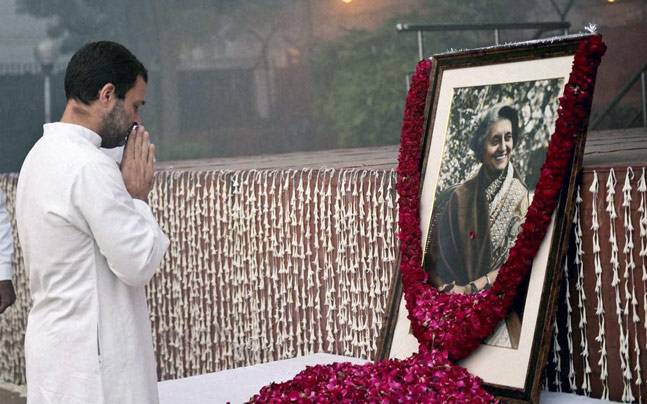
Post the assassination of Indira Gandhi, a massive organised genocide took place against the Sikhs which was spearheaded by Congress.

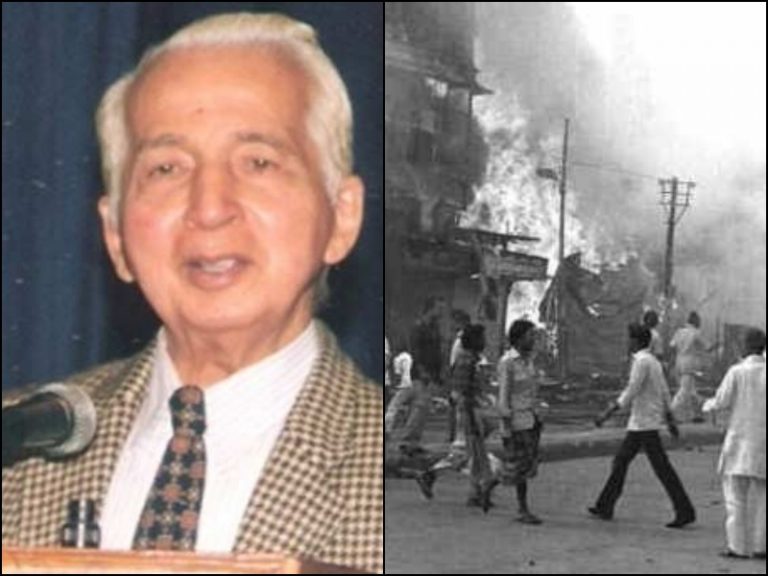
After much public pressure, former Prime Minister of India Rajiv Gandhi was forced to set up the one-member Justice Ranganath Misra Commission of Inquiry to probe the 1984 Sikh massacre. Justice Misra found 19 Congress workers guilty but gave the party a clean chit. He declared that “the riots which had a spontaneous origin later attained a channelised method at the hands of gangsters”.

Ranganath Misra’s report, absolving the Congress party of all guilt, came under heavy criticism. The Citizens Justice Committee (CJC), a body of lawyers and jurists, which was invited to assist the Commission withdrew from its hearings after criticizing its procedures severely in a report to Misra. The CJC claimed that witnesses were not being provided with any protection, they were being exposed to constant threats and intimidation and the aura of secrecy around its procedures made any independent evaluation impossible.

V.M. Tarkunde, a retired judge of the Bombay High Court, said, “We did not feel there was any point in our participating any more. This has been a one-sided investigation. We were never given a chance to participate in it as we had been promised.” The CJC’s petition also claimed that “not one officer from the government or the Delhi administration has been invited to step into the witness box.”

Gen. J.S. Aurora stated, “From the beginning, the terms of reference of the Commission were biased against the victims. The investigation did not go to the victims, the victims were forced to come to the investigation with the burden of proof on them.” The withdrawal of the CJC meant the removal of the only body that was representing the victims from the proceedings.

The book ‘When a Tree shook Delhi” written by senior editor Manoj Mitta and H.S. Phoolka, claims that the Ranganath Misra Commission presented a “diluted” version of events. It claims that “given the circumstances in which it was appointed, the Misra Commission faced a credibility crisis from its very birth. For almost six months, the government had blatantly stone-walled all demands for an inquiry into the carnage.”

Khushwant Singh wrote of the Commission, “‘Operation Whitewash’ had begun. Before Mishra was half-way through, the panel of lawyers representing victims of the Holocaust led by Soli Sorabjee expressed its lack of confidence in the learned judge’s impartiality and withdrew from the commission. Mishra went ahead and submitted his findings to the government. As expected, he held the Lt Governor and the police commissioner of Delhi guilty of dereliction of duty. It must have occurred to him that neither of the two could have acted the way they did without the instructions of higher-ups, including the prime minister or someone acting on his behalf or the home minister. I doubt if Mishra can look at his own face in a mirror.”

Interestingly enough, Ranganath Misra’s career shows an upward trajectory since the report was submitted in 1987. he became the Chief Justice of India on the 35th in September 1990 and served until the 24th of November next year. He was appointed the first chairman of the National Human Rights Commission. Eventually, He served as a Congress MP between 1998-2004. He was also awarded the chairmanship of the National Commission for religious and linguistic minorities and the National Commission for scheduled castes(SCs) and scheduled tribes(STs). Considering the fact that Congress leader Sajjan Kumar was recently convicted for his role in the massacre and the senior Misra’s political career, it appears the critics of the Ranganath Commission Report had good reason to believe that the Commission was merely hogwash.

Importantly, the Ranganath Commission report on religious and linguistic minorities recommended a 10 per cent reservation in government jobs for Muslims and another 5 per cent for other minorities and recommended that Scheduled Caste status be extended to all religions. Since the Supreme Court bars reservations above 50%, it was believed that religious reservations could be implemented by reducing the reservations for OBCs.