Home Blog Page 7306

MUDRA Yojana success stories bust the myths sold by naysayers and critics

MUDRA scheme of the Modi government has been one of the most successful schemes which have created positive change in lives of common people. The Finance Minister had mentioned the importance of MUDRA yojana in his budget speech. He had set up a target of rupees 3 lakh crore for the 2018-19 financial year. He had said :

MUDRA Yojana launched in April 2015 has led to sanction of loans of rupees 4.6 lakh crores of credit to some 10.38 crore MUDRA loans. 76% of loan accounts are of women and more than 50% of them belong to SC, ST and OBCs. It is proposed to set up a target of rupees 3 lakh crore for lending in 2018-19.

The ground level success stories of this scheme are largely unknown. The twitter user Hari (@Harisaraswat_) tweeted some of these stories. These stories are cited from the website mudra.org.in.  The thread speaks of many individuals who set up provision stores (Kirana stores) or retails stores with microfinance obtained from MUDRA yojana.


One of the success stories tweeted by Hari was that of Ratna Deb. A resident of Assam, Deb opened a bakery to supplement her family income with assistance from the MUDRA scheme. Ratna Deb now earns a profit of about 15,000 from her new venture after paying her bank dues.


A carpenter praised the MUDRA yojana on CNBC TV and called it an easy loan scheme. He was a daily wage earner but now employs three other persons. He praised the Prime Minister for launching this scheme for small businessmen.


A vegetable seller from Kolkata also expressed gratitude for the benefits accrued from MUDRA scheme. She said her income rose from 6,000/ 7,000 to 10,000/ 12,000 per month. She also said that she could help her husband to open a tea stall after securing the MUDRA loan.


Another tailor Daya Rani from Dolatabad expressed joy about the MUDRA scheme. The tailor said that when she did not have enough funds to run her business. After securing a MUDRA loan, she said that she got necessary funds. Daya Rani said that now she felt she is not alone and the government stands with her.


These stories a tight slap to all wine sipping dolt economists who are relying on their ‘past experience’ and hatred for Narendra Modi to write off the MUDRA yojana as a failure.
The Great AAP Paradox: The right hand does not know what the left hand does

0

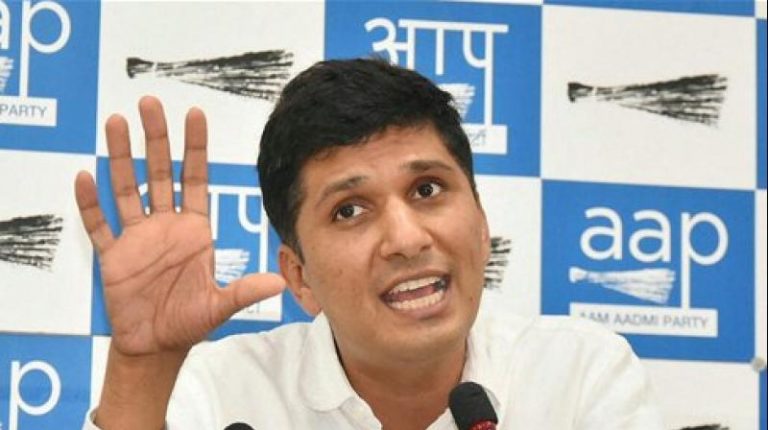
Aam Aadmi Party (AAP) is a marvel. Sometimes one wonders if we are living in a simulations experiment and AAP is just one of the hurdles thrown at us to see how we cope. AAP leaders, including the supreme leader Arvind Kejriwal, regularly indulge in changing their stand on issues they very vehemently stood for or opposed a few years back. In a recent example, AAP MLA Saurabh Bhardwaj, who is best known for ‘hacking’ into a toy EVM and blaming ‘intoxication’ for death of the homeless in Delhi winters, today tweeted how as a mark of protest against sealing drive against illegal commercial establishments in Delhi, Aam Aadmi Party will not celebrate Holi.


Except, just yesterday, AAP Supremo Kejriwal was attending a Holi function organised by Agrawal community in Delhi.


The irony is lost on me. What one MLA announces as party decision, their leader defies the same and does the complete opposite. Really makes one question how the political executive of Delhi government functions. Perhaps it is the bureaucrats who are holding the things in place.

Speaking of bureaucrats, after the revolting allegations by the Delhi Chief Secretary Anshu Prakash on AAP MLAs of manhandling him, AAP MLA Saurabh Bhardwaj has been tagging IAS Association Twitter handle in an attempt to bully them. The Delhi government employees association has refused to participate in any discussion with elected representatives till Kejriwal and Sisodia apologise for the alleged misbehaviour of their MLAs. Taking a cue from this, instead of apologising for the incident, AAP MLAs have taken to denying such an incident has taken place. Hence, Bhardwaj has now decided to tag IAS Association in an attempt to underplay their own actions.


He also accused LG Anil Baijal of being head of ‘Khap Panchayat of Bureaucrats’.


He has even accused IAS Association of partaking in a criminal conspiracy.


Quite unfortunate that the political discourse in the national capital has reached such a low.

The Madhya Pradesh by-polls signal fresh trouble for the Congress party and Rahul Gandhi

The results of two by-elections from Madhya Pradesh (MP) were declared today, both won by Congress. The two seats – Kolaras and Mungaoli are in the Guna Lok Sabha seat, held by presumptive Congress Chief Minister (CM) candidate Jyotiraditya Scindia.

Both Kolaras and Mungaoli were held by Congress in the 2013 assembly election, and Scindia polled more than his BJP rival in both seats in the 2014 Lok Sabha election too. In fact, Scindia won 6 out of the 8 assembly segments in 2014 in the Guna constituency but just Kolaras and Mungaoli gave him a lead of more than 59,000 out of the total winning margin of 120,000.

Congress won Mungaoli today with 1.5% vote margin. The vote difference was 2,123, down from 20,765 (2013) and 30,384 (2014). The Bharatiya Janata Party (BJP) gained 10.5% vote share over 2013, while the Congress dropped 3%. The Bahujan Samaj Party (BSP) had won 8.8% vote in 2013 and seems most of it went to the BJP.

Similarly, Congress won Kolaras with 4.6% vote margin. The vote difference was 8,083, down from 24,953 (2013) and 28,757 (2014). The BJP gained 12.5% vote share over 2013, while the Congress gained 1.4% too. BSP had won 15% vote in 2013 in this constituency. Yet again, most of the BSP vote went to the BJP and some to Congress.

Congress barely scraping through in the Scindia stronghold will perhaps lead to more resistance to his name as the CM candidate. Congress in-charge of the state Deepak Babaria made a highly speculative remark just after the two by-polls suggesting that leaders over 60 should not contest the 2018 assembly elections. This suggestion will fall foul of both Kamal Nath and Digvijay Singh, the other two Congress stalwarts in the state. They will surely use today’s results to dissuade Rahul Gandhi from appointing Scindia as the CM candidate.

The fourth Congress leader who can potentially stake a claim to the CM candidature Ajay Singh earlier won the Chitrakoot by-poll in his stronghold of Satna with similar smaller margin, piggybacking on the BSP. Digvijay Singh, on the other hand, had a very strong showing in his Narmada Yatra, where he walked around the river worshipped so dearly in the state.

This creates an awkward problem for Rahul Gandhi to resolve, as all the four leaders have a strong influence in respective areas. Additionally, Arun Yadav, another young leader, is also believed to be close to Rahul, extending his problem of plenty.

That Congress needed BSP absenteeism to win its own strongholds today augurs poorly for the Congress. This isn’t good news for a possible Congress-BSP alliance in the 2018 assembly elections. The mahagathbandhan is supposed to wrest seats from the BJP, not to be used to retain its own strongholds. Today’s results will embolden BSP to ask for a greater share of seats in a potential alliance against CM Shivraj Singh Chouhan.

Chouhan has managed to put up a good showing in 4 difficult by-polls in the last year – Ater in Bhind being the fourth seat. The BJP has increased its vote share in all seats, but failing to convert the strong showing in a win. Chouhan had spent many days campaigning for these two seats. He will be disappointed, but the BJP had some positives to take from today’s results, just like in Chitrakoot.

Madhya Pradesh is a key state for the BJP to win in 2018 before the Lok Sabha polls. Today’s results effectively mark the start of the election campaign. Both BJP and Congress will explain these results to their advantage as the campaign bugle blows.

Congress retains its seats in MP by-polls but all is not well for the party

In the recently conducted Madhya Pradesh by-polls, Congress has retained its seats of Mungaoli and Kolaras. In Kolaras, Mahendra Singh Yadav defeated Devendra Jain by a margin of a little over 8000 votes. In Mugaoli, Brajendra Singh Yadav defeated Bai Sahab Yadav by a margin of just over 2000 votes.

Opposition leader in the Assembly, Ajay Singh, stated, “The BJP has failed to win two bye-elections, but is claiming that it will win over 200 seats in the year-end assembly polls. The BJP had pressed the entire cabinet into the campaign and misused power. The results show that chief minister Shivraj Singh Chouhan has lost the people’s faith.”

The by-polls were regarded as crucial ahead of the Assembly elections later this year. The Congress was elated with the victory and regarded the results as proof that it was the BJP’s last year in power in the state. However, a closer look at the results tells a slightly different story. The Congress had won the Assembly Seats of Mungaoli and Kolaras with a margin of 20,765 and 24,953 respectively. The BJP has increased its vote share in the seats massively.


The Congress might be singing paeans to its victory in the media but in private, its strategists would be brainstorming hard to counter the BJP surge in what has traditionally been a Congress stronghold. Shivraj Singh Chouhan will not be too disappointed with the results. An increase of over 10% voteshare in Congress strongholds is a massive morale booster for the BJP ahead of the Assembly elections.

Girl gang raped after she refuses to convert to Islam, Anwar and Wajid Ali arrested

A girl residing in Mau Aima town near Allahabad in UP was allegedly gang-raped after she resisted attempts to convert to Islam. Later in order to cover up their crime, they allegedly framed her in a fake theft case, which resulted in her going to jail.

As per reports, the girl a class XII student went to a mobile shop in the Mau Aima town square on late Saturday evening to buy a handset. There the shop owner Anwar kept her busy by showing her many different mobiles. He later called her inside to choose other phones, and then suddenly held her hostage in one of the rooms.

There he was also accompanied by his associates like village sarpanch Wajid Ali. They then shockingly demanded that she convert her religion. When she resisted their pressure, they then allegedly proceeded to gang rape her.

The plight of the girl didn’t end here, as reported the accused in order to hide their crime, decided to falsely accuse the girl of trying to steal a mobile phone and sent her to jail the same night. Reports have claimed that this was a result of the village sarpanch Wajid Ali wielding his influence.

Later as per reports, the victim’s mother came to know about her daughter’s incarceration and pleaded her case with the police, who turned a deaf ear. She, as a result, decided to stage a protest. Soon hundreds of people joined the cause and later on Tuesday sitting MLAs like R.K. Verma and Sita Ram Verma too reached the spot and was appraised by the mother regarding the matter.

The MLAs later intervened and called Gangapar’s SP Sunil Singh to the spot. There they informed him regarding the issue and as a result, a case has now been filed against four individuals namely Anwar, Wajid Ali, Sekhu and Jahid under sections pertaining to forced conversions, rape and other offences. The police as a result of the complaint proceeded to take Anwar and Wajid into custody the same night.

BJP’s eastern irony : not rising fast enough, making enemies faster

Here are the results declared yesterday for the by-poll in Bijepur Assembly constituency of Odisha

BJD (Winner) : 1,02,871 votes

BJP (Runner-up) : 60,938 votes

Cong (Lost deposit): 10,274 votes

While describing election results, one usually names only the winning party followed by the nearest rival. But in the case of Bijepur, the Congress losing deposit and finishing in a humiliating 3rd position is extremely significant. Because Bijepur is not some seat in Bihar or Uttar Pradesh or Tamil Nadu where the Congress has been insignificant for decades.

In fact, Bijepur in Odisha was a sitting Congress seat. Not only a sitting Congress seat but a seat that the Congress had won 3 times in a row. It’s a seat that should be considered a Congress stronghold. In yesterday’s results, the Congress could not even save its deposit.

But for BJP supporters, the result from Bijepur is steeped in irony. Because, at least in the short term, the decimation of Congress in Odisha is actually bad news for the BJP. Let’s look at the result again:

Untitled.png

Even a 20% swing in its favour could not deliver the seat to BJP! And it is only seats that matter in the final count, not votes.

The same story repeated only last month in byelections for Noapara Assembly Constituency in West Bengal. Here are the results:

Untitled.png

Again, the Congress is simply nowhere in the game, polling just 10,000 or so votes, losing its deposit and finishing at a humiliating fourth position.

Now, would you believe if I told you that Noapara was also a sitting Congress seat?

Again, the bitter irony for BJP is that the wipeout of Congress is only helping the Congress. Here are three common features that are easily observable in a number of eastern states:

(1) Deeply entrenched Chief Ministers (Manik Sarkar, Mamata Banerjee, Naveen Patnaik and K Chandrasekhar Rao)

(2) Near defunct Congress as opposition.

(3) BJP graph rising steeply.

In all of these states, the BJP is rising steeply, making huge strides in vote share. But the problem is that the rise is nowhere near fast enough to make it across the finish line and actually win seats. As we saw in Odisha, even a 20% positive swing could not deliver the seat to BJP.

The only happy exception seems to be Tripura, which was a small state that the BJP could cover well with its huge resources.

To start winning seats against the entrenched Chief Ministers of the East, one needs a 40% vote share at the bare minimum. To win a state, closer to 45%. But the BJP is starting from almost nothing in most of these states, with vote shares as low as 1-2% and an insignificant number of seats. The historic swings of almost 35% or more needed to win seats appear like a mountain too high to climb in one electoral cycle.

On the contrary, this is good news for Congress, at least in the short run. It had been the near-defunct, yet technically the “main” opposition in these states for a long time. Now, the BJP is flooding into these states, occupying the opposition space and putting the Congress out of its misery.

For Rahul Gandhi, the upside is that this opens up several new possibilities for an alliance. The Congress wasn’t winning seats in the East anyway. But as long as it continued to be the main opposition, at least technically, the Chief Ministers of these states would need to maintain some distance from the Congress. But now with BJP occupying the opposition space, the Congress can finally sit down and directly do business with these entrenched Chief Ministers.

The entrenched parties in the East now have reason to fear the BJP much more than they have to worry about the Congress. And everyone knows that the enemy of an enemy is always a friend.

If you look at it from the point of view of the ruling parties in the East, it makes perfect sense. Naveen babu, for instance, may have wanted to keep an equal distance from both Congress and BJP, but the equations on the ground are forcing his hand. For him, it is now BJP which is the threat, not Congress. Perhaps the BJD will still win in Odisha in 2019, but if Modi gets another term, a  supercharged BJP might well unseat him the next time. The risks for Naveen babu increase significantly if Modi gets another term in power. On the other hand, what does he have to lose if Rahul Gandhi becomes Prime Minister?

(I should record here that I got some blowback from Odia Twitter users for suggesting that Naveen Patnaik could ally with Congress).

If not a poll alliance, there are still lots of possibilities. Outside support, supporting or participating in a third front propped up by Congress, or just abstaining.

What applies to Odisha applies just as much to Bengal. If you really think about it, you will remember that the intense TMC vs BJP hostility is an extremely recent phenomenon. It was not there even in early 2014. Here is Narendra Modi speaking at his Feb 2014 Kolkata rally:

“Brothers and sisters I asked you to elect BJP candidates in the Lok Sabha – Mamata ji will work for your betterment and so will I and Pranab da is your own and he shall too – your gains will be threefold.”

By April-May 2014, Modi’s tone had changed and so had Mamata’s. She called him “donkey”, “Danga babu” and promised to drag him to jail with a rope around his waist. On his part, Modi told the crowds that Mamata didi wants to overrun Bengal with illegals from Bangladesh.

In other words, as the Modi wave picked up in early 2014, both BJP and TMC realized they were going to be main rivals in the years to come. The intense TMC-BJP hostility that we see today was dictated by shifting votes on the ground. Ideology does play its role, but ultimately politics is about votes.

What happened in Bengal can easily happen in other eastern states. Hence, the BJP’s eastern irony.

We all know two things clearly by now

(1) Any government that is not led by BJP is essentially a Congress government.

(2) When it comes to stopping Modi, no alliance is “impossible.”

Accordingly, the danger is of BJP falling between two stools in 2019.  On one hand, BJP’s steep rise is making the eastern satraps very very angry and turning them into implacable foes. On the other hand, the BJP is falling short of the votes needed to actually beat these satraps in terms of seats.

Dear Mumbai Police, I am surprised by your response

0

Dear Sirs,

I write to you today as the Editor of Opindia.com. Before I start, let me put on record how much we as a team appreciate the work done by you. It is not easy to keep a city safe from elements who threaten peaceful existence, from the enemy that lurks in the dark, waiting to harm the citizens. The task before you is daunting, and the work you do is commendable. We appreciate you.

The police aren’t traditionally known to be social media friendly. And the alacrity with which Mumbai Police responds on Social Media has been a breath of fresh air. In fact, we at OpIndia covered a few such instances too. For example, when the Mumbai Police Twitter handle responded to Varun Dhawan’s selfie stunt. On the other hand, a response by your good selves today has left me a little stunned and disappointed.


Your tweet was in response to an article that was published in OpIndia that spoke about an abusive actor, Ajaz Khan, being invited as a Chief Guest in an event organised by Mumbai Police and BMC. Firstly, the background of this article, if you had read, was this man abusing a lady on Twitter with the worst sexual innuendos. In fact, Mumbai Police had even responded to the said girl on Twitter and asked her for details.

But, your point of contention was different. You accused the portal of poor general knowledge and research skills. You claimed that the event was not organised by Mumbai Police, in a rather condescending tweet, if I might add.

The fact remains, that OpIndia had simply reported a tweet that was posted by the actor Ajaz Khan himself.


Now, some pertinent questions that come to mind.

Firstly, If this indeed wasn’t an event which was organised by Mumbai Police, why didn’t Mumbai Police correct Ajaz immediately? Considering Mumbai Police is extremely active on Social Media and Ajaz had tagged the Mumbai Police handle in his tweet as well.

Secondly, was the language of the tweet necessary when correcting a portal that simply reported an assertion made by an actor? An assertion that wasn’t refuted by your good selves in the first place?

To your credit, right after you responded to OpIndia in an extremely terse manner, you did, very humbly, ask Ajaz to check his facts as well.


Other than the world of difference between the language of the two tweets, the fact that Ajaz’ tweet was dated 11th February 2018 can’t be discounted. The only reason we reported that tweet was because this actor is in the habit of getting abusive to women. Perhaps, it is not our research skill that is poor, but your comprehension and communication skills that might need some work.

We appreciate the fact that you posted a clarification even if it was vague. We also appreciate the fact that after you corrected our report in language that doesn’t befit the Mumbai Police, you corrected the abusive actor in a far more polite manner. Maybe you could also act upon the individual who loves to make communally charged statements and openly says that he would opt for his religious text over the Constitution of India. I thank you.

Dear Mr Jaitley, instead of blaming the CAs just do one thing to prevent Bank Frauds

0

Union Finance Minister Arun Jaitley has blamed CAs and Auditors along with the Bank Management for the multi-crore PNB Fraud. Speaking for the second time within a week at the Economic Times Global Business Summit, Jaitley was harsh on auditors and bank management. He said if a fraud is taking place in multiple branches of the banking system and not a single employee raises the red flag, that is worrisome for the country as a whole. He also said that the fraud happened despite there being multiple layers of auditing in the system.

However, the Chartered Accountants fraternity does not agree with the observations made by the Finance Minister and the statement by Mr Jaitley blaming the CAs is being seen as nothing more than an exercise to protect the real culprits responsible for the fraud at the cost of the reputation and image of the CA professionals.

Let us first understand, what are the multiple layers of auditing, which Mr Jaitley is referring to repeatedly. There are three types of Audit in the Bank, which have been discussed below :

1. Internal Audit

Internal Audit of the Bank is conducted by the full-time employees of the Bank and most of the time, the Bank Employees responsible for conducting the Internal Audit are not qualified Chartered Accountants. Even if the Internal Audit is conducted by the Chartered Accountants employed by the Bank, the big question is, how we can expect that the internal auditor who himself is an employee of the Bank, to detect and report the fraud committed by his or her colleague. When we talk about “Audit”, then it has to be an “Independent Audit”. How can we expect the Employee Auditor to report against the irregularities or fraud committed by his Senior Officers or Colleague in the Bank? 

2. Concurrent Audit

The next layer of Audit is Concurrent Audit. Concurrent Auditors, again are appointed by the Bank Management from the panel of Chartered Accountants. The only difference between the Internal Auditors and Concurrent Auditors is that while the Internal Auditors are full-time employees of the Bank, the Concurrent Auditors are the Part-Time contractual employees of the Bank. The scope and authority of the Concurrent Auditors is decided by the appointing authority. How do you expect any Concurrent Auditor to report against you if you yourself are the appointing authority?

3. Statutory Audit or External Audit

This is the last layer of Bank Audits. Every year a Panel of Independent Chartered Accountants is prepared by the RBI in consultation with the Institute of Chartered Accountants of India. Unfortunately, after the Panel is made, the same is handed over to the management of the respective Banks, who have the full discretion in the allotment of Bank Audit to any of the Chartered Accountant of their choice, subject to certain conditions. The same question of “Independence” comes here also. When the person whose affairs are to be audited, himself has the authority to appoint the auditor, how you can expect that Auditor will be able to discharge his duties independently?

It can be seen from above, that the independence of the Auditors has been completely compromised, in all the three cases. For any audit assignment, the independence of auditors is of paramount importance. The Institute of Chartered Accountants of India has dedicated a Complete Guidance Note on the Independence of Auditors. Several representations have been made by the ICAI in this regard to the various Governments in the past to streamline the system of appointment of auditors, in order to ensure the independence of the auditors, but nothing has been done so far, for the reasons best known to the Governments at that time.

 Solution :

There is a very simple solution to all these problems. Reserve Bank of India is already making the Panel of Independent Chartered Accountants every year in consultation with the ICAI. After this Panel is finalised, the same should be handed over to any Third Party (other than Bank Management). It could be either ICAI or RBI. This Third Party (and not the Bank Management) should appoint the Auditors from the Panel already finalised by the ICAI and RBI jointly.

Apart from this, the Internal Auditors and Concurrent Auditors should also be appointed from this Panel only in a similar manner. The objective of the whole exercise should be that the Bank Management itself, should not be placed in the position of Appointing Authority of the Auditors. It is also amazing as to why Banks are keeping in-house Internal Audit Departments? Banks must focus on the Banking Business, which is their core strength area and leave the Auditing to the Independent Chartered Accountants, who have the expertise in Auditing.

If our Finance Minister is inclined to carry out the aforesaid minor change to ensure the “Independence of the Auditors”, then only he can rightfully blame the Chartered Accountants or Auditors for any banking scam, fraud or any other irregularity. Unless, this is done, there is no point in blaming the auditors and the frauds, scams and financial irregularities, will continue to happen in the banking system, as these are always deliberate and are executed with the complete knowledge and connivance  of the bank managements.

Semengate: was it semen in those balloons thrown at those Delhi University girls?

It is indeed unfortunate that during Holi, the festival of colours which signifies the onset of spring has been muddled in controversies with news of eve teasing harassment women have to face under the pretext of ‘fun’. This year, we heard of harassment reaching newer low when two girls of Lady Sri Ram (LSR) College, Delhi, claimed that they were targeted by semen filled balloons.


As per reports, one girl was hit by ‘semen’ filled balloons at Amar Colony locality in Delhi. The LSR college student took to social media to let her horrific story known.

She claimed that the balloon which was thrown at her when she was in an autorickshaw. The content of the balloon dried white on her kurta, and the smell indicated it wasn’t water. However, she concluded it was semen. As per reports, at least 3 girls were hit by ‘semen filled balloons’. While the girl who wrote the Instagram post has not specified the gender of the person who threw the balloon at her, presumably another victim claimed the semen filled balloon was thrown at her by a girl and they have taken a written apology from the said girl.


Not trying to undermine the harassment many, many people go through on Holi, many people raised doubts over the content of those balloons being semen.


Keeping the obvious question on how did the girl who threw semen filled balloon at other girl got hold of so much semen (in absence of her own capability of generating semen herself), how does so much semen get collected at one place? As per Men’s Health magazine, an average man ejaculates 3.7 ml of semen, which is roughly 3/4th of a teaspoon. The volume of the balloon could be anything between 250 to 4,000 ml. Which means, roughly 68 to 1080 men would have to collect their semen to fill one balloon. Wonder if the girl went on a semen collection drive to collect so much semen. A balloon filled partially with air and semen also seems like a highly improbable idea.

Not refuting her claims that the women were probably harassed by hurling balloons at them, but the content being semen seems little farfetched at this time.

Perhaps the gooey white substance with foreign smell was egg whites?

Setback to Congress: four suspended Bihar Congress leaders join JDU

0

In a major setback to Congress, four suspended Bihar Congress leaders have today bid goodbye to the Congress and joined Nitish Kumar led Janata Dal (United).


Ashok Choudhary, former Bihar Pradesh Congress Committee President, who was sacked from his post last September, had claimed his expulsion as an insult to Dalits. This whole expulsion episode was seen to be a result of allegations against him and the leaders of his faction, that they made an unsuccessful bid to split the party, after Nitish Kumar walked out of the Mahagathbandhan in Bihar.

Choudhary, who was reported to be leading the rebel faction, was appointed to the post on March 30, 2013 and was the longest serving president of the state Congress before being sacked last year.