Home Blog Page 7535

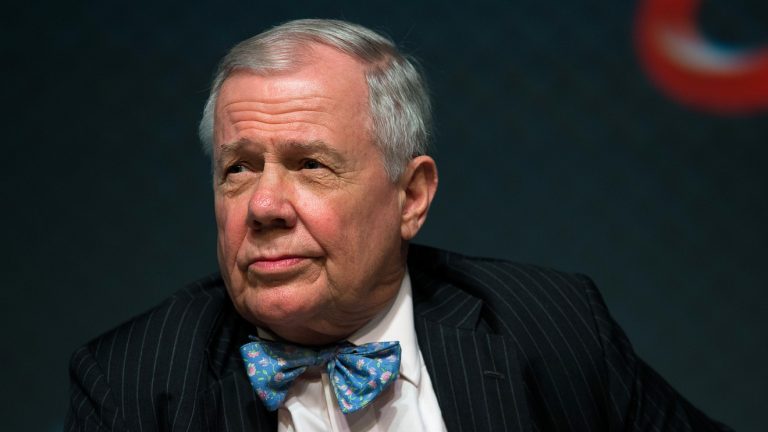
Commodity guru Jim Rogers changes his mind about India, will these people too?

Jim Rogers the Commodity Guru and Hedge fund manager in September 2015 had come out to state that he had sold all his shares in India as one couldn’t just invest based on hope. He had also claimed that the NDA had failed to live up to investor expectations.

But now less than two years later he appears to have changed his mind and now states that he was hasty to exit India. “Unfortunately, I sold too soon” said Rogers, as he stated that he was surprised that the Government managed to pass the GST bill. Regarding his decision to sell two years ago he reasoned that he sold because he was disappointed with the pace of reforms but won’t enter the Indian market yet with it being on a high. In 2017 the Indian stock market has been the best performer among the world’s 10 largest stock markets.

Perhaps, this prompted Rogers to admit that he completely misread the India situation and that the India story is now a moving a train:

I don’t want to jump on to a moving train. When you jump on to a moving train, you’ll get hurt

Rogers is most well known for his famed partnership with George Soros in creating the Quantum Fund which in the 1970s gave a return of about 4200%. So in 2015 when Roger made is bearish call about the Indian market, many used it as a opportunity to attack the Modi Government just by piggybacking on Roger’s decision.

Here are a few reactions from the days when Rogers had sounded his dooms-day alarms, prematurely:


Some even seemed to enjoy it:


Alleged trolls too expressed their unhappiness:


Even political parties and their minions used it as an opportunity to take potshots:


Funnily even Subramanian Swamy had shared the particular news story but it wasn’t clear if he was endorsing it:


While this ‘U-Turn’  by Rogers might amuse a lot of people, Rogers might have had perfectly good reasons based on his investment philosophy to make his call back then. Now that he has been courageous and has owned up to his mistake it remains to be seen whether the people mentioned above too do the same.

Also as a footnote, Rogers in the past has held odd views about India and has claimed that India as we know it won’t survive in the next 30-40 years.

Inside Bhadrak: Why a sleepy town in Odisha burnt in communal fire

0

Bhadrak town, located in the northern part of Odisha, has witnessed communal violence recently. The area has been under curfew since Friday (7th April). While Odisha police has been able to contain much of violence by now, curfew is still enforced in the town for the major part of the day (and night) while adjoining areas are still under prohibitory orders under section IPC 144.

No loss of life has been reported but properties worth lakhs have been gutted and normal life is thrown out of gear.

It all began with a derogatory Facebook post where abusive language was used for Hindus and Hindu gods Rama and Sita. This happened on the eve of Ram Navami (5th April) when three Muslim youths left these abusive messages on the profile page of Bajrang Dal activist Ajit Padhiari.

An outfit named Bhagat Sena Ram Navmi Samiti lodged a complaint with police in this regard with a demand of arresting the youths whose names were identified as Asif Khan, Asif Ali and Mohammed Rehan.

With tensions soaring, a peace committee meeting was convened on Friday evening with local MLA and IG police. However, situation turned worse as a group of youths riding nearly hundred bikes rallied in Puruna Bazaaar area shouting “Pakistan Zindabaad” and other anti national slogans even while the peace meeting was on.


This group is reported to have targeted shops owned by Hindu traders in Chandan Bazaar area. In retaliation, shops were also burnt in Muslim dominated areas.

While police and administration are being accused of not acting promptly to curb the violence, they were prompt in the clampdown on social media websites, which were banned for at least two days to curb spreading of rumours. On 9th April, Police was able to arrest the main culprit who made these derogatory comments. Other two are still not traceable.

The main culprit, Asif Ali Khan, happens to be the son of a local BJD leader Asghar Ali Khan. Asif, who is pursuing an engineering degree, has admitted to the crime according to the Police. Along with Asif, 80 other arrests have been made so far in cases of violence and arson in the area.

Bhadrak had witnessed similar riots in 1991, again during Ram Navami, which unfortunately had claimed 17 lives then. Biju Patnaik was the Chief Minister then, who happens to be the father of current Chief Minister Naveen Patnaik.

So far the state administration has been largely able to contain the riot without any loss of lives. Chief Minister Naveen Patnaik visited Bhadrak on Wednesday and appealed for peace to all sections of the society. A new SP has been appointed and ADM has also been transferred.

With nearly 40% Muslim population, Bhadrak has always been a communally sensitive town. Bordering town Soro too had witnessed such incidents during Ganesh idol immersion last year. In fact, small communal skirmishes have been reported during Ganesh Puja from various part of the state in 2016. Similar scenes were witnessed during Lord Jagannath’s Bahuda Jatra (Rath Yatra) in Rourkela last year.

People are now beginning to question as to why such incidents happen only during the Hindu festivals. If Muslim festivals like the Birthday of Prophet Mohammad, which was celebrated early this year, can pass off peacefully, why Hindu festivals have to witness violent incidents? While it is easy to blame fringe Hindu groups, one also needs to question the radicalisation among Muslim youths. Last year, four SIMI suspects were arrested from Rourkela, who were staying in Bhadrak for at least six months as carpenters.

Sehwag slams Indian Express for misleading post about his stance on Paramilitary forces

The Sports Bureau of the Indian Express today incurred the wrath of former Indian cricketer Virender Sehwag after their tweet mischievously tried to mislead people into believing that Sehwag had criticized the Indian Paramilitary forces.

The Express Sports (sports section of Indian Express) put out this tweet:

The accompanying text which even tagged Sehwag claimed that he had for some reason slammed the Paramilitary forces but the link clearly specified that the article was about his tweet condemning the assault on the CRPF Jawan in Kashmir.

This was the tweet on which the Indian Express’s article was based. Here one can clearly see that Sehwag was slamming those who had assaulted the Jawan and was not criticizing the Paramilitary forces:


But the completely erroneous tweet by the Indian Express irked Sehwag who responded:


After he did so, they promptly deleted the tweet. Thankfully Sehwag had taken a screenshot which he put up soon:


After the outrage, Express Sports put out a fresh tweet with the correct information:


This either might have been a mistake by those handling the Indian Express Sport’s twitter account or as claimed by Sehwag it could have been an unethical attempt to generate clicks for the article.
Doing what is rarely seen in the Indian Media, Express Sports apologized to Sehwag for its error:


Well, you don’t mess with Viru paji!

Why AAP lost the Rajouri Garden by-poll

0

There is a quote in Hindi that appears very apt for today, it goes:

“Kaath ki haandi baar baar nahi chadhti”

It roughly means that a person can be fooled once but not always.

In the 2015 Assembly Elections for Delhi, AAP was given an overwhelming majority based on their many promises, some being: free WiFi, enhanced security (special teams) for women, free water, installing 15 lakh CCTV cameras, 8 lakh new jobs, and cheaper electricity bills. There were many hopes and expectations from the party which had been selling ”Alternative Politics” to the Indian voter.

While there is no doubt that AAP has managed to provide free water (under a certain threshold) and has continued its electricity subsidy, all other promises have fallen flat. Another possibly emotional promise that AAP had made was about Kejriwal not leaving Delhi like he did last time to go on to fight the Lok Sabha elections from Varanasi. That too was not honored by the party as the Delhiites saw Kejriwal hopping from one state to another to campaign for various state elections, while leaving governance in the hands of a less popular Manish Sisodia.

Rajouri Garden seat is a blend of both upscale posh localities and slums. The vote share roughly splits like, Punjabis and Sikhs comprise 50% of the voters and more than 15% belong to the Gujjar community. They by-polls were required after the sitting AAP MLA Jarnail Singh resigned to fight assembly elections in Punjab (which he eventually lost).

While the BJP-SAD combine fielded a Sikh candidate and a popular face in Majinder Singh Sirsa, Congress fielded a Gujjar Candidate named Meenakshi Chandela. AAP too decided to field a Sikh candidate in Harjeet Singh. The seat went to polls on 9th April with a 46.48% voter turnout and votes were counted today.

So considering all the above factors, what conclusions we can draw from the results?

BJP won the seat comfortably by polling 40,602 votes and bagged 52% vote share. The Congress came 2nd with 25,950 votes and 33.2% vote share. Unlike 2015, Congress gave a good fight, maybe thanks to its Gujjar candidate, and maybe due to absence of any tactical voting to AAP by its supporters that is supposed to have happened in last elections. AAP, which in 2015 had won the seat with 54,916 votes came a disappointing 3rd.

This time, AAP just bagged 10,243 votes or just 13.1% vote share. What makes it worse for AAP is the fact that going by the Election Commission’s rules it has lost its deposit in the seat as it failed to poll more than 1/6th of the total votes polled.

The Rajouri Garden by-poll reaffirms the perception that BJP is retaining its vote share in Delhi, Congress has regained its lost ground, while the Aam Aadmi party has lost the popular support it enjoyed in 2015.

Also there might not be a lot of scope for Kejriwal to cry EVM fraud as in this election the EVMs contained the additional facility of the VVPAT, which would have helped voters in verifying if votes were indeed getting registered correctly. No complaint of wrong vote being registered was lodged during the polling.

This election held so close to the upcoming MCD elections might signal the times to come in Delhi politics. For a party that had polled about 47% of the votes in 2015, getting reduced to 13% doesn’t show a shining future. This might prompt the AAP to increase its campaign efforts and maybe also prompt it to make further desperate promises like their property tax waiver one. Though for the Congress and the BJP (who now have 4 MLAs in the assembly), the results might be a huge shot in the arm.

The MCD results will be declared on 26th April exactly 13 days later. And going by today’s result this number 13 might really prove to be a bad omen for the Aam Aadmi Party.

Election Commission and Congress leader trash Aaj Tak report on EVMs registering wrong votes

0

Assembly Constituency of Dholpur in Rajasthan went for by-polls on Sunday and according to some reports, the polling there wasn’t without its share of controversy. Aaj Tak put out a sensational report titled:

धौलपुर में कांग्रेस का हंगामा, बटन दबाया ‘हाथ’ का खिल रहा है ‘कमल’

Translation: Congress spreads pandemonium in Dholpur as even though button corresponding to ”hand” was pressed it was ”lotus” that was blooming

The report claimed that during polling many voters had complained that even though they had voted for one party, the slip from the VVPAT machine was showing that the vote was registered in the name of another party. VVPAT or voter verified paper audit trail is a system where the machine prints a paper slip with the symbol of the party he voted for after the voter presses the button on EVM.

The report claimed that after investigation, 18 such defective machines were found which were then replaced. The report quoted a certain Rakesh Jain, who alleged that even though he had voted for the Congress the resultant slip was showing BJP. The report also quoted the returning officer as acknowledging Rakesh’s version and also stated that as a result polls were stopped for 2 hrs.

The report also claimed that Congress leader named Banwari Lal Sharma who was contesting the elections claimed that he was informed by party workers that many EVM machines could not be started during the polls and also claimed that there was a malfunction in some EVMs about wrong candidates getting votes.

Later, repolling was ordered at a polling booth numbered 163 of the Dholpur constituency.

The allegation in the Aaj Tak report was very similar to the one Kejriwal had made about EVM’s in Bhind Madhya Pradesh favoring BJP regardless of the button pressed. That lie, created by one media organisation and spread by politicians, was debunked by us and the same was confirmed by the Election Commission later.

The same cycle was repeated after the Aaj Tak reported about the supposedly faulty EVMs in Dholpur. Arvind Kejriwal immediately seized the opportunity and started leveling allegations:


But unfortunately for Kejriwal and his supporters, this report by Aaj Tak too seems to have been debunked. According to this Indian Express report, the Aaj Tak report was erroneous.

The Indian Express quoted Rajasthan’s Chief Electoral Officer who claimed that the Collector of Dholpur had probed the allegations and found the media reports which had made such claims to be false. He also claimed that the voter and the Congress candidate who were quoted by Aaj Tak have given in writing that they had made no such complaints.

To get Aaj Tak’s version, Indian Express sent a mail to the Hindi news channel, but they couldn’t get any response.

Some people in Aaj Tak asked the Indian Express ‘off the record’ as to why a repolling was ordered if everything was fine. The Chief Electoral Officer addressed that question and clarified that repolling was ordered because mock voting data wasn’t erased from the EVM’s after their trial on Saturday.

So it appears another case of erroneous (on purpose?) reporting about EVMs that was used by Arvind Kejriwal and his supporters to push a propaganda.

NDTV and Nidhi Razdan conduct an entire debate based on fake news

0

The poor man’s Barkha Dutt strikes again. Just yesterday we had discussed how a highly misleading story in the Hindustan Times had led to widespread misplaced outrage. Hindustan Times ran a story titled “Eat what you order: Modi government to fix portions of food served in hotels”,  which was curated by many in the media.

But the truth emerged later, when a video of the Union Food Minister Ram Vilas Paswan came out, where he categorically said that he had no plans of “fixing portion” size. Rather he was more interested in getting restaurants to specify the quantity being served. Below is the relevant portion of the transcript (full video and transcript here):

We don’t want to control anything. We are doing this in the interest of consumers. Where are we saying that you should keep only so much quantity in one portion, we are only saying you should mention the quantity being served in each portion.

Subsequent to this video coming out, many media reports came out with a different headline altogether,  and the “fix portion” hysteria was replaced by the more factual “specify portion” version, which tallies with what the Food minister had said. One may find both ideas moronic, but there is a huge difference between “fixing” portion size and asking someone to “specify” the portion size.

However, NDTV and Nidhi Razdan had other ideas. NDTV and Nidhi had framed a narrative: Is India becoming a Nanny State,  and a debate was decided to be held on this issue. One of the sub-topics which “proved” this narrative, and which was eventually debated was the “portion” size issue. But NDTV and Nidhi kept on repeating the lie of “fixing portions” and based on this straw-man conducted a debate on prime time television:

Worse, this clarification was given by Paswan to NDTV itself. NDTV’s Sunetra Choudhury had taken the byte from Paswan where he clarified that the intent was to ask restaurants to specify portion size and not fixing of the same. This is very similar to the incident where Nidhi, in association with an abusive lying troll, repeated a lie, when the same lied had been clarified by Barkha Dutt on her show a few months ago!

Coming to the debate, it was entirely focused on the “fixing portions” angle which was obviously fake, and the arguments were various ranges of whataboutery, given by the panelists as well as Nidhi herself: “What about food grains rotting, what about the wastage of security forces by giving security to MPs”!!!

As for the BJP spokesperson GVL Narsimharao, he ensured that he made a laughing-stock of himself. He never once mentioned that the minister had clarified his position and that NDTV had gotten the topic itself wrong. Instead he compounded his problems by first branding all Indians as irresponsible and insensitive when it comes to food habits and then proceeding to make largely irrelevant arguments.

While this was one debate on Nidhi’s show, the topic of the second debate lent a bit of irony to all the proceedings:

Sushma Swaraj terms India Today report “false and mischievous”

0

External Affairs Minister Sushma Swaraj on Wednesday trashed an India Today report that had alleged that she had requested Congress MP Shashi Tharoor’s help in drafting a resolution condemning Kulbhushan Jadhav’s death sentence. The resolution is supposed to be taken up in both the Houses of the Parliament.

Swaraj called the story a “mischievously planted” one. She tweeted:


On 11 April (Yesterday) India Today website had reported the story with the headline:

‘At Sushma Swaraj’s request, Shashi Tharoor to help Modi government draft statement on Kulbhushan Jadhav’

After Swaraj pointed out, the website quickly changed the headline to:

‘Shashi Tharoor likely to help Modi government draft statement on Kulbhushan Jadhav’.

Stating that there is no dearth of talent in MEA, Swaraj had earlier tweeted:


The Parliament, had earlier unanimously condemned the death sentence handed down to Kulbhushan Jadhav by a Pakistani military court. Jadhav, 46, a former Indian Navy officer, has been sentenced to death by a military court in Pakistan on the charges of “espionage and sabotage”.

Amid the growing anger over the Pakistani court’s order, Swaraj told the Rajya Sabha in a powerful speech:

“Kulbhushan Jadhav is not just the son of his parents, he is the son of entire India. We will try to save him in whatever way possible.”

Meanwhile, Shashi Tharoor too has come up with a response on Twitter:

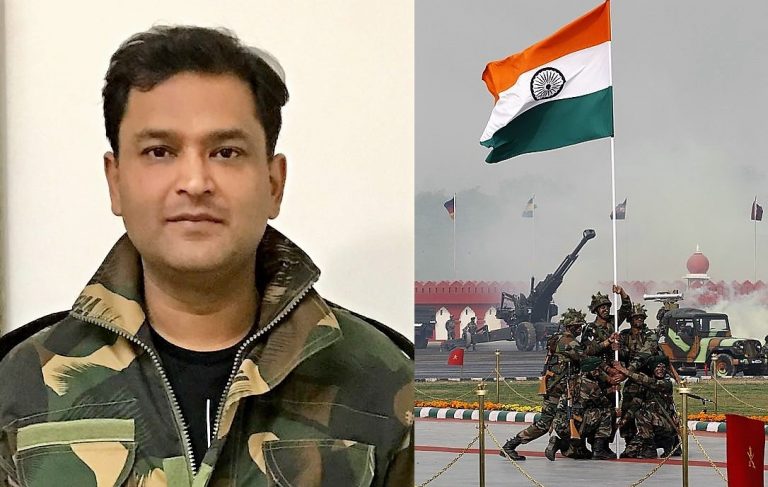
Our Pakistan policy should be playing on front foot like Sehwag: Major Gaurav Arya

Since decades, our soil has been moistened by the blood of our soldiers. A terror state unleashes its wrath time and again and vows to bleed us with a thousand cuts. Thousand cuts, which have now run into millions. Countless soldiers lost, mothers left childless, wives left alone, and children who have had to grow up never knowing why their father was taken so early.

Here’s an interview with a soldier who shed his blood so we can sleep safe. A soldier who tells us what it might take to tame the beast.

I spoke to Major Gaurav Arya, who served with 17 Kumaon Regiment from 1994 to 1999. He was posted in Rajasthan, Punjab, Tibet border, and Jammu & Kashmir. In J&K he operated along the Line of Control and was also involved in anti-terror operations.

My questions are in bold, though it’s the answers that are actually bold:

It is said that every government comes to power thinking that they can solve the Kashmir issue and the Pakistan conundrum. And somehow, every government fails. Why do you think that is?

See, there are certain facts about Kashmir which people in the opposition don’t know about. And when they come to power and are properly briefed by the intel agencies, then they realise it is not so simple. Solving Kashmir requires using immense political capital in the country, and anybody who wants to solve the Kashmir problem will have to withstand a lot of international pressure and will have to project India as a strong power.

I was recently in Kashmir and almost for a week. I was in Srinagar and I spoke to people on the road. All of them, irrespective of whether they are happy with India or not, said they were not happy with the state of affairs. But the problem is that for a small problem like the roads in Srinagar, which is very much a state subject, people blame the central government because for everything they have been taught to blame the central government. “har cheez dilli ki saazish hai“.

Now coming back to your question, there should be an intent to take hard decisions. For example, the central government has to bypass the Hurriyat. Hurriyat is an umbrella body which was created under Pakistani guidance to unite the separatists. They have not been elected by anybody. The government also has to take hard action against stone-peltors. You must have seen videos of our jawans being beaten. I spoke to CRPF and it is very disheartening why this happens with the CRPF and not the Indian Army.

They tried stone pelting with the Indian Army in two operations. In one, Major Dahiya was martyred. They tried again. And the third time, the Indian Army shot three “protestors”. Now the Indian Army does its operations and nobody comes in between. Now as callous as it may sound, the problem is that the Kashmir problem and this stone pelting has been highly intellectualised by the left-leaning liberals. They peddle this entire narrative of victimhood which is imaginary. You ask a man in Kashmir, “azadi milegi to kya karoge” (what after aazaadi?), he doesnt know. It is just something which is now too big to be questioned and that is mainly because the successive governments in 30-40 years have not had a concrete policy.

Do you endorse the use of force then?

See, when you establish the writ of the state, you have to use force. All the 5 permanent members of the UNSC are not members who are known for their perfect human rights record. We might think human rights makes the world go round, but they don’t. What makes it go round is economy and military might. We can’t take of one Kulbhushan Yadav, we can’t declare Pakistan a terror state or take hard decisions in Kashmir and we want to be the 6th member of UNSC! Who will take you seriously? It takes iron in the soul.

You brought out a great disparity in the functioning of the CRPF and the Army. You mentioned how they pelt stones at the CRPF but the Army did what it had to do and now they conduct their operations without hindrance. Why do you think the CRPF is not given the same latitude as the Army considering the anti insurgency operations are the same?

Well, when the Army functions, it functions under AFSPA. Army has certain constitutional protections which the CRPF doesn’t. The CRPF functions with the state police. For example, if there is a problem in Kashmir and the Army is called, they are not answerable to the Chief Minister or any politician. It assesses the situation and takes necessary action.

Today you see videos of a soldier armed with an AK47 being slapped by a Kashmiri youth. That itself tells you that they are under immense pressure not to react. I spoke to a young Kashmiri in Srinagar and asked him “patthar kyu phenkte ho? Darr nahi lagta?” (Why do you pelt stones? Aren’t you afraid of the consequences?) He said “kya baat kar rahe hai sahab, CRPF ki himmat thodi hai kuch karne ki, hum to unke muh pe thuk ke chale jaate hai” (What are you saying!? CRPF doesn’t have the courage to do anything, we even spit at their face and come back). And this fellow will never try this with an Indian Army soldier.

The problem is with the leadership. The Indian Army is led by General Rawat. 30 years back, he was a second lieutenant in the Gorkha Rifles. He has seen the ground reality. He owes loyalty to that institution. The problem with CRPF is that most of their top management is imported. These are IPS officers. If you are senior enough, you can become DG of CRPF. They might not have seen one day of Kashmir or any sort of counter insurgency operations. And they lead a force that is heavily involved in counter insurgency and internal security operations.

So basically, CRPF is being used as fodder by our political dispensation?

No. They’re being used as a punching bag to absorb Kashmiri anger. On 5th of April, a CRPF column was moving and they were given a school to stay in without any facilities. That’s typically how CRPF is sent in any place. There is one assistant sub inspector (ASI) who was about to retire. This ASI, because of the lack of light and stair railings, he fell down and he died. Nobody knows about it. We know 8 stone pelters were killed. How many CRPF men were killed?

Now I’ll tell you something and I insist you include this in the interview:

Today CRPF and JK police cannot be treated at civil hospitals in Srinagar because as patients they are assaulted in OPDs and ICUs. Put this down and say Major Gaurav Arya said it. I will stand by it. So they come to an Indian Army run hospital. I’ve met them. I’ve spoken to them. Doctors refuse to treat them in Srinagar because they get threatened. This is happening and CRPF is taking all this. My only fear is someday a CRPF soldier will snap because how much humiliation can a soldier take?

I’m so shocked by what you have told me, I have almost forgotten my other questions. Because none of this ever comes up in research. None of this is ever spoken about by the Media.

Media doesn’t talk about this because they want a (sound)bite from SA Geelani. They practice Dal Lake journalism. They’ll go to Dal Lake, sit on a shikara exchange sher-o-shayari and talk about Human Rights.

I’m not saying there should be no Human rights. Any soldiers who crosses the line should be put in jail. But at the same time, soldiers have human rights too. Over 3500 soldiers (estimation) were in the hospital after Burhan Wani. But the media won’t talk about them. These people are expendable.

There was a Pakistan Senate Committee report which was basically a doctrine of alternate warfare. It went to the extent of shifting the blame of radicalisation in Kashmir to anything other than Pakistan. We see that in India too. From beef to Yogi Adityanath are blamed for it. How does the state deal with such 5th column information warfare?

The problem is people in India who end up forwarding this narrative view Kashmir from the eyes of Karan Johar. This radicalisation in Kashmir started in 1989-1990 with a terrorist group called JKLF. Then there were other groups, LeT, JeM, Hizbul Mujahideen, etc. All these names are Arabic. There isn’t one group with a Kashmiri name.

The identity of the Kashmir “struggle” is now not Kashmiri but Islamic. They will never raise the Kashmir flag. They’ll use either the Pakistan flag or ISIS flag.

Pakistan wants to twist India’s neck.

So what can India do to combat the information warfare? When the PM raised Balochistan from the ramparts of Red Fort, we had an entire section say “Balochistan is not our business. Let’s focus on Kashmir” without realising how important Balochistan is for India.

We need to have a narrative which is missing right now. We keep saying “Kashmir is an integral part of India”. Stop saying it. Of course it is. So is PoK. But what is the narrative? You see some Kashmiri websites that spread poison. And The Hindu, TOI, etc, some of their Srinagar correspondents write neutral pieces in their newspaper with a tilt towards separatists but in their own Facebook pages, what they write is absolute treason. They take an image of a child killed in Syria and present it as a child killed in Kashmir.

The Pakistan supporters need to realise. We use platoon level weapons. Pakistan uses F16 fighter jets on its own people in Waziristan. Kashmir banega Pakistan? Ye saare bill main ghus jayenge.

Captain Tushar Mahajan was martyred because he wanted to save hostages from terrorists. He went inside and got killed. If it was the American Army, they would have blown up the building. We lost Tushar. We lost Captain Pawan Kumar. They were kids. They don’t realise the lengths the Indian Army goes to in order to avoid collateral damage. We care because Kashmir is ours. Its people are ours.

When narrative building is so important, why is our army so opaque when it comes to interacting with civilians. I have tried to find books etc to educate myself, but could hardly find any. Why is there this disconnect? Why aren’t civilians communicated with about the ethics and operations of the Armed Forces like may be the USA?

Nehru and his cabinet, except for Vallabhbhai Patel, was of the opinion that we don’t need the armed forces after Independence. What we need is a police force. So, the budget was cut to a point where we suffered a debacle against China in 1962. So these people have continuously devalued and humiliated the army, which is why the Army is a very shy institution. Army psychology is ‘do your job and shut up’. The army is under the civilian dispensation. But serving officers can’t be shown on camera. So it’s people like me, Gen. Bakshi etc. who try our best to educate civilians.

You are right. There is very little literature available about the Army. And it needs to change.

Ok. So coming back to Kashmir, you also said we have to by-pass the Hurriyat. But successive governments have given them special privileges. Apparently, in 2013, Asiya Andrabi was flown to Delhi in a special flight to speak to Sartaz Aziz. Regardless of the ways in which the current dispensation is trying to bypass them, somehow, even this government hasn’t revoked their state privileges. Why do you think that is?

Nupur, the problem is these are imaginary fears in our mind. Because the Hurriyat since decades has been projecting itself as the true representative of the Kashmiris. So, it’s always a notion that we can’t offend the Hurriyat warna azaadi ke naare aur bhuland ho jayenge (if we offend Hurriyat, separatist demands will become stronger), which is not true. I don’t know what these think tanks are advising the government!

You have repeatedly said that the political class needs to give the Army 3 days with respect to Kashmir and Pakistan and the issue will be solved. But there is a section of people who think that any sort of military retaliation in heavy measure will lead to unprecedented escalation that in turn might result in a Nuclear winter because we are dealing with rogue state, Pakistan. How do you think we should deal with the escalation that might happen if Army is given a free hand?

Have you seen Sholay?

Yes

There is a character called Veeru who gets drunk on goes on the water tank saying “basanti se shaadi karwao warna main mar jaunga“. The Veeru effect is Pakistan’s schizophrenia.

We are also a nuclear power. They attacked us in Kargil. What happened? Nothing. They fund Kashmir unrest. What happened? Nothing. Because they know India won’t retaliate.

Similarly, we also know Pakistan wont retaliate. These are imaginary fears in our mind and Pakistan wants you to believe that there will be a Nuclear winter if India retaliates. These are called psychological ops. They want us to believe that they will strike even if we look at them. We did a surgical strike. What happened? The best Pakistan could do was say “janaab ye hua hi nahi“.

There are so many ways to militarily teach Pakistan a lesson.

There was an article in New York post on 31st March that spoke about how India may be rethinking its no-first-strike Nuclear policy. Is that true? And do you think that’s desirable?

See, when we say we have a no-first-use policy, it’s because we are looking at Nuclear weapons through the prism of Pakistan. This entire no-first-strike policy defies logic. Why should we tie our hands? Nobody will use Nuclear weapons but we must at least have an option on the table.

Okay. So how does the Cold Start Doctrine fit in if we throw the no-first-use Nuclear policy out of the window? After the Surgical strike, there were many reports in the Pakistani media of them hyperventilating about how India might be gearing up to put Cold Start Doctrine in motion. There were counterparts even in India spoke about it. Can you tell us what it’s about?

When the Indian Parliament was attacked, 9 of our bravehearts were martyred and we took exception to the fact that the fountain of our democracy was attacked. So India launched Operation Parakram. Almost 1 million armed personnel were mobilised to the border. Earlier the Army used to follow the Sundarjee doctrine. The holding and strike cores are based in 3 different locations. The cores are huge. When the time came for mobilisation to the border, these cores took more than 20 days to reach the border. By that time, Gen. Musharraf already went on television and regretted the attack. In war, you need to be quick. Indian Army delayed it and suddenly the justification for war was zero.

The Indian Army then went and started the process of learning. They analysed old battles and they wanted to reduce the time from 21/22 days to 2 days. They studied everything from Hitler’s blitzkrieg and specially the Israeli-Arab war of 1965. Then they came up with the Cold Start Doctrine, which can slingshot Indian army into high intensity war at blinding speed.

The basic idea of Cold Start was this : Pakistan has a nuclear threshold. A point after which they will deploy. Cold Start was designed in a way that before Pakistan thinks of deploying Nuclear weapons, the war will be over and we occupy 70-80 km of Pakistan territory. This hammer is with the government. It’s like the hammer of Thor. They have to understand when it should be deployed.

There was this news of Pakistan planning to declare Gilgit – Baltistan as its 5th province. What steps should India take to counter if Pakistan goes ahead and does it?

Gilgit-Baltistan is from where the CPEC (China–Pakistan Economic Corridor) enters Pakistan. China has apprehensions about investing in CPEC that starts from a place which is not even Pakistan’s. My view is, if Pakistan wants to declare Gilgit-Baltistan as its 5th province, they should go ahead. What India will do then is, abrogate article 370, get rid of the Kashmiri flag and we send the Indian Army to Srinagar. If they say Gilgit-Baltistan is a part of so called “Azaad Kashmir”, it has its own constitution and political establishment. So even the separatists in Srinagar should condemn this move. Now if they don’t do it, China, which can be compared to Shylock, will have a problem. It they do it, they will alienate the separatists and also invite Indian action. It’s all just Chinese pressure.

Now if we talk about South East Asia dynamics, there’s obvious camaraderie between Pakistan and China. But there is also increased camaraderie between India and Afghanistan and India and Balochistan. In this situation, what role do you see India playing in Afghanistan and Balochistan because both along with India is putting pressure on Pakistan?

I think it will get interesting once Chabahar port is fully operational; once India has access to Afghanistan. Our handle in Afghanistan is if we build something North West of Pakistan. We build friends. We arm those friends. And we invest in Afghanistan so we can pressure Pakistan.

Pakistan is always skeptical because Pakistan is a very narrow country and it does not have space to fight a war and hence it looks for strategic depth. So Pakistan creates groups like Jindolla for Iran, Tehrik-e-Taliban in Pakistan and Haqqani network for Afghanistan, and for India it tries its stunts in the Khalistan movement, Kashmir etc. So, since it does not have the land to fight a war with India or other enemies it seeks to build influence, fifth column and insurgency. Today Pakistan can say that if India plans to attack through Kashmir, they will meet with a lot of resistance and stone pelting, which may not be true because when the Army moves there is generally no resistance.

As far as Balochistan is concerned, it was an independent country even before India and Pakistan. It deserves to be free. And they are also a perfect counterpoint for us as far as Kashmir is concerned. But we most give political sanctity to Balochistan. Simply going on the ramparts of the Red Fort won’t help. On ground, Indian embassies and high commissions throughout the world should hold seminars on 27th March, the day Pakistan invaded Balochistan. We should also help them in infrastructure in various countries. For example, India can fund a small building in Washington that can be called the Balochistan House. Let people ask questions. Let it have the Balochistan flag.

So what you are saying is India needs to go beyond lip service and actually have political involvement in Balochistan?

Absolutely. Have a budget and in at least 15-25 main countries build Balochistan Houses which is manned by Balochistan people.

And give Mr. Bugti political asylum?

Yes. give Mr. Bugti citizenship, get him to Delhi, give him house and protection. India did it for the Dalai Lama. That time we were fighting against China and we weren’t the power we are today. If we could do it then, then why not now?

There were talks of whether India should send troops to Afghanistan. Can we discuss its implications and whether that would be in India’s best interest?

We can certainly discuss it. Finally, it has to be Iran that permits. If Iran permits we should have Indian troops in Afghanistan.

But then there was a lot of “aman ki asha” talks of how that is none of India’s business and we end up sending troops to Afghanistan then we can’t fault Pakistan and China for their aggression in Kashmir, Gilgit-Baltistan, etc.

True. But here’s the thing, whether you send troops to Afghanistan or not, Pakistan and China will continue their aggression. There was no talk of Balochistan or Afghanistan when 26/11 happened or when Kargil happened. So Pakistan and China will do what they have to do irrespective of all this.

So according to you, if Iran permits, India should definitely send troops to Afghanistan and also help Balochistan in their fight for liberation politically and militarily. Did I get that right?

100%. We should give artillery guns and aircrafts to Afghanistan. Afghanistan men are being trained in India but we should train more of them. The more we get involved with Afghanistan, the more loyalty and friendship will be built in the long run. Simply spending money is not enough. Everyone takes Chinese money but nobody is loyal to China because loyalty can’t be purchased. We are loved in Afghanistan.

So you endorse this?

Absolutely. I endorse a foreign policy that is on the front foot. We should bat like Virender Sehwag!

What if someone says that allying with Afghanistan or arming them could be a mistake like that committed by the USA. Especially when you agree that Kashmir problem is now more Islamic than Kashmir.

Allying with Afghanistan has got nothing to do with the Kashmir policy. Further, we are not helping Afghanistan in any “Jihad” like US did. We need access to Central Asia, which is why we should be investing in Afghanistan. Also, it is good for us that Pakistan feels pressure of a hostile regime from its North West. It is about cornering Pakistan.

So diplomatically, why do you think our current political dispensation, which has a declared hard stand against Pakistan, failed to cancel MFN status, abrogate IWT, send the Pakistani ambassador packing and reduce ties to a consular level?

Well, they are learning about international power pressure. And I think much of it is connected to domestic politics. They might fear offending Muslims if they take steps against Pakistan though I don’t think Muslims in India care about Pakistan.

But then there is the disparity. The government of the day has passed a harsh amendment law to the Enemy Property Act, so clearly they are not scared about offending minorities or any religious section.

Yes. They are doing it and doing it aggressively. But except for the English Media, there isn’t too much discussion on these things. As I said, most governments tend to get stuck in domestic agendas.

So you are saying these issues are being put on the back burner because of electoral politics?

No. Not because of electoral politics. But our priorities are different. Narendra Modi can only be at one place at one time. USA prioritises international issues. I do think what Narendra Modi is trying to do is extremely good for the nation.

Israel actually enacted a law that punishes stone pelters with 20 years in prison. Its the kind of law that India has never even considered. Do you think a law like that would help?

Sure. But we don’t even need to put them in Jail for 20 years. Imagine a stone pelter who is 17-18 years of age. Give him 1 year in a jail in Tamil Nadu or Nagaland. India is so vast. Put them in different jails for a year where nobody understands them, their language, their culture. They’ll freak out. Let them not be in Kashmir. Don’t harm them. Just put them in one jail in Manipur.

The whole situation that is being built with Kulbhushan Jadhav being handed out the death penalty, do you think it’s in response to India cracking down on ISI rings in India? That Pakistan wants to drag the Indian army and the state to their level in the international community?

Yes. It is a little of that. But also that for a very long time the Pakistani people have been told by the Pakistan army that every problem in Pakistan is sponsored by India. They don’t have any proof. Mr. Jadhav had a valid visa for Iran. He was captured by the local Taliban and handed over to the ISI. Now suddenly Pakistan had something to beat India with. They have handed the death penalty to Mr. Jadhav because they need something to show their own people as proof of India creating trouble in Pakistan. The Sunni jamaat kills Shias in Pakistan. The snakes they reared are killing each other. And all this is blamed on India but even their people had started asking questions.

This is why I asked, because the Pakistan PM has gone on record to equate Mr. Jadav’s capture to terrorism.

It doesn’t matter what he says. He probably spoke from the brief from Rawalpindi. They captured one guy from Iran, and beat him into giving a confession. Give me one Pakistani and he’ll confess to being a hologram from Russian satellite!

Final segment sir. At the end of your entire interview, once the aman ki asha gang has read it, their standard response will be that this is hyper-nationalism. What do you say to people who term your sentiments are hyper-nationalism and draw a distinction between nationalism and hyper nationalism?

They’re right. I am a proud hyper-nationalist. For me my country comes first irrespective of what happens. I am committed Hindu but when it comes to the nation, it is beyond religion. I am an ultra-nationalist. I have a belief. And for my belief I am willing to shed blood.

The liberals should tell me, what are they willing to do for their belief. I have picked up the gun and a pen for my belief. From violence to debating, I have done everything to uphold my belief because for me, my country is god.

Yes. I am a hyper nationalist and I am proud. This is my commitment. I can shed blood for my commitment.

And what do you say to the people who endorse and propagate views similar to yours but are told to pick up the gun and join the army if they are such nationalists. The sacrifice is done by the army, so civilians have no right to demand strong military action against Pakistan?

They’re wrong. It’s not just the nationalist civilians who say this. The army itself says there should be a strong military reaction. I as an Army person have been injured and have seen my brothers die. We want peace. But we want peace with honour.

The people who are on the path to martyrdom are saying they want a free hand to solve the Pakistan problem. The Army understands the consequences. Our ideology is India.

So the hyper-nationalists who don’t have the gumption or courage to pick up the gun, have the right to assert…

You are not allowed to pick up the gun. The army doesn’t have so many vacancies. The army is not a tourist spot. If tomorrow Nupur says she wants to go join the Army, she might not be accepted. Your talent may lie somewhere else. But it’s the civilian’s feeling that counts. You think the Army will allow your group of friends to go fight in Kashmir even if you want to? This is liberal silliness. The Indian Army is not Nainital.

They say if we go to war, the nation should be prepared to absorb the costs. Human and economical. Do you think it’s worth it?

Of course it’s worth it. Why do you have an Army then? But why are we talking of war? We are talking of war because there was a Pathankot, a Nagrota, a 26/11, a Yadav, a Uri. Ask these liberals, what do they want us to do? Ask these intellectuals if we should send another bouquet of flowers? If Pakistan’s question is military, shouldn’t our answer also be military? Mr. Vajpayee went with good intentions of friendships, behind his back they were climbing the peaks of Kargil. What did we do to invite that? What did we do to provoke a 26/11?

So you are saying it’s better to rip the bandaid off?

Absolutely. They are Alice in Wonderland. Even I want peace because I’m the first to die when there’s a war. But peace is the end result of war. War does not care whether we agree with it or not. I don’t want war, but Pakistan will not allow me to live in peace.

On that note sir, I would like to conclude this interview. I thank you. It was an honor and a privilege.

Major newspapers and publications refuse to publish articles by Major Gaurav Arya. They want him to tone down the truth which he refuses to do. I personally am honored to have had the opportunity to interview him. Jai Hind.


Murders around the cow – the other killings that need to stop too

0

The recent case of lynching of a man in Alwar has highlighted the problem of grave crimes that takes place in the name of gau raksha (cow protection). The visuals of violence left everybody shocked who demanded action against the culprits. The furore over cow vigilantism reached the Supreme Court too, which on Friday issued notices to six states over a petition that sought to ban cow protection groups.

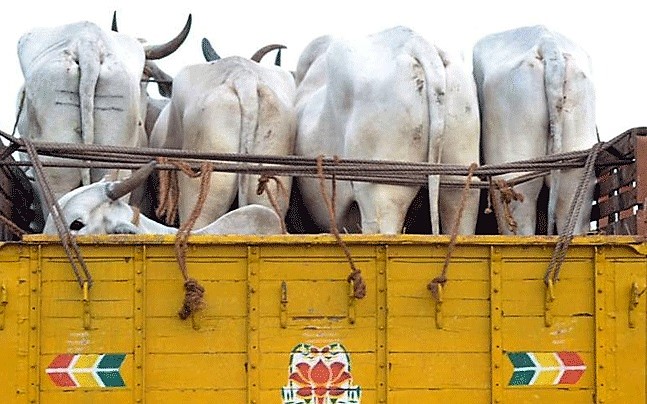
While the focus on crimes committed in the name of cow protection is required, what is also required is a focus on problems of cow smuggling so that this menace is tackled from both the sides.

One of the reasons illegal slaughterhouses were banned by Uttar Pradesh Chief Minister Yogi Adityanath was cattle theft and smuggling, unfortunately these reasons were never discussed in the mainstream media, which chose to focus on non-issues like a particular kebab shop in Lucknow being closed for a day.

But just because the mainstream media doesn’t make them headlines or topic of debates, it doesn’t mean that the problem is not grave. Given below are some instances when cattle smugglers not only broke law, but indulged in killings of police officers and common citizens.

This is just an indicative list:

1. What took place: 27-year-old police constable Ashok Kumar Yadav was killed and six policemen were injured as they tried to chase the cattle laden truck, which bulldozed through the barrier at the toll booth and on hit the police vehicle on being intercepted.

When : 1 June, 2013
Where: Bhadohi, Uttar Pradesh

2. What took place: Two residents of former UP minister Bhagwat Saran Gangwar ‘s village Ahmedabad under Nawabgunj tehsil were killed by a gang when villagers tried to stop them from taking away the livestock of local residents for illegal slaughtering. While one was identified as Chokey Lal, an elderly person, the body of the second victim whose identity isn’t known was found in a battered condition, leaving the residents fuming and opining that in a place where cattle symbolises power and opulence, cattle smugglers indulge in crime unabashed.

When: 7 February 2014
Where: Bareilly, Uttar Pradesh

3. What took place: A cattle laden vehicle killed two and injured many policemen, attached to Jait police outpost, when they tried to intercept it near Azizpur village in Mathura. The vehicle ran over home guard Ghan Shyam and then collided with the police van resulting into injuries to head Constables Ram Vakil who later succumbed to injuries, Constable Rajeev and Home Guard Bhanu Pratap.

When: 20 February, 2015
Where: Mathura, Uttar Pradesh

4. What took place: Cattle smugglers killed a Police Sub-Inspector. Sub-Inspector Manoj Mishra and a constable tried to nab a gang of cattle smugglers who were taking away 50 to 60 cattle. But the smugglers opened fire and managed to flee injuring the SI, who breath his last on the way to the hospital.

When: 10 September, 2015
Where: Bareily, Uttar Pradesh

5. What took place: Prashant Poojary (29) a flower merchant was brutally murdered in broad daylight by six men atop two motorcycles who attacked him with sharp weapons at a market in Moodbidri, when he was selling flowers as usual. Poojary, believed to be involved with the Bajrang Dal, was actively involved in stopping illegal cow slaughter and transportation.

When: 9 October 2015
Where: Moodbidri, Karnataka

6. What took place: Arun Kumar Mahaur, a Dalit VHP leader, who ran campaigns against cow slaughter was shot dead by five men in Mandola area, in Ghaziabad, by those running illegal slaughter houses.

When: 27 February 2016
Where: Agra, Uttar Pradesh

7. What took place: A minor girl, Nirdesh Singh (16), resident of Ahmadabad village, in Etah district was shot at by unidentified cattle thieves as she spotted them trying to take away her cattle from the barn in the backyard of her house. They fled the spot leaving the young girl lying in a pool of blood. Local villagers and farmers had held massive protests against this, for which they were lathicharged by police.

When: 1 June 2016
Where: Etah District, Uttar Pradesh

8. What took place: 55 year old Data Ram, a chowkidar at Chak Lateef Imamgarh village, who tipped off the Police about cow slaughters and incidents of cruelty toward the animal died after he was attacked by two youngsters with a stone. Ram who was returning home with two stray cows that were handed to him by the police who recovered them in an open field and suspected they were meant for slaughtering, was killed on suspicion of being a police informer.

When: 3 June 2016
Where: Azamgarh, Lucknow

9. What took place: Unidentified bovine smugglers mowed down Dalit man, Dinesh Kumar (35) of Jaatav community and resident of Pilkhatar Jait village to steal his cattle, killing him on the spot.

When: 19 June 2016
Where: Agra, Uttar Pradesh

10. What took place: Police officer crushed to death by cattle smugglers. 56-year-old Triloki Tiwari, a head constable who had just been promoted to the post of sub-inspector , along with two constables was inspecting vehicles and signalled a cattle loaded vehicle coming their way to stop. The smugglers chose to run the van over him and escape.

When: 5 August, 2016
Where: Jaunpur,Uttar Pradesh

***

As we can see, those who protect the cow (a crucial asset for many rural families and the rural economy) become the victims of murderous crimes too. This gives rise to a circle of violence and grave crimes, with some groups exploiting the situation to their advantage.

We need to stand up against this violence as strongly as we do against the criminals masquerading as cow protectors. Both feed each other and both have no place in a civilised society.

Why some people support prohibition and why it finds political backing

0

Ban is a strong expression. The moment someone throws a “ban” at us, the rebellious teenager inside us begins to oppose, even if it is something we personally may not approve of.

For example, going vegetarian had become fashion of sorts. Cuddly articles on various celebrities embracing vegetarianism appeared with great regularity. Famous people got themselves photographed naked to show how much they love animals.

But the moment you say that meat might be banned (though there is no real threat), even those whose multiple generations have not eaten meat get outraged. And it’s not outlandish, for the basic idea here is personal liberty and freedom of choice.

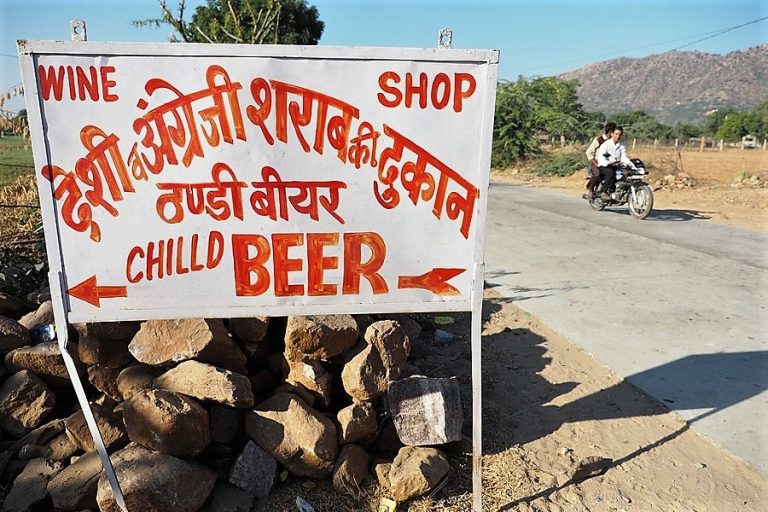
Similarly, people these days are alarmed at the prospects of liquor being banned. To be honest, unlike the ‘meat-ban’ that is outcome of fake news and exaggerations, this is a banning possibility that is already materialising.

Recently Bihar declared itself a dry state. The sale of liquor is prohibited in Gujarat. Kerala has set a plan in motion that aspires to stop the legal sale of liquor in 10 years (the campaign kicked off in 2014). You cannot legally sell alcoholic beverages in Manipur and Nagaland. The same is the case in Lakshadweep.

The latest state to join the bandwagon is Chhattisgarh. The Chief Minister of Madhya Pradesh too recently declared that all liquor shops in the state will be phased out, although he hasn’t set a deadline. Add to these, the Supreme Court has ordered that no liquor shop can operate within 500 metres of the National Highway.

If this goes on, barring Punjab (Punjabis cannot survive without liquor), the entire India will be covered under the ominous pall of liquor ban within a span of 10-15 years.

Now this is worth outraging.

One wonders why would a government indulge in this? What makes it further intriguing is the fact that this (prohibition) has been implemented by various governments headed by leaders cutting across political and ideological divides.

According to 2016 figures, the state of Uttar Pradesh makes a revenue of Rs 14,083 crores from the liquor business. Madhya Pradesh, that is heading towards a total prohibition, earns a revenue of Rs 7,926 crore. Why are they willing to let go an important source of revenue?

Then there are arguments about how prohibition creates a ripe ground for smugglers, bootleggers and corrupt cops. The entire underworld of Mumbai has its roots to the days when gold import was banned. The same Mumbai underworld has been involved in not just causing riots but also providing logistic support to terrorists.

Another problem that may arise out of liquor ban within our current democratic constraints is that people would tend to purchase illicit alcohol with greater frequency, needlessly exposing themselves to life-threatening, poisoned liquor, especially those who don’t have access to illicitly procured refined liquor at higher cost.

Do governments or political parties don’t realise it?

Obviously they do, but they also realise that people who would be happy with prohibition perhaps far outnumber those who would be unhappy. In the end, it is the politics that wins, not the economics.

This is where we need to find out what makes people support prohibition. Can we address their concerns while we fight against prohibition? Let us look at the arguments that favour banning alcohol.

Liquor consumption certainly has its social problems. Women from the lower strata are attacking liquor shops because lives and households have been ruined. Women and kids are the biggest victims of alcoholism in many instances. I’ve lost two cousins because of alcoholism in Punjab. Talking of Punjab, the entire State of Punjab is on the verge of ruin – the last time I visited one of its major cities, there was a liquor shop every kilometer, literally.

Yes, you may say that just because some people cause accidents we can’t ban all vehicles and in the same manner just because some people can’t control themselves liquor shouldn’t be made unavailable to everyone, and I totally agree. The same conflict happens in the US where many people believe that the right to own guns should be abolished but the others believe that just because certain people misuse guns doesn’t mean the right to own guns should be taken away from people who use these arms responsibly.

Irrefutably, certainly problems are associated with alcohol consumption. Although alcohol consumption is widespread, it is not as mainstream as, let’s say, drinking tea or coffee. People believe that many civil crimes (I’m not talking about robberies, dacoities and other premeditated crimes) happen when people have had a good share of daaru.

All sorts of shady elements frequent liquor shops and in fact, this is the reason finding a “wine shop” in the neighborhood is not as easy as finding a kirana shop. All liquor shops have a dark aura around them and they normally operate at the peripheries of civilization. You will never find a Christmas tree decoration or a Diwali decoration in front of a liquor shop. People don’t give liquor bottles as gifts during festivals unless they are property dealers, pimps and underworld bhailog. There is a reason why. Gifting alcohol bottles isn’t same as gifting a box of sweets. I have a friend who puts an ilaichi or a spoon of saunf when he leaves after having beer with me because he respects his parents too much to let it be known to them that he has consumed beer (left to my father on the other hand, if it weren’t for my mother and now, for my wife, he would have turned me into an alcoholic for sure).

Hypothetically, whether one agrees with the ban or not, if liquor is banned it will be the proverbial “chaandi” for smugglers, but on the flip side, how many people actually have access to these smugglers and bootleggers? In most of the cases, it won’t be worth the effort to contact a criminal or a shady cop for the evening party. Having alcohol during regular soirees won’t be as casual as it is now. People will actually enjoy each other’s company instead of getting drunk. During marriages and festivals people won’t be able to create a nuisance in the garb of being drunk (“O ji zara zada ho gayi thi, bura mat manna“). No Punjabi marriage is considered complete without a drunken broil!

On a serious note, we have to realise that a large part of the country we live in is not only conservative, but has some serious social problems that they are seeking solutions to. The problem is more severe in rural areas where 45% people indulge in excessive drinking compared to urban areas where just 23% people indulge in excessive drinking (source). 20-30% hospitalization cases are due to alcohol-related problems. According to the National Crimes Records Bureau 15 people die every day due to alcohol consumption and the figures are rapidly rising (source).

Remember Anna Hazare, much before he got on the national television thanks to Kejriwal and company, he was lauded for converting his village Ralegan Siddhi into a “model village”. He got Padma Bhushan award for that way back in 1992 itself. And guess what, prohibition is a part of that model village. Not just that, people consuming liquor have been tied to a tree and flogged!

We have to realise that the rural and suburban India sees alcohol as root of many evils — and they could be mistaken — but their concerns have to be addressed before we teach them about liberty and choice.

In their experience, they have seen alcohol not as a matter of choice, but matter of public safety. They see alcohol when a husband in inebriated state beats up his wife and children, when people crash their cars into other cars and motorbikes when drunk, when people lose control of their senses and end up committing a crime like brawl or molestation. For a large part of the population, alcohol is seen as a right to enter into your private territory and cause damages.

Their fears are real and not imagined. A report says that 70% of all the road accidents that happen in India happen due to drunken driving, with official figures (which basically means actual figures could be much higher) of fatalities being 1.34 lakhs every year. This led to the Supreme Court passing orders of closing down wine shops near national highways.

We need to convince — first ourselves and then these people who support prohibition — whether the social issues are entirely related to alcohol and whether prohibition helps in improving the situation.

For example, many people claim that prohibition makes law and order condition better. I’ve heard — and I could be mistaken because I haven’t experienced this myself — in Gujarat women can safely roam around at midnight. Many claim that lots of credit for this goes to unavailability of liquor. Though, it isn’t confirmed whether the low crime rate against women in Gujarat is because of prohibition or a generally better law and order situation.

Let me again make it clear that I am not in favour of prohibition. No matter what civil or legal problems a particular tendency brings to the table, banning something is always a double-edged sword. It should always be a road less taken, and preferably, a road that should be avoided. When you take the banning route, you can trigger a chain of events that will be difficult to stop. Every other interest group would demand some sort of banning.

With this article, I am just trying to highlight why this particular banning finds resonance and support with many people. We need to address those issues.

Let me end with a little anecdote that I want to share.

I used to have a help from Bihar during Lalu’s infamous jungle raj time. Once he was telling me that in rural areas in Bihar, it wasn’t advisable to go out after 4 in the evening because it wasn’t safe and if you went out after 4, and if something happened to you, it was your fault. He had internalized the concept that the law and order problem and social dynamics are never going to change and he didn’t even consider them as problems. He had accepted them as an existential reality and instead of wanting to change them, he preferred “banning” of movement after 4 pm.

Banning liquor is like that. It’s like deciding to not to go in a dark alley full of criminals instead of lighting up the alley and ridding it of criminals. If we go on avoiding alleys like these, one day, we will have no place to go.