Home Blog Page 7534

Congress leaders attack each other over party’s stand against the EVMs

Ever since the Assembly Elections in 5 states concluded, an effort has been made by political parties to blame the EVMs (Electronic Voting Machines) for their poor performance in the polls.

On 11th March, as the election results were being declared, Mayawati was the first politician who had come out and blamed the EVMs for BJP’s victory. Slowly, other political parties too started raking up the EVM issue and AAP supremo Arvind Kejriwal took it to the next level after spreading an outright lie about the machines that were equipped with the VVPAT system.

The resultant controversy forced the Election Commission to take stock of the issue and explain in detail why EVMs can’t be hacked.

However, the parties pushing this paranoia and propaganda are not giving up. Congress too is a part of it as it was their leaders, and a section of media, who had created the controversy about EVMs in Bhind, Madhya Pradesh. Not just local leaders, even senior leaders have started pushing this propaganda. Congress even demanded an immediate ban on the EVMs in Rajya Sabha. Leader of Opposition Ghulam Nabi Azad had stated:

EVM should be stopped right now. In the upcoming civic polls of Delhi, assembly polls in Gujarat and other states EVMs should not be used.

Later, the Congress joined a group of 16 opposition parties that petitioned the Election Commission to express no confidence in the EVM and called for ballot papers to be brought back. Ghulam Nabi Azad told the reporters that they had lost confidence in the EVMs after the Uttar Pradesh and Uttarakhand elections. He though didn’t mention anything about the Punjab elections.

This embarrassing stand of the Congress party, which flaunts about introducing computers and technology in India, has prompted Senior Congress leader Veerappa Moily to come out and slam the party.

Moily in his statement backed the EVMs and stated that there was no question of going back to the manual methods (ballot papers). He slammed the party for joining the chorus against the EVMs and called it a defeatist mindset.

Moily also expressed his dismay against the way Congress had come under the influence of regional outfits who were only looking for excuses for their defeats.

He further stated that the EVMs were introduced when he was the union Law Minister and claimed that they had tested the EVMs during that period. He also claimed that many leaders weren’t consulted about the Congress’ decision to petition the EC.

Not just Moily, senior Congress leader and former Chief Minister of Delhi, Sheila Dikshit too has indirectly criticized the stand of the Congress. In an interview published on 9th April, Sheila Dikshit was asked about her view about Kejriwal’s allegations against the EVM. She said that EVM tampering was a perception which was created by losers.

She stated that the shift to the EVMs was made because it was a modern system, and that accusing the Election Commission straightaway only because the party had lost was not right.

Joining this league of senior leaders not happy with EVM hacking theory is Punjab Chief Minister Captain Amarinder Singh, who too trashed such conspiracy theories. “If EVMs were tampered with, Akalis, not me, would be sitting here,” he was reported as saying.

But looks like Congress is in no mood to sound logical. Moily was summoned by the party top brass for his comments, while party spokesperson Manish Tewari attacked Captain with heavy words, accusing him of making a u-turn:


Did Snapchat CEO say he didn’t want to expand to poor countries like India?

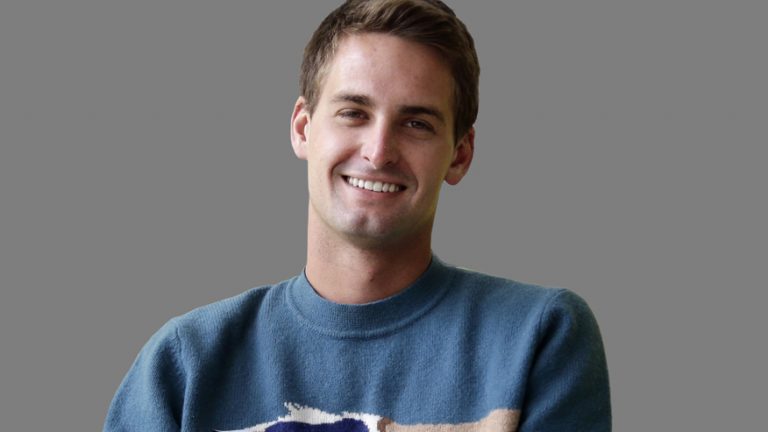
People found a reason to be aggravated today after reports started coming out that claimed that Evan Spiegel, the CEO of popular mobile app Snapchat, wasn’t very keen on an expansion to India and Spain as they were poor countries. The said information was tweeted by News18:


Even The Economic Times put out a report titled:

Snapchat CEO says India “too poor” to consider expansion

This soon attracted people’s attention and they started tweeting about it:


So what’s the truth did he really say something like that which might seriously jeopardize the company’s goodwill in this country?

Well maybe but certainly not in a way the reports suggest. As it turns out, the quote didn’t directly come from Spiegel but is part of a lawsuit by an ex-employee Anthony Pampliano, who alleged that Spiegel had said so in a meeting.

The lawsuit claims that in the meeting, Anthony Pampliano, who had joined Snapchat from Facebook, had expressed concerns about the App not taking off overseas. As he was presenting ways to rectify the issue, he was allegedly cut off by Spiegel who stated that the App was for rich people and that he didn’t want to expand into poor countries like India and Spain. Pampliano lasted at Snapchat only for three weeks.

The lawsuit was filed in January but the contents of the complaint were only released earlier this week. The principle issue of the lawsuit was about Snapchat allegedly misleading investors by exaggerating  its user data and that top executives were completely misinformed about key metrics. The lawsuit was filed just as Snapchat was planning to go for an IPO and concerns were raised that it might dampen the spirits. But that wasn’t the case and the shares were 12 times oversubscribed.

Even though Snapchat has come out to state that it has nothing to hide when it comes to inflated growth metrics, it hasn’t responded to the India comment possibly because there are other more serious allegations which it has to fend off.

Though having said all that nothing justifies misleading headlines which attributed a quote to a person based on pure allegation.

Why the AAP government’s electricity subsidy in Delhi doesn’t make sense

When the AAP government came to power in Delhi one of its major poll planks was cheaper electricity. The party claimed that not only the electricity companies were overcharging, even the meters were running faulty. AAP demanded audit of companies and replacement of the meters, which they said will be effective in bringing the electricity bills down.

However, to achieve that promise, the AAP government decided to take the easiest route and provide an outright subsidy, which essentially meant that the government would pay substantial part of the consumer’s bills to the same companies they suspected of committing fraud.

As per the subsidy plan, if any household consumes less than 400 units of electricity per month, it would be eligible for 50% of subsidy on its bills. In the past year, the total amount of money allocated for the subsidy is reported to be around 1600 crore rupees.

Whenever one hears the word subsidy, one assumes that it is being used to help the poor and the marginalized, but the 400 unit limit is so high that on an average 80% of the households are eligible for the subsidy, and in some months the number rises to as many as 95% households. As this article argues, the current subsidy design is benefiting the rich more than the poor as Delhi is decently urbanized.

Also, though the rate of subsidy offered is a flat 50% whether you use 1 unit of electricity or 400 units of electricity, the cost of electricity in Delhi is not uniform. If one consumes up to 200 units of electricity, the rate charged is Rs 4 per unit, but for units ranging from 201 to 400, the rate applicable is around Rs 6 per unit. This also works to benefit those who are comparatively better placed in terms of cost of living standards as their subsidy amount is higher.

Plus another reason the 400 unit limit is too high is the fact that according to a 2015 report by the Center for Science and Environment, the average energy consumption in Delhi was just 181 units and about 2/5th of the households consumed less than 100 KWh per month. The report quotes the 68th Nation Sample Survey of Household Consumption, which suggests that a good portion of the population could still have benefited if the limit was lower.

An electricity bill subsidy of Rs 1600 crores in a year might also be hampering Delhi’s development work. As the this article says, this subsidy was more than 8 times the amount allocated for the Smart City project, more than 1/3rd of the total budget allocated for public medical health services and about 20% of what the government had allocated for education.

As per a study published [pdf] by think-tank Brooks India, this novel subsidy model by the AAP might actually be anti-poor. According to the study, the middle class enjoys more benefit of the subsidy as compared to the poor. It claims that the poor on average get under 33 per cent net billing subsidy, while those consuming near about 400 units get over 40 per cent net subsidy.

According to the study, the amount of subsidy provided can be easily reduced without really reducing the number of households covered, thereby making it more efficient. The study claims that reducing the eligibility from 400 units to 300 might lead to savings of 30% but would just reduce the coverage rate by 13%. Also if the subsidy limit was reduced to 200 units which supposedly is the average power consumption in Delhi, there can be total savings of Rs 1000 crores, while about 50% of the population would still be eligible to avail it. The amount saved can be used to undertake other development works.

Mahila Congress official accuses Ajay Maken and others of mental harassment and criminal intimidation

0

Rachna Sachdeva, who is the District President of the Delhi Pradesh Mahila Congress, has made grave allegations against senior Congress leaders accusing them of harassing and threatening her. In a complaint filed at the Tughlak Road police station dated 12th April, she has named Ajay Maken, the President of Delhi Pradesh Congress Committee, Shobha Oza, who is the President of All India Mahila Congress, and Netta D’Souza, who is the General Secretary of the All India Mahila Congress.

Sachdeva has alleged that the various acts by the trio has resulted in mental harassment, criminal intimidation and even a threat to her life.

He complaint states that the entire thing started when she, with around hundred supporters, protested in front of Rahul Gandhi’s house on 26th March this year, after being fed up of Ajay Maken allegedly demanding huge sums of money from his cohorts for the upcoming MCD elections. Rahul Gandhi heard her grievances and asked her to come the next day with proof, her complaint informs.

She claims to have handed over the proof to office personnel the next day, and further states that while she was waiting outside Rahul Gandhi’s residence, Maken arrived and asked for her mobile number which she gave. He then allegedly threatened her and even said ”I will see you after the elections”.

After the accused returned to the party headquarters in Delhi, she alleged that she was stopped by Shobha Oza and Netta D’Souza. She further alleged that they made her sit alone and then proceeded to abuse and threaten her. She alleged that the harassment didn’t end there and since that day she has been receiving phone calls from random numbers which made threats against her and her family’s life.

Now as a remedy, she has requested the Station house officer of the Tughlaq road police station to lodge an FIR against the accused under sections 503, 504 and 506 of the IPC which deal with criminal intimidation. As she feels there’s a threat to her life, she has also asked for police protection.

As per a report, there has bee no response from Ajay Maken regarding the allegations but Shobha Oza called it a conspiracy against the Congress ahead of the MCD polls.

You can read the whole complaint here[1][2]

Parrikar slams media for misquoting him on reason for leaving Delhi

0

Former Defence Minister Manohar Parrikar, who is now the Chief Minister of Goa, took to twitter to slam media reports which claimed that he had quit the post of Defence Minister because he could not cope with the pressure of dealing with issues like Kashmir:


The tweets came after media reports that made claim that this was the “real reason” which led to him quitting. One example of such reports is the report by DNA based on PTI, which was titled as: “Couldn’t handle pressure of issues like Kashmir: Parrikar reveals real reason he came back to Goa”

In the above screenshot itself, one can see how DNA played with words. In the headline they scream that this was the “real reason”. But the byline itself said that the Goa CM stated that this was “one of the reasons”.

In the same article, if one digs deeper, one can see that DNA “quotes” him as saying this:

Even if one takes this “quote” to be correct, It may be considered a stretch to directly link the statement of “pressure” with that of Kashmir. Subsequently numerous media reports emerged with the same reporting, all claiming to be sourced via PTI. [1], [2], [3]

Further, in the limited video clipping put out by ABP News, Parrikar is seen saying most of the above, but he does no utter the magical words of “I quit because of this reason”:

Further, as Parrikar said in his tweet, it appears The Hindu had got the quote right. This is what The Hindu had reported:

The above report was filed by a local Goan correspondent so the chances of the meaning getting lost in translation are minimal, and which is why perhaps Parrikar felt this was the most correct report. It also broadly agrees with the video in the ABP News bulletin and makes no mention of the “this is why I left” quote, which wasn’t seen in the video clipping as well.

4 MLAs now! What does the Rajouri Garden win mean for the BJP in Delhi?

The results of the by-polls were declared yesterday and the BJP managed to convincingly win the Rajouri Garden seat while AAP lost its deposit and came a distant 3rd. After the win the BJP has added one more MLA to increase its tally to four MLAs.

In this great piece of journalism, we examine as to what difference would that make:

  • Four people are so much better for playing sports than three people. The MLAs either during their work or in their free time can play Tennis or Badminton doubles or tug of war. They can also team up and play a 2 vs 2 game of football. Also playing cricket would make some sense as there can now be a batsman, bowler, wicket keeper and fielder.
  • When they go to restaurants they can easily ask the waiter for 2/4 soup instead of the rather twisted 2/3 order.
  • While travelling in cabs together they can pay less per person as cabs allow four people to travel and they can split the bill 4 ways instead of the existing three.
  • Also whenever the MLAs decide to go boating in one of these boats, the boat can now stay evenly balanced with 4 people on board and not get lopsided causing a risk of capsizing which might have happened if three were sitting.

  • The 4 MLAs can also become a force in morality as whenever the Kejriwal government is thinking of doing something controversial its advisers can chide them by reminding, that “Char log kya kahene“.
  • They can now create a proper musical band with a lead singer, drummer, guitarist and a base guitarist and not put added pressure on the lead singer to also play the guitar.
  • There are certain disadvantages too, now they won’t be able to use auto-rickshaws or those Sholay styled motorbikes with sidecar to ride around.

the article was inspired by this tweet

The truth about Yogi government removing reservations in private medical colleges

Recently a news has been doing rounds that the Yogi Adityanath led state government has announced that it was doing away with caste based reservations in private Medical and Dental colleges of Uttar Pradesh. Some hailed it as progressive step that guards rights of private institutes, others found it an attack on the reservation policy.

Things were further muddled by this vague tweet by India Today, which suggested as if reservations in private medical and dental colleges were being removed nationwide:


Reservation policy has always been a delicate issue and all political parties claim to be in its favour. BJP too has clarified many times, including through statements made by top leaders such as Prime Minister Narendra Modi himself, that reservation policy was here to stay. So is there a re-think over reservation policy vis a vis private bodies?

Apparently not. It turns out that reservations in private medical and dental colleges may never have existed in the first place. Latest media reports quote the Director General of Medical Education, who claimed that the Yogi government had made no changes to the existing policy, and that there was no provision for reservations for any caste or community in the private colleges even earlier.

The concerned government order was issued on 10th March, when the Samajwadi Party government led by Akhilesh Yadav was in office, and it contained admission policy on the basis of National Eligibility cum Entrance Test (NEET), in which the Clause 7 stated that in the private medical and dental colleges there won’t be any provision of reservation for students belonging to the SC, ST and OBC categories.

To understand the issue better, we need to get a bit of historical context. In 2006, an ordinance was passed by the then state government led by Mulayam Singh Yadav that had ordered reservations in private educational institutes. However, that order was struck down in 2011 by the Allahabad High Court, which ruled that unaided private educational institutes were not bound to follow the reservation rules as it would violate the basic structure of the constitution of India.

In October 2015, the Uttar Pradesh State Backward Class Commission (UPSBCC) had requested the then Akhilesh government implement reservation for OBC students in private medical colleges. This further confirms that private medical colleges had no reservation policy until recently. These two incidents corroborate the latest news reports quoting government officials that there was no reservation policy in private medical and dental colleges to begin with.

Question then arises as to what was then the need for that March 10 order by the Akhilesh government? A possible explanation to this might be the fact that the admission to these medical colleges would be based on the NEET score for the first time and not based on the UP-CPMT exam, which used to be conducted by the state. So maybe as there was a change in the procedure, the state government had to frame a new admission policy which was based on NEET, in which the existing clause of no-reservation in private colleges might have been added.

The media houses though after reading the 10th March order might have found that particular clause ‘interesting’ and hastily concluded that reservation in private institution was abolished, triggering speculations and sensationalist headlines.

‘Factchecker’ gets it wrong: Fact-checks PM Modi based on misreporting of passport rules

Yesterday, PTI reported that PM Modi had made an announcement regarding the passport rules:


On the face of it, this is a welcome move cutting read tape. But many on social media were unimpressed. Reactions of users suggested that such a provision in the passport rules had existed for a long time.

Factchechecker.in, a website that claims to check claims made by all and sundry (although it has been debunked on OpIndia.com earlier), latched onto this and ran a report:

A cursory glance would suggest that Factchecker.in had caught PM Modi on the wrong foot. In the same article though, was this paragraph:

The Prime Minister also said that “women don’t have to submit marriage/divorce certificate for passport”.

It appears that PM Modi is referring to the changes in the passport rules notified by the external affairs ministry in December 2016.

So, it appears that PM Modi made 2 statements, one of which was wrong, and the second referred to a recent change in the rule. But if we look at the video (from approximately 19.45 minutes) of this speech, something different emerges. A verbatim transcript:

An important change has been made to the Passport rules too. Now a woman, need not furnish a copy of her marriage or divorce certificate. It will be her discretion as to use her father’s name or mother’s name in the passport.

These are the only lines related to the passport rules in the entire video. Now compare this quote, with the quote mentioned by PTI in the NDTV tweet, and also with the ANI tweet. There is a small but subtle difference: contrary to what PTI reported, PM Modi never said “women need not change their names in passport after marriage anymore”. Instead he specified only that certain documentation rules have been relaxed.

So to summarize: PTI wrongly quoted the Prime Minister. NDTV tweeted the same. Factchecker, instead of checking the facts, trusted the NDTV tweet of the PTI quote as gospel truth, and on that basis ran a story whose title said that Modi had got something wrong. But the fact is, Modi had never said it!

And further down in the same article, Factchecker mentioned that the ANI quote (which it claimed was a quote in addition to the PTI quote), was correct and was related to a change made in the passport rules a few months ago. Thus, Factchecker themselves have certified that the PM got this part right, and as we can see now, this was the ONLY thing he said relating to passports!

Factchecker.in should start taking its name a bit more seriously.

‘Bunch of Fools’ want you to share ideas on how to keep India clean

0

On 23 November 2015, few groups from different parts of India came together to do Shramdaan, which involved coordinated efforts by different voluntary groups towards improving cleanliness and sanitation situation in their respective cities.

All of them used a WhatsApp group to pool in ideas, share their work and appreciate whatever good was being done. As this furthers the objective of Swachh Bharat campaign that was launched by the Prime Minister, even the PM had appreciated their efforts:


The concept of Shramdaan was furthered by Prime Minister Narendra Modi who appealed to the citizens of India, through his radio address Mann Ki Baat in September last year, to devote a few hours for Swachh Bharat by participating in various cleanliness activities.

He also urged citizens to share pictures and videos of their ‘#Shramdaan’ and further strengthen this mass movement across the country, and many citizens and groups are doing exactly the same. Thanks to the determination and perseverance of these individuals and groups, a certain stability and continuity has been achieved. Now they are ready to scale up Shramdaan to new heights.

To take a step towards the same, a Shramdaan Conclave is being organized by the Raipur District Administration (Chhattisgarh) and a volunteer group named “Bunch of Fools” on 15-16 April 2017.

Papers and presentations from different groups have been invited. The conference seeks to define and draft a clear course and model of public participation in Cleanliness & Sanitation. The aim is also to deliberate upon channelizing the energy of masses towards #SwachhBharat.

Here are the names of a few of the groups who will be attending the conclave at Raipur, bringing with them their experience and innovative ideas. Their contribution to Swachh Bharat is remarkable and they have managed to change perceptions in a big way from wherever they hail from:

1. Samarpit Sewa Samiti, Vidisha, Madhya Pradesh
2. Lalitpur Jagrukta Abhiyaan, Lalitpur, Uttar Pradesh
3. Swacch Jarora, Jarora, Himachal Pradesh
4. NDYS (Swacch Narmda), Shegaon, Madhya Pradesh
5. Helping Hand Alwar, Alwar Rajasthan
6. MAD Foundation, Mumbai, Rajasthan
7. Navyakriti Foundation, Delhi
8. Mission Parijat, Varanasi, Uttar Pradesh
9. Shashi Foundation, Lucknow, Uttar Pradesh
10. Digital Jhansi, Jhansi, Uttar Pradesh
11. Team Shramdaan, Ghazipur, Uttar Pradesh
12. Green Warriors, Lucknow, Uttar Pradesh
13. Nagpur I-clean, Nagpur, Maharashtra
14. Bhopal I-clean, Bhopal, Madhya Pradesh
15. Swarnrekha Samiti, Ranchi, Jharkhand
16. Green Minds, Bhandara, Maharashtra
17. Mission Shramdaan, Gwalior, Madhya Pradesh
18. Dev Excel Foundation, Lucknow, Uttar Pradesh
19. Change India Foundation, Jamshedpur, Jharkhand
20. Helping Hands Palwal, Palwal, Haryana
21. Swachh Bharat Mission, Delhi
22. Paryavaran Dost, Ranchi, Jahrkhand
23. Paryavarn Sena, Pratapgarh, Uttar Pradesh
24. Young India Raipur, Chhattisgarh
25. Green Police, Nagaon, Assam
26. Shuddhi NGO, Delhi
27. Kshiteshwar Nath Sewa Samiti, Balia, Uttar Pradesh

For more information or for participating, please write to [email protected]

Trolls attack Gautam Gambhir for supporting armed forces in Kashmir

The whole nation was shocked and incensed after viewing the video of Kashmiri youths assaulting CRPF Jawans that went viral recently. In the video, unidentified Kashmiri youths were seen targeting the Jawans who displayed extreme restraint and didn’t even once react to the constant abuse by the locals:


//platform.twitter.com/widgets.js
Among the people who were outraged by the incident was cricketer Gautam Gambhir who took to Twitter to let his feelings known:


In the 1st tweet Gambhir expressed his anger against the Jihadi and Aazadi brigade and in the 2nd put out his own symbolic interpretation of our national flag based on his fury against Jihadist and Terrorist elements working against India.

While most welcomed Gambhir’s passion when it came to his support for the army and the paramilitary forces, there were some trolls who decided to attack and mock him for his views and called him names. He was called a Modi supporter (as if people who don’t support Narendra Modi shouldn’t support the army) while some inane ones like Sagarika Ghose even asked Gambhir to be arrested for sedition:


One troll virtually called Gambhir a terrorist:


As seen above, many trolls were using the pretext of his interpretation of the Indian flag in the the current context to attack him while failing to react or respond about the real issue of the plight of paramilitary forces or terrorism which he had raised.

On a related note, even though all these trolls decided to attack him today, the same lot was supporting him when he stood up for freedom of expression of Gurmehar Kaur in the not so recent past. What about Gambhir’s freedom of expression?