

Home Blog Page 7564

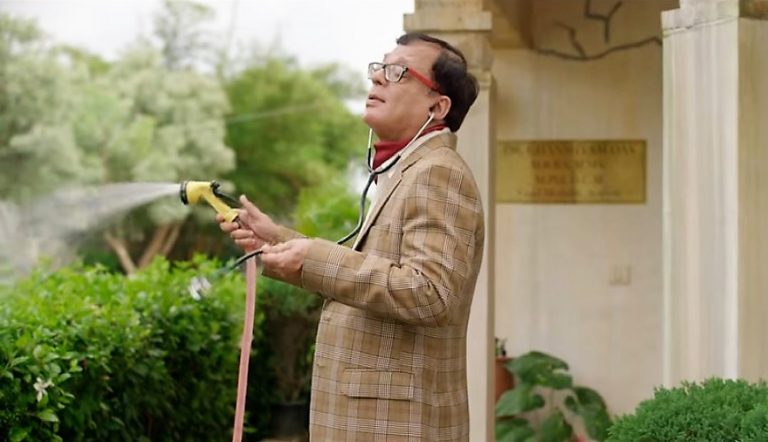
This TV ad explains the importance of ‘appearing’ liberal

0

This thought had struck me more than a year ago, when I saw this particular television advertisement. Then the ad slowly disappeared from TV screens. However, I saw it again during the recent India-England cricket series. So hitting a mauke pe chauka, I thought to pen my thoughts finally.

First, take a look at the ad:

So a doctor, who worked hard to earn all his degrees and gain knowledge, was not being accorded respect just because his house was not well painted from outside. The doctor never felt the need to get his house painted as such, but nonetheless had to get it painted as he desperately needed to be respected (who does not want to be respected?).

Now forget the brand and the product. But what you just saw perfectly describes why some people have to align themselves with the “left-liberal” camp. It’s that external paint that gives them the respectability that has been elusive for various reasons (many times because they don’t have any degrees but still want the respect).

I don’t want the “liberals” to start targeting the brand as they had done with Paytm after an ad pricked their guilty conscience. So let me clarify that I think the company didn’t at all think this way, but they have explained the power of left-liberals through their ad.

Left-liberalism is that outer paint that makes the truth (the degrees) redundant. The paint becomes the truth.

And those, who insist that the paint is just an outer façade, are accused of belonging to the “post truth” world.

The biggest beneficiary of this paint is the Congress party; this contract of painting the walls was awarded by Indira Gandhi during the 70s, when almost all institutions were stuffed with leftists (and they continue to run them with mafia like control). It made sure that despite numerous irregularities and excesses, the party, and especially the family, continued to be “respectful”.

This paint makes sure that the family is always shining, despite scams (from Jeep scam to Helicopter scam), attacks on civil liberties (from first amendment to forty-second amendment), massacres, and suppression of dissent.

How effective and magical is this paint can be gauged from the fact that Shabnam Hashmi, whose brother Safdar Hashmi – a communist playwright and theatre personality – was killed by Congress backed goons, has been batting for the party religiously. On the other hand, a random goon slaps a filmmaker and everyone in BJP has to resign.

I come from Bihar and have seen how people belonging to the so-called lower castes were not even allowed to vote by the upper castes (well, this is not the worst of the atrocities committed against them). Almost without fail these upper caste goons and their patron leaders were from the Congress party. Yet, there is not a blemish on the Nehru-Gandhi family for fostering and emboldening such casteist and criminal elements.

In fact, look at the magic. Dalits are presented to be the “natural voters” of Congress, and Lalu Yadav – who rose as the voice of the so-called lower castes and who decimated Congress in the state – is today the ally of the party and has got nothing to say against the Nehru-Gandhi family.

Basically, the paint works.

It is not just politics; it works in academics and media too. In fact, it works there as charm.

Arun Shourie – who these days has become fount of truth for the liberals – demonstrated in his book Eminent Historians how people with dubious academic records and practices became “eminent” just because they had this “paint” on them.

The fact that this paint is needed – else a postman will take your name disrespectfully – was demonstrated recently when some leftist rags tried to run down Dr. Vijay Bhatkar, a computer scientist who led Indian efforts to develop indigenous supercomputer, because he has an RSS association (not the right kind of paint).


This will continue till this particular paint has a monopoly in the market. The tragedy is, this monopoly is tough to challenge due to the mafia like control the left-liberals have on institutions. We have seen – from JNU to UC Berkeley – how they don’t cede an inch to dissenting voices. When you are not even allowed in the marketplace, there is no way you can even imagine to change the market.

Till then, your option is to either get your house painted (stop criticising or cracking jokes on the liberal luminaries, regurgitate whatever they say, join their lynch mobs) or get labelled a “troll” and face disparaging comments from the postman.
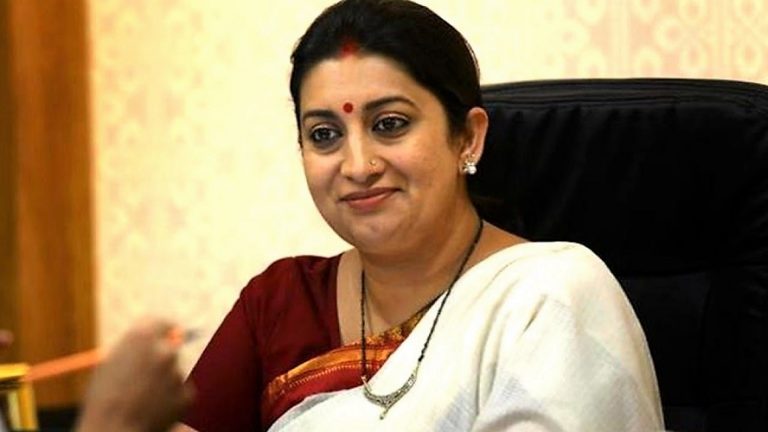
Robert Vadra’s relative deletes offensive tweet after Smriti Irani shows it on news channel

A Twitter user named Tehseen Poonawala, who is brother-in-law of Robert Vadra, who in turn is brother-in-law of youth leader and Congress Vice President Rahul Gandhi, was caught in an awkward situation earlier today when one of his offensive and misogynist tweet targeted at Union Minister Smriti Irani was shown on English news channel CNN-News18.

Tehseen and his brother Shehzad Poonawala come on various news channels, introduced as “political analysts” or “activists”, while both of them are vocal supporters of Congress on Twitter. Both of them are often seen taking moral high grounds on various issues, including on topics like online misogyny and harassment of women.

With Tehseen’s offensive tweet aimed at ridiculing Smriti Irani, then the Union HRD Minister, being shown on TV, both of them were left red faced and embarrassed. The tweet was read out by a shocked journalist on CNN-News18 when Smriti Irani asked her to check out the abuse and harassment she had been subjected to:


//platform.twitter.com/widgets.js
The crassness of the tweet was acknowledged by a few journalists, most of whom otherwise turn a blind eye towards abuses that are sent out by AAP or Congress supporters:


Realizing that the incident could blow up in his face, an embarrassed Tehseen deleted the tweet, but not before its screenshots were taken by many on Twitter. In fact, the same tweet was pointed out by some Twitter users yesterday itself after a TMC MP tried to defame two private citizens over online abuse:


The most ridiculous and laughable defence came from Teheseen’s brother Shehzad who came up with idiotic arguments claiming that the concerned message was never tweeted by Tehseen, thus it was fake. After acting technologically illiterate, or perhaps being one, he was introduced to a thing called Google cache by fellow Twitter users that proved that Tehseen had indeed posted the offensive tweet:


Both the brothers continued making ridiculous claims and were begging “friendly” journalists to help them out of this situation; meanwhile people found out many more examples of misogynistic tweets composed to humiliate and harass Smriti Irani:


These are only a few tweets among many pointed out by Twitter users to prove how Tehseen has been virtually indulged in targeted harassment of the union minister.

It should be noted that while the mainstream media always highlights any stray incidents of any online abuse that appears to come from the so-called “right wing”, they normally ignore the abuses thrown at right-wing or pro-BJP social media users, including at women.

OpIndia.com had published a report earlier too highlighting how Smriti Irani in particular has been a target of such misogynist attacks and harassment. The mainstream media seems to be waking up to the phenomenon now.

But will the mainstream media ever talk about how pro-BJP or right-wing women are subjected to targeted harassment by political class, which calls itself “liberal”? Perhaps that will be too much to expect from a platform dominated by the so-called liberal class.

3 lakh cap on cash transactions – How effective will it be?

0

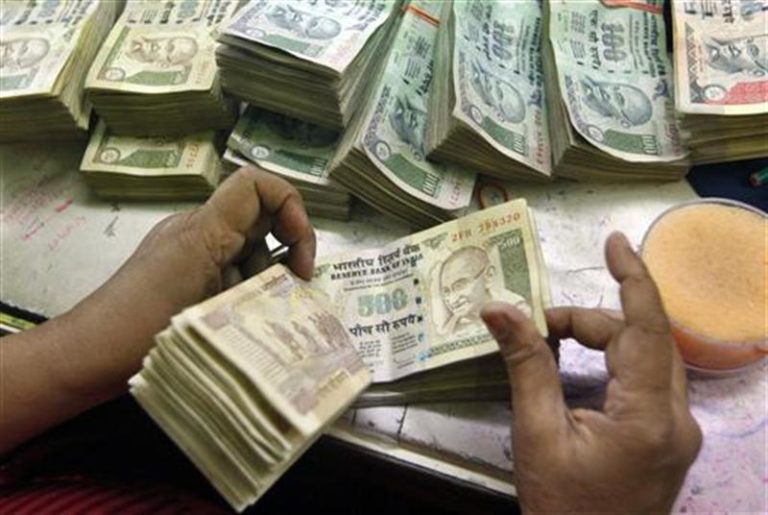
In a previous article, I had tried to reason that withdrawal tax will have limited effect on back money as it tries to stem the source and does not affect the downstream flow. In the annual budget however finance Minister Arun Jaitley has proposed to ban all cash transactions above Rs. 3 lakh instead of taking the withdrawal tax route. In principle, GOI is trying to reduce black money by attacking the utility of money.

The argument seems to be that if cash cannot be utilized, there is less incentive to accept cash and so an overall reduction in the cash economy. Here we are trying to reduce the seller’s motivation to accept cash. So let us now try to look at transactions from the seller’s perspective and analyze the effect of a cash limit on undisclosed transactions in the cash chain.

Since the restriction is based on size of transaction, here is a representative cash chain based on transaction size from the seller’s perspective:

Cash chain
Cash squeeze and cash transactions

Basically independent of the size of transaction, a cash chain terminates at the bank. So, only the last transaction preceding the bank deposit is of interest here. This transaction cannot be more than the proposed 3 lakh limit. As long as the last transaction is less than the upper limit, a cash chain will exist.

In short, as long as someone in the chain is capable of breaking the cash received into smaller components, the outflow for cash will be available and as long as there is an outflow, black money will exist.

It is not as if this move will be completely ineffective. Big cash purchases are mostly in the luxury goods, Jewellery and Real Estate segments. Car manufacturers, luxury goods manufacturers will not be able to split their invoices into smaller amounts thus plugging some holes. Gold can be bought in small quantities, but then it will be a dead investment as it will be tough to sell it off again in small quantities.

However, small ticket purchases which cover most of our day to day needs are not covered and they will continue to exist. Professionals who have a dual source of income – white and black (corrupt officials, merchants and service providers who accept both digital and cash etc.) can utilize the cash component for day to day needs and save the white component for posterity. Real Estate also remains a dark spot as builders will be able to utilise cash by paying contractors as they have done after Nov 8th.

Principally this move is good as it reduces the power of cash. This is aimed at downstream transactions and not just the mouth of the cash chain. However, this will plug only a part of the high ticket transactions while leaving the smaller ones untouched thus not really promoting a cashless economy. More steps will have to be taken to further reduce the buying power of cash so that large amounts of accumulated cash cannot be easily utilized.

To borrow a metaphor from my previous post – if we imagine the cash chain to be a long pipe with numerous leakages, this restriction will plug a few leakages but as long as water can circulate within the pipe and flow out from other nodes, the black economy remains alive and kicking.

This is why TMC MP Derek O’Brien had tried to defame private citizens

0

TMC’s Rajya Sabha MP Derek O’Brien had named two private citizens during a debate in the Upper House making unsubstantiated serious allegations against them. Mamata’s man had accused them of giving out rape and death threats, and in the process defamed them as those named had never done anything of that sort.

Derek was accused of hiding behind parliamentary privilege, as common citizens can’t take parliamentarians to courts for their actions on the floor of the house. This was followed by outrage on Twitter and a petition was launched demanding an apology from the TMC MP. The petition garnered over 5000 signatures (the target) within a few hours.

Following this outrage over irresponsible behaviour by the TMC MP, BJP MP and Union Minister Smriti Irani today raised this issue in Rajya Sabha and demanded that name of the private citizens be expunged from the records, because they were not present in the house to defend themselves:


The fact that Derek had used a propaganda material written by someone who is nothing sort of an abusive troll to defame private citizens, also worked in favour of the Twitter users who were named by the TMC MP.

As a result, Rajya Sabha chair ordered to expunge the names of the private citizens, and the same was done today:

Derek O'Brien receives setback
Rajya Sabha expunges defamatory remarks by Derek O’Brien. (full pdf link)

However, what is important is to look at the last word in the above part of the speech by Derek (highlighted by us). By raising the bogey of abusive trolling and rape threats, what he was aiming was to discredit the social media that has often exposed how Bengal has failed to protect its citizens from violent communal mobs.

It should be noted that West Bengal has witnessed many incidents of communal violence recently but the ruling TMC government has always suppressed information about these. The state government has received support from the mainstream media that has largely remained silent over these incidents.

Celebrity journalist Rajdeep Sardesai was asking everyone who raised questions about Bengal violence to leave Twitter, only to be embarrassed when his own TV channel confirmed that Hindus were at receiving end of the communal violence in parts of the state.

OpIndia.com too has published many reports that highlight these incidences. And there are numerous social media handles that have been reporting and highlighting such incidences of communal violence in the state regularly.

With majority of the mainstream media turning a blind eye and the rest stopped from visiting the disturbed areas, all that TMC needed to do was to discredit the social media to achieve complete blackout of state government’s failure in providing protection to its citizens from rampaging Jihadi mobs.

And that’s what Derek O’Brien most probably was aiming for when brought up this issue in the Upper House – to brand everyone trending hashtags like #BengalBurning as a criminal issuing death and rape threats.

The fact that TMC does not want communal violence in Bengal to be discussed and reported is confirmed by this tweet by Rajya Sabha MP Swapan Dasgupta, who was stopped by the TMC members from raising the issue today:


Well played Derek, but the social media won’t be cowed down. And thank you for giving the hashtag that will be now used without fail to chronicle your government’s failures.

‘Intolerance gang’ is now officially terrified of dissent of the ‘amateurs’

0
First they ignore you...
The mainstream media vs the social media?

This quote from the Mahatma is forever so relevant that the only way it could have been more awesome is if Gandhiji had actually said it.

Think back to the golden days of UPA 1. The ecosystem was thriving (well, it still is, barring minor inconveniences). Intellectuals, filmmakers, journalists, academics, etc. all flocked to the fountainhead in Lutyens Delhi. Money, fame, awards and deals for everyone!

Amid the glitz, the glamour and the glare, the intoxicated party animals did not notice that the ground beneath their feet was shifting.

India was changing. Small isolated voices of dissent were springing up over this new thing called the internet. These voices belonged to regular people who were itching for an outlet for their views. These people wanted to challenge the dominant discourse.

But each of these voices was very small, with not enough influence to justify a buyout from Lutyens’ Delhi. The UPA classes had all the power and all the privileges; they had their Padma decorated soldiers posted at every checkpoint on the information highway, from media to universities. What could possibly go wrong?

Could a handful of angry voices really hurt a dominant ecosystem? As a “technology demonstrator”, a prominent TV anchor once sued a poor blogger for exposing her shoddy reporting. The helpless blogger had to retreat immediately. The UPA classes were happy. No threat. These people could be shut down at will.

Meanwhile, the potential of the internet was still unfolding. The once solitary voices were all seeking out and finding each other, interacting and multiplying in strength. What used to be a dull buzz had become a clamor.

The bosses observed these developments with some irritation, but they were still not sure if they needed to go for an attack. They had all the power and all the money and it was easy to laugh off the new guys.


It was easy to ridicule the new guys as some kind of curious but ultimately dumb zoo animals, a few steps below rational humanity in the evolutionary ladder.

Ram Gua's tirade against the independent internet voices
Those who were sitting on the UPA’s gravy train were wondering : who is milking this cow? Who indeed?

Then came the fateful nine months between September 2013 and May 2014. The unimaginable unfolded before their very eyes. For the entrenched classes, this was SPARTA! They knew they had to fight. The “Right Wing Troll” was now Lutyens’ Enemy Number One!

From a variety of newly established and well funded online platforms, the war on the online right wing began. The same scroll of liberal talking points was wired across all platforms to be printed everywhere on the internet.

The aim was to make sure that daily opinions of liberals would be the first to be posted on social media. Keyboard journalism entered a golden phase as all liberal hands were summoned to deck.

Except it simply isn’t working. A bunch of amateurs volunteering their free time is beating the professional liberals hands down. It’s unfair to even refer to the online RW as part-timers, they are probably best described as “hobbyists”.

Let me repeat this: professional liberals are working full time fighting some amateurs and hobbyists for a living. And they are still losing. Says something truly pitiable about intellectuals and journalists, no?

For the lutyen’s liberals, it was not just all hands on deck. They had to go lower. Shoddy pamphlets on right wing social media “trolls” were printed by the Dirty Tricks Department. Can you believe that “revelations” contained in these pamphlets were debated on prime-time television when they came out?

untitled

The nadir was reached yesterday when Trinamool’s Derek O’Brien presented what he considered his “best speech”. No really:

Untitled.png

In this Rajya Sabha speech, Derek O’ Brien made 3 specific claims about twitter handles @bhak_sala and @MahaveerM_  (among other accusations of making rape threats and communal threats against unnamed pro-RW twitter handles):

  1. They have been suspended by Twitter.
  2. These are paid handles.
  3. They have been invited to the Prime Minister’s residence.

You know, we in India have a tendency to outrage against the “VIP culture”. By “VIP culture”, we generally mean stuff like red beacon cars and security exemptions at the airport and so on and so forth. Granted that these things suck and give us a sense of unfairness.

But what is much worse is the parliamentary privilege that allows politicians like Derek O’ Brien to make any allegation they want without providing evidence. We the people enjoy no such protection. When we ordinary people say anything, we are stepping into a maze of defamation laws, laws against hurting religious sentiments, laws against insulting women, laws against divisive speech and so on.

Any one of these can be invoked conveniently to silence us. As one blogger famously found out, you will get sued. You will be crushed.

Nevertheless, I see Derek’s speech as a victory for the online Right Wing. The professional left is officially terrified of the speech of amateurs. They said “feedback welcome”. Hopefully, they meant it.

TMC MP defames Twitter users in parliament, Twitterati demand apology

0

TMC Rajya Sabha MP Derek O’Brien, who some years ago was in the business of asking questions and demanding answers from school kids, yesterday made childish accusations against some Twitter users, including against OpIndia co-founder Rahul Raj, accusing them of issuing criminal threats to other people while being followed by the Prime Minister of India Narendra Modi.

Lowering down the dignity of the house, Derek quoted a propaganda material written by an abusive troll that ironically terms some Twitter users as trolls. This is akin to an MP quoting a pamphlet printed by ISIS to claim that Barack Obama was a terrorist. What next? An MP quoting a WhatsApp forward to make a point?

Unfortunately, while the politicians defend their own ilk and insist on quoting cogent materials in the house when one of their own is targeted, Derek was able to get away after quoting unreliable propaganda material to target private citizens. However, outside the house, on Twitter, he was nailed for his lies.

Among the first one to confront him was Rahul Raj himself, who exposed the lies of Derek:


It was a clear case of intimidation of voices that don’t agree with the politics of likes of Derek. People could see the agenda of this “ecosystem” that is powerful as ever.


What made matters worse, was that the issue was raised in the parliament where those accused were not present to defend themselves. The constitution virtually allows the MPs the freedom to malign ordinary citizens as they can not be dragged to courts for their deeds and statements issued on the floor of the house.


Shocked at this behaviour of an unelected member of the parliament, people demanded that he should tender an apology for his defamatory remarks.


Over 1400 people had already signed the petition demanding an apology from Derek O’Brien at the time this report was published.

And as it happens on Twitter, other users took to sarcasm and humour to drill some sense in thick head of the TMC MP, who had earlier thought that PM Modi was planning an army coup in West Bengal, and others supporting his lies:

Why the Union Budget 2017 did not have any big bang announcements

0

We saw the first Union Budget which was preponed by a month to February 1. It was also the first budget after the demonetisation exercise, which caused hardship to the common man, killed a large portion of the black currency economy. Further, it was the budget just before 5 states went to elections, most notably being Uttar Pradesh, which had virtually single-handedly ensured that BJP would get an absolute majority in 2014, by giving BJP more than 70 MPs. Understandably expectations were high.

By now PM Narendra Modi and his Government have earned the reputation of being capable of doing the unthinkable. The surgical strikes on Pakistan and the massive demonetisation exercise have lead people to believe that this Government can take daring decisions. Such feelings made people believe in ridiculous rumours during demonetisation, including that the Rs 2000 note had a chip in it, and that bank lockers would be targeted next. Such a reputation also gives rise to massive expectations, especially from the Union Budget.

In the exercise of building expectations, the media too plays its part. The Economic Times had published what they thought would be the tax rates. The Indian Express confidently reported that Service Tax would be hiked to 16-18%. Bloomberg Quint claimed that “The Tax Changes In Budget 2017 Are An Open Secret”. The Economic Times also mooted the idea that the Universal Basic Income Scheme has gained currency.

Eventually Budget 2017 did not bring in any of the above changes, some of which were quite radical.

In fact, as our columnist Aashish Chandorkar rightly pointed out, the budget belied expectations:

The Union Budget 2017-18 was primed to be explosive – income tax cuts, banking transaction tax, securities transactions tax, long term capital gains tax, universal basic income, demonetization windfall – there was a whole bunch of things discussed, proposed, and speculated. And now, eventually all junked.

The nation – supporters of the government and the detractors alike – waited with a bated breath assuming Finance Minister Arun Jaitley will deliver a Dabangg budget – a Salman Khan at his caring, scheming, and edgy best. Instead, Mr. Jaitley has delivered a safe, defensive, conservative, and a wait and watch budget which gives a Hum Saath Saath Hain feel – a mild, please most, annoy least Salman Khan of the Rajashree Productions version.

One of the reasons, why the Finance Minister may have opted for an almost muted, incremental budget could be the fact that this budget is uniquely placed in between 2 storms which the Indian economy has faced/will face.

The first storm is over. Demonetisation impacted practically all businesses and even the common man. While the impact has not been as negative as expected in some sectors, certain other sectors may have still seen some pain, and may even still be recovering from the shock. It is not good logic to give more shocks to a person recovering from a major one. The Union Budget 2017 ensured that.

The second storm is yet to come. Goods and Services Tax, which will replace a host of indirect taxes and bring a totally new regime of taxation in India, is primed to be introduced in the coming months. It may get delayed by a few months but it is certain to come within the next 6 months or so. If you thought demonetisation was bad for the informal or cash economy, then GST will be worse.

Even the regulated sector will have to redraw their entire business plan due to GST. Entire supply chains will have to be reworked. Past business decisions will no longer seem to be right. It will be a major disruptor, the impact of which could be felt for 6 months to even a year.

It is possible that the Finance Minister has sensed this and has decided to step of the pedal for Budget 2017, which saw some high level tinkering, some incremental reforms, so small adjustments in the direction which the budget has already been given, and no major big bang moves.

If the stock markets are to be considered to be an indicator, in spite of this “low-key” budget, the markets reacted positively to this budget, with the Sensex shooting up by 486 point on the budget day. One major reason for this spurt is certainly the fact that the budget did have much shocks i.e. many of the fears floating around did not materialise e.g. levies on capital gains did not occur, no tax exemption withdrawals for indirect capital gains of foreign portfolio investors, service tax was not increased to 18%. Sure there were many positives too, but the lack of any radical game-altering negatives also played a part.

Political analysts would see the budget as a missed opportunity to shower poll bound states with goodies, but it appears the people in the Government have decided to not take the populist route, instead focus on fiscal discipline and step-by-step reform. To quote Aashish Chandorkar once again, “Mr. Jaitley batted through the 30thto 35th over milking the opposition”.

This only makes us wonder, will the next budget be one of the slog overs?

Media baron Subhash Chandra drops a bombshell about Arvind Kejriwal

0

Rajya Sabha MP Dr. Subhash Chandra, who is also the Chairman of Essel Group that owns and operates various businesses in the media sector as Zee Group, yesterday revealed a few unknown things about AAP supremo and Delhi Chief Minister Arvind Kejriwal. Dr. Chandra was interacting with some students at Kanya Maha Vidyalaya in Jalandhar, Punjab.

When asked about his views on the government led by Kejriwal, he went on to reveal his old association with the Delhi Chief Minister. He started by talking about how Kejriwal was once his prodigy and how he extended all possible help, including financial, to Kejriwal from around 2004 to 2014. Dr. Chandra said that he was instrumental in bringing people like Soli Sorabjee and Aamir Khan to Kejriwal.

He also talked about Manish Sisodia, Kejriwal’s aide and Deputy CM of Delhi, who once worked as Zee News reporter before getting into activism. According to Dr. Chandra, Kejriwal requested him (Subhash Chandra) in 2002 to allow Sisodia to work for him for a few years and Chandra agreed. Sisodia wasn’t sure about his future in politics and had conveyed to Dr. Chandra that he wanted to return to his media job if things didn’t turn out right.

Sisodia came for full and final settlement with Zee News only in 2013, Dr. Chandra revealed, i.e. when AAP had been formed and was receiving support from various sections of the public and the mainstream media. AAP went on to form government in Delhi subsequently, twice.

After asserting how closely he was associated with Kejriwal and his team, he dropped his bombshell:

He said that they (Kejriwal and Sisodia) cannot be trusted, neither in case of women (the program he was addressing was about the role of women in nation building) or poor people and that they were the biggest liars he had come across in his 66 years of life.


He asked the people of Punjab not to trust the Aam Aadmi Party or Arvind Kejriwal in the upcoming assembly elections, where AAP is hopeful of forming the government.

Dr. Chandra, however, conceded that people of Punjab had tough choice as even the ruling BJP-SAD government had failed to protect the people of Punjab from the drug menace. While stating that the incumbent govt isn’t responsible for the drug problem, he put it on record that they did nothing to stop or rectify the problem.

Muslim groups stop school from celebrating Saraswati Puja in West Bengal

0

Just a month back we had reported about communal tensions that Tehatta High School in Uluberia, West Bengal had witnessed after some students and outsiders had forcibly entered the school premises and celebrated Nabi Diwas (Birthday of Prophet Mohammed). They had also proceeded to vandalize the school property.

Their chief point of protest was that ‘if Saraswati Puja could be celebrated in the school, why not Nabi Diwas?’ The other side contended that Saraswati Puja was an age old tradition where goddess of learning is worshiped in educational institutes. It was more of a cultural celebration than religious (any other Hindu festival isn’t celebrated in govt schools). In our report, we had wondered if:

Now this could open up a Pandora’s Box with Islamic groups all over the state, especially in the areas with considerable Muslim population, demanding such religious celebrations on government school campuses. Not just that, other religious groups may also demand similar provisions to celebrate their festivals on school premises. Or will it lead to Saraswati Puja being banned from government schools to preserve communal harmony?

Well the last line seems to have come true as Saraswati Puja reportedly couldn’t be celebrated in the Tehatta High School.

The school has been forced to close after Muslim groups kept demanding that Nabi Diwas be celebrated officially. After violent protests, the school had earlier agreed to celebrate Prophet’s Birthday, but the permission was denied after state education department directed the school not to hold it. As per reports quoting school officials, almost 10000 people had turned up, set up a stage and made religious speeches in the school premises. This ensued further escalations and the school was indefinitely shut after 29th December.

As the date of Saraswati Puja neared, some students backed by local Muslim leaders demanded to celebrate Nabi Diwas again on 28th Jan. The new headmaster or teacher-in-charge (the last one resigned owing to all the pressure and controversy) begged the Uluberia police to take some preventive steps as the school could see another forcible gathering and protests.

Bengal school sees Hindu-Muslim tussle
Plea by headmaster on 27th January

Following this action by the headmaster, the school property was allegedly vandalized leading to section 144 being imposed in the area.

The district inspector of schools, on 29th Jan, ordered the school to remain shut until further notice, thereby ensuring that the 65 years old tradition of Saraswati Puja celebrations stand cancelled.

Saraswati Puja cancelled in West Bengal school
The “solution” provided by the administration

This prompted the Hindu students and their parents to take to the streets along with a small Saraswati idol. They proceeded to block NH 6 as a protest against the lockdown which would prevent them from celebrating Saraswati puja. The protest though wasn’t without its cost and students got grievously hurt after being allegedly lathi-charged by the police.


With communal tensions rising, the school could remain closed for coming days, which has worried the Class X students as board exams are approaching.

Highlights of the Union Budget, and what’s there for you

Under the UPA regime, we had seen discretionary spending, favouritism, crony capitalism based system that nearly ruined our economy. It was a challenge to pull the economy back after Modi government took charge in 2014, with the government requiring to keep the long term as well as short term needs in mind while budgeting.

This year’s Budget was in itself very unique. Firstly, it was preponed by a month so as to better plan the expenditure in line with monsoon cycle. Secondly, it removed the Plan and Non-Plan expenditure bifurcation. Thirdly, it was a merged budget encompassing the railways as well.

This year the Current Account deficit declined to 0.3% of the GDP from about 1%, the monsoons were good, crop sowing data showed excellent numbers, Foreign Direct Investment grew by about 36% in First half of 2016.

After the “war on black money” aka demonetisation, public was expecting a lot from this budget. So here is how the Finance Minister addressed each sector:

The budget was focused on 10 key aspects which are:

  • Farmers: Government committed to double the income in 5 years;
  • Rural Population: providing employment & basic infrastructure;
  • Youth: energising them through education, skills and jobs;
  • The Poor and the Underprivileged; strengthening the systems of social security, health care and affordable housing;
  • Infrastructure: for efficiency, productivity and quality of life;
  • Financial Sector: growth & stability by stronger institutions;
  • Digital Economy: for speed, accountability and transparency;
  • Public Service: effective governance and efficient service delivery through people’s participation;
  • Prudent Fiscal Management: to ensure optimal deployment of resources and preserve fiscal stability;
  • Tax Administration: honouring the honest.

In this article, we shall cover Farmers, Rural populace, youth and personal Income tax under the budget.

For Farmers

Finance Minister Arun Jaitley has targeted agricultural credit in 2017-18 at 10 lakh crores. The Budget also provides for increased coverage under Fasal Bima Yojana scheme from 30% of cropped area in 2016-17 to 40% in 2017-18 and 50% in 2018-19; budgeted 9000 crore for the same.

The FM proposed setting up of new mini labs in Krishi Vigyan Kendras (KVKs) and ensured 100% coverage of all 648 KVKs in the country for soil sample testing. The long term irrigation fund already set up by NABARD is proposed to be augmented by 100% to take the total corpus of this Fund to 40,000 crores.

The biggest move was setting up of Dedicated Micro Irrigation Fund in NABARD to achieve ‘per drop more crop’ with an initial corpus of 5,000 crores. Coverage of National Agricultural Market (e-NAM) to be expanded from 250 markets to 585 APMCs. This will ensure the farmers have an option to decide when and at what price they can sell their produce.

With a move to formalize agriculture sector and address the problem of “small farms”, the FM proposed a model law on contract farming to be prepared by the Centre and circulated among the States for adoption.

For Rural Folks

The FM set the agenda that the aim of the Government was to bring 1 crore people out of poverty. Probably taking cue from the success of Jal Yukt Shivar scheme in Maharashtra, the budget proposed building 5 lakh farm ponds by March 2018.

The FM allocated 48000 Crores to MNREGA, which is the highest ever till date, and together with the states contribution allocated 27000 crores to rural roads in this budget.

Allocation for Pradhan Mantri Awaas Yojana–Gramin was increased from 15,000 crores in to 23,000 crores in 2017-18 with a target and set a target to complete 1 crore houses by 2019 for the houseless and those living in kutcha houses. Allocation for Prime Minister’s Employment Generation Program and Credit Support Schemes was increased three-fold and Narendra Modi’s pet scheme the “Swachchha Bharat Abhiyan” too received considerable attention in this Budget.

This took the total allocation for Rural, Agriculture and Allied sectors is to 187223 crores.

For Youth

Proposal was moved for introducing a system of measuring annual learning outcomes in our schools, however the fine print on this is important. To spur innovation and grass root technology, an Innovation Fund for Secondary Education is proposed to encourage local innovation for ensuring universal access, gender parity and quality improvement in 3479 educationally backward districts of our country.

In a radical move, the FM suggested setting up of National Testing Agency as an autonomous and self-sustained premier testing organisation to conduct all entrance examinations for higher education institutions.

Building on the Skill India scheme, the FM proposed setting up of Pradhan Mantri Kaushal Kendras in more than 600 districts across the country and establishment of 100 India International Skills Centres across the country.

To bridge the Demand for skills and supply a Skill Acquisition and Knowledge Awareness for Livelihood Promotion programme (SANKALP) is be launched at a cost of 4000 crores. It is estimated that SANKALP will provide market relevant training to 3.5 crore youth and the next phase of Skill Strengthening for Industrial Value Enhancement (STRIVE) will also be launched at a cost of 2,200 crores.

Other sectors for jobs were leather, footwear, textiles and tourism.

For the Poor and the underprivileged

FM proposed setting up of Mahila Shakti Kendra with an allocation of 500 crores in 14 lakh Anganwadi Centres. Government has taken up fighting diseases like Measles, TB, Leprosy etc.

Affordable housing has been given infrastructure status which should technically enable them to tax breaks etc.

With the bulk of our labour in rural areas the government has taken up the task of legislative reforms to simplify, rationalise and amalgamate the existing labour laws into 4 Codes on (i) wages, (ii) industrial relations, (iii) social security and welfare, and (iv) safety and working conditions. This will surely benefit the Employers and employees.

For Personal Income Tax

The existing rate of taxation for individual assesses between income of 2.5 lakhs to 5 lakhs was reduced to 5% from the present rate of 10%.

To compensate the loss of revenue to the state the FM proposed a Surcharge of 10% of tax payable on categories of individuals whose annual taxable income is between 50 lakhs and 1 crore.

This effectively means that INR 12,500 relief was provided to those earning more than INR 5 lacs. Post demonetization the honest tax payers were expecting much more than this from the Government.

To rationalize the tax filing procedure the FM introduced Simple one-page form to be filed as Income Tax Return for the category of individuals having taxable income up to 5 lakhs other than business income.
