Home Blog Page 889

Bareilly: Bulldozer action against 11 of 35 accused who attacked Hindus, molested women during Muharram celebrations, NSA charges to be added too

The Uttar Pradesh government has decided to impose bulldozer action against those accused of attacking the Hindu community in Gausganj village of Bareilly during Muharram. As per a Jagran report, the illegal properties of the accused persons who attacked Hindu families and molested Hindu women are to be razed to the ground on 22nd July.

The stated administration conducted a survey on 21st July to learn that around 11 accused persons belonging to the Muslim community had illegally expanded their properties. The same will be demolished. The police have so far arrested around 35 persons for attack and assault against Hindus. Reports mention that the accused persons will be charged under the National Security Act, 1980.

The incident is said to have happened on 17th July in the Gausganj area of the state during the celebration of Muharram. The Hindu community had objected to noise and dhols in front of the temple during a Muharram procession. The accused then started attacking the Hindus and pelting stones on their houses and harassing the women. The ruckus had continued even after the arrival of the police and the accused persons had continued their attack in the presence of police personnel too, as per reports.

The Islamists then, at around 11:30 pm attacked the homes of the Hindu community and molested their women. The accused Islamists also pelted stones at the Hindu properties and threatened them with dire consequences. The FIR in this case was then filed by the Hindu community against 50 identified individuals and 15 unidentified individuals.

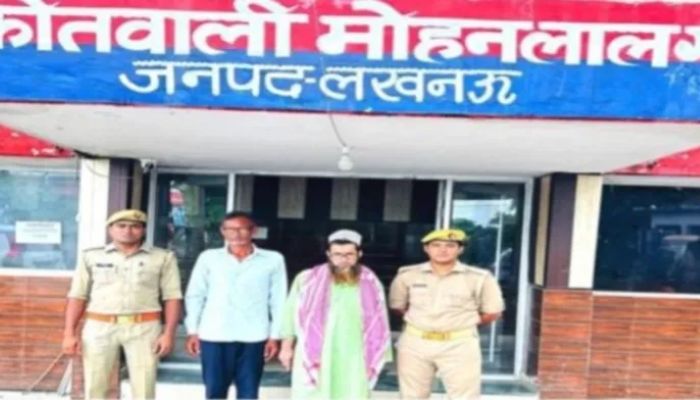
The Police eventually began an investigation into the case and arrested around 35 persons including Afsar Ali, Imran, Mukhtiar Ali, Abdul, Salam, and others. When police tried to arrest some accused, the accused had opened fire on police personnel too. The police had to open retaliatory fire. This resulted in injury to one of the accused identified as Alamgir. After this incident, one Najakat Ali was also arrested by the police. A constable has been injured by shrapnel in the firing.

Further investigations into the case are underway.

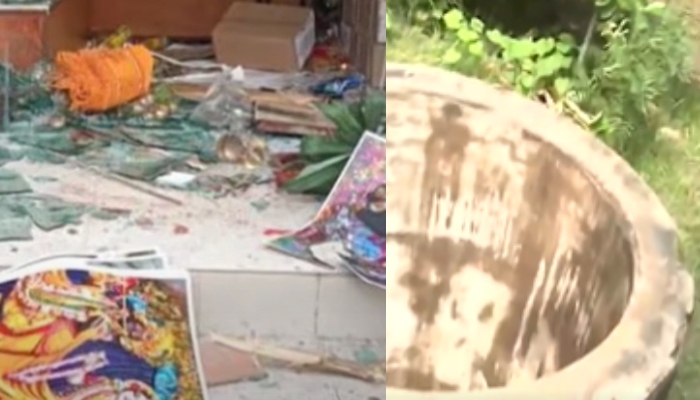
Earlier on 21st July, the state police arrested 3 individuals identified as Akram, Shahrukh, and Arshad for causing a disturbance and damaging idols at the Gopeshwar Nath temple in the Izatnagar area of UP’s Bareilly district. The police have charged three under relevant sections of the Bharatiya Nyaya Sanhita, including section 298 (injuring or defiling a place of worship with intent to insult the religion of any class).

Anti-quota agitation in Bangladesh: Who were the Razakars and why has the word provoked unprecedented fury in the country

During a recent press briefing, Bangladesh Prime Minister Sheikh Hasina labelled protesters as “grandchildren of Razakars,” a term historically associated with collaborators of Pakistani forces during the 1971 Liberation War. This incendiary remark triggered widespread protests across Bangladesh, leading to severe injuries among many students.

The term ‘Razakar’ is deeply rooted in the history of Bangladesh, referring to militia groups that supported the Pakistan Armed Forces in committing atrocities during the war. These groups, including the Razakars, al-Badr, and al-Shams, were responsible for genocidal rape, torture, and murder. Dr. Muntasir Mamoon, an expert on the Bangladesh Liberation War and Sheikh Mujibur Rahman, the founding leader of the country, explains that the term ‘Razakar’ evolved from ‘Rezakar,’ originally meaning ‘volunteer’ in Hyderabad, India. In Bangladesh, however, it became synonymous with betrayal and brutality.

The Biharis, Urdu-speaking migrants who moved to East Pakistan between 1946 and 1947, were major supporters of the Razakars, opposing Bengali independence. The term ‘Razakar’ has since been a derogatory label in Bangladesh, symbolizing the worst of human rights abuses during the liberation struggle.

Prime Minister Hasina’s comments have sparked intense backlash, with students adopting slogans to mock her statement. These slogans, such as “Tui ke? Ami ke? Razakar, Razakar (Who are you? Who am I? Razakar, Razakar)” and “Chaite gelam odhikar, hoye gelam Razakar (I went to ask for rights; instead became a Razakar),” echo the historical resistance chants from the independence movement.

However, Hasina’s remarks weren’t the only ones that mentioned Razakar. Her party members followed the prime minister, adding to the anger of the students who were protesting by making similar comments. Dipu Moni, the Social Welfare Minister expressed, “Razakars have no right to hold the blood-stained red and green flag of the Liberation War martyrs.” Mohammad Ali Arafat, the State Minister of Information and Broadcasting doubled down and asserted, “No demands will be accepted from those who want to become Razakars.”

At a subsequent event, Hasina addressed the slogans, expressing regret and emphasizing the historical suffering caused by Razakars. She highlighted her government’s efforts to prosecute war criminals and uphold the spirit of the Liberation War, pointing out the atrocities committed against Bengali women and civilians in 1971.

Critics argue that Hasina’s use of the term was irresponsible and has been misinterpreted by the protesters. Dr. Mamoon notes that many young Bangladeshis are unfamiliar with the complex history of the Liberation War, having studied it only theoretically. He believes that the current protests are fueled by issues of corruption and unemployment rather than historical grievances.

The protests underscore the significance of Bangladesh’s youth in driving social and political change, as noted by Dr Mamoon. While some view the labelling of dissenters as an attempt to brand them as anti-national, supporters of Hasina argue that her statements have been misunderstood and twisted. The situation remains tense, reflecting the ongoing struggles within Bangladesh’s political landscape.

The controversial quota system reserves up to 30 per cent of government jobs for family members of veterans who fought in Bangladesh’s 1971 war of independence against Pakistan. The demonstrators, most of whom are students have been staging protests in Dhaka and other towns against the public sector job reservation system, which includes a quota for the kin of war heroes who fought for the nation’s independence from Pakistan in 1971. They contend that because Prime Minister Sheikh Hasina’s Awami League party spearheaded the independence fight, the system favours her supporters and is discriminatory. They want a merit-based system to take its place.

Prime Minister of Bangladesh Sheikh Hasina, however, has defended the quota system, stating that regardless of their party membership, veterans should be treated with the utmost respect for their services during war. She dubbed the protestors as “Razakars” during a conference, after which the agitation turned ugly. “If not the grandchildren of the freedom fighters, then who will get quota benefits? The grandchildren of the Razakars? This is my question. I want to ask the people of the nation. If the protesters don’t comply, I can do nothing. They can continue their protest. If protesters damage properties or attack cops, the law will take its course. We can’t help,” she stated on 14th July.

An Awami League supporter claims that Hasina’s comment was a rhetorical and sarcastic inquiry about whether the grandchildren of Razakars should receive quota privileges when it comes to jobs in Bangladesh. However, the comment further infuriated the protestors, who intensified their demonstrations.

Who were the Razakars?

The Pakistan Armed Forces established the Razakars, al-Badr, and al-Shams as their three primary militias in what was then East Pakistan with the support of radical Islamists to crack down on civil freedoms, civil disobedience, target freedom fighters and terrorize civilians. Bengalis were the victims of numerous acts of violence and cruelty, including genocidal rape, torture, murder and forced deportation, all carried out by these paramilitary groups with the assistance of the Pakistani military.

The Razakars were a paramilitary volunteer group that fought against India’s post-1947 integration as a home guard and paramilitary force in the princely state of Hyderabad. The Majlis-e-Ittehadul Muslimeen leader Bahadur Yar Jung was the driving force behind the group, who were led by Qasim Rizvi who was compelled to immigrate to Pakistan in 1948 following the Rezakars’ defeat at the hands of the Indian Armed Forces during Operation Polo. The first Razakar team was founded in May 1971 in Khulna by Maulana Abul Kalam Muhammad Yusuf, a senior member of the Jamaat-e-Islami, with 96 members of the extremist organisation.

“The Razakar comprised Biharis and poor people who were socio-economically deprived. They became informants for the Pakistan Army and had weapons to fight against the Mukti Joddha (pro-independence freedom fighters). Among the Anti-Liberation forces, there were many groups and the Razakars were one,” unveils Dr Mamoon, Bangabandhu Chair at Bangladesh’s Chittagong University. He added, “Urdu-speaking Bihari migrants who supported the Pakistan Armed Forces and maintained a pro-Pakistan stance, opposing the independence of Bangladesh, as well as the language movement of the Bengali Muslims.”

“Many of the poor and illiterate soldiers that fought for the West Pakistan army believed the religious motive and believed they were fighting for Islam,” Yelena Biberman writes in her book Gambling with Violence: State Outsourcing of War in Pakistan and India (2019) while quoting a Razakar. Bangladesh released a list of 10,789 Razakars in 2019 who worked with the Pakistani military.

The Pakistani government purposefully sought out “the most deeply orthodox Muslims in the rural villages with fierce loyalty to Islam and equally anti-Hindu feelings” for the al-Shams, according to the United States intelligence files. The majority of the al-Badr were members of Islami Jamiat al-Tulabah, Jamaat’s student branch. According to Biberman, the al-Badr operated as a covert organization until its existence was revealed in December 1971, right before Sheikh Mujibur Rahman’s provisional government of Bangladesh was set to emerge victorious in the conflict.

A K M Wahiduzzaman, the Information and Technology Affairs Secretary of the major opposition party in the nation, the Bangladesh Nationalist Party, which is led by Khaleda Zia highlighted that the word “Razakar” has historically been connected to Bangladesh. He states that the al-Shams were primarily recruited from rural madrasas and focused mainly on terrorism and the protection of important municipal structures like bridges, whilst the al-Badr targeted the intelligentsia.

An iconic slogan

“Tumi ke ami ke, Bangali, Bangali (Who are you? Who am I? Bengali, Bengali)” was one of the many iconic slogans coined by Bengali freedom fighters and political leaders against Pakistan, its Armed Forces and its supporters between 1968 and 1977. It was formed to proclaim their individuality and autonomy in the face of Pakistani subjugation, as well as to uplift and motivate citizens throughout the nation’s liberation struggles.

 Writings on the history of Bangladesh’s independence claim that this famous slogan was developed by students there in 1969 to promote nationalism, consciousness and unity among Bengalis. The slogan has been used by demonstrators in Bangladesh’s post-independence history and still arouses strong feelings in the nation. It was raised by demonstrators in its original version in 2013 during the Shahbag riots in the country, which were sparked by calls to execute Abdul Quader Mollah, a Bangladeshi Islamist leader found guilty of war crimes during the Liberation War of Bangladesh.

An inflammatory word

Dr. Mamoon points out, “Even now, if you are the son of a Razakar, people will say ‘You are a Razakar’s son.’ But even a poor man whose father was a freedom fighter will say that he is the son of a hero with pride and will be admired. Calling ‘Razakar’ a slur is a mild adjective for the actual connotation,” describing how the word still continues to provoke emotions among the people even approximately fifty years after Bangladesh separated from Pakistan.

The term continues to serve as a symbol of shame and treachery in light of Bangladesh’s pre-independence past The demonstrators are still furious despite Hasina expressing “regret” for using the phrase during the Prime Minister’s Office in Dhaka signing of the Annual Performance Agreements for the fiscal year 2024–25. Meanwhile, the country’s supreme court scaled back the contentious job quota system from 56% to 7% which had sparked the deadly unrest in the country and resulted in over 130 deaths and left hundreds of others wounded.

The Bangladeshi government, led by Sheikh Hasina, responded to the widespread and rampant violence by enacting strict security measures including a statewide curfew, deploying the Army and blocking internet access. Authorities also passed a ‘shoot-on-sight’ order for the cops and military. A quota system in Bangladesh’s civil services, where 30% of the seats were set aside for the children of freedom fighters had been the subject of discussions and protests prior to 2018.

After widespread student demonstrations in 2018, the government discontinued the quotas, however following appeals from the family of veterans of the 1971 war, Bangladesh’s High Court overturned that ruling and brought the old system back in place in June. The decision then was put on hold by the Supreme Court, pending an appeal hearing. Now, Prime Minister Sheikh Hasina’s comment with reference to Razakars has further fueled the violent agitation.

“Are the children and grandchildren of freedom fighters not talented? Are only the children and grandchildren of Razakars talented? Why do they have so much resentment towards freedom fighters? If the grandchildren of the freedom fighters don’t get quota benefits, should the grandchildren of Razakars get the benefit,” she had asked as the offensive word made a re-entry into the public discourse in Bangladesh after fifty-three years.

Razakars wreaked havoc in India too: The blood-tainted history of the annexation of Hyderabad Princely State

When India gained independence in 1947 and Pakistan was formed, the British gave the remaining princely states a choice to merge with either union or stay independent. One of the largest princely states within the Indian union was Hyderabad, a Hindu-majority region ruled by a Muslim Nizam.The Nizam of Hyderabad, Mir Osman Ali Khan, was in a dilemma on whether he should join the Indian union or stay independent.

On the other hand, the Majlis-e-Itihadul Muslimeen (precursor of present-day AIMIM) was adamant about the Nizam merging with Pakistan instead of being Independent. Being no more than a puppet to the MIM, the Nizam agreed to keep Hyderabad independent of either union.

However, the Hyderabad princely state comprised of over 80 percent Hindu population, which was increasingly getting restive to join the Union of India. Nizam’s forces, though, were determined to crush their protests. An armed militia named Razakars was raised which committed unspeakable atrocities against the Hindu population, forcing Sardar Vallabhbhai Patel to give a nod to a military operation to annex Hyderabad.

Real-life Jolly LLB: Judge tells Somnath Bharti that his petition against Bansuri Swaraj is full of typos, cant understand what the petition says

In an embarrassing development on Monday (22nd July), the Delhi High Court came down heavily on Aam Aadmi Party (AAP) leader Somnath Bharti after he filed an error-ridden petition against BJP MP Bansuri Swaraj.

Justice Manmeet Pritam Singh Arora of the Delhi High Court noted, “Your petition is full of typographical errors. I can’t issue notice because I don’t understand anything.”

He pointed out that the petition filed by Somnath Bharti had made references to Respondent No.4 although there was none in the memo of parties.

Before adjourning the matter to 13th August this year, the Delhi High Court ruled, “It is full of mistakes. There are too many mistakes. You will have to correct the petition first. I can’t issue notice because I can’t understand… I will adjourn and you file a corrected petition.”

For the unversed, Somnath Bharti had filed a petition against Bansuri Swaraj after losing by a margin of 78,370 votes from the New Delhi Lok Sabha constituency. He had alleged election malpractice and levelled corruption charges against the BJP MP.

Bharti claimed that a politician named Raaj Anand Kumar, who was fielded by the BSP from the New Delhi Lok Sabha constituency, was working on the behest of the BJP and against AAP.

The embarrassing development in the Delhi High Court today is reminiscent of the 2013 film ‘Jolly LLB’ wherein Judge Sundar Lal Tripathy reprimanded advocate Jagdish Tyagi for filing a typo-ridden Public Interest Litigation (PIL).

“You have written appeal as ‘apple’ in this PIL. Not only that, you have written ‘prosecution’ as prostitution. There are at least 5 mistakes in each line. (You did not do due diligence) and just filed a PIL,” the iconic dialogue of the movie reads.

In a similar fashion, Justice Manmeet Pritam Singh Arora of the Delhi High Court rapped petitioner Somnath Bharati, who coincidentally happens to be a lawyer by occupation, for filing a petition riddled with typos.

Modi govt withdraws 1966 memorandum barring govt servants from participating in RSS activities: Here is how RSS was officially persecuted for years

In a historic move, the Modi government has lifted a 58-year-old ban on government employees participating in the activities of Rashtriya Swayam Sevak Sangh (RSS). The prohibition, enacted in November 1966 during the tenure of then-Prime Minister Indira Gandhi, was lifted on the 9th of July 2024. The copy of this Department of Personnel and Training’s (DoPT) order was shared on social media by Congress leaders to express their anguish over the undoing of the historic injustice.

“Participation of the Government servants in the activities of RSS regarding. The undersigned is directed to refer to the OM No.3/10(S)/66-Estt. (B) dated 30.11.1966, OM No. 7/4/70-Est. (B) dated 25.07.1970 and OM No. 15014/3(S)/80- Estt. (B) dated 28.10.1980 on the above subject. 2. The aforesaid instructions have been reviewed and it has been decided to remove the mention of Rashtriya Swayam Sewak Sangh (R.S.S.S) from the impugned OMS dated 30.11.1966, 25.07.1970 and 28.10.1980. 3. This issues with the approval of Competent Authority,” the DoPT’s office memorandum dated 9th July reads.

Taking to X, Congress leader Jairam Ramesh justified the 1966 ban restricting government employees from partaking in RSS activities and claimed that the Modi government lifted the ban after BJP’s relations with RSS ‘nosedived’.

“Sardar Patel had banned the RSS in February 1948 following Gandhiji’s assassination. Subsequently, the ban was withdrawn on assurances of good behaviour. Even after this the RSS never flew the Tiranga in Nagpur. In 1966, a ban was imposed – and rightly so – on government employees taking part in RSS activities. After June 4th 2024, relations between the self-anointed non-biological PM and the RSS have nosedived. On July 9 2024, the 58-year ban that was in force even during Mr. Vajpayee’s tenure as PM was removed. The bureaucracy can now come in knickers too I suppose,” the Congress MP posted.

Notably, the ban on government employees participating in Rashtriya Swayamsevak Sangh (RSS) activities was imposed by the Indira Gandhi government in 1966. The Congress government’s 1966 decision to ban government employees from partaking in activities of the RSS was a move rooted in political expediency rather than genuine concern for the public interest. The ban sought to stifle the influence of a prominent organization that ideologically opposed the Congress party.

“As certain doubts have been raised about the government’s policy with respect to the membership of and participation in the activities of the Rashtriya Swayam Sewak Sangh and the Jamaat-e-Islami by government servants, it is clarified that government have always held the activities of these two organisations to be of such a nature that participation in them by government servants would attract the Central Civil Services Conduct Rules. Any government servant, who is a member of or is otherwise associated with the aforesaid organisations or with their activities is liable to disciplinary action,” the 1966 banning order dated 30th November 1966 stated.

The audacity of the Congress government to equate the RSS, a nationalist organisation instilling values of unity and nation building with an Islamic extremist group like Jamat-e-Islami, is a testimony of Congress’s hatred for ideological adversaries. This order was a political move aimed at curbing the influence of the RSS, which had been growing as a socio-political force opposed to the Congress party’s ideology.

Notably, the 1966 banning order by the Indira Gandhi government came right after the RSS-backed Cow Protection/ Anti-Cow Slaughter Movement on 7th November 1966. During the protest bullets were fired, tear gas shells were thrown and batons and rods wielded on thousands of sadhus and Gau-bhakt Hindus outside the Parliament. In this violent crackdown on protesting Sadhus, more than 250 people were killed as per official records, however, the number is said to be much higher.

The 1966 ban on government employees participating in RSS activities was a politically motivated move by the then-PM Indira Gandhi-led government to curb their ideological rival.

How RSS Swayamsevaks were persecuted for years by Congress

While the Congress party cries “democracy khatre mein hai” every now and then since it has been out of power at the Centre, it has an ignominious history of suppressing freedom of expression and attacking its political adversaries in all the ways possible. RSS has been banned by the Congress-led Central governments on various occasion in the past. The first ban was just a year after India attained independence from British colonial rule. After the assassination of MK Gandhi by Nathuram Godse, the RSS was banned over allegations of its involvement, although these were later found to be unsubstantiated. During the Emergency imposed by PM Indira Gandhi, the RSS was banned again (1975-1977) as part of a broader crackdown on dissenting political and social organisations. The nationalist organisation was banned once more under the Narasimha Rao government after the Babri structure demolition in 1992.

While these unfair bans on RSS are widely known and discussed, an article published by RSS-backed newspaper Organiser back in 2000 reveals how the Congress party, for years hounded government employees for their association with RSS and attempts were made to restrict RSS workers from joining government jobs. These undemocratic attempts included, “Asking the police to verify the antecedents of the proposed entrants to Government jobs and to refuse employment if the candidate was a member of the RSS. To accuse the Government servants with subversive activities and a threat to national securities if they happen to participate, in the RSS activities and to remove them from services. To amend service rules thereby banning Government servants from participating in the RSS activities.”

How RSS members were targeted and terminated from jobs

The article mentions the case of a school teacher Shri Ram Shankar Raghuvanshi who was associated with RSS. The school where Raghuvanshi taught was taken over by the government and thus, Raghuvanshi was absorbed into Government service subject to verification of antecedents. As the Raigarh SP informed the government that Raghuvanshi has partaken in RSS and Jan Sangh’s activities, his services were terminated. Raghuvanshi challenged his termination in the High Court and won a verdict in his favour, later, the Madhya Pradesh government approached the Supreme Court against it, only to be reprimanded. The Supreme Court dismissed the MP government’s plea against quashing of the termination order.

“In fact members of these organisations continue to be members of Parliament and State Legislatures. They are heard often with respect inside and outside the Parliament. What then was the sin that the respondent committed in participating in some political activity before his absorption into Government service? What was wrong in his being a member of an organisation which is not even alleged to be devoted to subversive or illegal activities?” the apex court said back then.

In another such case, one Ranganathacharya Agnihotri who was selected for Munsif’s post in Karnataka was stopped from joining, after it was found during police verification that Agnihotri earlier worked as an organiser in Yelburga. Agnihotri challenged this in the High Court of Mysore and the court held that Agnihotri’s association with RSS is “irrelevant” while verifying his suitability for the job since RSS is a non-political cultural organisation.

Excerpt from Organiser’s article authored by lawyer Alok Kumar (Source: HVK)

Similarly, one Chinta Mani was sub-postmaster at Nagpur who was ‘accused’ of being an RSS member after he attended the organisation’s Sankranti Mahotsav and other events. The government sacked him. However, Chinta Mani approached the court against his termination and said that he is not a member of RSS. The High Court noted that even if Chinta Mani had been an RSS member, there was nothing wrong since RSS is not an unlawful organisation.

In a more recent case, the Himachal Pradesh High Court stayed the transfer order of HP State Cooperative Bank’s senior manager who was allegedly transferred over his association with RSS. Suresh Kumar Jaswal was posted in Bilaspur in July 2021 and was transferred to the Bank’s Rohru office in August 2023. Eventually, the court found Jaswal’s plea maintainable and stayed the transfer orders.

Ban on state government employees attending RSS shakhas

Notably, Congress has a habit of equating RSS with Islamic terrorist groups. In 1966, Congress equated RSS with Jamat-e-Islami and years later, Congress’s Digvijay Singh compared RSS with the Student Islamic Movement of India (SIMI). In the year 2000, Madhya Pradesh CM Digvijay Singh had banned state government employees from joining RSS or its activities. This ban, however, was lifted in 2006 under the BJP government led by CM Shivraj Singh Chouhan. In 2000, BJP leader and Gujarat CM Keshubhai Patel had on 3rd January lifted the ban on the participation of state government employees in activities of the RSS. In 2008, a similar ban on government employees attending RSS Shakhas was lifted by the BJP government headed by CM Prem Kumar Dhumal. In Uttar Pradesh as well this ban was revoked.

The 1966 prohibition on government personnel participating in RSS activities was a politically driven unconstitutional action by the Congress government to stifle ideological opposition. Recognising the RSS’s contributions to nation-building and community service, the Modi government’s lifting of the ban is a corrective step that respects the democratic right to free association and recognises the role of varied organisations in nation-building.

BNP and Jamaat-e-Islami may try to grab power unconstitutionally taking advantage of student protests: Bangladesh government

On Sunday (21st July), Bangladesh’s top court reduced a contentious quota system for government job applicants after days of widespread chaos and disastrous conflicts between police and demonstrators that killed hundreds of people.

Violent protests have been going on in Bangladesh by students and other groups calling for the removal of a quota that allocated 30% of government posts for relatives of veterans who participated in Bangladesh’s 1971 war of independence. The government earlier removed the quota in 2018 due to widespread student protests, but in June, Bangladesh’s High Court reinstated the quotas, sparking a new round of protests.

The Supreme Court ruled on an appeal, reducing the veterans’ quota to 5% and allocating 93% of jobs based on merit. The remaining 2% will be set aside for ethnic minorities, transgender persons, and those with disabilities. The protest rallies have posed the most severe challenge to Bangladesh’s administration since Prime Minister Sheikh Hasina secured a fourth term in January elections that the main opposition parties boycotted.

Due to the protests, Universities have been closed down, the internet has been turned off, and the government has instructed everyone to stay at home. With most communications still offline, it is unclear to the media whether the ruling has satisfied the protesting students. However, Anisul Haq, the law minister, praised the court’s verdict as “well thought of” verdict.

Amidst the protests, the Bangladesh government issued an official statement indicating that the Bangladesh Nationalist Party and its extremist ally, the Jamaat-e-Islami, would try to grab the political power unconstitutionally.

“They would take advantage of the student’s protest to enact their own agenda, i.e. an unconstitutional power grab through violence and terrorism in Bangladesh, as has been demonstrated by this particular political group amply since 2013 onward. This fear came true as demonstrated in the violence perpetrated by them in the last few days, while trying to use the non-violent and the non-political anti-quota protestors as a shield,” the government said in the statement.

It also added that the protestors had presented their 8-point demand to the government after which the state felt optimistic to reach to a solution. “The protest coordinators unequivocally denied any involvement of their group in the violent incidents, further distinguishing their peaceful movement from the destructive actions of other parties,” the statement added.

The government also clarified that the violent protestors had nothing to do with the anti-quota protest coordinators. “The repeated statements from the anti-quota protest leaders condemning the violence confirmed that the violence came from the vested quarter and had nothing to do with the anti-quota protests,” the official statement added.

It further mentioned that the violence had led to the massive loss of government properties like the burning of the Bangladesh Road Transport Corporation (BRTC) office, looting and burning of central offices of national television, attacking government health centers, post offices and passport offices, etc.

The protests turned violent last week after alleged students at Dhaka University began clashing with police. Violence continued to escalate as police fired tear gas and rubber bullets and hurled smoke grenades to scatter stone-throwing protestors. Many attacked the government offices. As per the local reports, more than 100 were killed by Sunday, 21st July due to the violence.

The main opposition in the country is the Bangladesh Nationalist Party (BNP), which expressed support for the protests, promising to hold its own demonstrations after many of its followers joined the student-led protests. However, the BNP declared in a statement that its supporters were not to blame for the violence and refuted the ruling party’s charges that the protests were being used for political benefit.

The ruling Awami League and the BNP have frequently accused each other of inciting political disorder and violence, most recently ahead of the country’s national election, which was marked by a crackdown on several opposition leaders. Sheikh Hasina’s government accused the opposition parties of seeking to disrupt the election.

‘Actor’ Ajaz Khan, who once said that he would choose Quran over the constitution, mocks Hindu sage Narada Muni, apologises later

On Saturday (20th July), a video of Bollywood ‘actor’ Ajaz Khan went viral on social media wherein he was seen ridiculing Hindu sage Narada Muni as ‘untrustworthy.’

He made the contentious remarks during a media interaction. Khan accused a YouTuber named Love Kataria of defaming his friend and leaking his secret.

“Are you getting my point? You share your personal matter or secret with your friend but he tells the world about it,” he was heard saying.

In order to describe the supposed deceitful and disloyal behaviour of YouTuber Love Kataria, the ‘actor’ invoked the example of Hindu sage Narada Muni.

“This is like Narad Muni. Narayan, Narayan. Kataria should change his name to Narad Muni,” he brazened out. Following outrage on social media, Ajaz Khan tendered an apology on Sunday (21st July).

“Hello everyone, I heartily apologise if I have hurt my Hindu brothers and sisters about my “Narayan” remark, It was not deliberate as I always say you read my Quran and I read your Geeta, which clearly states my respect for Hindu religion and not only that I respect every religion as I respect mine…” he said in a tweet.

“I meant Narad muni and not lord Narayana in the reference of that statement… I truly apologise if I have hurt anyone God is one. Jai hind,” he further stated.

Ajaz Khan is not new to controversies. In 2018, the ‘actor’ said that he would choose the Quran over the Indian Constitution on any day. He was previously jailed for drug trafficking and had incited 40 crore Muslims (both legal and illegal) to hit the streets and create unrest.

Muslims open up about how women go missing in Mecca: Kidnapped, groped, and abused, how crimes against women during Hajj go largely unnoticed

On 21st July, an X user Shadab (ImShadab_) shared disturbing information on the platform that the wife of a known person was abducted by a cab driver during Hajj. Despite the efforts of the police, the wife could not be traced and the husband had to return alone. Screenshots of the now-deleted posts were shared on X by HPhobiaWatch.

Replying to Shadab, who has now locked his profile after the post went viral, an X user Sadique said a similar incident happened to a girl who was kidnapped by a cab driver. After keeping her allegedly for several days, he left her at the same hotel where she was staying. Later the girl committed suicide. He alleged that girl was raped.

Another X user Bajify said a similar incident happened to his neighbour last year. The newlywed couple went to Madina for a pilgrimage. When the husband got out of the cab, the driver ran away with the bride.

Another user Mohammed Junaid Khan wrote, “I remember the driver taking us from Makkah to Madinah was throwing phone numbers at all the women. The whole way he was harassing. A similar incident happened. The husband got down to buy water, the driver fled away taking the wife. She was never found.”

Source: X

Women going missing during Hajj is not an uncommon occurrence. OpIndia found several news reports of women gone missing, kidnapped, raped, groped and so on. On 30th October 2023, a report by 964media alleged that a woman from Kalar in the southern Sulaymaniyah governorate went missing in Saudi Arabia where she was performing Umrah. The 59-year-old woman’s family said she travelled with her brother and several other relatives.

Her brother said, “We entered the Grand Mosque at precisely 9:24 AM last Friday, and before starting to circle the Kaaba, we hired someone to help her circle it in her wheelchair. We specified a location for him to return her to us upon completion, but he did not come back. We do not want to assume that he might have abducted her. In addition to alerting the security forces, we searched for her in hospitals and with the forensic medicine department but did not find any leads. That’s why we have shared our contact information and requested assistance in finding her.”

Sexual abuse, assault and rampant groping incidents

In 2018, CNN published a detailed report on stories of five women who faced sexual abuse at the Hajj. The report suggested that the most of sexual abuse and harassment incidents were reported to have happened during the tawaf ritual where the pilgrims do a counter-clockwise procession around the Kaaba shrine. Some of the women who talked to CNN reported the incident to the police but claimed that the police ignored their plea.

The first story was of a Pakistani woman named Asra Nadeem living in the US who went on pilgrimage at the age of 21 in 2006. After she got stuck in the 2006 stampede, she went again to Mecca to perform Umrah. During that time, she was alone. While performing tawaf, someone grabbed her bum. Later, someone grabbed her breast. When she turned to look who was there, the man smirked at her while he continued to grab her breast.

Another story was of an anonymous British woman who was sexually assaulted in Mecca in 2007. Then-32-year-old woman’s breasts and arms were grabbed while performing tawaf. As the procession continued, she felt someone rubbing his erection on her. When she tried to inform the police, she was shooed away. Moments later, someone pushed his hand between her buttocks. She cried and turned only to see a man smiling at him who said, “Alhamdulillah” (Praise to God).

The third story was of a woman from Indonesia who faced harassment in 2011. At that time, she was only 17. When she was at the hotel, she was catcalled. At Kabba, during tawaf, she felt someone pushing erected genitalia against her. She never went back for pilgrimage after that.

The fourth story was of an anonymous woman from Egypt who faced harassment when she was only 13 years old. When she was returning to the hotel after Umrah, a shopkeeper catcalled her. The second time, during Hajj, someone grabbed her breast. When she looked back, the man who grabbed her breast was standing there with his wife. At that time, she was only 17.

The last story was of Anooshe Mushtaq, a Pakistani woman from Australia. When she was 10 years old, she went for Hajj with her family. A young man groped the little child from behind. On the bus, the conductor groped her upper leg and moved his hand on her chest. As mentioned before, she was only 10 years old at that time.

In September 2022, Desert Sun reported that a 42-year-old woman was kidnapped in Mecca. She was choked and held for eight hours. The man who kidnapped her was arrested and identified as 39-year-old Daniel Gamez Zaragoza.

Not only men, but women have also been reportedly involved in kidnappings. In 2022, a Pakistani woman was arrested for kidnapping a 5-year-old Burmese national girl in Mecca. She was abducted on 29th October and recovered on 1st November.

In 2010, it was reported that an Indian-origin girl identified as Mariam was kidnapped from Mecca. This was the first time she was visiting Mecca. Her father said, “We have been here every year for Umrah. She is in the custody of some evil people who are not allowing her to contact us.” The family has been living in Saudi Arabia for 17 years. She went missing after her mother gave her one-riyal bills to distribute among beggers after the pilgrimage. At that time, Mariam was in class 9.

These reports are just tip of the iceberg. There are dozens of horrifying incidents crimes against women during Hajj.

Uttar Pradesh: Taufiq and Shadab take turns to rape minor Hindu Dalit girl, thrash victim’s mother

On Friday (19th July), a minor Dalit Hindu girl was raped by two men in a village in Gonda district of Uttar Pradesh.

As per reports, the accused were identified as Shadab and Taufiq. The incident took place when the 16-year-old victim had stepped out of her house to urinate.

The minor girl was accompanied by her mother at that time. Meanwhile, Shadab and Taufiq dragged the victim to a nearby field and took turns to rape her. They also thrashed the girl’s mother so much so that she became unconscious.

When the villagers and family members of the Hindu Dalit girl reached the spot on hearing her screams, the accused fled the scene. Shadab and Taufiq were residents of the same village.

While escaping from the spot, the duo left their motorcycles behind. The police have arrested Shadab while Taufiq is still on the run from the law enforcement authorities. A team has been deployed in the village to prevent any untoward incident.

The police registered a case against the two men. While speaking about the matter on Saturday (20th July), Additional SP (East) Manoj Kumar Rawat remarked, “Two men of another community, residents of the same village, dragged the girl into the field and raped her.”

Finance Minister Nirmala Sitharaman to present the Economic Survey today in Parliament, a day before Union Budget

Union Finance Minister Nirmala Sitharaman will table the Economic Survey 2023-24 along with a statistical appendix in Parliament on Monday, a day ahead of the Union Budget.

The Budget Session of Parliament will commence today (Monday) and subject to the exigencies of government business, the session is likely to conclude on August 12.

Union Ministers Nirmala Sitharaman, Jayant Chaudhary, Pankaj Chaudhary, Kirtivardhan Singh and Sukanta Majumdar will present the document on the table in Lok Sabha today.

Union Minister Manohar Lal will move the motion for election to the Rajghat Samadhi Committee (RSC).

“That, in pursuance of clause (d) of sub-section (1) of Section 4 read with subsection (4) of Section 4 of the Rajghat Samadhi Act, 1951 (41 of 1951), this House do proceed to elect, in such a manner as directed by the Chairman, one member from among the members of the House to be a member of the Rajghat Samadhi Committee,” stated the List of Business in the Lok Sabha.

Meanwhile, Shatrughan Prasad Sinha (Asansol Parliamentary Constituency, West Bengal) will take the oath or make the affirmation, sign the Roll of Members and take his seat in the House.

Union Minister Mansukh Mandaviya will move a motion for the election of two members to the central building and other construction workers’ advisory committee in Lok Sabha.

“That in pursuance of Section 3(2)(b) of the Building and Other Construction Workers (Regulation of Employment and Conditions of Service) Act, 1996, read with Rule 11(2) of the Building and Other Construction Workers’ (Regulation of Employment and Conditions of Services) Central Rules, 1998, the members of this House do proceed to elect, in such manner as the Speaker may direct, two members from amongst themselves, to serve as members of the Central Building and Other Construction Workers’ Advisory Committee, subject to the other provisions of the said Act and the Rules made thereunder,” the list of Business stated.

Matters under Rule 377 are to be taken for discussion in Lok Sabha.

The Session will have 16 sittings spread over 22 days. Union Minister for Parliamentary Affairs Kiren Rijiju said that this session will mainly be devoted to the financial business relating to the Union Budget for 2024-25, which will be presented to Lok Sabha on July 23.

The Economic Survey of India 2023-24, along with a statistical appendix, will be laid on the table of the Houses of Parliament on Monday. The Budget for the Union Territory of Jammu and Kashmir for 2024 will also be presented on July 23.

(This news report is published from a syndicated feed. Except for the headline, the content has not been written or edited by OpIndia staff)

Joe Biden announces decision to drop out from US Presidential Election 2024, endorses Kamala Harris as his replacement for the race

Ending weeks of speculation, President Joe Biden has announced that he is dropping out from the presidential election. Announcing the decision on X, he said that it is in the best interest of his party and the country for him to stand down and to focus solely on fulfilling my duties as President for the remainder of his term. He also offered his support and endorsement for Vice President Kamala Harris to be the nominee of the party for the presidential election.

President Biden wrote, “It has been the greatest honor of my life to serve as your President. And while it has been my intention to seek reelection, I believe it is in the best interest of my party and the country for me to stand down and to focus solely on fulfilling my duties as President for the remainder of my term”.

He added that he will speak to the Nation later this week in more detail about the decision. In the statement addressed to “my fellow Americans”, he said it had been the “greatest honour of my life to serve as your president”.

In another tweet, he wrote, “My fellow Democrats, I have decided not to accept the nomination and to focus all my energies on my duties as President for the remainder of my term. My very first decision as the party nominee in 2020 was to pick Kamala Harris as my Vice President. And it’s been the best decision I’ve made. Today I want to offer my full support and endorsement for Kamala to be the nominee of our party this year. Democrats — it’s time to come together and beat Trump. Let’s do this.”

The decision comes amid growing concerns among Democrats and left-wing media houses about Joe Biden’s mental and physical capability to run for re-election against a rejuvenated Donald Trump.

While Joe Biden’s health and goof-ups have been a concern for a long time, in recent times his ability to effectively campaign against Trump has been questioned by his allies. The New York Times editorial had officially asked him to step down from the race, and former President Barack Obama expressing concern over Biden was seen as a final blow.

The former president who picked Biden as his vice president during his two terms recently shared his concerns about the current president’s re-election bid. Then Biden’s disastrous performance at a June 27 CNN debate convinced almost everyone that he is no longer fit and can’t contest against Trump.

The White House tried to explain it by blaming it on the cold and jet lag from a European tour 12 days ago, but nobody was convinced.

Reportedly, donors of the party froze donations over concerns about Biden’s capability to campaign.

This is the first time a US president has dropped out of a reelection run in decades, the last time it happened was in 1968, when president Lyndon Johnson decided against running for a second term. However, Johnson had made the announcement well in advance, while Biden’s decision comes at the last moment, when the Republican Party has already officially named Trump as its nominee.

While Biden has named Kamala Harris as the nominee, the party will have to take a final call on it.