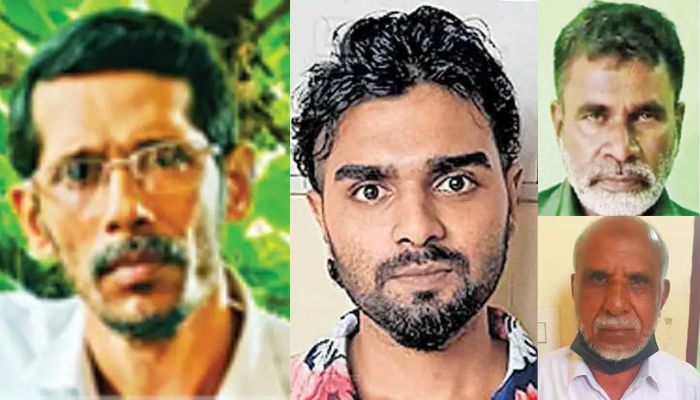
A fast-track court in Kerala’s Tirur convicted a Madrasa teacher, Abdur Rahiman (51), for sexually assaulting a minor girl who was under the age of seven at the time of the crime. Following the conviction, the court sentenced him to triple life imprisonment till the end of his life, 15 years imprisonment in various departments. The court also imposed a fine on the convicted Madrasa teacher and asked him to pay Rs 1.5 lakh. He will have to undergo an additional two years in prison, in case he fails to pay the fine. According to local media reports, it is enough to suffer the punishment together.
The convicted Madrassa teacher, Abdur Rahiman (51) was sentenced in Cheruparambi in southern Kuttur. The Tirur Police had registered a case against Abdur Rahiman on charges of sexually assaulting a student in a classroom in the Tirur area in April and May 2016.
Tirur Fast Track Special Court Judge Reno Francis Xavier tried the case and sentenced him. Subsequently, the accused was sent to Tavanur Central Jail.
It is pertinent to note that several Madrasa teachers have been convicted and sentenced to rigorous imprisonment in sexual assault cases of minors in Kerala in the last few days. On 27th June, Mathrubhumi reported that a teacher was sentenced to 29 years in prison and fined Rs 2.5 lakh for sexually assaulting a Madrasa student. It added that a special speedy POCSO court in Cherthala convicted Muhammad (58) of Chakalanikart house in Arukutty Vadutala.
Meanwhile, in another heinous case of crime against a minor, a convict was sentenced to 55 years of rigorous imprisonment. On 30th June, Manorama reported that a man named Edakkara Unichantam Pudhuvanchola Jinshad (27) was sentenced to 55 years of rigorous imprisonment in the case of torturing an eight-year-old boy. The court also imposed a fine of Rs 85,000 on the convict. The Fasttrack Special Court ruled that if the convict failed to pay the fine, he would have to undergo additional imprisonment of 21 months and the sentence should be served together.
Similarly on 25th June, AsiaNet reported that Abdul Karimi (64), a native of Cherp Padinjattumuri who raped a minor girl and impregnated her was sentenced to three life terms and six years of rigorous imprisonment. Judge Jayaprabhu of Special POCSO Court No. 2 also imposed a fine of Rs 3,75,000.
He was convicted on the charges that when no one was in the house, Karimi sexually assaulted the girl who was sleeping inside the house, after which the minor girl became pregnant. As per reports, the accused was abroad but he left his job and settled permanently in the country.
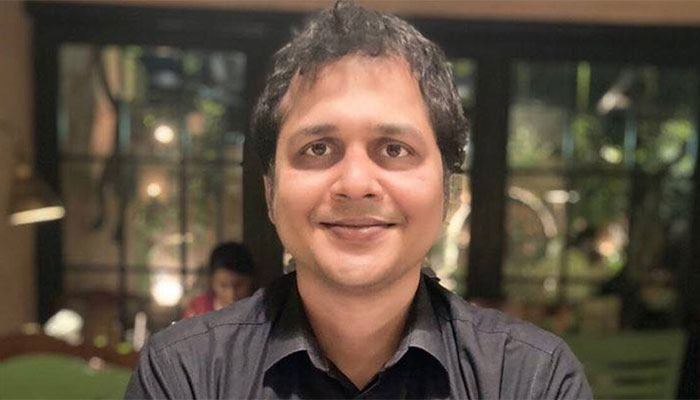
On Monday (1st July), the Delhi High Court ordered Trinamool Congress leader and Rajya Sabha MP Saket Gokhale to pay Rs 50 lakh in damages to former diplomat Lakshmi Puri in a defamation case. The court also directed Gokhale to issue a public apology on social media that must remain on his profile for a minimum of six months.
Justice Anup Jairam Bhambhani stated that the order must be executed within eight weeks. Justice Bhambhani also directed Gokhale to put out an apology in the Times of India newspaper.
The Court underlined the significance of protecting people’s integrity and dignity in public life. The court deemed Gokhale’s comments to be baseless and made with the malicious intention of tarnishing Lakshmi Puri’s reputation.
“The defendant has not only failed to substantiate his claims with credible evidence but has also shown a reckless disregard for the truth. Such conduct is unacceptable, especially from a public figure,” the judge said.
This verdict follows a defamation lawsuit filed by former Indian Assistant Secretary-General to the United Nations Lakshmi Puri against Saket Gokhale for publishing defamatory posts about her on social media.
The defamation case originates from X posts published by Saket Gokhale on the 13th and 26th of June 2021. In these posts, Gokhale claimed that Lakshmi Puri had bought property in Switzerland that was disproportionate to her income. Gokhale also named her husband, Hardeep Singh Puri, the Union Minister of Petroleum and Natural Gas.
In July 2021, a coordinate bench ruled in Puri’s favour when it decided the suit’s interim injunction application in the case. The court subsequently ordered Gokhale to remove the tweets in question within 24 hours. He was also prohibited from posting any more derogatory statements about Puri.
Back then, Gokhale voluntarily deleted the posts where he made unfounded allegations against Lakshmi Puri, wife of Union Minister Hardeep Singh Puri. This came after Saket Gokhale had told the Court that he would not voluntarily delete the thread.
On Thursday, 27th June, the customs officers in Chennai busted a smuggling module and arrested nine members of a group who smuggled 267 kg of gold worth Rs 167 crore through a souvenir shop at Chennai airport’s departure terminal. The shop at the airport belonged to YouTuber Sabir Ali. Among the arrests are a shop owner and two transit passengers.
It all started a few days ago when the customs department’s air intelligence team arrested a souvenir store employee on suspicion of carrying 1kg of gold in powder form. As per the reports, he had tucked it in his rectum after getting it from one of the transport passengers. Officials took both into custody.
Initially, customs officers believed it was a one-time incident involving agency personnel being hired by smugglers. However, interrogation revealed a well-oiled operation controlled by a professional gold smuggling network.
“Sabir Ali rented the shop paying a huge sum to Vidvedaa PRG, the third-party agency engaged by Airports Authority India (AAI), two months ago. He set up a souvenir shop as a front and employed seven youngsters to manage the shop,” R Srinivasa Naik, principal commissioner of customs, Chennai airport was quoted as saying.
The staff members were employed as covert entry points for the illicit gold that transit passengers headed for Sri Lanka gave them. The gold would be exchanged at the restroom and handed over to receivers outside the airport. “Since the employees carried identity cards provided by the Bureau of Civil Aviation Security (BCAS), they won’t be subjected to searches often,” an additional official explained.
Customs investigators confirmed that the group trafficked 267kg of gold worth Rs 167 crore in two months based on those detained’ statements and phone conversations. According to officials, the gold landed from both Gulf countries and Singapore.
Customs officials say that a gold smuggling organization based in Chennai, Sri Lanka, and elsewhere may have paid Sabir Ali to rent a shop within the airport so that they could transport gold without being detected by enforcement agents.
“The workers have been trained to hide gold in powder form in their rectum so as to avoid getting caught by the scanner. It is a well-oiled network and well-executed plan,” the customs officials said.
All nine people – Sabir Ali, seven of his employees, and the transport passenger – were placed in judicial detention. Further inquiry is underway to determine the identities of those acting from behind.
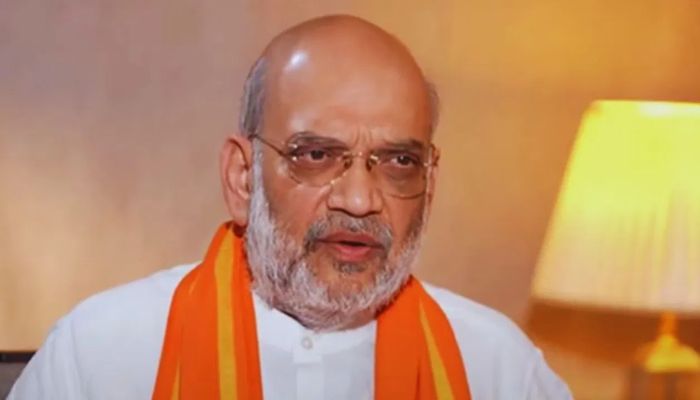
Union Home Minister Amit Shah on Monday stated that the first case filed under new criminal justice laws was about a motorcyle theft registered in Gwalior in Madhya Pradesh at 10 minutes past midnight.
“…The first case (under the new laws) was registered at a Police station in Gwalior. It was a case of theft, someone’s motorcycle was stolen. The case was registered at 12.10 am…As far as the case against a vendor (registered at a Police Station in Delhi) is concerned, there were provisions for the same earlier too and it is not a new provision. Police used the provision to review it and dismissed that case,” Shah said while addressing a press conference here.
Shah’s clarification came in response to a media query about the first first case lodged under the new laws that have come into force beginning from today.
Delhi Police had registered a case at Kamla Market Police Station in the national capital against a street vendor under the new laws.
“If the date of crime is before July 1, 2024, then it will be tried under old laws, if it is later, it will be tried under new laws,” Shah said at the press conference today.
The three new criminal laws- the Bharatiya Nyaya Sanhita (BNS), Bharatiya Nagarik Suraksha Sanhita (BNSS), and the Bharatiya Sakshya Adhiniyam (BSA), came into effect today. Under this the Indian Penal Code (IPC) has been replaced with the Bharatiya Nyaya Sanhita, the CrPC with Nagarik Suraksha Sanhita and the Indian Evidence Act has been replaced with the Bharatiya Sakshya Adhiniyam. These laws had recieved the assent by President Droupadi Murmu on December 25, 2023.
Detailing the new laws, the Union Minister said, “…First of all, I would like to congratulate the people of the country that about 77 years after independence, our criminal justice system is becoming completely ‘Swadeshi’. This will function on Indian ethos. After 75 years, these laws were contemplated upon and when these laws are in effect from today, colonial laws have been scrapped and laws made in the Indian Parliament are being brought into practice. Instead of ‘Dand’, it is now ‘Nyay’. Instead of delay, there will be speedy trial and speedy justice. Earlier, only the rights of the Police were protected but now, vicitms’ and complainants’ rights will be protected too.”
(This news report is published from a syndicated feed. Except for the headline, the content has not been written or edited by OpIndia staff)
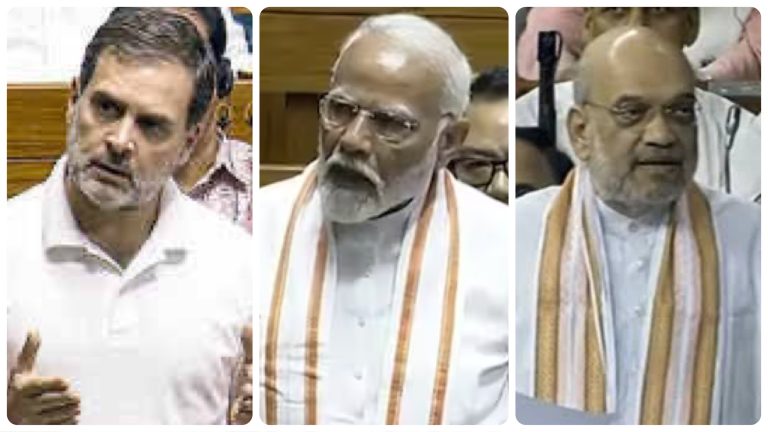
Leader of Opposition Rahul Gandhi on Monday (July 1) sparked outrage over his contentious remarks in the Lok Sabha, prompting a rare intervention from PM Modi and Union Home Minister Amit Shah. Speaking in the parliament, Gandhi asserted that those who called themselves Hindus only talked about violence, hatred, and untruth, triggering PM Modi to intervene over his remarks.
During his speech, Rahul Gandhi, said, “All our great men have spoken about non-violence and eliminating fear… But those who call themselves Hindu only talk about violence, hatred, untruth…”
“The Leader of the Opposition has clearly stated that those who identify as Hindu speak of and commit violence. He is unaware that millions proudly call themselves Hindu. Associating violence with any religion is wrong. He should apologize,” he stated.
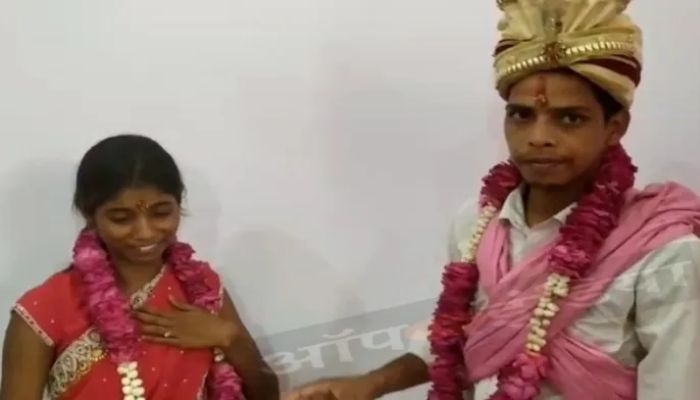
In the Bareilly district of Uttar Pradesh, a Muslim girl, Muskaan Saifi, reverted to Hinduism and married a Hindu man named Rajesh Kumar in a temple on Sunday (30th June). The couple performed the Vedic rituals during their marriage amidst the chants of Gayatri Mantra. The wedding rituals were performed in the presence of Acharya Pandit KK Shankhdhar, and Hindu rights groups.
Muskaan Saifi hails from Delhi’s Sangam Vihar. Muskaan’s father was originally a Hindu but converted to Islam after marrying a Muslim woman in Delhi. Muskan began interacting with Rajesh Kumar, a Bareilly’s Izzat Nagar resident via social media. Soon after, they became good friends and this friendship eventually blossomed into love. Muskan, 19, and Rajesh, 23, wanted to marry, but their families were against it and Muskaan faced numerous constraints.
However, Rajesh did not lose hope and continued to make efforts to marry Muskaan. Later, he learnt about Agastya Muni Ashram. On Sunday, Rajesh and Muskaan arrived at the Ashram along with their acquaintances. The duo requested Pandit KK Shankhdhar to conduct their wedding rituals. After checking the necessary documents of Rajesh and Muskaan including Muskaan’s affidavit confirming that she is marrying Rajesh of her own free will, the Pandit got them married as per Hindu tradition.
Following the marriage, Acharya Pandit KK Shankhdhar and other representatives of Hindu organisations blessed the newlyweds. After marriage, Muskaan Saifi became Khushi, and Rajesh Kumar expressed his joy at finding each other as husband and wife. Muskaan claims that she has believed in Hinduism since childhood. Muskaan has also stated in writing that she is aware that her family were Hindus who converted as a result of several atrocities.
Moreover, Muskaan said that women are not respected in Islam, and she is afraid of adverse practices such as triple talaq and halala. Muskaan (now Khushi) has happily moved to her in-laws’ home following her marriage.
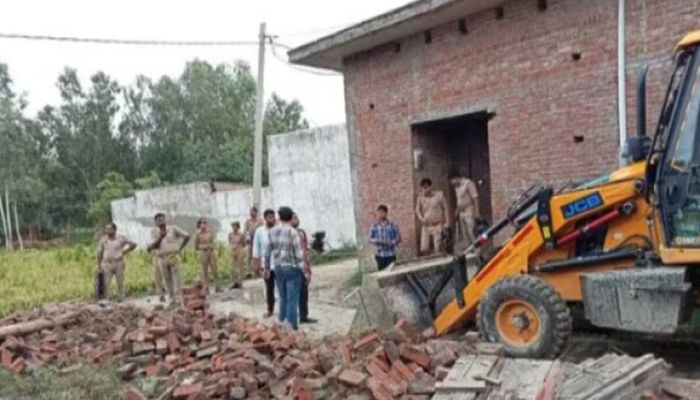
In Moradabad, Police have continued their crackdown against the accused who stormed the house of a Hindu family to abduct their two daughters in an attempt to convert them. When the family protested against their abduction attempt, they opened fire at the family members. As part of the crackdown, Police from Mudha Pandey station on Sunday (30th June) demolished the houses of three more accused. Their names came up during the investigation into the shooting incident that took place on Wednesday (26th June). Earlier in the morning on Sunday, Police arrested two of the three accused following an encounter in which one accused suffered a bullet injury in his leg. However, a head constable was also injured in the encounter and he was hit by a bullet on his shoulder.
Meanwhile, five, including the main accused, are still absconding. Police have launched a search operation to nab them. So far, the Police have demolished six houses of the accused that were built illegally.
Notably, the accused identified as a man named Muslim broke into the house of a private firm employee, Sunil Kumar, in Munda Pandey’s Shivpuri village at around 2.30 am on Wednesday. He was accompanied by his accomplices and they were armed with guns and sharp objects. The accused attempted to abduct two daughters and when the family protested, the accused opened fire and injured the firm worker, his wife, and son.
All the injured were taken to different hospitals for treatment. In this regard, the police had registered a case against the main accused named Muslim, his father Nanhe, two uncles Aleh Hassan and Suleman, and two unknown attackers. As per reports, the main accused Muslim was threatening the family for several days. He had sent a threatening audio message on the mobile phone of the girl’s father. He threatened him stating that he would kill everyone if they didn’t hand over the girl to him.
The accused wanted to kidnap the married girl and force her to convert
According to media reports, the eldest daughter (22 years) in the victim family is married and has a son. She was hit in her hands in the firing incident. The girl stated that the accused Muslim was in contact with her for a long time. However, after marriage, she distanced herself from the accused. But still, on 7th March, the accused took her away from her in-laws’ house and accompanied her to Jaipur, Rajasthan.
According to the victim, the mother of the accused was also there with him. After kidnapping her, the accused said that he would marry her, but he did not. The victim also said that the accused Muslim was pressurizing her for religious conversion.
Further, her younger sister (17 years) stated that as soon as the accused arrived, the first thing the accused did was that they caught hold of her elder sister’s son. As soon as he made a noise, everyone in the family woke up and when they protested, the accused opened fire and ran away.
Following the firing incident, the administration took bulldozer action against the accused in two phases on Friday. On Friday, the administration demolished the house of the main accused Muslim, his father Nanhe, and two uncles Suleman and Aleh Hasan in Shivpuri village.
During the investigation, the names of three more accused in this incident, Mahfooz, a Rampur resident, Bhure Khan, a resident of Bilari, and Yusuf, a resident of Munda Pandey, came to light. Police arrested Mahfooz and Bhure Khan in an encounter in the early hours of Sunday. As per the administration, their houses were built by encroachment and consequently, they were demolished to the ground. All three accused were involved in the incident along with Muslim, the main accused in the Munda Pandey shooting case, and his family members.
According to the villagers, the house of the accused Muslim and his two uncles who committed the crime has been locked for the last several months. They all work in brick kilns, so they often stay outside and for that reason, the villagers don’t care much about his family.
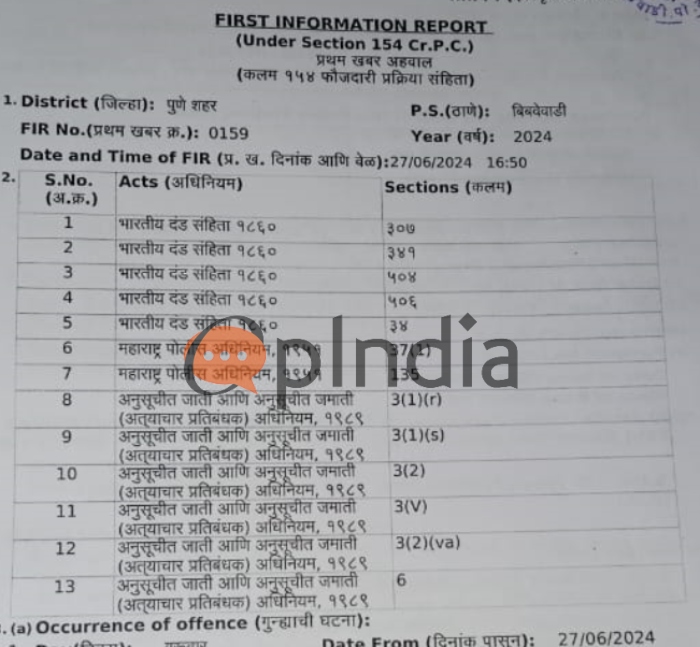
Last week on June 27th, the Pune city police registered an official FIR against 4 individuals identified as Eijaz Sheikh, Afridi Sheikh, Sadik Sheikh, and Umesh Bhandari for brutally assaulting a 19-year-old Hindu who belongs to the Matang community. The accused persons are said to have threatened the individual and assaulted him using a sword at around 1:10 am on the 26th night.
The Police have imposed sections 307, 504, 341, 506, 34 of the Indian Penal Code, 37(1), 135 of the Maharashtra Police Act, and sections 3(1)(r), 3(1)(s), 3(2), 3(v), 3(2)(va) and 6 of the SC/ST Act, 1989.
Copy of FIR obtained by OpIndia
As per the FIR copy obtained by OpIndia, the victim was stopped and assaulted by the accused persons in the Gangadha area of Pune when he was on his way home from a relative’s place. The accused persons crashed their autorickshaw vehicles onto the bike on which the victim was traveling and began threatening him.
The accused person identified as Afridi, as per the FIR threatened the victim saying that the brother of the victim had filed a false complaint against him. Team OpIndia individually tried to know the cause of the incident, but neither the victim nor the police could be contacted in this case.
Afridi then hurled caste-based abuses at the victim and attacked with a sword he had carried in his vehicle. The victim tried to escape from the spot to save himself but the accused persons began following him. Later the accused person again launched an attack on his head with a sword but the victim moved aside and suffered a minor injury.
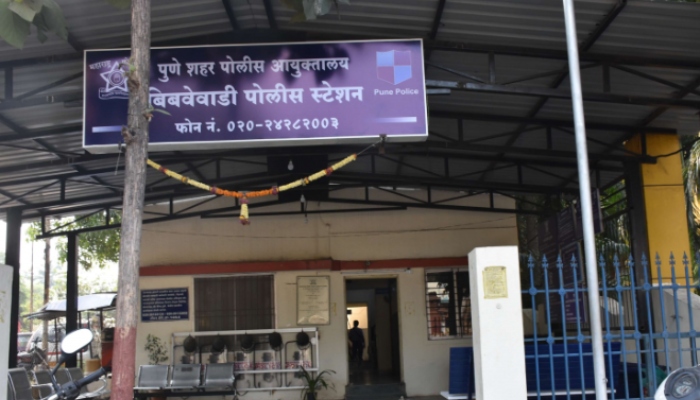
Meanwhile, the other accused threw glass bottles at the victim. The victim somehow managed to escape from the spot and reach to his friend’s home in the area. The duo then went to the Bibwewadi Police Station and filed a police complaint.
The victim is severely injured and is undergoing treatment at Sasoon Hospital in Pune. The victim person is a resident of Lohiya Nagar.
Earlier, a similar incident was reported from the Lohiyanagar of Pune. On 24th June, Khadak Police Station in the Pune district of Maharashtra booked 9 Islamists identified as Atul Khan, Salman Sheikh, Sultan Sheikh, Aslam Patel, Asif Sheikh, and 4 others for a deadly attack on a Hindu Dalit activist. The accused mobilized ruffians and attacked Akshay, breaking his thumb and leaving him severely injured. The accused persons are said to have attacked Dhavre given his claimed association with the BJP. The victim also works as a Hindu-Dalit activist and is known for raising his voice against Islamists in the region.
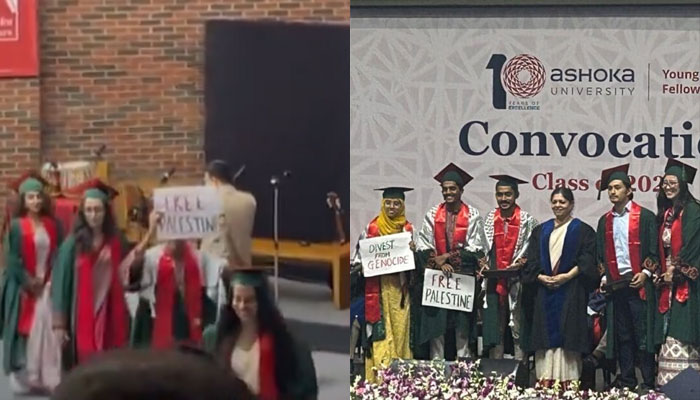
On 24th May, students of Ashoka University displayed pro-Palestine placards during their convocation ceremony. A video of the ceremony has gone viral on social media platforms showing students dressed for receiving their degrees holding placards that read “Free Palestine” and “Stop Genocide” above their heads. Notably, the student union of Ashoka University (Ashoka University Student Government or AUSG) has been demanding to cut ties with Israel-based Tel Aviv University since May this year.
Ashoka University students displayed pro-Palestine placards during the graduation ceremony, including posters that read: “Free Palestine”, “Stop genocide” and “cut ties now.”
The students have been protesting Ashoka’s collaboration with Israeli institutions.
It was reported that a petition by the student’s body was submitted to the college authorities expressing concerns over its ties with the Israeli university. The students’ body urged the University to cut ties with its Israeli counterpart. Notably, Ashoka University and Tel Aviv University have a research partnership that includes faculties from the Israeli University to give lectures in India. The petition was rejected by Ashoka University saying that the institution is not involved in political stands.
This is not the first time Ashoka University’s students have made headlines for the wrong reasons. In March 2024, the students of Ashoka University raised Hinduphobic slogans “Brahmin-Baniyawaad Murdabad” inside the University premises. Videos of the students raising slogans like “Brahmin-Baniyawaad Murdabad” went viral on social media. Apart from abusing Brahmin and Baniya communities, they raised slogans including “Jai Bheem-Jai Meem” and “Jai Savitri-Jai Fatima”. They also demanded caste census and reservation at Ashoka.
अशोका यूनिवर्सिटी में "ब्राह्मण वाद – बनिया वाद मुर्दाबाद" के नारे लगाये गये। क्या मतलब है इसका… कौन इनके दिमाग में ज़हर भर रहा है? #Ashoka_Universitypic.twitter.com/ruj1Y2vbLs
In February 2024, AUSG issued a statement condemning the military action of Israel in Gaza and “demanded” the “genocide” in Gaza must stop. The post on social media described the horrifying terror attack on 7th October by Hamas terrorists in Israeli territory as “events taking place on 7th of October 2023”. There was no mention of 1,300 Israeli and foreign nationals being murdered, women being raped and hostages being taken to Gaza. All the atrocities of Hamas were thrown under the rug very conveniently.
Not only students, but the professors of the University have faced backlash for their irresponsible research work and behaviour. In August 2023, Professor Sabyasachi Das’s research paper claiming Bharatiya Janata Party (BJP) did election manipulation went viral on social media after Congress leader Shashi Tharoor amplified it. The research was full of flaws and following the scrutiny faced over the research paper, Das resigned from his post. Interestingly, AUSG came out in support and claimed the research work done by professors at the University is “cutting-edge”.
In November 2021, professor Neelanjan Ircar of Ashoka University made false claims that the portrait of Netaji Subhas Chandra Bose at Rashtrapati Bhavan was that of Bengali actor Prosenjit Chatterjee. Sircar used the narrative to mock Bhagwan Ram under the pretext of criticising the BJP. Sircar, who works as an Assistant Professor of Political Science at the university, in a now-deleted tweet wrote, “Totally amazing! This isn’t Netaji Subash Chandra Bose, it’s a picture of famous Bengali actor Prosenjit Chatterjee playing Netaji in a movie. “
While his tweet, until this part reeked only of falsehood, he then decided to take a jibe at Hindu beliefs. “And this after yelling ‘Jai Shri Ram’ at a Netaji event. The bankruptcy of political appropriation of independence-era leaders,” the faculty member of Ashoka University added.
The recent display of pro-Palestine placards, instances of Hinduphobic slogans, misguided support for controversial research, and the blatant disregard for balanced discourse on international issues such as the Israel-Hamas conflict signals towards alarming shift towards woke culture at the University.
Amidst the outrage over a woman’s Taliban-style public flogging in West Bengal’s Uttar Dinajpur district by a TMC leader’s close aide, the state’s police have come into action against those who condemned or highlighted the incident on social media platforms.
Taking to X on 1st July, Bhartiya Janata Party spokesperson Shehzad Poonawalla said that he questioned INDI bloc friendly ‘journalist’ Rajdeep Sardesai why he did not conduct a debate on IndiaToday over the Chopra flogging incident. Sharing a screenshot of the Bengal Police’s notice sent over email, Poonawalla said that the TMC MP Sagarika Ghose’s husband Rajdeep has “rutba” [influence] to get the police take action against the BJP leader.
“Shocking. I questioned @sardesairajdeep why he did not do a 9pm debate on Talibani style beating of a woman in Bengal by a close aide of TMC leader who justified it. It has got 3.8 Lakh views & 9000 RTs in few hours. Such is the rutba of TMC Sansad Pati that West Bengal police wants to take action on me ! This is “democracy” “tolerance”. I will go to JAIL but won’t delete it @sardesairajdeep. Here is that tweet again,” Poonawalla posted.
Shocking
I questioned @sardesairajdeep why he did not do a 9pm debate on Talibani style beating of a woman in Bengal by a close aide of TMC leader who justified it It has got 3.8 Lakh views & 9000 RTs in few hours
— Shehzad Jai Hind (Modi Ka Parivar) (@Shehzad_Ind) July 1, 2024
Similarly, Journalist and Jan Ki Baat founder Pradeep Bhandari has received a notice from the West Bengal Police over a post from Jan Ki Baat’s X handle, wherein the Chopra incident was reported and BJP IT Cell head Amit Malviya’s response was mentioned. Taking to X, Bhandari informed about the same and wrote, “Action against criminals : No. Action against journalists reporting the crime : Yes. Welcome to West Bengal!”
Action against criminals : No
Action against journalists reporting the crime : Yes
— Pradeep Bhandari(प्रदीप भंडारी)?? (@pradip103) July 1, 2024
Meanwhile, Hindu activist and former Oxford University Student Union President, Rashmi Samant has also received a notice from the West Bengal Police for talking about the Taliban-style flogging of a woman. “Just for calling out the public flogging of women in West Bengal @WBPolice is trying to get my X account shut down. Dictatorship alive and thriving,” Samant wrote.
“This Taliban syle flogging of women in the middle of the road in broad daylight is not Afghanistan but West Bengal in India. #Shame @MamataOfficial,” said Samant’s post that the Bengal Police took offence at.
Just for calling out the public flogging of women in West Bengal @WBPolice is trying to get my X account shut down. Dictatorship alive and thriving ✨️ pic.twitter.com/4DzKU8GRgO
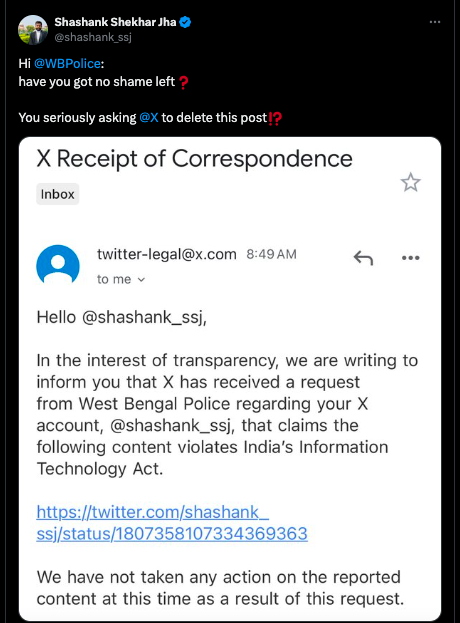
Supreme Court lawyer Shashank Shekhar Jha questioned if the West Bengal police has no shame left that they are asking X to delete his post wherein he talked about the incident in question.
“What Bengal thinks today, India will think tomorrow. Bengal is thinking Sharia today,” Jha’s post stated.
X user Rishi Bagree said that a case against him for quoting a video of the Chopra incident shared by a CPIM leader. He called the Bengal Police’s action as “real dictatorship”.
“West Bengal Police filed a case against me for quoting a video of Md Salim, CPIM leader. Instead of taking action against the culprit they are busy shooting the messengers. This is how real dictatorship looks like,” Bagree posted.
West Bengal Police filed a case against me for quoting a video of Md Salim, CPIM leader.
Instead of taking action against the culprit they are busy shooting the messengers.
Another X user Ashwini Shrivastava also received a notice and said that the West Bengal Police is “harassing” journalists on government orders. He also urged President Droupadi Murmu to take note of the situation in the state.
“This is real dictatorship, #DhruvRathee ! Today, on the orders of the Mamata gov, West Bengal police sent a legal notice to X against my account for covering daily atrocities in the state! After covering the crimes happening in Bengal, the police start harassing journalists on the government’s orders. Journalists are either arrested on false charges or sent legal notices. Madam President @rashtrapatibhvn should pay attention to West Bengal, where women are being subjected to atrocities daily. President’s rule is the need of the hour,” Shrivastava posted.
Today, on the orders of the Mamata gov, West Bengal police sent a legal notice to X against my account for covering daily atrocities in the state!
After covering the crimes happening in Bengal, the police start harassing journalists on… pic.twitter.com/2O7UlhXjHk
— Ashwini Shrivastava (@AshwiniSahaya) July 1, 2024
It is rather ironic that several social media users are receiving notice from West Bengal Police over “violation of the Information and Technology Act” by merely highlighting the horrifying incident, while no action has been taken against TMC MLA Hamidul Rehman who on a news channel justified the horrific treatment meted out the woman seen in the viral video. As reported earlier, Rehman justified the Taliban-style punishment in what he dubbed as ‘Muslim Rashtra’.
“The woman has not complained but you guys (media persons) are still raking it up continuously. The woman was doing unsocial work in the absence of her husband. A meeting was held by the villagers over her activities and a collective decision was made,” Rehman said.
It all started on Sunday (30th June) when a video shared by CPI(M) leader Mohammed Salim, in which a local Bahubali leader Tajemul is seen assaulting a married woman and a man lying helplessly on the road in the name of ‘summary Justice’ is doing rounds on social media. Sharing the video of the assault, CPI(M) leader and Former Rajya Sabha MP Salim alleged that the main accused seen in the video is a local TMC goon who goes by the nickname ‘JCB’. As the video went viral, a public outcry ensued, with many taking to social media to express their anger and demand justice for the victim. Notably, the police have arrested the perpetrator Tajemul alias JCB.
While in a democracy, the right to criticise and demand accountability is sacrosanct, it seems like such democratic principles are no longer applicable. Last month, the official X account of the DCP Crime Branch of Kolkata Police asked a social media user to disclose his identity, including his name and residence, after he shared a spoof video on CM Mamata Banerjee on the microblogging platform X. However, after a social media backlash, the police deleted its post seeking details of the said X user.
West Bengal authorities sending police notices to those who posted about the incident is a blatant attempt to stifle dissent and control the narrative. Instead of addressing the root cause of the outrage—the public flogging—the state of a democratic country has chosen to target social media users, political opponents and journalists. This sends a chilling message that criticism and the demand for accountability will be met with intimidation. While freedom of expression is a cornerstone of democracy, by issuing police notices, the West Bengal government is effectively discouraging citizens from speaking out against injustices and is creating an atmosphere of fear and repression.