Home Blog Page 7662

Why Sec 66A is redundant given existing laws curbing speech

0

I am not sure why, but every CA student has to study the Information Technology Act, before he gets his degree. During this, I had read the IT Act, and I remember being flummoxed by some of the provisions, some other than Section 66A too. I will try to put out some of the dangerous stuff in the IT Act:

66 A Punishment for sending offensive messages through communication service, etc. ( Introduced vide ITAA 2008)

Any person who sends, by means of a computer resource or a communication device,-

a) any information that is grossly offensive or has menacing character; or


b) any information which he knows to be false, but for the purpose of causing annoyance, inconvenience, danger, obstruction, insult, injury, criminal intimidation, enmity, hatred, or ill will, persistently makes by making use of such computer resource or a communication device,


c) any electronic mail or electronic mail message for the purpose of causing annoyance or inconvenience or to deceive or to mislead the addressee or recipient about the origin of such messages (Inserted vide ITAA 2008) shall be punishable with imprisonment for a term which may extend to two three years and with fine.

The biggest problem here is highlighted in bold. The IT Act nowhere defines what “Grossly Offensive” or “has Menacing Character” means. Twitter trolling can be Menacing? by some definitions yes. This is why Sec 66A has been the most abused and misused. Anyone with a grouse against anyone, and a co-operative cop, can get anybody arrested.

The solution here is either remove the words and replace them with something specific, or define what “Grossly Offensive” or “has Menacing Character” means, or add a proviso which states that until a judge gives a judgement that the material involved is prima facie  “Grossly Offensive” or ” has Menacing Character”, arrest cannot be made. So in fact the outrage should be “Section 66A should be amended” rather than “Section 66A must go”, but when has Twitter Outrage made sense?

Now some more devilish sections which can put you in a soup:

1. 67 Punishment for publishing or transmitting obscene material in electronic form (Amended vide ITAA 2008)

Whoever publishes or transmits or causes to be published in the electronic form, any material which is lascivious or appeals to the prurient interest or if its effect is such as to tend to deprave and corrupt persons who are likely, having regard to all relevant circumstances, to read, see or hear the matter contained or embodied in it, shall be punished on first conviction with imprisonment of either description for a term which may extend to to three years and with fine which may extend to five lakh rupees and in the event of a second or subsequent conviction with imprisonment of either description for a term which may extend to five years and also with fine which may extend to ten lakh rupees.

Simple reading: THE MMS’s YOU HAVE BEEN SHARING ON WHATSAPP CAN LAND YOU IN JAIL FOR 3 YEARS, If this section is implemented

2. 67 A Punishment for publishing or transmitting of material containing sexually explicit act, etc. in electronic form (Inserted vide ITAA 2008)

Whoever publishes or transmits or causes to be published or transmitted in the electronic form any material which contains sexually explicit act or conduct shall be punished on first conviction with imprisonment of either description for a term which may extend to five years and with fine which may extend to ten lakh rupees and in the event of second or subsequent conviction with imprisonment of either description for a term which may extend to seven years and also with fine which may extend to ten lakh rupees.

Exception: This section and section 67 does not extend to any book, pamphlet, paper, writing, drawing, painting, representation or figure in electronic form-

(i) the publication of which is proved to be justified as being for the public good on the ground that such book, pamphlet, paper, writing, drawing, painting, representation or figure is in the interest of science,literature,art,or learning or other objects of general concern; or

(ii) which is kept or used bona fide for religious purposes

Simple Reading: SEND STUFF CONTAINING SEXUAL ACTS AND YOU CAN GET JAILED FOR UPTO 5 YEARS.

The best part about this section is, the Exception, which allows you to send sexually explicit material used “bon fide for RELIGIOUS purposes”.
My grandfather was a Muslim. My mother a Christian. I’m an Indian, AND a Hindu!

0

Mother Teresa was a noble soul. No denying that. 

After all, not everyone can remove maggots from a dying man’s body, touch a leper (yes, touch) and care for poor destitute souls. Not easy. She did it with love, a smile…and a PRAYER.

Christianity is an EVANGELISTIC religion. The basic tenet of Christianity is evangelism. Bring those from the “darkness” into the “light” – the light of Jesus.

I hail from the most nationally integrated family I know. My maternal grandfather was John Ali Baksh. (John? Ali Baksh?…Yes) Ali Baksh was a Zamindar in Lahore – in pre-partition India. He was 17 when the missionaries gave him refuge in the church when he was being targeted by his uncles and step brothers for his father’s property. Ali Baksh was considered a real “catch” for the missionaries; he was not poor or downtrodden, he was heir to his father’s vast lands and wealth, above all, a Muslim. My mother was born a Christian, her full name was Margaret Olive Mehrunissa Ali Baksh.

My father hailed from Kolar Gold Fields in Karnataka. His ancestors were weavers. There was a time when a worm got into the cocoons and the crops were lost. Dad’s ancestors were Hindu – but, of course! Dad was poor as a church mouse and studied under the proverbial lamppost to complete his education. He was a bright student and a phenomenal stenographer. The missionaries got to him. He converted and served the mission as an evangelist and the best stenographer the church had ever seen. My father was a Seventh-Day Adventist. Like the Jews, the Adventists consider Saturday the 7th day of the week, hence the Sabbath – following the Gregorian calendar. That is pretty much where the similarity ends. Adventists believe in Jesus being the Savior unlike the Jews.

Dad saw Mom in a church ceremony in Lahore and fell in love with her. They married, had 8 children – the last one being yours truly. We were raised as Seventh Day Adventists.

As a toddler and later when I was well into my teens, my memories are vivid of being taught “you are in the light and all your Hindu friends are in the dark…you must bring them into the light.” I remember how in school, I used to feel sorry for all my Hindu friends (many of them are friends till date) – as they were in the “darkness”. Our banter used to be – me saying, “God and Jesus created the world in 7 days, and my Hindu friends saying, “How silly…..Brahma created the world.” So on and so forth. I remember how much of a “sinner” I felt growing up as I was not able to bring a single friend “into the fold and into the light” I was very confused, angry and guilty. I could not preach.

At age 11, after attending Sabbath school regularly – I took a decision to get baptized in the Seventh Day Adventist church in Spicer College Pune….then Poona. That was a really holy day. Being baptized by my favorite Pastor – Pastor Crump was the most liberating and awe-inspiring experience of my childhood. Our baptisms are carried out in the exact same way as John the Baptist used to, except not in a river, but a huge tank filled with water. We wore long grey robes, stepped into the tank; the Pastor said, “In the name of the father, the Son and the Holy Spirit I baptize you”, then he covered our mouths with a clean white handkerchief, dipped us in the water and pulled us back up after a few seconds. Lo and Behold! We were now free of our past sins and we were pure. As an 11-year-old, I now wonder what “sins”.

Shortly after my baptism, on entering my teens I had lots of questions about Christianity which I would pose to my parents’ siblings and the Pastors in Church. This is not the time or place to go into them, suffice to say….I got no answers….save the proverbial “Have faith. Do not question. Just believe”

Over the years, I was drawn more and more towards the tenets of Hindu philosophy. (Can we stop calling it a religion, please?) I must say here that my mother always had the Bible, Bhagavad Gita and the Quran next to her bedside table. She told us about the good things in all religions and her knowledge of Islam as a religion and as a culture was manifold. Except for the fact that she was a Christian, her upbringing was more along Islamic traditions, and her language was Urdu. She could not read Hindi. She was a Montessori teacher and in her spare time taught Urdu to hundreds of students till the day she died.

She believed though that her savior was indeed Jesus.

I married a Hindu and had an Arya Samaj wedding. I consider myself Hindu and have long ago stopped worshipping in a church. I have conversations with Ganesh, Ganpati….and in my heart I am a Hindu. I do not visit temples regularly nor do I want to convert anybody to my way of thinking.

I wish as Hindus, we would stop being apologists.

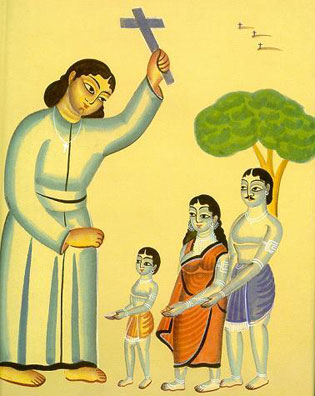
I thoroughly understand evangelism, and my problems with all missionaries is – WHY DO I HAVE TO CHANGE MY FIRST NAME OR ADD A WESTERN NAME TO MY BIRTH NAME TO PROVE I AM CHRISTIAN? Why can I not retain my Hindu or Muslim name and still “be in the fold” as it were? Why do many brides wear gowns to their weddings instead of the sari? Or like many: wear the sari – but with a veil? Why does religion interfere with CULTURE? Why interfere with the tribal culture in the North East under the garb of religion?

Why is Mother Teresa considered SELFLESS?

Her bigger agenda like all Christian missionaries was to convert and bring people to the fold. That is the whole purpose of being a MISSIONARY for God’s sake…….! Pardon the pun! It’s almost like a vow you take when being ordained a Priest or Pastor.

Jesus told his 12 disciples the following and I quote from the Bible:

Mark 16: 15; And he said to them, “Go into all the world and proclaim the gospel to the whole creation

Mathew 28: 19-20:

Go therefore and make disciples of all nations, baptising them in the name of the Father and of the Son and of the Holy Spirit, teaching them to observe all that I have commanded you. And behold, I am with you always, to the end of the age

Romans: 10: 10- 17:

For with the heart one believes and is justified, and with the mouth one confesses and is saved. For the Scripture says, “Everyone who believes in him will not be put to shame.” For there is no distinction between Jew and Greek; for the same Lord is Lord of all, bestowing his riches on all who call on him. For “everyone who calls on the name of the Lord will be saved.” How then will they call on him in whom they have not believed? And how are they to believe in him of whom they have never heard? And how are they to hear without someone preaching? …

Why is it wrong if Mohan Bhagwat or any other says it like it is? I am not holding a brief for Mohan Bhagwat, so even before you all who are reading this….start to smirk….STOP RIGHT THERE!I am INDIAN first and LAST! No faith, no religion, no belief, no tenet can alter the fact that I am well and truly Indian. I hold a brief for no one….against no religion…..BUT I have the fundamental right to QUESTION.

Hence, I have the right to question critics of Hinduism. or the critics of Hindus, when they argue, “the Christian missionaries are at least looking after the poor and needy. Why do the Hindus not do the same for their own’? I always believed that the basis of Hindu philosophy was the theory of KARMA. Am I wrong?

No, I don’t think so. So that answers that question.

The Bible also says “as you sow so shall you reap”, but with a difference – that whatever you sow you will reap in this one life only. You only die once is the theory.

The Bible rejects the idea of reincarnation; therefore, it does not support the idea of karma.

All those holding a brief for the good lady Mother Teresa, I admired her too. But I am not into Hindu bashing nor do I have my blinders on. I KNOW her agenda was conversion. She was a Christian Missionary – if she did not convert others she would be going against the very tenets of what Jesus said.

I end with her quote at the Scripps Clinic in California below:

Mother Teresa encouraged members of her order to baptise dying patients, without regard to the individual’s religion. In a speech at the Scripps Clinic in California in January 1992, she said: “Something very beautiful… not one has died without receiving the special ticket for St. Peter, as we call it. We call baptism ticket for St. Peter. We ask the person, do you want a blessing by which your sins will be forgiven and you receive God? They have never refused. So 29,000 have died in that one house [in Kalighat] from the time we began in 1952.”

I rest my case.

(Ethel) Nalini Rathnam (@nalinirathnam)

  • PS – I have an Austrian brother in law, a Khasi sister in law who is Christian, 2 Punjabi Hindu brothers in law, A Maharashtrian Christian brother in law, A Punjabi Christian sister in law, and I married a Sindhi Hindu. My son knows about Christianity and Hinduism from me. He is for practical purposes a Hindu child.

NGOs draw huge money from foreign countries in the name of religion, but avoid legal transparency

0

The Ministry of Home Affairs has issued notices to 10,300+ NGOs for not submitting Annual Accounts under Foreign Contribution (Regulation) Act, 2010 (FCRA 2010).  As per Section 18(1) of Foreign Contribution (Regulation) Act, 2010 (FCRA 2010) and Rule 17(1) of Foreign Contribution (Regulation) Rules 2011 (FCRR 2011), associations registered under FCRA 2010 are required to submit annual report in Form FC-6, accompanied by an income and expenditure statement, receipt and payment account, balance sheet etc for every financial year beginning on the 1st day of April within nine months of the closure of the financial year, to the Secretary to the Government of India, Ministry of Home Affairs, New Delhi.

The notice document also specifies that this list also contains NGOs which has not submitted the mandatory annual returns for the years 2009-2010, 2010-2011 and 2011-2012.

By law, these NGOs are punishable – just like individuals who don’t file Income Tax Return or organizations which don’t file Income Tax Return. To understand the distribution of defaulter NGOs , we analyzed the data.

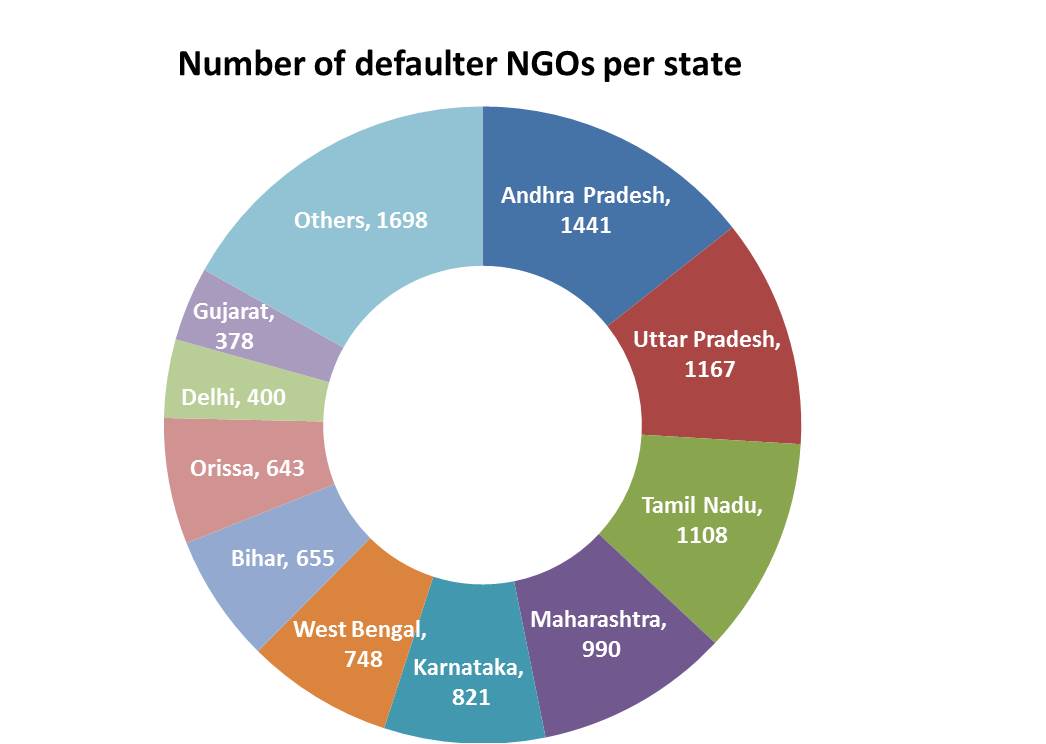
Defaulter NGOs per State

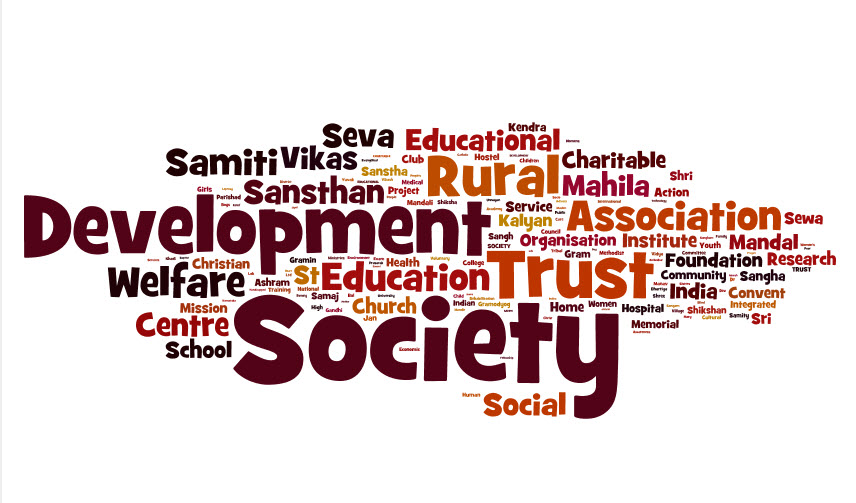
The maximum number of defaulter NGOs reported by the government are from Andhra Pradesh, Uttar Pradesh and Tamil Nadu. We also noticed that except Manipur, counts of defaulter NGOs from North Eastern states were less 100. We analyzed and segmented texts in the available data. It would have been very tough to pull all the information from these 10,000+ NGOs, therefore we used Association Name as our primary data. As expected, the prominent keywords included standard words like education, hospital, development, welfare, trust, society.

Keywords used by most of the NGOs

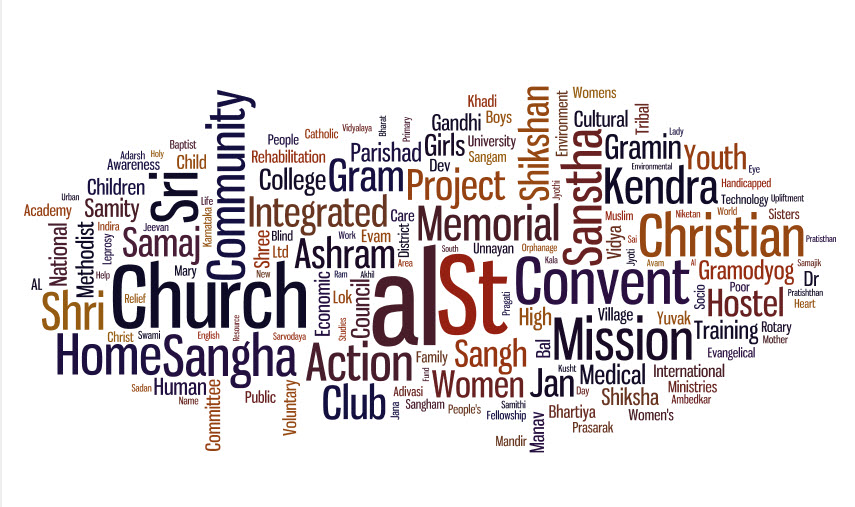
To scratch the next layer of ideologies operating in NGOs, we removed common words from the document which are used to lure donations; it included – Development, Society, Trust, Welfare, Rural, Association, Vikas, Education, Mandal, Kalyan, India, Social, Mahila, Charitable, School, Hospital, Health. The word cloud which evolved from the remaining texts was very interesting. As soon as the first layer of popular keywords was removed, we found religion to be playing a pivotal role:

Keywords identified after removing basic words
Keywords identified after removing development related words

It is interesting to note that many of these defaulter NGOs are named with Church, Convent, Methodist, Christ, Christian, Mandir, Evangelical, St, Sri, Sangh. We also used keywords like Hindu, Muslim, Christian, Jain, etc. to filter NGOs which are directly drawing money in the name of religion. It is obvious that Christian Missionaries which run hospitals, schools or churches are receiving good share of foreign money as NGOs.

However, this defaulter NGO list also indicates that

a) Missionaries are drawing lots of money, but they operate as Black-Boxes and avoid transparency.

b) If the government questions these NGOs, media and liberals can always twist this as an attack on Christians and Churches of India.

Another notable observation is that Kabir, run by Arvind Kejriwal and Manish Sisodia is also in the list. Any action against his organization will or can be given a political twist.

The central Government has already hinted that roles, and existence of NGOs are under their scanner, but with a wide scope of social, religious and political twists, it would be interesting to see how the government handles these cases.

More money to states – Will the gambit work?

0

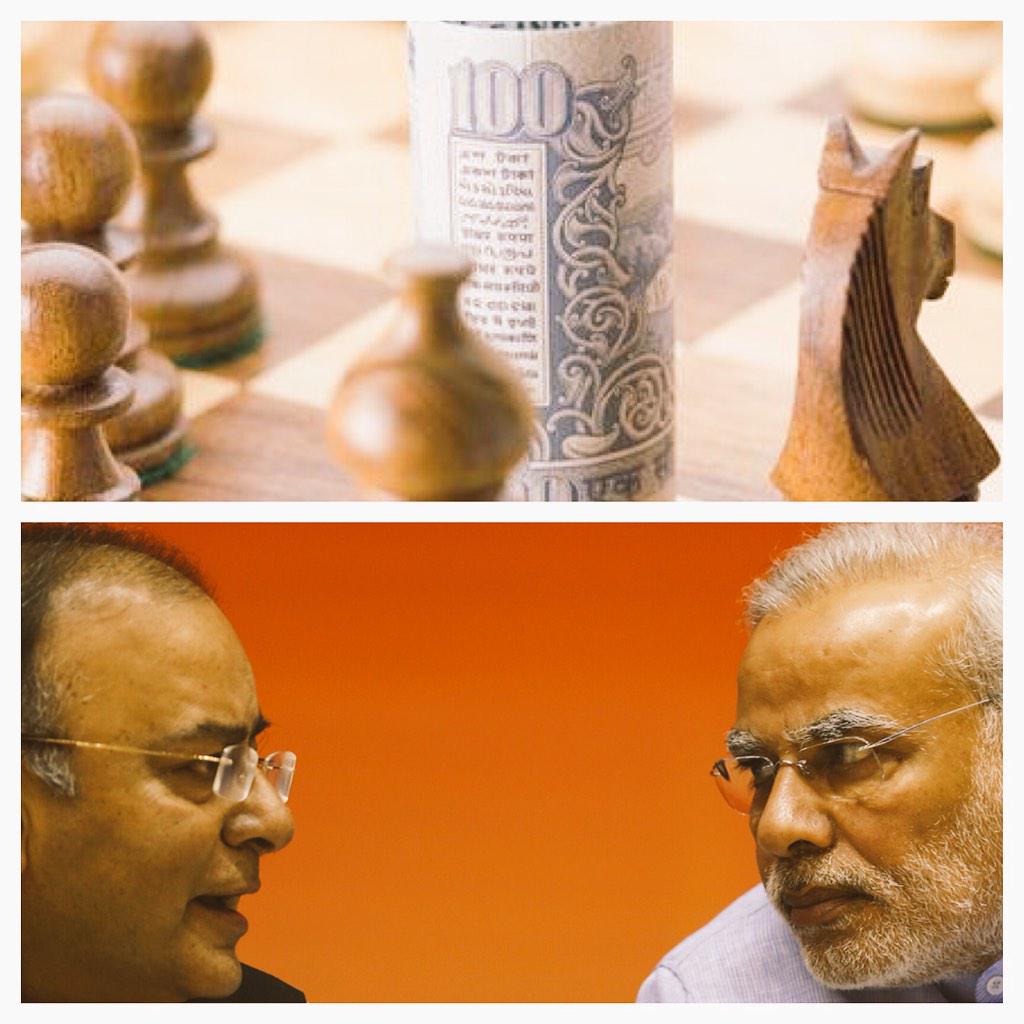
Prime Minister Modi has continued his reform process with the decision today of accepting the recommendations of the 14th Finance Commission to increase the share of States by 10%. The 13th Commission had fixed 32% as allotment to States and this has now been increased to 42% by the 14th Commission.

This will substantially increase the finance available to the States, so that they can plan how to fund their projects based on their priorities. This is another box checked, per PM Modi’s electoral promise of co-operative federalism. This is also at the core of conservatism and I am delighted that the Prime Minister has made this decision. This, along with the coal auction revenues going to states and the upcoming GST implementation, will lead to substantial changes in the nature of relationship between the Center and the States.

What may be a superb decision from a governance perspective, need not be politically beneficial. This, according to me, is a classic case for that.

According to me, there are three types of governments currently administering Indian states – ideologically:

Conservative BJP ruled states – Maharashtra, Gujarat, MP, Chattisgarh, Jharkhand, Rajasthan, Haryana, Punjab (Category 1)

Center or unclear ideology states – Orissa, Andhra Pradesh (Category 2)

Socialist or communist states – All the remaining states (Category 3)

Category 1 states will hopefully use the funds constructively and start competing with each other. In other words, PM Modi can continue his development agenda, by proxy. He will have to take absolute ownership of programs and monitor them to completion.

In Category 2 states usage of funds will differ. Andhra, being a newly created State, may use it for the creation of new capital city. CM Naidu can make the best decision on how to use this largesse. On the other hand, CM Patnaik has been getting funds from the Modi government and he can start a completely new type of governance. However, his inertia or lack of more funds or his misplaced priorities are preventing him from taking that leap of faith.

Regarding the socialist and communist CMs in Category 3 states, I have great misgivings. By nature, they are against competition and hence I do not see them invest substantially by increasing investments in infrastructure or developmental projects. So, my guess is that we will see an entitlement extravaganza in these states. With Bihar and West Bengal going to polls next, I expect Nitish Kumar and Mamata Banerjee to go bonkers with their sops. Siddaramaiah has already been busy giving many sops to minorities in Karnataka. Moreover, Karnataka being the only large state remaining with Congress, expecting anything else will be foolish. All other states have substantial time to plan and allocate for their next social programs.

Politically, this decision may draw curtains to BJP’s hopes in Bihar and West Bengal. The regional leaders viz., Mamata Banerjee and Nitish Kumar, will go all out in their campaign with new programs. If PM Modi tries to intervene, he will be branded as someone who interferes in State’s running. He will have to bring his A-game to have his programs registered in the minds of the voting populace. With the opposition parties united against BJP, the job of getting a majority in the Rajya Sabha has just gone tougher. Will Modi be able to win the short term game, so that he can continue his long term agenda?

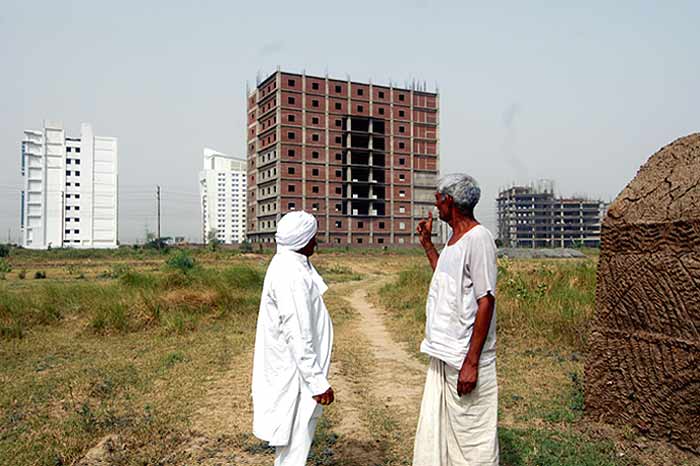
A quick guide to understand the Land Acquisition Ordinance issue

0

Anna Hazare is back to Delhi and Arvind Kejriwal is also back to dharna. This time, the issue is the Land Acquisition Ordinance, which is being termed as “anti-farmer” by the opposition parties.

OpIndia.com brings to you some primers that will help you understand the entire debate. This is broadly based on this article by author and journalist Anand Ranganathan and some infographics tweeted by BJP’s official Twitter handle.

First, a bit of history. Land acquisition law in India was never “pro farmer” to being with. We had been following a 1894 Act, which allowed for forced land acquisitions and low rates of compensation for farmers. To the credit of the UPA-II government, they brought a new Act in 2013, but Congress can’t take a high moral ground as all their “pro-poor” governments ignored the need for over 60 years.

Now the Modi government, or rather the NDA government, has made some changes to the UPA’s Act through an ordinance. These changes are being called anti-farmer and pro-industry by critics.

Following are the three major “controversial” changes, and BJP’s defense of those:

1. UPA Act allowed acquisition of land for infrastructure projects excluding private hospitals, private educational institutions and private hotels. The NDA Act now includes private hospitals and private educational institutions. Critics say this is favoring private players.

  • BJP claims that private hospitals and private educational institutes will only help the local residents and these can be allowed as these are regulated sectors and allow only not-for-profit entities.

2. The mandatory prior consent of 80% (for private projects) or 70% (for PPP projects) has been done away with for projects relating to national security or defense, rural infrastructure including electrification, affordable housing, industrial corridors, social infrastructure, and PPP projects where government holds the land. Furthermore, all these projects can be provided irrigable, multi-cropped land without doing a social impact assessment or consultation with local panchayats or municipal corporations. This is the most controversial aspect and attracting protests.

  • BJP claims that these sectors are crucial for the country as well as local development and the consent part has been done away to expedite only a few projects like national highways, railways including metro projects, atomic energy projects, etc. The party and the government point out that the consent requirement remains present in bulk of the projects and so do the requirements for consultations. Apart from that, the part points out that the farmers are getting compensation running up to 4 times the market price, so it can’t be called draconian or unfair.

3. The UPA Act provisioned that the land will go back to the original owners if it is not utilized for 5 years. The NDA Act now removes the 5 year period and replaces it with “a period specified for setting up of any project or for five years, whichever is later.” Critics say that this gives an excuse of land grabbing as one may set the project setting up period as something as long as 20 years and keep the land unutilized, thus squatting on a real estate property.

  • BJP argues that all huge projects require a gestation period. They cite example of nuclear power plants, low cost housing projects, or railways projects, where time required from initial survey and assessment to actual project implementation can take up a lot of time. However, the party may do good to classify various projects that may be allowed to set a longer gestation period as they had done in the case of doing away with prior consent.

Apart from these, these are political bickering over the ordinance, accusing it of being an example of unilateral decision making by the Modi government, which BJP denies by arguing that these changes were incorporated after consulting with all UTs and state governments, which found the UPA act hindering development projects.

It is to be seen if the Modi government agrees to change any of their modifications to the UPA Act or they stick to what they have proposed.

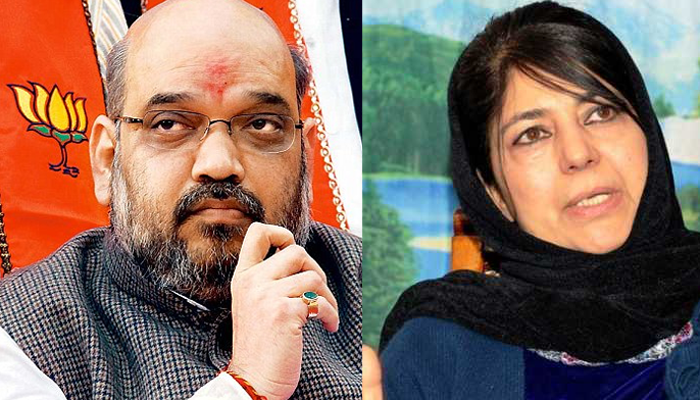
BJP goes with PDP – Latest U-Turn on ideology by BJP

0

Back in December 2013, BJP won the most seats in Delhi Elections. They had 32 seats, just 3 short of majority. But Dr Harshvardhan refused to form the Government. BJP had taken the principled stand that they cannot ally with parties against whom they had fought tooth and nail. Of course they must have tried some horse trading before they reached this point, but they did abstain from making any political compromise.

The result of this is all too well known. AAP seized the opportunity, in typical Vijay style from Deewar, mocked BJP’s “Usool and Adarsh” and formed a Government with Congress. It was ironical that AAP’s genesis was based on its stand opposing the corruption of the Congress at the centre, and now they had joined hands with them. What should have ideally been a field day for BJP to slander AAP for abandoning principles, turned into a a launch pad for AAP. AAP managed to do something in those 49 days, which eventually stuck in the Delhi voters’ minds who gave them a stunning victory now.

BJP seems to have learned its lesson from the Delhi debacle, even before the debacle materialise. After Maharastra elections, when BJP was in a similar situation, where they were just short of majority, they were prudent and were ready to business with NCP even, the same NCP which was called “Naturally Corrupt Party” by Modi while campaigning. Rajiv Pratap Rudy went to the extent of saying “The BJP will welcome support of all parties except Congress”, indicating that they are open to interacting with the NCP. At that time, this news had disturbed many die-hard fans.

Again in Bihar, BJP was hinting at supporting Manjhi in the trust vote to try and thwart Nitish Kumar’s attempt to re-establish his reign. This time BJP played on the principle that enemy’s enemy is one’s friend. Senior BJP leader from Bihar, Sushil Kumar Modi said that it was the BJP’s unanimous view to support Manjhi. This was after Manjhi had met PM Modi at Delhi. This again must have been severely embarrassing for Sushil Kumar Modi, who was a staunch Manjhi critic until recently.

BJP’s latest U-Turn is in Jammu & Kashmir, where it is now forming the Government with PDP. During campaigning, Modi had the following words for PDP:


While all the above can and will be justified as sane, practical decisions, it is still a question, how will die-hard fans of BJP’s ideology respond. It is bound to be an embarassment, but if BJP can do an AAP, and for example in Jammu and Kashmir (where their cross-ideology pact has actually materialised) provide a good Government, BJP supporters may forgive the opportunism, just as AAP supporters in Delhi welcomed Kejriwal back like a long lost lover.

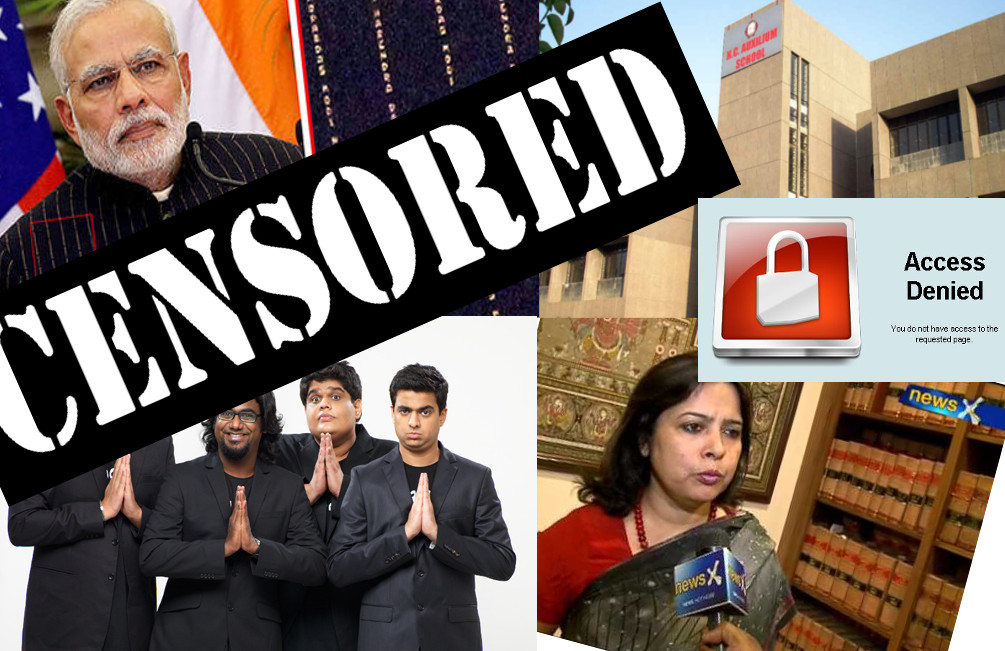
Top lies spread by Mainstream Media – February 2015

0

1. 1st February 2015: Scroll.in – Censor board forces singer to bleep out word ‘Bombay’ from music video

This story cannot be called a pure “lie”, but it was heavily misleading on multiple issues. It claimed that a singer was forced to mute the word “Bombay” from his song.

The news came out, well after the New Censor Board headed by Pahlaj Nihalani, had taken over. BUT, this story never clarified that this decision was of the earlier board. The concerned singer posted the Censor Board certificate just 12 hours after the story was published by Scroll. The certificate was dated 05/12/2014, which means the decision was taken by the Leela Samson headed Censor board, yet the Scroll piece tried to insinuate that otherwise. And as we had reported earlier, the usual suspects spun it to make it an anti-Modi event. Couldn’t Scroll ask the singer for the censor certificate first?

Secondly, as mentioned in our post above, Bollywood Director Vivek Agnihotri revealed to us that the move of muting “Bombay” is a well settled stand. Yet the Scroll piece attempted to highlight this as a new event, thus further leading the outrage industry to believe this was done by the new Censor board. Unfortunately, reporting the full facts of a story has become too hard for our Media.

2. 1st February 2015: Times of India – PM, many MPs haven’t spent a rupee from MPLAD fund

In this article, Times of India claimed that MPs from many states, including Uttar Pradesh and Delhi, had not spent a single rupee from their MPLAD fund. It said “It is much the same in poll-bound Delhi, where all 7 MPs, all from BJP, have not found use for the Rs 2.5 crore released to them as first installment”. To contest this claim, MP from New Delhi constituency, Meenakshi Lekhi had to use Facebook. In her post, she claimed that Times of India did not even approach her before running the story and she gave a detailed timeline of how the money was received and utilised by her. Lekhi made her stand clear, wonder how many other MPs have been wrongly maligned by Times of India.

3. 2nd February 2015: NDTV – AIB Roast Runs Into Trouble With Maharashtra Government

While we had reported that a the AIB roast might be probed because of 2 complaints filed by a Hindu group and a Christian group, NDTV was carrying a different news. It said that “The Maharashtra government has decided to investigate” the Roast and that the Minister for Cultural Affairs Vinod Tawde, called the “the vulgarity of the show a crime”. The report quoted Tawde as saying “Such vulgarity is a crime and based on facts which will emerge, the government will file a case against them,“. Based on this report, many users on social media got the impression that the Maharashtra Government was taking suo moto action against the vulgarity and obscenity in the show. Finally when the Minister himself clarified on twitter with the following tweet, it was clear that the only Government action was to check if all the appropriate certificates had been taken:

4. 12th February 2015: Reddit – The #Gujarat model of #CleanChits

Reddit, which has a sizeable number of readers, tweeted this tweet on 12th:


As can be seen, the tweet claimed that Satish Verma is an accused in a fake encounter case, and an investigator in an another. This causes a conflict of Interest because he is investigation a fake encounter case involving PP Pandey, who again is investigating Verma’s case. Eventually a twitter user @centerofright to set the record straight. He tweeted an excerpt of the SIT report which clearly said Satish Verma was mistakenly listed as an accused, when he was actually a witness. Reddit then tweeted another tweet clarifying the situation, but, did not delete the wrong tweet which is still being Retweeted and read by innocent readers. 

5. 13th February 2015: All Media Outlets – Holy Child Auxilium School vandalized

We have added a Times of India story link as an example. We have already reported about this separately here. While Media gleefully used words like “attacked” and “vandalized”, the Principal of this school came out in the open and made this statement “This is not a case of vandalism, no religious articles have been touched”. Its a shame that Media chose to communalize an incident which even the aggrieved party clearly said had nothing to do with any communal angle.

6. 14th February 2015: India Today and others – Women Journalists more suited for off-field roles: Rathore

Many other News sites also reported this, but we have included India Today as an example. The report said that Minister for Information & broadcasting Rajyavardhan Singh Rathore had said “women in media would be better off pursuing off-field roles“. This was immediately used by the usual suspects on Social Media to show Rathore as a Male chauvinist who belongs to the “Sanghi” patriarchal mindset. Rathore quickly tweeted that his comments had been totally misinterpreted falsely:


To India Today’s credit, they immediately apologised and later took down the article, although some other media sites continued to report it. Later, the Economic Times posted Rathore’s comments in full, which made it clear he wasn’t guilty of promoting gender bias. 

7. 18th February 2015: All Media – Modi’s Rs 10 lakh suit

The cost of Modi’s suit was yet another thing no-one in the media got right. While some claimed it cost Rs 10 lakhs, some media houses gave a wide range of Rs 80000 to Rs 5 lakh. We wrote a detailed post on this, where the person who gifted the suit, rubbished all astronomical figures being quoted by Media. 

8. 27th February 2015: Times of India – PMO blocks access to information on ministers’ assets

A technical glitch was reported as “a blow to transparency” by an over-enthusiastic and possibly motivated Times of India journalist. We have written a detailed story on this, which was later blown up on Twitter as a major sign of fascism by Modi Government. Eventually the official handle of the PMO had to clarify the position, which the Times of India reporter could have confirmed with just a phone call to the department. 

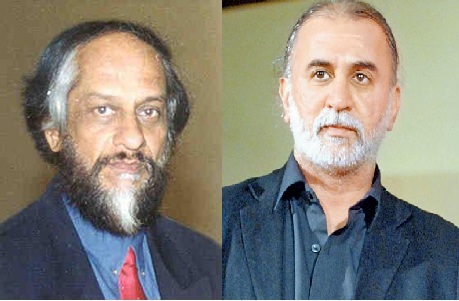
RK Pachauri, the new Tejpal?

0

As soon as I heard news of RK Pachauri being involved  in a sexual harassment case, my first thought was… “Ah. And another Tejpal emerges”. Little did I know, until I started looking further, how excruciatingly true that thought really was. From their Modus operandi, to their excuses, they are just two criminal peas in a sickening perverted pod.

How they chose their victims:

Both Tejpal and Pachauri had an extremely similar Modus Operandi when it came to choosing their victims. Tejpal had known his victim since childhood. He was a parental figure for the victim (Who was his daughter’s close friend) and Tejpal had also offered the victim her first job.

Pachauri on the other hand, offered his victim a job when she had just quit her previous one and was unemployed. By virtue of being older by a lifetime, and also an accomplished professional in his stream, the victim was in complete awe of Pachauri as she mentioned in her FIR.

The facts point to a clear modus operandi. Their choice of victim was dependant on the intensity of faith that the victim had on them. By virtue of being older and also close friends with the victims professionally and personally, a strong fiduciary relationship existed between them that the perpetrators thought as easy to exploit. Coupled with the fiduciary relationship, what they sought to exploit was the “You owe me sentiment”. They had both helped their respective victims professionally. The “reciprocal lust” that was expected was perhaps considered interest on the investment that both the perpetrators had made.

When the iron of friendship is hot enough to strike:

In both the cases, when you go through the entire victims statement (also the sanctimonious letter Tarun wrote to his victim after the assault) it becomes evident that the assault always starts with a seemingly innocent flirtatious comment or nonchalant body contact. In Pachauri’s case, the victim states that soon the friendship turned into repeated hugs, kisses, and requests of physical contact.

The first Assault

By now the victim feels the complete weight of the professional favors that their bosses have done for them in both cases. The friendship, personal and professional, is important enough to politely ignore advances, however uncomfortable they make the victim.

In Tejpal’s case when he first tried to assault his victim in the lift, she tried her best to talk sense into Tejpal by reminding him of the nature of relationship they share. She appealed to his better judgment reminding him of their professional conduct, the fact that she was friends with his daughter, even the friendship they shared among themselves. Since Tejpal obviously thinks that there’s nothing wrong in pushing the limits of relationships according to his “bodily urges” he continues violating her.  Sensing that the victim holds their bond in fondness, he tries to justify his assault by saying “It’s alright to be in love with more than one person,” When the “love” fails to convince his victim to allow herself to be molested, he turns to exploiting their professional bond by saying “Well, this is the easiest way for you to keep your job.” Hoping, that if not love, at least the fear of a potentially illustrious career coming to an end would convince his victim to be molested.

In Pachauri’s case, in my honest opinion, the manipulation was even worse. The entire time, Pachauri kept justifying his molestation and harassment by sending disgusting messages and emails convincing his victim that it was indeed “love”.

Sample this:

On September 8, 2013, at 2.32 pm Pachauri messages: “I shall try to suppress my human feelings, and live with a sad restraint on my words and actions. Never to make you uncomfortable or stressed on my account.”

After his victim refuses to consider his carnal desires as “love” and admits that it makes him uncomfortable he tries again

Pachauri’s SMS on October 1, 2013, at 10.06 pm: “That is an unkind cut. And you need not feel responsible about sending me a message when you reach home. I am sorry for my actions. I shall be very very restrained now. I am not a cheap philanderer as you are trying to convey.”

Pachauri’s SMS six minutes later: “And just to prove to you how much I love you, I shall go on a fast after the cricket match tomorrow. I will break the fast only when you tell me that you believe I love you with sincerity and unfathomable depth.”

When the woman has finally had enough… the moral high ground and the “how could you”

In Tejpal’s case, when the victim finally told his daughter (and her close friend) what her father was really upto, Tejpal’s response, as stated by the victim herself was:

Tejpal: “How could you tell XXX (Tejpal’s daughter) what happened?”

Victim: “Tarun, I told you XXX and I are close and what you did wasn’t okay, I had to tell her,”

Tejpal: “She’s my daughter. Do you even understand what the word means? Just get away from me, I’m so f*** ing pissed off with you right now.”

In Pachauri’s case he tries to make his victim feel guilty by repeatedly sending her messages and email proclaiming love and also blaming her for her lack of “faith” in someone who has done so much for him. Sample this:

Email on Nov 14, 2013: “Dearest meri jaan, you came to me at the loss of your earlier job as a measure of desperation. In the context of your injury, what faith have you shown in me? You have been going to the gym against my explicit advise. Even you must know that even if I don’t marry you, I am yours for life.”

What they are trying to accomplish here is simple. Guilt the women into silence. Appeal, in their own twisted way, to the very conscience of the women that they have tried to manipulate and taint with their liberal views on love, sex, and relationships.

Finally, the “I didn’t do it”

Not all women have the courage to ward off the kind of manipulation these perpetrators use. To their credit, these women did. And when they finally decided to speak up, there wasn’t anything left for Tejpal and Pachauri to do other than deny the “allegations” with their wild conspiracy theories.

Tejpal of course first admitted to his crime by calling it a “lapse of judgment” and wrote a sanctimonious letter of apology (if we can call it that) to his victim. Later, when the intellectual realized that his pretty little hands that have held a pen, won’t be able to endure the life of a prisoner he decided to retract and deny all allegations with slandering, character assassinating and intimidating the victim to coming up with wild theories of how it was a grand political vendetta by the BJP.

Pachauri saw Tejpal’s ridiculousness and raised the bar to the absolute bizarre. He is now claiming that his phone, SMSs, WhatsApp and his Email were hacked by some unknown person to commit these heinous crimes. I wonder if he will later claim in court that some doppelganger kissed, hugged, “grabbed body” inappropriately and lifted his female employees in his arms as well.

The “Liberal” silence that ensues..

Tejpal’s and Pachauri’s stories take two different routes converging towards the same destination. In Tejpal’s case, the Liberal, intellectual and the journalist community came out all guns blazing to protect Tejpal. We heard statements like “He was set up”, “It is actually Tejpal who was sexually harassed” and some statements that downright assassinate the victim’s character and I wouldn’t want to dignify by repeating.  In contrast, there has been an eerie silence about the Pachauri case. Not a peep. Where the liberal communities contrasting behavior converges, is that in essence, in both cases they have stood by and done NOTHING to stop the evil.

To substantiate, sample this:

Vinod Mehta in his book says “All I know is that Tarun was known to use his official position to hit on interns and juniors for both consensual and presumably non consensual carnal favors…. But since no formal complaint was bought to my notice, we did not have a crisis in the office.”

The liberal community today, in essence has shifted from sympathizing with the victim, to liberally finding the good in the criminal. Their sympathies, acceptance, human rights, apathy and voice is all exclusively reserved for the poor rapist/molester who has been misguided into ruining a woman’s life. This apathy towards the real victim, is unfortunately as disturbing as the actual crime itself.

Mother Teresa – as we don’t know her

0

Agnes Gonxha Bojaxhiu, is Mother Teresa’s real name. I haven’t looked it up from Wikipedia, I know it by heart, because in school, I was required to learn it by rote.

Yes, most of us know whatever we know of Mother Teresa from our school textbooks. And as is the case with most textbook heroes, we know only the good stuff.

But why has she come into the spotlight now? Because as per media reports RSS chief Mohan Bhagwat, has said “Conversion was Mother Teresa’s top goal”.

At the outset, let me clearly say I haven’t seen enough evidence to conclude that she actively indulged in religious conversions per se.

Much of the outrage on Social Media, has been because this criticism has come from a “Communal Sanghi”. But what if I tell you, even some American and British people are sceptical about her work?

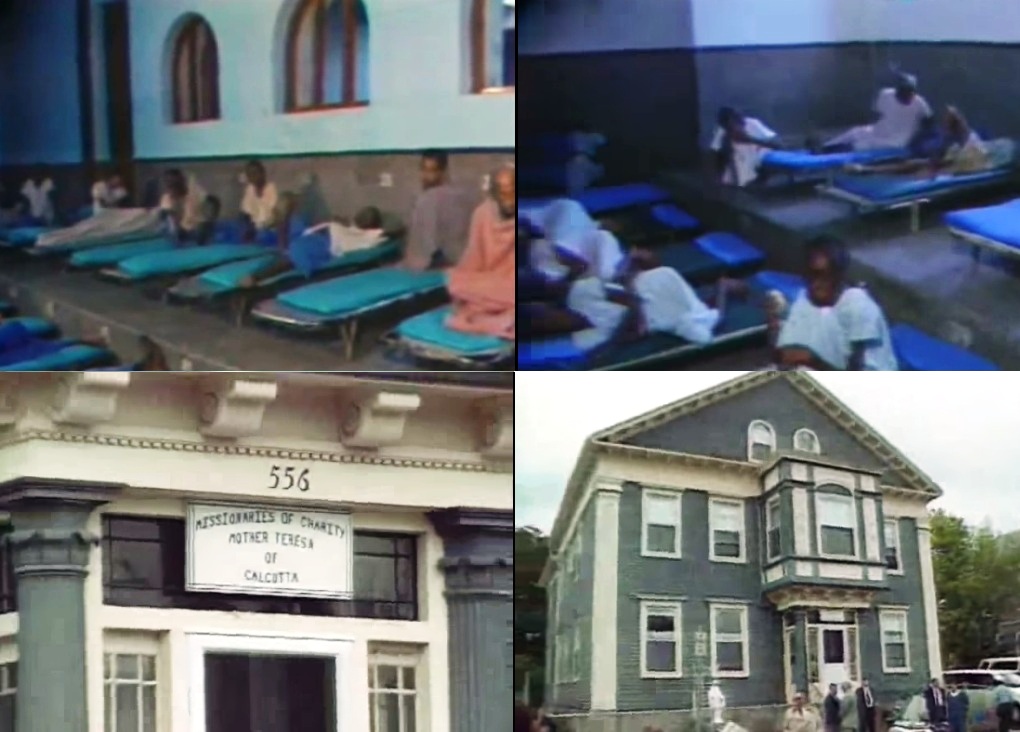
What I produce below, is essentially some important bits from this video, an extract of a show called “Penn & Teller: Bullshit!”.

As the name suggests, this is a show which is dedicated to Bullshit detection from all over the world (I recommend you watch it), and to prove their secular credentials, let me tell you they spare no-one. In fact in the same episode in which they spoke on Mother Teresa, they talked about some uncomfortable facts from Mahatma Gandhi’s life too.

Coming to Mother Teresa, Penn & Teller (P & T), speak to Christopher Hitchens, author of the book “The Missionary Position: Mother Teresa in Theory and Practice”,  Dr Arup Chatterjee author of “Mother Teresa, the final verdict” and an actual nun who used to work with Mother Teresa.

The first common misconception among people is that Teresa “cured” or “helped cure” the sick and diseased. This is denied by both the authors concerned. Her “Home for the Dying“, “had no doctors saving lives, but it was a place for victims to suffer and die, by the rules of the catholic church“.

This is supported by the ex-nun, who says, “Mother Teresa has created a cult of suffering“. This is even borne out by Mother Teresa’s own statement, which endorses suffering:

“There is something beautiful in seeing the poor accept their lot, to suffer it like Christ’s Passion. The world gains much from their suffering”

Dr Chatterjee further states that “Mother Teresa’s order was to not provide proper beds, but just little hammocks. There is a communal toilet where people have to defecate in presence of each other and the inmates are not allowed visits from their friends and relatives“.

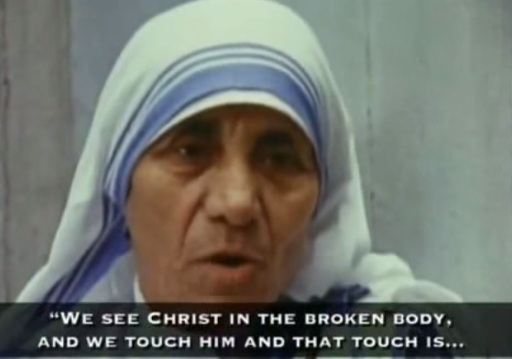
They also show a video clip, where Mother Teresa says, “We see Christ in the broken body, and we touch him, and that touch comes from that deep faith, that Christ cannot deceive.”Dr Chatterjee also remarks that “It was her obsession with suffering, and her obsession that people need to suffer, in order to come close to Jesus“.

From all this, two things are clear; Religion played a major role in her work, and she did not necessarily work to remove suffering, as is generally portrayed.

m1

Some may argue that taking care of millions of such people would need money, and since she couldn’t afford it, she didn’t provide for healing her “patients”. But Mother Teresa did raise a lot of money from donations.

The video mentions she raised some of her money, from people with dubious records, but I don’t subscribe to that. Money can come from the biggest criminals, as long as it is being put to good use. But most of the money she received, “was mostly spent on religious activities and not on the poor. More than 50% of her organizations all over the world were Nunneries or Brothers’ homes.”

m2

She continued to receive large amounts of money, which she spent on opening new convents and increasing missionary work, while her Home for the Dying continued to be in the same state, with no upgradation.

It is hard to find out exactly how much money her trusts earned and spent, because “Missionaries of Charity, is the only Indian Charitable Institution, which does not publish accounts for the public, and much of the Foreign money is kept in the Vatican bank”.

From this, it is clear that her Organization had lots of money, but it was mostly spent on Religious activities and not charitable causes.

So in summary, as per the video, Mother Teresa opened homes for the dying, where she did not treat them, let them suffer, because she believed it would bring them closer to Christ, and all this in-spite of having enough money to help them, which she preferred spending on Nunneries and Brothers’ homes around the world.

Let’s just say the video is a hit-job, and over exaggerates most of the stuff, even then, the stuff is not what we learnt in school. It would be fair to say, Mother Teresa, could have done some good work, but many people suffered too, and most of her work was driven by religion and not by love for the needy.

P.S. If you think I too am a Communal Sanghi, watch the video. It is far far more uncharitable to others than to her.

P.P.S I get no joy out of this. I had seen this video many years back (I am a big fan of P & T). I only mentioned this now because I realised many people did not know the other side.

The North-East Focus of Modi Government which MSM didn’t focus on

0

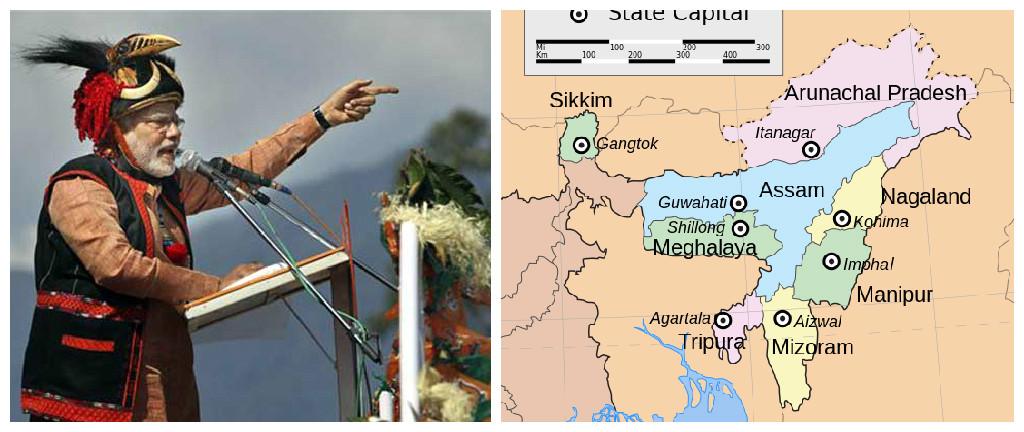
Prime Minister Modi was in Itanagar last week to celebrate the Arunachal Pradesh’s Statehood day. His government’s continued focus in the North-East region was further buttressed by this visit. Having declared early in his tenure that the NE region will get a higher priority in terms of development, the onus remains on him to deliver on this promise. That this would come with enormous hurdles was a foregone conclusion – not only due to continued periods of previous Central government inaction, but also due to complicated foreign policy terrains.

Apart from few instances in the newspapers, the mainstream television media has completely ignored this focus by the Modi government.

Here I try to highlight the key decisions that are likely to have a big positive impact in the North-East development. Not only the decisions that are financially beneficial to the region, but also the symbolic decisions are also mentioned. Remember, these are the decisions made in the first 9+ months of his tenure.

  • Approval of implementation of “the Comprehensive Telecom Development Plan” for the NE region, with a planned expenditure of Rs. 5,336.18 Cr. This is to give increased reliability in 2G connectivity, by providing optical fiber networks.
  • Approval of “the Comprehensive Scheme for Strengthening of Transmission & Distribution (T&D) Systems (CSST&DS)” in Arunachal Pradesh and Sikkim at an estimated cost of Rs.4,754.42 Cr. Prior to this, only 5 of the 20 districts or Arunachal Pradesh had transmission network. This project will expand to cover all of Arunachal.
  • Approval of “North Eastern Region Power System Improvement Project (NERPSIP)” for strengthening of the Intra-State Transmission and Distribution System at an estimated cost of Rs.5,111.33 Cr. The project is planned to be completed in 48 months. This is in-line with the poll promise of 365 days of power in the region.
  • Announced that the Center will provide Rs. 28,000 Cr for laying 14 new railway lines in NE region and to establish the region as a touristic destination.
  • Approval for the setting up of Food Processing Units in NE region at a cost of Rs 16,840 Cr. This project is to improve the shelf life of horticulture products from the region.
  • Approval of construction of Airport hangars in the Lokpriya Gopinath Bordoloi International Airport (LGBI), Guwahati. This is envisaged to meet the Airport’s increased demands of growing air traffic in the region.
  • Moving away from the comforts of Vigyan Bhavan in Delhi, the Modi government for the first time organized the All India Conference of DGPs and IGPs in Guwahati.
  • A minister from the Central government has been regularly visiting the region. In fact, in early January, it was decided that at least one Union minister will visit the region (including Sikkim) every fortnight. Chemical Minister Ananth Kumar has been given the responsibility to coordinate and to ensure the regular visit of ministers. Detailed list of ministers traveling to the region can be seen here.
  • At the risk of angering his vote base, PM Modi had implicitly endorsed the UPA decision of redrawing the India-Bangladesh border. Though the final act needs to play out here, it is now his responsibility to take this to ratification.
  • To boost organic farming in the region, announced setting up of six new agriculture colleges in the region, with the aim of making the region “the capital of organic farming”.

Notwithstanding the above decisions, there are some areas where the Modi government has to act more decisively.

  • PM Modi needs to decisively convey a message one way or the other regarding the Armed Forces Special Powers Act (AFSPA) in Manipur. During his visit to the region late last year, there was silence regarding the issue.
  • PM Modi had mentioned that he would like to create an economic corridor between India, Myanmar and South-East Asian countries. If implemented, this would give an impetus to the NE region. However, with the continued unrest in Myanmar, it will be a challenge to get this up and running.
  • The Arunachal Pradesh-China border issue will need a quick resolution. This will ensure unwanted distraction and enhance Arunachal as a tourist destination in the long term.
  • Establishing closer ties between India and Bangladesh will also go a long way in promoting peace and development in the NE region.

PM Modi’s focus on trade and economy to improve ties with the eastern neighbors, if fructified, will lead to a positive outcome for the region. Not only will it lead to upward economic mobility, but it will also create new opportunities in the insurgency torn areas of NE region. In this regard, PM Modi’s participation in the Sainthood commemoration event in Delhi a few days back, assumes significance (if the news reaches them). With the areas dominated by tribals, who are converted Christians, a sense of re-assurance will help them identify with the government’s intentions and participate in the growth story.

Even with these decisions and initiatives, the complete integration of the NE region is going to be a hard-lift during PM Modi’s first tenure. Various complexities have historically plagued the region viz., insurgencies, tensions in the region with many ethnicities, unresolved international borders and more importantly, as a notorious journalist put it – “the tyranny of distance” from the confines of New Delhi. How PM Modi will manoeuvre through these issues will determine his legacy in the region.

Source: Most government information available at: http://pib.nic.in/newsite/mainpage.aspx