Home Blog

Is the AI bubble finally bursting? Wall Street loses $2.3 trillion in its worst crash since 2020

0

Wall Street witnessed its worst stock market rout since the Covid-19 pandemic in March 2020 on Thursday, November 5, as investors rushed to dump technology stocks amid growing concerns about the sustainability of the artificial intelligence (AI) investment boom. The massive sell-off wiped out approximately $2.3 trillion in market value from the Nasdaq 100 alone, while semiconductor stocks suffered their steepest single-day decline in more than six years.

The technology-heavy Nasdaq 100 plunged more than 6%, marking its worst single-day performance since March 2020. The benchmark S&P 500 declined 4.4%, while the Philadelphia Semiconductor Index, which tracks major chipmakers, crashed 12% in its worst session since the early days of the Covid-19 pandemic.

Nvidia, the world’s most valuable company, plunged more than 9%, recording its steepest single-day fall since January 2025 and wiping out its gains for the year. All 30 companies comprising the Dow Jones Industrial Average ended the session in negative territory, underlining the extent of the selling pressure.

The sell-off came amid growing uncertainty over the future of AI investments, which have been among the biggest drivers of Wall Street’s rally in recent years. Investors are increasingly questioning whether technology companies can sustain their enormous spending on AI infrastructure and whether the eventual returns will justify the hundreds of billions of dollars being committed to the sector.

However, concerns surrounding AI spending were not the only factor behind Thursday’s market rout. The outcome of the US midterm elections, fears of tighter regulatory scrutiny, the unwinding of crowded hedge-fund positions and a sudden lack of buyers combined to amplify the selling pressure.

Why did Wall Street crash?

Artificial intelligence has emerged as one of the biggest investment themes in global financial markets. Companies such as Microsoft, Alphabet, Amazon and Meta have committed enormous sums to building data centres and expanding their computing infrastructure to support the development and deployment of AI models.

This investment cycle has created unprecedented demand for specialised processors, memory chips, servers, networking equipment and other infrastructure. Nvidia, in particular, has emerged as one of its biggest beneficiaries because its graphics processing units (GPUs) are widely used to train and operate advanced AI models.

However, investors are beginning to question whether the pace of investment can be sustained indefinitely.

Building AI infrastructure requires billions of dollars in capital expenditure. Companies must acquire expensive processors, construct data centres, secure electricity supplies and maintain sophisticated cooling and networking systems. These investments also involve substantial depreciation and operating expenses.

For these investments to generate attractive returns, the revenue generated by AI products and services must eventually justify the costs.

The concern is that the industry could be spending money faster than it is generating meaningful commercial returns. Although AI adoption continues to expand, investors are questioning whether the revenue generated by AI applications will be sufficient to justify the enormous infrastructure investments.

Consequently, companies that had benefited from expectations of an uninterrupted AI investment boom are facing renewed scrutiny.

The Nasdaq 100 has now erased approximately $2.3 trillion in market value and fallen nearly 15% from its October 6 record, reflecting the extent of the reassessment.

How did the US midterm elections contribute to the crash?

The Democrats’ sweeping victory in the US congressional elections introduced another layer of uncertainty for investors.

The initial market reaction to the election results was positive. Investors expected Democratic control of Congress to act as a political check on President Donald Trump, potentially limiting his ability to push through controversial policies. There was also optimism that the changing political balance could improve the prospects of easing tensions surrounding the Iran conflict.

However, investor sentiment soon changed as attention shifted towards the potential consequences for the AI industry.

Democratic lawmakers have raised concerns about the rapid expansion of AI data centres, particularly their enormous electricity requirements, environmental impact and pressure on local infrastructure.

With Democrats gaining control of Congress, investors are concerned that the industry could face greater regulatory scrutiny. Delays in approvals, restrictions on new data-centre projects or additional compliance requirements could affect the pace of infrastructure expansion.

This is significant because the earnings expectations of several semiconductor manufacturers and technology infrastructure companies depend on continued growth in data-centre investments.

If political or regulatory developments slow that expansion, companies supplying the equipment required to build AI infrastructure could face weaker demand expectations.

Michael O’Rourke, Chief Market Strategist at JonesTrading Institutional Services, told Bloomberg that investors may have been too quick to assume the political shift would have little impact on the AI investment cycle.

He also cautioned that earnings forecasts for the coming year could become less reliable if policy changes alter expectations surrounding data-centre construction.

The election results did not directly cause the underlying concerns about AI profitability. Rather, they added another potential risk to an investment theme that was already facing questions about valuations and returns.

Hedge funds forced to sell as market panic intensifies

Another important factor behind Thursday’s crash was the unwinding of crowded investment positions.

AI-related stocks had become some of the most popular investments on Wall Street. Hedge funds, institutional investors and momentum-driven traders had built substantial positions in companies expected to benefit from the AI revolution.

When these stocks began falling sharply, some investors were forced to unwind their positions to limit losses and manage risk exposure.

This triggered a vicious cycle. Falling prices prompted additional selling, which pushed valuations lower and forced more investors to exit their positions.

At the same time, potential buyers appeared reluctant to enter the market during the sharp decline.

Michael Monaghan, Partner and Portfolio Manager at Founder ETFs, described the situation as a combination of hedge funds being forced to sell and a lack of buyers willing to absorb the selling pressure.

The resulting panic was not restricted to technology companies. Even stocks traditionally considered defensive, including Walmart, came under pressure as investors reduced their exposure to equities more broadly.

The Philadelphia Semiconductor Index plunged 12%, placing it in bear-market territory after declining more than 38% from its June 22 peak.

The Cboe Volatility Index (VIX), popularly known as Wall Street’s ‘fear index’, surged 11.57 points to 28.18, its highest level since March. A rising VIX indicates that investors are anticipating greater volatility and are increasingly concerned about further market declines.

Meanwhile, investors moved towards the relative safety of US government bonds. Treasury prices rose, pushing yields lower across maturities by as much as 12 basis points to their lowest levels since early September.

This flight towards safer assets indicated that the sell-off had evolved into a broader reassessment of risk across financial markets.

Comparisons with the dot-com crash and 2008 financial crisis

The scale and concentration of Thursday’s losses have drawn comparisons with previous episodes of market turmoil.

Greg Taylor, Chief Investment Officer at PenderFund Capital Management, told Bloomberg that the concentration of investor interest in AI was giving him flashbacks to the financial crisis of 2008 and the dot-com crash of 2001.

His comparison highlights a growing concern that investors may have become excessively dependent on a single investment theme.

The comparison does not necessarily mean that the current market is heading towards another financial crisis. However, it raises questions about whether valuations have become disconnected from the underlying earnings potential of companies.

During the dot-com bubble, investors poured money into internet companies on expectations of enormous future growth, often without sufficient consideration of profitability. When those expectations collapsed, technology stocks suffered a prolonged correction.

The current AI investment cycle is different in several respects. Many of the companies driving the boom are established businesses with substantial revenues and profits. Nevertheless, even financially strong companies can experience sharp corrections when their valuations assume growth that becomes difficult to deliver.

The immediate question is whether AI-related companies can generate sufficient revenue and profits to justify their capital expenditure and market valuations.

How could the Wall Street crash affect India?

The turmoil on Wall Street could have implications for emerging markets, including India, although the impact may differ from that on technology-heavy economies such as South Korea and Taiwan.

One of the biggest risks for Indian equities is a reversal in foreign institutional investment flows. When global investors become nervous, they often reduce exposure to emerging markets and shift capital towards safer assets such as US government bonds.

Such withdrawals could put pressure on the Sensex and Nifty, particularly large-cap companies with substantial foreign institutional ownership.

However, India could also benefit from a rotation of global capital away from expensive US technology stocks and towards other markets.

Indian equities have relatively limited direct exposure to advanced semiconductor manufacturing and AI data-centre infrastructure compared with South Korea and Taiwan. This could provide some insulation from a correction concentrated in the AI supply chain.

Another important factor is the Indian IT sector. Companies such as TCS, Infosys, Wipro and HCLTech derive a significant portion of their revenue from American clients. If US companies become cautious about technology spending, they could postpone discretionary IT projects, delay digital transformation contracts and reduce consulting expenditure.

This could affect the revenue growth of Indian IT companies.

Currency movements are another concern. A flight towards the US dollar could put pressure on the Indian rupee, making imports more expensive and potentially increasing inflationary pressures.

Crude oil prices will also remain important. India imports substantial quantities of crude oil, and a prolonged global economic slowdown could reduce energy demand and push oil prices lower. This would benefit India by reducing its import bill and easing inflationary pressures.

Nevertheless, a sustained global market correction could affect India through weaker foreign investment, reduced export demand and slower global economic growth.

Is this the beginning of a prolonged market correction?

Thursday’s crash has raised an important question for investors: Is Wall Street witnessing a temporary reassessment of AI valuations, or is the market entering a prolonged period of uncertainty?

The answer will depend on whether technology companies can deliver the earnings growth needed to justify their enormous investments.

AI remains a transformative technology with potentially significant commercial applications. The current sell-off does not necessarily indicate that the AI revolution is coming to an end. Instead, investors appear to be questioning the valuations assigned to companies benefiting from it and whether the expected returns will materialise quickly enough.

The political environment in Washington has added uncertainty, while hedge-fund selling and a lack of buyers have magnified the decline.

For India, the immediate impact could be relatively contained, particularly if global investors continue reallocating capital towards emerging markets. However, the country will not remain insulated if the correction spreads into a broader global economic slowdown.

The bigger takeaway from Thursday’s historic crash is that Wall Street’s AI-driven rally is entering a more demanding phase. Investors are no longer satisfied with announcements of massive capital expenditure and promises of future technological breakthroughs. They increasingly want evidence of sustainable revenues, profitability and returns on investment.

Whether this turns into a temporary correction or a much deeper market downturn will depend on how convincingly the technology industry can deliver on those expectations.

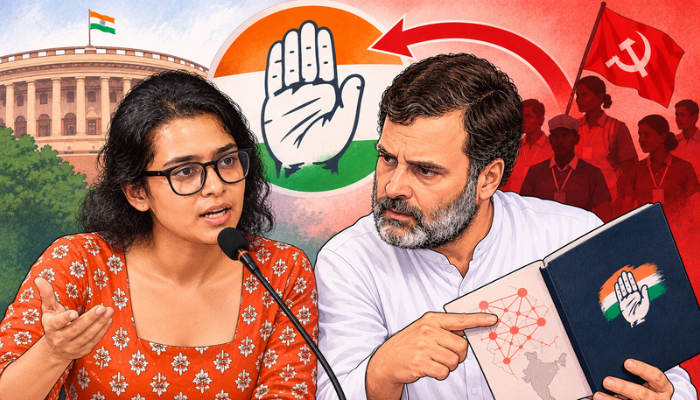
Congress’s Trojan Horse problem: From Kanhaiya Kumar to Neha Bora, why does the party keep promoting Leftist leaders over its own cadres?

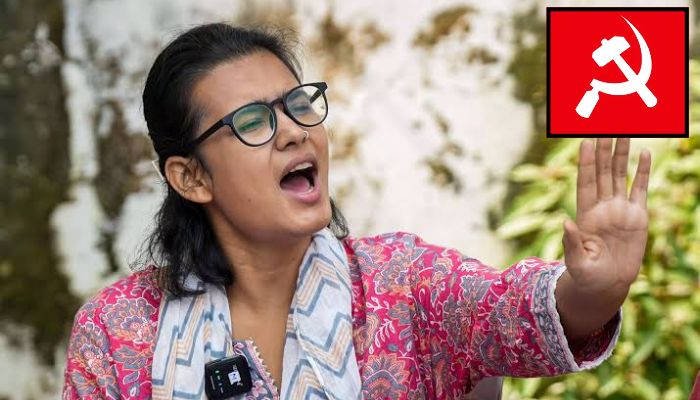
The recent visibility of AISA leader Neha Bora alongside Rahul Gandhi, and the Congress’s decision to give former CPI-linked student leader Kanhaiya Kumar a role in the NSUI, have revived a long-running debate inside and outside the party: why does the Congress repeatedly promote Left-background figures while its own student organisation, the NSUI, appears to be sidelined?

The debate intensified when Neha Bora emerged as a prominent face during the recent CJP protests. Bora is the national president of the All India Students’ Association (AISA), which is associated with CPI(M-L). Yet, she appeared on a Congress platform with Rahul and Priyanka Gandhi. Kanhiya Kumar, formerly associated with the CPI’s AISA, joined the Congress. He was made in charge of the National Students’ Union of India (NSUI), the student wing of the Congress. Many NSUI workers are uncomfortable with the move and ask why outside Left leaders are being given space instead of strengthening the party’s own student wing.

The Kumaramangalam thesis

Congress’s history suggests that the relationship between the Congress and the Left is neither new nor one-sided. It dates back to the freedom movement and has recurred through several phases: the Nehru era, the 1969 Congress split, the Emergency, the 2004 UPA government and the present day.

The most cited document in this context is “Communists in Congress: Kumaramangalam’s Thesis“, published in 1973. It was based on a confidential document prepared in 1964 by Mohan Kumaramangalam. He was a CPI leader who later joined Indira Gandhi’s Congress and became a Cabinet minister for steel and mines. He died in a plane crash in 1973.

Kumaramangalam’s argument was that the Congress had a mass base while communists had ideology. If communists entered the Congress and sharpened its pro-poor slogans, they could turn the party leftward from within. The thesis described communists as a “Trojan horse” inside the Congress, entering the party, borrowing its radical language and capturing it from within. The account notes that this strategy was not a conspiracy theory but a documented part of the CPI’s thinking.

The broader history begins in the 1930s, when communists tried to shape the Congress as an “anti-imperialist people’s front.” CPI documents praised Jawaharlal Nehru because he was influenced by the Soviet model. Nehru himself wrote in his autobiography that he was drawn to socialism and communism. Yet when in power, Nehru used the Army to crush the communist armed struggle in Telangana and dismissed the elected communist government in Kerala in 1959. The account describes this as a dual approach: attraction to the Left, but also control over it.

The 1969 Congress Split and the Emergency

The 1969 Congress split is presented as the clearest example of the pattern. The “Syndicate,” including leaders such as K. Kamaraj, Morarji Desai and S. Nijalingappa, sought to control Indira Gandhi.

Indira allied with the Young Turks and the Left, splitting the party into two. She nationalised banks and abolished privy purses. The CPI backed her through its “unity and struggle” line. Kamaraj, who had helped make Lal Bahadur Shastri prime minister in 1964 and Indira prime minister in 1966, was later sidelined along with Morarji Desai. Desai later became prime minister under the Janata Party, but the Congress never brought him back.

During the Emergency from 1975 to 1977, the CPI supported Indira Gandhi. The account states that the CPI was the only major opposition party whose leaders were not jailed, and that a common joke at the time was “Dange(r) for the Congress,” referring to CPI founder S.A. Dange. The CPI later admitted it had made a mistake, but its support at the time was full.

During the Emergency from 1975 to 1977, the CPI supported Indira Gandhi. Soviet Union called it the “crackdown against the right wing”. Later, the CPI admitted it had made a mistake, but its support was full at the time.

Sidelining internal leaders

The account also recalls the case of Sardar Vallabhbhai Patel. In 1946, Patel had more support in the Provincial Congress Committees, but Mahatma Gandhi chose Nehru. Patel served as deputy prime minister and home minister, but differences remained with Nehru on economic policy, Kashmir and China. Patel was pragmatic and warned of the China threat in 1950, which Nehru dismissed. Patel nevertheless remained a Congress leader.

Congress’s pattern has been to sideline strong internal leaders who are not from the Left or the family line. They give space to those who come from the Left or speak its language. This pattern continues today.

The example includes Jyotiraditya Scindia, a strong Madhya Pradesh leader who helped the Congress win the 2018 Assembly elections. But he was sidelined, and the party high command preferred Kamal Nath. Scindia left the Congress in 2020 and joined the BJP.

Himanta Biswa Sarma was one of the Congress’s most powerful leaders in Assam. He left in 2015 after feeling ignored by the high command and later became the BJP’s most effective face in the Northeast. Himanta was not a leftist either. He possessed an excellent ability to manage an organisation and had a deep understanding of regional politics. Instead of bringing him along, the Congress party prioritised central control.

Sachin Pilot, a young face in Rajasthan who contributed to the 2018 victory, clashed with Ashok Gehlot. But the high command backed Gehlot. Pilot rebelled but did not fully leave the party. It is an open secret that he remained in the Congress out of necessity. Leaving the party would have jeopardised their political future, or perhaps long-standing ties, both personal and organisational, held him back. Yet, within the Congress system, such leaders are repeatedly required to prove their loyalty to the family.

Jitin Prasad and R.P.N. Singh also left. They were not supporters of any communist or socialist ideology. They were pragmatic leaders who were focused on regional or organisational matters. Instead of accommodating them, the Congress party either prioritised the Gandhi family loyalists or provided a platform to new faces with a leftist background.

The 2004 UPA government and present-day parallels

The 2004 UPA government is another example. Left parties supported the Congress-led government. They defeated Atal Bihari Vajpayee. At the time, the Congress did not have a strong national leader. But they formed a government with Left support. The Left later withdrew support over the nuclear deal, but by then the pattern was clear: the Congress needed the Left’s support to gain power.

The conclusion is that both sides used each other. Communists knew the Indian public would not directly elect a communist party, so they sought entry into a large party like the Congress. The Congress gave them space because it needed Left language and support to win elections. In the process, the Congress lost capable internal leaders such as Patel, Kamaraj and Desai.

As the Congress again looks towards Left student leaders, the question raised by the account remains: is this repeated pattern strengthening the party or weakening it? History, it says, has already answered. The question is whether the Congress is willing to listen.


Anti-Israel rhetoric, remarks targeting Usha Vance, accusations of links with Muslim Brotherhood, empathy for Muslim synagogue attacker and more: Who is US Senator-elect Abdul El-Sayed

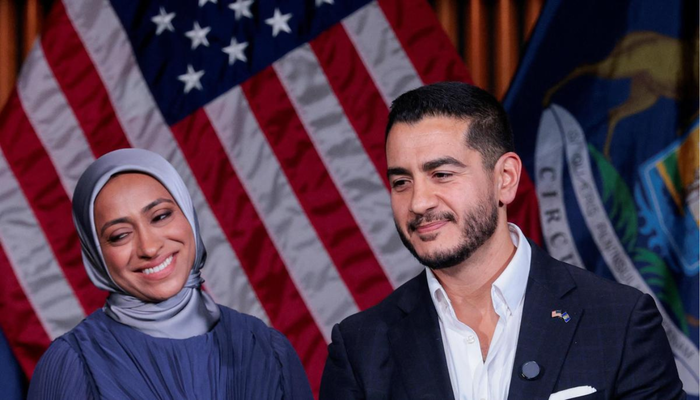
The US Senate got its first Muslim member after the left-wing Democrat Abdul El-Sayed won a key Senate seat in Michigan in the 2026 midterm elections. El-Sayed, a former public health official, defeated Republican candidate Mike Rogers in a closely contested election that witnessed a highly charged election campaign. He bagged over 22 lakh votes compared to Rogers, who secured 20 lakh votes.

Notably, Michigan state has one of the most concentrated, politically influential Muslim and Arab American populations in the United States. The demographic dynamic clearly worked in favour of El-Sayed, who was born in Michigan to Egyptian immigrant parents. His election campaign, including his statement describing Israel’s actions in Gaza as “genocide” and calling for an end to US aid to Israel, seemed to have resonated with the people in his constituency.

Distasteful remarks about the Second Lady Usha Vance

Ahead of the election, El-Sayed made highly distasteful remarks regarding US Vice President JD Vance, his wife and the Second Lady Usha Vance, and their children on two occasions, one in April and another in August 2026. During an appearance on The Allen Analysis Show, El-Sayed launched a personal attack on JD Vance for his stance against immigration and made sexually inappropriate comments about his wife.

“What do you think is going through Usha’s head when he talks? She’s like, ‘Damn, I have to sleep with him’, ” El-Sayed said. He further dragged Vance’s children into the political fray and said that Vance would have a tough time explaining his political position to his children, who are of mixed Indian and European ancestry.

El-Sayed made another personal attack on Vance, involving Usha Vance, after the US Vice President criticised him for supporting Sharia Law. Vance had criticised the physician, saying that he wished he could travel back in time and tell his late grandfather, whom he calls Papaw, about a politician who claimed to represent working people while supporting Sharia law and describing criticism of it as white supremacy.

Responding to Vance’s criticism, El-Sayed used Usha’s Indian heritage and her racial identity to attack Vance. “So do we think JD is taking Usha with him back in time to meet Papaw, or no…” he said. El-Sayed’s comment involving Usha Vance attracted a strong reaction from Vance, who warned him, saying, “Keep my wife’s name the hell out of your mouth because she’s way out of your league.”

Links with controversial left-wing political streamer Hasan Piker

Left-wing political streamer Hasan Piker supported El-Sayed during the Democratic primary campaign, appeared at his campaign events and took part in his election-night celebrations. However, El-Sayed’s association with Piker became a major issue during his election campaign.

Piker made deeply antisemitic remarks about Israel and the Jewish population living in the US during a livestream and American Jews. Piker argued that opposing Israel is not antisemitic. He claimed that American Jews are not uniformly supportive of Israel and portraying them as uniformly supporting Israel could create hostility towards Jewish Americans. Piker insinuated that if American Jews are portrayed as supporting Israel, it may lead to some untoward incidents targeting them.

Piker’s remarks drew a huge backlash, including from some Democrats, after which El-Sayed tried to distance himself from Piker’s comments but did not condemn them.

Empathising with Michigan synagogue attacker

El-Sayed found himself in the middle of major political controversy after he made remarks empathising with the attacker of the Michigan synagogue earlier this year. In March 2026, a Lebanese-born American man, Ayman Mohamad Ghazali, rammed a truck filled with gas and fireworks into a synagogue with families inside in West Bloomfield, Michigan.

El-Sayed reacted to the incident with the comment, “hurt people hurt people,” and went on to justify the attack, saying that the attacker had lost family members in an airstrike in Lebanon. He linked the synagogue attack to Israeli military operations in Lebanon, in a way justifying or excusing violence against Jewish worshippers. He later backtracked, saying that he “made a mistake” and that his words were misunderstood.

Responding to his remarks, JD Vance said, “There’s something about Abdul El-Sayed that is very, very evil. And on the rise in the United States of America today”. He added, “When you have people who start to say my ethnic group deserves something and yours doesn’t, or that ethnic group is good and this other ethnic group is bad, that is how you erode the very foundations of commonality and common citizenship that we need to continue to have the United States be the most powerful and prosperous nation anywhere in the world.”

Stance of Israel, Gaza and calling for cutting US aid to Israel

In line with his anti-Israel views, Abdul El-Sayed voiced his support for the idea of cutting US aid to Israel. The Democrat described Israel’s military actions in Gaza as genocide and had strongly criticised the Israeli government’s conduct of the Gaza war. He also advocated for a change in American foreign policy and said that the US government should not provide unconditional support to Israel

While his position on Israel received the support of his leftist voter base and some Arab-American and Muslim communities, it caused a feud with Democratic Congresswoman Haley Stevens, who unexpectedly endorsed Republican candidate Mike Rogers just two days before voters head to the polls. Stevens, a strong supporter of Israel, lost to El-Sayed by a narrow margin in the August Democratic primary. Despite the bitter contest, Stevens initially supported El-Sayed, but his anti-Israel rhetoric led to hostility between the two Democrats.

The hostility further deepened and became public after Stevens attacked him over a controversial ad promoting anti-Israel rhetoric. Before the election, an independent group backing El-Sayed, Rebellion PAC, released an advertisement linking US military aid to Israel to the struggles of Americans with the cost of living.

The ad showed a couple shopping in the grocery store expressing concern about prices. The woman tells the man not to buy eggs, saying, “We have to set that $7 aside for killing Palestinians”.

The end of the ad states that former U.S. Rep. Mike Rogers, the Republican nominee, “is for they/them” and displays a photo of Israeli Prime Minister Benjamin Netanyahu and his allies. The ad says, “Abdul El-Sayed is for you.” Stevens said that the ad promoted the line of argument taken by El-Sayed against Israel and urged him to condemn it.

Links to the Muslim Brotherhood

During the election campaign, El-sayed’s Republican rival Mike Rogers accused him of having links with the Muslim Brotherhood, an Islamist political movement founded in Egypt in 1928. Rogers, a former congressman and FBI agent, described him as being sympathetic to Islamic extremism.

El-sayed’s mother, Fatten Elkomy, worked for the Islamic American Relief Agency (IARA) as a nurse in Missouri from 1999 to 2004. The agency was raided by the FBI in 2004 and was designated as an organisation that supported terrorism by the US Treasury Department. The same year, the IARA was shut down by the Treasury Department and Justice Department for violating sanctions and providing aid to al Qaeda and other terrorist groups. 

Besides, in 2012, El-Sayed’s half-sister, Eman Abdelhadi, a University of Chicago professor, wrote on social media that her family had long been associated with the Muslim Brotherhood and described her mother’s involvement in the organisation in the early 1970s.

When questioned about his links with the Muslim Brotherhood, El-Sayed said that he was not raised by his mother. Rogers attacked El-Sayed for not clearly condemning the Muslim Brotherhood. Notably, US President Donald Trump designated some branches of the Muslim Brotherhood as terrorist organisations last year.

Rana Ayyub thrilled over El-Sayed’s win

Controversial journalist Rana Ayyub is particularly thrilled by Abdul El-Sayed’s electoral win and entry to the US Senate. “Abdul el Sayed has won. Despite the Islamophobia, despite being let down by his own, despite the staggering AIPAC funding, despite the media hit jobs. And that is something that gives me hope this morning. Thank you, Michigan! Thank you, Abdul, for your perseverance,” an exhilarated Ayyub posted on X, celebrating El-Sayed’s win.

Ayyub was equally thrilled on Sadiq Khan’s election to the position of Mayor of London. She penned a piece titled ‘The City Has Chosen Hope Over Fear: Sadiq Khan, London’s New Mayor’ celebrating Khan’s win.

Interestingly, when Indian-origin Kash Patel was appointed as the Director of the FBI, the so-called journalist advised Indians to “calm down” and “get more real”. “The Indians simping for Kash Patel because of his Gujarati surname need to calm down and get more real. Stop embarrassing yourself, and just do some reading before jumping in excitement,” Ayyuh wrote in a killjoy manner on X.

Ayyub’s celebration of co-religionist politicians such as Abdul El-Sayed and Sadiq Khan, coupled with her disapproval of Kash Patel’s appointment as FBI Chief, may appear hypocritical at first glance. However, her position is consistent with her ideological commitment to the Islamist agenda and allegiance to the Muslim Ummah, reflecting precisely the kind of thinking that underpins the Two-Nation Theory.

Iran extends passage privilege to Indian ships amid Strait of Hormuz curbs: Angry Pakistanis question why their “key mediator” country was left out

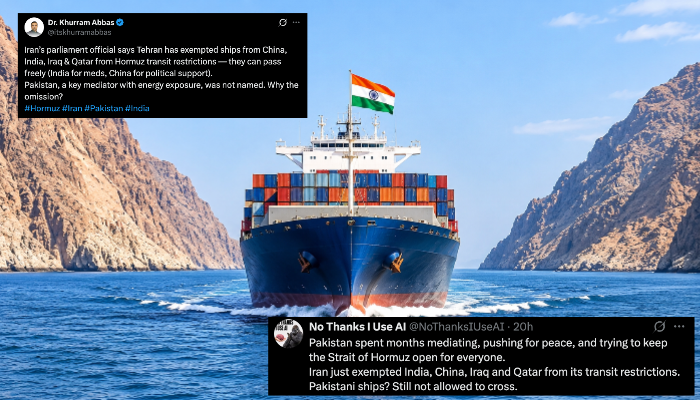
Indian vessels are excluded from restrictions on passage through the Strait of Hormuz. Amir Hayat Moqaddam, the deputy head of the National Security and Foreign Policy Committee of the Iranian parliament, shared the information in an interview with the Iranian Students News Agency on 3rd November (Tuesday).

He revealed, “We have currently exempted India, China, Iraq and Qatar from transit restrictions in the Strait of Hormuz. Ships from these countries pass freely, and the Americans do not intercept them either.” The agreement with Beijing is intended to win its political support while Indian ships are permitted to secure medicines from the country.

However, their ships are required to pay a fee for conveyance through the area. “We are doing business,” Moqaddam expressed. He also conveyed that the move is meant to strengthen “mutual interests.”

Sanctions and the ongoing conflict have made it harder for Iran to access several foreign markets and financial systems. On the other hand, India is a significant prospective provider of medicines and medical products due to its huge pharmaceutical manufacturing industry. Tehran wants to facilitate the flow of these necessities by authorising Indian ships to cross the strait.

The strait, a narrow stretch of water between Iran and Oman that connects the Persian Gulf, the Gulf of Oman, and the Arabian Sea, is a crucial route for the transportation of gas and oil from Gulf suppliers to outside markets, which makes it one of the most critical maritime chokepoints in the world.

A large part of India’s shipments of crude oil, liquefied petroleum gas (LPG), and liquefied natural gas (LNG) traverse the strait, turning it into a vital energy lifeline. According to the Union Petroleum Ministry, over 45% of India’s imports of crude oil and nearly 90% of its purchases of LPG went through the channel prior to the present dispute. The International Energy Agency estimates that in 2025, almost two-thirds of India’s LNG purchases, mostly from Qatar and the United Arab Emirates, arrived via the strait.

Earlier in March, Iran’s Ambassador to India, Mohammad Fathali, confirmed that the Islamic regime will provide a secure route to vessels destined for India using the strait, emphasising the long-time friendship and common interests between the two nations.

“Yes. Because India and I are friends. You can see in the future, and I think that after two or three hours. Because we believe that. We believe that Iran and India are friends. We have common interests; we have a common fate,” he articulated, adding that “the suffering of the people of India is our suffering and vice versa.”

Notably, Indian tankers carrying essential energy cargo have continued to enter the country even as tensions in West Asia escalated.

Furthermore, Iran’s Embassy in India recently showed gratitude to India for saving 20 Iranian sailors from pirates in the Arabian Sea. “The Embassy of the Islamic Republic of Iran in New Delhi expresses its sincere appreciation to the Government of India, the Indian Navy and the Indian Air Force for their successful operation to rescue the 20 Iranian crew members of the fishing vessel Azini from pirates,” it communicated.

Why are we not included: Baffled Pakistanis complain

Meanwhile, Iran’s latest announcement has frustrated India’s neighbours, who are struggling to understand why New Delhi, rather than Islamabad, which allegedly played a pivotal role in mediating talks between Islamabad and Tehran, did not feature on the list. Dr Khuraam Abbas, who is Director, India Study Centre (ISSI) and a columnist in Dawn, questioned, “Pakistan, a key mediator with energy exposure, was not named. Why the omission?”


A Pakistani wrote that Federal Interior Minister Syed Mohsin Raza Naqvi should be answerable for the country being denied the same consideration.

Another wondered why Pakistani vessels were not granted this concession even after “months of mediating, pushing for peace, and trying to keep the strait open for everyone.”

Pakistan’s widely publicised but failed mediation bid

Interestingly, the dialogue hosted by Islamabad and hailed as a major diplomatic achievement was, in reality, mired in major controversies, allegations of underhanded tactics and failed attempts to broker peace, which only resulted in fragile ceasefires but yielded no meaningful breakthrough, with hostilities continuing relentlessly.

Iran was extremely reluctant to participate in the dialogue, as it considered the terms put forward by the United States unacceptable and maintained that any ceasefire would have to be on its own terms. Tehran also harboured deep mistrust towards both Washington and Islamabad.

Johns Hopkins professor Vali Nasr, regarded as an expert on Iran, even stated that it suspected the other two parties of being in cahoots and seeking to lure Iranian politicians into negotiations under the pretext of a peace deal, only to target and kill them.

Sardar Hossein Nejat of the Islamic Revolutionary Guard Corps (IRGC) had previously lashed out at Pakistan for sanctioning the use of its airspace for strikes on Iran and warned that it would “pay the price” and face an onslaught of Iranian missiles. The country has itself admitted to doing the West’s “dirty work” for decades and received billions of US dollars for acting as its proxy in the region.

The meeting eventually went ahead, but the Islamic Republic, notorious for its duplicity, was accused of presenting different versions of the agreement to Iran and the US. The White House emphasised that the offer presented by President Donald Trump and Iran’s 10-point plan were different.

Trump also asserted that he had never consented to certain elements of the arrangement that were making the rounds in the media, such as extending the ceasefire in Lebanon and accepting nuclear enrichment by Iran, which appeared in the Farsi copy of the agreement but was absent from the version handed over to the US.

In fact, Prime Minister Shehbaz Sharif had even boasted that both sides and their allies had nodded to an “immediate ceasefire everywhere, including Lebanon and elsewhere.” However, Trump made no such mention in his original ceasefire post on Truth Social, where he described the plan merely as a “workable basis to negotiate.”

Israel had also declared that “there will be no ceasefire in the north. We will continue to fight against the Hezbollah terrorist organisation with all our strength until victory and the safe return of the residents of the north to their homes,” transforming the moment of self-aggrandisement into a major embarrassment for Pakistan. Moreover, Iran’s assertion of permanent authority over the strait was likewise rejected by the US.

A second round of similar meetings was also scheduled to take place in Pakistan, but it collapsed after Iran refused to join, charging “Washington’s excessive demands, unrealistic expectations, constant shifts in stance, repeated contradictions and the ongoing naval blockade.”

A memorandum of understanding (MoU) was later signed between the two sides in June to end the war. It was reportedly brokered by Pakistan, with the help of Qatar, Saudi Arabia, Turkey and Egypt. The accord did not even last a month, as Iran suspended its ceasefire commitments and Trump conveyed, “As far as I’m concerned, it’s over. I don’t want to deal with them,” and the two countries have remained at loggerheads.

The entire episode was driven by Pakistan’s desperation to repair its image after the drubbing it suffered at the hands of India during “Operation Sindoor” to win Trump’s favour. Therefore, it was also eager to credit him with the ceasefire with India, going as far as nominating him for the Nobel Peace Prize.

External Affairs Minister S Jaishankar, shedding light on Pakistan’s involvement at the time, had mentioned, “We will not interfere (the way Pakistan is meddling in the internal affairs of a country). We aren’t like Pakistan; we aren’t a dalal.” The armed face-off was triggered after a joint US-Israel military operation assassinated Iranian Supreme Leader Ali Khamenei alongside the top commanders of the country in February.

Conclusion

Pakistan, an economically struggling state infamous as a breeding ground of terrorism and the use of terrorist groups as instruments of foreign policy, especially against India, has often sought to project itself as India’s equal on the international stage. Hence, Pakistanis, who have long viewed it as a competitor, are acting shocked as their country is sidelined by a fellow Islamic nation.

More importantly, they have been unable to shake off this fixation despite the vast disparity between the two nations and its consistent humiliations both on and off the battlefield. Islamabad’s persistent pursuits to place itself alongside New Delhi, even when the circumstances never supported such comparisons, are basically a reflection of a deep-seated sense of insecurity.

The present reaction is just another instance of this recurring pattern, with Pakistanis once again trying to claim a place alongside India where they never belonged.

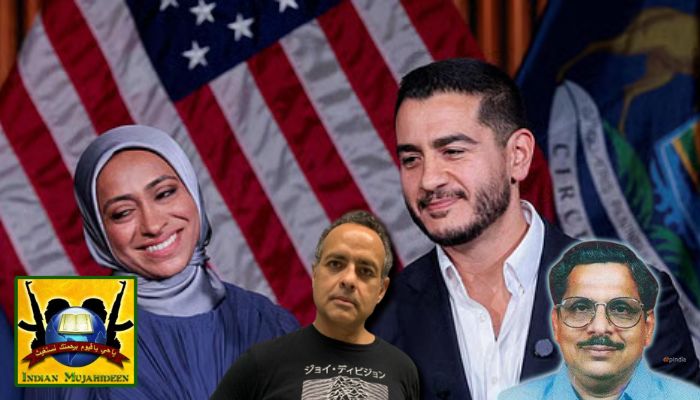
Vijay Prashad of Neville Roy Singham’s pro-CCP propaganda network highlights Karnataka’s Bhatkal town connection to anti-RSS Abdul El-Sayed’s wife, claiming it was ‘invaded’ by the RSS: How Bhatkal is known as the birthplace of the Indian Mujahideen, not any RSS ‘invasion’ 

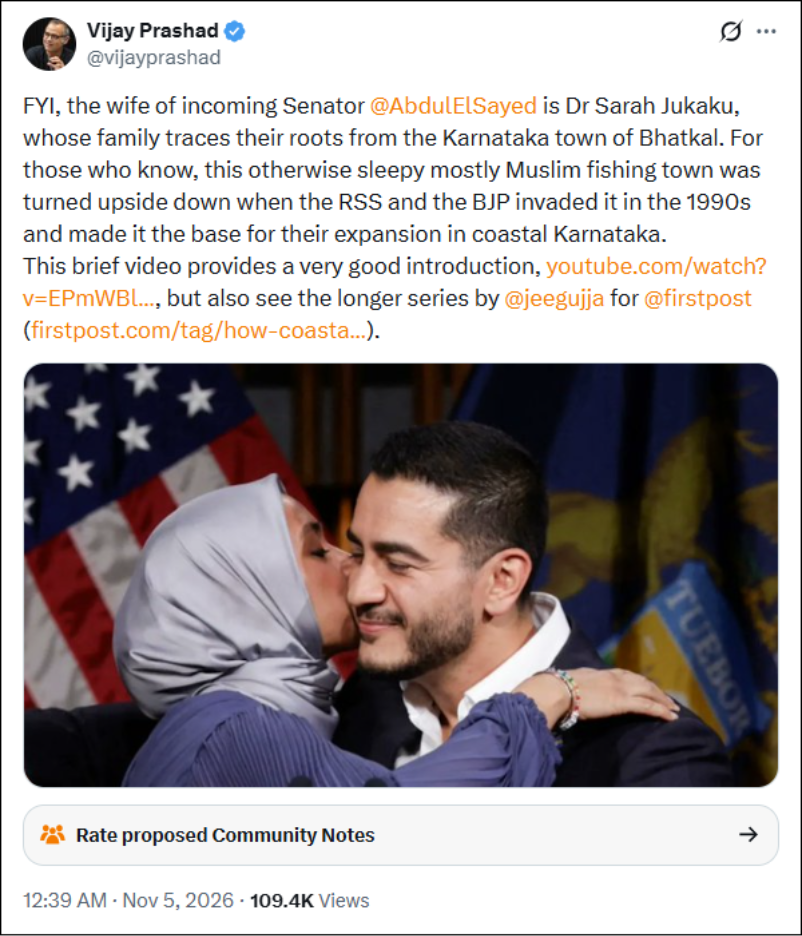
Islamo-leftists across the world are thrilled by the victory of Democrat leader with alleged Muslim Brotherhood links, Abdul El-Sayed, in the recent US Senate midterm elections. The euphoria that swept social media a few months back when another Islamist, Zohran Mamdani, won the New York mayoral elections has returned, and so has the itch to find an India connection. After Abdul El-Sayed won the Michigan Senate seat, Vijay Prashad, the Neville Roy Singham transnational CCP propaganda network-linked Marxist journalist, published an X post highlighting the connection of Sayed’s wife with the Bhatkal town in India’s Karnataka, which he claimed was ‘invaded’ by the RSS. 

On 4th November, Vijay Prashad, the director of the Tricontinental propaganda portal, published an X post in which he wrote that Abdul El-Sayed’s wife, Dr Sarah Jukaku, has her roots in Karnataka’s Bhatkal town. Vijay Prashad claimed that Bhatkal was a ‘sleepy mostly Muslim fishing town’ until the Rashtriya Swayamsevak Sangh (RSS) and the Bharatiya Janata Party (BJP) “invaded” it in the 1990s. 

“FYI, the wife of incoming Senator @AbdulElSayed is Dr Sarah Jukaku, whose family traces their roots from the Karnataka town of Bhatkal. For those who know, this otherwise sleepy mostly Muslim fishing town was turned upside down when the RSS and the BJP invaded it in the 1990s and made it the base for their expansion in coastal Karnataka,” Prashad wrote. 

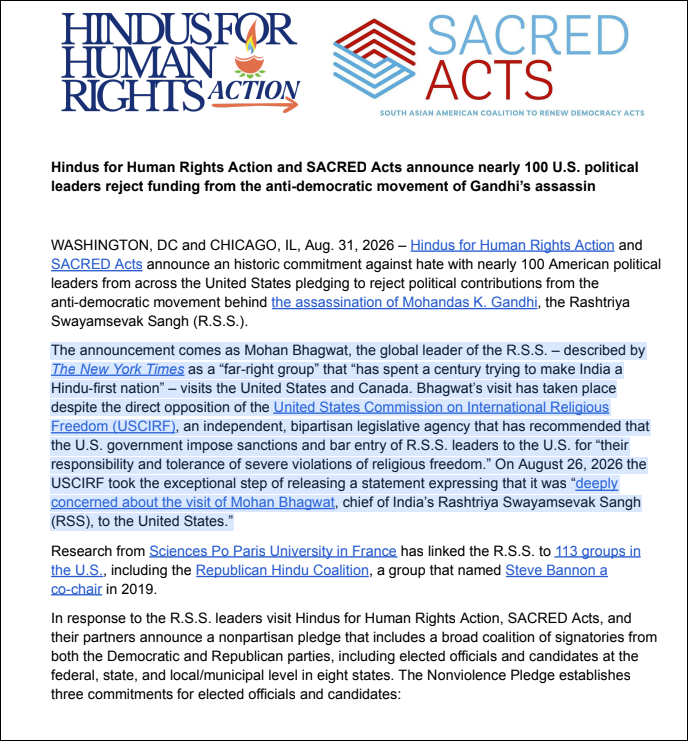
Interestingly, the newly elected Michigan Senator Abdul El-Sayed is a known RSS detractor. In August this year, Sayed was among the 100 US politicians who signed a pledge against receiving donations from RSS-linked entities or its supporters.

In a press release issued on 31st August, Hindus for Human Rights Action and SACRED Acts said, “– Hindus for Human Rights Action and SACRED Acts announce an historic commitment against hate with nearly 100 American political leaders from across the United States pledging to reject political contributions from the anti-democratic movement behind the assassination of Mohandas K. Gandhi, the Rashtriya Swayamsevak Sangh (R.S.S.).”

Being true to his ideological imperative of portraying Muslims as perennial victims even as they are the perpetrators, Vijay Prashad made villains out of BJP-RSS, declared them, and, by extension, Hindus as ‘invaders’ who ‘invaded’ Muslim town.  

Prashad attempted to convey that the Bhatkal town, which was ‘forever communalised’ by RSS invaders, has links to a Muslim woman whose husband ‘defeated’ RSS-BJP-like forces in the US. 

The anti-India propagandist, however, conveniently skipped mentioning the fact that the same Bhatkal town is the birthplace of Indian Mujahideen (IM), the Islamic terror group behind numerous jihadi attacks across India. 

Before delving into the ‘Mujahideen’ connection of Bhatkal, it is pertinent to address Prashad’s “the RSS and the BJP invaded” Bhatkal claim. 

Did the RSS ‘invade’ Bhatkal, as Vijay Prashad claims?  

Vijay Prashad’s claim that the RSS invaded Bhatkal is as true as his claim that he is not linked with the violent protests in France.  

The RSS is not a foreign militia that ‘invades’ India, Indian states or cities; it is an Indian nationalist organisation, which has the right to set up its branches anywhere in the country. 

In the early 1990s, the RSS and BJP expanded their organisational work in Bhatkal through a doctor, U. Chittaranjan, who was an RSS activist. 

Dr Chittaranjan had set up a practice in the Muslim-dominated Bhatkal, charged a nominal fee of Rs 5 from local patients, and earned local popularity across communities.  

Chittaranjan’s popularity significantly helped the BJP establish itself in Bhatkal, which had elected historically elected only Muslim candidates from the constituency. 

BJP’s rise in Bhatkal, however, did not result in immediate electoral gains. In fact, despite his personal popularity, Dr U. Chittaranjan lost two elections. 

Things began to change, however, in 1993. The shift did not come due to any ‘RSS invasion’ as Vijay Prashad claims, but due to a Muslim mob attack on a Hindu Rath Yatra procession near a Hanuman temple in Bhatkal.  

Muslims pelted stones and attacked a peaceful Hindu procession. It was this Muslim mob attack on Hindus that triggered continuous communal violence in Bhatkal for about nine months, with around 19 people from both sides losing their lives. 

While CCP stooge Vijay Prashad portrays RSS as the aggressor and invader, even Muslim doctors recall that the RSS man Dr U. Chittaranjan played a significant role in bringing the situation under control.  

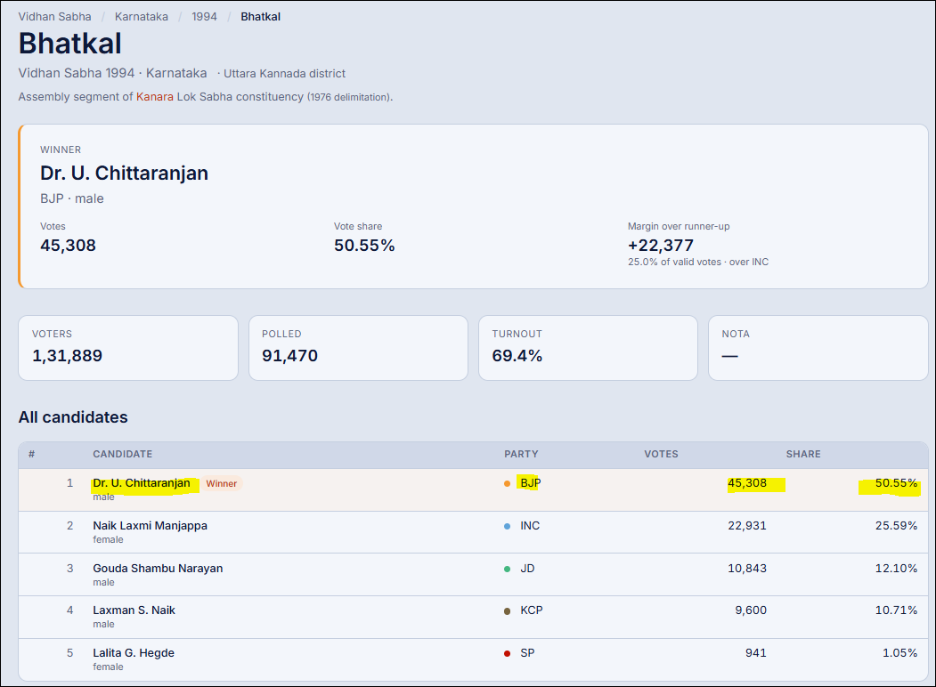
In 1994, Dr U. Chittaranjan won the election and became the BJP MLA from Bhatkal. Under his leadership, Anant Kumar Hegde and other leaders emerged who later secured key positions in State and Central BJP governments. 

Source: India Votes

The RSS’s expanded footprint and the BJP’s electoral success came amid existing economic shifts and a surge in Hindu unity, and not a military-style invasion by the ‘paramilitary organisation’ of Bhatkal. 

Contrary to Vijay Prashad’s insinuation that it was the RSS that flared up communal tensions in the ‘sleepy Muslim fishing town’, the Justice Kedambadi Jagannatha Shetty Commission, set up by the Karnataka government, which probed the 1993 Muslim mob violence, found that it was Muslim organisations and individuals that orchestrated the riots. 

Pertinently, the Commission also found evidence of the agents of the Pakistani intelligence agency ISI operating in Bhatkal. Despite the Shetty Commission’s report pointing to Muslim radicalisation and a separate police report raising alarms over an ISI operation in Bhatkal in the early 1990s, the Muslim-appeasing Congress government of that time did nothing about it. 

In 1996, Dr Chittaranjan was killed by unidentified individuals in 1996. The RSS activist’s killing triggered another wave of communal violence, leaving 17 dead. 

While the BJP-RSS grew stronger politically, the Bhatkal Muslims, or Nawayaths/Navayats, began moving to Gulf countries and sending strong remittances, boosting their prosperity in the town. Meanwhile, Hindus, predominantly Namdhari or Billava groups, remained economically less dominant. 

Babri structure demolition in Uttar Pradesh’s Ayodhya in 1992, and the later 2002 Gujarat riots, which too were initiated by Muslims, were the key national events that also contributed to tensions in Bhatkal. 

What further debunks Prashad’s ‘sleepy Muslim fishing town until RSS invaded’ bogey is the later jihadist trajectory of Bhatkal. 

Bhatkal’s Muslim youths began coming under the influence of the Islamic terror group Students’ Islamic Movement of India (SIMI). Intelligence reports found evidence of external influence, particularly of the ISI, Dawood networks, and possible RDX explosives smuggling through fishing vessels.  

Bhatkal at the core of Indian Mujahideen 

Notably, Indian Mujahideen is a terrorist organisation proscribed under the Unlawful Activities (Prevention) Act, which was formed around the end of the year 2003. Indian Mujahideen was banned as a terrorist organisation on 22nd June 2009.   

The Islamic terror group Indian Mujahideen emerged around 2003-2005 as an offshoot of SIMI’s more Islamised jihadi elements, merging with the Asif Reza Commando Force. Bhatkal brothers formed IM alongside Amir Reza Khan and Sadiq Israr Sheikh, who was an engineering graduate from Uttar Pradesh’s Azamgarh. 

The Indian Mujahideen has a deep connection with Azamgarh as well. In addition to Saqid Israr Sheikh, a Maulana named Mufti Abu Bashir was a chief ideologue linked to the group. Bashir was arrested as the mastermind behind the devastating 2008 Ahmedabad serial bombings, which were executed in tandem by the Azamgarh module and the IM.  

In 2013, intelligence agencies busted the IM’s Azamgarh module and arrested Asadullah Akhtar aka Haddi.  

Indian Mujahideen’s core members included Riyaz Bhatkal, Iqbal Bhatkal, and Yasin Bhatkal. They had conspired to wage war against India. 

Jihadis linked to the Indian Mujahideen undertook large-scale recruitment/induction of new members for the commission of terrorist activities in various parts of India, with active aid and support from Pakistan-based associates, as well as sleeper cells within the country, to commit terrorist acts by bomb blasts at prominent places in India, especially in Delhi. 

These jihadis belong to different parts of India, including Bhatkal, Azamgarh, Kolkata, Mumbai, Delhi and others, and they entered into a conspiracy to carry out terrorist attacks in different parts of India to wage war against the Government of India. 

Since the Indian Mujahideen came into existence, it has been involved in several terror conspiracies and attacks, including the Varanasi blasts in March 2006, the Mumbai sequential explosions in July 2006, the detonations in the courts of Uttar Pradesh in Varanasi, Faizabad and Lucknow in November 2007 as well as the Jaipur periodic bomb blasts, Delhi serial explosions and the Hyderabad twin blasts in August 2007. 

The terrorist group claimed responsibility for the 13 May 2008 Jaipur bombings in an e-mail addressed to Indian media, threatening to “demolish the faiths (all religions aside from Islam) of the infidels of India.” 

The group’s largest and most audacious strike to date was the series of explosions in Ahmedabad in 2008, which received national attention due to the more than 50 casualties. 

 The Indian Mujahideen also joined hands with Al Qaida in the Indian Subcontinent (AQIS). 

In 2013, Yasin Bhatkal, the then Head of the terror outfit Indian Mujahideen, revealed that 2 Indians were managing the terror operations of Al Qaida from India and Afghanistan. 

It was only two years later, in 2015, that the identity of the two men was confirmed as Mohammad Asif and Sanaul Haq. The founder of Indian Mujahideen, Riyaz Bhatkal, reportedly met Sanaul Haq in Afghanistan to expand terror operations in India. Later, Yasin Bhatkal learned about him through Riyaz. 

During his interrogation, Mohammad Asif, a later convicted AQIS terrorist, revealed that he, along with his two aides, went to Tehran in June 2013 after securing a 3-month-long visa to Iran. They had gone there under the pretext of paying ‘ziyarat’ (visitation) at the tomb of former Iranian Supreme Leader Ayatollah Khomeini. 

In July 2023, a special court of the National Investigation Agency (NIA) in Delhi handed down 10-year prison sentences to four individuals involved in the Indian Mujahideen conspiracy case. The probe pertained to a plot orchestrated by Pakistan-backed terrorists to carry out bomb blasts across India. 

The NIA revealed that the perpetrators were closely associated with Indian Mujahideen members, notably the prime accused Riyaz Bhatkal, with ties to Pakistan and Yasin Bhatkal, who is based in India. 

The NIA stated that Yasin Bhatkal, one of the founding members of the Indian Mujahideen, was “instrumental in motivating young Muslim boys into the path of violent Jihad and further indoctrinated them and inducted them into Indian Mujahideen.” He actively participated in “causing bomb blasts resulting in the loss of several lives and destruction of properties,” based on the agency’s submission. 

In April 2025, the Telangana High Court upheld the death sentences awarded to five convicts in the 2013 Dilsukhnagar twin bomb blasts case. The Division Bench comprising Justice K Lakshman and Justice P Sree Sudha dismissed the criminal appeal filed by the convicts, who are linked to the Pakistan-based terror outfit. Founder of the terror organisation Indian Mujahideen, Yasin Bhatkal, is one of the convicts sentenced to death. 

The Special Court of the National Investigation Agency had sentenced IM operatives Bhatkal, Zia-ur-Rehman alias Waqas, Asadullah Akhtar alias Haddi, Tehseen Akhtar and Aizaz Shaikh to death for the blasts that killed 18 people, including an unborn child. 130 people were reported injured in the incident. The explosions occurred seconds apart on 21st February 2013 at Dilsukhnagar market in Hyderabad. 

Pakistani ISI and Lashkar-e-Taiba ran the ‘Karachi Project’ to recruit and train Indian jihadis of IM.  

Several Bhatkal-linked figures also had ties to later ISIS recruitment bids, including Shafi and Sultan Armar from the ‘sleepy Muslim fishing town’ who joined or founded ISIS affiliates after splitting from Indian Mujahideen.  

All this while, the ‘Hindu nationalist paramilitary organisation’, the ‘invader of Bhatkal’, the quintessential communal villain as by Islamo-leftist logic, RSS, was involved in zero religiously or ideologically motivated terrorist attacks.  

Bhatkal has earned notoriety not due to any RSS invasion but due to it being the birthplace of Indian Mujahideen, and for a long time, a breeding ground of Islamic terrorists. 

Vijay Prashad, the Islamist-sympathising anarchist 

It is, however, unsurprising that Vijay Prashad withheld key facts related to Bhatkal town’s legacy to present a one-sided ‘it was all good until RSS happened’ picture, given his limerence for Islamo-leftist anarchy. 

Vijay Prashad is a key player in the transnational pro-China information laundering network run by Chinese Communist Party (CCP) stooge Neville Roy Singham.  

The House of Singham pro-China propaganda and activism network’s origins can be traced to Neville Roy Singham’s wedding to Jodie Evans, the co-founder of CodePink Women for Peace, in Jamaica in 2017. The wedding event was attended by more than 80 core leaders, including Vijay Prashad of “TriContinental: Institute for Social Research”. Vijay Prashad, a Marxist journalist, later populated other boards within the network across shell-like entities, including Mutod LLC and Likewise Conceptions LLC.   

Notably, Vijay Prashad-led TriContinental has been at the forefront of amplifying Islamo-Communist violence in France in recent weeks.  

Roy Singham’s Justice and Education Fund donated $10.5 million to Delhi-based pro-China propaganda outlet, NewsClick.   

A prominent member of Roy Singham’s pro-CCP propaganda and anarchy-fueling machinery is Vijay Prashad. He has contributed several propaganda anti-India articles to NewsClick. Prashad is the nephew of Brinda Karat, a CPI(M) leader and wife of Prakash Karat, also a senior CPI(M) leader, whose email exchanges with Neville Roy Singham earlier revealed their close ties in the NewsClick Chinese funding scandal.   

Interestingly, Vijay Prashad has also been a council member of Progressive International.  

Prashad also has close links with Urban Naxal P Sainath, whose propaganda portal PARI removed references to Singham after his connection with the Chinese propaganda arm had come to light.   

Vijay Prashad has, on social media handles, recently expressed joy at watching France being burnt by the Islamist and Communist rioters, the propaganda network he is a part of glorifies.  

Laying bare his delight over Islamo-leftist anarchy spreading across Europe and India, Prashad posted on X recently: “Paris-New Delhi-Buenos Aires Let fury have the hour, anger can be power. (The Clash, Clampdown, London Calling, 1979).”  


NewsClick Chinese funding scandal 

NewsClick has also faced scrutiny for its alleged connections with the Chinese Communist Party (CCP). In 2023, an investigation by the New York Times uncovered an ecosystem of activist organisations, non-profits, shell corporations, and their intimate ties to China and Chinese propaganda, with Neville Roy Singham at its helm. A Delhi Police chargesheet filed in 2024 called the Chinese state the “ultimate paymaster”, with funds routed to stoke anti-India narratives, especially regarding Kashmir and farmers’ protests. The case is ongoing in court.   

Back in 2021, OpIndia conducted a detailed investigation into the links of NewsClick and uncovered how it was linked to several individuals who regularly spew venom against India, from Urban Naxals to those like Teesta Setalvad, Abhisar Sharma and several others.    

That investigation by OpIndia can be read here.’  

In February this year, the Enforcement Directorate fined NewsClick and its founder-editor Prabir Purkayastha Rs 184 crore under the Foreign Exchange Management Act (FEMA) for violating foreign funding regulations.   

The NewsClick founder is accused of conspiring with Chinese Communist Party (CCP) member Neville Roy Singham to defame the Indian government and its efforts to contain the spread of COVID-19 and cast aspersions about the efficacy of the Indian vaccine ‘Covaxin’ developed by Bharat Biotech.   

NewsClick is alleged to have obtained funds from China to provoke disturbances in India, especially amid the anti-CAA (Citizenship Amendment Act) protests to topple the Modi government and has links to anti-India voices like Gautam Navlakha.   

Its founder faced allegations of having ties to LeT (Lashkar-e-Taiba) terrorists, giving money to anti-Hindu 2020 Delhi riots accused Islamist Sharjeel Imam and Naxals in Delhi Police’s chargesheet. 

Who wrote India’s history? How political narratives of a powerful ecosystem held a monopoly over the past

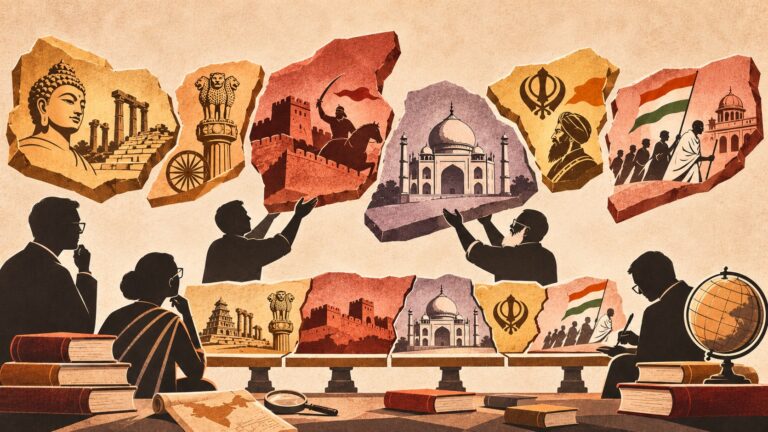
Who decides what a country learns about its past? Historians who gather the details, governments that approve school textbooks, or institutions that decide which interpretations deserve recognition?

For decades, a small circle of historians shaped how Indians learned their past: in school textbooks, university syllabi, and the bodies that fund research. They wrote the NCERT textbooks that millions of children read. 

The same people taught at the country’s top universities, ran the body that funds historical research, and led the main association of historians. Their version of the past, built on Marxist ideas of class and economics, on a “composite culture” of Hindus and Muslims, and on a soft account of medieval conquest, became the official version of India’s history for decades.

The story begins under British rule. In 1817, James Mill divided Indian history into Hindu, Muslim and British periods without ever visiting India. His interpretation portrayed British rule as an improvement over India’s supposedly backward past. Indian historians challenged this colonial perspective, producing their own accounts of the subcontinent’s political, cultural and intellectual achievements.

Scholars such as R.C. Majumdar, Jadunath Sarkar, R.G. Bhandarkar and K.A. Nilakanta Sastri helped establish a substantial tradition of Indian historical scholarship. Yet after independence, another intellectual school would become especially influential.

Between 1961 and 1972, three institutions emerged that would profoundly shape historical education: NCERT, Jawaharlal Nehru University and the Indian Council of Historical Research (ICHR).

NCERT prepared textbooks, JNU trained historians, and ICHR funded historical research. What made this arrangement particularly consequential was the overlap between the people running these institutions.

R.S. Sharma wrote NCERT’s Ancient India and became ICHR’s first chairman. Romila Thapar helped establish JNU’s Centre for Historical Studies and wrote influential textbooks. Satish Chandra and Bipan Chandra similarly combined academic leadership with textbook writing, while Irfan Habib became a prominent figure in historical research.

These people were no doubt scholars whose work received wide recognition. But their concentration of influence also raised a question: when the same intellectual circle with a specific political leaning writes textbooks, trains future historians and influences research funding, how much room remains for competing interpretations and dissenting views?

Their scholarship emphasised economic structures, class relations, social hierarchies and India’s ‘composite’ cultural traditions. But critics have highlighted again and again how these narratives were often forced, ignoring the evidence at hand, just to push certain ideas. 

Some of the most intriguing disputes concerned individual historical claims. One NCERT textbook discussed Mughal grants for religious institutions under rulers including Aurangzeb. When an RTI applicant sought supporting records, NCERT reportedly replied that the information was unavailable. That response raised questions about documentation and narrative building to consolidate bias.

Historians like RC Majumbar and KS Lal who had contrarian views, and highlighted the atrocities, destructions of temples and conversions during the Islamic conquests, were sidelined from the ecosystem that controlled what is being taught as history in India.

Sita Ram Goel and Ram Swarup also worked outside this powerful academic circle. When Goel countered Romila Thapar’s narrative of Hindu rulers destroying Buddhist sites by highlighting that the cited inscriptions do not say what she claimed, he never got a response.

The irony gets evident. When Islamic rulers destroyed Hindu temples, the historians who controlled the government institutions explained it away in terms of politics and money, not religion. But when it came to Hindu rulers and Buddhist sites, the same historians suddenly found religion everywhere. As Arun Shourie pointed out, R.S. Sharma’s NCERT textbook blamed the Turks’ destruction of Nalanda on “greed” in three lines, but gave Hindu rulers going against Buddhists a paragraph six times the length, and their motive was called entirely religious.

Since 2014, another transformation has gained pace. New NCERT textbooks have drawn attention to regional dynasties, indigenous knowledge traditions and episodes of religious persecution. Supporters see overdue corrections; critics question particular omissions and interpretations.

Yet the new books have also faced scrutiny, including an erroneous historical map and debates over omitted figures like Tipu Sultan. Correcting perceived distortions does not eliminate the obligation to verify every claim.

The deeper problem is not simply whether left-leaning or right-leaning historians control the narrative. It is what happens when any intellectual establishment becomes too closely intertwined with political power.

History cannot be reduced to a contest between celebrating civilisation and exposing its uncomfortable realities. India’s achievements, social inequalities, cultural exchanges, conflicts and acts of resistance all belong to the same historical record.

The real challenge is to build a system where different interpretations can compete openly, evidence takes precedence over ideology, and textbooks survive changes of government because their scholarship is credible.

The full article can be read here in Chapter 1 Magazine.

Elon Musk is the second biggest loser of the US midterm elections after Donald Trump: Here’s why

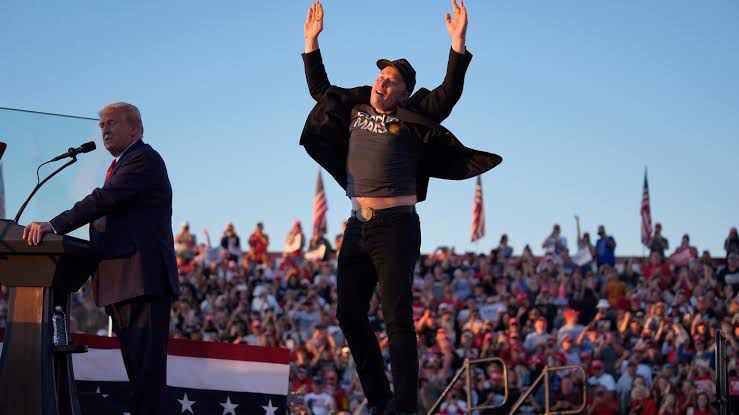
If Donald Trump was the biggest casualty of the November 3 midterm elections, Elon Musk arguably deserves the dubious distinction of being the second biggest loser.

The world’s richest man did not contest an election. He was not on the ballot in Texas, Georgia, Ohio or any other state. Yet, few individuals had as much riding on the outcome as Musk.

Musk had effectively turned himself into one of the Republican Party’s biggest financial backers. He deployed his extraordinary wealth to help Republican candidates retain control of Congress, used his social media platform X to campaign against their opponents, and repeatedly warned Americans about the consequences of a Democratic victory.

And yet, voters delivered a verdict that money, influence and a social media megaphone could not overturn.

Democrats won control of both the House of Representatives and the Senate, handing Trump a sweeping political rebuke. Republicans also suffered major setbacks in states where Musk had invested heavily, including Texas.

For Musk, this is not merely an embarrassing electoral outcome. It raises uncomfortable questions about his political judgment, his ability to influence American voters and the wisdom of tying his business empire so closely to one political administration.

Nearly half a billion dollars down the electoral drain

Musk’s financial commitment to the Republican cause was extraordinary, even by American campaign finance standards.

According to Vanity Fair, Musk spent approximately $474 million on the 2026 midterm elections, making him the biggest individual donor in the election cycle. Earlier, Reuters had reported that his spending had already reached $366 million by October, including massive contributions to Republican-aligned political action committees.

This was not money distributed casually across a few campaigns.

Musk channelled substantial amounts through America PAC, the Senate Leadership Fund and other Republican-aligned organisations. His objective was clear: protect Republican majorities in Congress and prevent Democrats from acquiring the power to obstruct Trump’s legislative agenda.

He also invested heavily in the Texas Senate contest, where Republican Ken Paxton faced Democrat James Talarico.

Musk had a particularly personal stake in Texas. He relocated his residence and several business interests to the state, which had become an important base for his companies, including Tesla and SpaceX.

The Texas Senate contest therefore represented much more than another congressional election. It was a test of whether Musk could use his extraordinary financial resources to protect the political establishment that had welcomed him.

The answer from voters was emphatic.

Talarico defeated Paxton, turning a high-profile Republican stronghold into another symbol of the Democratic resurgence. In his victory speech, Talarico directly invoked the billionaire donors who had attempted to influence the election, declaring that voters had defeated Goliath.

Musk had spent hundreds of millions of dollars trying to prevent precisely this outcome.

The irony is difficult to miss. A man whose personal fortune gives him extraordinary influence over global industries discovered that he could not necessarily purchase the political outcome he wanted.

The DOGE experiment and the political baggage Musk carries

Musk’s electoral troubles cannot be separated from his controversial stint in the Trump administration.

When Trump returned to the White House in January 2025, Musk became one of the most prominent figures in the administration through his involvement with the Department of Government Efficiency, popularly known as DOGE.

The initiative promised to eliminate wasteful government expenditure, dismantle unnecessary bureaucratic structures and make the federal government more efficient.

For many conservatives, Musk represented the possibility of bringing private-sector efficiency and accountability to an increasingly expensive government machinery.

However, the DOGE experiment soon became politically contentious.

Federal workforce reductions, cuts to government programmes and the dismantling of several administrative structures attracted criticism. Musk’s public profile also made him an easy target for opponents who portrayed him as an unelected billionaire exercising disproportionate influence over government decisions.

His departure from the administration did not entirely erase the political baggage.

Instead, his subsequent financial intervention in the midterms demonstrated that he had not abandoned his ambition to shape American politics.

The problem was that Musk had become a polarising political personality rather than simply a technology entrepreneur who happened to support a Republican president.

That distinction matters. A businessman can have customers who disagree with his politics. A political activist who repeatedly inserts himself into contentious electoral battles risks turning those disagreements into questions about the businesses he controls.

A political alliance that could become a liability

There is another reason why the election results could prove particularly uncomfortable for Musk: his business interests are deeply intertwined with the American government.

SpaceX relies on government contracts and partnerships. Tesla operates in an environment shaped by federal regulations, incentives and policies. His artificial intelligence ventures, meanwhile, require favourable regulatory conditions, access to infrastructure and a government willing to accommodate the rapid expansion of the technology sector.

A Republican-controlled Congress was always going to be a more comfortable political environment for Musk, particularly given his previous association with the Trump administration.

Democrats, on the other hand, have already indicated that they intend to scrutinise the activities of the Trump administration, including Musk’s previous government role and potential conflicts of interest involving his businesses.

With Democrats now controlling both chambers, Musk could find himself facing congressional scrutiny that a Republican majority might have been less inclined to pursue.

The Associated Press has reported that Musk is among the prominent figures who could become targets of investigations by the incoming Democratic-controlled Congress.

This does not automatically mean that his businesses will face punitive action or that government contracts will be withdrawn. However, the political environment has undoubtedly become less predictable for him.

For someone whose companies operate across industries where government decisions can have enormous financial consequences, that is hardly an encouraging development.

X was supposed to be Musk’s biggest political weapon

Perhaps the most interesting aspect of Musk’s political setback is the role played by X, formerly Twitter.

Musk acquired Twitter in 2022, arguing that he wanted to restore free speech and prevent ideological censorship. Over the years, however, X has also become an important vehicle for his political activism.

Musk has repeatedly used his enormous following to endorse Republican candidates, attack Democratic politicians and influence conversations around American politics.

During the midterm campaign, he used the platform to promote Republican candidates and issue warnings about the consequences of a Democratic victory.

In the Texas Senate contest, his attacks on James Talarico became particularly aggressive. Musk accused the Democratic candidate of supporting policies that would undermine American democracy and made several inflammatory claims about his positions.

Yet Talarico won.

This raises an important question: how much political influence does Musk actually wield through X?

Having hundreds of millions of followers does not necessarily translate into having hundreds of millions of politically persuadable voters. Nor does controlling one of the world’s most influential social media platforms guarantee that its users will accept the political positions of its owner.

In fact, Musk’s increasingly visible political interventions may have become counterproductive.

People who admire his achievements in electric vehicles, space exploration and technology may not necessarily agree with his political positions. By constantly inserting himself into partisan battles, Musk risks alienating sections of his own audience.

The midterm results do not establish that X’s political influence has disappeared. But they certainly demonstrate that it cannot single-handedly determine electoral outcomes. 

The AI industry could also face a different political climate

There is another dimension to Musk’s political predicament that deserves attention.

The future of artificial intelligence and the expansion of data centres have become increasingly contentious issues in the United States.

Musk has enormous interests in this sector through xAI and his broader technology ecosystem. The expansion of AI infrastructure requires substantial electricity, land, investment and regulatory clearances.

However, opposition to data centres is no longer confined to traditional environmental activists or sections of the Democratic Party.

Communities are increasingly questioning the electricity consumption, water requirements and local economic consequences of massive data centre projects. Political candidates have also begun using these concerns to challenge opponents perceived as being too accommodating towards Big Tech.

Business Insider reported ahead of the midterms that opposition to data centre construction was emerging as an electoral issue, with candidates across party lines attempting to capitalise on public dissatisfaction.

A Democratic-controlled Congress could make the regulatory environment more complicated for technology companies seeking rapid expansion.

Musk may have hoped that his political investments would help secure a favourable environment for the next phase of his business ambitions. Instead, he now faces a Congress in which his political opponents will have considerably greater institutional power.

Musk’s biggest mistake was confusing wealth with political capital

There is a larger lesson here for Musk.

His success as an entrepreneur has been built on an extraordinary ability to identify opportunities, take enormous risks and challenge established industries.

He transformed Tesla into a major electric vehicle manufacturer, made SpaceX a formidable force in commercial spaceflight and established himself as one of the most consequential figures in the global technology industry.

But politics operates differently from business.

Money can finance advertisements, organise rallies, hire campaign workers and build an impressive electoral machinery. It cannot necessarily manufacture public approval.

Musk appears to have believed that his financial resources, combined with his influence on X and his proximity to Trump, would make him an indispensable force in Republican politics.

The midterm results have exposed the limitations of that assumption.

It is particularly striking that Musk’s enormous spending could not prevent Republicans from losing both chambers of Congress. Even the Republican financial advantage failed to arrest the Democratic momentum.

Musk has responded to the Republican defeats with sarcasm on X, joking that his supposed election-interfering space lasers had not worked. He also suggested that building data centres in space was looking increasingly attractive.

The jokes might be entertaining, but they do little to conceal the political setback.

The second biggest loser of the midterms

Donald Trump remains the biggest loser because the elections were fundamentally a referendum on his presidency. His party lost control of both chambers, his preferred candidates suffered defeats, and the remainder of his presidential term will now be considerably more difficult.

But Musk has arguably suffered the second biggest setback.

Unlike Trump, he had no constitutional responsibility to deliver an electoral victory. Yet he voluntarily invested hundreds of millions of dollars, his political credibility and his public standing in ensuring that Republicans retained control of Congress.

He lost that bet.

More importantly, the results have demonstrated that his wealth and ownership of a powerful social media platform do not give him the ability to dictate the political choices of ordinary Americans.

Musk can build rockets capable of reaching space, manufacture electric vehicles at scale and invest billions in artificial intelligence. But he cannot simply engineer an electoral victory by throwing money at it.

Perhaps the biggest irony is that a man who built his reputation by disrupting established industries has now discovered the limits of disrupting democracy with a billionaire’s chequebook.

For Trump, the midterms are a political warning. For Musk, they could become a warning about the limits of his own influence.

And that may prove considerably more consequential than the money he has lost funding Republican campaigns.

Neha Bora’s ‘priests rape in temple’ remark triggers legal action: Revisiting the history of sexual violence linked to Communist movements in India and abroad

Far-left Anarchist AISA president Neha Bora has triggered a controversy with her recent remarks targeting Hindu religious traditions, Brahmins and temple priests. In a recent interview, Bora spewed venom against Hindus, Brahmins, and Hinduism by selectively quoting and misrepresenting traditional texts. During the discussion, she cited the line, “Gareeb, shoodra, pashu, nari taadna ke adhikari hai”. Emphasising the word “taadan,” she projected her own translation onto it, asserting: “The poor, Shudras, animals, and women are deserving of chastisement.”

She emphasised the word “taadan”, which means chastisement according to her (Her Translation: The poor, Shudras, animals, and women are deserving of chastisement), but her statement is pure propaganda because the Hindi word ‘taadan’ means “To look after/Care”. So the real translation is ” The poor, the Shudras, animals, and women are entitled to care.

She further spewed venom in Hindu hate: “Mandiro main pujaari rape karte hai” (Translation: priests commit rapes inside temples); later, she said women, including Brahmin women, are unsafe under what she called the “Brahmanical system”.

She tried to paint an entire class of Hindu religious functionaries as predators. This is not a call for women’s safety. It is a deliberate desecration of the temple as an institution, using the language of feminism as a sham for Hinduphobia.

SC Advocate Amita Sachdeva approaches Delhi Police, seeks FIR against Neha Bora

Following these controversial remarks, Supreme Court advocate-on-record Amita Sachdeva approached the Delhi Police seeking the registration of an FIR against Neha Bora for her damaging assertions regarding temple priests and Hindu traditions.

According to media reports, Sachdeva submitted formal complaints to both the Parliament Street Police Station and the Cyber Police Station in New Delhi on Tuesday, 3rd November. She requested immediate legal action under Section 196 of the Bharatiya Nyaya Sanhita (BNS), 2023, saying that Bora’s public statements were calculated to promote hostility between different groups and disturb public tranquillity.

Speaking to ANI, advocate Amita Sachdeva detailed the rationale behind the legal complaint and said, “Such statements have the potential to create disharmony, hostility and enmity between communities. These individuals seem to believe that no action will be taken against them. However, the law provides remedies to address such statements, and we are fully entitled to pursue appropriate legal action. We will take this matter to its logical conclusion before the Court, just as we have done in the matters involving Rana Ayyub, Dhruv Rathee, Karishma Aziz and several others.”

Neha Bora’s political ideology and the history of crimes against women

Neha Bora is the national president of the All India Students’ Association (AISA), a left-wing group associated with the Communist Party of India (Marxist-Leninist) Liberation. The party describes itself as a communist organisation rooted in the Marxist-Leninist tradition and the Naxalbari movement.

Bora adheres to a far-left anarchist ideology that historically projects structural oppression onto traditional institutions while ignoring its own historic record. This political ideology carries a documented worldwide history of violence, systemic abuse, and sexual exploitation against women spanning several decades. 

While far-left figures lecture traditional societies on women’s safety, the historical and global execution of communist doctrine reveals a consistent pattern of severe human rights violations against women.

Bantala gang rape case: The horrific 1990 incident in West Bengal

The grim reality of communist-linked violence against women in India has deep historical roots. One of the most disturbing cases associated with the political history of communist-ruled West Bengal is the Bantala rape and murder case of May 1990. On 30th May, 1990, three women health officials and their driver were returning to Kolkata after executing a child vaccination drive in Gosaba when they were ambushed by local CPI(M) cadres in Bantala, an established CPI(M) stronghold near Kolkata.

The victims included Anita Dewan (Deputy District Extension Media Officer), Uma Ghosh (senior official in the West Bengal Health Department), Renu Ghosh (associated with UNICEF and WHO programmes), and their driver, Avni Naiya. Around 6:30 PM, their vehicle was intercepted near a local CPI(M) party office. Fearing for their safety, the driver tried to speed away, but the car overturned. A large mob of CPI(M) goons quickly surrounded the wreckage.

The mob dragged the women out of the vehicle and set the car ablaze. When driver Avni Naiya attempted to defend the women, he was brutally beaten by the mob, suffering 43 injury marks and crushed genitals; he died from his injuries on June 4, 1990, at SSKM Hospital. The three women officers were dragged into nearby paddy fields and gang-raped by CPI(M) goons. Anita Dewan died as a direct result of the assault, while Uma Ghosh and Renu Ghosh survived with critical injuries. Post-mortem reports for Anita Dewan noted extreme physical torture, including a one-foot-long metallic torch inserted into her private part.

Police arrived nearly five hours after the assault began. In the aftermath, the then West Bengal Health Minister Prasanta Sur attempted to shield the perpetrators by claiming the local villagers had merely mistaken the officers for child kidnappers. Adding to the controversy, the then Chief Minister Jyoti Basu dismissed the horrific crime, stating publicly: “Such things keep happening!”

D. Bandopadhyay, former Director of the Asian Development Bank (ADB), later revealed that Anita Dewan was targeted specifically because she had uncovered evidence of large-scale financial corruption and misappropriation of UNICEF rural development funds by CPI(M)-led panchayats in Gosaba. 

The terror of Sutia under Communist rule

Another disturbing chapter from communist-ruled West Bengal emerged from Sutia village in North 24 Parganas district during the early 2000s. At the time, the state was governed by the CPI(M)-led Left Front government under Chief Minister Buddhadeb Bhattacharjee.

In Sutia village of Gaighata Block in the North 24 Parganas district, an organised criminal gang headed by Sushanta Chowdhury created an atmosphere of terror, subjecting women to systemic sexual violence. Officially, 33 rapes and 12 murders were recorded, though the actual number was widely believed to be much higher.

The gang enjoyed the patronage of local CPI (M) goons, and anyone who dared protest faced savage retaliation, including multi-week gang rapes targeting entire families. The terror was finally challenged when Barun Biswas, a schoolteacher and social activist, formed the “Sutia Pratibad Mancha” in 2002. Urging citizens to protect their honour, Biswas spearheaded a mass mobilisation that eventually compelled the criminals to surrender, though at an immense personal cost.

Shobha Mandi’s revelations: Sexual exploitation and wife-swapping in Maoist ranks

The exploitation of women within Communists is not limited to parliamentary factions; it is equally prevalent inside underground Maoist networks. In her published memoir Ek Maowadi Ki Dairy, former Jhargram area commander Shobha Mandi documented widespread abuse, sexual exploitation, and enforced wife-swapping within high-ranking Maoists.

Mandi detailed how she was subjected to continuous sexual assault by senior commanders over seven years. Despite taking her grievances to top leadership figures, including guerrilla leader Kishanji, her complaints were ignored. Mandi further disclosed that pregnant female cadres were routinely forced to undergo abortions, as leadership viewed motherhood as a threat to combat readiness and operational mobility.

Jharkhand, Odisha and Bihar: Women Maoist cadres expose sexual exploitation inside the organisation

The allegations of sexual exploitation within Maoist organisations are not limited to West Bengal. Women cadres who surrendered from Maoist groups operating in Jharkhand, Odisha, Bihar, Maharashtra and other Left-Wing Extremism (LWE)-affected states have disclosed instances of rape, molestation and forced marriages by senior male cadres.

A particularly revealing incident came to light during a Border Security Force (BSF) operation in January 2012. During a search operation at a Maoist hideout in the Niliguda forest area under Podia police station in Odisha’s Malkangiri district, security personnel recovered a large number of pregnancy test kits, condoms and contraceptive pills.

Similar recoveries were reportedly made in other states. The government statement also referred to cases in which women Maoist cadres who became pregnant were forced to undergo abortions against their wishes. Even married women were prevented from having children because the Maoist leadership considered motherhood incompatible with their responsibilities as guerrilla fighters.

Nepal’s Maoist insurgency: Women suffered sexual violence during the civil war

The history of sexual violence associated with communist armed movements is not confined to India. Nepal’s decade-long civil war between government security forces and the Communist Party of Nepal (Maoist) also left thousands of victims of human rights abuses.

During the decade-long civil war in Nepal between government forces and the Communist Party of Nepal (Maoist) [CPN-M], which resulted in over 13,000 deaths, human rights bodies documented extensive sexual violence. Female cadres and civilian women in rural areas were subjected to physical abuse and rape by Maoists whenever communities refused to comply with party demands or supply food and shelter. Security personnel sexually assaulted female Maoist combatants after arrest and targeted female relatives of suspected Maoist supporters.

Another dark chapter in the history of communist rule concerns the Soviet Union’s Gulag labour camp system. The Gulag forced-labour camp system in the Soviet Union exhibited routine sexual violence against female political prisoners. Historical accounts and memoirs document how female prisoners were stripped of their clothing by criminal syndicates, subjected to extreme violence, and gang-raped within the camp transportation networks and barracks under the supervision of state guards.

Sexual violence under communist regimes: A pattern stretching across countries and decades

The history of sexual violence under communist regimes and armed movements extends far beyond India, Nepal and the Soviet Union. From Cambodia to China and Eastern Europe, women have faced sexual abuse, forced marriages and exploitation under political systems that claimed to fight inequality and establish a more just society.

Mass rapes by the Red Army (1944–1945): During the final stages of World War II, advancing Soviet Red Army troops engaged in mass sexual violence across Europe. Historical research estimates that over 2 million German women and young girls were raped. Similar widespread assaults occurred during the Soviet occupation of Hungary (where an estimated 50,000 women were assaulted in Budapest alone), Poland, and Manchuria.

The Khmer Rouge in Cambodia: Following the takeover in April 1975, the Communist Party of Kampuchea instituted forced mass marriages. Women who refused forced sexual relations were routinely executed or gang-raped by party cadres as political punishment.

China’s Land reform campaigns: Documented accounts of the Chinese Communist Party’s early land reform initiatives show that local party cadres frequently committed sexual assaults against women of targeted landlord classes, with historical estimates running into hundreds of thousands of incidents.

Modern insurgencies: Armed left-wing insurgencies, including the New People’s Army (NPA) in the Philippines, the Shining Path in Peru, and FARC in Colombia, have faced repeated international investigations for systematic sexual abuse, forced coercion, and rights violations against women within their territories.

Conclusion: The contradiction between revolutionary claims and the treatment of women

When evaluated against global and domestic history, the statements made by Neha Bora reflect a familiar political strategy. While so-called communist leaders utilise modern academic terminology to criticise Hindu traditions, priests, and temples, the broader political ideology they represent has historically produced systemic violence and exploitation against women on a global scale. 

Bora attempts to target Hindus, Brahmins, and temple institutions under the guise of progressive feminism; the ideological family she represents carries a multi-decade, worldwide record of severe sexual exploitation, brutality, and violence against women. From the atrocities of Bantala and Sutia in West Bengal to internal abuse inside Maoist cadres and historical Red Army campaign excesses, the ideological tradition behind these movements reveals a persistent pattern. The targeting of Hindu traditions by far-left anarchists stands in sharp contrast to the documented history of their own political ideology.

Ganga Treaty renewal in doubt as December deadline nears: How Nahid Islam’s NCP and Jamaat are weaponising Matarbari Port to fuel anti-India hate in Bangladesh

With barely a month left before the 30-year Ganga Water Treaty expires on 12 December, the prospect of an automatic renewal is fading fast. New Delhi has signalled that it is unlikely to roll over the agreement without a visit by Bangladeshi Prime Minister Tarique Rahman. Meanwhile, Bihar is actively opposing the straightforward renewal.

This diplomatic vacuum has become infused with a volatile cocktail of opposition politics, economic grievances, and Islamist mobilisation in Bangladesh. It turned water-sharing and a Japan-funded port project into weapons of mass political distraction. The result is an intense resurgence of anti-India rhetoric in Bangladesh, led by Jihadi Nahid Islam’s National Citizen Party (NCP) and backed by the terror outfit Jamaat-e-Islami, which threatens to poison bilateral relations for years to come.

Why renewal is in doubt: Delhi’s reluctance 

The first indication that the renewal of the treaty would not be a mere formality came from the Indian side. According to reports, New Delhi is not prepared to automatically extend the 1996 agreement. The condition for this is that Bangladesh’s Prime Minister, Tarique Rahman, must visit India for a summit-level meeting, much like the arrangement in place when the treaty was first signed under a prime ministerial-level framework.

Rahman has visited China, Japan, Malaysia, and the United States since taking office, but has so far declined to make the short trip to New Delhi. Without that political engagement, Indian officials have made clear that the “structured mechanism” of the Joint Rivers Commission is not a substitute for a formal renewal decision.

Domestic pressure within India has hardened this position. Bihar Chief Minister Samrat Chowdhury has publicly stated that the state’s interests must be protected before the treaty is renewed. It cites rising demand for freshwater, industrial requirements, and the needs of thermal power plants. Bihar’s concerns centre on sedimentation around the Farakka Barrage and the impact on water flow in adjoining areas, and its objections have been echoed by other stakeholders who want a broader river-basin approach rather than a simple extension of the 1996 terms.

On the other side, the BNP government in Dhaka is seeking a more favourable arrangement. They specifically want the restoration of the “minimum guarantee” clause from the 1977 accord, which ensured Bangladesh received at least 80 per cent of its scheduled allocation during the lean season. These competing demands have made a clean renewal increasingly difficult, and the uncertainty has become the oxygen for a wider political fire.

The Ganga treaty: A deadline looms

The 1996 treaty governs the sharing of Ganges water at the Farakka Barrage during the dry season, spanning from January 1 to May 10. According to the treaty formula, when the flow drops to 70,000 cusecs or less, both countries will share the water equally. The agreement guarantees that each country will receive 35,000 cusecs. Between 11 March and 10 May, each nation will get 35000 cusecs of water in three alternating ten-day periods.

For Bangladesh, the treaty is more than just a technical document. It is a lifeline for its agriculture, river navigation, and the ecological health of the delta. For India, it is a balancing act between the needs of Bihar, West Bengal, and the Kolkata port, all of which have legitimate claims on the river’s flow.

Therefore, the expiry of this treaty became a political flashpoint in Bangladesh. The BNP-led Bangladeshi government has indicated that it wants to pursue negotiations rather than abandon the treaty. On 2 November, Bangladeshi state minister of foreign affairs, Shama Obaed, said Dhaka remained hopeful of renewing the agreement. She said Rahman had formed a committee to prepare for negotiations and that discussions were taking place at different working levels.

Matarbari Port: Connectivity vision becomes an anti-India target

If the Ganga Treaty provides the emotive raw material, the Malabari deep-sea port provides the geopolitical conspiracy narrative. On 26 October, the Bangladeshi Prime Minister Rahman visited Tokyo. Japan and Bangladesh agreed to upgrade the Bay of Bengal Industrial Growth Belt (BIG-B) into a broader framework called “BIG-B for Shared Prosperity.

The Matarbari port in Cox’s Bazar district sits at the centre of this initiative. Separately, in 2023, a Japanese plan was announced: ‘the Bay of Bengal–Northeast India Industrial Value Chain Initiative’. It envisions connecting India’s seven northeastern states to the Bay of Bengal via Bangladesh, potentially allowing Indian goods to reach Matarbari by passing through Bangladeshi territory.

Dhaka has denied that the expanded BIG-B framework involves any third country. But the separate connectivity proposal has given opposition parties fresh ammunition to question the government’s dealings in regard to India.

At the 30 October rally in Dhaka, anti-India jihadist student leader Nahid Islam accused the Tarique Rahman government of failing to protect Bangladeshi interests from alleged Indian conspiracies. According to him, the Bangladeshi PM had attempted to give India what he called an illegal corridor during the Japan visit.

While sharing the stage, terrorist outfit Jamaat-e-Islami’s Chief Shafiqur Rahman also questioned the Bangladeshi government’s position on Matarbari. Spewing anti-India hate, he said, “The country could not be leased out in the name of connectivity”.

In other words, the port has been transformed from an infrastructure project into proof of a supposed Indian design to use Bangladesh as a transit route for its northeastern states. A claim that resonates deeply in a broken country where sovereignty is a potent political currency.

Nahid Islam and the NCP’s anti-India offensive

The National Citizen Party (NCP) was formed by anti-India Islamist Nahid Islam and Akhar Hossain, who led the anarchy against Sheikh Hasina in 2024. It has emerged as the most vocal vehicle for this anti-India rhetoric. They allied with the terror outfit Jamaat-e-Islami to contest the February elections against the BNP. The NCP now leads the primary opposition alliance, and it has seized on both the Ganga Treaty and the Matarbari port to attack the government from a nationalist and Islamist-charged platform.

At the 30 October rally, protesters chanted “Dilli na Dhaka? Dhaka, Dhaka!”, a slogan designed to cast the BNP government as subservient to New Delhi. Nahid Islam accused India of conspiring against Bangladesh. He raised allegations of killings along the border and made false claims that Muslims in Assam and West Bengal were being persecuted. These fake allegations serve a purpose: to frame India as an existential threat to Bangladeshi sovereignty and to Islam.

On 1 November, in an X post, Nahid doubled down with an empty threat: “No water, no transit.” He declared that if Bangladesh did not receive its fair share of Ganga water, Indian goods would not be allowed to enter Bangladesh and there would be “no corridors, no transit”. He further said, ” We carry the legacy of Maulana Bhashani’s historic Farakka Long March. Our sovereignty and water rights are non-negotiable. If necessary, we will march to Farakka once again”.

Crucially, Nahid also demanded full transparency regarding agreements with Japan concerning Matarbari and insisted that no international treaty be ratified without parliamentary debate. He warned that any attempt to grant unlawful transit or corridor access to India would face strong public resistance.

In his false framing, the port is not a development opportunity but a secret deal to sell Bangladeshi territory to Indian interests. He tries to build an anti-India narrative by merging economic nationalism with anti-Hindu hate and Islamic suspicion.

The Broader Anti-India ecosystem in Bangladesh

The NCP is not acting in isolation. Terror outfit Jamaat-e-Islami’s presence at the rally and its chief Shafiqur Rahman’s remarks on Matarbari say a lot. It signals a broader convergence of Islamist and nationalist forces around the anti-India theme. The BNP government itself is not immune to this pressure; while it seeks negotiations on the Ganga Treaty, it must contend with an opposition that is happy to portray any compromise as a betrayal.

The anti-India chorus is further amplified by economic distress: garment worker protests over wages, high inflation, and an energy crisis have created a volatile backdrop in which foreign conspiracy theories find receptive audiences. Some politicians and police officials have even blamed India for the garment unrest, adding another layer to the anti-India narrative.

Sheikh Hasina’s return and the political calendar

The timing is especially delicate because former Prime Minister Sheikh Hasina has announced her intention to return to Bangladesh in December. She has been living in India since her ouster in August 2024. Her presence in India has long been a grievance for the BNP and its allies, and her planned return is likely to intensify political temperatures.

The anti-India rhetoric serves multiple purposes: it distracts from the government’s economic failures, it mobilises the NCP’s base ahead of possible future elections, and it puts pressure on the BNP to adopt a harder line on water and connectivity. The risk is that rage-baiting politics will make it politically impossible for Dhaka to negotiate a sensible renewal of the Ganga Treaty, even if a deal’s technical contours are within reach.

Conclusion

The Ganga Water Treaty is too important to be held hostage to domestic political theatre. A failure to renew it would harm Bangladesh’s farmers, fishermen, and riverine ecosystems far more than it would hurt India. It would poison the broader relationship for years.

Similarly, the Matarbari port, a Japanese-funded project that could bring jobs and infrastructure to one of Bangladesh’s poorest regions, should not be reduced to a caricature of an “Indian corridor” for the sake of rally applause. Yet the incentives for the NCP and its allies are clear: anti-India rhetoric works, especially when it is fused with water, sovereignty, and religion.

India’s reluctance to renew the treaty without a prime-ministerial visit, and Bihar’s insistence that its own water needs be addressed, are legitimate positions that require diplomatic engagement, not demonisation.

The Bangladeshi government has a limited window of opportunity to separate the core negotiations from unnecessary noise and reassure the public that transparency does not equate to capitulation. They should prevent the issues surrounding the Ganges and Matarbari from becoming a permanent fixture in the ‘politics of grievance’ in Bangladesh.

If it fails, the December deadline will not just mark the expiry of a water treaty; it will mark the beginning of a new era of distrust between two neighbours in which Bangladesh cannot afford to be an enemy of India.

Trump’s midterm debacle: How tariffs, Iran war, hypocrisy towards India and his own politics came back to haunt Republicans

0

Donald Trump wanted the 2026 US midterm elections to be a referendum on his presidency. American voters gave him precisely that, except that the verdict was not what he had hoped for.

The American electorate has delivered a sweeping rebuke to Trump and the Republican Party, handing Democrats control of both the Senate and thuse of Representatives. Democrats flipped Republican-held seats in several states, including Texas, Ohio, Iowa, Kansas, North Carolina and South Carolina, while also making significant gains in gubernatorial and House races.

The results are particularly significant because Trump did not remain in the background during the campaign. He actively campaigned for Republican candidates, backed his preferred nominees and repeatedly urged voters to imagine that he was personally on the ballot.

He also defended his administration’s economic policies, tariffs and military confrontation with Iran.

The results expose a fundamental contradiction in Trump’s politics. A President who built his political identity around economic nationalism, protecting American workers and restoring America’s global standing appears to have alienated sections of the very electorate that helped bring him back to power.

The Republican defeat cannot be explained by one issue alone. Several political liabilities converged: Trump’s increasingly personalised approach to politics, his tariff war, rising inflation and energy prices, the military confrontation with Iran, Washington’s selective application of foreign-policy principles towards India, hostility towards immigrants and the President’s increasingly combative public conduct.

The President who promised to put America first appears to have created considerable dissatisfaction at home while simultaneously unsettling important international partners.

1. Trump’s personal politics: When the President became bigger than the Republican Party

One of the defining features of Trump’s political career has been his ability to make virtually every political development about himself. His personality, public pronouncements, social-media interventions and personal attacks have often dominated the political conversation.

However, during the 2026 midterm campaign, his insistence on personal loyalty and his tendency to turn political disagreements into tests of allegiance became a liability for Republican candidates.

Trump repeatedly urged voters to imagine that he was personally on the ballot. He endorsed candidates, intervened in nominations and campaigned aggressively in states where Republicans were facing difficult contests.

But the results did not go his way.

In Texas, Democrat James Talarico defeated Ken Paxton, the Republican candidate personally backed by Trump. In South Carolina, Democrat Annie Andrews defeated Darline Graham, another Trump-backed candidate.

In North Carolina, Democrat Roy Cooper defeated Michael Whatley, Trump’s preferred candidate for the Senate seat vacated by Thom Tillis. In Ohio, Sherrod Brown reclaimed the Senate seat he had lost two years earlier by defeating Republican Jon Husted.

Trump’s reaction to the results was particularly revealing.

After repeatedly urging voters to treat the election as a referendum on his presidency, he attempted to distance himself from the outcome.

Taking to Truth Social, he wrote:

“I wasn’t on the Ballot and if I was, we would have won IN A LANDSLIDE! Thank you for your attention to this matter. President DONALD J. TRUMP”

The statement was an extraordinary attempt to have it both ways.

During the campaign, Trump wanted voters to associate Republican candidates with his presidency. But when those candidates lost, he insisted that his absence from the ballot was the explanation.

He also blamed Texas Governor Greg Abbott for his defeat, despite having previously backed and praised him.

Trump wrote:

“If Greg Abbott, the Governor of Texas, hadn’t become a RINO in the last six months of his Political Life, he wouldn’t have lost. He went back to his original formula, and it wasn’t pretty!”

RINO stands for Republican in Name Only. The President was effectively suggesting that Abbott had lost because he had abandoned the political formula associated with Trump’s movement.

Taken together, the two posts illustrated Trump’s attempt to separate his personal political standing from the setbacks suffered by his party.

His public behaviour, frequent social-media outbursts, personal attacks against political opponents and tendency to present himself as the central character in virtually every political development have also become an important part of the debate about his presidency.

His supporters may view this as an extension of his unconventional political style. However, voters who expect presidential leadership to be centred on policy, institutional responsibility and national priorities may interpret it differently.

There is also a larger question about the Republican Party. Has it become so closely tied to Trump’s personal approval that candidates are increasingly judged by their loyalty to him rather than their independent electoral appeal?

Trump’s personal brand was no longer sufficient to protect Republican candidates from dissatisfaction with the administration.

2. Trump’s tariff war: Using trade as a weapon against countries that did not bow to Washington

Perhaps the biggest reason behind the Republican setback is the very issue Trump had promised to fix: the American economy.

Trump returned to the White House promising to revive American manufacturing, protect domestic industries and make foreign countries pay for what he described as unfair trade practices.

His preferred instrument was tariffs.

He repeatedly threatened trading partners with punitive import duties, treating tariffs as weapons to extract concessions and negotiate what he considered favourable trade agreements.

Countries that did not immediately accommodate Washington’s demands found themselves threatened with additional duties. In several instances, tariffs became instruments of diplomatic pressure rather than merely measures of trade protection.

Trump’s underlying argument was that foreign exporters would ultimately bear the cost of accessing the American market.

But there was a fundamental problem with this proposition.

When the United States imposes tariffs on imported goods, it is American importers who pay the duties at the border. Businesses then have to decide whether to absorb the additional costs or pass them on to consumers.

In practice, American businesses and households have borne a substantial share of these additional costs.

Manufacturers dependent on imported components faced higher input costs. Retailers had to contend with more expensive merchandise. Businesses operating across international supply chains faced uncertainty as the administration repeatedly changed tariff rates, exemptions and deadlines.

Eventually, consumers were left paying more.

There is nothing inherently wrong with protecting domestic manufacturing or negotiating trade agreements that benefit American industries. However, using tariffs as an all-purpose instrument of political pressure has consequences when businesses and consumers end up paying for the government’s bargaining strategy.

Trump wanted foreign governments to make concessions. American consumers ended up paying a considerable part of the price.

3. Inflation and the cost of living: Even Republicans began questioning Trump’s economic promises

The consequences of Trump’s tariff strategy became particularly damaging when they coincided with the growing cost-of-living crisis in the United States.

Trump had campaigned on the promise of bringing down inflation and making everyday life more affordable. His repeated criticism of the Biden administration’s handling of the economy had helped him build a political constituency among Americans frustrated with rising prices.

However, after returning to office, his own economic policies increasingly became a source of concern.

Tariffs increased the cost of imported products and components. Businesses faced higher production expenses, while consumers encountered additional price pressures on merchandise and everyday goods.

The problem was compounded by rising energy prices, which increased transportation, manufacturing and distribution costs.

For ordinary Americans, the debate was not about trade theory or the finer points of international economics. It was about how much they had to spend on groceries, petrol, electricity, household products and other essentials.

The AP-NORC poll conducted in September 2026 offered a particularly damaging assessment of Trump’s economic record.

Approximately 65% of American adults blamed Trump’s policies for persistently high prices. Only 17% approved of his handling of the cost of living, while just 26% approved of his handling of the economy.

More importantly, dissatisfaction was no longer restricted to Democrats.

The survey found that 52% of Republicans also believed Trump’s handling of the cost of living had been worse than expected. Approximately six in ten Republicans disapproved of his handling of the issue.

A separate Reuters/Ipsos survey found that 78% of Americans blamed Trump’s policies for rising prices that were outpacing their earnings. It also found that 57% of Trump-supporting Republicans said costs were increasing faster than their paychecks.

This is where the Republican Party’s electoral difficulties became particularly pronounced.

Republicans who had voted for Trump expecting an improvement in their economic circumstances were now confronting a different reality. They were not necessarily opposed to every policy pursued by the President, but the rising cost of living was becoming increasingly difficult to overlook.

Some Republican voters may have switched their support to Democrats, while others may have chosen not to turn out. Both possibilities matter in an election, although they should not be confused with one another.

The larger point is that Trump’s economic policies were creating dissatisfaction even within his own political constituency.

He had promised to make America more prosperous. Yet, for many households, the immediate experience of his second presidency was that everyday life was becoming more expensive.

4. The Iran war: Another foreign conflict after promising to end America’s endless wars

Another major factor that may have influenced American voters was Trump’s decision to take the United States into a military confrontation with Iran.

Trump had built much of his political appeal around his opposition to America’s endless wars. His supporters were promised a departure from the foreign-policy establishment that had repeatedly committed American troops and taxpayers’ money to conflicts in distant countries.

His political messaging suggested that America should concentrate on domestic problems rather than become entangled in expensive overseas military engagements.

Yet, his second presidency witnessed a major military confrontation with Iran.

The US and Israel launched strikes against Iran on February 28, 2026, triggering a wider regional conflict. Iran retaliated against targets across the region, while tensions around the strategically important Strait of Hormuz threatened international energy supplies and commercial shipping.

The conflict subsequently witnessed a ceasefire in April and another agreement in June, but the understanding collapsed amid renewed hostilities.

For American taxpayers, the obvious question was: Why was the United States spending billions of dollars on another military confrontation when ordinary Americans were already struggling with inflation and rising living costs?

Rising energy prices: The cost of the Iran war reached American households

The war disrupted global energy markets and threatened supplies through the Strait of Hormuz, one of the world’s most important oil transit routes.

The resulting supply concerns pushed crude oil and fuel prices higher, adding to the inflationary pressures already created by Trump’s tariff policies.

According to AAA data reported on November 3, the national average price of petrol in the United States had reached $4.14 per gallon, an increase of $1.16 since the Iran war began in February.

The impact extended beyond petrol stations.

Higher energy costs increased transportation and logistics expenses, raised operating costs for businesses and threatened to push up the prices of everyday commodities. American households were confronted with another round of financial pressure at a time when affordability was already a major concern.

A September-October 2026 Pew Research Center survey found that 65% of Americans disapproved of Trump’s handling of the military action against Iran. Only 33% approved.

More importantly, 73% expressed serious concern about higher petrol and fuel prices resulting from the conflict, while 71% were concerned about American troops being wounded or killed.

The Chicago Council on Global Affairs also found that 86% of Americans believed the Iran war had negatively affected the cost of living.

The political contradiction was difficult to ignore.

Trump had repeatedly criticised previous administrations for getting America involved in foreign wars and spending enormous amounts of money overseas. Yet, his supporters found themselves watching another major military confrontation unfold under his presidency.

There were questions about the objectives of the campaign, its duration, the financial burden on American taxpayers and whether the military engagement served an immediate American national interest.

It would be simplistic to attribute the Republican losses entirely to the Iran conflict. However, the war compounded the administration’s economic difficulties.

When voters are already unhappy about inflation and rising living costs, an expensive overseas military engagement can intensify concerns about the government’s priorities.

Trump had promised to put America first and keep the country away from unnecessary foreign conflicts. The Iran war brought those promises back into the spotlight.

5. America’s hypocrisy towards India: Punishing New Delhi for buying Russian oil while protecting its own energy interests

Perhaps one of the most revealing examples of Trump’s transactional foreign policy was his treatment of India over its purchases of Russian oil.

India imports a substantial proportion of its crude oil requirements. Following the Russia-Ukraine war, Russian crude became an important source of affordable energy for Indian refiners.

India’s position has been straightforward: energy procurement is guided by national interest, affordability and energy security.

However, Trump decided to turn India’s purchase of Russian oil into a trade weapon.

In August 2025, his administration imposed an additional 25% tariff on Indian imports, taking the total additional tariff burden to 50% at the time. The additional levy was explicitly linked to India’s continued purchases of Russian oil.

Washington effectively sought to dictate India’s energy procurement decisions through economic pressure.

The question was not simply why the United States was targeting India. It was also why Washington appeared to apply a different standard when its own energy-security requirements were involved.

The United States had enacted legislation in 2024 prohibiting imports of Russian uranium products. However, the legislation provided for waivers, allowing American companies to continue receiving certain Russian uranium supplies under exemptions until the end of 2027.

A US Government Accountability Office report noted that Russian-origin low-enriched uranium accounted for approximately 20% of American demand in 2024.

Nevertheless, the contrast raises questions about Washington’s selective application of energy-security arguments. In 2026, the Trump administration took a U-turn and signed a deal with Putin for Russian oil.

America could provide exemptions to protect its own nuclear power requirements, can buy Russian oil as a measure against rising oil prices back home but India was expected to face punitive trade measures for making energy procurement decisions in its own national interest.

Why should India be expected to compromise its energy security when the United States itself has made provisions to protect its strategic requirements?

The contradiction becomes even more difficult to overlook when one considers that India is a strategic partner of the United States and an important player in the Indo-Pacific.

The US wants India to cooperate on containing China’s influence, strengthening supply chains, expanding defence cooperation and advancing technological collaboration. Yet, when New Delhi makes an independent decision that does not suit Washington, it finds itself facing economic punishment.

A strategic partnership cannot be built on the assumption that one country gets to define its own national interest while the other must subordinate its decisions to Washington’s preferences.

It is worth noting that Washington subsequently changed its tariff approach towards India in 2026, including removing the Russia-oil-related additional tariff. But that does not erase the diplomatic friction created by the earlier decision.

6. Operation Sindoor and Pakistan: Trump managed to complicate America’s relationship with India

Trump’s treatment of India was not restricted to trade and energy.

His conduct during and after Operation Sindoor also caused considerable unease in New Delhi.

Following the April 22, 2025, Pahalgam terror attack, India launched Operation Sindoor on May 7, targeting terrorist infrastructure in Pakistan and Pakistan-occupied Kashmir.

After several days of military confrontation, an understanding to cease military operations was reached on May 10.

Trump immediately began taking credit for the cessation of hostilities, repeatedly claiming that Washington had mediated between India and Pakistan and that the threat of withholding trade concessions had helped bring the two countries to the negotiating table.

This was problematic because India consistently maintained that the cessation of military operations was achieved through direct communication between the Directors General of Military Operations of the two countries.

During his June 18, 2025, conversation with Trump, Prime Minister Narendra Modi reiterated that there had been no discussion of an India-US trade deal during the military confrontation and that India did not accept third-party mediation in matters concerning Pakistan.

For Indians, the issue was not simply about Trump taking credit for a diplomatic development. It was about the American President repeatedly projecting a version of events that contradicted India’s official account and appeared to diminish the significance of India’s independent military decision-making.

Trump’s subsequent engagement with Pakistan further complicated matters.

In June 2025, he hosted Pakistan’s army chief, Field Marshal Asim Munir, at the White House for an unprecedented lunch meeting without senior Pakistani civilian officials accompanying him.

Trump openly praised Munir and discussed closer cooperation with Pakistan.

His administration’s engagement with Pakistan subsequently continued, with Prime Minister Shehbaz Sharif and Munir also visiting the White House in September 2025.

The optics of Trump repeatedly praising Pakistan’s military leadership while making claims about India that New Delhi has explicitly rejected have understandably caused unease. Trump kept claiming that jets were shot down, but the numbers kept changing.

For a country that considers Pakistan’s military establishment central to the problem of cross-border terrorism, Trump’s enthusiasm for its leadership is unlikely to inspire confidence.

7. Anti-Indian racism and hostility towards immigrants: A political liability for Republicans at home

Trump’s immigration politics created another problem for the Republican Party, particularly among sections of the immigrant-origin electorate.

Trump returned to office promising stricter immigration controls and greater protection for American workers. There is a legitimate debate to be had about immigration policy, the H-1B visa programme, wage competition and the employment opportunities available to American citizens.

However, the debate increasingly spilled beyond immigration policy and into racial hostility.

The MAGA movement witnessed an ugly internal battle over H-1B visas, with prominent supporters questioning the presence of foreign professionals in American workplaces.

Indian professionals, who account for a substantial share of H-1B beneficiaries, became targets of increasingly aggressive rhetoric.

Instead of restricting the debate to visa regulations, employment standards and the protection of domestic workers, sections of the movement began portraying Indians as outsiders who were taking away American jobs.

Racial slurs, anti-Indian commentary and demands that Indian-origin professionals leave the country became increasingly visible in online political discussions.

Trump’s own rhetoric and administration’s policies did little to reassure immigrant communities.

In September 2025, his administration introduced a $100,000 payment requirement for certain new H-1B petitions involving workers outside the United States.

The measure directly affected a programme heavily utilised by Indian technology professionals.

The larger concern, however, was the political atmosphere in which these policies were being implemented.

Indian-origin Americans are not merely temporary foreign workers. They are American citizens, voters, entrepreneurs, doctors, academics, technology professionals and business owners. Many have spent decades building their lives in the United States, contributing to its economy and becoming part of its social and political fabric.

When political rhetoric begins treating entire communities as economic threats or questioning their place in American society, it inevitably creates resentment and alienation.

And Indians are not the only immigrant community affected by this atmosphere. Trump’s broader immigration rhetoric, aggressive enforcement policies and repeated targeting of migrants have generated concerns among several minority and immigrant communities.

This has political consequences.

The Republican Party’s challenge is that its increasingly confrontational rhetoric on immigration risks alienating voters who might otherwise be receptive to its economic and national-security positions.

Democrats, meanwhile, have been able to make immigration, racial discrimination and the treatment of minority communities part of their broader criticism of the Trump administration.

When an administration’s rhetoric is perceived as hostile towards entire communities, it can weaken its support among those communities and reinforce opposition among other voters concerned about discrimination.

Trump’s immigration politics may have energised a section of his core supporters, but it also created political liabilities for Republicans among a much wider electorate.

8. The midterm verdict: How Trump’s political liabilities converged

The Republican defeat should not be interpreted as a sudden conversion of the American electorate to Democratic politics. The Democratic Party itself continues to face questions about its leadership, policies and public appeal.

Rather, the results indicate that voters were sufficiently dissatisfied with the Republican administration to turn to its political opponents.

Several issues converged.

Trump’s increasingly personalised approach to politics made Republican candidates vulnerable to the controversies surrounding his presidency. His tariff policies increased costs for American businesses and consumers. The resulting economic dissatisfaction became particularly damaging when combined with higher energy prices and the cost-of-living crisis.

The Iran conflict added another layer of economic and political pressure. Americans who had supported Trump partly because of his opposition to endless wars were now confronting an expensive military engagement and its consequences for fuel prices and household budgets.

His treatment of India exposed the contradictions in Washington’s foreign-policy arguments. The administration expected New Delhi to compromise its energy procurement decisions while protecting its own strategic requirements. Trump’s claims about Operation Sindoor and his growing engagement with Pakistan’s military leadership further complicated the relationship.

His immigration rhetoric also created a separate political problem. By allowing debates over H-1B visas and immigration to spill into racial hostility, the administration risked alienating sections of the American electorate, including Indian-origin Americans and other immigrant communities.

These issues did not necessarily affect every voter in the same way. But together, they created a broader perception of an administration whose priorities were increasingly disconnected from the concerns of ordinary Americans.

The AP Voter Poll found that approximately two-thirds of voters believed Trump’s policies had worsened economic conditions. Another AP-NORC survey found that 65% of Americans blamed his policies for persistently high prices, while 69% believed the Iran war was not worth fighting.

These findings demonstrate that the President’s economic and foreign-policy decisions had become important sources of public dissatisfaction.

The consequences for Trump are substantial.

With Democrats controlling both chambers of Congress, the administration will face greater scrutiny, investigations and resistance to its legislative agenda. Congressional committees will have greater powers to investigate administration officials, government contracts and the President’s business dealings.

For India, the lesson is equally important.

New Delhi must recognise that America’s political leadership can change, its priorities can shift and its approach towards strategic partners can become unpredictable. India’s foreign policy must remain firmly rooted in national interests rather than the personal chemistry between political leaders.

The United States remains an important partner, but the relationship cannot be built around the assumption that Trump will always act in India’s favour.

Ultimately, Trump returned to the White House promising to put America first. But his tariff policies made imported goods more expensive, his military confrontation with Iran added to energy-price pressures, his treatment of India exposed the contradictions in Washington’s foreign-policy arguments, and his administration’s immigration rhetoric intensified divisions within American society.

His increasingly personalised and combative political style also became a liability for Republican candidates who needed to appeal beyond his core support base.

The midterm elections have demonstrated that voters judge governments not merely by their promises but by the consequences of their decisions.

Trump wanted Americans to imagine that he was on the ballot. They did.

And the results have given Republicans a difficult reckoning with the political consequences of his second presidency.