Home Blog Page 1136

“Arunachal Pradesh is, was and shall always be an integral part of Bharat”: PM Modi rubbishes China’s claims over the northeast state

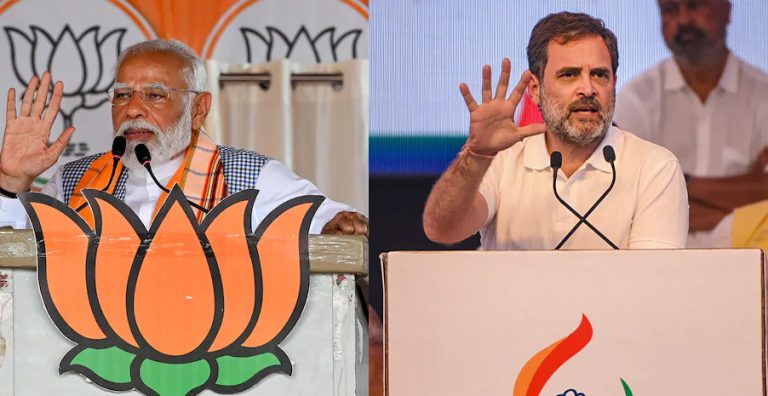
On Monday (8th April), Prime Minister Narendra Modi rubbished China’s territorial claims on the parts of Arunachal Pradesh asserting that there should be no doubt that the Northeastern state is an integral and inalienable part of India. Notably, at his official residence in Delhi, PM Modi gave an exclusive interview to The Assam Tribune on the transformative story of the Northeast region. 

Regarding China claiming parts of Arunachal Pradesh, PM Modi categorically emphasised, “Arunachal Pradesh is, was, and shall always be an integral part of Bharat”.

The development comes amidst a massive outrage against China for “renaming several areas in Arunachal Pradesh” to stake its claim over these territories. During the interview, PM Modi was asked about China making claims on parts of Arunachal Pradesh and steps that the Indian government has taken to safeguard the territorial sovereignty of the state. 

Slamming the doubts that “Is Arunachal Pradesh safe?”, PM Modi dismissed it noting that there should not be any doubt about this (Arunachal’s territorial sovereignty and safety).

Apart from asserting that Arunachal is an integral part of Bharat, the Prime Minister added, “Today, the development works are reaching Arunachal and the Northeast like the first rays of the sun, faster than ever before.” 

Timely intervention by the Indian government and efforts by the state government have brought improvement in Manipur: PM Modi

Regarding the status of conflict-torn Manipur, the opposition’s criticism, and steps to ensure ethnic harmony in the state, PM Modi noted, “We believe that it is our collective responsibility to deal with the situation sensitively.” 

Pointing that the government’s efforts have brought improvement in the state, PM Modi stated, “We’ve dedicated our best resources and administrative machinery to resolving the conflict. Because of the timely intervention of the Government of India and efforts made by the Government of Manipur, there has been a marked improvement in the situation of the State.”

Listing out government efforts to resolve the conflict, PM Modi further stated, “Home Minister Amit Shah stayed in Manipur while the conflict was at its peak, holding 15-plus meetings with various stakeholders to help resolve the conflict. The Central Government has been consistently extending its support, as required by the State Government. The process of relief and rehabilitation is ongoing. Remedial measures undertaken include a financial package for the relief and rehabilitation of people living in shelter camps in the State.” 

Foiling influx of illegal migrants from Myanmar

PM Modi was asked about the infiltration of illegal migrants from Myanmar in Mizoram. In reply, he stated that the influx is due to internal developments in that country. 

Speaking with Assam Tribune, PM Modi said, “We have been raising this issue with the Myanmar authorities as this directly impacts India, particularly our northeastern states. To prevent infiltration and secure our borders, several steps have been taken by the government.”  

He added that the steps include the decision to scrap the free movement regime between India and Myanmar, increased and effective deployment of border guarding forces on the Indo-Myanmar border, and close coordination of security agencies among others. He further pointed out the intensified fencing construction along the Myanmar border.

Aaj Northeast Na Delhi se Door Hai Aur Na Dil se Door Hai: PM Modi

PM Modi highlighted the development works, major infrastructure projects, and how the government has been alleviating the sense of marginalisation that crept in the Northeastern states during the previous administrations. He stressed, “Aaj Northeast Na Delhi se Door Hai Aur Na Dil se Door Hai!

According to PM Modi, after years of neglect since the Independence, the North East region has now become an abundant region from an abandoned region. 

Contrasting UPA and NDA government’s outlook towards North East, PM Modi pointed out, “Successive Congress governments gave step-motherly treatment to the people of the Northeast because for them the potential electoral gains in the region were too little. For them, the Northeast was too distant, and working for its development was also difficult. When we formed the government, it was my firm commitment to change the status quo in the Northeast. We replaced the policy of isolation and ignorance with a policy of integration.” 

He said, “Last month, I visited Itanagar for Viksit Bharat, Viksit North East programme. I had the privilege to unveil Rs 55,000 crore worth of development projects that are providing guarantees for Viksit North East…I inaugurated the Sela Tunnel which is a real strategic game-changer providing all-weather connectivity to Tawang.” 

“In 2022, we inaugurated the Donyi Polo Airport for enhanced air linkages to the rest of the nation. On the energy front, the Dibang Multipurpose Project will contribute to employment, energy, and water resource management. We have commenced new road projects for about 125 villages and tourism and other infrastructure-related projects in 150 villages. The government has also launched a Rs 10,000 crore UNNATI scheme that will bring new possibilities for investment and jobs in the North Eastern Region,” the Prime Minister added. 

11 peace agreements in 10 years: Decisive battle against Insurgency in the region

Regarding peace agreements and bringing down insurgency, PM Modi stressed, “Yes, we decided to deal with insurgency firmly but at the same time, we ensured that common people are embraced with great care and compassion. As a result, while we have significantly controlled insurgency, we have also been able to win the trust of our people and ensure peace.” 

He noted, “A total of 11 peace agreements have been signed in the last 10 years. This is unprecedented progress unseen under any previous government. More than 9,500 insurgents have surrendered since 2014 and joined the mainstream of the society. Compared to 2014, there has been a 71 per cent reduction in insurgency incidents in 2023. Similarly, in this period, security force casualties have come down by 60 per cent and civilian deaths by 82 per cent. Due to the improved security situation, the AFSPA has been withdrawn from most parts of the Northeast.” 

Highlighting some of the historic peace agreements, the Prime Minister noted, “We have successfully negotiated Border Dispute Settlement Agreements between Assam and Arunachal Pradesh which has put an end to the longstanding dispute concerning 123 villages along the border. We have resolved the 50-year-old dispute between Assam and Meghalaya. Peace agreements like the Bodo Accord and the Bru-Reang Agreement have led to several insurgents and militants surrendering their arms and joining the mainstream.” 

All the efforts we have made have ushered in an era of peace in the region, PM Modi added.

During the interview on the transformation in the Northeast, PM Modi stressed that the Northeast is India’s greatest success story. He added that in the last 10 years, it is visible how the Modi government has ended the Northeast’s isolation and developed it as Bharat’s gateway to the East. 

Nepal: Muslim mob raising Allahu Akbar attacks Hindus in Sunsari ahead of Bageshwar Baba Dhirendra Shastri’s programme, curfew imposed

Indian border areas have been put on alert following communal violence in Nepal’s Sunsari district. A curfew has been imposed in Sunsari’s Ramnagar Bhutaha. Reports say that the situation has deteriorated following the attack on members of a Hindu organisation promoting Bageshwar Dham Peethadhishwar Dhirendra Shastri’s programme. Following this, a Hindu youth identified as Jivan Mehta was severely thrashed. According to locals, Islamists have been displeased since the consecration of Ram Mandir in Ayodhya. Two Muslims have reportedly been arrested in this case.

Reports say that Dheerendra Shastri’s programme will be held on 17th April in Chatra, Sunsari. Workers from the Vishwa Hindu Parishad promoting this event were attacked, escalating the tension. The Nepalese administration scheduled a meeting of the Peace Committee, but Muslim representatives did not attend. In light of the situation in Nepal, vigilance has been enhanced along India’s borders.

It all started on 4th April when a Hindu youth named Jivan Mehta took a bike from a school in Ramnagar, Harinagar, to take his sister home. A mob of approximately 150-200 Muslims gathered there and brutally thrashed Jivan Mehta. Following this, Mehta entered the school to save himself from the mob, however, the attackers also entered the school. The attackers comprised children, the elderly, and youngsters.

Speaking to OpIndia an eyewitness to the incident said that the mob chased Jivan Mehta out of school and forced him to run to the Ramnagar Bhutaha market. It is said that despite witnessing everything, the police administration stayed mum. The mob reportedly attempted to abduct Jivan Mehta from the hands of the police. Even when taking him to the hospital, attempts were made to stop him. Jeevan Mehta was admitted to the ICU ward of the government hospital in Sunsari district. The violent mob was led by a man identified as Fayyaz Ansari.

Fayyaz Ansari’s father, Ghaffar, is the president of the Harinagar local municipality. Harinagar village municipality is a Muslim-majority area near India. The following day, Friday (5th April), Hindus protested against the incident and blocked the road demanding stern action against the assailants. The Muslim mob as strong as 500 also attacked the protesting Hindus. The violent mob shouted ‘Nara-e-Takbeer’ and ‘Allahu Akbar’ slogans. The altercation between the two factions left dozens of people injured.

Rajesh Yadav, president of the Hindu Samrat Sena, told OpIndia that the administration dispersed the mob by firing into the air. Two Hindu youths were shot during this incident and were taken to the hospital for treatment. The injured duo are reported to be stable now. Moreover, the mob led by one Sajjad Ansari assaulted a Nepali journalist named Brahmadev Mehta with stones and sticks. Brahmadev’s camera was stolen, and his phone was broken. Sajjad Ansari is claimed to be village municipality president Ghaffar’s close aide.

Following the violence, the Hindus of the Sunsari area showed unity and while protesting, they demanded strict action against the Muslim attackers. Police are identifying the attackers through available video footage. 17 police officers were hurt while attempting to control the violence and are currently undergoing treatment. An eyewitness informed OpIndia that some local Muslim journalists are spreading propaganda to portray their own community as oppressed victims, even though Hindus are the victims in the matter. Journalists spreading propaganda against Hindus include Tabil Ansari, Naseem, Ajmal Nepali, and Mohsin Ansari.

An eyewitness told OpIndia that the dispute erupted at the time of the consecration of the Ram Mandir in Ayodhya. In Ward No. 3 of Gautampur, Harinagar, several members of the Muslim community tore down and threw away the saffron flag hoisted by Hindu youths. The administration had suppressed the matter after convincing both the involved parties. Meanwhile, Jivan Mehta had released a video in protest against this incident. The Hindu youth slammed Muslims in the video for disrespecting the saffron flag and since then, he has been targeted by Muslims.

Delhi HC declines to allow Eid prayers at the demolished ‘Akhoondji mosque’ site

The Delhi High Court declined permission for prayers during Ramzan and Eid at the demolished ‘Akhoondji mosque’ site in Mehrauli. Acting Chief Justice Manmohan, leading the bench, directed an appeal by Muntazmia Committee Madarsa Behrul Ulum and Kabarstan to be listed alongside a related matter on May 7. This appeal contested a single judge’s dismissal of their plea to allow devotees access to the mosque for Ramzan and Eid prayers.

The court noted the single judge’s decision based on a previous order denying prayers for Shab-e-Barat. Another appeal challenging this order is scheduled for a May hearing. The petitioner’s counsel requested an immediate order, pointing out that Ramzan and Eid would have passed by May. However, the bench, including Justice Manmeet PS Arora, refused an interim order, citing the single judge’s refusal of relief almost a month prior.

“This appeal must align with the May 7 hearing of the other appeal. The order in question is from March 11. You’ve waited a considerable time for listing. Today is April 8,” remarked the court.

“This must coincide with that appeal on May 7. No interim order can be granted,” reiterated the court.

The appellant’s counsel clarified that they were not seeking a “back-door entry.” Citing the Babri Masjid case and the Gyanvapi case, they argued that constitutional courts have previously respected religious beliefs and allowed prayers during pending legal disputes related to shrines.

The single judge, on March 11, had refused Ramzan prayers at the ‘Akhoondji mosque,’ noting the High Court’s previous refusal to allow devotees on Shab-e-Barat. The judge emphasized the land now belonged to the DDA, which had ordered maintenance of the status quo while addressing the demolition’s legality.

The appellant had asked the single judge for directions to permit entry for Tarawih prayers from sunset on March 11 to Eid-ul-Fitr.

The ‘Akhoondji mosque,’ believed to be over 600 years old, along with the Behrul Uloom madrasa, were declared illegal structures in Sanjay Van and demolished by the DDA on January 30.

‘Material shows prima facie involvement in alleged offence’: Delhi court denies interim bail to BRS leader K Kavitha in liquor policy scam

While dismissing the interim bail plea of K Kavitha, the court said that the material produced shows a prima facie point towards her involvement in the alleged offence and destruction of evidence.

BRS MLC K Kavitha has been arrested by the ED. She is in judicial custody after the ED’s interrogation. Her interim bail was dismissed by the Rouse Avenue court on Monday. She sought interim bail on the grounds of the school examination of her minor son.

Special judge Kaveri Baweja dismissed the plea with certain observations related to her primary facie involvement and destruction of evidence.

Special Judge Kaveri Baweja said, “The material placed prima facie points towards her active involvement in the commission of the alleged offences as also towards her deliberate act of destroying evidence, besides attempting to influence witnesses of the case.”

“The Applicant can, by no standards, be said to be a “vulnerable” woman who could be made a scapegoat for committing the alleged offences. Rather, she is undoubtedly a “well-educated” and “well-placed woman in the society,” the court said in the order passed on April 8.

The special judge also rejected the argument that family members cannot be a substitute for the mother to address the exam-related anxiety of the child and said, ” is not a “compelling” reason to grant interim Bail, in the opinion of this court.”

The court noted that the older son of the applicant aged about 19 years is studying in Spain.

“Thus, if one son of the Applicant can study abroad without his parents being physically present with him, it does not appeal to reason as to why the younger son, who has the comfort of his home and the presence of his above-noted relatives, cannot take examinations without the physical presence of his mother,” the court observed.

The court also rejected the argument that the father of the minor child is busy pursuing litigation on behalf of the applicant is also not a convincing reason since the application does not explain the extent of his said involvement.

“It also appears that so-called exam-related anxiety of the child does not seem to be his priority”, the court pointed out.

The court observed, “Further, in this age of technology, the physical absence of older sibling/father can certainly be compensated by their presence through digital devices. “

“The sisters of the applicant, with whom the applicant seems to share a close bond keeping in view her prayer for meeting her sisters while in custody, also compels this court to consider that the maternal aunts can also provide the necessary support to the child,” the court said.

K Kavitha has moved an interim bail application through advocate P Mohit Rao. It was argued by Senior Advocate Abhishek Manu Singhvi assisted by Advocate Nitesh Rana and Deepak Nagar.

The bail was opposed by special counsel Zoheb Hossain for ED.

Her regular bail plea hearing has been postponed to April 16 from April 20.

(This news report is published from a syndicated feed. Except for the headline, the content has not been written or edited by OpIndia staff)

Elon Musk refuses to comply with orders by Brazil’s Supreme Court, says X will risk ban in the country to stand for free speech

A dispute between Elon Musk and Brazil erupted on Sunday (7th April) when Supreme Court judge from Brazil Alexandre de Moraes started an investigation into the entrepreneur after Musk stated that he would reinstate accounts on the social media site X that the judge had disabled.

Musk, X’s owner and free speech absolutist, has contested Justice Alexandre de Moraes’ decision to block specific accounts. He has stated that X, formerly known as Twitter, will abolish all restrictions because they are unconstitutional, and has called for Moraes’ resignation.

Neither Musk, X, nor Brazilian authorities have revealed whose social media accounts were ordered to be censored. X initially mentioned the order to block these accounts on Saturday, although it wasn’t immediately apparent when it was issued.

Musk, in an X post on Saturday (6th April) evening, accused Moraes of “brazenly and repeatedly” undermining the Brazilian constitution and people.

“This judge has applied massive fines, threatened to arrest our employees, and cut off access to X in Brazil. As a result, we will probably lose all revenue in Brazil and have to shut down our office there. But principles matter more than profit,” Elon Musk said in a post.

The billionaire has committed to file a legal appeal to the order barring X accounts. Moraes responded on Sunday by including Musk in his investigation into fake news on social media, as well as initiating an inquiry into what he called an obstruction of justice.

In response, Moraes stated, “X shall refrain from disobeying any court order already issued, including performing any profile reactivation that has been blocked by this Supreme Court.”

If X fails to comply with the decision to restrict particular accounts, the firm would be fined 100,000 reais ($19,740) every day, Judge Moares stated in a statement to the media.

President Luiz Inacio Lula da Silva’s leftist government backed Moraes, with Solicitor General Jorge Messias criticising Musk and advocating for social media regulation to prevent international platforms from breaking Brazilian laws.

Amid this, American author and journalist, Michael Shellenberger commented on the issue and said that ‘Brazil is on the brink of dictatorship at the hands of a totalitarian Supreme Court Justice named Alexandre de Moraes’.

“President Lula da Silva is participating in the push toward totalitarianism. Since taking office, Lula has massively increased government funding of the mainstream news media, most of which are encouraging increased censorship. What Lula and de Moraes are doing is an outrageous violation of Brazil’s constitution and the United Nations Declaration of Human Rights. At this moment, Brazil is not yet a dictatorship. It still has elections and the Brazilian people have other means at their disposal to confront authoritarianism. But the Federal Supreme Court and the Superior Electoral Court directly interfere in those elections through censorship,” he said.

Michael Shellenberger also added that a few days ago he published Twitter Files for Brazil in which he found that Moraes had violated the Brazilian Constitution.

“Moraes illegally demanded that Twitter reveal private information about Twitter users who used hashtags he considered inappropriate. He demanded access to Twitter’s internal data, violating the platform’s policy. He censored, on his own initiative and without any respect for due process, posts on Twitter by parliamentarians from the Brazilian Congress. And Moraes tried to turn Twitter’s content moderation policies into a weapon against supporters of then-president Jair Bolsonaro,” Shellenberger said.

“The Twitter Files also revealed that Google, Facebook, Uber, WhatsApp and Instagram betrayed the people of Brazil. If such evidence is proven, the executives of these companies behaved like cowards: they provided the Brazilian government with personal registration data and telephone numbers without a court order and, therefore, violating the law,” Shellenberger added.

Twitter Files Brazil

Brazil is conducting a massive crackdown on free expression, overseen by a Supreme Court justice named Alexandre de Moraes. De Moraes has imprisoned people without trial for what they posted on social media. He has also called for the expulsion of users from social media platforms. Moraes has ordered the removal of individual posts without providing users with an appeals process or even the ability to view the information provided against them.

Now, Twitter Files, disclosed for the first time, demonstrate that de Moraes and the Superior Electoral Court he supervises attempted to damage Brazilian democracy. As per Shellenberger, Moraes illegally demanded that Twitter divulge personal information about Twitter users who used hashtags he disliked. Moraes and the Court wanted access to Twitter’s internal data, which violated Twitter policy. They attempted to unilaterally ban Twitter posts through current members of Brazil’s Congress. They also aimed to use Twitter’s content restriction measures against supporters of then-President Jair Bolsonaro.

In 2023, the Moraes-led TSE deemed the former president ineligible to compete for the government for spreading misleading information about Brazil’s election system.

‘How many will be jailed before polls?’ SC grants bail to YouTuber ‘Sattai’ Durai Murugan, jailed over remarks against DMK chief MK Stalin

The Supreme Court on Monday restored the bail granted to YouTuber ‘Sattai’ Durai Murugan who was accused of making a derogatory speech against Tamil Nadu Chief Minister MK Stalin in 2021.

“If before elections we start putting behind bars everyone who makes allegations on YouTube, imagine how many will be jailed?” observed the Supreme Court on Monday.

A Bench of Justice Abhay S Oka and Justice Ujjal Bhuyan set aside the order cancelling Murugan’s bail and opined that he could not be said to have misused the liberty granted to him.

When senior advocate Mukul Rohatgi, representing the State, requested that the apex court impose conditions on the Youtuber so that he does not make any scandalous remarks while on bail, the bench told Rohatgi, “Who shall decide whether a statement is scandalous or not.”

Observing that Murugan did not misuse his liberty by protesting and expressing his views, the apex court ordered, “He continues to be on bail for 2.5 years. All the same, we do not find grounds to cancel bail. We thus quash the High Court order cancelling bail and restore the earlier order granting bail. Needless to say, cancellation of bail can be applied for if deemed fit.”

The top court was hearing Murugan’s plea challenging a Madras High Court order, which cancelled his bail observing that within a few days of giving an undertaking before the court (based on which he was granted relief), he indulged in further offence and made derogatory remarks against the Tamil Nadu Chief Minister.

Murugan allegedly made derogatory remarks with an intention to breach public peace and tranquillity and on a complaint of DMK member, police registered a case against him. Murugan was arrested in October 2021.

The Madras High Court had in November 2021 granted bail to Murugan, however, later a division bench of the High Court cancelled his bail. In 2022, the apex court had granted interim bail to Murugan.

(This news report is published from a syndicated feed. Except for the headline, the content has not been written or edited by OpIndia staff)

After Doordarshan screening, Idukki diocese shows The Kerala Story as part of training programme to educate teens about dangers of love affairs and love marriage

The Idukki diocese under the Syro Malabar Catholic Church in Kerala has screened the movie “The Kerala Story” for the teens to educate them about the dangers of love affairs. This comes just two days after the Kerala government made a hue and cry over the decision by Doordarshan to stream the movie.

According to local reports, the movie was screened by the diocese for its younger members on Sunday, 7th April for students from grades 10 to 12 as part of catechism classes.

Father Jins Karakkat, chairman of the Idukki Diocese Media Commission, gave a statement on the same saying, “The movie was screened to educate youngsters about the dangers lurking behind love affairs and marriage.”

The students were asked to watch the movie and review it after discussion within their groups. The dioceses also circulated a book on the matter among students.

Father Karakkat said intensive training programmes for children are held every year during vacation. He said that specific topics are selected for the programme and books prepared for it.

“This year, the programme was held on April 2, 3 and 4. The theme of the textbooks prepared for the children of Classes 10, 11, and 12 was love relationships,” he said.

He added, “Nowadays, there are circumstances in which teenagers are largely falling in love and facing dangers. So, we intended to create awareness among our children about such dangers,” he explained.

On 5th April, Doordarshan announced that The Kerala Story would be on Friday following which Chief Minister Pinarayi Vijayan condemned the decision.

He said that this is an attempt at polarization just before the Lok Sabha elections. Kerala Congress leader VD Satheesan has also demanded that the government channel back off the move to screen the ‘The Kerala Story’ on Doordarshan, saying the movie is a “collection of untruth.”

The CPI(M) state secretary alleged that the BJP decided to screen the film as the general elections are approaching, hoping to push its political agenda as the BJP was unable to make inroads into Kerala’s society.

It is important to note that Adah Sharma-starrer ‘The Kerala Story’ is one of the successful movies of 2023. The film saw popularity and ran well but there were attempts to corner the film and ban it for the subject matter.

The film brought a spotlight on subjects like forced/lured religious conversions, ISIS brides, and love jihad. The film was even banned in West Bengal initially and the makers had to plead before the Honourable courts to get its ban lifted, which was eventually lifted.

However, there were reports of the court’s order not being followed in its entirety. The story of the movie is based on the true story of Hindu girl Nimisha who was brain washed into marrying a Muslim, converting to Islam and leaving India to join ISIS.

Rahul Gandhi promises ‘wealth redistribution’, an ultra-Left idea Yogendra Yadav had backtracked from during Covid pandemic

After the colossal failure of the Congress party’s ‘Gareebi Hatao’ slogan over the years, the party prince Rahul Gandhi has come up with the promise of “wealth redistribution” to eradicate poverty and socio-economic inequality. On the 6th of April, Rahul Gandhi said that if voted to power, Congress would conduct a financial and institutional survey to ascertain who is in possession of wealth in the country. The Gandhi scion said that his party would then redistribute the wealth to the backward castes and ‘minorities’ based on their population, on the basis of caste census data.

During a public rally in Hyderabad, Rahul Gandhi, stressing on the party’s “Jitni aabaadi utna haq” slogan said, “We will first conduct a nationwide caste census to determine how many people belong to the Other Backward Classes (OBCs), Scheduled Castes (SCs), Scheduled Tribes (STs) and minorities. After that, we will conduct a financial and institutional survey in a historic step to ascertain the distribution of wealth.”

Rahul Gandhi’s ‘wealth redistribution’ remark has sparked an online debate with many criticising the Gandhi scion and even suggesting him to first redistribute the wealth of his own affluent party leaders.

Pointing out at Congress leader Nakul Nath’s assets worth Rs 700 crore and DK Shivakumar’s assets worth Rs 14,13 crore, an X @TheHawkEye wrote, “Why doesn’t Rahul Gandhi start wealth redistribution in his own backyard?

Another one wrote, “Don’t wait for Elections @RahulGandhi Lead the way and redistribute the wealth of your Family first, including wealth stashed and owned abroad to People in Bharat. Put out a list by tomorrow. Surely you have the details which your Patel uncle probably maintained well.”

Interestingly, this very idea of wealth distribution comes from Communist ideology. Karl Marx in his Communist Manifesto said that wealth should be distributed as according to the precepts, “From each according to his ability, to each according to his need. ”

Notably, the Congress party in its manifesto for the coming Lok Sabha elections has that it will “conduct a nation-wide Socio-Economic and Caste Census to enumerate the castes and sub-castes and their socio-economic conditions. Based on the data, we will strengthen the agenda for affirmative action.”

Source: inc.in

If Rahul Gandhi is so keen on redistributing wealth to backward castes and minorities, then he himself should set a precedent and distribute his personal wealth among the sections of society he listed out. Rahul Gandhi and the Congress party have been attacking business mammoths Gautam Adani and Mukesh Ambani. The party has also been in attacking mode against  Prime Minister Narendra Modi accusing him of crony capitalism by favouring his ‘friends’ Adani-Ambani. This comes despite his own party leader and Telangana CM Revanth Reddy having recently signed three MoUs with Adani conglomerate.

While Rahul Gandhi has been accusing billionaires like Adani Ambani of ‘controlling’ wealth and resources and despising the corporate sector, in the last five years, the value of total assets of Rahul Gandhi has gone up by over 28%, from over ₹15 crore in 2019 to over ₹20 crore in 2024. Therefore, he has become richer by over ₹6 crore in the last 5 years.

Moreover, as OpIndia reported earlier, Rahul Gandhi has seen a steep hike in the value of his total declared assets in the last 20 years, which was just above ₹55 lakh in 2004, and has gone up to over ₹20 crore last year, an increase of 3583%. Probably, Congress’s ‘JanNayak’ can hoard wealth but Adani-Ambani should not.

Interestingly, much before Rahul Gandhi, it was Duggal Sahab of political activism Yogendra Yadav and IAS-turned-social activist Harsh Mander alongside other ‘intellectuals’ who had pushed for ‘taking over’ private property.

Mission Jai Hind’: When Yogendra Yadav suggested taking over private property to fight Coronavirus

Back in 2020, when the country battling the Covid pandemic, Yogendra Yadav along with several ‘economists, intellectuals and activists’ had proposed a 7-point action plan to combat the pandemic. In this, point number 7.1 had called for the government to take over all properties of private citizens and treat them as national resources. The point said, “All the resources (cash, real estate, property, bonds, etc) with the citizens or within the nation must be treated as national resources available during this crisis.”

Ironically, this ‘action plan’ pushing the country towards economic anarchy while it was already tackling a health crisis was named ‘Mission Jai Hind’. To no surprise, this plan had received severe backlash back then to the extent that Yogendra Yadav and his fellow ‘intellectuals’ had to backtrack.

Consequently, Yadav amended the said proposition claiming that the original point received ‘undue attention’ and was far from their intention. “The government must explore emergency ways of raising resources going beyond the usual set of taxes and levies to cope with the problem of funding large relief packages,” the changed proposal read.

Caste census, Jitni aabaadi utna haq, vilification of India’s wealth generators: Rahul Gandhi’s divisive politics will push India into anarchy and multi-faceted crisis

While conducting a nationwide caste census and redistributing wealth on the basis of its findings may seem a ‘revolutionary’ and vote-catching promise, it will eventually leave the country in economic and social crisis.

On one hand, the Modi government has pulled out over 24.82 crore people from multi-dimensional poverty in the last nine years from 29.17% in 2013-14 to 11.28% in 2022-23 i.e. a reduction of 17.89 percentage points without even bringing the caste in context. On the other, Rahul Gandhi is more interested in determining the caste of Indians than working for people irrespective of their caste, religion or regional identities.

Caste-based census might serve the electoral ambitions of the Congress party but it will certainly further the societal rifts and also trigger caste wars. While the Modi government through its policies and works has managed to significantly shift the electoral politics from caste lines to development, Rahul Gandhi is hell-bent on re-mainstreaming caste-based politics.

Redistribution of wealth to elevate living standards although sounds like a utopian communist dream-like scenario, in reality, it will obstruct the country’s sustainable development. Instead of wealth redistribution, the focus of a developing country like India should be on raising average income to ensure decent living standards. Education and employment growth coupled with improved job quality will consequently raise the standard of living overall without having a requirement to go into the “Kaun jaat ho?” mode.

Rahul Gandhi has repeatedly been attacking PM Modi and the BJP government saying that they are spreading ‘hatred’ and dividing the country, however, his actions and poll promises expose his party’s nefarious agenda. The Congress party is pushing the narrative that the business mammoths of the country are somehow the ‘villains’ who along with PM Modi have deprived the backward castes and ‘minority’ groups of their rights over wealth and resources even though they are much higher in population.

Looks like Rahul Gandhi has taken a page from Yogendra Yadav’s book on a warped sense of socio-economic equality to project himself as the messiah of the poor and marginalised. Gandhi has been wooing the Dalit, Adivasi and religious minorities as if the other sections of the society were not that important or maybe thought they were not organised enough to form a consolidated vote bank. However, much like Yogendra Yadav, Rahul Gandhi will also have to backtrack, sideline or simply forget the wealth redistribution promise just like it ignored its Old Pension Scheme restoration promise in its manifesto if though highly unlikely, voted to power.

Redistributing wealth by snatching it away from those who earned it and giving it away to specific caste groups and religious minorities is blatant appeasement. Moreover, to even redistribute wealth it first needs to be created. How will the Congress party keep redistributing wealth? Where will the wealth come from? Congress party instead of working to empower these communities by increasing equal job and educational opportunities wants to make them dependent on the government and the wealth of others. When people like Adani Ambani become billionaires, they invest in the economic growth of the country in various sectors in addition to providing employment to lakhs of people across the country without asking about anyone’s caste, religion or regional identity.

From pushing for population control and raising slogans like “Hum do humaare do” to exploiting demography with sinister “Jitni aabaadi utna haq” assertions, the Congress party has apparently deviated from its own principles. After failing in its much-hyped Gareebi Hatao campaign, though winning elections, the Congress party has stooped to “Ameer Hatao” to go beyond 40 seats in the coming elections. Slogans changed, leaders changed but the tactics of caste-based politics and appeasement of specific communities have remained the same.

Steady rise in admissions from private to govt schools: Long queues witnessed at municipal schools in Surat as the quality of education improves

Gujarat’s education industry is undergoing significant transformation. Along with major cities, rural towns and villages in Gujarat are now enrolling their children in government schools. The primary cause for this shift is the expansion of government schools and digital connectivity. A few years ago, middle-class families used to send their children to private schools despite a lack of funds. However, following various reforms and improvements in the education system, the entire landscape of Gujarat’s educational paradigm has transformed. Similarly, municipal government schools in Surat have seen long queues for admission for the fourth consecutive year. Apart from that, there is a struggle for admission to government schools in Ahmedabad as well.

Municipal government schools in Surat are witnessing a scramble for admission. For the fourth year in a row, Surat has experienced an increase in the number of government schools. The annual examinations have concluded, and parents are approaching government schools to enrol their children. Meanwhile, there are long lines for admission to municipally run schools in Surat. A huge number of parents have gathered at the corporation’s elementary schools 346, 334, and 355 to submit application papers for their children’s admittance. There is also a three-day special arrangement in place for admission to these huge Varachha schools. These schools are modern and digital in Surat. Amid Digital India, schools in Gujarat are also being digitized. So that even the future citizens of India can be given fast and effective education with digital devices.

Speaking to the media, the principal of Surat corporation-run state-of-the-art school said, “Education in general is not just book learning. It’s not just getting a good percentage in results. We strive for the all-round development of children here. Currently, birthdays are usually celebrated by lighting the lamp, whereas in our schools, birthdays are celebrated with 51 Kundi Yagya.” He added that in the corporation-run school last year 3500 to 4000 children were on the waiting list.

Besides that, government schools in Surat provide better digital education than private schools. Education is given via digital classrooms and devices. The school provides more amenities to students than private schools, and it has continuously excelled in terms of results. So now people are abandoning the fascination of private schools and enrolling their children in government schools.

Struggle for admission in Ahmedabad government schools as well

For the past few years, there has been an upward trend in Ahmedabad municipal school admissions from classes 2 to 8. Due to the increased number of government smart schools, 5315 students from private schools have enrolled in government schools for the academic year. The number of students admitted to private schools in Ahmedabad Municipality’s around 450 schools has increased significantly as a result of highly qualified trained teachers, improved infrastructure, and digital education.

So far, this year has seen an unprecedented influx of parents seeking admission to municipal schools. More than 5500 children will be admitted this year, compared to last year. Currently, 5315 youngsters have also been admitted. The Municipal School Board operates 439 schools in the city that teach languages Gujarati, Hindi, Marathi, and English. More than 1.66 lakh students are enrolled in 312 school facilities owned by the board. More than 4900 highly qualified teachers educate these children. Currently, Ahmedabad has 81 smart schools. Apart from that, 217 schools are operated under the School of Excellence. All these schools have a wide range of infrastructure facilities.

Notably, digital smart schools have expanded beyond Surat and Ahmedabad to include every city and village in Gujarat. Many youngsters receive a greater education than they would in private institutions. Along with this, parents are increasingly queuing up to enrol their children in government schools rather than private institutions. Gujarat’s education model has been transformed by the digital revolution.

Ekta’s brutal murder by stabbing in the neck by ‘boyfriend’ Anas Qureshi: They used to sometimes stay together, were in a relationship, brother Rohit states in FIR

On Saturday, 6th April, 29-year-old Anas Qureshi allegedly stabbed his 27-year-old female friend Ekta to death in the Sunny Enclave area of Kharar in district SAS Nagar (Mohali). Later, Anas met with an accident 80 KM away near Shahbad, Haryana, while escaping in Ekta’s car. OpIndia accessed the FIR registered by Kharar Police in the matter.

The FIR has been registered under Section 302 of the Indian Penal Code (IPC) against Anas Qureshi for the murder of Ekta on complaint of the victim’s younger brother Rohit Kumar.

Source: Punjab police

In his complaint, Rohit said that he is a Sunny Enclave area resident and lives with his family. His elder brother Sukhchain, sister and victim Ekta, his mother, an elder and the youngest member in the family, Rohit, lived together. Ekta was 27 years old. She has been doing a private job for 3-4 years. Earlier reports mentioned that she was a general manager at a multinational company.

Rohit said in the complaint that Ekta was in a relationship with Anas Qureshi, son of Jamiruddin, for the last 3-4 years. Anas was resident of Moradabad. In Chandigarh, he lived in Daddu Majra village and ran a dhaba in Sector 38, Chandigarh. Anas and Ekta used to live together sometimes. A few months ago, Ekta informed Rohit that her relationship with Anas was not going well, which annoyed Anas. Rohit added that Ekta was troubled due to the problems in the relationship.

On the night of 5th April, a family function was held nearby in Rohit’s father-in-law’s village. Rohit asked Ekta to accompany them, but she refused, saying that Anas was coming to meet her. The family went to the family function. On the morning of 6th April, when the family returned home, they noticed that Ekta’s car was not parked outside, and the door was open. When Ekta did not reply to their calls, Rohit went to the first floor of the house and discovered the dead body of Ekta lying near the bed in her bedroom in a pool of blood. The family noticed there was a deep cut on her throat. Rohit said, “I am very sure that “Anas Qureshi has murdered my sister Ekta.”

Ekta Murder case

On the intervening night of 5th-6th April, Anas Qureshi allegedly killed Ekta and tried to escape in her car. As per reports, he was seen entering Ekta’s house soon after she reached home at around 2:30 AM. After three hours, Anas left the house in different clothes and took Ekta’s car. Later, he met with an accident in Shahbad, Haryana. The family was informed about the vehicle, and Anas was admitted to Government Hospital in Sector 32, Chandigarh. Anas’s condition is critical, and police said in a statement that the real motive behind the murder is unclear. Once Anas recovers from the injuries, the police will take him in custody for interrogation.