Home Blog Page 1283

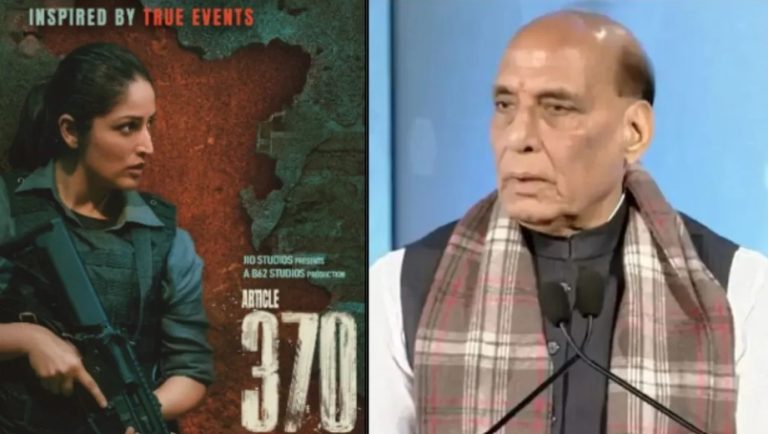
‘Not a propaganda, it’s a must watch’: Defence Minister Rajnath Singh after watching the film ‘Article 370’

Bollywood actor Yami Gautam starrer film ‘Article 370’ which hit the theatres on February 23, is being received well by the audiences. The movie, which focuses on the rise of terrorism in Kashmir and the landmark revocation of Article 370, which guaranteed special constitutional privileges to the erstwhile state, is maintaining its hold over the domestic box office in its second week. On March 8, Defence Minister Rajnath Singh praised and appealed to the audience to watch the movie.

Speaking to ANI after watching the film, the Defence Minister stated, “This film is inspired by facts and it is very interesting. Everyone should watch this film. It should not be considered as propaganda. It is a fact that Article 370 (in J&K) has been scrapped.”

Earlier actor Yami Gautam had thanked the audience and said that they had proved the naysayers who claimed her film is “too technical” or has “too many political jargons” wrong.

On February 26, the actress took to X and wrote, “When we were making Article 370, so many people told us that this film won’t work with the audience, ‘it’s too technical, too many political jargons etc etc’. But we went ahead with our gut because we knew those naysayers were underestimating our audience. Thank you all for proving them absolutely wrong. Thank you so much for giving so much love to our small little film, with a big heart. We are humbled and will remain forever grateful to all of you. Dhanyawaad (thank you)! Jai Hind!”

The film helmed by Aditya Suhas Jambhale has so far earned nearly Rs 30 crore in India since its release. The political-action drama stars Yami Gautam in the lead role.

Yami plays Zooni Haksar, an intelligence officer. Set entirely in the scenic backdrop of Jammu and Kashmir, the film is based on the Union government’s landmark revocation of Article 370 on August 5, 2019, which granted special status to the erstwhile state of Jammu and Kashmir and divided it into the union territories of Jammu and Kashmir and Ladakh. The film’s trailer highlighted the rise of terrorism in the region, with radicals seeking control of the territory.

Apart from Yami, the film also stars Priyamani, Arun Govil and Kiran Karmarkar in lead roles.

Article 370 and the effects of its abrogation

Article 370 granted special autonomy to Jammu and Kashmir. It curtailed the central government’s legislative authority over the state. The now-revoked Article 370 allowed the state to formulate its own law, with specific exemptions in areas like finance, defence, foreign affairs, and communications.

In 1954, Article 35A was introduced under Article 370, empowering the Jammu and Kashmir government to define permanent residents. The said article, which has now been revoked alongside Article 370, prohibited individuals outside the state from establishing permanent residence, buying land, or holding certain positions in government offices.

Following the abrogation of Article 370, two Union Territories named Jammu and Kashmir (with a legislative body) and Ladakh (without a legislative body) were created. As assembly elections have not taken place in either of the UTs, they are currently being administered by Centre-appointed lieutenant governors.

In May 2022, the Jammu and Kashmir Delimitation Commission redefined electoral boundaries, names and the number of assembly seats. Delimitation is a precursor to future assembly elections. Reserved seats for scheduled tribes and representation for Kashmiri migrant communities were introduced alongside the delimitation process.

Furthermore, following the abrogation of Article 370, elections in Jammu and Kashmir opened for those who settled in the region and were previously deemed as “outsiders”. This inclusive move allowed West Pakistan refugees residing in the UT for 70 years to participate actively in the local elections.

The socio-political landscape of the region has changed extensively over the past four years. Almost zero incidents of stone pelting, paced-up infrastructure, and introduction of government schemes in the region are some of the examples of changes brought to J&K following the abrogation.
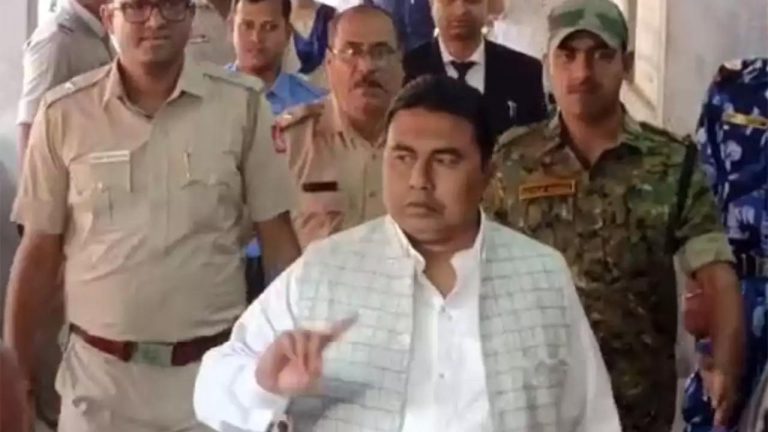
West Bengal: CBI concludes search at the residence of Sheikh Shahjahan in North 24 Parganas

0

The Central Bureau of Investigation (CBI) on Friday concluded a search at the residence of suspended Trinamool Congress (TMC) leader Sheikh Shahjahan in West Bengal’s North 24 Parganas district, in connection with the Sandehskhali case, in which four officials from the Directorate of Enforcement came under attack while raiding the residence of the leader at Sandeshkhali village in the district.

Earlier in the day, the central agency initiated a search at the residence of the suspended TMC leader.

Following the Calcutta High Court’s directive, the Crime Investigation Department handed over custody of Sheikh Shahjahan to the Central Bureau of Investigation (CBI) on Wednesday.

The CBI took Sheikh Shahjahan to Joka ESI Hospital for his medical examination after getting his handover from the CID.

Issuing a contempt notice to the West Bengal CID, the Calcutta High Court observed on Wednesday that an investigation into the attack on ED officials should be handed over to the CBI and also that the custody of accused Sheikh Shahjahan should be given to the agency today.

Calcutta High Court also observed that state police have played hide and seek in the matter.

“The accused is a political influencer. The investigation should be handed over to the CBI and the custody of the accused by 4:15 pm today,” the High Court said.

After weeks of no action, on February 29, TMC leader Sheikh Shahjahan was arrested by West Bengal police, after which West Bengal’s Basirhat Court remanded him to 10-day police custody.

He is also a key accused in the Sandeshkhali extortion, land grab, and sexual assault cases.

Sandeshkhali in West Bengal’s North 24 Parganas district had been witnessing widespread protests against Shahjahan Sheikh this month as a section of women were seeking justice against alleged atrocities committed by the TMC leader. A large number of women in Sandeshkhali had accused Shajahan Sheikh and his close aides of “land-grab and sexual assault” under coercion.

(This news report is published from a syndicated feed. Except for the headline, the content has not been written or edited by OpIndia staff)

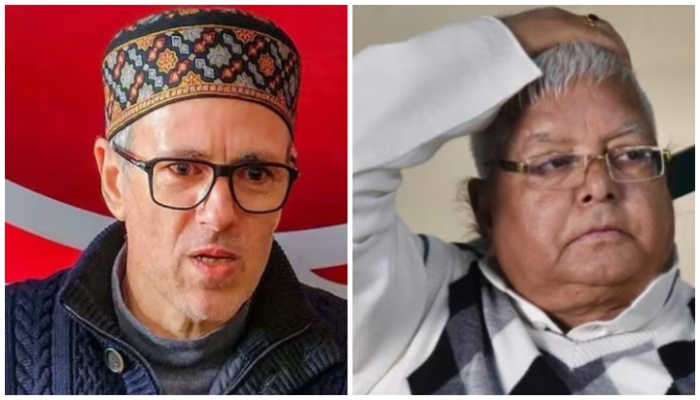
‘Parivar, chowkidar, Adani-Ambani, Rafale…we do self-goals’: Omar Abdullah lashes at I.N.D.I. Alliance ally Lalu Yadav for his ‘no family’ dig at Modi

On Friday, March 8, JKNC leader Omar Abdullah reacted to RJD chairman Lalu Yadav’s recent ‘no-family’ remark against Prime Minister Narendra Modi stating that such statements used by the opposition have no impact on voters. Criticising the personal attacks on Prime Minister Narendra Modi, the former chief minister of Jammu and Kashmir asserted that such rhetoric backfires for the opposition and only helps Modi secure a goal.

Lashing out at Lalu Prasad Yadav, an I.N.D.I.A. bloc ally, Abdullah said, “Voters are not influenced by such things, they want to know how the issues they are facing at present will be resolved. We actually do self-goal by giving such statements and allow (PM) Modi to score. We should raise issues concerning people…chowkidar, Adani-Ambani, Rafale, family…these things don’t work.”

“We must talk about the problems faced by the people. This is what the voters are interested in,” Omar said.

On Sunday (3rd March), Lalu Prasad Yadav stirred the hornet’s nest by making vicious personal attacks against Prime Minister Narendra Modi.

While addressing a rally in Patna, the RJD supremo claimed, “Modi talks about dynastic politics, but what is dynastic politics? You (Modi) should explain why you don’t have children. What can we do if Narendra Modi does not have his own family?”

Continuing his vicious attack against the Indian Prime Minister, Lalu Prasad Yadav, who was convicted in the fodder scam case and is now out on bail, further claimed that PM Modi is not a Hindu.

He was heard saying, “(Modi) keeps bragging about the Ram temple. He is not even a true Hindu. In Hindu tradition, a son must shave his head and beard after the death of his parents. Modi did not do so when his mother died.”

While Lalu Prasad Yadav assumed that he would garner support for RJD by targeting PM Narendra Modi’s personal life, the political strategy has now backfired on the I.N.D.I. Alliance partner.

Soon after, while addressing a public gathering in Telangana’s Adilabad, PM Modi also reacted to Lalu’s ‘no family’ dig at him and stated that 140 crore Indians are his family. “Jiska koi nahi uska Modi hai (The person who has no one has Modi on his side),” he stated.

“The leaders of the I.N.D.I. Alliance, deeply engrossed in corruption, nepotism and appeasement, are becoming nervous. When I question their ‘Parivarvad’, they have started saying that Modi has no family,” the Prime Minister said.

“My life is an open book, 140 crore people in the country are my family. Today, crores of daughters, mothers and sisters of the country are in Modi’s family. Every poor person in the country is my family. Those who have no one also belong to Modi and Modi belongs to them. They say ‘Nene Modi Kutumbam’ (I’m Modi family),” he added.

Infuriated by the RJD chief’s remark, several social media users, in a show of solidarity and unwavering support for Modi, were quick to rally behind the Prime Minister. Calling Modi a part of their family, several social media users expressed the desire to add ‘Modi’s family’ to their names but couldn’t due to the limitations of the X (formerly Twitter) platform.

Given that the 2024 Lok Sabha elections are drawing near, the BJP smartly converted this into a full-fledged campaign idea. Cabinet Ministers started appending “Modi ka Parivar” to their names on X (previously Twitter) after receiving resounding public support. Prominent members of the BJP, including Amit Shah, JP Nadda, Nitin Gadkari, and Anurag Thakur, were quick to support the Prime Minister.

It wouldn’t be incorrect to say that Lalu Prasad Yadav attempted to surprise the Modi-led BJP administration by hurling a full toss ball at them; however, the BJP foiled the plan by effortlessly smashing the ball out of the stadium. Only if the Congress-led I.N.D.I. Alliance had educated Lalu Yadav about how the BJP has become highly proficient at weaponizing personal attacks and jibes against Narendra Modi, they could have avoided this embarrassment.

‘Main bhi Chowkidar’ in 2019; ‘Chai pe Charcha’ in 2014: How BJP has mastered the art of weaponising personal attacks against Modi

In the run-up to the 2019 elections, Congress scion Rahul Gandhi repeatedly lied about the Rafale deal at all his rallies and mocked PM Modi by saying ‘Chowkidar Chor Hai‘. In response, top BJP leaders had then added the ‘Chowkidar’ prefix to their social media handles to show solidarity with the PM, countering Rahul Gandhi’s ‘Chowkidar Chor Hai’ jibe. The BJP eventually swept the 2019 Lok Sabha elections.

Similarly, during the run-up to the 2014 elections, Congress leader Mani Shankar Aiyar took a dig at Prime Minister Modi’s humble beginning as a tea seller and said that Modi can distribute tea but can never be the Prime Minister. Modi had then converted that remark as a badge of honour and held ‘Chai Pe Charcha’, discussion forums over tea across the nation as a way to connect directly to voters. None of us is unaware of how the BJP-led NDA transformed the political landscape of the world’s largest democracy by securing an absolute majority in the 2014 Lok Sabha elections, the first to do so in national elections after 30 years.

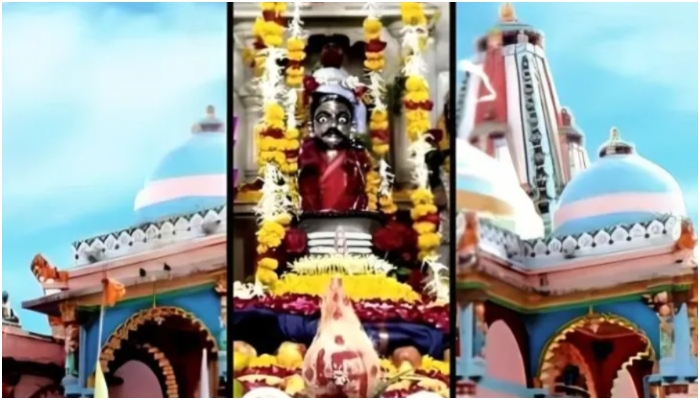
Gopnath Mahadev Temple: Shiv mandir that stood resilient in the face of 16th-century Islamic invasion

India’s great and rich history has global recognition. The temples of India are regarded as the finest examples of architecture. Even today, the country has many temples that astound even the most modern architecture. It appears hard to know how these temples were constructed in ancient times. However, foreign Islamic invaders in India primarily targeted temples for destruction and looting. The reason for this is not merely that those people resisted idol worship.

One of the reasons behind this is that the entire history and self-esteem of the people were linked to a temple in India. Along with the temple, the country’s educational system was also destroyed. History states that the Islamists attacked and destroyed several universities and libraries in India which consisted of ancient Indian knowledge. Today we will discuss one such temple that was conquered by Muslim invaders in the 16th century. The temple’s name is Gopnath Mahadev Mandir and its history is also very interesting.

Gopnath Mahadev’s shrine is located near Zanzmer village in Talaja taluka, Bhavnagar district. OpIndia’s team visited this old temple in Bhavnagar. OpIndia had extensive discussions with temple trustee Ghanshyam Singh Rathore, as well as other office bearers and mahants. We discovered that this temple is incredibly ancient and has a rich history. In the sixteenth century, Islamic invaders stormed this temple, killing numerous innocent Hindus. 

A famous legend connected with the temple

Many stories and legends are associated with this temple. However, one story about Narsingh Mehta is regarded as the most relevant from a historical perspective. According to legend, Narsingh Mehta lived with his brother and sister-in-law at Talaja. He was engrossed in Krishna worship all day. Tired of this, his sister-in-law advised him that it was better to go to a forest area and take sanyas than to stay like this all day. Then they left home and wandered around the villages near Zanzmer. At that time the entire area was forested.

Narasimha Mehta Gopanath reaches a location, gives up food and water, and begins worshipping Mahadev. After worshipping the Lord for 7 days without food or water, Mahadev feels pleased with him and grants him darshan in formless form. Lord Shiva asks Narasimha Mehta to request a boon. Then, Krishna devotee Narasimha Mehta expresses a desire to see Lord Krishna and the Gopis in Rasalila. Lord Triloknath grants his wish and shows him Lord Sri Krishna’s Rasalila. Even today, upon entering the temple, if you look up, you will see Raslila, in a model form of architecture.

After the rasalila, Lord Krishna and the gopis searched the forest for pure fruits to eat. However, the Gopis had a rule that they accepted anything only after bowing down to Mahadev. At the time, Lord Shri Krishna suggested the Gopis to design the Shivlinga with their ornaments. The Gopis created the Shivlinga with their jewels. Hence, he is known as Gopnath Mahadev.

This temple is where Narasimha Mehta produced his prabhatia and devotional hymns, known as Adikavi and Bhaktakavi, which are well-known in Gujarati literature. But over the years, this temple was razed. Following that, the Gohil royal family of Rajpipla reconstructed this temple.

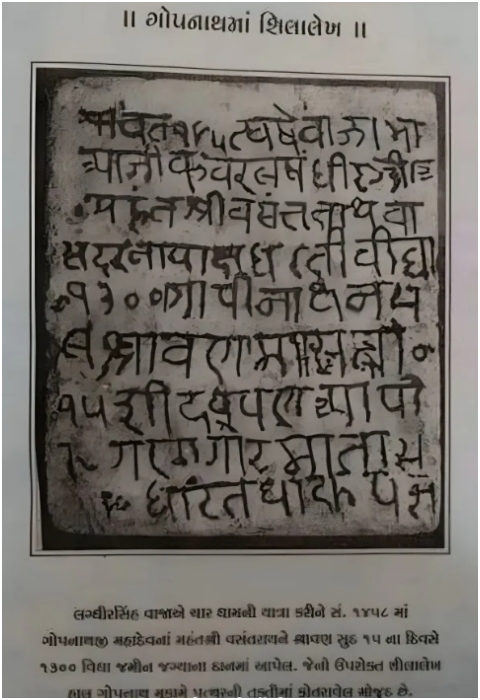
The temple was initially established, but there was no land under its authority; nevertheless, in the 15th century, the Waja Rathod monarch of Zanzmer, Lagdhirsingh Rathod, granted 1300 bighas of land to the temple. Today, there are numerous facilities such as hostels and cowsheds. An inscription as proof of the land donation is still extant at Gopnath.

Attacks were carried out by Islamic assailants

Islamic tyrants have made several attempts to ruin this temple in the past. Muslim attacks increased in the 16th century. However, the local Hindu community remained unified in their resistance to these attacks. Along with this, the Rathore royals of Zanzmer have offered significant sacrifices to protect this shrine, which is under the jurisdiction of the Zanzmer realm. The Rathodas of Zanzmer has long practiced their religion with unparalleled courage and adventure. Locals also joined the struggle to safeguard Mahadev’s temple. The last major attack on the Gopanath temple took place in the sixteenth century. A terrible war also happened following the attack.

A small group of people fought against a large Islamic army. During this war, many Hindus were martyred. This proof may still be found at Zanzmer and Gopanath in the paliyas (tombs of heroes who sacrificed for women, cows, homeland, and religion) of these brave warriors. It should be mentioned that Zanzmer was regarded as a sub-state of the Bhavnagar state, which was ruled by the Rathore royal family back then.

Relationship between PM Modi and temple

This temple has been the site of numerous events. Narasimha Mehta was a well-known devotee poet and adikavi in this area. Apart from that, Prime Minister Modi was hiding in this area after Indira Gandhi declared an emergency in the country. He spent a long time worshipping the Lord at this temple. Also, he learned about Gopanath’s history from the locals. Many old individuals and locals claim that Prime Minister Modi used to meditate and practice yoga on the beach here. He was also worshipping God at the temple.

A masterpiece of architecture

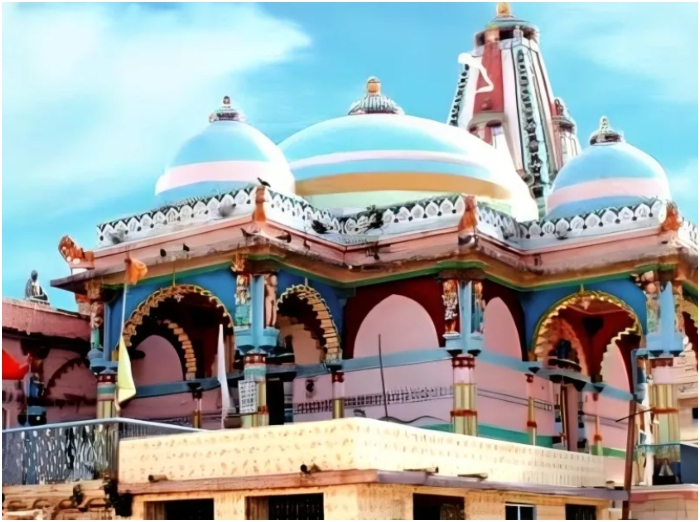
As soon as one enters the Gopanath temple, one notices the distinctive style of architecture. The temple’s design is additionally stunning. This temple has grown in popularity as a tourist destination due to its location on the seashore. The temple is intricately crafted. Along with this, the rasalila of Lord Krishna and the gopis have been portrayed within the temple.

Many idols have been erected in this one temple. Those old statues are likewise quite lovely. A symbolic Shivlinga has been installed for pilgrims’ darshan. The original Shivlinga created by the Gopis is reported to be underground. A white flag is raised towards the temple’s peak. As a result, the locals refer to Mahadev as the ‘Dholi Dhajavala God’. Such wonderful architecture is still unknown to a large number of people.

The Lighthouse

A Diwadandi, or lighthouse, can be found here as well because Gopnath Temple is located near the coast. The first lighthouse was established in 1879. Since 1975, it has stopped working. The white-painted double-veranda lighthouse has a masonry minaret around 12 meters tall. The lamp was removed from it. Bhavnagar State built this historical lighthouse. The site is nonetheless open to visitors, despite its deteriorating state, however, the minaret has been closed.

When the first lighthouse was closed in 1975, work on the second lighthouse began. That lighthouse is still functioning. Every 20 seconds, a light illuminates. Its flash travels about 7 to 8 kilometres. This new lighthouse was constructed at a distance of approximately 500 meters towards the north of the old lighthouse. Recently several developments have taken place at the location including the construction of a museum and other modern architecture at the temple. 

Very beautiful beach

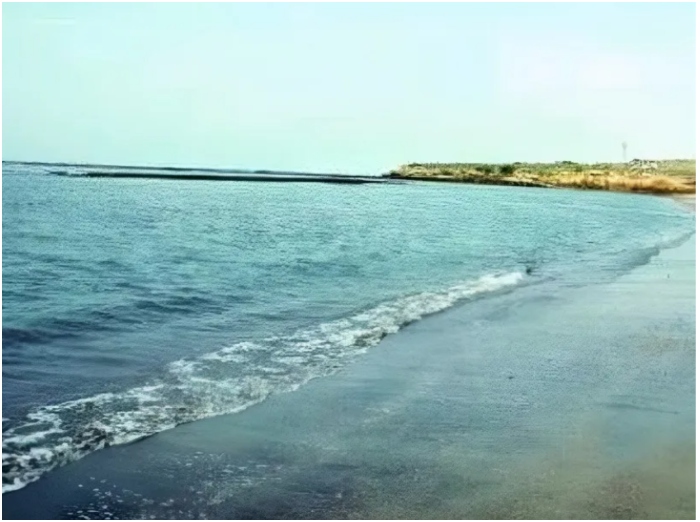
Gopanath Temple is a popular tourist attraction as it is located on the seashore. As soon as you arrive, the ethereal sound of the sea is heard, which provides constant peace to the human mind. The locals here revere the sea as a God. Locals come to the temple regularly to listen to the profound sound of the water and contemplate. A statue of Narasimha Mehta is located outside the temple, close to the sea. Along with this, Shivlinga and Lord Shani’s idols have been erected. All safety arrangements have also been made as the sea waves are approaching at times. Also, there is a Swaminarayan temple here.

The Gopanath Mahadev Temple is managed by two trusts. 1) Mahant Vasi Trust; 2) Brahmachari Vasi Trust. The Mahant Vaishi Trust is led by the Deputy Collector of Bhavnagar, whereas the President of the Brahmachari Vaishi Trust is chosen from the general public. The Gopanath Mahadev Mandir Trusts established canteen arrangements. Here, anyone, regardless of social class, is eligible for free prasad coming from God. There is also an ancient cave at this location, which is believed to be as old as Gopnath Mahadev Mandir.

The artwork, gorgeous scenery, and historical significance of Gopanath Mahadev Temple distinguish it from other temples. This location is well-known for its tourist attractions, spiritual significance, and value in terms of entertainment. The sentiments of the local people are very much attached to this temple.

Assam: Dibrugarh jail superintendent arrested over seizure of electronic gadgets from cell of ‘Waris Punjab De’ chief Amritpal Singh and his aides

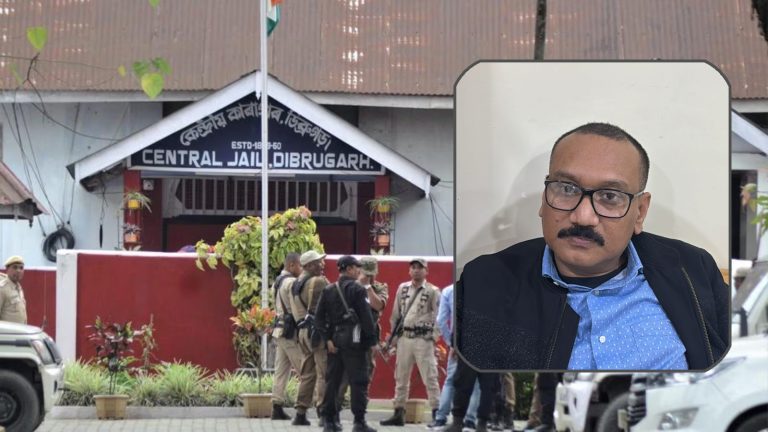
The superintendent of Dibrugarh Central Jail in Assam was apprehended in Assam on suspicion of a security lapse that enabled devices including spy camera pen and smartphone to be smuggled into a high-security cell of the Dibrugarh Central Jail. Notably, Amritpal Singh, supremo of the pro-separatist outfit “Waris Punjab De” and radical Sikh preacher has been housed in this cell since his arrest in April of last year. The development transpired late on 7th March.

Nripen Das, the superintendent of Dibrugarh Central Jail, was taken into custody at the Dibrugarh Sadar Police Station after being accused of “laxity.” The Superintendent of Police Rakesh Reddy stated, “A few days ago, a search was conducted inside the jail, where we found mobile phones, remote with keypad, and other devices inside the jail premises. Based on that case, we have started an investigation and we have collected some technical data also regarding the mobile phones and the other communication devices which they have used. Upon further inquiry, we found that there is a nexus between the jail officials, especially the Superintendent and others, and for this reason, we have registered a new case and arrested him (Nipen Das) today.”

The SP said that the jail official was facilitating unlawful activities in the jail, which is a serious national threat.

According to Sizal Agarwal, the additional police superintendent for crime in Dibrugarh, Nipen Das, the superintendent of Dibrugarh Central Jail, was arrested late on Thursday under the strict anti-terror Unlawful Activities (Prevention) Act, the Assam Prisons Act, and Section 120B  (criminal conspiracy) of the Indian Penal Code. According to her, the breach was discovered last month, and the culprit was taken into custody following multiple phases of inquiry. She noted, “This is a national security issue, being the head of the jail, he must be responsible.” 

According to the police, the jail has a multi-tier security system with CCTV monitoring going on all the time. Chief of Assam Police Gyanendra Pratap Singh stated on 17th February that following a search of the cell by the jail staff, a smartphone with SIM, keypad phone, TV remote with keyboard, spy-cam pen, pen drives, Bluetooth headphones, speakers and smartwatch were found. On 20th February, he paid a visit to the jail and met with the top officials. He then issued an order for the probe and the transfer of some prison employees.

Image via PTI

According to people with knowledge of the situation, Nipen Das was being questioned as more jail officials were brought in for interrogation on 8th March morning. An investigator revealed, “This was a major security issue and we may arrest more officials.”

Director General of Police GP Singh took to X and wrote, “Reference NSA Detenues at Dibrugarh Jail, Assam-On receipt of information about unauthorised activities taking place in NSA cell, additional CCTV cameras were installed in the public area of NSA block.” He added, “Further, lawful action and steps are being taken to prevent recurrence of such incidents.”

More CCTV cameras were positioned in the NSA wing’s common areas after they were made aware of these activities. The prison has a thorough security system in place that includes CCTV surveillance, round-the-clock three-tier security, and close coordination between state and federal officials.

More CCTV cameras were positioned in the NSA wing’s common areas after they were made aware of these activities. The prison has a thorough security system in place that includes CCTV surveillance, round-the-clock three-tier security, and close coordination between state and federal officials.

Since 19th March of last year, ten members of the pro-Khalistan group, “Waris Punjab De” including its leader Amritpal Singh and one of his relatives have been imprisoned in Dibrugarh. They were nabbed under the National Security Act (NSA) following raids on the organization at multiple locations in Punjab. Amritpal Singh and nine of his accomplices were arrested and taken to a jail in Assam where strict security measures were imposed.

They were then allowed to be visited by their relatives and legal counsel. It has been alleged that Amritpal Singh is kept in solitary confinement and his companions are locked in different cells. Amritpal Singh had been eluding the Punjab Police’s onslaught on him and his supporters for more than a month before their capture.

Extensive security precautions were implemented upon their transfer to Dibrugarh, which involved the installation of extra CCTV cameras and the maintenance or replacement of any that were broken. Established in 1859–1860, Dibrugarh Prison is widely recognized as one of Northeast India’s oldest and safest prisons.

Rajasthan: ‘Friends’ murder man for refusing to perform oral sex, cops arrest one

On Thursday (7th March), the Rajasthan police informed that a 40-year-old man named Om Prakash Bairwa was murdered by his two ‘friends’ for refusing to engage in oral sex.

The incident took place on 26th February this year in the Brana district of the State. As per reports, the accused were identified as Murlidhar Prajapati and Surendra Yadav.

While speaking about the matter, SP (Baran) Raj Kumar Choudhary informed that the victim and the two accused men had drunk alcohol on the fateful day. The trio had also visited the residence of the sister of Murlidhar Prajapati.

On their return to Baran, Prajapati and Yadav forced Om Prakash Bariwa to perform oral sex on them. After the victim refused to give in to their demands, the duo killed Bairwa and dumped his body in a dry pond.

The body of the victim was discovered by the police on 27th February this year. The cops were able to trace the accused based on inquiries and technical investigations.

Murlidhar Prajapati confessed to the murder after being apprehended by the police. In the meantime, accused Surendra Yadav consumed a poisonous substance fearing arrest. He is now undergoing treatment at a hospital.

Yadav worked as a daily wage worker while accused Prajapati was a dhaba owner in Baran district of Rajasthan.

Rakhi Sawant’s ex-husband Adil Khan marries Bigg Boss 13 contestant Somi Khan

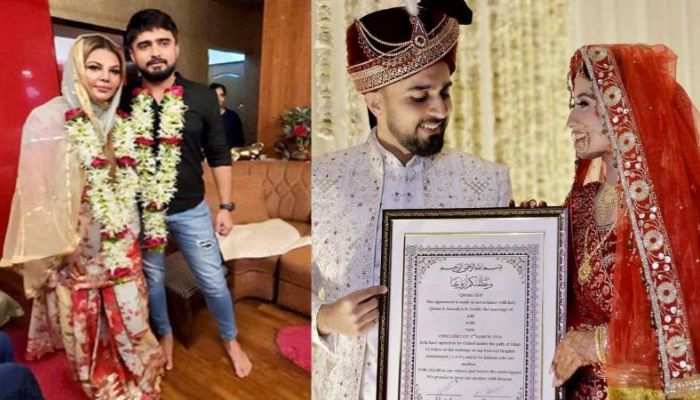
Actress Rakhi Sawant’s ex-husband Adil Khan Durrani has married again. Adil is now married to actress Somi Khan. Sharing the pictures, he informed his followers that this marriage took place in a simple beautiful ceremony.

In an Instagram post, he wrote, “Bismillahir Rahmanir Raheem. We are overjoyed to announce that by the grace of Allah, we have solemnized our Nikkah in a simple and beautiful ceremony. Alhamdulillah, we are thankful for this blessing and we appreciate our families and friends for their love and support. We are eager to begin our new journey together as husband and wife. Please remember us in your prayers for a blessed married life. JazakAllah Khair. Adil Khan Durrani and Somi Adil Khan.”

According to media reports, not much information has been received on the marriage of Adil and Somi. But Adil has said that he will tell everyone about this soon. It is being told that this marriage took place on 2nd March in Jaipur.

Somi Khan was seen on TV in the Bigg Boss 12 season with her sister Saba Khan. Dipika Kakar Ibrahim became the winner of this season. Until last year, Adil Khan garnered media attention alongside Rakhi Sawant. Rakhi alleged that despite converting her religion and marrying Adil, he did not value her. Additionally, he faced accusations of rape.

Following significant controversy, Adil and Rakhi Sawant parted ways. Subsequently, both attempted to narrate their story to the public through songs. As a result of their dispute, Adil was arrested on 7th February 2023 and remained incarcerated for five months. Rakhi Sawant had accused Adil of subjecting her to torture.

Rameshwaram cafe blast: NIA takes into custody 4 suspects, including their leader, who were arrested in Ballari ISIS module case

The National Investigation Agency (NIA) has arrested four suspects in the Bengaluru Rameshwaram Cafe blast case. The arrested suspects were previously detained in December 2023 in the Ballari ISIS module case.

They have been identified as 26-year-old Minhaj alias Mohammed Sulaiman and Shayan Rahman alias Hussain, 23-year-old Anas Iqbal Shaikh and 19-year-old Syed Sameer.

As per reports, the suspects were arrested on 6th March, five days after the explosion. The accused have been taken into custody till 9th March and are being interrogated at an anonymous location.

The development comes just days after reports suggested possible link of the suspect in the cafe blast to the Ballari ISIS module. Reports citing official sources pointed at several similarities between the blast and the cases linked to the ISIS module. One of the similarities mentioned is in the assembly of the improvised explosive devices (IED).

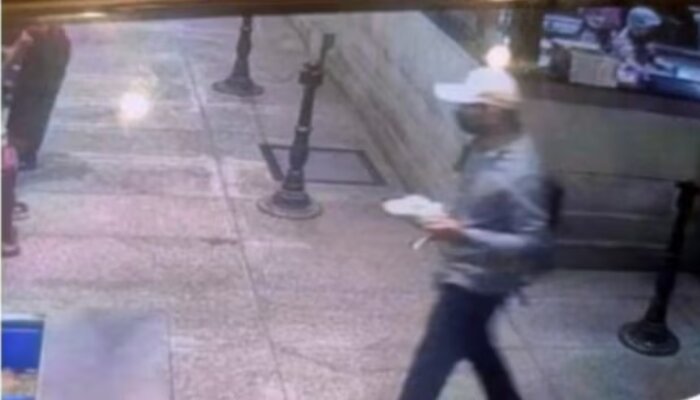
Additionally, authorities have traced the route taken by the cafe blast suspect after the explosion. Probe has revealed that that suspect was last seen on CCTV at the Ballari bus stop at 8:58 pm, that is around 8 hours after the explosion.

Ballari ISIS module suspects

The NIA special court granted a body warrant to the authorities to apprehend Mohammed Sulaiman who was first arrested on 18th December 2023 during raids by the investigation agency.

Md Sulaiman, a cloth merchant from Ballari, was influenced by ISIS and was heading a group of 8 terrorists. He identified himself and his companions as the “Ballari Module.”

The group was disseminating literature about the recruitment of Mujahideen for the sake of jihad and they were specifically targeting college students for recruitment.

Md Sulaiman, who spent the previous five years working for the outlawed radical Popular Front of India (PFI) outfit, is charged with developing the Ballari module with the assistance of Syed Sameer, a native of Ballari.

They had plans to carry out bomb attacks in Ballari, Bengaluru and other cities of North Karnataka. Their plan involved recruiting college students and selecting individuals who were strongly indoctrinated in order to carry out the assault.

Sulaiman devised a plan to turn the young minds into jihadis after his visit to Pakistan, Iran and Iraq.

On 14th December 2023, the NIA registered a case against the ISIS Ballari module which was accused of using explosive raw materials to fabricate IEDs that would be utilized for “carrying out terror acts.”

On 18th December 2023, the NIA raided 19 locations in four states based on specific information and captured eight members of the terror group, including its head Sulaiman.

This foiled their intention to carry out terror activities, including IED explosions. Teams from the NIA descended on 19 sites located in Ballari and Bengaluru in Karnataka, Amaravati, Mumbai, and Pune in Maharashtra; Jamshedpur and Bokaro in Jharkhand and Delhi.

The raids also led to the seizure of explosive raw materials, such as Sulphur, Potassium Nitrate, Charcoal, Gunpowder, Sugar and Ethanol, sharp-edged weapons, unaccounted cash and incriminating documents, along with smartphones and other digital devices.

Investigations have further revealed that the accused, in pursuance of the path of violent Jihad, Khilafat, ISIS etc., were continuously in touch with one another via encrypted apps.

The NIA said, “The eight ISIS agents arrested during the raids were involved in actively promoting terror and terror-related acts and activities of ISIS, the proscribed organisation. The raids also led to the seizure of explosive raw materials, such as sulphur, potassium nitrate, gunpowder, and sharp-edged weapons. According to initial investigations, the accused had planned to use the explosive raw materials for the fabrication of IEDs, which were to be used for carrying out terror acts.”

Minaj, also known as Mohammed Sulaiman and Syed Sameer from Ballari, Anas Iqbal Shaikh from Mumbai, Mohammad Muniruddin, Syid Samiullah alias Sami and Mohammed Muzammil from Bengaluru, Shayan Rahman also known as Hussain from Delhi and Mohammed Shahbaz, also known as Zulfikar from Jamshedpur were among the eight people who were nabbed by the agency. 

Rameshwaram Cafe bomb-blast suspect

According to police sources, the suspect in the cafe bombing, whose trail has been cobbled together using CCTV images of his escape route, took two intra-state government buses to get to Ballari before continuing to an unspecified location.

The investigators believe that after putting the explosive in the cafe, the bomber took a bus from Bengaluru to Bidar and then headed for Bhatkal. NIA and Central Crime Branch (CCB) have stepped up search for the suspect.

The CCTV trail of the suspect show him first boarding a Volvo bus (KA 47 F 4517) from a bus stop near the cafe. According to sources, the suspect changed his clothes about three kilometres from the cafe near a moque. He took off his shirt and baseball cap and appeared in a casual T-shirt.

According to police sources, the baseball cap was found and is an important piece of evidence in the investigation. The suspect’s CCTV track is also picked up on a state bus that travels to Tumkur, which is around 60 kilometres from Bengaluru, from the city’s outskirts at around 3 pm on the day of the explosion.

A camera on the bus captured images of the man wearing new clothes and without a cap, per sources. It is suspected that he got off the bus while travelling to Tumkur. The suspect was last seen on the CCTV at the Ballari bus terminal at 8:58 pm.

Police are looking into whether the suspect left Ballari and took a bus to another location, possibly to the state’s northern or coastal borders.

According to reports, the suspect changed up to ten buses on the way to plant the bomb at The Rameshwaram Cafe and to get off after the explosion.

Reports quoting sources said, “The suspect may have used a day pass for Volvo city buses for his commute to the site of the terror incident and getaway.”

On the morning of the explosion, the suspect’s CCTV trail was initially detected close to the Silk Board in southeast Bengaluru, which is around 20 kilometres from Whitefield in east Bengaluru.

On 7th March Karnataka Home Minister G Parameshwara stated, “We have some crucial details about the suspect in the Rameshwaram cafe blast case. Investigation has revealed that the accused changed clothes and travelled by bus. We will arrest the accused soon.”

The Chief Minister of Karnataka, Siddaramaiah, stated that certain leads were confidential. The Ministry of Home Affairs has instructed the NIA to take over the inquiry, which the Bengaluru police are coordinating to complete, according to the NIA.

It has been determined that the timer, detonation mechanism, and explosives used in the Rameshwaram Cafe blast are very identical to those used in the blast that happened in Mangaluru on 19th November 2023 involving a local ISIS module from Shivamogga and Mangaluru. Key handlers for this module are still missing, despite ten NIA arrests since November 2023.

The police sources unveiled that one of the things investigators are doing to identify potential culprits is to look into the sales of all digital timers with circuit boards, such as the one used in The Rameshwaram Cafe. According to sources, the kit is inexpensive and useful for a variety of tasks. A Rs 10 lakh reward was also announced by the NIA on 6th March for information leading to the identity of the culprit captured on camera during the cafe explosion.

Chandrababu Naidu meets Amit Shah, BJD’s VK Pandian heads to Delhi amid buzz of BJP tie-up: How NDA is expanding and I.N.D.I. Alliance is shrinking

The Bhartiya Janata Party, which is targeting a resounding victory in the next Lok Sabha elections, has been striving to expand the National Democratic Alliance. alongside a goal of winning 370 seats on its own and “Abki Baar 400 Paar” alongside allies, the party aims to team up with like-minded regional political powers.

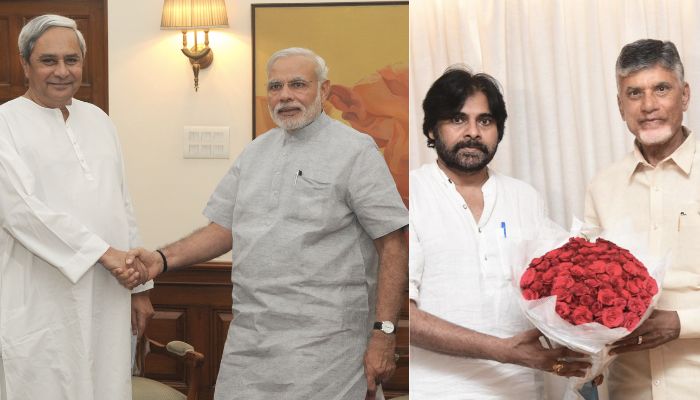
In the wake of BJP and several regional parties exploring a potential alliance, Telugu Desam Party President N Chandrababu Naidu and Jana Sena Party chief Pawan Kalyan met with Union Home Minister Amit Shah and BJP Chief JP Nadda in Delhi. The meeting took place on Thursday (7th March).

There are speculations that the Telugu Desam Party (TDP) is likely to join the National Democratic Alliance (NDA) for the upcoming Lok Sabha and Assembly elections in Andhra Pradesh. The TDP which was part of the BJP-led National Democratic Alliance till 2018, evinced interest in reviving the alliance after suffering a crushing defeat in the 2019 elections. There has been talk of a triparty alliance between the regional parties and BJP for some time.

Reports say that the meeting focused mostly on the potential alliance and the complexities of seat distribution. Although both parties profess openness to an alliance, the final decision depends on settling disagreements over the seats each party will contest.

Actor Pawan Kalyan-led Jana Sena Party, which has been a member of the NDA, has already joined hands with the TDP. The state has 25 Lok Sabha and 175 Assembly seats.

Elections for Lok Sabha are expected to be held in April-May. The ruling party is eyeing a third term under Prime Minister Narendra Modi and has set a target for winning 370 seats on its own and 400 with allies.

Strong buzz of BJD-BJP alliance ahead of Odisha assembly and Lok Sabha polls

Other than the southern states, speculations are rife about a possible alliance between the BJP and the Biju Janata Dal (BJD) in Odisha. 5T chairperson VK Pandian and BJD organisational secretary Pranab Prakash Das headed for New Delhi to meet with the BJP. Their journey to Delhi has increased the prospect of clandestine negotiations between the two parties. They are likely to continue talks about alliances and seat-sharing ratios with the BJP’s top leadership.

VK Pandian is said to have played a crucial role in convincing his party members that forming an alliance with the BJP would be advantageous to his party, as per reports.

According to reports, the BJP intends to contest 13 Lok Sabha seats in Odisha, while the BJD is expected to contest 8 LS seats. It is being said that a 13-8 or 14-7 seat-sharing ratio is being looked into. Although there are no specifics on the Assembly seat-sharing formula as of yet, the BJD-BJP alliance is nearly confirmed.

It is notable here that the BJD enjoys an overwhelming majority in the Odisha assembly currently and is expected to remain in power in the state for the foreseeable future. The Odisha unit of BJP is not so strong and lacks strong regional leaders currently who can ensure a significant seat share in the assembly.

How an alliance will benefit BJP and BJD both in Odisha

However, in the 2019 Lok Sabha elections and simultaneous assembly elections, the people of Odisha displayed that they are willing to choose different parties to rule them in the state and center. While Naveen Patnaik’s BJD won a brute majority in assembly polls, leaving BJP far behind, BJP secured 8 Lok Sabha seats out of 21, winning significantly in Western Odisha.

Hence, the speculation is rife that since the BJP’s Odisha unit doesn’t have much chance to win significantly in the assembly polls, the two old NDA allies might officially end their separation and choose to “save energy and resources” by not challenging each other.

Also, at the national level, Naveen Patnaik’s BJD, despite having the BJP as a rival in the state, has been very supportive of the Modi government, often earning praise from senior BJP leaders, even the PM himself for putting the welfare of the state ahead of petty political rivalry.

BJD had extended support to the Modi government on almost all major parliamentary bills, and in the Presidential elections too. CM Patnaik had personally appealed to all MLAs and MPs of Odisha to vote for President Murmu and had sent state cabinet ministers Tukuni Sahu and Jagannath Saraka to endorse the President’s nomination papers.

Amid all this, it would appear that a pre-election alliance may be beneficial for both the BJP and BJD as they join their resources to win their respective winnable seats and avoid confrontation at the state level.

Moreover, Naveen Patnaik has no national political ambitions and he has so far avoided all attempts by other Opposition parties to join an anti-BJP front.

Moving to Punjab, it was reported last month that discussions are on between the BJP and Shiromani Akali Dal (SAD) over the latter returning to the NDA fold. Speaking at a programme last month, Union Minister and BJP’s in-house “Chanakya” was asked about SAD’s possible return to NDA. On this Shah said, “Talks are going on but nothing has been finalised.”

It is worth noting that in the 2019 Lok Sabha elections, the BJP and Akali Dal contested jointly and won four of the thirteen seats. The BJP competed three and won two, whereas the Akali Dal contested ten but only won two.

NDA expanding, I.N.D.I.A shrinking

Interestingly, the BJP has for the last few months been in an NDA expansion mode with its efforts so far yielding positive results. Recently, Rashtriya Lok Dal chief Jayant Chaudhary announced the decision to join the alliance with the BJP in Uttar Pradesh for the upcoming general elections. This came after the Modi government announced that the former prime minister Chaudhary Charan Singh would be conferred Bharat Ratna.

“How can I refuse now”, Chaudhary said adding that PM Modi’s government did what no other party could. RLD joining hands with the BJP might turn out to be fruitful for both parties since RLD enjoys a significant influence in Western Uttar Pradesh among the Jat community.

Jayant Chaudhary’s joining the NDA has been a major setback for the I.N.D.I. Alliance, as it was reported that Akhilesh Yadav, had talked about letting RLD contest 7 seats.

RLD and Samajwadi Party formed an alliance for the 2019 general elections. However, RLD lost all three seats it fought, while SP gained only five. While the BJP achieved a landslide victory in the 2022 Uttar Pradesh assembly elections, the Samajwadi Party won 111 of the 347 seats it contested and the RLD won 9 of the 33 seats it ran for.

After ditching the BJP to form ‘mahagathbandhan’ with RJD in 2022 amidst high-voltage political drama, Nitish Kumar, the Chief Minister of Bihar and Janta Dal (United) supremo announced his return to NDA in January this year. On 28th January, Nitish Kumar took oath as Bihar CM for the ninth time. JDU leader not only returned to NDA but also asserted that his alliance with NDA will remain forever adding that now there is no question of going anywhere else.

Interestingly, just few months back, Nitish Kumar was being projected as I.N.D.I. Alliance’s prime ministerial face. The leader was also actively working to bring the opposition parties under the umbrella of the I.N.D.I. bloc, however, he ended up snapping ties with staunch anti-Modi party RJD and I.N.D.I. Alliance.

The BJP-led NDA had added another party to its fold as Janata Dal (Secular) joined the alliance in Karnataka in September last year. The former Congress ally joined NDA after  Prime Minister and JD(S) patriarch HD Deve Gowda and his son Kumaraswamy met BJP President JP Nadda and Amit Shah in the Parliament.

While the BJP has not only managed to deflect INDI Alliance parties like the JDU and RLD, and is likely to forge an alliance with the BJD in Odisha and TDP-JSP in Andhra Pradesh, the Congress-led I.N.D.I. Alliance suffering jolts after jolts. Interestingly, even the most hardcore anti-Modi parties are deserting the “sinking ship”.

Recently, the Communist Party of India (CPI) said that it has decided to contest elections on its own from Assam. The CPI would reportedly fight elections on 3 seats from the northeastern state.

Earlier, the Mamata Banerjee-led Trinamool Congress indicated that it would contest elections separately in West Bengal, ruling out any possibility of an alliance with the grand old party.

Interestingly, in February this year, Congress leader Jairam Ramesh asserted that two parties (JDU and  RLD) leaving the I.N.D.I. bloc will not have any impact, however, with parties like TMC announcing to go solo in the coming elections, Congress and the opposition bloc is left helpless and frustrated. This frustration is evident in its leaders like Rahul Gandhi and RJD supremo Lalu Yadav resorting to personal attacks like ‘fake OBC’ and ‘Parivar’ jibes on Prime Minister Narendra Modi.

While polls predict an easy third term win for the BJP-led NDA, the alliance’s expansion underlines the NDA’s strong position, bringing it closer to PM Modi’s ‘Abki Baar 400 Paar’ ambition. Meanwhile, given the pace at which the I.N.D.I. alliance is disintegrating, it will not be surprising that the coalition will disband entirely before the elections.

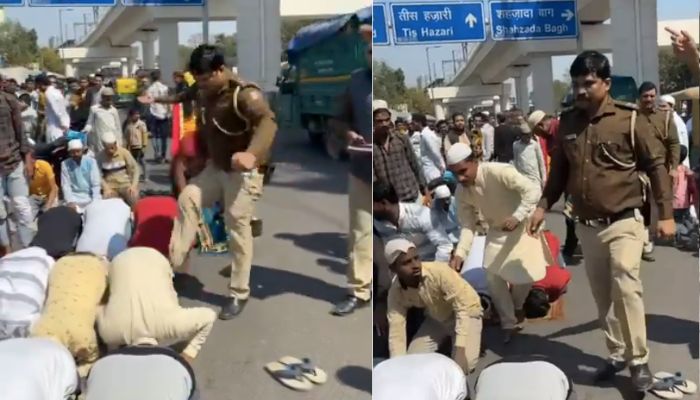
Delhi cop kicks namazis who had blocked roads for offering prayers, suspended after video went viral

On Friday (8th March), a video of several Muslims offering namaz on the road in the Indralok area in Delhi surfaced online. In the video, some police officers are seen asking them to move aside as they are blocking the road. However, an officer arrives and kicks a man offering namaz and angrily asks him to move.

The 34-second long video is recorded by a person present on the spot who can be heard claiming that the cop is kicking Muslims insinuating that the cop officer hit the man because of his Muslim identity and not for blocking the road and causing inconvenience to the passing vehicles.

As seen in the viral video, after the cop hit the man, a Muslim mob turned agitated and surrounded the policeman. Following this, the officer and the mob had a heated argument. Some voices in the background can heard saying “Maaro saale ko… (beat the scoundrel)”.

Meanwhile, the cop has been suspended. Police officials said, “In the incident at Indelork today, the Police Post Incharge, who was seen in the video has been suspended with immediate effect. Necessary disciplinary action is also taken.”