Home Blog Page 178

Dream11 steps down as lead sponsor of Indian Cricket team after Online Gaming Bill became law, BCCI to find new sponsor before Asia Cup next month

After the passage of Online Gaming Bill in the parliament, fantasy sports platform Dream11 has decided to back out as the lead sponsor of the Indian cricket team. The decision comes just days before the start of Asia Cup 2025.

The ‘Promotion and Regulation of Online Gaming Bill, 2025’ got the assent of President Droupadi Murmu on Friday. The new law bans all kinds of online games involving real money. It imposes penalties of up to three years imprisonment and fines reaching ₹1 crore for violations.

The bill was passed by Lok Sabha on Wednesday and by Rajya Sabha on Thursday without much discussion, as opposition continued to disrupt proceedings.

According a report by NDTV, Dream11 is not willing to continue its deal with BCCI, but an official announcement has not been made yet.

BCCI secretary Devajit Saikia on Friday said that the board will follow the laws of the country. He said, “If it’s not permissible, we’ll not do anything. The BCCI will follow every policy of the country that is framed by the central government.”

BCCI is expected to invite new bids to sponsor the Indian cricket team. The Asia Cup starts on 9 September, and if a new sponsor is not found before that, the team will have to play without a lead sponsor. As per reports, jerseys for the team with Dream11 logo have already been printed, but they won’t be used at the tournament.

Dream11 had become the Team India sponsor in 2023 by winning the bid for ₹358 crore. The company was paying ₹3 crore per home match and ₹1 crore per away game. The sponsorship deal was to expire in 2026.,

Notably, after the bill was passed, Dream11 discontinued all paid contests on its platform. It has said that now it will operate solely as a free-to-play online social game.

Viral audio exposes Kerala Congress MLA threatening woman with murder if she refuses to undergo abortion, was earlier accused of sexual misconduct

Congress MLA from Palakkad, Rahul Mamkootathil, is once again in the spotlight after a leaked audio clip sparked a major controversy. The MLA, who already faces several allegations of sexual misconduct, is now accused of forcing a woman to undergo an abortion and even threatening to kill her if she refused.

The four-minute audio, which surfaced on Saturday, 23rd August, and quickly went viral, features Mamkootathil speaking to an unidentified woman. In the clip, the MLA can be heard saying that the pregnancy would “destroy” his life. 

He also warns the woman of “consequences” if he gets angry and, at one point, says, “To kill you, I just need a few seconds.” NDTV has reported, and they said they cannot guarantee the authenticity of the viral audio clip.

“This will destroy my life,” MLA says in the audio

The clip begins with the woman asking Mamkootathil why he wanted to get rid of her pregnancy without her consent. To this, the MLA replies, “It’s not about permission, it’s because you don’t think about it. You don’t know the consequences.”

The woman insists that she is ready to face the consequences on her own, but Mamkootathil warns her that she cannot. “You can’t face it alone. I don’t know the consequences when I get angry,” he says.

He seems to be concerned about the pregnancy ruining his political life during the conversation and says, “This will destroy my life,” he says. He then threatens, “To kill you, I just need a few seconds.”

The woman pushes back, telling her that she can raise the child by herself, and she does not need him to support her. She accuses him of being the type to kill the baby, to which he retorts: “What are you saying? You are making me crazy.”

A series of allegations against Mamkootathil 

This controversy comes just days after Mamkootathil stepped down as the Youth Congress president in Kerala following a series of allegations against him. The storm first broke out after Malayalam actor Rini George spoke about a young political leader harassing her. She did not name anyone, but the BJP quickly claimed she was referring to Mamkootathil. The MLA denied the charges at the time.

Soon after, writer Honey Bhaskaran and trans woman activist Avanthika came forward with similar complaints. Avanthika said that the MLA spoke to her about “rape sex” and expressed his fantasies in deeply offensive ways. She said Mamkootathil even suggested meeting her to act them out.

Screenshots of WhatsApp messages sent by him to another woman also surfaced online. In those chats, he is seen asking if he could come over to her place when she was alone.

Malayalam Actor Rini George’s accusations

Actor Rini George’s thread contributed significantly to giving the controversy visibility. She stated that her exchanges with the MLA started three years ago when he sent friend requests on social media. She claimed that his conduct soon became inappropriate.

She alleged that Mamkootathil once offered to book a room in a five-star hotel and invited her there. She further claimed that when she warned him she would complain to senior party leaders, he dismissed her, saying, “You can go and tell anyone… who cares?”

George also accused senior Congress leaders of ignoring her complaints, allowing Mamkootathil to continue holding important positions within the party.

Political fallout

The allegations have created a huge political storm in Kerala, especially with the Assembly elections due next year. The BJP has already demanded Mamkootathil’s resignation from the state assembly. The CPI(M)’s youth wing, DYFI, has also launched protest marches in Palakkad, accusing the Congress of shielding him.

Even within the Congress, dissatisfaction is growing. Several Youth Congress workers and senior leaders have reportedly told the party leadership that Mamkootathil’s presence as an MLA is damaging the party’s image at a sensitive time, with both local body and Assembly elections approaching.

I can prove my innocence in court: Mamkootathil 

Despite the mounting criticism, Mamkootathil is refusing to step down as MLA. Speaking to the media recently, he said, “Resignation is not even in my thoughts.” He claimed that none of the women who made the allegations had filed an official complaint. “If the CPI(M) wants, they can fabricate one. Let them complain, I can prove my innocence in court,” he said.

On 21st August, he stepped down from his organisational roles in the Congress, including being the Youth Congress president. He insisted, however, that the move was of his own free will and not due to pressure from the party leadership.

For the time being, the online audio clip has fanned the already raging controversy over the young MLA. With elections not too far away, the case has turned into a political weapon for the opposition and a worrying headache for the Congress, which struggling to douse the flames.

Pakistani women Imrana Khanam and Firdousia Khanam living in Bihar since 1956, had voter ID cards, caught during SIR exercise by Election Commission

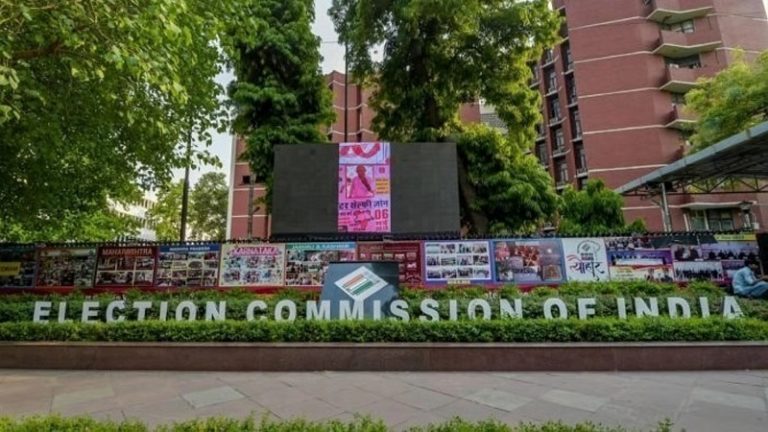
On 24th August, a startling revelation came from Bhagalpur, Bihar, that two Pakistani women named Imrana Khanam and Firdousia Khanam, have been found to have her name in the state’s voter list. The women possessed Aadhaar cards as well. Imrana entered India in 1956 on a 3-year visa and Firdousia on a 3-month-visa in same year. The issue came to light during the Special Intensive Revision (SIR) process of the electoral rolls as the citizenship was also checked during the process. Though her name made it to the draft voter list, the process to remove it has been initiated on the instructions of the Ministry of Home Affairs (MHA).

Discrepancy uncovered during verification

According to the officials, the women had arrived in India with a Pakistani passport in 1956. Records show none of them renewed their visa and continued to stay in the country illegally. During the verification process, authorities matched the passport details and flagged them as a foreign national.

Name removal process initiated

Booth Level Officer (BLO), Farzana Khanam, confirmed that she received directions from the department after the Ministry of Home Affairs identified the case. Following the orders, the officer initiated the paperwork to remove the names from the rolls. The officer added about Imrana that the woman, now old and unwell, could not speak for herself during the verification. The Home Ministry issued a notice on 11th August, which set the process in motion.

Administrative action underway

Sources in the administration revealed that Imrana had also worked in a government job at some point, which raised further questions about the extent of her integration despite her foreign nationality. The ongoing investigation will determine how long she has been listed as a voter and whether she exercised the franchise in past elections.

District administration’s response

District Magistrate of Bhagalpur, Dr Nawal Kishor Choudhary, confirmed that two Pakistani nationals with valid voter IDs have been identified in the district. He said, “There are 24 lakh voters in Bhagalpur. BLOs visit each booth for verification. This is the first time such a case has been reported, and we will take action as per the law.”

Larger political context

The discovery of a Pakistani national in the voter list has proved that the SIR exercise was necessary in the state. The case is also likely to reignite debates on infiltration and illegal stay, particularly after repeated warnings by the Union government clearly directing Pakistani nationals to leave the country following the Pahalgam terrorist attack in April this year.

Furthermore, it has brought back the focus on the demand for the SIR exercise across the country, especially in the poll-bound states.

Delhi police detain Tahsin Saiyed over attack on Delhi CM Rekha Gupta, accused had transferred money to attacker Rajesh Sakariya

Delhi Police have detained another man named Tahsin Saiyed in connection with the attack on Delhi CM Rekha Gupta on 20th August during a Jan Sunvai (Public Grievance Hearing). This comes after police nabbed the attacker, named Rajesh Bhai Khimji Bhai Sakariya, on the day of the incident.

Saiyed, from Rajkot, was detained for questioning after police discovered that he had transferred ₹ 2,000 to Sakariya. He was interrogated in Rajkot, along with four others, before being taken to Delhi on Friday night (16th August).

According to reports, Saiyed revealed during interrogation that he had known Sakariya for 10 years. He told the police that he was familiar with Sakariya’s aggressive behaviour. He added that Sakariya told him about his plan to visit Delhi to meet CM Rekha Gupta on Monday (18th August) and asked for ₹5000. But Saiyed gave him only ₹2000. Sakariya also sent a video of the Shalimar Bagh-located residence of CM Rekha Gupta to Saiyed.

Tahsin Saiyed further said that Sakariya told him that he was going to meet the CM regarding the issue of stray dogs. Sakariya is also said to have shared his plan to attack CM Rekha Gupta with Saiyed. When police asked Saiyed as to why he did not inform the police about Sakariya’s plan to attack the Delhi CM, he said that he ignored it, thinking Sakariya was joking. The police, however, were not convinced by Saiyed’s clarification. Saiyed’s phone has been seized by the police for examination.

After Sakariya’s arrest, his mother told the media that he was a dog lover and was upset with the Supreme Court’s recent order on relocating stray dogs to shelters.

Rajesh Sakariya’s criminal history

Rajesh Bhai Khimji Bhai Sakariya, who is an auto-driver, has five criminal cases pending against him. Legal action was taken against Sakariya in 2017, 2020 and twice in 2022 under the provisions of the Gujarat Prohibition Act, 1949 and the Code of Criminal Procedure. He was reportedly found involved in liquor smuggling.

In 2021, he was deported under Section 56 of the Bombay Police Act. According to police, in 2017, he was charged with hitting a person on the head with a sword and thrashing him with a bat used for washing clothes. In 2022, after a fight with his wife, Sakariya cut his head with a blade to scare his family members, and received nine stitches.

Dharmasthala ‘whistleblower’ arrested: How The News Minute, Zubair, and others furthered the ‘mass burial’ lie to demonise Hindus and their places of worship

In July this year, the temple town of Dharmasthala was hurled into a storm of sensational allegations. A former sanitation worker, C.N. Chinnaiah, claimed that between 1995 and 2014, he had buried “hundreds of bodies” in the region, victims of murders that were allegedly hushed up. His testimony, unbacked by a shred of evidence, was enough for the Congress-led Karnataka government to constitute a Special Investigation Team. For two weeks, SIT officers scoured forests, riverbanks, and ghats, looking for mass graves.

Yet as the dust settles, the story stands exposed as a monumental hoax. C.N. Chinnaiah was arrested by the SIT and produced before the Belthangady court, where he confessed to lying. His testimony crumbled during questioning. What he revealed was even more damning: he was just a pawn in a larger conspiracy.

Dharmasthala hoax ‘whistleblower’ arrested, confesses to being a part of a larger conspiracy

According to reports, Chinnaiah admitted to SIT investigators that he was recruited in Tamil Nadu late last year. A group of masterminds approached him, offered money, and promised protection if he played his role. They told him his fabricated testimony would trigger outrage, cause a domino effect, and prompt others to come forward. He would not need to fear consequences, because once the scandal was mainstream, the temple would be tarnished, and he would be shielded.

“I was given training in Bengaluru,” he reportedly told investigators. “I was told how to answer when questioned by the police. I would act as the mastermind instructed. I am just the character here; the mastermind was someone else.”

Chinnaiah even tried to bolster his falsehood with props. He presented a skull to the court, claiming it belonged to one of the victims he buried. But when pressed, he could not reveal where he had obtained it. His inconsistencies piled up. SIT officers confirmed that 17 of the 18 sites he pointed to yielded nothing. At one spot, bones were recovered, but preliminary inquiry showed they belonged to a recent case of suicide. Forensic analysis will confirm the details, but the larger narrative already lies in tatters.

The mask has truly fallen off. What was presented as a witness of conscience was in fact a stage-managed pawn in a conspiracy to malign Dharmasthala, its temple trust, and dharmadhikari Veerendra Heggade.

Propaganda machinations: Amplifying unwarranted allegations against Hindu temple under the guise of ‘journalism’

The narrative was powerful in its theatrics: a town renowned for its temple, dharmic traditions, and charity allegedly hiding a mass killing field. For weeks, the media treated the story as a serious national issue.

And yet, the investigation yielded nothing. No mass graves were found, no crimes substantiated. Finally, the whistleblower himself was arrested by Karnataka Police for providing false information. The Dharmasthala horror story collapsed under the weight of reality.

But what remained was the damage. The reputational injury to Dharmasthala, the insinuations cast on the Sree Dharmasthala Manjunatheshwara Temple Trust, and the smearing of its dharmadhikari, Veerendra Heggade. It was a

The more important question, however, is how an allegation so fantastical, so lacking in evidence, managed to gain mainstream traction. And the answer lies in the ecosystem of propaganda that thrives in today’s media, an ecosystem in which The News Minute and its editor Dhanya Rajendran play a crucial role.

Every conspiracy that gains ground has identifiable actors. There is the originator who makes the claim, the political forces who weaponise it, the ecosystem of activists and influencers who circulate it, and most critically, the amplifiers, the respectable media outlets that give the allegation legitimacy under the cloak of carrying out “balanced” and “measured” journalism.

The News Minute falls into this category. It never directly accused Dharmasthala, but its relentless coverage of each allegation, its grave contextualisation of every SIT update, and its insistence on treating the claims as worthy of national attention sustained the narrative long after it should have died. By repeatedly reporting the allegations, TNM transformed a baseless story into a live controversy. Thus, far from reporting facts, the issue morphed into one where Dharmasthala and its famous temple became a focal point of uninformed discussions and unwarranted vilification.

This is the subtlety of propaganda by amplification. TNM did not hurl wild accusations; it merely gave them space, analysis, and oxygen. But had the allegation been about madrassas engaging in mass rapes, or a mosque hiding criminal activity, would The News Minute have treated it with the same “balanced” seriousness? Would it have hosted explainers and timelines on the possibility of hundreds of Hindu girls trafficked through religious networks? The answer is obvious, as witnessed on countless instances in the past.

But that is not all — even as The News Minute postured on the moral high ground, it cynically used its Dharmasthala coverage to raise donations, effectively monetising what has now been exposed as a baseless vilification of the temple town.

The “nuanced” and “balanced” coverage appears only when the target is Hindu institutions. When it is about sexual crimes in churches or radicalisation programs running in mosques, The News Minute very conveniently ignores to report them or simply try to underplay such incidents.

The bias in covering Dharmasthala hoax vis-a-vis Ajmer scandal, Kerala Story, and Uttarakhand encroachments

The bias becomes even more glaring when contrasted with the Ajmer sex scandal verdict of August 20, 2024. After thirty-two years of legal struggle, a district court sentenced six men to life imprisonment for the mass rape and blackmail of over 100 schoolgirls in Ajmer in the early 1990s. The accused were not nobodies. They included leaders of the Ajmer Youth Congress like Farooq Chishti, Nafees Chishti, and Anwar Chishti, along with Khadims of the Ajmer Dargah.

The victims were mostly Hindu girls, many of whom were trapped, raped, photographed, and then blackmailed into bringing more girls into the network. Some were driven to suicide. It was one of the largest sex scandals in Indian history, politically and communally charged, with immense implications. And yet, The News Minute, which breathlessly covered unsubstantiated claims against Dharmasthala, had virtually nothing to say about Ajmer. No special coverage, no timelines, no grave explainers. The verdict of one of India’s most notorious crimes was buried in silence.

The same selectivity marked TNM’s coverage of The Kerala Story. When a film depicted the testimonies of women lured into relationships, converted, and trafficked as ISIS brides, TNM routinely dismissed it as a propaganda movie. The victims’ own words, their harrowing ordeal, were brushed aside because the perpetrators in the story were Islamists.

A real case of grooming, trafficking, and radicalisation was downplayed and ridiculed, while an entirely fictitious claim of mass murders in Dharmasthala was elevated into a national controversy. This inversion of priorities reveals a pattern: amplify unproven allegations against Hindus, dismiss proven crimes by Islamists, and erase stories where Hindus are the victims.

This pattern also extends to stories of illegality and encroachment. In Devbhoomi Uttarakhand, authorities uncovered multiple cases of mosques and Islamic seminaries illegally occupying government land, forest areas, and even pilgrimage routes. These encroachments led to demolitions and political confrontations, with clear documentary evidence of wrongdoing.

But here too, The News Minute was absent. There were no series of investigative reports, no timelines tracing the illegalities, no editorial outrage about land-grab by religious institutions. The same newsroom that displayed unhealthy obsession with Dharmasthala’s fabricated scandal had no appetite for investigating real encroachments by Islamic institutions in Uttarakhand. By choosing what not to cover, TNM effectively ensured that Hindu institutions alone are projected as suspect, while Islamic ones escape scrutiny.

The same goes for instances of Love Jihad, which seldoms finds a mention in The News Minute’s coverage. And when it does, the ‘media’ outlet often dismisses it as a figment of ‘Right-Wing imagination’, insulting the sufferings of thousands, if not lakhs of women, who have been through the horror of Love Jihad — victimised by Muslim men who lure them into a relationship under false pretences, only to force them to convert and coerce them into abiding Islamic edicts.

Propaganda amplifiers: How Zubair aided The News Minute and others to propagate Dharmasthala hoax

The ecosystem that sustained the Dharmasthala hoax also reveals how propaganda gains reach. Figures like Mohammed Zubair and Pratik Sinha of Alt News, and journalists aligned with Newslaundry, often amplify these “nuanced” reportage by means of tweeting and sharing reports on social media with the unstated aim of showing the Hindu institutions in the bad light. It cannot be denied that by propagating such baseless conspiracies, such characters try to effect public opinion on why Hindu places of worship should continue to remain under government control — a phenomenon vigorously opposed by vociferous public speakers like Dr Anand Ranganathan and J. Sai Deepak.

Nevertheless, when such characters shared TNM’s coverage, it lended an additional layer of credibility to the myth that Dhanya and her organisation was trying to weave. Zubair even hailed The News Minute for its relentless coverage of the Dharmasthala story, using their reports to amplify his own agenda against Hindu institutions. But once the SIT found nothing, once the whistleblower himself was arrested, Zubair quietly deleted his celebratory tweet. Not a word of apology, no clarification, no acknowledgement of error.

Tweet insinuating wrongdoing in Dharmasthala temple was deleted by Zubair without any clarification

The retreat was as silent as the initial amplification was loud. This is their method: amplify Hindu “wrongdoing” aggressively, but shamelessly scoot away when the narrative falls apart. For some time now, Zubair and his ilk has been expertly deploying this weapon — attack Hindu beliefs from someone else’s shoulders and make a dash when held accountable. When this strategy fails to work, he does what he is best at: selective amnesia.

Zubair is notorious for unleashing Sar Tan Se Juda gang against former BJP spokesperson Nupur Sharma after he accused her of making remarks against Prophet Muhammad in 2022. More than three years later, Zubair is yet to offer a “fact check” to prove what Nupur said was fake. He continues to evade responding to queries on his “fact-check” on Nupur’s claims.

And the hypocrisy becomes staggering when we recall that in cases where Muslim clerics are convicted of raping minors inside mosques, or when mosques are demolished for illegal encroachment, this entire ecosystem suddenly develops amnesia. The relentless coverage model applies only one way. The same Zubair who nitpicks Hindu priests’ speeches forgets to highlight when Muslim clerics make contentiously communal remarks. The same TNM that runs explainers on Dharmasthala conspiracies cannot find space for Ajmer, for Uttarakhand encroachments, or for victims of Islamist grooming.

The trap of false moral equivalence

The wider strategy behind this selective outrage is the creation of false equivalence. Every time a real scandal implicates Muslims—Ajmer, Bishop Franco, ISIS recruitment—the ecosystem tries to construct a Hindu counter-scandal. Thus “Bhagwa Love Trap” is invented to counter “Love Jihad.” “Jai Shri Ram” is equated with “Allahu Akbar” so that there is always a Hindu equivalent ready to balance and rationalise extremism as not being exclusive just to Islam. Rationalist murders are used to paint Hinduism as intolerant, equating it with Abrahamic blasphemy laws. Dharmasthala’s hoax was useful in this sense: to create a manufactured Hindu horror story to balance the weight of Ajmer or Kerala Story, to ensure that no one community appears uniquely culpable.

Seen from an engineering perspective, the propaganda pipeline is efficient. Allegations enter as raw material. Amplifiers like The News Minute process them into “serious issues.” Propaganda peddlers like Zubair and Sinha distribute them widely. Political actors and paid social media trolls then try to build a narrative that pushes such conspiracy theories into national discourse, where truth becomes the first casualty and sensationalism takes precedence. When proven false, the feedback loop is silence, deletion, and denial of responsibility. By then, the reputational damage is already done.

How Hindu institutes are just one manufactured allegation away from vilification

The unravelling of Chinnaiah and his admission that he was tutored, rewarded, and directed by others should end this scandal once and for all. But it must also serve as a warning. Dharmasthala was not just a hoax; it was a case study in how Hindu institutions are vulnerable to manufactured narratives. It showed how easily a temple town could be smeared, how quickly “neutral” media could amplify lies, and how seamlessly propagandists could ride on that coverage.

Meanwhile, Hindu tragedies like Ajmer are ignored, Hindu victims of grooming are dismissed as propaganda, and Islamic institutions caught in illegality are shielded by silence. Until this cycle of selective outrage is exposed and confronted, every Hindu institution remains one manufactured allegation away from vilification, and every Hindu victim remains one editorial choice away from erasure. Dharmasthala’s hoax has collapsed, but the ecosystem that birthed it is very much alive, and it is perhaps on the prowl for another Dharmasthala to vilify.

Uttar Pradesh: Woman burnt alive by her husband for dowry, video of torture goes viral, 6-year-old son of victim exposes the killers

In a shocking case from Greater Noida, a young woman named Nikki was set on fire by her husband and in-laws for dowry.

A disturbing video has surfaced showing her in flames, limping down the stairs, just hours before she died on the way to a hospital in Delhi on Thursday (21st August). The horrifying act was witnessed by Nikki’s 6-year-old son.

Fighting back tears, he told people around him, “They first put something on mumma. Then they slapped her before setting her on fire using a lighter.” When asked if his father did it, the boy quietly nodded in agreement.

Nikki had been married to Vipin Bhati for nine years. But her family says she was constantly harassed for dowry. Her elder sister Kanchan, who is also married into the same family, said she saw Nikki being burnt alive right in front of her.

“They wanted Rs 36 lakh as dowry. They kept saying we didn’t get enough at the wedding. Last night they attacked both of us. Between 1.30 am and 4 am, they beat me too. They said, ‘We got dowry for one, what about the other? You are better off dead. We will marry again.’ I tried to save Nikki but couldn’t,” Kanchan said, breaking down.

A video has emerged showing Nikki’s husband and her mother-in-law beating her and dragging her by the hair. Another clip shows Nikki lying on the floor with severe burn injuries. 

She was rushed her to Fortis Hospital, but she was later referred to Delhi’s Safdarjung Hospital. Sadly, she died on the way.

After a complaint made by her sister, police lodged a case at Kasna police station against her husband Vipin, brother-in-law Rohit, mother-in-law Daya, and father-in-law Satveer. Vipin has been taken into custody, and the others are still absconding.

The incident has created furore in the region. Large numbers of people had gathered outside the police station seeking rigorous punishment for the accused. They were holding placards with the inscription “Justice for Nikki.

Gujarat: Gaza ‘Relief Fund’ scam: Syrian national arrested, three on the run

Gujarat police have unearthed a scam where four Syrian nationals allegedly raised donations in the name of Gaza victims and used the money for personal luxury. Police have arrested one accused, identified as 23-year-old Ali Meghat Al-Azhar, from a hotel in the Ellis Bridge area in Ahmedabad. The accused hails from Damascus. Three other accused remain at large.

Speaking to the media, Joint Commissioner of Police (Crime Branch) Sharad Singhal said that the police recovered $3,600 and Rs 25,000 in cash from the accused. The other three accused have been identified as Zakaria Haitham Alzar, Ahmed Alhabash and Yousef Al-Zahar. All of them are Syrian nationals and were staying at the same hotel. Lookout notices have been issued to prevent them from escaping India.

Entry via Kolkata and suspicious movements

During investigation, police found that the group entered India on tourist visas. They landed in Kolkata on 22nd July. On 2nd August, they moved to Ahmedabad. The accused allegedly visited mosques and showed videos of starving families in Gaza to seek donations. The police added that they did not find any evidence that the money ever reached Gaza.

Speaking to PTI, Singhal said, “It is a matter of investigation why they first went to Kolkata and then came here, and if they are really into fund-raising or doing a recce for some other purpose. Recovery of US dollars and some digital transactions also raise suspicion. We are now scanning CCTV footage of the area to know more about their movements and links.” He added that prima facie, the men appeared to be in touch with suspicious people.

Anti-terror agencies join probe

Gujarat Anti-Terrorism Squad and National Investigation Agency (NIA) have joined the investigation to ascertain the group’s intent and trace where the collected funds were sent. CCTV footage is being reviewed to establish their networks. Police added that the arrested man admitted that the money was used to support their “lavish lifestyle”. Notably, by collecting donations, all of them have violated their visa conditions. The government has started the process to blacklist and deport them.

Israel-Hamas war in Gaza

On 7th October 2023, terrorist group Hamas attacked Israel, killing 1,300 innocent Israelis and foreign nationals and injuring hundreds of others. Several Israelis and foreign nationals were abducted and taken hostage in Gaza. Following the attack, Israel launched a massive military campaign against Hamas with the aim of uprooting the terrorist outfit.

Since then, thousands have been killed in Gaza as collateral damage as Hamas obstructed local Palestinians from leaving. Furthermore, Hamas, on several occasions, obstructed humanitarian aid sent from all over the world, including food and medicines, worsening the crisis. Hamas’s aim is to blame Israel for the famine in Gaza City and surrounding areas. Hamas could have ended the war by releasing the hostages but it failed to do so, leading to the Israel-Hamas war continuing for almost two years.

Four researchers of Gauhati University granted patent for plant-based formulation to fight obesity and related complications

Four researchers from Gauhati University have secured a patent for a plant-based formulation to address obesity and its related complications. The patent to Dr Manas Das, Pritimoni Das, Dr Pranjan Barman, and Dr Naba Kumar Hazarika was officially granted on August 20 by the Indian Patent Office.

The patent, numbered 569904, protects a unique herbal combination of two widely known plants, chamber bitter (Phyllanthus urinaria), traditionally used for urinary ailments, and Malabar nut (Adhatoda vasica), used for treating coughs and respiratory issues). By blending equal portions of both plants and preparing an extract using a water, ethanol mix, the researchers developed a novel therapeutic solution.

Laboratory trials of the formulation on mice have demonstrated promising outcomes, including reduced body fat, lower levels of harmful cholesterol such as triglycerides and LDL, and overall weight reduction. This marks the first reported use of these plants in combating obesity.

Assam education minister Ranoj Pegu congratulated the scientists and posted a copy of the patent certificate on X.

He said, “This achievement highlights the power of academic research, and I urge all higher education institutions to foster such innovation that transforms knowledge into solutions for society.”

Prof Nani Gopal Mahanta, Vice Chancellor of Gauhati University, said, “The patent reflects the institution’s focus on turning traditional knowledge into practical health aids. It is a proud moment for the University as it highlights our commitment to scientific innovation rooted in cultural wisdom. This accomplishment also sets an inspiring example for our students and researchers, reaffirming that Gauhati University remains a pioneer in impactful and socially relevant research.”

Dharmashtala false mass burial case: Woman who said she never had a daughter named Ananya Bhat, now says a YouTuber pressured her to say it, her 3rd flip-flop

The Dharmasthala “mass burial” case has seen yet another twist after it fell apart. Sujata Bhat, a Karnataka elderly woman, had previously stated that her daughter went missing in Dharmasthala, a temple town in Dakshina Kannada district. Her narrative initially stoked the controversy surrounding reports of sexual assault and clandestine burials.

However, after the investigation and excavation by SIT found that there was no evidence of any mass burial, recently she said that that her daughter, MBBS student Ananya Bhat, never existed. 

Now, as per a report by NDTV, she has made another U-turn, saying she was pressured into denying her daughter’s existence.

“It’s true, I have a daughter. The YouTube channel made me say that forcibly,” she said when asked why she had earlier dismissed her own claim. This contradictory testimony has once again left the case clouded in confusion.

A row of changing statements

At first, Sujata Bhat had said that her daughter, 18-year-old medical student Ananya Bhat, went missing in Dharmasthala in May 2003. She even filed a complaint with the police after the ‘masked man’ CN Chinnayya claimed that he was forced to burry the bodies of hundreds of women and minor girls after their rape and murder at Dharmasthala.

However, those claims have been proven false, after which she told a YouTuber that Ananya never existed. In an interview to a YouTube channel InsightRush, Sujata claimed that she made the false claims because she had a grouse that her grandfather’s ancestral property was given away without her signature. She had said, “Girish Mattannavar and others provoked me and made me claim that my daughter had gone missing in Dharmasthala,” and apologised for making false claims.

And now, she has changed her stand yet again, saying she was pressured into giving a false statement that she never had a daughter. She said that the channel InsightRush made her say that.

Her changing claims have added confusion to a case already surrounded by mystery. Earlier in the day, the key figure in the controversy, CN Chinnayya (better known as Chenna or the “masked man”), was arrested by the Special Investigation Team (SIT). He had initiated the case and said that hundreds of women and young girls were killed and buried in Dharmasthala, but investigators now say he fabricated the story.

The SIT withdrew his witness protection after cross-questioning and arrested him for perjury. 

Political showdown follows explosive claims

Chenna’s sensational charges caused a political firestorm in Karnataka. The government, however, accused the BJP of trying to derive political mileage from the issue and assured action against whoever has broken the law. The Dharmasthala family themselves met the Chief Minister and said that we are doing a good job, said Deputy Chief Minister DK Shivakumar.

What Sujata Bhat said on Friday

Adding to the confusion, Sujata Bhat had made a very different statement just a day earlier, on Friday, 22nd August. While speaking to a YouTube channel, she confessed that she never had a daughter named Ananya Bhat. She claimed that activists Girish Mattannavar and T Jayanti had brainwashed her into lying as part of a campaign against Dharmasthala.

She said she was told to create a story that her daughter, an 18-year-old medical student, had disappeared from the temple town in 2003. In her earlier statements, she had even described being kidnapped, assaulted and kept in a hospital in Bengaluru, where she was in a coma. On Friday, however, she admitted it was all fabricated.

“There was never any daughter named Ananya Bhat,” she said, adding that the picture circulated as her daughter’s was fake too. She explained that she was dragged into the false narrative due to a property dispute between the temple administration and her grandfather.

Bhat’s apology to the people of Karnataka

Sujata Bhat also issued an emotional apology. “Yes, for the people of Karnataka, for the devotees of Dharmasthala…I ask the people of this state, and the whole country, to forgive me…” Bhat said, making it clear that she had not been paid nor requested to pay money to give her statement. She requested devotees of Dharmasthala and the public of Karnataka to forgive her for offending their religious feelings.

In the meantime, the Special Investigation Team on Friday (22nd August) directed Sujatha Bhat to appear before its office in Belthangady.

What the SIT found so far

As the allegations gained traction, the SIT launched an extensive investigation. Beginning on 29th July, the team dug up several sites pointed out by Chenna, who had claimed he buried victims there. Out of 13 sites identified, five were excavated by 30th July, but no remains of women were found. On 31st July, some human bones were recovered from a sixth site, but officials confirmed they belonged to a man. Around 15 bones were found in total, though no skull was recovered.

Investigators also came across a debit card belonging to a woman and a PAN card belonging to a man. Upon tracing the PAN card, it was discovered that it belonged to a man named Suresh from Nelamangala taluk. His father attested that Suresh was an alcoholic and passed away due to jaundice in March 2025.

The Origins of the Controversy

The case began when Chenna, claiming to be a former sanitation worker at the Lord Manjunatha shrine in Dharmasthala, approached police on 3rd June. He said that between 1995 and 2014, he was forced to bury the bodies of women and minor girls. To support his claim, he produced skeletal remains, he said he had exhumed.

A week later, he appeared in court fully covered, reaffirming his claims. Given the seriousness of the allegations, the Karnataka government ordered the formation of an SIT on 19th July. Chenna then provided 13 supposed burial sites, which led to the excavation drive.

But as site after site yielded nothing, the case began to unravel. Even the skull Chenna had submitted to the court was tested at two hospitals and confirmed to belong to a man who had died about 30 years ago. At the final site, where Chenna had claimed up to 100 bodies were buried 16 feet underground, Ground Penetrating Radar found nothing. When the site was dug up, again, no remains were discovered.

Karnataka: ED arrests Congress MLA KC Veerendra in connection with illegal betting case, seizes ₹12 crore in cash and other valuables

The Enforcement Directorate (ED) arrested Karnataka Congress MLA KC Veerendra on Saturday (23rd August) in connection with an illegal betting case. The MLA, who is also known as ‘puppy’, was arrested in Gangtok, Sikkim. Puppy’s arrest comes a day after the ED raided multiple locations linked to him. A transit remand has reportedly been obtained by the officials for bringing him to Bengaluru for further investigation.

On Friday (22nd August), the ED conducted searches at several locations in different parts of the country, including Gangtok, Chitradurga District, Bangalore City, Hubballi, Jodhpur and Mumbai under the provisions of the Prevention of Money Laundering Act (PMLA). The probe agency reportedly seized ₹12 crore in cash, including ₹1 crore in foreign currency comprising bundles of 100 US dollars, 10 and 20 British pounds, 500 dirhams and 100 and 50 euro currency notes.

In addition to that, the agency also recovered gold jewellery worth ₹6 crore, silver articles worth 10 kgs, international casino membership/reward cards – MGM casino, Metropolitan Casino, Bellagio casino, Marina casino, Casino Jewel. Multiple credit and debit cards of various banks, luxury hospitality membership cards of Taj, Hyatt and the Leela, and 4 cars. The ED blocked 17 bank accounts and two bank lockers belonging to the MLA.

As per reports, ED also seized several property-related documents from the premises of the MLA’s brother, KC Nagaraj and his son Pruthvi N Raj. Veerendra’s another brother, KC Thippeswamy, and Pruthvi N Raj allegedly handled his operations of online gaming from Dubai. “Many property related documents were also seized from the premises of Veerendra’s brother K C Nagaraj and his son Pruthvi N Raj. His other associates like another brother K C Thippeswamy are handling operations of online gaming from Dubai,” the probe agency reportedly said.

The agency also reportedly conducted searches at the Congress MLA’s properties in Goa, including Puppy’s Casino Gold, Ocean Rivers Casino, Puppy’s Casino Pride, Ocean 7 Casino and Big Daddy Casino. An ED statement said that the Congress MLA has been running several online betting apps. “Search has revealed that the accused is running several online betting sites in the name of King567, Raja567, etc. Further, the brother, KC Thippeswamy, of the accused is operating three business entities from Dubai, viz, Diamond Softech, TRS Technologies, and Prime9Technologies, related to the call centre services and gaming business of KC Veerendra Puppy,” the ED statement said.

The name of the 50-year-old MLA from Chitradurga emerged in an illegal online and offline betting case. According to ED, he had gone to Sikkim to lease a casino.