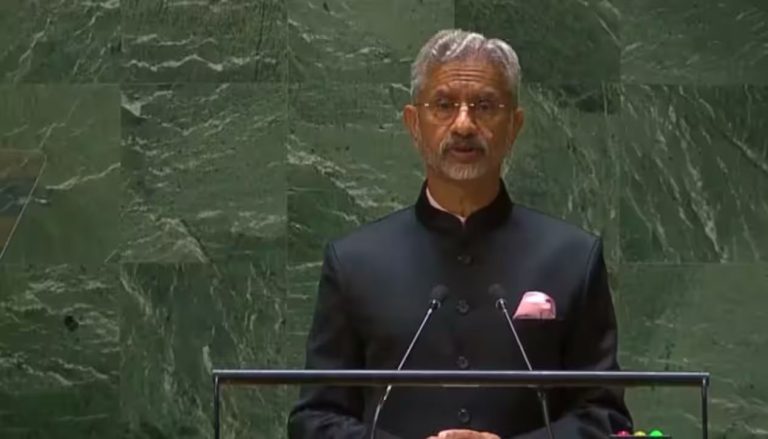
External Affairs Minister S Jaishankar on Tuesday said that the outcomes at the G20 Summit held in New Delhi earlier this month have great significance for the international community and the African Union became a permanent member of the forum at India’s initiative.
Addressing the 78th United Nations General Assembly, Jaishankar said India began its G20 presidency by convening the Voice of the Global South Summit, recognising that growth and development must focus on the most vulnerable.
He said the world is witnessing an exceptional period of turmoil.
“At this juncture, it was with a sense of exceptional responsibility India took up the presidency of G20. Our vision of ‘One Earth, One Family, One Future’ sought to focus on the key concerns of the many just the narrow interests of the few,” he said.
The minister said that the African Union becoming a member of G20 should inspire the United Nations, a much older organisation, to also make the Security Council contemporary.
“Recognising that growth and development must focus on the most vulnerable, we began presidency by convening the Voice of the Global South Summit. This enabled us to hear directly from 125 nations and place their concerns on the G20 Agenda. As a consequence, issues that deserve global attention got a fair hearing. More than that, the deliberations produced outcomes that have great significance for the international community,” he said.
“It was also noteworthy that at India’s initiative, the African Union was a permanent member of the G20. By doing so, we gave voice to an entire continent which has long been its due. This significant step in reform should inspire the United Nations, a much older organisation, to also make the Security Council contemporary,” he added.
Jaishankar began his address with “Namaste from Bharat!”.
“Our fullest support to this UNGA’s theme of rebuilding trust and reigniting global solidarity. This is an occasion to take stock of our achievements and challenges even while sharing our aspirations and goals. Indeed, in regard to both, there is much that India has to share,” he said.
The G20 Summit was held in New Delhi earlier this month. The G20 New Delhi Leaders’ Declaration was adopted on September 9 with leaders forging a consensus.
(This news report is published from a syndicated feed. Except for the headline, the content has not been written or edited by OpIndia staff)
The row over students offering namaz at Maharaja Sayajirao University (MSU) in Vadodara has not completely calmed down yet and another video from the Commerce Department of the university went viral on Tuesday, September 26, 2023. In the viral video, three Muslim youths can be seen offering Namaz in an open area near a Shiv Mandir.
In the video, said to be shot inside the Commerce Department of the university, three Muslim youths wearing white namaz caps could be seen praying near the Shiv Mandir.
After the video went viral, there was an outrage over the same, compelling authorities to launch a probe. A preliminary probe revealed that these three students were reportedly studying at the Commerce Department at the University.
High-level committee will investigate and take the decision: PRO of Vadodara’s MS University
In an interview with the media, MS University Campus PRO Lakulish Trivedi stated, “The University has constituted a high-level committee to investigate the matter. The committee will convene, investigate, and arrive at its decision later.”
MS University in Vadodara not new to Namaz controversy
Vodadora’s MS University has been embroiled in a similar controversy several times in the past. In January this year, a video went viral wherein a young woman was seen offering namaz in the botany section of the university’s science department.
Following this, a strong protest was registered with the faculty dean by the senate members, who demanded that the faculty dean take strict action against this behaviour. Hindu organisations had also registered their protest on this issue.
Prior to this, on December 25 and 26 2022, two videos of Muslims offering namaz at Vadodara’s Maharaja Sayajirao University (MSU) went viral on social media platforms. As per reports, a video of a couple offering namaz at university premises went viral on Sunday, and the next day a video of two students offering namaz went viral.
The students were found offering namaz outside the Sanskrit Mahavidyalaya at the University premises. The students were reportedly studying at the Commerce Department at the University and came to appear for the exam. They were found offering namaz at the university premises, and some students recorded the video.
The Hindu organisations recited Hanuman Chalisa at the premises in retaliation. On the other hand, some Hindu activists also went to the Vice Chancellor’s office and raised slogans demanding a probe into the matter.
Speaking to OpIndia, ABVP said that the University had assured action in the matter.
The video of the couple offering Namaz went viral
A video of a couple offering Namaz at the campus just a day before the incident went viral. They were also found offering prayers outside the Sanskrit Mahavidyalaya.
વડોદરાની પ્રસિદ્ધિ મહારાજા સયાજીરાવ યુનિવર્સિટી ખાતેની સંસ્કૃત મહાવિદ્યાલય પાસે બે વ્યક્તિઓ જાહેરમાં નમાજ પઢતા દેખાયા. #MSU#Namazpic.twitter.com/jUG1PsfBKS
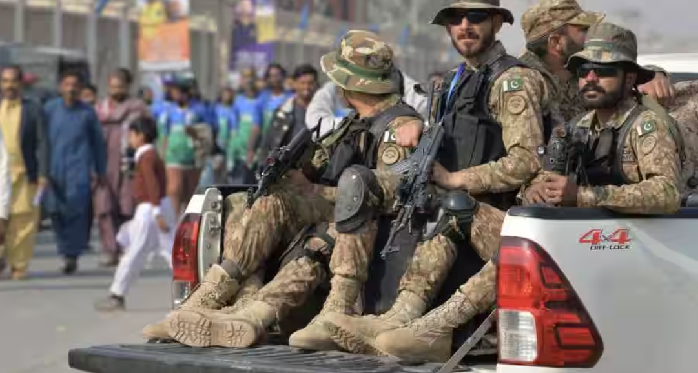
The Pakistani army, which has controlled the nation for nearly half of its independent history, is accustomed to serving as both the country’s protector and its governing body.
The armed force is now preparing to don a new hat in an effort to rescue the nation from its prolonged financial crisis. According to a report in Nikkie Asia, Pakistan’s army is seizing vast tracts of land held by the government in order to cultivate food for the country’s impoverished people. The action has raised worries about the military’s “pervasive presence” in a nation dealing with economic collapse, though.
The plan calls for the army to purchase up to one million acres (405,000 hectares) of land in the Punjab province of Pakistan. That is almost three times as big as Delhi. Better crop yields and water savings have been promised by the plan’s supporters. In light of declining foreign exchange reserves and rising commodity prices, Pakistan urgently needs this.
According to documents, the soldiers would be given leases for up to 30 years to cultivate fruits, vegetables, and crops like wheat, cotton, and sugar cane. Amounting 20% of the revenue made from the sale of the crops will be set aside for agricultural research and development. Reports state that the rest will be divided equally between the army and state government.
The plan calls for the army to purchase up to one million acres (405,000 hectares) of land in the Punjab province of Pakistan. That is almost three times as big as Delhi. Better crop yields and water savings have been promised by the plan’s supporters. In light of declining foreign exchange reserves and rising commodity prices, Pakistan urgently needs this.
According to documents, the soldiers would be given leases for up to 30 years to cultivate fruits, vegetables, and crops like wheat, cotton, and sugar cane. Amounting 20% of the revenue made from the sale of the crops will be set aside for agricultural research and development. Reports state that the rest will be divided equally between the army and state government.
However, the plan of action is also dealing with difficulties and criticism from numerous sources. Many people are worried that the military, which is already a strong institution, could make enormous profits from the effort to improve food security and further impoverish Pakistan’s 25 million rural landless people.
The uncertainty around the blueprint has further increased the worries. There are still many questions about the blueprint, including when the farms will be completely functional. Reports mention that the majority of the land is located in the Cholistan Desert, an area that is dry and prone to water shortages. According to the research, there may be another 110,000 acres of land available for transfer in nearby regions.
Notably, the Lahore High Court had already ordered a halt to the land transfer, but that ruling was overturned in July by another panel. It is also unclear whether some of the land handed to the army was previously farmed or held by small proprietors.
Fongrow, a member of the Fauji Foundation investment group run by retired Pakistani military commanders, downplayed the concern. According to Fongrow’s manager, the majority of the property being allotted is “barren.” As a result, there is little risk of farmers being relocated. But this begs the question of how an under-equipped army will convert a desert into fruitful agricultural land.
Furthermore, the paper stated that previous experiences with army farms have aroused concerns, with numerous instances of military owners exploiting impoverished farmers. According to a lawyer, the Pakistani government’s policy documents imply a different method of tackling food shortages.
The government believes that investing in small farmers and providing them with the required skills can increase food security. Instead, the military, which already has enormous power in Pakistan, is being handed further authority in order to promote “national development and strategic interests.”
Amidst the deteriorating diplomatic ties between India and Canada over the killing of Khalistani terrorist Hardeep Singh Nijjar in Canada, Canadian journalist Terry Milewski lambasted the demand for Khalistan. Milewski also asserted that Pakistan has been driving the Khalistani boogie.
In his recent interview, the Canadian journalist categorically asked why don’t Khalistanis demand a share of the more than 200-year-old Sikh Empire lying on the Pakistani side? He asserted that Lahore was the Capital of the Sikh Empire and it was the seat of power of Maharaja Ranjit Singh.
"पाक वाला पंजाब क्यों नहीं मांगते, असली राजधानी तो लाहौर ही है"
◆ कनाडा के पत्रकार टेरी मिल्वस्की ने उधेड़ी पाकिस्तान की बखिया
Terry Milewski is a renowned Canadian journalist working with the CBC TV news. He has done extensive research on Khalistan. He is the author of the book titled ‘Blood for Blood: Fifty Years of the Global Khalistan Project’. Reiterating his stance, in a recent interview he asserted that the demand of Khalistanis is wrong.
(Image Credit – Amazon)
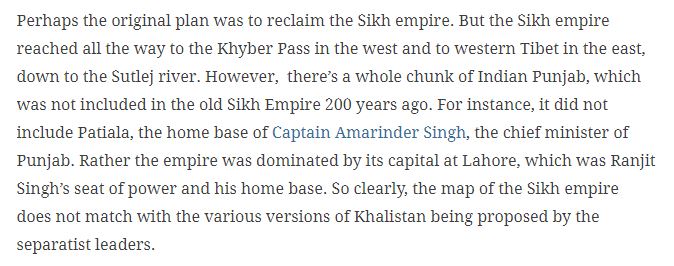
Highlighting historical context, he highlighted that the separate Sikh state which these fringe but violent extremists demand draws some resemblance with the Sikh Empire which was established by Maharaja Ranjit Singh, and his seat was in Lahore, Pakistan.
During the ghastly partition of India, Punjab was also divided into two parts and a major part went to Pakistan. He noted that the capital of Maharaja Ranjit Singh –Lahore and the birthplace of Guru Nanak Dev are in Pakistan.
He inquires what kind of Sikh state do these fringe but violent extremists want to create without including the regions of the Sikh Empire lying on the Pakistani side.
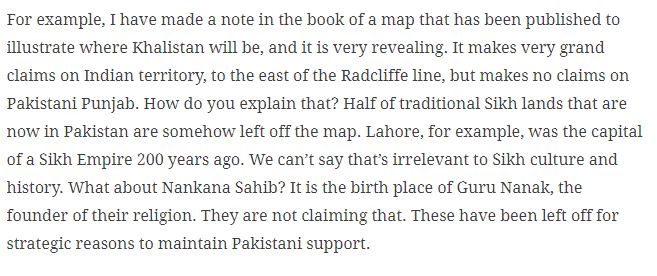
(Excerpt from Terry Milewski interview with the Indian Express)
Terry Milewski stresses that not raising the demand for a share of the Sikh Empire from Pakistan raises questions. He states that these things are the core of Sikh culture and if they have such a demand, so why don’t they ask it from Pakistan?
(Image Credit – Indian Express)
Strikingly, the friendly attitude of Khalistanis towards Pakistan itself raises questions. Going further, Terry Milewski asserts that there is no doubt that Pakistan has a major role in Khalistani organisations.
According to Milewski, if something like Khalistan comes into existence then it is certain that it will not be friendly to India and will be inclined towards Pakistan. Pakistan is behind this and this is the reason why these organisations do not claim Pakistani Punjab. Khalistan Tiger Force was founded by Jagtar Singh Tara who is active in Pakistan. Apart from that, many Khalistani have also taken shelter in Pakistan.
In an earlier interview with the Indian Express, Milewski delved deeper to explain the role of Pakistan in planting and assisting the Khalistani boogie.
Emphasising the Khalistani-Pakistani tango, he stated, “There is no other country on the face of the earth where Sikh separatists have been able to train, get weapons, have a safe haven, and do cross border attacks into Indian Punjab and elsewhere in India. There’s only Pakistan which has supported the movement since the very start.”
Terry Milewski traces the genesis of Pakistan’s active involvement in the Khalistani boogie back in 1971 when India carved out an Independent country named Bangladesh from Pakistan.
Regarding Pakistani role in helping Khalistanis, he added that the principal role played by Pakistan has been in providing a base or a safe haven for wanted terrorists.
According to Terry Milewski, when Talwinder Singh Parmar carried out the Air India bombing in 1985, he fled Canada to avoid getting arrested. Notably, Parmar was a Canadian citizen, as were the other members of his gang who were responsible for the bombing.
Interestingly, the father of current Canadian Prime Minister Justin, Pierre Trudeau had shielded Kanishka bombing mastermind Talwinder Parmar despite the Indira Gandhi-led Indian government making his extradition request in 1982.
Later, Parmar fled to Pakistan, where he was operating a gun-running operation. He was introduced to his weapons dealer by an ISI agent who was an Islamic jihadist, with whom the Khalistanis formed an alliance for strategic reasons.
On the role of China, Terry Milewski said, “Guess who the Khalistani separatists are pledging allegiance to? ‘Sikhs for Justice’ for instance, which is the lobby group that is campaigning around the world for a referendum on Sikh independence, officially pledged in writing their allegiance to, firstly, Pakistan and secondly to China.”
He added, “The Khalistan movement is not about popular support… it’s about geopolitics. China could well tolerate, subsidise and assist in various ways the Khalistan movement on the basis that it is making trouble for their enemies in India.”
In a shocking incident from Uttar Pradesh’s Kanpur, a woman bit the private parts of her friend’s boyfriend for refusing her sexual advances. The incident occurred in Kanpur’s Chaubepur area.
According to reports, on Sunday, 24 September, the man, who was married, went to have sex with his girlfriend at her house. The girlfriend, who was also married to another man, invited a friend of her’s to join them. The man did not know about this.
When the friend arrived, the couple was in a compromised position. A report by Navbharat Times claims that the friend began to forcefully make sexual advances towards the man. When he refused, she bit his private parts.
A report by News9Live claims that both, the girlfriend and her friend, forced the man to have sex with them. The Free Press Journal and Zee News reported that the girlfriend bit the private parts of her boyfriend for refusing to have sex with her friend.
Upon hearing his screams, residents rushed to the house. The man, reportedly bleeding profusely, managed to escape and was admitted to Chaubeypur CHC from where he was referred to a medical facility in Kanpur.
The man’s wife made a complaint to the police. Meanwhile, his girlfriend was reportedly living separately from her husband. Embarrassed by the fiasco, the man has refused to file any complaint in the matter.
On Tuesday, September 26, China issued a warning to the Philippines asking the island country of Southeast Asia to not ‘stir up trouble.’ The threat came after the Philippine Coast Guard said it removed the floating barrier that was allegedly deployed by China in the contested waters of the South China Sea.
Chinese foreign ministry spokesman Wang Wenbin said that Beijing “firmly upholds the sovereignty and maritime rights and interests of the Huangyan island”, referring to the shoal by its Chinese name.
“We advise the Philippines not to provoke or stir up trouble,” Wang added.
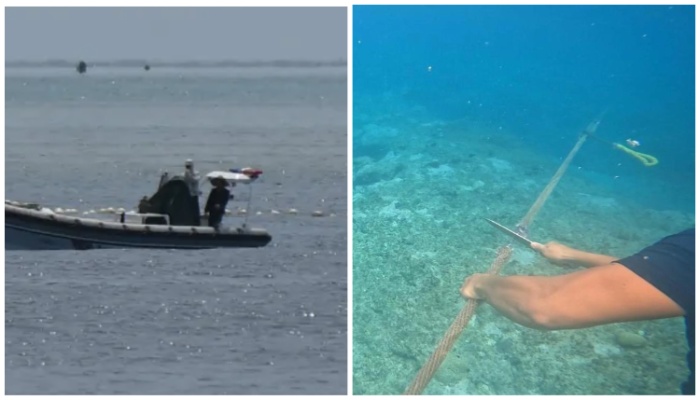
In a move that could probably escalate tensions between the two Asian countries over territorial claims in the area, the Philippine Coast Guard had on Monday, September 25, removed the floating barrier which prevented Filipinos from fishing within its Exclusive Economic Zone (EEZ). It asserted that it has complied with a presidential order to remove a floating barrier placed by China’s coast guard.
The Philippine Coast Guard asserted that it has complied with a presidential order to remove a floating barrier placed by China’s coast guards in a disputed shoal in the South China Sea.
Philippine officials condemned the installation of the 300-meter (980-foot) -long barrier at the entrance to the lagoon at Scarborough Shoal as a violation of international law and the Southeast Asian nation’s sovereignty.
National Security Adviser Eduardo Ano declared, “The Philippines is well within its rights to eliminate any barrier at Bajo de Masinloc, as it encroaches upon our maritime rights.” Notably, Bajo de Masinloc is the Philippines’ indigenous name for the reef.
On Sunday, the Philippine Coast Guard posted a video on X, formally Twitter, showing a diver cutting what seems to be the barrier rope. Another video showed a man on a motorboat attempting to lift what looks to be a portion of the barrier.
Coming down heavily on China for the installation of the ‘floating barriers’ in the contested waters of the South China Sea, PCG spokesperson Jay Tarriela, in a statement on social media platform X wrote, “Philippine Coast Guard Successfully Removes Hazardous Floating Barrier in Compliance with Presidential Instruction In compliance with the instruction of the President, the Chairman, National Task Force for the West Philippine Sea (NTF-WPS), Sec. Eduardo Año, has directed the Philippine Coast Guard (PCG) to execute a special operation to remove the floating barrier that obstructed the Southeast entrance of Bajo De Masinloc (BDM).
Philippine Coast Guard Successfully Removes Hazardous Floating Barrier in Compliance with Presidential Instruction
In compliance with the instruction of the President, the Chairman, National Task Force for the West Philippine Sea (NTF-WPS), Sec. Eduardo Año, has directed the… pic.twitter.com/loeeFm45sU
“The barrier posed a hazard to navigation, a clear violation of international law. It also hinders the conduct of fishing and livelihood activities of Filipino fisherfolk in BDM, which is an integral part of the Philippine national territory. The 2016 Arbitral Award has affirmed that BDM is the traditional fishing ground of Filipino fishermen. Thus, any obstruction hindering the livelihoods of Filipino fisherfolk in the shoal violates the international law.”
“It also infringes on the Philippines’ sovereignty over BDM. The decisive action of the PCG to remove the barrier aligns with international law and the Philippines’ sovereignty over the shoal. The PCG remains committed to upholding international law, safeguarding the welfare of Filipino fisherfolk, and protecting the rights of the Philippines in its territorial waters,” PCG spokesperson Jay Tarriela wrote.
China has not commented publicly on the issue
China accused by the Philippines of harming coral reefs
Earlier this week, the PCG released images of devastated and bleached coral reefs in the South China Sea, accusing China of widespread devastation in the region. According to CNN, a PCG spokeswoman stated that the existence of such crushed corals indicates a “possible act of “dumping,” suggesting that the same corals were processed and cleaned before being returned to the bottom.
Chinese ship throws ‘military grade’ laser, fires water canons at Philippines Coast Guard vessel
Following Beijing’s repeated provocations against Filipino boats, the Philippines and China are particularly embroiled in the confrontation over the disputed territory.
In February this year, the Philippine Coast Guard (PCG) accused a China Coast Guard ship of pointing a “military grade” laser at some of its crew, temporarily blinding them.
The Chinese Coast Guard allegedly deployed a water cannon to prevent a Filipino supply boat from transporting troops, food, water, and fuel to the Philippine-occupied Second Thomas Shoal in the disputed waters last month.
Chinese ships had obstructed and shadowed naval vessels providing food and supplies to Filipino sailors on the ship in the shoal, which had been encircled for years by Chinese coast guard ships and a swarm of Chinese fishing boats.
Dispute between China and the Philippines over the South China Sea
Notably, China claims “indisputable sovereignty” over almost all of the 1.3 million square miles South China Sea, as well as most of the islands within it. That includes the Spratlys, an archipelago consisting of 100 small islands and reefs also claimed in full or part by the Philippines, Malaysia, Brunei and Taiwan.
The Philippines calls the area the West Philippine Sea and in 1999 intentionally grounded a navy transport ship, the BRP Sierra Madre, on Second Thomas Shoal, which is still manned by Filipino marines to enforce Manila’s claim to the area.
Beijing has been trying for years to prevent the Philippine Navy’s resupply missions in Ayungin Shoal and has displayed new tactics over the past few months.
Except for the small wooden boats chartered by the Navy, the CCG has been preventing Philippine military and law enforcement vessels from entering the shoal.
The Philippines in response to China’s claims, dragged it to the International Court of Justice, where it won the case, but China refused to adhere to the verdict.
Other countries with which China has disputes over the South China Sea
The prominent countries with whom China is involved in severe disputes apart from India are Vietnam, Indonesia, Malaysia, Philippines and Japan. Vietnam maintains its territorial claim over regions of the South China Sea and the Macclesfield Bank, Paracel Islands and the Spratly Islands. China has also enforced a unilateral ban on fishing in these regions, much to the angst of Vietnam.
Japan’s dispute with China involves the Senkaku Islands in the South China Sea and the Ryukyu Islands and the Air Defence Identification Zone and Exclusive Economic Zone in the East China Sea. In the aftermath of the clash at Galwan Valley between Indian and Chinese soldiers, Japan initiated a legal process to change the status of the Senkaku Islands, angering China.
Indonesia claims territorial control over parts of the South China Sea. Three years ago, the Indonesian government renamed parts of the disputed region to North Natuna Sea to underscore its claim. China claims fishing rights near the islands in the Natuna Sea/Exclusive Economic Zone of Indonesia, a claim that the latter rejects on the basis of the 1982 United Nations Convention on the Law of the Sea.
China’s dispute with Malaysia also involves the South China Sea. Malaysia has a presence on three islands that China claims as its own, leading to disputes. Brunei also claims parts of the South China Sea as part of its continental shelf and Exclusive Economic Zone.
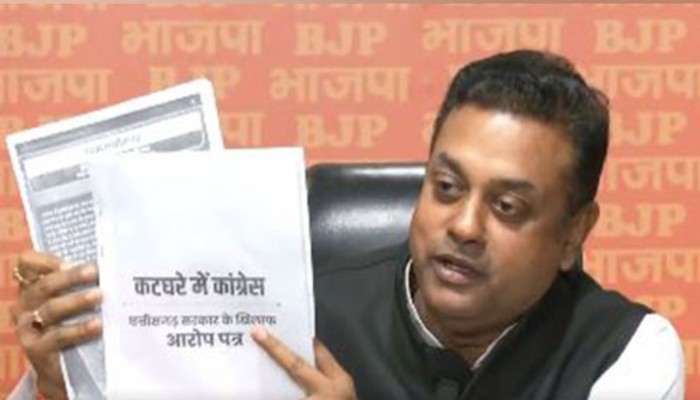
Bharatiya Janata Party (BJP) spokesperson Sambit Patra, in a scathing attack on the Congress-led Chhattisgarh government, has released a 400-page allegation diary named ‘Kathghare mein Congress’.
Sambit Patra in a press conference said, “As you all know there are elections in 5 states. Like always congress is beating drums of false promises. Today we will show them the mirror. I am carrying this allegation binder of 400 pages. There are 316 promises that Rahul Gandhi has made which the Congress government has not fulfilled in Chhattisgarh.”
“PM Modi started a scheme for farmers to get Rs 6000 per year – ‘Kisan Samman Nidhi Yojana’. Lakhs of farmers have been registered from Chhattisgarh but their verification has not been done by the state government, that is why lakhs of farmers are deprived of this scheme today,” Patra added.
“Modi ji wants to give and the farmers want to take but the Congress ensures that the money does not reach them. This is a government of scams,” he further said.
Patra further mentioned scams under the Congress government in Chhattisgarh mentioning the cess collected during Covid.
“Scams worth crores have taken place under the Congress government in Chhattisgarh. Mining mafia and criminals are given free run under Congress government in the state. Where is the cess collected during the COVID? No action has been taken in several rape cases under the Congress government in Chhattisgarh,” Sambit Patra said.
“I want to ask Rahul Gandhi where is the cess collected during the COVID pandemic. No action has been taken in several rape cases under the Congress government in Chhattisgarh. Mining mafia and criminals are given free run under Congress government in the state,” he added.
BJP spokesperson Sambit Patra also mentioned the central schemes which did not reach the public. “Regarding PM Aawas Yojana, it has to be said with great sadness that there are 16 lakh residents who have been deprived of this scheme by the ‘Thagesh government.’ Congress is working hand in glove with Naxalities. You remember what work Modi ji has done to eliminate Naxalites,” he said.
“They blocked Central schemes in Chhattisgarh. Congress stood against anti-conversion law. They have betrayed the people of Chhattisgarh. The anti-conversion law brought by BJP was not aimed at destroying the society, its objective was to preserve our tribal people, their culture, their thoughts, their values,” Patra added.
Two accused have been arrested, and a minor detained in Rajasthan’s Sikar for the alleged gang rape and murder of a minor girl. The police reportedly said that the primary accused, a 15-year-old minor, has been detained and his two associates, Sameer (19) and Ghulam (19) have been arrested. According to a report by Rajasthan Patrika, all three accused belong to a “samuday vishesh” (particular community).
The minor girl’s body was recovered from a well in Sikar district of Rajasthan on Sunday (24 September). Family members allege that girl was murdered after being gang raped. The 15-year-old deceased was a class 10 student.
राजस्थान के रामगढ़ शेखावाटी में तीन दरिंदों ने रात 15 साल की एक बेटी के साथ गैंगरेप कर,उसकी हत्या कर कुएँ में फेंक दिया !! pic.twitter.com/nG5FAW2rTu
According to reports, the incident took place in Ramgarh market, Sikar where the 15-year-old girl, originally from Churu district, was staying at her maternal home for studies. According to the victim’s family, the accused entered their house on Saturday night and abducted the girl.
The victim’s family complained to the police, following which a missing person’s report was filed, and the police started searching for the victim. CCTV and surveillance footage revealed that the girl did not go out of the village.
During the search, the girl’s body was recovered from a well in the village. The police took the body into custody and sent it for post-mortem. The victim’s family has accused the culprits of gang rape and murder.
A police official said, “We have reviewed the CCTV footage installed along the route to the victim’s house. The suspects are seen approaching and leaving the victim’s residence. The identification of the suspects has been confirmed through the CCTV footage. One of the suspects also has an injury in his hand.”
Residents of Ramgarh launched a protest demanding action against the accused and have accused the Gehlot government of laxity. Protesters even advised the Rajasthan Chief Minister to learn from UP CM Yogi Adityanath to deal with criminals.
In a memorandum submitted to the administration, the protesters have demanded jobs and Rs 10 lakh compensation for the victim’s family. They have demanded that the house of the accused be razed. Protesters have warned the administration of further agitation if it does not take immediate action.
The accused are reportedly being interrogated. Police have said that action will be taken as per law based on the facts that emerge after the investigation and the findings in the post-mortem report. Family members reportedly confirmed that the victim’s last rites were conducted in Jasrasar village, Sardarseher.
Dev Anand, known initially as Dharamdev Pishorimal Anand, was born on September 26, 1923, in Shakargarh tehsil, Punjab. His father was a renowned advocate, but Dev Anand was inspired by the legendary actor Ashok Kumar’s performances in “Achhut Kanya” and “Kismet” and chose to pursue a career in films.
His debut in the Hindi film industry with “Hum Ek Hain” began a remarkable journey filled with blockbuster films, timeless songs, and unmatched stardom. Among all the popularity, stories and controversies around Dev Anand, one story stands out which is the love affair between him and actress Suraiya. Reportedly, they broke up after Suraiya’s grandmother objected to the relationship and threw the ring Dev Anand gave to Suraiya. Out of anger, Dev Anand threw the ring into the sea.
While Dev Anand enjoyed unprecedented popularity, a few are aware of his love affair with the beautiful actress Suraiya. Unfortunately, their love faced obstacles, mainly religious differences, leading to their separation. Dev Anand eventually married another famous actress, Kalpana Kartik, with whom he had two children, Suniel and Devina.
The love affair that ended painfully
Dev Anand’s biography, “Romancing With Life,” features a revealing chapter that sheds light on his love for the famous actress Suraiya. According to the book, Dev Anand expressed his love for her by gifting her an expensive diamond-studded ring. He had to borrow money from his friends to afford the Rs 3000 ring, a substantial amount in the 1950s. The ring served as a symbol of the depth of their love.
Suraiya, in a throwback interview, nostalgically recalled the beautiful ring that brought both joy and sorrow. She wore the ring during a film shoot, but unfortunately, someone on set informed her grandmother about it. Her grandmother forcefully took the ring off her finger and warned Suraiya to stay away from Dev Anand. This incident left Suraiya sad and heartbroken, especially since Dev had borrowed money to buy the ring. In a teary-eyed interview, she revealed that her grandmother’s refusal to return the ring devastated her. The opposition to their relationship extended beyond her grandmother to her entire family due to their religious differences as Dev was Hindu, and Suraiya was Muslim, which made their relationship unacceptable for her family.
Reportedly, Dev Anand threw the ring in the Arabian Sea, where it resides to date. Dev Anand again proposed to her a couple of years later, but Suraiya refused as she did not want to antagonize her conservative Muslim family. Suraiya never married following the heartbreaking incident. She died in 2004 at the age of 74.
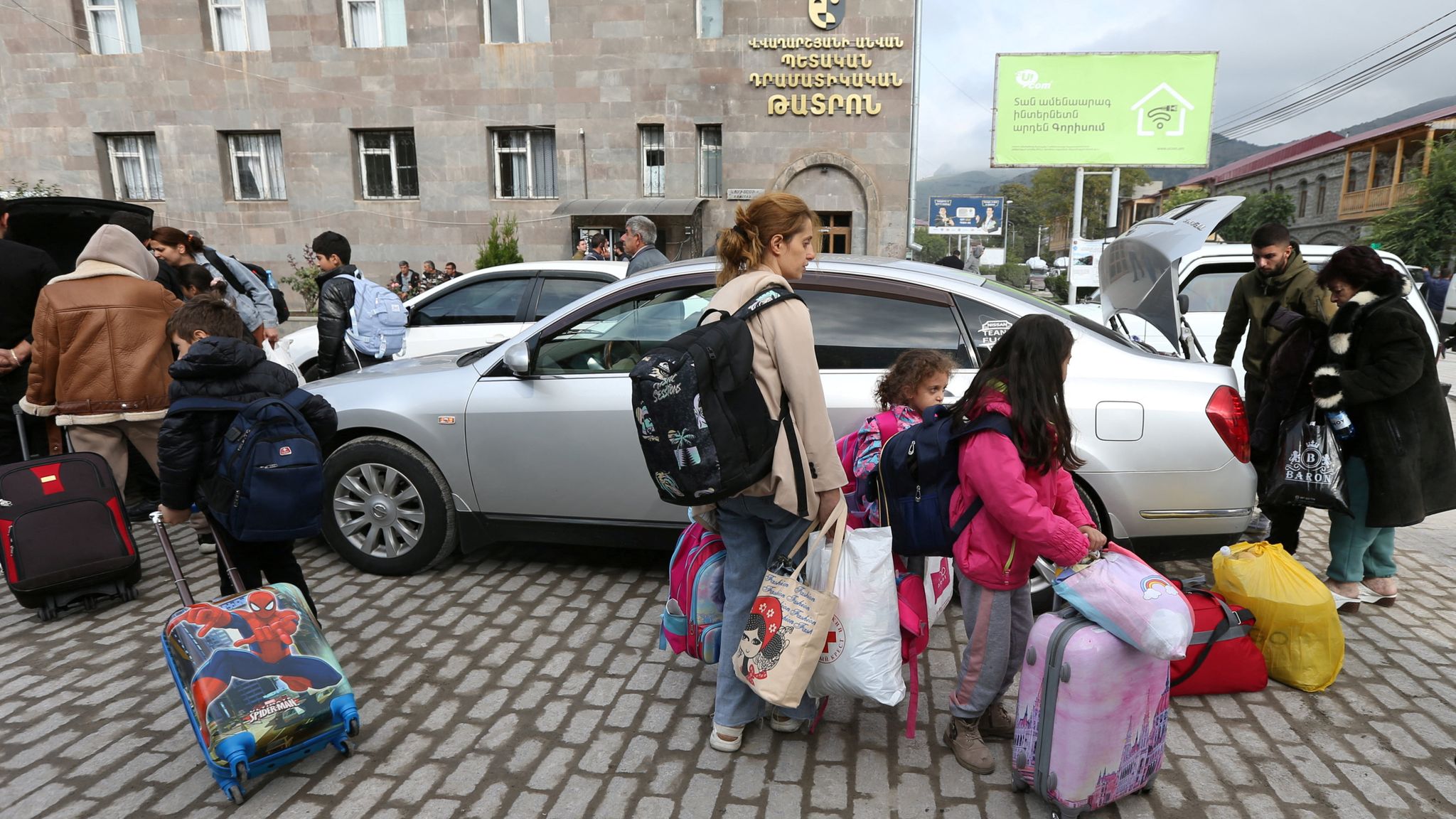
On Monday, September 25, the first convoy of as many as 6500 ethnic Armenians left Nagorno-Karabakh. According to reports, the entire community of some 120,000 ethnic Armenians may be on the verge of abandoning its ancestral homeland, after Azerbaijan seized control of the disputed regions in a lightning military onslaught last week, stoking fears of persecution at the hands of Azerbaijani authorities.
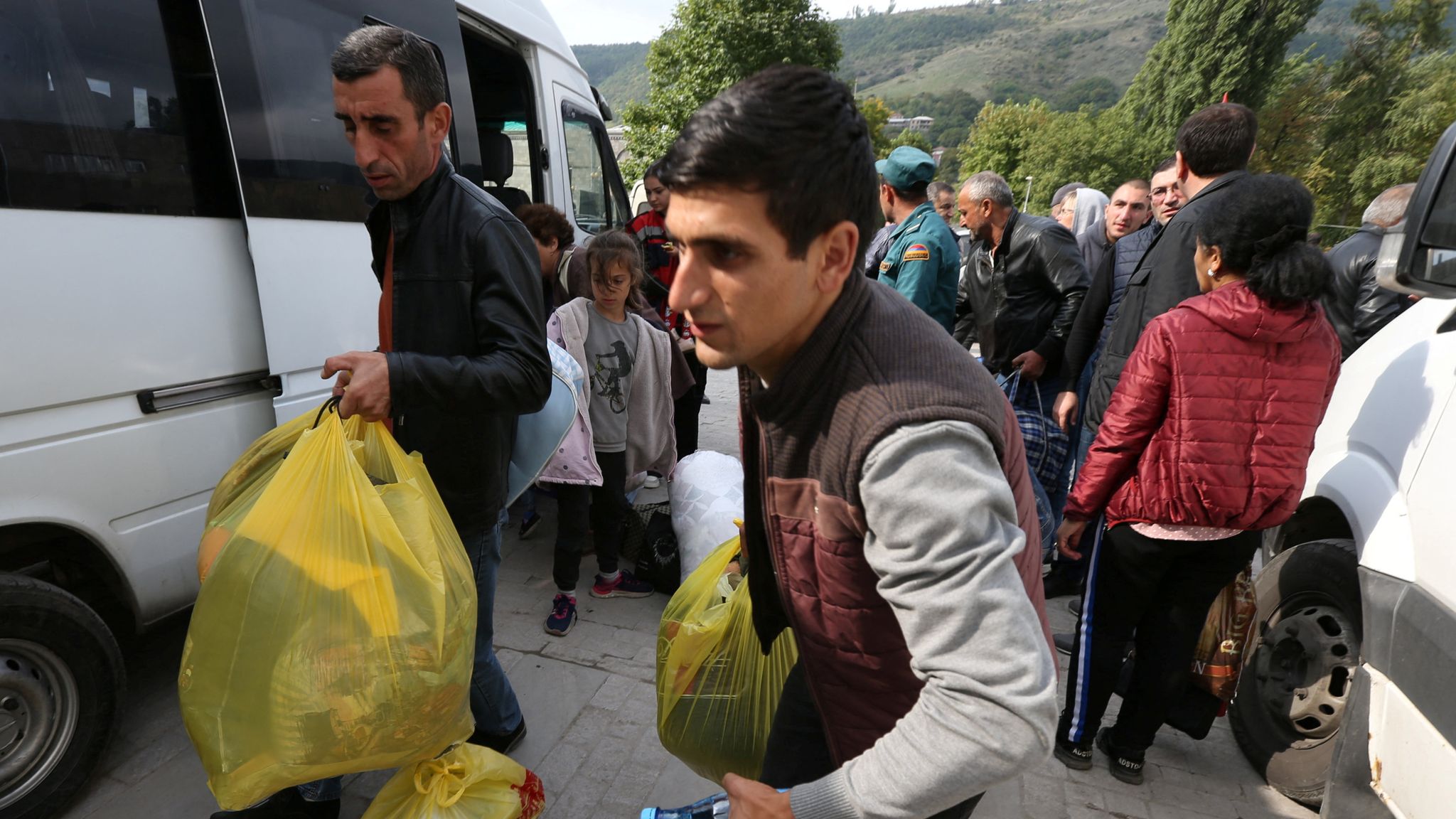
Several pictures have emerged showing ethnic Armenians, who are mostly Christians, preparing to leave the Muslim-majority Azerbaijan. In the Karabakh capital, known as Stepanakert by Armenia and Khankendi by Azerbaijan, crowds of people were loading belongings into buses and trucks as they left for Armenia.
Image source: SkyNews
Image source: SkyNews
More videos and images emerged wherein Armenians are seen stocking up vehicles and sitting in tailbacks which have brought the mountainous road to Armenia to a standstill.
Armenia's Prime Minister Nikol Pashinyan said it was highly likely that ethnic Armenians would flee the breakaway region of Nagorno-Karabakh, fearing persecution https://t.co/QyhOGjijyLpic.twitter.com/vhaOIeC5Sz
On Sunday, September 24, Reuters quoted the ethnic Armenians, who call Karabakh home as saying that they did not want to live as part of Azerbaijan and that they would leave for Armenia because they feared persecution and ethnic cleansing. The majority of Karabakh Armenians do not have faith in Azerbaijan’s promises to guarantee their rights after the recent military offensive.
Confirming the mass exodus of Armenians from Azerbaijan, the Armenian government said that as of 5 a.m. (0100 GMT) on Monday, September 25, more than 2,900 people from Nagorno-Karabakh had crossed into Armenia.
Armenia’s PM Nikol Vovayi Pashinyan has warned that ethnic cleansing is ‘underway’ in the region. “That’s happening just now, and that is a very unfortunate fact because we were trying to urge the international community on that,” Nikol Pashinyan told reporters.
Nikol Pashinyan added that “responsibility for such a development of events will fall entirely on Azerbaijan, which adopted a policy of ethnic cleansing, and on the Russian peacekeeping contingent in Nagorno-Karabakh.”
Reportedly, the dire humanitarian crisis ethnic Armenians are facing in Nagorno-Karabakh escalated after the Azeri soldiers launched a military assault in Nagorno-Karabakh on September 19. At least ten persons have been killed.
After Azerbaijan’s latest military offensive to regain control of the area, Turkey-backed Azerbaijan had promised to preserve ethnic Armenians’ rights and to reopen the supply routes that were cut in December. However, Artak Beglaryan, a former adviser to Artsakh’s government, told the media that people are afraid of retaliation and ethnic cleansing, thus “almost all the villages” and huge areas of the largest city Stepanakert, known in Azerbaijan as Khankendi, “are emptying.”
The Nagorno-Karabakh conflict
Trapped between Turkey and Azerbaijan is the tiny country of Armenia. The Azeris are ethnic Turks and have the same religion and culture as Turkey. For a long time, the mostly Christian Armenians were colonized by the Ottoman Empire. The Soviets took over the land in the 1920s and Armenia was cut up between three Soviet Republics: Georgia, Azerbaijan and Armenia.
When the Soviet empire collapsed in the 1990s, both Armenia and Azerbaijan became independent. But a portion of land, populated by ethnic Armenians, remained part of Azerbaijan. This region is known as Nagorno-Karabakh. Tensions erupted and this area declared independence in the 1990s, supported by Armenia. The stalemate has been around for nearly three decades until Azerbaijan (with Turkish support) unilaterally broke the ceasefire in 2020.
Following this, a major escalation in the conflict took place. Thousands of people were reported killed in six weeks of fierce fighting.
Azerbaijan took over large swaths of land, and by the time both sides agreed to sign a peace deal negotiated by Russia in November 2020, it had grabbed all of the regions surrounding Nagorno-Karabakh controlled by Armenia since 1994.
Armenian troops were forced to withdraw from these areas by the terms of the agreement and have since been confined to a smaller section of the region.
The presence of Russian soldiers temporarily halted the violence, although tensions had been rising for months before the recent military operation.
What led to the latest military onslaught by Azerbaijan soldiers
Fears of renewed bloodshed arose when in December 2022, Azerbaijan effectively blocked a vital passage into the Nagorno-Karabakh enclave.
The Lachin Corridor is the only road that connects the Republic of Armenia to Nagorno-Karabakh’s approximately 120,000 ethnic Armenians. It is a vital supply route, and inhabitants in Nagorno-Karabakh have reported serious shortages of basic food and medication in recent months.
Azerbaijan accused Armenia of using the road to bring in military supplies, which Armenia denied. Meanwhile, Azerbaijan claimed that it offered food and aid several times via another road but Armenians in Nagorno-Karabakh refused it.
Furthermore, observers claimed a buildup of Azerbaijani forces during the period of siege of the Lachin corridor, which Baku denied.
In mid-September, a small number of relief vehicles run by the International Committee of the Red Cross were allowed into Nagorno-Karabakh via the Lachin Corridor and, independently, the Aghdam Road from Azerbaijan.
However, maintaining these transportation links, particularly the Lachin Corridor, has been highly reliant on the presence of Russian soldiers stationed in the area since 2020 but the Russian invasion of Ukraine has distracted Moscow’s attention and military resources from the region.
Last week, the conflict between Azerbaijan and Armenia once again escalated the Turkey-backed Azerbaijani forces launched a military offensive in the region. The onslaught that lasted for 24 hours claimed the lives of as many as 10 innocent civilians and left several injured.
The following day, a cease-fire deal mediated by Russia was struck. The agreement stated that the military forces of Karabakh would be entirely disarmed and abolished. There will now be discussions about integrating the Nagorno-Karabakh enclave into Azerbaijan.
On September 20, the prime minister stated that Armenia was not a party to the deal, accusing Baku, the capital city of Azerbaijan of attempting to draw Armenia into a confrontation. Pashinyan also urged Russia to “fulfil its obligations” and secure ethnic Armenians’ safety in Nagorno-Karabakh.
Pashinyan stated the next day in a speech that, “if peacekeepers have proposed a peace deal, it means that they completely and without any reservations accepted the responsibility of ensuring the security of Nagorno-Karabakh Armenians, and provide the conditions and the rights for them to live on their land and in their homes safely.”
Amidst all this, over 1,20,000 ethnic Armenians living in the region started fleeing Muslim-majority Azerbaijan fearing persecution and ethnic cleansing by the Azeri authorities.
Karabakh Crisis
The ethnic Armenians, who form the majority in Nagorno-Karabakh are facing a dire humanitarian crisis and grave uncertainty about their future.
Azerbaijan’s latest blitz comes after months of hardship in Nagorno-Karabakh caused by Azerbaijan’s blocking of the Lachin road connecting the area to Armenia. Since mid-June, Azerbaijan has barred any humanitarian aid sent by Russian soldiers and the International Committee for the Red Cross (ICRC).
For months, the region’s population (tens of thousands of ethnic Armenians) has faced severe shortages of food, medicine, sanitation commodities, and other necessities. Azerbaijan’s embargo has also prevented the Red Cross from transferring medical patients out of the enclave on several occasions.
Nagorno-Karabakh victory brings pride: Turkey hails Azerbaijan military onslaught that rendered thousands of ethnic Armenians homeless
It is notable here that at a time when thousands of these ethnic Armenians, including aged, women and children, have been rendered homeless, Turkish President Recep Tayyip Erdogan and Azerbaijani President Ilham Aliyev have hailed Baku’s military victory in Nagorno-Karabakh.
According to reports, Turkey’s Erdogan arrived in Azerbaijan’s Nakhchivan exclave on Monday (September 25) and at a joint news conference with Ilham Aliyev, the president of Azerbaijan, Erdogan said Azerbaijan’s victory in Karabakh inspired pride.
“It is a matter of pride that the operation was successfully completed in a short period of time, with utmost sensitivity to the rights of civilians,” Erdogan said.
Russia’s silence over Azerbaijan offensive that has resulted in a massive humanitarian disaster
Russia has historically served as Armenia’s security guarantor, especially in moderating tensions surrounding Nagorno-Karabakh. After Azerbaijan grabbed regions in and around Nagorno-Karabakh, killing thousands, Russia negotiated a ceasefire deal between the two South Caucasus countries in 2020, which was overseen by Russian troops.
However, the once-friendly relationship between Armenia and Russia has deteriorated dramatically in recent months, with Armenian Prime Minister Nikol Pashinyan publicly questioning Moscow’s lack of attention during its invasion of Ukraine. In another indicator of Armenia’s mistrust of Moscow, the country staged a joint military training with the United States in September this year.
Hinting at the betrayal, Armenian officials said Tuesday they had not been warned by Moscow of Azerbaijan’s plans after Baku said it gave Russia advance notice.
Meanwhile, Russia has mostly remained silent, even as Armenia’s prime minister and ethnic Armenians in the region implored the Russian govt to strike another truce deal between Azerbaijan and Armenia. In such a situation, Azerbaijan’s current military offensive has further fuelled the flames rather than repairing the schism between Russia and Armenia.
According to media reports, days before Tuesday’s (September 19) escalation, Russian President Vladimir Putin told a journalist about escalating tensions in Nagorno-Karabakh that Armenia’s leadership had de facto acknowledged Azerbaijan’s sovereignty. “If Armenia itself recognized Karabakh as part of Azerbaijan, what do we have to do with it?” he said.
How the West turned a blind eye towards the Armenian crisis
What has been happening to the ethnic Armenians in Ngorno-Karabakh is a major humanitarian crisis. An ethnic conflict with a religious divide. The Muslim majority Turks on one side and the Christian majority Armenians on the other. Two much larger and more powerful countries coming together to crush a tiny neighbor. Thousands of people killed. Thousands of civilians forced to flee their homes.
But why is the West, especially the global liberals who has always been steadfast in protecting the human rights of even stone pelters and terrorists, never spoken about this? When Russia launched a full-scale invasion of Ukraine last year, Western liberals went crazy lambasting Russia for reoccupying Russian-speaking areas of Ukraine, and getting involved in the war militarily. The news went on the front pages of global newspapers for months. However, thousands of ethnic Armenians leaving their homes behind? Their lives have become footnotes in global media.