Home Blog Page 1858

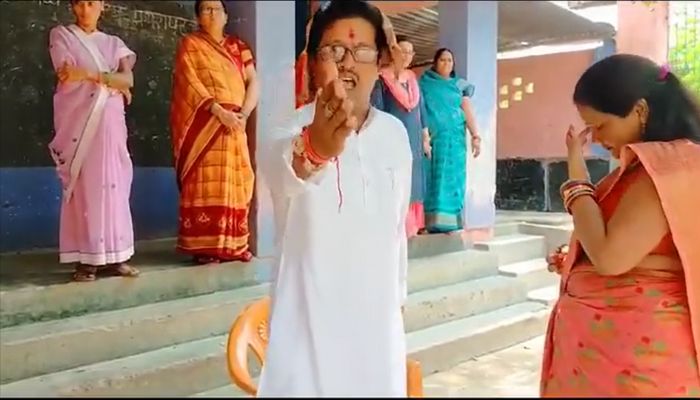
Seema Haider’s ex-husband in ‘Gadar’ mode, fumes over ‘Pakistan Murdabad’ slogans, wants Seema in jail

0

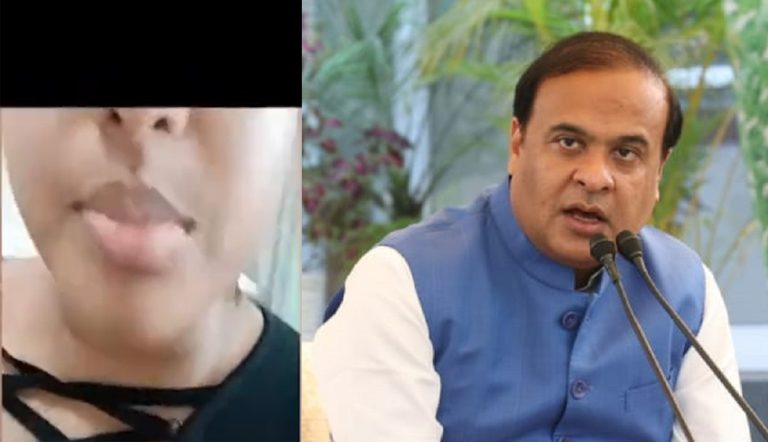
Seema Haider’s ex-husband from Pakistan identified as Ghulam Haider has reportedly turned furious after seeing the woman raising slogans of ‘Pakistan Murdabad’ and ‘Hindustan Zindabad’. Haider in the latest viral video posted by a YouTuber named ‘Digital Mohsin’ said that Seema Haidar is mentally unstable and that needed to be put behind bars.

He also appealed to PM Modi and CM Yogi Adityanath to send his children back to Pakistan.

This is days after Seema Haider, a Pakistani national who crossed the border illegally to be with her Indian lover Sachin Meena, raised the Tricolor on August 13 and expressed her enthusiasm ahead of India’s Independence Day.

The video of the incident had gone viral over the internet in which Seema could be seen wearing a tricolor saree and donning a Hindu religious headband with ‘Jay Mata Di’ written on it. The woman then raised the Indian National Flag and said raised slogans of ‘Hindustan Zindbad’. She also raised slogans against Pakistan and said, ‘Pakistan Murdabad’ with a big smile on her face.

Taking cognizance of the incident, Seema’s ex-husband from Pakistan, Ghulam Haider expressed his anger and indicated that Seema is not worth trusting. “She could not become a good Pakistani. She left her religion and her country. How can you expect she can be trusted? I have nothing against India. I respect India. But forcing my children to raise anti-Pakistan slogans is not fair,” Haider said.

Ghulam Haider also called her unstable. “She has gone mad. Her brain is not working properly. Earlier she said I was not good. Now she says the entire Pakistan is Murdabad,” he said. Ghulam Haider, who stays in Saudi Arabia, said that he would come to India for his kids and for their welfare.

Haider meanwhile also slammed the lawyer of the woman and alleged that he was trying to create a fight between the two countries. “Whatever AP Singh is doing is intolerable. He is trying to create a fight between Hindus and Muslims. Educated people are not expected to behave in this manner. I condemn Seema raising anti-Pakistani slogans,” he said.

Seema Haider, a 30-year-old mother of four from Pakistan, made headlines after she entered India illegally through Nepal to live with Sachin Meena, whom she met online. The tale of Seema and Sachin caused security concerns, as it is unclear who Seema really is. Seema arrived in India on May 13 and moved to Greater Noida to live with Sachin. Police detained Seema, who was later released on bail. The woman’s story has been grabbing media headlines ever since.

Sushant Singh Rajput’s father moves Delhi HC against steaming of movie based on the actor’s life, court issues notice to makers

0

A Division Bench of Delhi High Court has sought a response from the makers of the movie “Nyay: The Justice” and others on an appeal moved by actor Sushant Singh Rajput’s father challenging a single-judge bench order, which dismissed his plea against the streaming of the movie.

The movie was released on the OTT platform namely Lapalap in June 2021, after the death of actor Sushant Singh Rajput.

The Division bench of Justice Yashwant Varma and Justice Dharmesh Sharma on Thursday sought responses from all the respondents and fixed the matter for further hearing on November 16, 2023.

Appellant Krishan Kishore Singh, father of late actor Sushant Singh Rajput through appeal challenged the single bench order passed by a Single Judge bench on July 12, refusing to stay the streaming of movie.

Single -Judge bench of the Delhi High Court had refused SSR father’s plea and also refused to stay streaming of the film “Nyay: The Justice”, purportedly based on life of late Bollywood actor Sushant Singh Rajput.

Single Judge Bench of Justice C Hari Shankar in order opined that the impugned movie “Nyay: The Justice” could not be sought to be injuncted at this distance of time, especially when it had already been released on the OTT platform, Lapalap, a while ago and must have been seen, by now, by thousands.

The Court held that no case could be said to exist, to grant the prayers made by the plaintiff and thus, the suit was dismissed. The Court further held that the right of the plaintiff to maintain and prosecute the suit, insofar as it claimed damages from the defendants, would stand preserved.


(This news report is published from a syndicated feed. Except for the headline, the content has not been written or edited by OpIndia staff)

Fodder Scam: Supreme Court agrees to hear CBI’s plea challenging Lalu Prasad Yadav’s bail, lists matter for 25th August

0

In another setback to Lalu Prasad Yadav, the Supreme Court of India has agreed to hear the plea of the Central Bureau of Investigation (CBI) challenging the bail of the RJD chief in the fodder scam case. The CBI had sought an urgent listing of the plea which was accepted by the apex court.

Additional Solicitor General SV Raju appeared for the CBI requesting the CJI-led bench for early listing of the matter today. The Supreme Court bench led by Chief Justice DY Chandrachud and comprising of Justice Sanjay Karol and Justice Manoj Misra listed the matter for hearing on 25th August.

Lalu Yadav was granted bail by the Jharkhand High Court on 22 April 2022 in the Doranda Treasury case related to four cases of fodder scams amounting to crores. He was granted bail on the grounds of ill health. The bail came months after a special CBI court in Ranchi in February 2022 had convicted Lalu to five years in prison with a fine of Rs 60 lakh in the case.

The fifth fodder scam pertains to the illegal withdrawal of Rs 139.35 crore from the Doranda treasury in 1995-96 when Lalu Yadav was serving as Chief Minister for Bihar. He was convicted in four fodder scam cases involving illicit withdrawals from Dumka, Chaibasa, Doranda, and Deogarh treasuries in Jharkhand. While the former Bihar CM has secured bail in four fodder scam cases, he was convicted and sentenced in a fifth case by the special CBI court. But the HC granted him bail in the case owing to poor health.

Meanwhile, the RJD leader appears fit and fine as he has been holding meetings with Opposition leaders, attending alliance meetings, and time and again making appearances for the cameras, and also delivering controversial statements. Recently he was even seen playing badminton.

‘Pakistan banayenge’: 1980 Moradabad Riots report busts ‘pigs let loose during namaz’ lie, witness details Muslim League, Congress orchestrating riots

On August 8, the Uttar Pradesh government-led by Yogi Adityanath tabled an inquiry report into the 1980 Moradabad riots that killed at least 83 people and left 112 others injured. 

The 496-page report submitted by a one-member commission of Allahabad High Court Judge MP Saxena in May 1983, which was kept under wraps for nearly 4-decades, busts the narrative that has been woven around the riots so far, pinning the beginnings of the violence to lies being spread about pigs being set loose among those offering namaz at the Eidgah in Moradabad. The report delves into the root causes and their domino effect leading to the 1980 riots.

The report established that the communal frenzy was a result of a conspiracy hatched by Muslim League and Congress leaders. Refuting the entire ‘pig entering the Eidgah in Moradabad during the Eid namaz’ angle, the reports stated that a group of criminals supported by Muslim League leaders were responsible for the massacre.

The report by Justice Saxena, which includes the testimony of numerous Muslims and Hindus as well as police officers present during the riots, absolves the RSS, BJP, and Hindus of any wrongdoing and entirely blames the violence on the communal politics pursued by some Muslim political figures, particularly those associated with the Muslim League and Congress party, which was in power at both the state and national levels at the time of the riots.

Justice Saxena’s report says 1980 Moradabad Riot was pre-planned by Muslim League and Congress leaders

The recently released inquiry report, a copy of which Opindia has accessed, said that the Moradabad riot was “pre-planned” by local leaders of the Muslim League led by Shamim Ahmad and Hamid Hussain alias Ajji and their supporters. The report blames the political ambitions of Dr Shamim Ahmed Khan, who revived the Indian Union Muslim League in Uttar Pradesh and was trying to take on Hafiz Mohammed Siddiqui of the Congress Party.

The report mentions in detail the written testimony of as many as six Hindus who were present at the time of the riots and interestingly each testimony suggests that the massacre was not spontaneous but a premeditated one. The details shared by these eyewitnesses bust the popular narrative around the riots so far that pins the beginnings of the violence to rumours being spread about pigs being set loose among those offering namaz at the Eidgah in Moradabad. 

Hari Om Sharma, who was the BJP district president of Moradabad at that time, contended that the riot was part of a bigger conspiracy. Sharma in his testimony narrated the sequence of events that were engineered by Muslim League leaders to ignite communal hatred that led to the riots.

With tactical assistance from other Islamic countries throughout the world, Islamist organizations like the Muslim League, Jamiat Ulema-e-Hind and Tablighi-e-Islam chose Uttar Pradesh’s Aligarh and Moradabad as the locations for their inevitable campaigns to create Islamic supremacy.

Muslims who lived in Moradabad, a region known for its brassware industry, were extremely affluent as a result of exporting brass goods to various Arab nations. The Islamic nations began eyeing Moradabad with the intention of making it a Muslim-dominated region.

These Islamist organizations, which were trying to establish their presence in the political landscape of India, with tactical support from the Arab countries, assisted Muslim illegal immigrants from Bihar and West Bengal to infiltrate and settle in various locations in Aligarh and Moradabad in an attempt to alter the demography of Uttar Pradesh. Due to the subsequent dominance of the Muslim population, communal violence became very common in Moradabad.

The BJP leader in his written testimony hinted at how the Congress used vote-bank politics and Muslim appeasement to sway the Moradabad elections by detailing specifics of several smaller incidents that began occurring three months earlier and ultimately culminated in the Moradabad Riots.

Muslim League leader sided with the Muslim youths who abducted and raped a Dalit girl

In the year 1980, when Congress was at the helm of affairs in the state and at the centre, Moradabad’s politics was such that Dr Shamim Ahmed Khan had revived the Muslim League and was trying to take on Hafiz Mohammed Siddiqui of the Congress Party.

In March 1980, a Dalit Valmiki community girl, residing in Indira Chowk locality in Moradabad, was kidnapped by local Muslim youths led by one Mohammed Riyaz and gangraped. She had gone to clean a building.

Dr Shamim Ahmed Khan, in order to raise his status among the Muslims, sided with the accused. The Moradabad police, however, launched a probe and after much deliberation rescued the Dalit teenager and handed her over to her family. Local Muslims in the region were so enraged by the police’s timely intervention and prompt action against the accused that they started formulating a plan to exact revenge on the police and Dalit community members.

The BJP leader further recalled that the aforementioned incident happened a few months prior to the Uttar Pradesh Legislative Assembly Elections which were held in May that year. Hafiz Mohammed Siddiqui of the Congress Party, on the other hand, had consolidated the support of not only the resident Bihari Muslim immigrants but gathered Muslim goons from outside.

On May 31, the final day of voting, Siddiqui’s supporters made a strong showing in the town hall. A fight suddenly broke out between them and some other people who were present. Muslims from the Sambhal and Milak (Rampur) districts did, in fact, file a complaint against Siddiqui’s supporters for raising a commotion outside the town hall. They said that the accused had congregated there to back Siddiqui in the complaint.

Following the complaint, Siddiqui’s supporters gathered and raised anti-India slogans like, “Aadhi roti khayenge Pakistan banayenge” and “Punjabiyon ko bhagayenge, naya Asam banayenge” outside the town hall in Moradabad.

Excerpt from Justice Saxena’s inquiry report on the 1980 Moradabad Riots

Further divulging details of another event that went on to become another cause that instigated the violence, the BJP leader said that in June 1980, in the wake of a road rage incident, a local goon named Javed was assaulted by a member of the Thakur community, in which he was severely injured. The police reached the spot and arrested Javed and was taking him to the police station but he succumbed to his injuries when he was on the way to the PS.

Khan tried to communalise this incident too to emerge as the biggest sympathiser of Muslims. He led a campaign that Javed was killed by the police. Despite having no permission from the administration, a juloos (funeral procession) was taken out with Javed’s body.

Khan along with another Muslim League leader Dr Hamid Hussain Khan and Congress leader Hafiz Mohammed Siddiqui began milking the situation and instigating the Muslims in Moradabad. Soon after, a Muslim mob went on a rampage. They raised derogatory slogans against the police administration and beat up the policemen in different localities of the city. Additional District Magistrate (ADM) DP Singh was lynched to death by the frenzied Muslim mob in front of the SP and DM of Moradabad.

In the evening, the Islamists attacked the Galshaheed police chowki (outpost), setting it on fire, killing two policemen and looting the arms. The Muslim leaders and their supporters pledged that they would not let the authorities live in peace.

Meanwhile, the Dalit family of the girl who was abducted and raped by local Muslim youths led by Mohammed Riyaz grew scared of the political backing for the accused and, fearing for their daughter’s life, quickly arranged her marriage.

On 27 July, her marriage procession was being taken out in the town. When the baraat (marriage procession) reached Indira Chowk, a Muslim mob started pelting stones and misbehaving with those participating in the marriage procession.

Calling it a pre-planned attack, the BJP leader said that the armed mob singled out houses of Dalit Valmikis and set them on fire. They also tried to set police vans ablaze. Several members of the Valmiki community were injured in the incident and a youth named Banwari died on the spot.

After the incident, the members of the Dalit Valmiki community filed a complaint against the Muslim rioters but because of the political backing they enjoyed, no action was taken against them.

Meanwhile, another Hindu eyewitness Dayanand Gupta, added that following the attack on Valmikis, the community stopped cleaning the toilets of the Muslim colony from 24 July onwards. This enraged the Muslims who in revenge, poisoned some pigs reared by Valmikis. Khan, who wanted to remain in the good book of the Muslims, came out to provide full support to the members of his brethren.

Due to these above incidents, Moradabad was already communally sensitive. In such a situation, on August 13, 1980, on the occasion of Eid, Muslim League’s Dr Shamim Ahmad and Hamid Ansari hatched a conspiracy and instigated their supporters who, in turn, unleashed violence in and around the Eidgah which later spread to different parts of the city.

The BJP leader recalled how only two Muslim League Shivirs (camps) were spared as the enraged crowd set fire to all of the Shivirs (camps) that had been set up near the Eidgah for the occasion. Additionally, he claimed that on August 13, when the violence emerged, the leaders of the Muslim League remained around their Shivirs (camps) rather than attending the Eidgah to do the Namaz. This, the BJP official said, was still more evidence that these Muslim leaders were aware of what would happen at The Eidgah.

Moreover, the tale of a pig entering the namaz area was a concoction, he said, adding that no evidence was ever found of a pig straying or being let loose into the Eidgah.

Following the rumour of the pig, other rumours claimed that police killed thousands of Muslims while they were praying in the Eidgah. Hari On Sharma refuted this claim as well, stating that no signs of stones or weapons were discovered when the Eidgah was cleaned afterwards.

Excerpt from Justice Saxena’s inquiry report on the 1980 Moradabad Riots

These rumours, however, instigated large-scale attacks by Muslims who indulged in rioting while chanting “kill policemen and Hindus, and burn their houses”. The frenzied Muslim mob pelted stones at Hindus and attacked them with weapons they carried.

All Muslim leaders unanimously supported the Muslim mob, who turned the city into a cauldron of violence.

The BJP leader went on to assert that the Muslim leaders had received a significant amount of funding to orchestrate the riots from Pakistan and other Islamic countries outside of India. Several illegal arms and weapons were recovered from the houses of the rioters who had unleashed mayhem in and around the Eidgah on the fateful day on August 13, 1980.

The blame game and cover-ups

The riots happened when Congress leader VP Singh was the chief minister. The then Union Minister Yogendra Makwana pinned the blame for the riots on the RSS, Jan Sangh and Bharatiya Janata Party (BJP).

The then Prime Minister of India Indira Gandhi suggested that “foreign forces” (referring to Pakistan) and “communal parties” were behind the violence.

The Times of India editor Girilal Jain stated that the “anti-social elements” among the Muslims were partly responsible for the violence, and criticized the Muslim leaders for not admitting to the facts and instead blaming the RSS.

BJP veteran leader Lal Krishna Advani blamed the Muslim organizations for the violence.

Journalist and former BJP MP MJ Akbar wrote in his book Riot after Riot that the incident “was not a Hindu-Muslim riot but a calculated cold-blooded massacre of Muslims by a rabidly communal police force which tried to cover up its genocide by making it out to be a Hindu-Muslim riot.”

Economic and Political Weekly (EPW) correspondent Krishna Gandhi asserted that the “group of criminals supported by Muslim League leaders” were responsible for the massacres.

Amidst all the allegations and counter-allegations, Justice Saxena, a judge of the Allahabad HC, was appointed to investigate the riots.

He had prepared his 496-page report on this and submitted it in May 1983, indicting Muslim League leaders and VP Singh for the violence, however, for so many years the report kept getting repositioned from one government department to the other. In the last 4 decades, the file has reportedly been suppressed at least 14 times on one pretext or the other. No subsequent governments released its content.

After Yogi Adityanath came to power in the state, his government decided to open the 43-year-old case. In May this year, the state cabinet decided to table the Justice M P Saxena Commission’s report in the assembly. On Tuesday, August 8, the Uttar Pradesh government tabled the inquiry report into the 1980 Moradabad riots in the UP Assembly.

‘Victory over Kafirs’: Read about Islamic leaflets spread before Direct Action Day, the treachery of MK Gandhi and a forced apology by HS Suhrawardy

In the last article of the series about Direct Action Day, we discussed how Muslim leaders decoded the resolution of the Direct Action Day before the common Muslims, inciting them to violence against innocent Hindus by providing declared and undeclared agenda for the Direct Action Day. We also discussed the similarities between the Islamists of the pre-independence era and the Islamists in contemporary India. In this article, we will see the various editorials, leaflets, and posters published before Direct Action Day. We will also see what were the reactions of the Congress to this Hindu massacre, and what MK Gandhi – who did not like violence at all – said about this bloodshed.

The Urdu editorials, posters and leaflets confirmed the theological basis of the Direct Action Day

The fanaticism in Muslim religious sentiment was thus ignited by the political developments, direct action resolution, decoding of the resolution by various Muslim leaders, declared plan of action, and the undeclared plan of action. While everything definitely had a religious basis, the posters and leaflets distributed among Muslims and the editorials of certain Urdu newspapers made sure that the religious sentiments do not cool down in any case, rather they get triggered even more with repeated mentions of theological references.

On 1st August 1946, an Urdu newspaper ‘Asre Jadid’ published an editorial titled ‘Direct Action’. In this article, it blamed the British rule for the Direct Action. It said, “These Britishers who do not exercise their votes in the Constituent Assembly Election are responsible for the present state of affairs.” It blamed the Britishers for appeasing the Congress and conspiring by putting Hindus against Muslim interests. It said, “Direct Action should be taken against them. To the Muslims, Direct Action means a fight and a fight implies violence. Direct Action may not be civil disobedience but will be in the nature of revolt. There are many instances of British ingratitude to the Muslims and hence the decision of the British to hand over the power to Congress is not surprising.

An Urdu pamphlet was issued by the Calcutta District Muslim League Secretary SM Usman a few days before the Direct Action Day. It said, “In this holy month of Ramadan, Mecca was conquered from the infidels and in this month again a Jehad (Crusade) for the establishment of Pakistan has been declared. It has been directed by the All India Muslim League Council at its Bombay session that Jumma, the 18th Ramadan 1365, Hijri, i.e. the 16th August 1946, will be observed as a day for All-India Hartal. Let the blind see, the deaf hear and the dumb speak out that the Muslims are a living nation and will not rest till freedom is achieved.

It added, “Muslims, unite under the Banner of the League. Let this circular be explained to Muslims in every mosque on Friday (16th August 1946) and everybody is directed to assemble at the foot of the Ochterlony Monument in their tens and thousands at 3 p. m. on that date. The assemblage by its vastness and grandeur must proclaim to the world at large that the Muslims are awake, that they are brave people and that they are determined to secure their freedom.

Another leaflet was widely circulated by the Muslim League Organisation a few days before 16th August 1946. It said, “Brethren of Islam, let it be remembered that in this holy month of Ramadan, the Holy Koran revealed itself, and Ummat Mohammed appeared as the Prophet. In this month, the Kaffirs (non-believers) were annihilated in the great battle of Badr and Mecca was wrested from their hands. The holy Koran was freed from the hands of the infidels and the foundation of Islam was laid. It is by the grace of God that the All India Muslim League has selected this very month during which the holy Koran revealed itself. Mecca was conquered and the battle of Badr was won, for a crusade for the establishment of Pakistan and has resolved that 16th of the August should be observed as an All-India Hartal day. This will be direct Action Day and will be the signal for the beginning of All India fight for the establishment of Pakistan.

While these leaflets bolstered the Islamic resolve of the Muslim League followers, they also reminded Muslims of the Islamic butchers like Tipu Sultan who massacred Hindus in the past. It should, therefore, be noted that anyone in India who idolises Aurangzeb, Tipu Sultan, Syed Ahmed Barelavi and other Islamic tyrants, is essentially a supporter of the two-nation theory of the Muslim League willing to implement the declared and undeclared agendas of this Direct Action Day again whenever he gets an appropriate opportunity.

This leaflet further said, “Explain the importance of the two resolutions of the All India Muslim League Council which were adopted at its Bombay session on the 29th July, so that men and women, the aged and the young, adult and children all may make themselves ready for the supreme sacrifice to be offered in a crusade for the attainment of Pakistan. Let them exhibit by their action that they are ready to sacrifice themselves like the great martyrs Serajddoulla, Syed Ahmed Barelavi, and Tipu Sultan and that they are all prepared to be annihilated rather than be slaves of the British and the Hindus, and that they will not rest until India is freed from British domination and the Brahmin-Bania grip.

Another leaflet in the name of Calcutta’s mayor SM Usman was widely circulated. It said, “We are starting a Jehad in Your (Allah) name. We promise before You that we entirely depend on You. Make us victorious over the Kafirs (read Hindus), enable us to establish the Kingdom of Islam in India.” This leaflet was titled ‘Munajat For The Jehad‘.

S Sen in his book ‘Muslim Politics in Bengal’ quotes a pamphlet that warned Hindus. That pamphlet had a photograph of Jinnah with a dagger in his hand. It read, “Oh! Kafirs, your doom is not far and the general massacre will come. We shall show our glory and shall have extraordinary victory.

Suranjan Das in his book ‘Communal Riots in Bengal’ (published in 1993 by the Oxford University Press) quoted another leaflet titled ‘Qaumi Jung Ka Tabl-e-baz Aaya‘ which means ‘The Drum Announcing the War for the Community has been Clarioned‘. It called for ‘opening training centres at all places for the Muslim youths and wait for Jinnah’s orders‘.

Suranjan Das also quoted another leaflet which urged that rivers of blood should flow. It said, ‘We shall have the sword in our hands and the noise of Zikr. Tomorrow will be doom’s day.‘ It is notable that Zikr means repeating phrases such as “Subhan Allah” (Allah is Sublime), “Al-Hamdulillah” (all praise to Allah) and “Allahu Akbar” (Allah is Greatest).

On 15th and 16th August 1946, the Muslim League circulated another leaflet that said, “The call to the revolt comes to us from the Quaid-e-Azam of the Muslim leaders. Brave, this is what we want. This is the policy for the nation of heroes. For so long we have been acting like beggars. We are glad from the core of our hearts to hear this magnificent news. This is what we have been eagerly waiting for. God has granted to the Muslims in the month of Ramzan what they have been clamouring for. The day for an open fight which is the greatest desire of the Muslim nation has arrived.” This leaflet also contained slogans like – ‘Larke Lenge Pakistan‘ meaning ‘we will fight to get Pakistan’, ‘Marke Lenge Pakistan‘ meaning ‘we will die to get Pakistan’, and ‘Sala Hindu Lok Ko Mar Dalo‘ meaning ‘kill Hindu people’.

A day before Direct Action Day, Muslim League also distributed invitation leaflets to all Muslims. It read, “Muslims unite under the Banner of the League. Let this circular be explained to Muslims in every mosque on Friday 16th August 1946 and everybody is directed to assemble at the foot of the Ochterlony Monument in their tens and thousands at 3 p. m. on that date. The assemblage by its vastness and grandeur must proclaim to the world at large that the Muslims are awake, that they are brave people and that they are determined to secure their freedom. Let the blind see, the deaf hear and the dumb speak out that the Muslims are a living nation and will not rest till freedom is achieved.

Another pamphlet read, “Oh Kafir, your doom is not far and the general massacre will come. We shall show our Glory. Will have a special victory. The day for an open fight which is the great desire of the Muslim nation has arrived. Come those who are simple, wanting peace of mind and who are in distress. Come those who want to rise to heaven. By fighting you will go to heaven in this holy war. Those who are thieves, goondas, those without the strength of character and those who do not say their prayers – all come. The Shining Gates of Heaven have been opened. Let us enter by thousands. Let us all cry out victory to Pakistan, victory to the Muslim nation and victory to the army which has declared a ‘Jihad’.

Preparations for the bloodshed

The Calcutta Disturbances Commission of Inquiry was set up in 1946. It worked extensively in the month from 14th October 1946 to 14th November 1946. In the first volume of its report, the commission noted that the preparations made for executing the violence on the Direct Action Day. The preparations made by Muslims for the Great Calcutta Killings are as follows –

In Razabazar Muslim youths were found sharpening weapons. In Lalabagan bustee youths found sharpening daggers and Knives on the 15th of August 1946. A number of houses on Dharmatolla Street were reserved for goondas. On a search in the Belgachia area, a large number of swords, lathis and daggers were recovered (after the riot). In the Kidderpore area, a large number of swords and daggers were recovered (after the riot). Muslim shops were marked ‘Pakistan”. League people in the lorry used swords, knives, daggers and lathis. Instruction had been issued to several Muslim hostels to make preparation to set fire to tram cars and military lorries on the 16th of August 1946. During 16th-18th or 19th August, Muslim lorries with lathis and weapons and brickbats were found on Barrackpur Trunk Road. Weapons were stored in 8, Zakaria Street and Nakhoda Mosque. All the railings which were surrounding Ripon Square had been uprooted and turned into sharp weapons. Muslim goondas were found sharpening weapons on the 15th of August 1946 in Belgachia. On 16th August and on the next days Jihadis pressed on roads many trucks to carry rioters. Prime Minister Suhrawardy of the United Bengal province and Mr Osman, Mayor, Calcutta issued coupons for petrol lavishly to organise Jihadis from 15th to 18th August 1946 though petrol was rationed then.

Direct Action Day

The violence started on Direct Action Day from as early as 7 am. It continued to spread across the city of Calcutta and other parts of Bengal for the next 3 to 4 days. Hindu shops were looted. Hindu women and girls were raped and killed. Hindu men were stabbed, chopped, strangled to death, or burnt alive. Many of them who survived were dismembered and lost their limbs. Havocs played on the streets of the Bengal capital. Hindu corpses were found everywhere. The city was shocked by various jihadi slogans being raised for the whole day and the whole night. The numbers of casualties and injured ones differ from account to account. The quoted numbers vary from 3000 to 10000, almost all of them Hindus. An eyewitness description of the riots can be read here. In this article, we will not go deeper into the details of the ways of killing, modes of attacks and other heinous actions committed by the rioters. Also, we will not discuss the guiding documents followed like a ‘User Manual’ for that violence at all.

Reactions from Congress and MK Gandhi

The Congress leadership, which staunchly advocated for the “Freedom for Undivided India” cause, found themselves in a state of panic following the distressing events of “The Great Calcutta Killing.” Despite MK Gandhi’s resolute proclamation that India’s division would only transpire over his lifeless body, he maintained silence and refrained from issuing any response to the unprecedented Calcutta massacre of Hindus. Meanwhile, Jawaharlal Nehru was engrossed in the establishment of the Interim Government at the Centre in September 1946, in collaboration with the Muslim League. Regrettably, neither Gandhi nor Nehru took the initiative to visit Calcutta and witness firsthand the aftermath of the catastrophic events of August 1946 that had befallen the city’s inhabitants.

MK Gandhi visited Chandpur of East Bengal on 7th November 1946 which is almost three months after the direct action day. In this meeting at Chandpur, he addressed the Hindu minority living in the middle of the Muslim majority and asked them not to leave the place. He asked them to be brave.

While being brave, he suggested, they shall not use weapons. If they feel it a must to use any weapon, he advised them to use them wisely. Some of the gems of his discourse show how futile was his idealistic approach. when rioters were breaking all the norms of humanity, he was asking victim Hindus to follow certain moral rules of fighting.

Gandhi advised not to attack kids, women, or old men – in case using weapons was a must there. Gandhi ignored the fact that on the appeal by the Muslim League, Muslims of all age groups and gender identities resorted to violence in direct action.

Had Gandhi been alive today – as there is a popular demand by Gandhians, liberals, progressives, seculars, and even Islamists of contemporary India that we need a Gandhi today – he would see adolescent children and teenagers being a part of the Muslim mobs pelting stones at Hindu processions because they are Hindu processions and he would also see Muslim teenagers concealing their identity to lure a Hindu girl into a sexual relationship and convert her to Islam after marriage because she is a Hindu girl.

Gandhi’s confused idealistic reactions after the Great Calcutta Killings also included the following parts –

What goes against my grain is that a single individual can be converted or a single woman can be kidnapped or raped. So long as we feel we can be subjected to these indignities, we shall continue to be so subjected. If we say we cannot do without police or military protection, we really confess defeat even before the battle has begun. No police or military in the world can protect people who are cowards.

Today you say thousands of people are terrorising a mere handful, so what can the latter do? But even a few individuals are enough to terrorise the whole mass if the latter feel helpless. Your trouble is not numerical inferiority but the feeling of helplessness that has seized you and the habit of depending on others. The remedy lies with you. That is why I am opposed to the idea of your evacuating East Bengal en masse. It is no cure for impotence or helplessness.

They should not leave. 20,000 able-bodied men prepared to die like brave men non-violently might today be regarded as a fairy tale, but it would be no fairy tale for every able-bodied man in a population of 20,000 to die like stalwart soldiers in the open fight…I will proclaim from the housetops that it is the only condition under which you can live in East Bengal.

You have asked for Hindu officers, Hindu police and Hindu military in the place of Muslims. It is a false cry. You forget that Hindu officers, Hindu police and Hindu military have in the past done all these things – looting, arson, abduction, rape. I come from Kathiawar – the land of petty principalities. I cannot describe to you to what depths of depravity human nature can go. No woman’s honour is safe in some principalities and the chief is no hooligan but a duly anointed one.

Instead of addressing looting, arson, abduction, rape, and murders committed by Muslim mobs on the streets of Calcutta and in other parts of Bengal on direct action day, MK Gandhi was telling Hindus not to demand Hindu law enforcement officers in their localities because Hindus also have done those things in the past. MK Gandhi comfortably ignored the concrete theological base of the very incident.

When the locals pointed out that they are individual incidents and that what happened in Calcutta was an organised mass movement, Gandhi said that the Hindu individual committing a crime was not alone and that he was also backed by the state machinery. When the locals pointed out that even his community condemned him but here in Bengal, no Muslim condemned the act of violence that took place on 16th August 1946, Gandhi said that HS Suhrawardy has condemned the violence.

Gandhi said, “I have heard nothing but condemnation of these acts from Shaheed Suhrawardy [the Chief Minister of Bengal] downwards since I have come here. Words of condemnation may tickle your ears, but they are no consolation to the unfortunate women whose houses have been laid desolate or who have been abducted, forcibly converted and forcibly married. What a shame for Hindus, what a disgrace for Islam!

It is notable that it is the same Huseyn Shaheed Suhrawardy who fanned the violence and gave the clean chit to the rioters in advance 11 days before the direct action day as he wrote an article in ‘The Statesman’ on 5th August 1946 that said, “Bloodshed and disorder are not a necessary evil in themselves if resorted to for a noble cause. Among Muslims today, no cause is dearer or nobler than Pakistan.

This HS Suhrawardy later said that he considers himself responsible for the violence in Bengal. He said so when he met Gandhi who was fasting in Bengal at the time of India’s partition. Gandhi also made him apologise before a crowd of Hindus. Gandhians claim that it was the turning point and then the violence was pacified. Tushar Gandhi has categorically mentioned in his blog saying that Gandhi said so.

Tushar Gandhi wrote, “Suhrawardy’s admission of responsibility for the Great Calcutta Killing and expression of regret about it had a profound effect on the crowd. ‘It was the turning point,’ Bapu remarked later. ‘It had a cleansing effect; I could sense it’.

It is notable that in May 2022, an edited clip of BJP spokesperson Nupur Sharma had gone viral wherein she was seen making some allegedly insulting remarks about the Prophet Muhammad in a TV debate. She issued an apology after that incident. What Muslim Mobs in India resorted to after this apology was a direct action in contemporary times. Fortunately, it was contained by law enforcement authorities. 6 innocent Hindus were beheaded after this apology because they supported the freedom of speech of Nupur Sharma. No Muslim among the mobs on the streets accepted this apology of Nupur Sharma like that of HS Suhrawardy was accepted by Hindus in 1946. For example, actor Farhan Akhtar tweeted, “A forced apology is never from the heart.”

While it is very difficult to conclude whether HS Suhrawardy’s apology was half-hearted or full-hearted, there is credible evidence to say that it was forced by MK Gandhi. For all practical purposes, SH Suhrawardy should only be known as the Butcher of Bengal – the architect who engineered the Great Calcutta Killings.

Conclusion

In these three articles, we have seen the political developments before the Muslim League passed a resolution of Direct Action Day, what it meant for Muslims, its declared and undeclared agenda, how Muslims prepared for the violence, how the administration gave them a free pass, how the leaflets, pamphlets etc. escalated the fanaticism, and most importantly the theological Islamic basis for the direct action day as told by the Muslim League. We also saw the reactions of Congress and MK Gandhi on the Great Calcutta Killings.

It is seen in the whole discussion that there are grave similarities between the All-India Muslim League and present-day terrorist organisations like the PFI. It is also established through various examples that the Muslim League leaders of 1946 and the Tukde Tukde Gang and Islamists of 2023 share the same line of thought. It is, therefore, imperative for every Hindu and other non-Muslim of the country to know how it all happened in 1946 and how it is still being followed knowingly or unknowingly even in 2023.

Supreme Court overturns RJD leader Prabhunath Singh’s acquittal in a 1995 double murder case in a landmark decision

The Supreme Court on Friday held Rashtriya Janata Dal (RJD) leader and former member of parliament Prabhunath Singh guilty in the 1995 double-murder case and overturned the Patna High Court order that acquitted him. He is at present incarcerated for life in another homicide case.

The trial court had earlier found him guilty of assassinating his political rival Ashok Singh, a lawmaker who had defeated the former in the 1995 Bihar assembly election as reported by Hindustan News Hub. He had publicly threatened to depose the latter within 90 days of the poll. Justices Sanjay Kishan Kaul, AS Oka, and Vikram Nath’s panel have now pronounced him culpable in the double murder case.

The court used substantial evidence to conclude that the accused had killed 18-year-old Rajendra Rai and 47-year-old Daroga Rai in March 1995 outside a voting booth in Chhapra in Bihar. The two were shot to death because they disobeyed the RJD veteran’s orders. The case was moved from Chhapra to the Patna high court owing to worries about witness intimidation and sway.

However, the Patna HC cleared Prabhunath Singh of all charges in December 2008, citing lack of substantial proof and maintained their verdict in 2012. The Supreme Court heard a case from Rajendra Rai’s brother challenging the decision which resulted in the recent judgement.

Justice Vikram Nath ruled, “We set aside the impugned order of the Patna high court and convict respondent no. 2, Prabhunath Singh, under Section 302 (murder) for the murders of Daroga Rai and Rajendra Rai. We direct the home secretary of Bihar and the director general of police of the state to arrest Prabhunath Singh and produce him before this court in custody on the next date of hearing to be heard on the argument of the sentence.”

Although Prabhunath Singh was found liable, the court upheld the exoneration of the other six co-accused. He is scheduled to be heard by the court over the sentence’s severity. It is significant to remember that a life sentence or the death penalty might be imposed as punishment for manslaughter.

He has been in politics representing several different parties. He joined Janata Dal in 1995, later changed his affiliation to Janata Dal (United), and then, in 2010, after a dispute with chief minister Nitish Kumar, joined Rashtriya Janata Dal.

The decision rendered by the Supreme Court has profound ramifications for justice and responsibility. The fact that a prominent political figure like Prabhunath Singh was found guilty in a double homicide case almost 30 years ago serves as a reminder that those who commit horrible crimes would eventually be apprehended by the law, regardless of their stature or political ties. The order further illustrated how crucial a fair and impartial judiciary is to maintaining the rule of law.

Haryana: Mukeen raped and murdered a 7-year-old girl in Nuh, sentenced to life in prison after a 3-year-long trial. Read details

The accused in the rape and murder case of a 7-year-old (8-year-old according to some reports) girl that took place in Nuh, Mewat in Haryana around four years ago in 2019 has been given a life sentence in addition to a fine of Rs 75,000. Mukeen alias Mukki of Neemli hamlet which falls under Tijara police station of Alwar district has been identified as the culprit.

The crime occurred in the Nuh district’s Gyasiniawas neighbourhood, which is a part of the Firozpur Jhirka police station. According to attorney Akash Tanwar, the minor had gone to pasture goats as usual on 26 December 2019. She did not, however, returned home after dark. The following day, her dead body was discovered in the bushes of Aravalli Hills after a protracted search.

A Special Investigation Team (SIT) was formed to look into the situation after receiving a complaint from the victim’s father. The investigating team reviewed the CCTV footage that had been installed nearby in order to find the perpetrator. The video showed a man walking with a goat. When the video was shown to the father, he recognised the goat which his daughter had gone to raze. The police recognised the rapist based on the clip and arrested him four days later. They also retrieved the goat that had been stolen as well as other vital documents from his residence, proving his involvement in the crime.

According to the police inquiry, he intended to steal the goat from the little girl and sell it to buy alcohol. While he was stealing the goat, the girl caught him in the act and went to retrieve the goat. Mukeen then caught hold of the little girl, brutally raped her and then strangled her to death.

He was found guilty under section 6 of the (POCSO Protection of Children from Sexual Offences) Act and other related sections on 11 August. The hearing in the case lasted three years. A special POCSO court of Additional Sessions Judge Narendra Pal sentenced the convict to life imprisonment on 16 August along with a fine of Rs 75,000. The government has also been recommended to give appropriate compensation to the aggrieved party.

Dainik Jagran journalist shot dead in Bihar’s Araria, Vimal Yadav was eyewitness to earlier murder of his younger brother

Responding to the murder of a journalist in Araria district, Bihar Chief Minister Nitish Kumar on Friday termed the incident ‘unfortunate’. 

Speaking to reporters, the Bihar CM said, “It is a very unfortunate incident. How can someone kill a person this way? I have asked the officials to inquire into it.”

A journalist was allegedly shot dead at his home by unidentified assailants in Araria district of Bihar, police said earlier on Friday. The incident took place in the Raniganj Bazaar area. The deceased was identified as Vimal Kumar Yadav, as reported by ANI.

“A journalist, identified as Vimal Kumar Yadav, was shot dead by unidentified assailants In the Raniganj Bazar area. The post-mortem is underway. The dog squad was brought to the scene and an investigation is underway,” Ashok Kumar Singh, Superintendent of Police, Araria, said.

As per reports, the deceased Vimal Yadav was a journalist with the Hindi daily Dainik Jagran. Speaking to ANI, Union Minister Nityanand Rai stated that the murdered journalist was the sole eye witness to the murder of his brother, who was killed by some miscreants 4 years earlier.

Vimal Yadav’s brother Shashibhushan Yadav was brutally killed by some men in 2019. Jagran has reported that Vimal Yadav was at his residence when some miscreants entered the house and started firing. Vimal Yadav was a witness in that case. The next hearing was scheduled on August 19.

Vimal Yadav was the father of two teenage children.

Lambasting the Bihar government over the deteriorating law and order problem in the state, Rai stated that criminals are not scared of anything as they are getting protection from the state government and the members of the JDU and RJD parties. “If Nitish Kumar and Tejashwi Yadav have some shame, they should take action against the criminals”, Rai added.

Varanasi: 15-year-old Mukesh murdered by 2 from a specific community after fight over tricolour, minor accused boys arrested

On August 15, in a dreadful incident reported from the Varanasi district of Uttar Pradesh, a minor boy studying in class 10 was murdered by two boys from the specific community. The deceased has been identified as Mukesh (15) and was murdered by the accused after the duo fought over the distribution of the national flag in the region.

As per the recent update exclusively obtained by OpIndia, the two accused boys involved in the case have been identified and arrested by the Police. While the police refused to reveal the identity of the accused given their minor ages, it has been confirmed that the accused persons belonged to a specific community.

According to the Aaj Tak report, the incident is said to have happened on August 16, a day after Muskesh and the accused minor boys engaged in a fight over the distribution of Indian flags in the locality. One of the accused stopped Muskesh while he was on his way to the market on August 16 and murdered him by inserting a sharp knife in his stomach. The other accused person meanwhile played a role in assisting the primary accused.

The family members of the victim reached the spot after they knew about the incident and immediately took Mukesh to the nearby hospital. However, he was declared dead. Massive tensions erupted in the Phulpur region of Varanasi district after the death of the victim boy. Following this, police squads reached the spot to assure that peace and law and order were maintained.

The police also began investigations into the case and interrogated several people from the Harijan Basti locality where the victim resided. The Police learned that the victim and the accused boys already knew each other and stayed in the same locality. They engaged in a minor fight on August 15, as revenge of which the accused murdered the Hindu victim.

The sister of the victim boy confirmed the incident to the police and revealed that Mukesh on August 15 was distributing 35 national flags in the locality. “My brother and the accused engaged in a fight over hoisting the flags. After this on the very next day, he was murdered,” she added.

According to the sister further, Mukesh was the youngest of her 4 brothers and was studying in class 10 at the local college.

The accused had fled from the spot after the incident. However, they were nabbed by the state police after three teams were formed to search for the accused.

Team OpIndia on August 18 called the SO Phulpur to obtain updates on the case. OpIndia was exclusively informed that the accused persons are minors and that they were from the same locality. “They are minors, belonged to a different community, and have now been arrested. They will now be presented in the court and then will be sent to jail,” SO Phulpur said.

The SO also confirmed that Mukesh was murdered by one of the accused while the other one assisted him during the incident. FIR in the case has been registered under the relevant sections of the IPC and POSCO. The dead body of the victim has been sent for post-mortem, reports of which are awaited. Further investigations are underway.

Fake rumours of Hindus looting Muslim shops by an Imam on mosque speakers triggered violence against Hindus in Nuh: Report

An allegedly fake statement made by an imam from Nalhar’s mosque acted as a catalyst to the communal violence that swept the Muslim-majority region of Haryana’s Nuh during the Jalabhishek Yatra, a report published in Tribue India said, citing a recent revelation that surfaced during the Special Investigation Team (SIT)’s inquiry into the violence.

On the 31st of July, the imam, Fajru Miyan, who is currently absconding, purportedly incited Muslims in the neighbourhood, announcing on mosque’s speakers that participants of the Jalabhishek pilgrimage looted certain Muslim-owned stores. The police have launched a manhunt to nab the imam.

Based on the investigation findings, at approximately 1 pm, during the namaz (Islamic prayer), Fajru allegedly disseminated a false rumor using the mosque’s loudspeaker, claiming that Hindus were engaged in looting shops owned by Muslims close to the Nalhar temple. The announcement set off a wave of anxiety among the region and served as a trigger point for the ensuing communal escalation.

Following the announcement of fake claims made on mosque’s speakers, a raft of Muslims assembled and indulged in vandalism, looting, and arson. “The announcement acted as a trigger for anger among the villagers, inciting groups of men who were already agitated due to videos circulating on social media,” conveyed a member of the Special Investigation Team (SIT). These groups subsequently organized, armed themselves with stones, and launched an assault on the pilgrimage group. The SIT is presently carrying out search operations to apprehend the imam involved.

It is reported that subsequent to the announcement of fake rumours on mosque speakers, numerous imams circulated the message through WhatsApp groups and even by means of other mosques.

Law enforcement is also actively conducting raids to apprehend additional individuals implicated based on information provided by those who are currently in custody.

As per media reports, calls were made from mosques asking every child, woman, and man to come out with weapons. Hindustan 9 recently shared a video of a child witness who said the Muslim mob had abused the Hindus and threatened them with dire consequences. Another female witness they spoke to had reportedly said that the mob had been swinging weapons, abusing, and shouting that none of them would be spared.

OpIndia, however, cannot vouch for the authencity of the claims made by eyewitnesses in the Hindustan 9 report shared by a Twitter user.

The report of an Imam using mosque loudspeakers to fuel apprehensions among Muslim residents, however, jibes perfectly well with earlier reports that said Islamists had preplanned the attack against JalAbhishek Yatra pilgrims and created WhatsApp groups in advance to coordinate collection of stones and glass bottles to attack the Hindu devotees.

Nevertheless, the new revelation is in stark contrast to the attempts made by the secular-liberal lobby to pin the blame of the Nuh violence on the likes of Bittu Bajrangi and Monu Manesar, blaming them for disturbing communal harmony. With recent revelation holding the imam responsible for fuelling tensions by making allegedly false statements, it will be interesting to see how the liberal-Islamists spin the development or turn a blind eye to it—which is what they often do when it is no longer possible to mask their condoning of Islamists with propaganda and rhetorics.

Mewat Shobha Yatra attack

On July 31, violence broke out in Haryana’s Nuh district during the ‘Brij Mandal Jalabhishek Yatra,’ which was organized by Vishwa Hindu Parishad and Bajrang Dal. Vehicles were burnt and stones pelted at the Vishwa Hindu Parishad’s Jalabhishek Yatra as clashes erupted between two communities in the Muslim-majority region of Mewat in Haryana.

“Religious Brajmandal Yatra” organized annually by Bajrang Dal, Islamic Jihadis pelted heavy stones, violence, arson and direct bullets from the hills on the pilgrims on the ancient “Religious Yatra” of Nallahad Shiv Temple, the centre of faith and reverence of Hindus in Nuh, Mewat. In which hundreds of vehicles were damaged and burnt to ashes,” said a statement shared by Bajrang Dal on Twitter.