Home Blog Page 2174

Madras High Court dismisses the PIL against the release of the film ‘The Kerala Story’

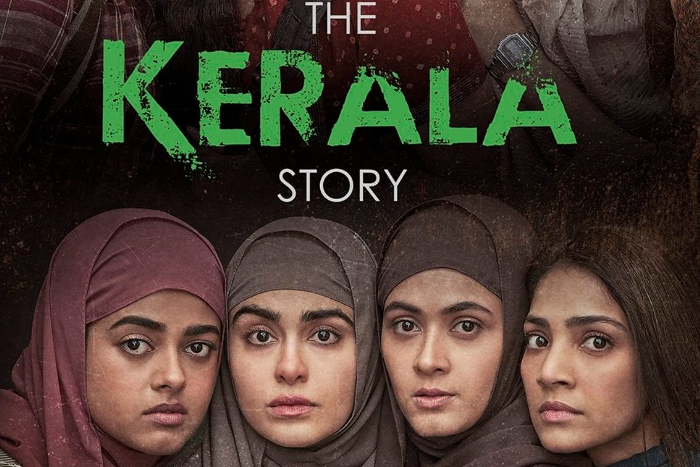
On Thursday, 4th May 2023, a Public Interest Litigation raising an objection to the theatrical release of the multilingual film ‘The Kerala Story’ was rejected by the Madras High Court. After noting that the Kerala High Court and the Supreme Court had previously addressed the matter of the release of the movie, the vacation bench of Justices AD Jagadish Chandira and C Saravanan rejected the PIL filed by a Chennai-based journalist BR Aravindakshan.

The petition filed by the journalist contended that the movie will affect the country’s sovereignty and unity causing disturbance to the public order. He said that the movie made a deliberate attempt to depict Kerala as a state that supports terrorism. He further argued that if the film is permitted to be exhibited, it will be embarrassing for the whole nation since it will give the image that India is a nation that breeds terrorists. The petitioners were questioned by the court over how they could predict that a film would cause issues with law and order without actually seeing the film.

Justice Chandira said, “Why are you coming so late? If you’d come earlier, we could’ve asked someone to watch the movie and decide. You have not seen the movie yet. How can you assume that there will be problems? We’re dismissing this case. The Kerala High Court and the Supreme Court have already dealt with the issue.”

The petitioner’s supporters questioned the movie’s certification. According to the argument, the film was not suitable for certification under Section 5(b) of the Cinematography Act, which prohibits approval if any aspect of the film is determined to be in violation of the State’s sovereignty, security, or integrity. The petitioner alleged that the film’s creators had misrepresented the truth when they said that 32,000 women had joined the terrorist outfit ISIS. Additionally, it was claimed that not even the Home Ministry had any information on such a large number of people joining the terrorist organisation.

When questioned if the film was based on any statistical information or records, the complainant said that the maker of the film had given interviews mentioning that the statistics were based on an address delivered by a previous Chief Minister of Kerala. The appellant said that the movie was premised on events that were occurring in Kerala since the producers claimed to be discovering certain facts.

In his appearance on behalf of the director, senior attorney Santosh Parasaran argued that the petition could not be maintained. He said that the Kerala High Court had previously approved the film’s release and that the Supreme Court had denied relief in a similar petition requesting the ban on the film.

The much-awaited trailer of Sudipto Sen’s film ‘The Kerala Story’ was released on 26th April 2023. Vipul Amrutlal Shah is the producer and creative director of the film starring Adah Sharma, Yogita Bihani, Sonia Balani, and Siddhi Idnani in the lead roles. The film will be released on 5th May 2023 in Hindi, Tamil, Telugu, and Malayalam language.

As allegations and counter-allegations fly between Meiteis and Kukis, here is everything you need to know about the recent Manipur violence

Violence erupted at several places in Manipur on Wednesday during protests by tribal groups against the demand for ST status by the Meitei community. Protests by the tribal groups turned violent at various places in the state, where large scale arson took place. Manipur CM N Biren Singh has said that lives have been lost and property has been damaged in the violence. Curfew has been imposed in eight districts, and mobile internet services have been suspended in the entire state, while army and paramilitary forces have been deployed to contain the situation.

The recent violence first took place in Churachandpur district on 27 April, when a mob led by the Indigenous Tribal Leaders’ Forum (ITLF) burnt down a newly constructed gym-cum-sports facility a day before it was scheduled to be inaugurated by Chief Minister N Biren Singh. The tribal groups were protesting against the proposed survey of reserved and protected forests and wetlands by the state govt, and the demolition of three unauthorised churches.

While the situation was handled swiftly by the security forces, things went out of hand on 3 May, when All Tribal Student Union Manipur (ATSUM) called for a ‘Tribal Solidarity March’ in the Torbung area of Churachandpur district to oppose the demand for inclusion of the Meitei community in Scheduled Tribe (ST) category. Protestors started burning tires and other objects on the roads, which then led to arson and violence.

Similar protests in support of the ‘Tribal Solidarity March’ took place in several other places in Manipur, and many of them turned violent. Violence erupted in tribal-dominated Churachandpur, Kangpokpi, and Tengnoupal districts as well as the non-tribal-dominated Imphal West, Kakching, Thoubal, Jiribam, and Bishnupur districts. According to authorities, violence was fuelled by hateful and provocative messages circulated on social media, which led to the suspension of mobile internet services for 5 days.

While the tribal groups have been opposing the demand of the Meitei community’s demand for ST status for years, the recent protests and violence were triggered by a Manipur High Court order on 27 March, directing the Manipur state government to submit recommendations to the union government for the inclusion of Meitei in the Scheduled Tribes (ST) list. The court had issued the order after several petitions filed by Meitei activists seeking the said direction.

The high court also criticised the state government for dragging the issue for over 10 years. In May 2013, the union ministry of tribal affairs asked the state govt to submit a formal recommendation along with the latest socio-economic survey and ethnographic report, but the Manipur govt failed to do so.

The demands by Meities started with a memorandum submitted to the governor in November 2012 by the Scheduled Tribes Demand Committee of Manipur Valley (STDCM). The committee then met Chief Minister Okram Ibobi Singh in December 2012 with the demand, and then met prime minister Dr Manmohan Singh in July 2013 with the demand. However, the PM asked to them to discuss the matter with the state cabinet.

Meities vs Kukis

The current conflict between Meiteis and ‘tribals’ is the extension of hills vs plains conflict that exists in almost all states in the north east. Meiteis are the majority community in Manipur, comprising around 53% of the population, while tribal communities account for around 40% of the population. There are 34 recognised tribes in Manipur, broadly classified into Naga tribes (24%) and Kuki/Zomi tribes (16%).

While the Naga and Kuki tribes are included in ST list, most of the Meitei community people have OBC status, and some of them are listed as SCs.

Also, the majority of Meiteis are Hindus, with some of them are Muslims and some identify as animists, while the tribals are Christians. The Muslim Meitei community, known as Meitei Pangal, is also demanding ST status, along with the Hindu Meitei community.

However, the Meiteis are limited to only around 10% of the land in the state, as the rest of the state is classified as tribal areas. They live in the small patch of plain area in the state, the Imphal Valley, while the tribals reside in the protected Hill Areas, exclusively reserved for them. Being classified as non-tribals, Meitei people can’t buy land in over 90% of the state.

It is notable that Hill Areas in Manipur, comprising 90% of the total land in the state, are declared by the government under the provisions of Article 371C of the Constitution. The same Article also provides for the constitution of a Hill Areas Committee comprising MLAs from Hills Areas, while relevant laws passed by the assembly constitute village authorities. The committee and the authorities do not allow non-tribals to purchase land in the notified Hills areas.

The Imphal Valley has five districts, while the Hills Area has eleven districts. Apart from the Meteis, the valley is also home to other non-tribals, including people from other Indian states, and immigrants including illegal immigrants from Myanmar. On the other hand, only tribals are allowed to buy land in the hill districts.

The petition by the Meetei (Meitei) Tribe Union that resulted in the High Court order said that Meiteis had Scheduled Tribal status before 1949, but when the state merged with India in October 1949, they lost that status. When different communities in India were classified as Scheduled Castes (SC) and Scheduled Tribes (ST) under Article 341 and Article 342 of the constitution, the Meitei community was not included in any of them, reportedly because they are caste Hindus. At that time, not having SC-ST status was not a big issue, but things changed later, and the Meiteis started demanding reserved status.

After the implementation of the Mandal Commission report, Meiteis were granted OBC status, and thus they became eligible for reservation in govt jobs and seats in educational institutions. In Manipur, the quota for ST is 31%, OBCs enjoy a reservation of 17%, and the same is 2% for SCs.

Apart from ST status, Meiteis are also demanding NRC in the state, alleging large-scale illegal immigration in the state, which is being opposed by the tribes.

Naga tribes distance themselves from violence

While both Naga and Kuki tribes are opposing the Meitei demand for ST status, the Naga community has distanced itself from recent protests and violence. It is the Kuki tribes who are mainly behind the recent protests and violence. While the Tribal Solidarity March took place in the entire state, violence took place mainly in the Kuki areas, and the march was peaceful in the Naga areas.

In fact, several organisations of the Naga community, including the Maram Union, Mao Union and Rongmei Naga Council Manipur, have said that Indigenous Tribal Leaders’ Forum is a new organisation and it does not represent all tribals.

Rongmei Naga Council Manipur issued a statement last month saying that the actions of ITLF are against the wishes and integrity of the indigenous tribes. “Creating chaos to the peace and tranquillity loving people of the state has become a daily practice of some class of people. The indigenous Rongmei people clarify once for all that, it have no knowledge of the existence of such bogus forum and appeal all right thinking indigenous communities to abstain from the said rally,” the Naga boy had said.

What the tribals alleging

The tribal groups are alleging that Meiteis want to grab their jobs by becoming STs, while they already have reservation as OBCs. They also claim that the Meitei community is already an advanced community, and they don’t require the benefits of reservation. Pointing out that out of 40 out of 60 MLAs are from the Meitei community, the tribal groups claim that the majority community is the dominating community in the state.

According to them, the Meiteis are wealthier, wield both political and administrative power, have higher population than all tribes combined in Manipur, occupy most positions of power, control major businesses and institutions, and have relatively higher social, educational and economic standing than tribals.

In a memorandum submitted to union law minister Kiren Rijiju, the All Tribal Students’ Union Manipur (ATSUM) had said, “the fact that the Meetei/Meitei community has done exceedingly well in the fields of technology, medical, engineering, sports and civil services under UPSC is indicative of their advancement”. 

The tribal groups are alleging that if Meiteis become STs, they will grab all jobs reserved for STs, claiming that the educational qualifications of Meiteis are generally better than Nagas and Kukis. “If the advanced Meitei community is recognised as ST by the government, all the seats reserved for ST in the present will be occupied by the Meiteis. Despite already availing the reservations from SC and OBC categories, the Meiteis are insisting for inclusion in ST category with a sole objective of grasping the benefits presently reserved for the hill tribes,” ATSUM has said.

Further, according to them the Meitei language is included in the eighth schedule of the constitution and is a well-developed language with a script, as opposed to most tribal languages, and therefore Meitei community is ineligible for protected status.

Apart from this, they are also claiming that the Hindu Meiteis want to buy land from tribes in protected hills areas, which they don’t want to happen.

The tribal groups further argue that the plain people, the Meiteis, were not included in the ST list because they have lost their ‘primitive and distinctive’ features, therefore they can’t be classified as tribals.

The tribal groups further claim that originally Meiteis were happy to be not classified as tribals due to the social divide between the people of valley and hills, and the plains people used to use derogatory words like ‘Haos’ to refer to the tribals.

What the Meiteis say

On the other hand, Meiteis deny that they are seeking ST status to grab reserved jobs. According to them, without the status of the scheduled tribe, the Meetei will lose the status of an indigenous community. According to them, it is not about reservation in jobs & educational Institutions and tax relief, but it is more about protecting the Lands, culture and identity of the people, which can’t be protected without ST status.

They claim that their ancestral lands, culture and identity are under constant threat from illegal immigrants from Myanmar and outside the state, and therefore they need the protected status.

The Meitei community also reject the claim by ATSUM that they have lost their tribal nature, saying that even though they follow Hinduism, they still follow ancient animist rituals, they belong to mongoloid race, they are geographically isolated, economically backward compared to the national average, they are a microscopic minority, and therefore they fulfil all the criteria for being classified as Scheduled Tribals.

In regard to land, the Meitei community say that while they are allowed to buy land in only 10% of the state, there are no restrictions on others, including tribals and outsiders, from buying land in the valley, while only tribals are allowed to buy land in hill districts. According to them, this has resulted in a scarcity of land for them.

According to Meetei (Meitei) Tribe Union, as a result of being left out of the ST list, “the community has been victimised without any constitutional safeguards to date. The Meitein/Meetei have been gradually marginalised in their ancestral land. Their population which was 59% of the total population of Manipur in 1951 has now been reduced to 44% as per 2011 Census data”.

Protest against Meitei ST status or eviction of Burmese Kukis?

The Meiteis also claim that the violent protest against ST status demand is just a façade, and there is another motive behind the protests by the tribals. According to them, the real target is the survey of forest land and eviction of illegal immigrants from protected areas.

According to the Meitei groups, Manipur is witnessing a sudden population surge with a growth rate of 24.5% against the national average of 17.64%, as a result of illegal immigration. They said the abnormal surge and mushrooming of villages were being noticed in the hill areas of Manipur. They said that such abnormally high population growth can’t be attributed to natural birth, adding that it is the result of migration from neighbouring countries.

According to them, Kuki people are immigrating from Myanmar and occupying forest land in Manipur, and the local Kukis are supporting them. Aware of the situation, the state govt has launched an eviction drive, which is being opposed by the tribal groups.

Chand Meetei Pocshangbamof of the All Meitei Council said, “Kukis are migrating illegally from across the Myanmar border and occupying forest land in Manipur. Recently, the Manipur government started an eviction drive to clear illegal settlements in reserve forest areas. The drive was in all areas, including those inhabited by Meiteis and Muslims, but only the Kukis are protesting.”

For this reason, Meiteis are demanding the implementation of a National Registrar of Citizens (NRC) in the state, to identify illegal immigrants. “Meiteis are demanding an NRC because of the sudden population spike in the last two decades in areas bordering Myanmar. Illegal immigrants from Myanmar have been settling in Manipur since 1970s but the movement has intensified now,” Pocshangbamof said.

It is notable that the state government has identified 38 villages in the Churachandpur-Khoupum Protected Forest area as “illegal settlements” and said that its residents are “encroachers”. Following this, the govt launched an eviction drive that led to clashes. The government also announced a survey of forest areas to identify encroachment, which is being opposed by the tribal groups.

Chief Minister N Biren Singh said that the protesters were challenging the constitutional provisions. He had said, “the people there were encroaching reserved forests, protected forests and wildlife sanctuaries for poppy plantation and drugs business.”

The tribal groups, mostly Kuki groups, claim that the eviction and the survey are in violation of Article 371C of the constitution, which confers some administrative autonomy to the tribal-dominated hill areas of Manipur.

Allegations of pre-planned strategy for ethnic cleansing

Amid allegations and counter-allegations, another allegation has emerged saying that it is a pre-planned strategy to evict Hindu Meities living in Christian Tribal areas. According to Meitei groups, following the violence in the Churachandpur district, Meities who had left their villages have not returned. Allegedly several houses were burnt by tribals and stones were pelted, forcing the Meiteis to flee.

Unverified videos have emerged showing houses on fire, allegedly belonging to Meiteis. Reportedly, miscreants armed with sophisticated weapons attacked Meitei Hindu houses and torched them on Wednesday.

Reportedly, around Hindus fled their homes in Kuki-dominated areas in Churachandpur and took shelter in nearby Indian Army and para-military camps.

Hindu activists have claimed that it is not a tribal vs non-tribal conflict, but it was actually initiated by the Christian tribals to evict the Meiteis from Christian majority areas. They allege that Christian tribals pre-planned the incident, and implemented it on the day vice president Jagdeep Dhankhar visited Manipur.

The Hindu activists point out that the Tribal Churches Leaders’ Forum issued a statement supporting the tribal solidarity march. In response to the call by ATSUM, The Tribal Churches Leaders Forum (TCLF unanimously resolved to endorse the ‘Solidary March’ of ATSUM in a meeting held on May 1. “This solidarity March organised by the ATSUM is to collectively protect the social, political and religious interests of the tribal people of Manipur,” said the statement.

The admirable political chutzpah of Prime Minister Narendra Modi

‘You have to believe in yourself. You need to have audacity to be great’ ~ Rosie Perez

Chutzpah is a word adopted from Hebrew/Jewish vocabulary. In Hebrew, it has a negative connotation, but of late in English, especially used by Americans, it is something to do with audacity. Former US president Barack Obama wrote a book titled Audacity of Hope; it could well be titled Chutzpah of Hope.

The word audacity borders on arrogance and defiance. He had the “audacity to insult me” which means he had the guts or the gumption or the cheek to say this. Oprah Winfrey’s Chutzpah Awards, presented annually to women whose chutzpah—audacity, nerve, boldness, conviction—has taken them to the most amazing places.”

For instance, Narendra Modi made some tough decisions in his first six years in power, which many didn’t like. Demonetization was one, and the immediate lockdown of the country during the COVID-19 pandemic and the abrogation of Article 370 were all similar chutzpah moments.

The air strike on Balakot in Pakistan, Indian aircraft crossing the Line of Control (LOC), and going 80 km deep to bomb terrorist camps in Pakistan were very tricky and risky decisions. Anything could have gone wrong, but he did it. The executive order was given by him. An ordinary man will not be able to sleep with this kind of stress.

The Republic Summit 2023- A chutzpah event?

PM Narendra Modi and his select cabinet ministers spoke at the Republic Summit on the 25th and 26th of April 2023, the theme being transforming India- which gave me the idea of writing this piece.

He has the guts to take difficult decisions even putting his political existence at risk. With the opposition, foreign media, and several guys within the nation all watching like hawks and looking for one single major failure from him or his administration so that they can take him down. In such an environment, taking bold decisions is even more risky and requires tremendous courage of conviction.

Let me illustrate this with an example. Every safe flying trapeze rig in a circus has a large safety net underneath the ring. If an artist/gymnast misses a catch, or slips and falls off the bar, he lands on the net and is saved. In the case of PM Modi, the risks and stakes are higher than one could imagine, they have national and international ramifications and he is doing it without a safety net!

One thing which he mentioned in his stellar speech was that the entire opposition was asking him to go for importing Covid Vaccine and there was no point making our own. In any case, someone will come out with one and all we need to do was to pay and buy!

He said this was the easiest thing to do but he wanted ‘Atmanirbhar’ Bharat- self-reliant India, and went ahead with indigenous development and mass production of vaccines at home. He was candid enough to say that he had put his entire political capital at risk- but he did it.

In the case of Truman, it was millions of Japanese that would perish due to Atomic bombing but in the case of Modi, it was the lives of his own people at risk- and that is the major difference.

Almost all the members of his council of ministers who had spoken before him had said that the biggest strength of the Prime Minister was to take risks. This was one reason his team always stood by him.

The greatest art of leadership and acumen of a great leader is to produce and motivate more leaders. Republic Summit in more than one way demonstrated that Modi ji is a great leader who has nurtured a great team of leaders in his cabinet colleagues. You cannot run a 1.4 billion strong economy single-handedly, though he personally gets involved with ministers to give clear directions and sets an accountable road map.

‘The only safe ship in a storm is leadership’ ~ Faye Wattle ton

Each one of the participating ministers on the dais was fully charged up and spoke with passion and facts on the ground. It was like India firing on all cylinders at once.

Mr. Nitin Gadkari, Minister of Road Transport and Highways in India, told the nation that highways are the connectivity that would make the cost of logistics lower and make us a more competitive production hub for the entire world. It impacts our economy directly. He even quoted John F Kennedy that ‘American roads are not good because America is rich, but America is rich because American roads are good’. This is the focus and commitment at the national level in India. He gave several statistics which were mind-boggling. The work is going at breakneck speed on Tunnels, Highways, and bridges.

Ashwani Vaishnav, the railway minister who is a Post graduate in Engineering from an IIT and Management graduate from Wharton business school, presented his achievements brilliantly. Modi ji has picked up the right people for the right job- which is a great leadership skill.

If one looks at earlier Ministers, I don’t think anyone would be anywhere close to him in his experience and the relevance of his education to the job at hand. Arnab Goswami, the editor-in-chief of Republic, did mention that earlier ministers were happily doling out railway stations to their own constituency and state but today things are different. Today, the focus is on overall progress across the country.

The minister told the audience that most of the stuff was produced in India. Our train is doing 0 to 100 kmph in 52 seconds beating the Japanese bullet train by full 2 seconds. We are building and commissioning Vande Bharat trains at a breakneck speed. He told the audience that the PM didn’t believe in delta changes which means tiny changes but wanted quantum shifts in every field. Railway tracks, stations, and the quality of trains are totally different. Indians were given trains with technologies of 1940 or 1960 till now. Today we are giving world-class trains at par with the best in the world. He also mentioned that the kind of knowledge the PM has in advanced technologies like AI and quantum computing is unbelievable.

Hardeep Puri, the minister for energy and urban development, was setting a different benchmark. Importing crude from Russia was a big geopolitical decision and a shift in foreign policy. Today we are setting the world agenda through G20 and a robust foreign policy stance. He proudly announced that more than 2000 archaic laws which were created by the British and are no more relevant today have been scrapped. How our students from Ukraine were rescued and how India helped other nations during times of crisis was something to be proud of. Today every Indian going abroad is proud to be an Indian. This is something that does not seem to be tangible but in fact, is the most tangible of all achievements.

Jyotiraditya Scindia, minister for civil aviation, explained how the hub and spoke model was being implemented to take aviation to the last mile – by connecting the Tier 3 and Tier 4 cities, even reaching border areas. How airports are being modernized and new ones coming up at a rapid rate.

Piyush Goyal, who holds charge of multiple ministries like commerce, textiles, and public distribution also gave an idea of how the PM wants cities and states in the North East to be given a priority, understanding that they were neglected for decades. Roads, bridges, and Industrial development is taking place even in states where there is only one Lok Sabha seat! This means the government is focusing on the entire nation and not looking at political leveraging’.

Of course, the last one to speak at the summit was the PM himself. He did give an overall perspective on the transformation of the nation.

Today the world is looking at our digital India initiative. When at the press of a button by the PM, millions of beneficiaries get money directly into their accounts instantly, even amazing most of the countries in the West. The scale and speed often become unbelievable for the leaders in the West who now look up to PM Modi for his indulgence and guidance.

If this is not the Chutzpah of a nation and its leadership, then what is?

‘One day everything will be well, that is our hope. Everything is fine today is our illusion’ – Voltaire.

Damage control from Congress continues: After Veerappa Moily said they can’t ban Bajrang Dal, DK Shivakumar promises to build Hanuman Temple in every Taluka

On Thursday, May 4, DK Shivakumar, the head of the Karnataka Pradesh Congress Committee (KPCC) paid a visit to Goddess Chamundeshwari temple in Mysuru to seek the blessing of Lord Hanuman. Speaking to the media after that, he vowed to build Hanuman temples in each Taluka of Karnataka if his party is elected to power in the state.

The extensive backlash the Congress is facing for promising to outlaw the Hindu organisation Bajrang Dal in its election manifesto for Karnataka is unsettling the party’s leaders, just before the crucial Assembly elections in the state.

While other party bigwigs like Karnataka Congress leader and former chief minister M. Veerappa Moily are already attempting damage control, DK Shivakumar has tried to play the “soft Hindutva” card, which his party typically employs before every major election.

It is worth noting here that the day Congress released its Karnataka poll manifesto, PM Modi criticised the grand old party for pledging to ban the Hindu outfit Bajrang Dal and equating it to the banned Islamist terrorist organisation Popular Front of India (PFI). He said that the party is trying to lock up those who revere Lord Hanuman, in an obvious reference to members of the Bajrang Dal.

Now, only two days later, the party’s senior leader DK Shivakumar has not only embarked on a visit to a Hanuman Temple but also pledged to build Hanuman Temples in each and every district of the state.

Sharing a picture of himself bowing before Lord Hanuman at the Chamundeshwari temple in Mysuru DK Shivakumar captioned his tweet in Kannada which roughly translates to, “Performed puja for Lord Hanuman after mother Chamundeshwari’s darshan in Mysuru. Hanuman means power, and Hanuman means peace.”

He told the media there that the Congress will build Anjaneya temples across the state if voted to power. “We will establish a special board to oversee the development of Anjanadri Hill and ensure its preservation. Our party will also prioritize the construction of new Anjaneya temples in various parts of the state, reflecting our commitment to honouring the rich cultural heritage of Karnataka,” he said.

“Additionally, we will organize specific programs aimed at educating the youth about the principles and values embodied by Lord Anjaneya,” the KPCC president added.

Shivakumar also raised questions over why Anjaneya temples were not built and why Anjanadri Hill was not developed as a tourist spot. He asked, “How many Anjaneya temples did the BJP government build? Their record on the matter remains unclear and we firmly believe that the promotion of Anjaneya’s legacy is essential for the spiritual and cultural upliftment of the state. Therefore, if elected, the Congress party will hold separate programs in the name of Anjaneya in each taluk to spread awareness about his teachings and inspire more people to follow his path.

Congress tries to do damage control after backlash over Karnataka poll promise

Earlier, Karnataka Congress leader and former chief minister M. Veerappa Moily in an apparent damage control move said that it is not possible for the state government to ban Bajrang Dal, adding that there is no proposal to ban the group. 

“We have PFI and Bajrang Dal mentioned in our (Congress) manifesto and included all radical outfits. However, banning an outfit is not possible for the state government as it is the central government’s jurisdiction. So a ban on Bajrang Dal by the Karnataka government is not possible. DK Shivakumar will come up with more clarity on this,” Moily said while addressing the media in Udupi.

The former Karnataka CM also said that the Congress promised action against outfits like Bajrang Dal in the manifesto in the backdrop of the recent Supreme Court observation against hate politics.

Interestingly, the Congress party invited severe backlash by promising to “ban organisations like Bajrang Dal” in its election manifesto for Karnataka.

While Congress says that it will act against organizations spreading hatred, the Social Democratic Party of India (SDPI)—the political wing of the now-banned PFI announced on Wednesday that it will be contesting only 16 Assembly seats in the upcoming Karnataka elections in a bid to help Congress defeat the BJP. Initially, the SDPI had said that it will be contesting on 100 seats. 

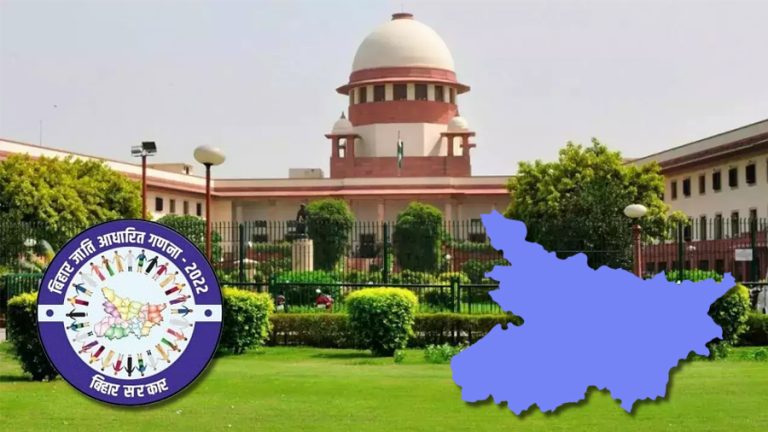
Patna High Court stays caste-based census that the Bihar govt wanted to conduct, says it infringes on domain of Union Parliament: Details

On 4th May 2023, the Patna Court issued an interim injunction suspending the caste-based census after hearing a petition challenging the Bihar Government’s plan to carry it out throughout the State. The Court stated that a caste-based survey equates to a census, which the State Government is not authorised to conduct, prima facie.

After hearing three petitions, including one from a group called Youth for Equality, the bench of Chief Justice K. Vinod Chandran and Justice Madhuresh Prasad announced their decision. On July 3, the matter would be heard again.

The court said in its order, “Prima facie, we are of the opinion that the State has no power to carry out a caste-based survey, in the manner in which it is fashioned now, which would amount to a census, thus impinging upon the legislative power of the Union Parliament.”

It further said, “We also see from the notification issued that the Government intends to share data with the leaders of different parties of the State Assembly the ruling party and opposition party which is also a matter of great concern.”

The decision was announced six days after the Supreme Court sought that the Patna High Court consider, rule on, and absolve the interim petition filed by “Youth for Equality” as soon as possible, preferably within three days of the application’s submission and mention before the High Court’s Chief Justice.

It should be observed that the caste census was introduced by the Bihar government on January 7, 2023. A decision in this regard was taken on 2nd June 2022. A smartphone app would be used to electronically collect data on every family as part of the survey from the panchayat to the district level.

The petitioner essentially wants to invalidate the State Government’s notification on the grounds that only the Union Government has the authority to carry out the census and that the topic of the census is listed in List 1 of the Seventh Schedule of the Indian Constitution.

According to the petition, only the central government has the authority to make rules, appoint census staff, requisition sites for conducting censuses, pay remuneration, the right to acquire data and perform other functions related to requisitioning that are delegated by the central government.

Bihar’s deputy chief minister Tejashwi Yadav said that the government will act on the court’s decision. He said, “This was not a caste-based census. This was a caste-based survey. This is not a first survey or a final survey by the government. But it was wished by all of us including Nitish Kumar, Lalu Prasad Yadav and all the ministers in our government. We all are committed to making this survey happen. It was for the welfare of the people. It was demanded by the people. From this survey, our government wanted to eradicate poverty and backwardsness. We wanted to ensure through this survey that the last person in the society gets the benefits of the government schemes. We wanted to see the financial situation of people through this survey. This survey was not for any particular caste. It was meant for all.”

He added, “However, we will study the judgment first and then see what step we can take. But the BJP has always been anti-poor, and anti-reservation. So they must be celebrating today. But, once we get to read the whole judgment, we will put our view on that. One thing is clear. This survey is bound to happen tomorrow if not today. It doesn’t matter whose government is there. Without this survey, the state cannot progress and the poverty and backwardness cannot be eradicated. Looking at this, we all have struggled a lot to do this. Bihar is a poor state. When the central government denied to do it, we were putting in our own resources to do it.”

Tejashwi Yadav further said, “The union government does not give the special status to Bihar. It does not give any special package to Bihar. When we are trying to eradicate poverty and backwardness and take the benefits of the government schemes to the last person in the society on our own, these BJP people are celebrating. They don’t want it to happen. This survey would bring the reality in front of all. We would know who are actually poor, who live in huts and slums, who don’t have any lands, who are doing dirty jobs, what is their financial condition, etc. It is on the basis of this information that the government identifies these people and take the beneficial schemes to their doorstep. It was not about one caste, but it was about everyone. We will act on the court’s decision. We will see.”

BJP leader and former deputy chief minister of Bihar Tarkishore Prasad said, “We were party in that decision when the then NDA government in the state took the decision of caste-based census. It is unfortunate that the Bihar government did not put this matter in front of the honourable high court in a better way. Therefore, the court has ruled in this way.”

He further said, “I allege this Mahagathbandhan government, that they only had some ill-will regarding the caste-based census. Otherwise, the NDA government had taken the decision of the caste-based census. We agree with the caste-based census because we were in the cabinet that took decision in its favour.”

AAP supporters became aggressive, false accusations were leveled against a cop that he was drunk: Delhi police on late-night scuffle at Jantar Mantar

The Delhi Police released a statement on Thursday, May 4, regarding the late-night scuffle between them and the protesting wrestlers at Jantar Mantar on Wednesday night after police stopped AAP leader Somnath Bharti from entering the protest site to give folding cots to protesters. 

Speaking about the incident and some allegations leveled at the cops by the protesters, Deputy Commissioner of Police Pranav Tayal told ANI that the scuffle broke out after AAP leader Somnath Bharti brought folding beds to the protest site at Jantar Mantar. Some AAP supporters tried to take out the beds and this led to an altercation, said the DCP.

Regarding allegations leveled by protesting wrestlers that they were abused and manhandled by a cop who was in a drunken state, DCP Pranav Tayal refuted the claim. Calling the allegation false and baseless, he confirmed that a medical examination was conducted on the cop in question and the test result showed that he was not in an inebriated state that night. The DCP also added that sufficient women personnel were at the spot on Wednesday night.

In the official statement, the DCP further said, “Police only tried to stop AAP leader Somnath Bharti who arrived at the spot with foldable beds without prior permission. Upon intervention, Somnath Bharti supporters became aggressive as they tried to get the beds out of the truck. Subsequently, a minor altercation took place in which Somnath Bharti along with two others was detained.” 

The DCP also confirmed that DCW chairperson Swati Maliwal also visited the site late at night on Wednesday but was stopped from entering the site by the cops as she tried to do so without due permission. She was detained and brought to the Civil Lines police station, after which she was released.

The DCP added that 5 police personnel, including two women cops, were injured in the scuffle at Jantar Mantar.

Notably, Deputy Commissioner of Police Pranav Tayal vehemently denied the claim made by the protesting wrestlers that the Delhi police officer was intoxicated, based on the results of the medical tests done on the cop.

In his previous statement, he had mentioned that a medical check-up of the policeman on whom the protesters raised allegations was being conducted.

PT Usha heckled by protestors, late-night scuffle with Delhi police at Jantar Mantar

On May 3, at around 11 PM, a scuffle broke out between the protesting wrestlers and Delhi police at Jantar Mantar after Aam Aadmi Party leaders, including Somnath Bharti and DCW chairperson Swati Maliwal, visited the protest site with the police detaining Somnath Bharti and AAP supporters.

Yesterday’s fiasco at Jantar Mantar started much earlier with PT Usha being heckled and manhandled by the protesters. PT Usha had visited the protest site to meet the wrestlers. A video made it to social media where she could be seen being hackled by some protesters that raised concerns about her safety at the protest site. She had to escape with the help of security personnel present at the site.

Wrestlers protest

On April 23, ace wrestlers Sakshi Malik, Vinesh Phogat, and Bajrang Punia launched a second round of protests against Wrestling Federation of India chief Brij Bhushan Sharan Singh, alleging he sexually harassed hundreds of female wrestlers. The first round of protests took place in January this year. It was called off after Sports Minister Anurag Thakur formed a committee to investigate the matter.

Following the fresh wrestler’s protest, Delhi Police filed FIRs against Singh based on the complaints of seven athletes.

Press Freedom rates India 161 out of 180 based on faulty data on govt spending on ads, claims it spent 13,000 cr on ads: Here is what OpIndia RTI had found

On May 3, Reporters sans frontières (Reporters Without Borders), or RSF, released its annual Press Freedom Report, in which it put India at 161st position out of 180 countries. As per RSF, India slipped 11 ranks since 2022. Interestingly, according to RSF, Pakistan’s press freedom index has improved. From 157th rank in 2022, Pakistan has acquired the 150th position in the list. The same goes for Taliban-ruled Afghanistan, which got its rank improved from 156 to 152.

RSF claimed Indian government spends 130 billion Rupees on ads every year

One of the most bizarre points RSF put in its report is about the money the government of India spends on advertisements. RSF claimed the central government is spending more than 130 billion rupees (Rs 13,000 crores) or 5 billion euros a year on ads in the print and online media alone.

Under the ‘Economic Context’, the report read, “The Indian press is a colossus with feet of clay. Despite often huge stock market valuations, media outlets largely depend on advertising contracts with local and regional governments. In the absence of an airtight border between business and editorial policy, media executives often see the latter as just a variable to be adjusted according to business needs. At the national level, the central government has seen that it can exploit this to impose its own narrative. It is now spending more than 130 billion rupees (5 billion euros) a year on print and online media ads alone. Recent years have also seen the rise of “Godi media” (a play on Modi’s name and lapdogs) – media outlets such as Times Now and Republic TV that mix populism and pro-BJP propaganda. The old Indian model of a pluralist press is, therefore, being seriously challenged by a combination of harassment and influence.”

OpIndia had filed an RTI seeking information on the ad spent by the central government on different platforms, including print, outdoor advertisements, social media, radio and television. As per the reply sent by the Ministry of Information and Broadcasting of the Government of India, the actual figures are nowhere close to what RSF has claimed.

According to the reply sent by the Ministry of Information and Broadcasting, the central government spent only Rs 26.44 crore on television ads and only 1.33 crore on social media ads in the financial year 2022-23. Notably, ad spending has decreased significantly since the Modi government came to power in 2014. The maximum amount the government has spent on television ads was Rs 280.77 crores in FY 2016-17.

Here is a breakdown of year-wise money spent on television ads

  • FY 2014-15 – 236.68 crores
  • FY 2015-16 – 245.42 crores
  • FY 2016-17 – 280.77 crores
  • FY 2017-18 – 153.03 crores
  • FY 2018-19 – 149.67 crores
  • FY 2019-20 – 98.69 crores
  • FY 2020-21 – 69.82 crores
  • FY 2021-22 – 29.44 crores
  • FY 2022-23 (till December 31, 2022) – 26.44 crores
Source: Ministry of Information and Broadcasting via RTI

Here is a breakdown year wise money spent on other electronic media (digital cinema, internet, misc and sms)

  • FY 2014-15 – 103.83 crores
  • FY 2015-16 – 132.31 crores
  • FY 2016-17 – 96.87 crores
  • FY 2017-18 – 102.98 crores
  • FY 2018-19 – 115.35 crores
  • FY 2019-20 – 86.49 crores
  • FY 2020-21 – 16.16 crores
  • FY 2021-22 – 6.98 crores
  • FY 2022-23 (till December 31, 2022) – 13.91 crores

Here is a breakdown year wise money spent on Radio ads

  • FY 2014-15 – 81.43 crores
  • FY 2015-16 – 113.31 crores
  • FY 2016-17 – 184.40 crores
  • FY 2017-18 – 167.89 crores
  • FY 2018-19 – 209.15 crores
  • FY 2019-20 – 73.46 crores
  • FY 2020-21 – 68.44 crores
  • FY 2021-22 – 33.34 crores
  • FY 2022-23 (till December 31, 2022) – 16.97 crores
Source: Ministry of Information and Broadcasting via RTI

Here is a breakdown year wise money spent on outdoor advertisements

  • FY 2014-15 – 62.72 crores
  • FY 2015-16 – 105.53 crores
  • FY 2016-17 – 126.45 crores
  • FY 2017-18 – 145.69 crores
  • FY 2018-19 – 189.13 crores
  • FY 2019-20 – 7.5 crores
  • FY 2020-21 – 1.16 crores
  • FY 2021-22 – 7.79 crores
  • FY 2022-23 (till December 31, 2022) – Data not available
Source: Ministry of Information and Broadcasting via RTI

Here is a breakdown year wise money spent on print media

  • FY 2014-15 – 207.66 crores
  • FY 2015-16 – 317.87 crores
  • FY 2016-17 – 272.84 crores
  • FY 2017-18 – 411.03 crores
  • FY 2018-19 – 252.28 crores
  • FY 2019-20 – 81.93 crores
  • FY 2020-21 – 53.76 crores
  • FY 2021-22 – 58.50 crores
  • FY 2022-23 (till December 31, 2022) – 69.26 crores
Source: Ministry of Information and Broadcasting via RTI

Year-wise total expenditure on ads by the central government (all departments and ministries in all formats)

  • FY 2014-15 – 692.32 crores
  • FY 2015-16 – 914.44 crores
  • FY 2016-17 – 961.33 crores
  • FY 2017-18 – 980.62 crores
  • FY 2018-19 – 915.58 crores
  • FY 2019-20 – 348.07 crores
  • FY 2020-21 – 209.34 crores
  • FY 2021-22 – 136.05 crores
  • FY 2022-23 (till December 31, 2022) – 126.58 crores

While RSF claimed the government of India spent Rs 13,000 crores on advertisements just in print and online media alone, the RTI reply showed the expenditure did not even cross Rs 1,000 crores per year on all formats (television, print, radio, outdoor, digital cinema, SMS, internet and misc) since the Modi government came to power.

OpIndia is working on a detailed report on ad spending since the Modi government came to power in 2014.

Other unsubstantial claims made by RSF

Throughout its report on India, RSF made several claims that were nowhere close to reality. RSF claimed Reliance Industries Group led by Mukesh Ambani owns more than 70 media outlets. They also pointed out good relations between Ambani and PM Modi. The claim does not stand strong as it is based on a 2019 statement by Mukesh Ambani where he had said Reliance Industries owned 72 television channels, which includes all genres of channels and not just news channels, with around 800 million viewers.

Source: RIL

This includes News18 branded TV news platforms like CNN Worldwide, CNN-News18, CNBC-TV18, CNN-IBN, CNBC Awaaz and more. Other than news channels, it also includes an entertainment portfolio under Viacom18 Media which is the parent company of 50 channels. All these are entertainment channels and do not have any “media outlets” as mentioned by RSF. Reliance’s Jio platform is also a source of news for its subscribers but that is more of an aggregator rather than owner of the channels or media outlet.

Misleading information on deaths of media persons of Covid-19

RSF used data from different years to claim 1/3 of Covid-19-related deaths of media personnel were from India. RSF linked a report of Dhaka Tribune from June 2021 that noted 1,500 media persons died of Covid worldwide. Dhaka Tribune used data from Press Emblem Campaign.

Source: RSF

Then it linked to a document maintained by the Network of Women in Media, India, that noted over 500 media persons died of Covid in India. The number on that document now stands at 626. Using these two data points, RSF in 2021 claimed that 1/3rd (33 per cent) of the deaths of media persons by Covid-19 took place in India. Using this report, RSF said, “Under the guise of combatting Covid-19, the government and its supporters have waged a guerrilla war of lawsuits against media outlets whose coverage of the pandemic contradicted official statements.”

Source: RSF

RSF did not update itself in terms of data. When we checked, it was found that PEC noted till March 2022 that 1,994 media persons died of Covid-19 and out of those, 284 were from India.

Source: PEC

That means PEC claimed 14.24 per cent of Covid-19-related deaths of media persons happened in India which was less than half of what RSF claimed. PEC stopped collecting data after March 2022.

Source: PEC

Claims of unlawful arrests and mishandling of media persons during protests

RSF claimed the Indian government misbehaved and unlawfully arrested media persons who covered farmer protests. Interestingly, they mentioned the time when Twitter handles of media persons were suspended for sharing fake news about violence. They included the case of The Wire’s Siddharth Varadarajan was booked for reporting the death of a protester. Not to forget, even after repeated clarification from the Police and the doctor who did an autopsy of the deceased, Varadarajan continued to share fake reports about the death of the protester. It must be noted that The Wire was forced to remove multiple reports related to Tek Fog and Meta as they were based on false evidence. This report of RSF was published in 2021 and appeared in the 2023 ranking.

Source: RSF

They also mentioned the arrest of so-called journalist Siddique Kappan who was arrested by the Uttar Pradesh police for allegedly plans to instigate the public during the Hathras case in 2020. Details revolving around Kappan can be read here. RSF also linked a report where it extended its support to propaganda journalist Rana Ayyub. Notably, Ayyub is known for making false claims on international platforms. She is accused of financial fraud. The case against her is sub-judice. Recently, she downplayed gangster Atiq Ahmed’s crimes at a UNESCO event.

They also linked an old report to claim the situation is “still worrisome” in Kashmir. RSF linked to an article calling for the release of Kashmiri journalist Fahad Shah. Notably, he was arrested by NIA for glorifying terrorism. Charges were framed against him in January 2023. He was also accused of Me Too. RSF awarded him for his “courage” in 2020. They also came out in support of Irfan Mehraj, an alleged journalist from Kashmir who was arrested in a terror funding case.

Another dreaded gangster eliminated in Uttar Pradesh: Anil Dujana killed in an encounter with UP STF

Another dreaded gangster has been eliminated in Uttar Pradesh as the dreaded gangster Anil Dujana was killed in an encounter with UP Special Task Force (STF) in Meerut. The encounter took place on Thursday, May 4.

Dujana, a much-feared figure in western UP, had 62 cases registered against him, including 18 murder cases plus several other cases of extortion, looting, and land grabbing. He was in jail since 2012 but was granted bail in 2021. Later, a court issues a non-bailable warrant against him for non-appearance in old cases. Dujana was infamous for terrorising people in Noida, Ghaziabad, and other parts of NCR.

Dujana was released from jail just a week ago after getting bail in one of the murder cases against him. Immediately after getting bail, he started threatening one of the key witnesses against him. Following that, the UP STF moved in to try and arrest him.

However, Dujana was in no mood to surrender and he, along with his gang, tried to engage the UP Police in a gun battle. The standoff took place in a village in the Meerut district of Uttar Pradesh, and in the gunfight, police managed to kill the dreaded gangster. As per reports, Dujana gang tried to ambush the UP STF officers but later fell prey to the return fire.

Anil Dujana, who was in prison since 2012, started operating his criminal empire from jail with the help of other criminals. Dujana planned and directed his aides to execute murders, extortion, and other criminal activities while sitting in jail. 

Uttar Pradesh municipal election: SP leader organises biryani party to lure voters, people loot the containers after biryani runs out: Watch

The first round of voting for the civic elections is currently taking place in Uttar Pradesh. Meanwhile, a video linked to the election from Meerut is going viral on social media. Here, the attempt to sway the electorate with the promise of Biryani failed since there was not enough of it, and the crowd left with the containers.

Hanifa Ansari, a Dhawai Nagar resident and councilor candidate for the Samajwadi Party, is contesting from Ward 80 in the Nauchandi neighbourhood of the Meerut police station. She prepared biryani on Wednesday in an effort to win over voters and a massive throng came over to partake in the feast. The food eventually ran out though, and in a funny turn of events, people picked the biryani pot and tried to flee with it.

The guests ran after the utensil which had the biryani and the spectacle continued for a long time. The Nauchandi police station was alerted to the viral video, and the authorities are considering charging the candidate with breaking the code of conduct.

Meanwhile, a case was registered by the Lisari Gate police in Meerut for breaking the model code of conduct after a video featuring Bahujan Samaj Party (BSP) mayoral candidate Hashmat Malik with huge wads of cash went viral on social media on Monday. He is with several of his supporters, one of which can be seen carrying a bundle of 500-rupee notes, the value of which is estimated to be 5,00,000 rupees.

The police have also apprehended 4 individuals, 3 of whom are women, for attempting to cast fictitious ballots in the Sambhal district’s Chandausi local council. The women who were taken into custody for voting fraudulently attempted to do it while donning burqas. One of the charged individuals had previously exercised her right to vote. The woman also created a ruckus at the polling station.

Voting for the first phase of urban local body elections in Uttar Pradesh is currently underway. Chief Minister Yogi Adityanath, BSP supremo Mayawati, Jal Shakti Minister Swatantra Dev Singh, and Deputy CM Brajesh Pathak were among the early voters.

Forced ‘virginity test’ on underage girls to defame priests of Lord Nataraja Temple, fake child marriage cases and more: Explosive revelations by Governor of Tamil Nadu

The governor of Tamil Nadu, Ravindra Narayana Ravi, exposed the shocking truth about how minor girls were forced to undergo the two-finger test, also known as the virginity test, by the state administration in an effort to defame the podhu dikshithars, in an explosive interview with the Times of India. Pothu dikshithars are the hereditary priests and custodians of Sri Sabanayagar Temple, popularly known as Lord Nataraja Temple.

“Out of vengeance, government officers of the social welfare department lodged eight complaints of child marriage against the podhu dikshithars, that they were marrying their children underage, whereas there were no such marriages,” Governor Ravi said.

“Parents were arrested and put behind prisons. And the girls, sixth and seventh standard students, were forcibly taken from home to the hospitals and made to undergo ‘two-finger tests,’ virginity tests. Some of them tried to commit suicide,” he revealed and stated that he wrote a letter to the chief minister questioning the horrific ordeal.

Two-finger test and why it is problematic

In this procedure, two fingers are inserted into the rape victim’s vagina by a medical professional in an effort to ‘test the laxity of the vagina’ and determine if the hymen is ruptured. The test is frequently used to label rape victims as being habituated to sex.

The medical proof of prior sexual encounters is used to refute the rape allegation, either to imply that the victim lied about the rape, to suggest that the rape was not harmful, or to argue that the victim is morally odious and hence not entitled to justice.

The problematic test has been criticised around the world for its use.

In Egypt, the military acknowledged that they had subjected female protestors to virginity tests during the 2011 Egyptian revolution. They gave even more startling explanations for their conduct. An Egyptian general declared, “The girls who were detained were not like your daughter or mine.”

“These were girls who had camped out in tents with male protesters in Tehrir Square, and we found in the tents Molotov cocktails and (drugs). We didn’t want them to say we had sexually assaulted or raped them, so we wanted to prove that they weren’t virgins in the first place. None of them were (virgins),” he gloated.

When it was discovered that officials were making immigrant women undergo virginity tests at Heathrow Airport in 1979, there was a huge uproar. This was done to verify their claims that they were in the country to get married.

In fact, Evan Luard, then Under-Secretary at the Foreign Office, had received a strong protest at the time from the Indian Deputy High Commissioner, Pascal Alan Nazareth, expressing that the Indian government was upset and wanted the practice outlawed.

Even the World Health Organisation (WHO) has condemned this test. “The WHO handbook upholds the widely accepted medical view that ‘virginity tests’ are worthless. Health authorities worldwide should end the practice of ‘virginity testing’ in all cases and prohibit health workers from perpetuating this discriminatory and degrading practice,” pronounced Liesl Gerntholtz, women’s rights director at Human Rights Watch.

“Despite the lack of evidence of medical utility and the potential harms, health professionals in multiple settings continue to practice virginity testing, including when assessing for sexual assault. health professionals must be better informed and medical and other textbooks updated to reflect current medical knowledge. Countries should review their policies and move towards banning of virginity testing,” a medical journal published in the USA concluded from their study.

“Guidelines and Protocols, Medico-legal care for survivors/victims of sexual violence” published by the Ministry of Health and Family Welfare has categorically prohibited this test. Furthermore, it unambiguously emphasises that the hymen’s condition is not a sign of sexual assault. Rape can still have occurred if the hymen is intact, and it might not have happened even if the hymen is not intact.

According to the Supreme Court, such tests are cruel and ought to be abolished. Two finger tests are like another assault on the victim, and the procedure should be discontinued, Justice Verma Committee advised after the Delhi gang-rape case in December 2013. In its guidelines, the Delhi Government admitted the necessity to eliminate the test in situations of sexual assault and recommended that victims be counselled by doctors instead.

The dubious conduct of the Tamil Nadu government

The ruling Dravida Munnetra Kazhagam (DMK) wanted the governor to praise the government for the excellent management of temples. “The reason they cited was that they have recovered 3,000 plus acres of encroached land. That’s a good one. We know that more than 50,000 acres of land have been encroached and recovery is too small. Look at what happened in 2022 at the Chidambaram Nataraja temple, which is not under the HR and CE.”

The Hindu Religious and Charitable Endowments (HR & CE) Department of the Government of Tamil Nadu manages and controls the temple administration within the state.

Regarding the speech that the state prepares, he observed that it typically discusses the policies and initiatives of the executive branch. “But the speech given to me was full of materials where it was neither policies nor programmes, but propaganda. They were inaccurate, they were lies. They said Tamil Nadu is a ‘haven of peace’ in terms of law and order.”

“I quoted some instances. In Tamil Nadu, from the very next day after the ban on PFI (Popular Front of India), a terrorist organisation, for five days, terror attacks continued, more than 50 bomb attacks on houses and vehicles and no action was taken,” he remarked.

On 28 September 2022, the Government of India declared PFI an illegal association and banned the organisation for five years under the Unlawful Activities (Prevention) Act. The government reasoned that the organisation was prejudicial to the integrity, sovereignty and security of the country and pointed to PFI’s connection with terror organisations like Students Islamic Movement of India, Jamat-ul-Mujahideen Bangladesh and Islamic State of Iraq and Syria.

DMK’s ideology is parochial and dead

The former bureaucrat slammed DMK and its governance model. “They wanted me to praise and endorse the Dravidian model of governance. First of all, there is no such model of governance.”

“It is only a political slogan, a desperate bid to sustain an expired ideology, an ideology that does not relish the idea of ‘Oru Bharatham, One India.’ An ideology that underplays the national freedom movement, seeks to erase from history and memory, the hundreds and thousands of freedom fighters from Tamil Nadu, those who gave their lives and everything and instead glorifies those who collaborated with the British,” he noted.

He attacked their ideology and asserted, “It is an ideology that rabidly enforces linguistic apartheid on the whole of the nation. No other Indian language is allowed entry into Tamil Nadu. So much so that if you read the recent Budget speech, the government is going to set up a central Kalaignar library with 3.”

“25 lakh books only in Tamil and English, no other language. It is an ideology that has created an ecosystem that fosters separatist sentiment. I don’t think anyone can expect me to endorse that. No, I will not, and I said I will not,” he stressed.

Secularism and Sanatan Dharma

He proclaimed that the interpretation of Indian secularism is devious and has been carried out by vested interest groups. “When the Constitution was being drafted, nobody thought there was a need for secularism to be introduced in the Constitution. But one member K T Shah raised the issue. The entire constituent assembly unanimously said secularism is a European concept where it was born out of the hostility between the Church and the State.”

He added, “Our secularism is equal respect to all. So, to say that our governors should not talk about religion, should not talk about dharma, is a wrong notion. And when we talk about equal respect for all, this is what Sanatana Dharma is. Why interpret it in terms of caste, or creed? These are mischievous distortions.”

DMK Files

“Since it was formally brought to my notice, due cognisance is being taken,” he responded when inquired about the BJP delegation’s appeal for a probe into DMK files. Bharatiya Janata Party’s Tamil Nadu chief K Annamalai has released DMK files, a series on corruption within the current state government. He has accused that DMK leaders’ assets were worth Rs 1.34 lakh crore as per his valuations and estimations.

He asked questions of the ruling party and laid out allegations of corruption against DMK leaders and their close relatives. The BJP leader charged DMK leaders Jagatratchagan, E V Velu, K N Nehru, Kanimozhi, Kalanidhi Maran, T R Baalu, Kalanithi Veerasamy, Duraimurugan, Kathir Anand, Arcot Veersamy, Kalanidhi Veersamy, and K Ponmudy among others of irregularities and discrepancies in assets.

He also complimented the citizens of the southern state.”From my experience with Tamil people, they are highly cultured, deeply spiritual, and exceedingly hospitable. When it comes to Tamil literature, I have limited knowledge. I started reading classic literature, Sangam literature, mostly through English translations. I was astounded by the depth of thought and richness of the literature,” he commented while lauding their literature.