Home Blog Page 2206

Amritpal Singh and his aides are sent off to Dibrugarh Central jail, read about its significance and why they might be lodged there

Pro-Khalistan preacher Amritpal Singh and his aides are taken to the British era Dibrugarh Central Jail in Assam. The prison complex has high security and is fortified as it once held high profile ULFA (United Liberation Front of Asom) terrorists when the militancy was at the peak in the Northeast. As of now, nine of Amritpal’s aides – Daljit Singh Kalsi, Papalpreet Singh, Kulwant Singh Dhaliwal, Varinder Singh Johal, Gurmeet Singh Bukkanwala, Harjit Singh, Bhagwant Singh, Basant Singh and Gurinderpal Singh Aujla are lodged in the Dibrugarh Central Jail.

It is one of the oldest and most secured prison in the region. Constructed in 1859-60 by the British, the prison complex is spread over 15.54 acres of land. The jail complex is surrounded by the Assam Police’s elite Black Cat Commandos, the CRPF and other security personnel. Reports suggest that in its 170 years of existence, there has not been a single jailbreak in the Dibrugarh Central Jail.

It is believed that one of the reasons to take the pro-Khalistani fugitives to Assam could also be the language barrier as those prisoners who do not know Assamese could have reduced interaction especially with other inmates. For example, in Delhi prisons like Tihar and in Rajasthan, too, many prisoners could speak and understand Punjabi. Some of these jails also house many Punjabi gangsters and separatists.

Further, had Amritpal and his aides kept in Punjab, there could have been a chance of protests which could turn violent leading to law and order situation in state. By taking him to Assam, the administration could curb creating a pro-Amritpal wave in Punjab. Some may argue why Assam and why not say, Gujarat, Uttar Pradesh or Maharashtra. After all quite a few high profile criminals have been kept in Maharashtra jails. One reason could be that in Assam, general sentiment there is of anti-separatist. Plus, as compared to Assam, these states are closer to Punjab and slightly easier to mobilize mobs to create law and order situation, than in Assam.

Such move of shifting high profile criminals of one state being shifted to another state is not new. In 2021, 26 detainees under the Public Safety Act from Jammu & Kashmir were moved to Agra Central Jail in Uttar Pradesh. The move had taken place amid an increase of terror attacks and selective killings. These were the prisoners lodged in various jails across J&K region. Many were detained because they were either overground workers or were associated with Pakistan-based terror groups.

Currently there are about 680 prisoners lodged in the jail and is third most populated central prison in the state after Guwahati and Tezpur.

With netizens shocked at India Today’s ‘Brides Today’ putting Alok Vaid Menon on the cover, here is a little about his problematic views

On Wednesday (April 19), India Today courted controversy after its bridal platform posted images of Indian-origin trans activist Alok Vaid-Menon on the cover of its digital magazine.

‘Brides Today’ displayed pictures of Menon wearing Indian attire and jewellery, meant for women. It also published the transcript of an interview with the activist, wherein Alok Vaid Menon alleged that India is being discriminatory by not normalising same-sex marriages.

“Denying legal recognition of same-sex marriage is a form of institutionalised discrimination that must be addressed”, he claimed.

“At the same time, it’s important to not see marriage equality as the principal and singular issue facing LGBTQI+ communities; Dalit trans communities have been petitioning for horizontal reservation, and this issue hasn’t received as much attention,” he further added.

Social media users were taken aback by the decision of India Today to publish images of the trans activist in female attire on the cover page.

“Alok Vaid is a US citizen, which gives some relief. If this cancer reaches India then I am in full support of sharia law,” wrote one user.

Another Twitter user posted a meme from ‘Gangs of Wasseypur’, which warned that people will continue to remain fools as long as ‘movies’ are screened in the country.

“I thought the gender identity is western disease, but damn it, it is contagious and spreading to India also. We need to prevent our children from such sick ideologies,” tweeted one Dr Vivek.

“He needs hospital not magazine cover page,” wrote one user.

“When people used to say this is just the beginning of Kaliyug, there is more to unfold, I used to laugh at them thinking how can it get any worse, but now am dumbstruck. Hope god gives us strength to bear all this non-sense n still survive!” wrote one Aparnaa.

This is not the first time that Alok Vaid-Menon has courted controversy. He was accused of sexualising underage girls in a Facebook post published in 2016. “These days the narrative is that transgender people will come into bathrooms and abuse little girls,” he wrote.

“I believe in the radical notion that little girls are complicated people. There are no fairy tales and no princesses here. Little girls are trans, queer, kinky, devious, kind, mean, beautiful, ugly, tremendous and peculiar,” the trans activist further claimed.

“Your kids aren’t as straight and narrow as you think they are. Like everybody else, I’ve been a cute little girl,” he wrote, suggesting that he had sexual relationship with adults when he was a minor.

Screengrab of the Facebook post by Alok Vaid Menon

Recently, the Supreme Cort of India formed a 5-judge constitution bench to fast-track the hearing on the matter related to giving recognition to same-sex marriage under Special Marriage Act. The government of India has already opposed it in the apex court

‘No grave urgency’ – VHP passes resolution against same-sex marriage

0

On April 23, Vishwa Hindu Parishad (VHP) unanimously passed a resolution on same-sex marriage at the second National Convention of VHP Vidhi Prakoshtha in Ayodhya. In the resolution, the Hindu organisation said it was highly disturbed by the tearing hurry with which the Supreme Court of India has taken up to decide on the issue of recognition of same-sex marriage.

VHP added that there was no urgency to decide and determine as the country is facing several important issues in the socio-economic sphere, including the eradication of poverty, implementation of basic and free education, right to a pollution-free environment, population control, and more.

VHP said Indian society recognises marriage among biological males and females. “The institution of marriage is not only a union of two heterosexuals but also the advancement of the human race. The term marriage, defined in various scripts and writing and enactments across religions, only refers to the marriage of two persons of the opposite sex. The society has evolved and grown in India considering marriage as a sacrosanct union of two heterosexuals and not a contract or agreement between the parties as per the popular belief in Western countries,” it added. VHP added that marriage is not just a union of two individuals but two families. It is celebrated in India as a festival which would not be possible if same-sex marriages were allowed.

The Hindu organisation added that the present case is “clearly an effort to encroach into the sovereign powers of Parliament with the intention to direct Parliament to legislate in favour of same-sex marriages.” Furthermore, VHP pointed out similar efforts of encroachment and stated the apex court to compel the parliament to accept recommendations of a report dumped sixteen years ago concerning reservation to Dalits who have converted to Christianity or Islam.

VHP said, “Marriage in India has a civilisational importance, and any attempt at weakening a great and time-tested institution should be opposed vociferously by the society. Indian cultural civilisation has constantly been attacked for centuries but survived against all odds. Now in independent India, it is facing attacks on its cultural roots by the superimposition of Western thoughts, philosophies, and practices which are not viable for this nation.”

VHP’s resolution came at a time when the apex court had formed a 5-judge constitution bench to fast-track the hearing on the matter related to giving recognition to same-sex marriage under Special Marriage Act. The government of India has already opposed it in the apex court.

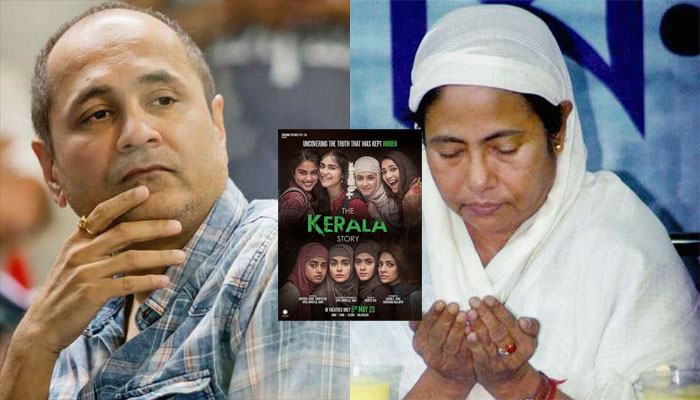
Mamata Banerjee asked Muslims to unite in 2024 at a ‘Calcutta Khilafat Committee’ event: Origins of the committee and the dangerous trope being peddled

On Saturday (April 22), West Bengal Chief Minister Mamata Banerjee courted controversy after she asked the Muslim community to ‘unite’ and vote against the BJP in the 2024 Lok Sabha elections.

She made the contentious remarks at an event organised, by the ‘Calcutta Khilafat Committee’ at Red Road in Kolkata, on the occasion of Eid-al-Fitr. She congratulated the Committee members and called for the unification of the Muslim vote bank.

“Today the Constitution is being changed, history is being manipulated…I am ready to give my life but will not let this country divide,” Mamata Banerjee announced amidst loud cheers from Muslims present in the crowd.

She vowed to not allow implementation of the National Register of Citizens (NRC) exercise in the State to further appease the illegal immigrants living in West Bengal.

Banerjee called upon the Muslim community to pray to Allah and stop BJP’s so-called ‘Dadagiri’. Ironically, the West Bengal Chief Minister was mouthing platitudes about pluralism, and societal cohesion from a platform that played a pivotal role in the disintegration and Partition of the country in 1947.

The snipper of Mamata Banerjee’s speech does indicate a few vital points that we must decode.

First and foremost, Mamata Banerjee called for the unification of Muslims to oust ruling BJP in 2024 General Elections. This deeply communal trope that is being peddled by Mamata Banerjee comes as no surprise since she has made far more communal statements even in the recent past, which shows clearly that she is fanning the anti-Hindu sentiment and pandering to the most extremist elements within the Muslim community.

After Islamists had run rampage against Hindus in West Bengal during Ram Navami processions and committed terrible violence against the Hindu community, right after the instigation of Mamata Banerjee when she said that Hindus should stay away from “Muslim areas”, Banerjee also made other problematic statements. She not only exonerated the Muslim community saying that they cannot commit any violence during the month of Ramzan, but also went ahead of asked the Muslim community to pray to Allah to “teach rioters a lesson”, hinting at the Hindus. In the current speech as well, Mamata tells Muslims to pray to Allah to stop BJP and their “dadagiri”.

Further, Mamata also says that she will not let NRC be implemented. It becomes important to point out that there is no draft for national NRC, however, when Mamata rakes up the issue over and over again, it becomes important to realise that perhaps, she is signalling to illegal immigrants who reside in Bengal, mostly from Bangladesh and Myanmar (Rohingyas), that she will ensure they are not ousted from the state.

The two narratives coupled together clearly marks how dangerous her political rhetoric is. Demonisation of Hindus coupled with pandering to not only illegal migrants, but also the most radical elements from the Muslim community.

What perhaps makes her speech even more dangerous is the fact that this dangerous speech by Mamata Banerjee was delivered while she was attending an event organised by ‘Calcutta Khilafat Committee’.

The Khilafat movement from 1919 onwards, was essentially a movement by Indian Muslims in support of the Caliphate in Turkey. Khilafat movement was a movement demanding from the British restore the powers of the Caliph of the Ottoman Empire. It had nothing to do with India, the Indian freedom movement or our demand to self-govern. While it is often peddled as a struggle for India’s freedom, fuelled by the name itself which appears as if the Muslims were “against” the British rule, in reality, the Khilafat movement drew its name from the “Kaliph” since they were fighting to maintain the authority of the Turkish Caliph of Islam. Officially, Khilafat means ‘caliphate’ but also a broader one as ‘succession’ – Specifically Khilafat refers to the leadership of the Islamic community after the death of the Prophet.

The Calcutta Khilafat Committee is not a fringe organisation which simply adopted the name “Khilafat”. It is, in fact, the original regional committee established 1919 to implement the aims of the Central Khilafat Committee.

Khilafat, pan-Islamism and Parition of India

The first stirrings in favour of the Khilafat Movement in Bengal were seen on 30 December 1918, at the 11th Session of the All India Muslim League held in Delhi.

When the Paris Peace Conference (1919) confirmed these apprehensions, Bengali Khilafat leaders such as Maulana Akram Khan, Abul Kasem, and Mujibur Rahman Khan held a public meeting in Kolkata on 9 February 1919 to enlist public support in favour of preserving the integrity of the Ottoman Empire and saving the institution of Khilafat.

On 17 October 1919, the first Khilafat Day was observed and most Indian-owned shops in Kolkata remained closed. Prayers were offered at different mosques, and public meetings were held all over Bengal. On 23-24 November 1919, the first All-India Khilafat Conference was held in Delhi, presided over by AK Fazlul Huq from Bengal. It was decided that until the Khilafat issue was resolved, there would be a boycott of British goods and a policy of non-cooperation would be adopted against the British.

As per reports, the office of the Calcutta Khilafat Committee was established, opposite the Nakhoda mosque in Kolkata, in 1920. The first Bengal Provincial Khilafat Conference was held at the Kolkata Town Hall on 28-29 February of the same year, with several members of the Central Khilafat Committee in attendance. Prominent Bengali Khilafat leaders participated in the conference and reiterated that non-cooperation and boycotts would continue unless their demands on the Khilafat problem were met. The conference decided to observe 19 March 1920 as the Second Khilafat Day.

The pan-Islamist movement which was based on extra-territorial allegiance soon showed its true colours. What followed was mindless fanaticism by the Moplah Musalmans that resulted in the brutal murder of over 10,000 Hindus, the rape of thousands of Hindu women and the desecration of temples that Hindus held sacred.

During the Malabar massacre in 1921, the Moplah Muslims went on a murder frenzy killing Hindus in the most brutal manner. On one particular incident on the 25th of September 1921, the Moplah Muslims massacred 38 Hindus by beheading them and throwing them in the well.

It has been documented by the district collector of Malabar at the time how even after 2-3 days, several Hindus who were beheaded and thrown in the well were crying out for help.

Dr Ambedkar had said about the Malabar genocide: “The (Khilafat) movement was started by the Mohammedans. It was taken up by Mr Gandhi with tenacity and faith, which might have surprised many Mohammedans themselves. There were many people who doubted the ethical basis of the Khilafat movement and tried to dissuade Mr Gandhi from taking any part in the Movement the ethical basis of which was so questionable.” (Pakistan or Partition of India, pages 146,147).

Dr Ambedkar had further said: 

“As a rebellion against the British Government, it was quite understandable. But what baffled most was the treatment accorded by the Moplas to the Hindus of Malabar,” he wrote. The Hindus were visited by a dire fate at the hands of the Moplas. Massacres, forcible conversions, desecration of temples, foul outrages upon women, such as ripping open pregnant women, pillage, arson and destruction— in short, all the accompaniments of brutal and unrestrained barbarism, were perpetrated freely by the Moplas upon the Hindus until such time as troops could be hurried to the task of restoring order through a difficult and extensive tract of the country. This was not a Hindu-Moslem riot. This was just a Bartholomew. The number of Hindus who were killed, wounded or converted, is not known. But the number must have been enormous.” 

The dangerous parallels and tropes that Mamata Banerjee invokes often

Mamata Banerjee has often invoked dangerous parallels and tropes that led to the massacre of Hindus and the partition of India – resulting in the creation of Pakistan on religious lines. If one recalls, during the Assembly Elections, Mamata Banerjee had launched a “Khela Hobe” campaign. Upon winning the West Bengal elections, the violence unleashed has been documented substantially. However, unphased, Mamata Banerjee had then announced that TMC would be celebrating “Khela Hobe Diwas” on the 16th of August to remove BJP from power from various states.

16th of August was the same day when Pakistan’s founder Mohammad Ali Jinnah of the Muslim League had launched the horrific “Direct Action Day” against Hindus in 1946.

On the 16th of August, 1946, Mohammad Ali Jinnah gave a call to fellow Muslims across India for a “Direct Action Day” on the streets of Kolkata (then Calcutta) and grandly proclaimed that they shall have “either a divided India or a destroyed India”. The terror that followed was nothing India had seen before. Thousands of sword-wielding Muslims went on a killing spree, and nearly 10,000 people were killed and up to 15,000 wounded in a span of three days. The Direct Action Day, which resulted in the Great Calcutta Killings, is considered one of the most brutal violence unleashed by Islamists on Hindus in the last century.

Further, as discussed earlier, only recently she invoked how Hindus must stay away from so-called “Muslim areas” for their Ram Navami processions. This was also used to justify the violence that had ensued against Hindus. Interestingly, in the run-up to the partition, several such attacks had taken place against Hindus and one of the most prominent reasons was that the procession was crossing an area with a Mosque or that music was being played in the front of the mosque by Hindus.

With Mamata Banerjee passing dangerously communal statements in an Eid event organised by the very Calcutta Khilafat Committee, which was a part of the extraterritorial Khilafat movement, leading up to the genocide of Hindus in Malabar, it would seem clear that political expedience has trumped good sense as far as maintaining the integrity and sovereignty of the country is concerned and Hindus are merely sacrificial lambs when it comes to consolidating the vote bank that could keep Mamata Banerjee in power.

Blood stains, knife, and a woman’s clothes and undergarments: What police discovered at Atiq Ahmed’s office in Prayagraj

Blood stains were discovered by the police in the partially demolished office of the deceased gangster-politician Atiq Ahmed in Prayagraj.

Ahmed’s office situated in Prayagraj’s Chakia area had blood stains on the stairs and a white cloth placed on a sofa. The origin of the blood stains remains unclear.

Besides, the police also recovered a knife from the deceased gangster’s office.

An investigation is launched to ascertain whose blood it belongs to. 

A woman’s saree and some under garments were found on the first floor. The police suspect that after killing a woman here, her body was thrown outside.

It is worth noting that this is the same office where police had recovered 74 lakh 72 thousand rupees and 10 pistols during a raid in September 2020. The Prayagraj Authority Authority (PDA) had then demolished Atiq Ahmed’s luxurious office at Chakia Karbala. It was lying vacant since then.

ACP Kotwali Satendra P. Tiwari informed that they had gotten a tip following which they raided the place. The police found red stains on the stairs of the lower as well as the upper floor, in the room and in the kitchen. Forensic teams will investigate whether these spots are of blood or something else, he added. The police officer further added that CCTV cameras installed in the nearby areas will be scoured to check if they had captured some unusual activities taking place in Atiq’s office.

Atiq Ahmed and his brother shot dead

Atiq Ahmed and his brother Ashraf were killed earlier this month by three persons identified as Lavlesh Tiwari (22) of Banda, Mohit alias Sunny (23) of Hamirpur, and Arun Maurya (18) of Kasganj. The duo was killed while they were being taken by the police for medical examination in the Prayagraj Hospital.

The video of the murder was widely circulated on social media in which the duo could be seen shot by the three individuals in the time span of around 40 seconds. The accused were arrested soon after the dramatic shootout.

Amritpal Singh’s arrest: Bhindranwale’s nephew may have played a role

0

On April 23, pro-Khalistani separatist leader Amritpal Singh surrendered in front of Punjab Police at Rodewal Gurudwara, district Moga, Punjab. Some reports have suggested that Khalistani terrorist Jarnail Singh Bhindranwale’s nephew Jasbir Singh Rode might have played a role in the arrest. India Today quoted unnamed sources suggesting it was Jasbir who informed the police about Amritpal’s presence in the Rodewal Gurudwara.

Amritpal Singh was allegedly planning to surrender before the police in the presence of his followers. However, Jasbir secretly informed the police about his plan, and they reached out beforehand to arrest him. As per reports, if Amritpal Singh’s supporters had gathered before the surrender, it could have resulted in an Ajnala-like situation.

On the other hand, Jasbir informed the media that it was not him but Amritpal Singh who called the police to surrender. He said, “Amritpal Singh came to the gurdwara on Saturday night. He himself informed the police about his plan to surrender.”

Furthermore, Amritpal reportedly came prepared with his own kit. He changed his attire and looked exactly like Bhindranwale at the time of the arrest. Amritpal was arrested by the police and shifted to Dibrugarh, Assam. He has been charged with relevant sections of the Indian Penal Code (IPC) and the National Security Act (NSA).

Events that caused a setback for Amritpal

Since the crackdown began on Waris Punjab De’s chief, several incidents have been considered setbacks for him. First, his close aide Papalpreet Singh was arrested on April 10. Papalpreet was his right-hand man, arranging everything from stays, food to money for the separatist leader.

The Akal Takht and the Shiromani Gurudwara Prabandhak Committee (SGPC) expressed their concerns but did not fully support Amritpal Singh. Furthermore, Akal Takht chief Giani Harpreet Singh advised him to surrender. Amritpal Singh sought Sarbat Khalsa at Akal Takht, but Akal Takht categorically denied his demand.

One of the most significant setbacks was the questioning of his wife, Kirandeep Kaur, at Amritsar airport, from where she attempted to flee to London on April 20. It is believed that Amritpal Singh feared further targeting of his family members by the security agencies leading to his surrender. Kirandeep was not allowed to board a London flight.

Pakistan: Islamic terrorist group Jaish-e-Mohammad openly collecting funds in Peshawar

0

United Nations proscribed Pakistani terror group Jaish-e-Mohammed (JeM) has been seen openly collecting funds in Peshawar, according to several accounts. 

“The open fundraising by the banned terrorist organization Jaish-e-Mohammed (JeM) in Peshawar, Pakistan, has raised concerns about the resurgence of extremist groups in the country. The group, responsible for several terrorist attacks,” tweeted Shaukat Ali Kashmiri, exiled leader & founder of the United Kashmir People’s National Party (UKPNP).

JeM remerged after Financial Action Task Force (FATF) relaxation last year. They are openly backed by Pakistan security personnel. Global terror-financing watchdog FATF in October 2022 announced Pakistan’s removal from its grey list, stating that the country has largely completed its action plans on anti-money laundering and financing of terrorism. Pakistan has been on the FATF grey list since June 2018. 

Jaish Fund collection isn’t limited to Peshawar but is also visible in Pakistan’s Punjab, Pakistan-Occupied Kashmir and other areas. Myriads of users on Twitter who witnessed this were seen discussing the incident on the social media platform. One of them deactivated his account after the tweets went viral. 

Asif Afridi, a Twitter user, recounted his experience during the Eid prayer, where he witnessed members of the proscribed outfit collecting funds openly in Peshawar, in the presence of security personnel. 

“Members of a banned outflit were collecting money openly in Peshawar in the presence of security personnel. My father, my brothers and I (six members in total) were there to pray Eid prayer,” he said. 

Another Twitter user, Ehsanullah Khan Jadoon, expressed his disappointment and shared that such fundraising is a common sight in Pakistan. “It is very normal for someone to stand up after prayers and openly ask for funds to fight Jihad in Palestine and Kashmir,” he said. “Was a frequent sight at our mosque in Karachi”. 
The ease with which these groups can openly collect funds raises concerns about the government’s ability to crack down on terrorist activities. 

It has been 14 years since Pakistan-sponsored terrorists struck Mumbai. The evidence of Pakistan’s links behind the bloodbath that went on for three days in Mumbai was there for all to see. However, Pakistan chose to ignore India’s requests to bring the perpetrators of the act to justice over the past 14 years. 

The global money laundering and terrorism financing watchdog should continue to keep its pressure on the country as it just uses symbolic actions to curb terror financing. 

Pakistan had to undergo a long scrutiny process to get itself off the list. The country was added to the “grey list” in the FATF’s plenary meeting in Paris in June 2018. 

This was the third time Pakistan’s name was added to the list. Earlier Pakistan was on the FATF’s grey list during 2008-2010 and 2012-2015 and had its name removed from the list in February 2015. 

Islamabad may not accept that it is systemically supporting, but it uses the loopholes in the system to support terrorists who not only engage in terrorism within Pakistan but also expands their terror activities in other countries, such as India, as the glaring case being the Mumbai attacks in 2008, Pathankot and Uri attacks in 2016 and Pulwama in 2019, reported SSRI. 

No concerted action had ever been taken against those who were involved in and financed the terror attacks in Mumbai, such as Lashkar-e-Taiba (LeT), leaders like Hafiz Saeed, Zakiur Rehman Lakhvi and Sajid Mir. 
In the case of the head of the LeT Hafiz Saeed, no action was taken, maybe because of the support Hafiz had received in the country. 

After being accused of his involvement in the Mumbai terror attacks, Hafiz organised a rally in Islamabad in September 2013, using provocative language against India even when the US, had already announced an offer of USD 10 million for information about Hafiz.

(This news report is published from a syndicated feed. Except for the headline, the content has not been written or edited by OpIndia staff)

‘Bumbaz’ Guddu Muslim likely in Chhattisgarh, CCTV footage shows he had gone to meet Ashraf with Atiq’s son Asad

Guddu Muslim, Atiq Ahmed’s aide who is on the run, is likely hiding in Chhattisgarh, a report by Jagran says. As per the report, Uttar Pradesh Special Task Force (STF) has been carrying out search operations for Guddu Muslim in various states. But till now he has been evading arrests. Guddu Muslim played a pivotal role in the killing of Umesh Pal, the eyewitness in Raju Pal murder case.

As per Jagran report, Guddu Muslim’s location was initially believed to be Bargadh in Odisha. However, the STF has received information that Guddu Muslim was a close associate of one criminal from Chhattisgarh’s Mahasamund. In this regard, the STF has reached Chhattisgarh for further interrogation. Citing sources, Jagran reported that Guddu Muslim’s location was traced to Bargadh then Bhathali and lastly to Sohela. However, after Sohela, Uttar Pradesh Police was able to trace Guddu Muslim.

As per latest updates, Guddu Muslim’s latest location was near Chhattisgarh-Odisha border. However, it may now be possible that Guddu Muslim might have further escaped to some other state.

However, as per ABP News, Guddu Muslim is still in Chhattisgarh.

The report says that one Raja Khan was interrogated in Odisha by STF team and he said that Guddu Muslim might be in Chhattisgarh. He reportedly even gave some evidence. However, Guddu Muslim knows how the police surveillance works and how to evade the same which is why Police has not been able to nab him yet.

The report further states that now the police is also investigating the brothers in law of Ashraf, Saddam, Gaddafi and Zaid who may also have had a role in Umesh Pal murder case. One of the brothers in law is also wanted in another unrelated case. All three are currently on the run. All three also used to meet Ashraf in the jail.

Guddu Muslim went to Bareilly Jail to meet Ashraf with Atiq’s son Asad

As per a NavBharat Times report, on 11th February 2023, few days before Umesh Pal was murdered, Guddu Muslim had visited Ashraf in Bareilly jail with Atiq Ahmed’s son Asad. In the viral video, the faces of Guddu Muslim, Asad, Usman and Ghulam are clearly visible.

The CCTV footage is of the time when the four had gone to meet Ashraf in jail.

As per the report, during the meeting inside Bareilly jail is when the plan to murder Umesh Pal was hatched. Later, on 24th February, Umesh Pal was killed in broad daylight.

Uttar Pradesh: 4-year-old child raped and killed by neighbour Fahim in Bulandshahr, accused hid the body under bed

On April 23, Bulandshehr Police arrested a 30-year-old man named Fahim for the rape and murder of a 4-year-old girl. As per reports, the child was playing outside her house at around 4:30 PM when she went missing. When she did not return for a few hours, her family members started looking for her. The incident took place in the Jahangirabad Police Station area.

The victim’s relatives said that when they were looking for the girl, they tried to look into Fahim’s house but were stopped. Fahim replied that the girl was not there. Later, upon suspicion, they came there again and forced the door open. They found the girl lying under the bed unconscious. The accused was lying in an intoxicated state on the bed. The victim’s clothes were reportedly torn and blood was on her body.

Anupshahr Circle Officer Anvita Upadhyay said in a statement that when the family reached their neighbour’s house, they found their daughter dead under the bed.

“The accused was lying in an intoxicated state near the body,” she added. She further added the investigation into the matter is underway, and the Uttar Pradesh police will ensure strict action as per the law against the accused.

Kenya: Police recover 47 bodies linked to the starvation cult led by pastor Paul Makenzie Nthenge

On Sunday (April 23), the Kenyan police informed that they have so far exhumed 47 bodies in connection to the case of the Christian pastor, who asked people to starve to death if they want to meet Jesus Christ.

While speaking about the matter, Detective Charles Kamau said, “Today we have exhumed 26 more bodies and this brings the total number of bodies from that place to 47.” As per reports, cops have been able to identify a total of 58 graves in the Shakahola forest in Malindi town of Eastern Kenya.

The preacher, identified as one Paul Makenzie Nthenge, is currently in the custody of the police. The cops have also dug out a grave, which contained the bodies of 5 members of the same family (including two adults and three children).

According to Kenyan Interior Minister, Kithure Kindiki, about 800 acres of the Shakahola forest have been sealed and declared a crime scene.

He emphasised, “This horrendous blight on our conscience must lead not only to the most severe punishment of the perpetrator(s) of the atrocity on so many innocent souls but tighter regulation (including self-regulation) of every church, mosque, temple or synagogue (in the country) going forward.” 

Exhumed bodies have been sent for DNA analysis

Paul Mackenzie Nthenge, who ran the Good News International Church, had a ‘cult following’ among the locals in the area. He is currently awaiting a court appearance.

In his defence, the Christian pastor claimed that he had done nothing wrong and that his Church shut down in 2019. As per reports, Nthenge recited the names of three villages (Nazareth, Bethlehem, and Judea) before baptising people in ponds and asking them to starve to death.

Pathologists are now collecting DNA samples from the exhumed bodies to determine whether all of them died of starvation.