Home Blog Page 228

Kerala nurse Nimisha Priya’s lawyer urges Indian govt to negotiate ‘blood money’ under Sharia to prevent her execution in Yemen: All you need to know

Nimisha Priya, an Indian-Malayali nurse convicted in a 2017 murder case, is set to be executed on 16th July 2025. Nimisha Priya is currently lodged in the Central Jail in the Yemeni national capital, Sanaa, for murdering a Yemeni citizen, Talal Abdo Mahdi. In a last-ditch effort to stop Nimisha’s execution, the Save Nimisha Priya International Council has moved the Supreme Court of India.

Represented by Advocate Ragenth Basant, the petitioner sought the apex court’s direction to the Central government to obtain a stay on Nimisha Priya’s execution and secure her release from Yemen via diplomatic channels.

The matter was brought before a partial working days bench of Justice Sudhanshu Dhulia and Justice Joymalya Bagchi. The petitioners mentioned that as per Sharia law, a person if the relatives of the victims agree to accept “blood money” or “Diyya”, adding that negotiations can be held to explore that option.

On being questioned by Justice Dhulia about the reason behind the Yemeni national’s killing, advocate Basant said, “I am an Indian citizen from Kerala. Went there for employment as a nurse. A local person started torturing me…and he was killed.”

The bench initially listed the matter for 14th July, however, the petitioner’s counsel said that since the execution is to take place on 16th July, two days would be insufficient for the government to take forward diplomatic negotiations.

Consequently, the court agreed to list the matter for 11th July 2025.

Meanwhile, reports say that the Central government is closely monitoring the case, and is in touch with the Yemeni authorities as well as Nimisha’s family. Sources at the Ministry of External Affairs say that MEA has provided all possible assistance so far.

This comes amid reports of a 37-year-old Indian nurse from Kerala scheduled to be executed on 16th July. The trial court convicted her of killing the Yemeni national, a decision that was upheld by the country’s Supreme Judicial Council in November 2023.

Previously, MEA confirmed its awareness of the death sentence handed to Nimisha Priya and assured that the government is providing all possible assistance.

Earlier in response to media queries regarding the case of Nimisha Priya, MEA official spokesperson Randhir Jaiswal said, “We are aware of the sentencing of Ms. Nimisha Priya in Yemen. We understand that the family of Ms. Priya is exploring relevant options. The government is extending all possible help in the matter.”

In January this year, the Indian government reaffirmed its commitment to assisting Nimisha Priya, a Kerala nurse who has been sentenced to death in Yemen. “We are closely following the developments”, said Ministry of External Affairs spokesperson, Randhir Jaiswal. Nimisha Priya, who is sentenced to death in Yemen, is a trained nurse and has worked in private hospitals in Yemen for a few years.

Nimisha Priya’s time in Yemen, dispute over the clinic and subsequent harassment by the Yemeni national

Nimisha Priya, who is sentenced to death in Yemen, is a trained nurse and has worked in private hospitals in Yemen for a few years. Her husband and minor daughter returned to India in 2014 because of financial reasons, and in that same year, Yemen was gripped by civil war, and they could not go back as the country stopped issuing new visas.

Later in 2015, Nimisha joined hands with a Yemeni citizen, Talal Abdo Mahdi, to set up her clinic in Sana. She sought Mahdi’s support because, under Yemen’s law, only nationals are allowed to set up clinics and business firms. In 2015, Mahdi accompanied Nimisha Priya to Kerala when she came for a month-long holiday. During the visit, he stole a wedding photograph of Nimisha, which he later manipulated to claim that he was married to her.

A plea moved by the mother of Nimisha Priya had stated, “After a while, Nimisha’s clinic began, and Mahdi manipulated the ownership documents of the clinic. He also began to take money out of her monthly earnings after telling everyone that Nimisha was his wife. Nimisha had alleged that Mahdi had been harassing her and her family for years. Mahdi also seized her passport. This was done to ensure that she would not leave Yemen. He tortured her under the influence of drugs. He threatened her at gunpoint several times. He took all the money from the clinic and her ornaments.”

Nimisha Priya’s mother Prema (Source: BBC)

The plea further alleged that, unable to cope with the torture, Nimisha complained to the police in Sanaa, but instead of taking action against Mahdi, the police arrested her and put her in jail for six days. It was further alleged that on her return from jail, the severity of the torture increased manifold.

In July 2017, Priya allegedly approached the warden of a jail near her clinic, who advised her to drug Mahdi and then obtain her passport. However, Mahdi was a substance abuser; therefore, the dose did not work for him as desired. Subsequently, Nimisha Priya allegedly attempted to sedate Mahdi again, this time with the help of her fellow nurse Hannan; however, Mahdi died from an overdose. The two panicked and chopped Mahdi’s body before putting it in a water tank.

The accused duo were soon arrested, and in 2018, Priya was convicted of murder. A trial court in Sanaa sentenced her to death in 2020, and Yemen’s Supreme Judicial Council rejected her appeal in November 2023. Meanwhile, Hannan received a life sentence.

Nimisha Priya’s arrest and dispute over payment of pre-negotiation fees

Nimisha Priya, a native of Kerala’s Palakkad district, was arrested in July 2017 for allegedly murdering Yemeni national Talal Abdo Mahdi. Three years later, a trial court in Sana’a sentenced her to death in 2020, and her appeal was rejected by Yemen’s Supreme Judicial Council in November 2023. In December 2024, Rashad al-Alimi, the President of Yemen, had authorised the death sentence of the Indian nurse.

However, the possibility of paying blood money to the deceased person’s family remained open. Her freedom was dependent on convincing the victim’s family, and their tribe leader to forgive her. Her death sentence could have been overturned if the victim’s family had forgiven her and taken the blood money instead.

Nimisha Priya’s family has been making efforts to pursuade the deceased victim’s family regarding blood money. In April 2024, the convict’s mother Prema Kumari went to Yemen to get her daughter out of prison. This was the first time she met Nimisha in 11 years.

The negotiation bid was stalled due to a delay in the payment to Abdullah Ameer, the lawyer appointed on behalf of Nimisha Priya. The lawyer had demanded USD 40,000 in two instalments as pre-negotiation fees and stated that the legal proceeding would not move further until the entire amount is paid.

Initially, Ameer demanded $20,000 (Rs 16 lakh approximately) of which $19, 871 was already paid to Ameer in July by the Indian External Affairs Ministry.

The Save Nimisha Priya International Action Council initially crowdfunded money for the lawyer’s fees; however, they later struggled with ensuring transparency to the donors regarding the usage of the raised funds.

While Priya was awarded the death sentence, she had the option to give blood money to Mahdi’s family since her death sentence could only be waived if the deceased victim’s family pardoned her. Notably, as per Sharia law, blood money or Diyya is accepted by the victim’s family from the murderer in case the death was unintentional or accidental or if the deceased victim’s family decides to forgive the murderer and not seek retribution or Qiyas.

The Indian government has been making diplomatic efforts to explore all possibilities of saving Nimisha Priya; however, accepting the blood money or not remains a decision only the victim’s family can make. Thus, approaching the Supreme Court to seek an order for the Central government to anyhow secure stay Nimisha’s execution and her release, although desperate, is a slightly absurd move.

It remains to be seen if somehow the Supreme Court directs the Central government to put pressure on Yemen government to force blood money route and if there is a twist of fate awaiting Nimisha Priya or whether she will be executed.

Kishanganj used to get 25 thousand applications in 1 month, now 1.27 lakh came in just a week: Is RJD-Congress opposing the voter list revision in Bihar to save the infiltrators?


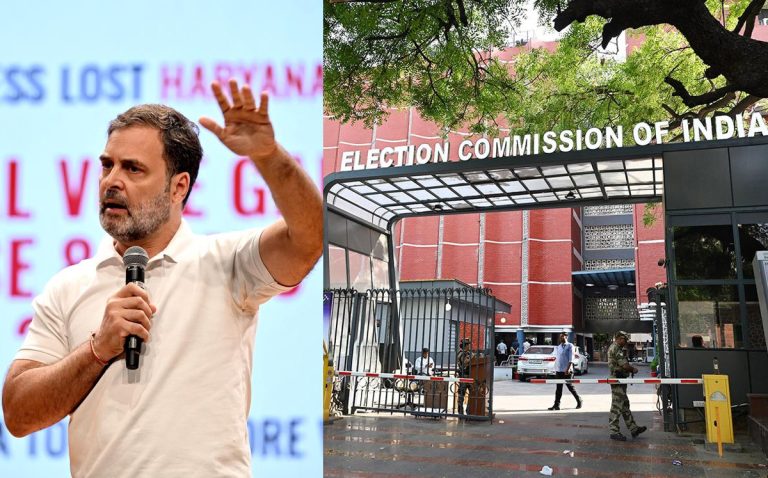
The Election Commission of India is preparing to conduct state assembly elections in Bihar, set to be held later this year. Ahead of the elections, the ECI is undertaking a Special Intensive Revision (SIR) of the electoral roll in the state. Documents are being sought from all the voters so that their names can be included in the voter list again. As soon as the SIR process started, the number of applications for residence certificate in Kishanganj, a Muslim-dominated district of Bihar, increased 5-6 times. This increase in Kishanganj has again raised the questions of infiltration and demographic change in the district.

Applications for residence certificates increased 5 times in Kishanganj: Deputy CM Samrat Chaudhary

Bihar Deputy Chief Minister Samrat Chaudhary has said that on average, 26 thousand to 28 thousand applications were coming to Kishanganj for a residence certificate every month from January to May in 2025. He said that as soon as the process of the Election Commission started, this number increased rapidly.

Chaudhary said that in just 6 days of July, more than 1.28 lakh applications for a residence certificate were received in Kishanganj. He said that this shows that infiltrators are present in large numbers in Kishanganj.

The deputy CM added that documents like PAN card, Aadhar card, and passport take time and proof, while a residence certificate is easily made. Chaudhary has linked this matter to national security. The minister’s remarks have sparked a debate over this issue.

Their concerns are justified because Kishanganj is the only district in Bihar where the Muslim population is more than 60% and the demographic change here has been rapid. Infiltration has also taken place on a large scale in Kishanganj.

Why are Bihar Deputy CM Samrat Chaudhary’s concerns justified?

Samrat Choudhary is not talking about the sudden increase in infiltrators and applications without any reason. Kishanganj has a history behind this. Kishanganj is the only district in Bihar where about 70% of the population is Muslim. This is recorded on paper.

At the time of independence, Kishanganj was a Hindu majority area. But in the last few decades, the demography here has changed very rapidly. Now, the Hindus here are not even one-third. Hindus have become a minority here in the last few decades. The biggest reason for this change is considered to be the illegal influx of Bangladeshi and Rohingya infiltrators.

This district is situated on the border of West Bengal. Bangladeshi infiltrators and Rohingyas have been arrested continuously from here. Last month only, 9 Bangladeshis were arrested here. These infiltrators have been caught here on different occasions. The border of Kishanganj is adjacent to Nepal.

In Kishanganj itself, people forging fake documents like Aadhaar and PAN have been caught. This essentially means that people helping Bangladeshis and Rohingyas are also present here. Besides, there are a large number of Bengali speakers here, which allows these infiltrators to mix with the native population.

The population growth rate of this district has been the fastest in the country. The population of this district has increased at a rate of 3% between 2001 and 2011, which is much higher than the national average. Not only this, but children are also being born in Kishanganj at a faster rate than the national average.

The TFR in Kishanganj is 2.5 times the national average. According to a Reuters report, Kishanganj’s TFR is around 4.9 while the national average is 2.0. The number of children a woman aged 15-49 gives birth to during these years is called her TFR.

If the average TFR of a country is 2.1, then the population remains the same, whereas if it is less than this, then the population decreases. The population is now decreasing in the whole country, whereas in Kishanganj it is increasing twice as fast.

Muslim population increased by 16% in Seemanchal

Kishanganj is a part of the Seemanchal region of Bihar. A report by Dainik Jagran shows that between 1951 and 2011, the share of the Muslim population in the country’s total population increased by 4%, but in these Seemanchal districts, this share has increased by 16% and which is the average of all districts. Not only Kishanganj, but the Muslim population has increased abnormally in adjoining districts like Purnia, Khagaria, Araria and Katihar. Its effect is also visible on the social structure.

Widespread opposition to CAA-NRC in Muslim-dominated Kishanganj

Unsurprisingly, the Muslim-dominated Kishanganj saw vehement opposition to the Citizenship Amendment Act and National Register of Citizens in 2019-2020. Not to forget, the Islamo-leftist cabal ran a ‘Kaagaz nahi dikhayenge’ campaign during anti-CAA-NRC protests. It is worth noting that the Election Commission is also asking for some documents for verification. Opposition parties like the RJD and Congress are again engaged in instigating Muslims in this matter. The Election Commission’s process is called CAA-NRC. On 9th July 2025, Bihar Bandh was even organised in this matter.

UP horror: Shahzad Ansari sexually assaults a Dalit minor in Sonbhadra after holding her captive, hurls casteist slurs and deaths threats when confronted by parents

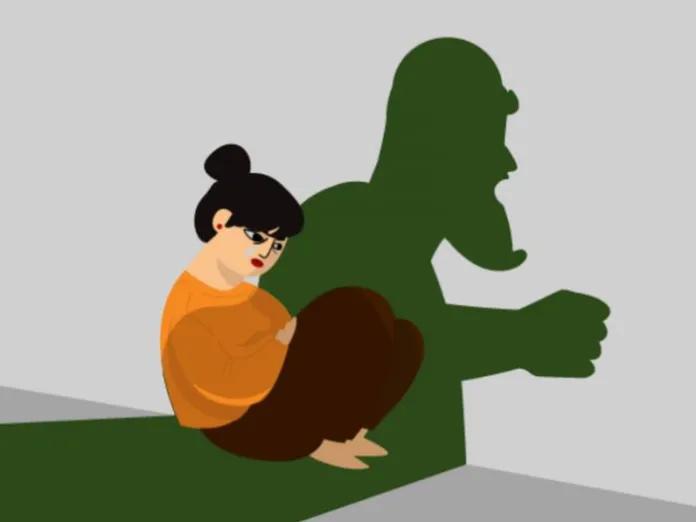
A deeply disturbing case has emerged from Sonbhadra district in Uttar Pradesh. A 15-year-old Hindu Dalit girl was allegedly lured by a Muslim man on the false promise of marriage, brutally raped, and then held captive in his home for days.

According to Chopan police station, the incident took place on 16th March, 2025. The accused, identified as Shahzad, reportedly called the minor girl to his residence in their village. There, he allegedly raped her while deceitfully assuring her of marriage.

The horror didn’t end with the assault. The girl was forcibly confined within Ansari’s house, effectively held hostage and prevented from leaving or contacting her family. Desperate to see their daughter, when her traumatized parents arrived, Ansari cruelly barred them from meeting her.

Adding layers of brutality to the crime, Ansari allegedly hurled vicious casteist slurs at the girl’s parents and issued death threats against them. Faced with this ordeal, the victim’s mother demonstrated immense courage. She approached the Chopan police station and filed a detailed written complaint, detailing the rape, unlawful confinement, caste-based abuse, and threats.

According to information received in media reports, the police have registered a case against the accused Shahzad under sections 65(1), 127(2), 352, 351(3) of the IPC, section 3/4 of the POCSO Act and sections 3(2)(v), 3(1)(d), 3(1)(DH) of the SC/ST Act. The police have detained the accused and conducted intensive questioning, legal proceedings are going on.

Another incident that shatters the myth of ‘Jai Bhim Jai Meem’

This horrifying incident yet again shatters the carefully constructed narrative of ‘Jai Bhim, Jai Meem’, a slogan that attempts to portray a political alliance or social solidarity between Dalits and Muslims. While this rhetoric is peddled by certain political and ideological groups to forge vote-bank coalitions, the ground reality often tells a starkly different story. Here, a vulnerable Dalit minor girl was not only raped and imprisoned by a Muslim man but her family was also subjected to casteist slurs and violent intimidation.

Far from any shared struggle or mutual respect, the incident exposes deep-seated communal and casteist prejudices, reminding us that social justice cannot be reduced to hollow slogans or opportunistic alliances. Justice for Dalits must not be hijacked by identity politics that conveniently overlook such heinous crimes.

Assam: Shahabuddin Ali arrested for vandalising 5 idols of Hindu deities in Durga temple complex in Goalpara

In Assam’s Goalpara, a Muslim youth named Shahabuddin Ali smashed multiple idols at a Durga Temple complex. The accused Muslim man vandalised a total of five idols in the Shiva Temple, Maa Manasa Temple, and Durga Temple inside the temple complex. While Ali has been arrested, it is suspected that there were more people involved in the crime.

The incident unfolded at around 9:30 PM on 9th July 2025, when unidentified persons entered the Hindu temple and started breaking the idols. Temple secretary Banmali Das rushed inside the temple premises after hearing noises of idols breaking, but one of the accused persons bit him on the hand and fled the spot.

During investigation, the police recovered a mobile phone and clothes belonging to the Muslim culprits. Following these leads, the police began searching for the accused. Based on the probe, police identified 31-year-old Shahabuddin Ali, and arrested him. Search is on to identify and arrest others.

Reports say that along with vandalising the idols of Hindu deities installed inside the temple, the Muslim culprits also damaged the temple’s donation box.

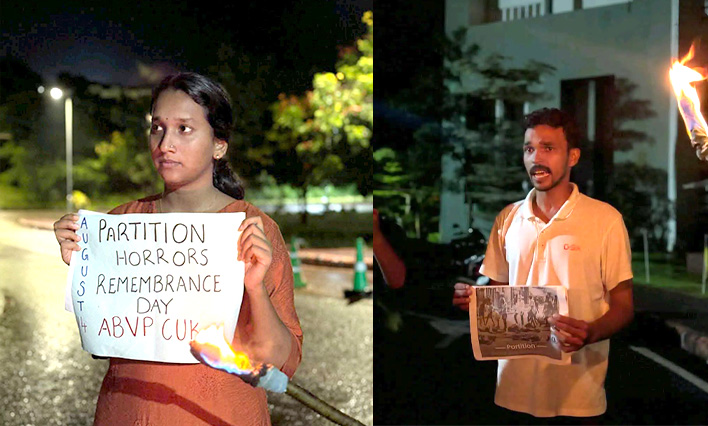
The incident sparked significant outrage among the local Hindus and members of the Akhil Bharatiya Vidyarthi Parishad, the Bengali Federation, and local Hindus staged a protest and raised slogans against the anti-Hindu elements. A Hindu leader said, “This Durga temple is a historical temple. We Hindu organizations will never accept anyone who wants to do politics about this temple. There is a big conspiracy hidden here. This is conspiracy to create a conflict between Hindus and Muslims or destroy our brotherhood.” 

We only need 5 minutes, not 15: Owaisi’s genocidal “15 minutes” speech threatening Hindus repeated during Muharram procession in Gorakhpur, 3 arrested

A case of inciting speech has surfaced during the Muharram procession in Uttar Pradesh’s Gorakhpur. On 7th July, a young man was captured on a vehicle reiterating the decade-old, communal “15 minutes” speech of All India Majlis-e-Ittehadul Muslimeen (AIMIM) leader Akbaruddin Owaisi. The Muslim youth threatened that Owaisi wanted 15 minutes (to massacre Hindus) but they require only 5 minutes, resulting in a furious reaction from the majority community, social outfits and Hindu organisations. They demanded strict action from the administration.

The matter pertained to Piprauli town of Gorakhpur district. The video also went viral on social media after which locals took to the streets in protest on 8th July. The members of the Hindu community also shut down the market and encircled the police station as well as submitted an application of complaint. Afterward, the authorities filed a case under serious charges against Jamil Ahmed, Sahil Ahmed, and Mujibul Islam, also known as Sheru, along with hundred unidentified individuals.

As the situation intensified, the police arrested the three accused on 9th July, who were later seen apologising and begging with their folded hands. Superintendent of Police (SP) North Jitendra Kumar Srivastava stated that the Gida police have presented them in court after which they were remanded to jail. Three police teams have been established to identify the remaining offenders. They will conduct an investigation and apprehend them based on the evidence available. Police teams have been carrying out raids to locate other fugitives who are evading capture.

“We only need 5 minutes, not 15 minutes. We will tell what we can do. We will repeat this even in Gujarat,” a “mourner” threatened aggressively from the top of a vehicle with a microphone in hand. He then inquired of the crowd, “Shout loudly how much did I say? Not 15, just 5 minutes.” His extremist audience cheered in agreement with the provocative remark. However, the threat unsettled many residents, as they feared that an unpleasant incident could take place.

During an event in 2012, Owaisi had warned that India’s 25 crore Muslims would teach a lesson to 100 crore Hinuds if the police were removed from the country for 15 minutes. Furthermore, he made multiple insulting comments about Hinduism, Hindu deities and the entire community.

He has also referred to his speech, subtly threatening Hindus on multiple occasions. Moreover, Islamists have been utilizing his statement to intimidate the community ever since.

Saharanpur: Muslim mob attacks Dalits during wedding procession, injures several over DJ music dispute near mosque

A violent clash broke out in the Deoband area of Saharanpur district in Uttar Pradesh on the night of Sunday, 6th July, when a Dalit wedding procession was violently attacked by a group from the Muslim community for playing DJ music near a mosque.

The police and witnesses alleged that the conflict over the wedding of the two daughters of one Mange Ram, a resident of the village. One of the two wedding processions was proceeding from the Sadharanpur village and went past a mosque in Amarpur gadhi village while playing loud DJ music. Members of the Muslim community reportedly protested, expressing that it was time to offer namaz (prayer), and insisting on stopping the music. Upon the refusal by the wedding party, the argument escalated into a violent attack.

The muslim group reportedly attacked the DJ equipment, broke instruments, and even physically assaulted the procession with sticks and sharp objects. Some of the guests at the Dalit wedding were injured in the attack, including two Dalit men, Pankaj and Vansh, who were seriously injured and were sent to a hospital in Meerut after receiving preliminary treatment in Deoband.

After the incident, the bride’s father, Mange Ram, registered a complaint with the police. Based on the complaint, the police have registered a case under serious IPC sections 191(2), 115(2), 352, 189(4) and the SC/ST Act. Five accused, Mohammad Abuzar, Asjad, Israr, Sadiq, and Faheem, have been arrested and sent to jail.

Since it’s a communal incident, heavy police deployment has been done in the village to prevent further violence. High officials are keeping a close watch on the situation, and routine patrols have begun. Authorities have appealed to both communities to keep peace and threatened stern action against any attempts to disrupt law and order.

Chipmaker Nvidia becomes the first $4 Trillion publicly traded company powered by its booming AI business

Nvidia Corporation made history today, becoming the first publicly traded company to surpass a $4 trillion market capitalization. The milestone was reached during intraday trading when the chipmaker’s share price surged to $164.42, briefly pushing its valuation beyond the unprecedented threshold. This achievement cements Nvidia’s position as the world’s most valuable company, outpacing tech giants like Microsoft, Apple, Amazon, and Google parent Alphabet, and underscores its pivotal role in the artificial intelligence (AI) revolution.

Nvidia’s meteoric rise has been driven by its dominance in the AI chip market, particularly its graphics processing units (GPUs), which power the data centres fuelling advanced AI models and cloud services. The company’s stock soared approximately 2.5% in early trading today, closing at $164.32, with a market cap hovering just above $4 trillion. This marks a staggering 1,460% increase in stock value over the past five years, with a year-to-date gain of nearly 22% in 2025 alone.

Nvidia’s ascent to a $4 trillion valuation is a testament to the transformative power of AI, which CEO Jensen Huang has dubbed “the next industrial revolution.” Originally known for its GPUs tailored for PC gaming, Nvidia capitalised on the discovery that these chips are ideally suited for the complex computations required by AI, including large language models like ChatGPT and Google’s Gemini. This strategic pivot has positioned Nvidia as the backbone of the AI infrastructure, with its chips in high demand by tech giants such as Microsoft, Amazon, Meta, and Alphabet, as well as emerging AI players like OpenAI and Tesla.

The company reported $44.1 billion in revenue for the fiscal quarter ending April 2025, a 69% increase from the same period last year, and a net income of $18.78 billion, up 26%. Nvidia’s data centre business, which supplies AI chips, has been the primary driver of this growth, with revenue surging 73% year-on-year. “There is one company in the world that is the foundation for the AI Revolution, and that is Nvidia,” wrote Wedbush Securities analyst Dan Ives in a June 27 research note.

Global spending on AI infrastructure is projected to exceed $200 billion by 2028, according to the International Data Corporation, further bolstering Nvidia’s growth prospects. The company’s next-generation Blackwell chips, including the recently announced Blackwell Ultra, are expected to power the next wave of AI adoption, supporting models with advanced reasoning capabilities.

Despite its dominance, Nvidia has faced challenges. U.S. trade restrictions on advanced semiconductor exports to China have impacted sales, with the company reporting a $2.5 billion revenue shortfall in the first quarter of 2025 due to these limitations. Additionally, a $4.5 billion charge was absorbed to account for further restrictions, reducing Nvidia’s sales in China from 21% of total revenue two years ago to 13% today.

Competition is also emerging, with companies like AMD and Intel developing rival AI chips, and tech firms such as Amazon and OpenAI exploring custom chip designs. Google’s use of its own tensor processing units (TPUs) poses another potential threat. Earlier this year, concerns over a low-cost Chinese AI model DeepSeek triggered a 37% drop in Nvidia’s stock from January to April, though it has since rebounded by nearly 74%.

Nvidia’s journey to $4 trillion has been remarkably swift. The company reached a $1 trillion valuation in May 2023, $2 trillion in February 2024, and $3 trillion in June 2024, outpacing all competitors. “This is a historical moment for Nvidia, the tech space flexing its muscles, and speaks to the AI Revolution hitting its next stage of growth,” said Ives, who predicts Microsoft may also cross the $4 trillion threshold this summer.

Analysts remain bullish on Nvidia’s future, with Loop Capital projecting a potential $6 trillion valuation by 2028, citing the company’s “near-monopoly” on critical AI technology. “Nvidia remains essentially a monopoly for critical tech, and it has pricing and margin power,” wrote Loop analysts Ananda Baruah and Alek Valero. Wedbush estimates that every $1 spent on Nvidia’s chips generates an $8–$10 ripple effect across the tech ecosystem.

Nvidia’s success has also elevated CEO Jensen Huang to global prominence. With a net worth of $140 billion, Huang ranks as the tenth wealthiest person worldwide, according to the Bloomberg Billionaires Index. His high-profile engagements, including meetings with President Donald Trump and international leaders, have further amplified his influence.

The heartbeat of Panna Tiger Reserve falls silent: Vatsala, Asia’s oldest elephant, aged over 100, dies

In the quiet wilderness of Madhya Pradesh’s Panna Tiger Reserve, a chapter of history came to a heartbreaking close on Tuesday, July 8. Vatsala Asia’s oldest elephant and a beloved matriarch of the forest breathed her last at the age of over 100 years. Her passing is not just the loss of an animal, but the departure of a symbol of love, resilience, and silent guardianship.

Vatsala was not just a name in the reserve, she was its heartbeat. A being who carried a century’s worth of stories in her eyes, and left behind a legacy that will forever echo in the rustling leaves and quiet trails of the forest she called home.

Originally brought from Kerala, she was first moved to Narmadapuram and eventually found her forever haven in Panna. With her gentle demeanor and majestic presence, Vatsala quickly became a favorite among tourists, forest staff, and wildlife enthusiasts. She was not only admired but also deeply loved. To those who cared for her, she was family.

Try to imagine this: living with a companion for over a century, someone who asks for nothing but care, whose presence brings calm, and whose every step feels like a poem of patience. And then one day, they slip away not with noise or demand, but quietly, gracefully, without troubling anyone. That was Vatsala’s final goodbye.

For weeks, Vatsala had been struggling with injuries on her front legs painful wounds on her nails that made it difficult for her to stand. Age had begun to weigh heavily on her her vision fading, her strength waning. On that final Tuesday, she walked to her favorite spot near the Khairaiyaa drain in the Hinauta range and gently laid herself down. The forest staff rushed to help her, but despite their tireless efforts and medical attention from wildlife experts, Vatsala passed away in the afternoon.

She spent her last years at the Hinauta elephant camp, where every day was filled with care and love. The forest rangers would gently guide her to bathe in the stream and feed her warm porridge, while veterinarians regularly checked on her health. She was never alone surrounded by human compassion and the whisper of trees.

Her death has stirred hearts across the nation. Madhya Pradesh Chief Minister Mohan Yadav took to social media, offering a heartfelt tribute:
“The century long companionship of ‘Vatsala’ came to a pause today. She was not merely an elephant; she was the silent guardian of our forests, a friend to generations, and a symbol of Madhya Pradesh’s emotions. This beloved member of the Tiger Reserve carried a sea of experiences in her eyes and warmth in her presence.”

IAS officer Supriya Sahu also mourned the loss, writing:
“A deep pain fills my heart as we bid farewell to Vatsala, one of the oldest elephants, who lived beyond 100. Rescued from a circus, she spent her final decades in peace and dignity at Panna Tiger Reserve. A gentle soul who embodied grace and resilience. Though I followed her life story quietly, my only regret never meeting her while she was alive. Her memory will live on in our hearts and in the forests she blessed.”

Thousands on social media echoed these sentiments. One user wrote, “She lived a full life and was well taken care of in her final days… that’s all that matters.” Another commented, “It is sad to see that the very aged gentle soul is no more.”

As the forest mourns its oldest guardian, one thing is certain: Vatsala’s spirit will forever roam the bamboo thickets, splash through the streams she loved, and whisper through the wind that moves through Panna.

Supreme Court accepts fresh petitions against Election Commission’s Special Intensive Revision (SIR) of electoral rolls in Bihar

The Supreme Court on Wednesday agreed to hear two more pleas challenging the Election Commission of India’s move to conduct a Special Intensive Revision (SIR) of electoral rolls in poll-bound Bihar.

A bench of Justices Sudhanshu Dhulia and Joymalya Bagchi agreed to hear the pleas on July 10, along with other pending petitions. Advocate Vrinda Grover and another advocate mentioned for urgent listing.

Grover said the plea filed by two social activists, Arshad Ajmal and Rupesh Kumar, challenged the poll panel’s June 24 decision to conduct the SIR of electoral rolls in the state and urged for listing it with other matters.

On July 7, the apex court agreed to hear on July 10 petitions challenging the ECI’s decision.

The petitions challenging the ECI decision were filed by RJD MP Manoj Jha, the Association for Democratic Reforms (ADR), PUCL, activist Yogendra Yadav, Trinamool MP Mahua Moitra, and former Bihar MLA Mujahid Alam.

The petitions sought a direction to quash the ECI’s June 24 directive, which requires large sections of voters in Bihar to submit proof of citizenship to remain on the electoral rolls.

ADR, in its petition, has submitted that the ECI order imposes fresh documentation requirements and shifts the burden of proof from the state to the citizen.

The petition also raised concerns over the exclusion of widely held documents like Aadhaar and ration cards, stating that this would disproportionately affect the poor and marginalised voters, especially in rural Bihar.

“The SIR order, if not set aside, can arbitrarily and without due process disenfranchise lakhs of voters from electing their representatives, thereby disrupting free and fair elections and democracy in the country, which are part of the basic structure of the Constitution,” the petition submitted.

RJD MP said the decision, which has been taken without any consultation with the political parties, is “being used to justify aggressive and opaque revisions of electoral rolls that disproportionately target Muslim, Dalit and poor migrant communities, as such, they are not random patterns but are engineered exclusions.”


(This news report is published from a syndicated feed. Except for the headline, the content has not been written or edited by OpIndia staff)

Pappu Yadav and Kanhaiya Kumar humiliated at opposition rally in Bihar, not allowed on protest vehicle with Rahul Gandhi and Tejashwi Yadav, pushed back

Congress leader Kanhaiya Kumar and independent Purnia MP Pappu Yadav were prevented from sharing stage with Rahul Gandhi, Rashtriya Janata Dal (RJD) leader Tejashwi Yadav and other prominent politicians which was installed on a protest vehicle, leading to a major embarrassment for the visibly upset Congressmen.

The two were prepared to ascend the stairs to the van during the I.N.D.I. Alliance’s “Bihar Bandh” protests against the special intensive revision of electoral rolls on 9th July. However, their intentions suffered a substantial setback when they were impeded by personnel designated to maintain the security of the Gandhi scion and the other leaders.

Yadav attempted move up the stairs and even received assistance before he was stopped. Other leaders were allowed to board, but Kanhaiya Kumar was also halted when it was his turn. According to reports, he was instructed to step down after he momentarily succeeded in climbing onto the vehicle.

Afterward, a disgraced Pappu Yadav was unable to hold back his tears while speaking to the media.

Initially, the leaders marched on foot, but when the throng began to grow excessively large, it was decided to continue the rally in an open van. The ruling alliance in Bihar, led by the Bharatiya Janata Party, has already attacked the opposition, asserting that the episode shows that the Congress and its senior members, including Gandhi, do not treat politicians like Kumar and Yadav properly.

“This is a fight for the Constitution, a fight for the rights of 140 crore people, a fight for the status, for minorities,” to save face and declared that the issue at hand is not about humiliation or respect, but rather about maintaining a connection with the electorate. He subsequently invoked Lord Ram, Lord Shiva and even Socrates, arguing that one must confront various challenges in life, including familial disputes and disagreements with neighbors, among others. Therefore, he added, that this incident should not be linked to notions of respect or insult, in an attempt to downplay the occurrence.

Freshly inducted Jan Suraaj leader Manish Kashyap also used the opportunity to poke fun at Yadav and Kumar. “For the first time, I genuinely feel that injustice has been done to Kanhaiya Kumar. Our ideologies are different but he is talented. He should not be treated in this manner.”

“Pappu Yadav is like a pellet drum. What can one truly say about him? He is making a forceful attempt to be a part of the Congress party, which is rejecting him. They do not extend invitations to him for any events. Why would you want to lose the little respect you have by engaging in such antics? Please refrain from this behavior,” he stated.

Kashyap further mocked, “You were elected as an independent from Purnia this time, as well as in the past. You perform commendable work during floods and other disasters. However, you are attempting to board a vehicle with your 150 kilogram weight, only to be pushed off, which is inappropriate.”

He claimed that Kanhaiya Kumar was only invited there to insult him and asked, “Did you observe Kumar’s facial expressions? He was summoned there, otherwise, he would not have attended. You invite him, have him deliver a speech, utilize his talents, and then embarrass him in front of the media and everyone else after instructing him to join other leaders on stage. I believe he is wise enough to avoid being present there if he was not called. As a youth, I protest against this and will not tolerate such actions.”