In a dramatic escalation of diplomatic tensions, Brazilian President Luiz Inácio Lula da Silva defiantly rejected U.S. President Donald Trump’s demands to terminate the criminal trial of former Brazilian president Jair Bolsonaro. He condemned Trump’s accompanying threat of 50% tariffs on Brazilian imports as an assault on national sovereignty. The confrontation, unfolding over 48 hours of public exchanges, marks the deepest rift in U.S.-Brazil relations in decades.
Trump’s ultimatum: Tariffs linked to “witch hunt” claims
The crisis erupted Wednesday when Trump announced via Truth Social a sweeping 50% tariff on all Brazilian goods effective 1st August, 2025. In a letter addressed directly to Lula, Trump explicitly tied the punitive measure to Brazil’s prosecution of Bolsonaro—who faces charges of orchestrating a coup to overturn the 2022 election results that returned Lula to power.
“Brazil has treated former President Bolsonaro… in a terrible way. This Trial should not be taking place. It is a Witch Hunt that should end IMMEDIATELY!” Trump wrote. He further accused Brazil’s Supreme Court of issuing “hundreds of SECRET and UNLAWFUL Censorship Orders” against U.S. tech companies—a claim he directed the U.S. Trade Representative to investigate under Section 301 trade provisions.
The announcement triggered a 2% plunge in Brazil’s currency, the real, and emergency meetings in Brasília involving Lula, his vice president, finance minister, and key advisers. Analysts warned U.S. consumers could face sharp price hikes on coffee, orange juice, and beef—products heavily reliant on Brazilian imports.
Lula’s unyielding response: Sovereignty and reciprocity
Within hours, Lula fired back on social media platform X, delivering a point-by-point rebuttal that blended economic data with a fierce defense of Brazil’s judicial independence.
“Brazil is a sovereign nation with independent institutions and will not accept any form of tutelage. The judicial proceedings against those responsible for planning the coup d’état fall exclusively under the jurisdiction of Brazil’s Judicial Branch and, as such, are not subject to any interference or threats.”
Lula also summoned the US ambassador for clarification and labeled Trump’s letter “offensive and inaccurate,” reaffirming that judicial matters in Brazil are not negotiable and that the country’s laws apply equally to all, including foreign companies operating within its borders.
Amid escalating tensions, Lula called on the US to respect Brazil’s sovereignty and stop attempts to interfere in its internal affairs. He emphasized that the defense of democracy in Brazil is a matter solely for Brazilians, and that “no one is above the law, especially those who threaten freedom and the rule of law”.
Crucially, Lula invoked Brazil’s newly enacted Economic Reciprocity Law, signaling plans for proportional countermeasures against the tariffs. He dismantled Trump’s claim of a U.S. trade deficit with Brazil, citing U.S. government statistics showing a $410 billion surplus in America’s favor over the past 15 years. In 2024 alone, the U.S. exported $49.7 billion in goods to Brazil while importing $42.3 billion—a $7.4 billion surplus.
In light of the public statement made by U.S. President Donald Trump on social media on the afternoon of Wednesday (9), it is important to highlight the following:
Brazil is a sovereign nation with independent institutions and will not accept any form of tutelage.
The Bolsonaro factor: A “persecuted” ally or coup plotter?
At the heart of the clash lies the legal fate of Bolsonaro—a Trump ally often dubbed the “Trump of the Tropics.” Brazil’s Supreme Court is trying the former president for allegedly mobilging military leaders to block Lula’s 2023 inauguration after his electoral defeat. If convicted, Bolsonaro faces up to 40 years in prison.
Trump has repeatedly framed the trial as political persecution, echoing his description of his own legal troubles. “He is not guilty of anything, except having fought for THE PEOPLE,” Trump asserted Monday, prompting Brazil’s Foreign Ministry to summon the U.S. chargé d’affaires in protest.
Bolsonaro, barred from office until 2030 for election fraud claims, thanked Trump for his support, calling his prosecution “a legal aberration… obvious to anyone with common sense.” His son, Eduardo Bolsonaro, has lobbied Republicans in Washington for sanctions against Brazilian Supreme Court Justice Alexandre de Moraes, who oversees the case.
What comes next?
With Brazil vowing reciprocal tariffs under its Economic Reciprocity Law, billions in trade hang in the balance. The U.S. imports one-third of its coffee and over half its orange juice from Brazil—meaning American consumers could soon feel the pinch.
As Lula affirmed: “Sovereignty, respect and the unwavering defense of the interests of the Brazilian people are the values that guide our relationship with the world”, the stage is set for a protracted confrontation between Western Hemisphere’s two largest democracies, testing the limits of economic coercion and judicial independence.
In the end of June this year, a state-level Kabaddi player, identified as Brijesh, died of rabies. He was bitten by a puppy while rescuing it from a drain on 28th May. Brijesh ignored the bite as a minor scratch. A month later, he started displaying symptoms of rabies and within days he succumbed to the disease.
Brijesh Solamki, Ziya Faris and Niya Faisal died of rabies.
In May 2025, a 7-year-old girl identified as Niya Faisal died of rabies despite the vaccine in Kerala. Her death came days after 6-year-old Ziya Faris’s death from rabies in Kerala despite having received vaccination. Niya’s mother told media that stray dogs were attracted to a pile of garbage being thrown near her house by the locals. Despite her repeated requests, people did not stop throwing garbage and as a result a pack of stray dogs kept coming near her house. Niya was mauled by the dogs in front of her mother.
Before Niya and Ziya, another 13-year-old child died due to rabies despite getting the vaccine, raising serious concerns over the presence of rabies-infected stray dogs and the quality of vaccine in the state hospitals.
In March 2025, a woman died of rabies allegedly after drinking unboiled milk from an infected cow. The cow had contracted the infection after getting bitten by a stray dog. After the cow started showing symptoms, several people sought the rabies vaccine in the area but the woman who was selling the milk did not take precaution and a few days after consuming the milk, she developed symptoms.
All you need to know about rabies
Rabies is a viral zoonosis spread most often by dogs. It is transmitted through the saliva of an infected animal, typically via a bite or a scratch. There is no cure for rabies once the patient starts exhibiting clinical symptoms, and death is 100% certain within a few days. Even minor exposure can be deadly.
Source: Dall-E
Experts suggest that many people don’t know that even a lick on broken skin or a scratch from an infected dog or any other animal that can transmit the disease is fatal. Initially, flu-like symptoms appear. As time passes, the rabies virus causes confusion, agitation and hydrophobia. Once neurological signs appear, the only thing left is to wait for the patient’s death. There is no cure for the disease once symptoms develop.
The only hope is that rabies is preventable with prompt and appropriate medical care. In practice, this means immediate wound washing and post-exposure prophylaxis, which is a course of vaccines, can prevent the disease from developing. In severe cases, immediate administration of rabies immunoglobulin plays a crucial role in saving the patient. However, if PEP is delayed or omitted, the virus is fatal. In short, rabies is arguably the deadliest disease many Indians neglect. It is a treatable infection. However, without swift action, it becomes an almost certain killer. Rabies is ruthless and does not care about the age or social status of the person. If you are bitten by a dog, get the vaccine immediately, otherwise it will become your death sentence.
How symptoms progress
Rabies typically begins with non-specific early symptoms such as fever, headache and unusual sensations such as tingling, pricking or burning around the site of exposure. As the infection progresses, patients may develop one of two clinical forms.
The first is furious rabies, which is characterised by hyperactivity, excitability, hydrophobia (fear of water) and sometimes aerophobia (fear of air drafts). In a few days, the patient dies due to cardio-respiratory arrest.
The second type is paralytic rabies, which accounts for around 20% of human cases. The progress of infection is slower, with muscle weakness starting around the wound and eventually leading to coma and death. This form is misdiagnosed, contributing to significant under-reporting.
Prevention and precaution
According to the Government of India, mass vaccination of dogs, responsible dog ownership and community awareness is the key to prevention of the disease. According to the World Health Organisation, at least 70% vaccination coverage of the dog population is necessary to break the transmission chain. Ensuring pet dogs are vaccinated on schedule and recognising that any bite, scratch or lick, especially on broken skin, poses a risk are fundamental messages promoted in public education campaigns.
Post-exposure care
In case a person is bitten, licked or scratched by a dog, post-exposure care begins immediately. First, the wound must be thoroughly washed for at least 15 minutes with soap and water. This process physically removes the virus and inactivates it through soap’s lipolytic action. The National Guidelines for Rabies Prophylaxis (2019) confirm that prompt and appropriate wound care, grouped together with PEP, is completely effective in preventing the disease from progressing.
Once the wound is washed properly, post-exposure prophylaxis (PEP) requires a full course of rabies vaccines. It should be administered either intramuscularly or intradermally. The latter is endorsed by the Drug Controller General of India as a cost-effective alternative.
The exposure to the rabies virus is divided into three categories.
Category I
This refers to no exposure, such as when the animal simply licks intact skin or touches it without breaking the surface. For these situations, no rabies vaccine or immunoglobulin is required; only general wound cleaning, if necessary, is advised.
Source: Dall-E
Category II
This includes nibbling of uncovered skin (not through clothing), minor scratches or abrasions without bleeding. In these cases, the guidelines call for administration of the rabies vaccine (anti-rabies vaccine, ARV) under either the intramuscular or intradermal schedule. Rabies immunoglobulin is not necessary for Category II exposures.
Source: Dall-E
Category III
This encompasses more serious exposures, transdermal bites or scratches, contamination of mucous membranes or broken skin with saliva, or contact with wild animals such as bats. The Government of India guidelines mandate both rabies vaccine and rabies immunoglobulin (RIG) for all Category III exposures. Notably, according to the guidelines, exposure to all wild animals should be treated as Category III exposure.
Source: Dall-E
WHO emphasises that timely access to standardised, quality-assured PEP can achieve almost 100% protection against rabies. The effective management of rabies relies heavily on a “One Health” approach, integrating community education, dog vaccination and immediate medical response. Government of India and WHO materials highlight that educating communities and engaging health workers and veterinarians is a proven strategy to save lives.
India is also working on the global goal of zero human rabies deaths by 2030. To achieve the goal, according to the experts, awareness, wound washing, PEP and canine vaccination are the key factors.
India’s rabies burden
India bears an outsized share of the global rabies toll. While the government data show only dozens of confirmed deaths each year, for example, 21 deaths in 2022 and 54 in 2024, WHO and independent studies estimate roughly 18,000 to 20,000 deaths in India by rabies. Notably, WHO’s numbers match a 2006 press release of the Ministry of Environment, Forest and Climate Change. In that press release, the ministry categorically stated that there is no exact statistical data available for rabies deaths in India.
Rabies deaths in 2022. Source: Reddit.
WHO suggests that India bears the burden of 36% of rabies deaths worldwide. The huge gap exists because many cases never enter the system. Rabies is not yet a nationally notifiable disease, and deaths in remote areas are often blamed on other causes. Mild exposures are often ignored due to lack of awareness. Studies suggest under-reporting is rampant, meaning the real toll is orders of magnitude higher than official figures.
High-risk groups are particularly affected. Children are the worst hit. Around 30% to 60% of dog-bite victims in endemic regions are under 15. In India, impoverished rural kids, who often play with dogs unsupervised, make up a large slice of deaths. Dogs cause around 96% of human rabies cases, and children account for around 40% of dog-bite exposures.
Other vulnerable groups include the elderly, disabled and urban poor, who may lack swift access to care. In sum, India’s epidemic has stubbornly refused to drop because the underlying conditions, large stray dog populations and low awareness, persist, masking the full scale of the problem.
Rabies should have been eliminated from the world a long time ago. Modern PEP is highly effective if administered immediately, and it will prevent 100% of rabies. In India, many clinics offer free anti-rabies vaccine and immunoglobulin. However, in practice, these lifesaving therapies often fail to reach the patient.
Source: Dall-E
Reports suggest that many districts lack reliable vaccine and immunoglobulin supplies. Lack of qualified staff is another problem. A Tribune investigation noted that while many government hospitals offer free vaccines, timely access remains a hurdle, especially in rural areas. Furthermore, supply chain gaps, cold chain problems, and long distances mean victims often leave clinics empty-handed. Restocking vaccines timely is another issue. There have been reports even from PGI Chandigarh and medical colleges in Kerala where vaccines were not available for weeks and even months.
Delay and ignorance also add up to the fatal exposure. Families often do not realise the danger. Some patients seek herbal remedies, which are not effective. Seeking traditional healers or doing nothing instead of immediate PEP is tragically common. There is a lack of awareness, especially in rural areas, which leads to such cases and under-reporting.
In short, the medical tools exist, but implementation fails. Victims often present too late. Untreated, the disease becomes “unstoppable”, just as avoidable as it is deadly.
The real driver – India’s growing stray dog population
The scale of India’s stray dog problem is staggering. It drives rabies. Dogs are by far the main reservoir. Around 99% of transmission comes from dog bites. India has millions of free-ranging dogs on its streets. Officially, the number stands at around 6.8 million. However, according to experts, the real number is far higher. Unmanaged garbage, lack of sterilisation, haphazard urban planning and intervention of “dog lovers” is what is causing a rampant increase in the dog population on Indian streets.
Source: Dall-E
Where there are more strays, there are more bites. 37 lakh reported cases of dog bites in 2024 is not a small number and must not be ignored. 4.8 lakh dog bite cases in Maharashtra and Tamil Nadu, 3.9 lakh in Gujarat, 3.6 lakh in Karnataka, and 2.6 lakh in Bihar, as per data made available by GoI, is not a small number. Sadly, the numbers mismatch with previous data reported by media houses. According to a report in the New Indian Express, in 2022, Andhra Pradesh reported over 7 lakh dog bite cases, but GoI data says it was 1.9 lakh. There is a huge gap between the two numbers. If the numbers mismatch at such a massive scale, how can the Central Government and State Government work together in controlling the menace?
In short, the ballooning stray dog population, fed by open garbage and patchy spay/neuter programmes, is the primary engine behind India’s rabies problem.
The ABC Rules dilemma – How 2001 changed India’s ability to act
In 2001, India shifted policy dramatically. The Animal Birth Control (Dogs) Rules were introduced under the Prevention of Cruelty to Animals Act, banning the killing of stray dogs. Henceforth, local authorities were to curb dog numbers only via humane capture-sterilisation-vaccination-release (ABC/CNR) programmes.
Culling was declared illegal. These rules were reinforced in 2023’s updated ABC guidelines. The Supreme Court and high courts have repeatedly held that local laws cannot override the ABC Rules, effectively barring municipalities from killing or permanently removing dogs.
The blanket no-kill policy may look well-intended, but it has hamstrung authorities in practice. They must now sterilise and vaccinate every captured dog and return it to its original area within days. A recent Punjab and Haryana High Court ruling emphasised that dogs “cannot be kept in shelters indefinitely”; they must go back to the streets after treatment.
For residents, facing aggressive dog packs feels maddening. Citizens injured or killed by strays find no legal recourse to have the animal removed or euthanised.
Meanwhile, the ABC programme itself struggles. Sterilisation campaigns have so far failed to reach the scale needed. For example, Bengaluru authorities report only a 10% drop in street dog numbers from 2019–23, despite increasing sterilisation output by 20%. In effect, the strict ABC framework has often been honoured only on paper. Many dogs remain unsterilised, and any attempt at aggressive control is blocked by legal constraints. The outcome is “an ecosystem of chaos” where the law says one thing but ground reality delivers little, and people remain unprotected.
Dog lovers and the ecosystem of chaos
The management of stray dogs in India has become a polarising battle between frustrated residents and “dog lovers”. On one hand, there are feeders and activists who have no respect for human lives and try to intervene in the process of removal of stray dogs from areas where they do not even live.
These dog lovers and feeders often turn public spaces such as parks and sidewalks into dog-feeding zones. If RWAs try to establish feeding zones as mandated by the law, they oppose. If someone tries to stop them from feeding dogs at random places, these dog lovers and activists become hostile and file complaints at police stations or call the Animal Welfare Board of India (AWBI) or NGOs with reach to “higher powers”, which is another issue in itself.
Source: Dall-E
There have been reports where dog feeders leave a mess behind. Garbage piles up and dog dung makes its way to the unauthorised feeding areas, attracting more diseases while further fuelling resentment among non-feeders and the general public.
More ominously, a vocal animal-rights fringe actively impedes any removal of dogs. They have challenged municipal catch teams, using law and social media to demand instant release of captured animals. This has left civic agencies cowed. For instance, even after attacks, courts have sided with the no-kill ethic. The judiciary and lawmakers have made it next to impossible to kill even rabid dogs, making the lives of people impossible.
Meanwhile, other human actions worsen the situation. Illegal puppy mills and pet shops add to the crisis. Abandonment of pedigree dogs by illegal dog breeders is one of the reasons for the growing dog attacks. They tend to get violent as they have lived their entire lifetime in closed surroundings and are released into the open. In the end, misplaced compassion is costing lives.
Conclusion
Rabies and the growing dog population is not a “problem”. It is a human survival crisis. Dogs kill children, the poor and other vulnerable communities. People should not have died of rabies, not even one. There must be a balance between compassion and accountability. No one wants cruelty against animals, but at the same time, the no-kill policy is a menace. There is an urgent need to control the dog population and impose strict regulations when it comes to vaccination, sterilisation, dog population control, feeding and caring. No one should have a free hand to stop the authorities from putting human lives as the priority.
In the end, India must treat rabies as seriously as polio or malaria. Political will and resources should match the scale of the problem. While India must work on eliminating the disease, there is also an immediate need to curb the population of stray dogs. Remember, people do not just die of rabies when it comes to dogs, they die because of the injuries they have sustained during the attack as well.
In the upcoming articles of this series, we will take a closer look at the ABC Rules and their far-reaching implications.
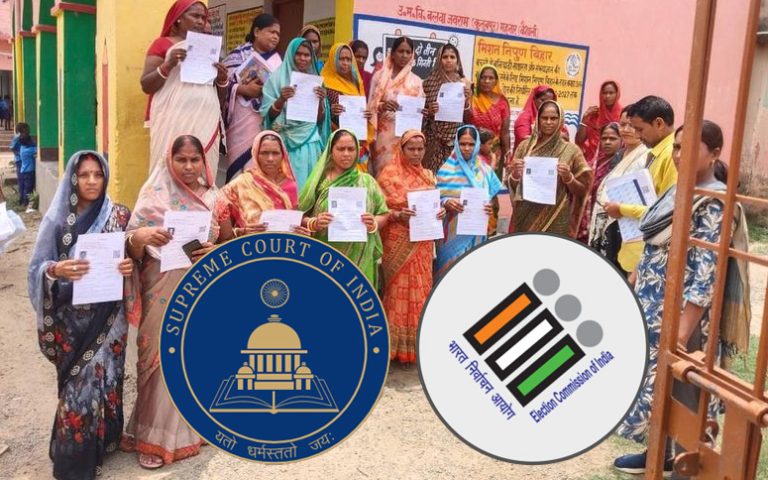
The Supreme Court on Friday, 10th July, declined to stay the Special Intensive Revision (SIR) of electoral rolls in Bihar. The bench of Justices Sudhanshu Dhulia and Joymalya Bagchi also directed the Election Commission of India (ECI) to consider Aadhaar, voter ID cards, and ration cards as valid documents during the verification drive.
However, during the hearing, the apex court raised important concerns about the timing of a special revision of voter lists currently being carried out in Bihar, just months before the state is expected to go to the polls. While the court clarified that there’s nothing wrong with conducting such an exercise, it questioned why this wasn’t done earlier and why it is happening so close to the elections.
The bench said that updating and verifying voter lists is a crucial part of the democratic process, but it should ideally be done promptly. “The issue is not whether the revision should happen or not, but why it is happening now, and not earlier,” the court noted.
The Election Commission (EC), through its lawyer Rakesh Dwivedi, defended the move and asked, “If the Election Commission doesn’t have the authority to revise the voter list, then who will do it?” He further said, regular updates to the voter list are necessary and legally allowed under the Representation of the People Act. He added that it is within the EC’s powers to include or remove names to ensure the list remains accurate.
During the hearing, the Supreme Court requested that the Election Commission clarify three things: whether it has the power to update the voter roll, what process it used for this special update, and why it did it at this time. The court further stated that if the commission had wanted to check the citizenship of voters, particularly in Bihar, it could have initiated the process much earlier. In this regard, the Election Commission told the court that under Article 326 of the Constitution, verifying citizenship is necessary to become a voter in India.
Concerns over rejection of Aadhaar and Voter ID
The court also expressed unease regarding the reports that Aadhaar cards and voter ID cards are not being accepted as valid documents during the process of revision. Senior advocate Gopal Sankaranarayanan, who argued for one of the petitioners, emphasised that almost 7.9 crore individuals can be impacted and expressed puzzlement as to why Aadhaar and voter ID cards are being disregarded.
Opposition leaders challenge EC’s move
More than ten petitions have been filed against this exercise. One of the main petitioners is the NGO Association for Democratic Reforms (ADR). Several opposition leaders have also approached the top court against the EC’s order, including RJD MP Manoj Jha, TMC MP Mahua Moitra, Congress leader KC Venugopal, NCP’s Supriya Sule, CPI’s D Raja, SP’s Harinder Singh Malik, Shiv Sena (UBT) MP Arvind Sawant, JMM’s Sarfaraz Ahmad, and CPI (ML) leader Dipankar Bhattacharya.
These leaders have asked the court to withdraw the EC’s directive for the special revision in Bihar on the grounds of voter suppression and inadequate implementation.
In Odisha, an ambulance was severely vandalised during a Muharram procession in Remuna, Balasore district. The disturbing incident has raised serious concerns about public decency and awareness regarding emergency response.
An ambulance carrying critically ill children was attacked by a mob of Islamists during a Muharram procession in Remuna, Odisha.
Stones and sticks were used to shatter the vehicle's windows, injuring the children and parents inside.
The attack occurred at around 10:30 PM on Sunday, July 6, near Hatiagand Square in Remuna Bazaar. The ambulance was transporting a Hindu man, Rashmiranjan Sahu, along with his wife Urmila and their two children. Their three-and-a-half-year-old son Smrutiranjan and two-and-a-half-year-old daughter Labanya, were suffering from high fever, prompting the family to rush to Fakir Mohan Medical College and Hospital for emergency treatment.
The vehicle was being driven by Gajendra Das, with helper Sureshwar Mahalik and attendant Satyaban Das on board.
Details of the attack
According to reports, the ambulance, bearing registration number OD02BJ-5937, was attacked while trying to navigate through the congested procession route. A group of around 10–15 individuals first stopped the vehicle. Despite the siren being on, the crowd reportedly hurled abuses at the driver. Moments later, a mob started pelting the vehicle with stones and striking it with sticks, questioning the use of the siren during the Muharram procession.
In the chaos, the crowd allegedly dragged the helper out of the vehicle, beat him up, tore his shirt, and smashed the rear glass of the ambulance. The violent attack worsened the situation and caused injuries to both children and their parents. Shards of shattered glass struck the children and their parents, leaving them bloodied.
The frightened driver reportedly turned off the siren and remained stuck at the spot for over half an hour before managing to move the vehicle forward.
The father of the children shared that his son was running a 104- degree fever and in desperation they covered their child with their own bodies during the attack by Islamists. While, there were bystanders who continue to assault the vehicle from behind.
A case has been registered by an ambulance staff at the Remuna police station but no arrest have been made so far.
Before the beginning of the festival Muharram, a peace committee was set up and guidelines were laid down. One of the rule include was cut-off time of 10 PM which were agreed upon. However, the procession continued till mid night, raising concerns over enforcement and public safety.
In May this year, the Mumbai-based Income Tax Appellate Tribunal (ITAT) directed [pdf] ‘journalist’ Rana Ayyub to pay income tax on funds collected for Covid-19 relief work, which were misappropriated by her for personal use.
Rana Ayyub had amassed a whopping ₹2,69,50,695 through 3 crowdfunding campaigns on the platform ‘Ketto’ during the Covid-19 pandemic.
Out of the funds totalling ₹2.69 crores, about ₹80,49,856 were received in foreign currency in violation of the Foreign Contribution Regulation Act (FCRA) of 2010.
Screengrab of the funds raised by Rana Ayyub during the COVID-19 pandemic
Interestingly, Rana Ayyub collected funds meant for COVID-19 relief work in the bank accounts of her father, Mohammed Ayyub Shaikh and sister Iffat Shaikh to the tune of ₹1.60 crores and ₹37.15 lakhs.
The controversial ‘journalist’ had claimed before the Income Tax Department that she could not find her PAN card and therefore used her father’s and sister’s PAN cards for withdrawing money from Ketto platform.
Screengrab of the funds received in the bank accounts of Rana Ayyub, her father and her sister
Later, Rana Ayyub transferred ₹84.40 lakhs from her father’s account and ₹36.40 lakhs from her sister’s account to her personal bank account. In total, a sum of ₹1,20,80,000 was transferred to the account of Rana Ayyub.
Interestingly, she had downplayed the embezzlement of such a large sum of money in April 2022 as a ‘small amount of $20000.’ This is despite the fact that the amount in question is ₹2.69 crores (~$3,14,500).
Money transferred by Rana Ayyub to her personal bank account from that of her father and sister
The Income Tax Appellate Tribunal (ITAT), in its order, noted that about ₹2.4 crores of the crowdfunded amount remained unutilised despite a year of the campaign.
It noted, “The account in which the money was withdrawn by the assessee or her family members were personal savings account. Moreover, instead of carrying out any relief work, the assessee opened a new current account and made investment of a fixed deposit in her name and also incurred personal expenditure from the same savings account in which the funds were received.“
Misappropriation of funds by Rana Ayyub left exposed
ITAT stated that Rana Ayyub did not maintain separate accounts for personal funds and the money generated through crowdfunding for COVID-19 relief work.
The latter was transferred to the bank accounts of her family members (during the course of the 1st and 2nd campaigns) and to her personal account during the 3rd campaign.
“Throughout the proceedings, the assessee took a stand that she is not a beneficiary of those funds but the same cannot be exhibited because the funds have been mixed up with her personal funds as no separate account was maintained. The stand of the assessee that, in case of Ketto, the beneficiary is clearly identified by Ketto to whom the funds are to be transferred, is also not acceptable as the funds have been transferred in the personal account of the assessee, her father and her sister,” the Income Tax Appellate Tribunal pointed out.
“When the assessee was cornered by the Tax Department, she offered the entire donations raised from Ketto platform as “income from other sources”,” it further added.
Rana Ayyub had claimed before the Income Tax Department that a ‘small part (₹28 lakhs)’ of ₹2.69 crores was used for sending migrant workers home and purchasing ration, hospitalisation, procuring transportation and purchasing tarpaulin sheets for those affected in West Bengal floods.
Additionally, she spent ₹19 lakhs to cover her ‘personal expenses’. It also came to light that the controversial ‘journalist’ made a personal fixed deposit of ₹50 lakhs from the funds received for COVID-19 relief work.
“If the intention of the assessee was pious then, what explanation she could offer for purchasing fixed deposit receipts of Rs.50,00,000/- in her personal name,” ITAT emphasised.
It found that only ₹18 lakhs were used for relief work out of ₹1.23 crores that Rana Ayyub received through the first campaign on Ketto. The controversial ‘journalist’ had attempted to justify the non-utilisation of funds as ‘reserve for constructing a hospital.’
ITAT pointed out, When the assessee realised that she has been cornered in the tax net, she returned funds received from foreign reserves from Ketto platform but even after the passage of almost one year from the first donation campaign in which the assessee garnered Rs.1.23 Crores approximately, she could only produce evidence of Rs.18,00,000/- of relief expenditure. When confronted with this, the assessee took a plea that the same has been kept in reserve for constructing a hospital which was never mentioned during the fundraising campaign.”
Violation of FCRA Rules
The Income Tax Appellate Tribunal further noted that Rana Ayyub violated the Foreign Contribution Regulation Act (FCRA) of 2010.
Ayyub, who identified as a ‘journalist’ for Washington Post, does not qualify for foreign donations under Section 3(1)(h) of the FCRA.
“Since the assessee is herself a journalist, it is clear that the as per the Foreign Contribution (Regulation) Act, 2010, she could not have received foreign contribution directly in her account,” ITAT stated.
Funds collected for charitable activities remain unproved: ITAT
The Income Tax Appellate Tribunal stated that funds were collected by Rana Ayyub in the name of COVID-19 relief, slum dwellers and farmers.
“But all the donations collected were parked in the savings bank account of the assessee and family members and no separate accounts were maintained. The funds were also used for personal purposes and also for investment in FDR and substantial amount of donation received remained un-utilized in spite of long time gap,” it stated,
It concluded, “The claim that the end use of these funds was initiated for charitable activities remains unproved. The manner in which the funds were collected, is also not understandable as the donations were collected and parked in the bank accounts of the relatives of the assessee.”
The Tribunal noted that the funds crowdsourced by Rana Ayyub did not qualify for ‘tax exemption’ and has been rightly taxed as her income for the Assessment years 2021–22 and 2022–23.
In a dramatic episode that has sent ripples across the defence community, Greek authorities recently arrested four Chinese nationals, two men, a woman, and a teenager near the Tanagra airbase. This airbase is home to Greece’s prized Rafale fighter jets. Security personnel from the Hellenic Aerospace Industry (HAI) first spotted the group photographing sensitive military installations. Despite being warned to leave, the individuals continued their activities from a nearby bridge, capturing images of both the Rafale jets and other critical facilities. The Hellenic Air Force Police quickly intervened, detaining the suspects and confiscating a substantial amount of photographic material.
Investigators are now probing the extent of the espionage, analysing the seized footage and assessing whether this was an isolated act or part of a broader intelligence operation. The seriousness with which Greek authorities are treating the case underscores the gravity of the breach.
This incident is not an isolated anomaly but part of a larger, well-documented trend, China’s aggressive expansion of its global espionage network. What is particularly striking is the choice of Greece a country with traditionally friendly ties to India and no overt conflict with China as a target for such operations.
Key features of China’s espionage strategy
China operates one of the world’s most expansive intelligence networks, utilizing a combination of state agencies, civilians, and proxy organizations to collect information on a global scale. The country’s intelligence apparatus is highly versatile, employing a blend of human intelligence, cyber-espionage, and economic leverage to achieve its objectives.
This multifaceted approach enables Chinese operatives to engage in activities ranging from hacking critical infrastructure to infiltrating companies and research institutions, demonstrating a vast and far-reaching scope. Furthermore, Chinese law mandates that all citizens and organizations must cooperate with intelligence agencies, which blurs the distinction between ordinary travelers, businesspeople, and potential operatives, thereby extending the reach and effectiveness of China’s intelligence-gathering efforts.
Targeting friends and foes alike
China’s intelligence activities are not just aimed at rival countries. Even nations with friendly ties to India, such as Greece, have become targets. This shows China’s broader strategy to gather strategic and technological information everywhere, no matter the diplomatic relationship. The Rafale jets, used by both India and Greece, are advanced military assets. By focusing on Greek facilities, Chinese agents may be trying to learn things that also matter for India’s defense. China has also set up intelligence bases in nearby countries. These sites help China watch and influence India’s interests in the region.
Implications for India and its partners
The arrest of Chinese nationals in Greece shows that Beijing’s intelligence activities are global and wide-reaching. For India, this means even friendly countries are not safe from Chinese espionage.
This incident raises several concerns. First, nations using similar defence equipment as India must be careful, as security breaches in one country can affect others. Second, it highlights the need for strong intelligence-sharing between India and its partners to tackle China’s spy network. Lastly, countries should rethink the risks linked to Chinese nationals and companies, even if they are not direct rivals.
Conclusion
The Tanagra incident is more than a local security breach. It is a microcosm of China’s relentless pursuit of strategic advantage through espionage. As Beijing’s intelligence apparatus grows bolder, no country, regardless of its relations with India, can afford complacency. For India and its friends, the message is clear, vigilance and cooperation are the only antidotes to the expanding shadow of Chinese espionage.
Peeved at being pulled up for not cutting their hair and maintaining discipline, two minors in a village in Haryana’s Hisar allegedly stabbed to death their school principal, police said on Thursday.
Hansi Superintendent of Police (SP) Amit Yashvardhan said that the accused took the drastic step as they were reportedly angry with the principal.
SP Yashvardhan told ANI, “Two minor students of Kartar Memorial School in Bas village of Narnaund town, stabbed their school Principal to death in anger, after the principal told the children to come to school with cut hair and maintain discipline.”
#WATCH | Hisar | Principal of Kartar Memorial Sr Sec. School, Bas was stabbed to death allegedly by two students
Hansi SP Amit Yashvardhan says, "The names of two students are coming to light. Our team is making an effort to catch them. A folding knife has been recovered from… https://t.co/4qeYVN5efBpic.twitter.com/FzFzdGlR7a
On October 22, 2025, Union Home and Cooperation Minister Amit Shah will turn 61. While this may be the retirement age in government jobs, in politics, a person often becomes even more active after this age. Prime Minister Narendra Modi, at 75, travels abroad, addresses rallies, participates in government and party meetings, and devises strategies. In such a scenario, if a leader talks about retirement, it is bound to surprise people.
However, when Amit Shah talks about retirement, it shouldn’t come as a shock. A master strategist who thinks far ahead and calculates every step, Amit Shah must have certainly decided under what circumstances and at what age he will retire. Technically, there is no such thing as retirement in politics, yet if Amit Shah dares to bring it up, it only shows why he is Amit Shah. Let’s understand the full story.
Amit Shah’s ‘Retirement Plan’
In fact, Amit Shah had organized a ‘Sahkar Samvad’ (Cooperation Dialogue) with women and cooperative workers from Gujarat, Madhya Pradesh, and Rajasthan. The new Ministry of Cooperation was formed in July 2021. Before this, the cooperative sector was often dominated by political families, which Amit Shah is now trying to reform through various measures. During this interaction, Amit Shah said that after retirement, he would study the Vedas and Upanishads and practice natural farming.
He said, “I have decided that whenever I retire, I will dedicate the rest of my life to the study of the Vedas, Upanishads, and natural farming. Natural farming is a scientific experiment with many benefits. Eating wheat grown with fertilizers leads to cancer, high blood pressure, diabetes, and thyroid issues. To stay healthy, one must eat food free of fertilizers — it eliminates the need for medicine. I tried natural farming on my own land, and the production increased by one and a half times.”
One of the persistent issues in our country has been that only those educated abroad are considered intellectuals. We’ve been made to feel inferior about India’s ancient scriptures. In such times, it’s noteworthy that Amit Shah speaks of the Vedas and Upanishads. Don’t take his words lightly. In the 1980s, Amit Shah used to massage the feet of Vedanta scholar Swami Vamdev and learned the intricacies of Indian philosophy from him. His service to a sage is the foundation of his success!
Behind the skilled politician and strategist lies a student of Vedanta
Until now, you’ve seen Amit Shah as a political strategist: winning elections, revoking Article 370, implementing CAA, tightening the organizational screws, holding meetings with everyone from grassroots workers to Chief Ministers, and roaring in rallies. But behind this master strategist lies a devoted student of Vedanta philosophy.
He served Swami Vamdev for many days. It was Swami Vamdev, a Brahmin scholar, who advised Amit Shah to attend the Kumbh Mela. Amit Shah did so. The sage’s intention was for Shah to interact with as many saints as possible and understand Indian philosophy deeply. And that’s exactly what happened, Amit Shah obeyed his guru and attended the Kumbh.
Now, here’s something interesting. Every morning, Swami Vamdev would give his disciple a handwritten note. Shah had to take that note to a different saint each day. The note would serve as an introduction or recommendation. In this way, Amit Shah spent time daily with new saints, ate at community feasts, and collected donations (dakshina) of a few rupees whatever he was offered. He would lobby, but not for any post or financial gain, rather, for knowledge, to understand Sanatan Dharma.
And what did he do with those donation coins? He saved them up and bought a bicycle. On that bicycle, he roamed around the Kumbh, observing the many expressions of Sanatan Dharma. In the 1986 Kumbh Mela in Haridwar, where about 200,000 pilgrims were present, there was also a 21-year-old youth who was destined to become a pivotal force in shaping India’s future. That 21-year-old boy, living in Swami Vamdev’s camp, was learning from saints and mahants.
You must have heard of Vijaya Raje Scindia, the Rajmata of Gwalior and grandmother of Jyotiraditya Scindia. One day, her camp gave Amit Shah 10 rupees in Dakshina. He bought a garland for Swami Vamdev, a gesture of a disciple’s loyalty and devotion to his guru. It is this dedication that has made him the second-most powerful leader in the country today.
The courage to take big decisions comes from Sanatan literature
Chanakya, Shankaracharya, and Savarkar, these three figures deeply influence Amit Shah’s ideology. This is the foundation of study that gives him the courage and strategy to take bold decisions. In 2014, he was a strategist. By 2019, he had become a PAN-India mass leader, ensuring BJP’s victory through 250 rallies. In the 2024 Lok Sabha elections as well, Amit Shah proved his mettle by conducting 188 rallies.
Amidst all this, don’t forget Swami Vamdev, the one whose mentorship transformed a young man into Amit Shah. Vamdev, who was actively involved in the Ram Mandir movement alongside Mahant Avaidyanath and Paramhans Ramchandra Das.
Swami Vamdev, whose guidance transformed the life of a young Amit Shah
In 1997, Swami Vamdev left his mortal body at the age of 75, but not before preparing his disciple to help build a new India. And here’s a remarkable coincidence: the same year Vamdev passed away, Amit Shah became an MLA for the first time. Perhaps it is the result of these experiences and deep study that today, Amit Shah executes bold decisions that were once considered unthinkable, and does so with full legal preparation and visible impact. Now, the turn is for the UCC (Uniform Civil Code).
Pakistan’s former minister Hina Rabbani Khar had an embarrassing encounter when her lies about Pakistan’s Army were exposed on live TV during an interview with Al Jazeera journalist Sreenivasan Jain broadcast on 8th July.
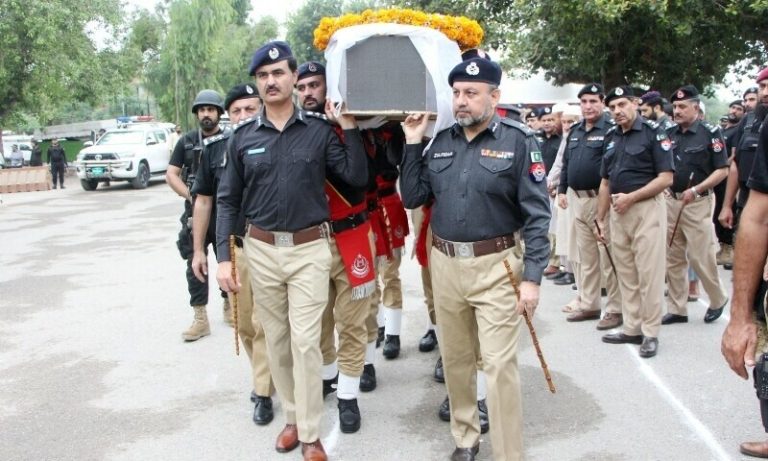
In the interview, Khar was seen desperately trying to whitewash Pakistan’s image of a terror-sponsoring nation by blatantly telling lies and denying facts. When the interviewer asked Khar about the viral photo of Pakistan’s Army personnel saying prayers alongside US-designated terrorist Hafiz Abdur Rauf, during the funeral of terrorists killed in India’s aristrikes on Muridke terror camp under Operation Sindoor, Khar flat out denied it, and claimed that it was a “common man” leading the prayers and not Hafiz Abdur Rauf (watch between 8:53 and 10:42 in the video).
The image referred to in the interview (via India Today)
“Essentially, this image, which you mentioned, is a big part of India’s global outreach because they say that this shows Abdur Rauf. He is a US-designated global terrorist. He (Abdur Rauf) is leading prayers for those killed in India’s airstrikes. In attendance are senior Pakistani police and military officials. That is a damning image,” Jain said to Khar referring to the image.
Responding to the question, Khar asserted, ” I am telling with authority, with evidence, which has been shared with the whole world, that this is not the man that you are claiming it to be. There are a million Abdur Raufs in Pakistan (not sure if she meant terrorists by “Abdur Raufs”).
Hina Rabbani Khar be like: Itnay saaray Terrorists hain mulk main, kitnay yaad rakhay. pic.twitter.com/oL84TiQslQ
Seeing that Khar was lying through her teeth in claiming that the man in the image was not terrorist Abdur Rauf, the journalist confronted her with facts. “Let me respond to this. So the Pakistani Army held a press conference. They did not say this image is fake. They said Rauf is not a terrorist. They said that he is a member of a political party, and they released his national ID number. That ID number is the same one as on the US-sanctioned list. So, according to the US-sanctioned terrorist list, this man is a terrorist. The Pakistani Army is defending him,” the journalist elaborated, trying to point out the contradiction in Khar’s statements.
However, entirely overlooking the facts presented by Jain, Khar kept repeating her lies and claimed that the man in the image is not the same as the terrorist. “The Pakistani Army is defending this man (in the image). The Pakistani Army is not defending the person who is proscribed by the US,” the former minister said without realising the irony in her remarks.
The journalist reiterated the fact that the national ID number of the person in the image matched that of the US-designated terrorist Hafiz Abdur Rauf, but Khar kept ignoring the facts and stuck to her lies. “The ISPR (Director General of Inter-Services Public Relations) categorically said that this is not the same person,” she added.
Notably, following India’s retaliatory strikes on terror establishments in Pakistan and the PoJK, Pakistan’s Director General ISPR Ahmed Sharif Chaudhry confirmed in a press conference in May (2025) that the man seen leading prayers in the funeral video is named Hafiz Abdur Rauf, but he was an ordinary Pakistani man. Chaudhry presented his ID number and personal details to prove his point. However, the ID number and the personal details matched with the details of terrorist Hafiz Abdur Rauf listed in the US Treasury Department’s Office of Foreign Assets Control (OFAC) sanctions database. India used this information to prove nexus between Pakistani Army and terrorists.
Sensing the futility of expecting a truthful answer from Khar, the interviewer moved on to his further questions. However, throughout the conversation, Khar kept trying to defend Pakistan’s indefensible image. Khar’s response to all the questions not only qualified as white lies but also appeared simply stupid in the light of the facts presented by Jain. Later on, during the interview, Khar pointed out that Pakistan was elected to the Presidency at the UN Security Council (UNSC) to claim that Pakistan enjoyed global support. However, Jain immediately countered her and said that while it was true that Pakistan did get the UNSC Presidency but it was equally true that the country has the highest number of US-designated terrorists.
Apparently, facts hardly mattered to Khar as she kept harping about how Pakistan was being ‘transparent’ during the entire period of military conflict with India. However, Khar’s evasive attitude to the questions and her repetetive emphasis on Pakistan’s “transparency” can be understood. When your Army personnel openly attend and say prayers in the funerals of terrorists, perhaps being ‘transparent’ seems to be the only face-saving option available.
Pakistan’s political establishment’s complicity in whitewashing terrorism
Hina Rabbani Khar’s desperate attempt on Al Jazeera to deny the presence of US-designated terrorist Hafiz Abdur Rauf leading funeral prayers, attended by Pakistani Army officials, reveals a deeper malaise in Pakistan’s political class: a chronic, institutionalised pattern of terror denial and complicity.
This isn’t a one-off embarrassment. It echoes Pakistan’s long history of shielding terrorists, most notably during the 26/11 Mumbai attacks, where despite overwhelming evidence, including captured terrorist Ajmal Kasab’s testimony and video proof, the Pakistani establishment summarily denied the attackers’ origins and training in Pakistani terror camps.
Just as then, when Pakistan insisted Kasab was not Pakistani until undeniable proof emerged, Khar today peddles blatant falsehoods in defence of a man whose identity and terror links are internationally established. These repeated denials, whether of hosting UN-sanctioned terrorists or facilitating jihadist infrastructure, highlight how Pakistan’s so-called civilian leaders function more as apologists for the Army’s terror enterprise than as statesmen of a responsible democracy.
A shocking incident has come to light from a state board school in Thane, Maharashtra, where around 10 girls were allegedly stripped by the staff to check if they were menstruating. This shocking act took place after school staff found blood stains in the toilet on Tuesday, 8th July.
According to the police, the incident involved girls studying in Classes 5 to 10. The students were gathered in the convention hall and shown photos of the blood stains using a projector. They were then asked whether they were on their periods. The girls who said yes were made to give their names and thumb impressions.
But the matter didn’t stop there. The girls who didn’t raise their hands were taken to the washrooms, where they were reportedly stripped and checked by the female attendants. One minor girl, who was using a sanitary pad even though she wasn’t menstruating, was scolded by the principal and accused of lying. The principal allegedly forced her to give her thumb impression as well.
After returning home, many girls shared the traumatic experience with their parents and broke down in tears. On Wednesday, 9th July, several parents gathered outside the school to protest and demanded strict action against the staff involved. One of the parents filed a police complaint.
Following the protest and complaint, police took action. The female principal and a female attendant were arrested on Wednesday, 9th July. According to personnel of Thane Rural police, action was taken against the school management and administration after parents staged a protest. All the accused have been booked under sections 74 (assault or use of criminal force to a woman with intent to outrage her modesty), 76 (assault or use of criminal force to a woman with intent to disrobe) and also under the Protection of Children from Sexual Offences (POCSO) Act.