Home Blog Page 2515

Bihar: Ankit killed, Hariom severely injured in a knife attack by Mohammad Shahadat and Mohammad Sonu; police say the fight was over cricket

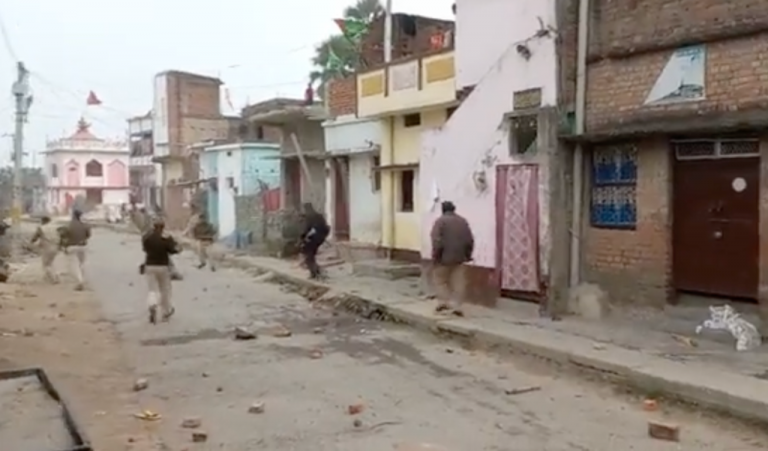
Chaos swept Bihar’s Gopalganj after clashes erupted between two groups in a fight over a cricket match. As per local reports, a tense atmosphere prevailed in Gopalganj after one man was killed and another severely injured during the clashes between the two groups. 

Two young men, Ankit and Hariom were stabbed by two other youths, Mohammad Shahadat and Mohammad Sonu Miyan in Gopalganj, Bihar, following an altercation over a cricket match. Ankit died on the spot and Hariom is in critical condition in the hospital.

However, many on social media claimed that the fight erupted during Saraswati Puja. A report published on TV9 Hindi too said that the clashes erupted during Saraswati Puja.

Following the incident, chaos erupted throughout the area and police had to use firearms to regain control. The knife attack resulted in a riot-like situation. Gopalganj is the birthplace of former Bihar Chief Minister Lalu Prasad Yadav.

Angry residents protesting Ankit’s murder carried his body to a demonstration near Basdila village, where they were then attacked. It is claimed that the protesters retaliated by throwing stones. Some police officers were also injured during the attack. BJP leader Shalabh Mani Tripathi tweeted that Bihar was in a state of turmoil.

Mohammad Shahadat and Mohammad Sonu Miyan allegedly killed Ankit and critically injured Hariom with knives in front of a mosque, Tripathi tweeted. “The RJD-JDU government has ruined Bihar and is shooting at those seeking justice.”

Several media houses, including TV9 Hindi, mentioned that dispute was during Saraswati puja immersion. However, this report had been updated with the Bihar police version.

2013 Bengaluru blast case: Zulfikar, Shihabuddin, and Bilal among 5 jail inmates booked for assaulting an accused who wished to plead guilty

0

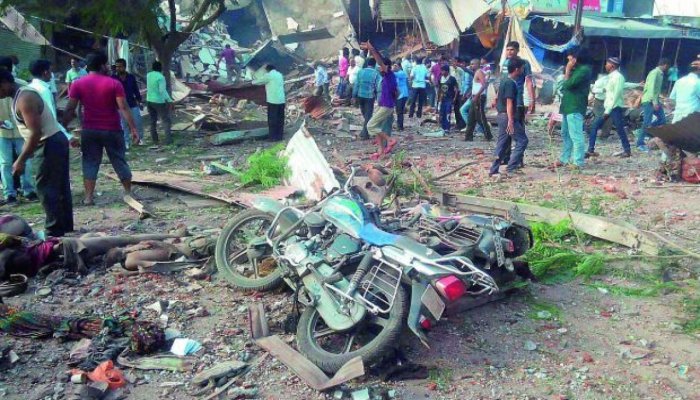
Following their alleged attack on a fellow prisoner who was awaiting trial on December 16, the administration of Bengaluru Central Prison at Parappana Agrahara filed a complaint against five inmates on January 25. In a bombing case that took place on April 17, 2013, close to the BJP office in Bengaluru, the victim had decided to enter a guilty plea.

According to officials, all of the defendants in the bombing case are awaiting trial. They claimed that Jail Superintendent Mallikarjun B reported the assault to the Parappana Agrahara police.

A key accused from Coimbatore in the blast case, Kichan Buhari, and four of his colleagues, Zulfikar Ali, Shihabuddin, Ahmed Bava, and Bilal Ahmed Kyuta, allegedly beat up undertrial prisoner Syed Ali after he allegedly planned to enter a guilty plea in the blast case.

The superintendent stated that the jail administration had not been informed of the issue earlier. As per police sources, Syed was scheduled to enter a guilty plea in the bombing case alongside another defendant and had already submitted an application to the court.

Buhari’s family claimed in this month’s court proceedings, that he had been held in solitary confinement. An attorney for Syed notified the trial court on January 10 that the other accused in the case and he were at odds over his decision to file an application under Section 229 of the Criminal Procedure Code to enter a guilty plea.

The lawyer for Syed had asked the judge to move his client to a different prison cell. A second accused, who also wanted to enter a guilty plea, is reportedly ill.

Up to 25 people have been charged in connection with the bombing on April 17, 2013, which occurred close to the BJP office in Malleswaram, north Bengaluru, and is associated with the banned Al Ummah group in Tamil Nadu and its affiliates. The 2013 election-related blast that took place while the BJP was in government in Karnataka was reported to cause 16 casualties.

R Ashoka, the then-home minister for Karnataka, had labelled the blasts as “terrorist activity” and claimed that BJP members were the intended target.

‘We don’t wear surma, skull caps and tawiz’, Pakistani actor Adnan Siddiqui claims Siddharth Malhotra’s Mission Majnu was ‘factually incorrect’

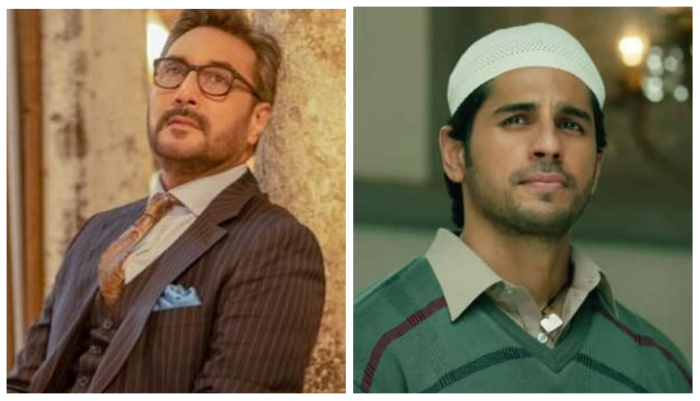
Pakistani actor Adnan Siddiqui has taken to his official Instagram handle to criticise the Bollywood film ‘Mission Majnu’ starring Sidharth Malhotra for ‘misrepresentation’ of Pakistanis in the movie.

In a post written on Thursday, January 26, the Pakistani actor who starred in the Hindi film ‘Mom’ starring late actress Sridevi, lambasted the makers of the movie claiming that Pakistanis “don’t wear skull caps, surma and tawiz”, which Sidharth was seen donning to play his character Tariq. Siddharth plays an undercover RAW agent in the film who heads to Pakistan to investigate Pakistan’s nuclear program.

“There’s so much in Mission Majnu that’s distasteful and factually incorrect,” the Pakistani actor added.

The Pakistani actor wrote, “How much misrepresentation is too much misrepresentation? Bollywood has the answer. I mean come on, yaar with all the money you have, hire some good researchers to do homework on us. Or allow me to help.”

“Make sure to take notes—no, we don’t wear skull caps, surma, tawiz; no, we don’t ask janab about their mijaz; no, we don’t go around throwing adaab,” the Pakistani actor added.

“There’s so much in #MissionMajnu that’s distasteful & factually incorrect. The hero’s saviour complex would’ve accentuated more if the villain was shown at par. A weak antagonist embellishes even weaker protagonist,” Adnan Siddiqui continued.

He further added, “Poor story, poorer execution, poorest research. Next time, come and visit us. We are good hosts. Will show you how we look like, dress up and live.”

Mission Majnu was released on Netflix on January 20, 2023. The spy-thriller also features Rashmika Mandanna and is directed by Shantanu Bagchi. The movie, which is set in the 1970s, is “inspired by real events,” as per the makers. It shows Sidharth as a RAW agent, Amandeep Ajit Pal Singh aka Tariq, who is tasked to complete India’s “deadliest covert operation” in Pakistan. It shows how India used intelligence to counter Pakistan’s growing interest in nuclear weapons.

‘Sanatan Dharma is Rashtriya Dharma’: UP CM Yogi Adityanath calls for campaign to restore religious places

0

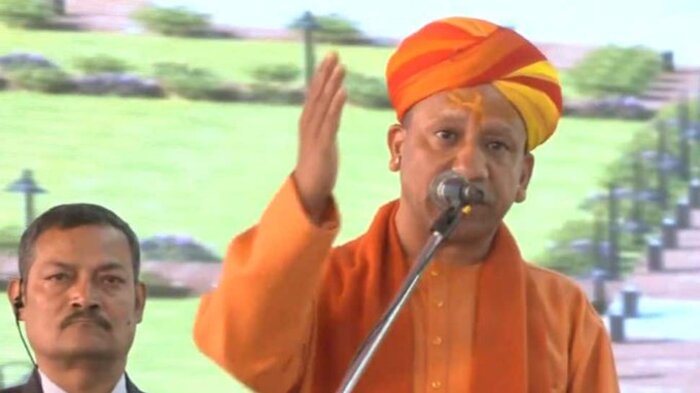
On Friday, January 27, Chief Minister of Uttar Pradesh Yogi Adityanath called the Sanatan Dharma as the ‘national religion’ and said that every citizen of the country should respect it. CM Yogi also asserted that for the religious places that were destroyed or desecrated in the past, a campaign should to started to restore them, as was done in the case of Shri Ram Temple in Ayodhya. 

CM Yogi said, “Our Sanatan Dharma is India’s “Rashtriya Dharma”. We establish a connection to “Rashtriya Dharma” when we rise above selfishness. Connecting to the national religion makes our nation secure. Symbols of our honour should be re-established, and the cow and Brahmins should be protected. If our religious places were desecrated in any era, then there should be a campaign to restore them, like the Shri Ram temple in Ayodhya. After 500 years, with Prime Minister Narendra Modi’s efforts, Bhagwan Ram’s grand temple is being built in Ayodhya.”

Yogi Adityanath was visiting the Neelkanth Mahadev Temple in Jalore. Along with Union Jal Shakti Minister Gajendra Singh Shekhawat, the Uttar Pradesh CM also planted Rudraksha during this event.

CM Yogi also stated that the restoration of Lord Neelkanth’s temple in a grand manner after 1400 years is an illustration of respect for and preservation of heritage.

“The country is developing. Recall that Prime Minister Modi-ji gave us all “paanch pran” (five pledges) in the “Azadi Ka Amrit Mahotsav” year, one of which was respect for our cultural heritage. The program today reflects that same pledge,” the UP CM said.

Notably, Union Home Minister Amit Shah announced earlier this month that Shri Ram Temple will be ready by 1st January 2024. While speaking at a rally in Sabroom in South Tripura, Amit Shah said, “During the 2019 Lok Sabha elections, I was the president of the BJP and Rahul Baba (Rahul Gandhi) was the president of the Congress. He used to ask every day – the date of construction of the temple there will never be told. So Rahul baba, open your ears and listen, on January 1, 2024, you will have the grand Ram temple in Ayodhya ready.”

Mughal Gardens in Rashtrapati Bhavan renamed ‘Amrit Udyan’, to open for visitors on 31st January

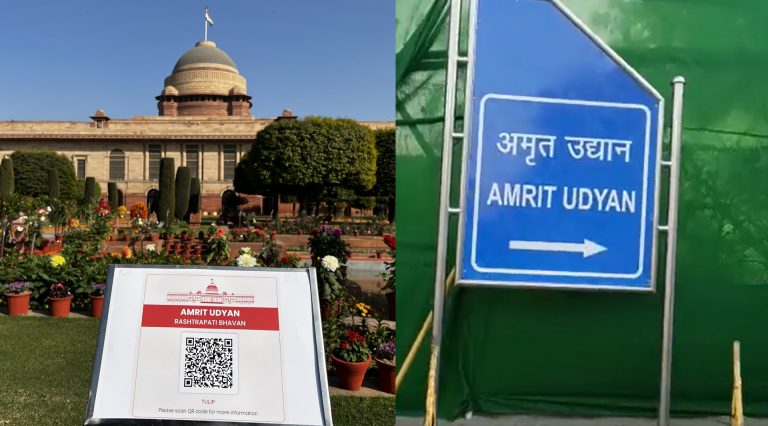
The iconic Mughal Gardens inside the Rashtrapati Bhavan premises has been renamed ‘Amrit Udyan’. The garden’s name has been changed on the occasion of celebrations of 75 years of Independence as ‘Azadi ka Amrit Mahotsav’.

Like every year, this year also the famous gardens in the Rashtrapati Bhavan premises will be opened soon for visitors. But this year the visitors will witness a new name for the sprawling garden, Amrit Udyan instead of earlier name Mughal Gardens.

Navika Gupta, Deputy Press Secretary to President, said that the president of India has given a common name to the Rashtrapati Bhavan gardens as ‘Amrit Udyan’. The Deputy Press Secretary further informed that the Amrit Udayan will be inaugurated by President Droupadi Murmu on Sunday, January 2.

It is notable that although called Mughal Gardens, the garden on the Raisina Hill was not built by Mughals, as the entire complex was built by the British. But the garden was built in the style of Mughal gardens built by Mughals in several places in the country, and therefore it has been called Mughal Gardens. The garden is known for several varieties of Tulips and Roses, along with flowers.

Photographs posted on social media showed signage for Tulips carrying the name Amrit Udyan in place of Mughal Gardens.

Visuals also show workers installing a direction signage for Amrit Udyan somewhere near Rashtrapati Bhavan.

The Rashtrapati Bhavan, along with Amrit Udyan, will open for visitors from 31st January. Every day 17,500 tickets will be issued for visits from 10 AM to 4 PM. The Rashtrapati Bhavan will remain open for visit till 31st March this year. New additions in the garden include selfie points.

The president’s deputy press secretary said, “the gardens will be open this time for the general public for two months, from 31st January to 31st March. Besides, one day each will be dedicated for the special categories, which includes women, differently-abled among others.”

The worst abuser of human rights of women and religious minorities must be held accountable: What UNHRC must keep in mind about Pakistan’s submission

This Monday (30 January 2023), the UN Human Rights Council’s Universal Periodic Review of Pakistan’s human rights record will take place in Geneva. This article is a timely reminder to the UN body to hold this rogue state accountable for the worst human rights violations against women, and religious and ethnic minorities. It will also expose the false claims made by this rights abuser state in its submissions to Human Rights Council. 

Rampant violations of the rights of religious and other minorities are reported from Islamic countries on a daily basis. In this context, Pakistan is a living hell for women, and religious and ethnic minorities. In this context, regarding its submissions to the UN body, Hillel Neuer, executive director of the Geneva-based UN Watch rightly points out that, “Pakistan’s submission to the UN about its human rights record is filled with lies”.

Some of the false claims made by Pakistan in its submissions to the UN body are being exposed here.

On Protection for Minorities

Pakistan’s Claim: “In order to protect minorities and promote their public participation, the Government has taken several legislative, policy and administrative measures”.

Reality: Minorities constituting around four per cent of Pakistan’s population are subjected to the worst rights violations by both state and non-state actors. The 2017 census data shows that Muslims have become 96.47% of the total population and on the other hand, religious minorities have shrunk. Hindus, for example, are at their all-time low at 1.73% of the population. Religious minorities are not treated as equal citizens and this fact is even boasted by the constitutional heads of the country. For example, Khawaja Nazimuddin, the 2nd Prime Minister of Pakistan, had said, “I do not agree that religion is a private affair of the individual nor do I agree that in an Islamic State, every citizen has identical rights, no matter what his caste, creed or faith be”. 

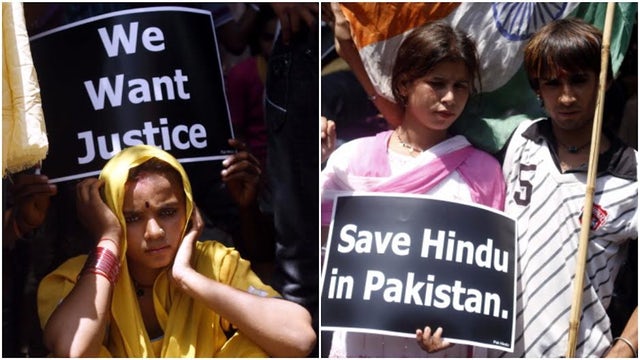
In Pakistan, there lies religious merit in converting non-Muslims to Islam and the whole state machinery is found complicit in such activities against minorities. According to their own human rights commission report, around one thousand young Hindus and Christians are forced to convert to Islam every year. Atrocities on Hindu minorities, particularly on Scheduled Caste Hindus and women are worse. 

In recent times, according to many media reports, religious minorities have come under severe violent attacks from fundamentalists and other state and non-state actors. Recently, an increased instance of killings, abduction attempts and forced conversion of Hindus and Sikh girls summarize the constant fear under which non-Muslims, particularly Hindus and Sikhs are forced to live in Pakistan. Sindhi Women are the worst victims of this cycle of violence directed at minority women. 

In a country infested with Sunni Islamic radicalization, there is no security for even ethnic and linguistic minorities. Punjab-dominated military-politician complex violates the human rights of Balochs, Hazaras, Sindhis, Ahmadis and people of Gilgit-Baltistan. Violent attacks on their social gatherings or religious places by Sunni extremist groups and people are very common. Shias, Ahmadi Muslims, Christians, and Hazaras are particular targets of these attacks. In 1974 Ahmadis were officially denied even the legal right to be considered Muslims.

The Gojra riots were particularly harrowing in which several Christians, including women, were killed. Baluchistan’s independence movement is violently suppressed by the Punjabi-dominated military here. Forceful abductions, rape, enforced disappearances and extra-judicial killings of detainees by the military are frequent in the case of the Baloch and Pashtun minorities. Though Pakistan adheres to the Universal Declaration of Human Rights and is a signatory to several international human rights treaties such as the International Covenant on Civil and Political Rights (ICCPR). However, these ethnic and linguistic minorities along with religious minorities remain disenfranchised in society and are not fully included in the political life of the country.

On Violence against Women and Children

Pakistan’s Claim: “In addition to policy measures, Pakistan has also enacted various legislations to address VAW including harassment, deprivation from an inheritance, domestic violence, acid throwing, and rape”.

Reality: Though Pakistan is a signatory to the Convention on the elimination of all Forms of Discrimination against Women (CEDAW) yet crime against women continues unabated. UN Women clearly points out that laws for the protection of women are poorly implemented and stated that Women belonging to religious and ethnic minorities face double marginalization. Similarly, In March 2020, the UN Committee on Elimination of Violence Against Women expressed concern about “the high prevalence of gender-based violence against women and the social acceptance of domestic violence, underreporting of gender-based violence against women and impunity for perpetrators.”

Also, UN experts have pointed out the rampant violations of Children’s rights. Regarding child brides, they point out, “We are deeply troubled to hear that girls as young as 13 are being kidnapped from their families, trafficked to locations far from their homes, made to marry men sometimes twice their age, and coerced to convert to Islam, all in violation of international human rights law”. Pakistan courts influenced by Sunni radicalization have been accused of enabling Child marriages. 

On Blasphemy Laws

Pakistan’s Claim: “The Government of Pakistan is committed to curb the misuse of blasphemy laws”.

Reality: Since 1990, scores of Pakistanis particularly those hailing from religious and linguistic minorities in Pakistan have been killed over claims of blasphemy. Even Muslims who speak against these inhuman laws are killed. The Minorities’ Minister, Shahbaz Bhatti, was assassinated in 2011 for speaking against the blasphemy laws. Also, Asia Bibi languished in jail for many years. After calling the blasphemy law a ‘black’ law, Salman Taseer, the governor of Punjab, was shot dead by Mumtaz Qadri, his bodyguard, in 2011. As recently as in 2020, UN High Commissioner for Human Rights Michelle Bachelet called out this draconian law and stated, “Religious minorities in Pakistan continue to face violence and repeated attacks on their religious places of worship and government’s failure to amend the blasphemy law led to violence against them”.  

According to a Pakistani NGO named the Center for Social Justice, in the year 2021 alone, at least 84 people were accused of blasphemy in Pakistan and three people were extra-judicially killed. Pakistan courts aggravate the situation by harshly punishing the accused persons. For instance, at the start of 2022, a Pakistani court sentenced a woman to death for sharing images on WhatsApp that were considered insulting to the Prophet Muhammad. Thus Blasphemy laws perpetuate dehumanizing discrimination against minorities. They live under a constant threat of Islamic vigilantism.

On Enforced Disappearances

Pakistan Claim: “The alleged cases of missing persons are being expeditiously and efficiently dealt by the Commission of Inquiry on Enforced Disappearances”.

Reality: This claim was contradicted by their own Islamabad High Court in June 2022. Chief Justice Athar Minallah commented that the Commission had failed to fulfil its responsibility and called the Commission “a burden” which must “justify its continued existence.” The Court also lambasted the government for its involvement in disappearances, stating “you are proving that [forcibly] disappearing people has been the policy of the State since the days of General Musharraf…” However, the Pakistan army is the main culprit in these forced disappearances and its role in these crimes gets ignored by the courts. 

On Democracy, Constitution and Legal Architecture 

Pakistan’s Claim: “As a vibrant democracy, Pakistan will continue to uphold fundamental freedoms including meeting people’s needs and providing an enabling environment for the continued exercise of their rights to freedom of expression, assembly and association”.

Reality: According to Pakistani journalist Taha Siddiqui, “Pakistan’s purported democracy is “a facade” and in reality, Pakistan is a hybrid regime where the military controls the government behind the scenes”. 

Constitutionally, Pakistan being an Islamic state, its present constitution has many repugnancy clauses which discriminate against religious minorities. For example, sections 298-B and 298-C of the Pakistan Penal Code restrict religious groups from freely practising their faith and Clauses 295-B and 295-C on blasphemy can endanger the very life of the accused individual.

Legally also, Pakistan State discriminates against religious minorities in many ways. Take the example of the “Hindu Marriage Act, 2017” for the constitutional recognition of Hindu Marriages. However, a major loophole in it is used in the forceful conversion of Hindu women. It is section 12 (iii) which stipulates “…the marriage may be terminated on the basis of either the husband or the wife converting to some other religion”. This section annulled any imaginary protection provided to women. Abduct a married woman, force her to convert, force her to say it is voluntary and her marriage is annulled. Similarly, Ahmadis live in constant fear of harassment or assault either to themselves or their homes, workplaces and places of worship. For instance, under Section 298-B of the Pakistan Penal Code, Ahmadis are prevented from using any Islamic epithets that might result in them being mistaken as Muslims. In addition to this, Section 298-B (2) criminalises the use of the word “Azan” for the call to prayers by Ahmadis.

Thus, every basic norm of human rights is being grossly violated in Pakistan by legal institutions, society and non-state actors. Hence, it’s a mandate for the international community concerned with the protection of human rights to take necessary measures and impose severe legal and financial costs on Pakistan. This is high time that the UN Human Rights Council in its upcoming Universal Periodic Review of Pakistan’s human rights record takes Pakistan state to task for the worst crimes against humanity. 

India’s first detention centre for illegal foreigners starts operating, 68 detainees shifted to the newly constructed Matia Transit Camp in Assam

The detention centre built exclusively to keep illegal foreigners has started operations in Assam. On Friday, the first batch of 68 illegal foreigners was shifted to the Matia Transit Camp in Goalpara district. With this, the process of transferring illegal foreigners from detention camps inside regular jails to the transit camp has begun.

The 68 people shifted to the centre included 45 men, 21 women and 2 children. This group includes both people identified by Foreigner Tribunals as foreigners who entered India illegally, and also people who were convicted by courts for violation of visa provisions.

It is notable that the exclusive detention centres for illegal foreigners have been renamed as Transit Camps by the state government. Assam government is building transit camps to keep illegal foreigners till their deportation on the orders of courts including the Supreme Court and High Court. The camps are being built as per guidelines laid down by the centre.

Located in a rural area near Dudhnoi river in Matia in Goalpara district, the transit camp has been built on bighas of land at a cost of ₹46 crore. The camp has a total of 17 buildings, two of which will be exclusively for women. The camp has a capacity of 3000 detainees. Apart from residential facilities, the camp will also have a primary school, library, hospital, recreational activities, dining hall, kitchen, and so on. Adequate numbers of bathrooms and toilets have also been built.

With the completion of the camp, all illegal foreigners kept in six detention camps in Assam will be shifted to the Matia Transit Camp. Among the existing detentions camps that operates from regular jails, two are in district jails in Kokrajhar and Goalpara districts, and the rest four are in central jails in Tezpur, Silchar, Dibrugarh and Jorhat districts.

Around 1000 people declared as illegal foreigners were lodges in these detention centres. But most of them are currently out on bail, and only around 200 of them are currently in the centres.

It is notable that the courts have been urging the Assam govt to complete the detention centre and shift the illegal foreigners there from regular jails. In August 2021, the Gauhati High Court had ordered the state govt to complete the construction of the Matia camp withing 45 days, and then to immediately shift the detainees.

However, the camp was not complete withing the deadline for various reasons, including the pandemic. The high court in September 2022 asked the state govt to complete the construction on a war footing.

Then in November 2022, the High Court sought a report from the state asking why the process of shifting detainees to the newly constructed transit camp has not started. The court asked the govt to complete remaining work immediately, and even said that if the facility is not ready yet, the detainees should be removed from jails and placed in temporary camps outside the jails.

The court orders came responding to various PILs filed challenging the use of jails to keep illegal foreigners. The petitioners had sought release of the detainees. But the court, while agreeing that it is wrong to keep them in jails, refused to free them, and ordered to shift them to exclusive detention centres, now called transit centres.

The Gauhati High Court has ruled that jails in Assam cannot be used as permanent detention centres for keeping illegal foreigners, and said that detention centres must be set up for them outside jails.

1 IAF pilot dies as a Sukhoi-30 and a Mirage 2000 crash in Morena in Madhya Pradesh, parts of the wreckage fell in Bharatpur in Rajasthan

0

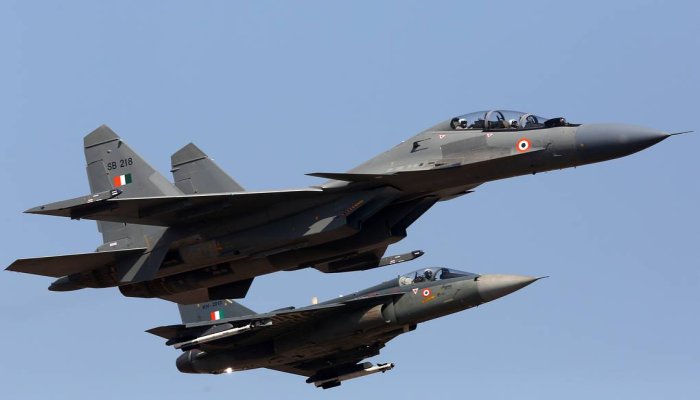
In one of the most worse tragedies involving Indian Air Force planes, two fighter jets crashed on Saturday during an exercise. At 5:30 in the morning, a Sukhoi Su-30 and a Mirage 2000 fighter jet from the Indian Air Force crashed near Morena in Madhya Pradesh while participating in a training exercise, officials announced on Saturday.

While there were reports of a third crash at Bharatpur in Rajasthan, now it has been confirmed that parts of the same planes that crashed in Morena fell in Bharatpur.

Defence sources reported that the Sukhoi Su-30 had two pilots while the Mirage 2000 only had one. According to Indian Air Force, two pilots who were able to evacuate are safe while one succumbed to his injuries. The survivors were taken to a hospital.

Initial reports indicated that the planes were training for a bombing exercise and they took off from the Gwalior air base. A court of inquiry will determine the accident’s precise cause. Reportedly, the two aircraft collided mid-air and then crashed to the ground. However, it was not head-on collision, the wings of the planes touched reached other.

SP Morena also provided information about the collision.

Shivraj Singh Chouhan, the chief minister of Madhya Pradesh, said he has directed the local government to coordinate with the air force to conduct swift rescue and relief operations.

The administration immediately initiated an investigation to see whether the two accidents were related after hearing about the collision and the wreckage discovered at both locations. To determine whether the wreckage discovered in Rajasthan’s Bharatpur is related to the planes that crashed in MP’s Morena, an IAF also travelled there.

Defence sources reported that IAF chief Air Chief Marshal V R Chaudhari briefed Defence Minister Rajnath Singh on the two aircraft’s crash. They stated that the defence minister is closely observing the developments.

Along with the crashes in Morena, another crash was also reported from Bharatpur in Rajasthan at the same time. The local administration had said the crashed jet was a chartered aircraft. However, later the IAF officials said that it was also an IAF aircraft.

But there was confusion over the type of aircraft that crashed in Bharatpur. From earlier reported as a chartered plane, later it was said that it was an IAF helicopter.

Bharatpur Deputy Superintendent of Police (DSP) who was on the spot stated that the plane was an Indian Airforce Force (IAF) fighter jet. “We can’t tell whether it’s a fighter plane or a conventional plane based on the wreckage. We are still unsure whether the pilot got out or is still inside (the plane)”, he had said.

“Prima facie it’s difficult to say whether it’s a defence fighter plane or helicopter as the intensity of the fire was so high that it crashed into air,” said Bharatpur Superintendent of Police (SP) Shyam Singh later in an interview with India Today.

The SP stated that the plane’s pilot had ejected, and searches are currently being conducted to locate him. “I have reached the spot. Officials from the defence unit are here. We are making the effort to trace the pilot,” added the SP.

However, the confusion was cleared later in the day, as it was revealed that there was no third crash. The authorities have said that the wreckage of two planes also fell in Bharatpur in Rajasthan, which is not very dar from Morena in Madhya Pradesh.

Morena Collector Ankit Asthana has confirmed that the wreckage found in Bharatpur is not from a separate crash. It has been speculated that after the collision with the Mirage 2000 over Morena, the pilots of the Sukhoi were able to stabilise the plane for some moments and they flew for some distance before ejecting, and therefore the wreckage of the Sukhoi Su-30 fell in Bharatpur.

Note: This report has been updated with relevant details

‘Why can’t Sanskrit be our official language?’, Former CJI SA Bobde asks, mentions that Dr Ambedkar also advocated for the same

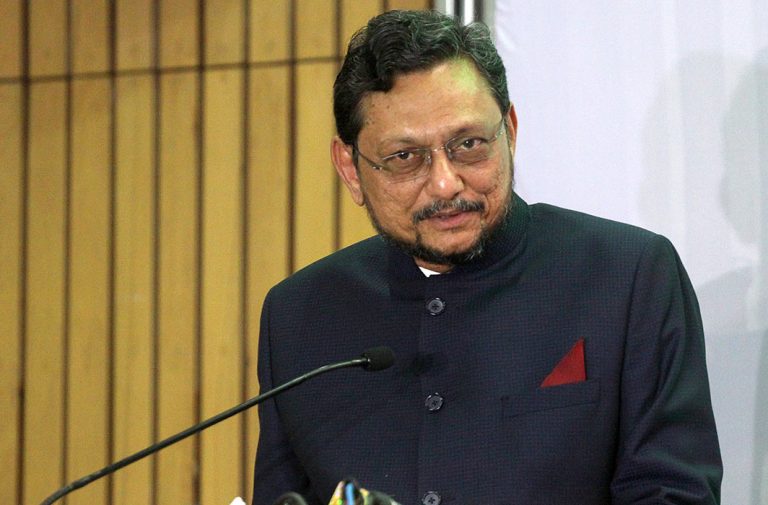
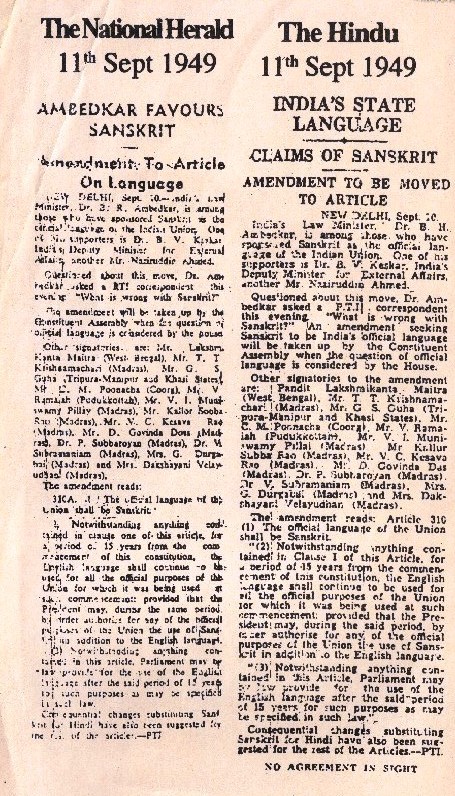
On Friday, January 27, former Chief Justice of India (CJI) Sharad Bobde said that he asks himself ‘why Sanskrit cannot be the official language of India’. Citing media reports from 1949, the former CJI said that even Dr. Bhimrao Ambedkar, hailed as the architect of the Indian constitution, had also proposed the same.

Bobde also said that Hindi and English are used as the official languages of government and courts in accordance with the law, and every chief justice receives requests to approve the introduction of the respective regional languages. The introduction of regional languages is already happening in some high courts and district courts, the former CJP mentioned.

While speaking at the Akhil Bhartiya Chhatra Sammellan, which was organized by Sanskrit Bharti, the former CJI made these remarks. Although many High Courts have had to allow applications, petitions, as well as documents in regional languages, he said, the High Court’s official language is English.

“This issue pertaining to official language shouldn’t, in my opinion, go unresolved. Since 1949, it has remained unresolved. Although this isn’t the place to discuss, there are serious dangers involved with miscommunications in the administration of justice and governance,” Bobde said.

“On September 11, 1949, newspapers reported that Dr. Ambedkar was the one who first proposed making Sanskrit the official language of the Union of India. Many of our languages share vocabulary from Sanskrit. I ask myself why Sanskrit cannot be the official language, as Dr. Ambedkar had proposed,” he added.

According to the former CJI, introducing Sanskrit would not be equivalent to introducing any religion because 95 percent of the language deals with topics related to philosophy, law, science, literature, phonetics, architecture, astronomy, etc. rather than having anything to do with any religion.

Ambedkar on Sanskrit 

Despite his belief that English could be kept as the nation’s official language for at least 15 years after independence, Dr5 Bhimrao Ambedkar supported Sanskrit as a national language in the Constituent Assembly.  The proposal to make Sanskrit as the national language was moved by the late LK Maitra in the Constituent Assembly, and was supported by Dr. Ambedkar.

Ambedkar recommended making Sanskrit the official language of the Union of India to the Council of National Languages, which was set up as soon as the nation gained independence. Ambedkar opined that there would be no dispute in the country around Sanskrit as the national language.

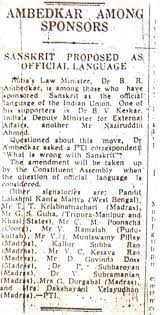
On September 11, 1949, several newspapers including The Hindu, National Herald, and others, reported about the then Law Minister strongly advocating for Sanskrit. Ambedkar was supported by Dr. B.V. Keskar, the then Deputy Minister of Foreign Affairs, Nasiruddin Ahmad and T.T. Krishnamachari, V.I. Muniswamy Pillai, G. Durgabai, P. Subbarayan, and Dakshayani Velayudhan.

Newspaper reports about Ambedkar’s support to the Sanskrit proposal dated 11th September 1949
National Herald article on Ambedkar backing proposal to adopt Sanskrit as India’s official language.

When questioned by a PTI reporter about his choice, he answered, “Why? What is wrong with Sanskrit?” Ambedkar stated that the Legislative Council would discuss the amendment and consider the issue of the official language as well. 

All India Muslim Jamaat president gets upset after Baba Ramdev drops truth bombs in defense of Dhirendra Shastri, talks about religious terrorism

0

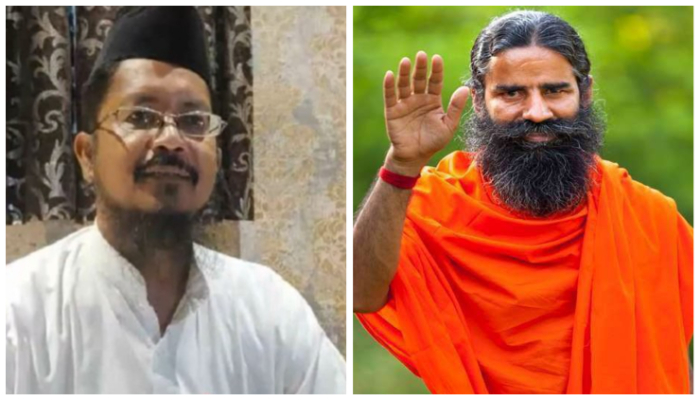
After targeting Mahant Dhirendra Krishna Shastri of Bageshwar Dham, All India Muslim Jamaat president Maulana Shahabuddin Razvi has now turned his attention to Yoga Guru Baba Ramdev. The Maulana has gotten miffed with Baba Ramdev after the latter presented some inconvenient facts while speaking in support of Bageshwar Dham chief Dhirendra Krishna Shastri.

Maulana Shahabuddin Razvi has lashed out at Baba Ramdev claiming that he has linked religion with terrorism. According to reports, Maulana Shahabuddin said that terrorism has no religion. “Many other Muslim organisations, besides me, have condemned terrorist activities and will continue to do so in the future,” said Razvi.

He added, “Adherents of Hinduism, Buddhism, and Christianity are carrying out terrorist acts in countries like Burma, Denmark, and Sweden, so would it be wise to blame the entire church for their actions? That is why terrorism should not be associated with religion; it is like cancer that we must all work together to eradicate.”

People insulting great men of Sanatan tradition are Anti-India: Baba Ramdev

  • The statement by the Maulana came after Baba Ramdev told reporters on Thursday that religious terrorism is rising in India. He added the ones who are making inappropriate remarks and carrying out character assassination of “great men” of Sanatan tradition are all “anti-India” and should be opposed.

“Insulting remarks are being passed by many people against great men associated with the Sanatan tradition… They are all anti-India and are acting at the behest of international forces by showing disrespect to the country. They should be strongly opposed,” Ramdev told reporters in reply to a question about the controversy surrounding Bageshwar Dham chief Dhirendra Krishna Shastri.

Notably, earlier too, Baba Ramdev had come out in support of Dhirendra Krishna Shastri after the latter was accused of promoting superstition, an accusation that Shastri had vehemently refuted, claiming they were a part of a conspiracy against him.

All India Muslim Jamaat president accuses Bageshwar Dham chief of preaching against Islam

Notably, on January 26, All India Muslim Jamaat president Maulana Shahabuddin Razvi accused Dhirendra Krishna Shastri of preaching against Islam and inciting hatred in India. The Maulana further said that Dhirendra Shastri is conspiring to weaken Islam and mocking it in his public events. He urged the Chhattisgarh government to take strict action against the Hindu guru.

The Maulana added, “I implore the Government of India that, if it has created a legislation against conversion, then legal action should be taken against such babas who slander Islam and they should be stopped.”

The controversy around Bageshwar Dham

Notably, the entire row started some days ago when Mahant Dhirendra of Bageshwar Dham travelled to Nagpur for Ramkatha. Reportedly, Dhirendra Shastri brought 300 people back into Hinduism fold during a Gharwapsi program on Christmas last year.

After the Katha concluded, Shyam Manav, the national convenor of the Maharashtra Andhashraddha Nirmulan Samiti, accused Dhirendra Krishna Shastri of promoting ‘superstition’. Shyam Manav has also filed an FIR against Shastri.

Later, in a video shared on the official Instagram page of Bageshwar Dham, Dhirnedra Shastri addressing the Nagpur controversy said that he is being targeted since he started raising the issue of Gharwapsi. He also asked Shyam Manav if he has ever questioned people of other religions over the alleged superstitions.