Home Blog Page 2516

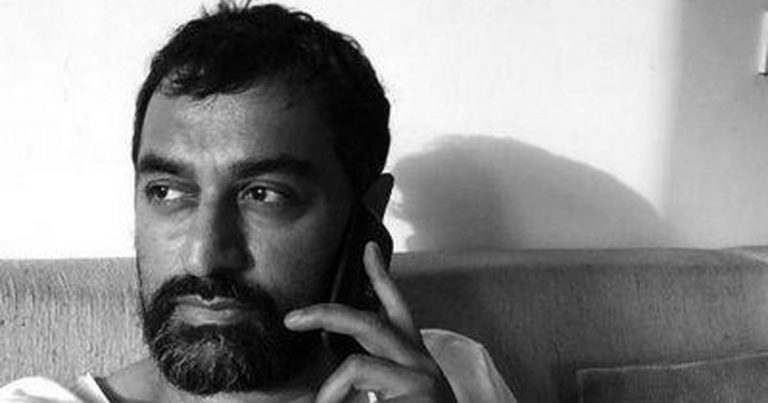
Tejasvi Surya calls IndiGo controversy a political hit-job, co-passenger’s version of the event drives home the point

On January 18, Bharatiya Janata Party leader Tejasvi Surya refused to comment on the IndiGo controversy and called it a ‘political hitjob’. Tejasvi Surya was quoted as saying, “I will not comment on political hit jobs and glorify them.”

Notably, Civil Aviation Minister Jyotiraditya Scindia has also said that Tejasvi Surya apologised for the incident. Media also accessed a written statement of a co-passenger who detailed the incident.

As per the co-passenger, Surya was sitting next to the emergency exit. His seat had no armrest. When he stretched out his arm to close the air-conditioner vent, his elbow touched the door, and it came out of the beading. He specifically pointed out that Surya himself did not unhook the entire door. He said, “Realising immediately that the emergency exit was out of its place, Surya alerted the cabin crew. An air hostess took a look at it and informed the captain. We were made to deboard because flight personnel had to conduct safety checks.”

The flight was still on the ground during the incident and it was allowed to take off only after a detailed security check.

Surya then wrote the incident report. BJP Tamil Nadu President K Annamalai was also travelling with Surya. The passenger added that the note he wrote was not an apology but an incident report. “It was not a written apology. He wrote down what happened and stated that he was shocked and surprised to see the door move.”

Later, both Surya and Annamalai apologised to the passengers for the inconvenience, the co-passenger said. “Why would Surya endanger his own life and that of others by mischievously opening the emergency exit?”

BJP leader Tejasvi Surya is facing a lot of heat after reports claimed that he accidentally opened the emergency exit door on a flight that caused a 2-hour delay.

Recently media reports had stated that MP Tejasvi Surya had accidentally opened the emergency door on an Indigo flight 6E-7339 on December 10.

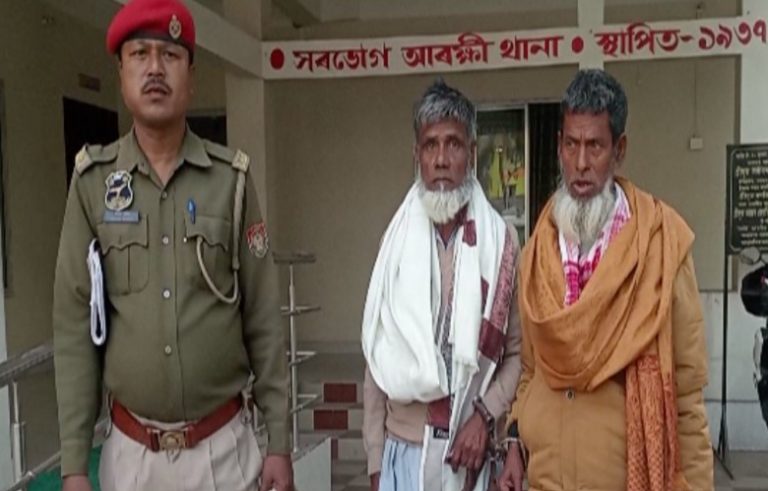
Kerala: NIA arrests PFI ‘Reporter’ Mohammed Sadik for collecting information on non-Muslim leaders and passing it on to ‘hit squad’

On the intervening night of January 17 and January 18, the National Investigation Agency (NIA) arrested a ‘reporter’ identified as Mohammed Sadik from district Kollam, Kerala, for collecting information on leaders of other religions. He has links with the now-banned Islamic organisation Popular Front of India (PFI). ‘Hit Squad’ had assigned him the job of collecting the required information.

As per the agency, Sadik would hand over the information on non-Muslim targets to the ‘Hit Squad’, and based on the list, they would carry out the attacks. NIA recovered several incriminating documents, digital evidence and other proofs from his possession. It was revealed that he made several trips to collect the required information.

As per NIA, a case was registered suo moto on September 19, 2022. During the investigation, it was found that he was working for the hit squad. He has also been accused of brainwashing needy people into working for Lashkar-e-Taiba (LeT), Islamic State (ISIS) and other terrorist organisations.

Ban on PFI

On September 22, 2022, NIA and Enforcement Directorate (ED) conducted several raids on properties linked to PFI. They arrested around 100 leaders of the organisation from 11 states, including Kerala, Uttar Pradesh, Andhra Pradesh, Karnataka, Tamil Nadu and Telangana, for alleged involvement in anti-India activities. Later, it was revealed that PFI had plans to assassinate prominent leaders and personalities. A ban for five years was announced on the organisation under UAPA by the Union Home Ministry.

Burqa-clad students denied entry in Moradabad college for violating uniform code

0

Some students of the Hindu college in Uttar Pradesh’s Moradabad were denied entry to the college for wearing a burqa despite the prescribed uniform code for the students here. 

The girls have alleged that their college was not letting them enter the college campus wearing burqa and are compelling them to remove it at the entrance gate. On the said matter, a scuffle broke out between the students, the Samajwadi Chhatra Sabha workers, and the college professors who remained adamant about sticking to the prescribed rules. A video of the scene from the Hindu college has been making rounds on the Internet. 

Meanwhile, the college professor, Dr AP Singh said that they have implemented a dress code for the students here and anybody who refuses to follow it will be barred from entering the college campus. 

To this, the members of Samajwadi Chhatra Sabha submitted a memorandum to include the burqa in the dress code for college and allow the girls to attend their classes wearing it. 

Earlier in January 2022, a similar situation rose in Karnataka when the masive Hijab protests broke out, where some students of Government Girls PU college in the Udupi district of the state alleged that they had been barred from attending classes. During the protests, some students claimed they were denied entry into the college for wearing hijab. 

Following this incident, students of different colleges arrived at Shanteshwar Education Trust in Vijayapura wearing saffron stoles. The situation was the same in several colleges in the Udupi district. 

The pre-University education board had released a circular stating that students can wear only the uniform approved by the school administration and no other religious practices will be allowed in colleges. 

The matter was then taken up to the Karnataka HIgh Court which dismissed various petitions challenging a ban on Hijab in education institutions and said that wearing a Hijab is not an essential religious practice of Islam. 

However, when taken to the Supreme Court, the apex body on October 13, 2022 pronounced a split verdict in the Karnataka Hijab ban case. 

The arguments in the matter went on for 10 days in which 21 lawyers from the petitioners’ side and Solicitor General Tushar Mehta, Additional Solicitor General KM Nataraj, Karnataka Advocate General Prabhuling Navadgi argued for the respondents. 

(This news report is published from a syndicated feed. Except for the headline, the content has not been written or edited by OpIndia staff)

Jacinda Ardern resigns as New Zealand Prime Minister, says no reason or angle, just tired

New Zealand Prime Minister Jacinda Ardern on Thursday announced that she will step down as the Prime Minister of New Zealand no later than February 7. 

“Jacinda Ardern says she will not be seeking re-election this year and her last day as prime minister is 7 February. The 2023 general election will take place on 14 October,” tweeted RNZ, New Zealand’s public broadcaster. The decision from Ardern comes after five and a half years of tenure leading New Zealand as well as the coronavirus pandemic.

Ardern said she knew what the prime minister’s job took and believed she “no longer had enough in the tank to do it justice” but there were colleagues who could. 

“I believe that leading a country is the most privileged job anyone could ever have, but also one of the more challenging. You cannot and should not do it unless you have a full tank plus a bit in reserve for those unexpected challenges. I know what this job takes. And I know that I no longer have enough in the tank to do it justice,” Ardern said.

She further said there was no special “angle” or “real reason” why she wanted to resign, only that she was “human”, as reported by news agency ANI.

“To Neve, mum is looking forward to being there when you start school next year. To Clarke, let’s finally get married,” ANI quoted. “This has been the most fulfilling five and a half years of my life,” Ardern said in a televised press conference, according to local news site NZ Herald. 

“I am leaving because with such a privileged job comes a big responsibility. The responsibility to know when you are the right person to lead – and also when you’re not,” she said. 

Ardern’s Labour Party will begin looking for a successor with a caucus vote on Saturday, ANI reported

At only 37 years old at the time of her election to power in 2017, Ardern is one of the world’s youngest female state leaders. She is also one of the few to give birth while in office. 

‘Ready to be hanged if the allegations prove to be true’: Wrestling Federation chief Brij Bhushan Singh rejects molestation charges

The national president of the Wrestling Federation of India Brij Bhushan Singh has rejected allegations of dictatorship and sexual harassment raised by wrestlers on 18th January 2023. Brij Bhushan Singh has said that he is ready to be hanged if the allegations are found to be true.

Wrestling Federation of India’s president Brij Bhushan Singh has given an explanation about the allegations of sexual harassment of women wrestlers. He has denied the allegations of women wrestlers. Brij Bhushan Singh said, “Can anyone come ahead and say that the federation harassed an athlete? There has been no incident of sexual harassment. I am ready for any kind of investigation. I am ready to be hanged if the allegations of sexual abuse are found to be true. The accuser should come ahead and tell.”

Several veteran wrestlers including Vinesh Phogat, Bajrang Punia, and Sakshi Malik protested against Brij Bhushan Sharan Singh and the Wrestling Federation of India at Jantar Mantar in Delhi on Wednesday. Following the uproar, WFI president Brij Bhushan Singh lashed out at the wrestlers, saying they were not ready to give trials or fight at the national level. He also said that this is a planned conspiracy against him.

Brij Bhushan Singh said, “When I came to know that wrestlers in Delhi had started protesting, I didn’t know what the allegation was. I immediately came to Delhi. Regarding the allegations (of sexual harassment) that Vinesh has leveled, is anyone coming forward with these allegations? Is there any athlete who has come forward with these allegations? Has the Fed Press committed any kind of sexual harassment?”

Brij Bhushan Singh further said, “They will not give trials, nor will they fight at the national level. Did they not have any problem with the federation for the last ten years? All these things have been happening since the new rules came into force. None of these players who are sitting on protest today have fought in the nationals. This is a conspiracy against me. A big industrialist is behind all this. When Vinesh Phogat lost, it was me who inspired her. When Deepak Punia lost in the Tokyo Olympics, the Russian coach beat the referee. Vinesh Phogat did not wear an Olympic uniform.”

About the new rules, he said, “The organization made a rule by studying the rules of many countries of the world. We have made it a rule to conduct tests after the Olympics. If one wants to go to the Olympics he will be tested like any other athlete in the country. The athlete who has secured an Olympic quota will compete with the winner of the trial tests in the country. The wrestler will then be selected for the Olympics from there. If the Olympic quota holder loses, he will be given another chance. We are working according to the rules. There is no question of dictatorship. This decision is not mine but taken with the opinion of good coaches and these players.”

Brij Bhushan Singh added, “I will talk to the players. I am ready for any kind of investigation. Sexual harassment has never happened. If even one athlete comes out and proves it, I am ready to hang myself. I will not resign as WFI president. Whatever allegations have been made, I hope she (Vinesh) will send it to me in writing. I will respond to whatever I can and the rest can be investigated by the CBI or the police. This is a very big allegation. How can I take action when my own name has been dragged into it? I want to ask Vinesh Phogat why she wore a dress with the company logo at the Olympics. After losing the match, I just encouraged and motivated her.”

Earlier, while speaking to the media during the protest at Jantar Mantar, wrestler Vinesh Phogat said, “I know of 10-20 cases of sexual harassment of women wrestlers. Many coaches and referees are involved. When the High Court directs us, we will produce all the evidence. We are also ready to submit all the evidence to the PM. We will protest till the culprits are punished. No athlete will participate in any event.”

Gujarat: 8-year-old Devanshi Sanghvi, daughter of a Surat-based diamond merchant, embraces monkhood

8-year-old Devanshi Sanghvi, the elder daughter of Surat-based diamond merchant Dhanesh Sanghvi has embraced monkhood. It is notable that Dhanesh Sanghvi is the owner of Sanghvi and Sons, one of the world’s oldest diamond companies. Devanshi Sanghvi has given up all the comfort of her luxurious life and renounced everything to take a spiritual path and lead the rest of her life as a Jain monk.

Pictures of Devanshi Sanghvi from her initiation rituals have gone viral on the internet. In one of the pictures that has been widely shared online, Devanshi, dressed in a pink dress, pays tributes to her parents by showering rice grain on them—a symbol of gratitude for giving birth to her and raising her up in accordance with principles held sacred by Jainism and to finally allow her to embrace monkhood and follow the path prescribed by Jain Tirthankaras.

Devanshi Sanghvi is the elder among the two daughters of Dhanesh Sanghvi. After attending 367 initiation rituals, Devanshi was motivated to give up worldly life. According to a family acquaintance, Devanshi has never viewed television or a movie before. She has never eaten at a restaurant.

In yet another picture that has gone viral, Devanshi Sanghvi, after completing her initiation rituals, could be seen in a white dress, an archetype attire of Jain monks and with a smile writ large on her face.

To mark the event before Devanshi’s significant transition into monkhood, a grand march with elephants, horses, and camels was brought out in Surat. The ritual is called ‘Varshi Dan’—a ceremonial parade symbolizing the rejection of material possessions that mumukshus or the ones who would soon initiate into monkhood undertake, which also entails donating clothes, grains, silver coins, and other belongings that signify one’s renunciation from the materialistic world.

The Sanghvi family, who are diamond merchants, could live a very opulent lifestyle but prefers to lead a very modest one. The family is quite devout, and Devanshi has always prayed three times daily according to family tradition. After embracing monkhood, Devanshi Sanghvi is known as Sadhvi Diganthpragnashreeji.

At a time when many people in society are seen committing crimes to accumulate wealth, the 8-year-old kid has set an example by renouncing all the luxuries that were readily available to her being the daughter of a rich diamond merchant.

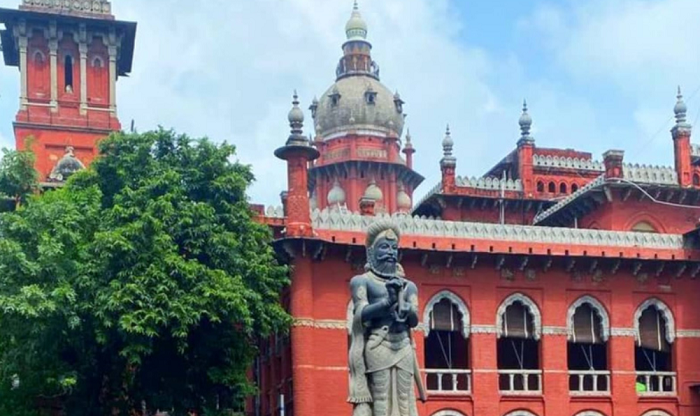
Madras HC commutes the life sentence of a woman who set her minor daughter on fire

The Madras High Court recently reduced the life sentence given to a woman who was convicted by a Mahila court for killing her 13-year-old daughter by setting her on fire while she was asleep, using kerosene.

On January 6, the Madurai bench of the Madras High Court, consisting of Justices PN Prakash (now retired) and G Jayachandran, issued a ruling reducing the life sentence of the appellant, Rajeshwari, to 10 years of rigorous imprisonment.

The court determined that the woman did not intend to kill her daughter and subsequently issued an order accordingly.

The court overturned the trial court’s decision that found her guilty of murder under Section 302 of the Indian Penal Code (IPC) and instead ruled that she could be convicted of the lesser charge of culpable homicide not amounting to murder under Section 304(1) of IPC.

The judges noted that Rajeshwari was furious with her daughter Mariselvi because she had left her hostel and returned home stating she had no desire to continue her studies. On June 12, 2012, a day after Mariselvi came home, Rajeshwari set her on fire in anger.

The victim died from her injuries four months after the incident.

Rajeshwari was apprehended and given a life sentence by a local court in 2019. She, however, filed a legal challenge to her conviction and sentence in the High Court by filing an appeal.

The High Court bench said that the issue before the court was to determine if Rajeshwari intended to kill her daughter when she set her on fire.

Going by the evidence, the bench contended, the conviction of Rajeshwari under Section 302 of the Indian Penal Code (IPC) was “not sustainable.”

It stated that she could only be found guilty under Section 304(1) of the Indian Penal Code for the offence of culpable homicide not equating to murder.

It was reported that Mariselvi had been taken to the hospital by her father, and received treatment for four months for her 50% burn injuries sustained in the incident. She was discharged twice during this period, due to the slow healing of her burns, before being re-admitted.

In its ruling, the High Court stated that taking into account Mariselvi’s father’s confirmation that she had no interest in studies, her multiple hospitalizations and the fact that Rajeshwari was angry at the time of the incident, it was determined that it was a case of 304 (1) of the Indian Penal Code and not a case of murder.

“Taking all these facts into consideration, we are afraid that we cannot sustain the conviction of the appellant for the offence under Section 302 IPC and instead, the conviction can be one under Section 304(1) IPC,” the bench said.

Top wrestlers demand the removal of Wrestling Federation of India president Brij Bhushan Singh, level allegations of dictatorship, sexual harassment

On Wednesday, 18th January 2023, around 30 wrestlers including Tokyo Olympics bronze medallist Bajrang Punia and world championship medallist Vinesh Phogat accused the Wrestling Federation of India’s national president Brij Bhushan Singh of dictatorship, and sexually harassing women players. The wrestlers staged a protest at Jantar Mantar against him, and demanded his removal from the post.

The wrestlers said that they will fight this battle till the end and will not sit silently until Brij Bhushan Singh is removed from the post. Brij Bhushan Singh is also a BJP MP from the Kaiserganj seat in Uttar Pradesh.

Among the athletes who have at Delhi’s Jantar Mantar are 30 wrestlers, including Bajrang Punia, Vinesh, Rio Olympics medallist Sakshi Malik, world championship medallist Sarita Mor, Sangeeta Phogat, Satyavrat Malik, Jitendra Kinha and Commonwealth Games medallist Sumit Malik.

The wrestlers said that they are opposing some policies of the Wrestler Federation of India. Bajrang Punia, Sakshi Malik, and Vinesh Phogat addressed a press conference during the protest. The wrestlers protesting at Jantar Mantar said that ever since they raised their voices, they have been threatened. They said, “We have all the wrestlers here today. What is being done to us will not be allowed to happen further. The mental harassment that is being done will not be allowed to happen.”

Bajrang Punia has accused the president of the Wrestling Federation of using abusive words and abusing him. He said, “We are here to play. He is specifically targeting the players and the state. We are being mentally tortured by the federation. The rules are made by the federation just one day in advance. The president is playing the entire role. The president abuses us. He even slapped the players.”

Bajrang Punia added, “Wrestlers do not want to tolerate this dictatorship. We want a change in the management of the Wrestling Federation of India. We hope the Prime Minister and the Home Minister will support us.

Vinesh Phogat accused the President of the Wrestling Federation of India of sexual harassment. She also complained about the coaching staff. She said, “Coaches sexually harass wrestlers. I raised my voice against this. Brij Bhushan Singh also sexually harasses women wrestlers.”

Vinesh Phogat said that no one takes responsibility when injured. She also said that the president talks about not playing on the national level. She said crying, “After the Tokyo Olympics defeat, the WFI president called me a ‘false coin’ (meaning non-reliable player). The WFI tortured me mentally. I used to think about ending my life every day. If something happens to a wrestler, the responsibility will be on the WFI president.”

Vinesh Phogat added, “They (the federation) also interfere in our personal lives and harass us. They are exploiting us. When we went to the Olympics, we didn’t have a physio or a coach. Coaches are harassing women wrestlers and some of the federation’s favorite coaches also misbehave with women coaches. The WFI president sexually assaulted several girls.”

British historian romanticises ‘love’ of Malwa Sultan – the cowardly Islamic ruler who had abandoned his so-called love leading to her suicide

British historian Tom Holland recently visited Mandu in Madhya Pradesh and could not resist writing a thread romanticizing the so-called ‘love’ of the Sultans of Malwa. His ecstatic expressions were epitomized in his tweets about Baz Bahadur, the last Islamic ruler of this Sultanate who was allegedly in love with a shepherdess Roopmati.

However, in his thread, Tom Holland did not include the fact that Baz Bahadur was a cowardly Islamic ruler who left his so-called love only to commit suicide when Mughal tyrant Akbar attacked Malwa. Baz Bahadur fled to Khandesh where a joint force of the rulers of Khandesh and Berar, by defeating the Mughals, gave temporary relief to Baz Bahadur who was later forced to seek refuge in Ranas of Chittor when Mughal forces conquered his kingdom after a year.

Tom Holland started his thread by quoting William Dalrymple, a Scottish person who calls himself an art historian, to call Mandu one of the most singular experiments in pleasure that the world has ever seen. Holland tweeted, “Ghiyath Shahi filled Mandu with no less than 16,000 beautiful female slaves and the good-looking daughters of his feudatory rajahs; the walled hilltop citadel was defended by an army of five hundred armor-clad girls from Abyssinia.”

In the next tweet, Tom Holland described Ghiyath Shah’s other enthusiasms in which he mentioned samosas stuffed with saffron, fried aubergines & ginger; hunting; perfumes, especially aromatic oils; aphrodisiacs, that is, sparrow brains fried in milk and ghee; a mixture of balsam oil, cardamoms, Tibetan musk, and honey to apply on one’s penis, and what not. He was seen enjoying and romanticizing the details as he described the special qualities of the mixture saying that it would produce strong lust, bestow joy on one’s heart, and ensure erection, and a flow of semen.

Here, Tom Holland comfortably whitewashed the fact that Ghiyath Shah – the ruler of Malwa Sultanate – essentially unleashed his so hard-earned masculine lust on those 16000 female slaves and good-looking daughters of Rajahs to exploit them – all of whom were essentially Hindus.

Tom Holland also shared pictures of the mosque built by the first Muslim ruler of Mandu in 1404. The pillars of this mosque came from Jain & Hindu temples destroyed by the Islamist tyrants.

Tom Holland further wrote, “Most romantic of all the stories told about Mandu is the love of its last sultan, Baz Bahadur, for the beautiful shepherdess Roopmati. The Sultan built a lake which was formally declared to be a part of the river Narmada so that she could gaze out over it, & not feel homesick.”

Tom Holland added, “The Sultan originally fell in love with Roopmati because he adored music, and she was a beautiful singer. He built her a palace with wonderful acoustics – here demonstrated to haunting effect by our gloriously talented guide.”

Malwa Sultanate

What Tom Holland did not include in his thread is the actual face of the Islamist rulers of medieval India. The Malwa Sultanate was founded in 1401 by Dilawar Khan, a Turco-Afghani servant of the Delhi Sultanate. Ghiyath Shah mentioned by Tom Holland is the elder son of Mahmood Shah Khalji who replaced Dilawar Khan’s Ghauri dynasty in 1436. The Khalji dynasty ruled Malwa till 1531. After the short tenures of Bahadur Shah and Qadir Shah, Malwa was captured by Shershah Suri in 1542. Shershah Suri appointed Shujaat Khan as his governor in Malwa. Baz Bahadur mentioned in Tom Holland’s tweets is the son of this governor who declared himself independent king of Malwa in 1555, only to get twice defeated by Mughal tyrant Akbar in 1561 and 1562. All this while, the Malwa Sultanate propagated Islam and persecuted Hindu subjects in middle India.

Baz Bahadur who was not courageous

This Baz Bahadur is majorly identified by historians as a king involved in pleasures rather than governance – a trait common to almost every Islamist invader. Baz Bahadur was not that ‘Bahadur’ meaning courageous. Both his so-called love and so-called courage failed the test of tough times. He was defeated by Akbar’s Mughal forces in 1561 when he left his ‘love’ Roopmati behind and fled alone to Khandesh to seek refuge from the ruler of that area Miran Mubarak Shah. He joined hands with Tufal Khan of Berar to defeat the Mughal army. But his Sultanate was finished soon as the Mughals conquered Malwa in 1562. Roopmati committed suicide after Baz Bahadur was defeated in the 1561 battle.

Roopmati

The prime reason for the attack on Malwa by the Mughals in 1561 is cited to be the Mughal commander Adham Khan’s lust for Roopmati. Tom Holland essentially glorified this lust of Islamic barbarians through his tweet. Roopmati was a poetess and singer according to folklore and historic accounts. Some of her poems are available as the collection of manuscripts was translated into English and published by LM Crump in 1926. (Reference: Khare, M.D. (1981). Malwa through the Ages, Bhopal: Directorate of Archaeology and Museums, Government of M.P.)

After the fall of Malwa, Baz Bahadur sought refuge from Rana of Chittor. He also roamed to other small kingdoms in Rajputana before surrendering to Akbar in 1570. This Baz Bahadur served the Mughal tyrant Akbar for the rest of his life. In this way, Tom Holland hid half of the facts about the Malwa dynasty while writing the thread and just focussed on romanticizing the lustful Islamic rulers’ alleged ‘love stories’.

‘Wikipedia not dependable; can promote misleading information’: SC cautions court authorities

0

On Tuesday, the Supreme Court noted that online sources such as Wikipedia are built on a crowd-sourced and user-generated editing model that is not totally reliable and can encourage incorrect information. A bench of Justices Surya Kant and Vikram Nath acknowledged the usefulness of platforms that allow open access to knowledge throughout the world but advised against utilizing such sources for judicial conflict resolution.

“We say so for the reason that these sources, despite being a treasure trove of knowledge, are based on a crowd-sourced and user-generated editing model that is not completely dependable in terms of academic veracity and can promote misleading information as has been noted by this court on previous occasions also,” the bench said on Tuesday.

The Supreme Court stated that courts and adjudicating bodies should make every effort to urge counsel to depend on more reputable and genuine sources. The remarks were made in a decision concerning the proper categorization of imported ‘All in One Integrated Desktop Computers’ under the First Schedule to the Central Excise Tariff Act of 1985.

The Supreme Court observed that adjudicating agencies, particularly the Commissioner of Customs (Appeal), relied heavily on internet sources such as Wikipedia to support their judgments. The court also noted that Wikipedia is an online encyclopedia and information can be entered therein by any person and as such, it may not be authentic.

In 2010, former Supreme Court Justice Markandey Katju referenced to Wikipedia for searching the meaning of the word “common law marriage” while delivering a verdict.

Reports mention that Justice Katju had used material from Wikipedia to develop four-point criteria and rule that live-in relationships must satisfy it in order to be classified as a “relationship” like the nature of marriage under the Prevention of Domestic Violence Act, 2005.