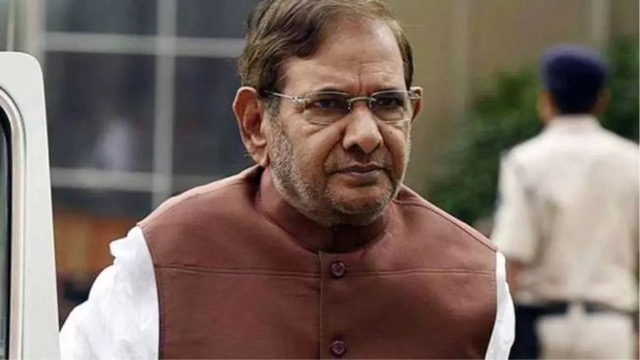
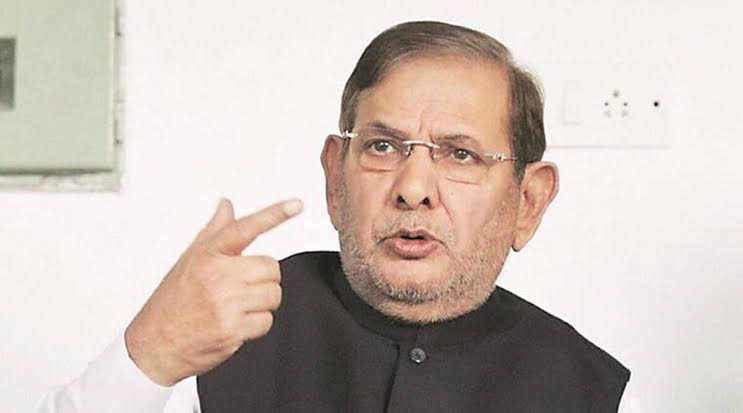
After the demise of former Union Minister Sharad Yadav, Fortis Memorial Research Institute in Gurugram, wherein the deceased leader counted his last breath, released a statement saying that he was brought to the hospital in an unconscious and unresponsive state.
“Sharad Yadav was brought to the emergency at Fortis Memorial Research Institute, Gurugram in an unconscious and unresponsive state. On examination, he did not have any pulse or recordable blood pressure,” Fortis Memorial Research Institute, Gurugram said, releasing a statement.
“He underwent Cardiopulmonary Resuscitation (CPR) as per Advanced Cardiovascular Life Support (ACLS) protocols. Despite best efforts, he could not be revived and was declared dead at 10.19 pm. We would like to convey our deepest condolences to his family,” it added.
Sharad Yadav passed away on Thursday, informed his daughter Subhashini Sharad Yadav through a social media post.
Raj Kamal Rao, Son in Law of Sharad Yadav told ANI that he was rushed to the hospital following cardiac arrest.
“He had a cardiac arrest, we took him to the hospital. After reaching there, doctors declared him dead. He had kidney issues and was on dialysis. His body will be taken to his native village in Madhya Pradesh where last rights will be performed,” Rao said.
Yadav who had launched his own party Loktantrik Janata Dal merged with Lalu Yadav’s outfit RJD in March 2020 which he said was the “first step towards a united opposition”.
Former Bihar Chief Minister Lalu Prasad Yadav condoled the demise of former Union Minister and socialist leader Sharad Yadav in a video message from Singapore.
Posting a video message for the deceased leader on Twitter, Lalu Yadav from his hospital bed in Singapore where he is recuperating from a kidney transplant surgery, said, “I am saddened to hear the news of big brother Sharad Yadav’s death. He, besides late Mulayam Singh Yadav, Nitish Kumar and myself learnt politics of socialism from Ram Manohar Lohia and Karpoori Thakur.”
“On many an occasion, Sharad Yadav and I fought with each other. But our disagreements never led to any bitterness,” Lalu Yadav added.
Prime Minister Narendra Modi also expressed condolences over the demise of veteran politician and founder-member of Bihar’s ruling Janata Dal-United (JD-U) Sharad Yadav.
Taking to Twitter, PM Modi said, “Pained by the passing away of Shri Sharad Yadav Ji. In his long years in public life, he distinguished himself as MP and Minister. He was greatly inspired by Dr Lohia’s ideals. I will always cherish our interactions. Condolences to his family and admirers. Om Shanti.”
Sharad Yadav was a former union minister in various governments.
Sharad Yadav had formed Loktantrik Janata Dal in 2018 miffed with Janata Dal (United) returning to an alliance with the BJP in Bihar.
(This news report is published from a syndicated feed. Except for the headline, the content has not been written or edited by OpIndia staff)
Veteran Rashtriya Janata Dal leader Sharad Yadav passed away on Thursday, informed his daughter Subhashini Sharad Yadav through a social media post.
Yadav who had launched his own party Loktantrik Janata Dal, merged with Lalu Yadav’s outfit RJD in March 2020 which he said was the “first step towards a united opposition”. He was a former union minister in various governments.
Sharad Yadav had formed Loktantrik Janata Dal in 2018 miffed with Janata Dal (United) returning to an alliance with the BJP in Bihar.
This news report is published from a syndicated feed. Except for the headline, the content has not been written or edited by OpIndia staff)
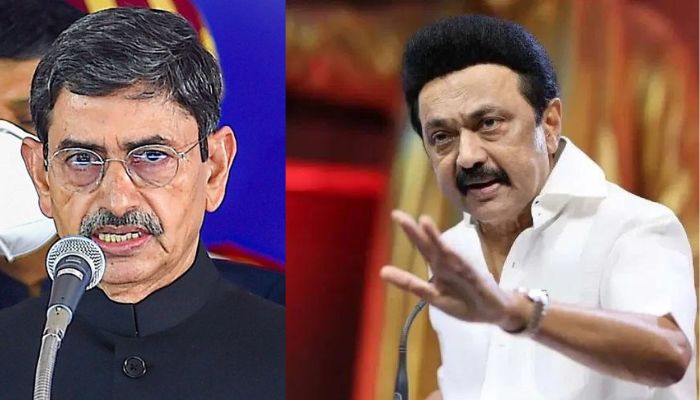
The clash between the Tamil Nadu state government and Governor RN Ravi has reached to a flash point. From Tuesday, 10th January 2023, workers of the ruling party DMK are protesting on the streets against the governor. Though the reason behind these protests is said to be the alleged insult of Ambedkar and Periyar by the governor during his address to the state assembly, there are some more dimensions to the dispute between the government of the southern state and the governor.
On Monday, 9th January 2023, governor RN Ravi addressed this year’s first session of the Tamil Nadu state’s legislative assembly. A paragraph of the printed copy of his speech mentioned Ramaswami Periyar, Dr. BR Ambedkar, K Kamaraj, and CN Annadurai. It also mentioned the so-called Dravidian model of government. The governor skipped that paragraph while delivering the speech.
The paragraph he skipped read, “Following the principles and ideals of stalwarts like Thanthai Periyar, Annal Ambedkar, Perunthalaivar Kamarajar, Perarignar Anna and Muthamizh Arignar Kalaignar, this government has been delivering the much acclaimed Dravidian Model of governance to its people.” At this time, chief minister MK Stalin immediately raised the issue and condemned the governor. After this, the governor left the session.
It is notable that the first session of the Assembly held every year begins with the Governor’s address. This provision is in force under 176(1) of the Constitution. The state cabinet expected the governor to read out the speech prepared by the cabinet. The Governor skipped some portions while speaking in the House. It was objected to by chief minister Stalin. Stalin moved a resolution that the official address prepared by the state cabinet would be on the table of the House and it was passed. As a result, the speech made by the governor was not recorded in the assembly.
DMK cadres, allies, members of Tamil outfits, and students’ organizations held protests against the governor at several places after this incident. Effigies of RN Ravi were burnt in some places. Posters criticizing the governor were pasted on walls in other places. Chief minister MK Stalin is reported to have asked the party workers to restrain from attacking the governor.
The tussle between the state government and the governor, however, continued even after the governor’s address in the assembly house. Governor RN Ravi, while interacting with a batch of civil services aspirants who have cleared their Civil Services (Main) Exam and were looking forward to their interviews, expressed his disagreement with the Tamil term ‘ondirya arasu‘ used by the state government to denote the union government.
RN Ravi said he was fine with people using the term “Union government” to refer to the Government of India, but he felt the term being translated into Tamil as ‘ondirya arasu‘ was not acceptable. He said that this term referred to a sub-district, sub-divisional level structure in the hierarchy and was used for the Union government perhaps with an intention to belittle and be disrespectful to the Union government.
The governor made these remarks while addressing a query from a UPSC-aspirant candidate on how to answer the question on the conflict between the central government and the state government. It is notable that the Tamil term ondirya arasu means United Government and not the Union Government. Ever since the DMK government has taken over in Tamil Nadu, it is using this Tamil term to address the central government in all communications. This decision by the government has attracted a lot of criticism.
Governor RN Ravi said, “I have used the term “Union government” often and there is no confusion about the fact that India is a Union of the States. The problem in Tamil Nadu is because the term ‘ondirya arasu‘ is used in a politically overloaded manner in a political game of playing down the importance of the Union government.”
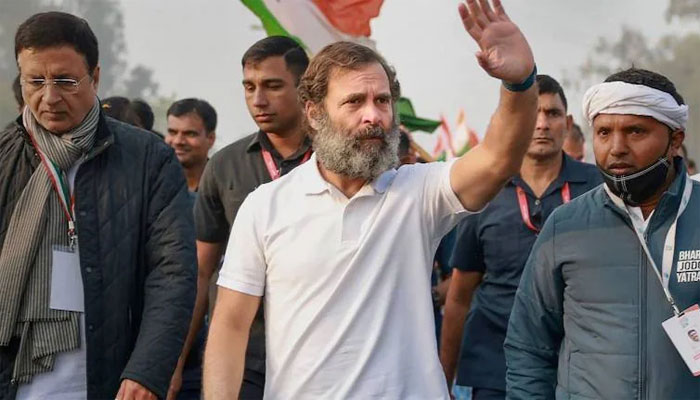
Rahul Gandhi’s Bharat Jodo Yatra is moving ahead towards its final leg that is expected to end on January 30 in Kashmir with a mega event. As per reports, four people have died till now during the Yatra that is aimed at improving the image of Rahul Gandhi.
कांग्रेस सेवा दल के महासचिव, कृष्णकांत पांडे जी का निधन पूरे कांग्रेस परिवार के लिए बहुत दुःखद है। उनके प्रियजनों को मैं अपनी गहरी संवेदनाएं व्यक्त करता हूं।
आज, यात्रा के दौरान अंतिम समय में उन्होंने हाथों में तिरंगा थामा था। देश के लिए उनका समर्पण हमें सदा प्रेरणा देता रहेगा। pic.twitter.com/VvC1O5ZJfh
Senior Congress leader and General Secretary of Congress Seva Dal, Krishna Kumar Pandey, died at the age of 75 during Bharat Jodo Yatra on November 8, 2022. As per reports, he was walking with Rahul Gandhi in the district of Nanded, Maharashtra, when he collapsed on the road. He was carrying the Tricolour earlier during the Yatra. At one point, he handed over the Tricolour to another person and collapsed after 15 minutes.
Pandey was rushed to the hospital. He has been declared brought dead. His body was brought back to the campsite and later handed over to his son Sheelaj Pandey who was also part of the Yatra.
Just four days after the demise of Krishna Kumar Pandey, on November 12, 2022, another person died during Yatra. As per reports, a 62-year-old Congress worker from Tamil Nadu, identified as Ganesan Ponraman of Thanjavur, was hit by a truck in Nanded, Maharashtra. When the incident happened, he was walking back to Pimpalgaon Mahadeo village in Ardhapur tehsil for the night camp. He was hit by a truck at 8:20 PM. Reportedly two ‘Bharat Yatris’ were hit. 30-year-old Sayayul was also hit and sustained minor injuries.
On November 25, 2022, a Sub-Inspector (SI) identified as Bhupendra Singh Gurjar, who was rehearsing for Bharat Jodo Yatra in Ahar-Malwa, was hit by a car. As per reports, a car driver drove towards the police convoy and hit him. Gurjar succumbed to his injuries. The incident took place in front of the Soyatkala Police Station. A case was registered, and the police seized the vehicle.
On December 3, 2022, Congress worker 55-year-old Mangilal Shah of Zirapur, district Rajgarh, Madhya Pradesh, died of a heart attack. He was on his way to join Bharat Jodo Yatra. As per reports, he was on his way to attend the Yatra in Susner. On the way, he suffered a heart attack and was rushed to the hospital, where doctors declared him brought dead. The doctors wanted to conduct a post-mortem. However, Shah’s supporters took the body for the last rites.
An Indian woman has claimed that a Pakistani High Commission employee had sought sexual favours from her in exchange for issuing a visa to travel to Pakistan. The official allegedly touched her inappropriately and asked questions about her sexuality. He also asked her to make anti-India comments on social media in exchange of getting a Pakistani visa.
According to a report by Times Now, the woman, a professor, alleged that the Pakistani official held her hand and asked her if she was married. She also alleged that the staffer told her that they can marry four times, if bored.
Indian woman alleges sexual harassment by a Pakistani officer inside High Commission in Delhi in March 2022.
The woman said, “I went to Pakistan High Commission in New Delhi in March 2021 and June last year. I was asked to wait in a lounge and then after some time, I was told that a visa cannot be granted as the then Pakistan government was not stable as a no-confidence motion was passed against the then prime minister Imran Khan. When I was leaving the office, a person, who identified himself as Asif, approached me and said that ‘I would have granted a visa to you if you had come to me’ and asked me to go back to the lounge and wait there.”
She added, “He later called me to another room in the same corridor and I sat there. He (Asif) said that a visa officer will come by 2 pm. Then he started talking to me in general about my visa requirement, and I kept answering. Then he asked if I was married which was a generic question and I replied ‘no sir I’m not married’, then he asked ‘why? what happened?’ He then asked ‘what do you do to fulfil your sexual desire’. I got a little uncomfortable.”
The woman further alleged, “He also asked do you have somebody to have sex with, do you have somebody with whom you go out, can you have an extramarital affair. I got up and asked him to call the visa officer.”
The woman added that the Pakistani official had urged her to write comments on social media against India, Prime Minister Narendra Modi and Kashmir. She said that she wanted to leave the room when the officer started the ‘pervert’ talks, but he continued for around 20 minutes before she could leave. When she wanted to leave the room, he hold her hand and asked her to stay back, continuing with his questions about her sexuality. She said she want to leave, but he insisted that she should continue. After around 20-25 minutes, she was able to exit the embarrassing situation.
The woman had applied for a Pakistani visa after she was sponsored to visit a gurdwara in Lahore to attend an event. She was also scheduled to deliver a lecture at a different venue. The woman has written a letter to External Affairs minister S Jaishankar detailing the incident and seeking justice.
On Thursday, 12th January 2023, it was widely reported that Union Minister Ashwini Choubey faced violent protests in Buxar, Bihar. Reportedly, angry farmers protesting against the upcoming Chausa thermal power plant in the area threw stones at the minister’s convoy. This happened a day after farmers had torched several vehicles at the project site.
But the minister has denied the reports, saying there was no attack on him.
Union Minister Ashwini Kumar Choubey reached Banarpur in Buxar-Chausa on Wednesday to talk to farmers after the arson at the thermal power plant. Choubey is also an MP from Buxar. Initially, he was giving a speech without any incident. But after some time the crowd gathered later became furious, and the minister had to face people’s anger erupted on him. The farmers said that they have not come to listen to his speech, and started sloganeering against him.
Soon the situation escalated, and it was decided that it is better to leave the spot. Accordingly, the union minister left the venue, but when his convoy started to leave, angry protestors blocked the vehicles. After that, stones were reportedly hurled at the convoy. However, he was securely evacuated from the spot and nobody was injured in the incident.
However, the minister has played down the incident, saying there was no attack on him, and he talked to hundreds of people on the spot. He called it a false rumour and said that he spent an hour with thousands of people. He denied that there was any stone pelting on his convoy, and said that the stones were actually pelted against the Nitish Kumar government for the police action.
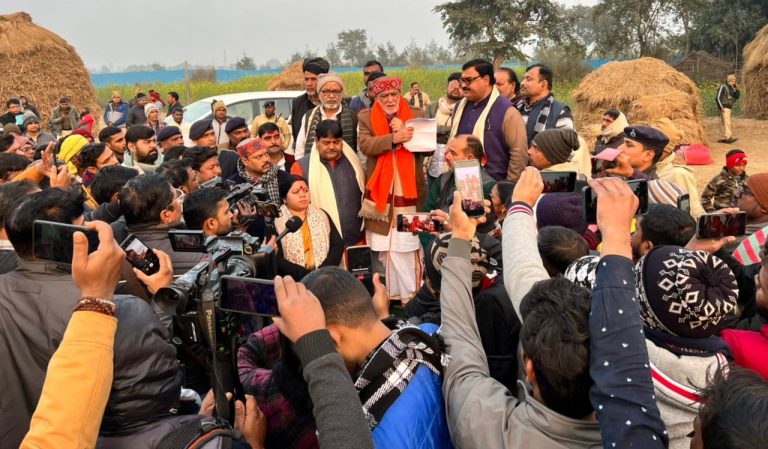
He also posted a series of tweets with photographs showing him talking to a large number of people in Buxar. He criticised the Nitish Kumar government for police action against the protestors and assured that farmers will get their due. He questioned why the government is not revising the compensation rate when the power plant is ready to pay enhanced compensation for the acquired land.
आज बक्सर के बनारपुर गांव में पुलिसिया जुल्म के शिकार किसान परिवार के परिजनों से मिला। उन्होंने आपबीती सुनाई। नीतीश बाबू की पुलिस अपराधियों को देख भाग खड़ी होती है और किसानों के घर में घुसकर तांडव नृत्य करना अपनी बहादुरी समझती है। पुलिस की बर्बरता निंदनीय है। (1/3) pic.twitter.com/VKraVajR0d
In Buxar, Bihar, farmers are demanding more compensation for the land acquired for a thermal power plant of The Sutlej Jal Vidyut Nigam (SJVN) at Chausa village in Buxar. Farmers have been protesting and demanding better compensation for the land for more than 86 days.
On Tuesday, the police arrested some protestors. After this, the farmers opened a front against the police on Wednesday. Angry farmers went on a rampage and there was a situation of fierce confrontation between the police and the farmers. The formers torched several vehicles, a cabin and some machines. They also attacked several policemen, and around a dozen cops were injured.
Today, Buxar MP Ashwini Kumar Choubey came to meet them to enquire about the issue. When Ashwini Choubey was giving his speech among the agitating farmers, some of the farmers asked him where he was for so many days. Journalists also asked the same question to the Union Minister. The farmers started shouting slogans against Ashwini Choubey. Seeing the fierce atmosphere among the farmers, Ashwini Choubey started to leave. But the farmers threw stones at the convoy while raising slogans against Ashwini Choubey. After this, the security personnel surrounded them, and minister Ashwini Choubey was rescued from Banarpur.
The 1,320-MW Buxar thermal power plant is a coal-based plant that has been under construction in Chausa since 2013. Larsen & Toubro Limited is constructing the plant at a cost of Rs 7000 crore. The plant is scheduled to become operational in this year.
On Thursday, January 12, the Bombay High Court petition ordered the Maharashtra government to reply to a plea filed by Bollywood actress Anushka Sharma that challenges an order issued against her by the sales tax department for tax recovery for the years 2012-2013 and 2013-2014. The order was issued by the Mazgaon sales tax deputy commissioner under the Maharashtra Value Added Tax (MVAT) Act.
A bench comprising Justice Nitin M Jamdar and Justice Abhay Ahuja was hearing Anushka Sharma’s plea that the assessing officer had incorrectly levied sales tax on the fees she received for endorsements and anchoring award functions. For 2012-13, the authority levied Rs 1.2 crore in sales tax (including interest) on Rs 12.3 crore received by Anushka Sharma. Similarly, sales tax of Rs 1.6 crore was levied on her for the Rs 17 crore she received in 2013-14.
In her plea, the actress also asked the court to stay the recovery of the amount related to the tax levied in the impugned orders. The petition also requested an interim injunction to prevent the assessment officer from issuing orders for the following period until 2017.
According to Sharma’s petition, she worked as a performer in films and at awards shows as part of a three-party agreement with her agent, Yashraj Films Pvt Ltd, and producers or event organizers.
The assessing officer, however, “erroneously” noted that Sharma had acquired copyright through endorsements and anchoring award functions, and had sold or transferred it. As a result, sales tax was levied on product endorsements and hosting award ceremonies rather than on film consideration.
Sharma’s counsel Deepak Bapat, however, stated that the show’s producers have always owned the copyright to the respective videos. He added that because the copyright is owned by the producers, Anushka could not sell or transfer it.
Furthermore, the actress claimed that an actor who has played a role in a film cannot be called the film’s creator or producer, and thus does not own the film’s copyrights.
“The performer’s rights are not copyrights and they are not capable of being transferred,” the actress said.
Notably, Sharma had earlier filed pleas through her tax consultant Shrikant Velekar last month. However, a bench comprising Justice Jamdar and Gauri Godse disposed of the plea and slammed the actress for filing the plea through her taxation consultant instead of filing it by herself.
In an order dated 15 December 2022, the bench said, “There’s no reason shown as to why the petitioner cannot file these petitions on solemn affirmation.”
Following this, Sharma withdrew her plea and filed a fresh plea in her own affirmation. Granting time to respond to Sharma’s plea as sought by Additional Government pleader Jyoti Chavan, the court posted the matter for further hearing on February 6.
On January 11, the members of the Sindhi community in Indore submitted over 80 Shri Guru Granth Sahib at Gurudwara Imli Sahib. The holy scriptures were placed in Sindhi temples for decades. The Sindhi community’s heartbreaking decision came as an aftermath of the altercation between Nihang Sikhs and members of the Sindhi community at a Sindhi Gurudwara in Indore. The Sindhi community took the decision after a group of Nihang Sikhs had demanded to remove idols from the temples where the Guru Granth Sahib is kept.
Senior members of the Sindhi community brought the Granth to the Gurdwara Imli Sahib at Jawahar Marg and handed over the same to the Gurdwara Management Committee with respect.
The matter started when a group of Nihang Sikhs from Amritsar visited the Sindhi Samaj temple on Annapurna Road in Indore, where the Guru Granth Sahib is also worshiped. The Nihang group expressed displeasure over the fact that their holy book was kept at a place where idols are worshipped and called it sacrilege of the holy book.
The Nihang Sikh group even reached the police station, alleging that Guru Granth Sahib is being disrespected at the Sindh temple. They claimed that when the Guru Granth Sahib is worshipped at a place, it becomes a Gurudwara, and therefore that place must follow rules applicable to Gurudwaras.
They further demanded the Sindhi temples where the Sikh holy book is kept must be declared as Gurudwaras, the Granth should be worshipped with full dignity, and the idols from the temples should be removed. They said that their Granthis will come to the Sindhi temples to worship the Granth. If this demand is not accepted, then the Granth should not be kept in the temples, the Nihangs further added.
After this, a Nihang Sikh group visited a Sindhi Gurudrawa in Rajmahal Colony, and took away the Granth from there. They then issued an ultimatum, asking the Sindhi community to deposit the holy book by January 12. There were even some arguments with the Nihang group, with Hindu Jagaran Manch members accusing them of breaking the society.
After this, saints of the Sindhi community held a meeting and elected a panel of five members to decide the matter. After detailed deliberation, they decided to remove the Guru Granth Sahib from Sindhi temples and deposit with the Gurudwara, as per the demands of the Nihangs.
The Sindhi committee said that they are accepting the decision of the Nihang committee and will get Shri Guru Granth Sahib deposited at the Gurudwara by January 12. They said that there is no need to have a dispute with the Nihang Sikhs, and it is better to remove the Granth from Sindhi temples by the given deadline. Accordingly, they deposited the Granth at the Gurudwara on 11 January, a day before the deadline.
It is notable that the Sindhi community is keeping the Granth in their temples for a long time, and it has become a part of their ritual to worship the Granth. The reason for it goes back to several hundreds of years, when most of the Sindh community used to live in present-day Pakistan.
The Sindhi Hindus were greatly influenced by Guru Nanak’s teachings as he had visited the Sindh region and had spread his philosophy in the area. From that period onwards, Sindhi people has been following Guru Nanak and Guru Granth Sahib in their temples. They keep the Granth along with other Hindu scriptures in their temples.
In such temples, the Guru Granth Sahib is kept on one side of the temple, and the idols of all the deities are placed on the other side. However, they worship the Granth as per their own rituals along with other text like the Gita, and not according to Sikh rituals.
Video of Nihang Sikhs entering Sindhi temple emerge
On December 18, 2022, a group of Nihang Sikhs of Shiromani Panth Akali Budha Dal Panjva Takht 96 Crori Chkarvarti visited a Sindhi Temple located in Parshwanath Colony, Indore, Madhya Pradesh. A video of the day has been circulating on social media platforms. In the video, a woman recording it called out Nihangs for barging into the premises without permission. Nihang Sikhs, on the other hand, demanded that the regulations laid down in Sikhism to establish Shri Guru Granth Sahib’s Prakash be followed.
When Nihang Sikhs claimed they had the right to enter any Gurudwara, the lady questioned where it was written that it was a Sikh Gurudwara. Nihangs asked her to talk politely, to which the woman said she got agitated as Nihangs were recording a video.
Nihang said, “My King [Shri Guru Granth Sahib] has brought me here. Wherever Guru Granth Sahib is established, it automatically becomes a Gurudwara.” He added, “Every house, temple and other premises where there is Guru Granth Sahib is our home.”
A few days ago, Nihang Skhs entered Tikana & began harassing Sindhi women, interfering with their religious practices, & dictating their rules. They forced Sindhi Hindus to choose between worshipping Hindu gods or SGSS
When the woman asked his name, he said, “We are Nihang Fauj. We do not have personal names”. Then they identified themselves as Nihang Singh Fauj (Nihang Army) of Shiromani Panth Akali Budha Dal Panjva Takht 96 Crori Chkarvarti.
While the woman continued to ask their personal names, Nihang Singhs emphasised “Maryada” or “Dignity” not being maintained by Shri Guru Granth Sahib.
This was the point the matter got further heated, and one of the Nihangs tried to turn the woman’s mobile towards Granth Sahib, established at the premises. The woman called him out for touching her. The woman again questioned how they entered the Temple. Nihang pointed out Shri Guru Granth Sahib kept there was without Chandoa Sahib and Nishan Sahib. Chandoa Sahib is a canopy made of highly decorated cloth that covers Shri Guru Granth Sahib from the top. Nishan Sahib is the holy symbol of Sikhism.
The viral video on social media ends here. What happened further is not in the videos circulated on social media.
The priest at the Temple intervened and tried to calm the woman and Nihang Singhs down. Nihang Singh said, “We are established our base here [in Indore]. We came to know that the Dignity of Guru Granth Sahib is not being followed here that is why we came. While the priest tried to stop them from talking to each other, Nihang Singh pointed out that they came only after they were informed that Dignity was not being followed. Notably, when Nihangs went to the Temple, the priest had already completed the rituals for the day. The lady pointed out that once the rituals are complete, they do not open the Holy Books [till the next day], which was echoed by the priest. However, Nihang Singh kept emphasising looking at the Granth Sahib.
Nihang Singh then informed them of the process they had to follow to ensure respect for Guru Granth Sahib. Further in the video, it was decided that the priest would call them the next day and Nihangs would come again and explain everything in writing about keeping Shri Guru Granth Sahib at the Temple. Changes that they wanted the Temple to bring included increasing the height of Takht. In this particular conversation, there was no discussion about removing the idols.
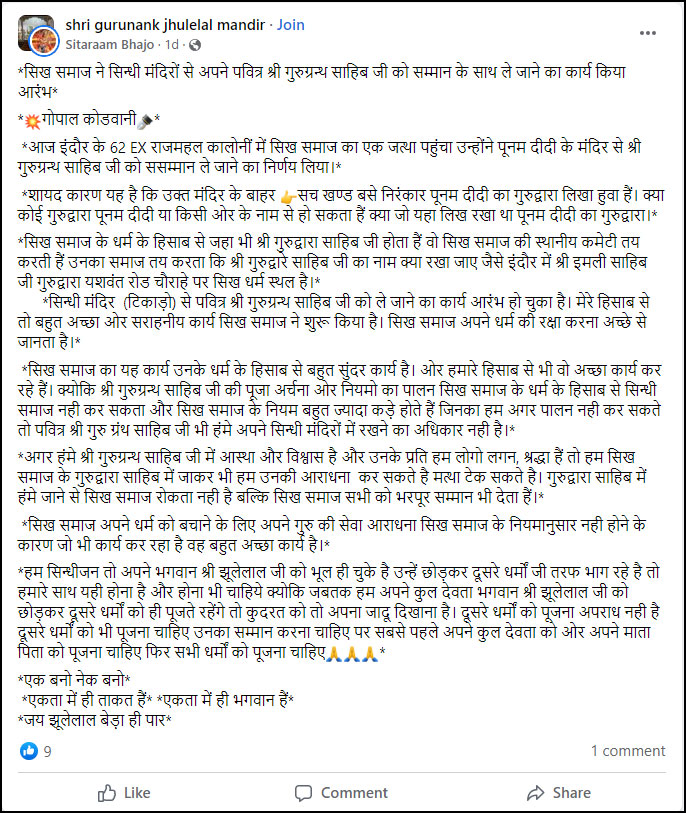
As per reports and social media posts, the group of Nihang Singhs went to other Sindhi temples over the days. On December 19, they went to Poonam Didi Ka Gurudwara, located at 62 Extension, Rajmahal Colony, Indore. A small clip available on social media shows that they took Shri Guru Granth Sahib away from that Temple.
Source: Facebook
In the video, a senior Nihang Singh allegedly told the Hindu Sindhis not to “practice Hindu rituals” and follow only one God.
‘It is heartbreaking said members of the Sindhi community
OpIndia reached out to members of the Sindhi community. Speaking to OpIndia, Prakash Rajdev, who was part of a 5-member committee of the Sindhi community, explained the matter. He said, “We, the members of the Sindhi community, have faith in Shri Guru Granth Sahib and worship Sikh Gurus. We have Guru Granth Sahib at Sindhi Thikanas (Thikana is Sindhi Temple) along with idols of Hindu Gods. When partition took place in 1947, members of the Sindhi community brought their Guru Granth Sahib with them safely. Around 30-35 per cent of Sindhis visit Thikanas and keep Path on celebrations and deaths. It has been going on for centuries.”
He then explained the altercation between the Sindhi community members and Nihang Sikhs on December 18. He said, “We learned about the matter from social media. We had a community meeting to decide what to do next. We also approached Sikh religious leaders to discuss it. They asked us to follow the procedure per the regulations to keep Shri Guru Granth Sahib at our temples. They asked us to remove the idols, establish Nishan Sahib, and follow the process.”
This is where the problem started. The religious leaders of the Sindhi community objected to the demand to remove idols from the temples. He said, “We told them we would maintain the Dignity but not remove the idols. It led to dissent between us. Then our religious leaders decided that we will submit all Guru Granth Sahib to Imli Sahib Gurudwara.”
He added that they did not want any conflict with Sikhs. He said, “We are a simple business community. We do not want any conflict with the Sikh community. We are brothers and do business together. You can understand what a tough situation was for us as armed Nihang Singhs confronted us. As there was no middle way, we decided to submit Guru Granth Sahib to Gurudwaras.”
Rajdev pointed out that the video clip circulated on social media does not give the full details of the situation. He said, “What is being circulated on social media and what happened are different. When we saw the full clip, there was no reason for conflict. It was clear that they wanted us to follow the rules, and we were more than happy to do so. The conflict happened when we were asked to remove the idols.”
“It is a heartbreaking situation for the members of the Sindhi community,” he added.
Speaking to OpIndia, Ravi Bhatia, Indore Head of Bharatiya Sindhu Sabha, said, “When the Nihang Sikhs came, they said ‘remove these stones’. The Sindhi community members objected to how they said ‘Patthar hatao’ as they were idols of Bhagwan Ram and Bhagwan Krishna. It led to an altercation.” He added when they met the members of Guru Singh Sabha, they were told that the regulations were not being followed. He said, “We told them it might be possible that we are not maintaining Dignity. Tell us what to do, and we will.”
Bhatia said, “The talks were on, but the Nihangs moved ahead and submitted a memorandum to the local police that they will remove Guru Granth Sahib from our temples on January 12. We thought that as they gave us a request, it would be better to submit Guru Granth Sahib ourselves, and we submitted most of them on January 11.”
The Nihang Singh group that went to the Temple published several videos on social media. In a video published on January 9, Guru Granth Sahib from the first Temple was submitted in Gurudwara Imli Sahib, Indore.
Further social media posts and reports suggest that the remaining Guru Granth Sahib were submitted on January 11, and around 12 remaining were submitted on January 12, as told by the members of the Sindhi community.
‘They can take Guru Granth Sahib Back’
Speaking to OpIndia, Jasbir Singh Gandhi, Chief Secretary, Shri Guru Singh Sabha, said, “We do not have any conflict with the Sindhi community. Gurbani is for everyone, irrespective of religion. The only thing is they must follow the regulations to keep Guru Granth Sahib. Once they follow the instructions and make arrangements as informed by the Sikh community, they are free to take back Guru Granth Sahib from the Gurudwara.”
After the social media outrage over the matter, Nihang Sikhs released a video statement. Paramjeet Singh, Jathedar, Budha Dal, Ludhiana, said, “We got information from Indore that a Sindhi family has kept Shri Guru Granth Sahib in a temple at their home, but they were not maintaining Dignity as per the norms. We sent members of Budha Dal Indore to check. They found many discrepancies at the Temple. The main issue was the seat of the head of the house was above Guru Granth Sahib, which hurt us. When we talked to the leaders of the Sindhi community, they also agreed that Guru Sahib should have the highest seat. The Sindhi community have a lot of faith in Guru Bani, and we understand their sentiments. Now, Guru Granth Sahib has reached Gurudwara. There is no reason to further the matter.”
He further added if anyone wants to keep Guru Granth Sahib at home, he or she should do it only if they or can maintain Dignity; otherwise, it must be avoided. “If they can maintain the Dignity of Shri Guru Granth Sahib, they can take them back,” he added. However, he pointed out that the members of Buddha Dal and Shri Guru Singh Sabha will ensure everything is as per the regulation before letting them take Guru Granth Sahib back. “Let’s not make it a matter of Hindu-Sikh. All religions are equal. Guru Sahib sacrificed their lives for everyone.” He then requested the members of the Sikh community to maintain peace.
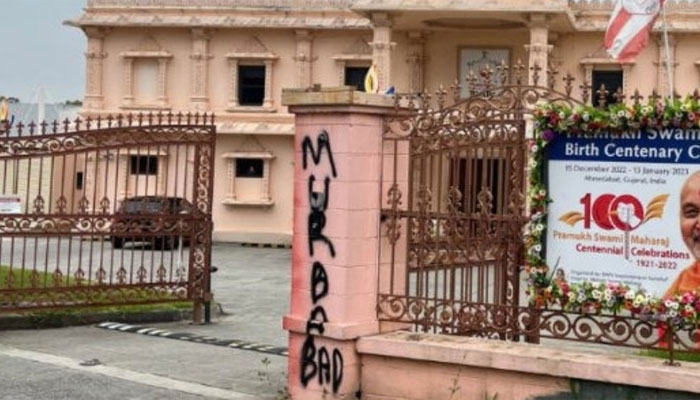
On January 12 (local time), the Hindu community living in Melbourne woke up to a shock as the BAPS Swaminarayan Mandir, located in the northern suburb of Mill Park, Melbourne, was vandalised by Khalistani attackers. The walls of the temple were defaced by spray painting anti-India and anti-Narendra Modi slogans.
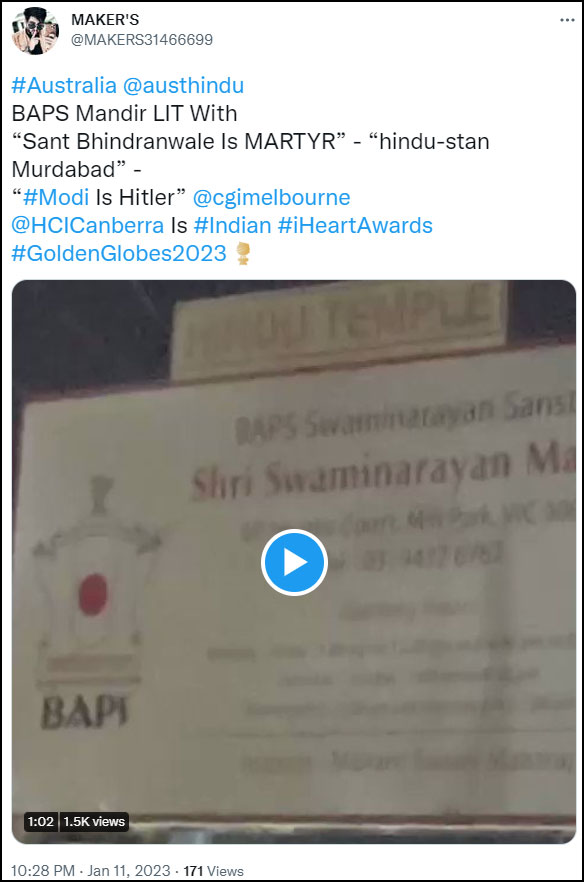
As per a report by Australia Today, a devotee identified as Patel witnessed the vandalism when went to the temple like he does every day. On Thursday, when he reached the temple in the morning, he saw the walls defaced with graffiti allegedly made by Khalistanis. As per photographs published in the reports, slogans such as “Hindu-stan Murdabad”, “Modi Hitler” were written on the outer walls of the temple.
Furthermore, Khalistanis also painted praises of Khalistani terrorist Bhindranwale on the wall and called him a ‘Martyr’. The text ‘Sant Bhindranwale is Martyr’ was written in one place, leaving no doubt that the temple was vandalised by Khalistanis.
In a statement to Australia Today, Patel said, “I am angry, scared and dismayed by the blatant display of religious hatred towards the peaceful Hindu community by Khalistan supporters.”
BAPS Swaminarayan Mandir said that they have informed the authorities regarding the incident.
In a statement, the BAPS Swaminarayan Mandir administration said, “We are deeply saddened and shocked by these acts of vandalism and hate. BAPS has always been committed to peaceful coexistence and dialogue with all faiths and peoples. We have apprised the authorities and are cooperating fully with them. We offer our prayers for peace and harmony and will provide a fuller statement in due course.”
In a statement, Markand Bhagwant, President of the Hindu Council of Australia’s Victoria, said, “Any kind of hatred and vandalism against places of worship is not acceptable, and we condemn it. And this kind of activity is in violation of the racial and religious tolerance act of victoria. We demand Victoria Police and Premier Dan Andrews to take strong action against the perpetrators.” He further added that his group would raise the matter with the Victorian Multicultural Commission and the Multicultural Minister of Victoria, as the death threats to Hindus are a serious matter.
In a statement, Liberal MP of the Northern Metropolitan Region, Evan Mulholland, said, “This vandalism is deeply distressing for Victoria’s peaceful Hindu community, especially at this holy time. Religious hatred of this kind has no place in Victoria.”
Member of Mill Park and Minister in the Victorian Government, Lily D’Amnrosio, said, “there is no place for such attacks in our community” She said, “I have reached out to the Mill Park Mandir today to express my concern with the attack on the temple. The Mandir is a very important site for worship across broader Melbourne and is used to host many events that grow a better understanding of the rich diversity of our community amongst all of us. I have visited on many occasions and hope that the appropriate authorities can identify those responsibly and bring them to account.”
India Today quoted a journalist Amit Sarwal saying, “The Hindu community in Melbourne has lodged a formal complaint with the police and MPs. The cultural minister also belongs to the same place where the incident took place. This has been going on since last year. The Kerala Hindu association has also condemned the incident. There were messages against Prime Minister Narendra Modi painted on the walls of the temple. Several Indian and Sikh leaders are distressed by this whole incident.”
Vishva Hindu Parishad’s Australia chapter has also condemned the attack. The statement read, “Such hate crimes by divisive anti-social Hindu phobic extremists against the Hindu community threaten to disrupt peace in our society and raise questions about whether enough is being done to address the alarming rise in anti-Hindu attacks by governments.”
BAPS Swaminarayan Sanstha Australia issued a statement and appealed for peace. The statement read, “Appeal for peace, Mill Park, Melbourne, Australia
We are deeply saddened by the anti-India graffiti at the gates of the BAPS Shri Swaminarayan Mandir in Mill Park, Melbourne, Australia, by anti-social elements. Like all temples of BAPS worldwide, the BAPS temple in Mill Park is an abode of peace, harmony, equality, selfless service, and universal Hindu values.
At this time, His Holiness Mahant Swami Maharaj, the spiritual leader of the BAPS Swaminarayan Sanstha, has prayed for peace and unity and has appealed to all devotees and well-wishers to maintain peace.
We are thankful to the appropriate authorities, including the governments of Australia and India, as well as local community organisations, for their continued support. BAPS Mandirs across Australia are symbols of a thriving multicultural society which nurtures Australian values of respect, mateship and tolerance.
Let us all join in worldwide prayers, in private and at home, that God blesses and guides us all to continue to do good and think good of all.“
The attackers also made a video of the attack and published it on social media. They called it a brave act.
Source: Twitter
Notably, in September last year, BAPS Swaminarayan Mandir in Canada was also attacked by Khalistanis. India strongly condemned the attack and called for strict action against the accused.
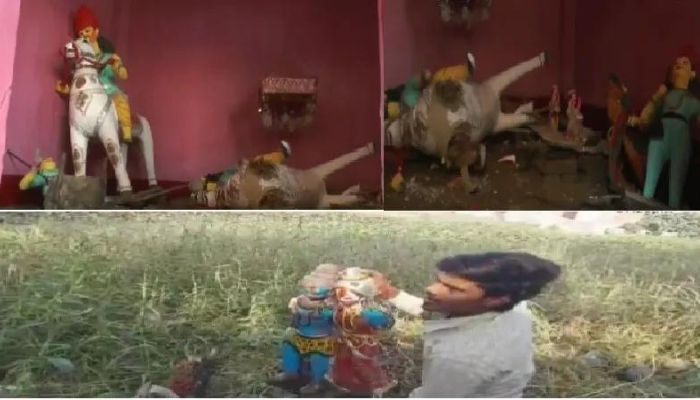
An incident of vandalism of a temple has been reported from Darbhanga, Bihar. This temple is in Azam Nagar mohalla of Vishwavidyalaya police station area. The accused has been identified as Mohammad Chand. He has been arrested by the police after a protest by locals. The incident took place on Wednesday, January 11, 2023.
According to the information received, there is no door in the Brahma Sthan temple located in Azam Nagar mohalla. Mohammad Chand entered the temple and broke the statue of King Shailesh. The idols of gods and goddesses were damaged and thrown into the pond. He then set fire to the puja (worship) material kept in the temple.
Local Hindus were outraged by this incident and staged protests. The police reached the spot and arrested the accused. Station House Officer Satyaprakash Jha pacified the angry people and said that the guilty will be severely punished. The police also recovered the idols from the pond and kept them in the temple premises.
दरभंगा में मोहम्मद चांद नाम के एक युवक ने मंदिर में घुसकर हिन्दू देवता की प्रतिमा को खंडित कर आग लगा दिया | pic.twitter.com/PSVQGTr3mA
It has been informed by police that there is a dispute over the way to the temple. For this reason, the gate of the temple has not been built. Aggrieved by the incident of vandalism of idols in the temple, locals have demanded that a gate be installed in the temple.
According to the report of Dainik Jagran, Vishwa Hindu Parishad activists and local people have set up a temporary gate in the temple. Madhukar, district co-minister of the VHP, has demanded the district administration to demarcate the temple and pond to settle the dispute.
A few years ago, there was a loud explosion near the Durga temple in Azamnagar of Darbhanga. The wall and roof of Mohammad Nazir’s house were demolished in this blast that took place in June 2020. People said that the sound of the blast was heard up to an area of about one kilometer.