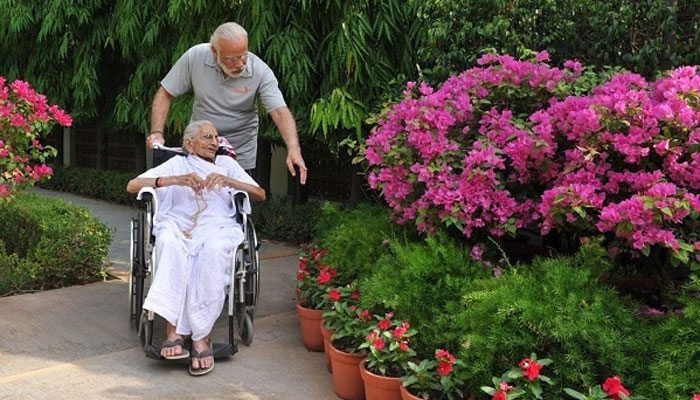
Heeraben, the mother of Prime Minister Narendra Modi, has passed away at the age of 100 years. Heeraben was born on June 18, 1923, in Vadnagar, district Mehsana, Gujarat. She belongs to the Modh-Ghanchi community, and her husband, Damodardas Mulchand Modi, was a tea seller.
Heeraben is survived by five sons, Soma Modi, Pankaj Modi, Amrit Modi, Prahlad Modi and Narendra Modi and a daughter Vasantiben Hasmukhlal Modi. Prior to her husband’s death, she used to live in the family’s ancestral home in Vadnagar. Later, she shifted to Pankaj Modi’s home.
Sharing her picture, PM said, “In Maa I have always felt that trimurti, which contains the journey of an ascetic, the symbol of a selfless Karmayogi and a life committed to values.”
He added, “When I met her on her 100th birthday, she said one thing – Always remember – Work with intelligence, live life with purity.”
शानदार शताब्दी का ईश्वर चरणों में विराम… मां में मैंने हमेशा उस त्रिमूर्ति की अनुभूति की है, जिसमें एक तपस्वी की यात्रा, निष्काम कर्मयोगी का प्रतीक और मूल्यों के प्रति प्रतिबद्ध जीवन समाहित रहा है। pic.twitter.com/yE5xwRogJi
Prime Minister Narendra Modi, who was scheduled to embark on a visit to West Bengal to launch the developmental projects, may join the events through video conferencing as he has left for Ahmedabad after the demise of his mother, according to reports.
Mother-son bond
In an interview, PM Modi said her mother was the pillar of his life and played an important role in his success. PM Modi visited her mother to take her blessings from time to time. In 2016, she visited PM Modi’s official residence at Race Course Road for the first time.
In June 2022, PM Modi wrote a heartfelt letter to his mother on her birthday in which he expressed joy and gratitude at the beginning of his mother’s centenary year and shared memories of his younger days spent with his parents and siblings in Gandhinagar in Gujarat.
“Maa…this isn’t a mere word, but it captures a range of emotions. Today, June 18, is the day my Mother, Heeraba, enters her 100th year. On this special day, I have penned a few thoughts expressing joy and gratitude,” tweeted PM Modi while sharing his deeply felt thoughts dedicated to his mother on her 100th birthday.
He wrote that a mother’s penance shapes a good human being. Her love instils human qualities and empathy in a child, opined the Prime Minister, adding, “A mother is not an individual or a personality, motherhood is a quality. It is often said that the Gods are made according to the nature of their devotees. Similarly, we experience our mothers and their motherhood according to our own nature and mindset.”
Heeraben was hospitalised in December 2022
On December 28, Heeraben’s health deteriorated, after which she was admitted to the hospital only a day after PM Modi’s brother Prahlad Modi met with an accident and got injured. PM Modi rushed to see her on the same day.
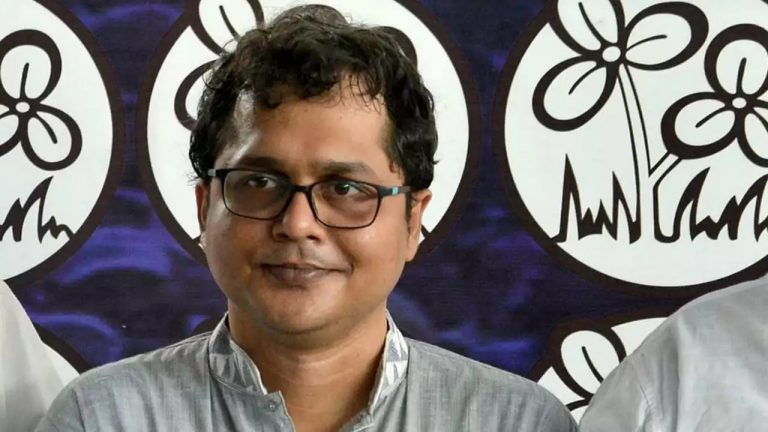
Trouble seems to mount for TMC leader Saket Gokhale as he has been arrested for the third time in a month by the Gujarat Police. According to reports, he was arrested on Thursday evening by Gujarat police from Delhi and is being taken to Ahmedabad by car.
Gokhale is being taken to Ahmedabad by road by the Gujarat Police. He was reportedly picked up at around 8 PM Thursday from the Banga Bhawan at Hailey Road in New Delhi.
As per sources cited by Republic TV, Saket Gokhale, who was once a social media user loyal to Rahul Gandhi before joining TMC, was arrested in a different case involving siphoning of money in the name of activism. The police have found accounts linked to Gokhale in which he was receiving money, which he claimed was being used for legal fees for activism-related cases but was instead being withdrawn by him for personal finance, as per sources. It is pertinent to note that several Muslim activists had also abused Saket Gokhale demanding accountability for the money he was collecting online. It was alleged that all Saket Gokhale does is file online petitions for free, and does not follow up with his petitions in court. Therefore, he does not spend any money on his ‘activism’, and all the money donated to him by Congress workers and supporters goes towards his personal expense.
In December, Saket Gokhale had been released on bail after he was arrested by the Gujarat police over his tweet spreading fake news about Prime Minister Narendra Modi’s Morbi visit. Earlier, an Ahmedabad court had remanded Trinamool Congress (TMC) spokesperson Saket Gokhale to two-day police custody.
Notably, Gokhale had shared a fabricated news report about an RTI query and its response that does not exist. He had claimed that ₹30 crore was spent on PM Modi’s Morbi visit, sharing a news clipping from an unnamed Gujarati newspaper, which was claimed to be Gujarat Samachar. But the government has said that it is fabricated and no such report was published and there is no such RTI reply. Moreover, Gujarat Samachar also clarified that they have not published such a report.
Later in the day, Saket Gokhale was reportedly arrested by Morbi Police immediately after he was released by Ahmedabad police as per the bail order. Another case was registered against him for the fake tweet in Morbi, and accordingly, Morbi police detained him.
If the reports by Republic TV are to be believed, the case in which Saket Gokhale has been arrested appears similar to a case under which Washington Post columnist and self-proclaimed Muslim journalist, Rana Ayyub, is being investigated by Enforcement Directorate. Assets worth Rs 1.77 crores were also attached pursuant to the case.
On October 12, the Enforcement Directorate filed a prosecution complaint against alleged journalist Rana Ayyub in a money laundering case. The complaint was filed under Section 8 of the Prevention of Money Laundering Act, 2002 in a special court in Ghaziabad, in relation to the three fundraising campaigns that Ayyub ran on Ketto but didn’t utilise most of the collected money for stated purposes.
In the prosecution complaint, the ED stated that it had initiated a money laundering investigation on the basis of an FIR registered on 07.09.2021 by the Indirapuram Police Station, Ghaziabad, U.P, under various sections of IPC 1860, Information Technology Amendment Act 2008 and Black Money Act against Rana Ayyub alleging that she illegally acquired funds from the general public in the name of charity by launching fund-raiser campaigns on the online crowdfunding platform ‘Ketto’.
ED also stated that Rana Ayyub is a journalist by profession and received foreign contributions without registration under FCRA. According to the statement issued by ED, the investigation revealed that Rana Ayyub launched 3 fundraiser campaigns on ‘Ketto platform’ starting in April 2020, and collected funds totalling Rs. 2,69,44,680/-, namely:
Help in raising funds for slum dwellers & farmers
Relief work for Assam, Bihar and Maharashtra
Help Rana Ayyub & her team to help those impacted by Covid19 in India.
The ED probe has found that all the money transferred to her personal bank accounts, Rana Ayyub used only around 10.8% of the fund she collected for relief work, and the bulk of the money was kept in bank accounts. The statement said, “Investigation by ED revealed that the funds raised on the online platforms were received in the accounts of her father and sister and subsequently transferred to her personal accounts. Ms Rana Ayyub utilized these funds to create fixed deposits of Rs. 50 lakhs for herself and also transferred Rs. 50 Lakhs in a new bank account. ED investigation revealed that only approx. Rs. 29 lakhs was used for relief work.”
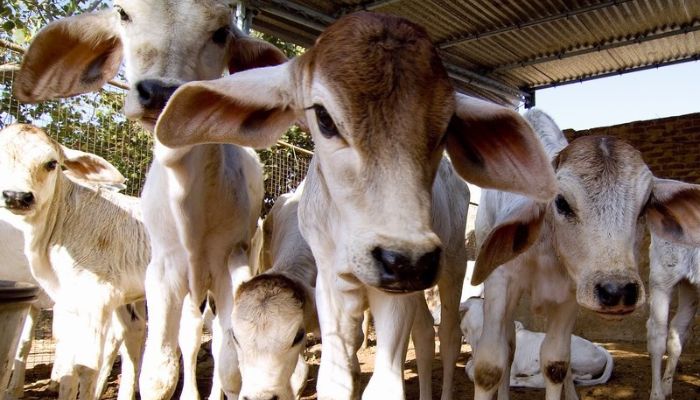
On 29th December 2022, the Telangana High Court directed the state government to provide appropriate finances for gaushalas through the State Animal Welfare Board, emphasising that looking after and maintaining gaushalas is largely the administrative role of the state.
This order was issued by a bench of Chief Justice Ujjal Bhuyan and Justice C. V. Bhaskar Reddy in response to a PIL filed by Bharatiya Prani Mitra Sangh. The PIL was seeking direction to the state government to provide green grass, feed, and fodder, as well as medicines for cows and other animals housed in state gaushalas, and to allocate funds for the same.
The State Government informed the Court in a counter-affidavit that there are about 136 gaushalas in Telangana with 38,229 cattle. In Hyderabad city, there are roughly 40 gaushalas that contain approximately 25,000 cattle.
The government also briefed the Court that gaushalas are usually set up by any person, trust, board, NGO, etc., and are supported by revenues obtained through donations, etc., and that whenever the government was contacted, the gaushalas were provided with veterinary aid for the treatment of cattle in addition to fodder, seed, and so on.
The State Government also told the High Court that Telangana State strictly enforces the terms of the Telangana Prohibition of Cow Slaughter and Animal Preservation Act, 1977. The State Government also underlined that its animal husbandry department provides vital services to livestock, especially animals in gaushalas.
The Court emphasised that the state has a duty to maintain cows and calves, which are commonly housed in gaushalas, taking into account the claims made by the state government and the obligation of Article 48 of the Indian Constitution.
The Telangana State Animal Welfare Board was established by the Telangana government on April 30, 2019, for a term of three years. Its purpose is to assist gaushalas and other animal shelters operating in the state and to provide advice on how to enhance their operations. The State Animal Welfare Board’s tenure had not been extended and the aforementioned three years had passed, the Court observed.
The High Court said in its order, “Either reconstitute Telangana State Animal Welfare Board or extend its constitution for such period as may be deemed necessary. Instead of leaving it to the Board to earn the funds for itself, the State should provide adequate financial assistance to the Board so that it can maintain, manage and look after the gaushalas functioning in the State of Telangana.”
The High Court further said, “It is primarily the executive function of the State to look after and maintain gaushalas, therefore, the State should provide adequate funds to the gaushalas through the board.” The PIL plea was dismissed with a statement that it hoped and trusted the State would take the necessary action in this respect.
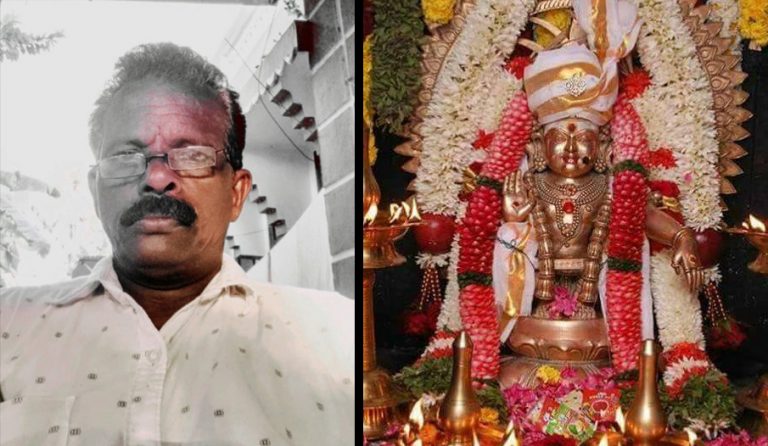
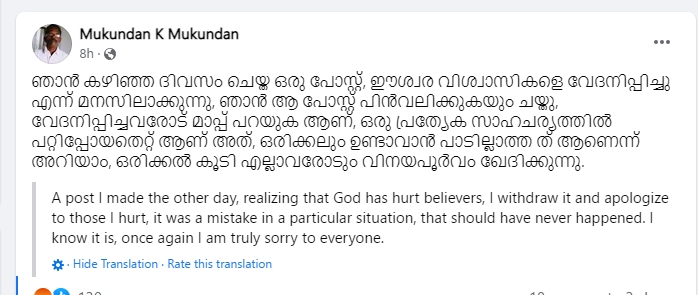
A CPM leader in Kerala has courted controversy by making insulting comments about Lord Ayyappa, inviting outrage on social media. Mukundan K Mukundan, CPM branch secretary of Mundakappadam, had made the blasphemous remarks in a Facebook post, which he deleted and apologised for the same.
In the Facebook post posted yesterday, K Mukundan wrote that Lord Ayyappa was born out of an unnatural relationship between two men. He said that people who worship the deity are frauds.
These comments triggered a massive outrage on the social media platform. Following this, the CPM leader deleted the offending post, and apologised for the same. He said that he realised that his remarks have hurt the sentiments of worshippers of Lord Ayyappa and that he made a mistake in a particular situation that should have never happened.
“I understand that a post I made the other day hurt the believers of Iswara, I retracted that post and apologized to those who were hurt, I was caught in a special situation, I know it should never have happened, once again I humbly apologize to everyone,” Google Translation of his Malayalam post reads.
According to the Hindu scriptures, Lord Ayyappa is the incarnation of the Hindu deity Hariharaputra, who is the son of Lord Shiva and Goddess Mohini, the female avatar of Lord Vishnu. Hariharaputra means the putra or son of Hari or Vishnu Hara or Shiva. But, Vishnu was in the female form of Mohini. Therefore, it is wrong to say that Lord Ayyappa is the son of two men, as Goddess Mohini is female even though she is an avatar of Lord Vishnu.
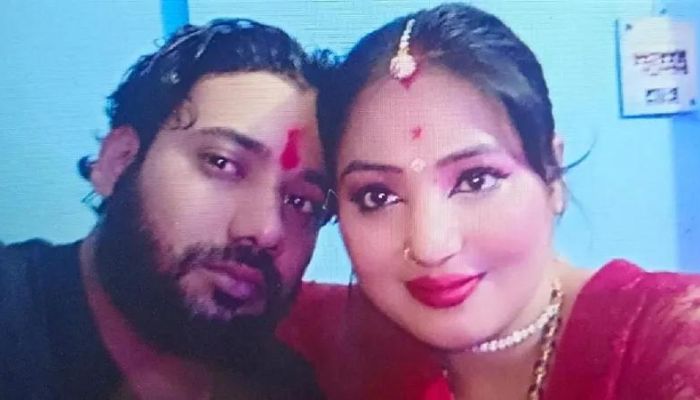
On December 26, 2022, the dead body of a woman was discovered in Ghaziabad, Uttar Pradesh. She was identified as Bhavya Sharma, aged 35. It has now come to light that she was murdered by her current husband Vinod Sharma. Vinod was the third husband of the deceased.
Vinod Sharma stabbed Bhavya after seeing her with her second husband Anees. Police have arrested Vinod for Bhavya’s murder. It has also come to light that Bhavya had changed her religion previously and got married three times.
According to media reports, of the three marriages that Bhavya Sharma entered into, two were to Hindus and one to a Muslim. All three marriages were reportedly love marriages. For these marriages, she changed her religion every time. Bhavya hailed from Sitamarhi in Bihar, but later her family shifted to Siddharth Vihar in Ghaziabad.
For the first marriage, she became Anjali. The first marriage was in 2004 to Yogendra Kumar, a resident of Delhi. They both have a son too. Then in 2017, she married Anees and became Afsana. She has a son named Adil from Anees. After this, in 2019, she married Vinod Sharma of Gurugram for the third time and became Bhavya. Bhavya Sharma, Adil, and Vinod Sharma lived together.
After the body was found in the Vrindavan Enclave of Siddharth Vihar in Ghaziabad on December 26, Vinod first tried to mislead the police. On December 25, Bhavya Sharma returned from Indore, and at night, both of them drank alcohol together. She was found dead in bed on the morning of December 26. The police had found stab marks on the lower abdomen of Bhavya in the post-mortem report. So when Vinod was called again and strictly interrogated, he confessed to his crime.
Vinod told the police that the household expenses were taken care of with Bhavya’s money. Vinod used to do all the household chores from dropping Adil to school while Bhavya was often out for work. Meanwhile, on the night of December 24, Vinod spoke to Bhavya Sharma over a video call, in which he saw her second husband Anees. Anees threatened Vinod to leave Ghaziabad or else he will have to lose his life. Upon hearing this, Vinod became furious. After this, when Bhavya Sharma returned home on December 25, 2022, he killed her as per his plan. At the time of the murder, Vinod sent Adil to collect some goods from the market. By the time Adil came home, all the evidence was erased.
When Adil returned home, Vinod told him, “Your mother is asleep. Don’t disturb her.” After this, Vinod called the Vijaynagar police station and informed them about Bhavya’s death. He felt that the police would not be able to catch him after destroying all the evidence. However, he broke down during police interrogation and confessed to the crime.
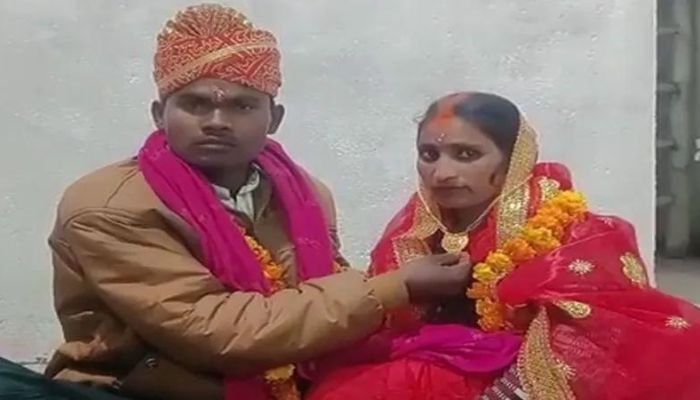
Another Muslim girl from Bareilly, Uttar Pradesh, has married a Hindu. The name of this young woman is Amrina. After converting to Hinduism, Amrina named herself Radhika. She said, “I am married to Pappu. I already had faith in Hindu deities. Now the fear of triple talaq is also over.”
According to media reports, 21-year-old Amrina is a resident of Bijnor. She became Radhika on Monday, December 26, 2022, after performing rituals at the Agastya Muni Ashram temple in Bareilly. After this, Acharya Pandit KK Shankhadhar solemnized her marriage with Pappu according to Hindu rituals. Pandit Shankhadhar had earlier solemnized the marriages of 64 Muslim girls to Hindu youths. Radhika said that her family members were constantly threatening her. But she has left her home, religion, and family for the sake of love. Now she will always remain a Hindu.
Radhika said, “I am an adult. My date of birth on my Aadhaar card is August 9, 2000. Hindus do not give triple talaq. Here you do not know when to get talaq and thrown out of the house. A young woman from our neighborhood was married five years ago. Her husband beat her up and threw her out of the house after divorcing her. I got married of my own free will. My decision will be pleasant for my future. I will live wherever my husband Pappu wants.”
How did Radhika and Pappu come together?
Radhika’s husband Pappu lives in a village in Rampur adjacent to Bareilly. The friendship between the two started two years ago with a missed call in October 2022, which gradually turned into love. Actually, Amrina received a phone call from an unknown young man one day. When the young woman called him back, Pappu picked up the phone. He said the call was made by mistake. After this, there was a conversation between the two on the phone. About two years ago, the family members started protesting over their love affair. According to Pappu, both of them had decided to live together for the rest of their lives. So they left the house.
Earlier on November 30, Shehnaaz and Iram Saifi of Bareilly had similarly married Hindu youths. Shahnaz had named herself Suman and Iram had named her Swati. There were also reports of Shahnaz being threatened with chopping into pieces after converting and marrying her boyfriend Ajay. The newly married couple had sought protection from the police, citing the threat to their lives.
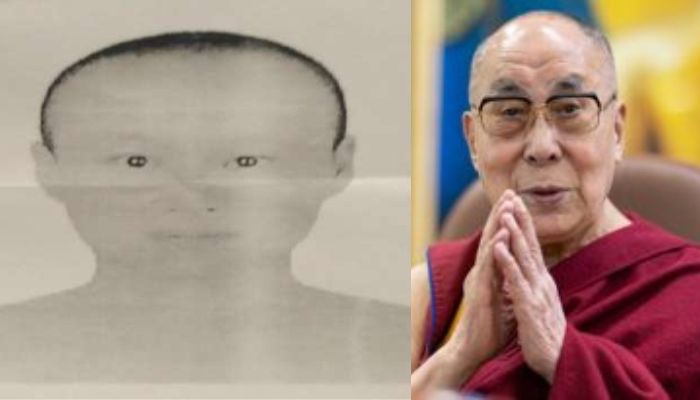
The Bihar police have detained a suspected Chinese woman in Bodh Gaya in connection with alleged threat to Tibetan spiritual leader Dalai Lama and are interrogating her, JS Gangwar, ADG (headquarters) confirmed to ANI.
The ADG (headquarters) said that she had been detained in connection with the alleged threat to Dalai Lama. “Police detained the suspected (Chinese) woman in Bodh Gaya in connection with an alleged threat to Tibetan spiritual leader Dalai Lama. She is being interrogated,” he said.
Earlier in the morning, a security alert was sounded in Bodh Gaya district where the Dalai Lama is scheduled to participate in public discourses after intelligence agencies alerted local police about a Chinese woman’s presence and suspected activities.
The security agencies released the sketch of the suspected woman and started searching for the Chinese woman in Gaya, suspected of spying on Dalai Lama.
Gaya Senior Superintendent of Police (SSP), Harpreet Kaur said, “Local police has received inputs about a Chinese woman who has been living in Gaya. We were getting inputs on her for the last two years. In view of this, an alert has been given and searches are underway.”
“There is no information at present about the location of the Chinese woman. We cannot rule out suspicion of her being a Chinese spy,” SSP Kaur said.
According to inputs, the suspected Chinese spy had been living in different parts of the country including Bodh Gaya for more than one year.
However, there is no record in the foreign section about the stay of the Chinese woman. The Dalai Lama has this year resumed his annual tour to Bodh Gaya, which had been suspended for the last two years due to the Covid pandemic.
(This news report is published from a syndicated feed. Except for the headline, the content has not been written or edited by OpIndia staff)
To address the issue of low voter turnout due to voters not living in their constituencies due to various reasons like work, study etc, the Election Commission of India has proposed to introduce a remote voting facility for such outstation voters. The ECI has developed a new Electronic Voting Machine (EVM) for remote voting, based on the currently used EVM, and is ready for a pilot project on this.
Stressing the need for such a remote voting system, ECI said that on average, one-third of registered voters do not vote in an election, and it is a matter of grave concern. It said that the Election Commission of India is committed to its goal of ‘No voter to be left behind’.
The ECI has invited all registered political parties for a demonstration of how the proposed Remote Electronic Voting Machine (RVM) will work. The commission has also sought suggestions and feedback from the parties on the issue.
In a statement issued today, the ECI said that inability to vote due to internal migration (domestic migrants) is one of the prominent reasons of lower voting in elections, and it has to be addressed to improve voter turnout and ensure participative elections. According to the statement, soon after assuming office as Chief Election Commissioner, Rajiv Kumar focused his attention on enabling the migrant voters to exercise their franchise from their current place of residence.
However, as such a measure involved a host of issues including egal, statutory, administrative and technological interventions, ECI deliberated on them at length to come up with a solution. After studying various alternatives, the Commission has decided on the Remote Electronic Voting Machine, which is a modified version of the time-tested model of M3 EVM.
Using this RVM, people not living in their constituencies will be able to vote from their current place of living. This modified EVM can handle elections for up to 72 multiple constituencies from a single remote polling booth. “The initiative, if implemented, can lead to a social transformation for the migrants and connect with their roots as many times they are reluctant to get themselves enrolled at their place of work for various reasons such as frequently changing residences, not enough social and emotional connect with the issues of area of migration, unwillingness to get their name deleted in electoral roll of their home/native constituencies as they have permanent residence/property etc,” the ECI statement said.
The Election Commission of India has also distributed a concept note on the RVM among the political partis, which describes the working of the voting machines and the procedure of remote voting.
Just like the regular EVMs, RVMs are also standalone, non-networked voting machines, they do not have any network interface and can’t be connected to any network. It is one of the main security features of the Indian EVMs, as it makes any remote manipulation of EVMs impossible. However, there will be several changes in the RVMs from the EVMs.
While EVMs are used for voting in a single constituency, RVMs can run elections for several constituencies, up to 72. As this means hundreds of candidates in each polling booth, RVMs do not have paper ballots affixed to it. Instead, there will be a digital display of the names and symbols of the candidates, which will change based on the constituency chosen.
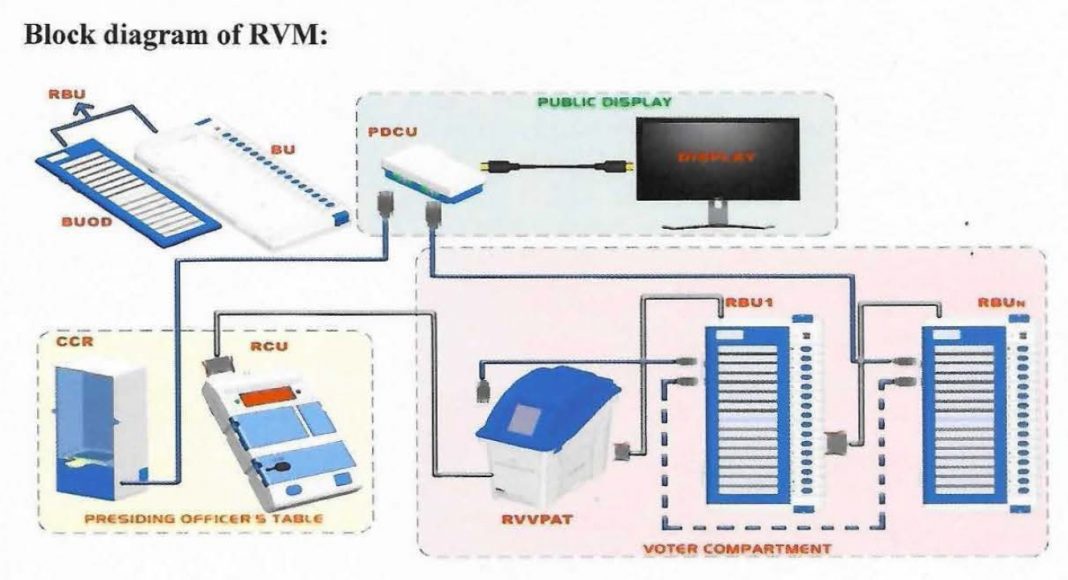
A Remote Electronic Voting Machine will consist of the following parts:
Remote Control Unit (RCU), which is the same as the existing Control Unit, except that the RCU can store the Constituency wise result of total number of votes for each candidate.
Remote Ballot Unit (RBU) which is the voting unit but includes an electronic dynamic display instead of a fixed ballot paper sheet. The RBU dynamically displays the list of candidates for the selected constituency.
Apart from the digital ballot paper, the system will also include a public display, an external display to show the list of the candidates for the selection constituency. Both the RBU and the Public Display will show the same list after the constituency number is selected.
RVVPAT, which is a modified version of VVPAT with the ability to store and print names of constituencies and the image of candidates.
Remote Symbol Loading unit (RSLU) to capture details of the candidates like names and symbols from various constituencies from the computer system of the home returning officer.
Constituency Card Reader (CCR) will be used in the system to select the desired constituency. It is a barcode reader which reads the constituency number of a voter coming to the remote polling booth.
Public display control unit (PDCU) is the interface between CCR, Public display and RBU. After getting the constituency number read by the CCR, it displays the list of candidates for that constituency both on the RBU and the public display.
The electronic ballot will be an exact replica of the ballot paper used in the home constituency, and it will be based on the ballot paper finalised to be affixed on the EVMs. After finalisation, the home Returning Officer will forward the data to the remote RO, and the RO will load all data from the remote constituencies into the Remote Symbol Loading unit.
Block diagram of Remote Electronic Voting Machine
For remote voting, a remote voter has to pre-register for this facility by applying online or offline during a specified time period. After verification of the details, the voter will be marked as a remote voter in a remote location. Special multi-constituency remote voting polling stations will be set up in the places of their current residence.
On the polling day, when the voter goes to the remote voting station, the presiding officer will scan the relevant constituency card using the CCR, and the system will display the candidates for that constituency on the Public Display Unit and also on the RBU. The voter will then cast the vote on the RBU, in the same manner as voting on regular EVM. The vote is recorded along with the state code, constituency number, and candidate number. The RVVPAT prints the state and constituency codes along with the candidate name, symbol, and serial number.
During counting, the votes in a Remote Control Unit will be counted the same as regular Control Unit votes are counted. The RCU displays the total votes for each Constituency, one by one, in sequential order of candidates in that constituency. The results for each constituency will be sent to the home constituency, where they will be added to the tally of each candidate.
The ECI will demonstrate the working of the Remote Electronic Voting Machine on 16 January 2023 at an event to be held at Vigyan Bhavan in New Delhi. The Commission has invited all recognised 8 National and 57 State Political Parties for the demonstration and discussion, where Technical Expert Committee members will also be present.
The ECI has asked the parties to submit written views by 31 January 2023 on various related issues including changes required in legislation, changes in administrative procedures and voting method/RVM/technology, if any other, for the domestic migrants. Based on the feedback received from the political parties, the Commission will carry forward the process of implementing remote voting method.
While the technical design of the Remote EVM has been prepared by the ECI, there are a host of legal issues that need to be addressed before it can be implemented. Some issues include the definition of migrant voter, definition of remote voting, implementation of model code of conduct in the remote voting station etc.
On December 22, the second song of Shah Rukh Khan and Deepika Padukone starrer Pathaan was released by Yash Raj Film. Titled ‘Jhoome Jo Pathan’, it stirred controversy soon after its release. Many social media users accused music composers Vishal Dadlani and Shekhar Ravjiani (Sheykhar) of stealing the music from a 2012 composition from UTV Films’ Arjun: The Warrior Prince’s song ‘Karam Ki Talvaar’. The two songs have uncanny similarities that led to the belief that the music composers copied the old song.
Netizens accuse Vishal-Shekhar for ‘stealing music’
Twitter user Rachna questioned the film-makers if anything was original in the movie.
The music of ‘Karam Ki Talwar’ was also composed by Vishal-Shekhar
When we checked the details of the 2012 film, it turned out that the music for that animation film was also composed by Vishal-Shekhar. The music composer duo seems to have repackaged their own work it in the song ‘Jhoome Jo Pathan’. However, neither Vishal-Shekhar nor the Pathaan team has clarified the matter.
Pathaan stirring controversies
This is not the first time SRK’s upcoming film has stirred controversy. When the first song of the movie ‘Besharam Rang’ was released on December 12, it received backlash from many organisations over the overt sexualisation and nudity depicted in the video. Some Hindu organisations objected to the ‘Saffron bikini’ that Deepika is seen wearing. The controversy led to multiple complaints, after which the Censor board asked the filmmakers to make ‘certain changes‘ before the theatre release of the movie.
A case of physical abuse of a young woman and love jihad has come up in Greater Noida. The accused lured the young woman by telling her the wrong name. The man named Intezaar Khan gave the woman a job as a manager in his gym, and claimed his name was Sonu at that time. Following this, he raped her on the pretext of marriage.
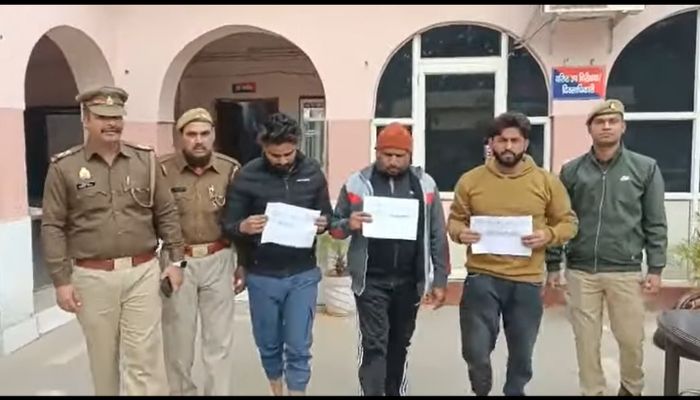
The accused Intezaar Khan is said to be a resident of Shahberi. According to the information, his father and brother also supported him in this conspiracy. On the complaint of the girl, Noida police arrested the accused along with his father and brother.
The Bisrakh police on Thursday arrested the three accused under section 5(1) of Uttar Pradesh Law Against The Prohibition of Religious Conversion Act. The three are identified as Abbas Ali son of the late Yasin Khan, Intezaar Khan alias Sonu, son of Abbas Ali, and Suhail, son of Abbas Ali.
थाना बिसरख पुलिस द्वारा दुष्कर्म व 5(1)उ0प्र0 विधि विरुद्ध धर्म संपरिवर्तन प्रतिषेध अधिनियम के अभियोग में वांछित 03 अभियुक्त गिरफ्तार। pic.twitter.com/zgsrOaPA1Y
— POLICE COMMISSIONERATE GAUTAM BUDDH NAGAR (@noidapolice) December 29, 2022
थाना बिसरख पुलिस द्वारा दुष्कर्म व 5(1)उ0प्र0 विधि विरुद्ध धर्म संपरिवर्तन प्रतिषेध अधिनियम के अभियोग में वांछित 03 अभियुक्तों की गिरफ्तारी के संबंध में एडीसीपी सेंट्रल नोएडा द्वारा दी गई बाइट। @Uppolice@dgpuppic.twitter.com/l7uI4FXETI
— POLICE COMMISSIONERATE GAUTAM BUDDH NAGAR (@noidapolice) December 29, 2022
The accused are running an ASR gym in the Shahberi area of the local police station, in which the victim was given a job as a manager in June.
The accused, Intezaar Khan lured the victim, while pretending to be Sonu, on the pretext of marriage. His father and brother supported him in his acts, resulting in their arrest as well by the police.