In a shocking case, the Maharashtra Police registered an FIR against a Christian individual identified as Ravindersingh Bhanwarsingh Rajpurohit for harassing and physically abusing his wife for 21 years and forcing her to convert to Christianity. The FIR was filed against the accused on December 3 at Yerwada Police Station in Pune.
According to the reports, Ravindersingh Bhanwarsingh Rajpurohit, a resident of the Yerwada area of Pune city had quit his religion and accepted Christianity 21 years ago. Since then, he physically and mentally harassed his wife and even her parents and children to convert to Christianity. He would beat his wife and her family members and would threaten to send his children to a Christian school.
The woman in the complaint mentioned that the accused had hurt her religious sentiments by throwing the idols of Hindu Gods and Goddesses in the river. He also gave away the religious photographs that were installed in the house, the woman said. Fed up by the accused’s behaviour, the 43-year-old woman reached the police station on December 3 and lodged a police complaint.
The complaint further mentioned that the accused wanted the children to attend a Christian school. The woman stated that both her children study in a reputed school in Pune and that their studies are getting impacted due to the stressful environment at home caused by the accused. The case has been registered against the accused under the relevant sections of the law. Further investigations are underway.
On Tuesday, the Uttar Pradesh police detained an Akhil Bharat Hindu Mahasabha representative while he, along with other members of the organization, was going to recite Hanuman Chalisa at the Shahi Idgah Masjid located in the Shri Krishna Janmabhoomi complex. The Police stated that 7-8 other leaders of the organization have also been detained at their homes across the city.
According to the reports, the Akhil Bharat Hindu Mahasabha had called for a recital of Hanuman Chalisa within the Shahi Idgah Masjid to commemorate the demolition of the Babri Mosque. “The Akhil Bharat Hindu Mahasabha’s Agra region in-charge Saurabh Sharma was arrested when he was attempting to go towards the Idgah mosque on the complex,” confirmed Additional Superintendent of Police (City) Martandey Singh.
He stated that the Mahasabha’s president, Rajshri Chaudhary, and treasurer, Dinesh Sharma, were not among the others detained at their houses and that the police had no details on the two. The Akhil Bharat Hindu Mahasabha wanted to commemorate the ‘Shaurya Diwas’ on the 30th anniversary of the demolition of the disputed structure of Babri Masjid at Ram Janmabhoomi. On December 6, the disputed structure in Ayodhya was brought down by Hindu activists in 1992.
This morning, security had been beefed up in the city of Mathura after Hindu Mahasabha announced the decision to recite Hanuman Chalisa at the Idgah on Tuesday. The police force was deployed at the spot, and drone cameras were set up to keep an eye on the situation.
According to the India Today report, the Police also detained people belonging to different communities on the evening of December 5 as a precaution, to maintain the law and order situation in the city. Shailesh Kumar Pandey, Senior Superintendent of Police, stated that the law and order situation would not be jeopardized. “Social media is also being closely monitored,” he said.
The SSP had said on Monday that no new tradition or ritual would be allowed to be performed. “The orders of the Supreme Court would be followed and the implementation of prohibitory orders under Section 144 of the CrPC in letter and spirit would be ensured,” he was quoted.
Earlier on December 2, the Mathura city magistrate had issued bailable warrants against 16 people linked with a Hindu outfit amid their call to recite the Hanuman Chalisa inside Shahi Idgah mosque. “No permission has been sought by any organisation and cases have already been registered against two people so far for attempting to gather a crowd for the event,” Additional Superintendent of Police (City) Martandey Singh had said.
Last year, the organization had issued a similar call, but their plans were thwarted by the district administration. “We were not prepared in 2021 as it was the first time. Our activists were targeted heavily by the police, and thus, the venue was changed and ‘Jal Abhishek’ was conducted at Jantar Mantar in Delhi. We are more prepared this time and activists have been asked to protect themselves,” ABHM national president Rajshri Chaudhary was quoted as saying.
In 2015, a minor woman in Aligarh was reported missing after visiting a temple. After some days of the incident, a dead body was found. A person named Vishnu was accused of killing the girl. Since 2015, Vishnu has been in jail in Aligarh. As per reports, the girl he was accused of killing has been found alive recently.
The girl is now reportedly married and was found living with her husband and 2 children. After Vishnu’s family flagged the issue and demanded his release from jail, the police restarted the investigation. The girl has been taken into custody.
On 17 February 2015, a 17-year-old girl’s father filed a police complaint in Aligarh stating that his daughter has been missing after she went to a local temple. An FIR was lodged in the case against unknown persons under IPC sections 363 and 366.
On 24 March 2015, the police had found the dead body of an unknown girl. The missing girl’s family had identified the body saying it was their missing daughter. The family had named Vishnu, a fellow villager from Dhanthauli and accused him of kidnapping her, saying that she was last seen with him. Vishnu was arrested under IPC sections 302, and 201 for killing the girl and trying to eliminate evidence.
The charge sheet against Vishnu in the murder case was filed in December 2015. Sub Inspector Khalid Khan was the investigator in the case. After spending over 2 years in jail, Vishnu Gautam was granted bail in 2017.
However, the girl’s family had requested the court to send Vishnu back to jail. And he was sent back to jail after the trial in the case began.
In the meanwhile, Vishnu’s mother was trying to gather evidence to prove her son’s innocence. After searching a lot, she eventually got to know that the missing girl is alive and is living in Agra all this while. After confirming the girl’s identity, Vishnu’s mother sought help from some Hindu activists in Aligarh and approached SSP Kalanidhi Naithani. The SSP ordered immediate action and the girl, now a married woman was arrested from the Hathras gate area, in the village of Nagla Chokha. DSP Raghavendra Singh informed that the woman’s DNA will be tested to confirm her identity.
As per the latest reports in the case, a special POCSO court has ordered the DNA test of the woman.
Vishnu’s mother has reportedly stated that the girl’s family is now trying to force her to ‘compromise’ in the case.
England achieved a thrilling 74-run victory against Pakistan in the first match of a test series played in Rawalpindi on Monday. As England triumphed and captain Ben Stokes faced media questions after the game, Pakistani journalists insulted Indian fighter pilot Abhinandan, who was captured by Pakistan after shooting down a Pakistani F-16 jet aircraft from his Mig-21 Bison.
A Pakistani journalist questioned Ben Stokes, “How was the tea?” in an attempt to humiliate and mock the Indian forces, echoing the same exact question they asked Wing Commander Abhinandan while he was in Pakistani custody.
It can be seen in the video how the Pakistani journalist, who could be identified by his terrible English accent, insinuates the question and answer to Ben Stokes.
But it was, in a sense, ironic that Pakistanis were inquiring about tea with Ben Stokes, given that the England team had little trust in Pakistani cooks and brought their own cook for their Pakistan tour. However, despite taking their own cook, they were still down with a bug on the eve of the first test match, with more than a dozen English players affected, a scathing indictment of poor hospitality services of a country known for harbouring Islamic terrorists that had led to its ostracism back in 2009.
Twitter users slam Pakistanis for dragging Abhinandan in Ben Stokes’ press conference, demand BCCI to get Asian nations to boycott Asia Cup
Following this, the Pakistanis present in the conference also insinuated an answer to Stokes saying that “the tea was fantastic.” A video of the conference has gone viral over the internet with Indians condemning and slamming Pakistan for such remarks.
Famous Twitter user Gabbar (@GabbbarSingh) wrote, “Such petty f*ckers. BCCI should convince all other Asian nations to boycott Asia Cup in Pakistan. And then not give Visas to their players for the World Cup.”
Such petty fuckers. BCCI should convince all other Asian nations to boycott Asia Cup in Pakistan. And then not give Visas to their players for the World Cup ? pic.twitter.com/vx1swStsr3
Another Twitter user wrote, “Yaha apaki pakistan team ki faad ke rakh di ben stokes & company ne lekin aap ko bas india ko, abhinandan ko troll karane ki padi hai. Isliye aapka pakistan itana picche ja raha hai as country.”
Yaha apaki pakistan team ki faad ke rakh di ben stokes & company ne lekin aap ko bas india ko, abhinandan ko troll karane ki padi hai.
Yet another user asked India to respond to the “shamelessness” of Pakistanis.
The question asked to #BenStokes about Tea (ref to #abhinandan ) in the press conference is very sickening as part of pakistan journalists, #India must respond to this, Shameless fellows!!! #abhinandanmyhero ##PAKvsEng
Abhinandan Varthaman captured by Pakistan after he downed an enemy F-16 jet, released under duress from India
Notably, Abhinandan Varthaman was captured by Pakistani Forces after he ejected from his jet that shot an F-16 Pakistani fighter jet. However, Pakistan Army was forced to release him due to pressure exerted by the Indian side along with international intervention into the matter.
On 28th February 2019, then Pakistan PM Imran Khan announced that the country would release Wing Commander Varthaman as a ‘peace gesture’ and on 1st March 2019, he returned to India through the Wagah Border in Atari. While in Pakistani captivity, he was mentally tortured before being handed over to India. Wing Commander Varthaman was part of the Srinagar-based 51 squadron.
The police have solved the murder mystery of a Hindu youth Nitin Bhandari, which occurred on November 27, 2022, in the Haridwar district of Uttarakhand. Three brothers have been charged with the murder, Azad, Naushad, and their minor brother, whose name is not revealed. They were apprehended on December 5th, along with their mother, Gulshan. During questioning, the accused admitted to murdering Nitin Bhandari over a financial dispute.
The incident came to light on December 3, Saturday, when Haridwar police were alerted that the body of an unidentified person had been discovered in a grain storage container kept in a house in Haridwar district’s Bhagwanpur.
The police said that Nitin Bhandari was hit with a sharp-edged weapon on his head by murderers and later dumped his body in the steel grain tank.
According to reports, Nitin Bhandari, a resident of Chodikh village in Pauri district’s Pabo block was working in a factory in Haridwar. Gulshan lived in the Idgah Colony of the Bhagwanpur police station area with her three sons, not far from Nitin’s residence. Nitin was a friend of Naushad. Naushad borrowed 2.5 lakh rupees from Nitin one day to buy a plot. Later, he refused to return the money, and as a result, Nitin and Naushad’s relationship became strained.
Nitin went to Naushad’s house again on November 27 to ask for his money. The situation escalated after a heated argument. Naushad then threw Nitin to the ground and strangled him with a towel. Other members of Naushad’s family supported him in the criminal act as well. Naushad’s entire family slept alongside Nitin’s dead body for the entire night following his murder. The next day, the accused purchased a grain tank from the market, placed Nitin’s body inside, and waited for the appropriate moment to dispose of it.
As per media reports, Naushad’s entire family stayed with Nitin’s dead body for the next two days. However, when blood began to flow from the grain tank, the accused abandoned the dead body and fled after locking the home.
The police later discovered Nitin’s body during a raid of the house. Nitin’s family members were contacted using the information obtained from his company as well as a note discovered in the deceased’s pocket. The police began their investigation by filing a case based on a family member’s complaint.
During the investigation, the police tracked down the driver who had transported the accused’s goods. The pickup driver provided the number of a bullet bike from the booking details, which was incidentally registered in the name of one of the accused. The cops were able to find the accused’s contact details using this information.
The police also discovered that the landlord who had rented out his house to Gulshan and his family had not completed the verification. The police said that appropriate action will also be taken against the landlord soon. Further, during the probe, the police obtained certain mobile phone numbers with locations in Noida, Bulandshahr, and Rajasthan. The team raided these locations and tracked down the accused from different places, who then confessed to their crime.
The police recovered a pistol, mobile phone, deceased Nitin’s PAN card, ATM card, as well as Rs 1,10,000 cash from the accused. Gulshan, Azad, and Naushad have been sent to jail while the minor accused has been placed in a juvenile home.
The Palghar police in Maharashtra Monday arrested a 19-year-old youth identified as Shahnawaz Shah on charges of rape under relevant sections of the Indian Penal Code (IPC) and Protection of Children from Sexual Offences Act (POCSO) provisions. The police revealed that Shahwanaz Shah has been accused of raping his 5-year-old neighbour.
Maharashtra | A 19-year-old youth, Shahanawaz Shah, arrested by Police for allegedly raping a 5-year-old girl in Palghar. He had lured her with chocolate while she was playing outside her house. The girl is under treatment at a hospital: Palghar Police
The police said that Shahnawaz Shah, a resident of Vanjarwada, lured the child with chocolate while she was playing outside her house. He then took her to his house at around 2:30 pm on Sunday and raped her.
The accused allegedly threatened the child with death if she revealed the ordeal to anyone, said a Boisar police station official. The 5-year-old, however, went and narrated her ordeal to her mother who then approached the police to lodge a complaint against Shahwanaz.
“After she confided in her mother, the latter filed a complaint. The 19-year-old boy has been charged with rape and other offences under Indian Penal Code and Protection of Children from Sexual Offences Act provisions,” the official said.
Masih Alinejad, the Iranian journalist and activist Tuesday slammed The New York Times (NYT) for spreading fake news that the Iranian regime has disbanded the country’s morality police. Several media outlets including The New York Times had reported that Iran had abolished the morality police which enforces the Hijab law in the country, after months of protests triggered by the death of Mhasa Amini.
Denouncing western media outlets for disseminating misleading information, the activist claimed that media outlets such as NYT were assisting the Iranian fascist government in spreading propaganda.
“The false news spread by @nytimes claiming victory for the so-called abolition of the morality police hurts the ongoing revolution. I told @ABCNewsLive that when dictatorships like the Iranian regime are in trouble, they spread propaganda and obfuscation,” Tweeted the Iranian journalist.
The false news spread by @nytimes claiming victory for the so-called abolition of the morality police hurts the ongoing revolution.
She also shared a snippet of her interview with ABC News where she said, “We were shocked when we saw the title of New York Times saying this is a victory. What kind of victory? It was a total lie and disinformation. It was a propaganda move by the Islamic Republic. When dictators are shaken, they know how to use disinformation to mislead the rest of the world or to calm down the protesters within the society.”
The journalist, while criticising the Iranian government’s fascism and the media outlets that support it, stated that on the same day when news organizations like NYT reported that the morality police has been repealed, the Iranian government, in fact, shut down an amusement park in Tehran simply because an Iranian woman present was not wearing a veil.
Masih also asserted that the protests in Iran where people are facing guns, and jailtime are not just about the morality police, but the people want to topple the Islamic regime.
The New York Times on December 4, 2022, quoted senior Iranian official Attorney General Mohammad Javad Montazeri as confirming that Iran had abolished the morality police.
Sharing the link of its report where it quoted the Iranian official as confirming that morality police in Iran has been disbanded, NYT also Tweeted on December 4, “The decision, reported by state news outlets, appeared to be a significant victory for feminists who have sought for years to dismantle the morality police. Abolishing the force would have a major impact on Iran’s ability to police what women wear.”
The decision, reported by state news outlets, appeared to be a significant victory for feminists who have sought for years to dismantle the morality police. Abolishing the force would have a major impact on Iran’s ability to police what women wear. https://t.co/or4yqJJz54pic.twitter.com/8nJ49ktCoa
Following this, many media outlets worldwide reported that the Iranian government has decided to abolish its morality police, a piece of news which has now been refuted by the Iranian journalist and activist Masih Alinejad.
‘Morality police NOT abolished, the statement was ambiguous ‘
It was later reported by some news outlets that the official whom NYT cited as saying the morality police will be disbanded has himself rejected the claims. “No official authority in the Islamic Republic of Iran has confirmed the closure of the morality police”, stated a media report.
Iranian officials later clarified that the statement was misconstrued by media houses and that the morality police was not established by the Islamic regime’s judiciary in the first place but was a special arm of the police, hence it was up to the police to intensify or ‘reduce’ their outreach.
Update: Iran state television is reporting that the morality police has definitely NOT been removed. pic.twitter.com/uxl24v4cMt
Iranian women protest against the Islamic country’s draconian law of ‘Morality police’
Notably, Iran has been witnessing widespread protests against the Islamic regime.
The protests erupted on September 16 following the death of Mhasa Amini, a 22-year-old Iranian of Kurdish descent who had been detained by morality police for allegedly violating sharia law.
According to the reports, the incident is said to have happened on September 13 when Amini, a native of Saghez, Iran, had travelled to Tehran for a pleasure trip. The woman was with her brother Kiarash at the entrance to the Shahid Haghani Expressway when the ‘Morality Police’ arrived and arrested Amini for a one-hour ‘re-education class.’
Following her death, widespread protests erupted in the Islamic nation protesting the Sharia laws and compulsory hijab for women. Women across the world supported the movement by chopping their hair and burning their headscarves.
What is the morality police which enforces the Hijab law in Iran?
The morality police, the formal name of which is Gasht-e Ershad or “Guidance Patrol”, were established in 2005 under hardline president Mahmoud Ahmadinejad, to “spread the culture of modesty and hijab.” The police squad consisted of both male and female members that patrolled the streets and public places to monitor women’s attire. The Guidance Patrol teams arrest women they think are not appropriately dressed as per Islamic rules.
The women found violating the morality codes are slapped in the face and beaten with batons on the spot and pushed into police vans. They are taken to a correctional facility or police station, where they are lectured on how to dress appropriately and are released after recording the details. The detained women are also required to destroy their ‘inappropriate’ clothes if applicable.
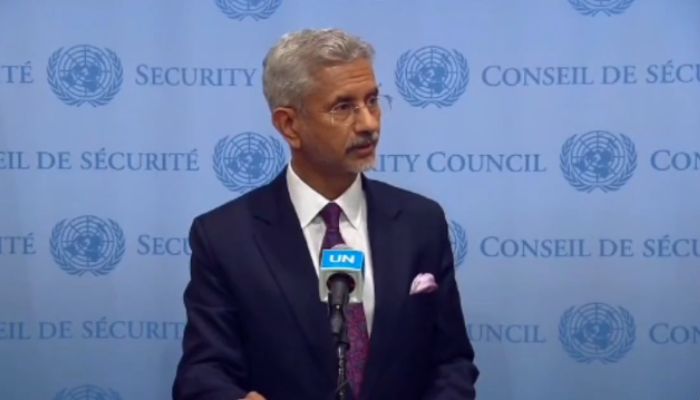
Dmytro Kuleba, the Foreign Minister of Ukraine, had stirred the hornet’s nest after he blamed India for purchasing Russian oil at the expense of the sufferings of common Ukrainians.
In an exclusive interview with NDTV, he claimed, “The opportunity for India to buy Russian oil at a cheap price comes from the fact that Ukrainians are suffering from the Russian aggression and die every day.”
“They are living in houses without heating, hot water and electricity. And this fact, we hope, should be appreciated by those who make decisions on purchasing Russian oil,” he further alleged.
Dmytro Kuleba claimed that the Ukrainian government is equally critical of all countries that are purchasing Russian oil in bulk. Later, he contradicted his own statement by applauding the decision to put a price cap ($60 per barrel) on Russian oil imports by the European Union and G7 countries.
A price cap does not imply the cessation of the supply of Russian oil but rather an agreement to ship oil using G7 and EU tankers if Russia sells at the said price cap (which is already higher than the price at which Russia sells its crude).
The Ukrainian Foreign Minister also asked India to amend its foreign policy and stop buying Russian oil as the money is allegedly being used to finance the ongoing war with Ukraine.
“The core reason for India’s opportunity to save money on oil and solve its economic problems is not the fact that Europeans are not buying Russian oil. It’s the fact that Ukrainians are suffering from Russia’s war,” he continued.
“If you integrate this element into your thinking, of course, then, your foreign policy has to be adjusted,” Dmytro Kuleba told NDTV.
Past Response by S Jaishankar on the question of purchasing Russian oil
On March 31 this year, India’s Minister for External Affairs (EAM) S Jaishankar pointed out that European countries were the biggest importers of Russian gas and oil. He made the remarks during a discussion at the India-Uk Strategic Futures Forum.
While defending the decision to purchase Russian crude oil at discounted prices, the EAM emphasised that it was important for India to obtain good deals on energy supplies, at a time when global markets were volatile.
“It is interesting because we have seen for some time what looks almost like a campaign (against us) on this issue. When the oil prices go up, I think it is natural for the countries to go out into the market and look for what are good deals for their people,” he had remarked.
During a conversation with British Foreign Secretary of State Liz Truss, S Jaishankar emphasised that India purchased its majority of energy supplies from the Middle East. He pointed out that around 8% of the total oil imports were from the United States while less than 1% of crude oil purchases were from Russia.
He had added, “I am pretty sure if we wait two or three months and actually look at who are the big buyers of Russian oil and gas, I suspect the list would not be too different from what it used to be and I suspect we won’t be in the top 10 on that list.
Again on April 11, 2022, S Jaishankar gave a befitting reply to a reporter, who had tried to raise the issue of Indian oil purchases from Russia during the 4th edition of the India-US 2+2 dialogue.
External Affairs Minister S. Jaishankar in Washington, responding to a reporter’s question on India’s energy purchases from Russia, points out Europe buys more in an afternoon than India does in a month pic.twitter.com/4LJituULic
“I noticed you referred to oil purchases. If you are looking at energy purchases from Russia, I would suggest that your attention should be focused on Europe,” he emphasised.
Dr S Jaishankar pointed out, “We do buy some energy, which is necessary for our energy security. But I suspect looking at the figures. Our total purchases for the month will be less than what Europe does in one afternoon. So, you might want to think about it.”
During the Raisina Dialogues conference in Delhi in April, S Jaishankar emphasised that India has a very clear position on the conflict in Ukraine and reiterated the need for urgent cessation of the war.
#WATCH | When rules-based order was under challenge in Asia, the advice we got from Europe is- do more trade. At least we are not giving you that advice… We should find a way of returning to diplomacy& dialogue: EAM Dr S Jaishankar about India’s stand on #RussiaUkraine conflict pic.twitter.com/Zf6c2cTAkV
The Indian External Affairs Minister said, “When rules-based order was under challenge in Asia, the advice we got from Europe was- do more trade. At least we are not giving you that advice. We should find a way of returning to diplomacy and dialogue.”
While raising the question of Afghanistan he asked which part of the ‘rules-based order‘ justified the world’s actions in Afghanistan. S Jaishankar pointed out how the entire civil society in Afghanistan was thrown under the bus by the world last year.
In June this year, he again responded to concerns about India’s position in the Russian-Ukrainian conflict and the global order during a talk at GLOBSEC 2022.
Europe has to grow out of the mindset that Europe’s problems are world’s problems, but world’s problem is not Europe’s problem, says EAM Jaishankar pic.twitter.com/J3MUmEpSnN
When asked about the Indian stand in the ongoing conflict, Dr Jaishankar stated that Europe must evolve out of the idea that its issues are international problems, but world problems are not Europe’s concerns.
“Europe has to grow out of the mindset that its problems are the world’s problems, but the world’s problems aren’t Europe’s problems. Today linkages are being made between China & India and what is happening in Ukraine. Come on guys, China & India happened way before Ukraine. It’s not a clever argument,” Jaishankar said.
When questioned if India’s purchase of Russian oil was financing the ongoing conflict, Jaishankar responded, “Tell me buying Russian gas is not funding the war? It’s only Indian money that funds, it’s not gas coming to Europe that funds. Let’s be a little even-handed out here.”
EAM: Look the whole narrative, it has gone up 9 times, it has gone up from a very low base…if countries from West, europe, US are so concerned why don’t they allow Iranian oil to come to the Market, why don’t they allow Venezuelan oil to come to the market.
Pointing out and slamming the hypocrisy of the west over the issue, Jaishankar further said, “Look the whole narrative, it has gone up 9 times, it has gone up from a very low base…if countries from the West, Europe, US are so concerned why don’t they allow Iranian oil to come to the market, why don’t they allow Venezuelan oil to come to the market.”
It has now come to light that the decision to buy discounted Russian oil has benefited India to the tune of 35,000 crores.
The changing foreign policy of India
Against the backdrop of the Russia-Ukraine war, the west has been unhappy with India over the country’s position on sanctions against Russia.
Despite pressure from European countries and the USA, the Modi govt had refused to sever economic ties with Russia and has not stopped importing oil from the country. India also didn’t vote against Russia at the UN, choosing to abstain from voting instead.
In February this year, S Jaishankar clarified, “I don’t think these situations in the Indo-Pacific and the Transatlantic are really analogous and certainly the assumption in your question that somehow there’s a trade off and one country does this in the pacific so in return you do something else – I don’t think that’s how international relations work. We have, I think, are quite distinct challenges -what’s happening here, what’s happening in the Indo Pacific.”
Host: India spoke against China, but abstained on Ukraine at UNSC?
EAM Jaishankar: Situation in IndoPac & transatlantic not analogous. If thr was connection by that logic we would had European powers very early taking sharp position in Indo Pac. Havnt seen that. pic.twitter.com/UyP26zu7la
He pointed out, “In fact, if there was a connection, by that logic, you would’ve had a lot of European powers very early taking very sharp positions in the Indo-Pacific and we didn’t see that. We haven’t seen that since 2009.”
S Jaishankar had also lambasted Rahul Gandhi, who insinuated that Indian foreign service bureaucrats had become ‘arrogant’ under the Modi regime.
He said, “Yes, the Indian Foreign Service has changed. Yes, they follow the orders of the Government. Yes, they counter the arguments of others. No, its not called Arrogance. It is called Confidence. And it is called defending National Interest.”
The communist government in North Korea had publicly executed two teenagers for watching and circulating South Korean drama shows among their friends, media outlet Radio Free Asia quoted two eyewitnesses as confirming. The execution of the minors aged 16 or 17 was carried out in October this year, the report said.
According to the report, the teenagers were taken before the public, sentenced to death, and then shot down by a firing squad at an airfield in the city while residents in the area were forced to watch the execution.
“They said, ‘Those who watch or distribute South Korean movies and dramas, and those who disrupt social order by murdering other people, will not be forgiven and will be sentenced to the maximum penalty–death’,” a resident of the city of Hyesan, on the border with China, where the execution took place, was quoted by RFA as saying.
“Hyesan residents gathered in groups at the runway,” she said. “The authorities put the teen-aged students in front of the public, sentenced them to death, and immediately shot them.”
The students met in early October at a high school in North Korea’s Ryanggang Province, which shares a border with China, where they watched many Korean and American drama productions.
This is not the first time such atrocities have been carried out on people living in North Korea. The communist country strictly controls the lives of its citizens and all television and radios are tuned into state propaganda. If anyone is caught watching or listening to foreign broadcasts, they face harsh punishment.
Last year, a North Korean man had been sentenced to death for smuggling the South Korean Netflix series ‘Squid Game’ on USB through China and sold their copies after seven high school students were caught watching the show.
A student who bought the USB from the smuggler is given a life sentence while six others who saw it with him have been sentenced to five years of hard labour. Teachers and school administrators are also fired and banished to work in remote areas in mines, the report said citing sources.
Indian billionaires Gautam Adani, Shiv Nadar, and Ashok Soota, as well as Malaysian-Indian businessman Brahmal Vasudevan and his lawyer wife Shanthi Kandiah, found a place on the 16th edition of Forbes Asia’s Heroes of Philanthropy list, which was published on Tuesday. According to Forbes, the unranked list “highlights top altruists in the Asia-Pacific region who demonstrated a strong personal commitment to philanthropic causes.”
Adani reportedly pledged Rs 60,000 crores (USD 7.7 billion) when he turned 60 in June of this year. The funds will be used toward healthcare, education, and skill development through the Adani Foundation, which was established in 1996. Every year, the charity assists over 3.7 million people in India. According to the press release, the promise placed him among India’s most generous benefactors.
Shiv Nadar, a self-made billionaire, and philanthropist is one of India’s most generous benefactors, has donated about USD 1 billion of his assets to different humanitarian causes through his namesake Shiv Nadar Foundation over a few decades. This year, he contributed Rs 11,600 crore (USD 142 million) to the foundation he founded in 1994 to create an equal, merit-based society via education.
Nadar, who co-founded HCL Technologies, has used his foundation to establish educational institutions like schools and colleges as well as to encourage art and culture. He stepped down from executive roles at the IT services company in 2021.
Ashok Soota, a tech billionaire, has contributed Rs 600 crore (USD 75 million) to the medical research fund he established in April 2021 to investigate aging and neurological disorders. He began SKAN, which stands for Scientific Knowledge for Ageing and Neurological Ailments, with a Rs 200 crore investment, which he has subsequently tripled. “There are only two kinds of people doing [medical] research in India. One is the people doing drug discovery, and the other is the people doing research in national and state-level institutions, which are starved for funds,” Forbes release read.
Soota, who has a holding in Bangalore-based software services firm Happiest Minds Technologies, says SKAN has been collaborating with the Indian Institute of Science’s Centre for Brain Research on Parkinson’s disease studies and the National Institute of Mental Health and Neuro Sciences on stroke research. SKAN awarded a Rs 20 crore grant to Soota’s alma mater, the Indian Institute of Technology Roorkee, in June 2021, to support cooperative research initiatives, establish a lab, and sponsor a professorship and three faculty scholarships.
Malaysian-Indian Brahmal Vasudevan, CEO and founder of Kuala Lumpur-based private equity firm Creador, and his lawyer wife, Shanthi Kandiah, help Malaysian and Indian communities through the Creador Foundation, a non-profit they co-founded in 2018.
They committed 50 million Malaysian Ringgit (USD 11 million) in May this year to assist develop a teaching hospital at the Universiti Tunku Abdul Rahman (UTAR) Kampar campus in Perak state. “We are delighted that this has spurred others to join this cause, and it appears the project is now fully funded,” Vasudevan told Forbes Asia.
In May, the couple contributed 25 million pounds (USD 30 million) to establish the eponymous Brahmal Vasudevan Institute for Sustainable Aviation, which would pioneer technologies to help the aviation sector transition to zero pollution.
“We felt that the creation of this institute could hopefully make a meaningful impact on studying ways of reducing, if not achieving, zero pollution one day,” said Vasudevan.
Forbes Asia today unveiled the 16th edition of its annual Heroes of Philanthropy list, which highlights leading altruists in the Asia-Pacific region who demonstrated a strong personal commitment to philanthropic causes such as education and the environment, among others. The full list can be found here.