The Palghar police in Maharashtra Monday arrested a 19-year-old youth identified as Shahnawaz Shah on charges of rape under relevant sections of the Indian Penal Code (IPC) and Protection of Children from Sexual Offences Act (POCSO) provisions. The police revealed that Shahwanaz Shah has been accused of raping his 5-year-old neighbour.
Maharashtra | A 19-year-old youth, Shahanawaz Shah, arrested by Police for allegedly raping a 5-year-old girl in Palghar. He had lured her with chocolate while she was playing outside her house. The girl is under treatment at a hospital: Palghar Police
The police said that Shahnawaz Shah, a resident of Vanjarwada, lured the child with chocolate while she was playing outside her house. He then took her to his house at around 2:30 pm on Sunday and raped her.
The accused allegedly threatened the child with death if she revealed the ordeal to anyone, said a Boisar police station official. The 5-year-old, however, went and narrated her ordeal to her mother who then approached the police to lodge a complaint against Shahwanaz.
“After she confided in her mother, the latter filed a complaint. The 19-year-old boy has been charged with rape and other offences under Indian Penal Code and Protection of Children from Sexual Offences Act provisions,” the official said.
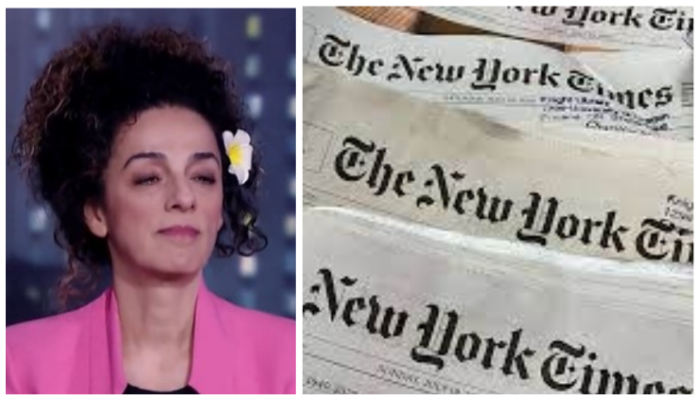
Masih Alinejad, the Iranian journalist and activist Tuesday slammed The New York Times (NYT) for spreading fake news that the Iranian regime has disbanded the country’s morality police. Several media outlets including The New York Times had reported that Iran had abolished the morality police which enforces the Hijab law in the country, after months of protests triggered by the death of Mhasa Amini.
Denouncing western media outlets for disseminating misleading information, the activist claimed that media outlets such as NYT were assisting the Iranian fascist government in spreading propaganda.
“The false news spread by @nytimes claiming victory for the so-called abolition of the morality police hurts the ongoing revolution. I told @ABCNewsLive that when dictatorships like the Iranian regime are in trouble, they spread propaganda and obfuscation,” Tweeted the Iranian journalist.
The false news spread by @nytimes claiming victory for the so-called abolition of the morality police hurts the ongoing revolution.
She also shared a snippet of her interview with ABC News where she said, “We were shocked when we saw the title of New York Times saying this is a victory. What kind of victory? It was a total lie and disinformation. It was a propaganda move by the Islamic Republic. When dictators are shaken, they know how to use disinformation to mislead the rest of the world or to calm down the protesters within the society.”
The journalist, while criticising the Iranian government’s fascism and the media outlets that support it, stated that on the same day when news organizations like NYT reported that the morality police has been repealed, the Iranian government, in fact, shut down an amusement park in Tehran simply because an Iranian woman present was not wearing a veil.
Masih also asserted that the protests in Iran where people are facing guns, and jailtime are not just about the morality police, but the people want to topple the Islamic regime.
The New York Times on December 4, 2022, quoted senior Iranian official Attorney General Mohammad Javad Montazeri as confirming that Iran had abolished the morality police.
Sharing the link of its report where it quoted the Iranian official as confirming that morality police in Iran has been disbanded, NYT also Tweeted on December 4, “The decision, reported by state news outlets, appeared to be a significant victory for feminists who have sought for years to dismantle the morality police. Abolishing the force would have a major impact on Iran’s ability to police what women wear.”
The decision, reported by state news outlets, appeared to be a significant victory for feminists who have sought for years to dismantle the morality police. Abolishing the force would have a major impact on Iran’s ability to police what women wear. https://t.co/or4yqJJz54pic.twitter.com/8nJ49ktCoa
Following this, many media outlets worldwide reported that the Iranian government has decided to abolish its morality police, a piece of news which has now been refuted by the Iranian journalist and activist Masih Alinejad.
‘Morality police NOT abolished, the statement was ambiguous ‘
It was later reported by some news outlets that the official whom NYT cited as saying the morality police will be disbanded has himself rejected the claims. “No official authority in the Islamic Republic of Iran has confirmed the closure of the morality police”, stated a media report.
Iranian officials later clarified that the statement was misconstrued by media houses and that the morality police was not established by the Islamic regime’s judiciary in the first place but was a special arm of the police, hence it was up to the police to intensify or ‘reduce’ their outreach.
Update: Iran state television is reporting that the morality police has definitely NOT been removed. pic.twitter.com/uxl24v4cMt
Iranian women protest against the Islamic country’s draconian law of ‘Morality police’
Notably, Iran has been witnessing widespread protests against the Islamic regime.
The protests erupted on September 16 following the death of Mhasa Amini, a 22-year-old Iranian of Kurdish descent who had been detained by morality police for allegedly violating sharia law.
According to the reports, the incident is said to have happened on September 13 when Amini, a native of Saghez, Iran, had travelled to Tehran for a pleasure trip. The woman was with her brother Kiarash at the entrance to the Shahid Haghani Expressway when the ‘Morality Police’ arrived and arrested Amini for a one-hour ‘re-education class.’
Following her death, widespread protests erupted in the Islamic nation protesting the Sharia laws and compulsory hijab for women. Women across the world supported the movement by chopping their hair and burning their headscarves.
What is the morality police which enforces the Hijab law in Iran?
The morality police, the formal name of which is Gasht-e Ershad or “Guidance Patrol”, were established in 2005 under hardline president Mahmoud Ahmadinejad, to “spread the culture of modesty and hijab.” The police squad consisted of both male and female members that patrolled the streets and public places to monitor women’s attire. The Guidance Patrol teams arrest women they think are not appropriately dressed as per Islamic rules.
The women found violating the morality codes are slapped in the face and beaten with batons on the spot and pushed into police vans. They are taken to a correctional facility or police station, where they are lectured on how to dress appropriately and are released after recording the details. The detained women are also required to destroy their ‘inappropriate’ clothes if applicable.
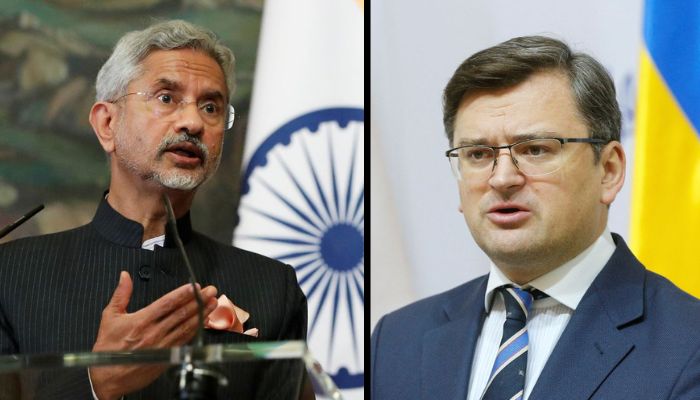
Dmytro Kuleba, the Foreign Minister of Ukraine, had stirred the hornet’s nest after he blamed India for purchasing Russian oil at the expense of the sufferings of common Ukrainians.
In an exclusive interview with NDTV, he claimed, “The opportunity for India to buy Russian oil at a cheap price comes from the fact that Ukrainians are suffering from the Russian aggression and die every day.”
“They are living in houses without heating, hot water and electricity. And this fact, we hope, should be appreciated by those who make decisions on purchasing Russian oil,” he further alleged.
Dmytro Kuleba claimed that the Ukrainian government is equally critical of all countries that are purchasing Russian oil in bulk. Later, he contradicted his own statement by applauding the decision to put a price cap ($60 per barrel) on Russian oil imports by the European Union and G7 countries.
A price cap does not imply the cessation of the supply of Russian oil but rather an agreement to ship oil using G7 and EU tankers if Russia sells at the said price cap (which is already higher than the price at which Russia sells its crude).
The Ukrainian Foreign Minister also asked India to amend its foreign policy and stop buying Russian oil as the money is allegedly being used to finance the ongoing war with Ukraine.
“The core reason for India’s opportunity to save money on oil and solve its economic problems is not the fact that Europeans are not buying Russian oil. It’s the fact that Ukrainians are suffering from Russia’s war,” he continued.
“If you integrate this element into your thinking, of course, then, your foreign policy has to be adjusted,” Dmytro Kuleba told NDTV.
Past Response by S Jaishankar on the question of purchasing Russian oil
On March 31 this year, India’s Minister for External Affairs (EAM) S Jaishankar pointed out that European countries were the biggest importers of Russian gas and oil. He made the remarks during a discussion at the India-Uk Strategic Futures Forum.
While defending the decision to purchase Russian crude oil at discounted prices, the EAM emphasised that it was important for India to obtain good deals on energy supplies, at a time when global markets were volatile.
“It is interesting because we have seen for some time what looks almost like a campaign (against us) on this issue. When the oil prices go up, I think it is natural for the countries to go out into the market and look for what are good deals for their people,” he had remarked.
During a conversation with British Foreign Secretary of State Liz Truss, S Jaishankar emphasised that India purchased its majority of energy supplies from the Middle East. He pointed out that around 8% of the total oil imports were from the United States while less than 1% of crude oil purchases were from Russia.
He had added, “I am pretty sure if we wait two or three months and actually look at who are the big buyers of Russian oil and gas, I suspect the list would not be too different from what it used to be and I suspect we won’t be in the top 10 on that list.
Again on April 11, 2022, S Jaishankar gave a befitting reply to a reporter, who had tried to raise the issue of Indian oil purchases from Russia during the 4th edition of the India-US 2+2 dialogue.
External Affairs Minister S. Jaishankar in Washington, responding to a reporter’s question on India’s energy purchases from Russia, points out Europe buys more in an afternoon than India does in a month pic.twitter.com/4LJituULic
“I noticed you referred to oil purchases. If you are looking at energy purchases from Russia, I would suggest that your attention should be focused on Europe,” he emphasised.
Dr S Jaishankar pointed out, “We do buy some energy, which is necessary for our energy security. But I suspect looking at the figures. Our total purchases for the month will be less than what Europe does in one afternoon. So, you might want to think about it.”
During the Raisina Dialogues conference in Delhi in April, S Jaishankar emphasised that India has a very clear position on the conflict in Ukraine and reiterated the need for urgent cessation of the war.
#WATCH | When rules-based order was under challenge in Asia, the advice we got from Europe is- do more trade. At least we are not giving you that advice… We should find a way of returning to diplomacy& dialogue: EAM Dr S Jaishankar about India’s stand on #RussiaUkraine conflict pic.twitter.com/Zf6c2cTAkV
The Indian External Affairs Minister said, “When rules-based order was under challenge in Asia, the advice we got from Europe was- do more trade. At least we are not giving you that advice. We should find a way of returning to diplomacy and dialogue.”
While raising the question of Afghanistan he asked which part of the ‘rules-based order‘ justified the world’s actions in Afghanistan. S Jaishankar pointed out how the entire civil society in Afghanistan was thrown under the bus by the world last year.
In June this year, he again responded to concerns about India’s position in the Russian-Ukrainian conflict and the global order during a talk at GLOBSEC 2022.
Europe has to grow out of the mindset that Europe’s problems are world’s problems, but world’s problem is not Europe’s problem, says EAM Jaishankar pic.twitter.com/J3MUmEpSnN
When asked about the Indian stand in the ongoing conflict, Dr Jaishankar stated that Europe must evolve out of the idea that its issues are international problems, but world problems are not Europe’s concerns.
“Europe has to grow out of the mindset that its problems are the world’s problems, but the world’s problems aren’t Europe’s problems. Today linkages are being made between China & India and what is happening in Ukraine. Come on guys, China & India happened way before Ukraine. It’s not a clever argument,” Jaishankar said.
When questioned if India’s purchase of Russian oil was financing the ongoing conflict, Jaishankar responded, “Tell me buying Russian gas is not funding the war? It’s only Indian money that funds, it’s not gas coming to Europe that funds. Let’s be a little even-handed out here.”
EAM: Look the whole narrative, it has gone up 9 times, it has gone up from a very low base…if countries from West, europe, US are so concerned why don’t they allow Iranian oil to come to the Market, why don’t they allow Venezuelan oil to come to the market.
Pointing out and slamming the hypocrisy of the west over the issue, Jaishankar further said, “Look the whole narrative, it has gone up 9 times, it has gone up from a very low base…if countries from the West, Europe, US are so concerned why don’t they allow Iranian oil to come to the market, why don’t they allow Venezuelan oil to come to the market.”
It has now come to light that the decision to buy discounted Russian oil has benefited India to the tune of 35,000 crores.
The changing foreign policy of India
Against the backdrop of the Russia-Ukraine war, the west has been unhappy with India over the country’s position on sanctions against Russia.
Despite pressure from European countries and the USA, the Modi govt had refused to sever economic ties with Russia and has not stopped importing oil from the country. India also didn’t vote against Russia at the UN, choosing to abstain from voting instead.
In February this year, S Jaishankar clarified, “I don’t think these situations in the Indo-Pacific and the Transatlantic are really analogous and certainly the assumption in your question that somehow there’s a trade off and one country does this in the pacific so in return you do something else – I don’t think that’s how international relations work. We have, I think, are quite distinct challenges -what’s happening here, what’s happening in the Indo Pacific.”
Host: India spoke against China, but abstained on Ukraine at UNSC?
EAM Jaishankar: Situation in IndoPac & transatlantic not analogous. If thr was connection by that logic we would had European powers very early taking sharp position in Indo Pac. Havnt seen that. pic.twitter.com/UyP26zu7la
He pointed out, “In fact, if there was a connection, by that logic, you would’ve had a lot of European powers very early taking very sharp positions in the Indo-Pacific and we didn’t see that. We haven’t seen that since 2009.”
S Jaishankar had also lambasted Rahul Gandhi, who insinuated that Indian foreign service bureaucrats had become ‘arrogant’ under the Modi regime.
He said, “Yes, the Indian Foreign Service has changed. Yes, they follow the orders of the Government. Yes, they counter the arguments of others. No, its not called Arrogance. It is called Confidence. And it is called defending National Interest.”
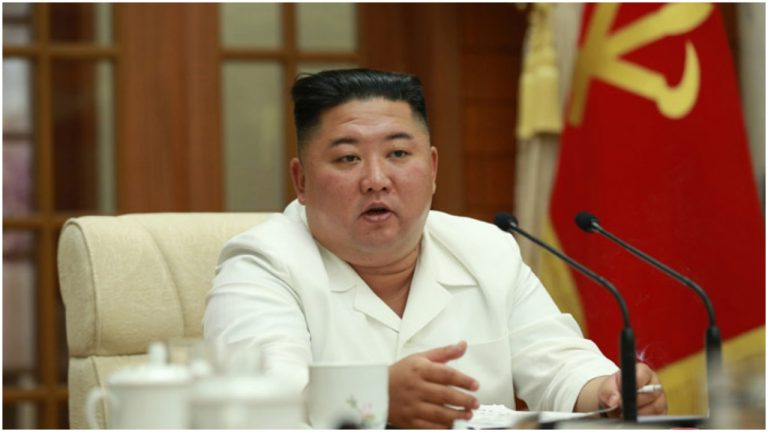
The communist government in North Korea had publicly executed two teenagers for watching and circulating South Korean drama shows among their friends, media outlet Radio Free Asia quoted two eyewitnesses as confirming. The execution of the minors aged 16 or 17 was carried out in October this year, the report said.
According to the report, the teenagers were taken before the public, sentenced to death, and then shot down by a firing squad at an airfield in the city while residents in the area were forced to watch the execution.
“They said, ‘Those who watch or distribute South Korean movies and dramas, and those who disrupt social order by murdering other people, will not be forgiven and will be sentenced to the maximum penalty–death’,” a resident of the city of Hyesan, on the border with China, where the execution took place, was quoted by RFA as saying.
“Hyesan residents gathered in groups at the runway,” she said. “The authorities put the teen-aged students in front of the public, sentenced them to death, and immediately shot them.”
The students met in early October at a high school in North Korea’s Ryanggang Province, which shares a border with China, where they watched many Korean and American drama productions.
This is not the first time such atrocities have been carried out on people living in North Korea. The communist country strictly controls the lives of its citizens and all television and radios are tuned into state propaganda. If anyone is caught watching or listening to foreign broadcasts, they face harsh punishment.
Last year, a North Korean man had been sentenced to death for smuggling the South Korean Netflix series ‘Squid Game’ on USB through China and sold their copies after seven high school students were caught watching the show.
A student who bought the USB from the smuggler is given a life sentence while six others who saw it with him have been sentenced to five years of hard labour. Teachers and school administrators are also fired and banished to work in remote areas in mines, the report said citing sources.
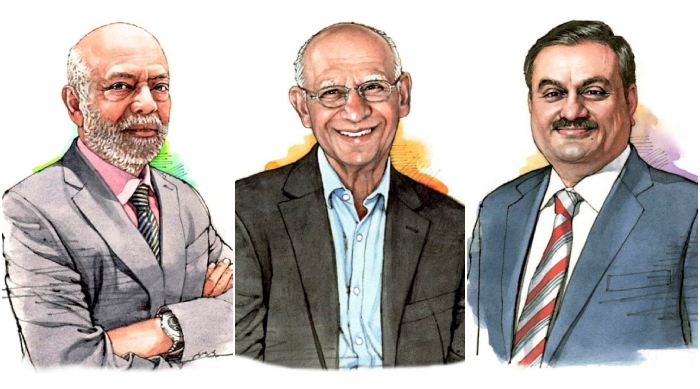
Indian billionaires Gautam Adani, Shiv Nadar, and Ashok Soota, as well as Malaysian-Indian businessman Brahmal Vasudevan and his lawyer wife Shanthi Kandiah, found a place on the 16th edition of Forbes Asia’s Heroes of Philanthropy list, which was published on Tuesday. According to Forbes, the unranked list “highlights top altruists in the Asia-Pacific region who demonstrated a strong personal commitment to philanthropic causes.”
Adani reportedly pledged Rs 60,000 crores (USD 7.7 billion) when he turned 60 in June of this year. The funds will be used toward healthcare, education, and skill development through the Adani Foundation, which was established in 1996. Every year, the charity assists over 3.7 million people in India. According to the press release, the promise placed him among India’s most generous benefactors.
Shiv Nadar, a self-made billionaire, and philanthropist is one of India’s most generous benefactors, has donated about USD 1 billion of his assets to different humanitarian causes through his namesake Shiv Nadar Foundation over a few decades. This year, he contributed Rs 11,600 crore (USD 142 million) to the foundation he founded in 1994 to create an equal, merit-based society via education.
Nadar, who co-founded HCL Technologies, has used his foundation to establish educational institutions like schools and colleges as well as to encourage art and culture. He stepped down from executive roles at the IT services company in 2021.
Ashok Soota, a tech billionaire, has contributed Rs 600 crore (USD 75 million) to the medical research fund he established in April 2021 to investigate aging and neurological disorders. He began SKAN, which stands for Scientific Knowledge for Ageing and Neurological Ailments, with a Rs 200 crore investment, which he has subsequently tripled. “There are only two kinds of people doing [medical] research in India. One is the people doing drug discovery, and the other is the people doing research in national and state-level institutions, which are starved for funds,” Forbes release read.
Soota, who has a holding in Bangalore-based software services firm Happiest Minds Technologies, says SKAN has been collaborating with the Indian Institute of Science’s Centre for Brain Research on Parkinson’s disease studies and the National Institute of Mental Health and Neuro Sciences on stroke research. SKAN awarded a Rs 20 crore grant to Soota’s alma mater, the Indian Institute of Technology Roorkee, in June 2021, to support cooperative research initiatives, establish a lab, and sponsor a professorship and three faculty scholarships.
Malaysian-Indian Brahmal Vasudevan, CEO and founder of Kuala Lumpur-based private equity firm Creador, and his lawyer wife, Shanthi Kandiah, help Malaysian and Indian communities through the Creador Foundation, a non-profit they co-founded in 2018.
They committed 50 million Malaysian Ringgit (USD 11 million) in May this year to assist develop a teaching hospital at the Universiti Tunku Abdul Rahman (UTAR) Kampar campus in Perak state. “We are delighted that this has spurred others to join this cause, and it appears the project is now fully funded,” Vasudevan told Forbes Asia.
In May, the couple contributed 25 million pounds (USD 30 million) to establish the eponymous Brahmal Vasudevan Institute for Sustainable Aviation, which would pioneer technologies to help the aviation sector transition to zero pollution.
“We felt that the creation of this institute could hopefully make a meaningful impact on studying ways of reducing, if not achieving, zero pollution one day,” said Vasudevan.
Forbes Asia today unveiled the 16th edition of its annual Heroes of Philanthropy list, which highlights leading altruists in the Asia-Pacific region who demonstrated a strong personal commitment to philanthropic causes such as education and the environment, among others. The full list can be found here.
In a recent interview with the Times of India, Bollywood entertainer Swara Bhasker remarked that ‘speaking up’ for people and values has cost her severely in her career and that she sometimes struggles even to pay her EMIs on time. This interview followed after Swara participated in the Bharat Jodo Yatra with Rahul Gandhi.
In the podcast with journalist and author Harinder Baweja, Swara stated that the public and political culture has deteriorated and violence on the streets has normalised in recent times.
Swara Bhasker also admired Rahul Gandhi when she was asked about her participation in the Bharat Jodo Yatra. She said that she has been admiring Rahul Gandhi since 2018 and that he speaks for people and not ‘sensationalisation.’ She said that she joined the Bharat Jodo Yatra to lend solidarity with the movement.
Rahul Gandhi is a ‘resolved politician’
When the interviewer asked if Rahul Gandhi was a reluctant politician and was in politics because of his predetermined sir name, Swara Bhasker replied ‘No,’ explaining that it is all propaganda around his name in politics. Bhasker stated that she believes Rahul Gandhi is transforming the political culture of the country. She stated that Rahul Gandhi is a ‘resolved politician not fitting the narrative.’
Apparently, Swara Bhasker went into full fangirl mode for Rahul Gandhi, saying that there are more politicians needed who are like Rahul Gandhi. Showering more praises on Gandhi and covering up the failure of the Bharat Jodo Yatra to make up for the election in Gujarat, Swara defended that Rahul Gandhi dissociated his movement from elections because he wanted to speak up for overall transformation.
‘I am a competent actor’
On being asked if she is seen as a troublemaker, Swara Bhasker said that she faces such remarks often. She said that she is a far ‘competent actor’ but fails to come across such deserving opportunities. Smartly skipping mentions of her recent flops, Swara Bhasker stated that she has given many blockbuster movies and web series but she fails to get more work owing to her ‘openness in speaking up.’
“I’m a far better actor and a far more competent, and effective actor than the opportunities that come my way. I have a far better track record in terms of my career. I’ve been part of six or seven blockbuster films and like a whole bunch of web series shows, led them. I’ve never had bad reviews pretty much. There shouldn’t be a reason for me to feel like I don’t get enough work but clearly, I don’t,” she said.
Born in ‘different India’
Swara Bhaskar recalled how a brand endorsement of her was cancelled as the brand stated that she brought disrepute to the brand by participating in the protests, which were violent at times, burning the CAA-NRC discourse.
Swara Bhasker stated that she was born in a different India as she was not trained to be bigoted when she was a child, implying that all the kids born presently get professional training in bigotry.
Again taking on her rant on Hindutva, Swara stated that she finds the ‘Right Wing’ discourse so misogynistic and sexist. Swara Bhasker, known very well for her anti-Hindu and anti-Modi remarks in the recent past, at last, invoked the ‘Muslim persecution’ element in her responses to a question. She hailed herself for speaking up for ‘Muslim Solidarity’ by narrating a story of herself getting praise from a Muslim in past.
Though Bhasker felt herself a capable performer, recent films in which she appeared were not favourably appreciated by audiences. Her film “Jahan Chaar Yaar,” which was released on September 16, 2022, tanked at the box office. The trailer for the film was so bad that it was practically forgotten after its release on August 22, 2022.
Swara Bhasker’s virtue signalling with poor professional choices the cause of her undoing
While Bhasker held forth on how the public and political culture deteriorated in India, adding that violence on the streets had become the new normal, she did not elaborate on how Islamists have been going on a rampage, indulging in violence, vandalism, and arson. It is worth noting that Bhasker, who is trying to project moral superiority by raising concerns about the violence-stricken streets of India, had supported Alt News co-founder Mohammed Zubair, who painted a target behind former BJP leader Nupur Sharma, galvanising Islamists across the country into launching ‘Sar Tan Se Juda’ protests against the beleaguered leader.
Bhasker later backed Zubair after Sharma filed a complaint against the Alt News co-founder for sharing an edited version of her clip that led to Islamists issuing threats to her and her family. Instead of standing in solidarity with Sharma, Bhasker tried to dismiss her concerns and rationalise a preposterous explanation proffered by Pratik Sinha, another Alt News co-founder with a history of peddling fake news.
Instead of holding Islamists and violent protesters who took to the streets on the pretext of blasphemy against Prophet Muhammad, a concept which is alien to India and is characteristic of Islamist regimes in the Middle East, where the Muslim majority often use the false excuse of blasphemy to settle scores with minorities and whip up a communal frenzy against them.
Bhasker also berated Nupur Sharma on Twitter, indirectly giving a free pass to those who took to the streets against the former BJP leader for her remarks on Prophet Muhammad that were distilled from authentic Islamic hadiths. While slamming Sharma on the microblogging platform, Bhasker also used the occasion to needlessly politicise the issue and attack Navika Kumar and Times Now for providing their platform to the former BJP leader.
She sounds like a vile person, But blaming only #NupurSharma is a cop out- We all know the leaders who started it, fanned it, won elections off it & the ecosystem that kept it alive. Hate is a ? .. India ?? Is burning in it now! Oh, also Hi @navikakumar@TimesNow having fun?
While Bhasker went hammer and tongs to criticise Nupur Sharma and side with Mohammed Zubair, she studiously avoided making critical remarks against the Alt News co-founder arrested for his Hinduphobic social media posts from the past. Instead of calling out Zubair for his derogatory posts against Hindu Gods and Goddesses, ironically the same charge that he accused Nupur Sharma of, Bhasker projected Zubair’s arrest as a “shameful witch-hunt” and demanded his release.
The glaring hypocrisy in the above case highlights Bhasker’s virtue signalling and her utter disregard for her morals and ideals, which she selectively leans on for matters that are in convergence with her political ideology.
Bhasker also recently came out in support of actor Richa Chadha after she suffered a severe blowback on Twitter for her unwarranted comments mocking Indian braveheart’s supreme sacrifice during the Galwan clashes.
Bhasker’s unsolicited support for Chadha backfired as social media users condemned the actor for supporting a person who made a facetious comment on the Indian Army and undermined its ability to capture PoK.
Such hypocritical and anti-India stances have contributed to Swara Bhasker’s declining popularity among the masses, who saw her as a hypocrite who lectured the country on morality and ethics while not following them herself. Her alignment with anti-India forces has also played a part in diminishing her professional opportunities.
However, above everything else, Bhasker has fallen from the grace of the movie producers because of her own poor professional choices. She has been a part of movies that lack a coherent story, gripping screenplay, or entertaining masala that would attract people to the theatres. Producers do not want to plunk down their money on someone who is awful at their primary skill and then have the gall of pontificating to others on matters of socio-political import, only to end up exposing their own hypocrisy.
The World Bank increased its estimate of India’s GDP growth to 6.9 percent for 2022-23, up from the 6.5 percent predicted previously. The World Bank has raised India’s GDP growth prediction for the current financial year due to the country’s strong economic performance.
According to the World Bank’s latest India Development Update, retail inflation is expected to be 7.1% in 2022-23. The report, on the other hand, has shown a deteriorating external environment. The report indicated that spillovers from the United States, the European Union, and China have an impact on India. Furthermore, the bank sees India as one of the fastest-growing big economies.
According to Dhruv Sharma, Senior Economist at The World Bank, India’s GDP has recovered pretty well from the past year’s downturn. The story of the recovery has been primarily driven by healthy domestic demand. He stated that India is more resilient now than it was ten years ago and that all initiatives undertaken in the last ten years have assisted India in navigating global headwinds.
India’s economy has rebounded fairly robustly following the contraction that occurred during the pandemic year. This story of the rebound has been driven largely by robust domestic demand: Dhruv Sharma, Senior Economist, The World Bank pic.twitter.com/mdnWPMhUG2
“Rupee has depreciated by just about 10% over the course of this year. India has not fared that badly compared to other emerging markets,” Sharma said.
In addition, India, according to Auguste Tano Kouame, is tremendously ambitious. He stated that the government has done a number of things to strengthen the economy and is working hard to make it more vibrant.
India is very ambitious. The government has done a number of things to make the economy resilient and is putting a lot of effort to make the economy dynamic: Auguste Tano Kouame, World Bank pic.twitter.com/ZGLCegYSP4
The Reserve Bank of India predicts the Indian economy to grow by 7% in the fiscal year 2022-23, down from 7.2 percent before. India’s GDP increased by 6.3 percent in the September 2022 quarter (Q2FY23), compared to 8.4 percent in the same quarter the previous year.
In the June 2022 quarter, the Indian economy grew by 13.5%. (Q1FY23). The RBI’s Monetary Policy Committee forecasted GDP growth of 6.3% from July to September 2022.
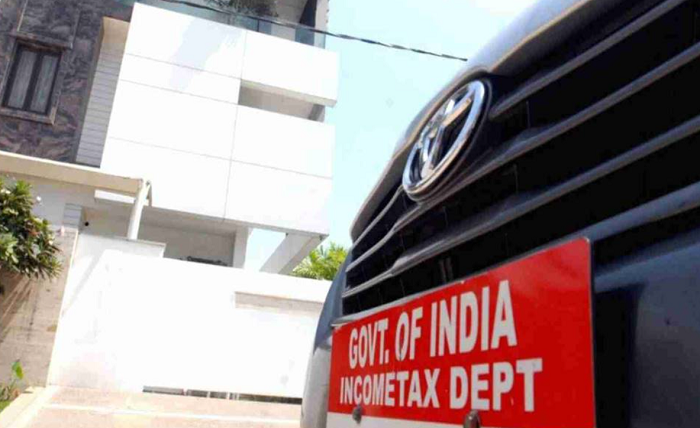
On Tuesday, the Income Tax Department conducted searches at the residence of promoters of the renowned real estate company Vamsiram builders in Hyderabad, Telangana. The IT officials also raided the office premises of the promoters in Hyderabad, Vijayawada, and Nellore in the neighboring state of Andhra Pradesh.
According to the reports, the Income Tax agency raided the homes of Subba Reddy, chairman of Vamsiram Builders, and his brother-in-law Janardhan Reddy on Road No. 45 in Jubilee Hills. Raids have been launched in as many as 15 locations. Devineni Avinash, currently a member of the YSR Congress party, is also under the scanner. Devineni Avinash’s name has cropped up in shady financial transactions related to a development project.
The #IncomeTax (IT) department officials were conducting searches on the premises of leading real estate developer Vamsiram Builders.
Vamsiram Builders, which captured valuable properties in prime strategic spots like Banjara Hills in the center of Hyderabad, has over 80 high-profile projects to its name in the region. It has been alleged that the ongoing I-T raids are part of the Central government’s attempt to put pressure on the ruling BRS party ahead of the state assembly elections next year.
The number of I-T raids has increased in the state in recent times. Earlier in November, the residence of BRS Minister Malla Reddy in Hyderabad was also raided by IT officials. The IT investigators also verified Reddy’s tax records and the educational institutions he and his family members possess.
The residence of Minister Gangula Kamalakar was also raided by the ED officials as part of a money laundering probe into an alleged granite fraud. Recently, the CBI also launched the searches, under sections of the Foreign Exchange Management Act (FEMA), at the offices and residential premises of several granite companies and the residence of Telangana Minister Gangula Kamalakar in Karimnagar.
It was reported that illegal funds routed from a Chinese corporation owned by an individual implicated in the leaked Panama Papers to Telangana-based granite enterprises were discovered when the properties of several granite exporters, including minister Gangula Kamalakar, were investigated.
In 2022, many infra companies like Phoenix group, Sumadhura, Vasavi, and Sahithi were also searched by IT officials. Reports mention that the companies raided by the IT officials are believed to be the major financiers of the ruling BRS.
In the current case, the IT officials are looking into the financial transactions of the Vamsiran Builders. As per the reports, the company has undertaken more than 80 projects in two states including the construction of luxury villas and commercial projects. The IT officials are inquiring about the financial transactions of this company.
The destruction of temples and religious sites of other Faiths by aggressive Islamists has long been an unfortunate part of world history. In India, the Islamic invaders entered India and began the process of ‘Islamisation’ of the country nearly a thousand years ago.
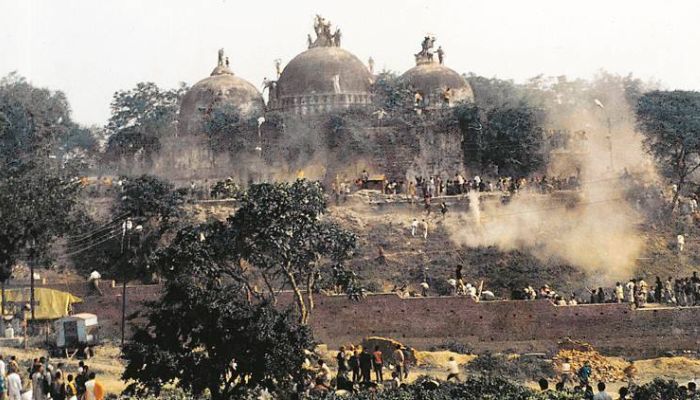
The easiest way for them to achieve the set goal was by destroying the Hindu structures and prominent Hindu places of worship in India. As a result, the Babri Masjid was built in 1527 on the birthplace of Lord Ram under the rule of the Mughal emperor Babur.
Many more Hindu structures and temples were demolished and converted into Islamic places of worship in India. One such mosque is the Deval Masjid which is located in the Bodhan area of Telangana’s Nizamabad district.
Conversion of Hindu temple into Deval Masjid
According to the reports, the structure of Deval Masjid was originally a Hindu-Jain temple that was built around the 10th century CE by the Rashtrakuta King Indravallabha (Indra III).
The temple was renovated during the period of Kalyani Chalukya ruler Someswara who had then named it ‘Indranarayan Swamy Temple’. The conversion of the Indranarayan Swamy temple into a Mosque dated back to the year 1323 when Muhammad Bin Tughlaq encroached on the Bodhan fort, which was under the protection of warrior Kakatiya commander Sitaramachandra Sastri.
Shastri protected the 100-pillared structure for many years but was forced to surrender by the army of Tughlaq. Shastri was forcefully converted to Islam, was made to accept the suzerainty of Tughlaq, and was named Alam Khan.
But he reconverted to Hinduism as soon as the Tughlaq’s army left. The next time Tughlaq’s army invaded Bodhan, they took no prisoners, and instead surrounded the Podana (Bodhan) fort and destroyed it.
They beheaded the Kakatiya commander Sitaramachandra Shastri and converted the Indranarayan Swamy temple to Deval Masjid.
Gyanvapi mosque in Varanasi
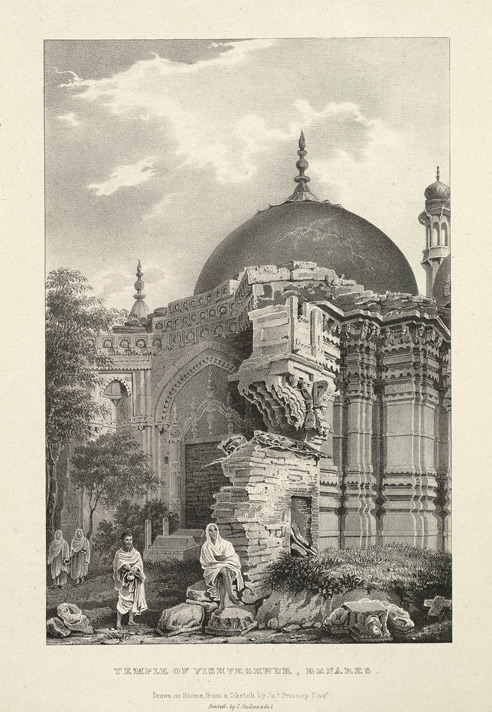
The Gyanvapi Mosque complex is a disputed structure built over the ruins of the old Kashi Vishwanath Temple by Mughal emperor Aurangzeb after it was desecrated multiple times by Islamic monarchs such as Qutb al-Din Aibak and Aurangzeb.
To this day, parts of this ancient temple are clearly visible on the outer walls of the mosque, especially the western wall which has been kept intact. Moreover, there is enough historical evidence of the demolition of the temple, the building of the mosque, and the rebuilding of the temple at the current adjacent site.
The Kashi Vishwanath Temple complex, which is adjacent to the disputed mosque complex and where devotees can do puja and prayers, was built by Ahilya Bai Holkar of Indore in 1780.
Gyanvapi mosque was built by destroying the Kashi Vishweshwar Temple
A Varanasi court on May 12 this year allowed a videographic survey of the disputed structure. Varanasi’s Civil Judge (Senior Division) Ravi Kumar Diwakar issued guidelines for the same and added that a report of the survey must be submitted by May 17.
A 54-member team, led by advocate commissioner Ajay Kumar Mishra, surveyed the Gyanvapi complex basement and the western wall on Saturday (May 14). According to the reports, the survey team opened eight vaults of the disputed structure of Gyanvapi mosque.
Hagia Sophia in Istanbul
Hagia Sophia was a Church for the most part of its history, but it is now a mosque. It was built in the sixth century in the Turkish capital Istanbul, at the site of an earlier church destroyed by fire, which in turn was built after the first church was also destroyed by fire.
The current structure was completed in the year 537 as the Church of Justinian I (named after the Emperor who started its construction). It remained a church for hundreds of years, till the time the Ottoman forces invaded the city.
After capturing the city, Ottomans converted the Church into a mosque in 1453. Invader Sultan Mehmed II had ordered to stop all Christian rites and prayers at the Church and had ordered to immediately convert it into a mosque.
On May 29, 1453 Byzantine Empire ended when Ottomans breached Constantinople’s ancient land wall after besieging city for 55 days. The fall of Constantinople further led to Hagia Sophia, a church being converted into a Mosque. (4/n) pic.twitter.com/8xqxKrxFys
It remained a mosque till 1935 when it was converted into a museum by the first president and founder of the Republic of Turkey, after the fall of the Ottoman empire.
Initially, religious rituals were banned in the museum, but later in 1991 a pavilion was allowed to be used as a prayer room and minarets were allowed to use for voicing the Islamic prayer Azan.
In 2018, Turkish President Recep Tayyip Erdoğan announced his intention to convert Hagia Sophia into a mosque, and it was officially declared a mosque in 2020. Thus, it is a mosque now, where regular Islamic prayers and rituals are held.
While non-Muslims can visit the site as tourists, they are not allowed entry into prayer rooms and have to follow the usual rules enforced at Islamic sites.
Al Aqsa masjid in Jerusalem
A source of major resentment in the Israeli-Palestinian conflict is the religious divide between the Israeli Jewish people and the Palestinian Muslims. The Temple Mount, the holiest site in Judaism where Jews turn during prayer is in the Old City of Jerusalem.
The Temple Mount complex is home to the Al-Aqsa Mosque. the Western Wall, and the Dome of the Rock (an Islamic shrine that is instantly recognizable because of its gold-plated dome).
However, before the construction of the Al-Aqsa Mosque and the Dome of the Rock, there was a grand Jewish temple in the same location on the Temple Mount.
This Jewish Holy Temple, called the Second Temple, was the holiest Jewish site of worship until it was destroyed by the Roman Empire in the 70 A.D. as punishment for a Jewish revolt.
The Second Temple was constructed in 516 BCE after the First Temple or Solomon’s temple was destroyed by the Neo-Babylonian Empire in 586 BCE. The Foundation Stone, the holiest site for the Jews at present, is located on the floor of the Dome of the Rock.
However, the Jews are not allowed to visit it as it is located inside the Islamic shrine.
Kaaba & the surrounding mosque in Mecca
According to Islamic historians, prophet Mohammed was banished from Mecca in 620 CE. Upon his return in 629/630 CE, he ‘cleansed‘ the Kaaba of idols.
Abdullah bin Masud noted, as per the website Wiki Daiyah, “Allah’s Apostle entered Makkah (in the year of the Conquest) and there were three-hundred and sixty idols around the Ka’ba.
He then started hitting them with a stick in his hand and say: ‘Truth (i.e. Islam) has come and falsehood (disbelief) vanished. Truly falsehood (disbelief) is ever bound to vanish.’” [Quran 17: 81]
Mohammad destroyed 360 idols of pagans inside Kaaba. His followers have been following in his footsteps.
In October last year, Bangladeshi author in exile, Taslima Nasreen, had raked up the issue in the backdrop of the concerted attacks against minority Hindus in Bangladesh on the occasion of Durga Puja.
She said that Prophet Mohammed had himself destroyed 360 idols of pre-Islamic Arab Gods at Kaaba and that the Bangladeshi Muslims were just following his footsteps.
On December 5, Deoband’s Maulana Rao Musharraf lashed out at Shahi Imam Shabbir Ahmed Siddiqui of Ahemdabad for his statement against giving tickets to women candidates. In his statement, Musharraf alleged that earlier women used to visit mosques but they stopped as Imams molested them and clerics tried to rape them.
Criticising Siddiqui, Maulana Musharraf said, “In Islam, women are not prohibited from going to the mosque. Muslim women had stopped going to the mosque because the Imam of the mosque used to molest women. Their disciples beat them and used to try to rape women.”
He added, “Islam decrees equality of women. When women go to perform Hajj, there is no hindrance. Islam decrees, both men and women go to perform Hajj. There is no restriction on going to the mosque. Nor is it written in the Quran and Hadith that women are not allowed to go to the mosque.”
He pointed out that women have become Prime Ministers in Islamic countries that share borders with India. Giving an example of Pakistan and Bangladesh, he said, “When Sheikh Hasina can become Prime Minister in Bangladesh. Benazir Bhutto can become Prime Minister of Pakistan. Why not in India? Everyone is free in India. There is no restriction on anyone. Everyone can vote and has the right to contest elections. These Maulanas make such statements to spread fundamentalism. It is conservative and separatist. It is necessary to ban the statements of such Maulanas.”
Imam Mufti Kaari Arshad Gaura of Saharanpur also criticised Siddiqui for the statement. He said, “There are several rights in Islam that have been given to women but not men. We are seeing in the media that some people are saying women should not do this, women should not do that, and claim it is against Sharia. I feel that such statements come to the fore during elections and are given by some people to create disturbance in society. Our country is a democratic country. It runs on the constitution. I believe that such statements should not be highlighted. If someone wants to get information on laws in Shariat, then he or she should not believe the statements given by the Imams. They should approach Darul Ifta and get the answers in writing.”
‘Giving tickets to women is against Islam’
Notably, Siddiqui recently opposed the idea of giving tickets to women candidates. He questioned if no men are left to do politics and that the political parties are giving out tickets to women to contest elections. In a statement on December 4, Siddiqui said, “Those who give election tickets to Muslim women are against Islam, weakening the religion. Are there no men left?” Speaking to the news agency ANI, he said, “You just saw namaaz being offered, did you see any woman? And in Islam namaaz has been given the highest importance. If women coming out in open like this were allowed in Islam, they would not have been barred from the masjid. Why they are barred from mosques? Because there is a place for women in Islam. Therefore who are giving tickets to Muslim women are revolting against Islam”.