Home Blog Page 28

Chhattisgarh HC refuses to quash criminal case against Professor who forced Hindus students to offer Namaz: Read the background of the case and observations made by the court

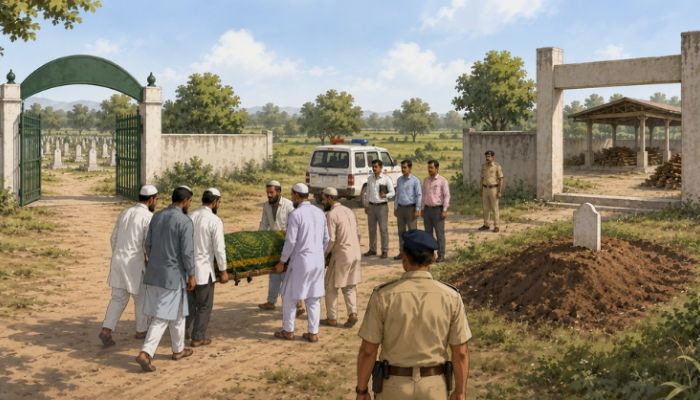
The Chhattisgarh High Court refused to quash a criminal case against Dilip Jha, a professor at Guru Ghasidas Central University in Bilaspur, for forcing Hindu students to offer namaz during an NSS camp in March 2025.

Dilip Jha sought quashing of the FIR against, State counsel argued against it, Chhattisgarh HC rejected the plea

In an order dated 16th April 2026, a division bench comprising Chief Justice Ramesh Sinha and Justice Ravindra Kumar Agrawal held that there was prima facie sufficient evidence in the charge sheet to warrant trial against Professor Dilip Jha.

Jha’s counsel, Arjit Tiwari, argued that the entire case against his client should be quashed as the impugned FIR and the consequential proceedings are “wholly frivolous, vexatious, and manifestly mala fide.”

The court, however, rejected this argument, stating that there was no evidence to establish that legal proceedings against Professor Dilip Jha were initiated with mala fide intentions.

The petitioner’s counsel had also contended that the complainant and other witnesses had stated that he was not present when Hindu students were forced to offer namaz, and the materials collected during the investigation show no evidence connecting him to the acts. It was stated by the petitioner’s counsel that he was a Project Coordinator for the NSS programme, had no operational or supervisory role at the camp site at the time when Hindu students were forced to offer namaz.

“The FIR, therefore, fails to disclose any cognizable offence against the petitioner and amounts to an abuse of the criminal process. Continuation of proceedings would cause irreparable harm to the petitioner’s professional career, reputation, and personal liberty,” the petitioner argued.

“The present case falls squarely within these principles, as the petitioner has been selectively implicated despite the institutional nature of the NSS programme, and no evidence implicates him in any operational wrongdoing, as such, the impugned FIR as well as the order taking cognisance, so far as it relates to the petitioner, be quashed,” Jha’s counsel added.

Meanwhile, the State counsel contended that the petition seeking quashing of the FIR and proceedings against Professor Dilip Jha “is not maintainable at this stage, as the charge-sheet has already been filed following a detailed investigation.”

The State counsel submitted that the filing of the charge-sheet demonstrates that the probe agency has found sufficient material to proceed against the petitioner, and it is now for the court to examine the evidence and determine the petitioner’s liability.

“Interference at this stage would amount to pre-judging the merits of the case, which is impermissible, and could impede the statutory criminal process,” the State counsel said.

After hearing arguments of both sides, the court observed that the investigation in the matter is completed and that sufficient material has been gathered against the accused.

Rejecting the petitioner’s “mala fide intentions” argument, the court said that while it takes note of the submission that the proceedings against Dilip Jha are “frivolous or vexatious”, quashing of proceedings is justified “only n exceptional circumstances where the allegations on the face of the FIR do not disclose a cognizable offence or where the proceedings are manifestly mala fide.”

“In the present case, the charge-sheet indicates that the investigation revealed prima facie evidence warranting trial, and there is no conclusive proof at this stage that the proceedings were instituted with ulterior motives,” the court stated.

Regarding the petitioner’s contention that he was not present when Hindu students were forced to offer namaz during a NSS camp, the court said that Dilip Jha’s absence from the scene or the question of his administrative role can be addressed during the trial. The court opined that interfering at this stage would amount to pre-judging issues of fact and evidence.

“It is evident that the petitioner has already been granted anticipatory bail. The petitioner’s contention regarding absence from the scene or administrative role is a matter that can be fully addressed during the trial through cross-examination and presentation of evidence. Interference at this stage would amount to pre-judging issues of fact and evidence, which the Court is not empowered to do,” the court said.

Dismissing the Jha’s plea, the court ruled, “In view of the above, and relying on the settled principles laid down in Bhajan Lal (supra), Mohammed Wajid (supra), and Ishwar Pratap Singh (supra), the petition lacks merit and is dismissed. No order as to costs.”

Background of the case

Back in March-April 2025, a massive row had erupted in Bilaspur’s Guru Ghasidas Central University after over 150 Hindu students narrated that they were coerced into offering namaz during an NSS (National Service Scheme) camp.

The students had filed a formal complaint at the Koni police station, accusing camp officials of religious coercion, manipulation, and threats of withholding participation certificates.

It was reported that the incident occurred during a week-long NSS camp (March 26–April 1) in Shivtarai forest. On 31st March, Eid-ul-Fitr, the coordinator reportedly invited four Muslim students to pray on stage, and then forced Hindu students to offer namaz without their consent. It was stated that this move was part of a larger effort to influence their beliefs under the guise of cultural exchange.

Despite objections, the students informed that they were threatened with disciplinary action if they refused. Phones were confiscated, preventing documentation of the incident.

Consequently, a complaint was filed against program officer Dr Basant Kumar, coordinator Dilip Jha, and others.

In May 2025, the Chhattisgarh High Court refused to quash 2 FIRs against 7 professors at Guru Ghasidas Central University. A petition seeking cancellation of the FIR was filed by Professor Dilip Jha, who was arrested in this case. However, he was later granted bail. The second petition was filed by six assistant professors. These people were named as accused in this case.

Back then, Chief Justice Ramesh Sinha and Justice Rakesh Mohan Pandey of the Chhattisgarh High Court dismissed the plea, stating that the veracity of the allegations in the FIR cannot be commented upon during the investigation. The court allowed the police to complete the investigation into the matter.

Now, on 16th April 2026, the Chhattisgarh High Court has once again rejected Jha’s desperate plea seeking quashing of the FIRs and proceedings against him.

Twitter DM scam: X users hacked via fake links from mutuals, what happened and how to stay safe – Read details

An X user received a direct message (DM) from a mutual seeking support in the form of a vote for an influencer programme or a competition. The user, who believed the message was from the mutual, clicked on the link in good faith. Within seconds, his account was hacked, his email ID was changed and his profile was now full of posts related to crypto. In the next few hours, his mutuals were getting similar DMs from his account.

This is not fiction but one of the most common scams happening on X, formerly known as Twitter, for years, and now it is once again affecting users. Several famous handles including Ramprasad_c, NAN_DINI_, and others fell prey to the hack.

X user Mohan Sinha, one of the friends of Nandini on X, shared a message from her yesterday stating that she received a DM from a follower seeking a vote for him on a website. Initially, she ignored it for a couple of days. However, the follower then followed up and said that he was just a few votes short.

While this could have been seen as a red flag, she clicked on the link. She was immediately logged out of X and the moment she entered her password, the account was gone.

Soon after, a suspicious X account coach_hannahrae was being promoted on her timeline with some crypto links. While those posts have been removed from her profile now, it is unclear if she has regained access to her account or not. Nandini is not alone. There are many such X users who received similar DMs, and they accidentally clicked on the link and lost their accounts within seconds.

In the comments under the post from Mohan, several X users said they recieved similar DMs and some also shared screenshots of the posts published after the hack.

What is happening

This is a phishing scam that is circulating on X. This is not a new scam and versions of this have been around for years, not only on X but on other platforms like Facebook, WhatsApp, and Instagram as well.

In such scams, users receive a DM from a mutual asking for some help. It could be anything including a vote, support, sharing a page or anything. In this case, the DM is about a vote for an influencer programme. The message appears authentic because it is from a known contact with whom either you have interacted or at least you both follow each other.

However, the account sending you the message is already compromised. Clicking on such a link starts a chain reaction that spreads to your contacts on social media because once your account is compromised, they will get a similar message from the scammer pretending to be you.

When someone clicks on the link in the DM, note that your account does not get hacked automatically. It takes you to a fake login page that looks like X. When users enter their username and password, the credentials are captured instantly. Within seconds, hackers, who have been waiting for someone to fall for the scam, get hold of your account, change the registered email ID and password and lock the original user out.

The compromised account is then used to run a similar scam and post content promoting cryptocurrency or some other scam. Because the account is credible for the followers, many of them click on the links in the post and may face financial losses.

How to be safe

Users should treat unsolicited DMs, especially those asking them to vote or click on a link, even if it is from a mutual, with caution. Never click on such links directly. Confirm with the sender through another platform or ask a question that only they can answer.

Make sure to check the URL before logging in. When you click on a link in the DM, you are not logged out from your X account. In most cases, you are taken to a page that looks exactly like the X login page. Close the page and open X’s official link. Only then enter your credentials.

Make sure to enable two factor authentication to add an extra layer of security. Use a unique and strong password for X that is not used on any other platform. Make sure to regularly review active sessions and logged in devices. Log out from any unknown sessions. If a mutual suddenly sends repetitive promotional messages, assume their account may be compromised.

How to regain access to X account

If you have already lost access to your account, act immediately. First of all, try resetting your password using the official X password recovery option. In case the hacker has changed your email ID, use the “I don’t have access to this email” option and submit the request through X support.

Source: X

Make sure to provide as much information as you can to verify ownership. It may include previous email IDs, usernames, or linked phone numbers. Check your email for any security alerts from X and use those links to reverse unauthorised changes if still possible.

Make sure that your email account is secure because hackers often target it alongside social media accounts. It may take some time, in some cases several days, to regain access to your account.

Meanwhile, take help of some mutuals with whom you are in contact on other platforms or on the phone. Request them to post a message on your behalf, tagging you and explaining the situation.

Once you regain access to your account, remove any suspicious posts or DMs sent from your profile. Inform your followers that your account was compromised and advise them not to click on any link sent from your account in the last few days.

For decades, Assam’s political narrative was about Assamese Vs Bengalis, then Himanta Biswa Sarma changed it and united all Hindus: Story from a Bengali Hindu’s perspective

The day was 31st August 2025. Lakhs of Bengalis flocked to the Rangirkhari point in Assam’s Silchar city to catch a glimpse of Himanta Biswa Sarma. The overwhelming reception, warmth and adulation of the public that the Assamese-speaking Chief Minister received on that particular day remains unprecedented in the State’s history.

It was not just another political roadshow but a moment of reckoning: The long-standing ethnic divide between Assamese Hindus and Bengali Hindus had finally been breached.

Himanta Biswa Sarma had truly emerged as the ‘Mama‘(maternal uncle), not just for the youth of the Assamese-majority Brahmaputra Valley but the Bengali-dominated Barak Valley as well. A few decades ago, such a spectacle was politically impossible and unimaginable.

A sneak peek into the history

Three events in particular affected Bengali-Assamese relations over the last century, namely, the Partition of Bengal (1905), the Partition of India (1947) and the Bangladesh Liberation War (1971).

Although Bengalis and Assamese share vast similarities in terms of cuisine, language (written script) and culture, mass migration and changing demographics have become the bone of contention between the two ethnic groups.

The events of 1947 and 1971 saw a large displacement of Bengali Hindu refugees into Assam, mostly to avoid religious persecution at the hands of Muslim separatists (first in East Pakistan and later in Bangladesh).

Even after the Bangladesh Liberation War, Bengali Hindu refugees continued to migrate to Assam. This had led to friction with the indigenous Assamese community over land, resource-sharing and representation in politics.

Between the 1950s and the 1980s, the ethnic divide had spiralled out of control, leading to mass violence and language riots.

This was further worsened by vested political parties fanning communal disharmony and exploiting fault lines to divide the Hindu vote into distinct groups: Assamese and Bengali.

Himanta Biswa Sarma decimated politics to divide Assamese and Bengali Hindus

Interestingly, the vested groups appeased the Bengali Muslims from East Pakistan/Bangladesh, who illegally migrated to Assam for economic opportunities and worsened the demographic crisis (caused by them in the first place).

This served as a shrewd election strategy: First, divide Hindus into Assamese and Bengalis by making them fight over language and identity. Second, consolidate the ‘Miya’ (a term used by Bengali Muslims from East Pakistan/ Bangladesh to refer to themselves) vote bank as one bloc to keep winning elections.

As a result, the ethnic tension between Bengali Hindus and Assamese Hindus was kept boiling from time to time through provocative speeches, divisive policies and hateful political rhetoric. All of this changed after the BJP came to power in Assam in 2016, first under the Chief Ministership of Sarbananda Sonowal and then rather aggressively under Himanta Biswa Sarma.

Previously unheard and unseen in Assam politics, an objective approach was undertaken to draw a much-needed distinction between Bengali Hindu refugees (who migrated to the Indian State to flee persecution) and Bengali Muslim infiltrators (who came to Assam for economic opportunities). Through targeted messaging, awareness about the big difference between the two groups and their contribution to demographic change was made crystal clear.

How can someone who came to Assam to protect his religious identity be compared to someone who first created an Islamic nation and then migrated to the Indian State for opportunism? In the spirit of fairness, such a comparison is untenable. The Assamese Hindu community, which was once made to believe by vested political groups that their Bengali Hindu counterpart is somehow their enemy, has now called out the bluff.

Years of political propaganda, aimed at dividing and ruling over the masses, have been decimated under the leadership of Himanta Biswa Sarma. The State and its people are now convinced that there is only one enemy: The illegal immigrant who came to Assam after 24th March 1971 (the cut-off date of the Assam Accord) to reap economic benefits and change the culture of this beautiful Northeastern State.

Bengalis love ‘Mama’

Himanta Biswa Sarma has been vocal in differentiating between infiltrators and refugees. Hindu Bengalis, who lost their ancestral property and centuries of generational wealth to protect their ‘Dharma’, are finally getting their much-deserved recognition.

The Assam CM has repeatedly assured that no Hindu Bengali will be decried as a ‘foreigner’ or subjected to harassment. In September last year, he clarified, “There is no reason to suspect Hindu Bengalis as foreigners, as they have come before 1971. The CAA has no relevance in Assam.”

When the flawed draft of the National Register of Citizens (NRC) was published in Assam in 2019 and excluded about 12 lakh Hindu Bengalis, Himanta Biswa Sarma pointed out that the exercise was “fundamentally flawed” and called for a fresh NRC.

He has been unabashed about his Hindu identity and has meticulously worked to unite the community across linguistic and ethnic lines in Assam. He has been instrumental in mitigating differences and bringing Assamese Hindus and Bengali Hindus closer.

This explains why ‘Mama’ received a grand welcome in West Bengal ahead of the 2026 Vidhan Sabha election. His speeches were attended by thousands of Bengali voters. Never in the history of the Bengali-speaking State has an Assamese CM been given such a reception by the locals.

Interestingly, Himanta Biswa Sarma also spoke in Bengali to the delight of the locals. A few decades ago, vested groups would have created a political storm in Assam, but these powerless entities couldn’t move a needle this time.

It is due to the Assam CM’s relentless efforts that historical differences between Assamese Hindus and Bengali Hindus have healed, and the State has moved in the direction of permanent reconciliation.

A personal experience in identifying ‘opportunism’

I distinctly remember having a Twitter spat with a Muslim activist, masquerading as an Assamese nationalist, in early 2020. It was related to the rollout of the Citizenship Amendment Act in Assam.

During the course of the online debate, the activist tried to score brownie points by suggesting to his Assamese followers that I came from the ‘other side’ of the border and that they must be wary of me. (Fact: My family migrated to independent India from East Pakistan in 1947).

I was surprised to discover an indigenous Assamese Muslim nationalist for the first time. As such, I decided to look further into his account. When I scrolled through his Twitter timeline, I found that he had shared multiple articles decrying government action against illegal Rohingya infiltrators in Assam.

And that made one thing clear: The activist was advocating to keep illegal Rohingyas in Assam on one hand (for the virtue of Ummah) and berating a 2nd generation Bengali Hindu migrant on the other hand (by posing as an ‘Assamese nationalist’).

Isn’t this fascinating? A wolf in sheep’s clothing, championing his religious ideology while playing the ethnic card. But that was 6 years ago.

As history would have it, the political propaganda of such activists would be exposed in no time today. Because Himanta Biswa Sarma has left no scope of ambiguity in determining and making one thing clear – Who belongs in Assam and who doesn’t?

India receives its first 3D glass chip project in Odisha: Read about the decisive step for ‘Aatmanirbhar Bharat’ in the country’s semiconductor journey

On 19th April (Sunday), the foundation for the nation’s first cutting-edge 3D chip packaging facility was laid at Bhubaneswar’s Infovalley in the presence of Minister of Electronics and Information Technology Ashwini Vaishnaw, along with Odisha Chief Minister Mohan Charan Majhi, as well as other dignitaries.

The occasion marked a turning point for India’s aspirations in the semiconductor industry and Odisha’s rise as a future-oriented technology attraction. It is an important leap towards expanding the “Aatmanirbhar Bharat” policy in high-end electronics production and strengthening the indigenous semiconductor ecosystem. Odisha will house one of the most innovative chip packing systems in the global market, owing to the start of this venture in the Khordha district.

3D Glass Solutions Inc (3DGS) of the United States is responsible for the operation through its fully incorporated Indian company, Heterogeneous Integration Packaging Solutions Private Limited (HIPSPL). It is a greenfield, vertically integrated ATMP (Assembly, Testing, Marking and Packaging) unit with embedded glass substrate and sophisticated packaging. It is scheduled to cost Rs 1,943.53 crore in total, including Rs 799 crore in approved central fiscal assistance and an additional Rs 399.5 crore in support from the state.

High-growth sectors, including data hubs, artificial intelligence, machine learning, 5G/6G (Generation) communications, automotive radar, defence electronics, aerospace applications and photonics, will be served by the installation. The aim is to reach full-scale volume manufacturing by August 2030, with commercial production predicted to commence by August 2028.

A grand achievement in future innovation

“A high-tech industry coming to Odisha is a matter of pride. This is an advanced technology. Normally, a silicone substrate is used in the manufacturing of chips, and now the technology of advanced 3D Glass substrate will be employed. We will also work to double the capacity after the completion of the first phase of the plant,” Vaishnaw expressed. According to him, Odisha, which has historically been recognised for its capabilities in minerals, metals and energy, is now slowly carving out a name for itself in sophisticated sectors like electronics, IT and semiconductors.

The union minister highlighted that this effort will greatly improve the country’s semiconductor value chain and referred to it as one of the most novel manufacturing undertakings of its kind. He added that three other bids pertaining to electronics and semiconductors are underway, and two semiconductor assignments have already been sanctioned for Odisha under the India Semiconductor Mission.

Majhi also described the event as a “historic milestone” for Odisha and India. He pointed out that Global tech giants such as Intel, Lockheed Martin and Applied Materials are linked to inventive packaging technologies, and their interest in the state is a reflection of its growing industrial power.

“The products manufactured in the state will support next-generation sectors such as Artificial Intelligence, high-performance computing, defence electronics, telecommunications and advanced digital systems. Odisha is ready to play a pivotal role in realising Prime Minister Narendra Modi’s vision of making India self-reliant in semiconductor and electronics manufacturing,” he announced.

The chief minister mentioned that the plant is planned to supply 70,000 glass panels, 50 million assembled units and about 13,000 upgraded 3DHI (Heterogeneous Integration) modules annually.

He conveyed that large-scale job prospects for engineering graduates, diploma holders and Industrial Training Institutes (ITI) students will be made possible by Odisha’s rising semiconductor ecosystem, which will contribute to its transformation from an economy dependent on resources towards one driven by technology.

According to IT Secretary S Krishnan, the government will be ensuring a “close eye” on the endeavour, which might put the nation “on the map” in terms of modern chip packing.

Majhi also described the event as a “historic milestone” for Odisha and India. He pointed out that Global tech giants such as Intel, Lockheed Martin and Applied Materials are linked to inventive packaging technologies and their interest in the state is a reflection of its growing industrial power.

“The products manufactured in the state will support next-generation sectors such as Artificial Intelligence, high-performance computing, defence electronics, telecommunications and advanced digital systems. Odisha is ready to play a pivotal role in realising Prime Minister Narendra Modi’s vision of making India self-reliant in semiconductor and electronics manufacturing,” he announced.

The chief minister mentioned that the plant is planned to supply 70,000 glass panels, 50 million assembled units and about 13,000 upgraded 3DHI (Heterogeneous Integration) modules annually.

He conveyed that large-scale job prospects for engineering graduates, diploma holders and Industrial Training Institutes (ITI) students will be made possible by Odisha’s rising semiconductor ecosystem, which will contribute to its transformation from an economy dependent on resources towards one driven by technology.

According to IT Secretary S Krishnan, the government will be ensuring a “close eye” on the endeavour, which might put the nation “on the map” in terms of modern chip packing.

What are 3D glass semiconductors

The brand-new site in Odisha will utilise glass-based substrates and 3D stacking technologies, in contrast to conventional semiconductor manufacturing, which mostly involves silicon wafers and planar (2D) packaging. These enable the vertical integration of several chip components, significantly boosting processing power within a single footprint. For sophisticated nodes, glass substrates offer superior thermal stability, reduced signal loss and better accuracy.

The future of computing itself is influenced by the potential of 3D glass chip technology. It is crucial to stack chips vertically and integrate various components (logic, memory, sensors) as devices such as smartphones and autonomous systems need more power in smaller spaces. Faster AI models, more effective data centres, and advanced defensive electronics could all be made accessible by this “heterogeneous integration.”

Gordon Moore, a co-founder of Intel, created Moore’s Law in 1965, which predicted that the number of transistors on a chip would nearly double every two years, resulting in exponential spikes in processing power while lowering prices. It was the semiconductor industry’s guiding idea for many years. This pace has slowed, though, as chips move closer to their physical and thermal constraints at advanced nodes. It has brought the industry into new solutions such as improved packaging, chiplets and 3D integration to maintain performance gains.

A remarkable evolution in the supply chain

The value of the project is determined by the technology layer it seeks to achieve rather than by the size or scope of the investment. Its emphasis on capacity, intellectual property, and ecosystem positioning suggests an arrangement away from assembly-led manufacturing and in favour of deeper involvement in the global semiconductor value chain.

The facility particularly focuses on the IP-intensive portion of semiconductor production, whereas conventional ATMP units work with imported substrates and standardised methods. Furthermore, the glass-ceramic packaging platform of 3DGS has above 100 patents from 31 active patent families worldwide. Materials engineering, manufacturing techniques, device architectures and system-level integration are covered by these patents. Notably, India’s presence in these regions has been restricted thus far.

Both locally produced glass substrates and organic substrates from outside sources will be primarily supported by the unit, as early commercial activities will take place while the local ecosystem flourishes. The intention is to eventually switch entirely to glass-based innovative packaging. Glass substrates serve stronger connectivity density, elevated dependability and better thermal control. These features are vital for defence-grade hardware, advanced computing systems and AI accelerators.

This could also result in an upstream alteration in sourcing as Indian system integrators, OEMs (Original Equipment Manufacturers) and government vendors might get advanced packaged components in the country and do not have to approach packaging clusters in Taiwan and South Korea. This builds up supply resiliency and gives industries like data centres, telecom infrastructure, aircraft and defence electronics a higher degree of authority over a key hardware stack layer.

India’s ambition for semiconductor growth

The India Semiconductor Mission, a state-backed campaign to create a full-stack semiconductor ecosystem from fabrication and packaging to design and display manufacturing, was introduced in 2021 with an investment of Rs 76,000 crore. 10 semiconductor projects excess of Rs 1.6 lakh crore, have been sanctioned in 6 states comprising fabrication facilities, OSAT (Outsourced Semiconductor Assembly and Test) units and design-linked incentives.

According to reports, the government is developing the subsequent edition of the blueprint and might accept a proposal that would amount to approximately $11 billion.

Nepal imposes customs duty on Indian goods priced above NRS 100, protests erupt across border regions: Here’s what happened

The ousted KP Sharma Oli-led communist government in Nepal used to attack India intermittently through rhetoric. The present Balen Shah-led government, however, has apparently leapt to rolling out policies antagonising India. This time, at the cost of making the Nepali populace suffer. Protests have erupted in many parts of Nepal after the government issued directives enforcing a tax on all items above Nepali Rupee 100 imported from India.

Nepal imposes Rs 100 customs duty on Indian goods

As per the new rules, a mandatory customs duty or Bhansar will be imposed on goods costing more than Rs 100, to curb the loss of national revenue for Nepal. The order to levy customs duty on Indian exports was originally issued by the Oli government around two years ago; however, it could not be implemented at that time.

The move came reportedly after complaints emerged that Nepalese citizens residing in the India-Nepal border areas frequently visited Indian markets for the purchase of household, food, clothing and other items.

There has been an increase in the presence and activities of Nepal’s Armed Police Force (APF) in border areas to enforce the draconian tax levy on Indian goods.

Confirming the imposition of NRS 100 custom duty on Indian exports, an official from Nepal’s Department of Customs told ANI, “It has always been the government’s policy to adopt a zero-tolerance approach to prevent illegal imports in customs areas. The Customs Act already had a provision requiring duties on goods worth more than 100 rupees. ‘We have become more proactive now.”

High-level team has been formed to monitor the imposition of customs duty on Indian exports

To ensure a strict implementation of the customs duty imposition, a joint monitoring team consisting of the Department of Customs, the Department of Revenue Investigation, District Administration Offices, Nepal Police, and the Armed Police Force have been formed. Inspections are being conducted by the APF on Nepali people coming back home from the weekly market in  Kakarbhitta, Bhadrapur, Pherniya, and Rupandehi. Nepali citizens have to stand in long queues to have their packages checked by the authorities for Indian goods.

From Jhapa in the east to Kanchanpur in the west, all main and secondary customs points are witnessing intensified crackdowns under the pretext of curbing tax evasion. Besides inspections, the Nepali authorities are also running ‘awareness’ programs to apprise citizens about the new customs duty on Indian goods priced above NRS 100. The move comes across as the Balen Shah government’s diktat to deter Nepali citizens from visiting India and purchasing Indian goods altogether.

In addition to levying customs duty on Indian exports, Nepal, under Prime Minister Balen Shah, has also banned the entry of private vehicles with Indian license plates without prior authorisation.

Earlier, motorbikes with Indian number plates entered Nepal without any harsh restrictions, with many people even using them within the country.

However, the Balen Shah government’s unilateral, stringent policy, in addition to the prohibition on Indian-registered vehicles, has caused massive distress in Nepal’s border districts of Madhesh. The lives of ordinary people have been significantly affected by the Balen Shah government’s unwarranted targeting of India under the pretext of preventing revenue leakage.

Nepali residents in border areas rise in protest  

Local Nepalis who boast of having roti-beti relations with India have expressed immense discontent and slammed the Balen Shah government for its ignorance of the ground realities in the Madhesh region. Many political parties and activists have also extended support to protesting Nepali citizens.

Umesh Yadav, a member of the Central Coordination Committee of the Janata Samajbadi Party (JSP), said the open border between Nepal and India cannot be controlled by those sitting in air-conditioned rooms, be it in Kathmandu or Delhi. “’The open border is a literal and practical truth here. It is completely wrong to impose policies arbitrarily without understanding the concerns of residents from Biratnagar to Nepalgunj,” Yadav said.

Similarly, Rastriya Swatantra Party and chairman of the Open Border Dialogue Group, Dr Rajiv Jha, said that India and Nepal not only share a geographical border but also maintain social, cultural, religious, and familial ties.

“Setting a limit of 100 rupees in today’s era of inflation is extremely low and impractical; the government must review this immediately,’ Dr Jha said. ‘There should be a clear distinction between simple gifts brought by a daughter visiting from her maternal home and goods for commercial purposes. Food items should be exempt from customs,” Jha said.

Binay Yadav, Chairman of the Rastriya Ekta Dal, went a step ahead and dubbed the Balen Shah government’s move to levy customs duty on Indian goods, “undeclared blockade”.

“This step is against the provisions of the 1950 Peace and Friendship Treaty. The government should immediately remove the customs limit for household items and instruct security personnel to behave in a citizen-friendly manner,” he said, adding that if the directive is not rolled back, a massive protest will erupt in the Indo-Nepal border region.

The Nepali government’s divorced-from-reality move is not only causing immense inconvenience to Nepali citizens but also stoking troubles for Indian traders in the border areas.

In the Banbasa area of Uttarakhand’s Champawat district, Nepali citizens rely on the local Indian market for their daily essentials. Imposing a duty on Indian goods priced above NRS 100 would not only affect trade here but also result in price hikes in Nepal. This will force Nepali traders to procure affordable goods from non-Indian sources.

During a protest, a Nepali citizen told ANI, “Whatever the rituals are performed here (Nepal) from birth to death, we bring all the essentials from there (India), even the fertilisers which the Government of Nepal at times is not able to provide on time, we bring them from there. Now the situation has turned different; it is an unannounced blockade. The Jana Adhikar Party demand it to be withdrawn. Failure to control the plunder by the Government of Nepal is its incapacity.”

Another one said, “They’re not allowed to bring in items that cost above NRS 100 without paying tax; we want this provision to end. It has brought us to the protest. They should also respect the relation that exists- the relation of Roti-Beti between India and Nepal. We are demanding that the government give an exemption to the items that cost above NRS 100, which is for domestic use.”

Gujarat: Parvez Pathan trapped minor Hindu girl in Kheda, gang-raped her with Muslim friends for 3 years, blackmailed with obscene images and videos; 8 arrested, 1 absconding

On 17th April (Friday), a case involving the gang rape of a 17-year-old Hindu girl has come to light in the Kheda district, Gujarat. A complaint has been filed against 9 Muslim individuals at the Kheda Town Police Station, and 8 have been arrested. The police are actively working to capture the remaining suspect who is still at large.

The rapists have been identified as Parvez Anwar Khan, also known as Munawar Khan Pathan (the prime accused), Mahir Yakub Pathan, Faizan Zahir Khan Pathan, Taufiq alias Tausiq Hussain Khan Pathan, Sahil Liyaqat Khan alias Dawood Pathan, Ayan Liyaqat Khan Pathan, Moin Firoz Khan Pathan, Maruf alias Nurani Mubarak Pathan and Salman Arif Khan Pathan.

Hindu organisations have come forward and demanded strict action against the perpetrators. The police have indicated that the situation seems to involve a criminal conspiracy, and the investigation is currently focused on that aspect.

According to the information, the incident occurred in a village located in Kheda. The victim disclosed the entire ordeal to her mother and recounted her distressing experience, after which the latter registered a First Information Report (FIR). The police filed a case, commenced further actions and apprehended 8 offenders, presenting them before the court.

The minor told her mother that she had met Parvez Pathan, an inhabitant of the same village, three years ago. The two families maintained a close relationship and visited each other’s homes. Over time, he increasingly made deliberate attempts to trap her by any means necessary and somehow obtained her phone number. He persistently harassed her. During this time, he once summoned her late at night, threatening to tarnish her image if she did not comply.

The underage girl went alone to the village school that the duo attended, to meet him out of fear. Parvez reportedly raped her and also recorded photographs and videos. He repeated the heinous act nearly 10 to 12 times on different occasions. He shared obscene visuals within his circle of friends, which prompted the others to begin threatening and sexually violating her as well. He forced her to have sexual relations with all of his associates and issued death threats along with threats to damage her reputation if she denied.

“You are obligated to come whenever we call. If you do not, we will make sure these photos and videos go viral,” Parvez dictated. According to the complaint, she was horrified and cried. However, he verbally assaulted her and blackmailed, “You are to be kept exclusively for the enjoyment of our entire group. If you refuse to submit to sexual relations with any of them, your photos and videos will be made public.”

A couple of days following the incident, he threatened the victim again and remarked, “You will never marry or become engaged. You must consistently keep all your friends pleased,” during the gang rape. Afterwards, she was regularly put through similarly horrendous circumstances by them and likewise mocked, “You are not going to get engaged or married anywhere. You must maintain this relationship exactly as it is.”

Parvez and his gang exploited the girl for 3 years, subjecting her to continuous intimidation and torment. She eventually turned utterly despondent, cried profusely at home, and even wanted to end her life, which led her to reveal the entire episode to her mother when inquired.

The mother was initially hesitant to notify the cops due to concern of social backlash, but later decided otherwise and went to the police station after she was persuaded by the community. The accused have been booked under sections 64(2)(m), 65(1), 70(2), 351(2), 352, 61(2) and 3(5) of the Bharatiya Nyaya Sanhita (BNS) along with sections 3(a), 4, 5(G), 5(L) and 6 of the Protection of Children from Sexual Offences (POCSO) Act.

In an interview with OpIndia, VB Desai, the Officer in Charge of Kheda Town Police Station, unveiled that this occurrence was carried out as part of a coordinated criminal conspiracy. The police have nabbed 8 persons, and further measures against them are in progress. There are ongoing efforts to find the absconding accused.

From industrial powerhouse to debt trap: Read how West Bengal’s economy has seen a massive decline under the TMC government since 2011

As West Bengal moves toward the 2026 Assembly elections, the atmosphere is thick with political tension. From the tea gardens of Darjeeling to the industrial belts of Hooghly and the coastal villages of the South, every corner of the state is bracing for a decisive moment. 

Beyond the slogans of “Ma, Mati, Manush” by TMC, a study shows how a state that once stood among India’s foremost economic powerhouses has gradually slid into a cycle of debt and decline. First under the decades-long rule of the Left Front and now under fifteen years of the All India Trinamool Congress (TMC) government led by Mamata Banerjee.

A structural decline since 2011

According to the financial report [pdf] published by Finskeptics, there was a sense of hope that the “new dawn” would finally break the chains of industrial inertia. However, the data shows that the structural weaknesses of the economy haven’t just remained; they’ve actually deepened. 

While the state government has been very successful at building a massive network of welfare schemes, which provide immediate relief to the poor, the “engine” of the economy is sputtering. We are seeing a model where the government is spending more and more on redistribution while the productive sectors, like heavy industry and IT, are struggling to keep up.

The consequences are visible in broader indicators: West Bengal’s share in national GDP has declined, per capita income remains below the national average, and thousands of companies have moved out of the state.

The investment climate has also suffered. Informal costs such as rent-seeking networks, combined with political interference in labour relations, have reduced investor confidence. Infrastructure gaps and factory closures have further weakened the industrial ecosystem.

The long fall of an Industrial giant

Historically, West Bengal was the nerve centre of Indian industry. Shortly after Independence, it contributed nearly 10% to the national GDP. It was the land of engineering giants, jute mills, and the undisputed commercial capital of the East. But over the last seven decades, a combination of bad luck and even worse policy has eroded that foundation. From the shocks of Partition to the “freight equalisation policy” that stripped Bengal of its competitive edge in minerals, and the later years of militant labour movements under the Left, the decline was steady.

The “Bengal Curse” is a poignant way to describe this: in 1960, West Bengal was the 3rd richest state in India. By 2024, it had tumbled to the 24th spot. 

Graph via Finskeptics

According to a major working paper by the Economic Advisory Council to the Prime Minister (EAC-PM), the state’s share of national GDP dropped from 10.5% in 1960–61 to just 5.6% in 2023–24. This is the sharpest drop recorded for any major state in the country. Even more heartbreaking is that the relative per capita income, which used to be 127.5% of the national average, has crashed to 83.7%. States like Odisha, which were once considered far behind Bengal, are now racing ahead while Bengal struggles to find its footing.

Graph via Finskeptics

This long-term decline, often described as the “Bengal Curse,” reflects cumulative policy failures across regimes. While the Left Front years entrenched deindustrialisation, the post-2011 period has not delivered the expected turnaround.

The current financial mess: Welfare at the cost of growth

Under the TMC government, the financial situation has become increasingly fragile. The state is currently trapped in a cycle of borrowing to pay for day-to-day expenses rather than building assets that could generate future income. The debt has skyrocketed, and because the state isn’t bringing in enough of its own tax revenue, it has become heavily dependent on the Centre. 

The state’s debt has surged to over ₹7.7 lakh crore, while fiscal deficits remain high. Welfare expenditure has expanded significantly, often around election cycles, but capital investment continues to lag.

While the government celebrates its “populist” image, the math behind it is worrying. Most of the money coming in is immediately swallowed up by interest payments on old loans, salaries, and pensions. This leaves very little room for building new roads, bridges, or power plants, the very things that attract businesses and create jobs.

Key indicators highlight the imbalance. Own tax revenue growth remains weak, the credit-deposit ratio is low, and foreign investment inflows are modest. Industrial closures and company relocations further indicate a weakening economic base. The MSME sector, though large in numbers, is dominated by micro enterprises with limited capacity for scale or job creation.

Fiscal and debt trends: The growing mountain of loss

The numbers regarding Bengal’s debt are staggering. When the TMC took office in 2011, the state’s debt was about ₹1.92 lakh crore. By the end of the 2025–26 fiscal year, that figure is projected to hit a massive ₹7.7 lakh crore. That is a fourfold increase in just 15 years. 

Every single citizen in West Bengal now carries a “debt burden” of roughly ₹70,653. While the government argues that this is manageable, the real danger is the interest. West Bengal spends about 20% to 28% of all the money it earns just on paying back interest. In comparison, most other big states only spend between 5% and 15%. This means Bengal is losing its “fiscal breathing room.”

Even more concerning is the “Revenue Deficit.” In simple terms, the state is borrowing money to pay for things like subsidies and administrative costs rather than building infrastructure. In FY 2024-25, the fiscal deficit reached 4.02% of the GSDP, which is well above the safe limit of 3% recommended by experts. 

Graph via Finskeptics

Between 2020 and 2025, the state accumulated a revenue deficit of ₹1.49 lakh crore. To sustain this, the government has been borrowing heavily, with loans making up 80% of its capital receipts. This is like a household taking out a high-interest credit card loan just to pay the grocery bill; it’s a short-term fix that leads to long-term disaster.

Industrial exodus: Why the factories are leaving

One of the most visible signs of economic stress in West Bengal is the steady exit of industries. Since 2011, over 6,600 companies, including 110 listed firms, have moved their registered offices out of West Bengal. This isn’t just a temporary dip; it’s a structural flight of capital. 

Table via Finskeptics

Businesses are leaving for states like Maharashtra, Gujarat, and Uttar Pradesh because they no longer feel confident in Bengal’s business environment. While the state holds grand “Bengal Global Business Summits” and announces massive investment figures, the reality on the ground is that only about 4% of those proposals ever actually happen.

A major reason for this is the “Syndicate System.” In Bengal, the term “syndicate” refers to politically backed groups that control everything from construction materials to labour supply. If a company wants to build a factory, they often have to deal with these informal networks that demand “cut money”, essentially a bribe or a parallel tax. 

This adds a huge hidden cost to doing business. On top of this, the old “Gherao” culture, where workers surround managers to demand changes, has made a comeback under new names, leading to 177 factory closures during the TMC’s tenure compared to 83 under the previous government. 

This environment has scared away big investors, leaving the state’s industrial output to shrink from 13.5% in the 70s to a measly 3.9% today.

Labour and sectoral distress: The Human cost of decline

The economic imbalance is not just visible in data; it is reflected in the lives of people. One of the clearest indicators is the rise in labour migration. Because there are no new factories and the old ones are closing, West Bengal has become one of India’s biggest exporters of labour. As of 2025, an estimated 22.4 lakh workers from Bengal are working in other states like Kerala, Karnataka, and Maharashtra. 

These are people who have left their families behind to do menial jobs elsewhere because they can’t find a living wage at home. This massive out-migration is a “silent referendum” on the state’s governance. If things were going well, why would over two million people flee their homes to work in distant lands?

The distress is particularly visible in the tea gardens of North Bengal. Once the pride of the state, the tea industry is now in a “humanitarian emergency.” Production in 2025 dropped by 50-60%, and 80% of the organised gardens are running at a loss. 

But the real tragedy is the workers. While a tea worker in Sikkim earns ₹500 a day, a worker in West Bengal gets only ₹250. This wage gap has led to horrific levels of malnutrition. 

Studies in the Alipurduar district show that over 36% of tea workers are clinically undernourished, and nearly 88% suffer from anaemia. In some abandoned gardens, people are literally dying of hunger-related complications. Instead of reviving the industry, the state has allowed land to be diverted for “tea tourism” and real estate, effectively liquidating the assets while the workers starve.

Macroeconomic underperformance: Falling behind the rest of India

At the macro level, West Bengal’s economic performance continues to lag behind comparable states. Its share of national GDP has fallen from 10.5% in 1960–61 to just 5.6% in 2023–24. Per capita income remains below the national average at around 83.7%. The nominal GSDP growth of the state in FY25 was just 9.91%, the lowest among all comparable major states. 

The Credit-Deposit (CD) ratio, which measures how much banks are lending locally, is stuck between 46% and 52%. This is 30 points below the national average! It means that the money people in Bengal save in banks is being sent by those banks to other states to fund projects there, because there aren’t enough viable projects to fund in Bengal.

The MSME (Micro, Small, and Medium Enterprises) sector, which the government often brags about, is also in trouble. While there are millions of registrations, 99.9% of them are “Micro” units, often just one person working from home.

These aren’t the kind of businesses that can scale up and provide thousands of jobs. In fact, over 2,200 MSMEs closed down between 2019 and 2024. The state’s ability to generate its own tax revenue is among the lowest in India, and its spending on infrastructure has dropped from 5.3% to a tiny 3%.

Conclusion

What emerges from all these numbers is a clear and worrying pattern. West Bengal is transforming from a state of production to a state of dependency. It is moving from industrial employment to a reliance on money sent home by migrants. Its share of the national pie is shrinking, its factories are closing, and its debt is piling up. 

West Bengal’s economic challenges today are not the result of a temporary slowdown; they reflect a deeper structural imbalance. The shift toward welfare-heavy spending without corresponding growth in production, investment, and industry has created a fragile economic model.

High debt, low capital investment, industrial flight, and rising migration are all interconnected symptoms of this imbalance.

Sameer Mohammed held Dharmesh hostage, and Rizwan attacked him with a knife: Read what the FIR says about brutal murder of Hindu man in Gujarat’s Dhandhuka

On April 18 (Saturday), two Muslim men brutally murdered a Hindu man, Dharmesh Bharwad, in Dhandhuka town of the Ahmedabad district of Gujarat. A minor dispute over a trivial issue relating to parking led to the victim being stabbed to death by the accused. After the attack, Dharmesh was rushed to the hospital in a critical condition, where he succumbed to his injuries. The incident sparked outrage among the local Hindu community, leading to widespread demonstrations and shops being vandalised. As the situation deteriorated, a police convoy, including Ahmedabad Rural SP and other senior officials, reached Dhandhuka and brought the situation under control.

Rahul Bharwad, the cousin of the deceased, Dharmesh, filed a complaint regarding the entire incident at the Dhandhuka Police Station, based on which the police have registered an FIR. A copy of the FIR is available with OpIndia. The accused have been identified as Rizwan Nizam Maniyar and Sameer Mohammed Amdani. They were arrested by the police and were sent into custody for interrogation.

On the fateful day, Dharmesh Gamara (Bharwad) asked his cousin, Rahul, to accompany him to the place of a relative and also bring his motorbike. Rahul agreed and met Dharmesh at Ranpur crossroad, where he took Rahul’s motorbike and left for the bank for some work. On reaching the bank, as Dharmesh was parking his bike, Sameer and Rizwan got into an argument with him over a parking space. Dharmesh ignored them and went inside the bank to finish the work. In the meantime, he called Rahul to the bank from where they left for the relative’s place on separate bikes.

The accused stood near the vehicle and began their assault.

When Dharmesh and Rahul reached Naseeb Society, they saw that two accused were already present there, blocking the road. They started abusing Dharmesh. When Dharmesh and Rahul attempted to reason with the accused, the attackers assaulted them and grabbed Dharmesh. “What were you talking about at the bank? Today, we are going to finish you off,” the accused said, threatening Dharmesh. In his complaint, Rahul stated that Sameer Mohammed held Dharmesh down while Rizwan stabbed him with a knife. Rahul attempted to intervene, but by then, the attack on Dharmesh had been stabbed.

The accused immediately fled the scene after the act. Dharmesh Bharwad was rushed to the hospital in a critical condition; however, his life could not be saved, and he was pronounced dead after briefly receiving treatment. According to the complaint filed by Rahul, while on the way to the hospital, Dharmesh had identified the accused as Rizwan and Sameer.

Based on the complaint, the police registered an FIR against the accused, Rizwan Nizam Maniyar and Sameer Mohammed Amdani, under Sections 103(1), 351(3), 352, and 54 of the BNS, and Section 135 of the Gujarat Police Act. Terming the incident a premeditated criminal conspiracy, the police have initiated an investigation into the case.

Speaking to OpIndia, Rahul said that the two accused attacked Dharmesh with a sharp-edged weapon, shouting, “We will not spare him today. Let’s kill him”. They fled the spot after stabbing Dharmesh. The complainant further recounted that he attempted to intervene and rushed to save his brother, but the accused restrained him, thereby preventing him from saving his brother.

Police to constitute a Special Investigation Team

Speaking about the incident, Ahmedabad Rural SP Om Prakash Jat said that he met the victim’s family, who expressed satisfaction over the police action. He further added, “The deceased’s family had demanded the appointment of a special public prosecutor and a comprehensive investigation. Therefore, we will constitute a Special Investigation Team (SIT) after consulting with our senior officials and the government.”

Furthermore, the SP said that all shops were reopened and peace prevails in the area. The police had initiated a search of the locality during the night and had also started interrogating suspects. Providing a brief account of the incident, the police official explained that following an altercation over a motorcycle, two individuals named Rizwan and Sameer attacked Dharmesh, who later died. The police confirmed that a thorough investigation into the incident is underway, and further legal action has been initiated following the arrest of the accused.

Notably, in 2022, a Hindu man named Kishan Bharwad was murdered by Muslims in the same area merely for posting a picture of Lord Krishna. He was shot dead in broad daylight by Muslims in Sarjaher. Subsequently, several accused, including a cleric, were arrested in connection with this case. Hindus had not been able to forget the brutal murder of Kishan Bharwad, and outrage spread when another similar incident occurred in the area. However, peace currently prevails in the region.

TCS Nashik conversion scandal: Company says Nida Khan was a process associate, not HR manager – Read what is the role and its responsibilities

On 17th April, Tata Consultancy Services (TCS) issued an official statement regarding the ongoing conversion scandal controversy. In its statement, the company stated that while media reports have named Nida Khan as HR manager, she holds the post of a process associate. The company further clarified that she did not hold any leadership roles.

The statement read, “Ms. Nida Khan, who is being repeatedly mentioned in the press as an HR manager of TCS, is neither an HR manager nor responsible for recruitment. She served as a process associate and did not hold any leadership responsibilities.” The statement was also submitted to the National Stock Exchange and shared on social media platforms. Notably, Nida Khan has been suspended by the company pending internal investigation.

Several media houses and Left-liberals used this statement to whitewash the role of Nida Khan in the conversion scandal.

Propagandist and fake news peddler posing as a fact-checker, Mohammed Zubair of Alt News, ran a campaign after TCS’s clarification and targeted every news portal and media house that called Nida Khan an HR manager.

Source: X

A detailed report was published on Alt News targeting media houses including OpIndia. However, the article did not describe the role of process associate in HR framework.

Source: Alt News

Several social media users ran similar campaigns targeting media houses for calling her HR manager, without going into details of the role of a process associate.

Source: X

What is a process associate in HR?

While TCS has clarified that Nida Khan was not an HR manager, the company completely skipped explaining the role of a process associate in the HR department. This job profile, which according to the company, Nida Khan held, requires a closer look, especially to understand what responsibilities employees in such positions entail within large corporate structures.

While process associate is not a leadership role, an employee in this post in the HR department is responsible for handling operational and backend HR functions. These roles form a crucial part of the human resources workflow by ensuring that systems, documentation, and employee processes function smoothly.

Handling employee documentation and onboarding processes

One of the main responsibilities of a process associate is to manage employee documentation. The process associate is responsible for verifying identity proofs, conducting background checks, and ensuring that all the needed paperwork is in place before the employee completes onboarding. The process associate also makes sure that documents such as non-disclosure agreements, company policies, and employment contracts are processed and recorded.

These functions are important for compliance and maintaining standards at the organisational level, especially in large companies where onboarding is handled at scale.

Maintaining and updating employee records

Furthermore, process associates are also responsible for updating and maintaining employee data in HR systems. This involves inputting accurate information, ensuring records are up to date, and managing databases that are used across various HR services.

The role requires attention to detail, as errors in employee data can impact payroll, compliance, and internal reporting systems.

Acting as the first point of contact for employees

This is the most crucial aspect of the process associate role, especially when seen in the context of the ongoing TCS conversion scandal controversy. In many organisations, process associates act as the first level of interaction for employees facing issues related to HR. They record complaints, respond to basic queries, and escalate matters to the appropriate departments such as senior HR personnel or committees like POSH when required.

Though they may not play a direct role or hold authority to resolve complex matters independently, their role is to act as a bridge between employees and the broader HR framework.

Supporting HR operations and compliance

Other than basic documentation and communication, process associates support HR operations in generating reports, handle transactional processes, and assist in compliance-related tasks.

Another key aspect of the role includes addressing employee queries related to compensation, policies, and HR procedures. While they may not make policy decisions, they help interpret and communicate existing frameworks to employees and ensure timely resolution of concerns by coordinating with relevant teams.

Role limited to execution, not decision making

As described above, the role of a process associate is mostly execution-driven. It involves processing, verifying, updating, and escalating, rather than making strategic decisions or leading teams. While what TCS claims in its statement is true, denying Nida Khan’s role in the HR framework just because she was a process associate would be completely wrong.

The investigation in the matter is underway and as Nida Khan is still absconding, the police are yet to question her about her role in the company and the controversy surrounding the FIRs that have named her.

Women in Parliaments of the world: Read which countries have reservations, which have candidate quotas, and where India stands globally

0

India’s attempt to implement women’s reservation in the Parliament suffered a major setback after the Constitution (One Hundred and Sixth Amendment) Act, 2023, failed to get through the Parliament. India’s current representation of women in the Indian Parliament is roughly around 14% in the Lok Sabha and 17% in the Rajya Sabha, as compared to the global average, which stands at 26%. The low representation of women in politics and their involvement in decision-making at the national and lower levels has been and continues to be low worldwide.

While in principle, India has already taken a step forward in the direction of increasing women’s participation in the national decision-making with the passing of the Constitution (One Hundred and Sixth Amendment) Act, 2023, the law has been waiting for implementation for over two years.

The debate about bringing gender parity in politics and public life is not limited to any one country or region. The 17 Sustainable Development Goals (SDGs) under the 2030 Agenda for Sustainable Development include gender equality as one of the goals. It goes without saying that gender parity in politics and policymaking is pivotal for achieving gender equality at other levels nationally as well as globally.

Notably, India is not the only country to take legislative action to ensure that women are given adequate representation in the country’s biggest decision-making body. Several other countries have taken affirmative actions to ensure women’s representation in the national as well as local politics. Some of the countries have introduced fixed minimum quotas for women in their national legislative bodies, while others have fixed minimum quotas in the candidates’ lists of political parties.

Here is a list of some of the countries which have taken affirmative actions and fixed gender quotas, including reserved seats in their national or local legislative bodies and candidate quotas.

Nepal

In Nepal, 33% seats in its Parliament are reserved for women. It has a fixed gender quota of 33% for the Lower House and 2% for the Upper House. The gender quota for the sub-national level also stands at 33%.

Pakistan

In Pakistan, the gender quota was introduced in 1965, but after 2002, the minimum representation of women in its National Assembly was fixed at 17%.

Bangladesh

In Bangladesh, at least 14% of the seats in the Lower House of the Jatiye Sansad are to be filled by women candidates, while at the sub-national level, the minimum gender quota has been fixed at 33%.

Sri Lanka

Sri Lanka has fixed a gender quota target for the Sub-national level at 25%.

United Arab Emirates

The Middle Eastern country has a gender Quota target of 50% for the Lower House of its Federal National Council.

Indonesia

The gender quota in the Lower House of the People’s Consultative Assembly has been fixed at 30%. The minimum percentage of women at the sub-national level has also been set at 30%.

Greece

40% of the seats in the Lower House of the Hellenic Parliament have been reserved for women representatives. And the same percentage of seats has been fixed for women at the sub-national level.

Italy

In Italy, 40% of the seats in the Lower House of the Italian Parliament have been reserved for women, and the same percentage of the total seats have been fixed for women representatives in the Upper House. Besides, 40% reservation has been provided to women candidates at the sub-national level. The political parties in Italy have voluntarily adopted gender quotas.

Spain

Spain has reserved 40% of the seats in the Lower House and 50% of the seats in the Upper House of its national legislature for women. At the sub-national level, 40% of the seats have been reserved for women. Like Italy, political parties in Spain have also adopted voluntary quotas of 44% for women.

Norway

The Nordic country has fixed a gender quota of 40% for women at the sub-national level.

Notably, major Western and European countries like the US, Canada, France, Germany and Sweden do not have seats reserved for women representatives in their national legislative bodies. If one takes a look at the representation of women in top political positions and connected public offices globally, in 28 countries, 30 women serve as Heads of State and/or Government as of January 1, 2026. According to the data compiled by UN Women, women represent 22.4 per cent of Cabinet members heading Ministries, leading a policy area as of the same date.

According to an estimate, at the current rates of progress in granting women representation in political spheres, gender parity in national legislative bodies will not be achieved before 2063. While gender parity remains evasive across the world, including the first world and the third world countries alike, reservation of seats for women in national legislatures and local levels has contributed significantly towards the aspirational goal of achieving gender parity in politics globally.

Women’s representation in politics is not a mere cosmetic change in how the national decision-making bodies appear. It had deep and far-reaching implications for policies and governance outcomes. A balanced representation is likely to ensure more equitable and inclusive policy-making. It will encourage and empower women to claim their rightful places in public life and areas traditionally dominated by men because of societal norms and a tilted power structure.