Home Blog Page 3223

“I have forgiven everyone”: Indrani Mukerjea after getting bail in the case of the murder of her daughter

Indrani Mukerjea, who was imprisoned in Mumbai’s Byculla jail since 2015 for murdering her own daughter Sheena Bora in 2012, told reporters on Friday that she has ‘forgiven’ everybody who has hurt her. Mukerjea, who made everyone believe that Sheena Bora was her sister, was granted conditional bail by the Supreme Court on Wednesday, May 18 in the murder case.

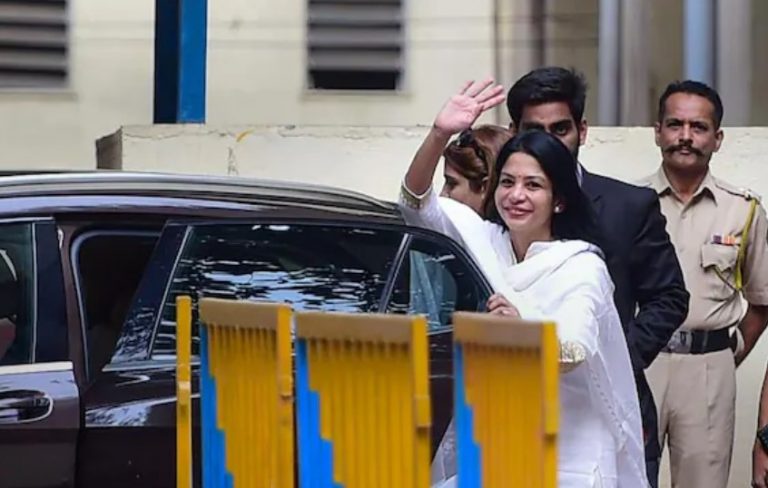
As she walked out of jail, she spoke to the media that was waiting outside Mumbai’s Byculla women’s prison to catch a glimpse of the former media executive. Asked if she blamed anyone for her incarceration, the murder accused Indrani said, “I have forgiven all the people who have hurt me. That’s all.”

“My faith in the judiciary is restored. All should respect the laws of the country. There may be a delay but there is justice,” she told reporters outside her Worli house.

“I am very happy. There are no other emotions now. I am feeling very free,” Indrani added as she refused to make any further remarks as the matter is sub-judice, she said.

Supreme Court, on Wednesday, granted bail to Indrani Mukerjea subject to the same conditions on which her ex-husband Peter Mukerjea was granted bail. Peter Mukerjea, Indrani Mukerjea’s ex-husband is co-accused in the Sheena Bora murder case. He was arrested in 2015 and later granted conditional bail by the Bombay High Court on February 6, 2020. According to the bail terms, Peter Mukerjea cannot contact his son Rahul Mukerjea and Vidhie Mukerjea, Sanjeev Khanna’s daughter. Sanjeev Khanna is Indrani Mukerjea’s second husband and also an accused in the case. Moreover, the court had said that Peter must report to the CBI at regular intervals and surrender his passport.

The Supreme Court granted bail as Indrani Mukherjea had been in custody for 6.5 years and the trial was unlikely to be completed soon.

The ruling was issued in a special leave petition filed by Justices L Nageswara Rao and BR Gavai in response to a Bombay High Court order dismissing her bail plea in November 2021.

The court also noted that other accused in the case, including Peter Mukherjea, have been out on bail since February 2020.

Indrani Mukerjea claims daughter Sheena Bora is alive, asks CBI to look for her in Kashmir

Indrani Mukerjea was imprisoned in Mumbai’s Byculla jail in 2015 for murdering her own daughter Sheena Bora in one of the most shocking murder mysteries of recent times. Four years after Sheena Bora mysteriously ‘disappeared’, Indrani Mukerjea, her mother who made everyone believe she was her sister, was arrested for her murder.

Interestingly, last year in December, Indrani Mukerjea claimed that her daughter is still alive and resides in Jammu and Kashmir. In a letter written to the director of the Central Bureau of Investigation (CBI), Mukerjea asked the agency to look for Sheena Bora in Kashmir.

In the letter to Subodh Jaiswal, Mukerjea reportedly wrote that she recently came across a woman in prison who claimed to have met Sheena Bora in Kashmir. Thus, she urged CBI to search for her daughter in Jammu and Kashmir.

Sheena Bora murder case

Sheena Bora murder case has been one of the most shocking murder mysteries of recent times, especially because of the fact that Indrani and her millionaire husband managed to cover up the crime for nearly 4 years.

On 24 April 2012, Sheena took a leave of absence from Mumbai Metro One Pvt Ltd through an e-mail. Soon after her ‘leave of absence’, she ‘resigned’ via email. She was in a relationship with Rahul Mukerjea, son of Indrani Mukerjea’s husband, Peter Mukerjea. Indrani, who was her mother in reality but had told everyone she was Sheena’s sister, did not approve of the relationship. Peter is the former CEO of STAR India.

Sheena was never seen by anyone after the 24th of April 2012. She is believed to have been killed on the same night itself. Indrani had reportedly teamed up with her ex-husband Sanjeev Khanna to kill her. Prior to her murder, Indrani had reportedly carried out a recce of the location site where the body would be dumped. After killing Sheena, Indrani had brought the body to their home in Worli where Sheena was stuffed inside a suitcase. The next day, Sheena’s body was taken out, propped up as a passenger, and was taken to Raigad near Mumbai. There, the body was again stuffed into a bag which was then set on fire.

On May 23, 2012, villagers of Pen Tehsil, Raigad had complained of a foul odor and found a body. There was no identification mark and no one linked it to Sheena Bora. The DNA samples were collected and kept in the record as the case remained a mystery.

Three years later, when Indrani’s driver, Shyamvar Rai, was arrested in an illegal arms case, the details of the Sheena Bora murder case emerged. Rai has since then turned approver.

Tainted cop Param Bir Singh was the IG of Konkan range, the site where Sheena Bora’s body was dumped

As per reports, when Sheena went ‘missing’ on 24th April 2012, Rahul Mukerjea, her boyfriend and Indrani’s stepson, had reached out to the suspended disgraced cop Param Bir Singh. Singh was then Inspector General of Police and he had reportedly asked Rahul to file a missing person report. Interestingly, a missing person report was never filed for Sheena.

Param Bir Singh was also the Inspector General of the Konkan Range when Sheena’s body was dumped in Raigad.
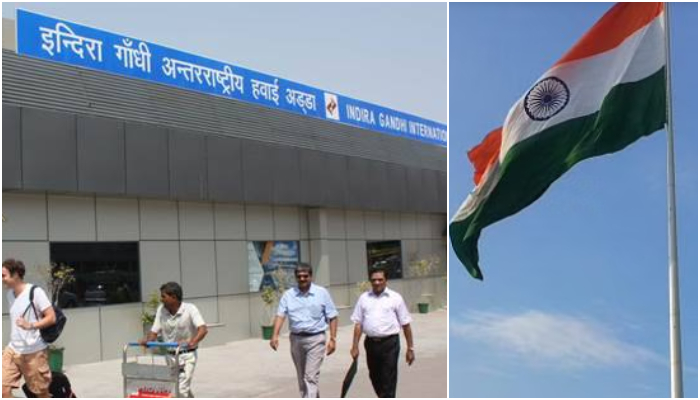
Assam resident Mohammed Tariq Aziz offers Namaz by standing on the national flag at Delhi Airport, arrested and released on bail

The Delhi Police on Friday arrested a person named Mohammed Tariq Aziz for disrespecting the Indian national flag at the Indira Gandhi International Airport in Delhi. Aziz, a resident of Assam, had spread the tricolour on the floor of the airport and offered Namaz by standing on it.

The Police arrested him after he was handed over by personnel of the Central Industrial Security Force (CISF) which manages security at airports across the country. He was later released on bail by the Delhi Police on the same day.

According to the reports, the incident dates back to May 8 when the accused had travelled from Dubai by IndiGo flight 6E24 and had to further go to Dimapur, Nagaland by IndiGo flight 6E 5398. At around 5 pm, he spread the Indian National Flag on the floor between boarding gates 1 and 3 and stood upon it to offer the Islamic prayer namaz. “His activities were found suspicious and undesirable. He had disrespected the national flag”, the Police mentioned in the FIR.

The accused was first spotted by personnel of the CISF who saw Aziz spreading the Indian tricolour on the floor. The personnel informed the concerned authorities who took speedy steps to detain the accused. His custody was later handed over to the Delhi Police. The Delhi Police interrogated the accused and asked him for an explanation for his act but he could not give a satisfactory response.

The Police then seized his passport, a photocopy of his boarding pass, and the tricolor he used as a mat to offer Namaz at the airport. He was arrested and a case was subsequently filed by the Delhi Police under the Prevention of Insults to National Honour Act, 1971.

The Prevention of Insults to National Honour Act, 1971 is an Act that prohibits the desecration of or insult to the country’s national symbols, including the national flag, national emblem, national anthem, the constitution, and map of India including contempt of Indian constitution.

Reports further mention that after the arrest the accused was released on bail on the same day as it is bailable offence, after giving a notice under CrPC section 41. The notice has been given for an appearance before a police officer and in case the order is not complied with, the police may arrest the person.

“When a big tree falls, the ground shakes”: Adhir Ranjan Chowdhury pays tribute to Rajiv Gandhi, later distances himself from his own tweet

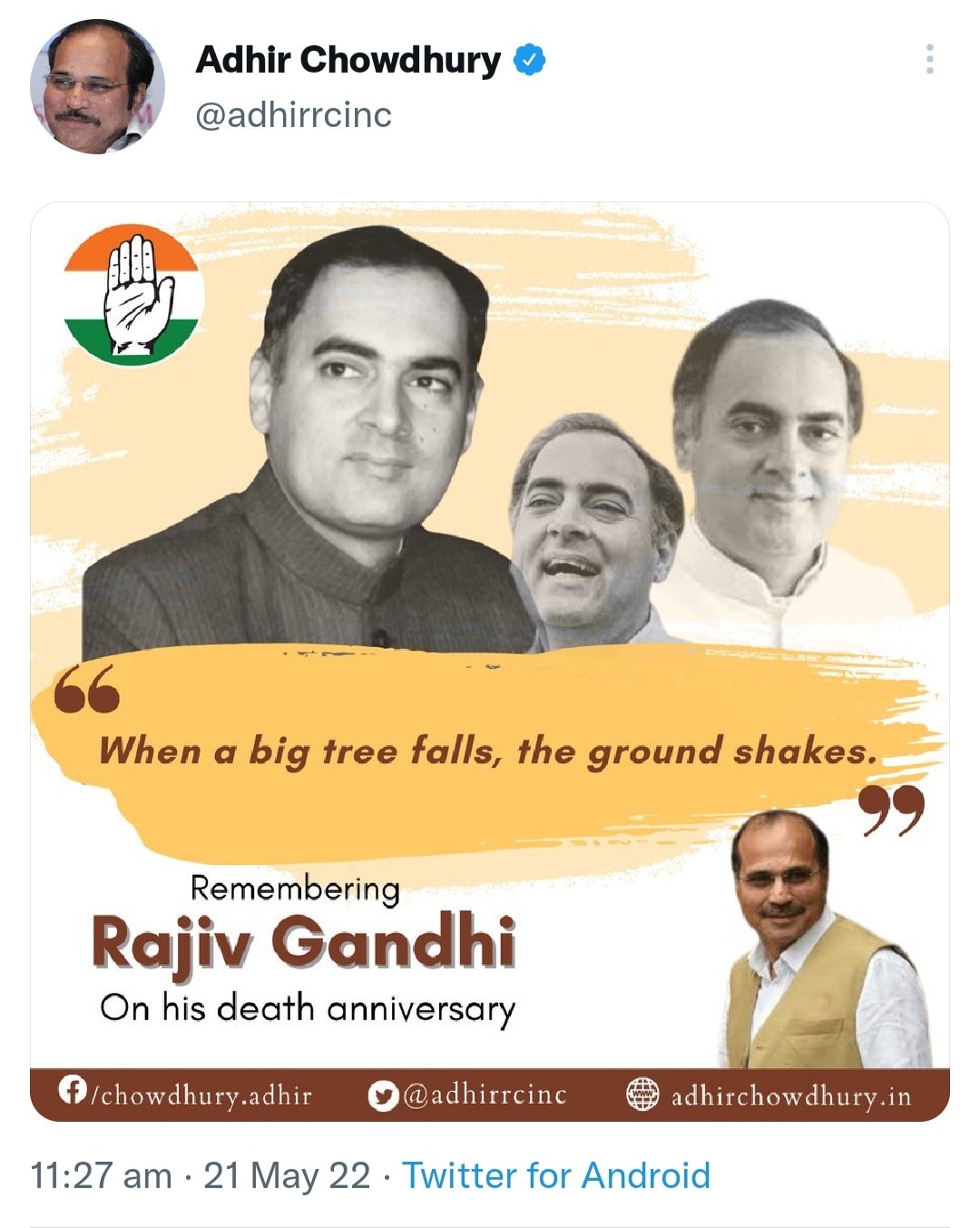
On 21 May 2022, the 31st death anniversary of Rajiv Gandhi, Congress leader Adhir Ranjan Chowdhury paid tribute to the former PM by sharing his infamous words “when a big tree falls, the ground shakes”, made by him in the wake of the Sikh pogrom that ensued in the aftermath of Indira Gandhi’s assassination in 1984.

Sharing an infographic with pictures of Rajiv Gandhi, the image read “Remembering Rajiv Gandhi on his death anniversary” along with the contentious comment that was seen as a brazen justification of the horrifying spate of violence unleashed against the Sikhs after two Sikh bodyguards assassinated the then PM Indira Gandhi.

Source: Twitter

Adhir Ranjan Chowdhury deletes the contentious tweet, distances himself from the infamous quote made by Rajiv Gandhi

However, shortly after sharing the picture, Chowdhury pulled down his tweet and shared another to mark his respect for the former PM on his death anniversary. This time around, Chowdhury shared another quote by Rajiv Gandhi, apparently in a bid to cover up for the faux pas that preceded it.

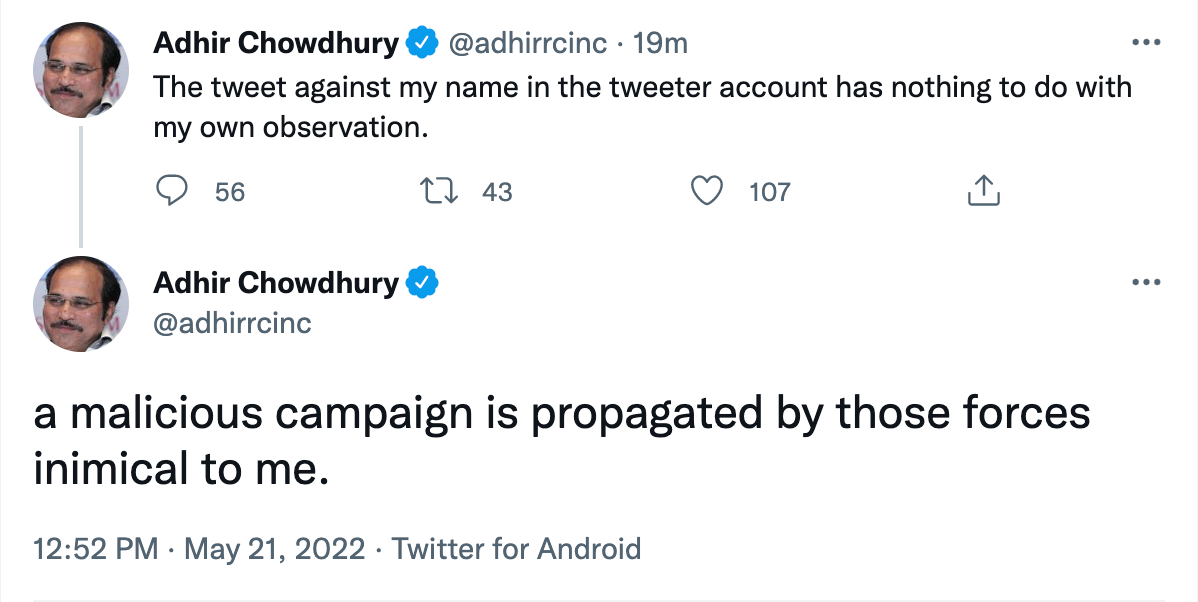
Furthermore, Chowdhury posted another tweet distancing himself from the infographic that quoted Rajiv Gandhi’s infamous comment after the Sikh genocide. “The tweet against my name in the tweeter account has nothing to do with my own observation,” Chowdhury tweeted.

Source: Twitter

In a subsequent tweet, the Congress leader alleged that “a malicious campaign is propagated by forces inimical to him.” However, he did not elaborate on how those forces got access to his Twitter account and shared an infographic of Rajiv Gandhi’s comment, which also bore his image and the logo of the Congress party.

Rajiv Gandhi’s callous remarks justifying the 1984 Sikh genocide

It is notable to mention that Rajiv Gandhi’s callous remark justifying the Sikh pogrom came in the wake of India’s Gandhi’s assassination by her Sikh bodyguards on 31st October 1984 as an act of revenge for Operation Blue Star. From 1st November to 4th November, Sikhs across the country were killed. The government figures suggest the angry mobs, many of which were led by Congress leaders, brutally murdered 3350 Sikhs.

On 19th November 1984, while giving a speech in front of thousands of people, then-Prime Minister Rajiv Gandhi justified the violence that took place after Gandhi’s assassination. He had said, “Jab bhi koi bada ped girta hai, to dharti thodi hilti hai. (When a big tree falls, the earth shakes.)”

Towards the end of his speech Rajiv Gandhi said, “Hamein Indira ji ka yaad rakhna hai. Hamein yaad rakhna hai ki unki hatya kyun hui. Hamein yaad rakhna hai ki kaun kaun log iske peeche ho sakte hain. Jab Indira ji ki hatya hui thi, to haamre desh mein kuch dange fasaad hue the. Hamein maloom hai ki bharat ki janta ke dil mein kitna krodh aaya, kitna gussa aaya. Aur kuch din ke liye, logon ko laga ki bharat hil raha hai. Lekin jab bhi koi bada ped girta hai to dharti thodi hilti hai. (We should remember Indira Gandhi. We should remember why she was killed. We should remember who can be behind her assassination. When Indira ji was killed, there were some riots in the country. We know how angry the people of India were. And for a few days, people thought that India is shaking. However, whenever a big tree falls, the earth shakes.)”

In 2019, Senior Advocate HS Phoolka said that the instruction to kill Sikhs came directly from Rajiv Gandhi’s office.

Days after Nagaraju was murdered, here is how The Hindu tried to craftily whitewash the Islamic hate that led to his murder

The Hindu has attempted to whitewash the horrific murder of Nagaraju by Syed Mobin Ahmed, the brother of Nagaraju’s spouse Ashrin Sulthana, as a ‘caste-induced honour killing’ just days after he was killed due to religious and Islamic hatred. Interestingly, this occurs after the murder’s intent and the perpetrators are fully known to everyone.

The Hindu published a detailed piece on Nagaraju’s murder in Telangana, complete with a detailed sequence of events, but it gradually attempted to portray the entire case as a result of ‘caste hatred’, as if Nagaraju was killed because he was a Dalit and not because he was a Kafir who married a Muslim woman, and was killed by her Islamist brothers. This demonstrates the publication’s determination to sanitise the deadliest acts of Islamic hatred ever committed and depict them as something else, tacitly blaming the Hindu community for religious hate crimes by the Muslim community.

What The Hindu wrote about the Nagaraju murder by Islamists

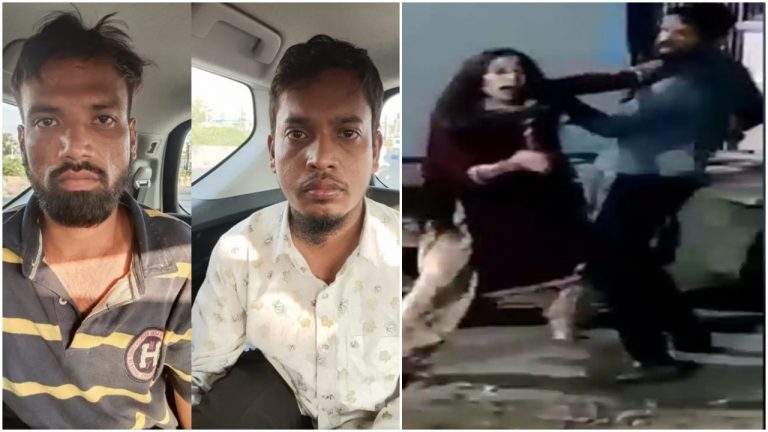
Billapuram Nagaraju, a 25-year-old Marredpally resident, was stabbed to death at the Saroornagar Tehsildar’s office by his wife’s brother, Syed Mobin Ahmed. Ashrin Sulthana, the deceased Billapuram Nagaraju’s wife, had revealed that earlier her own family had threatened to murder her if she married the Hindu man. Before her marriage to Nagaraju, Ashrin Sulthana, the deceased Billapuram Nagaraju’s wife, told News18 that her brother attempted to murder her twice. They escaped to Hyderabad and married in an Arya Samaj temple.

She maintains that her brother, Syed Mobin Ahmed, has been plotting vengeance since the couple married in January. Mohammed Masood Ahmed devised a strategy to destroy Nagaraju alongside Mobin Ahmed. The accused even attempted to find Nagaraju last month but failed.

On May 6, the accused tracked him down on their bike in Panjala Anil Kumar Colony, Saroornagar. Sulthana’s brother stopped them on their way to the Mandal Revenue Office in Saroornagar and thrashed Nagaraju with an iron rod. Nagaraju died on the spot. As per Sulthana, Nagaraju even assured Sulthana’s mother that he was going to convert to Islam but before he could act on that, he was killed.

This entire chain of events points to one conclusion: Nagaraju was murdered because he was a Hindu who married the partner of his choice, the partner he loved, a Muslim.

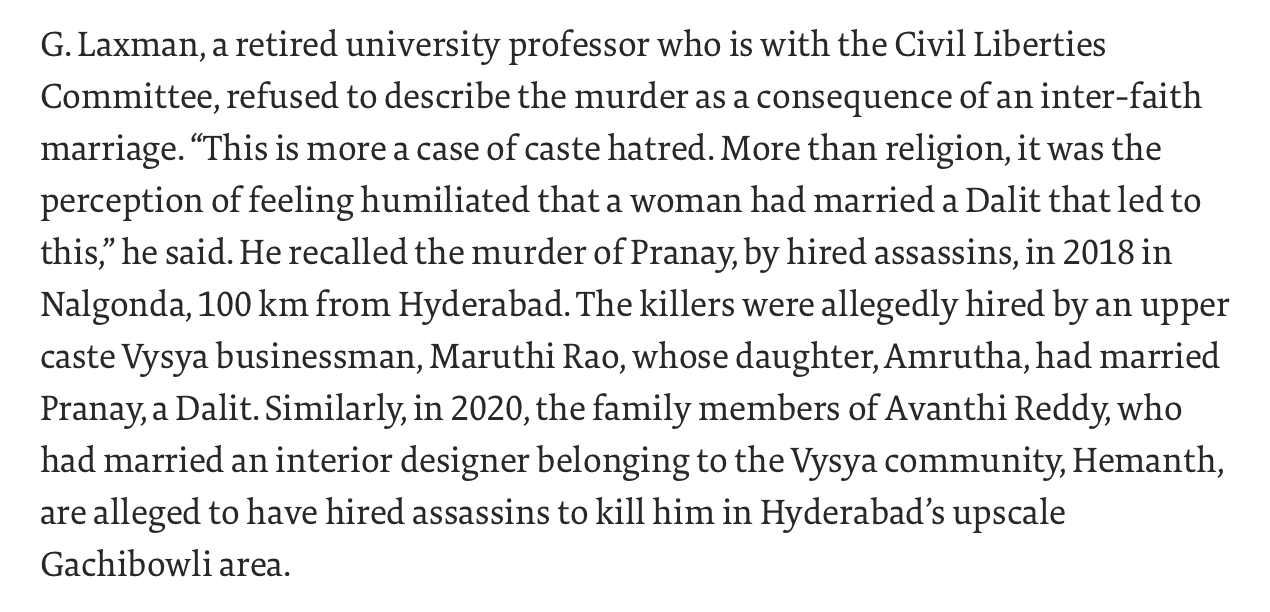
It is interesting, but not surprising, that The Hindu has quoted a scholar who ‘believes’ that this murder is motivated by caste and that religion has little or no role in this case. The publication quoted retired university professor G. Laxman as saying, “More than religion, it was the perception of feeling humiliated that a woman had married a Dalit that led to this.”

Ludicrous to find, The Hindu has quoted an oblivious professor who believes the murder is related to caste and refuses to acknowledge what the victim of the hatred has said. Sulthana, Nagaraju’s wife, has repeatedly maintained that her husband was murdered because he was Hindu and married a Muslim. Their marriage was not acceptable to their family, so they fled to marry. It is in neither way justified to assume the motive behind a crime and repudiate the testimony of the victims.

Watering down the specifics of an Islamic hate crime does not do justice to the victim. Sulthana lost her spouse because her family considered it a crime for her to marry the man of her choice because he was a Hindu, a Kafir according to Islamic scriptures. Her brother’s intention to murder her husband was evident from the outset when they married against her family’s wishes.

An endeavour like The Hindu’s is also not new, since they have been engaging in such revisionist activities for a long time. This demonstrates a deep-seated refusal to accept and confront reality. Such tactics seek to sell a story, willingly or unwillingly, to provide a safe road to a specific section to maintain their hate of the other community in some way or the other.

Rahul Gandhi in London promotes anarchy and ‘mass action’ against the Indian State that has been ‘captured’, mirrors the Left’s playbook

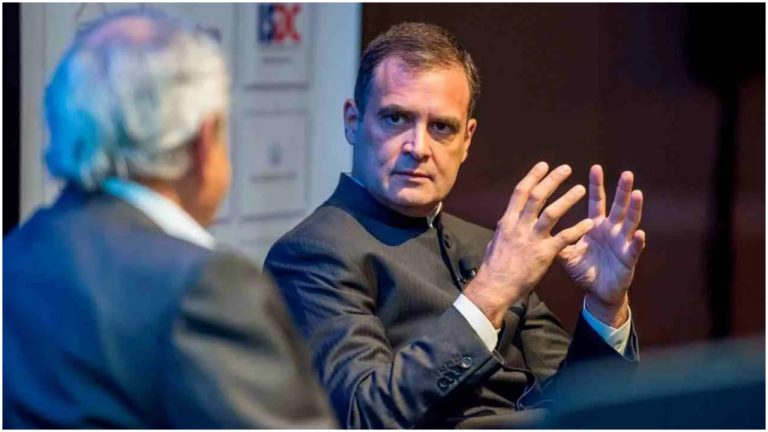
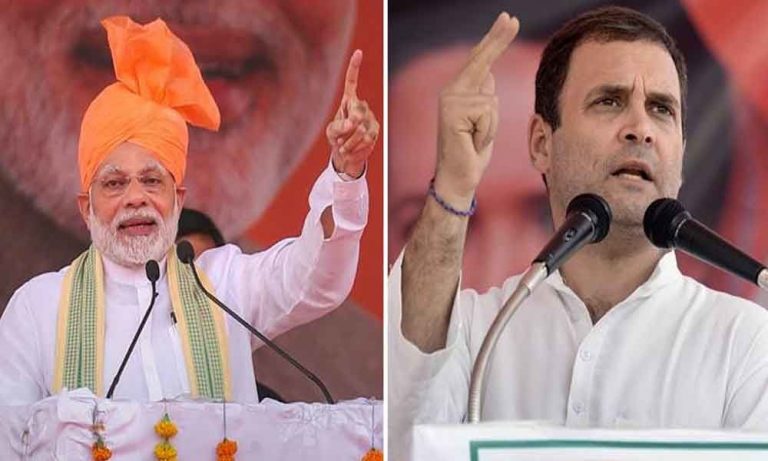
On Friday, Congress leader and Gandhi-scion Rahul Gandhi, who is on a visit to London, promoted anarchy in the country as he called for “mass action” against the Indian state.

Speaking at the ‘Ideas for India’ conclave in the United Kingdom, Congress leader Rahul Gandhi claimed that the country is being controlled by the “deep state”, which is causing the damage. Hence, according to Rahul Gandhi, a large ‘mass action’ against the Indian state is necessary to free the institutions that are controlled by the RSS. Defining the “deep state” in London, he said that not just RSS, but even ED and CBI are a part of the “deep state”. Essentially, while promoting anarchy in India, Rahul Gandhi was dog-whistling the USA with phrases like “deep state”.

Calling for the opposition to unite, Rahul Gandhi claimed that the opposition parties should understand that they no longer fight the BJP. This is not just a purely political fight, the Gandhi-scion added, suggesting that they are now fighting the institutional structure of the Indian state, which has been “captured” by an organisation.

“The only way for us we have no respite from the institutional framework of the country. The only way is to go to the large masses of the Indian people. That is not just the Congress, that is all opposition parties,” said Rahul Gandhi in his speech in London.

Congress is basically structuring that transition where it can go back to its roots and start moving toward mass action, said the Gandhi-scion, as he urged the opposition parties to instigate masses to rebel against the Indian state.

“We have an opportunity now that we have not had for many years to redesign the Congress through mass action completely. And so do a lot of the opposition,” declared Gandhi as the Congress leader added that he believed that this was the time for mass action against the Indian state.

Essentially, Rahul Gandhi is resorting to the left’s playbook of instigating innocent masses against the country by brainwashing them with false propaganda and selective misinformation to portray that the Indian state is fundamentally against their interests.

Rahul Gandhi then detailed the decisions taken at the Udaipur “Chintan Shivir” to revive the party in the country through “mass action”. Interestingly, all the points that were mentioned by Rahul Gandhi mirrored the Left playbook to the letter. Rahul Gandhi said that they would have to think about “communication in a new way” since they “can’t match the funds of the BJP”. He further said that the Congress party will have to think about “funding in a completely new way”. Saying that they have to set up a base closer to a “large mass of people”, he said that Congress. will have to focus on “large scale mass movements”.

Given the emphasis that Rahul Gandhi is laying on “large scale mass movement” and “mass action”, coupled with the fact that he has called the entire Indian State the “deep state” to encourage US intervention, it would seem like Rahul Gandhi is talking about violence and anarchy in the nation simply because they are out of power. One has to keep in mind that Rahul Gandhi is talking almost militantly to dethrone a government that has been popularly elected by the people of this country. It is popularly said that Congress is far more dangerous out of power than when it’s in power and Rahul Gandhi, with his dangerous words, seems to be proving that adage right.

Rahul Gandhi plays with ‘sub-nationalism’ fire again, blames RSS-BJP

In his speech, Rahul Gandhi upped his sub-nationalism ante again as he referred to India as a “union of states” and not a nation. He went on to add that several states got together and created a negotiated place.

“India did not develop top-down and almost emerged bottom-up, and all these states, they all got together and created a negotiated peace,” said Rahul Gandhi.

He also launched a scathing attack on the BJP and the RSS, saying that the BJP and the RSS believe India is geography or a ‘Sone Ki Chidiya’ whose benefits should be distributed to a few, according to the Karma. However, Rahul Gandhi said, Congress believed everyone should have equal access – whether you are a Dalit or Brahmin.

Besides Rahul Gandhi, opposition leaders, including CPI(M) ‘s Sitaram Yechury, RJD’s Tejashwi Yadav and TMC’s Mahua Moitra, have also travelled to London to participate in the event organised by the non-profit think-tank Bridge India.

Jammu and Kashmir: Govt college students recite Hanuman Chalisa in front of local mosque using loudspeaker for Azan, detained, later released

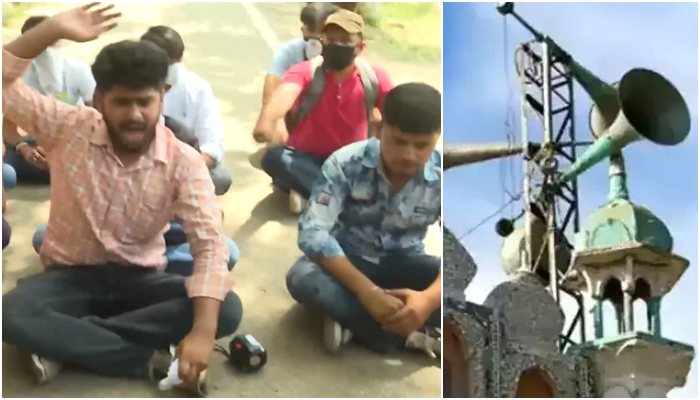
On Friday, the Jammu and Kashmir Police detained more than 6 students of the Gandhi Memorial Government College for protesting against the continued usage of loudspeakers for Azaan by a local mosque. The students gathered in front of the local mosque and recited the Hanuman Chalisa.

According to the reports, the local mosque used loudspeakers when the students were studying in the class at the Gandhi Memorial Government College. The students alleged that they were being disturbed while studying and that triggered them to protest against the local mosque.

The mosque reportedly continued the usage of loudspeakers after the Jammu Municipal Corporation (JMC) passed a resolution on May 17 ordering the removal of loudspeakers and public address systems operating without permission from religious and public places. The resolution was moved by BJP councillor Narotam Sharma.

Sharma in the resolution had stated that the loudspeakers created massive noise pollution and that they disturbed the civil society. “The resolution has been passed with a majority. Now, the implementation will be done as per Supreme Court’s ruling,” Chander Mohan Gupta, Mayor of Jammu Municipal Corporation said while passing the resolution on Tuesday.

Reports also mention that the students who protested against the local mosque were furious over the failure of the authorities to stop the usage of loudspeakers by the local mosque. The Jammu and Kashmir Police arrested more than 6 students who were involved in the protest though later let them off.

The loudspeaker row

The loudspeaker row erupted in India after the Maharashtra Navnirman Sena chief Raj Thackeray in the state of Maharashtra called for the removal of illegal loudspeakers from atop the religious places including the mosques. He warned the state government to take down the loudspeakers from mosques before May 4, failing which, he said that his party workers would play Hanuman Chalisa on speakers in front of mosques with a volume double than that of the Azaan.

Several Mosques after this applied for official permission from their respective state administrations to use the loudspeakers for Azaan. Those who continued the illegal usage of loudspeakers had to face the law. Similarly, the state of Uttar Pradesh took speedy steps to remove the illegal loudspeakers from atop religious places. More than 40000 illegal loudspeakers were taken down and around 55000 were ordered to follow the permissible decibel sound limit.

Allahabad HC refuses to give relief to Lucknow University prof Ravi Kant for making derogatory comments against Kashi Vishwanath temple: Full details

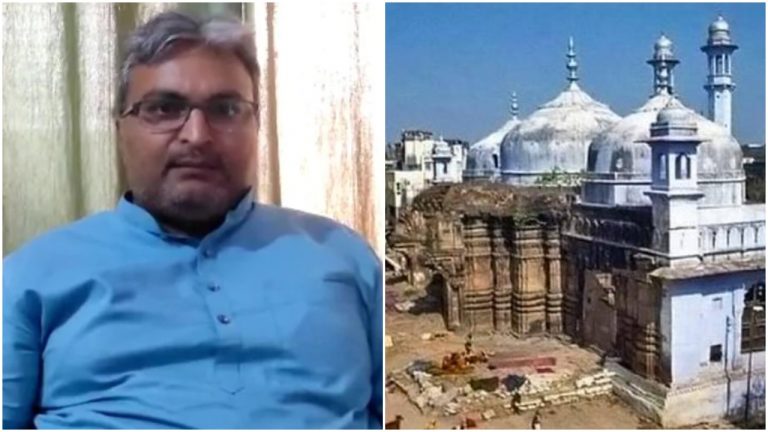
The Lucknow bench of Allahabad High Court has dismissed the plea of Lucknow University professor Ravi Kant seeking to quash an FIR filed against him for making derogatory comments on Kashi Vishwanath Temple and Hindu saints.

According to the reports, an FIR was lodged against Lucknow University professor Ravi Kant at Hasanganj police station last week on charges of creating enmity between two communities and disturbing social harmony.

During a debate on journalist and former AAP member Ashutosh’s YouTube channel Satya Hindi, Ravi Kant had made derogatory comments against Kashi Vishwanath Temple and Hindu saints.

The FIR was registered against Prof Ravi Kant at Hasanganj Police Station under sections 153-A, 504 and 505(2) of the Indian Penal Code and Section 166 of the Information Technology (Amendment) Act. The FIR has been registered against Prof Ravi Kant at Hasanganj Police Station under sections 153-A, 504 and 505(2) of the Indian Penal Code and Section 166 of the Information Technology (Amendment) Act.

The complaint against prof Ravi Kant was registered by Aman Dubey, a student of Lal Bahadur Shastri (LBS) hostel. In his complaint, Dubey said Prof Ravi Kant made indecent remarks during a debate that took place on May 9. He said that the professor had hurt the sentiments of Hindu students, and he also attempted to vitiate the harmony of the University. As he was confronted by the students after the video was leaked, the professor called goons who attempted to assault the protesters, the complaint had said.

Hearing the plea filed by Ravi Kant, the division bench of Justice Arvind Kumar Mishra and Justice Manish Mathur said that the court has the occasion to pursue the FIR, and the FIR in question does disclose a cognizable offence.

“In view of this, there is no occasion for this court to quash the FIR as has been prayed on behalf of the petitioners. As such, prayer made on the said score is refused by this court,” the court added.

The court also noted that as per the FIR, the maximum punishment for the offence was less than seven years, and so the police station concerned must act according to related provisions of the code of criminal procedure.

Following his comments, the members of Akhil Bharatiya Vidyarthi Parishad (ABVP) had staged a protest against the Professor at Lucknow University. They demanded the sacking of the professor. The University administration had also sought an explanation from the professor. However, Prof Ravi Kant had claimed that the issue had been resolved.

Ravi Kant Chandan had also claimed that he was attacked by a student on the university campus during the protest in the presence of a security guard.

Here is what Ravi Kant had said in the show:

Prof Ravi Kant had participated in a discussion on Journalist Ashutosh’s YouTube channel Satya Hindi. During the show, the professor said the five women who submitted a plea in the court to allow them to worship in Gyanvapi did not know about the “history” of why Aurangzeb demolished it. He continued to refer to a book by Dr Pattabhi Sitaramayya, Feather And Stones.

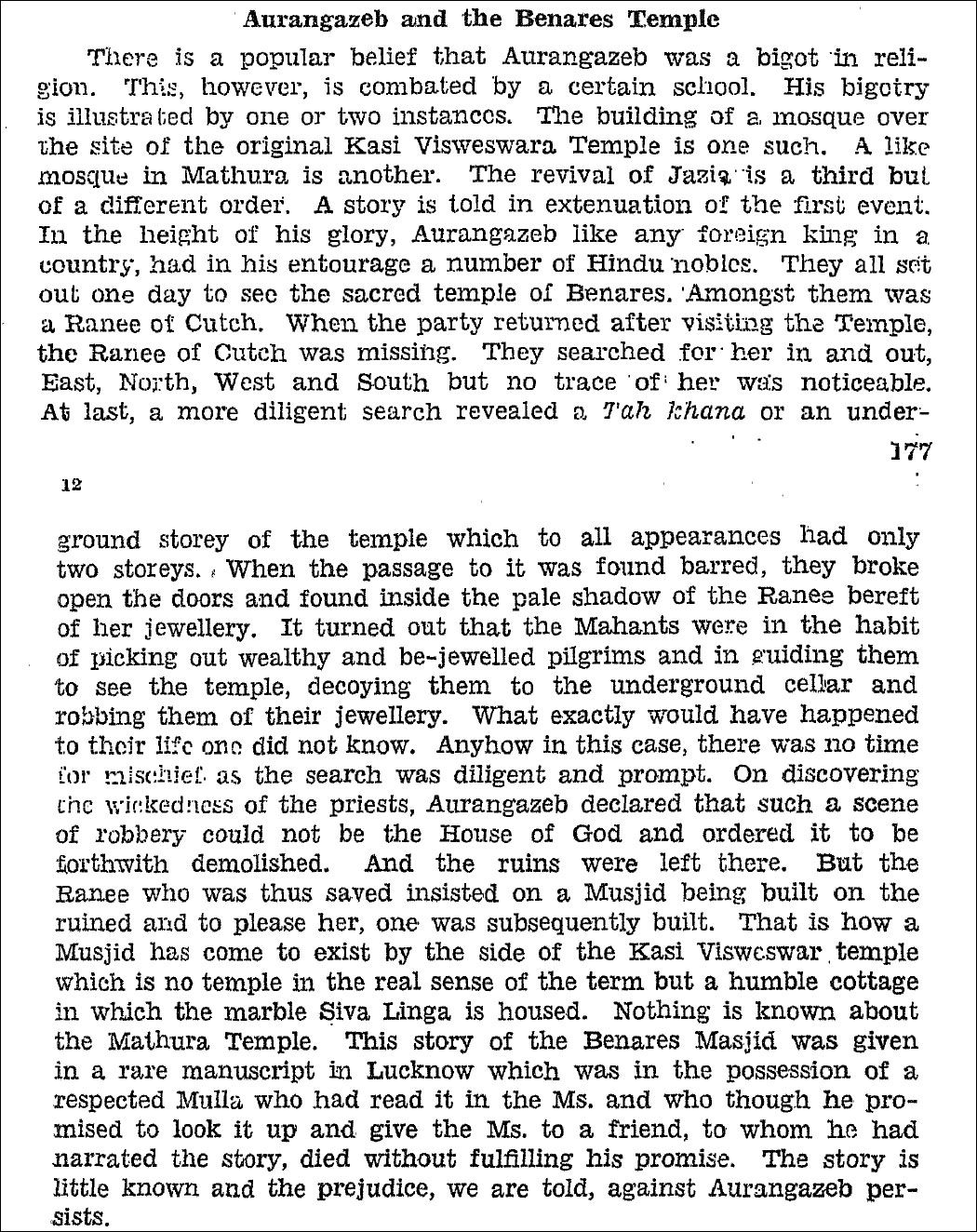
There is a section by the name “Aurangzeb and the Benares Temple” in the book on page 177. The book alleged that though Aurangzeb is called a bigot in religion, there was a story about why he demolished the temple. The author of the book alleged that once Aurangzeb went to see the Kashi Vishwanath temple. A Queen of Kutch was with him. When they were returning, the Queen went missing.

Upon searching for her, she was found in the basement of the temple. The book reads, “It turned out that the Mahants were in the habit of picking out wealthy and be-jewelled pilgrims and in guiding them to see the temple, decoying them to the underground cellar and robbing them of their jewellery. What exactly would have happened to their life, one did not know.”

Excerpt from the book Feather and Stones

It further stated Aurangzeb, after watching what was happening in the temple, ordered to demolish it. The Queen, who was saved, insisted on building a mosque in that place. The author claimed the story of Varanasi Mosque was in a rare manuscript in Lucknow in possession of a “respected Mulla”. The respected Mullah had promised a friend of the author to hand over the Manuscript, but he “without fulfilling his promise”.

Now there are two points that need to be considered. First, Prof Ravi Kant himself said during the debate that there was no way to prove the story. However, he still used the derogatory and anti-Hindu story as an excuse against the Hindu devotees who wanted access to the mosque.

Secondly, the book he referred to cannot be seen as proof that the story is real or not. The author himself said he only heard this story. There is no mention of the alleged Manuscript anywhere in any documents available online except it is being mentioned by the left-liberal historian. A similar breakdown of the story was done by Dharma Dispatch in one of their articles. Sitaramayya’s book is often used as the “documentary” evidence of the story. The story was told to him by some “respected mullah”.

Now coming back to the book by Sitaramayya. The preface of the book reads, “This is a book which the author (amongst whose infirmities modesty is not one) may claim to be a book of humour, wit and wisdom. None of these is the original product of the author’s ‘genius’ for it only embodies what has been heard or read by him. If anyone looks to this publication for the originality of ideas, a rich imagination or a bright intellectual display, he is sure to be disappointed. Let no reader give a good name to the author and hang him for not living (or writing) up to readers’ expectation.”

Sitaramayya himself hinted that the stories he had written in the book were either heard or read. There was no documentary proof of anything he had written in the book. Yet, the left-liberal historians and the academicians use it as documentary proof.

As Congress says BJP raising Gyanvapi issue because of dwindling popularity, new survey says 44.77% happy with PM Modi, 44.44% unhappy with Rahul

While the Congress party has opined the ruling BJP was raking up religious issues like the disputed structure called the Gyanvapi mosque in Varanasi, built on the ruins of a Hindu temple, to boost its dwindling popularity since its performance graph was continuously falling, a new survey result tells a completely different story. As per the latest IANS-CVoter survey, 44.77% of Indians are satisfied with the work done by Prime Minister Narendra Modi and 37.66 per cent of Indians are very much satisfied with the work of the present Central government led by the BJP.

On the contrary, the survey stated that 45.92% of people across India were not at all satisfied with the work done by Sonia Gandhi and 44.44% of Indians expressed dissatisfaction with the performance of Congress leader Rahul Gandhi. The poll was conducted on a daily basis for the last 12 months.

As per the IANS-CVoter survey, 36.48% of Indians are not satisfied with the work of the leader of the Opposition in their states.

Digvijaya Singh claims BJP raising Gyanvapi issue because of its dwindling popularity

The aforementioned poll should strike a bell for the Congress Party, which is currently exploiting the Gyanvapi issue as a new weapon against the BJP government. Replying to a query over the disputed Gyanvapi structure in Varanasi, Congress senior leader Digvijaya Singh said on Friday that the ruling BJP was raking up religious issues like the Gyanvapi “mosque” in Varanasi as its performance graph was continuously falling.

“This is not a new thing. Inflation and unemployment are rising, rupee value is dropping and the Modi government’s graph is tumbling. In this condition what are they going to do?” he told reporters here.

Congress whitewashes destruction of Kashi Viswanath Temple

It may be recalled that on Saturday (May 14), the Congress party courted controversy after it tried to give a clean chit to Mughal emperor Aurangzeb for the destruction of the Kashi Vishwanath temple. Commenting on an old picture of a destroyed wall of Kashi Vishwanath temple uploaded on Twitter by a popular Twitter handle (@IndiaHistorypic), the official handle of the Maharashtra Pradesh Congress Sevadal insinuated that the ancient Hindu temple was not destroyed by the Mughal emperor, by claiming how the photograph was taken in 1890 can prove that Aurangzeb had destroyed the temple when the Mughal emperor had died almost two centuries ago.

Despite the clarification that the images are from ASI and the British Museum and that the wall of the destroyed temple is now part of the mosque, Maharashtra Congress sevadal continued to question the well-known fact.

Congress Sevadal tried to dismiss the fact that Aurangzeb had destroyed the temple to build just because a photograph of the partially destroyed wall was taken decades later. But the fact is, it is an undeniable fact that the original Kashi Vishwanath temple was destroyed during the regime of Arungzeb and the mosque was built on its ruins. Even the Muslims don’t deny this fact, they only justify this by saying that Aurangzeb had ordered to demolish the temple after spotting some crimes by the priests in the temple.

They got calls from Dubai: Say school authorities in Karnataka as 3 Muslim students leave school after Bajrang Dal training camp outside school premises

After reports alleged that 3 Muslim students withdrew from the Sai Shankar Institution in the Kodagu district of Karnataka over the alleged ‘arms training’ conducted by the Bajrang Dal, the private school has claimed that their decision was influenced by phone calls received from Dubai.

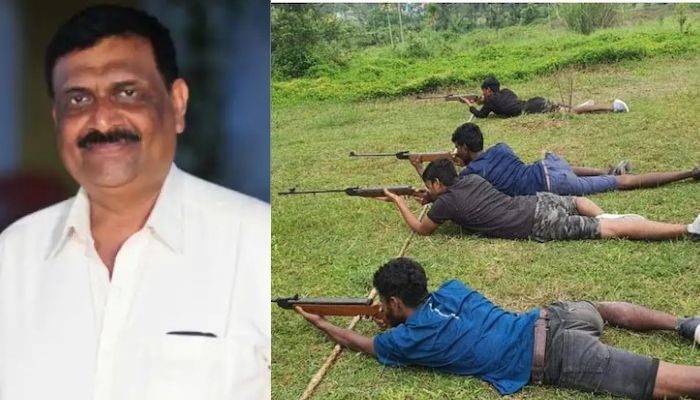
The Hindu organisation had held a workshop titled, ‘Shaurya Prashikshana Varga’ between May 5-11 for its karyakartas (members) outside the compound of the private school. The Bajrang Dal members were spotted holding air guns and Trishuls (tridents) as a part of an exercise to build physical and mental resilience.

It was alleged that 3 Muslim students left the school after photos and videos of the so-called ‘arms training’ went viral on social media. However, the claims were dismissed by Zaru Ganapathi, the President of Sai Shankar Institution.

“The parents got calls from Dubai asking parents to get the kids admitted to a Muslim school and they would arrange for a bus from Virajpet. We have Muslim teachers, other Muslim students and a few new students who have joined are Muslims,” he informed.

He also rejected claims that the arms training was conducted within the school premises. Ganapathy informed that no student or staff members of Sai Shankar Institution took part in the event hosted by the Bajrang Dal.

Bajrang Dal, VHP issues clarification

While speaking about the controversy, VHP (Kodagu) President Krishnamurthy informed, “Hindu organization is not involved in any kind of terrorism activities. We don’t take law and order into our hands. Hindu organizations work for the development of the nation. This news is unnecessarily being hyped.”

Bajrang Dal too issued a clarification on the matter and pointed out that the use of airguns and Trishul during the ‘Shaurya Prashikshana Varga’ did not violate provisions of the Arms Act.

Dal leader Raghu Sakelshpur said, “They trained in lifting weights, nunchakus, long jump, monkey rope and other activities to manage during times of natural disasters. We have consistently trained them in such activities. We used air guns for training and that doesn’t come under the Arms Act.”

He further added, “It was to train them about how they work and Trishul too does not come under the Arms Act.” Sakleshpur informed that about 116 karyakartas took part in the workshop and trained from 4:45 am to 10:15 pm between May 5-11.

Mob attacks Mathura, Haryana police with stones, sticks, fire from rooftops during raid to nab OLX fraudster Nauman, 18 including 9 women arrested

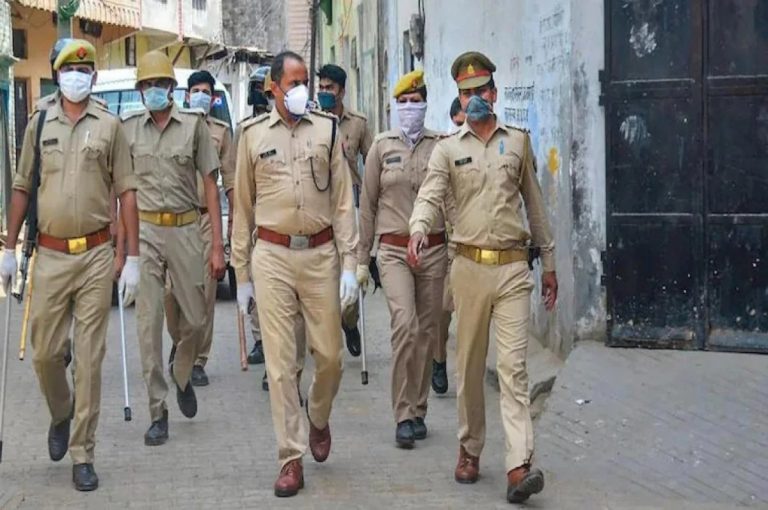
On the night of Wednesday, May 18th, a team of Mathura and Haryana police was attacked in Nangla Islam Nagar under the Shergarh police station area in ​​Mathura. The villagers attacked the police with stones, bricks and lathis when they went to arrest an OLX fraudster named Nauman from the village. The Mathura police confirmed that firing even happened from rooftops. Many policemen were injured in the attack.

The Mathura police said that they have registered a case against 34 known and 10 unknown people and arrested 18 people including 9 women under relevant sections of the IPC. Further investigation is underway.

Kosikalan police station in-charge Arun Panwar said that the arrested accused include Shokeen, Rashid Khan, Arish, Tarif, Robin, Mushtaq, Rizwan, Rashid a resident of Janghawali in Mathura, Uttar Pradesh and Asif. The other accused were arrested were identified as Rahul, Nauman, Shakir, Mufid, Mukeem, Anees, Zubaid, Bhalla, Taleem, Farooq, Junaid, Movvi, Shaeeda, Samman, Aabad Khan, Iqbal, Rafika, Arshida, Rapsheena and Arfina. A case has been registered against 10 other people including Barfina, Amina, Mosmina, Rehana and Kaifa for attacking the police personnel and freeing the accused.

In what transpired, the Sector-31 Faridabad Haryana Police Sub-Inspector Pawan Kumar, SI Rajesh Kumar, along with police personnel Azharuddin and Arif reached Mathura’s Shergarh police station on Wednesday afternoon to apprehend the OLX fraudster Nauman as his phone location was showing that he was in that area. Nauman was accused of defrauding people of Rs 36 thousand on OLX.

The police team reached Nangla Islam Nagar and arrested the accused. They recovered two tractors and a Hyundai Creta car from the accused. Besides many stolen mobile phones were also recovered from the accused. When the police were taking away the fraudster, a mob from the village that included several women attacked the police personnel with bricks, stones and sticks. The fraudster managed to flee during the assault.

Inspector Durvesh Kumar, Deepak Kumar, Sumit Kumar and women constable Ritu Sharma and the sub-inspector of Kapil Nagar were badly injured in the attack. Following reports of the attack on the police team, officers from adjacent police stations arrived and conducted house-to-house searches in order to apprehend the perpetrators. Several female assailants were also apprehended.