Home Blog Page 3283

Delhi Police arrest Farhan Khan for defrauding over 100 women of nearly Rs 1 crore by creating fake profiles on matrimonial sites

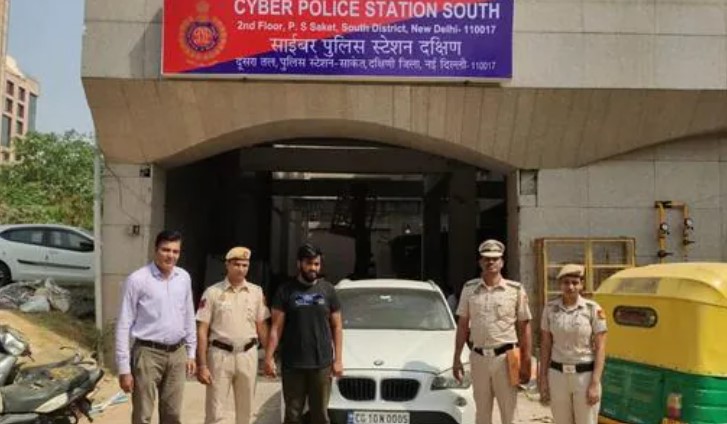
The Delhi cyber police Thursday (May 12) arrested a 35-year-old man identified as Farhan Taseer Khan, for duping more than 100 women from across 13 states of nearly Rs 1 crore under the pretext of marrying them. The accused, a native of Chhattisgarh currently living in Odisha, was arrested from Delhi’s Paharganj area. The police recovered a luxury car (with a Chhattisgarh special series number plate), nine debit cards and an expensive wristwatch from Khan.

News agency ANI quoted deputy commissioner of police (south) Benita Mary Jaiker as saying, “We’ve arrested one Farhan Khan who used to create fake profiles on a matrimonial website & cheat young women. He had taken around Rs 13-15 lakhs from a woman & different amounts from others. We’ve identified around 36 women who have been duped by him.”

The action was initiated against Farhan Taseer Khan following a complaint filed by a lady doctor from AIIMS with South Delhi Cyber Police on March 26. In the complaint, the victim alleged that she met a person on Jeevansathi matrimonial portal and started talking to each other on social media and on the phone. After promising to marry the woman, Khan allegedly convinced her to pay Rs 15 lakh, over several transactions, to support his fake business, after which he started ignoring her calls and messages.

The cyber cell team gathered Khan’s information from the matrimonial site based on the complaint and discovered that he had created numerous fake profiles on such sites and communicated with women from Delhi, Maharashtra, Uttar Pradesh, Bihar, West Bengal, Gujarat, Punjab, Odisha, Karnataka, and other states.

Police revealed that Farhan, who is a resident of Odisha, had created a fake profile on matrimony websites to lure working women. The accused is only a Class 12 pass. He had an extremely wealthy lifestyle. The accused, who claimed that his parents had died, used matrimony websites to contact his targets and successfully sway them on one or the other pretext.

The information provided by matrimony websites and bank transactions, according to police, assisted them in tracking down and arresting Khan. He was tracked from Kolkata and finally arrested from a hotel in Paharganj on Thursday, the DCP informed.

“Khan confessed to having duped over 100 women to the tune of around Rs 1 crore in the past one and a half years. We are trying to find out if more women had filed complaints against him in other states,” added the DCP.

Khan used to attract women by flaunting a high-end car with a VVIP registration number and claiming ownership. According to the authorities, the car is actually owned by one of his relatives.

To give the impression that he was wealthy, he travelled from city to city and talked with the victims via video calls. According to the DCP, he told the women that he earned between 30 and 40 lakh per year.

In reality, Khan is married and has a three-year-old daughter, a father and a sister. However, to gain sympathy, he used to tell his targets that his parents had died in a road accident, the officer said.

Who is Dot: The new actor in the Netflix movie ‘The Archies’

On May 14, filmmaker Zoya Akhtar and Netflix announced a new film based on The Archies comics. The film is going to be a Hindi-Urdu adaption of the comics. Starring Shah Rukh Khan’s daughter Suhana Khan, Amitabh Bachchan’s grandson Agastya Nanda and Boney Kapoor’s daughter Khushi Kapoor among others, the upcoming film is getting a lot of mixed reactions on social media since its announcement.

Despite the presence of several high-profile star kids in the cast, one name is getting even more attention than them – Dot. The actor Dot in the list of names has confused quite a few people, and we decided to help everyone by getting some details on Dot.

Who is Dot?

Dot, who goes by the username @/dotandthesyllables on Instagram, is a musician, songwriter and singer. She uses she/her as her pronouns. Dot, who also goes by Aditi Dot, has been active since 2017. She is the daughter of late Indian rock musician Amit Saigal. Her original composition ‘Everybody Dances to Techno’ made her famous among the genre-lovers. Anyway, she has a decent fan following on her social media accounts. Dot has been into music since she was six. Her music has been featured on Netflix before in the 2019 Valentine’s Day video.

Dot shared the trailer of the upcoming film on her Instagram stories and wrote, “So I wrote some music and sung some songs for #thearchies, a film by Zoie Akhtar. Oh… and also… I’m in it.”

Source: Dot’s Instagram story

About The Archies

The Archies will be a live-action musical set in 1960s India. Other actors include Super 30 fame Mihir Ahuja, Vedang Raina and Yuvraj Menda. It was announced last year, and the shooting for the film was completed on April 18. The first trailer of the movie was released on May 14, 2022. Agastya is reportedly playing the role of Archie Andrews. Suhana will play Veronica, and Khushi will play Betty in the film. The Archies is set for release in 2023.

Tamil Nadu govt assures Madras HC it won’t appropriate temple funds to build senior citizen homes: Details

The Tamilnadu government gave the Madras High Court an undertaking that it would not appropriate the excess temple funds to build senior citizen homes at three places in the state.

The government submitted the undertaking before the bench of Justice GR Swaminathan and Justice Senthilkumar Ramamoorthy while responding to a public interest writ petition filed by the President of Indic Collective Trust and the Temple Worshippers Society, Mr T.R Ramesh challenging the government order issued by Tourism, Culture, and Religious Endowments Department on January 12, pursuant to the announcements made during the Budget Session of the Tamilnadu Assembly in 2021-2022. The government order said, “In Chennai, Pazhani, and Tirunelveli, senior citizens’ homes with all amenities will be commenced at Rs 5 Crores.”

The petitioner submitted the plan to build homes for senior citizens at Sri Dhandayuthapani Temple in Palani for Rs. 15.2 crore, Sri Kanitmati Sameta Sri Nellaiappar Temple in Tirunelvelli at a cost of Rs. 13.5 crore and at Sri Devi Baliamman and Sri Ilangaliamman Temple in Villivakkam in Chennai for Rs. 16.3 crore utilizing the commissioner’s common good fund and donor funds was illegal.

The petitioner also submitted that none of the three temples in these areas have a board of trustees and the functioning of these temples has been carried out by a government fit person and government officers who have been holding the posts illegally. The petitioner also drew the attention of the court to the fact that these interim appointees cannot take major decisions with regard to the Temples and in the absence of any validly constituted Board of Trustees, no major policy decisions can be taken. Utilizing crores of rupees out of temple funds would amount to a major policy decision and therefore ought to be halted.

It was further said in the petition that sections 36,36-A and 36-B of the Tamilnadu Hindu Religious and Charitable Endowments Act, 1959 specifies the utilization of the surplus funds. According to section 36, the trustees of religious institutions may appropriate any portion of the accumulated surplus of temple funds for various purposes listed in section 66 of the same act. For utilization of these funds, a proposal should be made by a trustee; public notice of such notice should be published to invite suggestions and objections from the persons interested within a period of 30 days.

Approval of the commissioner to utilize the funds for specific purposes is only after completion of these steps. The specific purposes of utilizing the funds as mentioned in the law do not include the construction of senior citizens’ homes. The petitioner contended that, therefore, the order is illegal.

Advocate General R Shunmugasundaram represented the Tamilnadu government. He assured the Madras High Court that the scheme will not be implemented for six weeks. He said, “no appropriation from any source pursuant to the impugned Government Order will be made for a period of six weeks.”

China relinquishes hosting rights for 2023 Asian Cup amid rising Covid cases

China has backed out as the host for the 2023 Asian Football Confederation (AFC) Asian Cup Finals due to the rising number of Covid cases in the country. The event was scheduled to be held from 16 June to 16 July 2023 across 10 cities in the country. AFC will now reschedule the 24 teams tournament elsewhere after an internal discussion.

In a statement, the AFC said, “Following extensive discussions with the Chinese Football Association, the Asian Football Confederation has been officially informed by the CFA that it would not be able to host the AFC Asian Cup 2023. AFC acknowledges the exceptional circumstances caused by the Covid-19 pandemic, which led to the relinquishment by China of its hosting rights.”

This is the second high-profile Asian sporting event that has been affected due to the troubling Coronavirus situation in China. Earlier, the Asian Games, due to be held in September 2022 in China, were postponed indefinitely. With the country not being confident of getting the Covid situation in control even by June 2023, the Asian Games are likely to be postponed by at least a year.

Coronavirus in China

China, where the Coronavirus allegedly originated, got through Covid largely unscathed through 2020 and 2021, but has been struggling to keep the numbers under control in 2022.

As part of China’s “Zero Covid policy“, authorities have been imposing strict lockdowns across the major cities in China to get the situation under control. The key city of Shanghai has been under lockdown for weeks, while the capital Beijing is also seeing strict regulations. The lockdowns have also created a food shortage even in the most prosperous parts of the country.

Mulayam Singh Yadav had barred Hindus from offering puja at the Gyanvapi Shringar Gauri temple, claims BJP’s Prem Shukla

BJP spokesperson Prem Shukla has made a shocking disclosure amid the uproar over the court-mandated videography survey inside the disputed Gyanvapi-Shringar Gauri temple complex in Varanasi, Uttar Pradesh. He claimed that Samajwadi Party ideologue Mulayam Singh Yadav had barred Hindus from worshipping at the Mata Shringar Gauri temple while he was the chief minister of the state.

Notably, the ongoing controversy over the survey and the videography of the disputed Gyanvapi structure which is believed to be the original Kashi Vishwanath Mandir, destroyed by Mughals, is also related to the worship of Mata Shringar Gauri Sthal, which stands on the compound of the disputed Gyanvapi complex. In April 2021, Delhi-based Rakhi Singh, along with four other women had filed a petition in court seeking permission for daily worship of idols of Maa Shringar Gauri in the temple premises.

Meanwhile, the BJP spokesperson, speaking at a TV debate claimed that earlier, puja was performed in the Mata Shringar Gauri Sthal round the year. Mulayam Singh Yadav, who was then the CM of Uttar Pradesh, ordered to halt regular puja performed at the Maa Shringar Gauri Temple which was in violation of the Worship Act 1991.

Shukla accused Mulayam Singh Yadav of Muslim appeasement, stating that his government banned worship at Mata Shringar Gauri in 2004 due to their vote bank politics. He added that prayer in this temple had even continued after the Babri building was demolished in 1992.

He said, “Tell me the name of a mosque anywhere in the world except India that has an idol, a conch, a wheel, or a temple. Religion is important to you. According to Islam, a mosque cannot be built on a site that is disputed by any other religion. History is a testimony to the fact that a temple was demolished at this site and the mosque was built on its ruins.”

The history of Gyanvapi in Varanasi

The Gyanvapi Mosque complex is a disputed structure built over the ruins of the desecrated old Kashi Vishwanath Temple by Mughal emperor Aurangzeb after it was desecrated multiple times by Islamic monarchs such as Qutb al-Din Aibak and Aurangzeb.

To this day, parts of this ancient temple are clearly visible on the outer walls of the mosque. Even from afar, the statues of the bull Nandi and Maa Shringaar Gauri can be seen.

The Kashi Vishwanath Temple complex, which is adjacent to the disputed mosque complex and where devotees can do puja and prayers, was built by Ahilya Bai Holkar of Indore in 1780.

However, the puja at Maa Shringar Gauri Temple, on the western side of the disputed Gyanvapi Mosque was restricted. The ongoing case is related to a plea regarding the removal of this very restriction.

Why the survey?

On April 18, 2021, Rakhi Singh, Sita Sahu, Manju Vyas, Rekha Pathak, and Laxmi Devi submitted a petition asking for permission to worship and perform rituals in honour of the deities Ganesh, Hanuman, and Nandi, that are located on the disputed structure’s outside facade. The Delhi-based women’s petition also sought to prohibit the opposing parties from harming the idols.

On April 26, Ravi Kumar Diwakar, Civil Judge (Senior Division) of Varanasi ordered that a survey and videography of the site should be conducted after Eid and before May 10.

Accordingly, May 6 and 7 were designated as the dates for conducting the survey and videography by the court’s commissioner and team. 

Amidst heavy police presence, the team conducted the survey in areas outside and surrounding the Gyanvapi structure on Friday (6 May). When on May 7, the team, attempted to enter the Gyanvapi complex to conduct an internal survey and videography of the structure, members of the Muslim community created a ruckus. They stood at the door and prevented them from entering.

Notably, after stopping the court-directed documentation for the day in Varanasi, a videographer who accompanied the survey team involved in the process had revealed the presence of Hindu motifs including the Swastika, Nandi (bull associated with Shiva) and lotus motifs all over the outer side of the mosque walls.

Gyanvapi verdict: Court allows videography survey of premises, orders opening of basement

Meanwhile, days after members of the Muslim community impeded the survey, a Varanasi court on May 12 allowed a videographic survey of the disputed structure known as ‘Gyanvapi Masjid’. Varanasi’s Civil Judge (Senior Division) Ravi Kumar Diwakar issued guidelines for the same and added that the survey will now be held and a report to be submitted by May 17. As per the report, it is also reported that the basement of the disputed structure has also been directed to be opened.

Kerala: Actor Sahana found dead hanging from a window at her Kozhikode flat; husband Sajjad taken into police custody

Sahana, a 20-year-old actor-cum-model was found dead under mysterious circumstances on May 12 in her flat in Kozhikode, Kerala. According to reports, her body was found hanging from the grill of the window in her flat on the day when she celebrated her 21st birthday.

According to reports, Sahana’s parents had alleged that their daughter suffered domestic abuse at the hands of her husband, Sajjad. The police took custody of her husband and launched a probe into the matter.

Sahana, a model and actress by profession, lived in a rented flat in Kozhikode’s Parambil Bazar with her husband, Sajjad. The police recovered her body from her residence on Thursday at 11 pm. The decedent’s parents have alleged that Sajjad may have murdered their daughter, following which the police arrested him.

Police said Shahana, a model and an actor, was found hanging at their residence on Thursday night. “We were informed about the incident on Thursday night. As of now, we have registered a case under section 174 of the CrPC.”

Sahana’s mother insists that her daughter did not commit suicide but was murdered. She alleged that Sahana used to lament all the time that Sajjad used to come home in a drunk state and harass her. Her mother also added that Sajjad’s family members had also harassed her daughter, after which she had asked her to live separately.

However, the harassment did not end there. Sahana had told her mother that her husband would routinely ask her for money. Sajjad sold off the gold ornaments that Sahana had received from her family, her mother alleged. Sahana wanted to meet her family on her birthday, but her husband denied her permission. Sahana’s mother also added that Sajjad was averse to them visiting his flat to meet Sahana.

“My daughter would never die by suicide, she was murdered. She used to cry all the time saying they were torturing her. He used to get drunk and create trouble. His parents and sister were also torturing her, then I suggested that they move to a separate house. Even after that, my daughter told me that he was behaving badly with her and wanted money. The 25 sovereigns of gold that we gave had been used. She had wanted to meet us on her birthday,” she said.

Sajjad says he is innocent, and claims he found his wife, Sahana, dead in bathroom

Sajjad has claimed innocence in the matter and said that he found his wife dead in the bathroom. The landlord of the flat where Sahana lived was also her neighbour. He was the first to realise that something was amiss when he heard Sajjad shouting that Sahana was not responding. Sahana’s landlord told Media One that he had seen Sahana lying on his lap. He informed the police about it. After this, the police reached the spot and took Sahana to the medical college.

Significantly, Sahana had done many jewellery advertisements. She was married to Sajjad about a year and a half ago. Before marriage, Sajjad used to work in Qatar, but later he left work there and started living in the house. According to ACP, “She had recently featured in a film, for which she had received some money. Due to this, there were frequent fights between the two. It was her birthday yesterday, but he came late. Another argument proffered by Sahana’s husband was that he found her dead inside the bathroom.” The police officer said that the matter is currently under investigation.

Media spreads canards as India bans wheat exports: Here are the reasons and how China hoards wheat to manipulate global prices

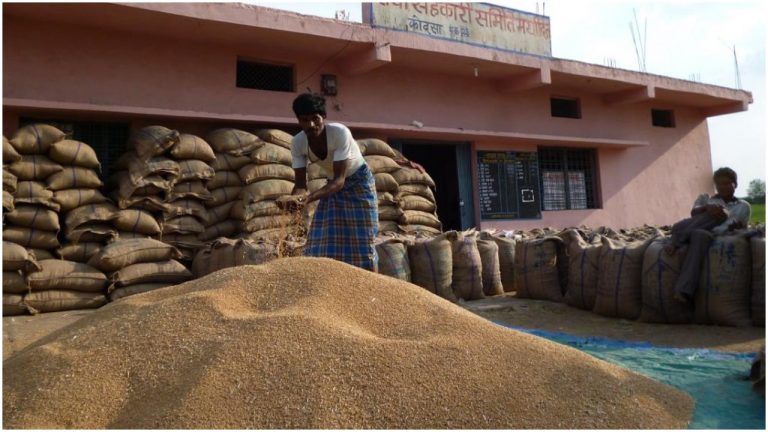
On Thursday, there were media reports that the Indian government has temporarily banned wheat exports with immediate effect. The media reports insinuated that the Modi government’s decision is anti-farmer as it has denied the farmers the opportunity to sell their produce at much higher global rates.

The global agriculture market has been volatile ever since Russia launched special military operations in Ukraine, a major wheat-producing nation and a significant supplier to the European market. As a result, wheat prices have increased due to short supply and increased demand in the global markets.

The sudden spike in the prices has affected smaller and poor countries, which are not only finding it tough to procure wheat from global suppliers but are also hampered by high import bills. Anticipating the instability and price fluctuations in the global agricultural market, the Indian government has taken a prudent step to enforce export control orders on wheat.

However, the media has been spinning the decision to portray that the Indian government is denying Indian farmers an opportunity to sell their produce at higher prices in the global markets. Besides that, the media has been claiming that the government is banning export for the reasons of “food security”, alluding that the Modi government may not have sufficient buffer stocks of wheat to cover up the additional requirement of grains in future in case prices of grain continue to soar up in coming months.

Some ‘experts’ also criticised the government’s move saying that the decision by the government is a loss of face for India as it cuts short the aspirations to feed the world. The ‘experts’ claimed that the ban on wheat exports to neighbouring countries reflected poorly on its crop intelligence capabilities and the image of being a reliable global supplier.

Some not-so sharp commentators with no idea about global trade also had a point to make. Tehseen Poonawalla, the Congress party sympathiser, took to Twitter to ridicule the Modi government, saying that they have been making tall claims recently that India will supply wheat to the world. He mocked the government, saying a few days later, the government took a decision to ban wheat export.

“Just like the ban on vaccine exports after tall claims to the globe! GoI is an embarrassment!” Tehseen tweeted, citing PM Modi’s recent statements that India would supply the wheat to the world.

However, the claims put out by the media, ‘experts’ and opposition party supporters that the Modi government has failed to manage the ongoing instability in the global agricultural market effectively is not entirely true.

Ban on wheat exports based on multiple factors

The decision to impose a ban on wheat exports by the Modi government is not hasty as being portrayed by a section of the media but rather based on multiple factors.

In the order banning the export of wheat, the Ministry of Commerce and Industry has stated that there is a sudden spike in the global prices of wheat arising out of many factors, and the Government of India is committed to providing for the food security requirements of India, neighbouring and other vulnerable developing countries which are adversely affected by the sudden changes in the global market for wheat and are unable to access adequate wheat supplies.

Apart from national requirements, the order also cites the priorities of the South Asian neighbourhood in dealing with the spike in global wheat prices. The emphasis on the neighbourhood in the official notification also shows that India is aware that a shortage of wheat in the domestic market can create hit the neighbouring economies. 

More importantly, the order clearly states that the government of India is not backtracking on its promise to deliver wheat to the neighbouring and vulnerable developing countries as promised before. Hence, there is no loss of face for India, as suggested by some ‘experts’, who had expressed doubts over India’s role as a reliable global supplier. In fact, just recently, the Indian government donated wheat to Afghanistan and Sri Lanka amidst the ongoing domestic crisis in both countries.  

Secondly, to manage the overall food security of the country and to support the needs of the neighbouring and other vulnerable countries, the Modi government has made several other arrangements. The order states that the export of wheat will be allowed “in case of shipments where Irrevocable Letter of Credit (ICLC) has been issued on or before the date of this Notification”.

Further, the export will also be allowed on a Government to Government (G2G) basis only after securing the necessary permissions. Hence, if and when India wants to buy or sell more wheat, the centre can always intervene in the global market to stabilise the domestic market prices if needed.

In addition, there are enough buffer stocks of wheat in the country that is necessary to manage the supply of wheat in the domestic market if the availability of wheat in the international market is affected. As per the data released by the Food Corporation of India, the buffer stocks of wheat currently stand at 303.46 lakh MT against the minimum buffer stocks requirement of 30 lakh MT.

Hence, there is no question of a shortage of wheat in the country for the foreseeable future, as claimed by a section of media.

China factor behind the export ban on wheat

The government sources speaking to OpIndia also confirmed that there is also China factor behind the sudden decision to ban the export of wheat.

The senior officials in the Ministry of Commerce and Industry said that there is a sudden shortage of wheat worldwide, and China is using this opportunity to hoard wheat. They added that China is importing wheat on a large scale to store it to disrupt the global market soon.

For China, the sucking up of wheat available in the global market provides two advantages. One, it can store the wheat for a short time and divert it to its allies in the coming days or sell it at a higher price. Secondly, by hoarding it, China can effectively control the market prices of wheat globally. With its huge foreign exchange reserves, China can purchase the wheat stocks at a higher price, only to control the wheat market in the coming days, hindering smaller and vulnerable developing countries from buying the necessary wheat.

With India continuing to flood international markets with wheat, it will lead to higher purchases by the Chinese, especially the Indian wheat. This will only aggravate the problem as China will dictate the supply of wheat at a time when there is a glut in the supply. It is notable that India is second largest producer of wheat, while China tops the chart.

Hence, considering the strategic objectives, the Government of India has taken preventive steps to stop China from hoarding Indian stock and has decided to ban wheat exports. The prudent step by the Modi government is being hailed as pro-poor as this will only benefit the poor and ensure affordable prices of wheat in the domestic market.


Pedophile-defending professor hired by Johns Hopkins center for the prevention of child sexual abuse

0

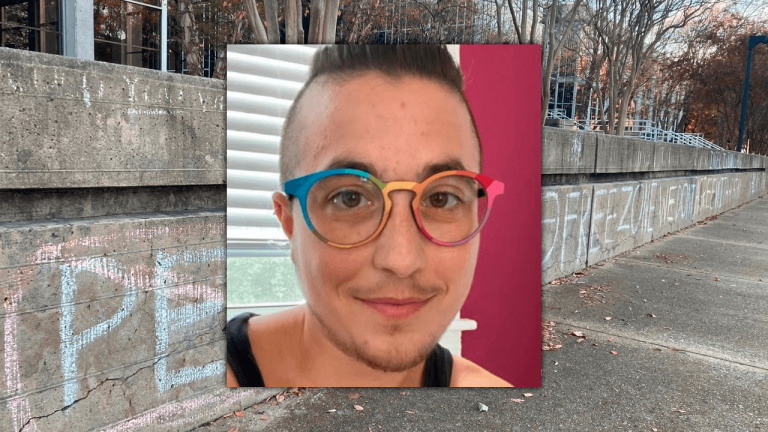
34 years old Allyn Walker, who was forced to resign from Old Dominion University (ODU) last year for defending pedophiles, has been hired by the Johns Hopkins Center for the prevention of child sexual abuse. Walker will start work as a postdoctoral fellow at the Baltimore-based school on May 24 at the center aimed at preventing child sexual abuse.

Allyn Walker, who is a transgender, had stirred outrage during her time at the ODU when Walker tried to defend pedophiles by saying that we should call them ‘Minor Attracted Persons” (MAP). There have been attempts from several quarters in recent years to “normalize” and “destigmatize” pedophilia by calling them MAPs instead of a pedophile.

Walker made those comments during an interview with Prostasia, a group that attempts to normalize pedophilia. The interview was part of the promotion for Walker’s book- ‘Long Dark Shadow: Minor Attracted People.’ Walker also said during the book promotions that a lot of people when hear the word pedophile, they automatically assume that means sex offender and that isn’t true.

After Walker’s comments, there was a campaign to get them removed from the ODU campus. An online petition gathered over 15,000 signatures and eventually Walker left the job at ODU in disgrace.

Now Walker is back in the academic world, and that too at the center to prevent child sexual abuse. The Moore Center, which is a part of Johns Hopkins, tried to explain its decision to hire Walker through Twitter.

Sharing the information, the Moore center tweeted, “Allyn Walker is a leader in the field of perpetration prevention research, which is essential for developing a comprehensive public health approach to addressing child sexual abuse and effective prevention programs. We are delighted to have Allyn Walker join our team.”

The Moore Center, established in 2012, is a research center that claims to create, through rigorous science, a public health approach to preventing child sexual abuse.

ED files ‘prosection case’ against 2 PFI extremists for laundering Rs 22 cr, had floated firm in Munnar to fund ‘radical activities’: Details

The Enforcement Directorate (ED) has filed a prosecution case (similar to a chargesheet) against two Popular Front of India (PFI) leaders, Abdul Razak Peediyakkal alias Abdul Razak BP and Asharaf Khadir alias Ashraf MK, for money laundering of Rs 22 crore. Both are Kerala-based PFI office bearers.

According to the chargesheet, these leaders of the PFI established a business in Munnar, Kerala, to launder money acquired abroad and support the organization’s “radical activities.” It is also claimed that these leaders were involved in the formation of a purported “terror group” by the PFI.

As per the chargesheet, these two, “in association with other PFI leaders and members associated with overseas entities, were developing a residential project — Munnar Villa Vista Project (MVVP) at Munnar — with a motive to launder money collected from foreign countries as well as within the country and to generate funds for PFI to finance its radical activities.”

In March of this year, Razak, the divisional president of PFI’s Perumpadappu unit in Malappuram, was nabbed at Kozhikode airport while attempting to leave the country. Ashraf MK was arrested in Delhi last month.

The ED claims Razak transferred almost Rs 34 lakh from the UAE to Rehab India Foundation (RIF), a cover organisation for PFI. He also reportedly transferred Rs 2 lakh to M K Faizy, the leader of the PFI’s political front, the Social Democratic Party of India (SDPI).

The two are also related, according to the ED, to the payment of Rs 3.5 lakh (from August 2018 to January 2021) to PFI member Anshad Badharudeen, who was nabbed by the Uttar Pradesh Police Anti-Terrorism Squad last year, along with PFI member Firoz Khan. The authorities discovered homemade explosive devices, a 32-bore pistol, and seven live rounds in their possession.

The ED has been examining PFI leaders’ purchase of various overseas properties, including a bar-cum-restaurant in Abu Dhabi, following the discovery of some papers in raids on its members in Kerala on December 8, last year as part of the money-laundering investigation.

It is notable that the Kerala High Court stated that there is no question that the SDPI and PFI are extremist organisations that engage in significant acts of violence, but that they are not prohibited organisations. The statement was made by the Kerala High Court while rejecting a petition seeking a CBI investigation into the murder of RSS activist Sanjith.

‘Breasts main focus, less emphasis on bra’: Adidas’ ‘inclusive’ sports bra ad featuring bare breasts gets banned in UK for concerns over ‘explicit nudity’

Due to its ‘explicit nudity’, the Advertising Standards Authority (ASA), a self-regulatory body for the advertising industry in the United Kingdom, has banned a series of Adidas sports bra ads. The action was prompted by dozens of complaints received by ASA. According to the complaints, the sportswear behemoth’s Twitter and poster promotional campaign to promote its new line of sports bras objectifies and sexualizes women and was accessible to children.

“We noted the breasts were the main focus in the ads, and there was less emphasis on the bras themselves, which were only referred to in the accompanying text,” the ASA said. “As the ads contained explicit nudity, we considered that they required careful targeting to avoid causing offence to those who viewed them.”

According to the ASA, the large poster locations were not targeted and could be seen by persons of all ages, including children, causing widespread offence. According to the ASA, the use of the commercial on the Adidas Twitter page is not in keeping with the usual content posted and is also likely to offend.

“The ads must not appear again in the forms complained of,” ruled the ASA. “We told Adidas UK to ensure their ads did not cause offence and were targeted responsibly.”

The German sportswear company had launched a new advertisement campaign ‘Support is Everything’ to promote its “inclusive” range of sports bras. The campaign underscored that bras cannot be one size fits all because different women have different breast shapes and sizes and that having bras in a variety of forms and sizes should be the new standard.

As part of the campaign that was initially released in February, Adidas Tweeted an image of 20 women’s bare breasts in a grid that only revealed their torso. “We believe women’s breasts in all shapes and sizes deserve support and comfort. Which is why our new sports bra range contains 43 styles, so everyone can find the right fit for them,” was one of the captions.

Two posters were also part of the campaign. The first featured 62 women’s breasts with the tagline “The reason we didn’t make just one new sports bra.” The second featured the same text but with images of 64 female nipples pixelated.

Since its release, the ad campaign received 24 complaints. Some of the complainants claimed that these photographs should not be published in public because they will be seen by children, while others claimed that the campaign objectified women by reducing them to a single body part.

Adidas in its defence said that the advertisement was not gratuitous or sexual but simply represented inclusivity. They further added that the company was not objectifying women since the faces of the models were already cropped to protect their identity. It also said that the models had all volunteered and were supportive of the campaign’s aims.

Adidas further stated that the ads were not displayed near schools or religious institutions and that it did not believe the campaign would harm or distress children.

Although the Tweet was reported by some users, Twitter did not delete it, claiming that it was organic and not paid-for, and thus did not violate its rules of service.