Home Blog Page 3314

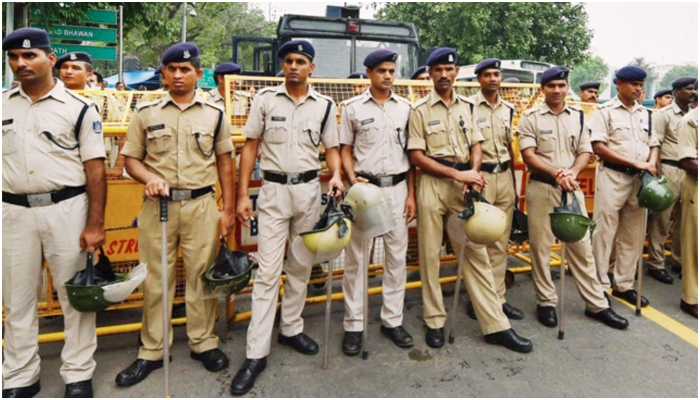
60 constables of Delhi Police armed battalion suspended for failing to perform duty in sensitive areas on Eid-ul-Fitr

On Tuesday, 60 constables of an entire company of a Delhi Armed Police battalion were suspended for not performing duty in areas they were deployed on the occasion of Eid-ul-Fitr. The constables were assigned the duty to be present in a few sensitive locations in old Delhi to prevent any untoward incidents during the festival.

This is after the Police ahead of Eid had received information that some anti-social elements were active in the areas and were planning to disrupt peace and harmony across Delhi. To prevent their nefarious plans, the DAP (Delhi Armed Police) battalion deployed several companies at various locations.

According to the reports, the DCP, North issued the suspension order on May 3 as it found that the staff deployed from the 3rd Batallion of the Delhi Armed Police were not on the duty point. “At 9.15 pm the company left without any information. They were not on duty point. The staff deployed from 3rd Batallion, have been marked as absent and placed under suspension,” the order read.

The constables were called from the Vikas Puri area to be present at the sensitive zones in old Delhi. They were ordered to monitor the law and order situation in the Sadar Bazar and nearby area of Red Fort and prevent any untoward incident on Eid-ul-Fitr.

The city of Delhi traditionally witnessed the celebration of Eid as a large number of people participated in the community prayers organised at major mosques, including the Jama Masjid and Fatehpuri Masjid in the Walled City. Festivities continued through the day after the early morning Eid namaz with families thronging marketplaces and partaking in iftars and community feasts.

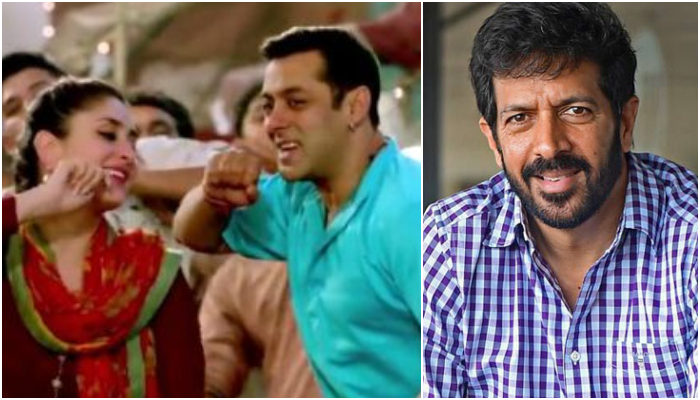
‘Chicken Kuk-Doo-Koo’ song in Bajrangi Bhaijaan was less about chicken, more about beef, here is what filmmaker Kabir Khan has to say

On Tuesday, Bollywood Filmmaker Kabir Khan revealed the importance of politics in the movies and said that no human, no filmmaker can be apolitical. He said that storytelling is all about how the filmmaker portrays the character and the politics of the story. He recalled one of his recent hit movies ‘Bajrangi Bhaijaan’ and stated that the famous Chicken song in it is political and a superlative example of how politics can be included in the film.

In an exclusive interview with the Bollywood Hungama, when Khan was asked about the intention behind storytelling, he said that if a person says that he is apolitical, it reveals that what’s happening in the country does not affect him. “I have often heard, and I get very worried when I hear this- people in the industry say we are apolitical. As human beings you cannot be apolitical, the way we frame a character is telling our politics. Sometimes saying apolitical only reeks of your privilege, because what’s happening in the country doesn’t affect you, you all with money can live in a bubble”, he said (Timestamp- 44:38)

Khan cited the example of the movie Bajrangi Bhaijaan and said that the song ‘Chicken Kuk doo koo’ which is assumed as a children’s song is the most political song of the film. He said that the song was released amid the beef ban controversy in the country and showed the way how one can slip into politics through films. “The song is basically saying- this is Chaudhary Dhaba, which is a metaphor for India. Aadha hai nonveg, aadha hai veg (half dhaba is non-veg, half is veg). You decide what you want to eat and all of us can sit together and eat. So that’s the way you slip into politics”, he was quoted.

The film ‘Bajrangi Bhaijaan’ was released in the year 2015. It narrated the story of Pawan- a staunch vegetarian (Salman Khan), a devotee of Lord Hanuman. He finds a speech-impaired girl (Harshaali Malhotra) lost in Haryana and soon learns that the girl belongs to Pakistan and that she consumes non-vegetarian food. The song Chicken Kuk Doo Koo entertains the audience when Pawan and his girlfriend (Kareena Kapoor) take the little girl to a nearby Chaudhary Dhaba to let the girl eat chicken alone on a separate table.

Kabir Khan meanwhile added that film-making is one of the ways in which a person can reveal his/her political ideology. “The way a film character is framed, the dialogues are spoken by the character, all say a lot about the filmmaker’s political ideology. No person can be apolitical. Saying that is only a privilege”, he reiterated. Khan was accompanied by Suresh Triveni, Hardik Mehta, and Nidhi Bisht at the Xavier Institute of Communications initiative event. He was in conversation with Bollywood Hungama’s Faridoon Shahryar where they also discussed the ‘OTT v/s Cinemas’ debate.

Khan termed the debate between OTT and Cinemas erroneous. “Both can co-exist. Henceforth you may need to give audience big spectacle movies to attract them to come to cinemas”, he added. Kabir and Hardik also talk about the changing face of writing and the importance of good writers.

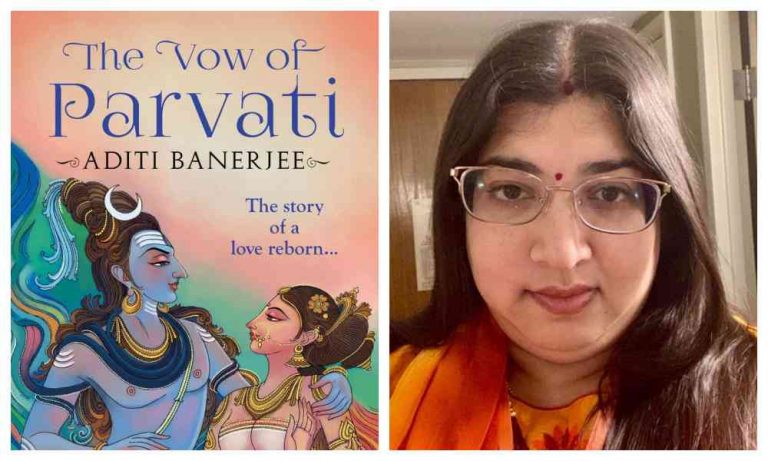
The Vow of Parvati: Author Aditi Banerjee talks about why books with strong female protagonist are getting readers interested

Author Aditi Banerjee’s The Vow of Parvati, published by Bloomsbury India in April 2022 is a story of Devi Sati/Parvati and how she transformed from a beautiful, gentle, powerful yet shy Devi unaware of her own strength into the Devi we revere and worship today through her relationship with and love for Shiva and her family. Speaking to OpIndia, Banerjee said, “Devi encompasses all aspects of the female form, from the child to the crone, from the gentle to the fierce, from the scholar to the warrior. And in a sense we can see them all emanating from Sati / Parvati.”

She further said, “In her resides the one who gave up her life for Shiva, who fasted and underwent all kinds of austerities to win his favour, as well as the one who sits on the jewelled throne, supported by Shiva and all of the Devas, who carries a weapon forged from the strength of all of the other Devas combined. She is Shakti, the energy that pervades the cosmos and all of existence, and she is also the one who delights Shiva, the eternal renunciate. She and Shiva form the ideal couple, because in their union, they retain their independent roles and existence while also merging into a seamless oneness and wholeness, which represents the completeness of Brahman.”

On whether she considers her story on Devi Parvati a fiction or mythological fiction, Banerjee said, “It is unfortunate that we are trapped by English categorizations that do not map onto Indic / Hindu classifications or frameworks. Mythology / fiction vs. nonfiction in the West is basically distinguishing what is or may be historical fact from that which is ‘made up’. ‘Mythology’ is used to characterize non-Western traditions and faiths as false.”

“That said, there is a thirst for literature inspired by the Itihaasa and Puranas and also from ancient Greek, Norse, and other pagan epics. As the modern world has become divorced from its ancient civilizational heritage, there is now an emerging desire to reconnect with our roots and to delve into the ancient epics. The epics do not exist just for storytelling or to transmit religious beliefs. They encode lessons about human nature, the nature of the world, the meaning and purpose of life, and all throughout history, people studied the Classics to develop a greater appreciation and understanding of the mystery of life. So, it is natural to want to reengage with tales that have stood the test of time and place, that have become part of our cultural DNA. At the same time, many of us find the original texts to be inaccessible or daunting. So, this kind of literature serves as a gateway by retelling those stories in a syntax and format that is more familiar and easier to digest for a modern audience. In time, hopefully people will be inspired to read the original texts, whether in Sanskrit or in translation,” she said.

On the shift to strong leading female protagonists in books from traditionally male heroes, Banerjee said, “All of the female protagonists being written about today were there, fully fleshed out with incredible nuance and richness, in the original texts: Draupadi, Gandhari, Sita, Kunti, etc. It is just that over time most of the attention was paid to the heroes who dominated the actions of the stories. Since their stories have always been told, the interest is in discovering lesser well-known characters and incidents so that those stories can be brought out, too. Also, we have been fed so many distortions and lies through colonialist discourse about how passive and meek our female personalities were that there is a great need to excavate the real characters from the original literature and showcase them to the world, to show how much strength, complexity and depth these female protagonists had.”

“I think there is a lot of interest right now in reading about female characters. Not only for entertainment value but also because it is inspiring and empowering for girls and women to read about strong female characters who can serve as role models to aspire towards or serve as cautionary tales on how we may go astray,” Banerjee added.

Banerjee’s previous book, The Curse of Gandhari, talked about the Queen who cursed Shri Krishna. Speaking about how the two leading ladies are different in characters, strength and stories, she said, “Gandhari was very human while Sati/Parvati is Devi. So, while The Curse of Gandhari could trace the life story of Gandhari from the perspective of a flawed woman, who made mistakes and had regrets, this was a more challenging story to write since Sati / Parvati was always Devi and therefore in certain respects already perfect. The interesting thing for me to write about was how both Shiva and Sati, complete and self-sufficient and self-satisfied in their own rights, still evolved through their connection with each other — that, they became something greater together than they are just on their own. So, the idea that even the devas could grow, learn, and evolve through love was the impetus behind this story.”

Speaking about the inspiration behind her book, Banerjee said that it was her own marriage that inspired the story of Devi Parvati. “For over a year before my wedding, I had observed the Somvar vrata in honor of Shiva and Parvati and we also had our wedding rites performed by 11 purohitas from Ujjain at Triyuginarayana, an ancient mandir a few hours away from Kedarnath in the Himalayas, where it is said that Shiva and Parvati were married. The fire from their rites still burns there today and we took our saptapadi around that sacred flame. We have been so blessed by that experience, and this book is a small offering of gratitude and reverence for everything that Shiva and Devi have bestowed upon us,” she said.

Here is an excerpt of Aditi Banerjee’s book The Vow of Parvati:

And then she heard the light patter of his bare feet in the assembly hall. Her eyes jerked open, and she stared at Shiva. All anxiety and fear left her. Time slowed and stopped. One of his names was Kaal Bhairava, the Lord of Time. He walked toward her until he stood before her. Never had anyone looked as beautiful to Sati as he did. He was majestic and calm, radiant and overflowing with power. At that moment, she lost her heart to him.

He took her in with soft affection, the same way he had looked at the white flower after it had fallen to the ground from her hands. His glance was so warm that she began to feel dizzy.

Shiva slanted his head in a request for permission. She nodded. She remembered how she had named him Shiva that night. In some way, she had completed him, and now it was his turn to do the same for her. He knelt at her feet. He reached out his hand to hold her right foot. His touch sent a jolt of pure sensation through her, and she would have jumped out of her seat had he not gripped her foot. He let her left foot remain crossed but pulled her right foot down to touch the ground. As soon as the tender bottom of her foot made contact with the cold ground, a rush of energy coursed downward from the tip of head to the sole of her right foot, pouring into the ground, blessing all the worlds.

She closed her eyes and felt power, shakti—the life force that sustained the entire universe—flowing through her like a river in spate. She opened her eyes again to see that the pink of her sari had deepened into crimson red, the red of blood and fire and life itself. The red of womanhood. Her braids had loosened into waves that cascaded down her back, black as night.

Shiva’s eyes darkened as he looked at her. She could not know how enchanting, how captivating she was at that moment. Any deva whose eyes had opened would have fallen in love with her in a heartbeat, but Shiva did not let anyone else awaken.

He lifted the crown of flowers from her head. He held it until it grew into a circlet of gold. The roses transformed into rubies that retained their shape and colour but were now brighter than the sun. This crown would last forever,  unlike the simple one she had designed. He carefully placed it on her head.

He leaned back and studied her, inch by inch. She watched him wide-eyed. It was as if he were not completely satisfied. Not that he was not satisfied with her, but that the dress, the decorations, did not do her justice. Even the golden crown he had fashioned did not appear to placate him.

Then, with a sudden movement, he plucked out the crescent moon that adorned his own hair and tucked it carefully into Sati’s, behind the golden crown. The moon, cold as it was, still bore the warmth of his body, the inner fire of his tapasya, and she felt the accumulated powers of thousands of years of meditation flow from Shiva to her. It was more intimate than an embrace. His fingers sifted through her hair, sliding across her scalp in a way that made her flesh tingle. As brightly as the moon shone, it paled in comparison to the radiance emanating from her now that she was in her full power.

For a moment, his hand lingered in her hair. She wished that the wheel of time would never again continue its rotations, that time would remain frozen in this moment forever.

Then, in the space of a moment, everything changed.

You can buy a copy of her book here.

Pope Francis says NATO ‘barked at Russia’s door’ paving the way for the Ukraine-Russia war

Pope Francis has blamed the United States-backed military coalition North Atlantic Treaty Organisation (NATO), for the ongoing Russia-Ukraine war.

According to the reports, Pope Francis said that NATO “barking” at Russia’s door may have led to Vladimir Putin launching a military operation in Ukraine, adding that he has offered to meet the Russian president in Moscow.

In an interview with the Italian newspaper Corriere Della Sera, Pope Francis spoke on the ongoing Russia-Ukraine war, in which he added that he might not go as far as saying NATO’s presence in nearby countries “provoked” Moscow but maybe facilitated the invasion.

Francis also condemned the “brutality” of the war and compared it to Rwanda’s civil war in the 1990s, which resulted in a genocide of the Tutsi minority.

Ever since the war began in February, Pope Francis has repeatedly criticised the Russia-Ukraine war, however, he has avoided directly blaming Russians or Putin for the special military invasions in Ukraine. It is being said the neutral policy of the Vatican is in line with its foreign policy of keeping the door open for possible dialogue.

The Vatican has been requesting a meeting between Pope Francis and Putin since mid-March. “Of course, we needed the leader of the Kremlin to allocate a window of time. We haven’t yet had any response, and we are still trying, even if I fear that Putin can’t and doesn’t want to have this meeting at this time,” the Holy See had said.

In the interview, Francis also said he would be not going to Kyiv for now, “First I have to go to Moscow, first I have to meet Putin.” The Holy See had sent two representatives – Cardinal Konrad Krajewski and Cardinal Michael Czerny, to the war-ravaged nation.

Francis also revealed that he had cancelled a meeting with Patriarch Kirill, the head of the Russian Orthodox Church and a key backer of Putin.

George Soros-funded groups threaten brands to reconsider ads on Twitter, Elon Musk hints at investigating firms that are trying to control information

On Tuesday, Twitter owner Elon Musk called for an investigation into ‘advocacy’ groups demanding major corporate brands reconsider their decision to fund ads on the platform if Twitter pushes for changes once the Tesla CEO takes control of the platform. 

According to a report by the CNN, a group of 25 left-wing advocacy groups have written a letter to the biggest brands, including Coca-Cola (CCEP), Disney (DIS) and Kraft (KHC), asking them to make sure advertising deals made with Twitter are contingent that it will keep in place policies to police “hateful conduct, transparency and enforce civic integrity” or risk losing advertising dollars. 

The organisations that have written a letter include – Media Matters for America, the Black Lives Matter Global Network Foundation, Accountable Tech, a technology advocacy group, the feminist group UltraViolet, the Center for Countering Digital Hate, the National Hispanic Media Coalition and the Free Press digital rights group.

“As top advertisers on Twitter, your brand risks association with a platform amplifying hate, extremism, health misinformation, and conspiracy theorists,” the letter read, adding, “Under Musk’s management, Twitter risks becoming a cesspool of misinformation, with your brand attached, polluting our information ecosystem in a time where trust in institutions and news media is already at an all-time low.”

Interestingly, two such advocacy groups –  Free Press and Media Matters for America have directly received funding from the Hungarian-American George Soros’s Open Society Foundation.

The report said big brands such as Apple, Best Buy and HBO were targeted in the letter.

“Your ad dollars can either fund Musk’s vanity project or hold him to account,” the letter read.

In response to a CNN report, Elon Musk tweeted, “Who funds these organisations that want to control your access to the information? Let’s investigate….” He also added later, ‘sunlight is the best disinfectant’, hinting that transparency and openness, not censoring, are always better.

Musk’s tweets

Elon Musk targets George Soros

Responding to a social media user’s claim that George Soros is behind the letter to the big brands, Twitter chief Elon Musk took potshots at George Soros, asking him to “slide into his DMs”.

Musk said, “I will call him and ask.” Later, he responded to an Open Society Foundations post that said, “George, please slide into my DMs!”.

He added, “Here’s hoping,” expecting Soros to respond to him.

Twitter may charge a fee for commercial and government users

In another tweet, Elon Musk dropped a major hint that Twitter may charge a slight fee for commercial and government users to boost the social media platform’s reach.

In a tweet, the billionaire investor wrote, “Ultimately, the downfall of the Freemasons was giving away their stonecutting services for nothing”, hinting that Twitter was providing certain services for free, which it could have commercialised.

Musk’s tweet

He, however, clarified that for “casual users”, Twitter will always be free. 

“Twitter will always be free for casual users, but maybe a slight cost for commercial/government users,” Musk said in a tweet.

Ever since he took charge of the tech giant, Elon Musk has suggested many changes. After buying Twitter, Musk said he wanted to enhance the platform with new features.

Tipu Sultan: The Islamic tyrant who slaughtered the Hindus of Malabar and Kodagu, killed and converted lakhs of them

With India’s history sanitised to suit a certain narrative, much remains to be unearthed in order to reinstate the country’s lost heritage and cultural values, as well as to tell the rest of the world about the truth. Similar is the account of Islamic tyrant Tipu Sultan, dubbed the “Warrior of India” by Indian leftists and hardline Islamists.

According to historian Lewis B. Boury, the devastation Tipu Sultan inflicted on the southern part of India was harsher and more barbaric than the atrocities performed against the Hindu inhabitants in India by the infamous Mahmud of Ghazni, Alauddin Khalji, and Nadir Shah.

Tipu Sultan’s 17-year reign, according to Sandeep Balakrishna, author of ‘Tipu Sultan: The Tyrant of Mysore,’ was indeed a unified image of military, economic, and religious torment for the Hindu population. Tipu had declared openly that he would wage a Jihad against Hindus. Malabar was the place of most atrocities and anti-Hindu actions of Tipu Sultan. Malabar was simultaneously Tipu’s affluent and most chaotic territory. But, Tipu and his Moplah allies wreaked havoc in the region.

Tipu Sultan invaded Kodagu in 1788 and devastated many towns and villages. Mir Hussein Kirmani, Tipu’s courtier and biographer, has detailed how the raid resulted in the burning of hundreds of villages in Kushalapura (now Kushalnagar), Talakaveri, Madikeri, and other locations. Tipu brags in a letter to Runmust Khan, the Nawab of Kurnool, about taking 40,000 Coorgis as prisoners, forcefully converting them to Islam, and incorporating them into the Ahmadi army.

Tipu’s merciless invasion, followed by such a large-scale prisoner-taking, drastically depopulated Coorg, which was already a sparsely inhabited province. He forcibly relocated about 7,000 Muslim families from other places, especially from the Shaikh and Sayyid sects, in order to Islamize Coorg.

The depiction of the invasion Malabar region is a little murkier. Remnants of Tipu’s murderous assaults in Malabar, like in Kodagu, may still be seen in the region today. The Malabar city of Kozhikode bore the brunt of his attacks. The destruction in Kozhikode was so profound that it permanently altered the town’s fabric. In the city, there were about 7,000 Brahmin families and many more Hindu households. Tipu slaughtered about 2,000 of them, forcing many of the survivors to flee into the jungles.

To this day, the Mandyam Iyengars do not celebrate the festival of Deepavali, because over 700 members of their community were slaughtered on Tipu Sultan’s orders on the day of the festival.

Tipu Sultan demolished the Thrichambaram and Thalipparampu temples at Chirackal Taluqa, the Thiruvangatu Temple (Brass Pagoda) in Tellicherry, and the Ponmeri Temple in Badakara, as per William Logan’s Malabar Manual. According to the Malabar Manual, the Maniyoor mosque was previously a Hindu temple. According to locals, it was transformed into a mosque during Tipu Sultan’s reign.

Tipu Sultan’s military activities caused extensive damage to Hindu temples on an unprecedented scale. Tipu Sultan and his ruthless warriors enjoyed demolishing temples, smashing idols placed within, and chopping the heads of animals over the temple deity.

The Voyage to the East Indies by Portuguese missionary Fr Bartholomew gives us a basic sight of Tipu Sultan’s catastrophic attacks. “First a corps of 30,000 barbarians who butchered everybody on the way… followed by the field-gun unit… Tipu was riding on an elephant behind which another army of 30,000 soldiers followed. Most of the men and women were hanged in Calicut, first mothers were hanged with their children tied to their necks. That barbarian Tipu Sultan tied the naked Christians and Hindus to the legs of elephants and made the elephants move around till the bodies of the helpless victims were torn to pieces… These atrocities were told to me by the victims of Tipu Sultan who escaped from the clutches of his army and reached Varappuzha…” he recalls.

These genocides were, in Tipu’s mirthful words, devout acts in the interest of Islam. His letter to Budruz Zaman Khan, a military official in his service, reads as follows: “With the grace of Prophet Mohammed and Allah, almost all Hindus in Calicut are converted to Islam. Only on the borders of Cochin State a few are still not converted. I am determined to convert them also very soon. I consider this as Jehad to achieve that object…”

There’s a lot more that exposes Tipu Sultan’s true nature, the megalomaniac who is venerated by a segment of ‘s populace. It’s also worth noting that, prior to his invasion, the Malabar area was a booming international centre for the pepper and spice industries. However, when Tipu destroyed scores of villages and towns ferociously, this commerce was effectively extinguished instantly.

Tipu’s hatred for evident from the fact that Colonel William Kirkpatrick discovered around 2000 letters written in Farsi in Tipu’s own handwriting in his palace following his death in the Fourth Anglo-Mysore War and the British capture of his capital Srirangapattana in 1799. Tipu refers to Hindus as “kaffirs” and “infidels” in all of his letters, arguing that they must be cleansed if the dominion of Islam is to be securely established in India.

One of the most widely circulated myths is that Tipu was a patriot who battled the British. The India Office in London has Tipu Sultan’s various correspondences with the French, which demonstrate how he conspired with them to drive out the British and partition India. Tipu also asked Zaman Shah, the king of Afghanistan, to invade India and help the Islamic cause. The same is shown in his correspondence with Turkey’s Ottoman Sultan.

Even if we ignore the aforementioned facts, it is important to remember that Tipu Sultan slaughtered the entire Hindu population of several villages, including women and innocent children. Tipu’s over-glorified acts of alleged heroism are whitewashed versions of a tyranny that was suffered by lakhs of Hindu families who had fallen victim to a religious fanatic turned murderous ruler.

Woman in viral video partying with Rahul Gandhi in Nepal bar ‘friend of bride’, here is what we know

On May 3, after the video of Wayanad MP and senior Congress leader Rahul Gandhi in a pub in Nepal went viral, many people speculated that he was talking to a Chinese diplomat Hou Yangi in the video. The alleged rumour got viral on social media, and Congress went into defensive mode. A number of tweets praising Gandhi started appearing on social media, and a few media houses ‘fact-checked’ the woman’s identity. Here is the video that has gone viral.

According to a report in India Today, the woman Gandhi was talking to in the video was not Chinese. She was a Nepali woman and a friend of the bride. Rabin Shrestha, CEO of Lord of the Drinks, the pub where Gandhi was seen attending a marriage function, told India Today that the woman was not a Chinese ambassador. He said, “She was a friend of the bride who was also invited to the wedding ceremony.”

The media also contacted a journalist with The Kathmandu Post from Nepal, Anil Giri, who ‘confirmed’ that the woman was a ‘Nepali’. He said, “The lady is definitely not the Chinese envoy. She is a Nepali woman from the bride’s side.”

OpIndia could not independently verify the above claims.

Based on the India Today report, Congress leaders’ slammed’ BJP and netizens who doubted Rahul Gandhi. Congress National Spokesperson Pawan Khera said, “All those who tweeted rubbish about #MyLeaderRahulGandhi, watch out. We will not take this lying down. Enough is enough.”

Aslam Shaikh, State Cabinet Minister, Maharashtra, said, “Baseless rumour spreads like wildfire… BJP’s fake NEWS factory is dangerous for democracy… This must stop.”

It is noteworthy that no statement had been released by the bride or groom in this regard. Also, China has not issued any statement ‘debunking’ the claims.

You can read more about the ‘close friend of Rahul Gandhi’ whose wedding he allegedly attended in Nepal here.

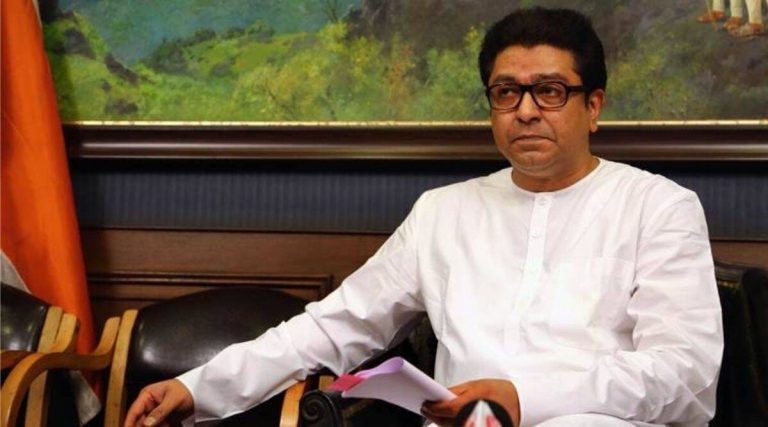
‘Play Hanuman Chalisa on loudspeakers if you hear mosques blaring azan’: MNS chief Raj Thackeray says in an appeal to Hindus

On Tuesday evening, MNS chief Raj Thackeray posted a three-page statement, exhorting Hindus to play Hanuman Chalisa on loudspeakers outside mosques blaring azans. In his statement, Thackeray cited the Supreme Court order to proclaim that the usage of loudspeakers from 10 pm to 6 am is illegal and then permission has to be sought if the loudspeakers are to be used on a daily basis.

The MNS chief also asked Maharashtra CM Uddhav Thackeray whether he is going to listen to his father, late Balasaheb Thackeray, who once stated that ‘all loudspeakers need to be silenced’, or would he continue to have the loudspeakers on mosques by listening to “non-religious” NCP chief Sharad Pawar.

The statement came hours after the Maharashtra government filed a case against MNS chief Raj Thackeray for asking his followers to put up loudspeakers outside mosques from May 4th. In defiance of the case against him, Thackeray released a statement wherein he urged his followers to play Hanuman Chalisa on loudspeakers outside mosques blazing azan.

Citing the Supreme Court order, Thackeray said, “Loudspeakers cannot be used from 10 pm to 6 am. Every religion can use its loudspeakers for 365 days. If you need to use the loudspeaker every day then permission has to be taken on a daily basis.”

He further added that SC has fixed decibel levels for loudspeakers beyond the specified time. “The loudspeakers usage decibel level limit should be between 10 decibels and between 45 to 55-decibel levels. Please note that 10-decibel levels relate to the whispers that we have amongst ourselves. 55-decibel levels are equivalent to the sound of our Kitchen mixer,” Raj said in the statement while explaining the issue of unlawful use of loudspeakers in mosques.

In fact, Raj also added that the issue was not just about ‘unauthorised speakers’ but also about ‘unauthorised mosques’. “How is it possible that the government has given authorised permissions to unauthorised Masjids to use loudspeakers?. And if permissions are being granted then Hindu temples also need to be given permissions to play the loudspeakers,” said Raj. 

Furthermore, Thackeray also spoke about the menace of public spaces and roads being blocked by Muslims for offering prayers. “Which religion propagates, assembling and sitting on the middle of the roads to pray and cause immense traffic jams? This is the main reason for my statements to the Muslim community that this is a social issue affecting the public (and) kindly take cognizance of the same.”

Making an impassioned appeal to the Hindus, Raj said, “I appeal to all Hindus that tomorrow, the 4th of May if you hear the loudspeakers blaring with azan; in those very places, play the Hanuman Chalisa on loudspeakers! That’s when they will realise, the hindrance of these loudspeakers.”

Thackeray also made an appeal to the police, asking them to enforce the law. “I appeal to the police force to show that this country is governed by law and order. They should maintain and follow the law. The unauthorised, Masjids and loudspeakers and prayers being held in the middle of roads, need to be addressed duly by law.”

He further urged Hindus that if they hear masjids playing azan on the loudspeakers, they should dial 100 and register a police complaint, even if one is to do it daily.

Reiterating the need for Hindus to stand up against the use of loudspeakers by mosques, Thackeray wrote, “All Hindus should take this call ahead of shutting down loudspeakers… I reiterate the fact that each citizen should know the strength of what it is to be a Hindu… our country doesn’t have so many jails to arrest (all) the Hindus of our country. This very fact should be recognised by all the governments.” 

Thackeray also reminded Maharashtra CM Uddhav Thackeray of Balasaheb Thackeray’s vow of bringing all loudspeakers down. “I appeal to the Chief Minister of Maharashtra that years ago, Shiv Sena Chief Hindu Hriday Samrat Shri Balasaheb Thackeray had stated that all loudspeakers need to be silenced. Are you going to follow this, or are you going to follow the non-religious Sharad Pawar who is responsible to keep you in power? Let the people of Maharashtra know what is going to happen?” he said.

Raj concluded his letter with a new slogan, saying “If not now, it will never happen.”

“Sonakshi Sinha was made a star by selling my virginity” Actress Pooja Mishra accuses Shatrughan Sinha of carrying out a ‘Sex Scam’

Actress and Model Pooja Mishra has leveled serious allegations of a ‘sex scam’ against actor-turned-TMC politician Shatrughan Sinha on Monday. Mishra while speaking to the media alleged that Shatrughna Sinha and his wife Poonam Sinha targeted her while she was a rising star in Bollywood and conducted a ‘sex scam’ involving her after doing black magic on her.

Pooja Mishra has alleged that the Sinha family often made her unconscious and used black magic on her. “By selling my virginity, Shatrughan Sinha made his daughter Sonakshi a star who was about to become a fashion designer,” Mishra has complained. She elaborated that Shatrughan Sinha along with his wife Poonam Sinha has destroyed her career by allegedly harassing her for 17 years during her stay in Mumbai as an aspiring actress.

Pooja Mishra went on to describe how her father helped Shatrughan Sinha and his friends several times with ‘crores of rupees’ but the same people then duped her when it came to her career. According to Mishra, her father and Sinha used to be good friends once upon a time. She said that in Mumbai, Shatrughan Sinha’s wife Poonam Sinha brainwashed her father by telling him that only prostitutes work in Bollywood, and that notion kept her away from entering the industry.

Furthermore, she said that when her father retired in 2005 and moved to Pune, by then the Sinha couple had started suppressing her in Mumbai. According to Pooja Mishra, this happened when she was staying in the guest house of Videocon and the Sinha couple, who lived in the vicinity used to perform ‘black magic’ on her. Accusing the Sinhas of stealing 35 of her films, she said that ‘he (Shatrughan Sinha) was afraid that I might become more popular than him’.

Mishra further elaborated, “The Sinha family is greedy and demonic. They used to forcefully enter my house and steal my sponsors. When I once went to wish Shatrughan Sinha on his birthday with candles, Poonam Sinha did black magic on me by feeding me something. From 2007 to 2014, I lived in my family apartment in Lokhandwala and the Sinha family lived above. When I used to come from Singapore after shopping, these people used to sneak into my house and steal my things.” She said that stuff brought by her was given to Sonakshi Sinha who used to wear them during photoshoots.

Mishra has also claimed that the Sinha family apparently got her media calls terminated. “By selling my virginity, Shatrughan Sinha made his daughter Sonakshi a star,” she alleged. She said, “I didn’t get married because of Shatrughan Sinha. Shatrughan Sinha took advantage of me many times by feeding me drugs. If anyone is to be blamed for my unsuccessful career, it would be only him.”

Who is Pooja Mishra?

Mishra is a Video Jockey, actress, and model. She is known for her appearance as a contestant in Bigg Boss season 5. Apart from participating in multiple reality TV shows, she has featured in a couple of C-grade movies including the 2016 multilingual film Amma and ‘Dreamz: The Movie’ in 2013.

Odisha: Lady accountant in Engineering college embezzles Rs 97 lakhs for boyfriend, he spends 50 lakhs out of them on online gambling

The Odisha Police on Tuesday arrested Bikas Kumar for his alleged involvement in a fraud of Rs 97 lakhs by a Tamando college lady accountant. The Police said that the prime accused Payal Mahopatra had embezzled Rs 97 lakhs from a private engineering college in Odisha’s capital Bhubaneswar’s Tamando locality and had transferred the amount to her boyfriend Kumar who spent Rs 50 lakhs out of them on online gambling.

According to the OTV news reports, Kumar is an ex-student of the college and had admitted on May 3rd to have received the money from the lady accountant. The Odisha Police eventually apprehended Kumar from Jharkhand. A team of four police officials reached Ranchi on Saturday, and also to Hazaribagh but were unable to catch the accused boyfriend in both the locations.

Eventually, the police apprehended him and appealed for a five days remand period at Hazaribagh court. The prime accused in the case was arrested on April 29 on the charges of misappropriation of college fees amounting to Rs 97 lakhs.

The Police said that Kumar was in a relationship with the lady accountant and had been successful in persuading her to embezzle the college money. She was in-charge of collecting the fees and routing it to the account of the university. The lady transferred the amount digitally to Kumar instead of the college account, and Kumar spent more than half of it on online gambling. The balance amount was spent by Kumar on traveling and other major expenses including his father’s medical treatment.

The matter came to light when the audit report of the private engineering college in Tamando was being prepared. The authorities of the institute filed a police complaint at Tomando Police Station. During the investigation, Police came to know that the accountant had transferred the money to her boyfriend, who was an ex-student of the same college. She had transferred the money during a span of one year. The Police have now arrested both the accused and the investigations of the case are underway.