Home Blog Page 3425

Maharashtra govt includes rubber dildos in family planning kits, ASHA workers face the challenge of demonstrating the use

A challenge has grappled the minds of ASHA workers in Maharshtra after the state government decided to include rubber dildos in family planning kits. ASHA workers across the state are opposing this move as they are posed with a question of demonstrating the sexual simulation tool for women in villages and interior districts.

The move comes as a part of the State Health department’s measures to spread awareness about family planning. It has been reported that Asha workers were shocked to see the inclusion of dildos in family planning kits. While sources from the department have confirmed that ASHA workers have been asked to demonstrate the kits, there has been no official announcement on the issue from the government.

ASHA workers across the state are opposing the inclusion of dildos in the kits of family planning. While many are themselves unaware about the tool, a challenge has been posed before them to demonstrate the same in the villages. While family planning remains a contentious issue to discuss in open, the Government’s insistence on the usage of sexual stimulation devices like dildos has added to the sensitivity of the notion. Women rights activist from the state Tabassum Hussain has criticised the decision terming the move as derogatory and shameful.

ASHA workers form a community of accredited social health activists instituted by the Ministry of Health and Family Welfare as a part of India’s National Rural Health Mission.

Netizens react

When the news broke out on Indian social media, people registered their reactions in many ways. While some ridiculed the decision by the instant shock of reading the news, some sympathized with the ASHA workers being left alone in this challenge to create awareness among the populace – given the ‘progressive’ nature of the move.

However, some Twitterati was reminded of Swara Bhasker’s much talked about controversial ‘vibrator’ scene in Veere di Wedding. Netizens did not miss this opportunity to take a dig at Swara and her advocacy of the use of vibrators on the silver screen. Some have reacted that it must be the actress-turned-activist herself, who might have suggested the government include dildos in the kits.

While the bold move instantly reminded internet users of the actress’ act of using dildos in a motion picture, the challenge thus posed before the ASHA workers to spread awareness about the usage of sexual simulators to curb population remains monumental.

FIR registered against Rajasthan Chief Minister Ashok Gehlot’s son in fraud case

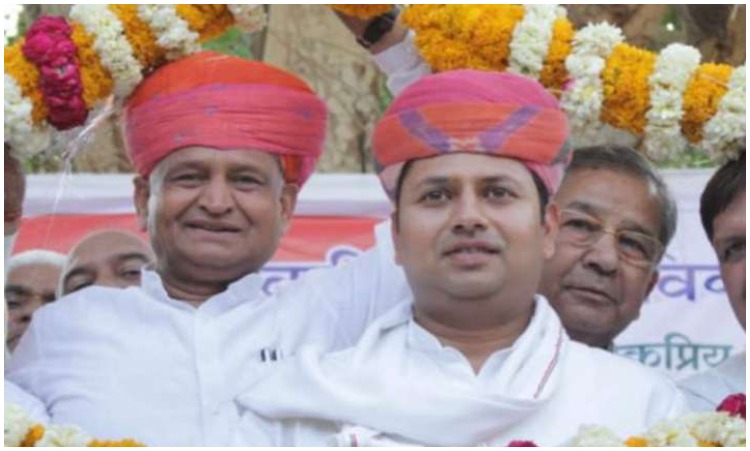
Vaibhav Gehlot, son of Rajasthan Chief Minister Ashok Gehlot, has landed in trouble as an FIR has been registered against him for fraud. Gehlot, also the president of Rajasthan Cricket Association, has been accused of duping a Nashik resident of crores of rupees.

According to reports, the Nashik police has registered an FIR against Ashok Gehlot’s son Vaibhav Gehlot over allegations of involvement in a case of fraud. The FIR has been filed by a person named Sushil Patil, who has accused Gehlot and 15 others of duping him of crores of rupees.

The complainant alleged that Sachin Valera, who introduced himself as someone close to the Vaibhav Gehlot, fraudulently obtained Rs 6.80 crore from him on the pretext of granting him a contract with the Rajasthan government.

“He asked me to become a partner in a private limited company dealing with government contracts. I have invested Rs 6.80 crores through that company. When returns on my investment stopped, I started bugging them. A video call was arranged between me and Vaibhav Gehlot where Gehlot assured me of returns to my investment,” said Sushil Patil in his complaint.

Patil has sought government security as he is apprehensive of his safety after registering an FIR against Rajasthan Chief Minister’s son.

“I have filed a complaint against powerful people. I am fearful about my life,” he said.

Meanwhile, Vaibhav Gehlot has rubbished the allegations, saying it is being done as elections are approaching in the state.

“I have no information and no connection to the case in which my name has been dragged into the media. We all know that as the elections approach, false allegations, as well as manipulated stories, will surface,” Vaibhav Gehlot said.

Following the allegation against Chief Minister’s son, Rajasthan BJP state president Satish Poonia demanded an explanation from the Chief Minister on the matter, saying the people of Rajasthan wish to know only the truth.

“The name of the chief minister’s son is being heard in the Marathi news, the honorable chief minister must clarify. The people of Rajasthan wish to know only the truth”, Poonia said.

Pakistan: Multiple massive explosions take place in Sialkot cantonment area, video viral

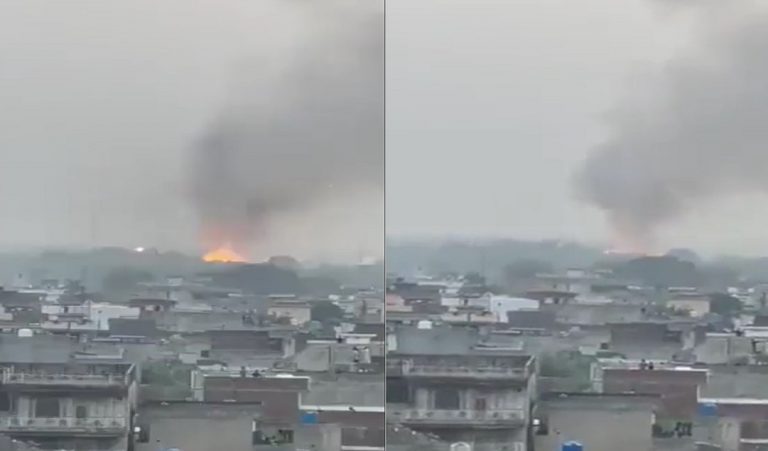
Multiple massive explosions occurred in Sialkot, Pakistan on Sunday, news agency ANI reported citing the local media. The explosion reportedly occurred inside the Pakistan Army cantonment in the Northern city of Sialkot. Initial indications are that the fire is in an Ammunition storage area.

The video of a large fire and explosions quickly went viral on the internet. Sialkot, close to Indian border, is one of the oldest and the most important Army cantonments in Pakistan.

This incident is the latest headache for Imran Khan who has been under severe pressure of late. While bomb blasts in the country continue as usual, Imran Khan is also under pressure to save his chair. Facing a rebellion from within his coalition, and a revitalized opposition, Imran Khan is trying every trick to save his government.

In the midst of all that, Imran Khan definitely doesn’t want explosions inside the army cantonments of the country.

Karnataka: Amidst tight security, tricolour hoisted on iconic Kolar clock tower after removing Islamic flags

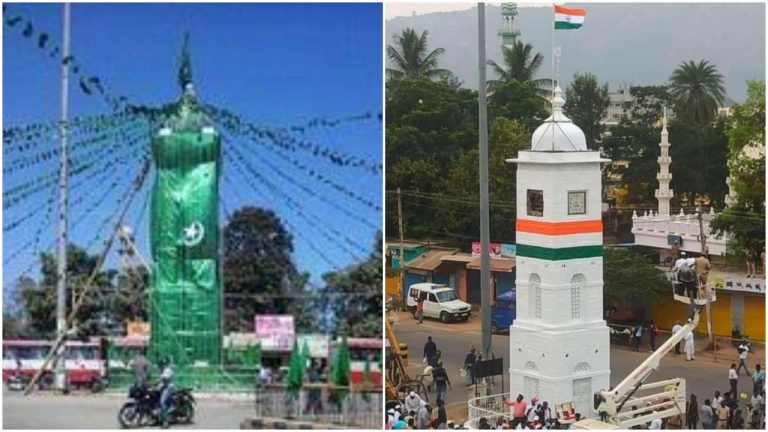
For the first time in nearly 75 years, the Indian tricolour was hoisted on Kolar’s clock tower in Karnataka on Saturday.

According to the reports, the Islamic flags hoisted on the famous clock tower in Kolar, painted in green for over seven decades, are now replaced with the Indian national flag. The clock tower was repainted in white colour as the police provided security to the workers, which included the deployment of the Rapid Action Force.

Superintendent of Police of Kolar D. Devaraju was on the spot on Saturday as the district authorities removed Islamic flags hoisted on the clock tower. A tense situation occurred in the city after the district authorities removed the Islamic flags. However, no untoward incidents occurred on Saturday as the police were able to manage the situation.

Later, the Kolar district police involved the public, including local Muslims, to unfurl the Indian national flag at the newly decorated clock tower.

The video of the incident has gone viral on the internet, with several netizens praising the district officials for taking control of the clock tower.

Earlier, Muniswamy S, the Lok Sabha MP from Kolar, had vowed to replace Islamic flags hoisted on the clock tower and had assured the Kolar public that the Indian tricolour would be unfurled at the same place. On Friday, the BJP MP had staged a protest in the city after the district authorities had imposed Section 144 amidst the ongoing clock tower controversy.

The Lok Sabha MP from Kolar, S Muiinswamy, had challenged the authorities to stop him and had announced that he would continue to protest till the tricolour was hoisted on the clock tower.

On Saturday, Munsiwamy took to Twitter to announce that the flag of a particular community made way for the Indian tricolour at the clock tower after a wait of 74 years.

An important landmark in the town of Kolar, the clock tower was built by trader named Mustafa Saheb in 1930.

TMC leader spreads fake news regarding The Kashmir Files, gets called out by the director

Vivek Agnihotri’s latest directorial venture, The Kashmir Files, has become an all time blockbuster at the box office. While the film is getting a lot of love from the Indian public, it has upset the Indian political opposition. From shifting the blame of the Kashmiri Hindu genocide to completely denying it, they have tried everything. Now, TMC leader Saket Gokhale, has come up with a new fake news to discredit the film.

In a tweet posted on Saturday by Gokhale, who has been previously accused of misappropriating public donations, he alleged that The Kashmir Files film was passed by the censor board without any cuts. He alleged that this happened because Vivek Agnihotri is a member of the censor board.

The allegation was picked up without any verification by leading newspapers like Times of India, and began circulating online. Incidentally, Times of India does have a fact-check division.

As previously reported on Opindia, The Kashmir Files was passed after 7 cuts, and given an A certificate by the Censor Board. The name of the University in the film was also changed from JNU to ANU. The news of the censor board cuts was shared by several prominent Bollywood websites as well.

However, Gokhale, it seems, didn’t bother to check any of the facts of the story, and having just found out that Vivek Agnihotri is one of the member of the censor board, concluded that there were no cuts in the film.

The film’s director, Vivek Agnihotri, finally called out Gokhale on Sunday in a tweet. Vivek wrote ,”Please stop spreading fake news, like always. Take a little break. At least to respect the dead.”

Meanwhile, The Kashmir Files continues to run to packed cinema houses everywhere. The film has already collected over 140 Crores at the box office, and is on track to hit 200 Crores within its second week of release.

Gujarat: Five Muslim men including one Maulvi arrested for forced religious conversion in Bharuch

A new case of mass-scale religious conversions has come to the fore in Gujarat. Four Muslims from Pursa village in Bharuch’s Amod taluka and one maulvi from Bharuch have been detained on allegations of converting a Hindu man to Islam by coercion. Pursa village is very near to the Kankaria village in Amod Taluka where in November 2021 an FIR was registered over forced religious conversion of 100 Hindus from tribal Vasava community.

The five accused in Pursa case are are Anvarkha Ibrahim Pathan, Gemalsang Bharatsang Singha, Imran Nurbha Malek, and Jahangir Gulam Sardar Malek. They threatened a Hindu man named Chhagan Rayaji Parmar about 12 to 15 years ago, telling him he had to convert to Islam or leave the village. They converted him to Islam and called him Abdul Rehman Parmar with the help of a Maulavi from Bholav named Maulvi Abdul Rahim Hafeji Napavala.

One of the offenders, Anvarkha Ibrahim Pathan, presented an affidavit providing the victim a plot, while Imran Nurbhai Malek made an affidavit promising to undertake the construction of a residential structure. The two others, Gemalsang Bharatsang Singha and Jahangir Gulam Sardar Malek, threatened the victim to convert to Islam or leave the village. The victim worked at the Pursa village’s Mariam Masjid. He said that he had not received his wages in two years.

As per the report, investigation has been handed up to the Jambusar DYSP. The accused have been charged in accordance with the Gujarat Freedom of Religion Act.

Mass religious conversion in Bharuch

Mass religious conversions to Islam were recently reported in Bharuch, Gujarat where Muslims forcefully converted several people from tribal communities to Islam.

As OpIndia reported in November 2021, an FIR was filed against Fefdawala Haji Abdullah, Salahuddin Sheikh, and others on the complaint of one Pravin Vasava of Kankariya village in Amod Taluka of Bharuch district in Gujarat, alleging that religious conversion of people from the Vasava community (Scheduled Tribe) to Islam was carried out by luring them with financial gains such as a job, a house, and a prospective girl for marriage. The FIR detailed how donations from other countries were transferred to India to aid in the operations of the aforementioned religious conversion.

The network’s branches were also connected with the Uttar Pradesh mass religious conversion racket, which was discovered in June-July 2021, and Salahuddin Sheikh was one of the key suspects, along with Umar Gautam. It was claimed that donations were funnelled by Fefdawala and others through Sheikh’s NGO AFMI and utilised for anti-social activities. The Home Ministry terminated the NGO’s FCRA registration in December 2021. 

Ground reporting was also done by OpIndia on the issue of religious conversions in Bharuch which can be read here.

Did you know: Farooq Ahmed Dar aka Bitta Karate, the butcher of Kashmiri Hindus, is married to KAS officer, wife says it is an honour

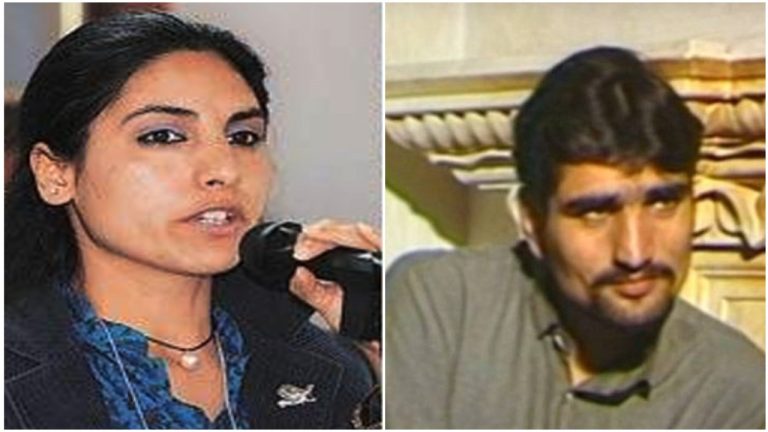
Jammu Kashmir Liberation Front (JKLF)’s Farooq Ahmed Dar alias Bitta Karate, a notorious Pakistan sponsored Islamic terrorist who waged war against the Indian state for decades, is married to a bureaucrat working for the Indian state.

It is surprising to know, in 2011, Bitta Karate, the terrorist responsible for the mass killings of Kashmiri Hindus in the valley in the 1990s, got married to Kashmir Administrative Service (KAS) officer Assabah Arjumand Khan.

Assabah Khan, who holds a MA degree in mass communication and journalism from the University of Kashmir in 1999, worked as an editor in the Agriculture University of Science and Technology till 2007. In 2009, Khan passed the Kashmir Administrative Services (KAS) examination and subsequently was posted in the general administrative department. In the later years, Khan also did a course in Peace and Conflict Studies from Germany.

On the other hand, Farooq Ahmed Dar Dar was waging war against the country by mercilessly killing innocent civilians and the security personnel on the instructions of Pakistan. He was arrested in 1990 and charged with the genocide of Kashmiri Pandits. However, he was set free after 17-years.

Bitta Karate, the butcher of Kashmiri Hindus, was once again arrested in 2008 during Amarnath land row agitation. He was released eight months later, only to be picked up again in 2019 on terror funding charges.

Apparently, Karate and his government officer wife met at a friend’s house in 2008. Farooq proposed to her five months later, and Assabah agreed after initial hesitation. The two decided to marry a year later, but Assabah’s family resisted it. The family did not want her to marry a terrorist, but KAS officer Assabah was in no mood to relent.

Finally, after much drama, Assabah’s parents agreed.

Marrying Bitta Karate was an honour for me, says KAS officer Assabah Khan

In an interview, a close aide of Karate had revealed that many youths were at the forefront of the ‘armed struggle’ aka terrorism in the early nineties, and they were most sought after men for marriage in Kashmir.

“When the armed struggle was at a peak in the Valley in the early nineties, militants were the most sought after men. People used to accord them a warm welcome and give them all the respect,” said a close aide of Karate. The ‘armed struggle’ was terrorism targeted toward Kashmiri Hindus, backed by Pakistan and Pakistan sympathisers in India.

Shockingly, Assabah Khan, a government employee who ideally should have stood against terrorists like Karate, admired him as well. As per Khan, when they met, she had not qualified KAS.

“I cleared the exams later. Even if I had not been a KAS officer, I would have got married to him,” Khan said. However, Khan had cleared her KAS exams in 2009 and married the terrorist in 2011.

“Getting married to him (Karate) is an honour for me. When people around me came to know that I am tying a nuptial knot with a separatist, they showed a lot of concern initially, but I made them understand that there is nothing wrong in it,” added Khan, who married a dreaded terrorist after joining service in 2011.

As of December 2021, Publicity, 48-year Assabah Khan was serving as the Directorate of Rural Development, Kashmir.

Uttar Pradesh: 3 Hindu youth stabbed by local Muslim men for raising nationalist slogans after the screening of ‘The Kashmir Files’

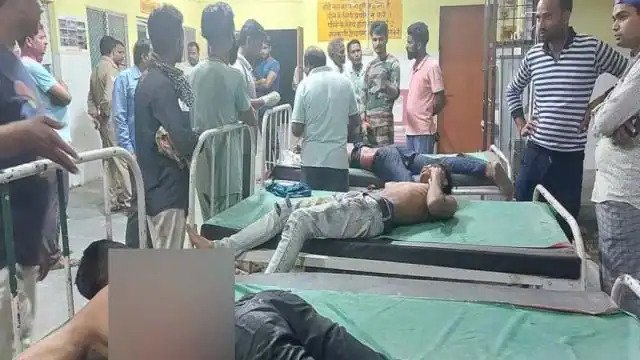
On Friday (March 18), three Hindu youths were gravely injured in a knife attack while they were exiting the cinema hall after watching the movie, ‘The Kashmir Files’. The incident took place in the Fazilnagar block in the Kushinagar district of Uttar Pradesh.

As per a report in Live Hindustan, the victims were identified as Sachin, Krishna and Sahul. The youths had gone to the cinema hall to watch the last show of “The Kashmir Files.’

After the screening of the movie was over, the trio raised nationalist slogans while exiting the cinema halls. Irked by the sloganeering, the local Muslim men first argued with the Hindu youths. When the arguments turned heated, they attacked the Hindu youths with knives and inflicted severe injuries.

Hindu youths injured in knife attack

The victims were then rushed to the Community Health Centre (CHC) in Fazilnagar block. After preliminary treatment, the doctors referred the three Hindu youths to the nearby medical college.

The Patherwa Police had launched a probe into the matter. A First Information Report (FIR) was registered and a search operation was initiated to nab the accused men. Station House Officer (SHO) Akhilesh Kumar Singh assured that the perpetrators would be brought to justice.

‘The Kashmir Files’ movie narrates the 1990 genocide of Kashmiri Pandits

The Kashmir Files’ is inspired by the true stories of Kashmiri Pandits. It takes viewers back to 1989, when conflict erupted in Kashmir due to rising Islamic Jihad, forcing the great majority of Hindus to flee the valley.

According to estimates, roughly 100,000 of the valley’s total 140,000 Kashmiri Pandit inhabitants migrated between February and March 1990. More of them fled in the years that followed until just about 3,000 families remained in the valley by 2011.

The movie based on video interviews with first-generation Kashmiri Pandit victims of the Kashmir Genocide was released in India on March 11 and is open to watch in theatres.

Japan will invest 3.2 lakh crore rupees in India in upcoming 5 years: PM Modi

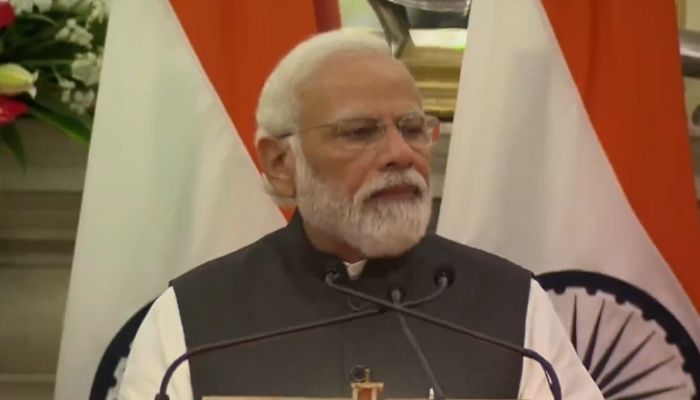
Prime Minister Narendra Modi said on Saturday 19th March 2022 that Japan will invest Rs 3.2 lakh crore in India in coming 5 years. He also said that the two countries have achieved the targets that were set in 2014. He was giving a joint press statement with the Japanese prime minister Fumio Kishida who is on his visit to India for the 14th summit between India and Japan.

PM Modi said, “I am happy that we have crossed the investment target of 3.5 trillion Yen set in 2014 and we have decided to increase our aspirations. In the coming five years, we have set a new target of 5 trillion Yen investment i.e. about 3.20 lakh crore.”

He further said, “the world is still coping with the ill effects of COVID-19. “There are obstacles in the global economic recovery process. The geopolitical developments are also posing new challenges. In this context, it is not only important for India and Japan to strengthen their bilateral partnership but it will encourage peace, prosperity, and stability in the Indo-Pacific region and in the world.”

Underlining the friendly relations with the Japanese prime minister, PM Modi said, “PM Kishida has been an old friend of India. I have had the opportunity to exchange views with him when he was the Foreign Minister of Japan. Japan is one of the largest investors in India.”

Taking cognizance of the high-speed rail corridor development work between Mumbai and Ahmedabad, the project that is being completed with the help of Japan, PM Modi said, “Japan has made a notable contribution in the flagship projects like Dedicated Freight Corridor and Mumbai-Ahmedabad High-Speed Rail project. Good progress is being made on Mumbai-Ahmedabad High-Speed Rail.”

The two countries also signed six agreements including one for cyber security cooperation. A sustainable development initiative was also launched for India’s northeast and clean energy partnership.

The previous India-Japan Annual Summit took place in Tokyo in October 2018.

In 2014, Japan had announced investment of USD 33 million in India.

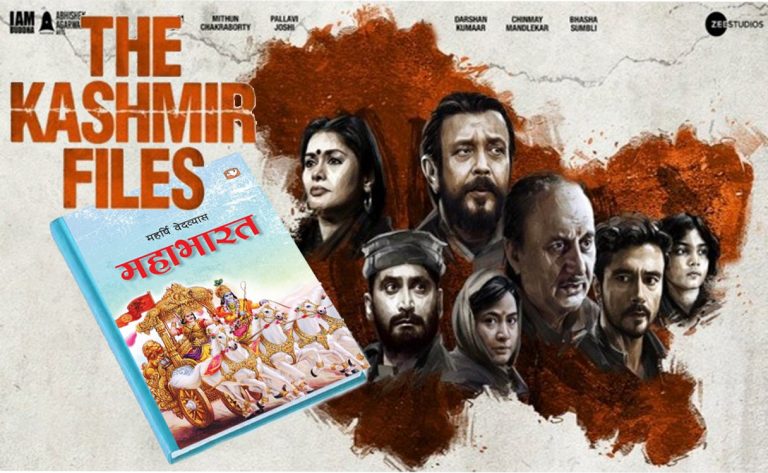
Mahabharata lesson and reference to Hindu icons – Did you catch these hidden symbols in The Kashmir Files?

Director Vivek Ranjan Agnihotri’s film ‘The Kashmir Files’ has stirred up the public discourse within a week of its release on 11th March 2022. The film depicts the genocide of the Kashmiri Hindus by Islamic terrorists that happened in the 1990s and their subsequent exodus. The movie is drawing more viewers to the cinema halls with every passing day. ‘The Kashmir Files’, directed by Vivek Ranjan Agnihotri, has been declared tax-free by many state governments like Uttar Pradesh, Goa, Gujarat, Haryana, Madhya Pradesh, Karnataka, Bihar, and Uttarakhand. 

The box office collection of the film crossed the mark of rupees 100 crores on the 8th day. But the mark it has left in the minds of people is priceless and it is, therefore, necessary to keep an account of the subtle nuances people have noticed in the film and have talked about, along with the ones people must not miss while watching and even after watching this film. Some of these details trace their references in the Indic mythology and faiths, especially from Mahabharata. Let us have a look at them as the film unfolds itself.

The film opens with a boy called Shiva playing cricket. Shiva is believed to be the ultimate force in the Indic faiths. Shiva is Anadi and Ananta that is Shiva does not have any beginning or end; it is Sanatan that is perpetual. This very name in the beginning scene subtly establishes the existence of the oldest surviving civilization in Kashmir that is essentially Hindu civilization and in a true sense the cradle of human civilization.

A viewer named Ganraj tweeted in detail, the nuances he noticed. He wrote, “Mithun Chakraborty’s name is Brahma Dutt. Punit Issar’s name is Hari Narayan. Atul Shrivastava is Vishnu Ram. Finally, Prakash Belawadi is Mahesh Kumar.”

This character establishment underlines the three lords Brahma, Vishnu, and Mahesh. In the film, Brahma Dutt is an IAS officer. Hari Narayan is a police officer of DGP rank. Vishnu Ram played by Atul Shrivastava is a media person and Mahesh Kumar played by Prakash Belawadi is a doctor. Mrunal Kulkarni’s character in this film is named Lakshmi Dutt. Ganraj explained his observations in the subsequent tweet. He wrote, “Brahma Dutt represents the Govt. Hari Narain represents the Police or Law and Order. And finally, Vishnu Ram represents the Press of India. The movie shows – in very clear terms the inactions or helplessness of these institutions while the atrocities were happening.”

Ganraj wrote in his next tweet, “Finally the movie depicts the fight between two narratives. On one side you have Radhika Menon (played by Pallavi Joshi) and Bitta Karate (played by Chinmay Mandlekar). On another side, you have the Trimurtis and Pushkar Nath (played by Anupam Kher). The question is what are they fighting about? And what for?”

Anupam Kher played the role of Pushkar Nath Pandit in this film. The nameplate on his house in the film says Pushkar Nath Pandit is M. A. in philosophy. He is also seen as a theatre coach. While leaving Kashmir, which is in the scene of the exodus, Pushkar Nath Pandit’s family seeks temporary asylum in a poet’s house. All these things are a testimony of the rich culture rooted in Kashmir, of course essentially Hindu in nature, that was wiped away in this genocide and exodus. Rather, it is not the first time in 1990 that the Kashmiri Hindus had faced the atrocities. In fact, the film itself clears it that it was the seventh exodus.

Ganraj wrote in his next tweet, “In simple terms, they are fighting for the attention of Krishna (played by Darshan Kumar). Krishna in this movie represents the youth of India. And finally, Krishna makes a speech.”

Krishna Pandit in this movie is depicted as a confused youth who does not exactly know about his past thanks to the brainwashing guides like Radhika Menon (played by Pallavi Joshi). Even on his journey to know the truth about himself, Krishna is quite easily distracted by the Islamic terrorist Bitta (played by Chinmay Mandlekar). In fact, Krishna in the film is as confused as the warrior Arjuna in Mahabharata. Arjuna sought clarity of thoughts before the Mahabharata war started. It was only after Lord Krishna’s advice that he picked up his arms and fought for justice. Krishna in this film is no different.

While talking to OpIndia about this thread by Ganraj, director Vivek Ranjan Agnihotri said, “I am so delighted that this person caught the nuance so well. There is also a cue in the film where Bitta tells him – Your name is Krishna but you look like Arjuna. Because Krishna is dual here. He is also the keeper of Dharma but he is also the audience’s point of view which is Arjuna.”

And truly, the audience was so confused and ill-informed about the reality of the genocide of the Kashmiri Hindus that took place in 1990. Rather, it was not known as genocide before this film. Now that the people are knowing the truth, they have become as fearless as the warrior Arjuna. What The Kashmir Files is fighting right from the beginning is the war of narrative. In fact, it is a war against the so-called popular narrative.

Ganraj wrote in his next tweet, “We know that whoever has Krishna on their side, will have dharma on their side – which is why both of them were fighting for Krishna. As stated in the last line of Bhagavat Gita.” The last line in Bhagvadgeeta means, “Wherever is Krishna, the Lord of Yoga; wherever is Arjuna, the wielder of the bow; there are prosperity, victory, happiness, and firm policy; such is my conviction.”

Ganraj noted this in absolute cohesion with what the director thought. He wrote in his next tweet, “Who is Arjuna? It is you, the audience. Because at the end of you are the warriors. You have to decide whether you want to stand up to Adharma or not.” And this subtle nuance has translated very well amongst the viewers. Its impact is also seen as the people are talking openly about the topic that was ignored for more than three decades.

Finally, Ganraj concluded his thread with something that no viewer should miss notice. He wrote, “Finally, what did we lose in this whole genocide? Sharada (played by Bhasha Sumbli) in other words knowledge or Saraswati. Kashmir and the Kashmiri Pandits who held the seat of our Knowledge for millenniums have been murdered. I think this subtle meta detail is the genius in this movie. Thank you Vivek Agnihotri. I wanted the world to recognize this.”

Besides the peculiarities noticed by Ganraj, there are a few more things one must notice while watching The Kashmir Files. Vivek Agnihotri has said while speaking to OpIndia, “The film ends with the killing of the boy named Shiva. It was Shiva who had consumed poison for the welfare of the universe. While watching the film, viewers must also remember that the Himalayan valley of Kashmir is the birthplace of the best of the creations mankind has ever had.

Sharada in this film is shown as the epitome of the love and care for a family one may ever have. Even in exile, she teaches her son to focus on studies rather than encouraging him to take a path of violence for avenging the atrocities they faced. It is evident that she emphasizes education which is the true worship of Sharada. On the other hand, the stone-pelting Kashmiri youths shown in the popular narrative so far are always seen talking about the injustice done with them and they want to fight for their so-called Azadi. It is notable that the Sharada Peeth, the abode of Goddess Sharada, which is presently in POK is desecrated by similar Jihadis carrying Islamist ideology in their heads. Pushkar Nath Pandit teaches the kid to face their inner and outer fear and convert it into strength. This is something very basic as taught in Indic philosophies. It is due to this advice that the little kid fearlessly faces death with wide-open eyes.

Pushkar Nath Pandit – a drama teacher – hails from that land of Kashmir where Bharat Muni wrote the ‘Natya Shastra’ which is the pioneering document of drama studies. His face colored like that of Shiva and the depths of acting he has explored in the film terminally shatter the anti-Hindu narratives built by films like PK and Tandav. As Brahma Dutt, the character played by Mithun Chakraborty in this film reconsecrates the deity in the old home at Kashmir after the abrogation of article 370, one may naturally recall that it is Lord Brahma who reinitiates the things once they are destroyed. Krishna’s speech in the climax is as eye-opening to the viewer to clear the confusion about the Kashmir issue.

The Kashmir Files is filled with so many minute details. Many viewers and critics have agreed upon a thing that there is hardly any unnecessary frame in The Kashmir Files. Now, it is up to the audience to watch the film and trace out such symbols and inclusions – both visual and verbal – in this film that find their roots in Indic faiths and philosophies. Known for his ‘seeker attitude’ and philosophical acumen, director Vivek Ranjan Agnihotri has thus concluded it while talking to OpIndia saying, “There are many subtle nuances and layers in the film and I would want the audience to recognize them.”