Home Blog Page 351

Chhattisgarh liquor scam: ED attaches Congress Bhawan in Sukma and 2 properties of former Congress minister Kawasi Lakhma, says buildings were built using scam proceeds

Enforcement Directorate (ED) on June 13 attached 3 properties worth ₹6.15 crore in connection with the Chhattisgarh Liquor scam. Significantly, one of the properties is the Congress Bhawan in Sukma, the officer of Congress party.

The other two properties are residential houses belonging to jailed Congress MLA and former minister Kawasi Lakhma and son Harish Lakhma. As per the ED, the three houses have been built using Proceeds of Crime (POC) and have therefore been attached.

ED said that the probe has revealed that Kawasi Lakhma, the then Excise Minister of Chhattisgarh, was receiving ₹2 Crore per month out of liquor scam and thereby received total ₹72 Crore in 36 months. ED found crucial evidence proving that money from the scam was used to build the Congress Bhawan and the two residential buildings for his family.

As per ED, Cash worth ₹68 Lakh was used in construction of Congress Bhawan in Sukma, ₹1.40 Crore was utilized in construction of house of Harish Lakhma and ₹2.24 Crore was used in construction of his own house at Raipur.

These attachments are in continuation to the previous attachment of immovable properties having value of nearly ₹205 Crore.

ED investigation revealed that the corruption in liquor scam which ran between 2019 to 2022 resulted in massive loss to the State Exchequer and generation of more than Rs. 2161 Crore worth of POC by commission of predicate offences.

Assam govt is dealing firmly with encroachment of Satra lands, the scale of encroachment is assault on Assam’s culture and identity: Himanta Biswa Sarma

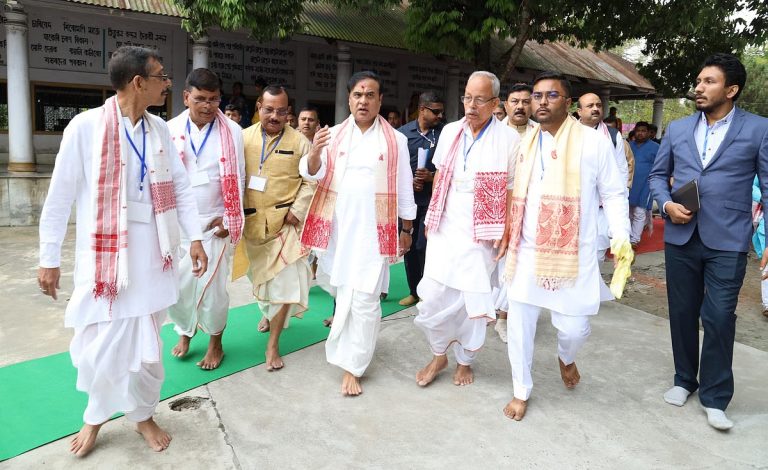
Assam Chief Minister Himanta Biswa Sarma has announced a major initiative to recover encroached land belonging to Satras of the state. Satras are Vaishnav monasteries set up by Srimanta Sankardev and his disciples Madhabdev, Haridev and Damodardev. Hundreds of Satras were set up across the state, some of which are in current day West Bengal. But large areas belonging to the monasteries have been encroached.

Recently, a report submitted by Commission for Review & Assessment of Problems of Satra Land revealed that 15,288.52 bighas (over 1,898 hectares) of land belonging to 303 Satras in 11 districts of Assam have been illegally occupied. Posting about the same on X on Friday, the CM said that an area twice the size of Assam’s capital Dispur have been encroached from the satras.

He posted, “The sheer scale of encroachment of the Satras is a direct assault on Assam’s culture and identity. NOT ANYMORE! WE ARE DEALING FIRMLY WITH THIS!” He said that the govt of Assam is working on a war footing to preserve the soul of the state’s culture.

He described Satras as much more than religious sites. Himanta Biswa Sarma said they are also cultural and social hubs where traditions like Borgeet, Sattriya dance, Chali, Jhumura, Dashavatar performances, and the preservation of old manuscripts and historical records are kept alive.

“Satras are not just monasteries, they are the heart of our heritage,” he wrote, warning that these sacred places are under serious threat due to widespread land encroachment.

As per the commission report, in Barpeta district alone, 7,137 bighas are under encroachment.  In this district, some of the most prominent satras are located, where Sankardev and Madhavdev spent significant periods of their lives.

The CM posted a map showing the major districts where most satra lands are under encroachment, Barpeta, Bajali, Nagaon, Lakhimpur, Dibrugarh, Kamrup, Bongaigaon, Majuli and Dhubri.

CM Sarma posted in Assamese on Facebook, “We are fully committed to saving our identity and culture. We will keep working to reclaim every Satra. But we cannot do it without your support.”

After receiving the Commission report on encroached land, the CM had also announced that his government will form a permanent Satra Aayog (commission). The commission will be empowered financially and administratively to work for the benefits and welfare of the satras. A law will passed in the assembly for formation of the Aayog.

The Aayog will work on forming a 25-year vision plan to revamp the institutional framework of the satras and ensure their sustainability across the state, CM Sarma said. He also raised concern over the condition of Satras in Hindu minority districts like Barpeta and Dhubri, stating that land encroachment and demographic changes have deterred devotees from visiting these spiritual centres.

Apart from eviction drives from encroached satra land, Assam govt has also launched protective zoning measures under Mission Basundhara 3.0, which includes legal land patta distribution to Satras and other institutions to formalise land ownership.

Adani Cement and CREDAI join forces to propel sustainable urban construction in India

In a major boost to India’s real estate and infrastructure sector, Adani Cement and the Confederation of Real Estate Developers’ Associations of India (CREDAI) have announced an exclusive preferred partnership aimed at accelerating the adoption of sustainable, high-quality construction practices across the country.

The agreement, signed during CREDAI’s Governing Council Meeting in Goa in the presence of Goa Chief Minister Shri Pramod Sawant, marks a significant milestone for both organizations. With Adani Cement now supplying nearly 30% of India’s cement for housing and infrastructure projects, the tie-up gives CREDAI’s 13,000+ member developers direct access to its vast supply chain and technological expertise.

“This partnership is a testament to Adani Cement’s commitment to nation-building through innovation and sustainability,” said Mr. Vinod Bahety, CEO – Cement Business, Adani Group. “We aim to empower developers with green concrete technologies, premium products, and technical support that together enable stronger, safer, and more environmentally conscious structures.”

Under the agreement, CREDAI members will benefit from:

  • Adani’s innovative RMX concrete solutions, including ECOMaxX ultra high-performance concrete with up to 100% lower embodied carbon.
  • Premium brands like Ambuja Plus and ACC Concrete Plus, known for superior strength and durability.
  • GRIHA-certified green products, supporting eco-friendly certifications for builders.
  • Advanced additives and proprietary R&D-driven materials such as Alccofine for enhanced concrete performance.
  • On-ground technical support through Adani Certified Technology (ACT) for quality assurance and consultancy.

The announcement comes amid a shift in India’s cement demand from retail individual home builders to large-scale B2B infrastructure and high-rise residential developments. With the urban population projected to surpass 600 million by 2030, the need for vertical expansion and technologically advanced materials is paramount.

Adani Cement, having surpassed 100 million tonnes per annum of installed capacity, is uniquely positioned to meet this demand. Its ability to deliver high-strength concrete for vertical structures and technical guidance on modern construction practices is expected to raise industry standards significantly.

CREDAI officials expressed optimism that this collaboration would not only ensure a steady supply of high-quality materials but also foster sustainable practices, reduce project timelines, and ultimately benefit end-users through improved construction quality.

This strategic partnership underscores a shared vision of building a greener, smarter, and more resilient urban India — one structure at a time.

How Global Capability Centres policy of UP govt is set to generate 2 lakh jobs, transform the state into a GCC hub: Here is everything you need to know about it

In a major step towards making Uttar Pradesh the hub of Global Capability Centres (GCC), the Uttar Pradesh government has approved the he Global Capability Centres Policy. The Chief Minister Yogi Adityanath-led government aims to position Uttar Pradesh as a hub of office space while also generating more than 2 lakh high-paying jobs over the next five years.

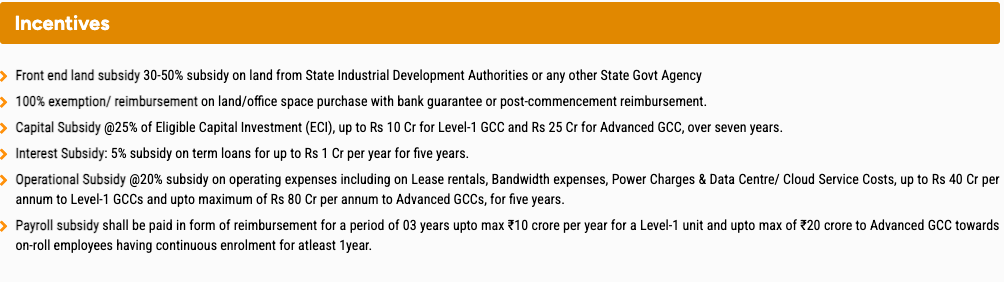
For this, a 30–50% front-end subsidy on land cost, a 25% capital subsidy up to Rs 10 crore for Level-1 and Rs 25 crore for advanced GCCs, and 100% stamp duty exemption has been announced by the state government.

Speaking about the GCC Policy, Nand Kumar Nandi, UP’s Minister for Industrial Development, Export Promotion, NRI and Investment Promotion, said: “The incentives will be based on the performance of the company with a focus on job creation, export growth, and technology innovation. The process of availing the benefits of these incentives will also be streamlined by the state government to reduce the administrative burden on the companies.”

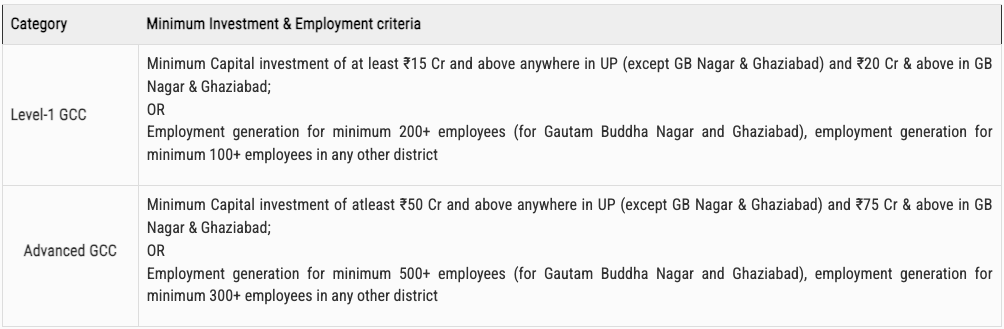
There are two categories of the GCCS under the newly approved policy, Level 1 and Advanced (Unnat) GCCs, depending upon investment and employment generation. Level 1 GCCs require a minimum capital investment of Rs 15–20 crore and create employment for 100–200 people, depending upon the city in Uttar Pradesh.

Eligibility criteria as laid in UP’s GCC Policy (Source: InvestUP)

Meanwhile, Advanced (Unnat) Global Capability Centres are the ones which undertake a minimum capital investment of Rs 50–75 crore and which create employment for at least 300–500 employees depending upon the city.

To facilitate the swift implementation of the new GCC policy, the Uttar Pradesh government will an interest subsidy of 5% on construction and purchase of plant and machinery; a 20% subsidy on operating expenditure; payroll subsidy up to Rs 20 crore; subsidy on recruitment of new employees. The government will also provide EPFO refund and support for creation of internship opportunities.

Source: InvestUP

Moreover, the Yogi government will provide technical and regulatory support to GCCs. The regulatory support will include exemptions d under various Acts for five years, including pollution, maternity, factories, etc.

As per the industry experts, access to skilled talent pool, improved infrastructure, metro expansions, new expressways, alongside the development of large-scale commercial complexes, are the factors contributing to increase in corporate leasing.

Why Global Capability Centres matter?

As per Coldwell Banker Richard Ellis (India) or simply CRBE India, a real estate consultancy company, India’s GCC market is projected to reach $100 billion by 2030, with a headcount of over 2.5 million, and nearly 90% of GCCs operating as multifunctional centres.

In 2025 alone, a CRBE India report published in April this year says, Global Capability Centres are expected to account for about 35-40 per cent of the total office space absorption across the major Indian cities besides Tier I cities like Bengaluru, Hyderabad and Pune.

The report added that the state-specific policies designed to support the GCC expansion will encourage leasing growth in the smaller cities, complementing the activity observed in the established hubs.

Notably, cities such as Bengaluru, Hyderabad, Chennai, Mumbai, Pune besides Delhi NCR are the major hubs for GCCs in India. The report added that the technology sector will lead the total office demand in the country, given its focus on pioneering advanced solutions.

GCCs within the BSFI (Banking, Financial Services, and Insurance) and Evaluation and Management (E&M) sectors will drive space take-up, with notable demand stemming from niche occupier groups, often actively pursuing digital transformation initiatives.

Additionally, as per the report, the semiconductors, aerospace, automobiles, and life sciences sectors are likely to exhibit strong GCC absorption levels. Global corporations are increasingly capitalising on India’s expansive talent pool, positioning their GCCs as strategic hubs or secondary headquarters to drive innovation, digital transformation, and the development of high-value capabilities.

The expansion of GCCs into multifunctional centres is expected to be fuelled by the consolidation of existing operations and the entry of the new firms, all of which are likely to contribute to the sustained leasing activity.

How UP government is taking measures to make the state a hub of GCCs

In India, there are around 1700 Global Capability Centres at present, however, this number will increase exponentially in the coming years. The Uttar Pradesh government is also actively working towards transforming the state into a hub of GCCs.

Earlier this year, Microsoft laid the foundation stone of a 10,000-seater development centre in Noida. Meanwhile, MAQ, a software company has also set up a 3,000-seater engineering development centre. The Uttar Pradesh government is reported to be taking mesures to take GCCs in cities like Varanasi, Kanpur and Prayagraj along with NCR and Noida.

Explaining how and why several multinational companies are setting up their GCCs in Uttar Pradesh, Alok Kumar, the Principal Secretary, Industrial Development said, “To get better quality work at less cost, many multinational companies are setting up their offshore development centres in Uttar Pradesh….”

The GCCs established by IT and software companies include machine learning, cloud computing, robotic process automation, AI-driven development, cyber security, and engineering development, etc.

Besides IT firms, many companies from the automotive sector, electronics and semiconductor manufacturing sectors are also making their way to Uttar Praedesh. “Multinational companies are coming to India to outsource work in banks, financial services and insurance sector,” Kumar said.

On 10th June 2025, Uttar Pradesh’s investment promotion agency Invest UP held its first GCC conclave in Lucknow to launch the new GCC Policy. The event was attended by representatives from more than 20 MNCs including Microsoft, Deloitte, TCS, HCL, Standard Chartered Bank, SRK Gamechangers, Trident etc. Reports say that these MNCs and other foreign investors showed deep interest in setting up their GCCs in Uttar Pradesh and also lauded the state government’s efforts to foster a conducive ecosystem to facilitate timely approvals, land allocation and relevant subsidies.

As per the Uttar Pradesh government, the state has a competitive edge as around 56% of the population comes under the working-age bracket, living costs average Rs 28,000 monthly, real estate and talent costs run 14-45% lower than metro cities. Moreover, a single-window clearance system guarantees seamless approvals.  The government say that around 20 incubators and over 300 registered start-ups are playing a remarkable role in the state’s growth in this arena. With more investment pouring in Uttar Pradesh, employment opportunities will also increase and contribute towards the growth of the state’s economy.

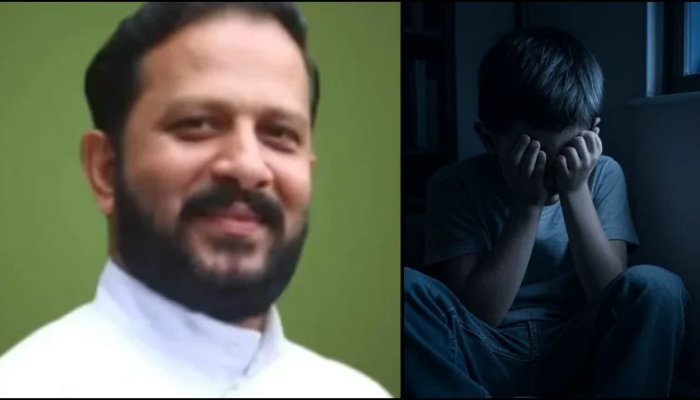
Kerala: Catholic priest sexually assaults 16-year-old schoolboy in Kasaragod, church rallies to shield the accused

A Catholic priest has been charged with the rape a 16-year-old boy in Kerala. He is currently evading capture and the church has intervened to protect him. A campaign has been launched to help him. A First Information Report (FIR) has already been filed and the police are conducting an investigation into the matter.

The case pertained to Kasaragod in Kerala. An official complaint has been launched against Father Paul Thattuparambil, the priest of Saint Paul’s Church in Athirumavu, on a complaint made by the minor boy. The Chittarikkal police have invoked POCSO (Protection of Children from Sexual Offences) Act against the perpetrator.

According to the complaint, he reportedly sexually assaulted a student from class 11 by taking him to his home and other locations during the period from 15th May to 13th August of 2024. This issue came to public attention after a counseling session and was subsequently reported to Childline. He has been missing since the case was registered.

As allegations against the priest came to light, the church has started to defend him. Individuals linked to the church have dismissed them as baseless. The church and its people has also initiated a campaign to support the offender. They are dispatching a voice message in the name of parish official in WhatsApp groups, urging recipients to send a letter to the Chittarikkal police affirming his good character.

“We certainly believe that Father Paul is innocent in this case and it clearly looks like an attempt to defame him. Let the police probe the case and we are ready to cooperate with the investigation,” claimed a priest of the church.

At the same time, the search for him has escalated. Additionally, it has been alleged that he has been admitted to a private hospital. Thattuparambil has served as the priest of Athirumavu Parish for the past one and a half years. He hails from Ernakulam. Currently, the police are gathering evidence and conducting an inquiry for further action. Earlier, he was at church close to Athirummavu of Kannur district.

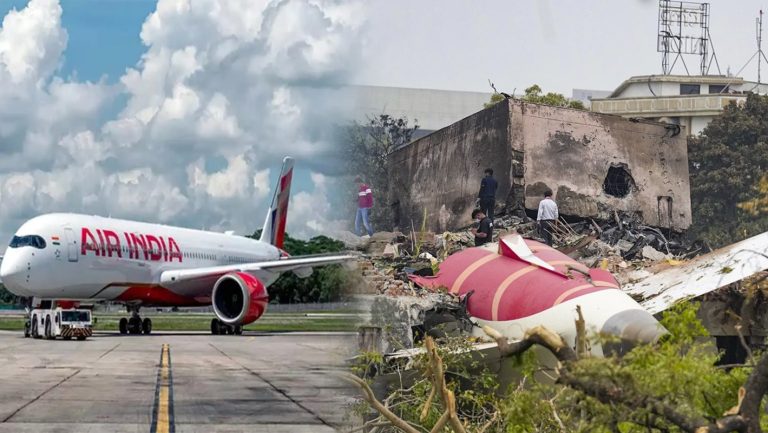
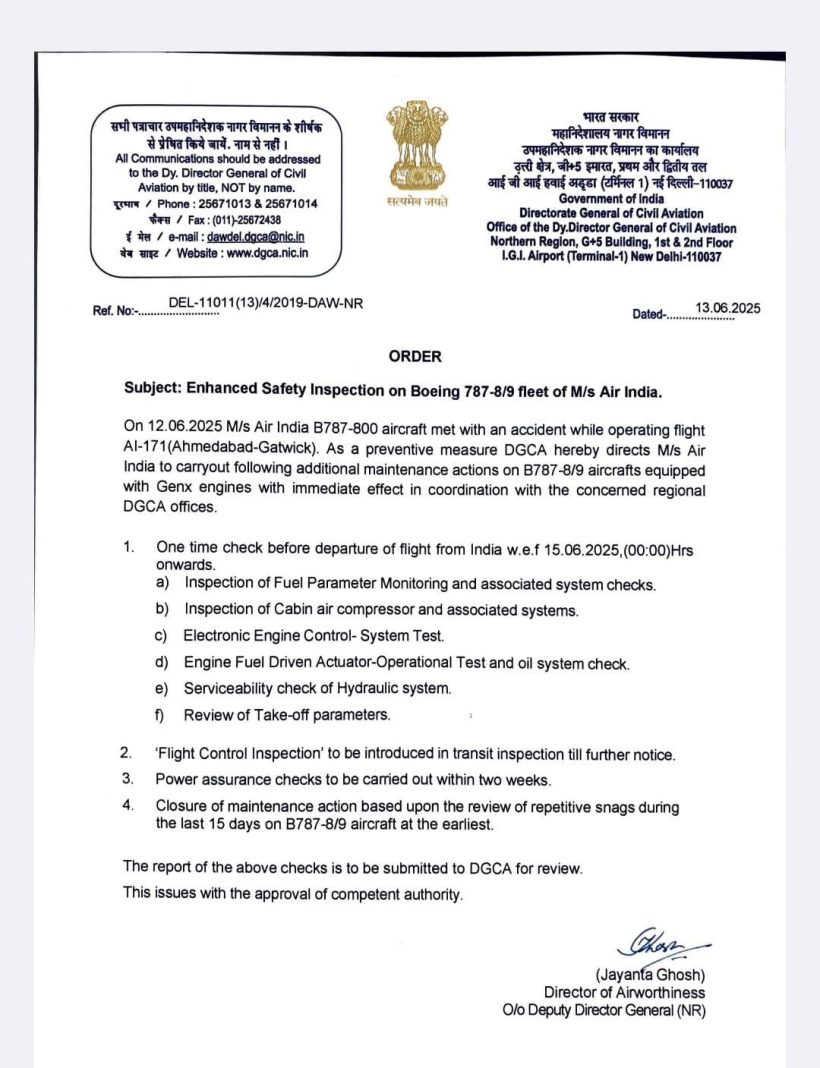
DGCA orders additional inspections of Air India’s Boeing 787 8/9 planes after the Ahmedabad crash, asked to submit report

The Directorate General of Civil Aviation has ordered enhanced safety inspections for Air Indias’ fleet of Boeing 787 planes after the Ahmedabad crash. In an order issued on Friday, DGCA said that as a preventive measure, Air India has been directed to carryout several additional maintenance actions on B787-8/9 aircrafts equipped with GEnx engines.

Air India is to carry out the additional maintenance with immediate effect in coordination with the concerned regional DGCA offices.

The additional inspections include several one time check before departure from 15th June onwards. These checks are as follows:

a) Inspection of Fuel Parameter Monitoring and associated system checks.

b) Inspection of Cabin air compressor and associated systems.

c) Electronic Engine Control- System Test.

d) Engine Fuel Driven Actuator-Operational Test and oil system check.

e) Serviceability check of Hydraulic system.

f) Review of Take-off parameters.

DGCA further added that ‘Flight Control Inspection’ to be introduced in transit inspection till further notice, and power assurance checks to be carried out within two weeks.

The last instruction said, “Closure of maintenance action based upon the review of repetitive snags during the last 15 days on B787-8/9 aircraft at the earliest.”

Air India has also been asked to submit the report of the additional checks for review.

Earlier, some reports had speculated that Indian govt will ground the Boeing 787 fleet following the tragic crash, as the most likely cause is technical failure, most probably engine failure. The plane took off normally, but after stating to climb, it was unable to move up after reaching around 400-500 feet, and it then crashed onto the ground.

‘The Kerala Story’ comes to Agra: Two Hindu sisters brainwashed, recruited into Islamic conversion network linked to J&K and ISIS fronts

A case of brainwash and religious conversion of two Hindu women has come to light in Agra, Uttar Pradesh. The elder sister was the first to fall victim to the vicious trap of religious grooming and conversion by her own friend named Saima, who was from Udhampur, J&K. Later on, she groomed her younger sister. Both the sisters have been missing for the last 3 months.

According to reports, the elder daughter used to study at Dayalbagh Educational Institute in Agra. There she came in contact with Saima, who was a Muslim. The family of the victims told police that their elder daughter was so brainwashed by Saima that she disappeared in 2021. She returned after some time, but she was not the same person anymore. The family said that after coming back, she began brainwashing her younger sister. Subsequently, both the sisters disappeared from their home on March 25, 2025.

Their family, with no information of their whereabouts, approached the police, which did not pay much attention to the case initially as both the girls were adults. On May 4, 2025, an FIR was registered by the police in the case. OpIndia has a copy of the FIR registered in this case.

In the FIR, the victim’s father has clearly stated that Saima has taken away both his daughters. He also alleged that Saima has taken his daughters to get them married.

Preliminary investigation by the police revealed that the case follows the pattern of religious conversion of vulnerable Hindu girls similar to what was shown in the movie ‘The Kerala Story’. The case has now been transferred to the cyber police in Agra.

According to police, the two sisters, who were victims of an Islamic conversion gang, have now become a part of the conversion gang. The police also found the conversion gang has links across India, including J&K, West Bengal and Delhi-NCR. Cyber experts are examining the social media accounts of the two sisters to trace their movement. Some other suspicious social media accounts are also being monitored by the police as part of the investigation.

How Islamic conversion gangs have been targeting non-Muslim women

The case highlights the serious threat posed by Islamic conversion gangs, which have been targeting non-Muslim women across the country for fulfilling their vicious agenda. The agents of these Islamic conversion gangs target young, vulnerable, non-Muslim women, usually in schools and colleges and brainwash them to convert them to Islam.

In 2020, many Christian organisations, including the Syro Malabar Church, and the Kerala Catholic Bishops’ council voiced their concerns over the growing number of Love Jihad cases in Kerala. Many Hindu organisations, grieving parents and families have also been alleging for years, that there are forces active in Kerala that are targeting young women, brainwashing them in the name of ‘religious studies’, forcefully converting them into Islam and then shipping them off to serve for ISIS as sex slaves.

In 2016 case a Hindu girl named Nimisha Sampath alias Fathima Isa, who was among four Kerala women who fled to Afghanistan, to join terror outfit ISIS after being radicalised by an ISIS frontman named Abdul Rashid. The other three women were identified as Sonia Sebastian alias Ayisha, Merrin Jacob alias Mariyam, and Raffaela.All these women converted to Islam after being brainwashed and even went to join the terrorist organisation. Nimisha and her friend Merrin, accompanied by their husbands, went to Syria and then to Afghanistan to serve the Islamic State. Nimisha is currently lodged in an Afghanistan prison after her husband, an ISIS terrorist, was killed in an attack.

Kerala has most number of radical Muslims working for ISIS in war-trodden countries. NIA has long been investigating the connection between Love Jihad, terrorist recruitment and radicalisation in Kerala.

Assam: Cow head dumped inside Hindu temple in Muslim-dominated Dhubri, CM Himanta Biswa Sarma meets local Hindus, gives shoot-at-sight orders against extremists

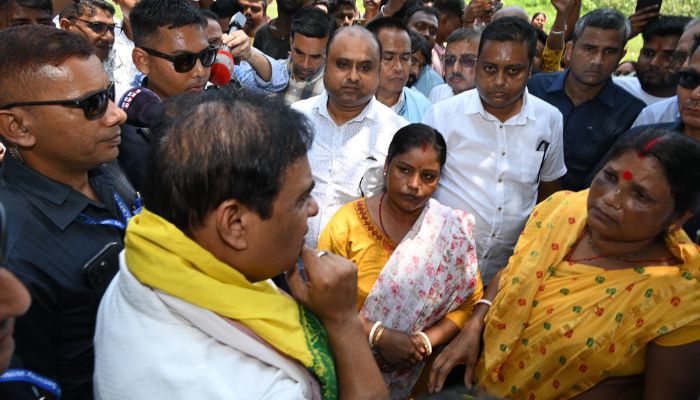
On Friday (13th June), Assam Chief Minister Himanta Biswa Sarma visited Muslim-dominated Dhubri after communal tensions broke out in the city over the dumping of cow heads at Hindu temples following Bakri Eid.

While speaking about the matter, Sarma informed that the severed head of a cow was found at a local Hanuman Mandir on the following day of Bakri Eid.

“Hindus and Muslims met, and a Peace Committee was formed to resolve the matter. But again on the next day, another cow head was dumped in the Hindu temple,” he added.

Himanta Biswa Sarma informed that the extremists resorted to stone pelting and put up 3 posters of ‘Nabin Bangla’ in Dhubri, an organisation which wants to annex the entire district to Bangladesh.

“There is a communal group active in Dhubri. We have given shoot-at-sight orders to the police,” he emphasised.

The Assam Chief Minister made it clear that desecration of Hindu places of worship would not be tolerated in the BJP-ruled State.

“Next year, I will come here and stay the night of Bakri Eid at the Goddess Kali temple. I am making it loud and clear today. The situation is absolutely unacceptable. Things were different in the past, not anymore,” he added.

“I am heading to the Hanuman temple to inspect the spot where the cow head was dumped. This will not be allowed to happen again. I will stay in the temple at night if necessary. We will not allow Dhubri to be destroyed,” Himanta Biswa Sarma emphasised.

In a tweet, he made it crystal clear, “I visited Dhubri and directed law enforcement officers to follow ZERO tolerance against elements who desecrate our temples, naamghars and sacred spaces.”

“The incident of throwing beef at the town’s Hanuman Mandir should have NEVER happened, and those involved WON’T BE SPARED,” Sarma concluded.

The incident of desecration of the Hindu temple was reported in the media on 8th June this year. A total of 22 people have been arrested in connection with the case.

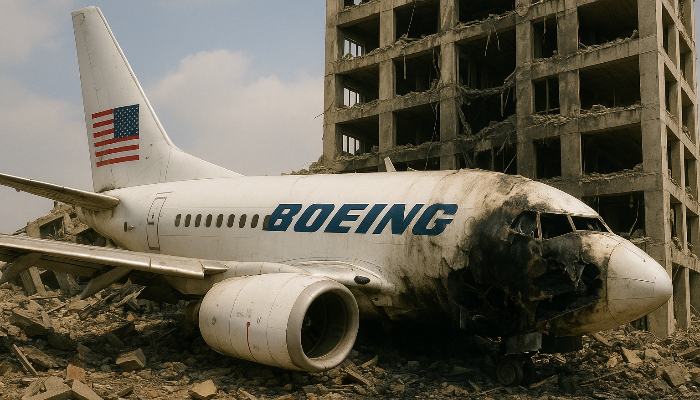
Ahmedabad air tragedy puts Boeing back in the dock: How long can this culture of negligence fly?

A London-bound Air India plane struck an Ahmedabad medical staff hostel shortly after takeoff on 12th June and erupted into flames, killing at least 265 people. This is among the greatest air disasters to hit India in recent memory. The jet crashed into buildings inside the BJ Medical College and Civil Hospital complex, killing multiple persons on the ground as well.

Several bodies charred to a degree that rendered them unrecognizable. According to Air India, the flight was headed for London’s Gatwick airport and included 169 Indian passengers, 53 British, seven Portuguese and a Canadian. There were 242 individuals on board, including 10 cabin crew members and two pilots, on board the doomed Boeing 787 Dreamliner (AI 171).

Vijay Rupani, the former chief minister of Gujarat was among the fatalities. 40-year-old Vishwash Kumar Ramesh, one of the British passengers miraculously survived the massive tragedy and was taken to hospital. “One half of the plane crashed into the residential building where doctors lived with their families. The nose and front wheel landed on the canteen building where students were having lunch,” a person told AFP, according to New India Abroad.

The plane’s communication was lost at 1:38 pm local time, less than a minute after takeoff from Sardar Vallabhbhai Patel International Airport in Ahmedabad, based on preliminary data. The aircraft achieved a maximum height of 625 feet, in contrast to the airport’s altitude of roughly 200 feet. The plane’s rapid loss of altitude prior to its collision is unclear.

Notably, the catastrophic incident has once again highlighted Boeing’s association with yet another tragic aviation event. Its stock was down about 5% on 12th June when New York stock markets closed. Last year, the company struggled with a safety crisis, quality control problems and a disastrous seven-week strike by the wrokers that cost it around $1 billion each month.

Boeing continues to cope with the fallout from two fatal crashes involving its 737 Max aircraft in 2018 and 2019, which claimed 346 lives. Last month, the firm and the Department of Justice came to an agreement that would exempt it from criminal liability for the crashes.

The airplane manufacturer consented to pay a fine, invest in safety and quality initiatives, acknowledge that it obstructed federal oversight and donate to a fund for the family members of the deceased. However, the families have opposed the deal which needs a judge’s permission. The company has encountered significant safety concerns in last few years.

Social media calls out Boeing

The largest airline in Japan, All Nippon Airways received the first Dreamliner in 2011. Air India reportedly runs about three dozen of the more than 1,100 that are currently in operation. The ill-fated aircraft involved in the latest incident was delivered in January 2014.

Netizens pointed out the severe performance shortcomings of its aircraft as the company continues to operate in a dubious manner. Journalist Surya Kanegaonkar noted the questionable history and conduct of the American corporation. He remarked that it uses counterfeit titanium in its aircraft, neglects to address software bugs, persists with defective engineering designs and has disregarded safety standards for years.

He underscored that whistleblowers who exposed Boeing were later discovered dead and how the company give “blood money” to the DoJ to mask offenses and escape legal action. He added that it has a “cushy agreement with Washington to arm twist countries into purchasing their substandard planes. This is Boeing in a nutshell.”

A leaked video from 2014, posted by Sputnik India, reveals Dreamliner assembly workers expressing critical views about the safety of the plane. Al Jazeera released hidden camera footage of Boeing’s Charleston in South Carolina, assembly factory last year. 15 persons were asked if they would fly on the plane they are developing by the person wearing the camera and shockingly ten of them refused.

“I wouldn’t fly on one of these planes because I see the quality of the f***ing sh*t going on here,” one worker expressed candidly. The employee with the wire stated that after witnessing the severity of the situation at the facility, he went to the media. An unidentified whistleblower voiced, “With all the problems reported on the 787, there’s 90% that’s getting swept away and hushed up. It’s an iceberg.”

A netizen referred to Boeing as a “flying coffin” and questioned why the company was not facing inquiries, considering its past performance.

Another journalist emphasized that Boeing whistleblower John Barnett had warned of critical quality issues in the company’s 787 aircraft that could lead to a fatal accident, right before his death.

An account wrote that Boeing sues the pilot if they manage to survive and blame them if they do not, implying at a repetitive cycle of deflecting accountability.

There have been quality issues with the Dreamliner. The plane’s deliveries were suspended for over a year until the Federal Aviation Administration authorized a Boeing proposal in the summer of 2022 to make minor repairs, including replacing some titanium parts that were produced with the wrong material and closing in paper-thin gaps in its body.

According to Boeing at the time, those issues did not immediately affect safety of Dreamliners. Notably, earlier this year, a Dreamliner with registration number N819AN experienced numerous flight cancellations in a 25-day period as a result of hydraulic leaks and flap issues.

Boeing’s troubled legacy

Over the past few years, Boeing has been embroiled in a number of scandals. The two deadly incidents involving the 737 MAX aircraft served as the most important trigger but the effects have gone well beyond that. 346 people were killed when Ethiopian Airlines Flight 302 in 2019 and Lion Air Flight 610 in 2018 crashed minutes after takeoff.

Lion Air Flight JT 610 went down in the Java Sea off the Indonesian coast on 29th October 2018 and took the lives of all 189 passengers, including many children and crew members. The authorities concluded that one of the primary reasons of the tragedy was the Boeing plane’s design flaws, following a protracted inquiry. MCAS activated during the flight.

A Boeing 737 MAX 8 run by Ethiopian Airlines heading for Nairobi, carrying 149 passengers and 8 crew members, crashed six minutes after taking off from Addis Ababa. The Ethiopian agency’s conclusion that a major contributing factor in the accident was Boeing’s new flight control software, the Maneuvering Characteristics Augmentation System which repeatedly pushed the jet’s nose down.

It was also confirmed by the National Transportation Safety Board (NTSB) and the French Bureau of Enquiry and Analysis. As a result, the 737 MAX fleet was grounded worldwide for more than 20 months.

The Boeing 737-800 operated by China Eastern Airlines crashed and caught fire in Guangxi province when it was en route from Kunming to Guangzhou, in March of 2022. President Xi Jinping ordered a swift investigation to find out the reason behind the instance which stunned the country. Afterward, every 737-800 operated by China Eastern Airlines was grounded.

According to the Civil Aviation Administration of China (CAAC), Beijing disagreed with Boeing’s initial explanation of pilot error and blamed the crashes on a malfunctioning Maneuvering Characteristics Augmentation System (MCAS) design.

A Jeju Air flight 7C2216 belly-landed and went off the end of the runway at Muan International Airport in December 2024, smashing into a wall and exploding. Four of the six crew members and all 175 passengers on board were killed while two crew members were hauled out unharmed. South Korean authorities then declared that they would conduct an urgent safety check on every Boeing 737-800 aircraft operated by the country’s airlines.

Last November, a cargo plane crashed close to Vilnius airport in Lithuania, resulting in at least one fatality and three injuries. During its final approach for landing, the Spanish cargo airline Swiftair, operating a Boeing 737 for DHL (Dalsey, Hillblom and Lynn) crashed close to a residence.

Older commercial aircraft models remain in use in Europe because of Boeing’s production delays and dependability issues with its more recent models. Airlines are reluctant to fully rely on newer aircraft models owing to safety concerns and continuous reliability issues, while the compnay’s manufacturing issues create backlog.

A Boeing 737 Max 9 plane’s unused cabin door fell off in midair in January, generating a stir in the aviation industry. The event raised concerns about safety on Boeing aircraft even though no one on the Alaska Airlines flight was gravely hurt. The majority of Boeing 727 Max 9 aircraft were grounded for inspection by the Federal Aviation Administration.

Subsequently, it was revealed that Boeing has been implementing organizational changes to prioritize diversity, equity, and inclusion (DEI) over the previous two years.

No end to Boeing’s contentious track record

In March 2013, two fuel leaks caused a Japan Airlines 787 to be grounded. Likewise, a United Airlines 787 aircraft was reported to have problems with its primary batteries. While conducting a thorough investigation, the governments of the United States and Japan both grounded their aircraft fleets.

The Dreamliner was withdrawn from service on the Delhi-Tokyo route after Boeing warned Air India not to fly the aircraft close to high-level thunderstorms in India due to a higher risk of engine icing.

An Air India Delhi-Kolkata 787 airliner returned to Delhi due to a cracked windshield as part of the ongoing safety assessment by the FAA and two further 787 aircraft were grounded since their GE (General Electric) engines were part of the same series that was under probe.

Air India’s Dreamliner fleet experienced 136 minor issues in the 14 months after it was introduced. According to the Ministry of Civil Aviation in the Rajya Sabha, Air India had to replace other aircraft on its route and pay an additional Rs 1.43 crore per day for aircraft financing and pilot maintenance, which resulted in an additional expenditure of Rs 60 lakh per day.

Boeing responded by implementing a 10-day maintenance grounding of all Dreamliner aircraft as part of a “modification package” that included modifications to aircraft software and components.

32 incidents involving engine shutdowns, flight control issues, non-retraction of gear, smoke inside the cabin, communication failure, cracked windshields, cabin pressure problems, severe turbulence, altitude drop, slat malfunction, tire bursts and hydraulic leaks were reported on Air India’s 787 aircraft between 2015 and 2024. Technical problems even caused accidents on two occasions, injuring multiple passengers.

Whistleblowers expose Boeing

Sam Salehpour, a Boeing engineer, expressed serious concerns in 2024 over the Boeing 787 Dreamliner’s structural integrity. He suggested the American aircraft manufacturer cut corners when producing the fuselage of the plane and cautioned that this could eventually result in disastrous failures.

He charged in a January 2024 complaint to the FAA that crews had neglected to fill in spaces when assembling separately made fuselage components, reducing the aircraft’s lifespan by increasing wear. He added that engineers were under pressure to approve uninspected work. The FAA is examining these allegations right now.

Salehpour stated, “I want to make clear that I have raised these issues over 3 years. I was ignored. I was told not to create delays. I was told, frankly, to shut up.” He even told US lawmakers that he was threatened and harassed after his accusations on Boeing.

“I literally saw people jumping on the pieces of the airplane to get them to align. By jumping up and down, you’re deforming parts so that the holes align temporarily and that’s not how you build an airplane,” he further outlined.

A similar concern about incorrect assembly had previously been raised in 2021, which caused the FAA and Boeing to stop the delivery of Dreamliners. However, the deliveries were restarted following an FAA investigation and Boeing’s confirmation that it had implemented modifications to its manufacturing process. Over the course of the procedure, no Dreamliners were grounded.

Concerns regarding the South Carolina factory that has been assembling the Dreamliner for years have been publicized by other whistleblowers. One of them was John Barnett, a former quality manager who worked with Boeing for nearly thirty years and came forward in 2019 to voice his worries about subpar standards. He maintained that employees working under duress had been purposefully installing inferior parts on the production line.

After a years-long legal struggle with the corporation, which he claimed was retaliating against him for articulating his concerns, he committed suicide last year. Boeing and Barnett’s family reached a settlement in their lawsuit last month over his passing.

Joshua Dean who served as a quality auditor for Spirit AeroSystems, a supplier for Boeing also passed away. He had complained to the Federal Aviation Administration (FAA) about “serious and gross misconduct by senior quality management of the 737 production line” at Spirit.

Santiago Paredes, a former Spirit AeroSystems inspector, whose repeated warnings of quality and safety hazards were ignored, went public following the death of Dean.

“But, you know, I’m always looking behind my mirror to make sure nobody’s car’s following me. I’m not saying that I’m scared, but at the same time, I can’t put a blind eye to the reality of what could be. I have to prepare myself for that. I’m picking up the mantle of where he left off and I have to carry on and see it through,” he stressed.

Designed by clowns, supervised by monkeys

According to more than a hundred pages of internal communications provided to congressional investigators in 2020, Boeing employees made fun of federal regulations, discussed misleading regulators and played jokes about possible defects in the 737 Max while it was being developed, reported The New York Times.

Conversations between Boeing pilots and other staff members regarding software bugs and other difficulties with flight simulators for the Max, later involved in two catastrophes in late 2018 and early 2019 that killed 346 people and rocked the firm, were among the damaging texts.

The workers talked about situations where the corporation failed to disclose such issues to the FAA when the regulator certified the simulators used in the creation of the Max and in training pilots who had never flown a 737 before. Employees questioned the Max’s design and even disparaged their own coworkers in another set of messages.

An employee stated, “This airplane is designed by clowns, who are in turn supervised by monkeys,” in 2017. Employees of Boeing repeatedly mocked FAA officials who were examining the aircraft. An investigation by the media house in 2019 used internal emails, documents, and employee interviews to show that Boeing had coerced employees into not reporting safety problems.

DoJ protects Boeing

Boeing and the Justice Department conveniently came to an agreement in May 2024 that would spare the airline giant from criminal punishment for falsifying information to US authorities on the 737 Max airliner prior to two of the planes crashing and killing 346 people. Boeing had to pay or spend more than $1.1 billion under the “agreement in principle,” including an extra $445 million for the family members of the deceased.

The DoJ announced that Boeing would pay more than $1.1 billion in fines and confess to “conspiracy to obstruct and impede” an investigation by the US Federal Aviation Administration, much to the horror of the families of the victims.

A Unites States Senate panel looking into Boeing criticized the aircraft manufacturer’s quality control procedures and the Federal Aviation Administration’s monitoring, September of 2024. It cited papers gathered during the probe. According to the Senate Permanent Subcommittee on Investigations, Boeing employees were under pressure to put production speed ahead of quality.

The commitee mentioned, “Given the depth and history of Boeing’s safety deficiencies, its lack of candor with the FAA, and the agency’s reactive regulatory posture, the newly released information raises questions about the effectiveness of the FAA’s oversight of the company.” The FAA initiated multiple inquiries into Boeing.

97 Boeing allegations of noncompliance were detailed in the 116-page FAA letter which covered “issues in Boeing’s manufacturing process control, parts handling and storage, and product control.” According to the memo, the audit uncovered 23 instances in which staff members “failed to follow processes or lacked proficiency.”

The Federal Aviation Administration (FAA) stated that over 200 reports were filed by Boeing whistleblowers in a 12-month period last year. Boeing has a “culture of concealment,” announced US congressional investigations.

Boeing’s market capitalization declined dramatically in the last five years, falling by over 30% due to regulatory scrutiny, financial losses and safety issues with its 737 MAX and 787 Dreamliner aircraft, among other reasons. Over the past few years, Boeing’s top executive team has experienced a rather major shake-up. A year ago, Kelly Ortberg, the company’s new boss stepped out of retirement to try to turn around the struggling corporation.


Donald Trump tells Iran to make a nuclear deal “before there is nothing left”, says Israel’s next planned attack will be even more brutal

As Israel launched a massive attack on military sites in Iran, US President Donald Trump on Friday warned Iran to accept a deal of face the consequences. He said that Israel has American weapons which are best in the world, and claimed that Israel’s next planned attack will be even more brutal.

Saying “just do it, before it is too late,” Trump said that Iran must make a deal before there is nothing left.

In a post on his Truth Social, Donald Trump said that he gave Iran several chances to make a deal, but they couldn’t get it done. He said that he had warned that the attack will be much worse than they anticipated, but certain Iranian hardliners rejected a deal. Trump added that such hardliners are dead now.

He said, “I gave Iran chance after chance to make a deal. I told them, in the strongest of words, to “just do it,” but no matter how hard they tried, no matter how close they got, they just couldn’t get it done. I told them it would be much worse than anything they know, anticipated, or were told, that the United States makes the best and most lethal military equipment anywhere in the World, BY FAR, and that Israel has a lot of it, with much more to come – And they know how to use it. Certain Iranian hardliner’s spoke bravely, but they didn’t know what was about to happen. They are all DEAD now, and it will only get worse!”

The US president said that it will only get worse, adding that the next already planned attacks being even more brutal. However, he said that there is time to stop the Israeli attack, and for that Iran has to make a deal. He said, “There has already been great death and destruction, but there is still time to make this slaughter, with the next already planned attacks being even more brutal, come to an end. Iran must make a deal, before there is nothing left, and save what was once known as the Iranian Empire.”

Donald Trump added in the Truth post, “No more death, no more destruction, JUST DO IT, BEFORE IT IS TOO LATE. God Bless You All!”