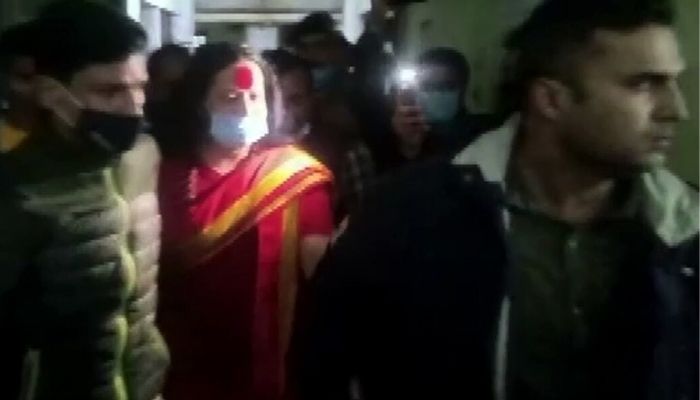
Maharashtra police have taken Kalicharan Maharaj, who was arrested for ‘disrespectful comments on Mahatma Gandhi’, to Maharashtra on transit remand from Chhattisgarh police on 5 January 2022. He will be first taken to Pune and then to Thane on Thursday, where he will be presented before a court in a case booked against him for criticizing Mahatma Gandhi. On 30 December 2021, Hindu religious leader Kalicharan Maharaj, who is well known for his famous reciting of Shiv Tandav Stotra, was arrested by the Chhattisgarh police from Khajuraho, Madhya Pradesh. When arrested, he was at Wagheshwar Dham.
Kalicharan Maharaj is now taken to Pune by the Maharashtra police who had sought his transit remand to the Chhattisgarh police. A team of Pune police was stuck in Raipur for two days. The team had sought transit remand of Kalicharan Maharaj in front of the District and Sessions Court. Their request stated that the accused has been booked under serious charges in Maharashtra as well. For interrogation, it is necessary to take him into custody. The court accepted the remand application of the Maharashtra police on 4 January 2022. Maharashtra police, after receiving the order from the court, presented the same to the Raipur central jail and took the transit remand of Kalicharan Maharaj.
Maharashtra police team that constituted of eight members had arrived at Raipur on Sunday. The team first applied before the court for the transit remand on Monday, but the application was dismissed. On Tuesday, the team applied again, responding to which the court has granted them custody. The order also says that Maharashtra police must present Kalicharan Maharaj back in front of the Raipur court before 13 January 2022.
Violation of Protocols while arresting from BJP ruled MP
While the team of Maharashtra police has left Raipur and headed towards Pune, the promptness in following the protocols shown by the police departments of both the states is a reason to raise the eyebrows. It is noted that when the Chhattisgarh police arrested Kalicharan Maharaj, the MP government had alleged that they were not given prior informed about the arrest and hence it is a violation of the protocol. The government of Madhya Pradesh had stated that the arrest of Kalicharan Maharaj from Khajuraho by the Chhattisgarh police was in violation of interstate protocols. Madhya Pradesh DGP was instructed to raise an objection to his Chhattisgarh counterpart on this matter.
#WATCH Raipur Police arrests Kalicharan Maharaj from Madhya Pradesh’s Khajuraho for alleged inflammatory speech derogating Mahatma Gandhi
Prompt compliance when it comes to Congress ruled Maharashtra
In sharp contrast with what happened with the arrest in MP, the Raipur police extended full support and stood by the protocols when it came to deal with the police of another congress ruled state Maharashtra. In order to ensure zero trouble to the Maharashtra police team, the Raipur police had sent two special follow teams up to the border between the two states.
It is noted that the NCP leader and Housing Minister of Maharashtra, Jitendra Awhad had filed a case against Kalicharan Maharaj for criticizing Mahatma Gandhi. Kalicharan Maharaj had made the alleged statements in a Dharm Sansad in Raipur, Chhattisgarh on 26 December 2021. In his comments, Kalicharan Maharaj criticized Gandhi for India’s partition and hailed Nathuram Godse for killing Gandhi. After the video of his speech went viral, Jitendra Awhad approached Naupada police and filed a complaint against Kalicharan Maharaj. A case was filed based on the complaint under Sections 294, 295A, 298, 505(2) and 506(2) of the Indian Penal Code.
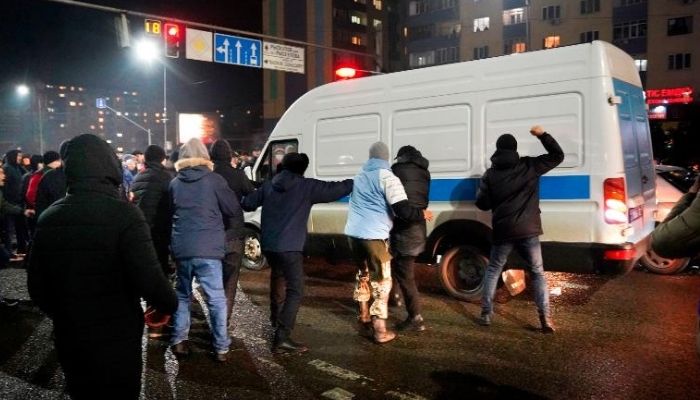
The government of Kazakhstan fell today amid violent protests against rising fuel prices. After massive protests stormed the Central Asian nation protesting against the skyrocketing costs of Liquified Petroleum Gas, President Kassym-Jomart Tokayev signed a decree accepting the resignation of the Government led by PM Askar Mamin on January 5. A wave of violent agitations has spread across the nation over LPG prices, where hundreds of protesters and cops were injured.
Following the situation, President Tokayev tried to stabilize the situation. He accepted the resignation of Prime Minister Askar Mamin. The resignation decree orders current members of the government to officially hold their posts until a new cabinet is approved. The country’s First Deputy Prime Minister Alikhan Smailov was appointed to serve as acting prime minister in the interim government. Tokayev has imposed an emergency in the capital city of Nur-Sultan, Almaty, and in the Mangystau province until January 19.
The protests started in the country after the government lifted price controls on Liquefied Petroleum Gas at the start of the year. With no govt control over the prices, the LPG prices more than doubled in the oil-producing western province of Mangistau on January 2, which hit the Kazakhs hard suddenly. Reportedly, a large number of people in the country have converted their cars to run on LPG as it is cheaper.
Clashes erupted within a night in the city of Almaty, with protestors marching along roads leading to the city centre. While police tried to control the situation using tear gas and grenades, over 200 people were detained and 100 policemen were injured on late Tuesday. According to the Local media in Kazakhstan, some buildings were put on fire and administrative buildings were being targeted. Kazakhstan’s business lobby group, Atameken reported cases of attacks on banks, stores and restaurants.
President Tokayev ordered the interim govt and provincial governors to reinstate price controls on LPG to end the protests. He also ordered to broaden price control on other petroleum products like gasoline, diesel and other “socially important” consumer goods. The president further ordered the government to develop a personal bankruptcy law and consider freezing prices of utilities, and subsidizing rent payments for poor families.
President Tokayev announced on Twitter that the new government so formed will function with the restricted powers assigned to them and has decided to reduce the price for liquefied gas in the Mangistau region to 50 tenges (Rs. 8.53) per litre.
Правительство в рамках данных ему полномочий в целях обеспечения стабильности в стране приняло решение снизить в Мангистауской области цену за сжиженный газ до 50 тенге за литр.
The President informed that the situation was improving in protest-hit cities and towns, including Almaty and the surrounding province, where the authorities have declared a state of emergency with a curfew and movement restrictions.
Protests are a common sight in the ex-soviet country while it tightly controls its image of political stability for foreign investment. The initial cause of the unrest was a spike in prices for LPG in the rich province of Mangystau. The protestors were also seen hooting “Old Man Out” with a reference to ex-President Nazarbayev who is 81. Nazarbayev chose Tokayev was his successor while he still retain much control over politics in the country.
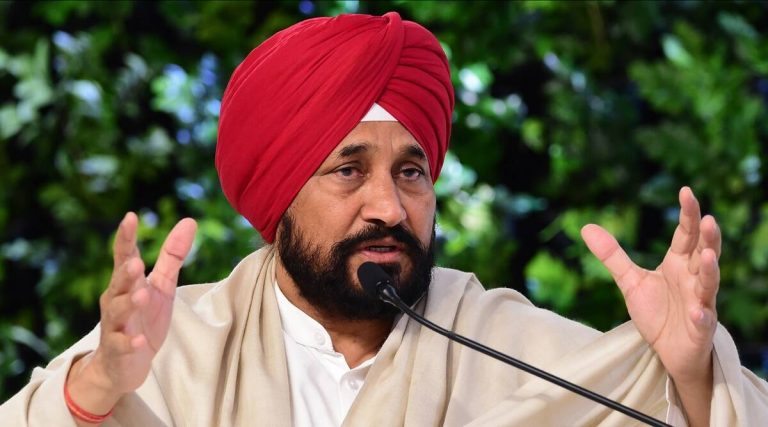
As the Congress government in Punjab faces mounting pressure over the massive security lapse in PM Modi’s convoy, chief minister Charanjit Singh Channi seems to have tied himself in knots by making a series of contradictory statements following the incident.
After claiming security breach was ‘Kudrati’, CM Channi says there was no security lapse
Earlier today, as reports of a breach in PM Modi’s security emerged, CM Channi tried to abdicate himself from his responsibility of ensuring that the Prime Minister of the country remains safe in a state under his governance. Speaking to the media, CM Channi admitted to a security breach by claiming that it was ‘Kudrati’ or occurred naturally.
Punjab CM Charanjit Channi on the security breach and blockage of road cavalcade of the PM to @CNNnews18: Yeh kudrati hua. (This happened naturally.)
However, within a few hours time, Channi backtracked from his comments, asserting that there was no security lapse in PM Modi’s cavalcade. From ‘Kudarati’, in a matter of a few hours, Channi said the security breach did not exist. As his government started facing criticism for not providing adequate security to the Prime Minister of the country, Channi went on to pass the buck on Prime Minister for the imbroglio.
Punjab CM blames PM Modi for the security lapse even as state CS and DGP did not join PM Modi’s cavalcade
“No security lapse. PM’s road plans were made at the last minute. He was supposed to go by helicopter. I was up late at night overseeing security arrangements for his rally. 70,000 chairs were put up for rally but only 700 people turned up,” Channi said reacting to the incident.
As Channi blamed PM Modi for the melee that was caused during his travel to Ferozpur, it is notable to mention that the Chief Secretary of the state and Police DGP are usually a part of PM’s cavalcade during his visit to states. However, in this case, neither the Chief Secretary nor DGP joined PM Modi’s convoy, further puncturing the claims that security arrangements for PM Modi’s convoy were adequate.
Channi said only 700 people had turned up for PM Modi’s rally but videos on SM show otherwise
After PM Modi cut short his visit due to a security breach, Punjab CM Charanjit Singh Channi tried to make light of the incident, stating that only 700 people had turned up for PM’s rally whereas arrangements were made for 70,000.
However, videos from the rally which PM Modi was supposed to attend showed thousands of people in attendance, carrying BJP flags and expectantly waiting for the Prime Minister’s arrival. Social media is awash with videos from the venue where PM Modi was expected to deliver a speech. They showed a raft of people who had come to attend PM Modi’s rally, a stark contrast to the claims made by Punjab CM Charanjit Singh Channi.
Punjab CM Channi has tied himself in knots. First he said 700 people turned up for the rally… Then he said it was kudarti, later he said he was trying to ensure no blockade till 3am… The CS and DGP are part of PM’s cavalcade but in this case, they weren’t… Lies and more lies. pic.twitter.com/g8EnyWVj5I
Punjab govt endangers PM Modi’s security, allows protestors to block his convoy
The contradictory claims made by Channi could be attributed to the utter failure of the Congress government in Punjab to ensure safe passage to PM Modi for his election rally in Ferozpur. In a major lapse and seemingly deliberate act to endanger the Prime Minister’s security, the Punjab government today allowed political protestors to block the Prime Minister’s convoy. As per reports, the PM’s convoy was blocked for over 20 minutes by protestors at a flyover about 30 km away from Hussainiwala.
In a statement, the Home Ministry said that the PM was scheduled to visit the National Martyr’s Memorial in Punjab’s Hussainiwala by helicopter. However due to adverse weather conditions, the helicopter ride was cancelled and the PM chose to go by road, which would take more than 2 hours.
As per protocol, necessary confirmations were done with Punjab DGP and the PM’s convoy started after confirmation for security arrangements was provided by Punjab Police. However, at a flyover about 30 km away from Hussainiwala, the road was found to be blocked by some protestors.
The Prime Minister’s vehicle was struck in the flyover for 15-20 minutes, as per the statement. Calling this a major lapse in the security of the PM, the Home Ministry stated that the PM’s travel plan was communicated well in advance to the state government. The state government is required to make necessary arrangements for security, logistics and also make a contingency plan ready in case of unexpected issues.
The Finance Ministry on Wednesday issued three show-cause notices to Chinese phone maker Xiaomi’s India unit ‘Xiaomi Technology India’ for evading customs duty by way of undervaluation. With notices, the tax authorities are demanding Rs 653 crore in tax from the company. This is after a detailed investigation was initiated by the Directorate of Revenue Intelligence (DRI) against Xiaomi India and its contract manufacturers.
The DRI recovered documents at the premises of Xiaomi India indicating that the company was remitting royalty and license fee to Qualcomm USA and to Beijing Xiaomi Mobile Software Co. Ltd., under contractual obligation. But the same was not reported by the company, evading import duty. “By not adding royalty and licence fee in the transaction value, Xiaomi India was evading customs duty, being the beneficial owner of such imported mobile phones, the parts and components thereof”, the ministry said in its official statement.
Three show cause notices issued to Xiaomi Technology India for demand & recovery of duty amounting to Rs 653 cr for the period 01.04.2017 to 30.06.2020, under the provisions of the Customs Act, 1962: Ministry of Finance
The investigation by DRI revealed that Xiaomi India is engaged in the sale of MI brand mobile phones and these mobile phones are either imported by the company or assembled in India by importing components of mobile phones by contract manufacturers of Xiaomi India. “The MI brand mobile phones manufactured by the contract manufacturers are sold exclusively to Xiaomi India, in terms of the contract agreement”, the statement added.
The probe found that while Xiaomi India was paying royalty and licence fees to Qualcomm USA and to Beijing Xiaomi Mobile Software Co. Ltd., China for the components and mobile phones imported to India, the same was not being added to the assessable value of the goods imported by Xiaomi India and its contract manufacturers. This is a violation of Section 14 of the Customs Act, 1962 and Customs valuation (determination of value of imported goods) Rules 2007, the Finance Ministry said.
Therefore, three show cause notices have been issued to M/s Xiaomi Technology India Private Limited for demand and recovery of duty amounting to Rs. 653 crore for the period 01.04.2017 to 30.06.2020, under the provisions of the Customs Act, 1962, the ministry informed.
It is said that the key persons of Xiaomi India and its contract manufacturers have confirmed the payments. This is a week after the Income Tax Department had indicated that Chinese mobile phone manufacturers Xiaomi and Oppo might face fines of up to Rs 1,000 crore for violating the law.
The Income Tax Department had conducted searches on leading Chinese mobile companies across the country on December 21. The searches were conducted in offices of Oppo, Xiaomi, and One Plus in Delhi and 11 states including, Karnataka, Tamil Nadu, Assam, West Bengal, Andhra Pradesh, Madhya Pradesh, Gujarat, Maharashtra, Bihar, Rajasthan.
The severe search by the Office then had revealed that two major companies have made remittance in the nature of royalty, to and on behalf of its group companies located abroad, which aggregates to more than Rs 5500 crore. “These companies have not complied with the regulatory mandate prescribed under the Income-tax Act, 1961 for disclosure of transactions with associated enterprises. Such lapse makes them liable for penal action under the Income-tax Act, 1961, the quantum of which could be in the range of more than Rs 1000 crore”, the statement had read.
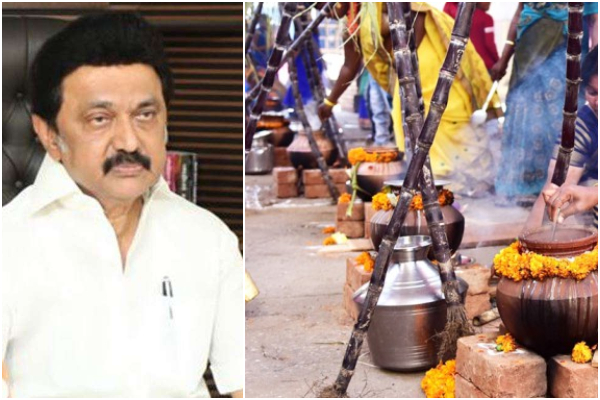
Amid the rising number of COVID-19 cases, Tamil Nadu Chief Minister MK Stalin has denied permission for Pongal related cultural functions and gatherings across the state. “All government and private events for ‘Pongal’ harvest celebration and related cultural shows would be postponed”, announced the CM. CM Stalin has also denied permission to devotees in places of worship on Fridays, Saturdays and Sundays.
The Tamil Nadu govt has said that Pongal festivities and cultural festivals in colleges, rallies and religious gatherings will not be allowed.
The decision has been taken after a high-level meeting chaired by Chief Minister MK Stalin with state health minister Ma Subramanian and other senior health officials. The government has also announced a night curfew starting Thursday to curb the rising number of COVID-19 spread. However, the state is to witness complete lockdown on Sundays with restaurants operating only for takeaways from 7 in the morning to 10 pm.
No permission for Pongal related functions/gatherings. Public transport including bus, suburban trains and Metro to run at 50% seating. No permission to devotees in places of worship on Friday, Saturday and Sundays: Tamil Nadu Chief Minister MK Stalin
The neitizens unhappy with the decision to cancelling Pongal functions have questioned the government about imposing restrictions just ahead of the Hindu festival and not during Christmas or New Year. “Christmas was celebrated in full capacity, no?”, tweeted one of the furious users. Meanwhile, another user indicated that the Tamil Nadu government had done this deliberately now, after allowing the state to celebrate New year and Christmas.
Pongal is the harvest festival of Tamil Nadu that falls usually in the month of January. The uniqueness of the festival reminds of the importance of natural resources, especially when the entire world is battling the environmental change. During the festival, people reject old belongings and welcome new stuff.
While the state has cancelled all government and private events for ‘Pongal’ harvest celebration, Governor RN Ravi has said that the Tamil Nadu government is fully prepared to tackle the COVID and the Omicron variant and the challenges it poses. The state of Tamil Nadu has seen the sharpest rise in COVID-19 infections with 2731 new cases being reported in the last 24 hours. On the status of the Omicron variant, the state has 121 cases with 105 people being discharged, leaving 13 active cases.
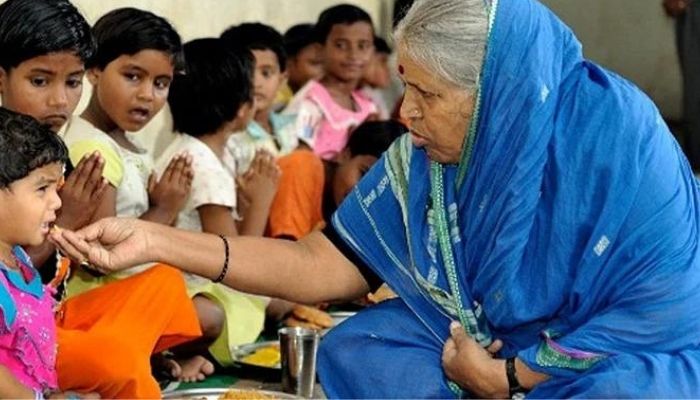
Veteran social worker – also known as the mother of the orphans – Sindhutai Sapkal passed away at the age of 74 in Galaxy hospital Pune. On 4 January 2022 at 8:15 pm, she had a cardiac arrest. She was under treatment for the last eight days. Dr Shailesh Puntambekar informed the media about her demise. She was recently awarded the fourth highest civilian award Padmashri for the year 2021 by President Ramnath Kovind.
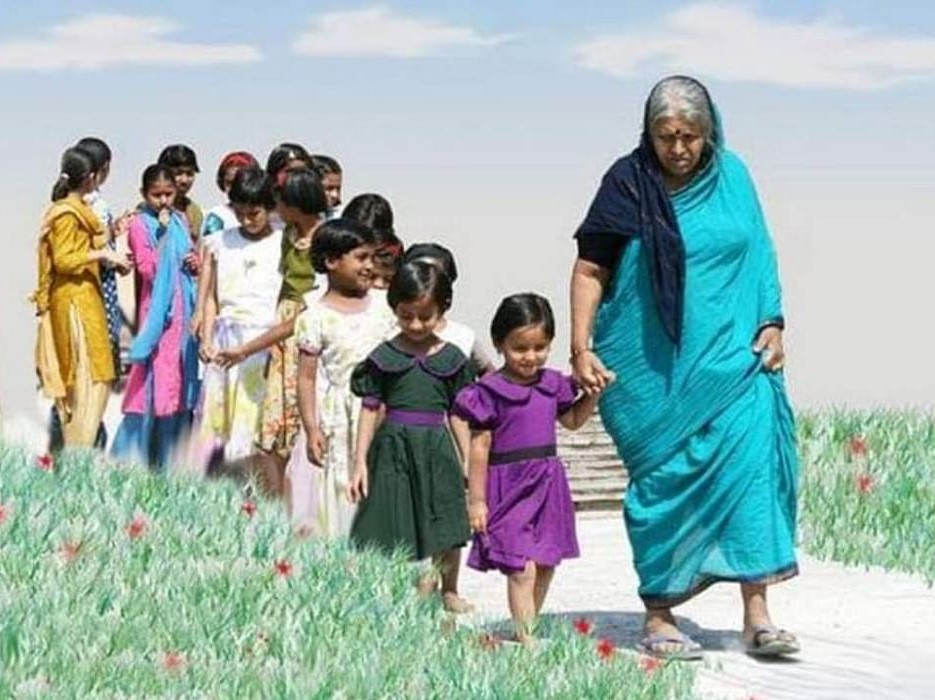
Sindhutai Sapkal was known for her social work which mainly involved raising orphaned and abandoned children. She left behind a family of more than 1,500 orphans whom she raised, more than 380 sons-in-law and around 50 daughters-in-law. Her legacy of nine organizations spread across various locations in Maharashtra carries a decorated outline of more than 700 awards conferred upon her. She was also awarded the honorary doctorate by the D. Y. Patil University Pune. Using all the amount received as the prize money for the welfare of the orphans, she had set an ideal way to be followed by someone who aspires to do social service.
Establishing Gaushalas, adopting orphaned children, rehabilitating tribal villages: The social causes Sindhutai Spakal was associated with
Sindhutai was born to a cow herder Abhimanyu Sathe on 14 November 1948 in Pimpri Meghe (Navargaon) village of Wardha district in Maharashtra. Being an unwanted girl child, she was named Chindhi which literally means a torn piece of waste cloth. She had to quit her formal education in the fourth standard and due to poverty, she was forced to marry at the age of 9 Shrihari Sapkal who was twenty years elder than her. She delivered two of her children before she was 18 and at the age of 20 when she was carrying her third child in her womb, her husband left her on her own. For years to follow, she had to beg for the bread and roamed half of the state – from one railway station to another – as she had no shelter.
It was in 1971 that she gave her daughter to Pratap Godse of Shrimant Dagdusheth Halwai Ganpati Devasthan and went to Chikhaldara where she started to work for local tribal and cows. She fought for rehabilitation of the eighty-four tribal villages which were then planned to evacuate for a tiger reserve project. While in Chikhaldara, she started to adopt the orphaned children. She also set up a Goshala in Chikhaldara. Actually, when she was abandoned by her husband, Sindhutai was put in a cowshed at midnight only to die under the feet of enraged and disturbed cattle. Nine months pregnant Sindhutai was saved by a cow. She started this Goshala out of this gratitude towards the cattle.
Her work for raising orphaned children expanded gradually in other parts of Maharashtra and specifically more around Pune where she had eventually set up various non-governmental organisations like Mother Global Foundation, Sanmati Bal Niketan, Mamata Bal Sadan, Saptasindhu Mahila Aadhar, Bal Sangopan and Shikshan Trust. Her foundations situated elsewhere in Maharashtra include Savitribai Phule Girl’s Hostel at Chikhaldara, Abhiman Bal Bhavan at Wardha, Gangadhar Baba Chhatralay at Shirdi, Shri Man Shanti Chhatralaya at Shirur, Vanvasi Gopal Krushna Multipurpose Trust at Amaravati.
Sindhutai, a voracious reader who had a particular flair for poetry
She struggled hard to raise the adopted children. In this journey, she knowingly remained distant from her own child to ensure impartial love and care to everyone she adopted. Having left school in the fourth standard, she had no formal education ahead in her life. She was often bothered by her love for reading by her illiterate husband. But she continued to read whatever piece of paper she could get, even in times of extreme hardships. As she had no home, the only way to keep it all with her was to memorize. This way she went on to recite the poetry that she could correlate to her own life. She was often heard quoting eminent Marathi poets and Saints in her speeches and interviews. She described in her talks that she remembers them all so well because she had lived through all the pain and learned philosophy as described in those lines.
Sindhutai ensured that none of her children remains uneducated. She empowered and enabled every one of them.
With the passage of time, as the number of adopted children increased, she was popularly known as ‘Maai’. PM Modi taking it to Twitter has said, “Dr Sindhutai Sapkal will be remembered for her noble service to the society. Due to her efforts, many children could lead a better quality of life. She also did a lot of work among marginalized communities. Condolences to her family and admirers. Om Shanti.”
Dr. Sindhutai Sapkal will be remembered for her noble service to society. Due to her efforts, many children could lead a better quality of life. She also did a lot of work among marginalised communities. Pained by her demise. Condolences to her family and admirers. Om Shanti. pic.twitter.com/nPhMtKOeZ4
She had also toured out of India to collect funds for her work. She was honoured with more than 700 various awards which include the Ahilyabai Holkar Award by the Government of Maharashtra in 2010, Nari Shakti Puraskar by the President of India in 2017 and Padmashri Award 2021 in the social category. Most of her projects are now looked after by her daughter and poetess Mamata Sindhutai Sapkal. A biopic on her life and works was made in 2010 in which Tejaswini Pandit has played her role.
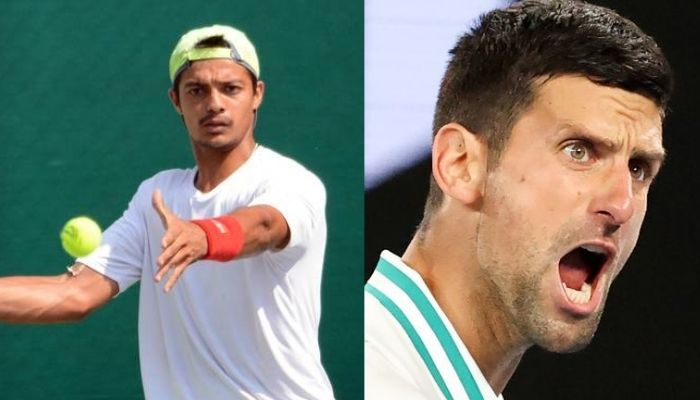
17-year-old Tennis player Aman Dahiya was denied entry to the Australian Open owing to the rules that only vaccinated players would be allowed to enter. However, in earlier development, Serbia’s Novak Djokovic was granted a medical exemption and has been allowed to participate in the tournament by the officials, despite being unvaccinated. This move of the Victoria state government has stirred quite a controversy worldwide.
Aman Dahiya, 17 who hails from Haryana had made it to the Australian Open Junior Championships but was denied entry as he was yet to be vaccinated. Owing to the fact that vaccination for teenagers had only begun in India recently, Dahiya’s coach also explored the possibility of getting him vaccinated outside India. However, this could not be made possible because of logistics and funding issues.
Aman Dahiya (world ranking. 78) currently trains at Altevol Tennis academy in Ahmedabad and had even played with blisters at the ITF Asian B1 Championships in Pune, last month with a hope to qualify for the Australian Open.
‘Are rules different for bigger players?’ Dahiya’s coach asks
Dahiya’s coach Jignesh Rawal has lashed out at the Australian Open organisers for their preferential treatment of Djokovic and discrimination against the Indian Player. “Are the rules different if you’re a bigger player?” He asked. Sighting this as a case of discrimination, he lashed, “They exempted Djokovic but denied a visa to us on same grounds. Aman is 17 – when we applied for a visa he was not eligible for the vaccine so is that not enough for a medical exemption.”
Rawal clarified that earlier he had sought permission for Aman to be vaccinated with a single dose with a seven-day quarantine after arrival in Australia. First, they agreed to quarantine but then wrote back to us saying they can not allow Dahiya without completing 2 doses.
“He (Aman) has 15 ITF titles, eight in singles and seven in doubles. Not many Indians can claim that in the last 20 years.” Rawal mentioned that Aman comes from a humble family where his father earns Rs. 10,000 a month. No help has come from the state and central authorities, according to him.
Meanwhile, the vaccine exemption granted to Novak Djokovic has ignited much controversy worldwide. The move has been labelled as an act of ‘elitism’ in giving preferential treatment to big players. The vaccination status of Djokovic is still unclear as last year he said he was “opposed to vaccination”. The Serbian tennis player will defend his entry after being granted “medical exemption” from the vaccine mandate by the Australian Open authorities.
Earlier, Russian player Natalia Vikhlyantseva was denied entry because the Russian Sputnik vaccine is not recognised by the Australian govt.
‘Entitled to feel particularly aggrieved is Natalia Vikhlyantseva, who was denied entry because her Sputnik vaccine had not been approved, and the Indian junior Aman Dahiya, who cannot play because under-18s cannot yet receive jabs in his country.’ https://t.co/ehCSqnVe85
While entry requirements should be the same for an aspiring player and a nine-time Australian Open Champion, the officials have minced no words while denying entry to Aman Dahiya. Should this act of preferential treatment be flagged off as discrimination alone; or does this qualify for racism?
Racism against Indians is not a new thing in Australia. The country’s portfolio in curtailing racism and abuse in the arena of sports is rather bleak. recently, Ex-Australian cricket player Kerry O’Keeffe racially abused Indian player Mayank Agrawal in a commentary. The instances of Australian fans racially sledging against Indian players during cricket matches have also increased.
17-year-old Aman Dahiya was not able to vaccinate himself in India owing to the vaccine regulations while Tennis star Novak Novak Djokovic chose voluntarily not to vaccinate himself. Yet the latter is being allowed to participate in the Open. Obscure regulations and preferential treatments in sports are disheartening to see.
The Congress party has announced that it is cancelling all the upcoming ‘big’ election rallies which were scheduled in Uttar Pradesh and other four election-bound states. On 5 January 2022, Congress general secretary KC Venugopal informed that the party took this decision today considering the current situation of COVID-19 pandemic. The five states where assembly elections are scheduled to take place in the next couple of months are Uttar Pradesh, Punjab, Uttarakhand, Goa and Manipur.
Earlier, it was reported that the Congress party has cancelled its election rallies only in Uttar Pradesh, where it has no electoral prospect. Congress spokesman Lallan Kumar had said that the party has cancelled its big poll rallies in Uttar Pradesh till the Covid-19 situation improves on the instruction of general secretary Priyanka Gandhi. The party also cancelled the marathon races it had planned in the state after a marathon in Barreily had resulted in a stamped-like situation. Marathon races were scheduled to take place in Azamgarh, Varanasi, Ghaziabad and Aligarh this week, but they stand cancelled now.
Later today the party announced that it is cancelling all big election rallies in all five poll-bound states, not just Uttar Pradesh. Congress general secretary KC Venugopal, while addressing to media, said, “Congress has decided to postpone major rallies in Uttar Pradesh and other poll-bound states. We have asked state units to assess the COVID-19 situation in their states and take a decision on holding rallies.”
Congress has decided to postpone major rallies in Uttar Pradesh and other poll-bound states. We have asked state units to assess the COVID-19 situation in their states& take a decision on holding rallies: Congress General Secretary (Organisation) KC Venugopal to ANI
Reportedly, the party will organise small gatherings through ‘Nukkad Natak’ and conduct door-to-door campaigns to reach out to the voters ahead of the assembly polls.
Even though the party announced that it is cancelling ‘big’ election rallies, it didn’t define what are ‘big’ rallies. Moreover, the party is replacing ‘big’ rallies with small gatherings, which means it will still hold election rallies on a smaller scale.
There has been an increasing demand from various sectors to cancel rallies or even postpone elections in view of the impending third wave of Covid-19 in the country, particularly driven by the Omicron variant. By taking this decision, the Congress party may be able to force other parties also to suspend big poll rallies.
However, this step taken by Congress is seen as an attempt to cover up the stampede incidence in Bareilly that happened during a marathon organized with a rally of Priyanka Gandhi who is on her election tour titled “Ladki hoon, lad sakti hoon.” It is notable that few teen girls were injured in that incident and Congress has seemingly taken this decision in response to the criticism on the party after irresponsible statements by the party members in support of this mishap.
What exactly happened in Bareilly?
It is now almost evident that the decision taken by the Congress party is largely influenced by the outrage and criticism it had to face after the Bareilly stampede incidence. It had happened during a marathon organized by the local Congress leader and ex-mayor of the city Supriya Aron. It was supposedly organized in line with the current campaign of the Congress leader Priyanka Gandhi, which is titled “Ladki hoon, lad sakti hoon.”
As the marathon was started girls and women started running. In a matter few seconds, girls in the front rows fell down. They were followed by hundreds of women and girls running behind them. The girls survived the injuries. Had the runners behind them not been stopped, it would have been a yet bigger stampede that could have cause even the death of a few of them. Congress had to face a lot of criticism for this. Adding to the worse Surpiya Aron termed it as a result of human tendency. This too attracted a lot of outrage in social media.
A stampede like situation has occurred at the Congress marathon. Several girls fell & have been hurt. Thankfully no lives were lost. Is it right to play with human lives to fulfill your political ambitions, @priyankagandhi ji?? pic.twitter.com/lkWXYrKDbw
As the number of new Covid-19 cases in the country keeps rising, abiding by the original election schedule also looks subject to the situation. At this juncture, Congress has cleverly shifted the reason of cancelling the rallies to the current COVID-19 situations and dodged the decisions of resuming the rallies towards its state entities.
Internet might be the biggest boon of the 21st century. It is because of the Internet that people can communicate with one another more fluidly than at any other time in history. It has empowered people to work from remote places without having the need to visit their offices, something which was treasured during the COVID-19 pandemic. It has also played a part in mobilising help for the needy like witnessed during the COVID times when online campaigns were run to help those adversely affected by the pandemic.
However, besides all the benefits that it has provided, the Internet also seems to have unlocked something dark in humanity. It is being used by terrorists to plan attacks and draw fresh blood. It is being used by criminals to devise newer ways of committing crimes. It is also used by sexual predators to target and attack vulnerable people. But in recent times, nothing illuminates the dark side of the Internet better than the brazen objectification and sexualisation of women that is pervasive on it.
A few days ago, a controversy erupted when hundreds of pictures of Muslim women were misused and uploaded by an unidentified group on an app using GitHub by the name of ‘Bulli Bai’. The app was hosted at the URL bullibai.github.io, however, the same was taken down after people started pointing out how the app on social media targeted Muslim women and objectified them. The news instantly drew national and international headlines as media organisations focused on the religious profiling of women done before subjecting them to misogynistic attacks. Authorities took cognisance of the online outrage and swift action followed.
However, since the religiously motivated attack against women became the focal point of national discussion, many social media users pointed out instances from the past that have gone unpunished and unreported as they could not garner the kind of outrage and the attention that ‘Bulli Bai’ deal case attracted. They highlighted that Muslim women are not the only ones at the receiving end of such attacks that are borne out of misogyny and religious bigotry.
In fact, women, on the whole, are being subjected to such misogynistic treatment online, which often goes unnoticed because of the power of anonymity that the Internet and social media platforms offer to the culprits, who conveniently hide behind fake or contrived identities to perpetuate their perversity.
Much like Muslim women, Hindu women, too, have also suffered a fair share of religiously motivated attacks against them, but they are often slipped under the radar because highlighting them would be politically incorrect and could “jeopardise the secular fabric of the country.” Here are some instances from the past that were reported by OpIndia and some others brought to our notice by users. Viewer discretion is advised as the pictures are sexually explicit in nature.
Social media users highlight online harassment of Hindu women that goes unchecked and unpunished
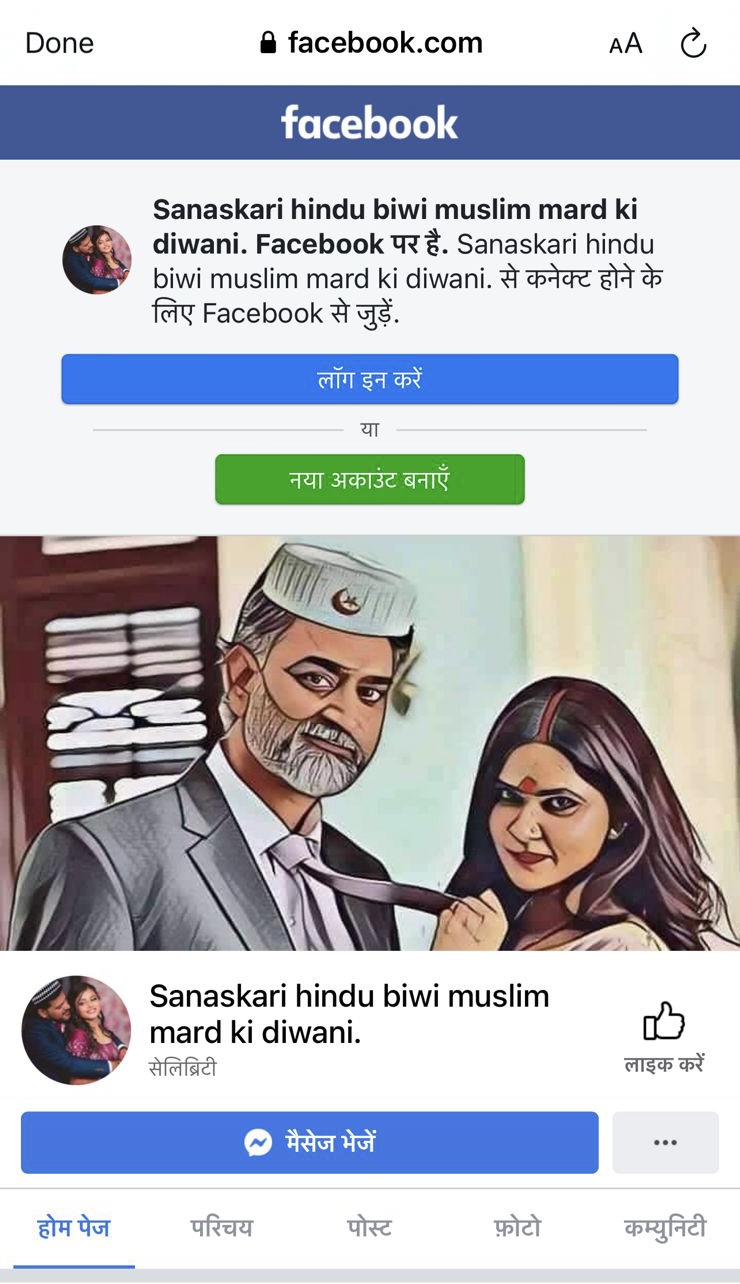
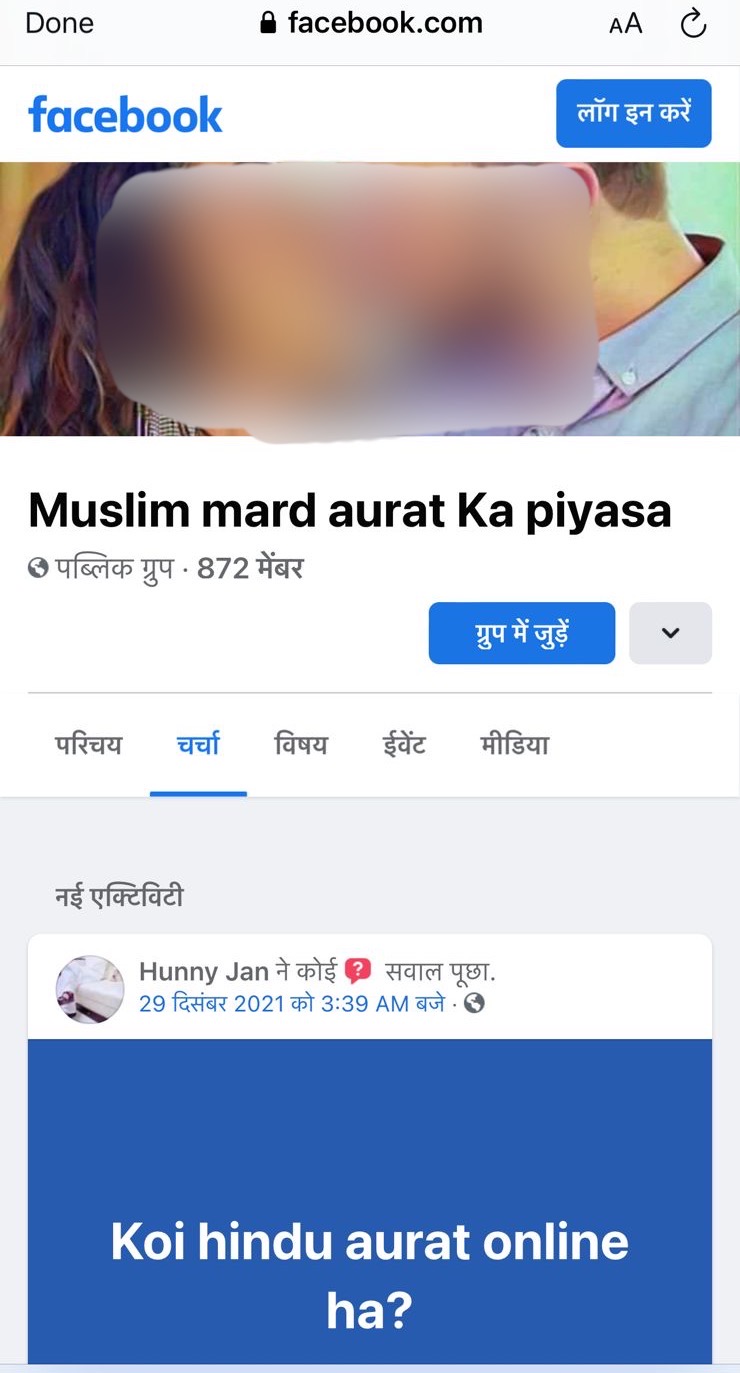
There are many pages on Facebook with a sizeable following that talk about targeting Hindu women because of their religion. The images shared on these pages, which are mostly explicit, show Hindu women with identifiable markers such as sindoor, bangles and bindi that differentiates Hindu women from others. The posts uploaded on these pages exhort followers to target and sexualise Hindu women.
Image Source: FacebookSource: Facebook
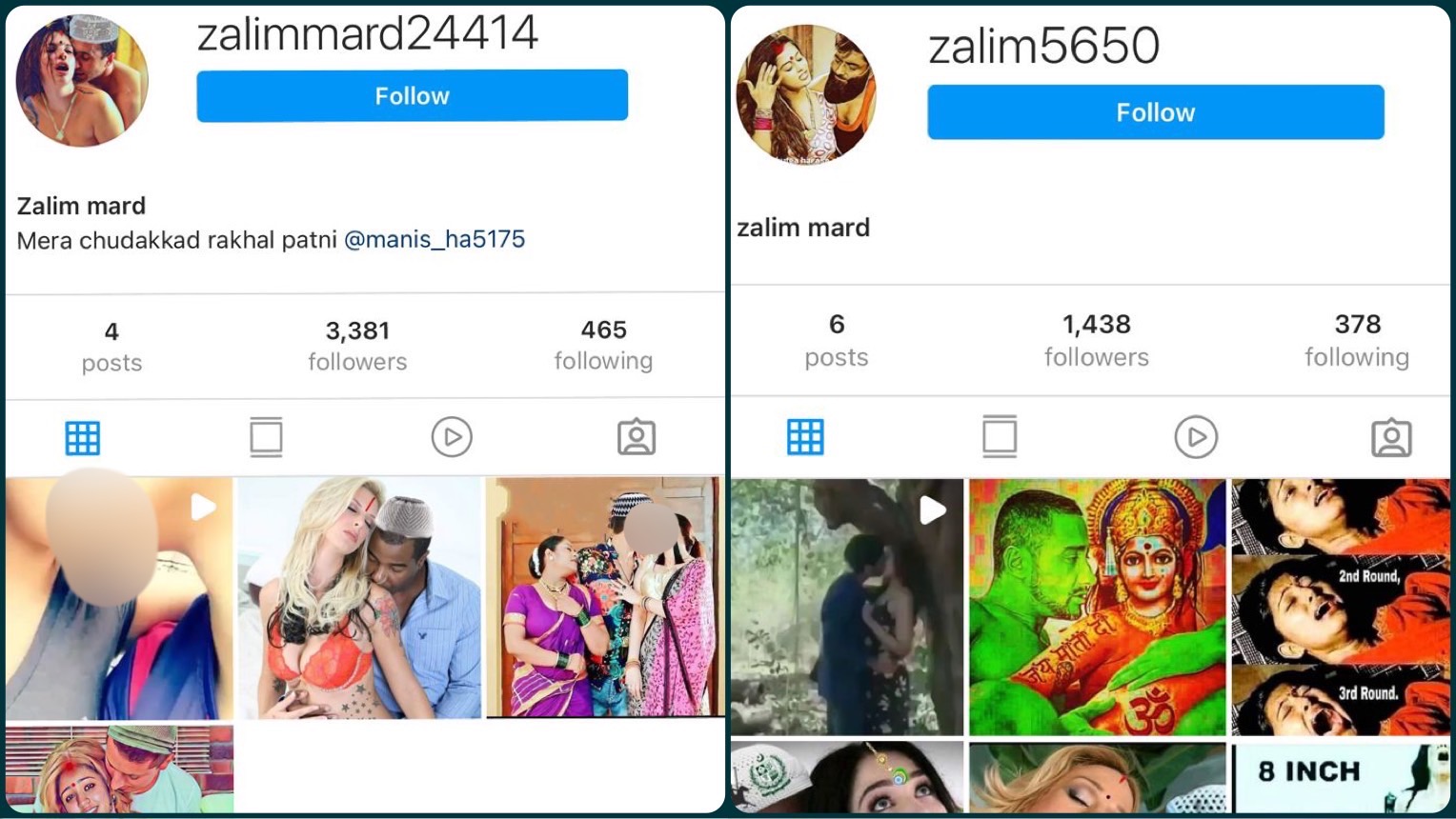
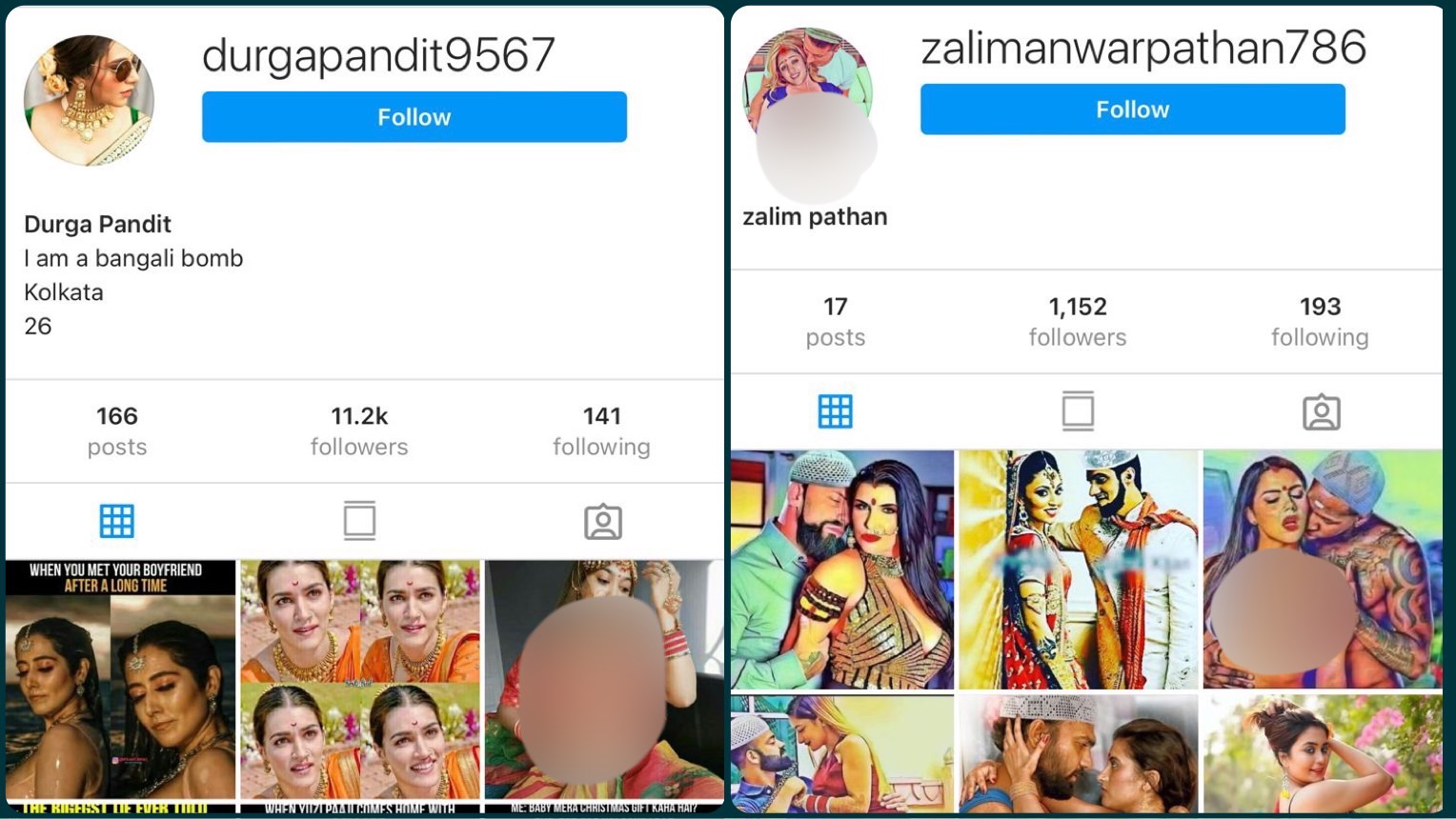
Besides Facebook, Instagram is another social media platform that is rife with misogyny and harassment of Hindu women. There are countless anonymous accounts active on the social media platform that routinely indulge in objectifying women by sharing pictures of them with identifiable markers to portray them as Hindus, along with pictures of men that are superimposed with Islamic symbols such as the crescent moon to characterise them as Muslims.
Source: InstagramSource: Instagram
Then, there are Broadcast lists and channels dedicated to sexualising and commoditising Hindu women.
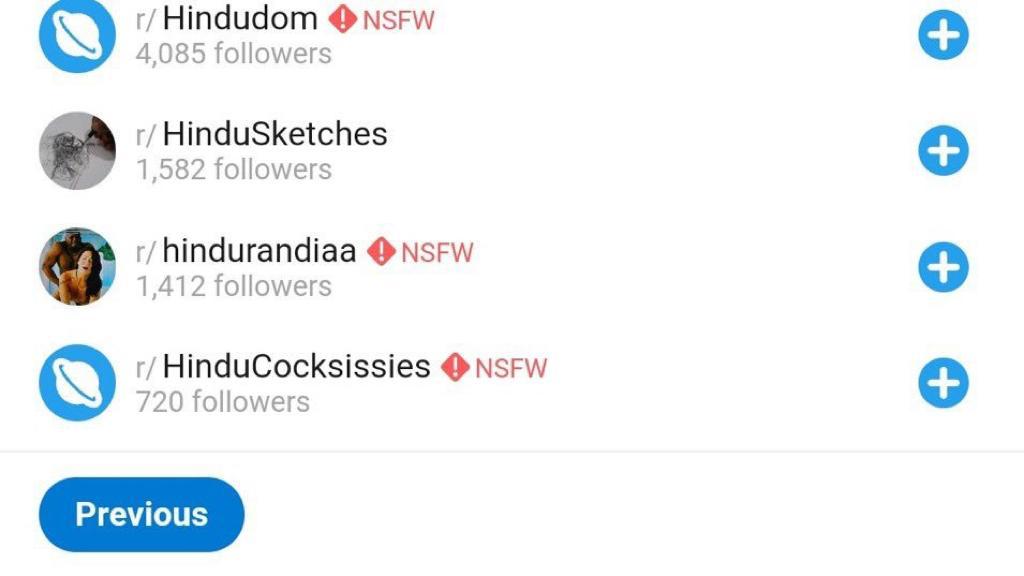
Such egregious content has also been shared on Reddit. In July 2021, Reddit came under the scanner for hosting pornographic images of Hindu women lusting for Muslim men. The Reddit accounts, which were often private, engaged in the dehumanisation of Hindu women and the photographs were accompanied by the crass language of the highest order.
Even the audio-only chat app Clubhouse has been misused by some depraved individuals to continue their misogyny against Hindu women. On June 9, an audio clip of Clubhouse conversation between the alleged social media’ influencers’ started to make rounds on Twitter where the speaker normalised ‘hate sex’ with ‘sanghis’ because women are ‘hot’. In the undated conversation, that happened on the Clubhouse app in a room titled “sex with your ex” on the topic “Do you only date hot people”, one speaker identified as Neeraj Kadamboor (Instagram ID kadamboorneeraj) made a derogatory remark on women who are opposed to his political ideology.
Then, there are independent websites as well where religious targeting of Hindu women is rampant. One such was interfaithxxx.com, which was recently highlighted by activist Anshul Saxena after the ‘Bulli Bai’ deal case came to light. The website, which he claimed targeted Hindu women by concocting stories and fake news against them, was removed from the Internet last year.
This website targeted Hindu women by making several stories & fake news against them.
And, this website was removed last year in 2020. (Please let me know if anyone from concerned authorities want more details). pic.twitter.com/h9ZnWQPy49
As sexual harassment of women based on their religion created quite a stir on social media, Saxena drew attention towards a Telegram channel named ‘Hindu Ran*yan’ that was using images of Hindu women with derogatory, sexually explicit references for harassment and abuse. Saxena had tagged Mumbai Police, highlighting the targeted harassment and potential sexual abuse of Hindu women via the channel.
After his tweet, some people on social media started discussing why the government was not taking against such platforms. Many users tagged IT minister Ashwini Vaishnaw in their tweets and asked him to take action against such channels. Taking cognisance of the tweet where he was tagged, the IT minister replied that he has initiated action against that particular Telegram channel and it has been blocked.
Channel blocked. Government of India coordinating with police authorities of states for action. https://t.co/kCB6Ys8TI2
In yet another tweet, Saxena shared a few Facebook pages that have been targeting Hindu women. Union Minister of State for Electronics and Technology, Rajeev Chandrashekhar, took cognisance of Anshul’s tweet and responded that he has informed Facebook’s parent company Meta and had the controversial pages enabling sexualisation of Hindu women removed.
Stringent cyber laws and proactive law enforcement agencies needed to curb the menace of online harassment
The above-listed incidents go to show that not just Muslim women but Hindu women are also subjected to cyber harassment and potential sexual abuse on the basis of their religion. While it is appreciable that Ministers are taking cognisance of incidents of sexual objectification and harassment on Twitter and other social media platforms, but this cannot be an ideal way of ensuring that women do not endure online abuse.
But, unfortunately, despite repeated attempts by social media users to highlight such abuse, these issues seldom get the attention that they deserve and only some of them are brought to notice, often depending on the discretion of Ministers or influential people. In some cases that manage to gain prominence, the pages and abusive accounts get suspended but those who are responsible for creating and running them are hardly brought to book.
These occurrences underscore the importance of having stringent cyber laws and an equally stringent cyber body that proactively scours the Internet for potential cases of online abuse, including harassment based on religion. There still exist cyber organisations that are entrusted with the task of checking online abuse. However, the fact that such incidents keep cropping up and with increasing frequency indicate that they are not useful in reining in the abuse that is peddled online. And with social media users routinely tagging ministers, actors, social media influencers to draw their attention towards online abuse, it is all the more important that the Centre creates a robust mechanism to address public grievances on online harassment, including religious targeting of women.
Unless the government commissions a statutory body and sanctions it with broad powers to nab and prosecute the culprits, such religious targeting of women is bound to continue. And as it continues, Hindu women will be the worst affected by this scourge as speaking up for Hindu victims of religious bigotry invariably invites allegations of majoritarianism, rising intolerance and so on and so forth.
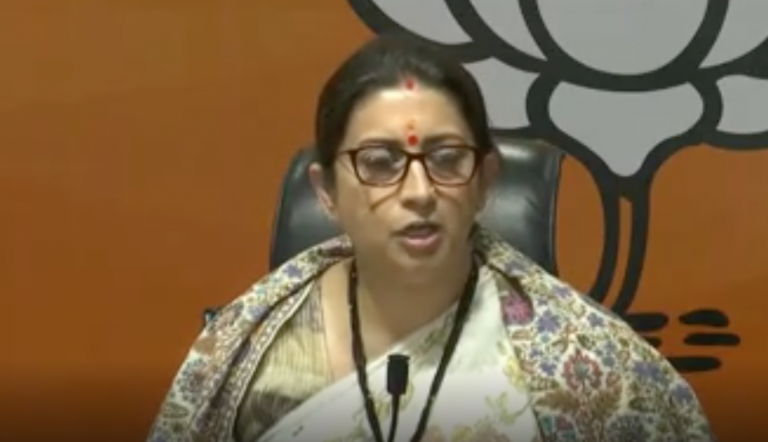
The Minister of Women and Child Development of India, Smriti Irani, on Wednesday launched a blistering attack against the Congress government in Punjab over a major lapse in Prime Minister Modi’s security detail.
Prime Minister Narendra Modi’s cavalcade was stuck on a flyover in Punjab on Wednesday for nearly 20 minutes due to farmers blocking the flyover. Private cars were seen approaching the cavalcade, which was a major security breach. The BJP has accused the Punjab government of failing to deploy additional security to secure any movement by road. PM Modi was scheduled to address a rally in Ferozepur today, but the event had to be cancelled.
In a press conference convened on Wednesday evening, Smriti Irani alleged that the police functionaries in the state were directed and convenienced to breach the security of the Prime Minister and bring him harm.
“Such is the breakdown of law & order in Punjab that the DGP, Police claims he’s incapable of providing security support to the PMO and security details,” Ms Irani said while lambasting the Punjab government.
“Such is the state of administration in Punjab that a security detail and run that is a protocol administratively to be followed by a state head was dismantled so that PM Modi could be brought to harm,” Ms Irani further added.
The BJP leader also raised questions on the decision of the Punjab DGP to give an all-clear to PM’s security detail for the route that the PM was to undertake. She also questioned how the protesters came to know about the route the Prime Minister would take since it is always kept under wraps.
“Who in the Punjab Govt gave information about the PM’s route to individuals who planted themselves atop the flyover? Video evidence, now publicly available, bring such questions to the fore,” Ms Irani said.
Stating that it was a conspiracy to bring harm to PM Modi, Irani said, “So many people reaching there is not just a coincidence, it’s a conspiracy. Who is responsible for the lapse? Punjab police remained the mute spectator, no security protocol followed.”
The Amethi MP also said that the security on behalf of the state government did not respond to any calls to secure the Prime Minister. Instead, the Congress leaders were happy and joyous that PM’s security detail was breached, Irani added.
When PM Modi had his security breached, Congress leaders erupted with joy, asking him how his Josh was! PM Modi, magnanimous as ever, on his way back, communicated ‘Zinda laut raha hoon(I am returning alive),” the BJP leader said.
The acerbic statements from Smriti Irani came after Punjab Deputy CM Sukhjinder Singh Randhawa admitted to a major security lapse, saying that an alternate route should have been planned earlier but was not done.
Punjab govt endangers PM Modi’s security, allows protestors to block his convoy
In a major lapse and seemingly deliberate act to endanger the Prime Minister’s security, the Punjab government has today allowed political protestors to block the Prime Minister’s convoy. As per reports, the PM’s convoy was blocked for over 20 minutes by protestors at a flyover about 30 km away from Hussainiwala.
In a statement, the Home Ministry said that the PM was scheduled to visit the National Martyr’s Memorial in Punjab’s Hussainiwala by helicopter. However due to adverse weather conditions, the helicopter ride was cancelled and the PM chose to go by road, which would take more than 2 hours.
As per protocol, necessary confirmations were done with Punjab DGP and the PM’s convoy started after confirmation for security arrangements was provided by Punjab Police. However, at a flyover about 30 km away from Hussainiwala, the road was found to be blocked by some protestors.
The Prime Minister’s vehicle was struck in the flyover for 15-20 minutes, as per the statement. Calling this a major lapse in the security of the PM, the Home Ministry stated that the PM’s travel plan was communicated well in advance to the state government. The state government is required to make necessary arrangements for security, logistics and also make a contingency plan ready in case of unexpected issues.