Home Blog Page 3658

Tamil Nadu: Foxconn resumes iPhone assembly line after state govt’s intervention, govt asks the company to improve facilities for workers

0

Foxconn, the Taiwanese hardware manufacturing company, is all set to resume its iPhone assembly line in Tamil Nadu after a week-long suspension of the operations at its Sriperumbudur plant. The Tamil Nadu Government has formally asked the company to ensure better basic amenities to the 15,000+ workforce at the plant. The facilities include a better hostel, adequate bathrooms and toilets, spacious living rooms, potable water, proper ventilation in the living spaces and overall improved infrastructure of the dormitories and hostels.

Around a week ago, hundreds of Foxconn workers halted the operations and protested against the company after over 150 women workers had fallen sick. All women had consumed food provided in the hostels, and it was alleged that they suffered food poisoning due to poor quality food served to them. The protestors stated that there were long-standing issues between the contractual workers and management that the company failed to address. Some of the demands raised by the employees included basic living facilities, hygienic food and water, better working conditions and more. The protests had even turned violent after rumours that several workers died due to food poisoning.

The District Collector would provide a certificate of approval of the living spaces provided to the workers, hygienic meals etc. The company has been asked to timely approve emergency leave for the contractual workers and utilise services of manpower agencies to arrange backup force to replace those who went on leave.

The Tamil Nadu government said that though they are keen to bring investment and job opportunities to the state, it is also important to ensure the welfare of the workers, especially women. Top government officials including S Krishnan, additional chief secretary of industries department, and P Thamaraikannan, additional director general of police and Foxconn representatives held a meeting on Thursday during which the suggestions were tabled by the government.

The state government had said in a statement that the company had agreed to implement the suggestions and showed interest in expanding the operations. They have assured to provide standard food and other quality facilities to the workers through contractors.

Food poisoning incidents led to protests

On December 18, reports suggested that many women workers are staying in the nearby dormitories. In one such dormitory, more than 150 workers were rushed to the hospital after complaints of food poisoning. The workers said in a statement that when they inquired about the health condition of the women workers who were admitted to the hospital, the company did not respond.

There were rumours that some of the hospitalised workers died that triggered the protest. Notably, the government officials have formally dismissed the rumours and assured strict action would be taken against the rumour mongers.

This is a second such incident where a supplier of Apple phone company faced protests and disruption in India. Last year, trade unions and protesters had vandalised Apple’s contract manufacturer Wistron India’s plant in Kolar, Karnataka. It is important to note that Apple had initiated its trial production of the flagship iPhone 13 at the Foxconn plant near Chennai. Back in 2018, following similar protests Vedanta owned Sterlite Copper plant was shut down in Thoothukudi, Tamil Nadu.
Ghulam Nabi Azad waters down forced religious conversions, claims no one is forcing people to convert

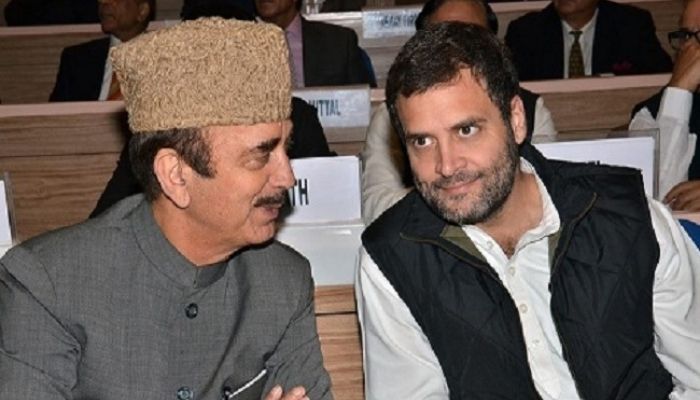
On Saturday (December 25), veteran Congress leader Ghulam Nabi Azad courted controversy after he tried to trivialise the growing menace of forceful religious conversion. He made the comments while celebrating Christmas with the Christian community in the Udhampur district of Jammu and Kashmir.

While speaking to news agency ANI, Azad claimed, “People convert after getting influenced, as they see this particular religion is serving humanity, taking everyone along and not discriminating.” He also suggested that religious conversions in India were being carried out through voluntary consent and not the fear of sword. “If anyone is converting people, he is not using a sword. It is good work and character of individuals which are influencing people,” he further alleged.

His comments came at the backdrop of the recent anti-conversion bill tabled by the BJP government in Karnataka. The Bill says, “No person shall convert or attempt to convert either directly or otherwise any other person from one religion to another by use of misrepresentation, force, undue influence, coercion, allurement or by any fraudulent means or by marriage, nor shall any person abet or conspire for conversions.”

Despite the attempt of the veteran Congress leader to downplay the severity of forced conversions, facts show otherwise. People are lured into religious conversions through deceit and the recent surge in such incidents is a testimony to it. In one such recent case, the Etah city police in Uttar Pradesh had arrested a youth named Shoaib Irshad for allegedly trapping a Hindu girl by posing as a Hindu boy and later abducting and forcing her to convert to Islam.

The family of the victim had filed a missing complaint on December 7, based on which the Etah police initiated an investigation and arrested the youth in a kidnapping case and sent him to jail. The girl was recovered and handed over to her family members.

Earlier this month, the Makarpura police in Vadodara in Gujarat had registered an FIR against Missionaries of Charity (an organization founded by Mother Teresa) on the charges of allegedly hurting Hindu religious sentiments and luring young girls to convert to Christianity.

The organization ran a shelter home in Vadodara city. The case was registered based on the complaint filed by Mayank Trivedi, District Social Defence officer. The organization was booked under Sections 295A (deliberate and malicious acts to outrage feelings of any class by insulting its religious beliefs), 298 (deliberately uttering words to wound the religious sentiments of a person) of the Indian Penal Code, and Section 3 (prohibition of forcible conversion) of the Gujarat Freedom of Religion Act, 2003. The punishment for forcible conversion under the act is up to three years with/or a fine of up to Rs. 50,000.

Similar cases have been reported from Uttar Pradesh and Bharuch in Gujarat where there are allegations of foreign funds having been received for aiding religious conversion and also distributing money to those who embrace other faith.

Delhi records record pollution levels on the morning after Christmas

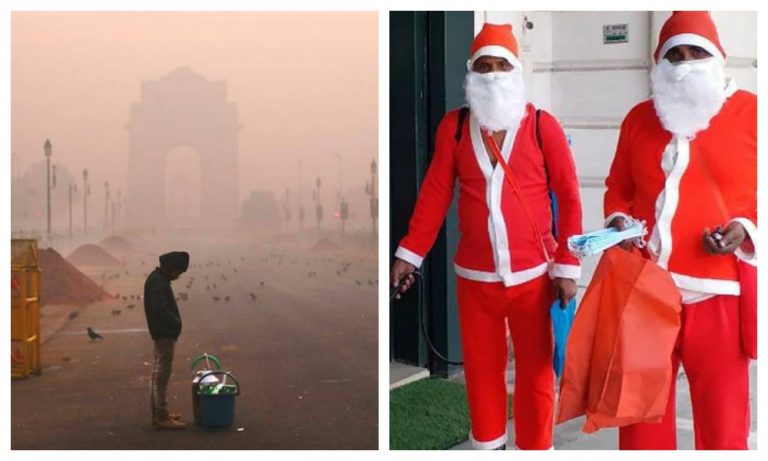
On Sunday (December 26), the Air Quality Index (AQI) of the National Capital slipped to the ‘severe category’ as per the System of Air Quality and Weather Forecasting And Research (SAFAR). The development came a day after ‘muted‘ Christmas celebrations were held in Delhi.

As per reports, the AQI level on Sunday morning stood at 430. It must be mentioned that AQI between 400 to 500 is classified as ‘severe.’

It remains unknown as to what contributed to the sudden deterioration of air quality. Activists and environments have not blamed the festival of Christmas so far for deteriorating air quality.

Earlier this month, the Supreme Court had granted 24 hours to the Centre and Delhi government to come up with a serious plan on air pollution control measures. “Mr Mehta, we expect a serious real action, if you can’t do tomorrow we are going to do. We are giving you 24 hours”, Chief Justice of India NV Ramana told the Solicitor General.

The Supreme Court had said that it would pass a suitable order if the Centre and Delhi governments fail to take measures to control pollution. The court had also slammed the Delhi government for reopening schools, and endangering the lives of children by conducting physical classes.

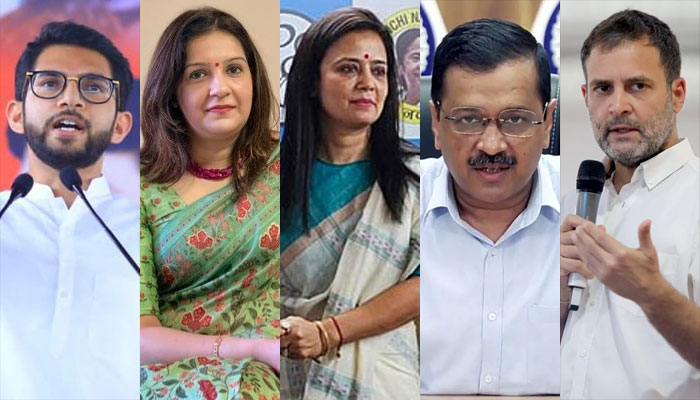
From Rahul Gandhi to Mahua Moitra to even Aaditya Thackeray: All and sundry rush to take credit for PM Modi’s announcement on booster doses

On December 25, Prime Minister Narendra Modi announced that the healthcare and frontline workers would get a booster shot starting from January 10, 2022. Vaccination for the age group 15-18 will start from 3rd January 2022. As soon as the announcement was made, the usual suspects rushed to take credit for the same.

Shiv Sena leader Aaditya Thackeray was one of the first to take credit for the announcement within a few minutes of the PM’s address. While quoting his December 7 tweet in which he had posted a letter written to Union Health Minister Mansukh Mandaviya, Thackeray wrote, “I’m glad that two of these most important requests made on 7/12 are accepted.”

The next was again a Shiv Sena leader. Although Priyanka Chaturvedi did not post anything praising herself for the announcement, her office’s official handle gave her the credit that Chaturvedi re-tweeted. In a tweet, her office wrote, “The announcement by Hon. Prime Minister is most welcome. This has been something Smt. Priyanka Chaturvedi has been raising. Heartening that it has now been approved and announced by Shri Narendra Modi.”

Mahua Moitra, Trinamool Congress’s MP, also jumped in to take credit for the announcement. In a tweet, she said, “Hallelujah! Hon’ble Modiji has heard me!  Boosters for over 60s & frontline workers finally. Praise the Lord.”

The next in the line was Chief Minister of Delhi and Aam Aadmi Party convener Arvind Kejriwal. Quoting his tweet from December 20 in which he had vouched for a booster dose, Kejriwal wrote, “I am happy that today the Prime Minister announced a booster dose for the frontline workers. A booster dose should be given to all. Apart from this, children of 15 to 18 years will now be able to get the vaccine, it is a very pleasant thing.”

He quoted an old tweet hinting he should be credited for the announcement.

Congress leader Rahul Gandhi has been a frontrunner for taking credit for GoI’s announcements related to Covid-19 and everything else that has been happening since 2014. So on Saturday when PM Modi announced for vaccines for children above age of 15 and booster dose for senior citizens and frontline workers, he, too, retrieved his old tweet to pat his own back.

He quoted his factually incorrect tweet about coronavirus vaccine doses administered and claimed credit that the central government has listened to his suggestion.

Notably, Kerala Congress, Indian Overseas Congress and West Bengal’s Youth congress did give him credit for the same. All three “hailed” Rahul Gandhi for “showing the way to the country”.

Interestingly, while most leaders like PM Modi, HM Shah and other ministers have led from the front and shared images of themselves getting vaccinated to help fight the vaccine hesitancy, neither Congress President Sonia Gandhi nor her children, Wayanad MP Rahul Gandhi and Congress General Secretary Priyanka Gandhi Vadra have made public the details of them getting vaccinated. Further, many Congress leaders had earlier actively tried to fuel vaccine hesitancy.

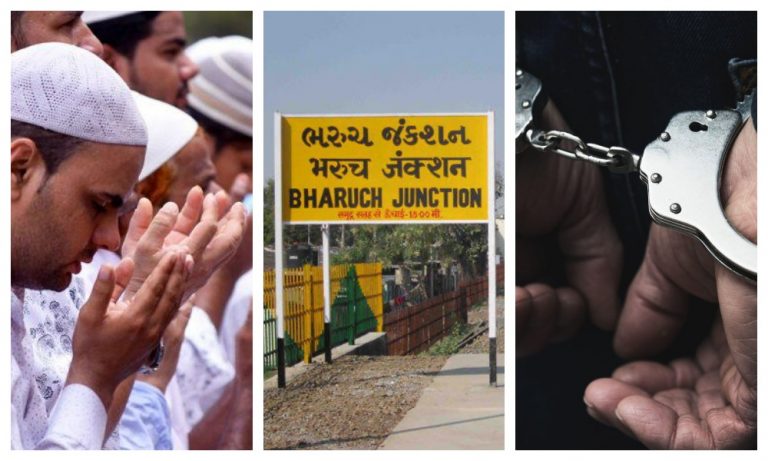
Bharuch mass conversion case: Six more arrested, four accused who are absconding move Gujarat HC to quash FIR, read details

Four accused in the much talked about mass religious conversion case in Bharuch have now moved the Gujarat High Court in a bid to get the FIR quashed. As reported by a Gujarati daily Gujarat Samachar, Shabbir Bakerywala, Samaj Bakerywala, Hasan Tisli and Ismail Achhodwala have moved the High Court and said that there has been a police complaint against nine people including the four of them. They are accused of having received foreign funding and using the same to convert tribals in the area to Islam.

The applicants have claimed that there has been religious conversion but no one was lured into doing so. They claim that the complainant converted to Islam in 2018 and also claimed discrepancies in the complaint.

OpIndia had earlier reported how as many as 37 tribal families were converted to Islam back in 2018 by luring them with promises of better jobs, money, marriage. Speaking to OpIndia, Pravin Vasava, who had converted to Islam and went by the name Salman Patel, till he reverted, said, “We were taught there is no such religion as Hindu religion and Islam is true religion.” He also said how those who were converted to Islam back in 2018 were not informed that their identity cards would also be changed. He informed how they were taken to Surat to get the legal documents done.

“Tribals are poor people. If someone gives some food grains, we believe they are nice people. Which is why people get lured to religious conversion,” Vasava had said while speaking to OpIndia.

On November 15, 2021, Amod Police had registered an offence under the Gujarat Freedom for Religion Bill. On December 16, Bharuch Police arrested six more accused in the case. Yakub Ibrahim Shanker from Patan, Rizwan Mehboob Patel from Palej, Thakorbhai Girdharbhai Vasava, Sajid Mohammed Patel and Yusuf Patel from Amod while Ayub Bashir Patel from Jambusar were arrested. According to police, the accused arrested collected Rs 14 lakh funds through donation from foreign countries. Of this, Rs 7 lakh were collected by Rizwan Patel from on Ismail in Bahrain.

As per Indian Express report, Bharuch Deputy Superintendent of Police M P Bhojani said that during the investigation it was revealed that Yakub Shanker and Rizwan Patel collected Rs 14 lakh which was used to construct one Ibadatgah (prayer house) as well as to distribute amongst those who convert to Islam. No permission from Bharuch District Collector was taken for such conversion activity.

Bhojani further added that Thakorbhai Girdharbhai Vasava played an important role in the various conversion activities of the tribal families into Islam. This amount was used for further religious conversion activities. Abdul Bashir Patel of Jambusar is a member of Mohammedi mosque in village and would take newly converted tribals there to teach them about Islam.

Sajid and Yusuf are members of Baitulmaal Trust in Achhod village and Salauddin Sheikh had given them donation of Rs 3.71 lakh. In October this year, the Special Investigation Team (SIT) of Vadodara city police found that city-based American Federation of Muslims Of Indian Origin (AFMI) had routed hawala funds for activities including construction of 400 flats for ‘displaced’ Bangladeshi and Rohingya Muslims near Ghaziabad. It was also accused of funding maulvis near the Indo-Nepal border. Sheikh is one of the trustees of AFMI. Sheikh started the trust after getting influenced by Islamic preacher Zakir Naik in Mumbai a few years back.

His name had also surfaced in the Uttar Pradesh mass conversion racket where Umar Gautam is one of the prime suspects.

Following Vasava’s complaint in November, Abdul Aziz Patel (Ajitbhai Chhagan Vasava), Yusuf Jivan Patel (Mahendra Jivan Vasava), Ayub Barkat Patel (Raman Barkat Vasava), Ibrahim Punabhai Patel (Jitubhai Punabhai Vasava) all residents of Kakariya village in Amod taluka were arrested. Five others identified as Shabbir Bakerywala (Amod), Samaj Bakerywala (Amod), Hasan Tisli (Achhod village), Fefdawala Haji Abdulla (Nabipur) and Ismail Achhodwala (Maulvi from Anchod village) are absconding. Of these absconding, four have moved High Court to quash the FIR.

A source close to the case has accused the Bharuch police administration of being lax. “They have arrested those who were originally Hindus and were converted to Islam. The main accused are still on the run. One of the maulvis accused in the case has applied for anticipatory bail,” he said.

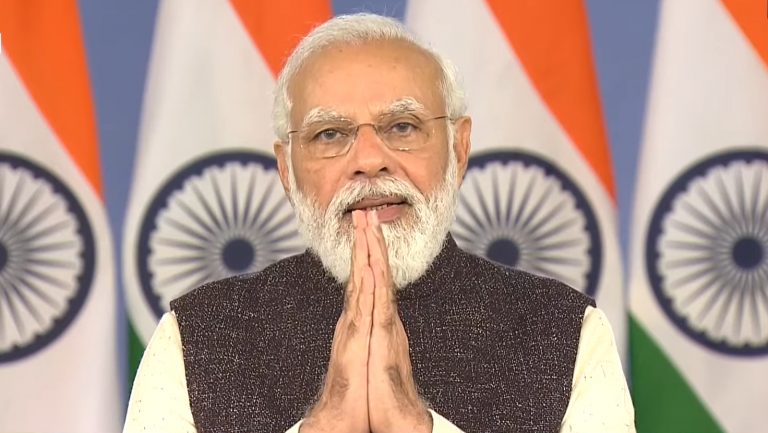
PM Modi announces Covid-19 vaccination for 15-18 age group, precautionary dose for Corona warriors and senior citizens

Prime Minister Narendra Modi, in his address to the nation on Saturday (December 25, 2021) announced that vaccination against COVID-19 for children belonging to the age group of 15 to 18 will start from January 3 while precautionary COVID-19 dose for frontline and healthcare workers will commence from January 10, 2022.

In addition to this, PM Modi also said that a precautionary dose of the COVID-19 vaccine will be made available to citizens above the age of 60 years and who have multiple comorbidities on the basis of their doctor’s advice.

“We are set to begin vaccination for kids aged between 15-18 from 3rd January 2022. This will not just strengthen our fight against COVID, but also help our students in schools and colleges health-wise,” PM Modi said.

“Our frontline warriors have played a huge role in our fight against the pandemic. The government has, thus, also decided that we will begin with precautionary doses for the health workers from 10th January 2022,” PM Modi added.

Besides, PM Modi also asked citizens not to lower their guard in the fight against the novel coronavirus (COVID-19) as the virus is still around, powered by the latest variant omicron. “Taking care of all precautions and vaccination are the best ways to combat the pandemic. Our nation had started working on mission mode on vaccine development a long time ago,” PM Modi said.

“Infections are rising across several nations due to a new variant of COVID, Omicron. In India, there have been a few cases as well. I call upon all of you to not panic. Use masks and sanitize yourself regularly,” PM Modi said in his address to the nation.

The Prime Minister also talked about the nation’s preparedness in dealing with the coronavirus outbreak. He said India currently has 18 lakh isolation beds, 5 lakh oxygen supported beds, 1.4 lakh ICU beds and 90,000 special beds for kids. Furthermore, the Centre has provided over 3,000 functional PSA Oxygen plants and 4 lakh cylinders have been provided to all states.

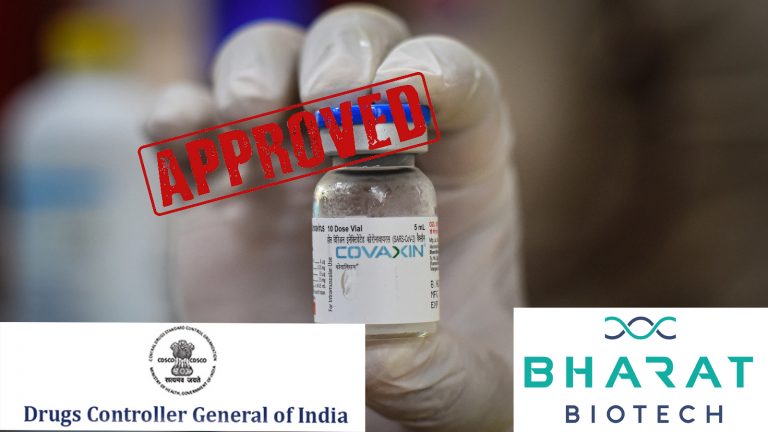
DGCI grants approval to Covaxin for minors aged 12 to 18

PM Modi’s announcement about making COVID-19 vaccines available to children in the age group of 15 to 18 came shortly after the Drugs Controller General of India has approved the Covid vaccine Covaxin for minors aged 12 to 18. According to reports, DCGI has granted emergency use approval for Bharat Biotech to use the made-in-India vaccine to people in the age group 12 years to 18 years.

DCGI grants emergency use approval to Bharat Biotech’s Covaxin for minors aged 12 to 18

The Drugs Controller General of India has approved the Covid vaccine Covaxin for minors aged 12 to 18. According to reports, DCGI has granted emergency use approval for Bharat Biotech to use the made-in-India vaccine to people in the age group 12 years to 18 years.

In October this year, the Subject Expert Committee (SEC) has given a recommendation to the Drugs Controller General of India (DCGI) for the use of Bharat Biotech’s COVID-19 vaccine Covaxin for people aged between 2-18 years. However, the DCGI chose to grant the approval for children in aged between 12-18 years.

Along with the approval, the regulatory process is being streamlined so that children can be registered on the CoWin platform to get the jabs.

“Bharat Biotech has submitted data from clinical trials in the 2-18 years age group for COVAXIN (BBV152) to CDSCO. The data has been thoroughly reviewed by the CDSCO and Subject Experts Committee (SEC) and have provided their positive recommendations,” Bharat Biotech said in a statement.

“This represents one of the first approvals worldwide for COVID-19 vaccines for the 2 -18 age group. Bharat Biotech sincerely thank the DCGI, Subject Experts Committee, and CDSCO for their expedited review process. We now await further regulatory approvals from the CDSCO prior to product launch and market availability of COVAXIN for Children,” the company added.

After a long delay, the World Health Organisation had granted Emergency Use Listing status to Covaxin, making people who received the vaccine eligible for international travel.

Delhi govt collects Rs 1.5 crore as fine in two days for violations of Covid-19 norms

0

Aam Aadmi Party-led Delhi government has managed to collect Rs 1.5 crore in two days from the people who violated the COVID-19 norms imposed by the Delhi government, according to reports. The administration in Delhi has become increasingly vigilant about the maintenance of the COVID-19 protocols in the national capital amid growing concerns about the Omicron variant of the virus.

As per reports, the highest number of cases where people violated the COVID-19 norms came from East Delhi and North Delhi. People from the East and North Delhi also received the maximum number of Challans on December 22 and 23 for not wearing masks. North Delhi recorded the highest number of violations among the 11 districts in Delhi with 1446 people being booked. East Delhi recorded 1,245 violations.

Reportedly, a total of 7,778 violations was observed where people were found not wearing masks, ignoring social or physical distancing norms and participating in crowds. The collection of fines from the people who violated the COVID-19 regulations amounted to a total of Rs 1.5 crore in two days. 163 FIRs were also registered by the officials against people violating the norms.

A senior government official said, “The number of Challans issued and people being prosecuted for violations of Covid- appropriate behaviour and other guidelines are increasing. Daily violations caught have increased from around 3000 in the previous week to 3,500-4000 now”

Earlier Delhi government had given Rs 50,000 ex-gratia to 21,235 Delhiites in cases where the people lost a family member because of COVID-19. Financial assistance of Rs 2,500 were provided in 7,955 cases through the government’s Mukhyamantri Covid-19 Aarthik Sahayata Yojana.

Christian leader who backed Pakistan’s creation was forced to quit as Speaker because he wasn’t a Muslim: Here’s what had happened

At a time when historical revisionists want to portray Mohammed Ali Jinnah as a ‘tolerant, secular individual’ who envisioned a Pakistan-for-all, the signs of religious bigotry were visible from the very start. One of the immediate aftermaths of the Partition of India was the sidelining of non-Muslims who contributed to the Pakistani cause. They were misled by Jinnah into believing that a society, based on the principles of ‘Islamic equality’, was waiting for them.

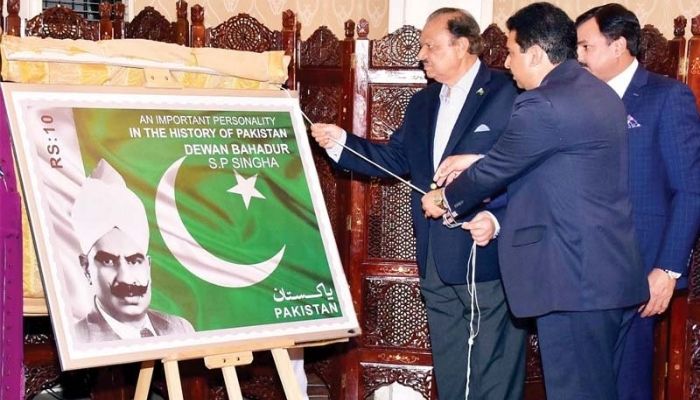
However, contrary to the assurances made, non-Muslims soon became the subject of unspeakable atrocities. Community leaders, who once held high positions were removed, for the virtue of not being a Muslim. Such a treatment was meted out to a Christian leader by the name of Dewan Bahadur SP Singha (1893-1948) who had sealed the fate of Punjab in Pakistan’s favour.

Born in Sialkot to a Christian family, Singha had a Punjabi mother, a Bengali grandmother, and a Bihari grandfather. He championed the cause of Christians since the start of his political career. A report in Pakistan Today read, “He believed that Muslim society was more secular in its nature and would be better off towards untouchability factor and looking down upon them as low caste over the caste-ridden Hindu society and shall safeguard the right of other religions communities.”

In 1942, Singha held a reception in Jinnah’s honour and pledged his full support to the idea of Pakistan. In an infamous speech on a later occasion, he said, “At the time of partition of the sub-continent of India, in the entire country, the Christians should be counted with Muslims.” In the run-up to the 1945-1946 elections, the All Indian Christian League and All India Christian Association hailed the slogan, ‘Live Long Pakistan.’ In November 1946, Singha said, “from today Jinnah is our leader…”

On June 23, 1947 (2 months before India’s Independence), a meeting was held at the Punjab Legislative Assembly. to determine whether the British controlled province should be a part of Pakistan or not. A state of violence broke out in the Assembly after Sikh leader Tara Singh warned of dire consequences if anyone voted in favour of Pakistan. With the help of his Christian colleagues, namely, Cecil Gibbon and Fazal Elahi, Singha (who had two votes, one additional vote as Assembly Speaker) was able to turn the vote in favour of Pakistan with 91 vs 88 votes.

It was decided that Punjab would be divided into two. When the Radcliffe Line was to be drawn by the Boundary Commission, Singha and other Christian leaders announced that the Christian population would be counted as the Muslim population. Singha’s aide Gibbon argued that Lahore should be made the part of Western Punjab and that all Anglo-Indian Christians must make their way to Pakistan. Despite all his efforts, Singha had to quit his position as the Speaker of the Pakistani Punjab assembly due to his religion.

“It became a big question mark soon after the demise of Quaid e Azam when in Pakistani Punjab Assembly a vote of no confidence was moved against its Speaker S.P. Singha on the basis of religion, asserting that only a Muslim could be the Speaker of the Assembly,” read the report by Pakistan Today. Singha died a month after the demise of Jinnah and his family moved to India permanently in 1958.

Pro-Jinnah Hindu Professor was hacked to death by an Islamist mob

One of the strongest proponents of Jinnah’s ill-conceived “Two Nation Theory” was a Hindu man named Prof Brij Narain, who wrote several lengthy articles, making a case for the secession of Pakistan from undivided India, and arguing the merits of its economic viability.

However, when the riots consumed the city of Lahore, in the wake of the bloody partition, Prof Brij Narain was among the first few Hindus massacred by a rabid Islamist mob. Prof Brij Narain, a staunch Hindu admirer of Jinnah and a leading Lahore economist, was brutally hacked to death by a Muslim mob that raided his house on Nicholson Road.

Narain pleaded in vain that he was a supporter of Pakistan and Jinnah but the mob turned a deaf ear to him, killing him and ransacking his house. Some accounts narrate that Brij Narain had tried to plead with the Islamist mob, trying to make them understand that his house and property belonged to Pakistan and they should not destroy it.

Still, he was called a ‘kafir’ and was killed. In fact, Brij Narain was not even the only prominent Hindu intellectual who was killed during the post-partition violence in Pakistan. Madan Gopal Singh, the Registrar of the Punjab University in Lahore, had travelled from Shimla to Lahore. He was killed by his own assistant at the University.

Minorities under threat in the Islamic Republic of Pakistan

The Islamic country of Pakistan has become a hotbed of violence against women, especially those belonging to minority Hindu, Christian, and Sikh communities. Ashiknaz Khokhar, a human rights activist has noted that the kidnapping of minor girls from religious minorities is a common occurrence in Pakistan. She has said that over 1,000 girls belonging to Hindu and Christian communities are forcefully converted to Islam every year in Pakistan.

Human Rights activist Ashiknaz Khokhar has also said that the government of Pakistan is not taking the menace seriously. According to media reports, Khokhar said, “The (Pakistan) government is not taking this issue seriously and parliament recently refused to pass the bill on forced conversion”. Saying that over 1,000 minority girls are abducted every year, she said that there was a dire need for a specific law to protect minority girls in Pakistan.

The statements by Khokhar came as another 12-year-old Christian girl was abducted in the Punjab province of Pakistan. Reportedly, 12-year-old Meerab Abbas was taken by Muhammad Daud, a native of the Pakistani province of Balochistan. 

The latest report has stated that around 6,754 women were kidnapped in the country’s Punjab province in the first half of 2021. Out of those, 1,890 women were raped, 3,721 were tortured and 752 children were raped. The fresh report came on 30 August after the board of Trustees of Transparency International Pakistan (TIP) flagged its concerns over the increasing attacks on women in the country.

A 2019 field investigation report by the Human Rights Commission of Pakistan has reaffirmed an unpleasant reality that is already known for far too long—minorities in Pakistan live under constant fear of persecution as their perpetrators enjoy court sanctions, support from the influential and affluent section of the society and patronage from political leaders.

Yogi Adityanath launches scheme to distribute smartphones and tablets to one crore students in Uttar Pradesh

0

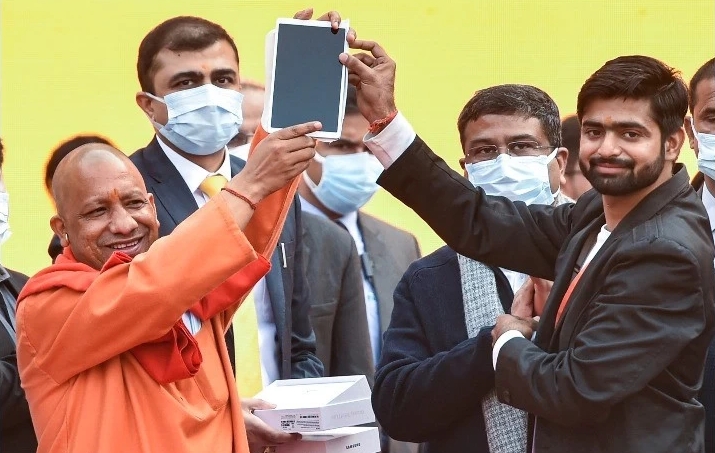
The Yogi Adityanath government on Saturday (December 25) launched its ambitious programme to distribute tablets and smartphones to one-crore students to mark the birth anniversary of former Prime Minister and Bharat Ratana Atal Bihari Vajpayee.

Coincidently, today is Christmas Day, and Yogi Adityanath gifted youths what they require for their good future. Union Minister for Education, Skill Development and Entrepreneurship Dharmendra Pradhan was also present on the occasion.

Yogi Adityanath said that tablets and smartphones will help students in getting free digital access to standard content and related information to shape their careers. He termed the distribution of tablets and smartphones as the empowerment of Uttar Pradesh through technology. In the launching programme held at Atal Bihari Vajpayee Ekana Stadium in Lucknow, 40,000 tablets and 60,000 smartphones were distributed to beneficiaries students. Five students were invited on stage to speak where they expressed gratitude to the CM for providing resources to the needy students.

The stadium was jampacked with audiences where Yogi expressed his commitment to giving a good future to youths of the state.

“We successfully faced challenges of Covid 19 under the leadership of Prime Minister Narendra Modi. Pandemic affected studies…whenever I enquired students they said that they wanted to study but had no means of online studies. Here I decided to give smartphones to one Crore students,” Yogi said.

He added that the real importance of technology was realized during the pandemic, as everything had moved to online mode. “The importance of technology was felt during the pandemic. Children did not have the facility for pursuing online education and attend classes in dearth of means,” he said.

Yogi said that there was a time in Uttar Pradesh when the government jobs were sold by a family. “It was like the family of Kauravas since not even a single member and relationship was left which was not into extortion. But it is not happening now. Those who play with life with youths will be jailed,” Yogi said.

Yogi Adityanath also launched the Digi Shakti Portal and Digi Shakti Adhyayan App which are preinstalled on all smartphones and tablets. This will help students in getting easy access to remote classes and to get content for studies besides information related to employment. The BJP government in Uttar Pradesh has ensured that all educational institutions/ universities provide study materials to students through new apps.

Who are eligible for the scheme

Students who are natives of Uttar Pradesh and have passed 10th and 12th class with 65 percent and above marks will be benefitted from this scheme. In the first phase of the distribution, preference will be given to final semester students of graduation, post-graduation, MBBS, ITI, B.Tech, M.Tech, PhD, skill development related courses and like.

In October, the Uttar Pradesh cabinet gave the approval for the distribution of free tablets and smartphones for the technical empowerment of the youth of the state. The scheme is worth Rs 3,000 Crore.

The job doesn’t end here as Kumar Vineet, special secretary (IT and Electronics), said that the government will be signing a contract with Infosys for the company to provide over 3,900 programmes related to education and employment to the youth free of cost.

The government will organize the programme at the district level for the distribution of smartphones and tablets to other students. Eligible youths can register for the scheme can through the Digi Shakti portal from December 25 onward.

So far more than 38 Lakh youths have registered on the Digi Shakti portal and the government has placed orders for procurement from well-known companies such as Lava, Samsung, and Acer.