Home Blog Page 371

Supreme Court rejects plea by Nandini Sundar and Ramachandra Guha challenging Chhattisgarh’s anti-Naxal law, says it does not violate judgement banning Salwa Judum

The Supreme Court dismissed a petition challenging Chhattisgarh Auxiliary Armed Police Force Act, 2011 holding that the legislation did not amount to contempt of court. The decision arose from a 2007 contempt petition which was filed before the court challenging the 2011 Act as being contempt of a 2011 Supreme Court ruling that outlawed the Salwa Judum militia. In addition to that, the Apex Court also disposed of two writ petitions saying that the prayers made in the petitions were addressed in the same 2011 judgment of the court.

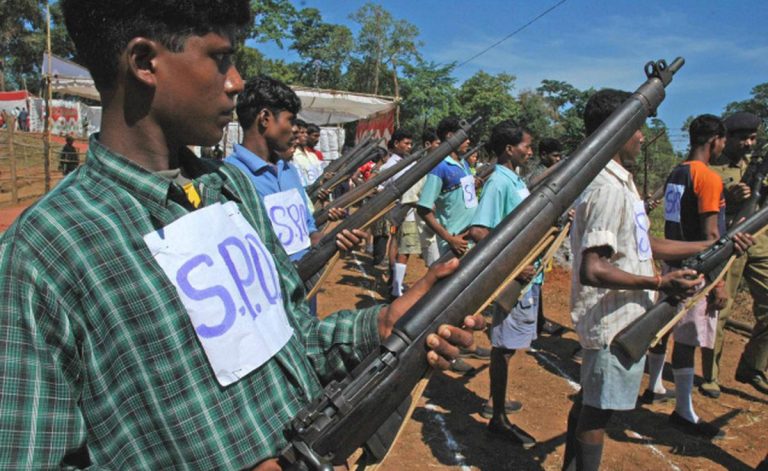
Refusing to strike down the law, a bench of Justice BV Nagarathna and Satish Chandra Sharma observed that mere enactment of a law by the state in exercise of its legislative power cannot be challenged as contempt. “Any law made by the Parliament or a State legislature cannot be held to be an act of contempt of a Court, including this Court, for simply making the law…The passing of an enactment subsequent to the order of this Court by the legislature of the State of Chhattisgarh cannot, in our view, be said to be an act of contempt of the order passed by this Court,” the court said. The bench noted the Act did not override its 2011 ruling that directed the state to desist from appointing local tribal people as Special Police Officers (SPOs) in anti-Naxal operations.

The petitioners, popular naxal-sympathiser Nandini Sundar, ‘historian’ Ramachandra Guha and former bureaucrat EAS Sarma argued before the court that the 2011 Act gave legislative backing to the arrangement of the state of appointing SPOs which was struck down by the court in its 2011 judgment.

Holding that challenging the 2011 enactment as an act of contempt was not legally appropriate, the top court advised the petitioners to mount an appropriate legal challenge to question the validity of the law. “…interpretative power of a constitutional court does not contemplate a situation of declaring exercise of legislative functions and passing of an enactment as an instance of a contempt of a court,” the court explained.

Supreme Court judgment that outlawed the Salwa Judum

In July 2011, the Supreme Court passed a judgment in the case of Nandini Sundar v State of Chhattisgarh, prohibiting the state from appointing local tribal youth as SPOs in counter-insurgency operations. Ordering disbanding of local civil militia like Salwa Judum and Koya Commandos, the apex court directed the withdrawal of firearms issued to SPOs, prosecution of those responsible for criminal acts committed under the aegis of Salwa Judum, and investigation by the NHRC and the CBI into human rights violations in Chhattisgarh.

The Salwa Judum was a civil militia, comprising local tribal youth, that emerged in 2005 as a grassroots movement against Naxalism in Chhattisgarh. The movement, which aimed to protect local villages and communities from Naxal attacks, later gained state. The state govrnment provided arms and training to the members of the group to stregthen their fight against Naxalism. However, in 2011, the Supreme Court banned Salwa Judum and other similar groups terming their activities as unconstitutional.

What is the 2011 Act?

After the Supreme Court ruling, the Chhattisgarh government enacted the Chhattisgarh Auxiliary Armed Police Force Act, 2011, which empowered the state government to establish as auxiliary force at the state level to assist the the security forces in maintaining public order, preventing and combating Naxalite violence, and combating insurgency. A three-member committee selects recruits the members of the auxiliary force among the locals who are familiar with the topography and the local languages and dialects.

The contempt petition claimed that the Act legitimised the state’s action of appointing local tibals as civilian combatants in anti-naxal operations and thus amounted to the contempt of the Supreme Court ruling that banned SPOs. The petition claimed that the legislation was an attempt to nullify the Supreme Court ruling and thus amounted to wilful disobedience.

Modi government’s resolve to uproot naxalism

Soon after coming into power in 2014, the Modi government expressed zero tolerance policy towards Naxalism and its resolve to uproot Naxal terrorism from the country. For achieving this objective, the government adopted a multi-pronged strategy which includes aggressive military operations to eliminate Naxal terrorism as well as development efforts to integrate the Left-wing extremism (LWE) affected areas and people into the mainstream as per the National Policy and Action Plan launched in 2015.

However, the reintegration of Naxalism-affected people is not possible without first eliminating Naxal terrorism. Therefore, the government adopted an aggressive military approach to counter Naxal terrorism which entered its last phase under Operation Kagar which was launched in January 2024 to eradicate Naxalism in Chhattisgarh, Maharashtra (Gadchiroli), Odisha, Jharkhand, Madhya Pradesh and Telangana as well as installing new camps as part of the military offensive by security forces.

Under the operation, around 1 lakh para-military troops, including the Central Reserve Police Force (CRPF), its elite CoBRA units, District Reserve Guards DRG), and state police, equipped with modern technology, have been deployed in the left-wing terrorism affected areas to completely uproot the naxal terrorism from its last remaining strongholds. Since the inception of the operation, the security forces have eliminated over 400 naxal terrorists so far while more than 800 Maoists have surrendered.

In a major success under the operation, the security forces neutralised Maoist leader Nambala Keshav Rao alias Basavaraju along with 26 other Naxals last month, dealing a major blow to Naxal terrorism. As a result of the government’ aggressive anti-Naxal policy, the Naxal-affected areas in the country significantly shrank over the last 10 years from 106 districts in 2015 to just 6 districts (Bijapur, Kanker, Narayanpur, and Sukma in Chhattisgarh, West Singhbhum in Jharkhand and Gadhchiroli in Maharashtra).

With the government’s intensified anti-Naxal operations and its depleting cadre strength, Naxal terrorism in the country is facing an inevitable end.

Morocco, with 99% Muslim population, bans animal slaughter on Bakrid – Read why King Mohammed VI has taken this unprecedented step

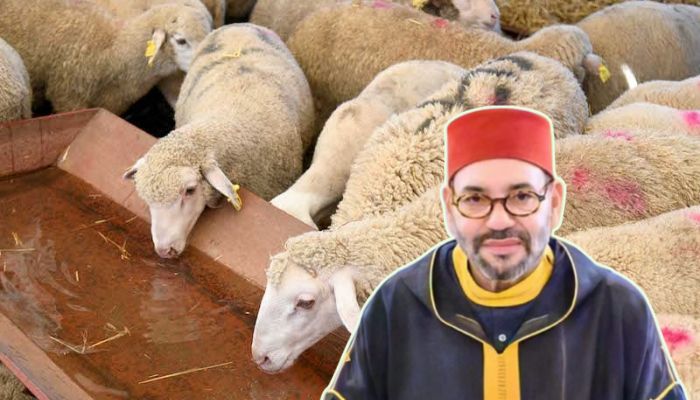
Ahead of Eid-ul-Adha or Bakrid, African country Morocco, which as a 99 per cent Muslim population, has banned animal slaughter this year. The Moroccan authorities began shutting down livestock markets to prevent the sale of sacrificial animals after King Mohammed VI announced his decision to cancel the traditional animal sacrifice this year due to the country’s ongoing drought and economic challenges. These challenges have caused a sharp decline in livestock numbers in the country.

The Moroccan media reports say that various provinces have ordered the closing of all weekly sheep markets, banning gatherings related to the sale or slaughter of sacrificial animals. The Moroccan security forces are also reportedly taking away goats from houses.

In addition, temporary closure of municipal slaughterhouses is also being implemented. In some areas, the ban is extended even to the sale of animal slaughter tools.

This first of its kind decision comes after King Mohammed VI had asked Moroccan citizens earlier this year to refrain from performing Islamic animal slaughter or sacrifice to alleviate the financial burden as well as to preserve the country’s depleting livestock.

The King of Morocco will perform the animal slaughter/sacrifice on Bakrid on behalf of all Moroccans.

Notably, Morocco is grappling with severe drought for the past six years. This has resulted in the decrease in the number of sheep by almost 38 percent. Besides, rainfall has decreased by over 50 percent from the regular average, leading to a significant shortage of fodder and water for cattle.

Meanwhile, some reports claim that the Moroccan king’s ban on animal slaughter on Bakrid has sparked outrage and protests in the country with people accusing the government of violating core Islamic tradition. It is also being claimed that the slaughter ban is simply a tactic to deflect attention from surging inflation and other failures of the government.

Supreme Court cancels bail of 5 workers of Mamata Banerjee’s TMC party accused of attacking BJP supporters after 2021 West Bengal elections, calls it a grave attack on the roots of democracy

0

The Supreme Court has recently slammed Trinamool Congress (TMC) workers and cancelled the bail of five person who were accused of targeted families for supporting BJP during the 2021 in West Bengal, saying such incidents were “grave attacks on the roots of democracy”.

A bench of Justices Vikram Nath and Sandeep Mehta said the allegations against the accused, who are the workers of the Mamata Banerjee-led TMC, are “so grave” that the same have an “adverse impact” on society at large and “shake the conscience of the Court”.

The apex court also noted it was revealed that around 40-50 heavily armed assailants vandalised and looted the complainant’s house, pulled his wife by her hair, forcibly undressed her and then sexually abused her. She was able to escape after she threatened to set herself ablaze by pouring kerosene on herself.

“The concerted attack on the complainant’s house was launched on the day of the election results with the sole objective of wreaking vengeance because he had supported the saffron party,” stated the verdict.

“This is a grave circumstance which convinces us that the accused persons including the respondents herein, were
trying to terrorise the members of the opposite political party whom the accused respondents were supporting. The reprehensible manner in which the incident was perpetrated shows the vengeful attitude of the accused persons and their avowed objective to subdue the supporters of the opposite party into submission by hook or by crook. The dastardly offence was nothing short of a grave attack on the roots of democracy,” it added.

The apex court further said releasing the accused on bail is likely to “create a sense of fear and terror” amongst the society, or that the accused, while on bail, may abscond or tamper with the prosecution evidence.

“Releasing the accused respondents on bail is likely to create a sense of fear and terror amongst the society or that the accused, while on bail, may abscond or tamper with the prosecution evidence,” the bench said as it set aside bail granted by the Calcutta High Court order to five accused.

It further said that the accused persons have an imminent propensity to adversely affect the proceedings of the trial.

“Having regard to the facts enumerated above, we feel that the present one is a case wherein the allegations against the accused respondents are so grave that the same shake the conscience of the Court. Furthermore, there is an imminent propensity of the accused persons adversely affecting the proceedings of the trial,” it said.

It further noted that the officer in-charge had refused to register an FIR on May 3, 2021 and asked the complainant’s family to leave the village for their safety.

The bench slammed the West Bengal police for refusing to register an FIR linked to the 2021 post-poll violence wherein a BJP supporter’s house was vandalised, and his wife was sexually assaulted.

The top court said the local police’s approach lends credence to the complainant’s apprehension about the clout and influence that the accused have over the locality and even the police.

It noted that FIR in the case registered only upon intervention by the High Court directing on August 19, 2021, the CBI to investigate all the cases where the allegations involve crime of murder and crime against women regarding rape it attempt to rape.

The bench further recorded the submission of the CBI, which approached the apex court against the bail granted to six men, stating that CBI officials were not receiving the required cooperation from the local police. Thus, the culmination of the investigation took almost one and a half years.

It noted that the charge sheet in the case was filed in 2022, and to date, the trial has not budged an inch. The prosecution has alleged that this delay is mostly attributable to non-cooperation by the accused persons, whose fact is palpably established from the record, said the bench.

“In this background, we feel that there is no possibility of a fair and impartial trial being conducted if the accused respondents are allowed to remain on bail. Thus, on both counts, i.e., (i) the nature and gravity of the offence, which is nothing short of an attack on the roots of democracy, and (ii) the imminent likelihood of the accused adversely affecting a fair trial, the bail granted to the accused respondents has to be cancelled,” the verdict stated.

Hence, it asked six accused to surrender before the trial court within two weeks from today, failing which, the trial court shall adopt coercive measures to secure their presence.

The top court also directed the trial court to expedite the proceedings and try to conclude the trial within six months.

It directed the West Bengal’s Home Secretary and the Director General of Police to ensure proper protection is provided to the complainant and all other material witnesses so that they can freely appear and depose at the trial without fear or apprehension.

Several incidents of violence were reported at various places after the assembly poll results were announced on May 2, 2021.

(This news report is published from a syndicated feed. Except for the headline, the content has not been written or edited by OpIndia staff)

Punjab: YouTuber Jasbir Singh, with over 1 Million subscribers, arrested for spying for Pakistan, has links with Jyoti Malhotra and Pakistani espionage network

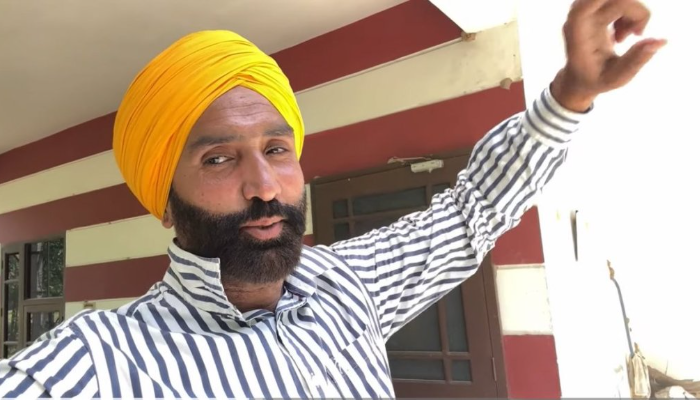
A major espionage network, with suspected ties to handlers and terrorist organizations located in Pakistan, has been uncovered by the Punjab Police. Jasbir Singh, a YouTuber from Mahlan village in Rupnagar of Ropar district was taken into custody by the authorities, shared DGP (Director General of Police) Punjab Police on Wednesday, 4th June.

The State Special Operations Cell (SSOC) in Mohali has started a thorough inquiry into the actions of Jasbir Singh who runs “Jaan Mahal” YouTube channel with over 1.1 million subscribers. The inquiry has been initiated based on intelligence inputs.

Jasbir is allegedly linked with PIO (Pakistan Intelligence Operative) Shakir, also known as Jatt Randhawa, who is a member of a terrorism-supported espionage network. Jasbir was also in frequent touch with Ehsan-ur-Rahim, also known as Danish, a Pakistani national and expelled Pak High Commission staffer as well as Hisar-based YouTuber Jyoti Malhotra, who is currently in custody on espionage charges.

“Investigations have revealed that Jasbir attended the Pakistan National Day event in Delhi on Danish’s invitation, where he met Pakistani Army officials and vloggers. He travelled to Pakistan on three occasions (2020, 2021, 2024), and his electronic devices contained multiple Pakistan-based numbers, now under detailed forensic scrutiny,” informed DGP Punjab Police.

Jasbir even tried to remove any evidence of his correspondence with these PIOs following Jyoti Malhotra’s arrest in order to evade investigation. A First Information Report (FIR) has been filed at SSOC Mohali.

DGP Punjab Police added, “Investigations are underway to dismantle the broader espionage-terror network and identify all collaborators. Punjab Police reaffirms its unwavering commitment to safeguarding national security and neutralizing all threats posed by such anti-national elements.”

OpIndia Ground Report: Village where constable Saurabh Deshwal was killed has 90% Muslim population, houses locked, local Muslims blame police to defend Qadir gang

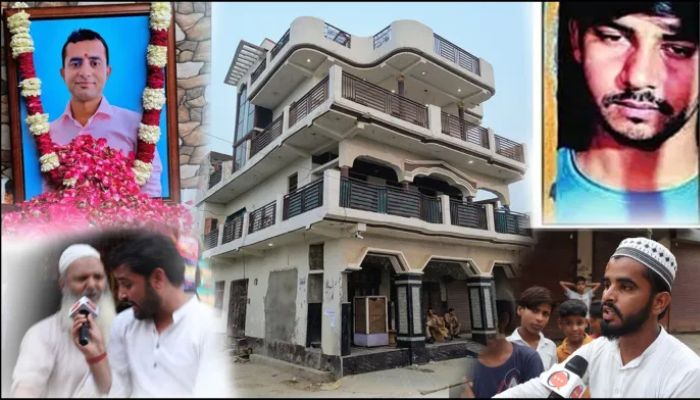
“Nobody fired a bullet here. He (constable Saurabh Deshwal) died of a police bullet and now the police is harassing us. Do you think we are miscreants?” These are the words of the Muslims of the village, where SOG constable Saurabh Deshwal, who had gone to arrest history-sheeter Qadir, was surrounded and killed by goons.

The SOG constable was killed on 25th May 2025 in Ghaziabad’s Nahal village. OpIndia reached Nahal village on 28th May after the incident. Here we met some of Qadir’s neighbours and talked to them. All the houses within a distance of about 300 metres from Qadir’s four-storey mansion are locked.

The people living here have gone to their relatives’ or acquaintances’ places. Although some of Qadir’s neighbours spoke to us on camera about helping the police administration in its action, however, the reality is that there is silence in the entire market.

We met the Imam of the mosque located about 200 meters before Qadir’s house. Imam Mohammad Fakruddin said that he was unaware of the incident, “I am from outside and have been leading prayers in the mosque for about one and a half years, but since the incident people are not coming to the mosque.” The Imam said that whatever has happened is wrong.

90% of the population of Nahal village is Muslim

OpIndia then reached outside the four-storey bungalow of history-sheeter Qadir. We saw that a huge police force was deployed there. Some policemen were resting while some were patrolling. Some were sitting on chairs in front of the bungalow.

Meanwhile, an old man Fateh Mohammad, who was found in front of the mansion, said that he used to set up a chole bhature shop in the market, but since this incident happened, the shop is closed. When asked about Qadir, he said that he does not know Qadir but he does not consider anyone guilty in this incident.

Fateh Mohammad said that now the police is harassing them. He claimed that the police is picking up innocent people from their homes. Fateh Mohammad said that the village has 90% Muslim and 10% non-Muslim population. Here our team found a Muslim youth wearing a cap. He was sitting on a bike.

He too repeated Fateh Mohammad’s claim. He refused to recognise Qadir. OpIndia met an old man named Irfan here. He told that Qadir is his nephew and he had threatened to kill him seven days ago.

OpIndia reporter’s question enraged Qadir’s neighbour

OpIndia also reached out to Qadir’s neighbour, a shopkeeper. On one hand, he denied knowing anything about the incident; on the other, he blamed the police. The shopkeeper claimed that Saurabh Deshwal died of a police bullet. He said, “Saurabh died of a police bullet. Were we sitting with bullets in our hands at night?”

The Muslim shopkeeper also misbehaved with OpIndia team. The shopkeeper got agitated with the questions and pushed us and tried to get violent. After this, we tried to talk to 15-20 people but most of them claimed to be unaware of the incident and refrained from saying anything against the accused Qadir.

Silence prevails in Saurabh Deshwal’s village, Saurabh Deshwal’s family in shock and disbelief

After leaving Nahal, Ghaziabad, the OpIndia team reached Badhev village in Shamli. This is Saurabh Deshwal’s village. There is silence all around in the village. In the afternoon, the deserted streets of the village seemed to be mourning Saurabh’s sacrifice.

The local villagers are in shock over the brutal murder of Constable Deshwal. Here we reached Saurabh Deshwal’s house located in the middle of the village. About 10-15 people were sitting inconsolably in the verandah of the incomplete 3-storey house. Among them was father Uttam Kumar, wearing an old kurta.

The shock and trauma of losing his son has dried up Uttam Kumar’s tears. Looking at his father immersed in deep grief, it seems that he cannot believe that his son is no more in this world. When asked, he says that he was very brave. He expects justice from the Yogi government.

Anger was clearly visible in the eyes of Saurabh’s cousin sitting on the cot next to him. He says that Saurabh was very friendly and brave. Saurabh Deshwal’s family members said that he used to spend his time serving cows. Another relative sitting here wants Qadir to meet the same fate as Vikas Dubey and Atiq Ahmed.

Meanwhile, Saurabh’s mother and wife were crying inconsolably inside the house. His wife was distraught. We were told that Saurabh Deshwal got married in 2020. His wife and mother did not have the strength to talk. Considering their emotional state, OpIndia did not speak to them.

While returning from Saurabh’s house, a woman said that all the accused should be killed in an encounter and a bulldozer should be run on Qadir’s house. You can see this ground report of OpIndia on the YouTube link given above.

It is worth noting that in this case, the police have arrested many criminals including Qadir and his brother Adil. An announcement has been made to give ₹50 lakh as compensation to Saurabh Deshwal’s family. However, his family says that they want their son back.

Elon Musk lashes out at Trump-backed tax and spending bill, calls it a ‘disgusting abomination’

On 3rd June (local time), billionaire Elon Musk fiercely criticised US President Donald Trump’s flagship legislation and branded it a “disgusting abomination” in a series of posts on social media platform X. Notably, the bill, which has been named “One Big Beautiful Bill” by Trump, is already facing internal Republican rifts as it heads for a Senate vote.

Musk, who recently exited his short-lived role as chief of the Department of Government Efficiency (DOGE), accused lawmakers of recklessly inflating the deficit. He wrote, “Shame on those who voted for it: you know you did wrong.” He lambasted the bill’s extensive military and border allocations alongside its tax extensions.

Bill could add trillions to debt, say critics

The “One Big Beautiful Bill Act” was passed by the House by a single vote. It now seeks to make Trump’s 2017 tax cuts permanent while boosting defence and border expenditure. However, the Congressional Budget Office estimates it would add nearly USD 3.8 trillion to the country’s USD 36.2 trillion debt over the next decade.

Musk accused Congress of “making America bankrupt” and warned that the federal deficit could balloon to USD 2.5 trillion. His remarks received support from several Republican “deficit hawks,” notably Senators Mike Lee and Ron Johnson, who are pushing for deeper spending cuts and fiscal discipline.

Rand Paul joins Musk in blasting Trump’s ‘Big Beautiful Bill’

Senator Rand Paul has joined Elon Musk in denouncing Donald Trump’s “Big Beautiful Bill,” and drew a firm line against what he sees as reckless fiscal policy. Paul criticised the bill’s massive borrowing implications, warning it would balloon the deficit by up to USD 5 trillion and accused fellow Republicans of sticking to Biden-era spending levels. When Trump lashed out, calling Paul “clueless,” the Kentucky senator fired back with numbers, and a message, “The math doesn’t add up.”

In a post on X, Rand quoted Musk and said some of Republicans, pointing towards himself, are trying to stop the bill to which Musk said “Thank you”.

Divided Republicans, divided priorities

Republicans are grappling with diverging interests despite holding a 53-47 Senate majority. The fiscal conservatives are demanding drastic cuts. On the other hand, those from rural states aim to protect Medicaid and other support schemes.

In a statement, Senator Jerry Moran expressed concerns over hospital reimbursements and disability services, saying the party must “find the votes” to balance both cuts and care. Senator John Thune, on the other hand, dismissed Musk’s comments and affirmed the GOP’s commitment to the bill. “We have an agenda we campaigned on, and we’re going to deliver,” he said.

White House Press Secretary Karoline Leavitt also brushed off Musk’s outburst, stating, “The president already knows where Elon Musk stood on this bill. He is sticking to it.”

A test of Musk’s political clout

It had only been a week since his formal exit from the government when Musk’s intervention came. Though he has donated around USD 300 million to Trump’s last campaign and Republican causes, Musk has vowed to scale back political involvement.

The bill will go for Senate voting before the 4th of July deadline. However, growing opposition shows it has a tough path ahead.

With inputs from ANI.

Bangladesh doesn’t want to keep its own citizens? Yunus govt objects to India’s pushback measures, says ‘deportation protocols’ are being violated

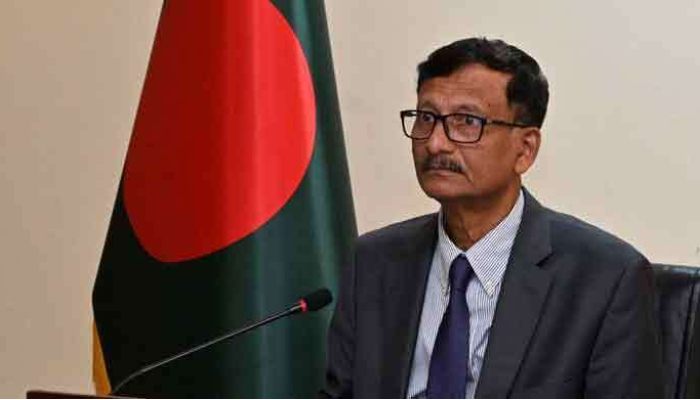
On 3rd June, Md Touhid Hossain, the foreign affairs adviser for Bangladesh’s Muhammad Yunus government, accused India of declaring “people” as foreigners and “pushing” them into his nation without following the proper procedure, according to a report in “The Times of India.” Hossain stated that Dhaka would send a diplomatic message to New Delhi over the matter.

India started deporting illegal Bangladeshis after a nationwide verification effort following the Pahalgam terror attack on 22nd April. The exercise has only accelerated since “Operation Sindoor” commenced in the wee hours of 7th May.

Hossain claimed that “India is resorting to cross-border push ins”, despite the fact that each case is evaluated separately by India during the deportation process and only verified citizens are subsequently returned. He added, “We will send a new, substantive letter. We see that push-ins are still happening, but it is not something we can physically stop.”

India has sent Bangladesh a list of people belonging to the neighbouring country. According to Hossain, some of them have been approved by Dhaka after examination. He said that Bangladesh is striving to make sure all activities follow the proper protocols and a formal structure is in place for handling consular concerns. He informed that Bangladesh and India continue to communicate on a daily basis.

Hossain conveyed that there has been no fresh reaction from the relevant parties about the pending extradition of ousted Prime Minister Sheikh Hasina. A second letter has not yet been sent, although he indicated that it might be issued if needed.

After a countrywide verification exercise, the authorities are believed to have repatriated over 2,000 illegal immigrants from Bangladesh after “Operation Sindoor.” They added that during that time, an equal number of immigrants willingly crossed the border between India and Bangladesh as a result of the panic caused by the crackdown. The sources revealed that government action is majorly taking place in Tripura, Meghalaya and Assam along the Bangladesh border.

Approximately half of all individuals who have been sent back have come from Gujarat, which was one of the first states to start the round-up. The sources further disclosed that a significant number of immigrants have also been returned from Delhi and Haryana as well, with the remainder being rounded up from Assam, Maharashtra and Rajasthan.

Meanwhile, veteran Congress leader Kapil Sibal approached the Supreme Court in response to the Assam government’s efforts to send back illegal immigrants. On 2nd June, the Supreme Court issued notice on a habeas corpus petition against the Assam government’s alleged ‘illegal’ detention of a Bangladeshi woman named Monowara Bewa who was out on bail since 12th December 2019.

After hearing the petition of the Bangladeshi woman’s son, a bench of Justices Sanjay Karol and Satish Chandra Sharma issued notice to the respondents. In this case, senior advocate Kapil Sibal represented the petitioner and claimed that a Superintendent of Police ‘threw’ the Bangladeshi woman out of India flouting the court order, even as a civil appeal in challenging Guwahati High Court’s order, which upheld her declaration as a foreigner, is pending before the Supreme Court since 2017.

Tehran Police rescues 3 Indian men who went missing in Iran, youth from Punjab lured with Australia immigration were abducted for ransom

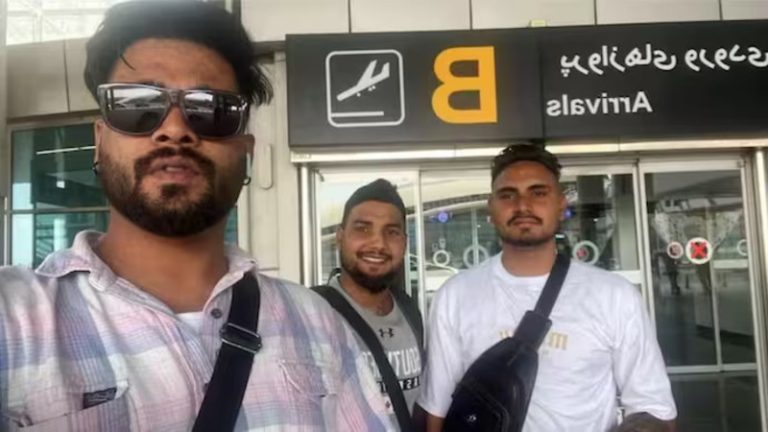
The Tehran Police on Tuesday (3rd June) traced and rescued three Indian men went missing in Iran on 1st May. The three Indians identified as Husanpreet Singh from Sangrur, Jaspal Singh from SBS Nagar, and Amritpal Singh from Hoshiarpur disappeared shortly after reaching Tehran.

The Iranian embassy in India posted on X on Tuesday informing about the three men being found by the Tehran Police.

On 28th May, the families of the three victims informed the Indian embassy after losing contact with them post their arrival in Tehran. Relatives of the Indians have alleged that an agent from Hoshiarpur had promised to route them to Australia for employment opportunities via Dubai and Iran, assuring temporary shelter in Tehran. However, the family members said that the men were kidnapped on arrival, with abductors demanding Rs 1 crore ransom and sharing a disturbing video showing the captives tied with yellow ropes and bleeding. Last contact with the missing Indians was made on 11th May.

On May 29, the Iranian embassy in India said that it was investigating the case. The men were reportedly rescued from their abductors in a police operation in Varamin in south Tehran.

‘Bangladeshi’ Azad Choudhary builds illegal houses in Assam’s Jorhat, names area ‘Dhaka Patti’, Muslims gather in huge numbers to oppose the demolition drive

The Jorhat District Administration in Assam carried out a demolition drive on Tuesday (3rd June), to remove encroachment on government land at Kabristan Road. A team of the Jorhat District Administration accompanied by police and CRPF personnel reached the area to take down illegal residential and commercial structures in the area.

However, the demolition drive faced massive protests by local Muslims who came out in support of a person named Azad Choudhary, whose illegal properties were among the properties demolished by the Jorhat Municipality Board.

As per some reports, Azad Choudhary is suspected of being a Bangladeshi national who illegally constructed properties on government land. He reportedly named the area where illegal structures belonging to him were located as ‘Dhaka Patti’, after the capital of Bangladesh.

Despite protests by local Muslims, the situation remained under control due to the presence of teams of police and the CRPF. Regarding the demolition drive, the Municipality Board said that there were no personal or political motives behind carrying out the demolition and that it was in compliance with the legal protocols.

The demolition drive comes after prolonged protests by a local civil body called Bir Lachit Sena which has been demanding the removal of illegal structures built on government land.

As per reports, the Municipality Board had served notices to Choudhary in 2016, 2020 and again in 2025 to vacate the government land that he had illegal occupied. “He was asked to vacate the land but failed to comply. His claim that he leased the property is unfounded — we have no official records supporting it,” said a Municipality Board member.

Choudhary, however, denied having recieved any notice and claimed that the land was leased to him in 2014. He added that the Municipality has not been collecting rent for the land in recent years due to litigation involving third-party claims. Choudhary alleged that the demolition was politically motivated.

Bombay HC allows Muslims to slaughter animals at dargah inside Vishalgadh Fort during Bakrid and Urs despite ongoing legal battle against illegal encroachment around it

The Bombay High Court has given permission for animal slaughter at Vishalgadh Fort in Kolhapur district during the upcoming Muslim festivals. This animal slaughter will be done at the disputed dargah inside the fort. This permission has been given in view of the upcoming Muslim festivals of Bakrid and Urs, that will be celebrated at this dargah.

Meanwhile, Hindus have been constantly raising the matter of illegal Muslim encroachments inside this fort with 156 illegal encroachments, mostly around this dargah. The area where the Dargah was located earlier was quite small which has now been expanded to more than a thousand square feet. The Hindu community protestors say that the expansion of the Masjid behind the Dragah has been undertaken without the state’s permission, hence illegal. 

This order was given by a bench of Justice Dr. Neela Gokhale and Firdos Pooniwala on Tuesday (June 03, 2025). The bench said, “It is to be noted that in an order issued on June 14, 2024, permission was given to sacrifice animals and birds in ‘a closed and private area’ near the dargah, not in any ‘open or public place’.”

The court said that the order, like last year, will be applicable this year as well. This year as well, animals can be sacrificed inside the fort on the festival of Bakrid on June 07 and during Urs from June 08 to June 12. The court said that sacrifice should not be done in a public place outside the fort.

The dargah had challenged the government’s ban on animal slaughter

In the year 2023, Hazrat Peer Malik Rehan Mira Saheb Dargah Trust of Vishalgadh had filed a petition in the court. The trust had challenged the ban on animal slaughter imposed by various departments of the state government, Directorate of Archaeology, Kolhapur Superintendent of Police and Chief Executive Officer of the Zila Parishad.

The administration had said that Vishalgadh Fort is a protected monument and according to the Maharashtra Ancient Monuments and Archaeology Act 1962, cooking and serving food is also prohibited at such sites. The administration had called the slaughter of animals a violation of this rule.

At the same time, Muslims were opposing the ban. They claimed that the place of sacrifice is not inside the Dargah premises, but on a private land about 1.4 km away from it.

Inside Chhatrapati Shivaji Maharaj’s fort, 100+ illegal encroachments

Vishalgadh Fort is about 1000 years old. This fort is an integral part of the heroic life of Chhatrapati Shivaji Maharaj. The Muslim community has made illegal encroachments in the fort. The temples inside the fort have been left in a dilapidated state. Currently there are 20 to 24 Hindu temples here, but they are in a very bad condition.

According to official documents, there are 156 structures inside the Vishalgadh Fort, which have been built illegally. More than 100 of these belong to the Muslim community. Encroachment has been done here using iron sheets and cordoning off an area.