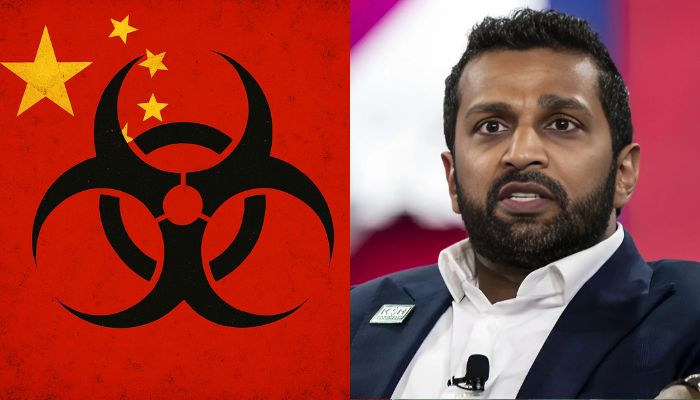
On 4th June, Director of the Federal Bureau of Investigation (FBI) Kash Patel confirmed that a Chinese national, Yunqing Jian, has been arrested for allegedly smuggling a hazardous biological pathogen into the United States. The case is being investigated by FBI Detroit in collaboration with Customs and Border Protection. The recent arrest has sparked concerns over agroterrorism and Chinese infiltration in US research institutions. Notably, US President Donald Trump recently announced that visas of those Chinese students who support the CCP government would be terminated.
New… I can confirm that the FBI arrested a Chinese national within the United States who allegedly smuggled a dangerous biological pathogen into the country.
The individual, Yunqing Jian, is alleged to have smuggled a dangerous fungus called "Fusarium graminearum," which is an…
— FBI Director Kash Patel (@FBIDirectorKash) June 3, 2025
Fungus capable of devastating crops and harming humans
In a post on X, Patel said that Jian was an employee at the University of Michigan. She reportedly brought Fusarium graminearum into the country. It is a highly dangerous fungus that causes head blight, a disease affecting vital crops including wheat, maize, rice and barley. The fungus is classified as an agroterrorism agent due to its capacity to trigger widespread agricultural destruction and inflict health issues in both humans and livestock. The fungus is linked to billions in annual economic losses globally.
In a statement, United States Attorney Gorgon stated, “The alleged actions of these Chinese nationals, including a loyal member of the Chinese Communist Party, are of the gravest national security concerns. These two aliens have been charged with smuggling a fungus that has been described as a ‘potential agroterrorism weapon’ into the heartland of America, where they apparently intended to use a University of Michigan laboratory to further their scheme.”
US Custom and Border Protection, Director of Field Operations Marty C Raybon stated, “Today’s criminal charges levied upon Yunqing Jian and Zunyong Liu are indicative of CBP’s critical role in protecting the American people from biological threats that could devastate our agricultural economy and cause harm to humans; especially when it involves a researcher from a major university attempting to clandestinely bring potentially harmful biological materials into the United States. This was a complex investigation involving CBP offices from across the country, alongside our federal partners. I’m grateful for their tireless efforts, ensuring our borders remain secure from all types of threats while safeguarding America’s national security interests.”
What is Fusarium graminearum and how does it damage crops?
Fusarium graminearum is one of the most destructive fungal pathogens in global agriculture. It causes head blight, a floral disease in cereal crops like wheat, barley, oats, maize and rice. Head blight leads to shrivelled, discoloured grains, reduced yields, and contamination with toxic compounds called trichothecenes. These toxins are harmful to both humans and livestock. The fungus spreads rapidly under humid conditions, posing a major threat to food security, agricultural economies and ecosystem stability worldwide.
Source: Seed World
Allegations of CCP links and smuggling conspiracy
According to the FBI, Jian had previously received Chinese government funding for similar research and had expressed loyalty to the Chinese Communist Party (CCP). Her boyfriend, Zunyong Liu, works at a university in China and also studies the same pathogen. He was found to have smuggled the same fungus via Detroit Metropolitan Airport. He initially lied to the authorities but later confessed.
Director Patel warned, “This case is a sobering reminder that the CCP is working around the clock to deploy operatives and researchers to infiltrate American institutions and target our food supply.”
Both Jian and Liu face charges of conspiracy, smuggling, making false statements, and visa fraud.
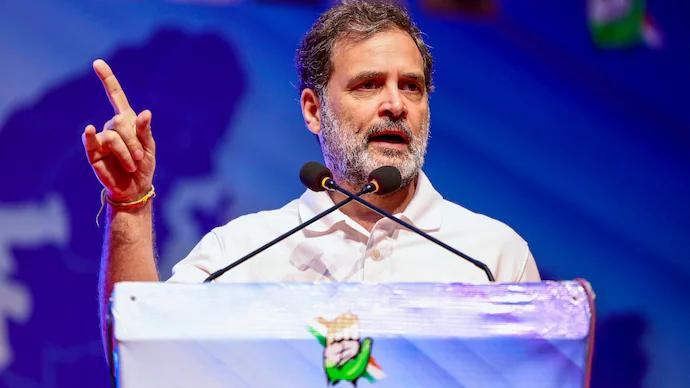
At a time when India has emerged victorious in the face of terror with the resounding success of Operation Sindoor, Rahul Gandhi’s latest barb—”Narender Surrender“—is not just ill-timed; it is irresponsible, misleading, and tactically aligned with Pakistani talking points. Coming on the very day Pakistan officially admitted in a confidential dossier that Indian airstrikes hit eight more targets than initially disclosed, Gandhi’s jibe does more than attack Prime Minister Modi—it plays straight into the hands of Rawalpindi’s psychological warfare.
India’s retaliation to the Pahalgam terror attack, where Pakistan-backed terrorists brutally murdered Hindu tourists in cold blood—confirming their identity by forcing them to strip—is not just a military response. It is a statement of resolve. Nine terror camps across PoK were decimated in Operation Sindoor, sending a loud and clear message: India will not tolerate cross-border terror. The military confrontation that followed saw a panicked Pakistan rushing to the US, grovelling before Washington to mediate—a humiliating retreat for a nuclear-armed state caught off guard.
Yet, amidst this national resurgence, Rahul Gandhi chose to coin a phrase that might as well have been written in the ISPR’s propaganda cell. The phrase “Narender Surrender” attempts to invert the reality of the situation, making it seem as though it was India that was on the backfoot, when in fact it was Pakistan that blinked first, and hardest. His comment offers Islamabad the perfect soundbite to peddle the narrative that it was Pakistan’s military might—not Indian strategic restraint and dominance—that drove New Delhi to the table. Nothing could be further from the truth.
But this is not the first time Rahul Gandhi has flirted dangerously close with Pakistan’s narrative playbook.
In a tweet following Operation Sindoor, Gandhi falsely claimed that External Affairs Minister S. Jaishankar admitted to “informing Pakistan at the start of our attack,” implying that India’s actions were compromised or timid. This is a gross and deliberate misrepresentation of Jaishankar’s words.
Here’s what the EAM actually said:
“At the start of the operation, we had sent a message to Pakistan saying we are striking at terrorist infrastructure. We are not striking at the military. So, the military has an option of standing out, and not interfere in this process. They chose not to take this good advice.”
Fact-checks by the Press Information Bureau (PIB) and India’s defence authorities confirm that this message was delivered after the strikes were concluded—a standard diplomatic de-escalation move. Not a warning. Not a concession. Certainly not a surrender.
So, why would Rahul Gandhi choose to distort facts at such a sensitive time?
The answer lies in political desperation. After the Pahalgam attack, the national mood has shifted strongly in favour of Prime Minister Modi, whose decisive leadership and calibrated military response have drawn praise even from typically skeptical quarters. The Congress Party, long struggling to reclaim relevance, sees this moment of national unity not as an opportunity to support India’s sovereignty—but as a chance to puncture Modi’s political capital.
But this strategy is deeply flawed. In trying to tarnish Modi, Rahul Gandhi ends up tarnishing India’s credibility. His statements are not merely political missteps; they are rhetorical grenades that Pakistan is all too eager to catch and throw back.
One must ask: When India is locked in a narrative and diplomatic battle with a state that funds terror and manipulates truth through its global proxies, what does it say about a senior Indian leader who repeats that state’s lines verbatim?
Democracy thrives on dissent. But dissent divorced from facts, especially in the midst of national crises, isn’t brave—it’s reckless. Rahul Gandhi has every right to question government policy. But in doing so, he also carries the responsibility of not undermining the very nation he seeks to lead.
Words matter. And in geopolitics, they echo far beyond the intended audience. It’s time Rahul Gandhi realized that his political theatre must not come at the cost of national unity and strategic messaging—especially when lives are at stake and the enemy is listening—desperate to use Indian voices to discredit what Indian Armed Forces gained on ground.
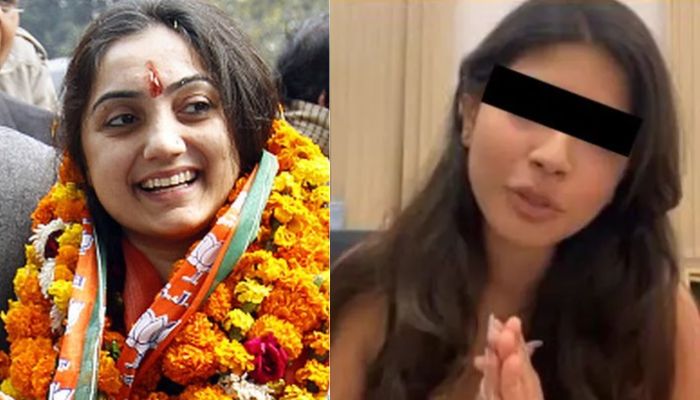
India has freedom of speech. Yes, India has freedom of speech as long as you use it to spew venom against Hinduism. India has freedom of speech as long as you berate your own country. This freedom of speech, however, ceases to exist once you intentionally or unintentionally offend the perennially offended ‘minority’ community—Muslims. Once you have offended those who must not be offended, there is no scope for redemption, no apology, no regret, and no law can protect you from wrath of bloodthirsty Islamists. Sharmishta Panoli, 22-year-old girl has come into the radar of Indian Islamists over an Instagram video against Pakistan, which ended up offending ‘Indian Muslims.’
Sharmishta Panoli, a law student from Symbiosis Law School in Pune, was arrested by Kolkata Police on 30th May 2025, from Haryana’s Gurugram. The arrest came after Islamists unleashed an online mob against the Hindu influencer, who issued rape and death threats including the Islamist-favourite ‘Gustakhe Nabi ki ek saza, Sar tan se juda’ threat. The Indian Muslim social media users also began tagging the police, demanding her arrest.
Instead of chasing the Muslim social media users who doxxed and gave ‘Sar Tan se Juda’ threats to the Hindu influencer, the Mamata Banerjee’s police force have arrested Sharmistha instead.
The controversy began on 14th May when a Pakistani Muslim handle attempted to whitewash the massacre of 24 Hindus during the Pahalgam terror attack. Islamic terrorists had confirmed religious identity of the victims before shooting them dead. An enraged Sharmishta mocked the Pakistani Muslim handle for believing that India started a war without any reason and asked if she had heard of Pahalgam and other Pakistan-sponsored terror attacks.
Sharmishta further asked if Indian forces should just sit and do nothing about these terror attacks. The video was taken out of context by Pakistani and Indian Muslims alike to allege insult to Islam and Prophet Muhammad.
The Hindu influencer soon deleted her video and even tendered an unconditional apology. However, Islamists have an undeclared ‘never apologise, never forgive’ rule, which essentially means that when they insult Hindu gods or hurt sentiments of other non-Muslim communities, they are not supposed to apologise, rather, either double down or play victim, on the contrary, if a Hindu or a non-Muslim even criticises Islamic traditions, let alone, making derogatory remarks, then there is no scope for apologise and move on.
But what emboldens Islamists to go after anyone they declare a ‘blasphemer’ or ‘Gustakh-e-Nabi’, so much so, that no action is taken against those who literally issue threats of beheading someone for their words, while accused person, despite apologising, is subjected to harassment of all sorts and is arrested.
As unfortunate and outrageous as it sounds but it is the judiciary, the system and Muslim-appeasing socio-political ecosystem that fuels the intransigence of petulant Islamists.
On 3rd June 2025, the Calcutta High Court rejected the bail plea of Sharmishta Panoli, saying “heavens will not fall” if the ad-interim bail plea is not accepted and the case is heard later for bail.
While hearing a plea against the trial court’s remanding her to 14-day judicial custody, Justice Partha Sarathi Chatterjee said that the video in question was seen and that sentiments of Muslims were hurt. He added that while the court wants freedom of speech, it does not mean that sentiments of others can be hurt.
“This video was made on social media, it was heard. This incident has led to a section of people’s sentiment being hurt. We have freedom of speech but that doesn’t mean you will go on to hurt others. Our country is diverse, with all persons. We must be cautious. So day after tomorrow. Heavens will not fall,” Justice Chatterjee said as the petitioner’s counsel apprised the court that Sharmishta is a student with attention deficit and hyperactivity disorder and staying in jail is a problematic for her.
The court deduced that Sharmishta’s video hurt the sentiments of Muslims, however, what about those issuing Sar tan se juda threats to the young girl. What about the rape and death threats she continues to receive? Islamists are most of the time offended, and otherwise ready to get offended, but does that mean a person’s life can be put at risk, or ruined, especially after she has apologised and deleted the video in question? Why is it that courts take sentiments of Muslims unrealistically seriously, however, the same seriousness disappears when Hindu sentiments are hurt?
The Sharmishta Panoli case reminds of the 2022 Nupur Sharma case. In May 2022, Nupur Sharma was one of the panellists on the Time Now show along with Taslim Ahmed Rehmani on the Shivlinga found at the Gyanvapi disputed structure site. During the debate, Rehmani used derogatory language against Bhagwan Shiv that irked then-BJP spokesperson Nupur Sharma. Sharma countered her and questioned how would he react if she used the same language for Islam and the Prophet.
Though it was a counter statement, Alt News’ co-founder Mohammed Zubair found it to be the perfect opportunity to ruin Sharma’s life. He cunningly trimmed Rehmani’s remarks that came before Sharma’s counter remarks and presented as if Sharma was insulting Prophet Mohammed. The propaganda against Sharma worked and it sparked an international outrage.
Regardless of the fact that what Sharma said about the Prophet’s marriage to the 9-year-old Ayesha, which is mentioned in multiple Islamic hadiths, Nupur Sharma was branded as a ‘blasphemer’, with Islamic organisations openly declaring that she should be murdered.
Following the witch-hunt against Sharma, there were protests and riots across the country carried out by Sar tan se juda shrieking Islamist mobs. People who supported Sharma were threatened by Islamists online and offline. FIRs were filed not only against Sharma but also against those who supported her.
Not to forget, Kanhaiya Lal, a Hindu tailor from Udaipur, Rajasthan, and Umesh Kolhe, a businessman from Maharashtra’s Amravati, were brutally murdered by Islamists for simply supporting Sharma. Kanhaiyalal was beheaded by two Riaz and Ghous Mohammed, for sharing a post in support of Sharma. The jihadis recorded a video after brutally murdering the Hindu man and raised sar tan se juda slogans while justifying their act. Ironically, the Muslim man who informed the killers about the Hindu tailor’s presence in his shop, was granted bail by Rajasthan High Court last year.
Similarly, bloodthirsty Islamists brutally hacked chemist Umesh Kolhe, 54, to death while he was on his way back home after shutting his store in Maharashtra.
Umesh Kolhe and Kanhaiyalal had not even said or posted anything against any religion but only extended support to Sharma who was at the receiving end of a barrage of rape threats, death threats, Sar tan se juda threats and whatnot.
When Nupur Sharma approached the Supreme Court seeking clubbing of FIRs against her, the two-judge bench that heard the matter seemed to have already formed an opinion against her based on the disinformation and misleading propaganda running in media and on social media. Justice Surya Kant, in his oral observations, blamed Nupur Sharma for what was happening in the country.
Blaming Nupur Sharma for the Islamist mob violence across the country as well as killing of Kanhaiyalal and Umesh Kolhe, for stating something even Muslim scholars and scriptures state, the Supreme Court judge had said, “You have ignited the whole country. You possess a loose tongue. Power has gone to your head. You should apologise to the nation.”
While Sharma had already apologised, much like it is happening in the case of Sharmishta Panoli, her apology, however heartfelt, could not satiate the quench of bloodthirsty Islamists. For Islamists, the only appropriate punishment for those who ‘hurt’ their religious sentiments is when either they do sar tan se juda of the ‘blasphemer’ or the court outrightly orders their hanging, nothing in between.
Although, the Calcutta High Court’s remarks in Sharmishta’s case were not as scathing as the ones made in Nupur Sharma’s case, there is a disturbing pattern. The pattern of advertently or inadvertently justifying Islamist outrage no matter how violent and destructive by outrightly blaming the accused person.
While Islamists mobs cry that since the so-called ‘Gustakh blasphemer’ has displayed the temerity of actually holding an opinion, that person needs to be hanged, the courts also make remarks that suggest that even they agree that the person should be punished and conveniently blame them. This, however, does serve the purpose of upholding the law, rather, it only serves the purpose of lending legitimacy to the street veto of the Islamists. In a nutshell, it is like telling the accused person, “Ab gustakhi karoge, toh ye sab [threats, riots and even killings] to hoga hi”.
This, however, is not confined to one Nupur Sharma or Sharmishta Panoli, there have been numerous cases wherein accusations of offending the ever-offended Muslim sentiments resulted in violence, riots and killings of Hindus. The 2019 Kamlesh Tiwari killing, the 2022 Kishan Bharwad killing are among many such cases wherein Islamists deemed certain comments or social media posts ‘blasphemous’ and resorted to silencing the ‘Gustakh’ and drawing joy from having taught Kafir a lesson.
It is high time, however, for the courts, politicians and general public to understand that Islamists are perennially offended and can resort to violence using any real, imaginary, assumed or trivial excuse to initiate threats and violence against people. Be it Hindu processions passing in front of mosques, Hindus playing bhajans during their festivals, or putting up religious flags or even celebrating a cricket match victory in ‘Muslim area’, or a movie on a Hindu historical figure who endured Islamist barbarism and chose death over conversion to Islam, can offend Islamists enough to resort to stone pelting, arson and killing. All in the name of ‘hurt sentiments’.
While upholding communal harmony and even laying emphasis on protecting religious sentiments is not wrong, however, by validating claims of ‘hurt sentiments’, especially of those who are essentially ready to do mob justice with the accused, if courts fail to punish the person and call for the accused’s beheading, courts only embolden Islamists.
Political parties supporting Islamists to appease their Muslim votebank, as seen in the case of Sharmishta, wherein TMC has gone all out in support of Islamists, courts putting these curbs on speech embolden those who get offended at the drop of a hat and now day by day they are reducing the space for free speech.
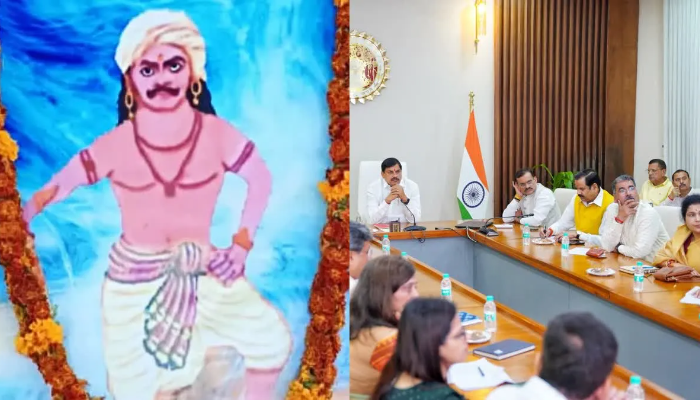
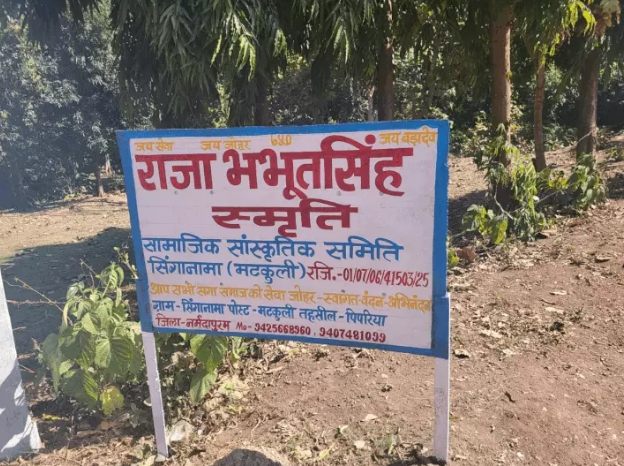
The cabinet meeting of Madhya Pradesh was convened at the Raj Bhavan in Pachmarhi on 3rd June to honor the memory of Pachmarhi’s Jagirdar Raja Bhabhut Singh. A decision could be made regarding the installation of a statue in his honor, as well as the naming of institutions and parks after him.
The government declared to change the name of the Pachmarhi Wildlife Sanctuary to Raja Bhabhut Singh Sanctuary at the meeting. When announcing the decision, Urban Development Minister Kailash Vijayvargiya stated that the meeting was conducted on the site where Raja Bhabhut Singh fought and lived. He was frequently referred to as the Shivaji of the Narmada region and is remembered for his resistance to the British.
Chief Minister Dr Mohan Yadav brought attention to Raja Bhabhut Singh’s assistance to the prominent freedom fighter Tatya Tope during the nation’s independence struggle, on 2nd June. He kindled the flame of freedom throughout the Satpura valleys at the behest of Tatya Tope. He escaped the British forces and in late October 1858, the two crossed the Narmada River close to Sandia, the legendary location of Rishi Shandilya.
The Chief Minister remarked that Raja Bhabhut Singh and Tatya Tope formulated strategies for the freedom movement in Narmadachal. Tatya Tope and his forces encamped for eight days alongside Raja Bhabhut Singh, making preparations for their forthcoming actions, in Pachmarhi which is nestled within the Satpura hills.
Bharatiya Janata Party (BJP) leader Dilip Jaiswal elaborated on the reason for the cabinet meeting convened in Pachmarhi. He expressed, “Many may not be familiar with Raja Bhabhut Singh from this region and his contributions to India’s independence. This meeting is a means of preserving and honoring our heritage. This is a move to pay homage to such unsung heroes and to motivate the current youth to find inspiration in their values. I would like to congratulate and express my appreciation to the Chief Minister for hosting this important meeting here.”
The legend of Raja Bhabhut Singh
Pachmarhi, known as the Queen of Satpura, the Kailash of the South, and the former summer capital of Madhya Pradesh, holds a significant place in history. Pachmarhi is known to be the singular hill station in Madhya Pradesh and is also regarded as the sanctuary of Lord Mahadev.
Raja Bhabhut Singh was born into a Jagirdar family from the Harrakot Raikhedi, tracing his ancestry to Swami Thakur Ajit Singh of Pachmarhi. He initially gained attention for his opposition to the British. He was a significant king of the Gond tribe, with his realm encompassing Jabalpur and the Satpura hills.
During the first war of independence in 1857, he led a revolt against the British, achieving multiple victories by utilizing the forests and mountain paths. His strategic acumen and leadership inspired confidence among the local populace. He was not merely a warrior but also a leader dedicated to the welfare of the people. His extensive knowledge of medicinal practices proved invaluable when soldiers sustained injuries during warfare.
Image via Dainik Bhaskar
Raja Bhabhut Singh, who resisted British rule for three years by taking refuge in the forest, was skilled in guerrilla warfare and adept at utilizing beehives as a weapon. Additionally, he provided assistance to Tatya Tope during the struggle for independence. His grandfather, Mohan Singh Thakur, provided support to Peshwa Appa Saheb Bhonsle of Nagpur in his opposition to the British during the years 1819-20.
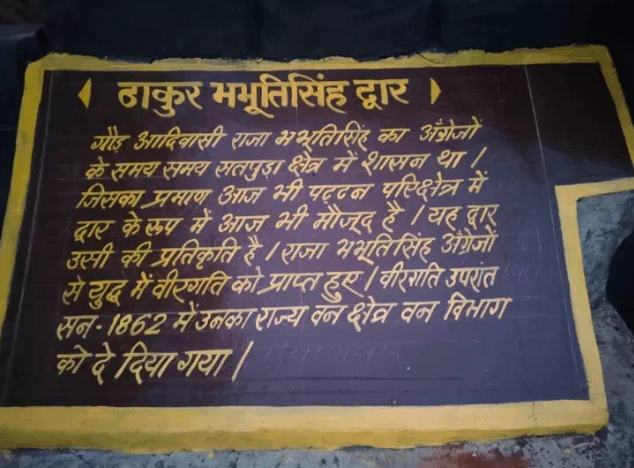
This event sparked a revolutionary spirit within Raja Bhabhut Singh against British rule. In 1860, Captain James Forsyth surrounded the forest and apprehended him with assistance from informants. This conflict resulted in two significant outcomes. Intimidated by the opposition from the tribal groups, the British devised a plan to remove them from the forest by designating Bori as the first wildlife sanctuary in the country in 1865.
Captain James Forsyth was even acknowledged for the discovery of Pachmarhi, which in reality had been a tribal estate within the forest for centuries. Raja Bhabhut Singh was a devoted follower of Lord Shiva. He reportedly constructed many temples, a Kund and a Shivling in its vicinity near the current Singanama.
A humiliating treaty and the fire of revolution
Raja Bhabhut Singh’s grandfather aided Peshwa Appa Saheb Bhosale of Nagpur in his struggle against the British during the years 1819-20, in the Chauragarh hills of Pachmarhi. The British imposed a degrading treaty upon the Peshwa following the battle of Sitabuldi. Appa Saheb dedicated a significant amount of time to organize the tribal community while residing on Mahadev’s hill in Narmadachal.
He was aided by Thakur Mohan Singh and this experience sparked a revolutionary idea in the mind of Raja Bhabhut Singh. Under the influence of Tatya Tope, he launched an armed revolution in Satpura during the 1857 revolt. Raja Bhabhut Singh was intimately familiar with every part of the forest and the British lacked complete knowledge of the area. He engaged in combat with the British military and the Madras Infantry in the Denwa valley, resulting in a defeat for the British forces.
Image via Dainik Bhaskar
The account of Raja Bhabhut Singh’s formidable rebellion against the British is documented in the 1865 settlement report authored by British officer Elliot. His forces persisted in their armed struggle against the British until 1860, during which the latter endured massive losses. The British officer noted that the Madras Infantry had to be summoned to apprehend Raja Bhabhut Singh.
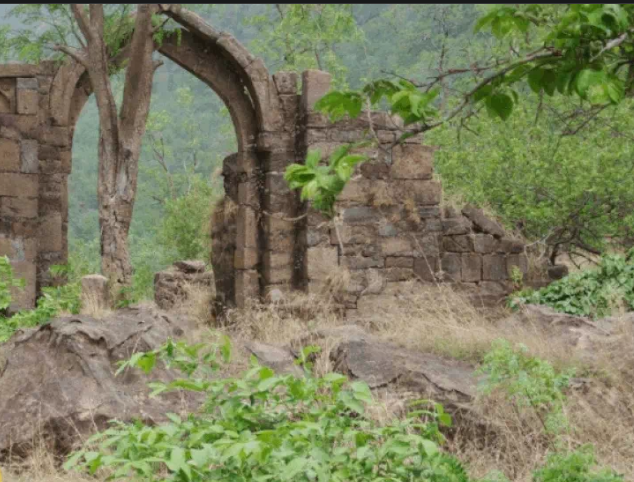
After two years of pursuit, the British finally caught him. It is reported that in 1860, he received a death sentence in Jabalpur. Some accounts indicate that he was hanged while others claimed that he was riddled with bullets. The remnants of Raja Bhabhut Singh’s fort still exist. The entrance to the structure and the kilns of Agariya blacksmiths remain in the thick forest between Madhai and Pachmarhi which proves that they were not only involved in constructing forts but also possessed the capability to manufacture weapons on an extensive scale.
Image via Dainik Bhaskar
Raja Bhabhut Singh was a distinguished warrior recognized for his guerrilla warfare strategies, who vehemently opposed British authority along the Denva River, close to Matkuli village, for a prolonged duration. His martial capabilities were compared to those of Chhatrapati Shivaji Maharaj, as he skillfully leveraged the challenging landscape to his advantage. He was instrumental in bringing the tribe together to protect their land, water, forests and territories against British forces and other hostile elements.
Pachmarhi is proud of the historical legacy of the Gond ruler, who utilized this mountainous region for governance, security and the preservation of cultural heritage. He represents the valor and spirit of the tribal community.
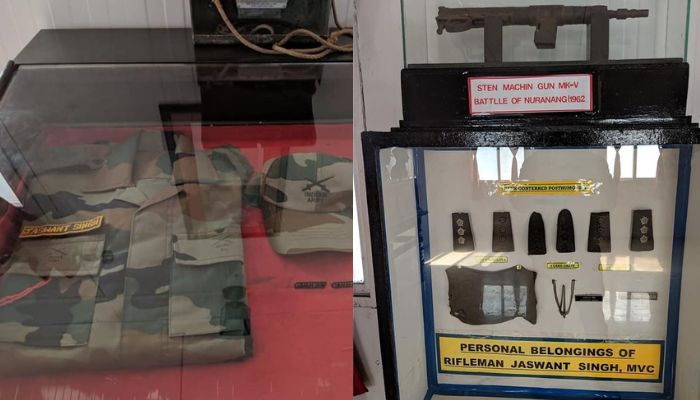
Rifleman Jaswant Singh Rawat died on 17th November 1962. Yet, he still wakes up every morning at 4:30 AM for his tea. Breakfast is served to him at 9 AM. His bed is made, his uniform is pressed, and his room at Jaswant Garh in Arunachal Pradesh is always in order, except when the guards on duty find the bedsheet crumpled, or clothes lying out of place.
To this day, he receives promotions, his salary is credited, and he is granted leave to “visit home”. When that happens, his photo, not a coffin, is taken to his ancestral village with full military honours. And upon his “return”, the same framed portrait is respectfully brought back to Jaswant Garh.
This is not superstition or folklore. It is the Army’s way of remembering a soldier who never left his post. A soldier who earned not just medals, but immortality. Jaswant Singh Rawat was not an ordinary man. He was, and remains, the Indian Army’s most extraordinary tale of devotion, sacrifice, love for the country, and an eternal post left un-surrendered.
The legend of Jaswant Garh
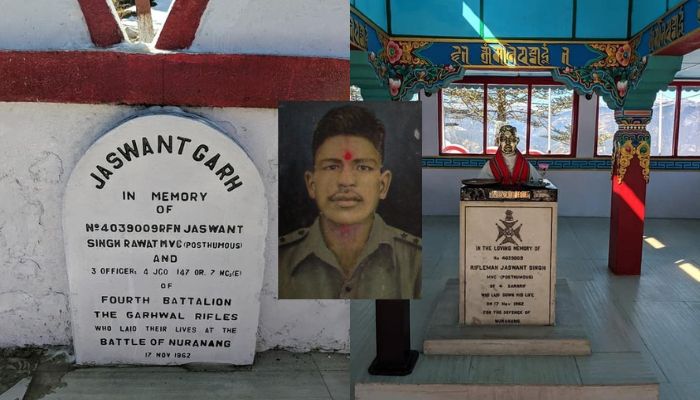
Jaswant Garh stands at over 10,000 feet in the icy terrain of Tawang, Arunachal Pradesh. Unlike any other Indian Army post, it is not named after a commanding officer or a decorated general. It honours a young rifleman, a soldier who fought not just until death, but beyond it.
Source: Quora
Rifleman Jaswant Singh Rawat’s presence is not symbolic. His room is maintained with military precision. Every morning at 4:30 AM, tea is placed by his bedside. His uniform is pressed, his bed is made, and meals are served in his name three times a day. If guards find his bedsheet crumpled or boots displaced, they take it as a sign that Baba is still making his rounds.
Five soldiers are permanently assigned to care for his belongings and room. These men are not just caretakers, but fellow soldiers who serve with him. When Jaswant Singh is granted leave to visit home, his framed photograph is ceremonially carried to his ancestral village with full military honours. Upon his return, it is brought back to Jaswant Garh and placed in his room.
Among both Army circles and locals, he is lovingly called Baba Jaswant Singh. Stories abound of his spirit walking the corridors, waking sleeping jawans on duty, and inspecting posts. He is not referred to as a martyr, he is believed to be still on duty.
Jaswant Garh is not just a memorial. It is a living post where discipline meets devotion, and legend merges with duty. Perhaps the only such instance in military history, it is where a soldier continues to serve long after laying down his life.
Born to serve
Jaswant Singh Rawat was born in Uttarakhand’s Baryun village in Pauri Garhwal on 19th August 1941. He was the son of Guman Singh Rawat. People of Garhwal are known as warriors. The service to the nation came naturally to them.
When Jaswant was young, the retired veterans in his village used to tell stories of bravery which inspired him. Like many Garhwali youths, he grew up with an unwavering sense of patriotism and a single dream, to wear the revered Army uniform.
At the age of 19, Jaswant fulfilled that dream by joining the 4th Battalion of the Garhwal Rifles on 19th August 1960. The regiment already had a distinguished history and a reputation for raw courage. Within just two years, the young man from a quiet Himalayan village was on the brink of writing one of the most extraordinary chapters in Indian military history.
The war that tested India
Independent India was still a young nation in 1962. It was finding its footing on the world stage. However, China, the neighbour on the Himalayan frontier, had other plans. The tensions between the two nations escalated quickly and war broke out. Arunachal Pradesh, which was then called the North-East Frontier Agency (NEFA), became the centre of a brutal conflict between Indian and Chinese troops.
The fight was not equal. Indian soldiers were heavily outnumbered and ill-equipped. However, they were expected to hold their ground against the Chinese assault.
Source: Tripadvisor
4 Garhwal Rifles was among the regiments deployed near Tawang. Jaswant Singh Rawat was one of the many determined soldiers tasked with defending the motherland. Nuranang, a key post just 40 km from the Indo-China border, was their location. Conditions were brutal, the Chinese had superior numbers and firepower. Indian forces lacked even basic supplies. But what they had was unshakable resolve.
As the battle intensified, a general order to fall back was issued, forcing many Indian units to withdraw. The Garhwal Rifles received the same command. But Rifleman Jaswant Singh Rawat made a fateful choice. He refused to leave.
In doing so, he chose a path only the truly brave dare tread, to stay behind and face the Chinese army alone.
Battle of Nuranang – November 1962
By November 1962, the Indo-China War escalated into a full-scale military conflict. The Indian troops were asked to do strategic withdrawals. Amidst all the chaos, the 4th Battalion of the Garhwal Rifles held on to the critical delaying position at Nuranang. It was a vital post to protect the main defence that was being established in Sela.
Sikh and Dogra battalions formed the broader Company. These battalions were getting thinner and lacking ammunition and supplies while facing bitter cold. After the 4th Infantry Division withdrew from Tawang, the defensive burden fell on the shoulders of the Garhwal Rifles.
The ‘A’ Company of the battalion was led by Second Lieutenant SN Tandon. They picked a defensive position left of the Sela-Jang road. On the morning of 17th November 1962, Chinese forces launched a massive offensive with nearly two battalions of infantry. Despite the waves of attack, the Garhwalis held their ground and repelled the first three attacks.
However, the fourth wave came with a dangerous shift. The Chinese brought forward a Medium Machine Gun and positioned it just 30 metres from the Indian bunkers. The concentrated fire from the MMG inflicted significant damage. There was a threat to the defensive line. 2nd Lt Tandon sensed the danger and called for volunteers to neutralise the threat.
Lance Naik Trilok Singh Negi, Rifleman Jaswant Singh Rawat, and Rifleman Gopal Singh Gusain stepped forward without any hesitation. They crawled across exposed terrain under cover fire and advanced to within 15 yards of the MMG position.
As they got close to the post, they lobbed grenades into the Chinese position. Jaswant Singh showed sheer courage and leapt into the enemy post to seize the MMG. While attempting to retreat to Indian lines, he was fatally shot in the head, killing him instantly. Trilok Singh provided suppressing fire but was hit during the exchange. Gopal Singh, though wounded, managed to drag the MMG back to the trench.
The mission lasted only 15 minutes, but it left a deep impact. The destruction of the MMG post disoriented the enemy and turned the tide of battle. The fifth and sixth Chinese assaults were beaten back, and the Garhwal Rifles held their ground. Over 300 Chinese soldiers were reported killed or wounded in the conflict. Indian casualties remained low.
Rifleman Jaswant Singh Rawat was posthumously awarded the Maha Vir Chakra. Lance Naik Trilok Singh Negi and Rifleman Gopal Singh Gusain were both awarded the Vir Chakra. The 4 Garhwal Rifles earned the rare and prestigious Battle Honour ‘Nuranang’, the only unit to receive such distinction during the 1962 war.
The legend of Jaswant Singh Rawat and the Tribal girls who helped him
An alternate story is popular among the Army circles and the locals. According to the legends, the Indian battalion was ordered to fall back. When it began its tactical withdrawal from Nuranang, Rifleman Jaswant Singh Rawat simply refused to abandon his post. No direct orders were disobeyed in the process. He answered to the greater calling, that of duty, of dharma, which anchored him where others retreated. He had only a few rifles with him and limited ammunition. However, what kept him going was the will of a lion.
But even heroes need allies. That is when two young girls from the Monpa tribe, Sela and Nura, came into the picture. According to the local legends and the army lore, Sela and Nura were two courageous girls who came forward to provide support to Jaswant Singh in an extraordinary act of tactical brilliance. Together, they set up multiple firing positions across the terrain. They placed rifles, stacked sandbags, and created an illusion of a fully manned defence. They moved swiftly between those stations and made it appear as if an entire company of Indian soldiers was holding ground.
What came next was directly from a mythical storybook. For 72 straight hours, Jaswant Singh Rawat held off waves of Chinese assaults. He fired from one post, then ran to the next before the enemy could zero in. Chinese soldiers were baffled and bleeding. They believed there was a full-fledged Indian force fighting with them. There were 300 Chinese casualties in those three days, inflicted largely by a single rifleman and two unarmed girls who believed the soil beneath their feet was more sacred than life itself. But legends, no matter how gallant, often meet betrayal.
The courage of Sela and Nura
Sela and Nura were not soldiers. They had no ranks, uniforms, or formal weapons. But during the battle at Nuranang, they supported Rifleman Jaswant Singh Rawat with courage and commitment.
According to accounts from army personnel and locals, the two girls helped him maintain the appearance that Indian forces were still holding the post. They assisted in setting up firing positions, moving between locations, carrying cartridges, loading rifles, and stacking sandbags.
Their actions helped delay the Chinese assault. Jaswant Singh was able to move from one position to another and fire at the enemy from different angles, creating the illusion that the Indian side had more soldiers than it did.
Eventually, the Chinese forces captured a local ration supplier who told them that only one rifleman and two girls were holding the position. After this, the Chinese troops launched a heavy attack.
Sela died during this attack. Some reports say she was killed by a grenade, while others say she jumped off a cliff to avoid capture. There are also claims that she had developed feelings for Jaswant Singh, though this is not verified.
Nura’s fate remains unclear. Some believe she was killed, while others say she was captured by the Chinese. Her story remains incomplete, but her role in supporting Jaswant Singh is remembered.
Sela and Nura did not receive any medals or formal recognition, but their efforts are remembered in oral histories, songs, and local traditions in Arunachal Pradesh.
Jaswant Singh Rawat, the last one to fall
On 17th November 1962, after three days of holding the post with unmatched courage, Rifleman Jaswant Singh Rawat faced his final stand. Sela and Nura had already fallen. Jaswant knew what capture would mean. Refusing to let the enemy turn him into a war trophy, he made his final choice.
Some accounts say he turned his rifle on himself. Others claim he was captured and hanged. There are versions where he fought to the very last bullet, gunned down while still clutching the machine gun he had earlier seized from the enemy. The truth may lie somewhere in between, but what remains certain is that his courage never wavered.
In a gesture rarely seen in warfare, the Chinese, stunned by his bravery, are said to have severed his head and taken it back as a grim trophy. And yet, when the ceasefire was declared, they returned it, not out of compulsion, but as a mark of respect.
Along with it, they reportedly sent a brass bust of Jaswant Singh Rawat, sculpted by Chinese hands as a tribute to the man who had stood alone and turned a mountain pass into a symbol of honour.
Few soldiers in history are saluted by the very enemy they fought. Jaswant Singh Rawat was one of them.
A legacy carved in stone
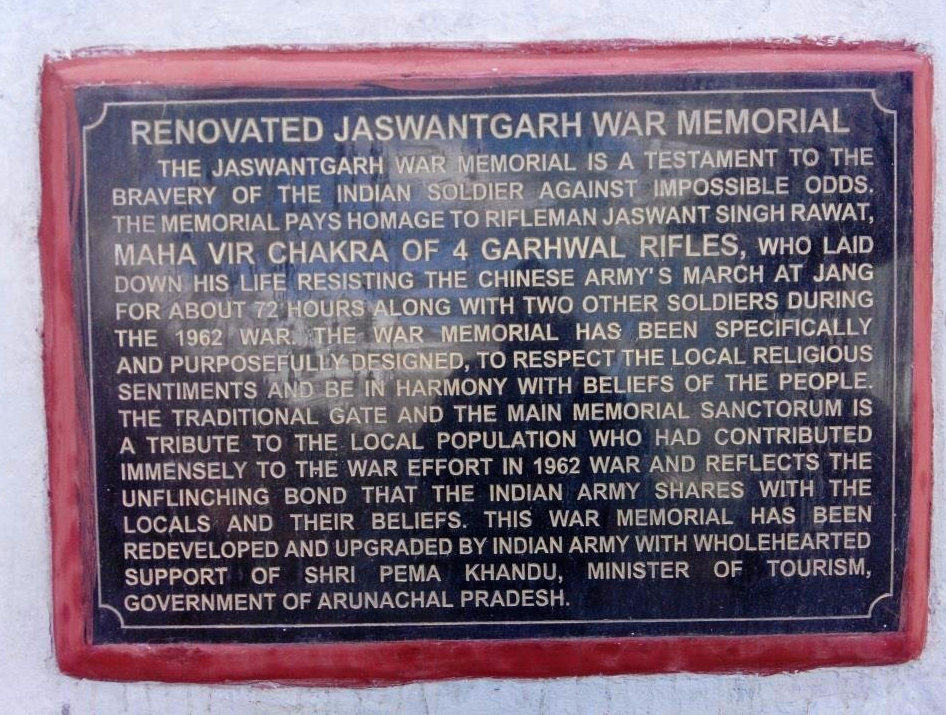
Time moves on. Wars begin and end. Names appear and then fade away. But in the case of Jaswant Singh Rawat, the name lived. His legacy has not just been remembered; it has been institutionalised. The very post he defended with his life is now called Jaswant Garh. It is not just a memorial. The post is still active in the Indian Army’s honour roll, where his name figures as a soldier on duty. He has been posthumously promoted, rising through the ranks to Major General, perhaps the only soldier in history to be promoted after death, not ceremonially, but in military records.
Arunachal Pradesh | Wreath laying ceremony of rifleman Jaswant Singh Rawat who was martyred in 1962 Sino-India war was held at Jaswantgarh, this afternoon.
Rifleman Rawat was awarded the Maha Vir Chakra posthumously for his gallantry during the 1962 war. pic.twitter.com/T32kKN99by
His Maha Vir Chakra citation reads like poetry written in blood and courage. It recounts how, on that fateful day, he crawled within 12 metres of an enemy medium machine gun bunker, lobbed grenades, snatched their weapons, and fought his way back. He was later fatally hit just before reaching Indian lines. Yet, even in death, he held the enemy gun tight.
The citation read, “On 17th November 1962, a Battalion of the Garhwal Rifles was occupying a defensive position near Nuranang bridge in NEFA. Rifleman Jashwant Singh’s Company was subjected to a serious attack by the Chinese forces. Three attacks made by the enemy were unsuccessful, but the enemy managed to bring forward a medium machine gun very close to one of our platoons and weakened its defences.
Rifleman Jashwant Singh Rawat and two other men (a Lance Naik and another Rifleman) volunteered to go and destroy the enemy MMG position. Under cover of boulders, scraggy bushes and trees and under the risk of their own as well as heavy enemy fire, they crawled forward and reached to within 10 to 15 yards of the target.
While the Lance Naik undertook covering fire with a Sten gun, Rifleman Jashwant Singh Rawat and the other rifleman hurled grenades on the enemy MMG. The grenades exploded and without losing time both of them rushed towards the MMG position. They saw two Chinese lying dead and another, though badly wounded, still holding the MMG.
They jumped on him and overpowered him. Rifleman Jashwant Singh Rawat snatched the MMG and both of them returned to their own position under the covering fire provided by the Lance Naik. As they were entering their trenches, the enemy opened automatic fire from close range. Rifleman Jashwant Singh Rawat was hit on the head and died on the spot, still holding the MMG in his hand. The other rifleman, though badly wounded, managed to enter the trench and was saved.”
The courage and initiative shown by Rifleman Jashwant Singh Rawat in the face of intense enemy fire was in the best traditions of our Army.
His regiment, the 4 Garhwal Rifles, was awarded the rare Battle Honour ‘Nuranang’, the only such distinction given during the 1962 war. And far away in Dehradun, a housing project named Jaswant Nagar stands tall in his memory.
In Jaswant Garh, five soldiers are permanently posted to maintain his room. His uniform is cleaned, his bed is made, and his shoes are polished. Tea is served every morning. Dinner is laid out every evening. And when he “goes on leave”, his framed photograph is carried back to his village with full honours, as if he were still alive.
Because to his regiment, and to the Indian Army, he is.
The spirit that still stands guard
Most soldiers die once. Jaswant Singh Rawat never did. At Jaswant Garh, his presence is more than symbolic. Soldiers posted there speak of strange occurrences, bedsheets found crumpled, boots displaced, and rifles felt inspected. Sentries claim they have been nudged awake when nodding off during duty. Some say they have seen a figure walking silently in the mist. Others say he speaks in dreams, calm, commanding, protective.
He is no longer just a man, or even just a martyr. In the collective memory of his regiment, Baba Jaswant Singh is an eternal guardian. He is remembered and saluted. In uncertain moments, soldiers still look to him for guidance. In a world that often forgets its dead, the Indian Army has built a system where one man continues to live because his will simply never left.
The rituals are not theatrics. They are discipline, the same discipline he showed when he faced down hundreds with nothing but grit and an outdated rifle. Some memorials are built with stone and mortar. But this one? It is built with reverence.
When a fresh batch of soldiers arrives, they are told, “This post was once held by one man. Let that be your standard.” And in the biting winds of Tawang, where snow hides trails and fog cloaks vision, the soldiers know, he is watching.
Immortality of a soldier’s soul
There are stories in every army, of bravery, sacrifice, and duty. But Rifleman Jaswant Singh Rawat’s story does not end where others do. It transcends death, outruns memory, and refuses to be tucked into a footnote of history.
Jaswant Singh Rawat was only 21 when he sacrificed his life for the motherland. But the life he gave birthed a legacy larger than medals, parades, or plaques. In every sunrise at Jaswant Garh, in every cup of tea placed at his bedside, in every whisper that tells a rookie soldier to stand straighter, his presence is felt. Not mourned, but honoured.
Jaswant Singh teaches and inspires the young soldiers. His soul guards the border, not as folklore, but as faith. He did not just fight the Chinese; he fought the idea that duty ends with death. Perhaps this is why the Army promotes him. Perhaps this is why his salary is credited. Perhaps this is why he is not a “Shaheed”, as he is still around, guarding the borders.
In every soldier out there, there is a heartbeat that refuses to surrender. That heartbeat is Jaswant Singh Rawat. Rifleman. Legend. India’s Immortal Soldier.
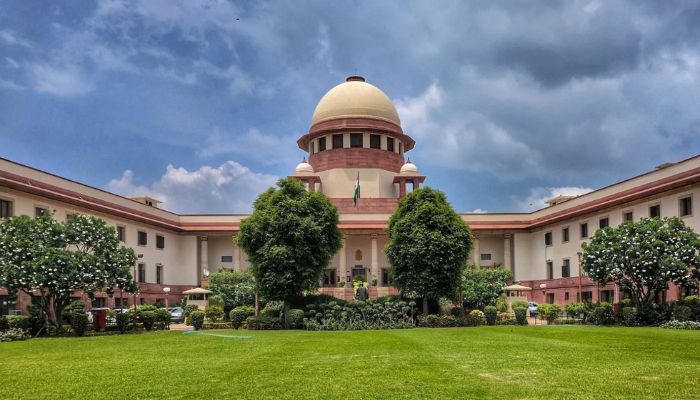
On 2nd June 2025, the Supreme Court issued notice on a habeas corpus petition against the Assam government’s alleged ‘illegal’ detention of a Bangladeshi woman named Monowara Bewa who was out on bail since 12th December 2019.
After hearing the petition of the Bangladeshi woman’s son, Justices Sanjay Karol and Satish Chandra Sharma, issued notice to the respondents.
In this case, senior advocate Kapil Sibal represented the petitioner and claimed that a Superintendent of Police ‘threw’ the Bangladeshi woman out of India flouting the court order, even as a civil appeal in challenging Guwahati High Court’s order, which upheld her declaration as a foreigner, is pending before the Supreme Court since 2017.
However, when the court said that it would be appropriate to tag the present case with the pending appeal, Kapil Sibal contended that the Bangladeshi woman has been sent back to Bangladesh.
“But in the meantime, she is gone. She’s been thrown out. She’s been sent to Bangladesh,” Sibal said.
To this, Justic Sharma responded, “”[But] we can’t call her back…if she’s already not in the country…”
The Gauhati High Court had earlier upheld the Foreigners’ Tribunal decision that declared the woman a foreigner. The petitioner’s appeal against the order is pending in the Supreme Court.
Interestingly, on one hand, Sibal asserted that the SP violated court order to illegally send the woman to Bangladesh, on the other, he claimed that the petitioner does not know for sure if the woman has actually been deported to Bangladesh or is still in India.
“Your lordships know she has to be produced within 24 hours…not produced, sent straightaway, picked up from the house…directly in violation of this Court’s order in DK Basu…SP goes to the house, picks her up and throws her…how can that be!?” Sibal asked.
In addition to seeking the release of his mother, the petitioner has also sought (i) a direction for restraining “push back” of the detenue; (ii) inquiry against State of Assam for the ‘arbitrary’ arrest and detention; (iii) direction to the Union and Assam governments for initiating departmental proceedings and imposition of damages, LiveLaw reported.
As per the petitioner, the Bangladeshi woman was complying with the bail conditions. However, on 24th May 2025, the police called her to record her statement. After the woman reached the police station, she was not released.
The hearing in this matter will take place next week.
India’s Operation Push-back to detect, detain and deport illegal immigrants
Interestingly, on Monday (2nd June), the Supreme Court declined to entertain a petition alleging that the Assam government has reportedly launched a “sweeping and indiscriminate drive” to deport persons suspected to be foreigners to Bangladesh.
A vacation bench of Justices Sanjay Karol and Satish Chandra Sharma asked the All BTC Minority Students Union (ABMSU) to approach the Gauhati High Court for appropriate relief.
Under Operation Push-back, India has deported more than 172 illegal Bangladeshi immigrants back to their home country between 24th and 25th May. The deportations were carried out through the borders located in Bangladesh’s Sylhet, Meherpur and Moulvibazar.
India pushed back a total of 19 Bangladeshi infiltrators in Meherpur on Sunday morning. They were then taken by the Border Guard Bangladesh to a temporary shelter. The Bangladeshi citizens who were living illegally in India were later taken into custody by the police. They infiltrated Indian territory at various points in time and resided in the State of Haryana.
On 29th May, around 160 illegal immigrants were sent back to Bangladesh via Hindon Air Base from Delhi.
Meanwhile, 29 Bangladeshi nationals, including women and children who were staying illegally in India were taken into custody by the Haryana police.
Previously, the BSF pushed back 16 Bangladeshi infiltrators back to their home country on 14th May this year. India’s crackdown on illegal Bangladeshi immigrants has rattled the Bangladeshi authorities, especially Border Guards Bangladesh (BGB).
The interim government of Bangladesh, led by ‘chief advisor’ Muhammad Yunus has been rattled by India’s paradigm shift in strategy at dealing with infiltrators.
For decades, India has followed established protocols to deport Bangladeshi infiltrators and Rohingyas to their home country. The process has been slow (pending trial in courts), cumbersome (because Bangladesh government and Bangladesh Border Guard often refuse to acknowledge their own citizens) and has failed to attain success.
The situation has been exacerbated due to continued illegal immigration through the porous India-Bangladesh border with the help of agents and brokers but not enough deportations year-on-year. It must be noted that there are more than 2 crore Bangladeshis living illegally in India (2016 data).
Following the undemocratic ouster of Sheikh Hasina and the hostile attitude of the Yunus-led interim government, the deportation protocol has been rendered useless by Bangladesh.
Forced by circumstances, the Indian government has now resorted to what is being unofficially referred to as ‘Operation Push-back.’
The Indian government has devised a new strategy to get rid of Bangladeshi infiltrators and Rohingyas who are caught red-handed at the Eastern border as well as living in India illegally for several years.
Instead of going through the hassle of handing them over to the police, registering a FIR, producing them before the court, continuing trials for years and then sending them back through established protocols, the Indian security forces are now increasingly pushing-back the infiltrators to the other side almost instantenously.
In cases where Bangladeshis are nabbed from different cities of India (far from the Eastern borders), they are first flown to either Tripura, Assam or West Bengal and then pushed over to Bangladeshi side. Several States in India including Rajasthan, Tripura and Odisha have stepped up the process of identification of illegal immigrants.
The impact of crackdown on infilitrators have been successful so much so that some Bangladeshis are now ‘voluntarily returning‘ to their home country.
So far, more than 2,000 illegal immigrants have been deported by Indian authorities since “Operation Sindoor” commenced in the early hours of 7th May after the 22nd April Pakistan-backed Pahalgam terror attack.
India’s crusade against illegal immigration has not been without challenges. Besides international protocols, logistical challenges, political pressure, legal challenges also emerge when NGOs sympathising with illegal infiltrators approach courts seeking stay on deportation.
Some like Colin Gonsalves move Supreme Court to demand free of cost access to schools and hospitals for children of illegal Rohingya immigrants staying in New Delhi.
The Modi government has been working for detecting, detaining and deporting illegal immigrants including Rohingyas and Bangladeshis even for Operation Sindoor was launched and a fresh wave of deportations began under Operation Push-back.
In December 2024, India deported 14 Bangladeshi illegal immigrants staying in Central Delhi back to Bangladesh as a part of a special drive to identify and deport the illegals. Similarly, in December 2024, the South-West Delhi Police deported 8 Bangladeshi illegals.
In 2021, India deported several Rohingyas from Jammu. This came after 170 Rohingya illegals were detained from a camp in Jammu for document verification and later sent to Hiranagar Jail. Many of them were deported eventually outlining India’s deportation efforts despite challenges, international scrutiny and propaganda.
In December 2024, the electricity and water connections of over 400 households were cut, and eviction orders were issued for land that was unlawfully occupied by illegal immigrants. Four Rohingyas were also arrested by the police during the operation.
In Delhi, the police busted a major illegal immigration racket in December 2024 and arrested 11 individuals, including document forgers, Aadhaar operators, and tech experts involved in creating fake websites.
On 9th December, the Home Minister of Chhattisgarh, Vijay Sharma, said that the authorities have deported around 850 illegal Bangladeshi infiltrators from the state. Sharma was speaking at a public meeting in Bhilai, where he assured that all infiltrators would be identified and deported. Notably, he pointed out that around 500 illegal Bangladeshis have already been deported from Bastar and 350 have been removed from Kawardha.
Last year, the police in various states arrested Bangladeshi illegal immigrants. In some cases, the illegals were involved in criminal activities as well. In August 2024, it was reported that the Delhi Police said in a chargesheet that Bangladeshi illegals were running an illegal organ transplant racket.
On 25th January 2025, Delhi Police apprehended seven Bangladeshi nationals Mohammad Bellal, Mohammad Yeasin, Emon Hossein, Mohammad Ghiyas Uddin, Mohammad Rubel Hossain, Nasruddin, and Tanvir Hasan in a hotel in Delhi for overstaying their visa. The Bangladeshi nationals have been deported to Bangladesh.
In May 2024, Manipur CM Biren Singh informed that 5457 illegal immigrants were detected in the state’s Kamjong district and that the process to deport them all was underway. Of these, 359 have voluntarily returned to Myanmar. Before this, 38 illegal immigrants were deported to Myanmar from Manipur, bringing the total number of illegal Myanmarese migrants deported to 77 since 8th March 2024.
In June 2024, OpIndia reported about the Manipur government and security agencies waging a war against fake Aadhaar and Voter ID gangs helping illegal immigrants from Myanmar. The police arrested two illegal infiltrators from Myanmar residing in the Churachandpur district and recovered fake identity cards from them. Similar cases were reported in the following months.
Back in 2018, 10 people were arrested for involvement in two fake Aadhaar card rackets operating from the bordering towns of Jirbhim and Moreh. Of the 10 arrested, 9 were illegal Muslim immigrants from Myanmar. One Indian woman Paritha Begum from Tamil Nadu was also arrested. The police raided the house one Mohammad Tomba at Moreh and seized two laptops, four Aadhaar Cards, one printer machine, one laminating film machine, plastic sheets, DVDs and photo paper.
Similarly, in May 2018, around 98 illegal immigrants with fake Aadhaar cards were arrested from Imphal City.
In October 2021, Assam Rifles troops arrested 24 Burmese illegal immigrants who were travelling with counterfeit Aadhaar cards along the Indo-Myanmar border in Manipur’s Tengnoupal district. This came about a week after 11 Myanmar nationals were arrested at Imphal Airport while attempting to board a Delhi-bound flight using forged Aadhaar cards.
In January 2025, three Rohingya Muslims including two women were arrested from Kolkata’s Sealdah railway station.
On 28th January 2025, Jaipur Police in Rajasthan detained 500 people, including 394 Rohingyas and Bangladeshi nationals in a massive crackdown on illegal immigrants. Jaipur Police Commissioner Biju George Joseph said that the campaign has been launched to address criminal activities and to identify illegal immigrants.
Kapil Sibal is the go-to lawyer in cases that undermine India’s national security
Kapil Sibal, a veteran Congress leader and Supreme Court advocate, has been a consistent legal representative in cases that further the ‘woke Liberal’ cause, especially the ones that involve issues of national security and communal tension. Kapil Sibal represented Shafin Jahan in the Hadiya Love Jihad case, took money from the Islamic terror outfit PFI. In another case, Kapil Sibal sought the release of banned Islamic jihadist outfit PFI’s member and ‘journalist’ Siddique Kappan. He also represented the 2020 anti-Hindu Delhi Riots accused mastermind Umar Khalid before the Supreme Court. Sibal had also joined a group of Rajya Sabha MPs who moved impeachment motion against Allahabad HC judge for calling Islamic extremists “Kathmulla”.
The senior lawyer represented a pro-Pakistan leader in the Supreme Court over a plea challenging the abrogation of Article 370. Sibal earlier falsely claimed that Assam was a part of Myanmar. The legal eagle also represented the All India Muslim Personal Law Board which challenged the constitutional validity of the Waqf (Amendment) Act 2025. After defending Islamists and taking up anti-Hindu causes, Sibal is representing an Bangladeshi illegal’s son in the court.
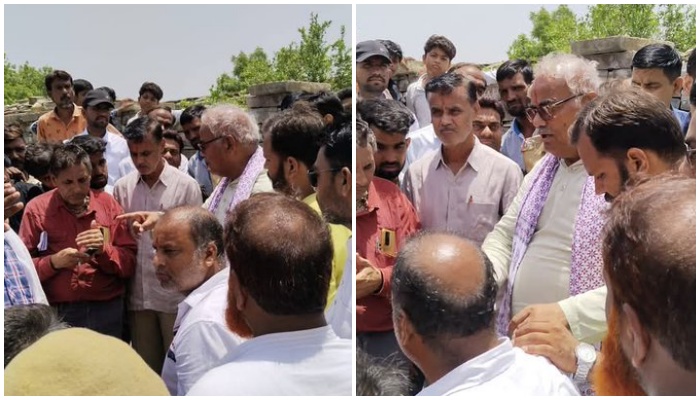
In Ramganj Mandi of Kota district in Rajasthan, Education Minister Madan Dilawar himself has exposed a major crime of electricity theft where a man named Jalaluddin alias Kallu has been supplying power to over 750 houses through unauthorised connections and extorting money for it. As per reports, Minister Dilawar was conducting a Mohalla Meeting in the Suket area of his assembly constituency Ramganjmandi on Sunday, June 1 , when he received complaints of an illegal electricity supply network running in the area.
आज सुकेत कस्बे की सुरलीवाल की गली में आयोजित मोहल्ला बैठक के दौरान स्थानीय नागरिकों द्वारा अवैध बिजली कनेक्शनों की शिकायत दर्ज कराई गई।
इस संदर्भ में बैठक में उपस्थित संबंधित अधिकारियों को निर्देशित किया गया कि वे पुलिस दल के साथ तत्काल मौके पर पहुंचकर आवश्यक कार्यवाही सुनिश्चित… pic.twitter.com/wCJl1DdxcN
Minister Dilawar launched an immediate investigation and examined the area. He was informed by locals that Jalaluddin has been supplying stolen electricity along parallel pipelines hidden beside the underground pipeline meant to supply water to the local houses. The minister summoned the concerned officials of the electricity department and asked them to verify the complaints immediately.
While Executive Engineer Vishnu Dutt Lodha and his associates were examining the hidden ‘network’, Minister Dilawar also arrived at the spot. A police team was also ordered to accompany the power supply officials and get the illegal connections cut. The team dug out the pipes, cut the illegal wirings and seized all the cables. The Minister examined the illegal connections. He also ordered the local police station in charge and asked him to book accused Jalaluddin alias Kallu and his associates who have been involved in the power theft and illegal supply of electricity.
The Minister also asked the power supply officials to recover the lost revenues over unpaid bills in the area. He has instructed the officials to ensure that the accused are made to pay the full electricity bills for the power theft, along with the penalty and interest over the period since electricity supply was started in the area.
Accused Jalaluddin and his associates had figured out a way to hide their illegal supply lines besides the underground water supply pipes to evade detection. The accused persons were even operating their own distribution panel (DP). The officials dug out the hidden cables and seized the entire network.
Jalaluddin and his associates booked, Minister asks to recover all lost revenue with interest and penalty
Executive Engineer Vishnu Dutt Lodha has stated to the media that the accused Jalaluddin and his associates have been booked for the crimes of illegal power supply and electricity theft. A penalty of Rs 8,50,000 has been imposed on the accused for damaging the local transformer and stealing electricity. Additionally, 22 complaint reports have been filed against Jalaluddin and others with a cumulative fine of over Rs 18 lakhs.
Accused have earned over 12 crores so far, monthly loss to govt over Rs 42 lakhs
Minister Dilawar held a press conference where he stated that the crime of illegal electricity supplying was going on for years. He added that Jalaluddin and his associates were collecting Rs 500 per house in exchange of the electricity. More than 750 households were provided with the illegal supply by Jalaluddin and his team. This crime has been going on almost since electricity first came to the locality, almost 30 years ago, the minister added, saying that Jalaluddin must have earned over 12 crores over the years. This illegal network has been causing the Ramganj Mandi electricity department a loss of over Rs 42 lakhs in electricity bill amounts every single month.
Jyoti Malhotra, who has been arrested on allegations of espionage for Pakistan is being taken to Varanasi (Kashi), the city of Lord Shiva, by the National Investigation Agency (NIA) for interrogation. According to the authorities, every time the YouTuber went to Pakistan, she would consistently visit Varanasi either shortly before or after her visit. This unusual recurrence has now become a major mystery for the investigative agencies, leading the NIA to the sacred place to solve the troubling puzzle.
As a travel vlogger, Jyoti had the opportunity to explore any region of the country, however, her frequent trips to Varanasi raise several questions. Did she create videos of specific, curated locations in Varanasi at someone’s behest and upload them to her YouTube channel “Travel with Jo”? Is it possible that these videos contain a concealed message or sensitive information communicated through coded language? The NIA will now seek answers to numerous such questions in Kashi.
Jyoti Malhotra traveled to Pakistan four times since 2022, reported Dainik Bhaskar. Interestingly, she visited Varanasi each time either before or after her trips. Moreover, she shared videos of these trips on her YouTube channel. Her initial visit to Pakistan’s Kartarpur Corridor was in September 2022. Upon her return, she traveled to Varanasi in October of that year, where she filmed in various locations of the city and uploaded them to her channel.
The YouTuber went to Pakistan once more in April of the following year and returned to Varanasi, a few months later in July. On 9th December of the same year, she made another visit to the holy city by bus. Notably, on 19th December 2023, while Prime Minister Narendra Modi was in Varanasi to inaugurate the Vande Bharat train, she was aboard the same train. She was going from Varanasi to Delhi and recorded a video of the pilot cabin as well as captured close-up images.
She was also in Varanasi during January and February 2025 and explored multiple locations. She went to Kashmir and then moved to Pakistan from there, in March. She also posted a video documenting the same on her YouTube channel.
Who is Jyoti Malhotra
Jyoti Malhotra is a YouTuber and travel vlogger from Hisar of Haryana. Her YouTube channel “Travel with Jo” and Instagram account “@travelwithjoone” are quite popular. She has more than 3.77 lakh subscribers on YouTube and 1.31 lakh followers on Instagram. She has been arrested on charges of working for Pakistan’ ISI. She sent classified information regarding India’s military to Islamabad.
The investigation has uncovered that she maintained communication with Pakistan’s intelligence agency, Inter-Services Intelligence (ISI), and even met with Ehsan-ur-Rahim, also known as Danish, at the Pakistan High Commission in Delhi who was subsequently expelled from India. Jyoti Malhotra has visited Pakistan multiple times and recorded her trips through videos.
She is also accused of sharing sensitive information under the guise of comparing India and Pakistan in her videos and reels. The authorities have seized over 12 terabytes of digital forensic data from her electronic devices and accounts, which includes evidence of links to the Islamic Republic. She has been charged under the Official Secrets Act and pertinent sections of the Bharatiya Nyaya Sanhita (BNS).
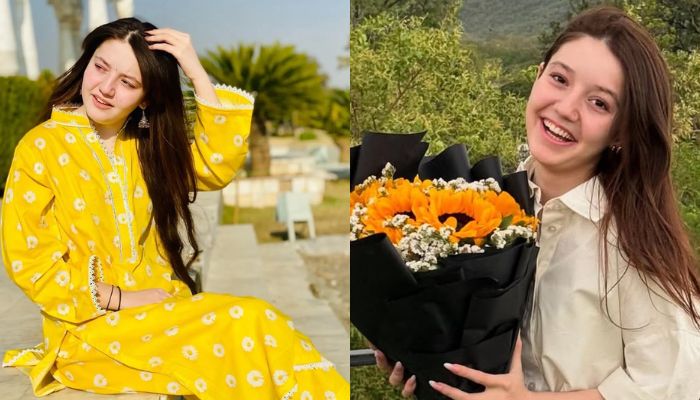
On 2nd June, 17-year-old TikTok influencer Sana Yousuf was shot dead at her home in Islamabad. It is yet another chilling reminder of how dangerous it is for women to be visible in Pakistan’s digital space. Police are investigating the case as a potential honour killing, as reportedly her cousin shot her dead.
Sana hailed from the Upper Chitral district of Khyber Pakhtunkhwa. She had amassed a massive following on TikTok and Instagram through her content. Her death triggered grief online, with users calling out the toxic patriarchy and extremist mindset that views outspoken women as threats to family “honour”.
Shot twice at point-blank range
According to media reports, the accused was a cousin who had come to visit Sana at her residence. After a brief conversation, he allegedly shot her twice in the chest at close range before fleeing the scene. Her body was taken to the Pakistan Institute of Medical Sciences for autopsy. Some social media users suggested the police arrested a man named Umar alias Kaka in connection to her murder.
? Police have arrested Umar, also known as Kaka, in Faisalabad in connection with the brutal murder of Sana Yousaf. CCTV footage of the suspect has also surfaced. #SanaYousaf#Islamabadpic.twitter.com/WTdPrBdkRn
Speaking to the media, a police spokesperson said, “The assailant entered the residence, fired multiple shots, and fled immediately.” All angles are being explored, including the suspicion of honour killing.
Disturbing responses online
While large sections of Pakistani social media mourned Sana’s death and called it “a murder of dreams and courage”, many Islamists shockingly celebrated her killing. One user said, “Reward the killer”, glorifying violence under the guise of cultural norms.
History repeating itself
The brutal killing of Sana is being compared to the 2016 murder of Pakistan’s first social media celebrity, Qandeel Baloch. She was known for her bold posts and fearless commentary. Qandeel was strangled to death by her own brother Waseem in the name of honour. He later confessed to the crime, saying she had “brought shame” to the family.
Despite global outrage, Waseem was released in 2022 after Qandeel’s parents “forgave” him, exposing the deep flaws in how Pakistan handles cases of honour crimes.
Another teen shot for using TikTok
Earlier this year, 15-year-old Hira Anwar was shot dead in Quetta by her father and maternal uncle for posting TikTok videos. Her father had returned from the US and was reportedly enraged by her refusal to stop using the platform. Both accused confessed and are now in police custody.
A society at war with its women
Sana’s murder will become another statistic in Pakistan. It reflects a society where women’s visibility is seen as provocation and their digital presence as a threat to the honour of the family. As one social media user rightly said, “She deserved to live. To thrive. To speak.” But in Pakistan, even that has a price.
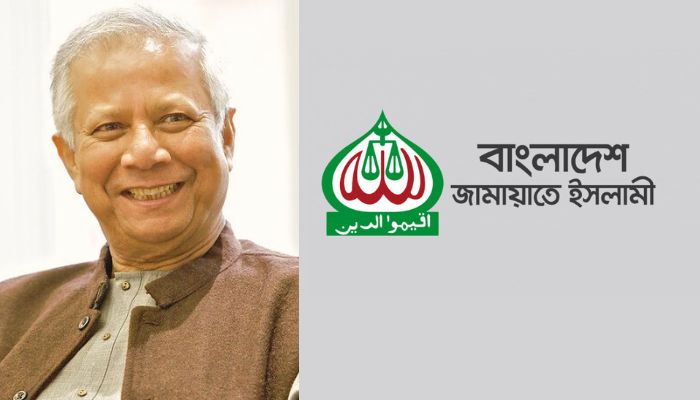
On Sunday (1st June), the Supreme Court of Bangladesh allowed the re-registration of the Islamic extremist outfit ‘Jamaat-e-Islami’ as a political party.
The decision immediately implied that the outfit can list itself with the Election Commission and participate in the general election scheduled to be held in June 2026.
The participation of Jamaat-e-Islami in Bangladesh’s electoral process was restricted by the country’s High Court in August 2013.
Bangladesh top court restores largest Islamist party
The court had found evidence that the extremist outfit violated the election rules and had a charter which refused to recognise Bangladesh as a sovereign and independent nation.
At the same time, Jamaat-e-Islami’s charter was against the ‘secular spirit’ of the Constitution of the country.
The new ruling of the Supreme Court restoring the registration of the Islamic extremists outfit as a ‘political party’ comes days after the same apex court acquitted a 1971 war criminal belonging to Jamaat-e-Islami named ATM Azharul Islam.
This has bolstered radical Islamists and extremist outfits in the country, who are now being revived from political irrelevance by the Muhammad Yunus-led regime.
Brief political history of Jamaat-e-Islami Bangladesh
Jamaat-e-Islami was founded in 1941 by an Islamic extremist named Abul Ala Moududi. It was banned twice in Pakistan in the years 1959 and 1964.
Soon after the establishment of Bangladesh, founding father Sheikh Mujibur Rahman banned the extremist outfit for siding with Pakistan and committing genocide against the Bengali population during the 1971 Bangladesh Liberation War.
The ban was lifted after the assassination of Sheikh Mujibur Rahman.
His daughter, Sheikh Hasina, who led the Awami League government, banned the Islamic extremist organisation and its student wing in August 2024 under the Anti-Terrorism Act.
However, Jamaat-e-Islami was unbanned within a month by ‘chief advisor’ Muhammad Yunus.
It must be mentioned that the extremist organisation has received the support of the Khaleda Zia-led Bangladesh Nationalist Party (BNP) since the start.
It was under Ziaur Rahman’s administration in May 1979 that the Jamaat-e-Islami participated in politics for the first time. The Islamic extremist outfit returned the favour by helping the BNP come to power in 1991.
The BNP-Jamaat Alliance won in 2001 and remained in power till 2006. By 2008, Jamaat-e-Islami was down to 2 seats. Thereafter, it could not contest any election. The extremist outfit is now hoping to capitalise on growing Islamist ideology in the country and make inroads into Bangladesh politics.
Operation Searchlight, 1971 Bangladesh Liberation War and the role of Jamaat-e-Islami
In the General elections held in December 1970, Sheikh Mujibur Rahman of the Awami League secured a huge majority (167 seats) in the provincial legislature in East Pakistan.
With constant interference in the affairs of East Pakistan by its Islamic counterpart, Rahman had begun demanding for greater regional autonomy.
This was just within 13 years of the Partition of the Indian subcontinent, when Muslims sought for a separate country of their own.
Although united by the common Faith, the resentment between the West and East Pakistan towards each other continued to grow.
Zulfikar Ali Bhutto of the Pakistan People’s Party (PPP), who won the most seats in West Pakistan in 1970 elections, was opposed to the demands of Rahman. He had threatened to boycott the Assembly and sought for the dissolution of the provincial legislature in East Pakistan, if PPP was not included in the government.
Miffed over the denial of power and autonomy to East Pakistan, Sheikh Mujibur Rahman called civil disobedience movement, on March 7, 1971. Bhutto feared civil war and President Yahya Khan, therefore, declared martial law and ordered the arrest of Rahman and other leaders.
In order to contain the civil and political unrest, the Pakistan army launched Operation Searchlight on March 26, 1971. Rahman, disillusioned by the high-handedness of West Pakistan, had already called for independence from West Pakistan.
The Pakistani soldiers launched their attack on the Bengali population in Rajararbagh and Peelkhana area. They put Mujibur Rahman behind bars and ambushed the Dhaka university, resulting in the death of 9 teachers and 200 students in Iqbal Hal.
Similarly, the Pakistan army continued with its barbaric attacks on civilians in Old Dhaka, Tejgaon, Indira Road, Mirpur, Kalabagan and other places.
On the same night, several people in Chittagong were shot dead by the army personnel. National newspapers, including, Daily Ittefaq, the Daily Sangbad were shut down and their offices were set ablaze, resulting in the death of several media personnel. Mass graves were dug out and hastily bulldozed.
An estimated 700 people were burnt to death in Dhaka. Similarly, they set fire to the houses of slum dwellers, fired bullets at those running away to save their lives, razed a Kali Mandir and also destroyed the Central Shaheed Minar.
It is believed that around 10,000-35,000 Bengalis were killed by the Pakistan army under the Operation Searchlight while the death toll to increased to over 3 lacs in the months to follow.
“Thanks to God that Pakistan could have been saved,” Bhutto had famously remarked.
The genocide against the Bengali population intensified. In the months to follow, around 4 lac Bengali women were raped by the Pakistan army while a majority of the victims being Hindus.
All these atrocities and crimes against humanity, committed by the Pakistani Army were made possible by members of Jamaat-e-Islami, which operated 3 armed outfits named ‘Al Badr’, ‘Al Shams’ and ‘Razakars’.
The situation worsened, forcing neighbouring India to step in to prevent the further continuation of genocide. In 14 days, Pakistani forces under AK Niazi signed the Instrument of surrender and thus a new nation of Bangladesh was born on 16th December 1971.
The International Crimes Tribunal (Bangladesh), established in 2010, found 10 extremists associated with Jamaat-e-Islami ‘complicit’ in the 1971 genocide.
These include
Abdul Kader Mullah (executed in December 2013)
Ghulam Azam
Muhammad Kamaruzzaman (executed in April 2015)
Delwar Hossain Sayeedi
Ali Ahsan Mohammad Mujahid (executed in November 2015)
Abul Kalam Azad
Motiur Rahman Nizami (executed in May 2016)
Mir Quasem Ali (executed in September 2016)
Abul Kalam Muhammad Yusuf
Chowdhury Mueen-Uddin
Ghulam Azam and Abul Kalam Muhammad Yusuf died in 2014 while Delwar Hossain Sayeedi expired in 2023 of natural causes. Abul Kalam Azad remains absconding to date. Chowdhury Mueen-Uddin is now a British citizen and has not been arrested.
5 extremists associated with ‘Jamaat-e-Islami’ Bangladesh were hanged to death between December 2013 and September 2016.
Targeted violence against Hindus by Jamaat-e-Islami after 1971 genocide
On 6th December 1992, a strong mob of 5000 Muslim men, armed with bamboo sticks and roads, tried to storm a cricket match played between India and Bangladesh at the Dhaka National Stadium.
Screengrab of the 1992 news report by United Press International
Their attempts were foiled by the police, who fired tear gas and rubber bullets at the frenzied mob. As per a report by United Press International, a mob of 1000 Muslim men barged into the Hindu Shiva temple in Thatari Bazar district of Dhaka and razed it to the ground.
Islamists also attacked a Hindu temple in the Narinda district and gravely injured an 88-year-old Hin du priest in a bomb attack. Muslim mob also tried to break into the Dhakeswari Mandir in Dhaka.
They also looted shops belonging to the Hindus and smashed the cars of the minority community with sticks and iron bars.
According to the Human Rights Congress for Bangladesh Minorities (HRCBM), the pogrom was executed by the radical Islamist outfit Jamaat-e-Islami which was an alliance partner of the ruling Bangladesh Nationalist Party (BNP).
The riots were not spontaneous but rather well-planned. An estimated 2400 Hindu women were gang raped, and 3500 temples and religious establishments were destroyed by frenzied Muslim mobs.
Over 28000 homes and 2500 commercial buildings belonging to the Hindu community were razed. An estimated 700 Hindus were killed in the carnage. The numbers were conservative as acknowledged by several prominent politicians at that time.
Screengrab of the BBC report
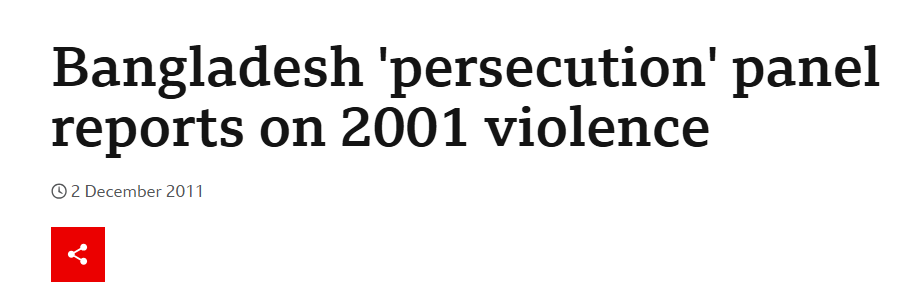
After Jamaat-e-Islami won the 2001 Bangladesh election alongside its ally BNP, unspeakable atrocities were committed on the Hindu community. Many Bangladeshi Hindus were forced to flee the country after the planned carnage.
“Hindu leaders said there were a series of attacks against them, including murder, looting and rape which began as the results were announced. They said Islamist parties and the BNP targeted them because they supported the rival Awami League political party in those elections,” a report by BBC stated.
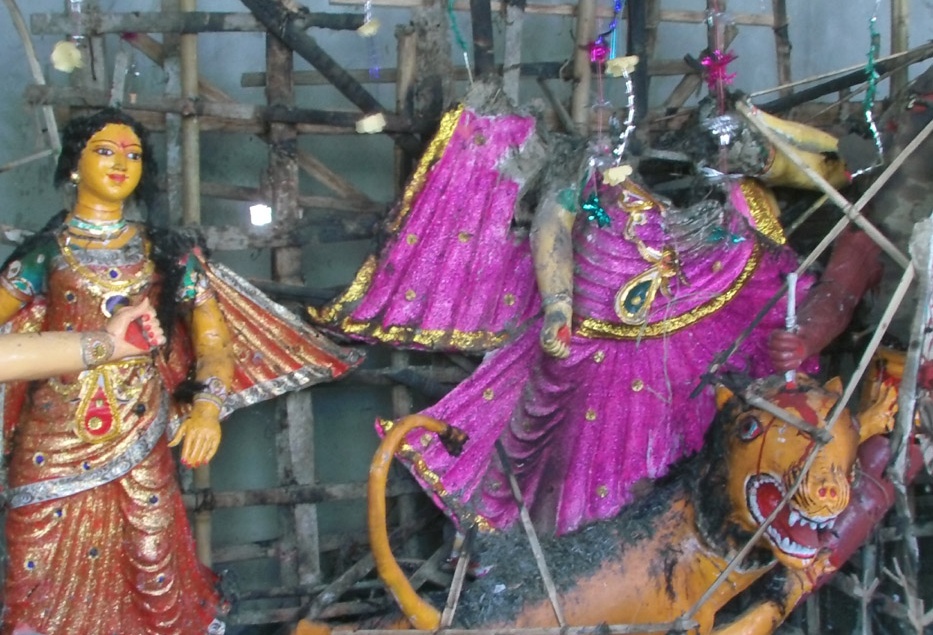
Hindu temple vandalised in 2013 attack
In February 2013, Jamaat-e-Islami and its student wing ‘Islami Chhatra Shibir’ attacked over 50 Hindu temples and targeted more than 1,500 houses and businesses of the persecuted minority community. They carried out arson in several districts of Bangladesh, such as Gaibandha, Chittagong, Rangpur, Sylhet, Bogra, etc.
A year later in February 2014, BNP members and Jamaat-e-Islami extremists launched 160 attacks on the Hindu community.
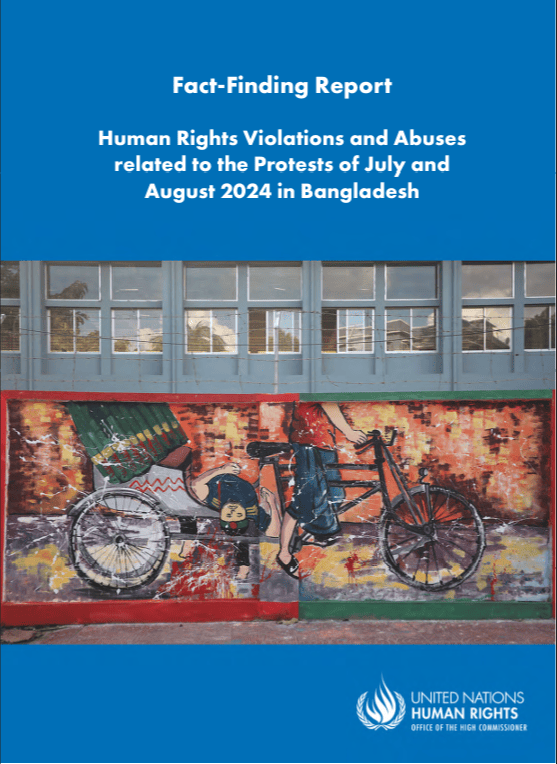
On 12th February this year, the Office of the United Nations High Commissioner for Human Rights (OHCHR) published a 104-page report [pdf] detailing atrocities committed against vulnerable Hindu minorities in Bangladesh.
The report is titled ‘Human Rights Violations and Abuses related to the Protests of July and August 2024 in Bangladesh.’
It found that a majority of attacks on the Hindu community took place during ‘victory processions’ of individuals, celebrating the ouster of former Bangladeshi Prime Minister Sheikh Hasina.
OHCHR noted that the attackers were local supporters of the BNP and Jamaat-e-Islami. Page 62 of the report stated –
“Some local members and supporters of the BNP and Jamaat-e-Islami opposition parties bear responsibility for human rights abuses committed during revenge attacks, including against members of the Hindu community.”
In September 2024, human rights activist and exiled Bangladeshi blogger Asad Noor revealed that Hindus were being forced to join the ‘Jamaat-e-Islami Bangladesh.’
Noor informed that members of the radical Islamist outfit visited Kalmati Ward No.2 in Khuniagach Union of Lalmonirhat Sadar Upazila. They preyed upon 27 poor, destitute Hindus and forced them to join ‘Jamaat-e-Islami.’
According to Asad Noor, the radicals threatened to kill the victims and remove them from the nation. Forced by circumstances, the impoverished Hindus had to comply with their diktat. The Jamaat-e-Islami members coerced them into signing some forms and gave them Islamic books to brainwash them into changing their Hindu Faith.
Hafiz Mohammed Shah Alam, the Assistant Secretary of the Jamaat-e-Islami (Lalmonirhat Branch), was present during the forced induction of Hindus into the radical outfit.