Home Blog Page 3748

PM Modi to formally hand over the first made-in-India light combat helicopter to the Indian Air Force

0

In a major boost to the Aatmanirbhar Bharat initiative, Prime Minister Narendra Modi will formally hand over the indigenously developed Light Combat Helicopter (LCH) to the Indian Air Force (IAF) Friday. The event will take place during the ‘Rashtra Raksha Samparpan Parv,’ which will take place from November 17 to 19 in Jhansi, Uttar Pradesh.

During the event, the Prime Minister will also present drones/UAVs designed and developed by Indian startups to Chief of the Army Staff. Defence Research and Development Organisation (DRDO) designed and Bharat Electronics Limited (BEL) manufactured Advanced Electronic Warfare suite for naval ships will be handed over to the Chief of Naval Staff.

PM Modi will reach Jhansi for the event after visiting Mahoba in Uttar Pradesh, where he will also inaugurate multiple development projects. 

PM Modi had tweeted on Thursday: “I will be in Mahoba and Jhansi tomorrow, 19th November to inaugurate various development projects which will benefit the Bundelkhand region. This includes key projects relating to overcoming the problems of water shortage.”

“I am proud that indigenously designed and developed equipment will be handed over to the Armed Forces Service Chiefs. The foundation stone for the Jhansi node of the UP Defence Corridor will also be laid. Here are more details…”, PM Modi wrote in his subsequent Tweet.

BJP also informed about the same through its official Twitter account.

“Aatmanirbhar Defence paving the way for Aatmanirbhar Bharat”, Tweeted Union Minister Piyush Goyal as he shared pictures of the first made-in-India combat helicopter.

The Made-in-India light combat helicopter

The LCH is the first made-in-India dedicated combat helicopter designed and developed by Hindustan Aeronautics (HAL). The helicopter is loaded with modern technologies and stealth features for effective combat duties.

The made-in-India light combat helicopter (Source: Swarajya)

The helicopter has been tested in both extreme high altitude zones along Tibet’s northern border and the plains along Pakistan’s western frontier. Moreover, the helo has been tested in Ladakh, where India and China are at odds, and on the Siachen Glacier, the world’s highest battleground, where Indian and Pakistani troops have clashed since 1984.

The first indigenous helicopter is equipped with a Shakti engine developed by HAL with French engine-maker Safran (earlier called Turbomeca). The 5.5-tonne helicopter is designed to operate at an altitude of up to 20,000 feet and is capable of taking off and landing at altitudes ranging from 5000 meters to 16,400 feet, that too with a considerable load of weapons and fuel.

It operates at temperatures as low as minus 50 degrees Celsius on snow peaks and as high as 50 degrees Celsius in the desert.

Equipped to also carry air-to-air and an anti-armour missile, LCH currently has a 20 mm gun and 70 mm rockets on board. The canon that is mounted below its nose is capable of piercing light armour with a thousand 20-millimetre bullets each minute. The 70 mm rockets it carries are placed on the pods on either side. The LCH can also be armed with an air-to-air missile and an anti-armour missile, however, both these weapons are currently missing on the LCH.

The LCH has successfully test-fired MBDA’s Mistral air-to-air missile, and the HAL has bought and integrated Mistral-specific launchers on the platform. The missile, however, is not currently in the arsenal.
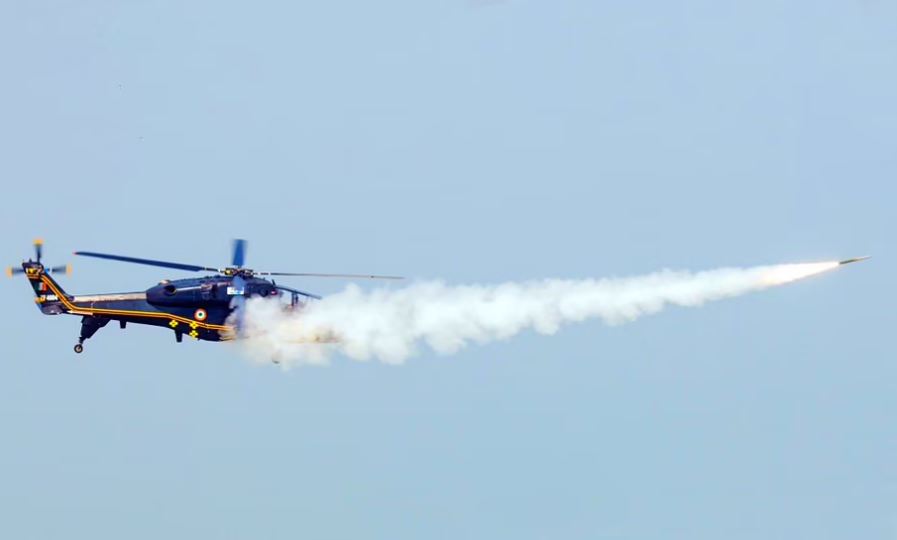
LCH firing MBDA’s Mistral air-to-air missile (source: Swarajya)

Another feature that makes this made-in-India helicopter unique is that if its avionics and arm are integrated, the helicopter can locate and destroy the target, be it in the air or on the ground. Moreover, during any mission, this attack helicopter can be operated manually.

Last but not least, the LCH can be erected in either a 180-degree or reversed position. It can spin 360 degrees, which means it can also rotate quickly in the air.
Austria becomes first country in Europe to impose a complete lockdown amidst fresh Coronavirus outbreak

0

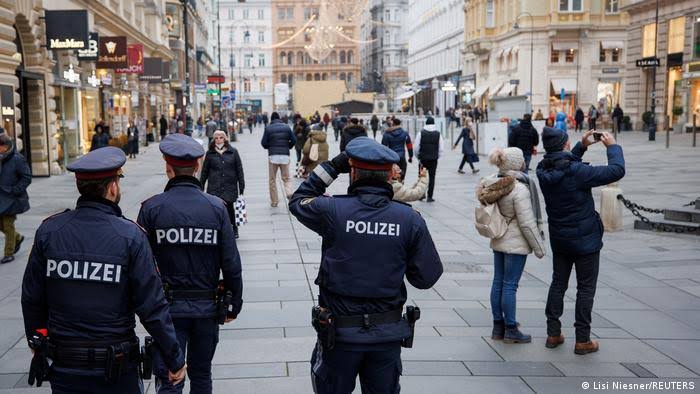
Austria on Friday announced that it will impose a complete lockdown and make vaccinations mandatory, becoming the first country in the European Union to take such an extreme measure in a bid to tackle the fresh outbreak of coronavirus infection. 

Other European nations are also tightening restrictions as the infection rate of people affected by the Chinese virus has spiked with the onset of winter. However, no other country in Europe has gone to the extent of imposing a blanket lockdown, reminiscent of the first few months of the outbreak that swept across the world in early 2020. 

Besides Austria, only the Vatican has mandated vaccinations for all. But the fall has brought with it a new surge of coronavirus infections across the continent, with nations such as Spain and Portugal, which are among the highest vaccination coverage, also witnessing an uptick in the number of COVID-19 caseloads. 

Announcing the sweeping measures taken by the government, Chancellor Alexander Schallenberg said lockdown in Austria will start from Monday, i.e 22 November 2021, while the vaccinations will become mandatory starting February 1 next year. 

Approximately, two out of three Austrians are fully vaccinated, one of the lowest inoculation rates in Europe. Schallenberg has pinned the blame on low vaccination adoption rates in Austria as the primary reasons for his government’s decision to enforce a complete lockdown. 

“Despite months of persuasion, we have not succeeded in convincing enough people to get vaccinated,” Schallenberg told a press conference in the western Tyrol state, where he met regional government heads.

“Sustainably increasing the vaccination rate is the only way to get out of this vicious circle,” he said.

Schallenberg also slammed those who promoted vaccine hesitancy and called their efforts of undermining the country’s inoculation efforts as an “attack on the health system”, adding that vaccinations were the “exit ticket” out of the pandemic.

After lockdown will be imposed in Austria, people will not be allowed to venture out of their houses, except for going out to work, shopping for essentials and exercising. Schools will remain open but parents will be requested to keep their children at home if possible. In addition to this, the government will encourage remote working so that crowding in office places could be avoided. 

Starting this week, Austria had already imposed a lockdown for those not vaccinated or recently cured, becoming the first European country to do so. However, spiralling coronavirus cases forced the government to reconsider its decision and impose a sweeping lockdown to curb the spread of the virus. 

On Thursday, a new record of more than 15,000 new cases were recorded in the Alpine EU member of nearly nine million people.

‘Uniform Civil Code is long due, govt has to bring it, not any community or court’: Allahabad HC

0

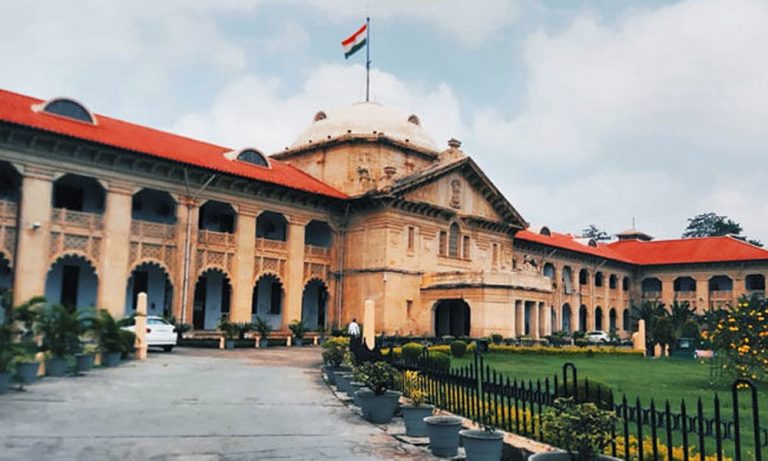
The single bench Justice Suneet Kumar of the Allahabad High Court has asked the central government to take steps for implementation of the Uniform Civil Code (UCC) across India under article 44 of the Constitution of India, Live Law reported.

The court said this on November 19 while hearing a petition filed by Mayra alias Vaishnvi Vilas Shirshikar and 16 others related to interfaith marriages. The court asked the Central government to consider setting up a panel for implementing the mandate of Article 44 regarding UCC, which says that the “state shall endeavour to secure for the citizens a Uniform Civil Code (UCC) throughout the territory of India”.

Uniform Civil Code is long due and it can’t be made voluntary: Court

The observation of the Allahabad High Court that the Uniform Civil Code is ‘long due and it can’t be made voluntary’ has kicked off a fresh debate as people have long been demanding UCC. But unfortunately for Muslim appeasement, Congress and other pseudo-secular parties always blocked the road of UCC.

Quoting B.R. Ambedkar, the justice said that UCC can’t be made ‘purely voluntary’ as observed by Ambedkar 75 years back. “It cannot be made ‘purely voluntary’ as was observed by Dr. B.R. Ambedkar 75 years back, in view of the apprehension and fear expressed by the members of the minority community,” the Court said.

The HC added, “No community is likely to bell the cat by making gratuitous concessions on this issue. It is the State which is charged with the duty of securing a UCC for the citizens of the country and unquestionably, it has the legislative competence to do so.”

HC praises Hindu family Code

The HC hailed the Hindu Family Code, saying that it acts as a Unifrom Civil Code and integrated the citizens into a united Hindu citizenry, on terms that are equal and uniform, insofar as the law regulating family laws is concerned. The HC added that the impact of HFC on the Hindu society has been phenomenal, it has transformed the traditional Hindu society and has lifted the constrictions of caste, gotra, rigid constrictions of purity etc.

UCC needed for national integration

The bench rebuffed if belief seems to have gained ground that it is for the minority community to take a lead in the matter of reforms of their personal law. “That has been the consistent official stand of the Government within the country and in international forums. A common civil code will help the cause of national integration by removing disparate loyalties to laws that have conflicting ideologies. No community is likely to bell the cat by making gratuitous concessions on this issue. It is the State which is charged with the duty of securing a uniform civil code for the citizens of the country and, unquestionably, it has the legislative competence to do so,” the judgment said.

The court added that it was the right time for the parliament to intervene and examine whether the country requires a multiplicity of marriage and registration laws or bring a ‘single family code.’

The court said that ‘single family code’ is required to protect interfaith couples who are often ‘hounded as criminals.’

Justice Suneet Kumar directed the marriage registrar to immediately register the marriage of the petitioners without insisting or waiting for approval of the competent district authority regarding conversion of faith.

The standing counsel of the Uttar Pradesh government pointed out that the registration of the marriage of petitioners was subject to inquiry by the district authority. It is because of the reason since they did not get the mandatory approval from the district magistrate before converting to the faith of their partner to solemnize their marriage.

On this, lawyers representing petitioners said that citizens have the right to choose their partner and faith and they converted out of the free will.

After PM Modi repeals farm laws, Islamists and Leftists start throwing ‘Gaumutra’ and ‘gobar’ jibes at his supporters

Hours after the Modi government repealed the three historic farm laws that were aimed at increasing the income of farmers, supporters of PM Modi became the subject of Hinduphobic slurs such as ‘Gaumutra’ (cow urine) and ‘gobar’ (cow dung) by Islamists and Leftists.

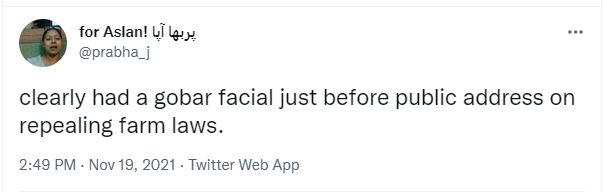
Trolls did not spare the opportunity to abuse the supporters of the ruling party after the BJP relented to the widespread protests held by farmer unions. One abusive troll wrote, “Clearly (PM Modi) had a gobar facial just before public address on repealing farm laws.”

Screengrab of the tweet

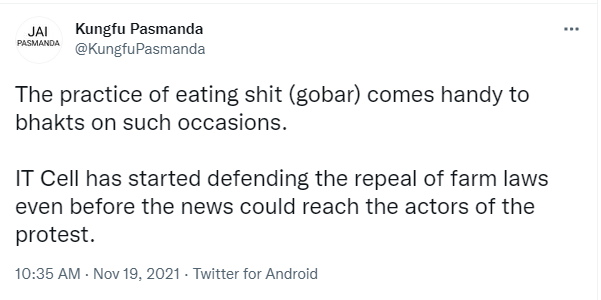
Another troll (@KungfuPasmanda) tweeted that followers of the BJP are used to eating gobar if the party made a U-turn on its policies. “The practice of eating gobar comes handy to bhakts on such occasions. IT Cell has started defending the repeal of farm laws even before the news could reach the actors of the protest.”

Screengrab of the tweet

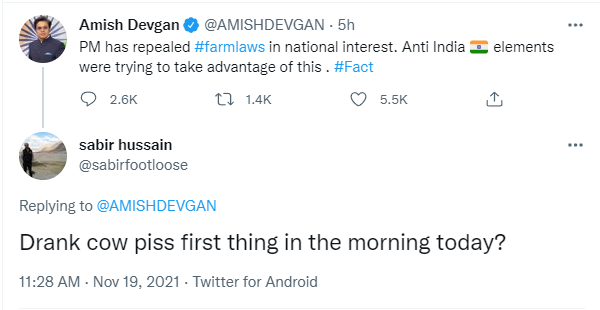
While abusing journalist Amish Devgan, one Islamist named Sabir Hussain wrote, “Drank cow piss first thing in the morning today?”

Screengrab of the tweet

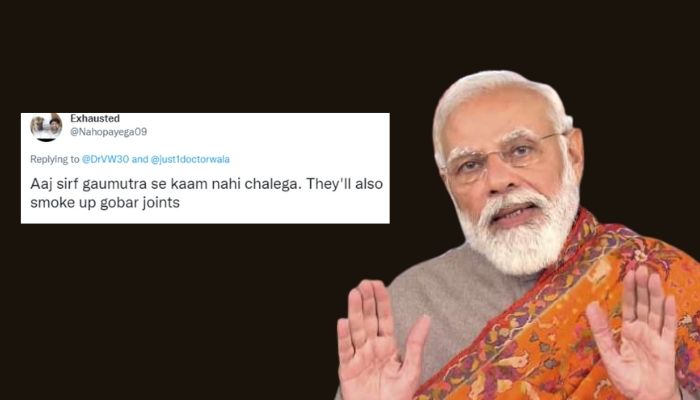
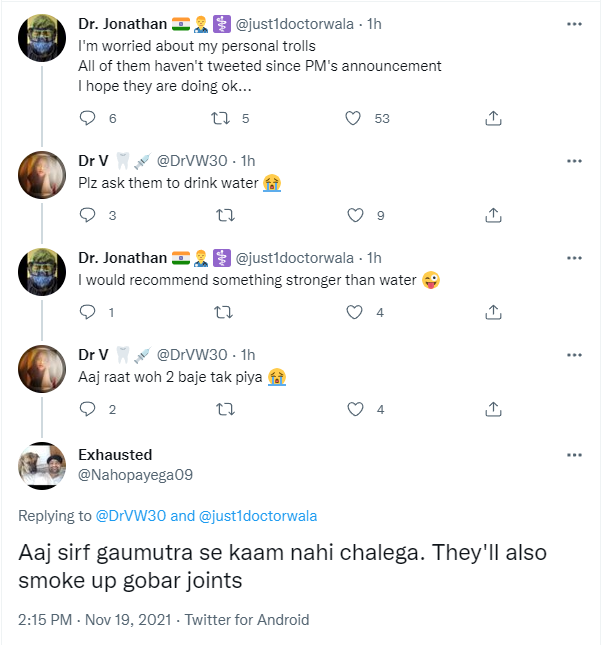
While responding to a Twitter thread about the fate of personal trolls (referring to BJP workers) after the government’s decision, one troll claimed, “Today, gaumutra alone won’t be sufficient. They will also smoke up gobar joints.”

Screengrab of the tweet

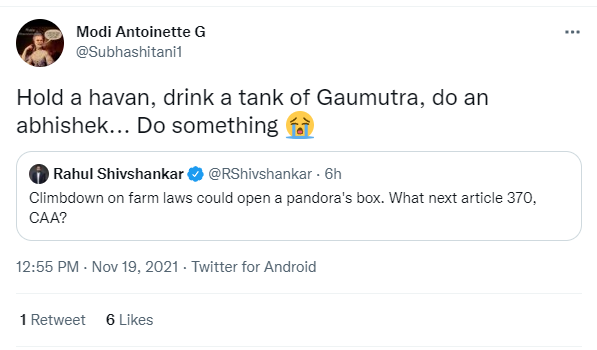
Another troll (@Subhashitani1) asked Times Now journalist Rahul Shivshankar to drink gaumutra after the Modi government repealed the three farm laws. It wrote, “Hold a havan, drink a tank of gaumutra, do an abhishek…do something.” Rahul Shibshankar had inquired whether the government would roll back CAA and abrogation of Article 370.

Screengrab of the tweet

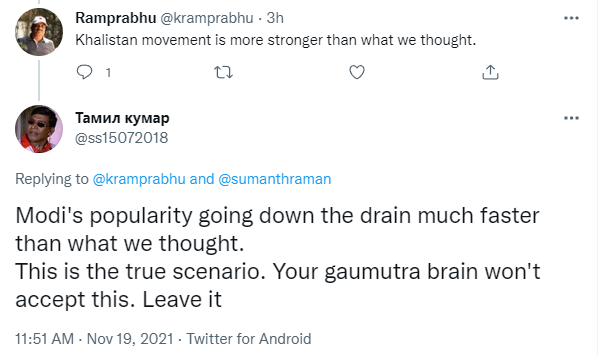
On raising concerns that the Khalistani movement is getting a stronghold in India, another troll tweeted, “Modi’s popularity going down the drain much faster than we thought. This is the true scenario. Your gaumutra brain won’t accept this. Leave it.”

Screengrab of the tweet

Hindudphobic ‘Gaumutra jibe’ is the language of terrorists

‘Gaumutra’ jibe is often used by Islamist terrorists before attacking Hindus. In 2019, a Pakistan-backed Jaish-e-Muhammad terrorist in a suicide attack had killed as many as 40 CRPF soldiers in Pulwama, Kashmir. Following the attack, a video was released in which the terrorist could be heard saying he wanted to punish and kill the ‘cow urine drinkers’ in the name of Allah. The terrorist identified as Adil Ahmed Dar alias Waqas was seen admitting that he had joined the Jaish-e-Mohammad a year ago. In the video, he had referred to Indians as “Gae ka Peshab Peene Wale” (People who drink cow urine).

PM Modi repealed the three farm laws and urged protesters to go back home

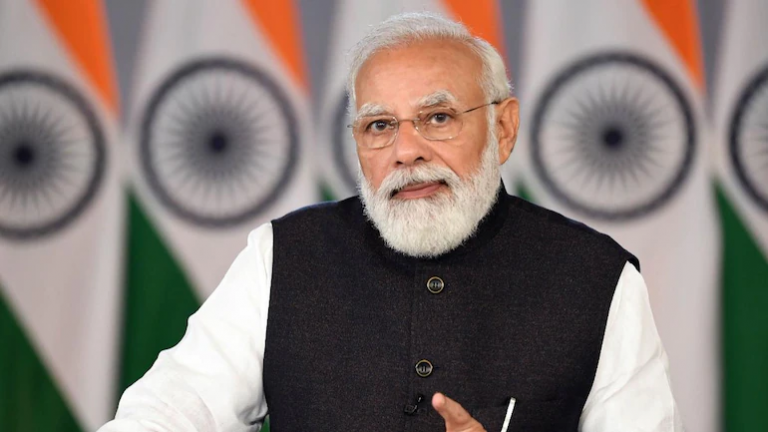
On the 19th of November, Prime Minister of India Narendra Modi addressed the nation at 9 AM. Addressing the nation, PM Modi thanked the millions of farmers who appreciated the farm laws, which were introduced after due deliberation and with honest intentions. PM Modi made a startling announcement saying that the government had decided to, however, repeal the 3 farm laws that were passed for the benefit of the farmers.

PM Modi, addressing the nation said that by the end of this month, the Modi government would complete the process of repealing the three farm laws. He then appealed to the protesting farmers and middlemen to return to their homes on this Gurupurab and stop their protest. He further said that the government will form a committee to formulate laws for the benefit of the farmers.

He further said that the government had introduced the laws after due deliberation but perhaps it was the shortcoming of the government that they could not convince all farmers that the laws were indeed in their benefit. Further, he said that the past governments had deliberated on these laws as well but it was the Modi government that had implemented them.

The unceremonious and sudden repeal of farm laws: The lessons the government can learn from it

Prime Minister Narendra Modi, on Friday, announced that his government had taken the decision to repeal the three farm laws which had attracted huge protests from farmers in Haryana and Punjab. He said that the farm laws will be repealed by the end of the month and urged the protesters to return home.

As expected, the decision did not go down well with the well-wishers of the government who were vocal in their support for the farm laws. There is much angst against the government and Prime Minister Modi himself on social media and elsewhere.

On his part, Narendra Modi said that they were unable to convince farmers that the laws were for their own benefit. Furthermore, he said that a committee will be formed to formulate laws for the benefit of farmers.

Nevertheless, it is a huge setback for the government. On the one hand, logic dictates that the decision was taken because the Khalistani separatist movement was gaining traction due to the propaganda around the farm laws. On the other hand, the government ends up looking weak, capitulating to street veto. Either way, there are certain lessons that the government could learn from the debacle.

A soft front for radical protests

The farmer protests were the second instance where mobs used street power to thwart the Indian Parliament. Earlier, the Shaheen Bagh protests had followed a similar trajectory, of blocking major roads, to force the will of the vocal minority against the laws passed by the parliament.

In both instances, radical elements used the cover of a vulnerable face to cloak the ugly realities underneath. In Shaheen Bagh, the protests were portrayed as soft-spoken ‘dadis’ against a ‘fascist’ government. In this case, it was the hardworking ‘farmer’ versus a tyrannical government.

While in the case of the former, the image of ‘dadis’ was used to hide the fact that children had died in these protests due to the negligence of parents and other ugly facets, in the case of the farmer protests, the image of farmers was used to cloak the fact that anarchy reigned supreme at the protest sites.

There were rapes, there were murders and there were assaults. But all of this was brushed under the carpet. While the government should have gone hammer and tongs against these crimes, they largely remained silent and allowed the mob to set the narrative. And in the end, they had to pay the price for it.

The Government ought to have made the discussion about the radical elements driving the protests but in the end, the narrative was about ‘farmers’. Even the government only spoke about farmers without laying sufficient emphasis on the dark elements using the cloak of farmers to further their agenda.

Communal undertones, Secular overtones

The protesters succeeded in painting the protests as ‘secular’ even though the communal nature of it was obvious from the very onset. The protesters succeeded in turning it into a matter of ‘Sikh pride’ and ‘Jat pride’ while the government was unable to stem the flow of it.

On the face of it, the protests were made to look like an outburst of genuine anger against the government but then there were always the communal undertones to it. On more than one occasion, Khalistani banners and slogans were heard at these protests.

Even Congress politicians conceded that Khalistanis had taken over the same. As early as January this year, Congress MP Ravneet Singh Bittu had said Khalistanis were attempting to hijack the protests. Nonetheless, the government could not dispel the narrative that it was a ‘secular’ protest.

Communication Strategy on farm laws

The Government’s communication overdrive on the farm laws began after the laws were enacted by the Parliament. It would have perhaps been more prudent to launch a massive awareness campaign before the bills were tabled before the Parliament.

That way, the political battle could have been fought before the laws were enacted. It would also have saved the Government the embarrassment of having to repeal the laws. The repeal also sets a dangerous precedent in that it would give rabble rousers the notion that street power reigns supreme and the Parliament can be forced into submission through unlawful conduct.

Free pass to violence to protesters against farm laws

The government had a golden opportunity to crush the protests in the aftermath of the Republic Day violence. It had widespread sympathy among citizens and numerous farmer organisations were also pulling out given the insult to the country on one of its most important days.

But the government failed to act and it only served to embolden protesters further. Consequently, roads were blocked with further impunity and politicians, from the BJP, were harangued and harassed at numerous places. On one instance, BJP leaders were held hostage at a Temple in Rohtak.

On another occasion, BJP MLA Kamal Gupta had to be rescued by the Police. The Government took its hand off the peddle when it comes to law and order, which made anarchy the norm in significant sections of the country.

Before long, the road blocks started to massively displease citizens in NCR who had to suffer due to them. While a swift imposition of justice early into the protests would likely have ended the problem right then and there, allowing it to fester and grow escalated matters into a situation where massive forces would have been required to quell the protests.

As the old saying goes, “A stitch in time saves nine.” At the same time, there were too many concessions that were given to the protesters. The delay in the implementation of the act was another concession that proved to be far too costly in the end. It was seen as a reward for unruly behaviour. When an opposition perceives weakness, they pounce. And pounce they did.

Soft approach to troublemakers such as Rakesh Tikait and Yogendra Yadav

Yogendra Yadav and Rakesh Tikait have been at the forefront of the mayhem that the protesters had unleashed on the streets. But for some reason, best known to the government, they were given broad leeway to continue on their merryway.

While it could be argued that a crackdown on Tikait was not politically feasible, the same cannot be said for Yogendra Yadav. Yadav is largely a political nonentity and his support was limited to the echo-chambers of Lutyens Delhi. While the government has been more than willing to take the fight to Lutyens Delhi, the lack of any perceivable action against Yadav cost them deerly.

Justice has to seen to be done but there was absolutely nothing that the government on that front. Tikait realised that there was no cost to the many ridiculous comments he had been making, which only encouraged him to push the line further. In October, Tikait had justified the lynching of BJP workers and yet, the comment was allowed to fade from public attention.

Yadav, too, realised that no punishment was coming, so he was at complete liberty to do as he pleased. Apart from that, on the many instances of unlawful conduct that were observed at the protest sites, the government allowed the protesters to scapegoat a select few and distance themselves from it when it was evidently not the case.

All of it came to bite them back in the end. Before long, the cancer had metastasized to such an extent that it would have required drastic measures to ensure that the farm laws could be enacted, measures that did not pass the muster of the cost-benefit analysis that the government must have performed.

Now, the Government is believed to have repealed the laws keeping in mind the threat to national security. There was serious concern that communal relations between Hindus and Sikhs had deteriorated and there was good reason to believe that Khalistani terrorism could witness a revival of sorts. Therefore, the Government appears to have concluded that it was too high a price to pay and decided to make tactical retreat.

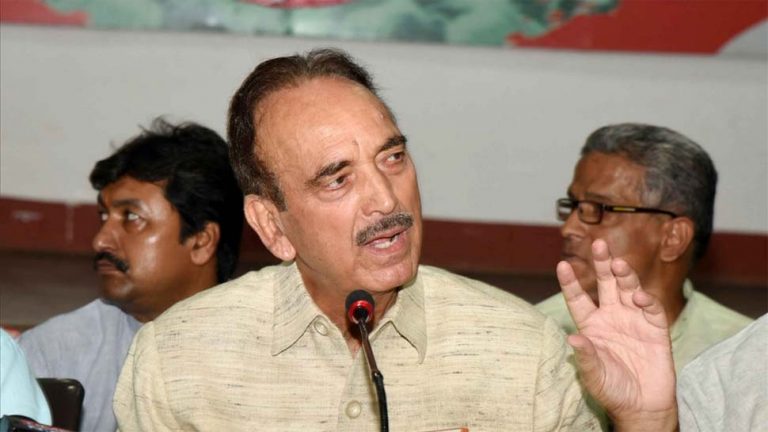
Sonia Gandhi drops Ghulam Nabi Azad from disciplinary committee days after Azad’s loyalists resign in J and K

Congress interim President Sonia Gandhi has dropped senior leader and former Leader of Opposition in Rajya Sabha Ghulam Nabi Azad from the panel of the newly constituted disciplinary committee of the party.

The new panel announced on November 19 has also dropped former Home Minister Sushil Kumar Shinde and former Arunachal Chief Minister Mukut Mithi from the disciplinary committee. The committee was revamped following the death of Motilal Vohra who was the member secretary of the committee. While Tariq Anwar has replaced Bora, Ambika Soni, JP Agarwal and G Parameshwara have been accommodated as members.  Former union minister AK Antony will head the committee.

The Congress has not attributed any reason behind suddenly discarding Ghulam Nabi Azad who has been a member of the disciplinary committee for a long time. But it is evidently clear that Sonia Gandhi is in no mood to accommodate any leader in any important bodies of the party one who keeps an independent opinion and advocates organizational reforms of the party.

The Congress Working Committee member, Ghulam Nabi Azad, is part of the ‘G-23 group of the Congress that had asked Sonia for sweeping changes in the party structure.

Azad was dropped a day after around 20 Congress leaders from Jammu and Kashmir (J&K) considered close to him resigned from their party positions.  They include former ministers GM Saroori, Vikar Rasool and Dr Manohar Lal Sharma; former MLAs Jugal Kishore Sharma, Ghulam Nabi Monga, Naresh Gupta, Mohammad Amin Bhat, Subash Gupta; State Congress vice-president Anwar Bhat, and member of Kulgam District Development Council Anyatullah Rather.

They sent their resignation to Sonia Gandhi, Rahul Gandhi and in-charge Secretary (J&K) Rajni Patil. They said that they were forced to resign following the ‘hostile attitude’ of the party leadership and accused J&K Congress chief Ghulam Ahmed Mir of leading the party to a disastrous condition.

Leaders said for the last one and half years they were unsuccessfully trying to draw the attention of the central leadership of the party towards issues of the state unit high. During the Srinagar and Jammu visit of Rahul Gandhi in August this year, they were not given time to meet him to raise their concerns. They want central leadership to give Azad the leadership of J&K.

However, Azad denied having any knowledge of resignations of J&K Congress leaders close to him.

Chinese tennis player goes missing after accusing top Communist leader of coercing her into sex: Details

0

Chinese Tennis player Peng Shuai went missing after she accused former Vice Premier Zhang Gaoli of coercing her into sex at his home, according to reports. She has not been seen in public ever since she made the allegations against Zhang Gaoli as per the screenshots of a since-deleted social media post from November 2. Zhang Gaoli was the former Vice Premier of the People’s Republic of China between 2013 and 2018 and a member of the Chinese Communist Party Politburo Standing Committee.

Chinese censors have removed all the mentions about the allegations from the internet after erasing Peng Shuai’s original post within 30 minutes. Peng Shuai’s Weibo account which has more than half a million followers disappeared as well.

Head of the Women’s Tennis Association (WTA) Steve Simon has reacted strongly to the disappearance and said, “We’re definitely willing to pull our business and deal with all the complications that come with it,” adding, “Because this is certainly, this is bigger than the business.” 

Simon has further noted that women need to be respected and not censored and said that all attempts to contact Peng Shuai online has failed. He said, “We have reached out to her on every phone number and email address and other forms of contact,” Simon also said, “There are so many digital approaches to contact people these days that we have, and to date, we still have not been able to get a response.”

The news of the disappearance of Peng Shuai comes at a time when China is supposed to host the 2022 Winter Olympics in February. However, the Chinese state media has allegedly released an email where the tennis player Shuai has taken back her allegations and stated that she was fine. Simon has questioned the authenticity of the email and described it as a “staged statement of some type,” and said, “Whether she was coerced into writing it, someone wrote it for her, we don’t know,”. Furthermore, he stated, “But at this point, I don’t think there’s any validity in it and we won’t be comfortable until we have a chance to speak with her,” 

How the Tennis world reacted to the Censorship

Serena Williams said, “I am devastated and shocked to hear about the news of my peer, Peng Shuai. I hope she is safe and found as soon as possible. This must be investigated and we must not stay silent. Sending love to her and her family during this incredibly difficult time. #whereispengshuai”

Japanese tennis player Naomi Osaka has tweeted about Peng Shuai disappearance on the social media platform asking where was Peng Shuai.

Novak Djokovic said, “When I heard the story of Peng Shuai I was shocked. I hope she is well and that we can find her as soon as possible”.

Earlier this month, Chinese citizen journalist Zhang Zhan who was imprisoned for covering the initial Covid-19 outbreak in Wuhan was reported to be in critical condition and close to death following her hunger strikes protesting against the imprisonment. Zhang Zhan was detained by the Chinese government in May 2020 for reporting on the Wuhan virus and then sentenced to four years imprisonment.

Shakira’s hips don’t lie and according to this MP officer, neither do drunkards and hence, no proof of vaccination necessary: Watch

0

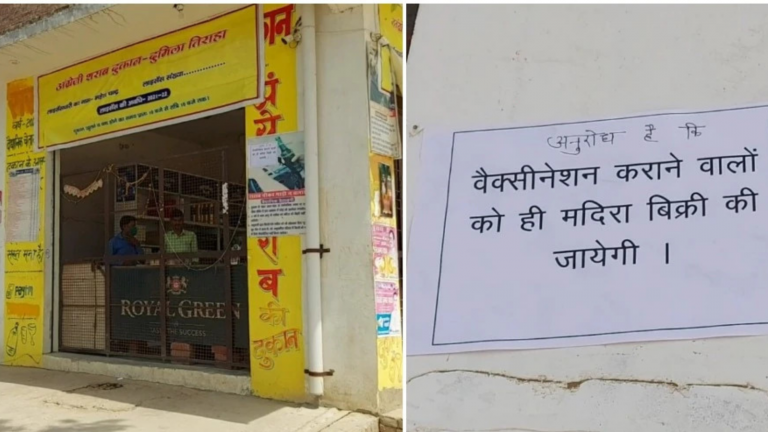
An excise officer of Khandwa district of Madhya Pradesh believes that drunkards never lie, hence, their verbal assurance of being fully vaccinated is enough to purchase alcohol.

A video of Khandwa district excise officer RP Kirar has gone viral where he was heard saying that usually drunkards are honest by nature and they don’t lie. He said this during the media interaction while explaining the Covid-19 protocols regarding the sale of alcohol.

Kirar said that in the light of the order of the local administration, the excise department has issued a directive to liquor shops to entertain only such customers who have taken both doses of the Covid 19 vaccine. He said that the salesman at the shop will ask the purchaser whether he has taken both doses.

When asked how the salesman will verify it, the officer said that the department will bank on the honesty of the customers and their verbal declaration as fully vaccinated will be sufficient.

“He (purchaser) will reply honestly that he has taken both doses or not. In India, and I have the personal experience that drinkers speak the truth, they don’t lie. No certificate of vaccination is required,” he said.   

However, despite repeated attempts, Madhya Pradesh Excise Commissioner Rajiv Chandra Dubey and Kirar could not be contacted for their comments on whether the district administration has given permission to sell alcohol even on verbal assurance.

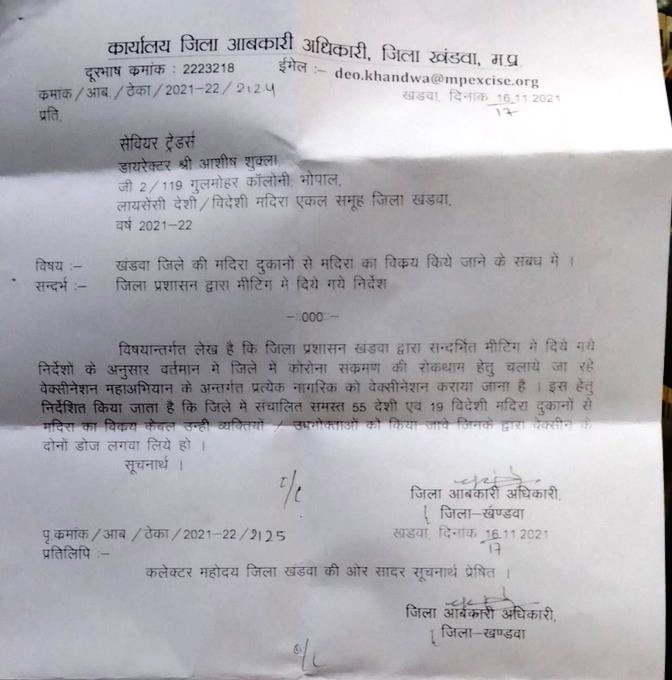
In Khandwa, there are 55 country and 19 foreign liquor shops and the district administration had recently instructed all liquor shops to sell alcohol only to those who are fully vaccinated against the virus.

The order

In the wake of the district administration’s order, the district excise department issued a circular to all liquor shops that the sale of liquor should be done only to those persons/consumers who have got both the doses of the vaccine, the order said.

Gurugram: After offering place for Friday Namaz, Gurudwara committee refuses, says space won’t be available due to Gurupurab celebrations

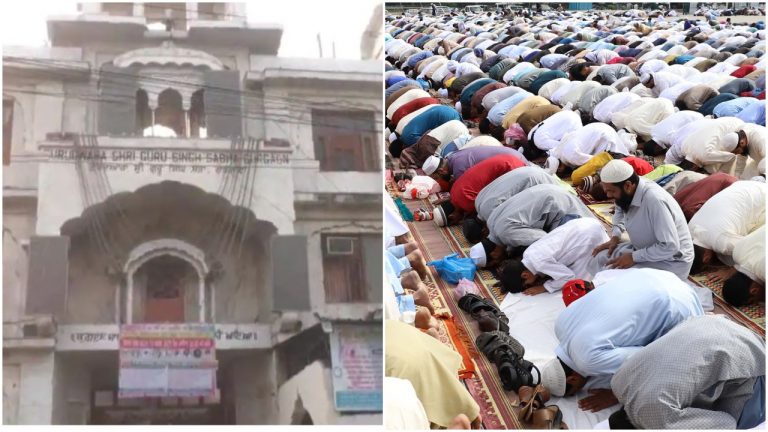
A day after the Gurdwara Singh Sabha Committee of Gurugram announced opening its doors to the Muslim community, offering them space to offer Friday Namaz prayers in the Gurudwara, the committee seems to have gone back on its decision.

According to a report by Navbharat Times, the Gurdwara Singh Sabha Committee stated that due to the Gurupurab celebrations, the Gurudwara will be overcrowded, making it impossible to accommodate Muslims to offer Friday Namaz.

The Gurdwara Singh Sabha Committee of Gurugram, which has five gurdwaras affiliated to it at Sadar Bazar sabzi mandi, Sector 39 (near Medanta), Sector 46, Jacobpura, and Model Town had on Thursday offered its space for Muslims to offer namaz.

Speaking to news agency ANI, President of Gurdwara Sri Guru Singh Sabha Sherdil Singh Sidhu had said: “It’s Guru Ghar, open for all communities with no discrimination. There shouldn’t be any politics here. The basement is now open for Muslim brothers who want to offer ‘Jumme ki namaz’.”

However, a day after, the Gurudwara committee went back on its decision citing Gurupurab as the reason for being unable to offer space to the Muslims.

OpIndia tried to contact the committee president through Whatsapp but to no avail. We then tried to get in touch with another person associated with the Gurdwara Singh Sabha Committee named Prem Singh. One of his staff members answered the call. He informed us that no one is available to speak with us right now since everyone is preoccupied with the Gurupurab celebrations and that no one will be available to speak with us until the programme is over.

We will update the report as soon as we are able to get in touch with the Gurdwara Singh Sabha Committee members and obtain a statement on the matter.

Some Sikhs had raised questions asking when there are so many mosques in Gurugram, why do the Muslims need to pray inside a Sikh Gurudwara.

It may be noted that the residents in several sectors in Gurugram have been protesting peacefully against Muslims blocking public spaces for namaz prayers, asking why can’t they do it in mosques.

The protests by local residents in Sector 47, Sector 12 and other places in Gurugram was never about denying namaz or preventing Muslims from praying. The protests were about public spaces like parks and roads being blocked for namaz and the concerns regarding safety, especially that of women. Public spaces are for public use, the residents were asking why does the Muslim community block those spaces when they can offer namaz in mosques.

In fact, even the local Muslims in Gurugram, Haryana have raised objections, saying that the Namaz in public places should end as they believe it is vitiating the communal atmosphere in the area. Local Muslims in Sector 12 have told Gurugram News that they want things to go back to as they were before when Namaz was not offered in the area.

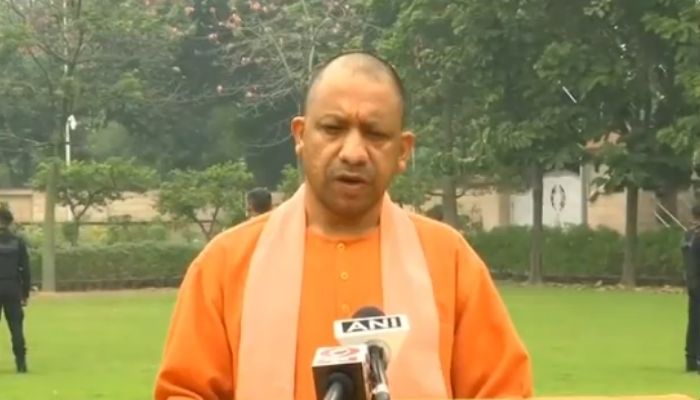
‘We failed to convince them, decision taken in the spirit of democracy’: CM Yogi thanks PM Modi on repealing farm laws

On Friday (November 19), Uttar Pradesh Chief Minister Yogi Adityanath thanked Prime Minister Narendra Modi for repealing the three farm laws that had been the bone of contention between the Centre and the farmer protestors.

While thanking Prime Minister Narendra Modi, Yogi Adityanath said, “We know how farmer unions were protesting against the three farm laws. On the occasion of Gurpurab, PM Modi has made a historic decision to repeal the farm laws. I welcome the decision with all my heart. From the very beginning, there was a large group of people who believed that farm laws could pave the way towards increasing the farmer’s income.”

He further added, “Despite this, when farmers unions began protesting against the farm laws, the government made all attempts to communicate with them. It is quite possible that we have failed to convince them because of which they had to take to the streets for protests. Keeping up with the spirit of democracy, the decision was made to repeal the farm laws. We welcome the decision for constituting a committee to look into the Minimum Support Price (MSP) issue.”

PM Modi repealed the three farm laws and urged protesters to go back home

On the 19th of November, Prime Minister of India Narendra Modi addressed the nation at 9 AM. Addressing the nation, PM Modi thanked the millions of farmers who appreciated the farm laws, which were introduced after due deliberation and with honest intentions. PM Modi made a startling announcement saying that the government had decided to, however, repeal the 3 farm laws that were passed for the benefit of the farmers.

PM Modi, addressing the nation said that by the end of this month, the Modi government would complete the process of repealing the three farm laws. He then appealed to the protesting farmers and middlemen to return to their homes on this Gurupurab and stop their protest. He further said that the government will form a committee to formulate laws for the benefit of the farmers.

He further said that the government had introduced the laws after due deliberation but perhaps it was the shortcoming of the government that they could not convince all farmers that the laws were indeed in their benefit. Further, he said that the past governments had deliberated on these laws as well but it was the Modi government that had implemented them.