Home Blog Page 3749

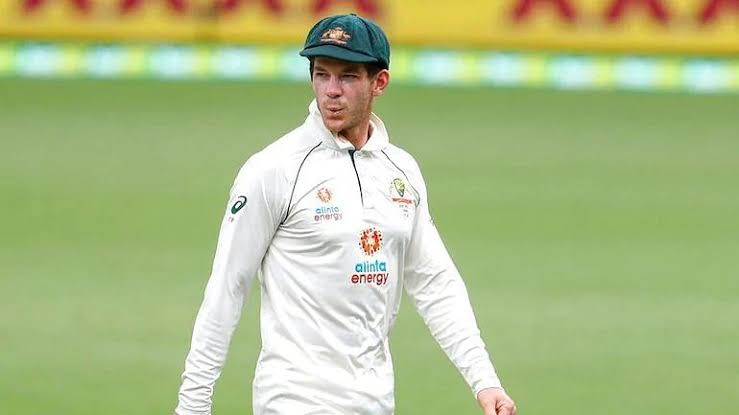
Tim Paine admits to sending d*ck pic and explicit messages, steps down as Australian captain ahead of Ashes

With less than three weeks to go for the first Ashes test match against England, Tim Paine has relinquished the post of Australia’s Test captaincy after being mired in a ‘Sexting’ scandal with a former Cricket Tasmania employee in 2017.

The wicket-keeper announced his resignation at a press conference in Hobart on Friday following the emergence of an investigation four years ago by Cricket Australia for sending explicit messages to a female co-worker. The Australian Cricket Board has accepted Tim’s resignation, and will now look ahead to appointing a new Test captain.

“Today, I’m announcing my decision to stand down as the captain of the Australian men’s test team. It’s an incredibly difficult decision, but the right one for me, my family, and cricket,” Paine said as he read out a statement.

Australian wicket-keeper sent “d*** pic” and a series of lewd messages to female co-worker: Reports

Australian media on Friday reported that Paine had sent a former Cricket Tasmania employee unsolicited “d*** pics” and a series of lewd messages on the eve of the 2017/18 Ashes series.

In his press conference, Paine admitted to sending explicit messages to a female co-worker and expressed his remorse for having done so. He offered his side of the story, but added that his behaviour did not behoove an Australian captain and therefore, in the light of the reports made around the incident, he believes it was appropriate for him to resign. Although, he said he will remain available as a player.

“As a background on my decision, nearly four years ago, I was involved in a text exchange with a then-colleague. At the time, the exchange was the subject of a thorough CA Integrity Unit investigation, throughout which I fully participated in and openly participated in,” he added.

“That investigation and a Cricket Tasmania HR investigation at the same time found that there had been no breach of the Cricket Australia Code of Conduct. Although exonerated, I deeply regretted this incident at the time, and still do today. I spoke to my wife and family at the time and am enormously grateful for their forgiveness and support. We thought this incident was behind us and that I could focus entirely on the team, as I have done for the last three or four years,” Tim said.

“I don’t want to create unnecessary disruption for the Australian team before the Ashes”: Tim Paine

“However, I recently became aware that this private text exchange was going to become public. On reflection, my actions in 2017 do not meet the standard of an Australian cricket captain, or the wider community. I’m deeply sorry for the hurt and pain that I have caused to my wife, my family, and to the other party. I’m sorry for any damage that this does to the reputation of our sport. And I believe that it is the right decision for me to stand down as captain, effective immediately. I do not want this to become an unwelcome disruption to the team ahead of what is a huge Ashes Series,” Tim added.

Noida police Anti Human Trafficking Unit bust prostitution racket being operated via Whatsapp, three arrested

0

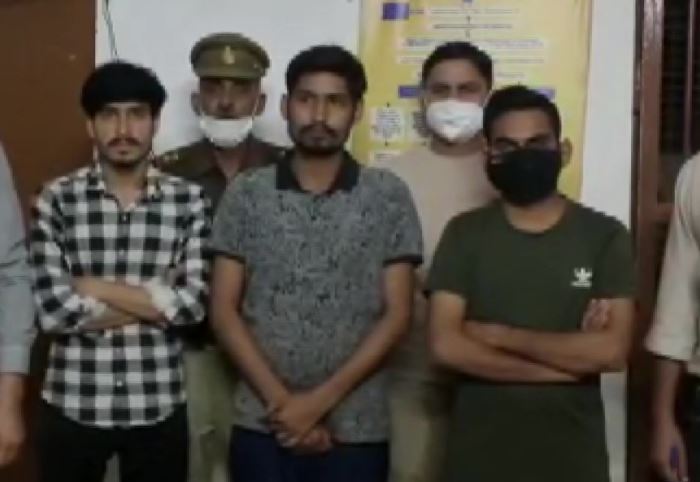
The Anti Human Trafficking Unit (AHTU) of Gautam Budh Nagar police in Noida, Uttar Pradesh, Thursday, busted a prostitution racket in the city being operated through Whatsapp. The police have arrested three accused who reportedly dealt with clients. Three women have also been apprehended and their role in the case is being investigated.

News agency ANI quoted DCP Women Safety Vrinda Shukla as saying: “Three men who dealt with clients arrested while their fourth partner is absconding.”

“3 women have been apprehended in connection with the case but their role is being investigated further,” Noida DCP Women Safety Vrinda Shukla added.

According to reports, Devendra Yadav, the team leader of Noida Police’s Anti-Human Trafficking Unit, stated that information regarding a sex racket operating in the guest home had been received for several days. The Crown Stay Guest House, which is located near the Sector-49 police station, was raided on Wednesday evening. Three suspects were apprehended on the spot, and three girls were taken into custody as well.

Anurag, Danavendra, of Kurara Hamirpur, and Shailendra Yadav, of Umri Bhind, Madhya Pradesh, have been identified as the arrested suspects, said the police, adding that three mobile phones and Rs 3500 was also recovered from them.

According to reports, the dealers confessed to the authorities that they contacted the consumers online and over Whatsapp.

“The dealers contacted possible clients through Whatsapp and if a deal was fixed, they charged Rs 3,000 per client, of which Rs 1,000 went to the women involved,” a police spokesperson was quoted as saying.

The Noida police are now on the lookout for the fourth accused identified as Arjun, a resident of Sector 51 in Noida, Uttar Pradesh. Information about him is being collected from the arrested people.

An FIR has been lodged at the Sector 49 police station and legal proceedings initiated, the police added. 

Bombay HC transfers judge to Yavatmal district after he rejected Anil Deshmukh’s plea for home-made food in prison

0

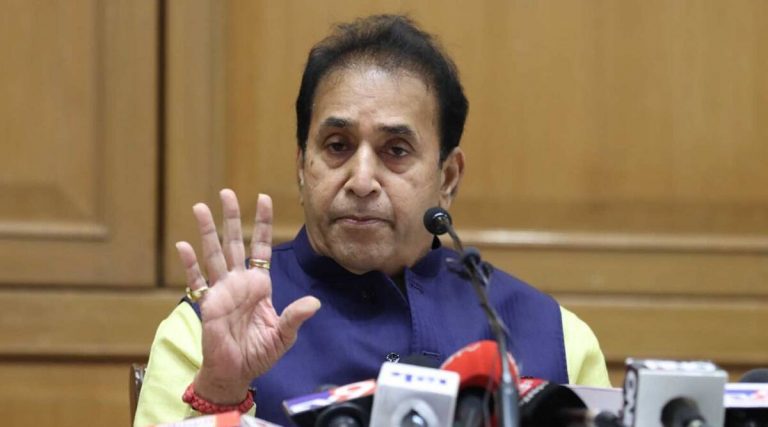
Additional Sessions Judge HS Satbhai, who had been hearing the Enforcement Directorate’s remand applications against former Maharashtra Home Minister Anil Deshmukh, was transferred by Bombay High Court to Yavatmal district this week. The transfer came after Satbhai had turned down the NCP leader’s request for home-cooked meals.

While rejecting Anil Deshmukh’s plea for home-cooked meals in prison, the court had sent him to 14-days judicial custody in connection with a corruption case. However, the court had accepted his appeal for a bed in view of the medical condition of the 71-year-old politician.

But it was unyielding on Deshmukh’s request for home-made food. “You eat jail food first. If not, then I will consider,” the judge had said.

Prior to being involved in the Anil Deshmukh case, Satbhai was a special judge for hearing cases pertaining to the Narcotic Drugs and Psychotropic Substances (NDPS) Act from August 2020 to July 2021 in Mumbai.

The High Court does not have the power to transfer special judges on their own. It had to seek special permission from the Supreme Court for changing the posting of special judges. The Bombay High Court Registrar General had cited “administrative exigencies” as the reason for seeking permission from the SC for the transfer of the judge presiding over the Anil Deshmukh’s case to Yavatmal district. The Supreme Court granted its permission for the transfer on November 13.

“The High Court has been pleased to transfer and post HS Satbhai, Judge, City Civil Court and Additional Sessions Judge, Mumbai as District Judge and Additional Sessions Judge, Kelapur, District Yavatmal with immediate effect,” the official order of November 15 stated.

Special judge transferred even as NCP supremo Sharad Pawar issues threats against those who jailed Anil Deshmukh

It is worth noting that Satbhai’s transfer came at the time when NCP supremo Sharad Pawar warned that those who played a role in getting former Maharashtra home minister Anil Deshmukh sent to jail will pay the price for having done so. Pawar made the remarks at a rally in Nagpur on Wednesday evening, insisting that Deshmukh was innocent.

“You are spreading propaganda against a person. He (Deshmukh) came to meet me and said that the complaint has been made by the police commissioner. Until the probe is complete, he doesn’t want to stay in this position and he is stepping down as home minister. You have sent him behind bars and will be made to pay the price of every day and every hour,” the former Maharashtra cheif minister, who invented a thirteenth bomb during the 1993 Mumbai blasts and later preened himself on lying about the same, said in a rally in Nagpur the former union minister said at a public rally in Nagpur.

Enforcement Directorate arrests former Maharashtra HM Anil Deshmukh

Earlier this month, the Enforcement Directorate arrested former Maharashtra Minister and NCP leader Anil Deshmukh after over 12 hours of questioning in an extortion and money-laundering case. 

Deshmukh (71) who was in hiding, was arrested under the provisions of the Prevention of Money Laundering Act (PMLA). As per the officials, the NCP leader was evasive during the interrogation. The former minister had skipped at least five summons by the agency and was untraceable before he finally appeared before the ED for questioning.

Pakistani-origin cricketer, who testified about racism in the UK, under scanner for anti-Semitic comments

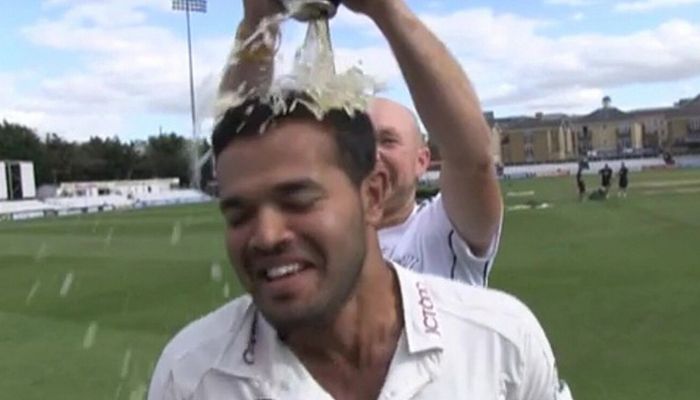
Two days after Pakistani-origin Yorkshire cricketer Azeem Rafiq made claims about losing his career to racism, he has now come under fire over derogatory remarks against the Jewish community.

On Tuesday (November 16), Rafiq had testified before the digital, culture, media and sport select committee of the British Parliament about the prevalence of institutional racism at the Yorkshire cricket club, where he played between 2008-2014 and 2016-2018. He had alleged that Yorkshire did nothing to stop the racial remarks hurled by senior English players and coaches, despite repeated complaints. The Pakistani-origin cricketer went on to add that he lost his career to racism.

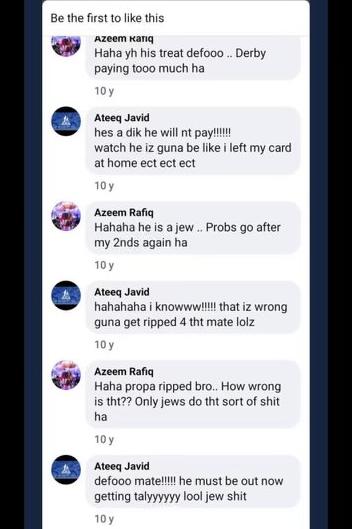
While the case of Azeem Rafiq had sent ripples down the cricketing fraternity about the existence of racial prejudice, his anti-Semitic remarks had put the spotlight back on him. On Thursday (November 18), The Times published a screenshot of comments made by Rafiq during a conversation with former Warwickshire cricketer Ateeq Javid. The comments were made in 2011, when Rafiq was 19-years-old.

Screengrab of the Facebook comments by Azeem Rafiq

During the conversation with Javid, Rafiq accused another player of being stingy in spending on team dinners for the virtue of being a Jew. “Haha propa ripped bro… How wrong is that? Only Jews do that sort of sh*t.” The timing of the revelation has led to embarrassment for the Pakistani-born cricketer. In a tweet on Thursday, Rafiq tendered his apology to the Jewish community.

Azeem Rafiq apolgised for his anti-Semitic remarks

He wrote, “I was sent an image of this exchange from early 2011 today. I have gone back to check my account and it is me – I have absolutely no excuses. I am ashamed of this exchange and have now deleted it so as not to cause further offense.” Azeem Rafiq further added, “I was 19 at the time and I hope and believe I am a different person today. I am incredibly angry at myself and I apologize to the Jewish community and everyone who is rightly offended by this.”


Allegations of racism made by Rafiq against Yorkshire cricket club

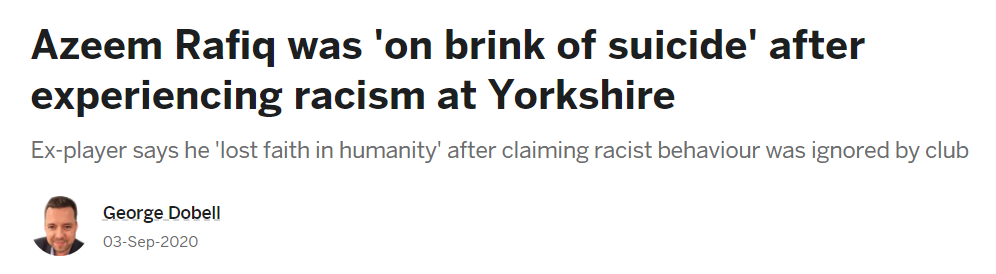
In an interview with ESPNcricinfo in September last year, the Pakistani-origin cricketer had levelled allegations of racism against the Yorkshire cricket club for the first time. He said that the treatment meted out him, pushed him to the brink of suicide. “I know how close I was to committing suicide during my time at Yorkshire. I was living my family’s dream as a professional cricketer, but inside I was dying. I was dreading going to work. I was in pain every day.”

Rafiq claimed that he regretted trying to fit in by doing un-Islamic things. “But as soon as I stopped trying to fit in, I was an outsider. There were no coaches on the staff from a similar background who understood what it was like,” he narrated.

Screengrab of the article by ESPN Cricinfo

He had claimed that the Yorkshire cricket club did not take any action against it. “Yorkshire don’t want to listen and they don’t want to change. And part of the reason for that is the people who were involved in the incidents I’m talking about are still at the club. They just want to sweep it under the carpet,” he had said.

During his recent testimony before the digital, culture, media and sport select committee of the British Parliament, Azeem Rafiq claimed to have been force-fed alcohol. “I got pinned down at my local cricket club and had red wine poured down my throat, literally down my throat. The player played for Yorkshire and Hampshire. I then didn’t touch alcohol until about 2012 and around that time I felt I had to do that to fit in,” he said.

The Pakistani-origin cricketer claimed that Yorkshire cricketer Gary Ballance would call black and Asian players by the name of ‘Kevin.’ Rafiq added that English cricketer Alex Hales had even named his black dog as ‘Kevin.’ He also accused senior players of calling him ‘Paki’, ‘elephant washer’ and other derogatory remarks targeted at his ethnicity.

Mundra port: DRI and customs intercept possible radioactive substances sent from Pakistan to China

0

On Thursday, November 18, a joint team from Customs and the Directorate of Revenue Intelligence (DRI) seized eight containers from a foreign vessel at Mundra Port, over concerns that they carried undeclared hazardous goods, including potentially radioactive material. The cargo which was en route from Karachi in Pakistan to Shanghai in China was intercepted by the Directorate of Revenue Intelligence (DRI) and Customs officials at the Mundra port in Gujarat’s Kutch district.

Since the port is managed by the Adani group, the latter shared a media statement released on the aforementioned matter through its official Twitter handle Friday.

In a media statement, Adani Group said that on November 18, Thursday, a joint Customs and DRI team seized several containers at the Mundra Port from a foreign vessel on concerns that they contained undeclared hazardous cargo.

The company further stated that the cargo was listed as ‘non-hazardous’, but the seized containers had Hazard Class 7 markings (which indicate radioactive substances).

Despite the fact that the containers were not bound for Mundra Port or any other Indian port, but rather were en route from Karachi, Pakistan, to Shanghai, China, government officials had them offloaded at Mundra Port for further inspection.

The company lauded the Customs and DRI employees for their alertness and vigilance and said that APSEZ had provided all sorts of support and assistance possible for this operation

In conclusion, the company wrote that APSEZ would continue to support any action that keeps India secure. The Adani Group is committed to national security and will not allow it to be jeopardised in any way”, read the statement.

It is pertinent to note here that, after the Directorate of Revenue Intelligence(DRI) officials in September, confiscated 9000 crores worth heroin, sent from Afghanistan’s Kandahar through a port in Iran, at Mundra port in Gujarat’s Kutch district, the Adani group had banned import and export of containerised cargo coming to its Mundra Port from Afghanistan, Iran and Pakistan.

The DRI on September 16, 2021, had recovered narcotics from two containers from a cargo consignment that arrived at Mundra port. As per reports, the heroin consignment had originated from Afghanistan and it was dispatched as a consignment of semi-processed talc stones. The consignment had arrived from Bandar Abbas Port, Iran.

Since the narcotics substance originated from Afghanistan now ruled by the radical Islamic terrorist outfit Taliban, the Centre and the probe agency had not ruled out it as a case of narco-terrorism. Due to the seriousness of the case and its international ramification, the NIA had been assigned the investigation.

PM Modi repeals farm laws: Did govt capitulate to violent forces or was it a necessary step to ensure internal stability. What insiders think

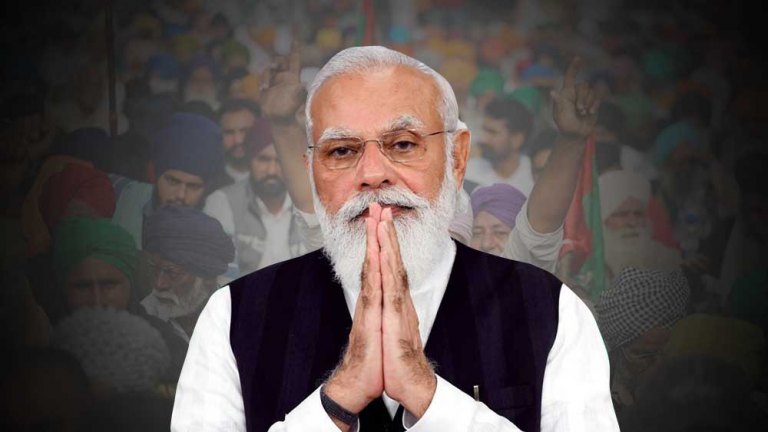
On the 19th of November, at 9 AM, Prime Minister Narendra Modi addressed the nation announcing that the three farm laws, passed for the benefit of small farmers, stood repealed. The decision came as a shock to those in the corridors of power as nobody had expected the announcement to come this soon, or, come at all. The protests against the farm laws have been ongoing for the past 1 year, often leading to violence, the most significant being the violence that erupted on the 26th of January 2021.

For many, the decision showed that the Modi government had capitulated to violent forces who believed in enforcing their will through naked street power. For many months, the protests against farm laws and the insidious propaganda around it had carried on unabated.

On January 26, thousands of alleged farmers protesting against the recently enacted agriculture laws barged into Delhi for their tractor rally. They damaged not only public property and raised two flags with the Sikh symbols on the Red Fort but also injured several dozen police personnel. In the response to an RTI, it was revealed at 299 police personnel were injured during the violence and the financial damage ran in crores. The government’s response at that time, was muted, to say the least. While certain farmer leaders were arrested for the violence, the police hardly used force to crush the violence and masterminds like Rakesh Tikait and Yogendra Yadav were not arrested.

The protests also saw brutal violence heaped against individuals. According to reports, over a dozen women have been missing from these protest sites. We saw the murder of Lakhbir Singh, the rape of a Bengal woman, the murder of Mukesh where he was burnt to death and several other such incidents.

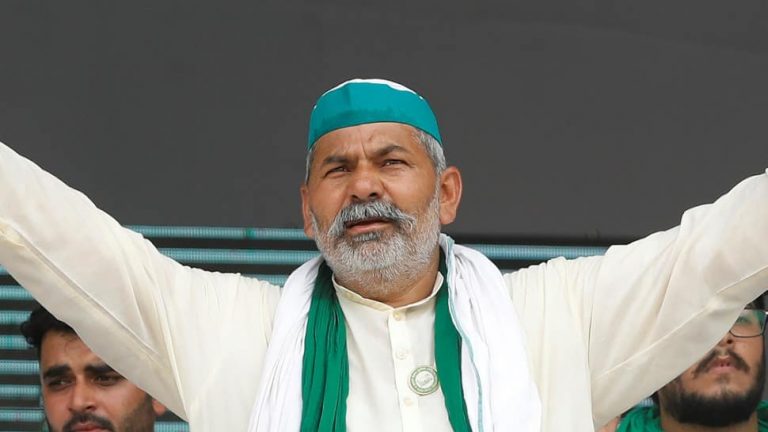
After the farm laws were repealed by PM Modi, Rakesh Tikait issued a statement saying that the agitation will not be withdrawn immediately.

Understandably, the supporters of the PM believe that the government bowed to street power displayed by violent elements in these protests, including the Khalistani separatists who were an intrinsic part of these protests. Laws are formulated in the Parliament after due deliberation and the laws must also be repealed in the Parliament if they are found to be redundant. To repeal laws in a public address and attributing the repeal to protests only emboldens violent elements templatizing street veto.

Any law that would be passed henceforth, would be open to this template. Those who wish to create unrest in the country for petty politics would spread misinformation about the law, incite violent elements and arm-twist the government in taking the law back, thereby making the head of the state look weak.

The farm law repeal has so far received mixed reactions from those in the corridors of power. While the move came as a surprise even to those who walk these corridors, the decision seems bitter-sweet.

The chatter in the corridors of power: What leaders told OpIndia about farm laws repeal

OpIndia tried to get in touch with several leaders and policymakers in the power corridors to understand why this step was taken by the government. Most leaders were tight-lipped and refused to comment. “The Prime Minister has spoken and given his reasons. We should stick to that for now”, the leaders maintained.

Off the record, though, those in the know tried to explain the reasons behind this move, without divulging details. A leader, speaking to OpIndia off the record said that the Prime Minister had taken this decision keeping in mind the security of the nation.

“The situation when the bill was passed and the situation today is extremely different. If you notice, the PM also said that he passed the law for the benefit of the farmers, but is repealing it for the security of the nation”. He further said, “This is a step-down and nobody can argue that it is not. I also understand how the government looks. It looks like we bowed to anti-national forces and those creating violence. But the propaganda around these laws was too strong and threatened internal stability. The government chose to maintain peace in the country by pushing the laws through. This was a decision between two bad situations (pushing the laws through and risking Khalistani elements creating fissures and looking weak by repealing the laws) and the government chose to back down so the separatist movement was not revived using this law”.

Adding an interesting angle to the debate, the leader said, “You have China threatening to light a fire at the border, you have the Taliban takeover of Afghanistan and Jihadi elements getting stronger in Pakistan. There is a geopolitical context that we cannot ignore. It is better to look weak than to have a 2.5 front war that would threaten stability”. Adding to his comments, another leader said, “PM Modi would continue the journey of reform. He has chosen to compromise party interest and the optics of the government for the benefit of the nation. This was a necessary decision, not a desired one”.

Voices from Punjab: What local BJP workers and leaders said about the farm laws repeal

While the central government and the power centre close to them saw this as a necessary step to maintain the internal peace in the country, the local leadership of Punjab had a mixed reaction.

On March 27, anti-farm law protestors in Punjab attacked BJP MLA from Abohar, Arun Narang. They thrashed him and tore off his clothes. The visuals of the incident that took place in Malout town, district Muktsar, Punjab, had gone viral on social media platforms. Police and BJP workers present at the scene somehow managed to save him.

Speaking to OpIndia, Arun Narang supported the decision to repeal farm laws. He said that it had created a fissure in the society between Sikhs and Hindus and the laws being repealed would fix that divide. The decision would benefit Punjab and the nation and he welcomes the decision. He said that as the PM said, a committee would be formed to formulate further laws and we should trust the PM. On being asked if he believes that this move is one that would strengthen violent elements, he said that the BJP government is not arrogant to not listen to the voice of the people. In a democracy, the people are supreme and they had to be flexible to the demands of the people. He said it would also prove to be a slap on the face of such Congress leaders who are fomenting trouble as it proves that the Modi government is a government for the people and one that listens to the voice of the common man.

While Arun Narang welcomed the move, Sukhpal Singh Sran, State Secretary, BJP expressed his intense displeasure at the laws being repealed. He said that if they had to repeal these laws they should not have passed them in the first place. “The farm laws were passed in a hurry and have been repealed in a hurry as well”, he said.

“In a strong democracy led by a strong Prime Minister, this is not the way things should be done. They should not capitulate to a party that has not given anything to the country in the last 70 years. If they wanted to repeal, they should have done it much earlier. This is an injustice to BJP workers who have handled the ire of these elements”, he said.

On being asked if the Modi government would bring back the farm laws later, he said that he was not very hopeful. “I don’t think any step for the benefit of the farmers will be taken anymore. If PM Modi could not do it, who will? Nobody else has the intent that he does. The people will not find a more honest PM than him. If he could not do it, nobody will be able to do it”.

He told OpIndia that he wants his statement to be published in full because he is not bothered about the party but the country. “Captain Amarinder has won and state BJP has lost today”, he said. “I am more bothered about BJP workers than the party. Today, in Punjab the situation is such that even daughters of BJP leaders are being ostracised. Nobody wants to marry our daughters. They should have spoken to the workers first. They should have spoken to the workers before making the laws or repealing the laws. If the party worker is with them, they had nothing to worry about. But today, the party leaders are not with the party workers at all”, he added.

Intelligence agencies: The revival of Khalistan and radicalisation of youth

While the state leaders in Punjab had mixed reactions to the farm laws being repealed, those in the intelligence circuit reiterated that while this was not the best decision that could have been made, it was a necessary decision given the inputs about Khalistani elements trying to foment trouble.

Speaking to OpIndia, an officer from the intelligence agencies said that there were specific inputs about the protests being used by Khalistanis and the ISI to create fissures in the country and push India into unrest internally. The inputs categorically stated that the situation was going “out of hand” and the youth in Punjab was being radicalised using the misinformation and propaganda around these laws.

“You have to realise that the father of Bhindranwale was a farmer and local Sikh leader called Joginder Singh Brar. The Khalistani movement and Bhindranwale himself rose to fame after a farmer protest. These elements were being used to radicalise the youth in Punjab. On top of that, elements like Pannu of SFJ and the ISI was using these protests to revive the violent Khalistani movement. It was a difficult decision to repeal the laws but one that had to be taken”, the intelligence officer said.

Another officer said, “We already have local Jihadi sleeper cells and ISI operatives to deal with. We did not need a radicalised Sikh community and the Khalistanis destabilising India”.

Sikh activist speaks

Ramnik Singh Mann, a prominent Sikh activist said that the farmer leaders may feel a sense of victory but it is a loss for the farmers of the nation. These reforms for the farmers came after decades. “We have seen an Industrial revolution in this country after 1991 all thanks to PV Narasimha Rao, and we are 30 years late in farm reforms. We had a good opportunity to bring them in right now. My point is, what have we as farmers gained out of this? The entire agitation, the entire drama that has been going on at the borders of Delhi, what has the farmers gained?”.

Mann said that he had mixed feelings about the farm laws being repealed. While on one hand, he feels that the farmers have lost out, he feels that a lot of anti-national forces had infiltrated the protests which was apparently a farmers agitation. That needed to be curtailed. Captain Amrinder Singh had brought out this issue and had met the PM, the HM and the NSA. The NSA then had gone back and met the HM. The area of responsibility of the BSF had been increased from 15 to 50 km. This was all pointing to a direction where destabilising the nation was the main agenda of the people who had infiltrated these farmer agitations. A lot of people like Pannu and Dhaliwal had started talking about Khalistan and the Balkanisation of India. They were provoking people against not just PM Modi but also India itself. Rakesh Tikait had said that ‘Bill wapisi nahi to ghar wapisi nahi’. Now that the laws have been repealed, they should go back home”.

Adding to that, Mann said that while he thinks that the protestors should now go back, he also feels that Tikait will perhaps find another reason to continue the agitation. “7th December is the date when Supreme Court would hear the occupation of the borders by these farmers. And it is around the same time that the model code of conduct would also be in force in Punjab. It would not be interesting to see how the Supreme Court reacts. It was the SC that had sided with farmer unions and gone to the extent of permitting them to occupy the borders and their siege on Delhi. Now let’s see how the SC reacts. But if the farmers now continue their agitation, they would lose whatever credibility they have left”.

On being asked if he thought this step was capitulating to street power, Mann said that he had no doubt in his mind that this was a step back. “PM Modi also mentioned in his address what all he has done for the farming sector in his tenure and he also spoke categorically about a committee being formed with scientists, farmers etc to formulate a new set of laws. He has apologised to the country that he was not able to convince a certain section of farmers about the merits of these laws. He did not say that there was anything wrong with the farm laws per se. But I think the reform would continue which are much required”.

By and large, there is a sense of despondency at the laws being repealed but across the board, the reaction is rather mixed. While people seem to understand the reasons as to why these laws were repealed, there is also an acknowledgement that this was not the best decision that could have been taken, however, it was a necessary decision. There is also an acknowledgement of the fact that this could be viewed as a move capitulating to violent forces who wanted to arm-twist the government, however, it was a move to ensure the internal stability of the nation in the face of Khalistan and ISI terrorists trying to revive the Khalistani movement using these farmer protests and the propaganda around farm laws.

PM Modi repeals farm laws: What were they

One of the biggest factors plaguing the growth of the agriculture sector in the country is the inability of the farmer to find a market and to get a fair price for his produce. To address the issue, the erstwhile governments of different states enacted the Agricultural Produce Market Regulation Acts (APMC Acts), which authorised them to set up and regulate marketing practices in wholesale markets. 

The objective of these markets was to ensure that farmers get a fair price for their produce. However, with each passing year, the APMCs turned out to be inefficient with increasing cartelisation of middlemen, ban on private players to enter the trade, increasing corruption etc. 

The Modi government had introduced three bills to promote much easier trade for the farm produce and to provide a competitive market for the producers outside the existing APMC system. The three laws were

  1. The Farming Produce Trade and Commerce (Promotion and Facilitation) Bill, 2020: This law aims at creating additional trading opportunities outside the APMC market yards to help farmers get remunerative prices due to additional competition
  2. The Farmers (Empowerment and Protection) Agreement on Price Assurance and Farm Services Bill, 2020: This law relates a framework for contract farming through an agreement between a farmer and a buyer prior to the production or rearing of any farm produce. 
  3. The Essential Commodities (Amendment) Bill, 2020: This law aims to regulate the supply of certain food items only under extraordinary circumstances.

It is pertinent to mention that the farm laws were set of three laws that allowed farmers to sell their products outside APMC act (most states make it compulsory for the farmers to sell at APMC mandis). It also allowed farmers to directly have a contract with corporate houses.

The farm laws did not do away with APMC, and if someone was not willing to trust markets outside the current system, they were free to stick to the ongoing system. It did not do away with MSPs either.

(Anurag, journalist with OpIndia, contributed to this report by speaking to local Punjab leaders)


BKU leader Rakesh Tikait says protests will continue regardless of PM’s announcement to repeal farm laws

Bharatiya Kisan Union(BKU) leader Rakesh Tikait on Friday said the farmers will continue their protests against farm laws regardless of PM Modi’s announcement that the Centre would repeal the agricultural bills in the forthcoming parliamentary session.

“The farmers’ protest will not stop immediately, we will wait till the day when agricultural laws are repealed in Parliament. Besides MSP, the Centre should also discuss other issues with the farmers,” Tikait tweeted.

Tikait’s insistence to continue agitation comes in the wake of PM Modi’s address to the nation, where he made a startling announcement saying that his government had decided to withdraw the 3 farm laws that were passed for the benefit of the farmers.

PM Modi announces removal of three farm laws

PM Modi, addressing the nation said that by the end of this month, the Modi government would complete the process of repealing the three farm laws. He then appealed to the protesting farmers and middlemen to return to their homes on this Gurupurab and stop their protest. He further said that the government will form a committee to formulate laws for the benefit of the farmers. 

He further said that the government had introduced the laws after due deliberation but perhaps it was the shortcoming of the government that they could not convince all farmers that the laws were indeed in their benefit. Further, he said that the past governments had deliberated on these laws as well but it was the Modi government that had implemented them. 

He said that all his decisions were in the interest of the nation and he will continue to work for the benefit of the nation.

Protests against the farm laws, mostly by farmers in Punjab, Rajasthan, some parts of Haryana and Uttar Pradesh, had been going on more than a year. Since November 2020, ‘farmers’ had camped around the borders of Delhi and squatted on the roading leading to the national capital, causing inconvenience and sparking concerns about law and order, as a part of their demonstration against the three farm laws.

Bihar: Judge assaulted by police officials inside his chamber, threatened with gun, Patna HC furious

0

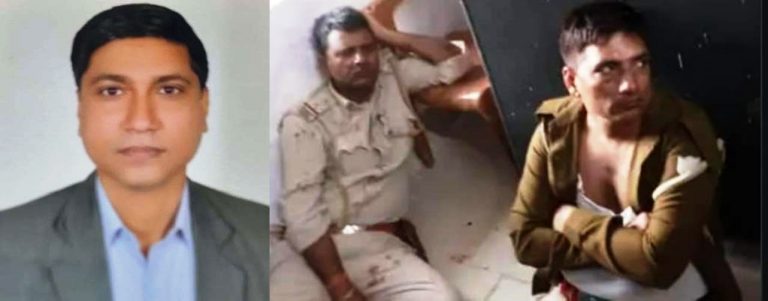
In a shocking incident, two police officials assaulted Additional district judge 1 Avinash Kumar of Jhanjharpur sub-divisional court of Madhubani district in Bihar on November 18. He is currently holding charge of the sub-division unit of the district legal services authority.

Officials identified as officer-in-charge of Ghoghardiha police station Gopal Krishna and sub-inspector Abhimanyu Kumar Sharma barged into the chamber of the judge and assaulted him at gunpoint in the afternoon of November 18.

The judicial officer was rescued by lawyers and court staff after hearing the commotion. Jhanjharpur Bar Association vice president Balram Sah and many other lawyers rushed to his chamber and rescued the judge. The association convened an emergency meeting and passed a resolution condemning the incident. Angry lawyers thrashed both officials and kept them in confinement till late the night. Later on, the judge lodged an FIR against the accused who are SI rank officials. Both were sent to jail.

Patna High Court conducts a hearing on the attack

Taking suo moto cognizance of the attack on the judicial official, the Chief Justice of Patna High Court Sanjay Karol formed a special division bench to hear the matter. Late in the night the division bench of Justice Ranjan Gupta and Justice Mohit Kumar Shah heard the matter and expressed grave concern over the incident.

The Additional Director General (headquarter) of Bihar Police JS Gangwar physically appeared before the special division. “Prima facie, it appears that this episode puts the independence of the judiciary in jeopardy. Both police officers started misbehaving and manhandling the judge, and not only this, but they also physically assaulted him. They also took out their service revolvers and wanted to attack the officer. However, certain court employees and advocates reached there due to which life of the officer was saved,” the high court order said,” the court said.

In view of the magnitude and enormity of the issue involved, the court also directed the DGP of Bihar SK Singhal to remain present during the next hearing of this matter scheduled on November 19. “In view of the sensitivity of the issue, he (DGP) shall look into the matter and file a status report in a sealed cover,” the court said.

How the brawl started

Darbhanga range IG Ajitabh Kumar told the media that there was a complaint against the officer-in-charge after which the court staff of the judge called and asked him to come to the judge’s office. A heated argument took place between both sides.

“As we came to know the ADJ had summoned Gopal Krishna to inquire about an application of an applicant Asha Devi who is a resident of Ghoghardiha police station. All of a sudden we heard shouting we rushed inside the chamber. We were shocked to see that both of them are assaulting the judge. They were shouting and abusing that they will teach him a lesson for passing strictures on the police,” said a lawyer.

Judge Avinash Kumar known for his unusual orders and strictures

The judge is known for passing ‘unusual’ orders especially in the bail orders following which the Patna High Court in September this year seized his judicial powers. The High Court seized his power in the immediate context of bail he granted to a rape accused Lalan Kumar on the condition that for the next six months accused will wash and press sari of women of his village free of cost.

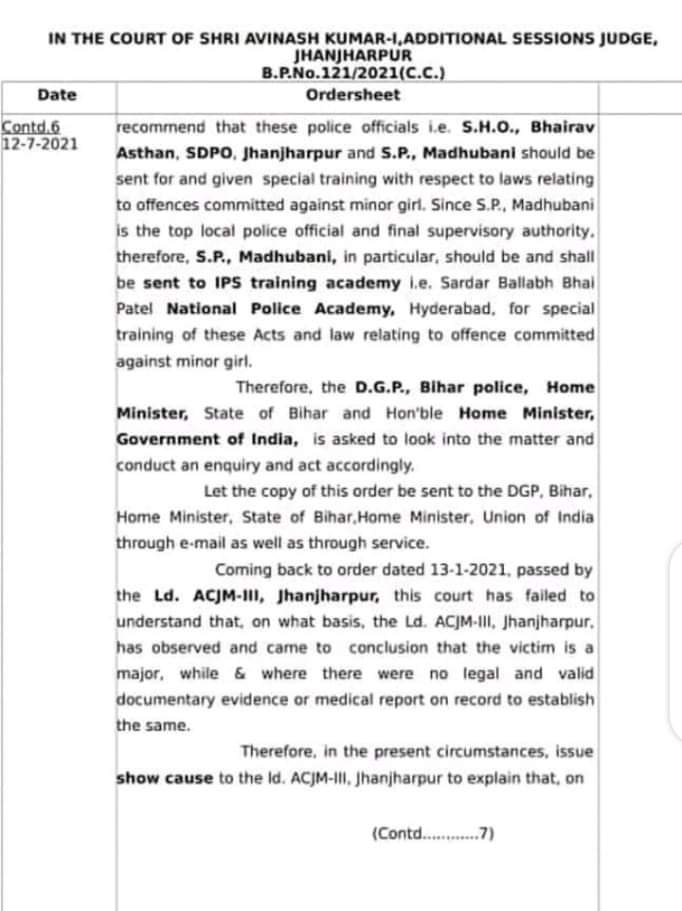
In July this year, the judge had recommended SP of Madhubani Dr Satya Prakash to be sent to Sardar Vallabh Bhai Patel National Police Academy, Hyderabad, for special training to understand and handle laws related to ‘offence committed against minor girls.’ In the order, he also recommended training for the officer-in-charge of Bhairav Asthan and SDPO of Jhanjharpur.  

The order copy where the judge had recommended special training for Madhubani SP

The judge passed the stricture since Madhubani SP signed the charge sheet in the case related to alleged rape with a minor girl. The police charged the accused for kidnapping, not rape. Besides, the police also treated the victim as an adult despite the report of the medical that stated that she was 15 years old when she was allegedly kidnapped and raped.

NASA reveals what the real cause of pollution in Delhi is, and no, it’s not Diwali crackers

0

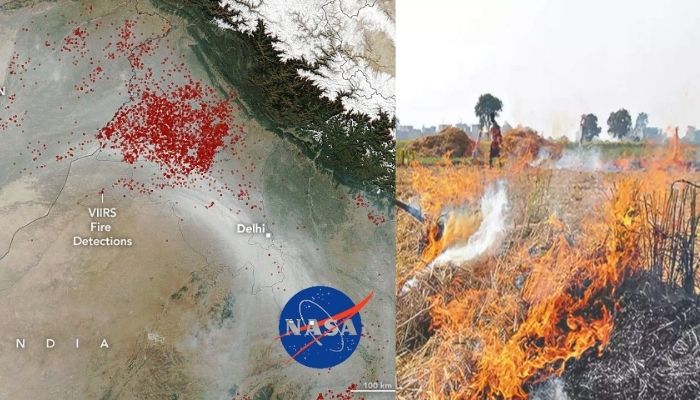
On November 11, space agency NASA (National Aeronautics and Space Administration) noted that stubble burning in the States of Punjab and Haryana had led to a sharp deterioration of air quality in northwestern India.

NASA observed that fire activity increased in the month of November due to acceleration in the pace of burning stubble. It stated, “On November 11, 2021, the Visible Infrared Imaging Radiometer Suite (VIIRS) on the Suomi NPP satellite acquired this natural-colour image of a river of smoke streaming from fires in Punjab and Haryana toward Delhi, one of India’s most populous cities.” The space agency added that fires in Pakistan had also contributed to the smoke.

According to Pawan Gupta, who works at Marshall Space Flight Center in NASA, at least 22 million people were affected by smoke produced due to stubble burning on November 11 alone. NASA informed that sensors in India’s National capital had recorded the level of PM 2.5 and PM 10 at above 400 micrograms per cubic meter on several occasions in November, which is higher than the WHO recommended level of 15 micrograms per cubic meter.

Using the Moderate Resolution Imaging Spectroradiometer (MODIS) on the Aqua satellite of NASA, scientist Hiren Jethva concluded, “Earlier in the summer, we saw one of the largest Normalized Difference Vegetation Index (NDVI) values in the 20-plus year record. Based on that, I predicted this would be one of the most active fire seasons on record, and that is exactly what we have seen. We still have a few weeks of burning to go, but already Aqua MODIS has detected more than 17,000 hotspots in Punjab and Haryana—making this the most active fire season on record.”

By November 16, the Visible Infrared Imaging Radiometer Suite (VIIRS) sensor detected over 74000 hotspots in Punjab. The number is closer to the 85000 hotspots that were detected by the sensor in 2016. While speaking about the impact of government campaigns to deter farmers from burning stubble, Pawan Gupta said, “Over nine years of VIIRS observation, we don’t see much of a trend in Punjab. However, in Haryana, we saw a 45 percent decrease in the total number of fires in 2020 compared to the 2012-2019 average. But fire counts seem to be on the higher end in Haryana again this year.”

Opindia explained NASA data and impact of Stubble burning on air quality

According to the Fire Information for Resource Management System of NASA, the incident of fires in Punjab and Haryana have gone up significantly in the month of October, with it reaching its peak in the last week. Social media users also have pointed out how the farmers burning their stubble are responsible for the pollution, not firecrackers.

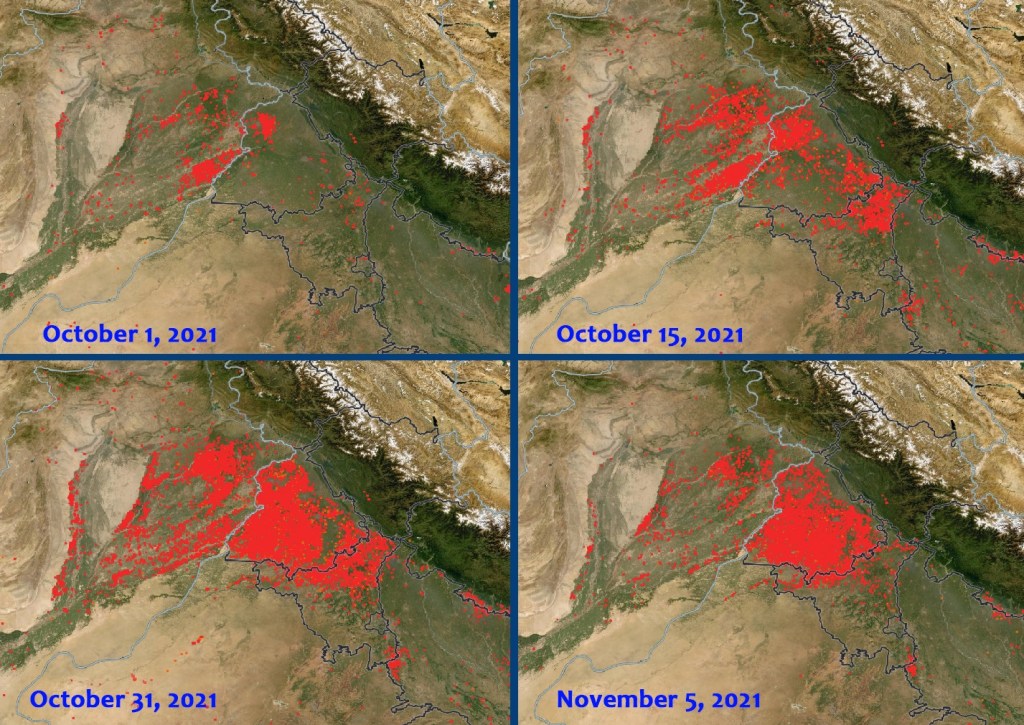
NASA used red dots to indicate incidents of fire caught by satellites, and the maps for 31st October and 5th November showed that almost the entire state of Punjab was covered with red dots, which meant that crop residues were being burnt at almost all the farmland in the state to clear the land for the next cultivation. Similarly, a large portion of Haryana was also covered with such red dots indicating fire.

In November last year, the contribution of stubble burning to the pollution in Delhi had reached 40%. And there was nothing to suggest that circumstances this year would be drastically different.

NASA fire maps for north India on different dates in October

There was also an indication that the farmers timed stubble burning with Diwali so that the pollution caused by them was blamed on firecrackers. When Swarajya Magazine editor Arihant Pawariya asked a farmer why they were burning stubble during Diwali, the farmer had replied that nobody will catch them as it was the time of the festivals.

Therefore, even if there was no bursting of firecrackers due to Diwali, Delhi’s air quality would not have been any better. Due to wind direction, the smoke from the stubble burning in Punjab and Haryana move towards Delhi, where it remains stationary due to the lack of wind movement in the region. Fog caused by lower temperate captures the pollutants in the air and keep them suspended in the air for a longer time, which creates toxic smog.

Supreme Court concluded that major cause of air pollution in Delhi was not ‘stubble burning’

Amidst the deteriorating Air Quality Index (AQI) in the National Capital, the Centre told the Supreme Court that stubble burning in neighbouring states of Haryana and Punjab was not a major contributor to air pollution. Earlier, the Union government told the apex court that stubble burning contributed to only 10% of the pollution and thus is not a major cause of pollution in Delhi.

It suggested the implementation of the odd-even rule, lockdown (in the worst case scenario) and a ban on the entry of trucks in the National Capital. As such, the Supreme Court concluded that major causes of pollution are industries, transport and vehicular traffic, besides stubble burning in some areas.

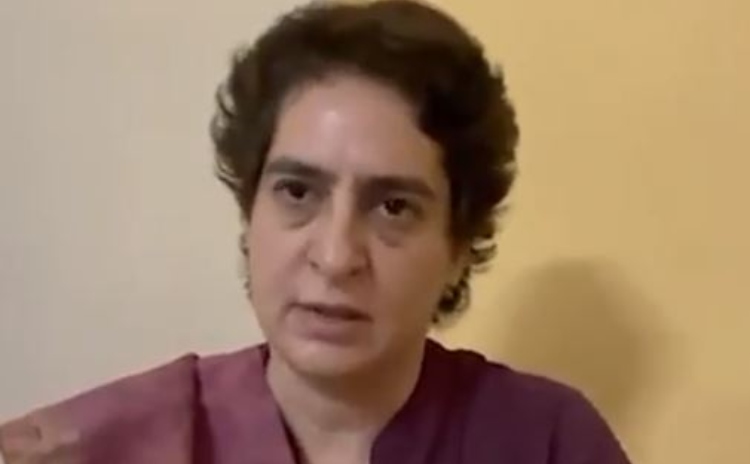
Priyanka Gandhi’s personal secretary, 2 other Congress leaders booked for assault, were found loitering around a house at midnight

0

The Lucknow police have booked Priyanka Gandhi’s personal secretary and two other senior Congress leaders for assault and intimidation. As per reports, Sandeep Singh, Priyanka’s personal secretary, two other Congress leaders named Yogesh Kumar Dixit and Shiv Pandey have been booked too.

The FIR has been registered at Lucknow’s Hussainganj Police Station. As per reports, the complaint was lodged by a man named Prashant Kumar. Kumar has named 4 accused in the case including the three Congress leaders. He had alleged that four people had tried to invade his privacy by loitering around his house in the middle of the night.

The complainant has also stated that four persons, including the Congress leaders, had been suspiciously loitering around his house in the middle of the night and when he objected, he was threatened and thrashed by them.

The police have stated that further investigation is underway in the case.

Prashant Kumar is a driver working in the estate department of the Uttar Pradesh government, as per reports. He is currently posted as a driver for a minister. The complainant lives in Mall Avenue, and he had allegedly found the accused lurking around his house on Wednesday midnight.

The complainant has added that Sandeep Singh looked drunk at the time of the incident. When the complainant confronted the Congress leaders asking why are they lurking around his house, Sandeep Singh and others started abusing him and threatening to have him arrested.

Prashant Kumar stated that when he tried to call the police, the accused snatched away his mobile phone and threw it away. As the commotion got louder, other members of Prashant’s family came out and then the accused ran away.