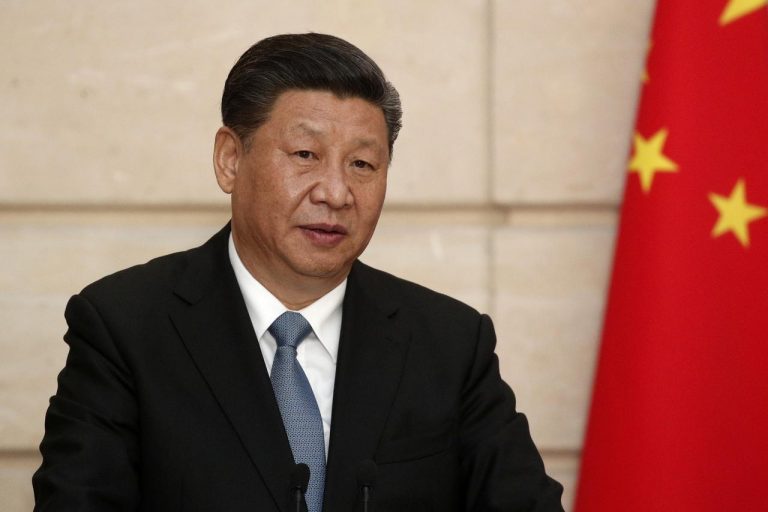
FDI flows into Indian debt as well as equity have shown an increase as uncertainties continue to revolve around the Chinese tech sector according to reports. The recent crackdowns on Chinese tech companies and anti-monopoly regulations under Xi Jinping have triggered investors to re-assess the rationale and the risk of investing in China.
As per reports, Chinese companies like Tencent, Alibaba, Kuaishou Technology and Meituan have witnessed more than $1 trillion wipeouts combined. The Hang Seng Tech Index members have seen $1.5 trillion of value evaporate.
The Chinese policy shift has crippled industries such as technology, property, online private tuition and video gaming. Chinese have declared cryptocurrencies illegal and have put heavy restrictions on data collection and use with anti-monopoly legislation to curb the growth of tech companies.
According to data compiled by Bloomberg, Mainland investors have become net sellers of Tencent since June. Li Weiqing, a Shenzhen-based fund manager at JH Investment Management Co. had stated that he sold his internet firms holdings in the fourth quarter last year and planned to observe things from the distance.
Reportedly, Chinese stock market investors have been swapping big tech names for “small giants” and luxury brands for mass-market companies under the new plan for the economy initiated by Xi Jinping. Ronald Chan, Hong Kong-based Asia head of equities at Manulife Investment Management said that Chinese policymakers “are talking about how to go from a pear-shaped type of economy, which is bottom-heavy, top-light, into an olive shape”.
Reportedly, Chinese Food delivery platform Meituan was slapped with a fine of $1 billion for anticompetitive behaviour. Ride-hailing company DiDi Chuxing also faced restrictions from accepting new users. The Chinese financial company, Ant Group had to deal with regulations regarding payment and personal finance. Founder of TikTok, Zhang Yiming took early retirement amid mounting pressure.
The crackdown on the Chinese internet companies and tech sector have caused a drastic need for investors to find new markets. According to Bloomberg, investments in Indian start-ups climbed from $1.6 billion in June to around $8 billion in July. The Venture Capital deals in India exceeded the value of those in China for the first time after 2013.
Tiger Global Management, a New York-based equity firm that previously held investments of around $8.6 billion in public in addition to 36 private Chinese companies had started investing in India after facing heavy losses in China.
Analysts at Credit Suisse wrote “India’s corporate landscape is undergoing a radical change due to a remarkable confluence of changes in the funding, regulatory and business environment in the country over the past two decades. An unprecedented pace of new-company formation and innovation in a variety of sectors has meant a surge in the number of highly-valued, as-yet unlisted companies”.
Besides, Japan’s SoftBank Group which had recently announced the suspension of further investments in China is expected to invest $4 billion in India by the end of 2021, marking one of its biggest investments in India.
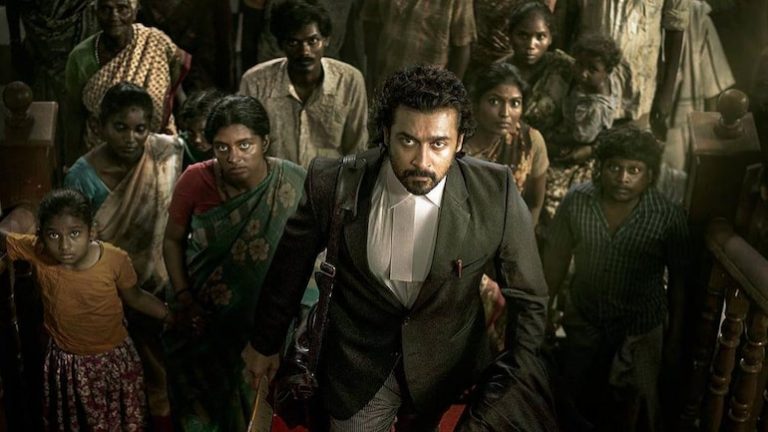
Actor Suriya’s latest film Jai Bhim, which was released on November 2 on OTT platform Amazon Prime, had found itself in the eye of another raging storm after a video clip from the movie promoting violence and hatred against Hindi speakers had gone viral on the internet.
Now, another controversy seems to have gripped the beleaguered movie as viewers have accused the creators of the movie of peddling fiction under the guise of making a movie based on true incidents. Although the makers and producers of the movie had touted it to be inspired by real-life events, many have accused the movie of showcasing incidents that run counter to reality.
The movie is based on real-life incident that took place in Tamil Nadu in the 1990s, where a lawyer fought to get justice for a tribal woman. But viewers have alleged that the makers of the movie have deceitfully changed castes of certain characters to perpetuate their political propaganda.
For instance, the movie shows villains from the Vanniyar community with their sacred motif ‘Agni’ being situated in the frame. The sub-inspector in the movie, who is one of the villains, is a man from the Vanniyar community and depicted as an enemy of the Irular community.
தோழர் சூர்யா வேலய காட்ட ஆரம்பிச்சிட்டாப்ல..#குறியீடு – வன்னியர் சமூக ஆளை வில்லனாக காட்டியிருக்காங்க…#குறிப்பு – படத்த படமா பாருங்க டா னு அட்வைஸ் பன்ற புரட்சி போராளிகளுக்கு என்னோட பதில் இதே மாதிரி #திரௌபதி.#ருத்ர_தாண்டவம் படத்தையும் ஏன்டா நீங்க படமா பாக்கல… pic.twitter.com/J97xdAGeDw
However, in reality, the sub-inspector who framed the Irular men and thrashed them was one ‘Anthony Sami’ and was not from the Vanniyar community.
This has predictably not gone down well with the Vanniyars, who have shamed actor Suriya and makers of the movie for the unwarranted vilification of their community.
In another scene in the movie, actor Suriya could be seen spreading canards about the Brahmin community. The scene is from outside the court where actor MS Bhaskar, as a Brahmin lawyer (Sankaran) who often utters ‘Sivaya Namaha’, is seen speaking with Suriya. In the exchanges that take place between the two, it is insinuated that Brahmins are a vile community that cannot be trusted.
Perversion and distortion of facts to suit one’s narrative has become a hallmark of the Indian movie industry. The moviemakers and producers use the ‘creative liberty’ at their disposal to pervert real-life and twist facts to perpetuate propaganda that reinforces their political ideologies while undermining the opposing ones. Jai Bhim is not the first, and it certainly won’t be the last movie, where the creators have displayed blithe disregard for the truth, since the aim was not to depict real-life incidents but to showcase contrived reality.
In the past too, film-makers have used this tool of “artistic freedom” to propagate bastardised, politically weaponised versions of real events. Here are some of those cases:-
Chak De India: Mir Ranjan Negi depicted as ‘Kabir Khan’ to portray alleged Islamophobia in the Indian society
Shah Rukh Khan starrer Chak De India was one such movie where facts were tweaked cunningly to peddle motivated propaganda. In the movie, Shah Rukh Khan played a character of a Muslim hockey player whose patriotism was called into question after he failed to score a penalty shot against India’s arch-rival Pakistan, a Muslim-majority country.
The movie attempted to highlight the alleged discrimination faced by Muslims in India on account of their religion. SRK, who played coach Kabir Khan was disgraced and called a ‘traitor’ by his neighbours for not being able to score against Pakistan. In order to remove the tag of traitor, SRK agrees to coach the women’s hockey team and ultimately leads them to win the World Cup.
However, the story is inspired by the life of Mir Ranjan Negi, former goalkeeper of the Indian hockey team, whose life was thrown into turmoil after his disastrous outing in the 1982 Asian Games final where India suffered a humiliating defeat of 1-7 against its nemesis Pakistan. Negi had then attracted the wrath of the public for not being able to stop Pakistani strikers from scoring goals.
After spending years in oblivion, Negi returned to hockey with coaching men’s team, followed by more successful stints with the women’s team. He was the goalkeeping coach of the 2002 Commonwealth Games gold-winning side and also the assistant coach of the team that won the 2004 Asia Cup.
Sherni: Tiger killer Asghar Ali Khan becomes ‘Pintu Bhaiya’ as movie deliberately defames Hindus
In 2021, a movie named Sheri was released on OTT platform Amazon Prime that continued the Indian film industry’s long tradition of vilifying Hindus. The Vidya Balan-starrer movie was based on Tigress Avni who had reportedly turned man-eater and was recorded to have mauled 14 people to death.
The tigress was eventually killed by a hunter named Asghar Ali Khan but in the movie, the character who kills the tigress is conveniently portrayed as kalawa-wearing Ranjan Rajhans alias Pintu Bhaiya. In addition to this, IFS officer KM Abharna who brought the killer to justice is portrayed by actor Vidya Balan but she has been given a Christian name in the movie.
Besides, most of the senior forest officers, who just happen to be Hindus, are shown to be corrupt and unethical except for one character named Hassan Noorani. The movie devoted too much time on portraying Hindu officers as incompetent and apathetic towards their job even though there had been no apparent reason or logic for hating on Hindus. The movie even had a scene where the culprit, who was made into a Hindu character, was seen performing Bhajans and Puja in a government office, to bring mockery towards Hindu practices for no apparent reason.
Article 15: Movie based on Badaun rape where the real culprits belonged to the Yadav community but in the movie Brahmins are showed as villains
Anubhav Sinha’s Article 15 was another such movie where events showcased in the movie that had little to do with facts even though the movie was billed as based on “true incidents”.
The movie was based on the brutal rape and murder of two girls in the Badaun district of Uttar Pradesh. However, in its attempt to be ‘inspired’ from the Badaun case, the movie took wide liberties with facts. The case got wide attention in national and international media, bringing shame for the then Akhilesh Yadav government in UP because it was highlighted as a case of upper caste atrocity against Dalits.
The accused were named Pappu Yadav, Avadhesh Yadav, Urvesh Yadav, Chhatrapal Yadav and Sarvesh Yadav. Chhatrapal and Sarvesh were policemen. The police department was accused of showing leniency to the accused in the case due to political pressure from the Samajwadi Party which was favouring the Yadavs. Even the police investigation was severely criticised and the people had demanded a CBI inquiry.
The CBI had later stated that their probe indicates that the two girls, aged 14 and 15, had committed suicide and they were neither raped or murdered. The five accused were all given a clean chit.
Anubhav Sinha, the person whose own shady money laundering attempts have been highlighted before and who was last seen requesting Pakistanis to watch his ‘Mulk’ movie illegally, has made great efforts in his movie to take a widely publicised crime and paint it in colours of casteism that suits his political narrative. The invisible ‘Mahant ji’ (a probable sly at Yogi Adityanath) who is a Brahmin, is painted as the all-powerful root of evil in the movie. Also, the over-emphasis of ‘upper castes’ and Brahmins being the sole cause of all atrocities seems to be the central theme in the movie.
TV serial Chandrakanta : Muslim character in a positive role added in the TV avatar of Chandrakanta novel to comply with ‘secular’ sensitivities
A TV serial named Chandrakanta was quite a rage in the early 1990s. It was based on the eponymous novel by Devaki Nandan Khatri and had become very popular among the masses. However, very few people realised that the serial was not an accurate representation of the novel.
The original novel had no positive character who had a Muslim identity. Instead, it had quite a number of Muslim characters who were either villainous or comic. Therefore, the makers of the serial at the Doordarshan were perhaps bothered by the fact that there was no Muslim character in a positive role. So, they invented one by adulterating the storyline of the novel and including an extra character in its television representation. A Muslim character named Janbaaz, played by actor Mukesh Khanna, was introduced in the story. The character played a pivotal role in helping the Hindu hero get his love interest. Besides, when the character appeared on the screen, azaan—the Muslim call for daily prayer—ran in the background.
Netflix’s ‘Kabuliwala’ shows a Hindu girl offering namaz to secularise ‘Stories by Rabindranath Tagore’
The entertainment industry has long since stopped being solely about entertainment and certainly has as much to do with propaganda these days. Targeted mockery and insults directed towards the Hindu faith has been the norm rather than the exception with a simultaneous veneration of everything Islamic. Such familiar sights were visible in the modern rendition of ‘Kabuliwala’ in the ‘Stories by Rabindranath Tagore’ series by Anurag Basu. The series did not appear to be original Netflix content and seemed to have been made available first on Epic On.
In one of the scenes, a complete departure from the story-line, ‘Mini’, the little girl in the story, starts offering Namaz because her friend, the Kabuliwala, had not come to meet her for a few days. The scene shows her praying to the ‘God of Kabuliwala’ so that her friend would come to meet her soon.
The original story by Tagore, based on which the show has been made, does not mention anything about a Hindu girl offering namaz. The makers of the show inserted it on their own. There does not appear to be any justification for force-fitting such a narrative into the adaptation of the story, apart from petty political agenda.
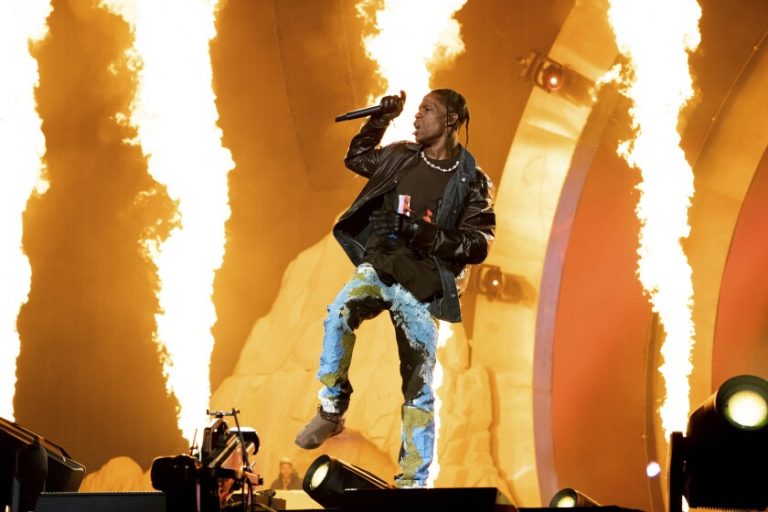
At least 8 people were dead and scores of others injured after a crowd surged towards the stage during the Astroworld Festival organised by Houston-born rapper Travis Scott at NRG Park. The concert was attended by close to 50,000 people and many of them have described the spectacle as “hellish”. In the view of the tragic events that took place during the concert, the conspiracy theories saying ‘Travis Scott is a demon’ and that the concert was some sort of ‘blood sacrifice’ are widely making the rounds on the internet.
Videos from the concert show rapper not willing to stop the show despite watching people pass out and witnessing emergency measures taken up by medical staff to revive them. These videos have added to the rumours and conspiracy theories that are gaining traction on social media websites about Travis Scott being a demon and the concert being the “congregation” of demons.
Cassandra, a writer at Gateway, took to Twitter recently informing about the host of conspiracy theories about Travis Scott that are in circulation on the internet. “I just went to bed, but now I’m way down the Travis Scott is a demon rabbit hole. Thanks a lot, Internet.”
I just went to bed, but now I’m way down the Travis Scott is a demon rabbit hole. Thanks a lot, Internet.
— Cassandra — Peta Kills Animals (@CassandraRules) November 8, 2021
The deaths witnessed at the concert characterised by macabre symbols provided a conducive environment for an array of the conspiracy theories to proliferate. The most widely circulated conspiracy theory on the internet is about Travis Scott being a demon and that his concert, which led to the death of 8 people, was a mass satanic ritual.
Conspiracy theories equating Travis Scott to demon and his concert to “blood-sacrifice” rituals gain prominence after the death of 8 people at his Houston concert
One social media user said Travis Scott’s concert was another ritual meant to express defiance to the God and the embracement of the Satan. “I’m just so done with all this. It’s so obvious at this point. These people aren’t people, they’re demons. Look at the symbolism, their actions etc. We see it more and more and it’s NO coincidence. Idc I’ll keep saying it like it is,” the user said in the subsequent tweet.
So that travis scott concert was another ritual. He told the crowd to put a middle finger up to THE SKY. Pure blasphemy towards God. He said to stomp the ground, killing more ppl, ignoring everyone then left. Just look at the way it was set up. Fire/ portals. THEY. SERVE. SATAN.
A Twitter user called Travis Scott a demon by juxtaposing the pictures of the festival with the ‘Christ in Limbo’ artwork, a painting that depicts the Christian imagination of hell.
Make no mistake about it. Travis Scott is a demon on this earth. The videos of him basically chanting as the dead were being carried away from his show. It was ritualistic and demonic. His soul is the devils pic.twitter.com/cUDNlPCDvF
One social media user described the event as “blood sacrifice” ritual undertaken by “demon” Travis Scott.
Bro that shit was a concert in hell.. illuminati blood sacrifice type shit Travis Scott sacrificed so many lives tonight by not stopping that fucking show that shits demonic. #AstroWorld
Another social media user who had apparently attended Scott’s concert last week said he would never be a part of such festivals that serves as a meeting for demons.
I been to a few drake concerts & they was lit af and definitely turned up but I’ve never seen anything like the Travis Scott concert , that’s some next level shit that I’m not tryna b a part of . Concerts should b fun … not a meeting for demons . #AstroWorld2021
Yet another social media user said,”Travis Scott, performer at the Houston, Satanic concert 11/5/21 where 8 people died and hundreds of others were injured is a Demon-crat who showed strong support for Beto O’Rourke in 2018.”
Travis Scott, performer at the Houston, Satanic concert 11/5/21 where 8 people died and hundreds of others were injured is a Demon-crat who showed strong support for Beto O’Rourke in 2018. https://t.co/z1BUgg9pdy
— Vietnam Vet – Secede & Succeed (@Camp_Radcliff) November 8, 2021
A raft of social media users also pointed out how the slogan for the festival said “See you on the other side” and the concert saw deaths of attendees.
Travis Scott did a sacrifice. Look at the symbolism of the event. “See you on the other side” is the tagline. People walking into his mouth and through a doorway into another world on promo poster for “Astroworld.”
As it turns out, such conspiracy theories about Travis Scott being a demon and perpetually performing Satanic rituals is not a new phenomenon. They have been in circulation for many years now. The strange symbolism used by him, the reference to death and afterlife is often cited by people to claim the rapper is a demon and his concerts are an assembly or “congregation” of demons.
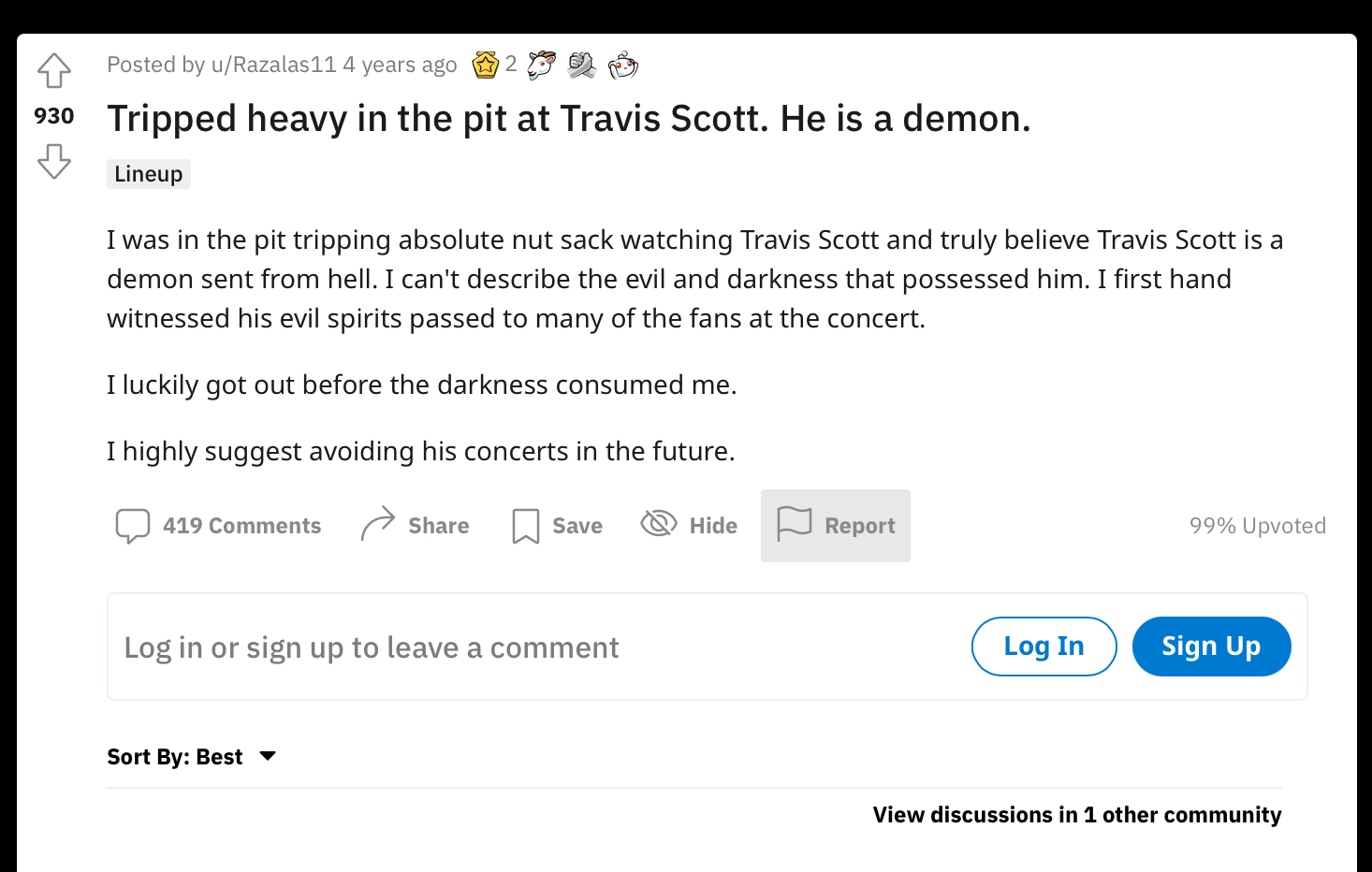
Four years ago, a Reddit user described what it was to attend Travis Scott’s concert. “I was in the pit tripping absolute nut sack watching Travis Scott and truly believe Travis Scott is a demon sent from hell,” the user said, adding, “I can’t describe the evil and darkness that possessed him. I first hand witnessed his evil spirits passed to many of the fans at the concert.”
Source: Reddit
Rapper releases statement, says he is devastated by the tragic events at his festival
Recently, the conspiracy theories started gaining traction after crowds at the Houston concert began to push towards the front of the stage, which caused people in the front to be compressed. Close to 300 people were treated at a field hospital set up near the festival. 23 of the injured were taken to hospital, out of which 8 had died. One patient, who is 10-years-old, is in critical condition.
Scott released a statement on Sunday saying he was “absolutely devastated” about the tragic events that unfolded at Astroworld.
“My prayers go out to the families and all those impacted by what happened at Astroworld Festival. Houston PD has my total support as it continues to look into the tragic loss of life,” Scott tweeted on Saturday.
Rappers Travis Scott and Drake have been sued for having “incited mayhem” after eight people were killed and dozens injured in a stampede during the concert held in Houston.
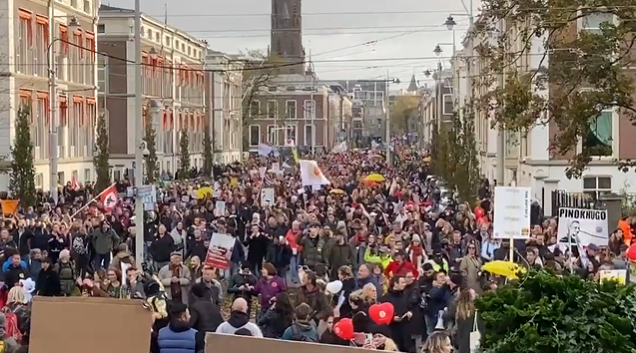
Massive protests have taken place in Netherlands, Italy and other parts of Europe against the governments’ COVID mandates and restrictions. Thousands of people gathered in Netherlands to protest against the existing COVID measures. They were seen holding banners and pleading for freedom from harsh Covid rules.
Massive protest in the Netherlands today??
Tens of thousands of people gathered to protest for freedom.
As per reports, Netherland government has been reintroducing COVID masks and restrictions as a precaution against a third COVID wave. Thousands of people took to the streets to protest against the new restrictions being reimposed by the government in the name of a third COVID wave. It is said that despite of high vaccination rates, the Netherland government is reimposing COVID restrictions in order to curb new COVID outbreaks.
Netherlands erupts into a protest for freedom and an end to COVID law.
Despite over 85% vaxx rate and trusting the politicians it was over, the government is reintroducing restrictions and masks due to a third COVID wave. pic.twitter.com/AAX2S4UBRl
The protests against the harsh COVID measures and lockdowns that have been going on for months in Europe. In Turin, thousands of people took to the streets holding flags and protesting against the COVID laws.
Massive protests in Italy??
Tens of thousands took to the streets yesterday all over the country to protest for freedom.
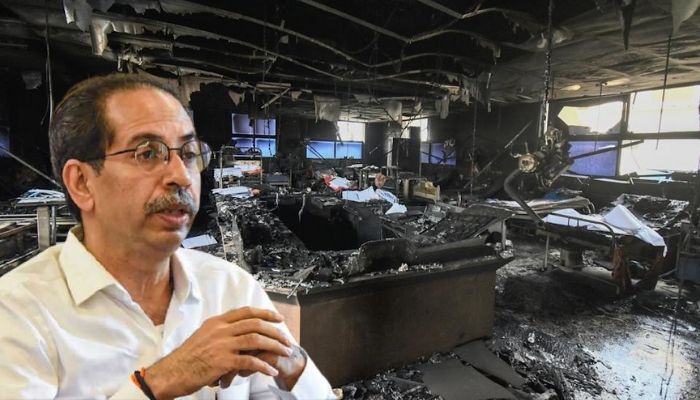
Maharashtra is in the throes of a raging coronavirus outbreak that threatens to overwhelm the state’s healthcare infrastructure. The crisis has been compounded by the Maha Vikas Aghadi’s inept handling of the pandemic. The government had failed to save human lives, not only affected by the pandemic but due to administrative negligence in hospitals. About 75 people had died due to fire accidents and other mishaps at 6 hospitals in the State in 2021 alone. Here are the details of each incident.
January: Hospital fire in Bhandara take the lives of 10 babies
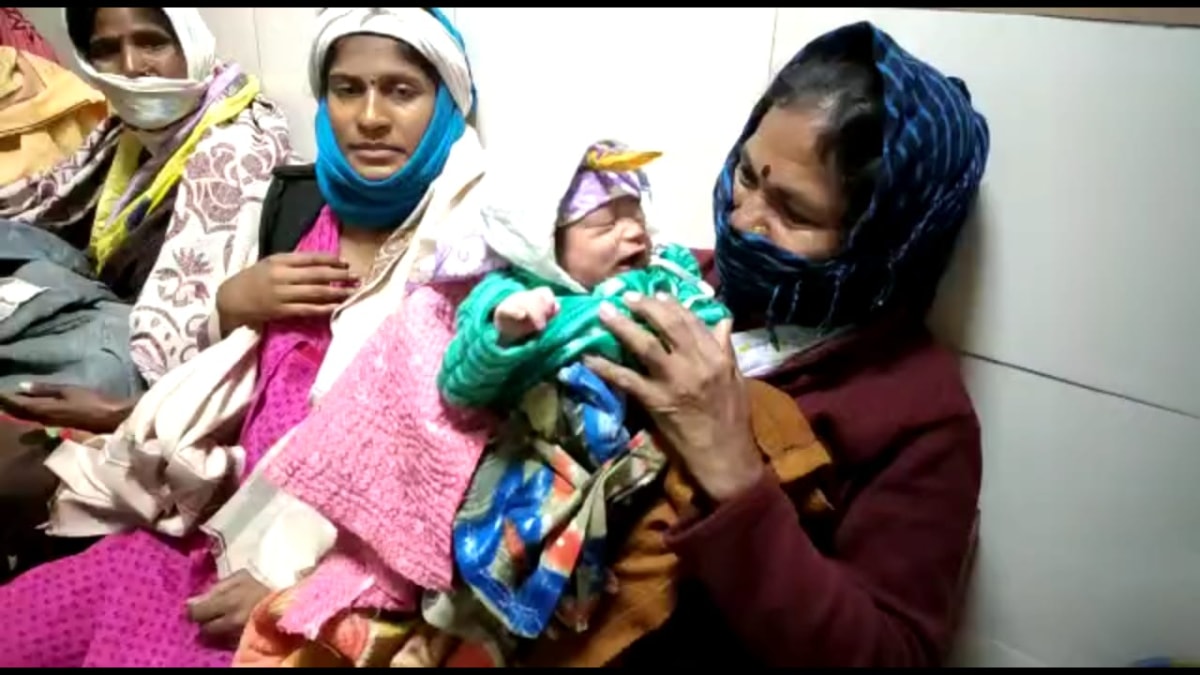
On January 9 this year, 10 infants were killed in a fire accident at the Sick Newborn Care Unit (SNCU) of the Bhandara District General Hospital in Maharastra. The fire broke out at 1:30 am at night. At that time, a staff nurse saw smoke coming out of the ward where infants were being treated. On entering the ward, the nurse could see nothing but smoke. Chief surgeon Pramod Khandate informed, “She informed the higher authorities and all of us reached there. As far as possible, we personally took the babies outside and in the next five minutes, fire brigade reached.”
Only 7 infants could be rescued from the SNCU of the hospital. The death of 10 toddlers created political upheaval in the State of Maharashtra. While speaking about the incident, Chief Minister Uddhav Thackeray remarked, “All hospitals in the State should undergo fire audit immediately. The State’s health team is fighting the coronavirus, but there cannot be any compromise with the safety of the hospitals and patients.” He had also announced an ex-gratia of ₹5 lacs to the families of the deceased children.
The identification of 9 babies was done immediately while the identity of one baby remained undetermined. The toddler was found on the roadside and was brought to the hospital for treatment. A case was also filed against the parents of the abandoned child. Lokesh Kanse, a senior police inspector at the Bhandara City police station, had informed, “Prima facie, the fire seems to have originated from Air Conditioner. The death of the babies happened due to suffocation that was caused by the smoke. A case of accidental death has been registered and further investigations are on.”
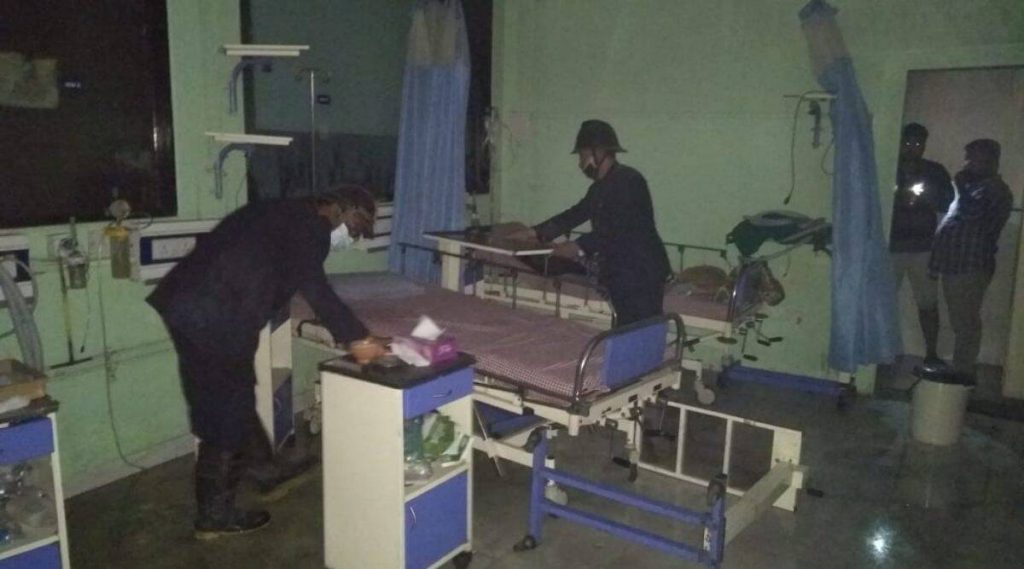
Visuals from the district hospital in Bhandara, image via India Today
According to SP Vasant Jadhav, four experts team were brought to Bhandara from Nagpur Fire Service College, Electrical Department and Forensic Department to determine the exact cause of the fire. After 12 days of the fire accident, the Maharashtra government suspended medical officer Dr Archana Meshram and nurse Jyoti Bharaskar, who were on duty at that time. At the same time, the district civil surgeon Dr Pramod Khandate was also suspended in the aftermath of the tragic incident.
Besides, an additional civil surgeon Dr Sunita Bade was transferred from the hospital. Paediatrician Dr Stuti Ambade and two nurses namely Smita Duke and Shubhangi Sathavane were terminated from service. The action was taken after the Nagpur Divisional Commissioner submitted an inquiry report to Health Secretary. The 6-member committee, formed to probe the incident, accused civil surgeon Khandate and additional civil surgeon Bade of negligence.
March: 11 die after Mumbai hospital fire accident
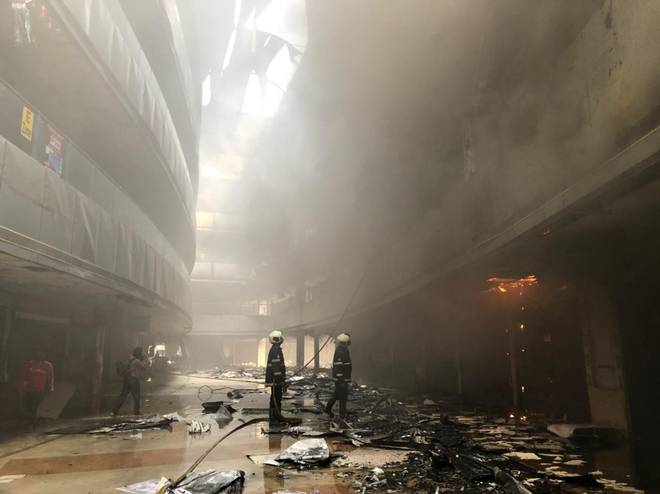
On March 25, about 11 Coronavirus infected patients died after a fire broke out on the first floor of Dream Mall, which had a dedicated Coronavirus treatment facility. The incident took place in the Bhandup area of Mumbai. Reportedly, the Covid-19 centre was established inside the mall due to a lack of beds during the rise of Coronavirus cases in the State in 2020.
The Sunrise Hospital was located on the third floor of the mall. It had a capacity of 107 beds. The hospital authorities were able to evacuate a total of 68 people while 11 patients died of suffocation. The fire service officials informed that the fire broke out on the first floor of the mall and then spread to the second and third floors. “We managed to rescue 68 patients from the hospital with the joint effort of all agencies…We have filed a case with the Bhandup police station and the reasons behind the fire will be probed. Police will also check as to whether all permissions and NOCs related to fire safety were obtained,” an official had informed.
Firefighters extinguishing the fire at Sunrise hospital, image via Emmanual Yogini
However, Covid-19 patients in the Intensive Care Unit (ICU) and ventilation could not be evacuated. The 68 rescued individuals were taken to nearby Coronavirus centres. In a statement, Sunrise Hospital said, “It is functioning with all due compliances such as fire licence and nursing home license. The hospital staff did a fantastic job in safely evacuating patients on wheelchairs and beds to the refuge areas and by following the fire drills.” Following the incident, Chief Minister Uddhav Thackeray visited the location. The BJP demanded that the BMC and Maha Vikas Aghadi take responsibility for the incident.
April: Oxygen leak at Nashik hospital leave 24 dead
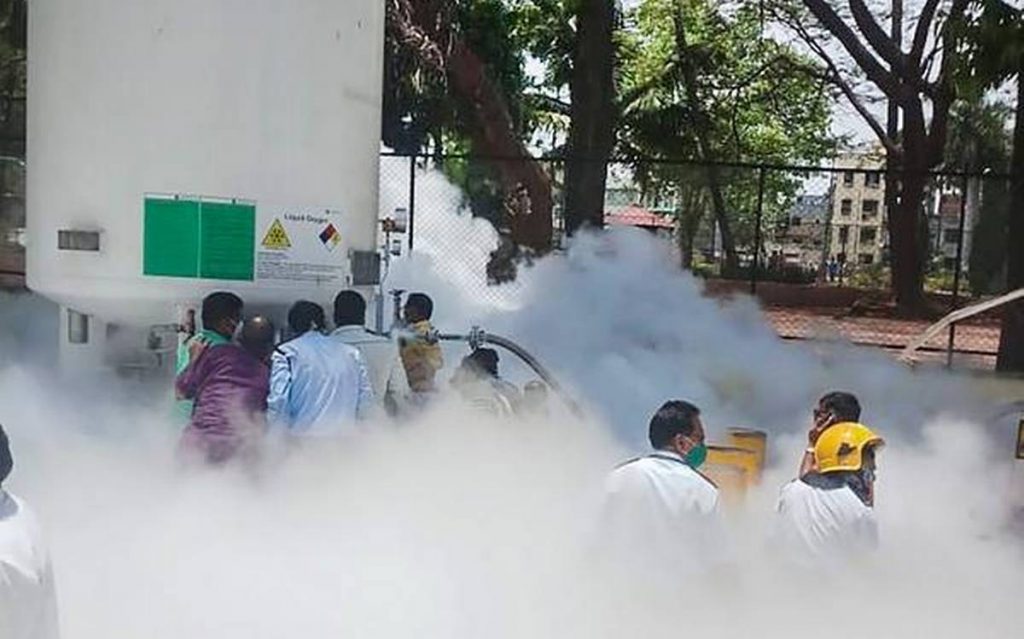
On April 21, an incident of oxygen leakage at Dr Zakir Husain Hospital in Nashik had left 24 dead. About 22 Coronavirus patients had suffocated to death after the oxygen supply came to a sudden halt due to malfunctioning in the main storage of the hospital. Later in the day, 2 more patients, who were on ventilators, had died due to inadequate oxygen supply. At the time of the incident, about 150 patients were admitted to the hospital.
Following the oxygen leakage and subsequent casualties, the Nashik police lodged a First Information Report (FIR) against unidentified persons for culpable homicide and negligence. A compensation of ₹5 lakhs was announced by Uddhav Thackeray for the family of the deceased. While speaking about the matter, Nashik collector Suraj Mandhre informed, “The supply tank that was set up in this hospital started leaking due to cork damage after which the pressure decreased and those on invasive ventilator did not receive adequate oxygen on time. 22 people have died.”
Leakage of medical oxygen at the Dr Zakir Husain Hospital, image via PTI
He further added, “After nearly an hour, the same tank has been started. It is being used to supply oxygen to the patients now. However, the decrease in pressure, earlier, led to the incident.” Ventilators in the hospital were stopped for at least 30 minutes due to the oxygen deprivation caused by the tank leak. Reportedly, a private company was tasked to carry out the maintenance of the oxygen tank.
When the leakage was noticed, the hospital authorities contacted the Municipal Commissioner Kailash Jadhav and sought technical help. At the time of the incident, the oxygen level was around 25% in the storage tank. According to an official, the leakage occurred while oxygen was being filled from a tanker to one of the tanks. After a video of the incident when viral on social media, Nashik police commissioner Deepak Pandey deployed adequate police at the hospital premises to avoid any untoward incident.
April: Hospital fire accident in Virar takes 15 lives
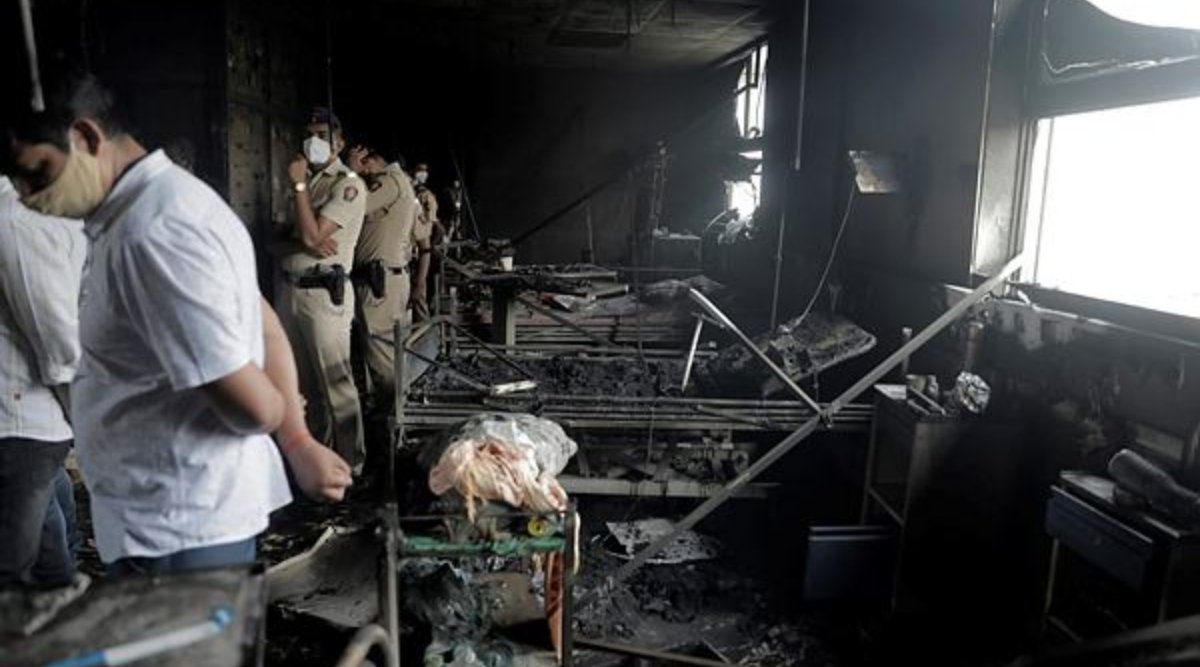
On April 23 this year, about 15 Coronavirus positive patients died in a fire accident at the Intensive Care Unit (ICU) of Vijay Vallabh Hospital. The said hospital is located in Virar, about 50 km away from the city of Mumbai.
Reportedly, the fire broke out at 3 am in the ICU, housing about 17 Coronavirus positive patients at that time. The Intensive Care Unit is located on the 2nd floor of the hospital. On receiving information, the fire service immediately rushed to the spot and extinguished it by 5:20 am. About 15 people died in the fire mishap. The remaining patients were sent to Dahisar Covid Centre and other hospitals in Virar.
Visuals of the aftermath of fire accident at Vijay Vallabh Hospital (Photo Credits: Indian Express)
A detailed investigation was ordered by Maharashtra Health Minister Rajesh Tope to determine whether all safety norms were adhered to by the hospital. Following public outcry, State CM Uddhav Thackeray announced an ex gratia of ₹5 lac to the family of those who died. PM Modi also announced an ex gratia of ₹2 lac to the family of the deceased. Ex-Chief Minister Devendra Fadnavis sought an audit of all hospitals in Maharashtra.
In July, the Arnala police filed a chargesheet wherein they accused hospital owner Bastimal Shah, CEO Dr Dilip Shah and chief administrative officer Dr Shailesh Pathak of not doing anything, despite being well aware of the possibility of a fire outbreak. The charge sheet also emphasised how there was a delay in reporting the fire to the Vasai Virar Municipal Corporation fire brigade. By the time the fire vehicles reached the hospital, the second floor was completely charred.
The investigators also found that the Vijay Vallabh hospital did not adhere to the guidelines laid down by the Maharashtra Fire Prevention and Life Safety Measures Act. Moreover, the hospital did not obtain a NOC from the municipality for the year 2021-2022. At the same time, no safety agency was appointed to carry out the fire audit of the hospital premises.
April: Mumbra hospital fire accident in April, reported 4 dead
On April 28 morning, a fire broke out at the Prime Criticare hospital in Mumbra, leading to the death of 4 patients. The hospital fell under the jurisdiction of the Thane Municipal Corporation (TMC) which had claimed that all hospitals were fire-resistant. The Hindu reported that the building was 16 years old and was served two notices on earlier occasions, the last one being on February 21. However, the Thana Municipal Corporation did not do any follow-up.
While speaking about the matter, the fire chief of Mumbra TM Mishra stated “Although there was a fire exit on the premises, it was getting difficult to rescue, as the pathway was closed with storage material. We have served two notices to the hospital, however, there was no response.” The locals informed that the fire exit was blocked and there was only one exit available. “The hospital is congested and fire exit was obstructed with storage material. There is one exit for patients. So we had to break open the grille of a window at the back of the hospital. Moreover, there was only one staircase, the other was a ramp,” a local said.
Fire broke out at the Prime Criticare hospital in Mumbra, image via Indian Express
The Thane Municipal Corporation conceded that over 70% of the hospitals had been operating in illegal buildings. However, they had not initiated a crackdown, keeping in mind the Covid-19 situation in the State and their necessity at the time of the pandemic. According to chief fire officer Girish Zalke, the incident occurred due to panel overheating. “It is an accident that occurred due to electric faults on the premises,” he added.
November: Hospital accident fire in Ahmednagar left 11 dead
Fires and untoward mishaps at hospitals in Maharashtra had become a dangerously common occurrence. After a spate of accidents was reported at several hospitals earlier this year, another unfortunate incident was reported from Ahmednagar. A major fire broke out at the District Hospital on November 6, killing at least 11 coronavirus patients and leaving scores of others injured.
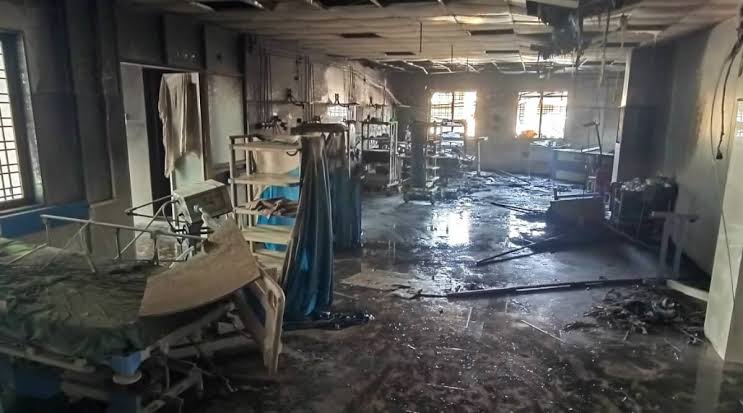
The fire broke out at the Intensive Care Unit (ICU) of the District Hospital, where at least 25 patients were admitted, according to a report published by India Today. Six of them suffered serious burn injuries in the incident. Prima facie reports suggested that an electrical short-circuit might have started the fire. However, the exact cause of conflagration could only be determined after a thorough probe into the matter is completed.
Fire erupted at Ahmednagar district hospital(Image Credits: Indian Express)
According to the sources, the fire broke out at the COVID ward in the new building of the hospital at around Saturday (November 6) morning. The state government announced had Rs 5 lakh compensation to the next of kin of those who died in the fire at Maharashtra hospital. Meanwhile, Maharashtra Chief Minister Uddhav Thackeray has expressed his condolences over the deaths and has also ordered a probe into the incident. The district collector Rajendra Bhosale has reportedly been asked to conduct an inquiry into the incident and submit the report within a week.
Diwali 2021 brought broad smiles to the faces of business owners in Surat. The business in the textile, electronics, and jewellery sectors started to speed up at least two months before Diwali. According to Janak Dave, News18 Bureau Chief, in two months, the textile sector saw sales up to 13,000 crores. On the other hand, the jewellery sector saw sales figures close to 500 crores and the electronics sector saw sales up to 350 crores.
सूरत के कारोबारियों के लिए यह दीवाली बंपर रही।महज 2 महीने में,
टेक्सटाइल- 13000 करोड़, ज्वेलरी- 500 करोड़, इलेक्ट्रॉनिक्स -350 करोड़ का व्यापार हुआ।#GST से पहले हो रहे कारोबार से भी काफी ज्यादा है जिसने व्यापारियों के चेहरे पर अलग सी खुशी लौटाई है। अभी शादियों की सीजन बाकी है।
Reportedly, this year sales were better than the time prior to GST was enacted. According to a report in ANI, Surat jewellery stores saw a surge in the number of buyers close to the festival. As Covid-19 cases were down and gold prices were down as well, the shoppers bought gold not only as an investment but also as gifts for Diwali and the upcoming wedding season.
A report in the Indian Express noted that the sales crossed Rs. 100 crores on Dhanteras in the diamond-studded gold jewellery sector along with normal gold and silver jewellery. Salim Daginawala, president, Surat Jewellers Association, said, “In 2019, the sales were close to Rs 80 crore and was nearly Rs 60 crore last year. This year, the sales have boomed to over Rs 100 crore in the city. This shows that those who had not made purchases in 2020 have bought this year. Since the past few months, there has been a boom in all sectors of industries, and at last, our industry has also benefitted.”
Speaking to OpIndia about the sentiment of people during the festive season, Manoj Agarwal, chairman of Federation Of Surat Textile Traders Association (FOSTTA), said that this year was much better than previous years. He said, “We are extremely happy with the business that we are getting this year. I cannot confirm the numbers at the moment, but I can assure the sector had not seen such spike in the business since 2016.”
Echoing Agarwal’s statement, Rohan Shah, senior representative, Surat jewellery Manufacturers’ Association, said, “The business was more than we expected. Everyone was delighted to see that people were coming out to buy jewellery during festival season.”
Businesses across the country boomed during Diwali
Confederation of All India Traders (CAIT), a body of 70 million traders across the country, reported Rs 1.25 trillion worth of business during Diwali. Reports suggest that it has been ten years since such trade figures were reported by CAIT during festival season. Such massive scale of shopping contributed to ending the economic slowdown that the industry was suffering from the past two years following the Pandemic.
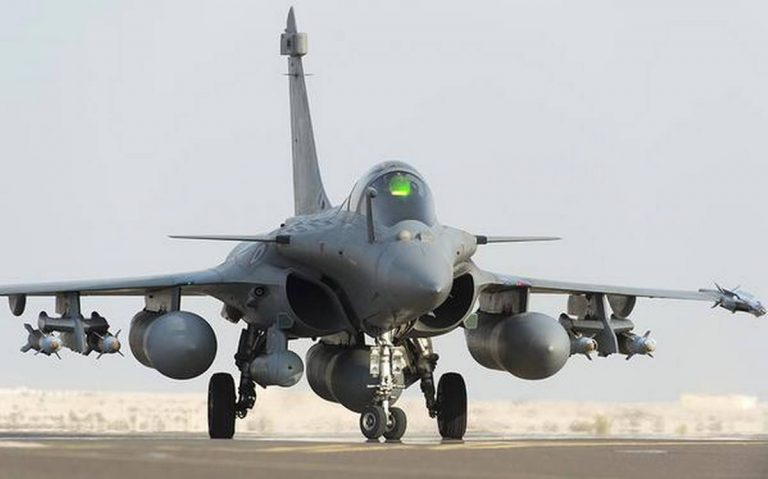
Mediapart, a media portal in France, has published what it calls ‘fake invoices’ that are alleged to have helped Dassault secure the deal for the 36 Rafale jets with the Indian Government. Mediapart claimed that Indian agencies did not pursue the case despite the existence of the fake invoices.
The Mediapart report said, “It involves offshore companies, dubious contracts and ‘false’ invoices. Mediapart can reveal that detectives from India’s federal police force, the Central Bureau of Investigations (CBI), and colleagues from the Enforcement Directorate (ED), which fights money laundering, have had proof since October 2018 that Dassault paid at least €7.5 million in secret commissions to middleman Sushen Gupta.”
The ‘fake invoices’ cited by Mediapart occurred when the UPA Government was in power. According to the invoices, payments totaling around 11 million Euros were made to a firm in Singapore. “According to an accounts spreadsheet belonging to Sushen Gupta, an entity called simply ‘D’, which is a code he regularly used to designate Dassault, paid €14.6 million to Interdev in Singapore over the period 2004-2013,” the media outlet’s own report from April this year said.
Quite clearly, the invoices are related to a deal that the UPA Government was trying to make. After the NDA Government came to power, the UPA era deal was scrapped and the Indian Government secured a government-to-government deal that involved India buying 36 Rafale jets directly from the French Government. Then Defense Minister Manohar Parrikar had said that the UPA era deal was not viable and had not been closed either.
Since there was no bidding in the current deal, there is no question of bribes being involved to win a bid. Furthermore, Mediapart’s own reports confirm that the alleged payments were made during the UPA era.
The renewed buzz around the Rafale deal was initiated after a judge in France reopened the investigation into the deal that his predecessor had closed. It is not clear what the charges are, or even what the allegations are supposed to entail.
The Supreme Court in December 2018 had declined to order a probe into the Rafale deal. Consequently, in May 2019, the apex court had dismissed review petitions against its previous verdict. The Comptroller and Auditor General of India (CAG) had also concluded that the Indian Government had not overpaid for the Rafale jets.
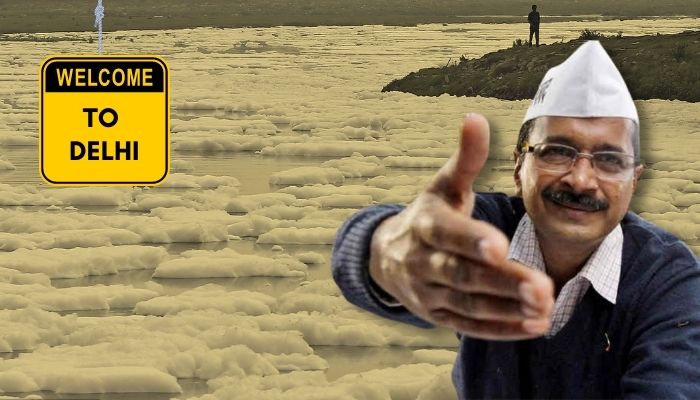
It’s the year 2021 and the national capital is still grappling with hazardous air quality and toxic water. The social media platforms are once again flooded with images and videos of ‘toxic Yamuna’ with no clear solution to the air-water crisis.
However, in yet another serious attempt to purify the ‘air and water,’ the Arvind Kejriwal-led AAP government has done the unimaginable- ‘extend the deadline.’
Deputy chief minister of Delhi, Manish Sisodia while presenting the AAP government’s budget for 2021-2022 in March had claimed that the Yamuna river will be fully cleaned in the next three years.
He had also announced that a provision of Rs 2,074 crore has been made in this regard.
‘Readying to clean Yamuna’
In September this year, Delhi’s water minister Satyendra Jain had claimed that the AAP government was planning to treat around 155 million gallons per day (MGD) of wastewater coming from Haryana and Uttar Pradesh into the Yamuna.
One more meeting was held with officials from Delhi Jal Board and the Irrigation and Flood Control department to lay down a ‘master plan’ to clean all the sources that pollute the river.
Delhi’s AAP government pledges to clean Yamuna river. Irrigation Minister Satyendra Jain, in a meeting with water board officials, has suggested taking steps to refine 150 MGD of water which comes from neighboring states.#AamAadmiParty#AAP#AapMysuru#Mysorepic.twitter.com/szGhXnbMUs
The minister had said that the drains from the neighbouring states would either be diverted to sewage treatment plants (STP) or undergo treatment. He also said that the treated water would be used to revive lakes and water bodies.
Harping on the ‘three-year Yamuna clean’ promise, Jain had further said, “The Yamuna is a holy river. It’s a river that we all pray to and seek blessings from. It does not belong to a particular state but to the whole country.” Deflecting the blame on other states, Jain said that the neighbours of Delhi polluting the river should also take steps.
“..but we are taking additional responsibility upon ourselves because it is our commitment to the citizens of Delhi that we will clean it within three years,” added the AAP minister.
The minister in 2020 had claimed that the Delhi government is firm on reviving the river in the next three to four years.
Dirty water and industrial waste come in Yamuna river from Badshahpur, Haryana and Sahibabad, UP. We are committed to cleaning the river in the next 3-4 years. If there is any pollution causing factory in Delhi, strict action will be taken: Delhi Health Minister Satyendra Jain pic.twitter.com/0OKKpZ65Q2
Nonetheless, a thick envelope of toxic carcinogenic foam continues to pollute the Yamuna river.
‘Tareekh pe Tareekh’
The series of issuing dates after dates for cleaning the Yamuna by the Delhi government has been going on since the year 2015. Delhi’s Chief Minister Arvind Kejriwal in 2015 had promised to clean the Yamuna river within 5 years (by 2020).
He had made this promise standing on the banks of the river along with his cabinet colleagues and senior Delhi government officials, who had taken part in the first ‘Yamuna Aarti’ held at the Kudesia Ghat.
The aarti was conducted in a very Dharmic style with priests from Varanasi who were specially invited for the program chanting Vedic hymns.
As per a 2015 Mint report, Kejriwal had boasted, “We will revive Yamuna within five years,” adding that the government has a plan to stop the flow of drains in the Yamuna in the next 1-2 years.
The case of ‘missing deadline’
While the Delhi government ministers continue to blame Haryana and UP for the menace, it is Delhi Jal Board’s (DJB) duty to treat the sewage.
Reportedly, the national capital generates 720 million gallons per day (MGD) of sewage. However, the current STPs have a capacity of treating 597.26 MGD per day.
The DJB had assured the National Green Tribunal’s (NGT) monitoring panel that it will increase the utilization of the existing STPs to 99% by June 2019, but more than two years after missing the deadline, the utilization stands at just 86%.
Issuing a new date, the Delhi government in a report from July had stated, “Entire flow (of sewage in drains) shall be trapped and treated by March 2023 after construction/rehabilitation of Coronation Pillar, Rithala and Kondli STP under YAP-III.”
‘Water supply disrupted due to Ammonia spike in Yamuna’
The water supply in several locations of Delhi was disrupted as the production at the treatment plants in the city was hit due to an increase in ammonia in the Yamuna river near Wazirabad.
Delhi: Water supply takes a hit with the rise in ammonia levels in Yamuna River
We don’t have a water supply since yesterday, & this happens every 2 months. Tap water is yellowish & pungent, so we have to buy water from shops: Neeti Verma, Yamuna Vihar resident pic.twitter.com/vPTtzKB6nV
AAP leader and the Vice Chairman of the Delhi Jal Board, Raghav Chadda in an innovative response claimed that since Delhi does not have its own private river, it has to depend on ‘treated water’ for consumption.
दिल्ली के पास अपनी कोई नदीं तो है नहीं इसलिए पड़ोसी राज्यों से आने वाले पानी को हम ‘वाटर ट्रीटमेंट प्लांट’ में साफ कर घरों तक पुंचाते हैं। यमुना नदी में अमोनिया का स्तर बढ़ गया है: AAP नेता और दिल्ली जल बोर्ड के उपाध्यक्ष राघव चड्डा pic.twitter.com/3pYbTuzfG1
The Bhartiya Janta Party’s (BJP) Delhi unit had launched a cleanliness drive in September this year to clean the Yamuna at 71 locations as part of the ‘Sewa and Samarpan’ program.
“It is the responsibility of the Delhi government to get rid of pollution from the river but as Delhiites it is our duty to volunteer in this effort so that when the Chhath festival comes it can be celebrated in a clean atmosphere,” lamented Delhi BJP president Adesh Gupta.
With the commencement of Chatth Puja, the BJP workers continue to clean the river for the convenience of the devotees.
However, some devotees today were seen performing puja in the toxic river risking their health.
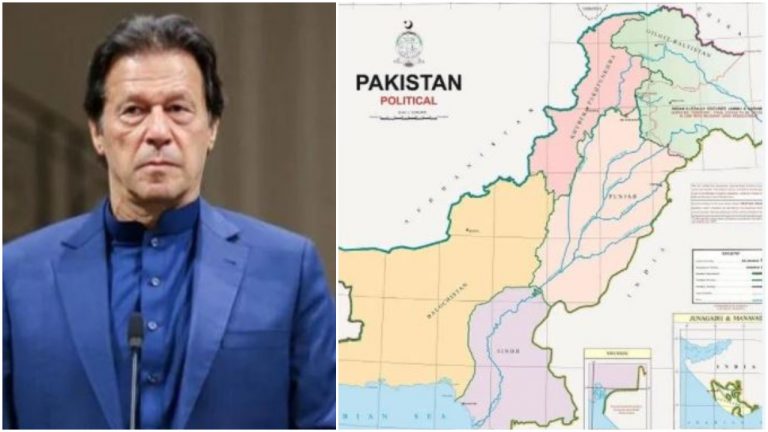
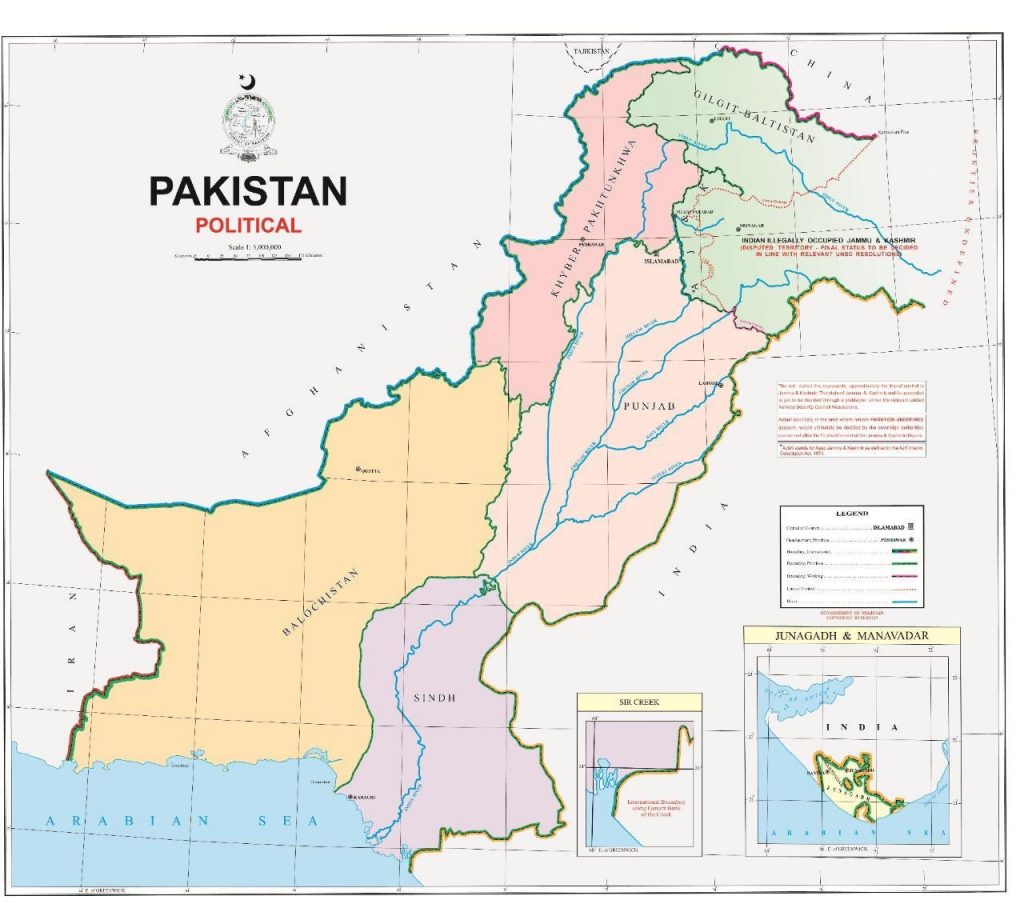
In yet another juvenile attempt to pander to Imran Khan’s fanciful whims, the Pakistan government has mandated all news channels in the country to display the ‘map of Pakistan’ daily before airing the 9 pm news bulletin. A notification was issued by the Pakistan Electronic Media Regulatory Authority (PEMRA) titled ‘Streamlining Correct Use of Pakistan Political Map’ on November 3 making it compulsory for all news channels to air the ‘new political map’ of the country for 02 seconds before airing the news bulletin at 09:00 pm on a regular basis.
Imran Khan had unveiled this ‘new political map’ in August 2020, on the eve of the first anniversary of the abrogation of Article 370, a move that stripped the special status of the state of Jammu and Kashmir, making sovereign claims on the entire Jammu and Kashmir and the erstwhile princely state of Junagadh in Gujarat.
So-called map of Pakistan
The notification issued by PEMRA stated: “All the news channels (both public and private) have to flash the political map of Pakistan for two seconds before airing the news bulletin at 9 pm on a regular basis,” says the PEMRA directive issued on November 3 that became public on Sunday.
Mapping the country in new dimensions: Govt mandates all tv channels to flash the map of Pakistan for 2 seconds before airing the news bulletin at 9.00 pm on regular basis. Why not national anthem? and asking public to stand before watching the bulletin? pic.twitter.com/lS9MOUQfch
“All the satellite TV channel licencees (news and current affairs/regional language) are, therefore, directed to comply with the above-mentioned recommendation in letter and spirit without fail,” it said.
According to PEMRA, the directions to TV stations were issued in response to a letter from the Ministry of Information and Broadcasting dated September 16.
Minister of Information and Broadcasting Fawad Chaudhry defended his ministry’s decision to send the instruction to PEMRA, claiming that the government had the authority to do so under Section 5 of the PEMRA Ordinance 2002.
Pakistan PM Imran Khan unveils new ‘map of Pakistan’ including India territory
On the eve of the first anniversary of the abrogation of Article 370, a move that stripped the special status of the erstwhile state of Jammu and Kashmir, Pakistan has released a new political map, making sovereign claims on the entire Jammu and Kashmir and the erstwhile princely state of Junagadh in Gujarat.
Terming it a historic day, Imran Khan unveiled the new political map, adding that the new political map of Pakistan represents the ambition of Pakistani nationals. Along with a fresh map, Pakistan had also called for the use of IIOJK (Indian Illegally Occupied Jammu and Kashmir) and not IOJK (India Occupied Jammu and Kashmir) or IOK (India Occupied Kashmir). Furthermore, all TV and Radio channels were asked to play Pakistan and Pakistan Occupied Kashmir national anthems immediately after one minute of silence on August 5.
Uttar Pradesh CM Yogi Adityanath on Monday, November 8 met Kairana residents who had left the area in Uttar Pradesh in 2016 during the Samajwadi Party rule, amid threats and attacks by the local Muslims. These Hindu families, mostly business owners, were forced to flee due to the harassment they faced from the Muslim majority and the complete lawlessness that reigned in the state when the Samajwadi Party was in power.
CM Yogi Adityanath meets Kairana residents who returned after the migration in 2016
According to reports, several families in Kairana had migrated in 2016 due to threats from another community. pic.twitter.com/nygnDsHqzV
The CM was in Kairana town in UP’s Shamli district to lay the foundation stones of a Provincial Armed Constabulary battalion camp and other projects and address a public meeting, besides meeting the Hindu families who returned after the exodus.
While addressing a public gathering at Kairana, UP CM Yogi Adityanath said: “Peace has returned to Kairana since 2017, due to the state government’s zero-tolerance for crime policy. Several families have now returned to Kairana. Today, I am here for the establishment of a battalion of Provincial Armed Constabulary (PAC)”.
कैराना में पूर्ववर्ती सरकार में हिंसा के शिकार हुए परिवार अब वापस आ रहे हैं।
यह लोग अपने पूर्वजों की भूमि पर रहें, यहां की विरासत को संरक्षण देने और व्यापारिक व औद्योगिक माहौल को बढ़ाने हेतु @UPGovt हर संभव सहयोग करेगी।
“The earlier governments in Uttar Pradesh criminalised politics. Our zero-tolerance policy against crime has restored law and order in the town”, added CM Yogi Adityanath. The CM asserted that the government will work to ensure the safety of the town’s residents who have been living there for several generations, besides encouraging business activities while keeping the criminal elements in check.
The Kairana region in Uttar Pradesh became infamous in 2016 after a National Human Rights Commission (NHRC) probe acknowledged that the region was witnessing a mass exodus of Hindu families.
Saharanpur MP Raghav Lakhanpal had in 2016 compared the exodus of the Hindus in the town to that of the Kashmiri Pandits from Kashmir. He had alleged that the population of Hindus in Kairana had then gone down to 8 per cent as compared to 52 per cent in 2001.
The primary reason behind the exodus of these Hindu families from Kairana in 2016 was the free reign of gangsters in the town. Most notable of them was the gangster Mukim Kala. For years the AK 47 wielding goons of his gang had created an absolute mockery of law and order in Kairana. Mukim Kala even owned a weapons warehouse. The arrest of Mukim Kala had little effect on the situation as he still continued to run his extortion racket from jail.
Things began to change only after Yogi Adityanath took over as CM in UP. Under his government, the UP Police started cracking down on criminals like never before and several members of the Mukim Kala’s gang were either shot dead in encounters or arrested in rapid succession.
UP police and the Yogi Adityanath led government had faced criticism and even notices by human rights groups regarding these encounters. But both the government and the police had made a resolute stand on the issue and the UP CM had even declared that the encounters will not stop.
As the crackdown against criminals went on non-stop, many local wanted criminals were seen surrendering to the police voluntarily due to the fear of encounter.
Many Hindu businessmen who had fled the town fearing for their lives and the safety of their families began returning soon after the actions taken by the Uttar Pradesh police at the behest of the Yogi Adityanath government.