Home Blog Page 386

Journalist Chitra Tripathi heckled by Islamists while reporting on Pahalgam terrorist attack, incident captured on video

ABP News journalist Chitra Tripathi, who went to Pahalgam in Jammu and Kashmir to report about the recent terrorist attack on Hindu tourists, was mobbed by Islamists. A video of the incident went viral on social media, showing the journalist being surrounded by a mob of angry locals. Tripathi repeatedly tried to tell the people she was there to do her job, but the mob did not listen and continued to heckle her.

What is in the viral video

In the video, Chitra Tripathi is seen trying to explain to the local women that she is there only for her work, but the crowd standing behind her does not let her speak. She then says- “I am a journalist, but you are abusing me- this is very wrong… if you want to kill me, then kill me.”

After this, some people in the mob started shouting at Tripathi and raised loud slogans of ‘Godi Media Hai-Hai’. In the video, some Muslim youths were also seen raising slogans like ‘Gulistan hum sharminda hain tere katil zinda hain’. Apart from this, a voice came from Kashmir – ‘People were also seen shouting Hindu Muslim bhai-bhai’.

‘This is the reality of Kashmir’

The video was also shared on social media by Assam minister Ashok Singhal. He wrote, Chitra Tripathi was almost lynched. This is the reality of Kashmir and Kashmiriyat. You cannot hold peace talks with people whose existence depends on your destruction.”

Dare raising slogans of ‘Down with Pakistan’

The video has been shared on social media by senior journalist Ashok Srivastava. He wrote on X, In less than 24 hours, the masks have come off! Yesterday, Hindus were killed after asking their names and knowing their religion. Today, journalists who were reporting on the targeting of Hindus in Srinagar were targeted by locals. Women journalists of Republic TV and ABP were surrounded and hooted at, and slogans of ‘Godi Media Hai Hai’ were raised.

Srivastava termed the hooting by the mob at Tripathi as shameful and asked the sloganeers, “If you have the courage, then shout the slogan ‘Down with Pakistan’.”

The video has been getting mixed reactions from people. While some people are encouraging Chitra Tripathi to stay strong, others are justifying her being mobbed and harassed. The people justifying her harassment are accusing the ‘Godi media’ of showing that Islamic terrorists targeted Hindus at Pahalgam, which was testified by the eyewitnesses and victims themselves. The victims and eyewitnesses said that the terrorists came, asked for their names, made them remove their pants and check their circumcision, and when they turned out to be Hindus, they were killed.

Delhi court issues non-bailable warrant against Medha Patkar for not obeying verdict after conviction in defamation case by Delhi LG VK Saxena

A Delhi Court on Wednesday (24th April) issued a non-bailable warrant (NBW) against controversial activist Medha Patkar, who was convicted last year in a defamation case filed by Delhi Lieutenant Governor VK Saxena. Issuing the NBW, Additional Sessions Judge Vishal Singh observed that Patkar deliberately violated the sentence order passed on 8th April and avoided court hearings following her conviction.

“Instead of appearing before the Court and to comply with the order on sentence dated 08/04/2025, the convict is absent and deliberately failed to comply with the order on sentence and to avail of the benefit of probation subject to furnishing of compensation amount,” the judge said.

The court said that it did not have an option but to take coercive action against her. “On the next date, if the convict fails to comply with the terms of the order on sentence dated 08/04/2025, the court will be constrained to reconsider the benevolent sentence and will have to alter the order on sentence,” the court order read. The court warned Patkar that if she failed to appear for the next hearing and did not comply with the order of sentence, then the court would reconsider her probation and alter the sentence order.

The Sessions judge also noted that Patkar had approached the Delhi High Court seeking directions for the deferment of the hearing at the Sessions Court, but her plea was dismissed. “The present application (asking for a stay on the execution of the probation bond) is frivolous and mischievous and is only calculated to hoodwink the Court. The present application is, therefore, dismissed,” the Sessions judge said. The next hearing of the case is on 3rd May.

Notably, Patkar was given a concession by the court in her sentence. Taking her age and ill-health into consideration, Metropolitan Magistrate Raghav Sharma of the Saket Court granted her a lighter punishment. Additionally, her sentencing was suspended for 30 days by the court. In May last year, she was sentenced to 5 months’ simple imprisonment and a fine of ₹10 lakh was imposed on her to be paid to LG Sxena. On 29th July last year, Additional Sessions Judge Vishal Singh suspended her sentence and granted her bail. She later secured a probation of good conduct after depositing ₹1 lakh on April 8, 2025.

What was the case?

Medha Patkar and Vinai Kumar Saxena have been involved in a legal battle since 2000 after Patkar filed a case against him for publishing ads against her and the Narmada Bachao Andolan. In 2000, Saxena published an advertisement against Patkar’s Narmada Bachao Andolan, which was opposing the construction of dams over the Narmada River. Afterwards, Patkar issued a press notice against Saxena, which prompted Saxena to file a defamation suit against Patkar before a court in Ahmedabad in 2001. In 2003, the case was transferred to Delhi following the Supreme Court’s order.

The court convicted Patkar for defamation and noted that Patkar imputed that Saxena was “mortgaging the people of Gujarat and their resources before Bill Gates and Wolfensohn, and he was an agent of the Government of Gujarat”. The court order stated, “It is evident that the accused harboured a clear intention to defame the complainant through her press note, given the deliberate and calculated nature of her statements.”  

The court further noted that the terms used by Patkar against Saxena were not only inflammatory but were also intended to provoke public outrage and diminish his esteem in the eyes of the community.

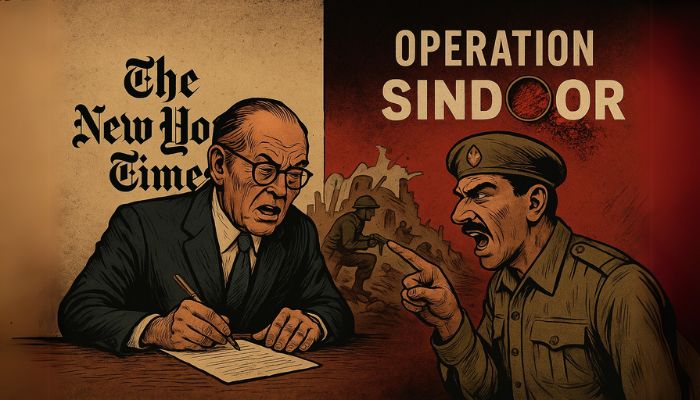
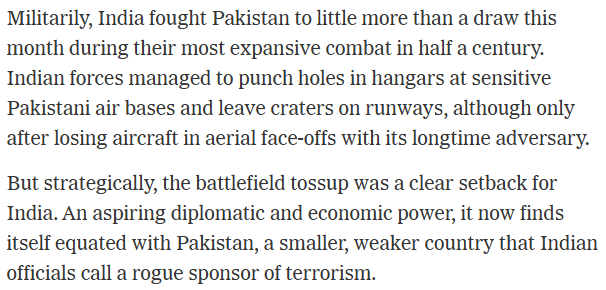
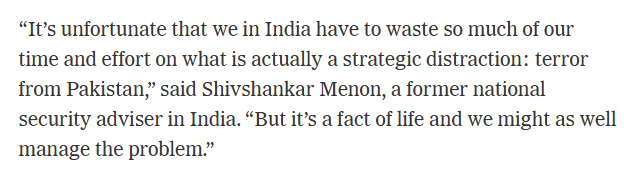
US House Foreign Affairs Committee slams New York Times for whitewashing Pahalgam terror attack

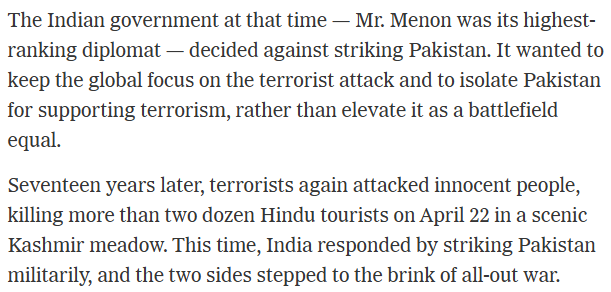
On 22nd April afternoon, a group of Islamic terrorists opened fire on tourists in the popular Baisaran meadow of Pahalgam and murdered 28 individuals. It was one of the bloodiest civilian assaults in Kashmir in recent times and The Resistance Front (TRF), an offshoot of the Pakistan-based Lashkar-e-Taiba, has claimed its responsibility.

The liberal media, consistent with its modus operandi, commenced to sanitize and downplay the horrific nature of the attack that was carried out on religious grounds.

The usual suspects, including The New York Times labeled the assailants as “gunmen” instead of terrorists, failing to acknowledge that the tourists were deliberately targeted due to their religious identity. This incident was not another terrorist attack, but rather motivated by the intense hatred of Jihadi terrorists who consider non-Muslims as their enemy.

Notably, the House Foreign Affairs Committee (Republicans) of the United States called out the liberal propaganda and slammed The New York Times for replacing the word “gunmen” with terrorists and wrote, “We fixed it for you. This was a terrorist attack, plain and simple. Whether it’s India or Israel, when it comes to terrorism, the NYT is removed from reality.”

The assailants executed the tourists after demanding their identification cards, instructing them to recite Islamic verses and even asking them to remove their pants only to verify their non-Muslim identity. Nonetheless, the left-liberal cabal disregarded all these alarming facts to diminish the gravity of the event. It began covering up Islamic terrorism sponsored by Pakistan and referred to the terrorists as “gunmen.”

Simultaneously, they used the phrase “India-administered Kashmir” for the Union Territory of Jammu and Kashmir to establish the notion that it is a disputed region between India and Pakistan. Similar to the New York Times, the BBC, The Washington Post and France 24, among others peddled the same narrative. The controversial Al Jazeera network, also advanced the same fabrications in the name of news.

The deliberate editorial choices made by global media houses to downplay the Pahalgam attack as anything but an act of Islamic terror raise serious ethical questions. By avoiding the term “terrorist” and repeatedly using “Indian-administered Kashmir,” these outlets not only diminish the horror faced by victims but also echo the narrative peddled by Pakistan. Such reportage undermines India’s sovereignty and downplays the systematic targeting of Hindus.

Indus Water Treaty suspended, Attari-Wagah Border closed, and Pakistanis asked to leave in 48 hours: Key decisions by Modi govt after Pahalgam terror attack

In a bold response to the brutal terror strike in Jammu and Kashmir’s Pahalgam that left 26 tourists dead, India has announced a series of sweeping diplomatic and strategic measures aimed directly at Pakistan.

The Cabinet Committee on Security (CCS), chaired by Prime Minister Narendra Modi, on Wednesday, decided to suspend the Indus Waters Treaty, a decades-old water-sharing agreement brokered by the World Bank. According to the Ministry of External Affairs, the suspension will remain in place until Pakistan ends its support for cross-border terrorism.

This effectively freezes all bilateral technical exchanges, project approvals, and data sharing related to the treaty—a clear signal that the old playbook no longer applies.

In tandem, India will shut down the Attari border checkpost, a key transit point between the two countries, further tightening the screws on bilateral engagement.

Ratcheting up the pressure, India has also:

  • Expelled Pakistani military advisors posted in the High Commission in New Delhi, declaring them persona non grata.
  • Revoked all SAARC visa exemptions granted to Pakistani nationals, giving them 48 hours to leave the country.

These decisions represent a sharp escalation in India’s posture, moving from diplomatic caution to decisive deterrence.

Foreign Secretary Vikram Misri, in his first remarks following the attack, linked the terror strike to Pakistan’s attempts to sabotage the peaceful and successful elections held in Jammu and Kashmir. “This was retaliation, not random,” Misri stated firmly. “The perpetrators will face justice—and those who enabled them will face consequences.”

Kapil Sibal seeks to repeat ‘Nehruvian blunder’ as he bats for internationalisation of the Pahalgam terror attack

On the 23rd of April, senior advocate and Rajya Sabha MP Kapil Sibal condemned the Pahalgam terror attack, referring to it as a “carefully planned and heinous act,” however, he insisted that the government should address the issue internationally. He called for Pakistan to be officially classified as a terrorist state and for the prosecution of those responsible for the killings at the International Criminal Court.

The veteran Congressman stated, “It is a very carefully planned attack to target innocent people. If the general (Asim Munir) makes this statement, and an arm of Lashkar-e-Taiba is doing this and that they are all located in Pakistan, then it’s an act of terrorism by the state. Pakistan should be designated as a terrorist organization and those responsible for this should be prosecuted in the International Criminal Court.” He then added, “I urge the Home Minister to proscribe Pakistan as a terrorist state and move the International Criminal Court. I am sure the opposition will stand by this.”

Notably, while the parliamentarian aims to escalate the issue to an international court and attract foreign scrutiny, the Simla Agreement, which was executed by his own party’s government under Prime Minister Indira Gandhi and President Zulfikar Ali Bhutto on 2nd July 1971, in the aftermath of the Indo-Pakistani War that resulted in Bangladesh’s independence (previously East Pakistan), asserts that the Kashmir dispute must be resolved through bilateral negotiations between the two countries.

This clearly indicates that the conflict lies between the two neighbouring nations, and no international organisation or country is permitted to intervene. Pakistan, compelled to engage in negotiations due to its significant defeat and the surrender of 93,000 troops, has consistently sought to bring the issue before international organisations such as the United Nations in a desperate effort to contest India’s firmly established stance against foreign intervention in Kashmir.

By needlessly internationalizing a bilateral issue between two countries, Sibal is essentially committing the same blunder that his ideological cornerstone, India’s first PM, Nehru, committed when he scooted away to the UN to resolve the Kashmir issue in a “peaceful manner” and didn’t trust the Indian Army’s pragmatic approach to evict the intruders and take control of the entire princely state, including the present-day Pakistan-occupied-Kashmir.

Pakistan has, in any case, breached all terms of the agreement that mandated respect for the Line of Control (LoC) in Kashmir, which was established following the 1971 war, and aimed to resolve all disputes between the two nations through peaceful methods, primarily through bilateral negotiations. Through its active sponsorship and breeding of terrorists to bleed India, along with its relentless focus on the Kashmir issue at international levels, especially after the abrogation of Article 370, Pakistan has demonstrated its refusal to engage in peaceful talks with its neighbour.

Furthermore, Kabil Sibal’s statements reflect the malicious intent of the Islamic Republic, which is eager to internationalise the Kashmir issue. Pakistan will seize the chance to proclaim that it is an integral part of the people’s resistance against living with India while conveniently ignoring the fact that it was the arm behind the hand that pulled the trigger. They have shamelessly utilised the same strategy time and again, despite mounting proof of their involvement in multiple terror assaults.

India’s unwavering stand on Jammu and Kashmir

More importantly, India has continuously affirmed that this conflict will not be presented to any international forum. During the discussions of The Kashmir Reorganisation Bill in the Lok Sabha in 2019, Adhir Ranjan Chowdhury, the Congress leader in the house, stirred controversy by challenging the government on whether Article 370 and the status of Jammu and Kashmir constitute an internal issue. He pointed out that since the UN has been observing the situation in Jammu and Kashmir since 1948, it cannot be regarded as merely “internal.”

However, he faced severe backlash and Home Minister Amit Shah defended the decision aggressively declaring, “Jaan de denge. Jaan de denge iske liye (Will give our lives for Kashmir).” He further conveyed that nobody can stop the government from introducing new laws and provisions in Jammu and Kashmir.

President Donald Trump of the United States frequently proposed to facilitate talks between India and Pakistan regarding the Kashmir conflict, however, India asserted that the matter should be resolved bilaterally between the two countries.

“All issues between India and Pakistan are bilateral in nature, that is why we don’t bother any other country regarding them. India and Pakistan were together before 1947, and I’m confident that we can discuss our problems and solve them, together,” Prime Minister Narendra Modi reiterated in 2019 during the G7 summit. “We spoke last night about Kashmir, Prime Minister (Modi) really feels he has it under control. They speak with Pakistan and I’m sure that they will be able to do something that will be very good,” the former, nevertheless, accepted India’s stance after a meeting between the two premiers.

“We are talking about Kashmir and in relation to what’s going on with Pakistan and India. If we can help, we certainly will be helping. We have been watching it and following it very, very closely,” he stated in 2020 following a meeting with Prime Minister Imran Khan Niazi during the World Economic Forum at Davos, Switzerland. Afterwards, India once again emphasised that Kashmir is an internal matter, asserting that any discussions with Pakistan will be strictly bilateral.

The latest comments from the Congress leader could potentially empower Pakistan’s sinister objectives as they do not align with the established policy of the Indian state. The entire nation seeks accountability for the attackers and their Pakistani backers, yet yielding to Pakistan’s wishes is not an acceptable resolution. Strong sovereign nations know how to avenge their innocent citizens and administer justice. The United States and Israel do not turn to international forums when their people are victimised. Similarly, India must take action against the wrongdoers independently, without relying on international courts or organisations, particularly when it might compromise its policies.

The recent attack in Jammu and Kashmir, which resulted in the deaths of 26 people, including two foreigners and two locals, marks the bloodiest incident since the 2019 Pulwama assault. The Resistance Front (TRF), an offshoot of the Lashkar-e-Taiba (LeT) terrorist organisation based in Pakistan, claimed responsibility for the gruesome attack.

2 terrorists killed in Baramulla in counter-infiltration operation launched after Pahalgam terror attack; IED, AK rifles, pistol and ammunition recovered

0

In the aftermath of the Pahalgam terrorist attack, the security forces launched operations to eliminate terrorists across the Kashmir valley.

In Baramulla, heavy exchange of fire took place between the security forces and terrorists during the counter-infiltration operation launched on Tuesday night.

According to Brigadier Mayank Shukla, Commander of 161 Infantry Brigade, a counter-infiltration operation was carried out on Tuesday night. The security forces received information about the movement of Pakistani terrorists in the Uri sector. On the intervening night of April 22 and 23, the Indian army received the information about the presence of terrorists at a launchpad near the Uri nallah.

Terrorists’ movement near the LOC was tracked, and when they crossed the LOC at around 3 am. After a continuous exchange of fire for two hours, the security forces ambushed and neutralised two terrorists. 2 AK rifles, one 9mm Chinese pistol, magazines and large quantities of ammunition were recovered from both terrorists.

“Last night, we carried out a counter-infiltration operation. For the last few days, our security forces were continuously getting information about the movement of Pakistani terrorists in the Uri sector through our intelligence agencies… On the intervening night of 22 and 23 April, at around 1 am, the Indian army got to know about the presence of terrorists at a launchpad near the Uri nallah”, Brigadier Shukla told reporters.

“Our surveillance, drones, and ambush parties were redeployed and resited. Terrorists’ movement near the LOC was tracked, and when they crossed the LOC at around 3 am, we ambushed and neutralised two terrorists after a firing that went on for two hours. Sanitisation and search operations were carried out in this dense forest by our security forces. The Jammu and Kashmir police are trying to identify them. Their weapons were recovered – 2 AK rifles, one 9mm Chinese pistol, magazines and large quantities of ammunition. Additionally, one 10kg IED has also been recovered…”, he added.


(This news report is published from a syndicated feed. Except for the headline, the content has not been written or edited by OpIndia staff)

Pahalgam terrorist attack: Netizens demand ban on release of Pakistani actor Fawad Khan’s film ‘Abir Gulaal’

0

On 22nd April, Islamic terrorists brutally killed 28 people, mostly Hindus, in Pahalgam, Jammu and Kashmir. The terrorists singled out Hindus from among the tourists and shot them dead. As soon as reports of the attack reached the public, a wave of anger swept across the nation. The attack happened days before the scheduled release of the film Abir Gulaal, in which Pakistani actor Fawad Khan plays the lead role opposite Vaani Kapoor. Netizens are now demanding a ban on the film and urging everyone to boycott it.

The film, which is scheduled for release on 9th May, is a romantic comedy directed by Aarti S Bagdi. However, in the wake of the Pahalgam massacre, netizens are voicing outrage at the decision to cast a Pakistani artist in an Indian production. Notably, Pakistani artists have not been allowed to perform in India or be part of any production for a long time. Especially after several terrorist attacks, including the 26/11 Mumbai attack, the Uri terror attack, and several others, sentiment against Pakistani artists has grown stronger.

In 2016, when the Uri terror attack occurred, Fawad appeared in Ae Dil Hai Mushkil, triggering widespread criticism. At that time, the Indian Motion Picture Producers’ Association even passed a resolution announcing an informal ban on Pakistani artists in the Indian film industry. The restriction was lifted in 2022, and soon actors like Fawad began getting roles in Indian films. The Pahalgam incident, however, has reopened old but unhealed wounds, rekindling the demand for a complete cultural boycott.

X user 0_1608 wrote, “After this attack on our Indian Brothers & Sisters every Pakistani Actors & Artist should be banned. We all strongly condemn this cowardly act.”

X user Bulla Tweets wrote, “This Movie should not get a single audience in theaters!! Bycott such actors. Their greed for work and money has always shamed us as nation. They stand with anything but nation in the name of Art!”

Another user Anand wrote, “Govt must BAN ‘Abir Gulal’ release NOW! Gutterwood’s Paki artist pandering is a disgrace. They mock our sacrifices and must face consequences. Actors working with Pakis? BOYCOTT them hard!”

X user Avi Nash wrote, “Still in favor of Pakistani actors in Indian cinema? Are we still going to allow movies like Abir Gulaal to be made in India with Pakistani actors?”

Ongoing debate over Vaani Kapoor’s support and casting choices

Vaani Kapoor, who is the lead in the film Abir Gulaal opposite Fawad Khan, has found herself at the centre of the controversy. She has reportedly been vocal in social media debates surrounding Pakistani actors working in the Indian film industry. In fact, hours before news of the deadly terror attack in Pahalgam spread like wildfire, Vaani had posted a Live Video with Fawad on Instagram, leading to severe backlash from users in the comments.

Source: Instagram

MNS warns cinema owners against screening

The Maharashtra Navnirman Sena (MNS), known for its hard stance on cross-border cultural ties, has reiterated its opposition to the film’s release in the state. The party has warned cinema hall owners that Abir Gulaal will not be allowed to screen in Maharashtra. The Raj Thackeray-led political outfit has long maintained that Pakistani artists should not be permitted to work in India, especially given the ongoing threat of state-sponsored terrorism from across the border.

The demand to ban Pakistani artists will grow stronger

The nation is still reeling from the horrors of the Pahalgam terror attack. Interestingly, Vaani and Fawad, who were active on social media promoting the film, have gone silent since the attack. The timing of Abir Gulaal’s release has definitely struck a raw nerve. As of now, the film’s release remains scheduled, but the storm surrounding it does not seem likely to calm down anytime soon, which may lead to an actual ban or at least a delay in the release. The concerned stakeholders who have allowed Pakistani actors to work in the Indian film industry need to rethink their decision.

Terror has no religion? Here is a list of incidents where Islamic terrorists murdered Hindus and Sikhs in Kashmir, only after checking their religion

Every time an Islamic terrorist attack takes place in the country, the terror apologist machinery gets activated with their ready-made, done-to-death narrative about how these attacks have nothing to do with religion. From the Kashmiri Pandits’ exodus to the ghastly terrorist attack on Hindu tourists in Pahalgam yesterday (22nd April), the narrative is affixed to every terrorist attack that has ever taken place in Jammu and Kashmir or any other part of the country.

They use the same old whitewashing tactics of trying to evoke sympathy for terrorists and justify terrorist attacks by presenting stories about their poverty-stricken backgrounds. They use selected instances of local Muslims condemning the terrorist attacks or taking out candle marches to show Bhaichara (fraternity) to peddle their terror apologist narrative.

From the 90s till 2025, Jammu and Kashmir has witnessed a series of communally motivated terrorist attacks targeting the Hindus. Even a fleeting glance at the history of such terror incidents is enough for the uninitiated to know that such attacks have everything to do with religion. Here is a list of terrorist attacks that lay bare the terror apologist narrative-

1993 Kishtwar terrorist attack

On August 14, 1993, three terrorists carrying AK-47s hijacked a bus carrying Hindu passengers in the Sarthal areas of Kishtwar district in J&K. The terrorists forced the women and children to get off the bus and took all the male passengers hostage. They took the male passengers to a different location and segregated them into two groups before opening fire at them at point-blank range. All of the male passengers died. This cold-blooded murder of Hindus by terrorists marked the beginning of the spread of terrorism in the Jammu region and triggered the migration of Hindus out of the region.

1998 Wandhama massacre

On January 25, 1998, 23 Kashmiri Pandits out of a family of 24 were brutally murdered by terrorists in Wandhama town of the Ganderbal district of Jammu and Kashmir. The Kashmiri Pandits killed in the terrorist attack were reportedly the ones who decided to stay back after the majority of Hindus migrated. According to locals who reached the spot after hearing gunshots, 23 Kashiri Pandits were lying in a pool of blood, and a temple was set ablaze. One of the members of the family somehow managed to escape the massacre.

The survivor later said that the terrorists entered the family’s house dressed like Indian Army soldiers carrying AK-47s. They talked to the family members and gathered them in a place and shot them.

1998 Prankote and Daikote massacre of Hindus

The 1998 Wandhama massacre was followed by another horrifying terrorist attack on Hindus in Jammu and Kashmir. On the night of April 17, 1998, 29 Hindus, including 13 women and children, were brutally slaughtered and beheaded by Islamic terrorists in Prankote and Dakikote villages in Udhampur district (now in Reasi district). The Hindu villages lay on the route usually taken by Pakistani terrorists to infiltrate. A survivor reportedly said that the terrorists forced the Hindus to convert to Islam and consume beef. When the Hindus refused, the terrorists killed them. The terrorists set the houses of the slain Hindus on fire after killing them. One woman reportedly managed to escape from her house but later succumbed to burn injuries, and her body was found in a gorge.

The information about the massacre of Hindus reached the authorities after 10 hours. The security forces arrived at the scene the next day. And, it took around 48 hours after the incident for the J&K police to reach there. A police official reportedly said that the scene “resembled a ghost area, with beheaded bodies lying scattered”. Following the horrid massacre, the Hindu families living in the villages migrated en masse.

2000 Chittisinghpura massacre of Sikhs

On March 20, 2000, around 15-20 Islamic terrorists disguised as military soldiers brutally killed 36 Sikh men in the Sikh-dominated Chittisinghpora village in south Kashmir’s Anantnag district. The incident happened hours before the visit of the then-US President Bill Clinton to India. After entering the village, the terrorists split into two groups. They barged into the two Gurudwaras – the Shaukeen Mohalla Gurudwara and the Singh Sabha Sumandri Hall Gurdwara, located 150 metres apart. They rounded up all the Sikh men in the Gurudwaras and started firing at them indiscriminately. A survivor named Nanak Singh said that terrorists masquerading as Army men lined up the Sikh men on the pretext of asking them about a group of terrorists that, they claimed, were going to enter the village. The government claimed that the targeted killing was carried out by Islamic militant groups Lashkar-e-Toiba and Hizbul Mujahideen.

Terrorist attacks on Amarnath Yatra

In a blood-chilling terrorist attack on the Hindu pilgrims during the Amarnath Yatra, around 89 people (media reports claimed 105) were killed in five separate coordinated attacks on 1st and 2nd August, 2000 in Anantnag and Doda districts of Jammu and Kashmir. On August 2, 2000, 32 Hindu pilgrims and 7 security officers were killed by Islamic terrorists in a two-hour-long shootout at Nunwan base camp in Anantnag district. The Hindu pilgrims were on their way to the Amarnath Cave Shrine. Around 27 migrant labourers were killed by terrorists in Mirbazar-Qazigund and Sandoo-Acchabal in Anantnag district. Terrorists also killed about 11 unarmed civilians in a village in the Doda district. The terrorist attack was carried out by Hizbul Mujahideen.

The Amarnath Yatra was again attacked by terrorists in July 2001, who infiltrated the security cordon at Sheshnag Lake and fired grenades at the Hindu pilgrims and exploded two IEDs. The attack left 8 Hindu pilgrims and 2 security personnel dead, amongst others.

Subsequently, another terrorist attack happened on the Amarnath Yatra on August 6, 2002. The terrorists belonging to al-Mansuriyan, a front group of Lashkar-e-Taiba, brutally killed 9 Hindu pilgrims at the Nunwan base camp.

This was followed by another terrorist attack on the Amarnath Yatra on July 10, 2017, a bus carrying Hindu pilgrims en route to the Amarnath Cave Shrine. 8 Hindu pilgrims were killed in the attack, while 19 were injured.

2003 Nandimarg massacre

In the gruesome Nandimarg massacre, 24 Kashmiri Pandits were slaughtered by terrorists in the Nandimarg village of Pulwama district on March 23, 2003. The attack was carried out by terrorists belonging to Lashkar-e-Taiba who came dressed as military personnel. The victims, including 11 men, 11 women and 2 boys, were brought out of their houses and shot dead.

2006 Doda massacre

In the infamous Doda massacre, 54 Hindus were brutally killed by Islamic terrorists in two separate attacks carried out by Lashkar-e-Taiba in Doda and Udhampur districts of Jammu and Kashmir on April 30, 2006. In the first attack, the terrorists, dressed as Army personnel, lined up around 22 Hindu villagers, mostly shepherds and their families, and opened fire at them in Thawa village in Kulhand area of Doda district. The victims included a 3-year-old girl. The doctor who asked to conduct the postmortem of the dead bodies reportedly suffered a heart attack seeing the condition of the bodies.

In the terrorist attack that happened the same day in the Lalon Galla village in the Basantgarh area of the Udhampur district. The terrorists abducted 35 Hindu shepherds from the village and gunned them down.

2021 killing of a school principal and a teacher by terrorists

On October 7, 2021, terrorists killed a principal and a teacher in a school in Srinagar. Principal Satinder Kaur and teacher Deepak Chand died after they were shot at point-blank range at the Government Boys Higher Secondary School in Idgah, Sangam in Srinagar. Satinder Kaur belonged to the minority Sikh community, while Deepak Chand belonged to the minority community of Kashmiri Pandits. They were selectively killed for their religion, as the terrorists had separated them from the Muslim teachers before shooting at them.

The terrorist attacks mentioned above leave no doubt about the religious motivation behind them. All these attacks were communally motivated, wherein Hindus were selectively targeted and killed by the Islamic terrorists. And yet, the religious motivation behind such attacks never finds a place in the public or political discourse around such terrorist attacks. The debates in the aftermath of such attacks are always centred on the ‘how’ rather than the ‘why’ of the attack. From governments to security forces to even the victims, everyone is blamed except the terrorists and the ideology that motivates them to take lives in such a cold-blooded manner. The recent terrorist attack in Pahalgam is no exception.

Woman recalls chilling moments of Pahalgam terror attack: Her father was shot dead for failing to recite Islamic verse, terrorists also cursed PM Modi

According to an eyewitness of the Pahalgam terror assault, which happened on 22nd April, the terrorists cursed Prime Minister Narendra Modi before killing the Hindu tourists. Asavari Jagdale, the 26-year-old daughter of a 54-year-old businessman from Pune, who was also murdered by the assailants, described how they confronted her father, Santosh Jagdale and demanded that he recite an Islamic verse. They shot him in the head, behind the ear and then in the back after he was unable to comply.

The unfortunate family was hiding inside a tent while gunfire and cries for assistance echoed through the popular tourist destination in Pahalgam. According to Asavari, the terror commenced when they heard shots coming from “people who wore clothes similar to those of local police” coming down from a hill. She hurried to a nearby tent with other tourists, accompanied by her father and mother, Pragati. They thought that it was an altercation between the security officers and the attackers. The attackers were firing at an adjacent tent as the sound grew closer.

“We were a group of five people, including my parents. We were in Baisaran Valley near Pahalgam and were at a spot called Mini Switzerland when the firing began. We immediately rushed to a nearby tent for protection. So did six to seven others (tourists). We all lay down on the ground as protection against the firing, which we then assumed was between the terrorists and security personnel,” she recounted the harrowing details.

“Chaudhary, tu bahar aa jaa (Chaudhary, you come outside)” was the next chilling command. The attackers blamed them for backing Prime Minister Narendra Modi in the exchange that followed her father being dragged from the tent. The group was charged with supporting him. They even claimed that Kashmiri militants do not murder women, children or innocent people. “They then asked my father to recite an Islamic verse (probably the Kalma). When he failed to do so, they pumped three bullets into him, one on the head, one behind the ear and another in the back,” she narrated.

The distressed young woman added, “My uncle, who was beside me, was also shot multiple times. Several other men at the spot were gunned down as well. There was nobody to help.” Twenty minutes later, she stated, police and security personnel arrived at the location. Locals and security authorities rescued her, Pragati and the relative from Pahalgam’s Baisaran Valley. However, they were unaware whether her father and uncle were still alive.

“The people who took us to the spot on ponies helped us – three women, including myself, my mother and – made the return journey. Later, we underwent medical examination to check for injuries and were then shifted to the Pahalgam Club,” she informed.

Six Maharashtra residents, including her father, were among the 26 persons killed in the terror assault. The other five were Dilip Dosale of Navi Mumbai, Kaustubh Ganbote of Pune, Atul Mane, Sanjay Lele and Hemant Joshi, all from Thane. A couple from Nagpur fled moments before the attack started. They ran with their son and never turned around. The man expressed, “This incident happened when we had just left the place of the incident. We could hear the sound of firing for a long time. Everyone was trying to escape from the place.”

His wife fell and had two fractures, including one to her leg, as dozens attempted to leave through a single gate that was about four feet wide. There was nowhere to hide in the vast, open area for those who couldn’t escape. Attackers opened fire while tourists were enjoying themselves in the Baisaran Valley, sometimes referred to as “mini Switzerland.” The injured were evacuated from the meadow, which was only reachable on foot, by helicopters. Security personnel hurried to the scene after hearing gunshots.

Two foreigners and two locals were among the 26 people killed in the bloodiest attack to hit Jammu and Kashmir since the Pulwama massacre in 2019. The Resistance Front (TRF), an offshoot of the Pakistan-based Lashkar-e-Taiba (LeT) terrorist organization claimed responsibility.

Prime Minister Narendra cut short his trip to Saudi Arabia and Union Home Minister Amit Shah arrived in Srinagar. He met with key officials, including LG (Lieutenant Governor) Manoj Sinha and Jammu and Kashmir Chief Minister Omar Abdullah, for a high-level security review.

Home Minister Amit Shah reviews security situation at terror attack site in Pahalgam’s Baisaran meadow, NIA joins state police in probe

In the aftermath of the tragic terror attack that led to the death of many innocent lives on Tuesday, Union Home Minister Amit Shah on Wednesday reviewed the security situation at the site of the terror attack in Pahalgam’s Baisaran meadow.

The Union Minister first took an aerial stock of the region as he arrived at the site by helicopter, descending onto the meadow now bearing the scars of violence, earlier in the day.

Amit Shah walked around the area amid tight security and was briefed by top officials on the current situation and ongoing operations in the area.

The visit comes amid heightened alert across the Kashmir Valley following the attack, which targeted tourists in one of the region’s key travel destinations.

Tuesday’s incident is considered one of the most serious attacks in Jammu and Kashmir since the abrogation of Article 370 in 2019. The government is yet to release an official count of casualties.

Before heading to Pahalgam, the Union Home Minister paid tribute to the victims with a “heavy heart” during a poignant ceremony and met with the families of the victims outside the Police Control Room in Srinagar.

Taking to X, Amit Shah expressed the centre’s firm resolve to combat terrorism, stating that “Bharat will not bend to terror.”

“With a heavy heart, paid last respects to the deceased of the Pahalgam terror attack. Bharat will not bend to terror. The culprits of this dastardly terror attack will not be spared,” Shah stated.

Meanwhile, a National Investigation Agency (NIA) team also arrived at the attack site to join the probe and assist the Jammu and Kashmir Police on the matter, which is considered the deadliest assault on civilians in the region in almost twenty years.

The NIA team – led by a Deputy Inspector General-rank officer – visited Baisaran a day after terrorists gunned down a group of tourists in the picturesque meadow, which is located around five kilometres from Pahalgam town in Kashmir’s Anantnag district.

Official sources privy to the development told ANI that “the NIA team members will be assisting the Jammu and Kashmir Police in the investigation.”

The NIA’s assistance to J-K Police underscores a key role in the overall investigation, as Pakistan-based terror outfit Lashkar-e-Taiba’s proxy, the Resistance Front (TRF), has claimed responsibility for the attack.

The NIA team is expected to conduct a thorough assessment of the attack site, collect forensic evidence, and help in identifying those responsible for the carnage.


(This news report is published from a syndicated feed. Except for the headline, the content has not been written or edited by OpIndia staff)