Home Blog Page 387

Jal Jeevan Mission transforms Bundelkhand’s destiny, says study by Bundelkhand University

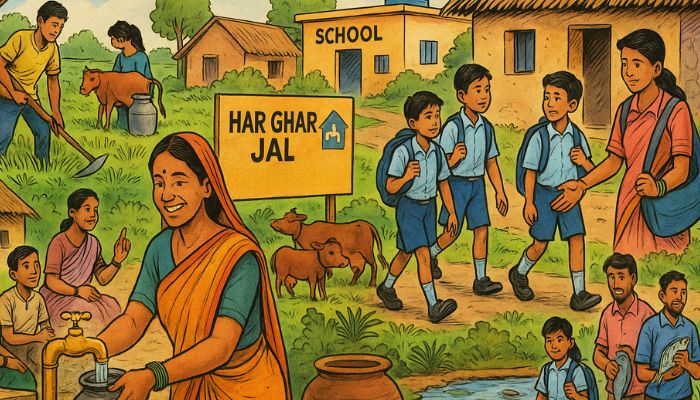
A detailed study conducted by Bundelkhand University has reaffirmed that the Jal Jeevan Mission (JJM), launched under the Har Ghar Jal initiative, has brought in a quiet revolution in rural Bundelkhand. The study was conducted across 70 villages in seven districts. It paints a vivid picture of how piped drinking water has brought transformative changes in health, education, livelihoods, social structure and rural development.

The Department of Social Work conducted the study at the request of the State Water and Sanitation Mission. The findings are based on field surveys, community interviews and on-ground observations, as noted by the report in Times of India. The study captured both quantitative outcomes and human stories of change.

Scope of the study and district-wise reach

The study was conducted over a period of two and a half months. A team comprising four faculty members and researchers covered ten villages each from Banda, Chitrakoot, Hamirpur, Jhansi, Jalaun, Mahoba and Lalitpur. The team was led by Associate Professor Dr Yatindra Mishra. The study involved interactions with women, youth, ASHA and Anganwadi workers, schoolteachers, students and other key stakeholders.

Dr Yatindra Mishra remarked, “The Har Ghar Jal initiative has done more than provide water. It has restored dignity, health and stability to people who were living under chronic water stress. But we must now transition from access to responsibility, making conservation and sustainability central to the next phase of rural progress.”

The villages surveyed include Narayanpur, Jakhni, Garauli Shukla in Banda; Deundha, Nonmai, Barhat in Chitrakoot; Pachkhura, Dharkpur, Jariya Teela in Hamirpur; Baijpur, Ghatkotra, Chirkna in Jhansi; Hatheri, Raipura, Girthan in Jalaun; Bari, Kashipura, Dhanawan in Mahoba and Rampur, Gugkhara, Thanrawa in Lalitpur.

Health outcomes improve across the board

The study revealed that the availability of safe and clean drinking water significantly enhanced public health. Households reported a sharp decline in water-borne illnesses including diarrhoea, typhoid and stomach infections. Digestive health improved and people experienced relief from ailments such as neck and back pain caused by lifting and carrying heavy water pots.

A notable difference was seen in the health of pregnant and lactating mothers. The maternal mortality rate saw a substantial decline and the nutritional status of women improved. Over 95 percent of respondents reported saving on medical expenses. Earlier, contaminated water had led to bone weakening and chronic illnesses, particularly among the elderly. These health issues have now reduced significantly, which has contributed to the overall well-being of the households.

Education and school hygiene see significant gains

All surveyed schools have been fully integrated with the Jal Jeevan Mission. Functional water storage systems and clean toilets have directly contributed to higher school enrolment, particularly among girls. The study highlighted a reduction in dropout rates as young girls now feel safe and dignified in school environments.

Both teachers and students reported improvements in hygiene, availability of drinking water during school hours and better attendance. As the young girls are no longer burdened with the job of fetching water, families are now more inclined to send them to school.

Rural economy witnesses uplift, women lead the charge

As water is now available at the doorstep, women who earlier spent hours daily getting water are now participating in an array of jobs including agriculture, animal husbandry, tailoring, poultry and other income-generating activities. These engagements have increased household incomes and empowered women in decision-making within their families.

The construction of toilets and provision of water inside homes enhanced the safety, dignity and health of women and adolescent girls. In many cases, women were able to take up jobs as water attendants, sanitation helpers and field motivators under the scheme, which further improved their household income.

Social discrimination on the decline

The study documented a notable reduction in caste-based discrimination. Earlier, access to common water sources often served as a flashpoint for social tension. With every household having its own supply, this dynamic has dramatically shifted. Communal relations have improved, cooperation has increased and a sense of collective ownership over shared resources is establishing its roots among the villagers.

Around 93 percent of respondents acknowledged a drop in dowry cases and early marriages. Villagers credited this to an improved social environment, better education and a rising sense of dignity linked to water availability and sanitation.

Youth stay back to build instead of migrate

Interestingly, rural youth, who traditionally saw migration to urban centres for work as a great opportunity to have a sustainable life, are now increasingly staying in their villages. The study reports that 92 percent of youth prefer to remain in the village due to emerging self-employment avenues. These include farming, dairy, mobile repair, retail shops, fish farming and poultry.

The availability of water has made previously fallow land cultivable. MGNREGA demand has also surged, with more localised livelihood options gaining traction. The shift reflects a broader change in how rural youth perceive opportunity and stability.

Bundelkhand University’s recommendations for long-term impact

While the gains are significant, the study also highlighted areas that required focus to ensure long-term success. Bundelkhand University has recommended raising awareness about the value of water and actively discouraging wastage. It has called for promoting household-level water budgeting through trained volunteers and local campaigns.

Furthermore, the University has stressed the importance of training “Jal Sahelis” before deployment so that they can effectively educate others. The University has urged promoting collaborations with NGOs and Panchayats to introduce water conservation techniques at the grassroots level. Additionally, the University has advised sensitising school staff and caretakers to manage water storage efficiently and prevent misuse.
No Lalu Yadav, it was not your morality and family values that led to Tej Pratap’s expulsion, it was the fear of losing votes in the upcoming Bihar elections

Thankfully, it is the era of social media! Thankfully, Bihar has moved far ahead of the era of jungle raj! Else, the plan to bury Tej Pratap Yadav’s ‘love story’ with claims of hacking and AI would have succeeded. Netizens forced Lalu Prasad Yadav and RJD into action by flooding Tej Pratap Yadav and Anushka’s pictures/videos.

The question is not how these pictures/videos got leaked? Who did it or Why? The question is why Aishwarya Rai’s life was turned into a spectacle despite knowing everything? To suppress this question, Lalu Yadav has announced expulsion of Tej Pratap Yadav from the family and the party in the name of ‘morality’ and ‘family values’.

It is possible that this eviction will end as soon as the assembly elections in Bihar, to be held later this year, are over. But Lalu Yadav’s hypocrisy is also exposed by the fact that with the same morality and family values, ​​that he is citing while rejecting Anushka Yadav of his own caste, he has accepted Christian woman Rachel Godinho (Rajshree) as the wife of his younger son Tejaswi Yadav. Then what morality, what family values ​​came in the way of him publicly accepting Anushka Yadav of his own caste as the wife of his elder son?

Accepting this relationship would have strengthened his so-called morality and family values ​​as well as the caste voter base of RJD. Even if this had not happened, everyone knows that politically Tej Pratap Yadav is neither seen as Lalu Yadav’s successor, nor does he have that kind of political influence. He tried to drive the party on some occasions, but still could not establish himself as a leader either in the party or in the eyes of the public. Surprisingly, even when these senior RJD leaders were publicly insulted by Tej Pratap Yadav, there was no threat to Lalu Yadav’s morality and family values.

This morality and family values ​​of Lalu Yadav did not awaken even when Chanda Babu’s sons were attacked with acid. He kept sending that person to the Parliament. The morality did not awaken even when children of Biharis were kidnapped to nourish the kidnapping industry during Jungle Raj. It did not awaken even when furniture and cars were forcibly taken away from a showroom for a wedding and businessmen left Bihar. It did not awaken even when massacres were carried out by pitting one caste against another and hundreds of children became orphans.

Then why and how did the family values ​​and morality of convicted Lalu Yadav suddenly awaken due to his son’s love? When you search for answers to these questions, you come to know that the morality and family values ​​of Lalu Yadav is standing on the foundations of lies and deceit n being cleared in family politics. The values ​​of their father, that everyone from Tejashwi Yadav to Rohini Acharya are talking about, seem to be nothing more than happiness at getting a thorn being removed from their family’s politics.

Everyone knows that there is a lot of pressure on Lalu Yadav to establish not only his sons, but also his daughters in politics. After Misa Bharti, now Rohini Acharya wants a share in the inheritance. Chanda Yadav, Ragini Yadav, Hema Yadav, Anushka Rao and Raj Laxmi Yadav are also standing in line to get their share. To set up everyone, power is needed, the power of Bihar.

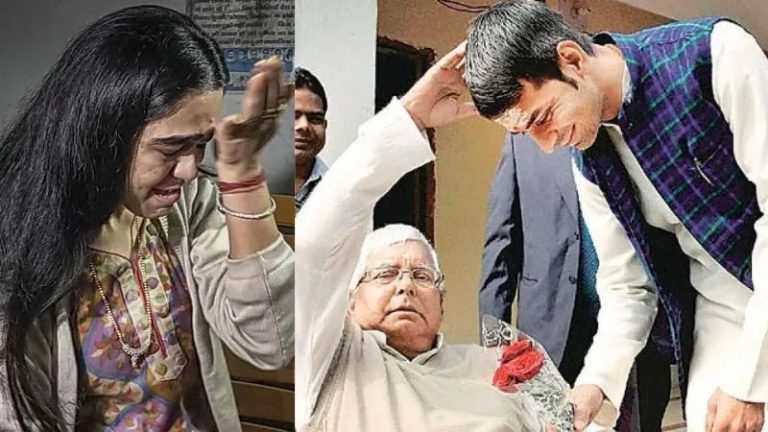
In such a situation, the way Tej Pratap Yadav’s love story became public, the way the fact came to light that he has been in a relationship with Anushka Yadav for 12 years, it also brought into discussion the treatment of Tej Pratap’s wife Aishwarya Rai by Lalu family. Tej Pratap had married Aishwarya Rai, a daughter of Bihar from the same caste, on 12th May 2018.

Neither is it a crime to love someone, nor is it unusual for a husband and wife to separate after their relationship turns sour. That is why after the 2019 Lok Sabha elections, when Aishwarya Rai was thrown out of her in-laws’ house in disgrace, the people of Bihar considered it to be Lalu Yadav’s family matter and moved on. But today the truth of his 12-year-old relationship with Anushka has come to light, and it has revealed that in reality, Lalu Yadav’s family value is to make anyone’s daughter’s life a spectacle for his politics.

Today, anticipating political loss, Lalu Yadav has expelled Tej Pratap Yadav, because this episode has exposed the RJD and the Lalu family, who are dreaming of returning to power in Bihar by talking about ‘mai-behin’ (mother-sister). Lalu does not want the ‘mai-behin’ of Bihar to talk about justice for Aishwarya in this election season. But Lalu Yadav and his family should know that this is Bihar, whose morality and family values ​​are not as bad as theirs. Now it is their destiny to be buried under the burden of these questions.

The original Hindi story can be read here.

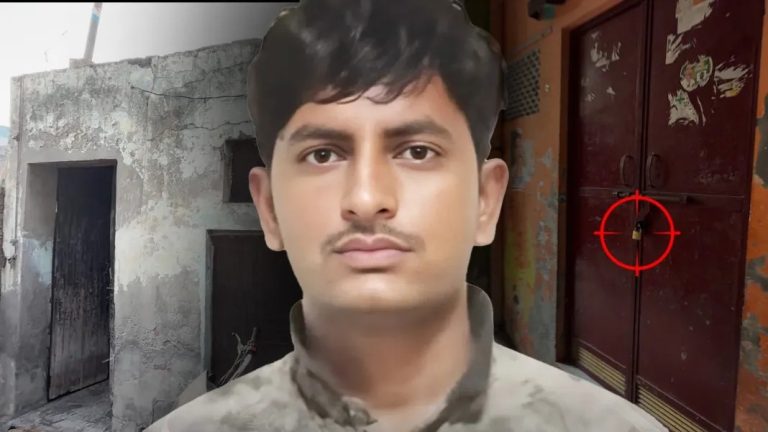
‘Even Allah forgives once…’: Pakistan spy Nauman Ilahi also needs ‘forgiveness’, OpIndia traces ISI spy’s links from Kairana to Panipat

“Leave him, he is just a child. Don’t know what has happened to him. Even Allah forgives once. If you don’t leave him, will the government at least provide him with food and clothes?”

An elderly Muslim woman from Kairana said this to OpIndia about ISI spy Nauman Ilahi. Ilahi’s house is in Begumpura area of ​​Kairana. We met the elderly woman outside Ilahi’s locked house.

Kairana is a place in Uttar Pradesh which makes the headlines apparently only for the wrong reasons. Now, the arrest of Nauman Ilahi from Panipat in Haryana has brought it back in the news. In 2014, this place hit the headlines for the murder of Hindu traders, and in 2016 for the exodus of Hindus. After the formation of BJP government under the leadership of Yogi Adityanath in the state, the local situation changed and many Hindus who had left Kairana returned to their homes.

To find out the truth about Nauman Ilahi, OpIndia’s reporter went to Kairana, about 125 km from Delhi. After asking around, we managed to reach Nauman Ilahi’s house in Begumpura in Kairana.

I can’t come out, parda hai : Nauman Ilahi’s neighbour

The door of Nauman Ilahi’s house, located in a narrow lane with mixed population, was locked. We knocked on the door of his neighbours. A woman, who did not reveal her name, said from inside the house (concealing her identity), “All their actions are wrong. They run away with people’s money. We have nothing to do with these people. They have not lived here for many years.” When requested to come out and talk, the woman said, “I cannot come out. There is a parda. I will not tell my name. Kill him (Nauman) or put him in jail.”

There is silence in Nauman Ilahi’s street, no one is ready to reveal their identity

There was silence in the street where Nauman Ilahi’s house is located. People were avoiding talking. They were not even revealing their identity. One such woman, without revealing her name, said, “Nauman’s house has been locked for almost 2 years. His brothers work as labourers and his sisters are married. When Nauman lived here, he was fine, but after he left this place, I don’t know what happened.” Meanwhile, other women were peeping from their windows. However, as soon as the camera was in front of them, they moved inside the house. Meanwhile, a young man said, “Kairana has become infamous because of Nauman. Whatever he has done is wrong.”

The elderly woman wants forgiveness for Nauman Ilahi

An old woman standing near Nauman’s house said, “He was good when he lived here. Now I don’t know. He will pay for what he has done. He must have gone to Pakistan once or twice. He has relatives there.” This woman also said that her relatives also live in Pakistan, but she never went there because she could not get a passport. This old woman talked about forgiving Nauman Ilahi, which we have mentioned in the beginning of our report. She also told that after Nauman’s arrest, the number of people coming to this street has increased. Meanwhile, a boy in the house opposite Nauman’s house said, “Whenever he (Nauman Ilahi) came here, he used to stay alone in the house and then lock it and go away.”

The Imam of the mosque where he used to offer Namaz said he doesn’t know Nauman Ilahi

We also tried to talk to the Imam of the mosque across the street where Nauman Ilahi used to go to offer namaz. However, the Imam of the mosque refused to come in front of the camera. Imam Shahzad said, “I don’t know him. He has done something wrong. He should be punished.”

Danish, who offers namaz at the same mosque, said, “Nauman has brought disrepute to the city. Earlier (when he lived in Kairana) he would often come to the mosque for namaz. I have seen him. Now he lives with his sister in Panipat. His father also used to make fake passports. He has betrayed the country. He should be hanged.” An old man sitting there said, “I don’t know him. But he should definitely be punished for his deeds.”

Kairana was called ‘Mini Pakistan’ during SP rule

Kairana Vyapar Mandal President Pradeep Goyal said that during the SP government, Kairana was known as ‘Mini Pakistan’. The image improved after the Yogi government, but Nauman’s arrest has again tarnished Kairana’s image.

Nauman Ilahi’s sister got furious upon seeing us

Nauman Ilahi has been arrested from Panipat. He lived at his sister’s house in Mohan Nagar, Sector-29. Nauman Ilahi’s relatives got angry seeing us with the camera. Nauman’s sister Zeenat, sitting on the floor of an old house of about 75-80 yards, said, “How dare you enter the house? Who did you ask before entering the house? We don’t want to talk to anyone. Turn off your camera.”

When we tried to talk to Nauman’s brother-in-law Irfan, he said that they are fed up with the media. The media asks something and shows something else. We don’t want to talk to anyone. He said, “Now we have no relation with Nauman. He has destroyed our respect earned in 35 years.”

It is worth mentioning that Nauman is the youngest among 3 sisters and 3 brothers. He is not married. His brother-in-law Irfan runs a car wash center in Panipat and also does bike lamination and wood work.

Eats in India, works for Pakistan

A woman who runs a shop on the street where Nauman’s sister lives told OpIndia, “He would come to the shop sometimes to buy a bundle of bidis. We never suspected that he does something like this. If he is guilty, the law should punish him.”

Another girl from the neighbourhood said that if they had known, they would have informed the police about Nauman Ilahi and got him arrested. She said, “Such a man should be shot. He is eating in India and working for Pakistan.”

The original Hindi Ground report can be read here

Despite opposition from political parties and army, Bangladesh govt to hand over Chittagong port operations to foreign company, over 41,000 containers stuck due to customs strike

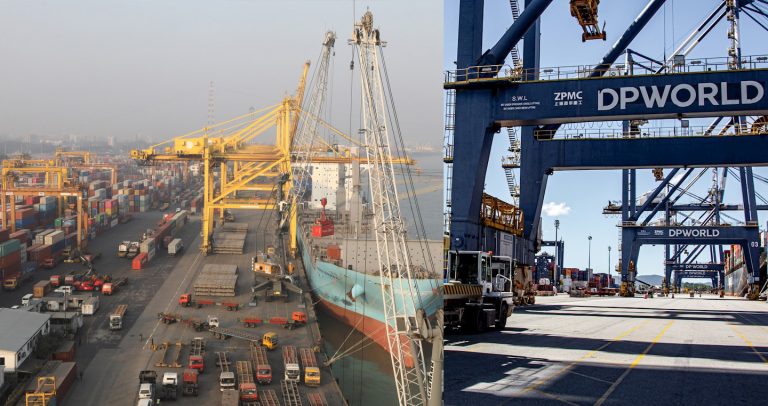
Despite opposition from workers, political parties and even the army, the interim government in Bangladesh intends to go ahead with handing over the operations of a new mooring container terminal at Chittagong port to a foreign company. Chief Adviser’s Press Secretary Shafiqul Alam on Sunday said that handing over operations of the terminal does not mean govt is handing over the port itself.

The press secretary said the government wants the world’s largest companies to manage and invest in the Chittagong port. He said, “We want them to invest in the terminals and take on management responsibilities. We have already received assurances from foreign investors—they have pledged to invest $3 billion.”

He added that enhancing the capacity of Chittagong port can have a multiplier effect on Bangladesh’s economy, adding that this will help in realising the chief advisor’s dream of making Bangladesh a manufacturing hub.

Notably, Dubai based DP World is in talks with the interim govt led by Md Yunus to run the New Mooring Container Terminal in Chattogram. The company claims that its investment will reduce congestion at Chittagong Port, lower carbon emissions, and significantly boost the efficiency of the main port of the country.

“This is a land of opportunities. Come to Bangladesh, and let’s make this happen,” Chief Adviser Yunus told the company.

However, almost all political parties are against the move, who say that as the new terminal is already built, there is no scope for more investment there, and there is no reason to handover a profitable terminal to a foreign company. Earlier this month, the 12-party alliance said that under no circumstances should the New Mooring Container Terminal (NCT) be handed over, nor should the Chattogram Port be leased to foreign entities.

The 950-metre-long NCT of the port has five jetties — four for ocean-going vessels and one for smaller ships on inland routes. At present, local firm Saif Powertec Ltd has been running four jetties.

Not just political parties, even army chief General Waker-uz-Zaman opposed the move, saying that only an elected government can take such a major decision.

The Chattogram Port unit of the Jatiyatabadi Sramik Dal staged a sit-in in Chattogram today, protesting against the govt plan to bring in the foreign operator. The protesters held placards with slogans such as “Cancel the NCT privatisation decision”, “We don’t want tenants to run the port”, and “Local operators are enough, not foreigners”.

On the other hand, container movement have come to a complete halt at the port due to a strike by the Chattogram Custom House operators. As per reports, over 41,000 containers on around 17 vessels were stuck at the port, which could not be unloaded and handed over to importers due to the strike. However, this strike has been called for a different, opposing the National Board of Revenue (NBR) Ordinance brought by the interim govt.

The ordinance proposes to split the NBR into two bodies, one for tax policy and the other for revenue collection. NBR officers, which includes the customs house officers, are protesting against this move.

Resolutions on Operation Sindoor and Caste Census passed at NDA Chief Ministers’ Conclave in New Delhi

0

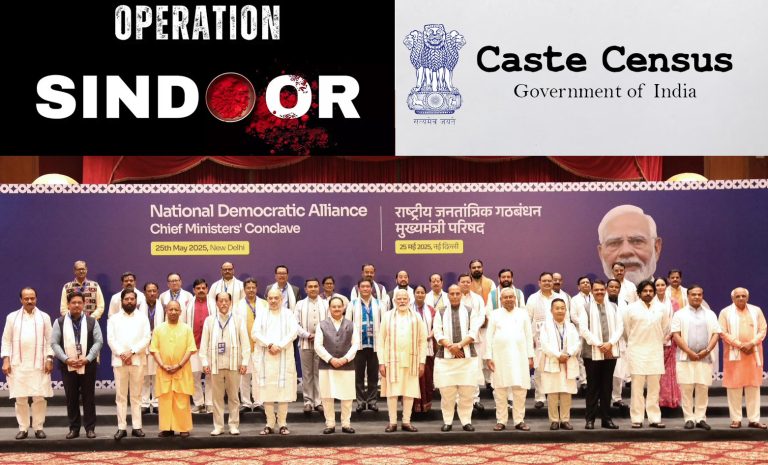
Over 20 Chief Ministers and 18 Deputy Chief Ministers from various states gathered in New Delhi on Sunday for the National Democratic Alliance (NDA) Chief Ministers’ conclave, held under the leadership of Prime Minister Narendra Modi. The meeting concluded with the adoption of two key resolutions, one lauding the armed forces for Operation Sindoor and another supporting the caste census initiative.

Andhra Pradesh Deputy Chief Minister Pawan Kalyan said that two resolutions were passed in the NDA Chief Minister’s Conclave on Sunday.

“Two resolutions were passed in the meeting, first on the success of Operation Sindoor and second on the caste census,” Pawan Kalyan told the media after he left the meeting.

After the NDA CMs and Dy CMs meeting, Maharashtra Deputy CM Eknath Shinde also spoke to the reporters and said, “Two resolutions were passed, first on Operation Sindoor and second on caste census. Everyone thanked and congratulated our armed forces and Prime Minister Modi for the success of Operation Sindoor. Many administrative reforms have been brought in Maharashtra, and Prime Minister Modi also appreciated it.”

Uttar Pradesh Deputy Chief Minister Keshav Prasad Maurya also spoke to ANI about the meeting and said, “PM Narendra Modi and the armed forces were congratulated for Operation Sindoor. We also discussed the caste census, which is a part of the BJP’s Constitution.”

Meanwhile, over 20 Chief Ministers and 18 Deputy Chief Ministers from various states gathered in New Delhi on Sunday for the National Democratic Alliance (NDA) Chief Ministers’ conclave, held under the leadership of Prime Minister Narendra Modi.

Union Minister and Bharatiya Janata Party (BJP) National President JP Nadda addressed a press conference after the conclusion of the meeting and stated that Operation Sindoor, launched in response to the April 22 Pahalgam terrorist attack, was highly praised by multiple leaders, with the bravery of the armed forces being highly appreciated.

“Today, our National Democratic Alliance’s CM conclave was held under the leadership of Prime Minister Modi. Our 20 CMs and 18 Deputy CMs were present at this meeting. Two resolutions were passed. The first resolution was on Operation Sindoor, which was carried out under the leadership of Prime Minister Modi, and the work of our army was highly praised, and the bravery shown by the army was highly appreciated,” JP Nadda said during the press conference.

The resolution on caste census was also passed in the conclave, with the leaders praising the decision of PM Modi to conduct the caste enumeration exercise, while also affirming that this was not done due to “caste politics” but to ensure that the deprived, oppressed, and exploited are brought to the mainstream.

“Today, a resolution was also passed in the meeting on the caste census. And everyone has given their consent to this, as well as praised this decision of (PM) Modi and congratulated him. We have made it clear that we do not do caste politics, but want to bring the deprived, oppressed, and exploited, who have been left out, into the mainstream. This is the need of the society,” Nadda added.

The leaders also discussed the Chhattisgarh government’s development model and innovative initiatives.

A presentation made by CM Vishnu Deo Sai on the Bastar Olympics and Bastar Pandum captivated the attention of the Prime Minister and other participating Chief Ministers in the NDA conclave meeting. Chhattisgarh Deputy Chief Ministers Vijay Sharma and Arun Sao also attended the conclave.

The day-long NDA CMs and Dy CMs conclave, chaired by Prime Minister Narendra Modi, was a brainstorming session on good governance issues.

Union Home Minister Amit Shah and Defence Minister Rajnath Singh were among the senior leaders present at the conclave, which served as a platform for discussing good governance practices and innovative state-level initiatives.


(This news report is published from a syndicated feed. Except for the headline, the content has not been written or edited by OpIndia staff)

Andhra Pradesh: Angry villagers demolish the house of Rahmatullah who raped and killed a 3-year-old Dalit girl

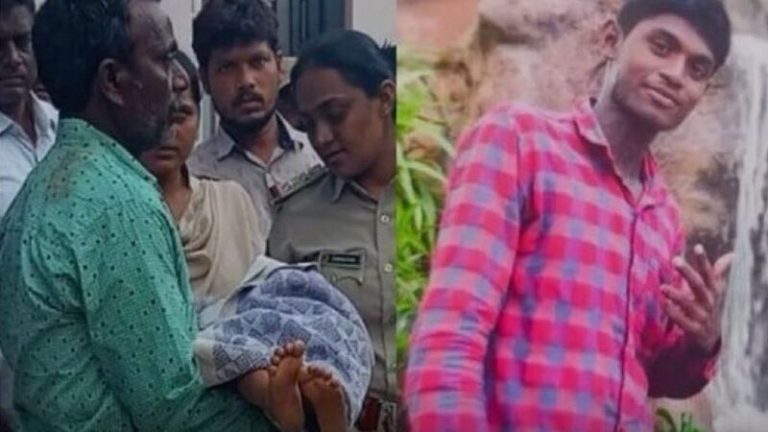
Angry villagers demolished the house of a rape accused named D Rahmatullah on Saturday (24th May) in Kadapa district of Andhra Pradesh. The 25-year-old accused had allegedly raped and murdered a 3-year-old Dalit girl on Friday (23rd May) inviting the wrath of the villagers.

As per reports, on the day of the incident, Rahmatullah was attending a wedding when he lured the minor victim and took her to an isolated place behind Kalyana Mandapam at Kambaladinne village. He raped the child before brutally smothering her to death.

The incident sparked outrage among the villagers who said the accused had no right to live in the village. They razed to the ground the house of the accused at his native village in Moragudi. The villagers staged protests at Jammalamadugu government hospital on Saturday and demanded death sentence for the accused.

Kadapa District Collector Dr Sridhar Cherukuri and SP EG Ashok Kumar met the family of the victim and assured them all possible assistance. The District Collector announced a financial assistance of ₹5 lakh, a residential piece of land, and a government job to the family of the victim.

Additional Superintendent of Police Prakash Babu confirmed that the minor Dalit girl was raped and murdered by Rahmatullah. The accused has been arrested by the police. A case has been registered under SC/ST (Prevention of Atrocities) Act and the Protection of Children from Sexual Offences (POCSO) Act.

RJD supremo Lalu Yadav’s children support his decision of expelling his eldest son Tej Pratap Yadav from the party and family after his pictures with Anushka Yadav leaked online

RJD supremo Lalu Yadav’s decision to expel his eldest son Tej Pratap Yadav from his political party and family has been welcomed by other members of Yadav family. Lalu Yadav made the swift decision after some pictures of Tej Pratap with a woman named Anushka Yadav, who he apparently married, went viral on social media stirring a political storm.

“Ignoring moral values ​​in personal life weakens our collective struggle for social justice. The activities, public conduct and irresponsible behavior of the eldest son are not in accordance with our family values ​​and traditions. Therefore, due to the above circumstances, I remove him from the party and family. From now on, he will not have any role of any kind in the party and family. He is expelled from the party for 6 years,” Lalu Yadav wrote on X on Sunday (25th May) announcing Tej Pratap’s expulsion.

Lalu’s son and RJD leader Tejashwi Yadav, younger brother of Tej Pratap, supported his father’s decision to expel his elder brother from the party. While Tejashwi acknowledged his brother’s right to make personal decisions relating to his personal life, he said that such behaviour cannot be tolerated in political life.

“We cannot tolerate such things, we are working and are dedicated to the people of Bihar. If it’s about my big brother, political life and personal life are different. He has the right to make his personal decisions. He is an adult and free to make decisions. Our party’s chief has made it clear, and ever since he has said so, it is his feelings. We didn’t question such things… What he is doing in his personal life, nobody asks before doing anything. I have come to know about it via the media only, ” said Tejashwi Yadav speaking to the media.

Lalu Yadav’s daughter Rohini Acharya also welcomed his father decision and said that she and her family will not accept if the reputation of their family or party is tarnished by anyone.

“Those who maintain the dignity of traditions, family and upbringing never face questions. Those who abandon their wisdom and repeatedly commit the mistake of crossing the limits of dignified conduct and family prestige, they make themselves the subject of criticism. For us, our father is like God, family is our temple and pride and the party built by Papa’s tireless efforts and struggles and the concept of social justice are our worship. We will never accept that the reputation of these three is tarnished due to anyone,” she wrote on X.

What happened

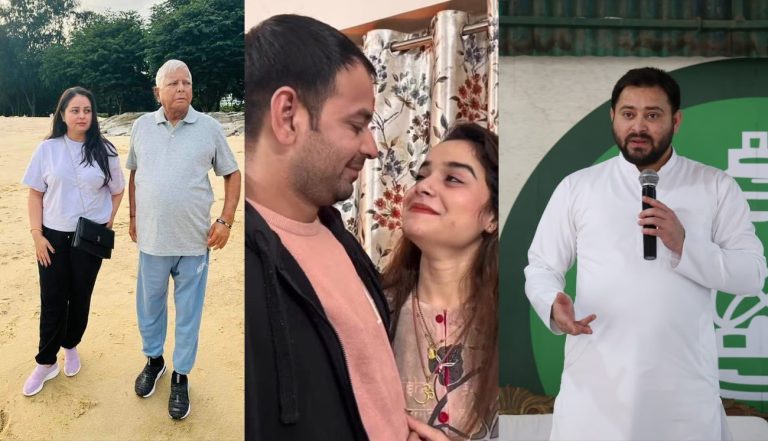
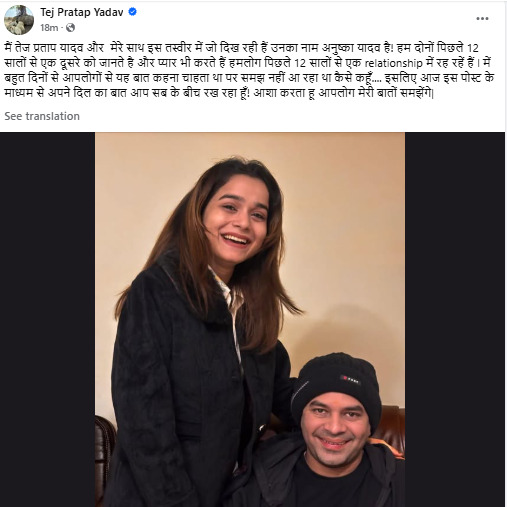
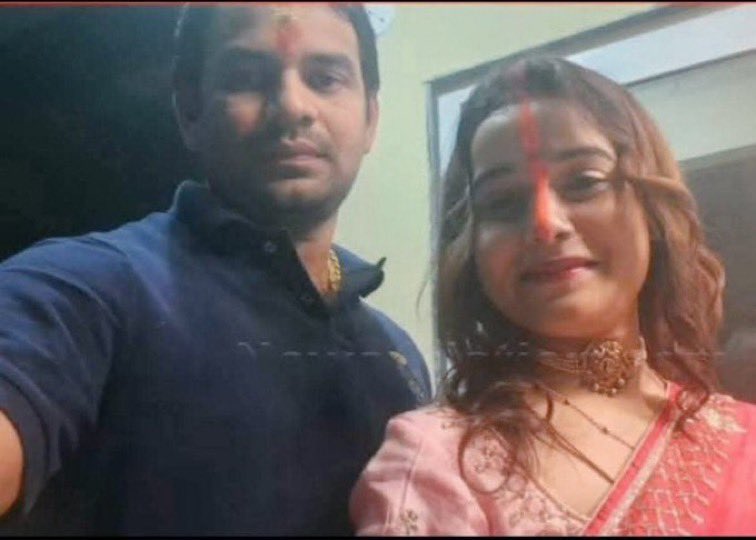
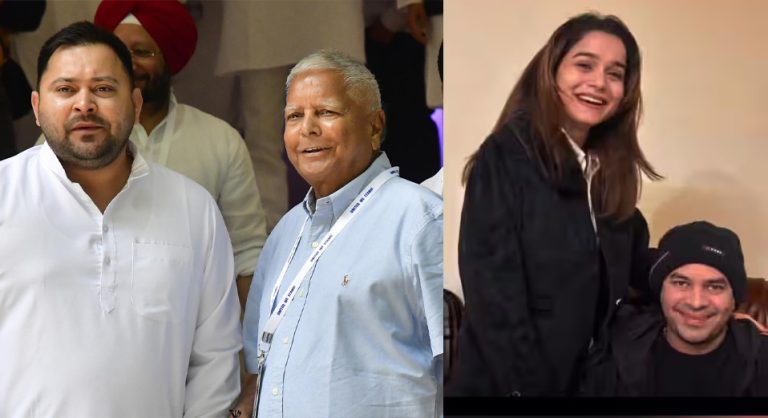
The controversay started after Tej Pratap Yadav made a post on Facebook yesterday (24th May), announcing his 12-year-long relationship with Anushka Yadav. He also posted a picture of himself with her. However, hours later, he deleted the Facebook post and posted a clarification on X saying that his Facebook account was hacked and that the photo was AI-generated. But the damage was already done and by that time several more pictures of Tej Pratap and Anushka Yadav had gone viral on social media. In some of the pictures, Anushka Yadav is celebrating Karwa Chauth with Tej Pratap Yadav, wearing sindoor and saree.

As Tej Pratap Yadav claims his photo with Anushka Yadav was AI generated, more photos and videos of the two appear, including visuals of their apparent wedding

Hours after stirring a social media storm on Saturday (24th May) through a Facebook post in which he posted a picture of him with a woman named Anushka Yadav and a confession about their romantic relationship, Tej Pratap Yadav, son of RJD supremo Lalu Prasad Yadav took a U-turn. Dismissing the post, Tej Pratap claimed on X that his Facebook account was hacked and that the image in which he was seen with the woman was AI generated.

“My social media platforms have been hacked and my pictures are being wrongly edited to harass and defame me and my family members. I appeal to my well-wishers and followers to be cautious and not pay heed to any rumours,” Yadav posted on X.

In Facebook post, Tej Pratap Yadav shocked everyone by declaring that he had been in a committed relationship with Anushka Yadav for the last 12 years. He later deleted the post and posted a clarification on X.

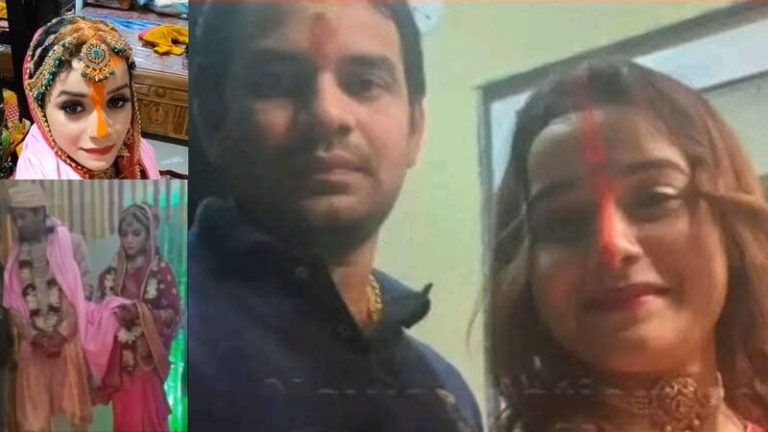
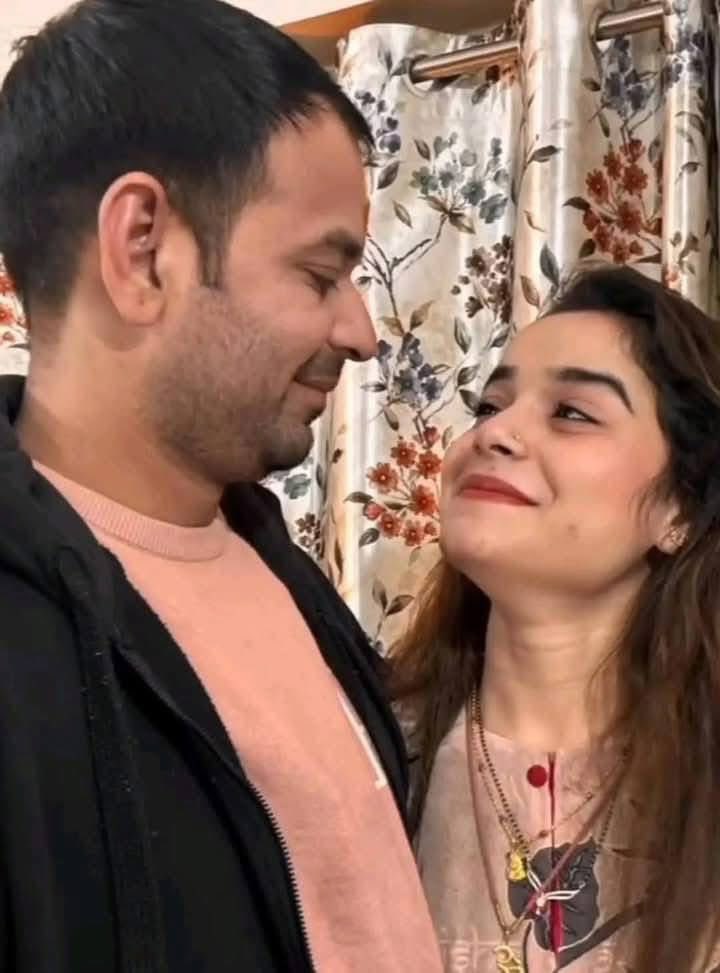
However, several more photos and videos of Tej Pratap Yadav and Anushka Yadav have emerged online, including videos apparently showing the couple getting married.

In some of the pictures, Tej Pratap is seen with Anushka who is dressed like a newly-married woman. The happy-looking couple is also seen celebrating Karwa Chauth together.

Some social media users are speculating that the images and videos might have been deliberately leaked by someone.

Yadav under attack from political rivals

The images have created political troubles for Yadav ahead of the Bihar Assembly elections. Yadav’s political rivals are questioning his credibility and accusing him of deceiving the two women, Aishwarya Rai and Anushka Yadav. National General Secretary of BJP OBC Morcha, Dr Nikhil Anand attacked Yadav for setting a wrong example for the society and his followers. He questioned Yadav’s character for his unfair treatment of the two women. “If you did not think about the entire society, you should have thought about the Yadav society or at least about our daughters. If such a low character is publicly displayed by the family of politicians like you, then it is definitely a matter of shame. Now it seems that Aishwarya Rai is really a very big victim in the whole episode, from whom the entire Lalu Prasad Yadav family should apologize publicly and she should also get proper compensation or restitution,” Anand wrote on X.

Seeing a political storm brewing due to Tej Pratap’s leaked images, RJD supremo Lalu Yadav expelled him from the party for a period of six years. Lalu Yadav confirmed in a post on X on Sunday (25th May) that Tej Pratap will not have any role of any kind in the party and family from now on.

Tej Pratap Yadav and his troubled previous marriage

Tej Pratap Yadav got married to Aishwarya Rai, grand-daughter of the former Chief Minister of Bihar Daroga Rai in May 2018 in a lavish ceremony. However, the marriage lasted only a few months. Rai had accused Yadav of drug abuse and cross-dressing. Their divorce case is still going on after six years of marriage.

Multiple fathers syndrome? Lahore-based ‘journalist’ begs China to take revenge from India for suspending Indus Water Treaty with Pakistan, writes about it in US magazine

Pakistanis either live in their own world or they are high on something extremely potent and illegal all the time. Otherwise, there is no sane way to describe how delusional The Diplomat’s Lahore-based correspondent Umair Jamal’s long-winded plea to outsource national sovereignty is. Jamal has penned a classic Pakistani fantasy piece, rather a strategic kink, where he attempted to portray India’s suspension of the Indus Waters Treaty (IWT) as a dangerous move that could invite retaliation not from Pakistan, but from China.

Yes, you read that right. In a world where most countries deal with their disputes bilaterally or through diplomatic means, Pakistan, ever the eternal teenager, needs to call not one but both its daddies when India gives it the cold shoulder. The classic “Tu jaanta nahi mera baap kaun hai” came from Jamal in an ironic manner, as it seems he, just like all the Pakistanis, does not know who their father actually is. No no, not literally. We are just talking about the diplomatic father on an international platform.

Blame India, forget the terrorists, and tell Uncle Sam

Jamal, in his article, conveniently glossed over the fact that 26 innocent Hindus were brutally killed in a terror attack in Pahalgam, and the terrorists who claimed responsibility, The Resistance Front, are linked to Pakistan-based terror outfit Lashkar-e-Taiba. He did not even spare a line to condemn the massacre of civilians by the illegitimate sons of Lashkar-e-Taiba. Rather, he jumped straight into playing the victim, blaming India for “escalating” tensions by suspending the treaty.

Apparently, expecting Pakistan to rein in terrorists is unreasonable. However, blaming India for daring to respond? That is fair game. Classic abuser-victim reversal. And where does Jamal make this case? Not in Pakistan’s Parliament, not in a regional forum, but in The Diplomat, an American publication. Because when it gets rough with India, Pakistan’s first instinct is to write op-eds to mummy and daddy in the West while cosying up with the stepbrother of the Dragon world. Anything for sympathy points and a potential ceasefire bailout.

China to the rescue, again?

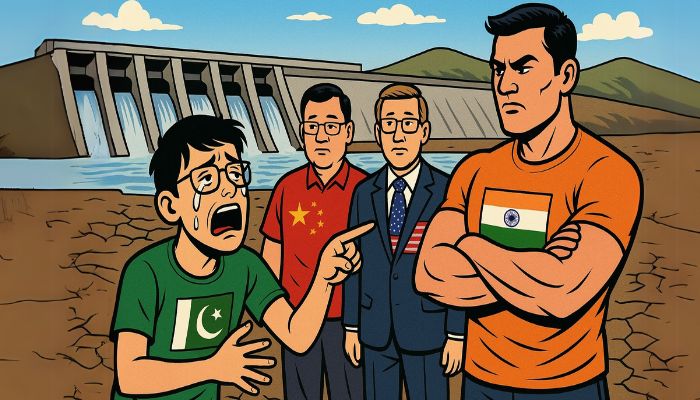
The highlight of the article is its sheer audacity to suggest that China might block the Brahmaputra in retaliation to India’s suspension of the Indus Waters Treaty, as if Xi Jinping is just waiting for a Pakistani journalist’s permission to pull the lever.

Mind you, this is not foreign policy analysis but a fan fiction, that too from an amateur who thinks he is a master in his field. The kind where the bullied schoolboy daydreams about his elder brother beating up the bully, without even hitting the gym himself. Yes, I called India a bully, because for the first time, India showed its prowess and baseball-batted the bootlicking hustler what superiority looks like. For some, such aggression sounds like that of a bully, and even if it does, so be it.

Jamal forgot one crucial aspect of the scenario he presented. China is not India’s father. Nor is it Pakistan’s. China is a business partner and a creditor for Pakistan. And as for the Brahmaputra, India has already raised concerns over Chinese damming activities. Trying to use that as a threat now is like warning someone about a burglary, they have already installed cameras for. India is very much capable of handling China’s aggression, something the dragon would not prefer to showcase, because Pakistan is being a cry-baby.

The desperation reeks, and so does the dependency

From warning India of “chaos in Pakistan” to quoting the Pakistani National Security Committee’s chest-thumping on “vital water interests,” Jamal’s piece is full of threats his own country is in no position to carry out. Pakistan depends on the IMF to pay for the electricity bills. Pakistan depends on Chinese loans to build dams. The same Pakistan is threatening war over river waters. The way Pakistan is behaving is the same way defaulters behave when the municipal corporation cuts the water connection due to non-payment of bills.

Not to forget, Pakistan desperately pleaded with the US to broker a ceasefire. While US President Trump claims he had a role to play in the ceasefire, India has stood firm on its stance that no third party was involved in the understanding between India and Pakistan to stop the military operation. It is, anyway, not a ceasefire, as Indian Armed Forces chiefs and Defence Minister Rajnath Singh categorically said in multiple statements. India’s Operation Sindoor is ongoing.

Journalism or diplomatic freeloading?

It is worth asking why Jamal, a Pakistani journalist, felt the need to make this case in an American magazine rather than a Pakistani one. Forget that he is The Diplomat’s correspondent. The question is, who cares on an international platform if Pakistan is crying or feeling bullied? Could it be that the domestic audience is tired of these doomsday narratives? Or is this another attempt to internationalise Kashmir and Indus waters by dragging foreign capitals into regional affairs?

In either case, Jamal’s writing lacks serious journalism and is more inclined towards a pamphlet handed out by a drowning man screaming for help to anyone across the world. Just a reminder, Pakistan recently celebrated getting a $1 billion bailout from the IMF.

India has not shut the taps yet – but the tears are already flowing

Notably, it is a long way for India to completely control the Indus waters flowing into Pakistan. But let it be known, the treaty was a gesture of goodwill, not compulsion. And when that goodwill is met with bullets and bombs, the taps can and will be reconsidered.

If India wants to reduce the water flow, India will do it and will do it boldly. Anyone can take note of it, Pakistan’s West Daddy, the East Daddy, or the Martian Daddy.

Conclusion – When foreign policy is outsourced to columnists

Pakistan’s idea of diplomacy is op-ed outsourcing and tantrum-triggering. Jamal has done his bit for his motherland. He has played the ultimate victim card and invited outside intervention. He has warned India of doomsday, all the while pretending that Pakistan’s own record of exporting terror has nothing to do with why India is done playing nice.

Instead of doing propaganda, if Pakistani leaders had invested the energy in stopping jihad factories, they would not have needed to write complaint letters to Beijing and Washington.

Lalu Prasad Yadav expels Tej Pratap Yadav from party for ‘Ignoring moral values’ after Tej revealed his relationship with Anushka Yadav, says his eldest son will have no role in family

On May 25, 2025, Rashtriya Janata Dal (RJD) supremo Lalu Prasad Yadav announced that he is expelling his eldest son, Tej Pratap Yadav, from the party for a period of six years. He also said that Tej Pratap will not have any role of any kind in the party and family from now on.

This dramatic decision, shared via a post on X, comes in the wake of Tej Pratap’s public announcement on May 24, 2025, where he revealed a 12-year relationship with Anushka Yadav, a disclosure that sparked controversy and later led to claims of his account being hacked.

Lalu Prasad Yadav tweeted, “Ignoring moral values ​​in personal life weakens our collective struggle for social justice. The activities, public conduct and irresponsible behavior of the eldest son are not in accordance with our family values ​​and traditions. Therefore, due to the above circumstances, I remove him from the party and family. From now on, he will not have any role of any kind in the party and family. He is expelled from the party for 6 years.”

The RJD supremo further added, “He is capable of seeing the good and bad and merits and demerits of his personal life. All those who will have relations with him should take their own decisions. I have always been an advocate of public shame in public life. The obedient members of the family have adopted and followed this idea in public life.”

Tej Pratap Yadav, Lalu’s eldest son, has often been in the spotlight for controversial actions. His personal life has drawn particular scrutiny, notably his 2018 marriage to Aishwarya Rai, daughter of RJD legislator Chandrika Rai, which ended in a highly publicized divorce filing later that year due to “compatibility issues.”

On May 24, 2025, Tej Pratap posted on Facebook, declaring a 12-year relationship with Anushka Yadav, stating, “I am Tej Pratap Yadav, and the person seen with me in this photo is Anushka Yadav! We have known each other and loved each other for the past 12 years.” Shortly after, the post was deleted, and Tej Pratap claimed on X that his account was hacked and the photos were edited to defame him and his family, a statement that hardly convinced anyone.

Moreover, more images and videos of Tej Pratap with Anushka have appeared on social media, including visuals of what appears to be their wedding. As the divorce battle between Tej Pratap and Aishwarya yet to be resolved, his relationship with Anushka raises legal questions too.