Home Blog Page 3968

Goa NCP President instigated Sao Jacinto Island residents not to allow Indian Navy to hoist tricolour, Congress objects to Independence Day event

0

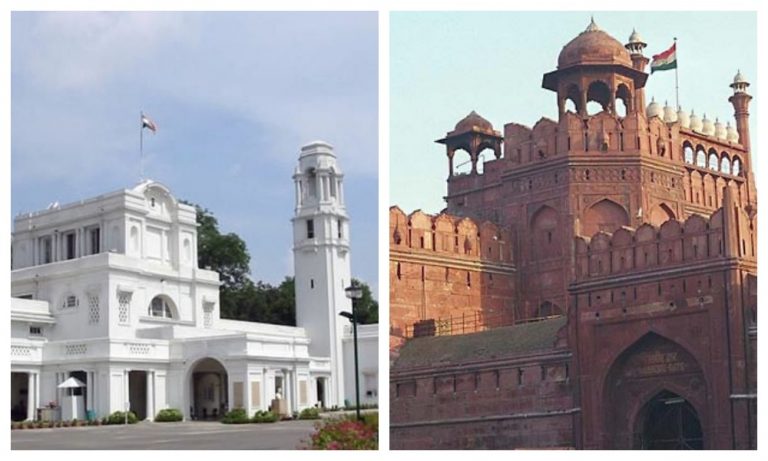
Nationalist Congress President in Goa, Jose Phillip D’Souza instigated the residents of the Christian-dominated Sao Jacinto Island residents to not allow the Indian Navy to hoist the tricolour on the Goan island on the occasion of Independence Day. As the politician made a bizarre claim that the Indian Navy was trying to take over the island from the locals, the plan to hoist the tricolour was dropped by the navy to avoid any controversy.

According to the reports, it has been revealed that the Indian Navy had to cancel the Independence Day event at the Sao Jacinto Island after the local NCP leader brainwashed the residents not to allow them to enter the island by claiming that the Navy was trying to “capture the island” and drive them out of Sao Jacinto.

On Friday, the Indian Navy had to abandon its plan to hoist the tricolour on Sao Jacinto island in Goa after the residents objected to the Indian Independence celebrations organised by the forces.

The Indian Navy cancelled the unfurling of the national flag on the Sao Jacinto island, located South of Panaji, after the residents, mainly comprising of Christians, claimed they did not want any authorities from the Central government or the state government to carry out any activities on the island.

Objecting to the entry of the Indian Navy or any government officials, the residents had claimed that they are not opposed to unfurling the tricolour, but they would hoist the flag themselves.

Sao Jacinto Island, which lies south of Panaji, has predominantly Christian residents and houses two churches dedicated to St. Hyacinth of Poland (São Jacinto) and St. Dominic (São Domingo). The residents of the island have put up entry restrictions, and tourists are not allowed to visit.

NCP leader instigated local population against Indian Navy’s entry to Islands

As per the reports, NCP President Jose Philip D’Souza visited the island and made bizarre claims saying that the Indian Navy was planning to capture the island.

In the run-up to the “Azadi ka Amrit Mahotsav”, a team from the Goa Naval Area had visited Sao Jacinto island to organise events to mark 75 years of independence. In a statement issued by the Indian Navy, it said this initiative was taken nationwide to instil a sense of patriotism and celebrate the run-up to the 75th year of independence. As a result, the Union defence ministry had asked the forces to unfurl the flag at various places, including islands, the Navy said.

A few days after the naval officials visited the island, NCP leader Jose D’Souza visited the island and instigated the local Christian population not to allow the Indian Navy to organise any events on Independence Day. The NCP leader also questioned the need for them to organise a flag-hoisting ceremony.

The Indian Navy has restricted locals from visiting certain islands having strategic importance around Goa, and D’Souza seems to have used this to feed into the fears of the locals.

“This is a plan to try and test our reaction before they capture this island,” said NCP leader D’Souza after mobilising some of the locals.

Communalising the national event, the NCP leader also claimed, “Take for example our religious traditions on Bat island, which the Navy has stopped us, fishermen, from visiting and continuing our traditions. We will not allow the Centre or the Navy to capture this island,” D’Souza said.

D’Souza gathered the residents of the island outside the church square, mostly Christians, to stage a protest against the flag hoisting ceremony planned by the naval authorities. The residents of Sao Jacinto island have claimed that the Indian Navy has sought no formal permission from the local authorities to conduct the flag-hoisting ceremony.

“Navy officers came here, and they said that they would hoist the flag on August 15. I want to say that whether they are from the Navy, government or any private company, we do not give this right to anyone (to hoist a national flag). The villagers are united against this. If the Navy, state and central government try to capture our island, then local villagers will never allow this,” D’Souza said.

Congress objects to Independence Day events at Sao Jacinto Islands

Not just NCP, even the Congress party is opposed to the Indian Navy hoisting the Indian flag on the Goan island on the occasion of Independence Day.

Responding to the controversy, on Friday, Chief Minister of Goa Pramod Sawant had announced that such shenanigans would not be allowed. In a series of two tweets, Sawant announced that he has given the Indian Navy the go-ahead to continue with their original plan of hoisting the Indian flag on the Island.

“It is unfortunate and shameful that some individuals at St Jacinto Island have objected to Hoisting of the National Flag by the Indian Navy on the occasion of India’s Independence Day. I condemn this and want to state on record that my Government will not tolerate such acts”, said the Chief Minister.

CM Sawant further said, “I have requested the Indian Navy to go ahead with their original plan and have assured full cooperation from Goa Police. These attempts of Anti-India activities shall be dealt with an iron fist. It will always be Nation First”.

After Goa Chief Minister Pramod Sawant condemned the incident, saying that it was unfortunate and shameful that some individuals at Sao Jacinto Island were objected to the hoisting of the national flag, the Congress party took objection to his statements and went on to claim that the Indian Navy has already captured the islands.

Congress leader Shamila Siddiqui made bizarre claims questioning the presence of the Indian Navy on the islands and asked whether they had acquired it. She asked why could not the collector unfurl the flag instead of the Indian Navy hoisting the tricolour on the islands. She attacked the Goa Chief Minister accusing him of creating a confrontation that will have huge repercussions on Goans.

Residents claim Navy will take over the island, hands it over to private parties

Darrell Dsouza, who grew up on the island, said that the island consisting of about 200 families who have been hoisting the national flag every year. However, they are apprehensive about the Navy’s presence on the island in the light of their opposition to the Coastal Zone Management Plan in Goa and the Major Ports Authorities Bill, 2020, passed by the Parliament.

“We are not at all opposed to the hoisting of the flag. In fact, we told the officers of the Navy who came to the island to join us for flag hoisting on August 15,” said Dsouza.

He claimed that islanders, traditional fishermen, are anxious about the political intentions, which according to them, are against the interest of the island. Dsouza said that the islanders fear that the island will be taken over by government authorities and handed over to private parties for development once brought under port limits.

Captain Viriato Fernandes of Goencho Avaaz, an NGO turned political party, also defended the islanders saying that they have strong reasons to oppose the Navy’s presence in the islands. He claims that there is a ‘distrust’ among the residents of the island after the passing of the draft Coastal Zone Management Plan (CZMP) and the Major Port Authority Bill, 2020, in which the island has been included in the jurisdiction of the Mormugao Port Trust (MPT).

“Recently, there were protests against the CZMP. They depicted the port limit, and the jurisdiction of Sao Jacinto island has come under the port. We have been opposing these port limits. The island has religious structures dating back to 1731, and we said it could not come under the port limit. Since then, people have become very vigilant, and with this heightened vigilance, the Navy’s presence made them more suspicious. The Bill and CZMP have caused distrust, and the people are suspicious about anyone coming to their island. That is the root cause. Otherwise, there would have them to panic like this,” Fernandes added.

Azadi ka Amrit Mahotsav

The Government of India is planning to celebrate “Amrut Mahotsav” – the 75th anniversary of India’s independence as a “people’s movement”. The Modi government has already started preparations for the 75th-anniversary celebrations and intends to organise several events to commemorate the historic event. The events will be managed by a national implementation committee which will be headed by Union Home Minister Amit Shah.

The Navy will also be hoisting the national flag on 75 islands in the run-up to August 15. The Navy hoisted tricolour on various islands on Friday, including Campbell bay in the Andaman and Nicobar Islands, Kavaratti in Lakshadweep and Minicoy islands, and the Anjadiv island off Karwar. Union defence minister Rajnath Singh virtually attended the flag-hoisting.

Twitter bows down to Congress demand, removes old notice on Rahul Gandhi’s Tweet that violated POCSO: Explainer

The official Twitter handle of the Congress party today tweeted a cryptic message – Satyamev Jayate. Consequently, a report in Mid-Day indicated that Rahul Gandhi Twitter account has been unlocked days after the tech-giant had locked his account, pending him deleting his tweet where he had compromised the identity of a 9-year-old rape victim.

The Mid-day report, quoting sources, said that several other accounts of Congress party leaders, who had tweeted the same picture that compromised the identity of a minor rape victim have also been restored.

When one checks Rahul Gandhi’s account, one sees that he has not tweeted yet. His last tweet by Rahul Gandhi was on the 6th of August. So how exactly do we know that Rahul Gandhi’s account has been restored and that Twitter has bowed down to Congress’ demands?

Earlier, Rahul Gandhi had tweeted an image of him meeting the parents of the 9-year-old victim. We have already explained earlier how that is against the Pocso Act and also against the Juvenile Justice Act since it amounts to compromising the identity of the minor victim and the siblings the victim might have. NCPCR had then sent a notice to Twitter, asking the tech-giant to pull the tweet down given that it violated Indian laws. Following that, Twitter in Court had asserted that it had pulled the tweet down and locked Rahul Gandhi’s account.

Here is a screenshot of what the Twitter notice said after pulling down Rahul Gandhi’s tweet and locking his account.

Earlier notice from Twitter when Rahul Gandhi account was locked

The notice displayed after Twitter pulled the tweet down by Rahul Gandhi said “this tweet is no longer available”. This notice essentially meant that Twitter, on its own, had pulled the tweet down and made it unavailable to the public. However, Rahul Gandhi’s account had been locked and it would be unlocked if Rahul Gandhi deleted the tweet from his end as well.

When such a notice is served, the user (Rahul Gandhi in this case) would have got a notice on his account that asks him to delete his tweet, after which, his account would be unlocked, facilitating him to tweet again. However, till Rahul Gandhi deletes the tweet from his end, he would not be able to tweet further. In the meantime, Twitter, realising that the tweet was in contravention of Indian laws and also violated its own community standards, made sure that the tweet was not visible to anyone else. In place of the tweet by Rahul Gandhi, Twitter displayed the notice that said that the tweet was no longer available.

Since this notice was put up, no matter where a person tried to view Rahul Gandhi’s account from, that tweet would not be visible.

However, now, that has changed as Twitter has decided to bow-down to Congress.

When one tries accessing Twitter from Brave browser, changing IP settings to Japan, the tweet by Rahul Gandhi, that was earlier pulled down by Twitter, is now visible.

Tweet by Rahul Gandhi visible from other countries, Twitter bows to Congress

So how did this change happen?

When one looks at Rahul Gandhi’s account now from India, the notice that Twitter had earlier put up in place of his contentious tweet has changed from “This tweet is not available” to “This tweet by Rahul Gandhi is withheld in India in response to a legal notice”.

The notice visible now when one checks Twitter account of Rahul Gandhi, in place of the contentious tweet

What does this change?

This means that Twitter has bowed-down to Congress and retracted on its previous notice. Essentially, this means that Twitter has now withheld the tweet in response to Indian laws but, Rahul Gandhi will now not have to delete his tweet to access his account again. Therefore, his contentious tweet compromising the identity of the minor victim will be visible from everywhere else, other than India, and Rahul Gandhi has escaped without any consequences and having to delete his tweet.

Times of India journalist has tweeted the supposed reason for Twitter catapulting to Rahul Gandhi. She says that Twitter has apparently for a consent notice from the parents of the minor victim that they are ok with their identity being revealed, thereby compromising the identity of their minor daughter who was allegedly raped and murdered.

However, Indian laws have no provision for the kin of the minor victim to waive the law off with a consent letter.

What does the law say and how Twitter is imposing its own code over Indian laws

Section 74 of the Juvenile Justice Act, 2015 prohibits the disclosure of identity of a child in any form of media and Section 23 of the POCSO Act, 2012 also states that no information/photo of a child should be published in any form of media which could reveal the identity of the child. This information under Section 23 of the POCSO Act, 2012 includes his/her name, address, photograph, family details, school, neighbourhood or any other particulars which may lead to disclosure of identity of the child.

Section 74 of the JJ Act clearly states that no identifying information of the minor victim can be disclosed. It further says that the Board of Committee, as the case may be, which is holding the inquiry may permit such disclosure if it thinks it is in the interest of the victim. In most cases, it is the District Court Judge.

The POCSO Act is also clear with regards to the disclosure of the identity of a minor victim. 

Section 23 of the POCSO Act clearly states that no person shall reveal the identity of the child including his name, address, photograph, family details, school, neighbourhood or any other particulars which may lead to the disclosure of the identity of the child. 

Both laws have the provision for imprisonment and fine for those who break this law. 

In fact, the government had in 2018 clarified that these laws would also apply to victims who were dead. 

G Mohanty, media advisor to the NCPCR had said in 2018, “This is an important clarification made by the government as we have seen in many cases that glaring mistakes are made by police and media houses in many cases when it comes to children involved in sensitive cases. It is now clear that their reputation is to be protected even if they are dead.”

The JJ act also says that the violation of the provision can lead to imprisonment of up to six months or fine which may of up to Rs 2 lakh or both.

Speaking to OpIndia, NCPCR chief Priyank Kanoongo said that these laws are in place not just to protect the victim but also the siblings and other living relatives of the brutalised child. If the identity is revealed, it is possible that the other children of the house would be stigmatised and the reputation of the victim and the living relatives would be impugned. Therefore, even if the victim is dead, it is illegal to make any identifying details public. He further said that only District Session Judge can decide if the identity of the minor rape victim should be revealed if it thinks it is in the best interest of the victim. Further, he said that the parents too had no right to waive the law and allow the dissemination of such information.

It is therefore evident from the law that only a District Sessions Court Judge can allow the disclosure of the identity of the victim if it thinks it benefits the victim. The victim’s parents or Twitter has no right to determine whether the identity of the victim can be disclosed even if the parents give na consent letter.

Congress seems to be revelling in the fact that they have got the right, given by Twitter, to break the law of the land and get away with it, without even so much as deleting the tweet. Now, the identity of the minor victim can be compromised only by changing IP settings. That Congress and Rahul Gandhi consider this a “victory of the truth” proves how little they care about the victim and how much they care about playing petty politics over her brutal rape and death.

Congress-led panel tells other States to emulate ‘UP Model’ on women safety after Rahul Gandhi and Priyanka Gandhi had criticised the same

On Friday (August 13), a Parliamentary panel led by Congress MP Anand Sharma praised the Uttar Pradesh Chief Minister Yogi Adityanath for his efforts in combating violence against women, reported The Times of India.

The panel lauded the initiatives of the UP government such as the introduction of a single-window system to help the victims of violence and the interlinking of various Departments. The report stated, “the committee appreciates the initiatives, like interlinking of various departments and creation of a single-window system to help women victims of violence, taken by the state government of Uttar Pradesh.”

Taking inspiration from the UP model, the Anand-Sharma-led-panel recommended other States to adopt similar measures. “Synergy and coordination among various departments concerned with the safety and security of women and children (must be established),” the parliamentary channel emphasised. While speaking about the matter, a government spokesperson pointed out that it was clear from the Parliamentary panel report that the UP government has become an example for other states to follow.

“The state has established One Stop Centres in all districts to help women suffering from violence,” the official added. As per a report in the Newsroom post, about 1,04,859 women have been the beneficiaries of the One-Stop Centres located in all districts of the State. These Centres provide temporary shelter, psychological counselling, legal aid, medical treatment and police assistance. With the introduction of stricter punishment, this initiative helped control the menace of rape and other violent crimes against women in the State.

Rahul Gandhi, Priyanka Gandhi maliciously target Yogi government on women’s safety

Although the Congress-led Parliamentary panel have recommended other states to follow the example of Uttar Pradesh, party scions such as Rahul Gandhi and Priyanka Gandhi had earlier cast aspersions on the efforts of the government. In October last year, Rahul Gandhi claimed that the journey of the BJP in Uttar Pradesh has changed course from ‘Beti Bachao (save the girl child)’ to ‘Aparadhi Bachao (save the criminals).

He had also tried to play the ‘Dalit card’ following the killing of two girls in Unnao. He had said, “Not only of the Dalit society, but the UP government is also crushing women honour and human rights. But they should remember that I and the entire Congress Party stand as the voice of the victims and will continue to provide justice to them.” Rahul Gandhi and his sister had also tried to politicise the Hathras case and do politics over the victim’s death

Sensing a political opportunity following the Hathras case, Priyanka Gandhi had alleged, “He (Adityanath) would have to do something for women’s safety. We will continue to fight till the time he does something. The women in the entire state will fight as they realise that they are not safe and secure. Everyday such incidents are happening. Eleven rape cases are registered in Uttar Pradesh everyday. Such cases are rising and the government is not doing anything. Unless we shake the government or wake them up, they will not do anything for women’s safety,”

Steps taken by Yogi Adityanath to ensure women’s safety in UP

Besides the One-Stop Centres, more than 7.81 lakh girls have benefited from the ‘Kanya Sumangala Yojana’ scheme of the Yogi government. At the same time, the Uttar Pradesh government has ensured the upliftment and empowerment of women through the launch of the Mission Shakti scheme. In a bid to tackle crime against women in the state, Uttar Pradesh Chief Minister Yogi Adityanath has directed officials to launch ‘Operation Durachari’.

Under this initiative, the UP government put up posters of history sheeters guilty of crimes against women and habitual offenders in cases of sex-related crimes on road crossings in Uttar Pradesh. The move was aimed at ‘naming and shaming’ people guilty of crimes against women.  According to the state government spokesperson, “the Chief Minister has directed that women police personnel should be asked to take firm action against such offenders and their photographs should be pasted on crossings in order to name and shame them.”

Coming hard on the habitual perpetrators, the Chief Minister said that people should know who were the persons who are vitiating the atmosphere in society and indulging in crime against women. He further said that in case any incident related to crime against women takes place, the chowki in charge, station officer and the circle officer would be held responsible.Yogi Adityanath also ordered that anti-Romeo squads should be further activated and strengthened so that the strategy to check crime against women becomes increasingly effective.

It is pertinent to note here, that Yogi Adityanath, last year, miffed with the police for failing to ‘instil fear’ among criminals in the state, had asked the state police to revive the anti-Romeo squad and ordered the police to prepare a list of accused previously involved in crimes against women. Asking them to increase the vigil over these criminals, he also ordered to enhance the foot patrolling in vulnerable regions.

#PartitionHorrorsRemembranceDay: After decades, PM Modi finally institutionalises conversation around partition horrors on Pakistan Independence Day

On the 14th of August, Pakistan celebrates its Independence Day. It is the day when Pakistan, the Islamic State, was carved out of India after a blood-soaked partition, based on the two-nation theory that asserted that Muslims and Hindus cannot co-exist in the same country because Muslims are a country unto themselves. Today, Prime Minister Narendra Modi ended that silence by institutionalising the conversation around the partition by announcing 14th August to be observed as #PartitionHorrorsRemembranceDay.

Taking to Twitter, PM Narendra Modi announced that 14th August would henceforth be celebrated as Vibhishika Memorial Day or #PartitionHorrorsRemembranceDay.

The Prime Minister said, “The pain of partition of the country can never be forgotten. Because of hatred and violence, lakhs of our sisters and brothers were displaced and even lost their lives. In memory of the struggle and sacrifice of those people, it has been decided to celebrate 14th August as ‘Vibhishika Memorial Day'”

He further tweeted, “#PartitionHorrorsRemembranceDay This day will not only inspire us to eliminate the poison of discrimination, animosity and ill-will, but it will also strengthen unity, social harmony and human sensibilities”.

The partition was outlined in the Indian Independence Act 1947 and resulted in the dissolution of the British Raj. According to official numbers, at least 2 million lives were lost during the partition and 10-20 million people were displaced. The unofficial numbers are much higher than the official ones.

Even the run-up to the partition was littered with the blood of Hindus. The Khilafat movement, supported by MK Gandhi, was introduced into the district of Malabar on 28 April 1920, by a Resolution at the Malabar District Conference, held at Manjeri, the headquarters of Ernad Taluk. What followed was a massacre of Hindus of proportions that is still seldom discussed. From the August 20, 1921 to 1922, lakhs of Hindus were murdered, women raped and burnt by Muslims who wanted to establish a Caliphate in Kerala.

Not just this, Direct Action Day saw the murder of thousands of Hindus in West Bengal after Mohammad Ali Jinnah had given a call to massacre Hindus to establish Bengal as the first Muslim state. The Noakhali massacre that followed also saw the murder and rape of thousands of Hindus.

During this entire dance of death, the Indian establishment at the time, that included Jawaharlal Nehru and MK Gandhi maintained stoic silence and let the Hindus perish. In fact, even after the massacres and the blood-soaked partition, Nehru ensures that full population exchange was halted even though most Hindus and Sikhs were either driven out of Pakistan or murdered brutally.

The silence surrounding the horrors of the partition, the radicalism of the Muslim population that led to the partition, the betrayal of the Indian leaders that led to the blood of Hindus flowing like water and the subsequence consequences of the nation being torn on the lines of religion and then, Hindus being asked to accept their massacre in the name of brotherhood and more, has seldom been discussed. The silence around the subject in the name of ‘secularism’ has left deep, unresolved scars that can perhaps only heal when the conversation around the partition is institutionalised.

NCPCR summons Facebook’s ‘Trust and Safety Dept’ head for failing to take down post by Rahul Gandhi compromising identity of minor victim: Details

Days after the National Commission for Protection of Child Rights (NCPCR) had sent a notice to Facebook calling for action against senior Congress leader Rahul Gandhi, it has now issued summons to the Head (Trust and Safety Department) Satya Yadav at Facebook India. It must be mentioned that the Congress scion had violated the POCSO (Protection of Children from Sexual Offences) Act by posting videos of the parents of the 9-year-old girl who was allegedly raped and murdered in Delhi on his Instagram profile.

On Friday (August 13), NCPCR fired off another letter to Satya Yadav for failing to take action against Rahul Gandhi, as was directed in a previous letter on August 10. The Commission emphasised that it not only deals with the protection of child rights but also take suo motu cognisance of matters pertaining to non-implementation of laws for protection and child development.

“The Commission had taken cognisance upon a video posted on the Instagram portal of Shri Rahul Gandhi wherein the identity of minor girl victim’s parents has been disclosed…The matter had been forwarded to Facebook Inc. for removal of post and taking action against the Instagram profile of Shri Rahul Gandhi within 3 days. However, no reply/action taken report has been received by you even after the lapse of 03 days time,” NCPCR observed.

Screengrab of the letter to Facebook Inc by NCPCR

The statutory body highlighted that it has all the powers of a civil court under Section 14 of the CPCR (Commissions for Protection of Child Rights) Act in matters related to issuing summoning/enforcing the attendance of an individual and examining him under oath, producing documents, receiving evidence on affidavits, requisitioning any public record from any court and examining witnesses/documents.

“Now, therefore, the Commission in pursuance of the functions and powers under Section 13 and 14 of the CPCR Act. 2005 requires you to appear in person through video conferencing in the matter along with the details of the action taken in this matter at 1700 hours (5 pm) on Tuesday, 17th August 2021 in the Office of the Commission located at Chanderlok Building (5th Building) 36, Janpath, New Delhi 110001) to submit the action taken report and to explain the reasons for the delay,” NCPCR directed. It further warned Facebook Inc of ‘consequences’ under Rule 10 and Rule 12 of Order XVI of the Code of Civil Procedure, 1908 if Satya Yadav fails to comply with the order without ‘lawful excuse.’

Screengrab of the letter to Facebook Inc by NCPCR

NCPCR asks Facebook to remove video posted by Rahul Gandhi on Instagram

In a letter on August 10 to micro-blogging site Facebook Inc, which owns social media platform Instagram, National Commission for Protection of Child Rights (NCPCR) registrar Anu Chaudhary has stated that the commission has come across a video on the Instagram profile of Gandhi-scion Rahul Gandhi wherein the identity of minor girl victim’s family was disclosed. According to the notice issued by the NCPCR, the video shared by Rahul Gandhi on Instagram had shared specific personal details about the victim violating Section 23 of the POCSO Act, 2012, and Section 74 of Juvenile Justice Act,2015.

Hence, the NCPCR has asked Facebook to remove the video put out by Rahul Gandhi on Instagram as it was a deprivation and violation of child rights. The NCPCR informed Facebook Inc that Section 74 of the Juvenile Justice Act, 2015 prohibits the disclosure of the identity of a child in any form of media and Section 23 of the POCSO Act, 2012 also stated that no information or photo of a child should be published in any form of media that revealed the identity of the child.

Further, the NCPCR has cited the Supreme Court judgment in the Nipun Saxena vs Govt of India (2019) to suggest that the apex court has issued specific guidelines regarding not disclosing the victims’ details even after their death. Hence, the child rights body has demanded that Facebook Inc take appropriate action against Rahul Gandhi for violating the POCSO and JJ Act.

Delhi Rape Case: Delhi Police says they have no evidence that the 9-year-old was raped before being killed, court stops interim compensation to mother

In a significant twist to the Delhi minor rape case, the Delhi Police has submitted before the local court that there is no evidence yet to confirm whether the nine-year-old girl was raped before being killed near Delhi Cantonment in southwest Delhi earlier this month.

According to media reports, the investigating officer (IO) of the case informed the court that the disclosure statements of the four accused have revealed that two of the accused – Radhey Shyam, who worked in the crematorium, and another employee Kuldeep Singh, had raped and killed the minor victim.

The two other accused persons –  Mohammed Salim and Laxmi Narayan, employees at the crematorium, had helped them in trying to cremate the deceased minor, the IO informed the court.

It is worth noting that disclosure statements of the accused before police are not permissible under any law unless supported by other evidence.

However, the IO has now informed the court that neither any statement of any eyewitness nor any other evidence, including medical or scientific, could be collected so far has confirmed whether the victim child was raped or not.

Based on the submissions of the IO, the courted passed an order saying, “At this stage, he (IO) cannot conclusively say as to whether the victim child was raped or not”.

Meanwhile, Special Judge Ashutosh Kumar has awarded Rs 2.5 lakh as interim compensation to the mother of the child for the loss of her child. However, the court did not grant further interim relief to the four accused alleged rape of the victim despite submissions from the IO.

“In view of the fact that the investigating agency itself is not sure as to whether the victim was raped or not, the interim compensation qua the same is not allowed at this stage,” the court noted.

The judge granted the liberty to the parties concerned to move a fresh application regarding compensation for rape, in case the investigating agency collects further material or comes to the conclusion that the victim child was raped.

A per the government scheme, the maximum compensation awardable in case of loss of life is Rs 10 lakh. The court had granted 25 per cent of the compensation amount as interim relief.

Delhi rape case:

Earlier on Monday, August 2, the Delhi police arrested four suspects- Radhe Shyam, Laxmi Narayan, Kuldeep and Mohammed Salim, for allegedly raping, killing and cremating a minor girl without informing her parents in South-west Delhi.

Mohammed Salim, one of the accused in the case, had faked his religious identity to get a job in the crematorium near Delhi Cantonment in southwest Delhi, where a nine-year-old girl was raped and killed by the three other accused along with Salim. Mohammed Salim had obtained a job in the cremation ground by claiming that he was a Hindu. The local residents knew Salim as one of the close associates of Radhe Shyam as he had introduced himself as either Raju or Ramu.

According to the police, the girl had come inside to fetch cold water from the crematorium’s water cooler at 5:30 pm. About half an hour later, Radhe Shyam and three workers Kuldeep Kumar, Laxmi Narain and Salim (disguised as Raju), rushed to her home to inform her mother that the child was electrocuted to death.

The accused then discouraged the family from informing the police by saying that the police would register a case and send the body for an autopsy, where the child’s vital organs will be removed and sold by doctors. However, the mother cried foul and gathered around 200 villagers after the accused forcefully cremated her daughter. The Delhi Police arrived at the spot and took the accused into custody.

The accused have been charged under sections 376 (rape), 302 (murder), 506 (criminal intimidation), and 204 (destruction of evidence) of the Indian Penal Code (IPC) apart from the relevant sections of the Protection of Children from Sexual Offences (POCSO) Act and the SC/ST act.

Residents protest Indian Navy hoisting Indian flag in Goa’s Sao Jacinto, CM promises iron fist, asks Navy to go-ahead: What happened

On Friday, the Indian Navy cancelled the unfurling of the national flag on the Sao Jacinto island in South Goa after residents raised objections.

According to the reports, the Indian Navy has dropped their plans of hoisting the tricolour on the Sao Jacinto island after the residents said they did not want any authorities from the Central government or the state government to carry out any activities on the island.

The residents have claimed that they are not opposed to unfurling the tricolour, but they would hoist the flag themselves.

In a statement issued Friday, the Navy said that as part of ‘Azadi ka Amrit Mahotsav’ to commemorate 75 years of Independence, the Ministry of Defence has planned unfurling of National Flag in Islands across the nation between 13 and 15 August 2021.

“A team from Goa Naval Area visited the islands of Goa, including Sao Jacinto Island, as part of this pan India initiative. However, the plan at Jacinto Island had to be cancelled as the same was objected to by the residents. This initiative was taken nationwide to instil a sense of patriotism and celebrate the run-up to the 75th year of independence,” the Indian Navy said in its statement.

San Jacinto Island, which lies south of Panaji, has mostly Christian residents and houses two churches dedicated to St. Hyacinth of Poland (São Jacinto) and St. Dominic (São Domingo). The residents of the island have put up entry restrictions, and tourists are not allowed to visit.

Darrell Dsouza, who grew up on the island, said that the island consisting of about 200 families who have been hoisting the national flag every year. However, they are apprehensive about the Navy’s presence on the island in the light of their opposition to the Coastal Zone Management Plan in Goa and the Major Ports Authorities Bill, 2020, passed by the Parliament.

“We are not at all opposed to the hoisting of the flag. In fact, we told the officers of the Navy who came to the island to join us for flag hoisting on August 15,” said Dsouza.

He claimed that islanders, traditional fishermen, are anxious about the political intentions, which according to them, are against the interest of the island. Dsouza said that the islanders fear that the island will be taken over by government authorities and handed over to private parties for development once brought under port limits.

Captain Viriato Fernandes of Goencho Avaaz, an NGO turned political party, also defended the islanders saying that they have strong reasons to oppose the Navy’s presence in the islands. He claims that there is a ‘distrust’ among the residents of the island after the passing of the draft Coastal Zone Management Plan (CZMP) and the Major Port Authority Bill, 2020, in which the island has been included in the jurisdiction of the Mormugao Port Trust (MPT).

“Recently, there were protests against the CZMP. They depicted the port limit, and the jurisdiction of Sao Jacinto island has come under the port. We have been opposing these port limits. The island has religious structures dating back to 1731, and we said it cannot come under the port limit. Since then, people have become very vigilant, and with this heightened vigilance, the Navy’s presence made them more suspicious. The Bill and CZMP have caused distrust, and the people are suspicious about anyone coming to their island. That is the root cause. Otherwise, there would have them to panic like this,” Fernandes added.

The Government of India is planning to celebrate “Amrut Mahotsav” – the 75th anniversary of India’s independence as a “people’s movement”. The Modi government has already started preparations for the 75th-anniversary celebrations and intends to organise several events to commemorate the historic event. The events will be managed by a national implementation committee which will be headed by Union Home Minister Amit Shah.

Chief Minister of Goa, Pramod Sawant stands firm, gives go-ahead to the Navy

After the ‘controversy’ erupted, Chief Minister of Goa, Pramod Sawant took to Twitter to announce that such shenanigans would not be allowed. In a series of two tweets, Sawant announced that he has given the Indian Navy the go-ahead to continue with their original plan of hoisting the Indian flag on the Island.

“It is unfortunate and shameful that some individuals at St Jacinto Island have objected to Hoisting of the National Flag by the Indian Navy on the occasion of India’s Independence Day. I condemn this and want to state on record that my Government will not tolerate such acts”, said the Chief Minister.

CM Sawant further said, “I have requested the Indian Navy to go ahead with their original plan and have assured full cooperation from Goa Police. These attempts of Anti-India activities shall be dealt with an iron fist. It will always be Nation First”.

Nobel laureate Malala Yousafzai, who was shot by the Taliban, turns a blind eye as the terror group steps up atrocities in Afghanistan

Nobel Laureate Malala Yousafzai, who is otherwise pretty vocal in voicing her opposition to the Taliban, is conspicuously silent on the escalating offensive by the terror outfit in Afghanistan.

There is not even a whimper, let alone a cry of protest by the Nobel Laureate who fashions herself as some sort of teenage activist and had become the face of crusade against the Taliban.

As the Taliban offensive in Afghanistan intensifies, resulting in the fall of over 10 provincial capital to the terror outfit, along with brutal violence and mass displacement, Malala seems to be unbothered and nonchalant by what’s transpiring in the nation neighbouring her home country, Pakistan.

Afghanistan is in the throes of chaos and anarchy as the Taliban threatens to overthrow the democratically elected government and establish its regressive Islamic rule. But this has not scandalised the Nobel Laureate enough to issue a statement condemning the terror outfit or express solidarity with the Afghan victims, who will have to live under the oppressive Taliban regime. Malala has refrained from making any remarks against the terror outfit or denouncing their violent military campaign in Afghanistan.

Malala, who is relatively active on social media, including on Twitter, is yet to post a tweet on the ongoing Talibani blitz in Afghanistan. The last tweet posted by Malala was about her newsletter on Bulletin, where she talked about women’s movements around the world. The tweet was posted on July 28, 2021, months after the Taliban launched its offensive to regain control of Afghanistan.

When searched about tweets posted by Malala on Afghanistan and Taliban, this is what the results showed:

Source: Twitter

There has been not a single post by Malala on Afghanistan and the Taliban. It appears that she has refused to even acknowledge the fact that the Taliban is relentlessly chipping away at the democratically elected Afghan government and establishing their supremacy in the strife-torn country.

It is worth noting that Malala rose to prominence in October 2012 after she was shot by Talibani terrorists for defying their orders and campaigning for female education in the Swat Valley in northeastern Pakistan. Severely wounded, she was airlifted from one military hospital in Pakistan to another and later flown to the UK for treatment, where she made a miraculous recovery.

Since her recovery, Malala has been vigorously championing the cause of women and children, for which she was awarded a Nobel Prize in 2014. But, it looks like her activism does not extend to Afghan women and children, who would be indubitably among the worst affected under the Taliban rule.

Taliban offensive in Afghanistan sparks massive humanitarian crisis

In Afghanistan, the Taliban offensive has resulted in a massive humanitarian disaster. In the last two months, the resurgent Taliban have gained more territory in Afghanistan than at any time since they were ousted from power in 2001.

According to reports, the escalation of the war in the last two months has displaced over 60,000 households across war-torn Afghanistan’s 34 provinces. At least 17,000 families have sought refuge in Kabul, the Afghan capital, which is also under siege by Sunni Pashtun rebels.

The incredible speed at which the Taliban has been grabbing large swaths of land in Afghanistan since the US and NATO forces announced their withdrawal from the war-torn country after 20 years of presence, raises concerns about how long the Afghan government will be able to hold control of the remaining areas of the country. According to reports, nine provincial capitals and three towns have been captured by the terrorist group on Tuesday alone.

According to Reuters, US intelligence analysis says that at this rate, Taliban militants could isolate Afghanistan’s capital in 30 days and possibly take it completely over in the coming 90 days.

Islamist groups currently control around two-thirds of Afghanistan, with 11 provincial capitals under their control or on the verge of doing so. As the Taliban capture more areas, imposing Islamic Sharia law and executing opponents, there is a massive mass displacement underway as civilians from those areas are rushing to the capital.

Mumbai court sentences ‘Molester’ Mohammed Mansuri to 4 years in jail for lewd, sexual gestures towards a minor girl. Here is what happened

A 28-year-old man by the name of Mohammed Mansuri was sentenced to four years in jail by a special court in Mumbai after he was found guilty of stalking and making sexual gestures at a minor girl.

As per reports, the incident took place on March 6, 2017. The victim, who was 12 years old at that time, had stepped out of her house to buy milk. Mansuri, the accused, had approached and winked at her. He tried to lure the underage girl with ₹100, and told her to accompany him (chal mera saath) in a sexually suggestive manner. The terrified victim then ran away to her mother to narrate the details of the incident.

The victim’s mother then reported the matter to her father and the duo began searching for the accused. They found Mohammed Mansuri eating ice cream at a nearby market. The girl identified the accused and her father slapped him. He was soon joined by other people, who then thrashed Mansuri for making lewd gestures towards the underage girl. The mob then took the accused to the police, following which a First Information Report (FIR) was lodged. The victim also recounted the man had followed her on multiple occasions and made similar gestures. Mohammed Mansuri was arrested in March of that year but released on bail after a few months in January 2018.

The accused fled but was re-arrested in May 2018. He has been languishing in jail ever since. The accused, who was a labourer by occupation, had pleaded not guilty to the charges. A total of 7 witnesses were cross-examined by the special public prosecutor, including the victim, her mother, the investigating officer, and a teacher to confirm the girl’s age. The Court found Mohammed Mansuri guilty under the Prevention of Child Sexual Offences Act (POCSO) and sentenced him for the time he had already served behind bars. He has been directed to pay a fine of ₹500 and serve a simple imprisonment of 3 days.

Observations made by the Special Court while holding Mohammed Mansuri guilty

In its verdict, the Court had noted, “Upon evaluating the testimony of the star witnesses—the girl and prosecution witness 2 (her mother)—corroborated by other evidence, the prosecution has been able to prove its case beyond reasonable doubt that the accused had stalked the victim on March 6, 2017, and even prior to that…There is no probability brought on record suggesting any previous enmity between the victim and the accused, so as to falsely implicate him. There is nothing in her testimony to suggest that she was tutored in any manner so as to falsely depose against the accused. There is no reason to discard or disbelieve her version.”

Justice Seema Jadhav observed, “From the evidence on record, it emerges that the accused had stalked the victim on two to three occasions. He winked at her, showed her a note of Rs 100 and uttered the words ‘chal mere saath’ (come with me), intended to insult her modesty. The sole testimony of the victim is sufficient to prove the guilt of the accused… The act of winking at her, uttering the words such as ‘chal mere saath’ and exhibiting the object i.e. note of Rs 100 with an intent to insult her modesty is punishable under Section 509 of the IPC and lastly the combined act is punishable under Section 12 of the POCSO.”

A Comprehensive Perspective on Modern Strategies to Effectively Stand for Dharma

Dharma is one of the most misunderstood, distorted and attacked concepts in the contemporary world. Some think of it as a religion, others a way of life while still others think of it as a set of moral rules and ethics. It is all of these and beyond. That which upholds the natural laws of the Universe and the order of nature is Dharma. You may ask: What is this order of things? Surely, there is a fair bit of subjectivity surely in doing this? In nature, things are local and global, phenomena are transient and yet reality can be unchanging.

The order of things must encompass this duality, nay multiplicity. A multiplicity of realities. A super-set, if you will, of all properties and phenomena, of entities and existence itself. If, as per modern Physics and the theory of the Big Bang, all arose from one singularity with the Big Bang, surely every element must be inherent related with every other, albeit with increasing levels of dissipation and diffusion of elements spatio-temporally over time. Invariably, Dharma is aligned with this relational reality of the Universe.

However, the key operative is the reflexive tendency as well as the correlatability of each element across the Universe. Every element can correlate to things around it and to itself, in specific relevant degrees of freedom. We can therefore surmise that

Dharma is that which upholds the multiplicity of realities of existence with its inherent reflexive tendencies.

Not only is Dharma inherently the essence of being human but, with this universal definition, even potentially that of the Universe itself. Standing by and for Dharma is therefore something that underlies our existence and the harmony therein. Those of us who stand for Dharma, across religions, races, nationalities, genders, class or creed, have a major task at hand, given the disharmony, acrimony, violence, corruption, subversion of free-will, parochial exclusivism and lack of sensitivity to our environment.

The paradox of this age seems to be one of a false sense of attainment: of having attained greater world peace than any time in the past (primarily due to the efficacy of deterrents that dissuade adventurism by nations and their armies) and yet just below the surface we have so much of violence, of having attained greater prosperity as compared to any time in the last 2000 years and yet having the highest number of poor people in various parts of the world.

There is a certain veiled unrest, be it socially, politically or economically. We have mechanised and globalised and urbanised to the hilt but maybe, just maybe, we have forgotten what it means to be truly human. And in this regard, I believe that standing by and for Dharma can help. Before moving forward, I would like to highlight that Dharma is unconstrained by religious constructs, philosophical frameworks or socio-political moorings.

Historically, the name came from Sanskrit and therefore invariably is connected to the Indic civilisation, but anyone who aligns with the aforementioned ideas is inherently Dharmic. Whether one seeks to give it some other nomenclature is important but not quite primary for the purposes of this discussion. The aim of this essay is to try to resolve a certain paradox: how to be Dharmic while strongly standing up for Dharma.

By definition, taking a stance and position leads to potential opposition or even disregard of the subtleties in the arguments or position of the other side(s). How must we strongly stand for the broad framework, which inherently encompasses all ideologies and concepts, without compromising on the cosmopolitanism and pluralism that is second nature for Dharma, by definition?

The first question here is: Who are the proverbial adversaries? Who are we supposed to be standing against, if Dharma inherently encompasses all there is? Well, those who chip away at the freedom of others to live life in their own way, free of coercion or intimidation. Those who are so regressive in their attitude towards an aspect of belief or ideology that they cannot stand freedom of expression of anyone who remotely stands against them.

Those who are so polarised and even cruel that they shall stoop to the lowest of depths to denounce, denigrate and try to decimate even those who stand for balance, nuance and comprehensiveness. These are the true enemies. These are the people who have skewed self-interests and ideas of what must be and must not be. The liberal dream of today has been hardwired into the Dharmic psyche and way of being since times immemorial!

What the modern liberals, however, sometimes fail to check is their own illiberal tendencies while standing for liberalism and that is where Dharma can go one better! But in doing so, one must be true to one’s Dharmic roots and ideas as well as be strategic in offsetting the highly subtle and indirect ways in which forces that seek to create imbalance and disharmony operate today. This includes the concept of ‘ecosystems’ that are springing up faster than possibly even Mother Nature could keep up with!

This holds true both for both sides of the political aisle as well as all manner of ideologies and constructs. There are elaborate networks and ways in which political parties, media, academics and students, activists, bureaucrats and even diplomats around the world get embroiled into this tussle of stances and counter-stances, agenda and counter-agenda, positioning and counter-positioning. To break through this is not everyone’s cup of tea, and yet the Dharmic cup can be quite delectable!

A Strict Loyalty to Truth

Truth is a beautiful and fundamental element of reality, albeit its pursuit can be a slippery slope. What is truth? Is there one truth and if not, how can we reconcile the contrasting and even conflicting truths that may arise in a certain situation? A simple answer is: we cannot! Nature and reality inherently has duals, polarities and even multiplicities. Binaries are ubiquitous. There is darkness in the absence of light, there is a crest for a wave where there is no trough, there are particles and there are anti-particles in nature.

There is no way in which, within the empirical framework, one can disregard these and speak for one over-arching truth. And yet, in a metaphysical conceptualisation, the super-set of all these truths could be extrapolated to obtain a universal Truth, if you will. To stand for such a super-set, as is the Dharmic way by definition, requires a highly scientific temperament. This does not mean one has to go and learn the nitty-gritties of science! It means that one is critical and rational in one’s approach to addressing and solving a problem.

One of the key things on this front is nuance, in being able to state a certain position but at the same time speaking of the margins of error in doing so and if there are any other sides to the discussion that have not been accounted or mentioned in the primary statement.

Even in scientific experiments, which are premised on empiricism and objective reality, we can never speak of anything with absolute certainty. The uncertainty expressed is not only a sign of humility (and not weakness) but also respectful of the fundamental layer of nature, which at the level of quantum physics, for instance, inherently possesses uncertainty as a primary element.

Having a scientific temper includes being self-critical when required. Ego and hubris must have no place in working for the Dharmic cause. If there is, say, something that is inherently Adharmic, regressive and problematic either undertaken by a supposed ‘champion of Dharma’ or supported thereof, that must be called out, since the harm that such a positioning and occurrence does on the cause is hundred times more than that done by those opposing us.

It gives them ready fodder to pounce on and decimate us, particularly when we would otherwise have had an advantage by the merit and strength of our arguments and truth. For instance, when we see instances of dowry deaths and marital rape, girl child marriage, female infanticide and sister suicide pacts, in the modern world, even if from a certain limited cross-section of individuals, how do we speak up for the glorious tradition of women empowerment present in the Dharmic way of life since times immemorial, particularly in the Indic civilisation, with ancient women pioneers in varied areas, from philosophy and metaphysics to science and politics, such as Maitreyi, Gargi Vachaknavi, Lilavati, Khana and Prabhavatigupta or the women Rsikas, from Aditi, Aditirdakshayani, Juhurbramhajaya, Yami Vaivasvati, Ratrirbharadvaji, Vasukrapatni, Sashvatyangirasi, Shikhandinyava Psarasau Kashyapan and Suditirangirasah who composed verses for the Vedas?

When we see instances of abject hatred and dehumanisation of others in the name of religion, such as when someone posted a poll recently asking followers to choose from certain denigrating labels for Muslims, while others have openly used slurs against Muslims, how are we any different from those we are trying to oppose, not due to dogma or regressive parochialism, but for true liberation and liberation that is inherent in the Dharmic way?

Those who stand for Dharma stand for spiritual and socio-cultural inclusivity and harmony. Anyone who tried to subvert and pervert its essence, either from inside or without, is an adversary for the cause.

We must have the courage and conviction to be able to stand up against those who burden us with any baggage comprising of regressive tendencies, both within and without the Dharmic family.

Standing strongly for Dharma does not mean standing against others in such Adharmic ways. There can be no compromise on Dharma while standing for it! Sri Krishna is often stated as having mentioned that we must use realpolitik and pragmatism when required but even in those moments, where to take out evil one employs Adharma in a restricted manner, one must steer clear from unwise, unthought-of whims as well as wanton cruelty. He even went as an emissary to the Kaurava court in the epic Mahabharata as a last resort to avoid war, even when everyone on the Pandava side felt it would be a futile exercise. Dharma helps attain equilibrium in an ultimate reality that transcends all binaries, all dualities, all multiplicities.

Dharma liberates, it unites, it dissolves all manner of divisions.

Unlike what a recent left-liberal critic mentioned, Dharma does not care about drawing everyone in with the aesthetics of the cultural and social, as an end in itself. The festivals, customs and rituals add a layer of allegory and symbolism to it, but Dharma is more fundamental, more primary than that. In fact, I would say that even if we were to rid Dharma of its historical and geocentric or even civilisational associations, it would remain unaffected.

I stand for the idea that

All religions and ideologies that are premised on the inherent cosmopolitanism (not just tolerance of differences, in religion or other identities, but active acceptance thereof) of Dharma are fundamentally Dharmic.

The word Dharma may have come from Sanskrit, and to make the playing field more universal, one can name it in myriad ways but it is the essence and not nomenclature that I personally stand for. Dharma is simply that which helps one attain one’s highest potentiality of being human, and yet transcend the limitations of the human condition. All people belonging to any race or nationality can align with the idea of experiential progression towards the essence of nature, and the Universe itself is Dharmic.

We have many individuals and groups in contemporary times, who wish to break the very fabric of society asunder, and all that Dharma stands for. Some terrorists kill for regressive, exclusivist ideas, and there are radical ideologues who condemn those who do not stand for their stances and beliefs as ever lesser than humans. In these times, Dharma can be the fundamental uniting and liberating premise, only if its own house is in order.

Only if there are no Adharmic Hindus who try to chip away at its cause by positing perverted interpretations of its very essence and thereafter enacting regressive measures to stand by them, always remember, strength is never in regressive and aggressive perversions of one’s humanity, but in the assertive and surefooted stride to stand for one’s principles and life-values.

Building Allies and Networks

An important aspect of any movement must build on allies and networks. For a movement as important as the one to stand for Dharma has to be a broad church. Since Dharma transcends identities of race, nationality, gender, religion, class or creed, we must identify and engage with all those people, groups, ways of thought, schools of tradition and philosophy that are inherently Dharmic. The buzzword – ecosystem, used in the political context has become quite a thing now. We have the Leftist and Right-wing ecosystems primarily. The former has such power that they got Greta Thunberg and Rihanna to tweet against farm laws.

The Right-wing ecosystem in India is also slowly building up and acquiring momentum. What we need, however, is a Dharmic ecosystem! An ecosystem that negates and removes from active consideration the regressive tendencies of both the sides of the aisle. An ecosystem that stands for universal oneness. A point to note here is that such an ecosystem is not centrist, for that is just a convenient middle path made from a montage of all that which does not fall into the binary of the Right and the Left.

This would be an ecosystem, instead, that will be based on actively looking at the truth and reality at a point in time and calibrating accordingly. Of looking at an evidence-based policy making and way of thinking that unifies and yet transcends disparate schools of thought and ideologies/positionings. When one speaks of an ecosystem, one is presumably talking of a manner in which members reinforce each other, albeit never in a regressive or improper manner (for that shall go against Dharma).

There has to be an emphasis on bringing together all those who have Dharmic values and tendencies, besides building allies and networks across the world, with the emphasis being on Dharma not on any individual, group, identity or ideology.

This can be furthered, in a natural way, by making the opposition of parochialism, regressive tendencies and exclusivism the primary rallying point, the proper thing to do, even a fad. If we began from no presence of Dharma at a certain time and place, then when the idea and framework has caught some momentum among the common people, one can think of encouraging Dharmic individuals to work towards entering into government, bureaucracy, diplomacy, the mercantile and trade circles, media, academia and the intellectual space, as well as civil society organizations, with no dogmatic mooring but rather the clear emphasis on removing any such mooring(s) within the system! This presence can be utilised to remove prejudices and biases against the Dharmic people as well.

There is a need to also have Nodorum pretii or `nodes of value’, which are the resource-persons who have one or more areas of expertise, and who can guide the discourse and factual understanding in their respective areas of expertise. The problem of fake news and skewed projections can be avoided in this manner. This ties back to the loyalty to truth that is characteristic of the Dharmic way. India needs a marketplace of ideas, and the whole system must be oriented as such.

Creating and sustaining think tanks can go a long way in helping with this, although the association, alignment and loyalty to truth, nuanced and comprehensive as it may be, over and above any ideology or dogma is of importance. An important aspect on this front is that none of this should be a reaction to the presence of other ecosystems and think-tanks, be it Left or Right.

The agencies and elements established for the Dharmic cause must work in a proactive manner, for a positive message and idea that has as its essence Dharma, and not primarily as a reactionary force.

This knowledge- and truth-based approach can be highlighted through the modern-day means of dissemination and sharing, particularly with social media. This shall hopefully reduce the occurrence of uninformed and directionless communications by those standing for Dharma that rather harm the cause than helping it.

Lastly, one must follow a balanced approach to stand for Dharma that involves assessing the position and power of Dharmic elements vis-a-vis others, at each point in time. We must broadly categorise the level of adversity-to-cause, from close friends and allies to adversaries of the cause. At any point in time, we must ally with those with a lower adversity-to-cause to stand against those with higher adversity-to-cause, without compromising on the fundamental definition and characteristics of Dharma. We must work together, proactively, and with the right intent for the welfare and progress of humanity, and only work (assertively, might I add) against those who oppose these principles and values.

Building Awareness, Resilience and Strength within the Dharmic Movement

There is a need to make the Dharmic movement to be beyond the political structures of today. There need not be any expectation from political leaders or government. Even if the movement does get patronage and support from any such entity, it must be on clear terms of association for the best interest of the cause.

Dharmic activists must strive towards building non-government Dharmic organizations and institutions, besides standing against any and all regressive media-elements as well as politico-economic entities.

Dharma must be promoted across society in a proactive and dedicated manner. Right from childhood, everyone should be inculcated with Dharmic values and ideas. You may ask how this is any different from secular, liberal ideas and values? They are all that and more. The primacy, when it comes to Dharma, is on seeking of truth, without absolutely any preconceived notion and fixations on doctrinal, dogmatic or parochial ideas. Even liberals in the modern day have a fixation on certain ideas, particularly around what they feel is `politically correct’.

Everyone can be informed of principles and values derived from various religions, ideologies and schools of thinking, but with the active understanding that those are a selected few among various others. The emphasis has to be on extracting the essence of anecdotes, traditions, rituals, beliefs and ideas, when it comes to these various frameworks, particularly religion. The difficult question of how can one reconcile exclusivist traditions with Dharma cannot be answered, since negation of exclusivism is also exclusivism. What one can do within such traditions is to probably highlight and promote the ideas and elements therein that actively accept the presence and efficacy of other traditions, besides the innate humanity of their followers.

People often wonder what was it in Dharma that led to it being inherently as resilient as it was historically. Besides the obvious (and slightly metaphysical and philosophical) answer that the substratum over which all the diversity in reality is expressed must be inherently resilient, there is one practical aspect that has helped the most: decentralisation and modularity.

Decentralisation and modularity are key to making the Dharmic movement more resilient.

As much as central leadership is important, the guardians of the essence of Dharma (these need not be the clergy and can be from the common people, who distinguish themselves in a comprehensive understanding of Dharma) at the grassroots, at the doorstep of the common (wo)man, must always come first, above the politicians and socio-political leaders. Within each such ‘module’ or unit, there must be three primary activities: awareness building, innovation and implementation.

In the first activity of awareness building, every member of the module must be made aware of the nuances of Dharma, but most importantly the essence of Dharma itself, through engagement and discussions with various strands of Dharma. We must promote meditation and mindfulness to help individuals be aware of their own thoughts, ideas and tendencies, besides attaining peace and calm in their lives.

This can be followed by group discussions with other members, where the idea is not as much to debate but rather to come to a consensus on topics such as the realisation of Dharma while dealing with real-life problems and issues. This could be followed further by discussions with other units, particularly those who have significantly different backgrounds and membership. The second activity of innovation is crucial.

Innovation of interpretation, discourse and implementation, when discussing Dharma, preferably in a real-life application, is imperative to survive and thrive in evolving times and with newer forms of threats and opposition.

This invariably has an element of research, comprehensive thought and critical reasoning (that hopefully can lead slowly to Jñāna). Academia, think tanks and public intellectuals can be collaborated with, to help construct water-tight and yet novel modes of applying Dharma. Innovation is crucial for strategy since one must always be one step ahead of those opposing your cause.

An important point here is the need to atleast be aware of the tactics of opponents of Dharma and formulate counter-tactics, besides trying to acquire and be able to use all the (primarily conceptual) munition possessed by the adversaries of the cause. reconnaissance and cutting-edge research can help in this.

Last but definitely not the least, we have to be able to implement practices and steps aligned with Dharma in the real world. If there are any opponents to a move or step, one has to bank upon one’s resource-persons as well as allies to tackle that effectively. In the real world, this could range from lawyers to help with needless litigations that may be filed by the opposition to distract us from the cause or innovators and entrepreneurs to help offset any Adharmic and regressive market and/or scientific pursuit, with the use of proactive competition and merit.

At every step, the actions and steps undertaken must have an associated feedback mechanism to assess their efficacies, even at the unit level. This could be a sub-unit of the modular research and innovation cell, and could possibly be undertaken using modern technology including AI and machine learning that could help in also mapping possible trajectories of actions from a given starting point.

Being proactive and peace-loving does not mean that one is passive. On the contrary, any and every form of aggression from opponents must be strongly stood against. To do this,

Outflanking and outmanoeuvring adversaries is key. This can be done with the rigor of argument and thought, consistency and innovation in interpretation and implementation of Dharma, latest conceptual as well as material tools and methods to coherently present and promulgate the message of Dharma.

We must maintain harmonious ties with low adversity-to-cause entities to trounce those with higher adversity-to-cause. Non-cruelty must be a primary pillar of the Dharmic way, even in the conceptualisation of a `just war’, which in itself is a tricky concept. Such an occurrence must always be a last resort. One of the most important concepts when considering the justness of war has been that of proportionality – the idea that the aggression must be based on the means of the other side and proportional to the capacity of the other side to fight.

Needless to say, one has to be strong enough to withstand a large onslaught from an attacking side. The anticipated benefits of waging a war must be weighed with its expected evils or harms. Murray Rothbard, anarcho-capitalist scholar, stated: “a just war exists when a people tries to ward off the threat of coercive domination by another people, or to overthrow an already-existing domination. A war is unjust, on the other hand, when a people try to impose domination on another people or try to retain an already existing coercive rule over them.”

Force, either conceptual or actual, should be used only to offset a grave public evil, particularly around any colossal violation of the basic human rights of human beings. An important point to note here is that we must remember that there can be rights and wrongs on all sides of a conflict. Someone’s right can be another’s wrong, just as many-a-times in history, a revolutionary for a community has been a terrorist for those ruling their lands.

A war is just only when it is undertaken to address the occurrence of injustice suffered by one side that significantly outweighs that by the other. It cannot be undertaken in rage, for selfish interests like economic dividends and definitely not as a political tool. Force should not be used when one requires disproportionate measures to achieve success. In modern times, just war is waged only in self-defense or defence of others, with sufficient evidence.

That is, however, not the end of the story. A Dharmic struggle must have clear, morally correct ways of how combatants act. One must identify who enemy combatants are and only direct an offensive against them, not against innocent non-combatants. The 1945 nuclear bomb dropping by the United States on Japan was one of the darkest chapters in the history of humanity and as Adharmic as anything can be. If restraint can be exercised, it must be.

This applies even to social media warriors who must never hound or harass any opponent, especially when they have a very low adversity-to-cause. The most important element of a Dharmic struggle is that we must never use any means malum in se. Combatants must never use weapons or other methods of warfare that are considered evil, such as unfair mass-reporting on social media to block out a voice when it comes to social media warriors or violation of the individual’s body and dignity or use of weapons whose effects cannot be controlled by the physical combatants.

If the danger posed by the opposition is insurmountable and threatens the very existence of the Dharmic fold in any place or time, one cannot but regard it as a conceptual and/or actual war and undertake a just but strong response, all the while maintaining Dharma and the idea of non-cruelty.

An important aspect in this is the use of interdisciplinarity in conceptual warfare. If there is a power struggle ongoing on one premise or aspect of Dharma, push forward with the strength and merit of thought and truth of other aspects of Dharma, wherever there is a natural advantage to do so, to trounce out the opposition. The Left has mastered a more crude version of this, in regularly shifting the goalpost as and when they begin losing a point of discussion or debate. They will bring in environment and human rights, nationalism and internationalism, all manner of the `politically correct thing’ to do, when none of them may even be directly relevant to the discussion at a point in time. What I propose is a more comprehensive approach to use interdisciplinarity:

Connect, contextualise and comprehensively present any and all diversifications of arguments and the premise(s) thereof.

In actual warfare, this is seen as pushing a war-front where the enemy resistance is weaker. Even in this, one must be mindful of never harming non-combatants and maintaining the principle of non-cruelty. It is only and only when we are mindful of all these aspects while fighting for Dharma that we can put forth our best foot, in a manner that is consistent with our inherently framework and formalism, with the required potency in our statements and actions, all the while maintaining coherence and comprehensiveness.

In Conclusion

Dharma holds a promise for tomorrow. For a sustainable future and a harmonious today. There are a number of opposing forces that seek to destabilise the march of Dharma, and due to the manner in which the shadow war they wage is one of shifting goalposts and general cowardice, one must use strategy, nuance and coherence to counter their onslaught. The ideal scenario is to convince them, naturally and organically, to embrace the essence and rationale of Dharma, which transcends identities, ideologies and religion.

However, if they remain adamant in mindlessly harming and destroying the Dharmic cause and movement, causing widespread suffering and injustice, one has to wage a (conceptual) battle and/or a just war for truth with strength and resilience, always maintaining Dharma and the principle of non-cruelty.

I hope to see a nuanced, Dharmic front that can effectively and responsibly stand for truth and the diversity thereof, in the days ahead, around the world. That is what India needs, that is what the world and humanity itself needs.

A Dharmic tomorrow.