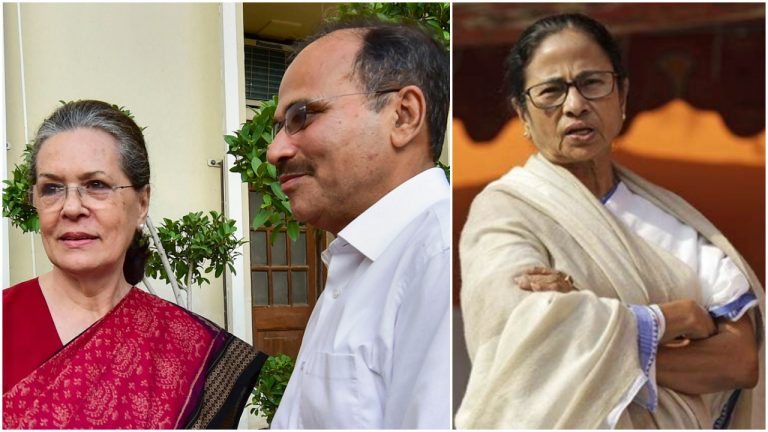
In what could be a major political decision, Congress interim president Sonia Gandhi may replace senior Congress leader and Behrampur MP Adhir Ranjan Chowdhury as the leader of the party in Lok Sabha, Indian Express reports.
According to the report, the Congress party is set to do a major overhaul in the party’s organisational structure ahead of the monsoon session of Parliament scheduled to be in July. Congress interim chief Sonia Gandhi intends to lead the party inside the parliament herself or may appoint one of her deputies to the post in the next few weeks.
If true, Sonia Gandhi will return to lead the party in the lower house after 17 years, as she was the leader of the opposition during the NDA-1 government. After Narendra Modi became the PM in 2014, Congress leader Mallikarjun Kharge was appointed as the leader of the Congress party in the Lok Sabha, and Adhir Ranjan Choudhury has been occupying the post since the Modi govt came back to power in 2019.
However, Punjab Congress MP Ravneet Singh Bittu was named the leader of Congress in Lok Sabha during the budget session, as Choudhury was leading the Congress party in the West Bengal assembly elections. The post of leader of opposition lying vacant as no opposition party has won the required number of seats in the house.
The report suggested that the Congress party is looking to work alongside other opposition parties to coordinate the campaign against the BJP and the Modi government in Parliament. Hence, Sonia Gandhi is looking for a leadership change in the Lok Sabha and might replace Adhir Ranjan Chowdhury as the party’s leader ahead of the monsoon session. This movie is being said as the first of many changes the party will make in the coming days.
Chowdhury, who represents Baharampur in Lok Sabha, has been leading the Congress party’s attack on the floor of the lower house of parliament. However, some critics have pointed out his ineffectiveness as the Congress party’s Lok Sabha leader. In addition, Chowdhury was recently the face of the party’s campaign in West Bengal, where the Congress party lost humiliatingly despite joining hands with radical Islamists and left-wing parties.
Intriguingly, Chowdhury is also extremely loyal to the Gandhi family and had been at the forefront of tackling the rebellion within the Congress party, especially when the G-23 group of leaders stood against Gandhis. In fact, Chowdhury was one of the few leaders who stood behind the Gandhis when the 23 senior leaders had begun to conspire against the party leadership.
However, despite all these considerations, Sonia Gandhi is reportedly intending to sack him as the leader of Lok Sabha and is all set to appoint herself or one of her loyalists as the next leader of the Congress party in the Lok Sabha.
Adhir Ranjan to be removed to placate TMC
According to the Indian Express report, Sonia Gandhi wants to build bridges with the Trinamool Congress, which has been deteriorated since the recently held West Bengal Assembly elections. The Gandhi-Parivar understands that the Congress party alone cannot fight the BJP, which has a large public mandate and wants to create an informal coalition on the floor of the house against the Modi government and the BJP.
The Congress has, in fact, on more than one occasion thrown its weight behind Banerjee in her post-Assembly election verdict battle with the BJP. Adhir Chowdhury, who is the Congress party’s chief in West Bengal, was extremely critical of the Trinamool leadership during the assembly elections even though the Congress party had officially stayed away from commenting on either Mamata Banerjee or the TMC.
In fact, Congress has thrown its weight behind Mamata Banerjee for more than one occasion in her post-Assembly election verdict battle with the BJP. Hence, the decision to remove Adhir Ranjan Chowdhury from his post is being seen as Sonia Gandhi’s efforts to placate Mamata Banerjee.
The Gandhis are hoping for seamless floor coordination between the Congress party and the Trinamool Congress in Parliament. Chowdhury, who is critical of the West Bengal government, would be a political problem for the Gandhis. Hence, he might be replaced before the Parliament session begins.
Meanwhile, the Trinamool Congress is also gearing up for a battle with the Modi government over the post-poll violence against opposition party cadres in West Bengal. Trinamool Congress may reach out to Congress and other opposition parties to approach the President demanding the recall of the West Bengal Governor Jagdeep Dhankhar, who has been vocal against the atrocities unleashed by the Trinamool party cadres.
Shashi Tharoor, Manish Tewari also in the race for the post
If not Sonia Gandhi, senior party leaders loyal to the family may be appointed as the next Congress leader in the Lok Sabha. Among the frontrunners are Thiruvananthapuram MP Shashi Tharoor and Anandpur Sahib MP Manish Tewari. Interestingly, both of them are signatories to the letter written to Sonia Gandhi by 23 senior leaders. However, these two Lok Sabha MPs have been far more loyal to the first family of the Congress than others, and there is a possibility that they could be given the mantle under Sonia Gandhi’s command.
It is also unclear whether Gandhi-scion and Wayanad MP Rahul Gandhi will be keen to lead the 52-member Congress side in Lok Sabha. Punjab Chief Minister Amarinder Singh wants Manish Tewari to take over as president of Punjab Congress. One has to see what major changes the Congress party will undergo in the coming days.
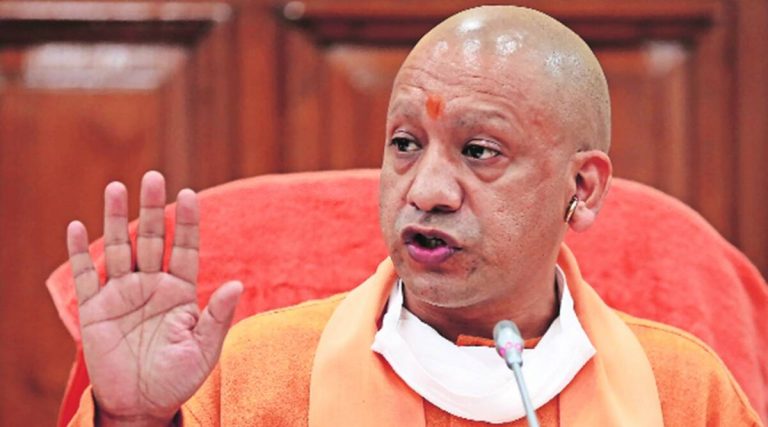
Hours after the BJP swept the Zila Parishad elections in Uttar Pradesh with 66 out of 75 seats, State Chief Minister Yogi Adityanath has vowed to ensure the party’s victory in the State Legislative elections in 2022.
On this ocassion, he spoke to various media channels and responded to the challenges posed at him by his arch rivals. While speaking to news agency ANI, he remarked, “BJP candiates won 67 out of 75 district panchayat chairperson seats. I thank BJP workers. BJP will win 2022 elections with huge margin. We’ll win more than 300 seats.”
BJP candiates won 67 out of 75 district panchayat chairperson seats. I thank BJP workers. BJP will win 2022 elections with huge margin. We’ll win more than 300 seats: Chief Minister Yogi Adityanath pic.twitter.com/fLuJ8RbYmQ
Yogi Adityanath also slammed Samajwadi leader Akhilesh Yadav for alleging that the BJP won Zila Parishad seats by misusing administrative power. “Two things are very clear: When we win Lok Sabha elections, they blame the EVM. When elections were conducted using ballo papers this time, they began blaming the administration…If we win, they blame the administration and EVMS. If they win, it somehow implies hard work by SP workers. Our victory is also the hard work of our party workers,” remarked the Uttar Pradesh CM.
#WATCH | Chief Minister Yogi Adityanath’s reply to Samajwadi Party chief Akhilesh Yadav’s allegation that the BJP has won district panchayat chairperson seats by misusing administration power. pic.twitter.com/4MpZBdnxIc
Meanwhile, AIMIM leader Assauddin Owaisi has challenged Yogi Adityanath to win in any of the 100 seats, where his party is contesting. Yogi Adityanath accepted his challenge and said, “Asaduddin Owaisi is a big leader of our nation. If he has challenged BJP (for 2022 Assembly elections) then BJP’s worker accepts his (Asaduddin Owaisi) challenge. There is no doubt that BJP will form government in Uttar Pradesh.”
Asaduddin Owaisi is a big leader of our nation. If he has challenged BJP (for 2022 Assembly elections) then BJP’s worker accepts his (Asaduddin Owaisi) challenge. There is no doubt that BJP will form government in Uttar Pradesh (in 2022): Chief Minister Yogi Adityanath pic.twitter.com/93fUPShYFk
While speaking to India TV Conclave, CM Yogi Adityanath announced that BJP will continue its winning streak, despite any alliances created to topple him from the CM ‘s throne. He added that earlier such alliances were tried and tested in both 2017 and 2019 and that they failed. “Any political party has the right to chose its allies to fight an election, but they should know that they will have to bite the dust just like in 2017 and 2019. There isn’t an iota of doubt that BJP will win the Uttar Pradesh election,” he added.
(Video Courtesy: Youtube/ India TV)
Yogi Adityanath also spoke to Arnab Goswami of Republic TV after victory in Zila Parishad elections. He said, “We have not left anything incomplete. We believe in completeness. Sabka saath, sabka vikas – this mantra has been adopted. Policies have been made to reach the remotest places, the state has seen infrastructure projects, the economy has seen a rise, this is the largest state and yet has the least unemployment rate. We have successfully fought the COVID-19 pandemic as well.”
#WATCH | All political parties in UP have already come together against BJP in 2019, they can do it again. We will win with 300+ seats in 2022: UP CM @myogiadityanath to Arnab Goswami
On being asked by Goswami about his election fortunes if the Opposition gangs up against him, the Uttar Pradesh CM responded, “They have tried to pull off a similar stunt in 2019 and will continue to do so even in the future. I don’t want to interfere in their plans. But, BJP will get more than 300+ seats in the West Bengal State Legislative polls, which will be held next year.”
During the interview with Republic, Yogi Adityanath also answered questions on ‘Love Jihad’. He was asked why does BJP make an issue out of religious conversions only ahead of elections. Yogi replied that the law against ‘Love Jihad’ was passed a long time before any election. He called religious conversions a matter of national security.
The Chief Minister said, “Children are turned into Jihadis and they are used to target religious institutions and sentiments and get past the VVIP security. We have evidence of it. It’s a full fledged attempt to play with national security, not just religious conversion. The Government has formed a team of over 500 officials to uncover conversion rackets.”
Yogi also spoke on the allegations made by opposition party leaders against the Ram Mandir Teerth Kshetra Trust over land deals and said that there was not a shred of truth in them. He said that some people do not want the issue to be settled and hence, they cannot accept the amicable solution to the dispute.
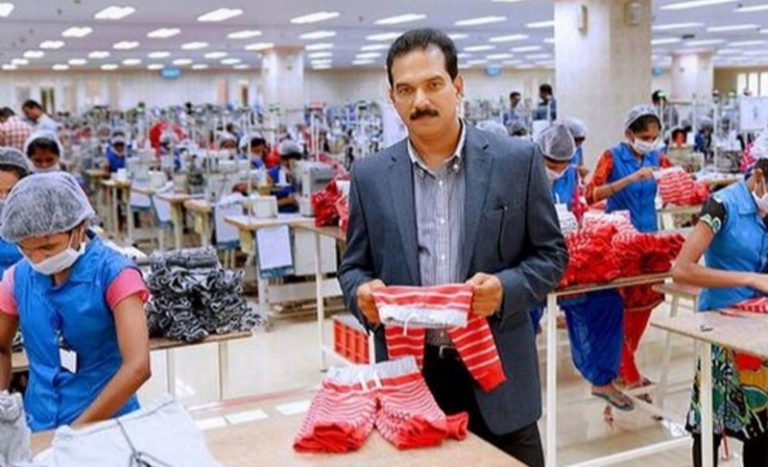
On June 29, the largest private-sector employer in Kerala, Kitex Group, announced the withdrawal of an Rs.3,500 crore investment project from the state. The company alleged that the state authorities are running a witch-hunt against them. Notably, Kitex Garments is the second-largest kids’ apparel manufacturer in the world. The group has now announced that they have got informal invites from over ten states, including Gujarat and formal invites from the state of Tamil Nadu, to shift their investments. Tamil Nadu has offered an array of subsidies, discounts and freebies if Kitex decides to shift its projects while stating how it is the most business-friendly state/
MD of Kitex group Sabu M Jacob has said, “After I disclosed the plan to drop proposed investment in Kerala, I have got queries from other states. Governments of Tamil Nadu, Odisha, and Gujarat have invited me to invest in their states.” He called Tamil Nadu a “very important, attractive investment destination.” Jacob said that principal secretaries and ministers from states across the country have been calling him up to discuss taking his Rs 3500 crore investment there from Kerala, but he has not yet taken a decision on it.
Meanwhile, a PTI quoted a senior Tamil Nadu official saying, “Proposal has been extended to the Kitex group, which is keen on investing Rs 3,500 crore in the textile sector.”
Guidance Tamil Nadu, the state’s Industries Department’s nodal investment promotion agency, sent a letter to Kitex inviting them to invest in the state. Gaurav Daga, Associate Vice President of Guidance, mentioned in the letter that it was being sent after a discussion between Tamil Nadu Industries Minister and Sabu Jacob.
According to Sabu Jacob, the state has offered him 40 per cent subsidy, land at half the market value, 100 per cent relaxation on stamp duty, 5 per cent tax reduction for six years, 25 per cent subsidy for environmental protection infrastructure, 50 per cent subsidy for intellectual property, Rs 4,000 per month for the training of each employee for six months, electricity subsidy, and several other freebies.
Sabu said, “The offer given by the Tamil Nadu government is irresistible, and I came to know that many facilities are being provided by our neighbouring state. However, a decision to shift from Kerala has to be taken after a lot of consultations with our team, our management… it will not happen in a day, but we are seriously contemplating it.” The state also assured to provide anything over and above the offers mentioned in the letter. Notably, the group has not decided yet where it would like to move its project.
Why Kitex wants to move out of the state?
According to Sabu M Jacob, there have been repeated instances of harassment by the government at the existing garment processing plant in Kizhakkambalam panchayat of district Ernakulam. Just before the announcement of withdrawal was made, Sabu said 11 teams of officers from various departments raided the company in the last month, including teams from the Department of labour, factories and boilers, and even a team led by the district collector.
He had said, “The Kitex factory has been functioning here for the past 26 years, and we have 11,000 employees. They arrive with a huge team violating Covid protocols and bring camera teams of online media. While our neighbouring states give a red carpet welcome to investors, the Kerala government treats them as traitors. They are branded as bourgeoisie, exploiters, encroachers, capitalists and criminals and humiliated in public. Whoever invests in Kerala will lose peace of mind and will be driven to suicide.”
“There are states that provide the PF and ESI share of the employees. Some states even offer Rs 5,000 salary for the employees for five years. We don’t demand any benefits from the government. At least they can stop harassing us. If the situation continues, Kerala will turn into a graveyard of industries,” he had added.
The 3,500 crore project for which Kitex Group signed a memorandum with the Kerala Government was announced at the “Ascend Global Investors Meet” in Kochi in January 2020. As decided, the Kitex Group was supposed to open an apparel park in Kochi and establish industrial parks in Kochi, Thiruvananthapuram and Palakkad.
No initial communication from the government
Sabu had alleged that even after disclosing that Kitex was planning to drop the proposed investment in Kerala, no one from the Kerala government contacted him. He added, “When I cannot run the existing units, why should I make fresh investment? Who can give guarantee for the new investment, which is envisaged to give jobs to 35,000 people? Despite the Covid-related crisis, we have been going ahead with the project and land has been acquired in Palakkad and Thiruvananthapuram for the apparel project.”
Industry Minister assured support
However, Industries Minister and CPI(M) leader P Rajeev said on July 3 that the government had taken serious note of the issue raised by Kitex. He said, “The government wants KITEX to revive the project which they had proposed here.”
Rajeev said that the Industrial Department had contacted the MD of the Kitex group. He further added that the Department is not in favour of surprise checks on the industrial units in the state. Urging the investors to contact the state authorities to take up their concerns, he said, “Everyone should keep away from making statements that impair the state’s image.” He assured that “positive steps” would be taken to resolve the issue with Kitex Group. He said the company should have talked to the government before taking up the issue on social media.
The minister further said that the incident with Kitex Group was a “one-off incident”. A meeting has been called by Chief Minister Pinarayi Vijayan on July 5 to discuss the issue and to ensure the industrial entrepreneurs get the facilities required by the concerned departments to run the businesses smoothly.
Later, Sabu Jacob confirmed to media persons that Industrial department officials had approached him, and he had given them a report on the issue. He also urged the government to prove the allegations of pollution against his company, and if the government does not have any proof, they should suspend the officers who raided his industrial units.
BJP alleged political vendetta
As per reports, Kerala BJP President K Surendran has alleged that the action against the Kitex group is a part of the political vendetta of the ruling CPI(M) party. Notably, Kitex had got into politics a few years ago and founded a party named “Twenty 20”. It tried its hands in the Kizhakkambalam panchayat and also in recent assembly elections on six seats but failed to win any.
Fundraising platforms in India have helped people in need of medical treatment or other financial needs, and now this spectrum of public help appears to be widening. One particular call for public help caught the attention of many on social media earlier today was where a person started a fundraiser for hair removal.
The fundraiser was started by a Bangalore based person Prakriti Soni, who needed funds for hair removal as the financial condition of the family was not stable.
While hair removal might sound too mundane a thing for which a fundraiser should be started, Prakriti explained that it was nothing less than a “life altering procedure” for her, who is 21-years-old and identifies as trans-woman.
She explained that she must get rid of the hair on her body to remove the mismatch between her biological sex and her gender identity. This mismatch was majorly affecting the mental health of Prakriti, giving her distress and discomfort – something that is known as “gender dysphoria” as Prakriti explained in her fundraising page.
She said that the Covid-19 induced lockdowns were making her gender dysphoria worse and thus she has decided to completely remove the body hair via laser treatment. Since her own or her family’s financial condition is not stable, she decided to seek public help, and it appears to have worked for Prakriti Soni, who was earlier Gaurang Soni.
To support her claims, Prakriti uploaded a doctor’s letter from Ramaiah Memorial Hospital of Bangalore. The letter stated that the “client refers to themselves in the feminine gender and to respect their feelings I will be using female pronouns throughout this report.”
Doctor’s letter identifies Prakriti as a ‘male to female’ transgender person who had described a desire to be and to be treated like a member of the opposite sex since early childhood. It also states that her family is supportive of this and so is her social network, which reflected in the fact that Prakriti was able to raise more than half of her targeted fundraise.
An anonymous person who helped with 5000 rupees, the maximum individual contribution at the time of this report being published, left a message that read “Hi Prakriti! Wish you all the very best. I wish you are able to meet your target and get your hair treatment done and feel better!! You are an amazing person and deserve the best!!”
Another contributor, who identified himself as Adil, said, “I am a friend of Nikita whose friend’s with mridula. And I can’t tell you how happy I am for you and hope that everything works out fine (sic.)”
The doctor’s letter dated 28 October 2020 report said that Prakriti reported gender congruent experience of living like a woman for the past two years. It further revealed that Gaurang alias Prakriti liked being with and playing with girls in the school, and also acted like them.
“She wants to get rid of both primary and secondary sexual characteristics because of the marked incongruence she experiences. She seeks hormone replacement therapy to feminize her body to suit her gender identity,” the doctor’s letter declared.
It is not clear if Prakriti has already undertaken hormone replacement therapy or she might need another fundraiser for that. However, the hair removal fundraiser was on track.
In a tragic incident, a military plane carrying at least 85 people crashed in the southern Philippines on Sunday, the chief of the armed forces of the Philippines said.
According to the reports, the Philippine military transport plane C-130 carrying at least 85 people crashed in the southern part of the country. As of now, 40 people have been rescued, and a search and rescue mission has already started to trace the remaining people on the plane.
The burning wreckage of the C-130 was found near Sulu province by the villagers, who said that the military aircraft crashed during its landing on the Jolo islands after it missed the runway.
“Responders are at the site now, we are praying we can save more lives,” General Cirilito Sobejana said.
Reportedly, many of the passengers had recently graduated from basic military training and were being deployed to Jolo islands as part of a joint task force fighting terrorism in the Muslim-majority region. The military has a heavy presence in the southern Philippines, where terror groups, including the kidnap-for-ransom outfit Abu Sayyaf, operate.
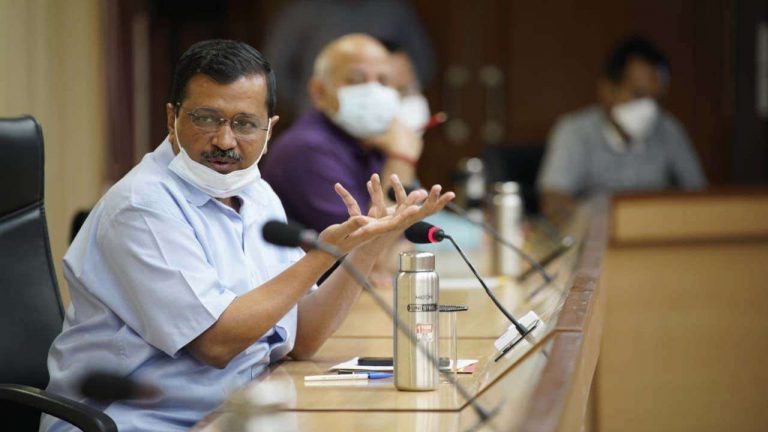
Leftists in India are upset and angry over Delhi Chief Minister Arvind Kejriwal after a ‘student activist’, an AISA (All India Students Association) office bearer by the name Neha got fined Rs 5,000 for her ‘disrespectful’ comments towards him.
As per reports, Neha, a final year student of MA in Performance Studies, in an ‘online protest’ in December last year left a ‘disrespectful’ comment on YouTube live streaming of online convocation of Ambedkar University. As per the university, her statements were ‘disrespectful’ towards Delhi CM Arvind Kejriwal and Delhi Deputy CM Manish Sisodia. The University is established by the government of NCT of Delhi.
According to reports, the leftist students carried out “online protest” against AUD’s admission policy, including fee hike and alleged discrimination against SC/ST students. Neha had referred to students’ protest against the “constitutional changes in reservation policy and the exorbitant high fees”, and said that the CM “doesn’t care about students”.
On June 30, the proctor issued an order which said that Neha would have to pay Rs 5,000 fine to sit for her final exams. The university said, “An incident of use of slur/distasteful/other remarks in the YouTube thread during the 9th Annual Convocation of AUD on December 23, 2020 by Ms Neha… had come to the notice of the Proctorial Board. The Proctorial Board, after having ground through the case, had constituted a sub-committee to inquire into the incident and gave its report.”
The report further said that during a personal interaction Neha had with the subcommittee on April 6, Neha had admitted to having made the above comments and ‘did not feel guilty’.
Calling her comments a ‘clear violation of AUD’s Code of Discipline for Student, the order said, “The sub-committee resolved that the comments made on the public platform about the university community and Chief Guest and the Guest of Honour were baseless and disrespectful and clearly amounts to a deliberate attempt to defame and disrespect the university community.”
Neha, however, feels that this punishment is not acceptable to her. She alleges that she is being singled out as while many ‘protested’ no one else got the show-cause notice. The university said that convocations are auspicious ceremonies and what Neha did was unbecoming of a student.
AISA, however, is now angry over the steps taken by university.
Why are University administrator so so humourless & vindictive towards students who display irreverence to authority? What is this nonsense about convocation ceremonies being “auspicious”? Protests marked convocation ceremonies during India’s freedom struggle & ever since! pic.twitter.com/5tqRMGgDaj
Leftist leader Kavita Krishnan lashed out on Arvind Kejriwal and Manish Sisodia for being ‘humourless’ and ‘vindictive’ towards students. She was also upset at the convocation ceremony being referred to as ‘auspicious’.
. @weareAUD admin why so pompous? Comments by @neha_aisa do not “defame” you or your guests. If you want students to be obedient robots, maybe you shouldn’t head a Univ. @ArvindKejriwal or @msisodia don’t need you to protect them from a young woman student. Take back the fine! pic.twitter.com/57nPBDi8kW
She even questioned the university administration for being so ‘pompous’ and claimed Neha’s comments did not ‘defame’ either the university or the Delhi CM and Deputy CM.
This is not the first time the leftists have lost their cool on Arvind Kejriwal. In August 2020, when Kejriwal led Aam Aadmi Party accused the BJP of sponsoring the anti-CAA protests at Shaheen Bagh and the riots in the national capital, the leftist and Islamists lost their cool on Kejriwal and called him a ‘Sanghi snake‘. He was also attacked for reciting Hanuman Chalisa on national television ahead of Delhi assembly elections.
In November 2020, Congress, leftists and Islamist trolls had attacked Delhi government and Chief Minister Arvind Kejriwal for giving its sanction to Delhi Police for the prosecution of anti-India ‘activist’ Umar Khalid in a UAPA case related to Anti-Hindu Delhi riots. Umar Khalid is an accused in the anti-Hindu Delhi riots and has been arrested for provided logistical support for the riots and being one of the main masterminds.
Similarly, after the GNCTD Amendment Bill in Lok Sabha was given Presidential assent earlier this year, leftists and Kashmiris mocked Kejriwal because of his previous support to abrogation of Article 370.
On the night of July 1 and July 2, a woman identified as 22-year-old Farheen was found burnt near her husband Ateeq Qureshi’s house in Sulemsarai under Dhumanganj police station area in district Prayagraj, Uttar Pradesh. After learning about the incident, the woman’s family rushed to the spot and took her to Swarooprani Nehru Hospital by ambulance. Unfortunately, Farheen succumbed to the injuries on the Friday afternoon.
Her relatives informed the Police about the incident and lodged a complaint of dowry and murder against Ateeq and his father Rafeeq, mother Nasreen, brothers Suhain, Shahbaz, Adil and sisters Shabana and Afsana. Ateeq is absconding since the incident. Police are conducting raids to find Ateeq. So far, Police have raided several locations in Kareli and Cantt area to find the accused. The Police assured the accused would be arrested soon.
Farheen tried to stop the second marriage of Ateeq
As per reports, Sarwar Alam, brother of Farheen, said that Ateeq Qureshi and Farheen got married in a court in 2017. Her in-laws were not happy with the marriage. Thus, she was staying at her maternal home. On June 30, she came to know that Ateeq was planning to get married again. She rushed to his home to confront him, but she was allegedly beaten up and driven away. On July 1, Ateeq called her and asked her to come to his as he wanted to talk to her. When she reached there, Ateeq and his family members sprinkled petrol on her and burnt her alive.
Ateeq had asked her to bring petrol
Alam further alleged that Ateeq asked her sister to bring petrol as there was no oil on his bike. He had told her that he would drop her on the bike after the conversation. Unknown to what was going to happen to her, Farheen bought the tools for her own death on the behest of her husband, Ateeq. When they set her on fire, she started screaming, and people living around came out of the house. They all saw Farheen getting burnt alive, but no one dared to save her.
Investigation underway
Inspector Anupam Sharma, Dhumanganj Police Station, said that during the investigation, they found Farheen was in love with Ateeq. When she came to know about Ateeq’s second marriage, she tried to stop it. On Thursday night, she reached Ateeq’s house, where a dispute erupted, leading to the incident.
Communist-led Kerala has now become the major concern in terms of the fresh coronavirus cases in the country as it accounted for over 29% of all the fresh cases recorded in the country on Saturday.
According to the data, Kerala remains the worst Covid-19 affected state in the country and continues to be the epicentre of the pandemic. Kerala has reported 12,456 positive cases in the last 24 hours and has recorded 135 new fatalities taking the death toll in the state to 13,640.
On Friday, Kerala had reported 12,095 fresh Covid-19 cases while recording 146 more deaths. Thus, Kerala continues to be a burden to the country’s efforts in tackling the second wave of the pandemic even as other states have successfully reduced fresh Covid-19 cases.
Image Source: Covid19India.org
Malappuram remains to be the top contributor of fresh cases in the state, with 1,640 cases. In addition, Thrissur-1450, Ernakulam-1296, Thiruvananthapuram-1113, Palakkad-1094, Kollam-1092 have all contributed to more than 1,000 Covid-19 infections.
With Kerala constantly recording over 12,000 cases almost every day, the total tally of Covid-19 cases has reached 29,61,585.
Image Source: Covid19India.org
On Saturday, Kerala reported 135 deaths, taking the death toll rose to 13,641.
Image Source: Covid19India.org
Meanwhile, Kerala remains the state with the highest number of fresh infections in the country, while Maharashtra is the worst affected state right from the beginning of the pandemic. The states of Maharashtra, Kerala and Tamil Nadu have contributed more than 26,000 cases out of the 43,000 cases reported across the country.
As per state health minister Veena George, 1,19,897 samples were tested in the last 24 hours and the test positivity rate was 10.39 per cent.
Maharashtra recorded 9,489 cases in the last 24 hours to take the total tally to nearly 61 lakhs Covid-19 cases in the state. Tamil Nadu is the third in line in terms of fresh cases recorded as the southern state has recorded around 4,013 cases. The three states – Kerala, Maharashtra and Tamil Nadu account for nearly 61 per cent of the total cases that were recorded in the country.
Image Source: Covid19India.org
The major concern is that the latest delta-plus variant has been reported in all these three high-burden states.
For years now, the New York Times has been accused of being brazenly Hinduphobic and anti-Modi in the content that is published on its website. These dubious credentials were reaffirmed recently when they published an entry-level job requirement on their website and LinkedIn.
While publishing job requirements is a routine affair, what caught the attention was the specific requirements—being anti-Hindu and anti-Modi—mentioned in the description. The job posting was for that of a South Asia Business Correspondent in New Delhi.
The New York Times was unabashedly seeking applications from writers who were ideologically aligned against the Modi government and possessed skills required to carry forward its legacy of anti-Modi and anti-Hindu propaganda.
While New York Times is looking for someone who is anti-Modi and anti-India, the media house is already publishing such content for years. In fact, ever since Narendra Modi became the prime minister of India, the attacks against Hindu culture in the New York Times have only intensified. With the arrival of PM Modi, the New York Times has shunned its subtle attempts in propagating its anti-Hindu propaganda and assumed a more aggressive approach to allow its platform to host Hinduphobic content.
Here are 14 articles published by New York Times that testify their patently anti-Hindu and anti-Modi slant:-
NY Times provides its platform to propagandist Kunal Kamra to peddle anti-Modi propaganda
Not so long ago, the New York Times appeared so desperate to push its tirade against the Modi government that it roped in propagandist and unfunny comedian Kunal Kamra to vilify PM Modi and his government’s handling of the pandemic.
Source: New York Times
Even though India, with its humongous population, succeeded in suppressing the ferocious wave of resurgent coronavirus, propagandist Kunal Kamra drew a veil over it and attributed the surge in cases right on the shoulders of PM Modi.
With the COVID-19 outbreak wreaking havoc in India, Kamra blamed the Indian government for the pandemic and gave a pass to China, where the coronavirus was most likely synthetically developed and leaked. But this did not deter Kamra and the New York Times to continue their diatribe against the Modi government.
While Kunal Kamra is an abusive troll famous for heckling Arnab Goswami inside a flight and standing outside the journalist’s house to harass him, NYT published Kamra’s article just because he is anti-Modi.
New York Times uses coronavirus pandemic to propagate Hinduphobia
Earlier last year, when the first wave of coronavirus stuck India, the New York Times published a patently Hinduphobic article where it made factually incorrect claims to weave a spurious narrative that ‘Hindu nationalists’ were fanning communal hatred in India against Muslims in the midst of the coronavirus pandemic.
Source:New York
“Hateful messages have bloomed online. And a wave of apparently fake videos has popped up telling Muslims not to wear masks, not to practice social distancing, not to worry about the virus at all, as if the makers of the videos wanted heMuslims to get sick,” said the article, which was co-authored by Jeffrey Gettleman, Kai Schultz and Suhasini Raj.
In their article, however, the authors had horrendously made inappropriate and misleading claims that are laughable on the face of it. A deliberate attempt is made to insinuate that the videos on the video-sharing platform TikTok, where Muslims advocate against social distancing and ask fellow Muslims to place their faith in Namaz and Allah instead, was somehow created by Hindus to make Muslims fall sick.
Besides its hoary accusations of PM Modi presiding a ‘Hindu Nationalist’ government and pursuing ‘majoritarian’ policies, the report engaged in victim-mongering in significant measure. The authors managed to conjure some scared Muslims suffering from paranoia and a persecution complex and elicited responses from them that cements their narrative.
New York Times denigrates old Hindu custom of burying and immersing dead bodies in Ganga
In the midst of the second wave of coronavirus pandemic, a particularly misleading narrative, designed to undermine the Yogi Adityanath government, was peddled by some motivated journalists, which was later picked up by western media outlets such as New York Times and Washington Post.
The articles published in these outlets fussed over the number of dead bodies floating in the holy river Ganges. An article published in the New York Times on June 17 this year insinuated that the dead bodies floating in the river Ganga and buried on its shores reflect the deaths that happened due to COVID-19 that had gone undetected and undercounted by the state government.
Source: New York Times
However, what the article alleges is far from the truth. Without even seeking details of the conventions and old customs prevalent in the region, it patronisingly asserted that the dead bodies in Ganga showed people in India did not have the resources to provide a fitting farewell to their loved ones. This was yet another attempt by the New York Times to show Modi government in poor light about its handling of the coronavirus outbreak.
The article did not bother to impress upon the fact that immersing the dead in Ganga and burying them along its shores is an age-old practice that Indians living along the banks of Ganga have been practising for years. Even before the pandemic cast its evil eyes on India, dead bodies were often found floating in the river Ganga.
Targeting PM Modi through spinning a web of lies about Citizenship Amendment Act
Back in 2019, the passage of the Citizenship Amendment Act provided yet another opportunity to the New York Times to peddle its vitriol against PM Modi and Hindus. An article titled “As Modi pushes Hindu Agenda, a Secular India Fights” was published by the NY Times after the Modi cabinet passed legislation that allowed minorities from three neighbouring Islamic countries of Pakistan, Bangladesh and Afghanistan.
Source: New York Times
The article maliciously tried to cast the CAA Bill as a legislation that would chip away at the pluralistic foundations of the country. It also peddled half-baked lies about the Act, whipping up fear psychosis among the Muslims that the legislation was the first step towards disenfranchising them. It continued its negative portrayal of PM Modi, projecting him as a leader pursuing his “Hindu Agenda” while the “secular India” fought back.
Of course, all these assertions were misguided. The legislation had no provisions to disenfranchise any citizens, let alone Muslim residents in India. It only facilitated fastrack citizenship for the persecuted minorities in Pakistan, Bangladesh and Afghanistan, who had fled their countries and escaped to India on or before 31 December 2014.
New York Times holds Modi responsible for anti-Hindu riots in Delhi in Feb 2020
After portraying the Citizenship Amendment Act as a law passed with the pernicious motive of disenfranchising Muslims, the New York Times pinned the blame of the violence that took place in the wake of the anti-CAA protests on the Modi government.
In the aftermath of the passage of the CAA, motivated groups, ran riot under the pretext of carrying out “peaceful protests” against the Citizenship Amendment Act. The bloody spate of violence, which were witnessed in several pockets of the country, culminated into a horrifying anti-Hindu pogrom in Delhi in February 2020.
Source: New York Times
However, the New York Times published an article to allege that it was the result of the policies pursued by the Modi government. The article insinuated that the policies and decisions taken by the Modi government emboldened the “Hindu nationalists”, who then went on a rampage and provoked the kind of bloodshed that exploded in New Delhi in February 2020.
Not only is this grotesque perversion of facts, but it also proceeds to paint the aggressors as victims and victims as aggressors. The anti-Hindu riots that swept the national capital in February last year happened amidst the anti-CAA protests that were taking place across the city. With the then US President Donald Trump in the city for a visit, the rioters ran amok and instigated violence against Hindus and other sections of the society. The Delhi Police later said that the riots that convulsed the national capital were part of a well-planned conspiracy, in an attempt to internationalise the CAA issue and pressurise the central government to rescind the bill.
New York Times takes up the cudgel for fake news factory
With the Modi government being one of the principal victims of the menace of fake news, the Centre brought in new rules to curb the spread of lies and misinformation online. The new rules asked for greater accountability from online portals, including social media, who were so far immunised by any adverse action against them, owing to the archaic laws that did not account the challenges presented by the increasingly evolving digital world.
The Modi government passed new set of digital rules in March 2021 which included provisions for the punishment to the online portals who blatantly lied and pushed misinformation and news based on unsubstantiated sources. But instead of applauding the government for taking the menace of fake news head on, the New York Times published an article, portraying the fake news peddlers as “India’s News Upstarts” that the Modi government was trying to tame them.
Source: New York Times
Arguing in favour of the chronic fake news spreaders, the article said that the online news organisations had practiced aggressive journalism in the mostly “compliant media landscape”. It branded those who busted fake news and spurious narratives as “trolls” and said the new rules empowered them. It mentioned portals like The Wire as among those new online portals that were practicing aggressive journalism.
While it was arguing for the likes of The Wire, it is worth mentioning that there is storied history of the far-left portal in spreading misinformation and lies. There have been myriad occasions when the portal was caught lying through its teeth about the Modi government and other BJP-ruled regimes. Most notably, the Wire was amongst those news portals that published fake news in the Ghaziabad fake hate crime, where an occult practitioner was thrashed by a group of men for palming off an amulet that did not possess the said powers.
These laws were brought in explicitly to discourage news portals from publishing unverified news and create fissures within the society. However, the New York Times would rather have India’s society implode that welcome necessary laws that are important to curb the scourge of fake news.
New York Times villainises PM Modi for pressuring social media platforms to block accounts of rabble rousers
On January 26 this year, the so-called farmers conducted a tractor rally in the national city. Though they claimed that the rally would be peaceful and non-violent, as has been the case with their most claims, they fell flat and Delhi witnessed an unprecedented wave of violence, with rioters storming the Red Fort and trying to capture it to continue their farmer protests. Social media platforms were rife with provocative posts that falsely accused the Modi government of using force to quell the farmers’ protests.
However, New York Times published an article that demonised the Modi government for asking the social media platforms to rein in rabble-rousers, who were using their platform and trying to foment unrest in the national capital. The article cited the free speech principles enshrined in the Constitution of India to assert that the government is trampling upon them and railroading the social media companies to adhere to its dictates.
Source: New York Times
In their hatred for PM Modi, the NYT characterised the most logical move by the central government as an attempt to suppress the fundamental right of Freedom of Speech. By contrast, when the so-called Trump supporters marched to Capitol Hill and staged an insurrection, the New York Times and other Western Media outlets lavished praises on the social media companies for suspending accounts and banning people who called for the storming of the seat of the US government.
This patronising attitude of raising the issue of freedom of expression is reserved only for the Oriental world, while when the same nature of incident takes place in their own backyard, they go on great lengths to sing praises to the social media companies for stifling the freedom of speech of people.
NYT’s treachery on Farmers’ Protest
The ongoing farmers protest provided yet another avenue to the New York Times to push its unbridled hatred for PM Modi. The article titled ‘Modi’s response to Farmer Protests in India stirs fears of a pattern’ was published on February 3, 2021, arguing that the PM Modi was clamping down on dissent, blocking internet and taking other measures to stop the demonstrators from continuing their protest against the three farm laws.
“As India’s prime minister, Narendra Modi, struggles to quell months of protests by farmers against new market-friendly agriculture laws, critics and analysts see a pattern of curtailing free speech that they fear is sending India down a dangerous path of intolerance,” the article said.
Source: New York Times
The article alleged that arresting the rabble rousers, restricting the movement of the instigators who were inciting violence and causing upheaval in and around the national capital, was an attempt by the Modi government to stifle dissent and subdue the protests. It is worth noting that the article was published just a week after Delhi witnessed an unprecedented bout of violence, when the so-called farmer protesters ran riot, wreaking havoc in the national capital, and storming the grounds of Red Fort, allegedly to capture it and turn it into another protest site.
In the aftermath of the tractor rally on Republic Day that went violent, the Modi government ordered probe against the culprits. But for the New York Times, mounting an insurrection in the heart of the country’s capital was a perfectly acceptable method of expressing one’s protest against a policy decision taken by the government of the day. Instead of blaming the violent protesters for indulging in vandalism, riots and arson in Delhi, it blamed the central government for ordering corrective action against such lumpen elements.
Furthermore, the protesters in and around the borders of Delhi are camping from last November. While the New York Times goes overboard in denouncing PM Modi and the central government for its handling of the second wave of the coronavirus outbreak, it does not hold the extremely crowded protest sites responsible for the spread of the virus, even though experts have claimed that rallies and protest marches held by Punjab farmers may have played a huge role in powering the resurgent wave of coronavirus outbreak. It continues to vilify the Kumbh Mela celebrations as a superspreader event that contributed to the COVID-19 surge in India, but not a word on how ongoing farmers protest fuelled the recent wave of coronavirus outbreak.
New York Times rants against PM Modi for choking foreign funding of NGOs that indulged in compromising national interest
An article published in the New York Times ranted against PM Modi because his government institute stern rules to stop the foreign based NGOs from compromising India’s national interest. The opinion column titled “Narendra Modi’s Crackdown on Civil Society in India” extrapolated the muzzling of funds to foreign NGOs as an attack against the Civil Society in India.
“In December, the Modi government barred it from receiving foreign grants. The political reasons were obvious: The Collective had represented critics of Mr. Modi’s sectarian record and environmental vision,” the article that was published in January 2017 said.
Even though, the article mentioned that Teesta Setalvad was accused of siphoning off donations meant for riot victims, the article tried to picture her as a victim whose organisation lost its foreign funding licenses after the Modi government deregistered 16,000 NGOs and cancelled the FCRA registrations of 13,000 of them. Apparently, for New York Times, it is perfectly acceptable to swindle donations meant for riot victims as long as the culprit is resolutely opposed to PM Modi.
Source: New York Times
When one takes a look at some of the NGOs whose FCRA licenses have been cancelled by the Modi government, it’s quite clear why the ‘civil society’ harboured such intense hatred for Narendra Modi. One of the NGOs whose FCRA license was cancelled is the Navsarjan Trust. Cancelling its license, MHA said, “Navsarjan Trust has come to adverse notice for its undesirable activities aimed to affect prejudicially harmony between religious, racial, social, linguistic, regional groups, castes or communities.” Since then, Martin Macwan has indulged in political propaganda against the BJP government and attempted to exploit Dalits for his own political objectives.
Apart from Navsarjan Trust, the license of ANHAD was also cancelled for “undesirable activities against public interest”. Compassion International, a Christian missionary organization, was also forced to shut down its operations in India. It was also reported that Amnesty International (India) Foundation and Rajiv Gandhi Charitable Trust was also under the scanner of the government for alleged FCRA violations. The FCRA license of Indira Jaising’s NGO Lawyers Collective was also cancelled. The NGO was using foreign contributions to achieve political objectives.
Bitter meltdown of the NYT after PM Modi was re-elected to power in 2019
A series of articles were published in the western media outlets, including the New York Times, after PM Modi scripted history by returning to power with an even greater majority in May 2019. Following the election results, the New York Times, which perennially wallows in anti-Modi hatred, published an article, trying to undermine his victory.
The article titled “How Narendra Modi seduced India with envy and hate” tried to belittle PM Modi’s victory by alleging that the prime minister won the re-election bid on the “tide of violence, fake news and resentment”. The author of the article, Pankaj Mishra, who clearly seemed to have a hard time digesting the fact that PM Modi would have another term at the Centre, attributed violence, misinformation, propaganda as main tools that wrought victory for PM Modi.
Clearly, the author felt despondent at the prospect of living yet another term under PM Modi’s leadership. However, the author’s assertion that people remained beguiled by PM Modi’s charisma and could not see his larger agenda is a bit presumptuous and condescending of the Indian voters.
Source: New York Times
While the author would have us believe that PM Modi came back to power on the plank of violence, communal discord and what not, the reason why PM Modi was voted back to power was that he was successful in fulfilling the aspirations of people.
PM Modi announced key initiatives such as Ujjwala Yojana, Swachh Bharat Mission, Electrifying rural India, that instantly connected with the people and made them to vote for him, again. PM Modi’s nationalist credentials that were burnished in the aftermath of the gruesome Pulwama attack, along with his readiness to allow Armed Forces to carry out Surgical Strikes inside the enemy territory also played a pivotal role in reaffirming people’s faith in his leadership. While detractors can wail all they want, these were a few of the reasons why the BJP won 303 seats on its own in the 2019 general assembly elections.
New York Times vilifies PM Modi for greater integration of Jammu and Kashmir with the Indian Union
The New York Times also had a hard time coming to terms with the reality after PM Modi’s government took a historic decision of hollowing out Article 370 and paving the way for the greater integration of Jammu and Kashmir with the Indian Union.
Until the time when Article 370 was in force, Jammu and Kashmir enjoyed a separate status. But after its abrogation, it was treated at par with other Indian states. But this did not sit well with the journalists at the New York Times, which presumptuously claimed the move as an attempt by PM Modi to make India a Hindu nation.
Source: New York Times
The article argued that by invalidating Article 370, PM Modi’s government has sent a message to the country’s only Muslim-majority state. The article whipped up unfounded fears that the abrogation of Article 370 spell doom for the Muslim population as the centre would be keen on changing the demographics of the state following the move.
It is amusing that Jammu and Kashmir is always viewed from the religious prism. States across India are never referred to as Hindu-majority but this distinction is reserved only for Jammu and Kashmir, ostensibly because it is a Muslim-majority state. Although detractors have a habit of citing India’s constitution to attack PM Modi, but they forget the fact that the constitution of the country says India is a “secular” country and in a secular republic, representing a state by its religious majority is nothing but an assault on that very constitution.
Also, after Article 370 was repealed, the terror incidents in the state reduced dramatically. In addition to this, even stone-pelting instances, which were hitherto a routine affair, drastically came down. The abrogation of Article 370 brought rights and benefits to the people of Jammu and Kashmir that had eluded them so far. In real sense, Jammu and Kashmir go integrated with India on August 5, 2019, the day when the Modi government annulled Article 370.
Modi used religious crisis to power his return at the Centre: NYT article
The New York Times broadcasted another disparaging video where it asserted that PM Modi was using a religious crisis at one of India’s holiest shrines to win another five-year term. The claims made in the video, which were nothing but a figment of the creator’s imagination, accused PM Modi of exploiting the Sabarimala verdict to mobilise Hindu devotees and win over their votes.
Source: New York Times
The video broadcasted by New York Times alleged that PM Modi was pandering to his voter base by not standing for the equality of women. It also alleged that by promoting a patriarchal and parochial view with regards to the Sabarimala verdict, PM Modi was appeasing the Hindu voters for winning another five-year term.
After Supreme Court allowed women of all ages to enter the sanctum sanctorum of the revered Sabarimala temple, Hindus across the country were aggrieved with the top court’s decision that ran counter to the centuries-old traditions practiced by the devotees of the Lord Ayyappa. PM Modi too expressed his opinion on the matter, arguing in favour of the longstanding tradition.
New York Times attacks PM Modi for laying the foundation stone of Ram Mandir in Ayodhya
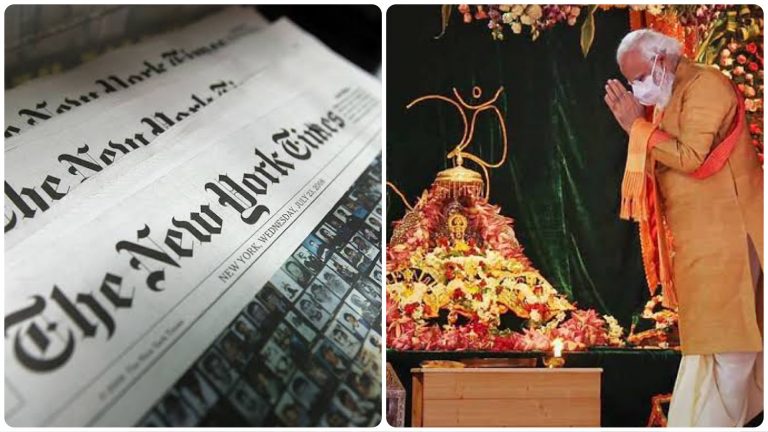
The New York Times also published an article where it attacked PM Modi for attending the groundbreaking ceremony or the “bhoomi pujan” function to mark the construction of a magnificent Ram Mandir in Ayodhya.
The article titled “Modi founds temple on Mosque’s ruins, in triumphal moment for Hindu base”, not only perverted the history of Ayodhya dispute but it also proceeded to cast PM Modi in negative light for attending the groundbreaking ceremony of the temple. It said PM Modi’s attendance in the ceremony was a unambiguous sign of ascendancy for his Hindu nationalist base. It also alleged that PM Modi founded the temple on the ruins of Mosques.
Source: New York Times
This is historically and factually wrong. According to the Architectural Survey of India(ASI), a temple lay underneath the structure that was felled in Ayodhya by karsevaks in December 1992. Therefore, the New York Times’s assertion that Modi founded temple on ruins of mosque is profoundly wrongly and has the potential of sparking unrest and engendering resentment among the Muslim population. The disputed structure was built on the ruins of a temple, not the other way around.
In November 2019, the Supreme Court of India ended the protracted dispute over the ownership of the land by granting it to Hindus to build a magnificent Ram Temple over it. When PM Modi attended the groundbreaking ceremony, he was acting in accordance with the apex court’s verdict that allowed Hindus to have a temple at the site.
New York Times calls saree a ‘tool of Hindu nationalist campaign’
In 2017, the NYT carried an article that claimed saree to be a symbol of Hindu nationalism.
The article said promoting saree is an effort to align ‘party’s broader political program: to project multi-faith India, a country of more than 1.3 billion, as a Hindu nation.’ Amongst other claims, the author links journalist Gauri Lankesh’s murder and says that those who disagree with Prime Minister Modi are “branded as “anti-national,” some shot and killed by Hindu nationalist activists.”
Source: New York Times
There were multiple things wrong with the article, like how there is no conclusive evidence on who killed Gauri Lankesh, but for now, let us focus on the saree as a symbol of Hindu nationalism. It is the same publication that claims that regressive hijab gives women self-confidence, but saree is a tool to increase ‘Hindu nationalism’. NYT also ignored that Saree is worn by women in Bangladesh also, a Muslim majority country.
The attempt to cast promoting saree as a nationalist agenda is a preposterous assertion made by the New York Times. It seems like hateful propaganda wherein every symbol of Indic traditions, or anything that is viewed as remotely Hindu is being vilified. Perhaps their idea to malign a leader who doesn’t fit in the grand leftist world order is to malign a majority population, however ridiculous that might sound. What they fail to perhaps understand, is that Hindus and Hindu traditions have survived far worse than such pontificating media. It has and it will.
These are but a few instances when New York Times had brazenly indulged in publishing anti-Modi and anti-Hindu propaganda. This list is, by no means, an exhaustive repository of instances when the New York Times has propagated Hinduphobic content and its hatred for PM Modi. There are countless other articles where New York Times has peddled its prejudicial view about India’s current prime minister.
A show-cause notice has been served to The Wire by Zonal Police in Kashmir for publishing fake news on its platform. The notice, signed by IPS Vijay Kumar, Inspector General of Police, Kashmir Zone, lists two specific instances where the portal has been accused of peddling fake news.
The notice says that on the 28th of June, a report was published with the headline “They have destroyed my family” where it was claimed, “In recent times, many SPO’s have resigned from services after facing threats from the militants while some have even joined the militancy.”
Show cause notice served to The Wire
Kashmir Police calls it a “rumour” which “has caused fear and alarm among the masses”. “Under the circumstances when security forces in the region are working day and night to combat and eradicate the menace of terrorism in the valley such false narrative and statement without any figures based upon presumption and assumption are prejudicial to the interests of the security of the nation,” it says.
Another report from the 7th of June with the headline “Genuine encounter or custodial killing” is said to have misrepresented facts of the matter. The Kashmir Police accuses The Wire of “mischievous misrepresentation of facts” and says that the accused was arrested in an FIR and all legal procedures have been followed.
Show-cause notice served to The Wire
“Executive Magistrate was present on the site and witnessed the efforts made by the Police to bring his mother on site and persuade the armed accused to surrender. The remand proceedings have been duly adhered followed by detailed report submitted to the competent Hon’ble Court,” the show-cause notice said.
The Kashmir Police accuses the leftist portal of indulging in “misrepresentation of facts, sensationalism, concocted mixing of facts with opinion of some unknown experts”. The portal was also accused of engaging in a media trial.
The notice asks The Wire to explain why necessary action under law or a formal complaint before the Press Council of India (PCI) should not be registered. It gives the portal a week’s time to submit its reply.
The Wire has a reputation of peddling fake news in order to peddle propaganda against India. The two reports in question mark only recent efforts by the portal to malign the security forces of the country.