On 7th May, India will hold a national civil defense mock practice to assess emergency preparation in the wake of the Pakistan-sponsored Pahalgam terror attack, which claimed the lives of 26 Hindu tourists and injured several more in the Baisaran Valley. 244 districts nationwide have received instructions from the Ministry of Home Affairs (MHA) to take part in the exercise, which would mimic wartime situations like evacuation protocols, air raid sirens and blackouts.
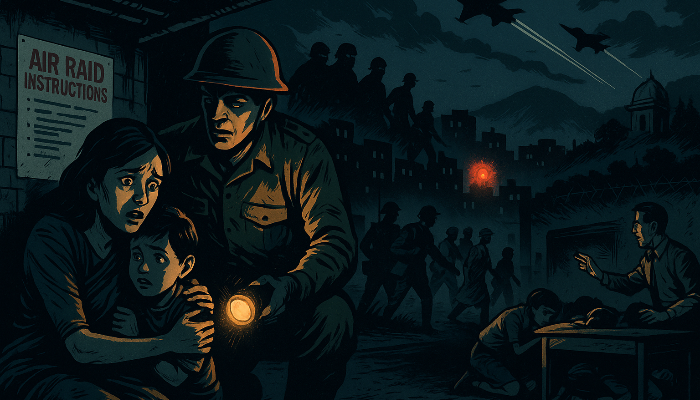
Air raid sirens will be activated in multiple regions nationwide as citizens engage in simulated drills designed to enhance their self-defense capabilities in the event of conflict. This marks the first occurrence of its kind since 1971, when India freed Bangladesh from the repressive hold of Pakistan. Now, the same has been implemented by the central government due to increasing tensions with India’s hostile neighbour.
An abrupt power outage, concealment of essential plants and installations and updated evacuation strategies along with their practice are part of the additional preparations. They will take place at more than 250 sites throughout 33 states and union territories, including Delhi, Andhra Pradesh, Assam, Chhattisgarh, Chandigarh, Uttarakhand, West Bengal and Goa among others.
Their primarily aim to gauge the readiness of governmental and civilian entities in scenarios involving war, missile assaults, or aerial attacks. The drills simulate real-life scenarios: emergency responders operate in real-time, civilians practice sheltering methods, city lights are turned off, and air raid sirens are sounded. They are designed to enhance awareness and preparedness, thereby preventing confusion, reducing fear and saving lives.
The drill might involve traffic diversions, temporary blackouts or suspensions of mobile signals. Furthermore, authorities could rehearse evacuations or make public pronouncements. Police and paramilitary troops might recreate a scenario similar to warfare in specific areas.
According to officials, the drill is not an indication of an impending conflict but rather is a part of a long-standing framework established by the Civil Defence Rules 1968, regulations that date back to the Cold War which are being adjusted to account for modern threats. India’s ability to respond rapidly and collectively in the face of a war-like situation would be tested during the exercise.
What are civil defense areas
The civil defence districts, specifically defined zones in charge of planning and carrying out emergency response plans, are at the heart of this concerted effort. These districts are essential for organizing local reactions, training volunteers and guaranteeing smooth coordination between security personnel and civilians in times of emergency. These areas are in charge of planning, executing and improving civil defense activities such evacuation procedures, air raid drills, blackout exercises and public awareness campaigns.
The Government of India actively rolls out civil defense projects in areas designated as civil defense districts. They serve as operational and administrative centers for contingency operations in the event of major terror attacks, airstrikes, missile strikes or wars as well as are responsible for coordinating responses including various government and civilian agencies, organizing resources and training volunteers and civilians.
Their responsibilities encompass: training and mobilizing volunteers, conducting blackout and evacuation drills, managing collaboration with Home Guards, National Cadet Corps (NCC), National Service Scheme (NSS), Nehru Yuva Kendra Sangathan (NYKS), police and local authoritiesas well as executing public awareness programs alongside shelter planning. The civil defence districts are chosen according to assessments of their strategic significance and susceptibility. The classification considers multiple factors:
- Proximity to international borders: The districts in Gujarat, Punjab, Rajasthan, and Jammu & Kashmir are given priority as they are on the front lines.
- Existence of essential infrastructure: This includes regions with communication networks, ports, refineries, power grids, and defense installations.
- Metropolitan density and population risk: Large urban areas are more likely to be targeted, necessitating careful planning for relocation and awareness campaigns.
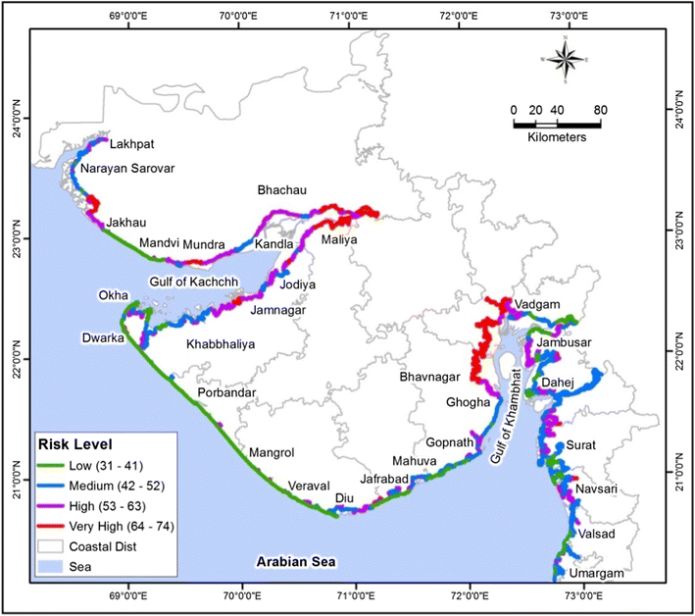
- Coastal sensitivity: Coastal territories, notably those at risk from maritime threats, are recognized for their essential role in defense strategy.
These categories guarantee that the nation’s most critical and vulnerable regions are equipped to manage crises with the least amount of disorder and the greatest amount of coordination. Directorate General (DG) Vivek Srivastava conveyed, “We have been doing these civil defence drills in districts on a regular basis but this time it will be pan-India. The exercise could spread out over a couple of days,” in an interview with CNN-News18. The purpose of the mock drills, according to the authorities, was to assist India in reviewing the civil defense SOP (Standard Operating Procedure) in case of an emergency rather than to incite fear.
Main objective of mock drills
The mock drills will involve a large network of volunteers and staff, including district administrations for coordination, home guards and civil defense wardens for on-the-ground execution. Students, NYKS, NCC and NSS for community support and outreach. Police and paramilitary forces for simulation and enforcement. States and Union Territories will submit “Action Taken Reports” following the drill that review performance and suggest modifications. Its main objective is:
- To evaluate the efficency of air raid warning systems.
- Hotline and radio communication links with the Indian Air Force are operationalized.
- To evaluate how well control rooms and shadow control rooms function.
- Instruction on civil defense topics for students, citizens, and others to ensure they can defend themselves in the case of an enemy assault.
- The availability of crash blackout measures.
- Early camouflage of essential plants and installations.
- To confirm that civil defense services, such as depot management, firefighting, rescue operations, and warden services, have been activated and are responding.
- To assess the application of crash blackout procedures.
- To determine how well evacuation preparations are created and carried out.
Modern exercises still employ civil defense techniques, despite their origins in Cold War fears about aerial and nuclear warfare, because missile attacks and aerial threats are remain relevant, evacuations and blackouts are still crucial readiness tools, and communication breakdowns and civilian panic continue to be potential outcomes. The government has modified traditional procedures using contemporary instruments and technologies, incorporating media coordination, real-time monitoring and smartphone alerts.
There is historical significance to this civil defense exercise as well as it was last conducted ahead of to the Bangladesh Liberation War in 1971. Civilians were taught how to cover windows, seek cover, and defend themselves from airstrikes during these drills.
What will happen during mock drills
According to the Civil Defense Act, each district’s nodal authority for civil defense is either the district collector or the district magistrate (DM) who will review the list of civil defense volunteers beginning on 7th May and update the names and phone numbers that will be available in case of an emergency. Vulnerable districts across India have been designated, according to an official, and the collectors will conduct the drill there.
A senior official who is in charge of civil defence stated, “This will be to test the operational efficacy in vulnerable districts and train civilians. It is a multi stake holder exercise that will be undertaken.” A senior officer mentioned, “The list should be at the ready disposal of the DM to deploy the volunteers in times of emergency. It is a requirement under the Geneva convention to protect civilians in times of war.”
The officer further remarked, “So we must empower them, train them to protect themselves. The last such training was in 1999 and before that in 1971. Most young people of this generation are unaware of such a situation. Hence the necessity of the drill.” The directive stated that the practice will concentrate on several crucial tasks meant to improve civil defense capabilities in both urban and rural locations.
- Activation of air raid sirens: The purpose of testing the sirens is to assess the efficacy of public alert systems, which are essential for warning citizens of approaching aerial dangers. A civil defence official pointed out, “It is the first step which warns civilians in an emergency situation. The Air Force sounds the alert and each district must ensure that its air raid warning sirens are functioning properly.”
- Bunkers: Civilians must seek shelter in a protected location in certain forward divisions. The community bunkers have already begun to be prepared in these regions which are situated near the frontline in case of conflict, such as Uri in Kashmir. Students in places like Arnia, which are on the international border, have already rehearsed emergency evacuation drills. The exercises will verify that the evacuation plan has been updated and bunkers, trenches, etc. have been cleaned.
- Crash blackouts: Communities will participate in blackout drills which involve turning down all visible lights to lessen exposure to nighttime airstrikes. Officials explained, “If a blackout siren is sounded, the standard operating procedure must be followed. The drill will assess whether the sirens are working and how effectively people respond. All stakeholders should be well-versed with the SOP.”
- Camouflage exercises: Camouflage drills will be conducted on critical infrastructure, including military stations, communication centers, and power plants, to mimic hiding from aircraft monitoring.
- Evacuation drills: The exercise will simulate the transfer of individuals from high-risk areas to safer locations in order to examine evacuation plans.
- Safety of vital installations: According to civil defense personnel, the act codifies a list of essential installations. These could include hospitals, paramilitary facilities, defense, and strategically significant facilities. Officials outlined, “There is no scope for interpretation here. The list will be available to all concerned and as soon as the order comes everyone will have to work together to ensure that the vital installations as mentioned in the list are protected.”
- Civil Defence training: Awareness seminars will be held at schools, universities, offices and community centers, instructing citizens on how to locate shelter, administer basic first aid, and maintain composure in the event of an emergency. The goal is to acquaint hospital employees, students and civilians with civil defense volunteers so that they understand what they should do in an emergency. When the drills take place, officials in these institutions will talk about evacuation arrangements.
India punishes Pakistan after Pahalgam attack
The exercise’s timing is directly related to growing naimosity with Pakistan, particularly after the Pahalgam attack. The drill is seen as a reaction to mounting national security concerns, as Pakistan has been consistently breaking the ceasefire in Jammu and Kashmir along the Line of Control (LoC). The Indian government headed by Prime Minister Narendra Modi swore to punish the conspirators and anyone involved “beyond their imagination” by pursuing them to the “ends of the earth.”
Meanwhile, a rattled Pakistan reacted with its customary rhetoric, which included racial overtones, victimization and blame games, even threatening nuclear attack on India. The nation asserted that it was a false flag operation and requested a private session at the United Nations Security Council. However, its fabrications found no audience.
As India considers its options for countermeasures against the terror assault, the prime minister has been having a number of high-level meetings, including with Cabinet Committee on Security (CCS) and defense officials.
However, India has also made significant decisions and continue to explore important measures to hold Islamabad accountable for conducting cross-border terrorism. Pakistan appears to have suffered a serious setback in its plan to “bleed India by a thousand cuts” and weaken the country through ongoing proxy war, particularly by aiding terrorism and jihad in Jammu and Kashmir.
Hours after the brutal assault, Prime Minister Narendra Modi ended his trip to Saudi Arabia and headed back to New Delhi where he held many important meetings with National Security Advisor Ajit Doval, Union Home Minister Amit Shah, Defence Minister Rajnath Singh, and External Affairs Minister S Jaishankar. Amit Shah also departed for Jammu and Kashmir shortly after the attack and met with Chief Minister Omar Abdullah and Lieutenant Governor Manoj Sinha. India is actively pursuing steps to choke Pakistan in response to its participation in the spreading of terrorism in India.
Indus Waters Treaty suspended: The 1960 Indus Waters Treaty which is a crucial water-sharing pact managed by the World Bank that regulates the distribution of the Indus River system was suspended by India, to exert diplomatic pressure. This calculated action put an end to collaboration on river water management and marked a change in India’s stance toward bilateral pacts with Pakistan. Afterward, Pakistan announced suspension of 1972 Simla Agreement.
Closure of the Wagah-Attari Border: The Wagah-Attari border crossing, a key point for trade and civilian passage between India and Pakistan, has been closed for an indefinite period. Additionally, the formal Beating Retreat ceremony has been discontinued. The goal is to further isolate Pakistan and reaffirm India’s refusal to engage in regular activities in the face of terrorism.
Scaling back diplomatic relations: The extent of official engagement between India and Pakistan was substantially lowered after the formal downgrading of the diplomatic ties which comprised of halting diplomatic outreach, recalling Indian diplomats and removing senior Pakistani officials.
Classifying Pakistani military diplomats as persona non grata: The centre pronounced several Pakistani military diplomats and intelligence officials as persona non grata. They have faced allegations of participating in actions that conflict with their diplomatic status, such as espionage.
Revoking Saarc and other existing visas for Pakistani nationals: Citing concerns over national security, India has cancelled all of the visas that are currently in effect for Pakistani nationals including those granted under the Saarc (South Asian Association for Regional Cooperation) framework. The decision, which impedes commercial trips, academic visits and cultural exchanges, is intended to minimize any security risks by limiting the entry of Pakistanis in the country.
Foreign Secretary Vikram Misri announced, “Any SVES (Saarc Visa Exemption Scheme) visas issued in the past to Pakistani nationals are deemed cancelled. Any Pakistani national currently in India under SVES visa has 48 hours to leave India.”
Prohibition of airspace access for Pakistani airlines: All Pakistani commercial aircraft have been forced to travel longer routes and incur higher fuel and operating costs due to the closure of Indian airspace. This action has both symbolic and financial ramifications, as it disrupts Pakistan’s international air connectivity.
Commercial relations severed: The import and export of goods has been suspended by the central government, which has entirely cut formal trade links with Pakistan. This covers trade between two countries directly as well as with third countries via the United Arab Emirates or Singapore. Cross-border and informal trade through Jammu and Kashmir has also been blocked. The action is anticipated to put economic pressure on some Pakistani sectors.
Shipping services halted: There is no longer any shipping or logistical activity between India and Pakistan. This covers joint marine agreements, cargo ships and container trade. Notification has been sent to ports of Gujarat and Maharashtra that occasionally handled shipments from the neighbouring nation. The decision is seen as an essential geopolitical measure to isolate Pakistan on several economic fronts and also has an impact on trade, humanitarian shipments and port earnings.
Postal operations discontinued: All postal services between India and Pakistan including letters, packages and diplomatic parcels, have been ceased. This disrupts regular diplomatic correspondence and has an impact on civilian communication. The action is intended to apply pressure by severing all unnecessary communication channels and indicating a complete collapse in mutual confidence.
Stricter regulations on Pakistani social media and media content: The government has started to crackdown on broadcast and digital content with Pakistani origins. Social media pages connected to Pakistani propaganda are suspended, YouTube videos are taken down, Pakistani media outlets are restricted and online streaming services are warned against hosting such content. The action is perceived as an effort to prevent storylines that could undermine national morale or internal security and to stop false information, provocation or the glorifying of terrorism.
Informing the UNSC Members about Pakistan’s role: Members of the United Nations Security Council, with the exception of China and Pakistan, have received confidential briefings from India regarding Islamabad’s backing of terrorist organizations. The diplomatic initiative aimed to establish a consensus over Pakistan’s role in cross-border terrorism and to internationalize the matter. India used intelligence reports and data collected from the Pahalgam attack site to support its position internationally.
India enhances its storage capacity at two hydroelectric plants: According to people familiar with the matter, the Narendra Modi government is moving to boost storage capacity at two hydroelectric projects in Kashmir’s Himalayan area, reported Reuters. With this move, India is taking its first significant step beyond the parameters of the Indus Waters Treaty which has been in effect since 1960 despite three wars and other tensions between the two nuclear-armed countries.
India demands Asian Development Bank to lower aid to Pakistan: New Delhi has called on the Asian Development Bank to cut back on its support for Pakistan. The Asian Development Bank (ADB) held its 58th Annual Meeting in Milan, where among other things, Finance Minister Nirmala Sitharaman asked its President Masato Kanda lower grants to Pakistan.
Houses of terrorists demolished: Security personnel have destroyed at least nine homes owned by relatives of people wanted for terrorism in the valley as part of their crackdown on terror. The home of Lashkar-e-Taiba terrorist Adil Ahmad Thoker, who is believed to have been engaged in the Pahalgam attack, was the first to be demolished. The homes of other suuspects in Kupwara, Bandipora and Pulwama were also destroyed. Additionally, those who sympathize with terrorists are also being nabbed.
Regular ceasefire voilations, BSF solider kidnapped
While Pakistan cries wolf on gloal stage, its army has been violating the ceasefire by firing small arms without provocation from locations on the other side of the Line of Control. The Indian Army retaliated to the gunfire in the areas across from Kupwara, Baramulla, Poonch, Rajouri, Mendhar, Naushera, Sunderbani, and Akhnoor in Jammu and Kashmir. This is the 12th night in a row that similar acts of aggression have transpired.
A defence spokesperson in Jammu informed, “During the night of May 5-6, Pakistan Army initiated unprovoked small-arms fire across the LoC in areas opposite Kupwara, Baramulla, Poonch, Rajouri, Mendhar, Naushera, Sunderbani, and Akhnoor. The Indian Army responded promptly and proportionately.” Five of the seven border districts in Jammu and Kashmir have witnessed fire exchanges. There haven’t been any reports of firings near the International Border in the districts of Samba and Kathua.
The ceasefire agreement signed in February 2021, which is now mainly seen as ineffectual due to Pakistan’s numerous violations across the 740-kilometre-long LoC, is further undermined by the most recent wave of cross-border breaches. The latest violation commenced in the Kashmir valley’s northern districts of Kupwara and Baramulla before moving south to Rajouri, Poonch, Akhnoor, and the Pargwal subdivision near the International Border in the district of Jammu. Five border districts, Baramulla, Kupwara, Poonch, Rajouri, and Jammu were also impacted by the same.
Pakistani troops have been attacking Indian positions along the Line of Control (LoC) since the evening of 24th April, just hours after India suspended the Indus Waters Treaty in reaction to the terror strike in Pahalgam. The ceasefire violations started in the Kashmir valley and swiftly spread to the Jammu area.
Moreover, Pakistan Rangers recently detained a Border Security Force (BSF) soldier who unintentionally crossed the International Border (IB) in the Ferozepur area of Punjab. 182nd BSF battalion constable Purnam Kumar Shaw, was on duty near farmland near the Indo-Pak border. He was arrested by the Pakistan Rangers when he accidentally crossed the Indian boundary fence and entered Pakistani territory.
He had his service rifle with him and was dressed in uniform. He was traveling with farmers when he went to take a nap in the shade and was caught by Pakistani troops. The representatives of the Indian Army and Pakistan Rangers convened a flag meeting to settle the dispute and ensure the soldier’s release. He hasn’t been returned yet, though, and measures are reportedly underway to assure his safe and prompt return. “We are waiting for directions from the higher-ups,” the Pakistani side parroted repeatedly.
However, after a few days, the Border Security Force (BSF) in Rajasthan apprehended a Pakistani Ranger, a member of the nation’s paramilitary force, along the India-Pakistan border. This came almost a fortnight after the arrest of Shaw. The ranger has been captured by the Rajasthan frontier of the force.
Pahalgam terror attack
On 22nd April, terrorists supported by Pakistan executed 26 Hindu tourists in Pahalgam after verifying their religious identity. The assaliants inquired about their names, identity cards and even made them remove their pants to confirm their faith. They were further asked to recite Islamic verses after which the non-Muslims were mercilessly killed. The family members of the victims, along with numerous eyewitnesses established the same.
The Jammu and Kashmir police have published sketches of three terrorists and have announced a reward of Rs 20 lakh for any information leading to their capture. The Resistance Front (TRF), a proxy of LeT based in Pakistan, initially claimed responsibility for the attack but later alleged that a “coordinated cyber intrusion” had caused an unauthorized message to be released on one of their digital channels.
The attackers reportedly received elite military training in Pakistan, despite the country’s predicatable denial of any involvement in the attack. The Pakistani Special Service Group’s training enabled them to successfully excute their terrorist operations in Jammu and Kashmir. A para-commando in Pakistan’s Special Service Group, Hashim Musa was one of the three terrorists who carried out the Pahalgam attack.
He eventually became a member of Lashkar-e-Taiba and has since participated in other terrorist assaults as well. He arrived in India in 2023. His involvement in at least six terror strikes in Jammu and Kashmir since then includes the October 2024 incident in the Ganderbal region, which took seven lives and the attack in Baramullah, which killed four security officers. Security forces have initiated a full-scale operation to find him as they suspect he is hidden somewhere in the forests of south Kashmir.
Considering Pakistan’s overt involvement in the attack, India is readying itself to respond effectively to a nation that has been endangering the lives of innocent Indian citizens for decades. The recent unprecedented measures represent actions aimed at punishing the Islamic Republic for its malicious intentions concerning India.