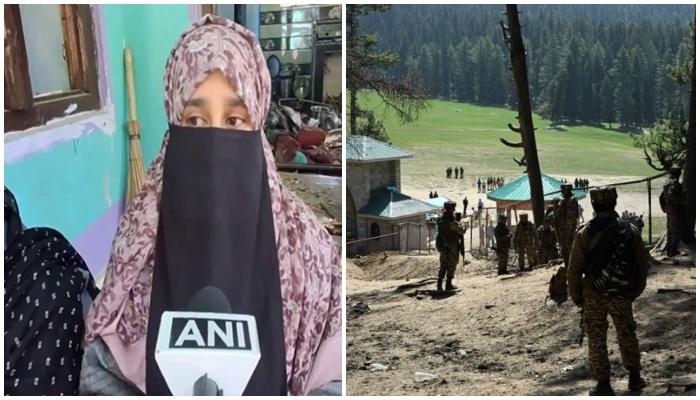
Disturbing details have emerged in the preliminary investigation in the Pahalgam terror attack in which 26 Hindu tourists were shot dead in a cold-blooded manner by Jihadi terrorists. A joint investigation team of Army officers, J&K Police, and members of the J&K administration that conducted the first examination of the bodies of the victims reportedly found that the trousers of around 20 victims were unzipped or pulled down. The revelation confirms that the terrorists first confirmed the religion of the victims by checking if they are circumcised or not before killing them.
The finding also corroborates the eyewitnesses’ testimonies, where they said that terrorists asked the victims their names and religion. The terrorists asked them to recite the Kalma (a declaration of faith central to Islam) to make sure that only Hindus were targeted. Terrorists also checked the IDs of the victims and pulled down their trousers to check if they were circumcised. Islam mandates circumcision as a covenant with God or a sign of purification. After the attack, the bodies of the victims were taken to the Anantnag District Hospital, where the staff received them as they were after being shot.
As per reports, the joint investigation team is interrogating around 70 overground workers and terror sympathisers suspected of colluding with the terrorists. “Initially, the probe team rounded up 1500 overground workers to examine their possible role. These have been narrowed down to 70 overground workers strongly suspected to have helped the Pahalgam attack team with logistics. We hope to narrow the search further and get to the real culprits soon,” a J&K administration official was quoted as saying.
Eyewitnesses recalled the horror
Debasish Bhattacharyya, an Associate Professor at Assam University, who was among the fortunate few who survived the terrorist attack, revealed that he was spared by the terrorists because he was able to recite the Kalima. Asavari Jagdale, the daughter of a 54-year-old businessman from Pune, who was also murdered by the assailants, described how they confronted her father, Santosh Jagdale and demanded that he recite an Islamic verse. They shot him in the head, behind the ear and then in the back after he was unable to comply. 41-year-old Bharat Bhushan, a tech professional from Bengaluru, was also brutally gunned down in front of his wife and three-year-old son by the terrorists after confirming his Hindu identity.
Two foreigners and two locals were among the 26 people killed in the attack. The Resistance Front (TRF), an offshoot of the Pakistan-based Lashkar-e-Taiba (LeT) terrorist organisation claimed responsibility for the terror attack.
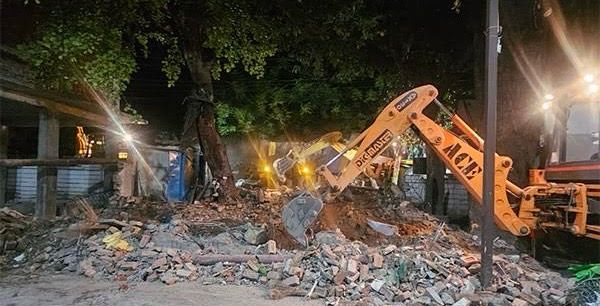
A mazar constructed illegally on government land at Doon Hospital in Dehradun was demolished following a complaint lodged on the CM portal.
The administration investigated the complaint lodged on the CM portal regarding an illegal mazar. Following the investigation, the structure was demolished using a bulldozer late at night.
The complaint was filed by Pankaj Gupta, a resident of Rishikesh, who raised concerns about the illegal construction at Doon Hospital through the CM Helpline portal. In response, the Dehradun District Magistrate (DM) ordered an inquiry into the matter. The investigation involved examining land records and documents from multiple departments, including the Revenue Department, Municipal Corporation, Public Works Department (PWD), and Doon Hospital Administration, to confirm whether the structure was indeed built on government land, whether it had the necessary permissions, and its overall legal status.
The investigation focused on determining whether the mazar was built on government land, whether it was constructed with permission, and its legal status. A report was sought from the hospital administration, and a notice was issued to the Khadim (caretaker) of the mazar.
The issue had sparked debate among Dehradun residents, with some referring to it as a “Fakir” or other types of religious structure. It was also alleged that some individuals were using the structure for business purposes.
The hospital administration had earlier written to the government, requesting the removal of the mazar due to its interference. In response, the administration took action by sealing the hospital road late at night and deploying a police force to assist with the demolition.
A combined team from the Municipal Corporation, Public Works Department, Doon Hospital Administration, and District Administration carried out the demolition using a bulldozer. The demolition was carried out in compliance with legal guidelines, and the authorities have ensured that the area is cleared of the illegal structure.
(This news report is published from a syndicated feed. Except for the headline, the content has not been written or edited by OpIndia staff)
In a massive statewide crackdown, over 550 illegal immigrants from Bangladesh were detained in Ahmedabad and Surat for residing in India with forged documents, Gujarat police said on Saturday.
Deportation proceedings will follow once verification and interrogation are complete, said the official.
The coordinated operations were led by multiple law enforcement units, including the Special Operations Group (SOG), Crime Branch, Anti-Human Trafficking Unit (AHTU), Prevention of Crime Branch (PCB), and local police teams. Officials confirmed that all detained individuals were in India without valid documentation and had used fake papers to establish residence.
In Surat, an overnight combing operation carried out jointly by SOG, DCB, AHTU, PCB, and local police resulted in the detention of more than 100 Bangladeshi nationals. “They had entered India illegally and were living in Surat with forged documents. After the investigation, they will be deported to Bangladesh,” said Rajdeep Singh Nakum, Deputy Commissioner of Police, Special Operations Group.
A simultaneous operation was carried out in Ahmedabad around 3 am on Saturday. Teams from the Crime Branch, SOG, Economic Offences Wing (EOW), Zone 6, and Headquarters detained over 450 individuals suspected to be illegal immigrants. DCP Crime Branch Ajit Rajian confirmed that more than 400 people were taken into custody during the early morning sweep.
Joint Commissioner of Police, Crime Branch, Ahmedabad, Sharad Singhal, stated that these actions were taken in compliance with orders from the Home Minister, the Commissioner of Police, and the Director General of Police.
“HM, CP and DGP had directed us that illegal immigrants must be held. The Crime Branch registered two FIRS from April 2024 till now. 127 illegal Bangladeshis were caught and 77 were deported,” he said.
Singhal noted that the latest raid in Ahmedabad was based on intelligence reports indicating a significant number of undocumented immigrants in the Chandola area.
“We had inputs that a huge number of Bangladeshis are residing in the Chandola area… Early this morning, the police carried out a combing operation. We have detained 457 people so far… Deportation will be processed after interrogation…,” he added.
A Christian missionary was reportedly involved in the religious conversion of 50 women, children and men in Motipura village of Kota district, Rajasthan. Allegations have also surfaced regarding his remarks about discarding images of Hindu deities in a drain. The police have initiated legal proceedings against the missionary John Matthew, for offending religious sentiments, making threats and enticing conversions through incentives.
He is accused of luring impoverished members of the Bhil community with promises of trips abroad, house construction and financial assistance. Two members of the Bhil community reported the incident to the police. On the night of 21st April, members of the Bajrang Dal interceded a Christian prayer meeting.
According to Yogesh Renwal, the state coordinator of the organisation, “We received information that Christian missionary Joy Matthew was converting Hindus with some foreign nationals. When we arrived, we found the missionary with his wife and three children. He had gathered 50 individuals from the Bhil community and was making objectionable comments about Hindu deities. This group included men, women and children from the Bhil community.”
Members of the Bhil community stated that a Christian missionary named Joy Matthew lives in their village. He owns a large plot there where he has built a rest house. The missionary promises to provide people with rations and money. He has even constructed houses for several individuals. Joy Matthew asks people to throw pictures of Hindu gods and goddesses into the drain.
Yogesh Renwal additionally stated that Joy Matthew was facilitating Christian prayers and upon converting individuals, was instructing them to wear crosses. This activity was met with opposition from the Hindu activists who called for an immediate cessation of the prayer gathering, resulting in a chaos.
Police informed that among the foreign nationals were Joy Matthew’s daughter, son-in-law, and grandchildren, who had come to Kota from the United States on a tourist visa. The police have taken Matthew and his son-in-law into custody. A case has been registered against the son-in-law, Collin, under the Foreigners Act and an investigation is underway. Meanwhile, a police force has been deployed in the village to maintain peace and order.
The Centre on Friday (25th April) filed its preliminary affidavit before the Supreme Court seeking the dismissal of petitions challenging the Waqf (Amendment) Act, 2025. In its affidavit, filed by Shersha C Saidik Mohiddin, Joint Secretary, the Ministry of Minority Affairs, the Centre submitted that there is a presumption of constitutionality of a law made by the Parliament and therefore, without prejudice to the Supreme Court’s power to examine the constitutionality of the law, a stay on its provisions at such a preliminary stage violates the principle of balance of powers.
“There is a presumption of constitutionality that applies to laws made by Parliament, and an interim stay is against the principle of the balance of powers. The law has been made on the recommendations of a Joint Parliamentary Committee… followed by an extensive debate in both Houses of Parliament,” the Centre argued as the Supreme Court hinted at staying certain contentious provisions of the Act last week. Justifying the regulation of the waqf properties, the Centre pointed out that after 2013 over 20 lakh hectare of land was added in waqf land.
Refuting allegations, the Centre said that the legislation does not violate fundamental rights of the Muslims and that the amendments are aimed at regulating the secular aspects regarding the management of the properties. It added that the Act falls within the ambit of the permissible regulatory power of the State. “The Waqf (Amendment) Act, 2025 very clearly limits itself to secular dimensions (like record management, procedural reforms, and administrative structure) and not any matters of ritual, prayer, or fundamental Islamic obligations. It is submitted that therefore the Act, by confining itself to non-essential practices, steers well clear of infringing the religious freedoms guaranteed by the Constitution,” said the Centre.
False narrative regarding Waqf-by-user
Defending the elimination of waqf-by-user, the Centre argued that it does not affect registered waqf lands. The Centre said that a false narrative was being created claiming that the elimination of waqf-by-user would impact the centuries old waqf lands which do not have specific deeds. It added that as per section 3(1)(r) of the Amendment Act, a registered waqf land does not require to produce any document to get the recognition for existing ‘waqf-by-user’ lands.
The Centre highlighted that the requirement for the registration of waqf lands was not a new addition and that it existed for hundreds of years since the enactment of the Mussalman Wakf Act, 1923 and that it also found a place in the Waqf Act of 1954 and 1995.
“It is submitted that despite the existence of the concept of ‘waqf by user’, the requirement of registration or self-declarations before the Court were made mandatory in order to ensure that the regulatory provisions of the enactments achieve the intended objectives. It is submitted that therefore, there has been a clear and mandatory legislative regime, which has sought to enforce and implement registration requirements on all kinds of waqfs since at least 1923,”the Centre said.
Non-Muslims in the Central Waqf Council and the State Waqf Boards
Addressing the objections against the inclusion of non-Muslims in the Central Waqf Council and State Waqf Boards, the Centre said that the Waqf Council is merely an advisory body and it does not deal with any specific land. And, the State Board is a secular regulatory body. The Centre quoted judgments wherein Waqf Board has been declared as a secular body not representative of Muslims.
Highlighting that the maximum number of non-Muslims in the Central Council has been limited to 4 out of 22 and in State Boards to 3 out of 11, the Centre asserted that the inclusion of non-Muslims in the Councils and Boards will not render the Muslims a minority in these bodies. Responding to the court’s query about whether Muslims could be included in the Hindu boards, the Centre distinguished between the two. The Centre said that Waqf is a wider and ever-evolving concept when compared to religious endowments. It added that Hindu religious endowments do not exist in all states, and in many states, they are dealt with as per the general laws applicable to trusts. Emphasising that the Waqf Boards often exercise jurisdiction over properties belonging to non-Muslims, the presence of non-Muslims in the Boards will balance the “constitutional equities on both sides.”
Empowering a Government officer to decide on encroachment upon Government land by Waqf
Regarding the provisions empowering government officers to decide whether a waqf land is encroaching on a government land, the Centre presented many examples where Government lands and private lands were declared as waqf properties. The Centre that since Government lands are held in public trust, the legislature can devise a mechanism to protect them and to adjudicate the disputes relating to them.
“The rationale for these provisions arises from repeated and documented instances across the country where Waqf Boards had claimed title over government land, public utilities, and protected monuments without deed, survey, or adjudication—relying solely on the Board’s unilateral records. It is submitted that the said claims included, inter alia, waqf claims over Collector’s offices, government schools, ASI-protected heritage sites, and land vested in State or municipal authorities,” the Centre said.
Trusts created by Muslims not to be governed by the Waqf Act
Explaining the proviso to section 2A of the Act, declares that trusts created by Muslim persons will not be governed by Waqf Act, the Centre said that this principle was laid down by the Supreme Court itself in several judgments. It added that it is a mere enabling provision which makes the option of creating a trust as per the general framework available to a Muslim.
Responding to the Court’s question whether proviso giving overriding effect over judgments, the Centre said that it was merely a clarificatory provision.
“The Amendment Act reaffirms that identification, classification, and regulation of waqf property must be subject to legal standards and judicial oversight. It is submitted that the legislative design of the Waqf (Amendment) Act, 2025 ensures that no person is denied access to courts, and that the decisions affecting property rights, religious freedom, and public charity are made within the bounds of fairness and legality. It is submitted that through these changes, the Amendment Act brings judicial accountability, transparency, and fairness, “ the Centre clarified.
In a massive achievement, the World Bank has lauded India for its success in lifting 17 crore or 171 million people out of extreme poverty. The World Bank noted that India has not only pulled out crores of people from extreme poverty, but its employment growth has also outpaced the working-age population.
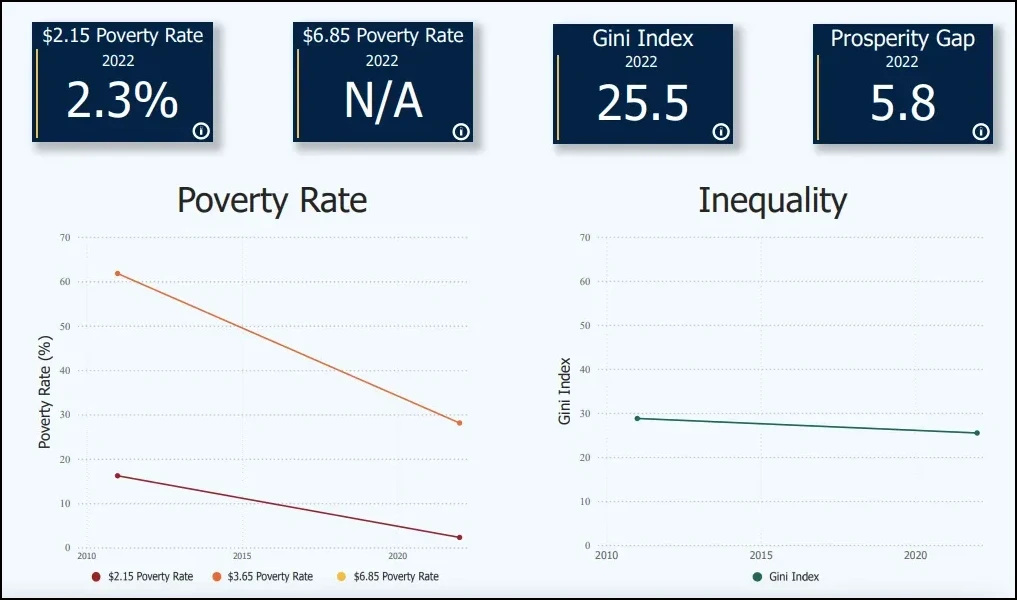
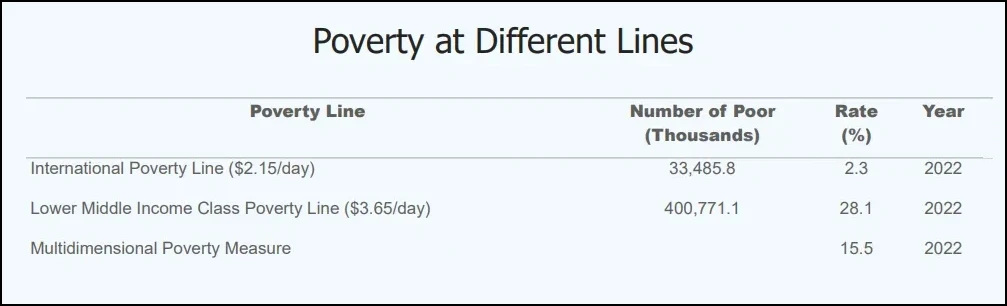
The World Bank, in its reportPoverty and Equity Brief for India, released in April 2025, revealed that Extreme poverty (living on less than USD 2.15 per day) fell from 16.2 per cent in 2011-12 to 2.3 per cent in 2022-23.
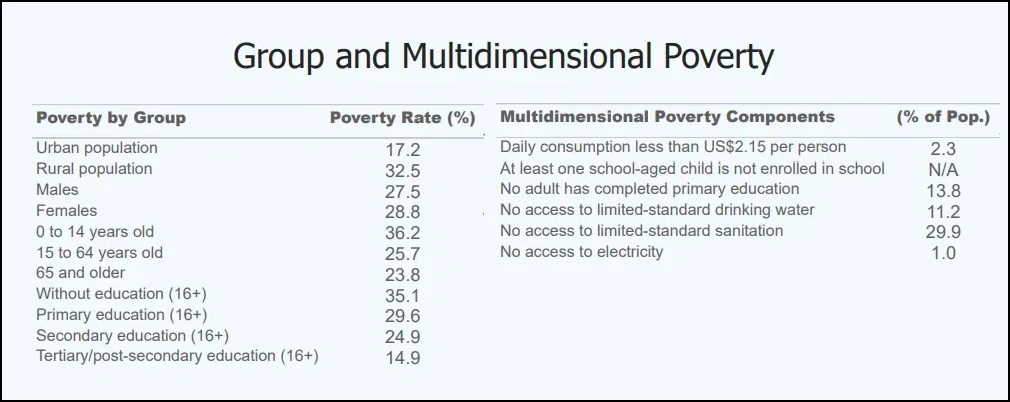
This decline was especially pronounced in rural areas, where the extreme poverty line slumped from 18.4 percent to 2.8 percent. Meanwhile, in urban areas, the extreme poverty line dropped from 10.7 percent to a remarkable 1.1 percent. With this, the gap between rural-urban extreme poverty line registered a 16 percent annual decline, from 7.7 to 1.7 percent.
“Rural extreme poverty dropped from 18.4 percent to 2.8 percent, and urban from 10.7 percent to 1.1 percent, narrowing the rural-urban gap from 7.7 to 1.7 percentage points–a 16 percent annual decline,” the World Bank report says.
Interestingly, India also transitioned into the lower-middle-income category.
The poverty at $3.65 per day Lower Middle Income Countries (LMIC) line fell from 61.8 per cent to 28.1 per cent, lifting 378 million people out of poverty.
“Rural poverty dropped from 69 per cent to 32.5 per cent, and urban poverty from 43.5 per cent to 17.2 per cent, reducing the rural-urban gap from 25 to 15 percentage points with a 7 per cent annual decline,” the World Bank report reads.
Notably, the five most populous states of India, Uttar Pradesh, Maharashtra, Bihar, West Bengal, and Madhya Pradesh, accounted for 65 per cent of the country’s extreme poor in 2011-12 and contributed to two-thirds of the overall decline in extreme poverty by 2022-23. However, these states still accounted for 54 per cent of India’s extremely poor (2022-23) and 51 per cent of the multi-dimensionally poor (2019-21).
As measured by the multidimensional poverty index (MPI), India’s nonmonetary poverty declined from 53.8 per cent in 2005-06 to 16.4 per cent by 2019-21. The World Bank’s Multidimensional Poverty Measure is at 15.5 per cent in 2022-23.
All infographics via World Bank
Employment growth has outpaced the working-age population since 2021-22
As per the World Bank findings, the employment growth has outpaced the working-age population since 2021-22. Employment rates, especially among women, are rising, and urban unemployment fell to 6.6 per cent in Q1 2024-25, the lowest since 2017-18.
“Recent data indicates a shift of male workers from rural to urban areas for the first time since 2018-19, while rural female employment in agriculture has grown. Challenges persist: youth unemployment is 13.3 percent, increasing to 29 per cent among tertiary education graduates. Only 23 per cent of non-farm paid jobs are formal, and most agricultural employment remains informal,” the World Bank reported.
The multilateral agency also noted that self-employment is rising, especially among rural workers and women in India. It, however, pointed out that despite a female employment rate of 31 per cent, gender disparities remain, with 234 million more men in paid work.
Incidentally, the World Bank’s findings closely align with the Modi government’s estimates of poverty reduction in the country. The Household Consumption Expenditure Surveys (HCES) for 2022-23 and 2023-24, gives insight into the dramatic drop in extreme poverty in recent years.
The findings reveal extreme poverty, as measured by the $1.90 PPP international poverty line, has declined to below 1 per cent in 2023-24. At the $3.65 PPP poverty line, poverty has decreased from 52% in 2011-12 to just 15.1% in 2023-24. From 51.9 per cent in 2011-12 to 14.9 per cent in 2023-24 the poverty headcount ratio (HCR) at the lower middle-income benchmark of $3.20 PPP has dropped dramatically.
Meanwhile, an SBI report supported by government data showed that India’s poverty rate has dropped below 5%, with extreme poverty nearly eradicated. The data showed that rural poverty decreased to 4.86% in FY24, registering a sharp fall from 7.2% in FY23 and 25.7% in FY12. Similarly, urban poverty also recorded a reduction, falling to 4.09% in FY24, down from 4.6% in FY23 and 13.7% in FY12.
Earlier, Prime Minister Narendra Modi had said that around 25 crore people have been lifted from poverty in the last decade. Addressing the Lok Sabha in February this year, PM Modi said, “In the past 10 years, people gave us the opportunity to serve them, and 25 crore countrymen defeated poverty and came out of it, which has been stated again and again by various studies.”
India’s poverty reduction story has been full of challenges, however, with economic growth, urbanisation, and policy interventions, the country has achieved great success in reducing poverty. While India has a way to go, lifting 17 crore people from extreme poverty in over a decade is no small feat, rather, it demonstrates India’s ability to harness economic growth, employment opportunities, agricultural reforms, industrialisation, financial inclusion and effectively implement policies targeted to uplift the weaker sections of the society. While there is scope for significant improvement, the rise in female workforce participation reflects India’s push towards a more inclusive progress, which is good for long term equity.
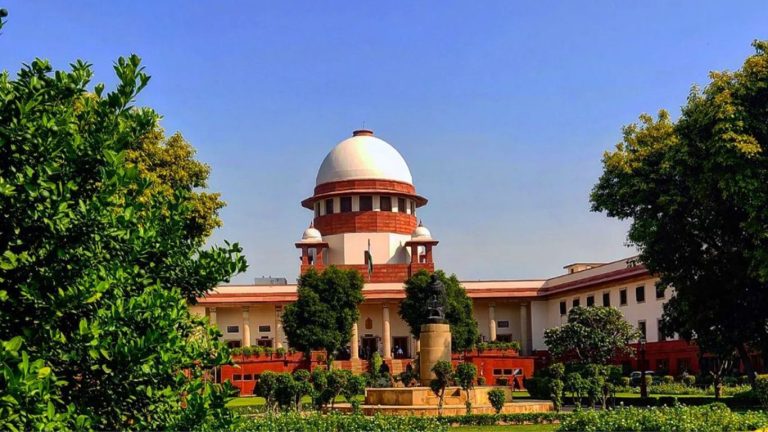
The Supreme Court on Thursday (24th April) passed a judgment in a 63-year-old legal battle between a landlord and a tenant wherein the latter remained on the property of the former for 63 years over the lease period.
A bench of Justices MM Sundresh and KV Viswanathan dismissed the tenant’s claim and allowed the appeal of the landlord for eviction of the tenant in Murlidhar Aggarwal (D) through LR Atul Kumar Aggarwal vs Mahendra Pratap Kakanthrough LRs and Ors by upholding the decision of the Prescribed Authority in 1983. The Court observed that the landlord genuinely needed his property for his disabled and unemployed son, who did not have any other property, and his income was not enough to support his family.
Granting relief to the landlord, the court observed that the eviction is not restricted to the genuine requirement of the landlord, the landlord’s family requirement would also qualify as a ‘bona fide requirement’ for the eviction of the tenant. “It is well settled that the bona fide requirement for occupation of the landlord has to be liberally construed and, as such, even the requirement of the family members would be covered,” the Supreme Court observed.
Notably, the tenant resisted the eviction, arguing that it would cause him hardship, but did not provide any proof to indicate that during the pendency of the legal battle that went on for over six decades, he made any attempt to seek an alternative accommodation and failed to get it. “In this case, nothing is on record to show that the tenant who has been in the premises for a total of 73 years with 63 years of them after the expiry of the lease, has made any attempt to seek any alternative accommodation and nothing is brought on record to show that he was unable to get one.”, the court said. “Nothing has been brought on record to show that the business of the appellant’s family is so vast as to neutralise their bona fide claim to evict the respondents from the suit property,” the court added.
What was the dispute
The judgment arises from a 63-year-old legal battle over a lease dated October 13, 1952, executed in favour of the tenant by the previous owner of the property. The duration of the lease was 10 years. In 1962, the property was purchased by the predecessor-in-interest of the landlord who unsuccessfully tried to get an eviction under the Uttar Pradesh (Temporary) Control of Rent and Eviction Act, 1947. Later on in 1975, fresh proceedings for eviction were initiated by the landlord under the Uttar Pradesh Urban Buildings (Regulation of Letting, Rent and Eviction) Act 1972, citing bona fide requirement.
On December 20, 1983, the Prescribed Authority allowed the eviction application of the landlord after observing that he genuinely required the premises to start a cinema business, as he did not have any substantial income. The decision of the Prescribed Authority was overturned by the Appellate Authority, and the High Court also upheld the decision of the Appellate Authority. The case that came up before the Supreme Court which granted relief to the tenant.
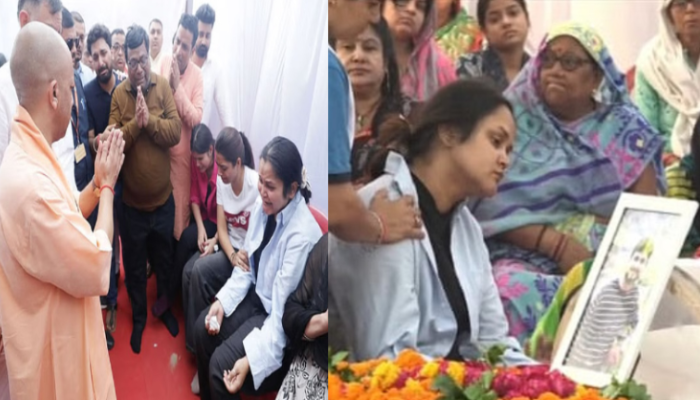
The Pahalagam terror attack claimed the lives of 26 Hindus who went to Kashmiri as tourists. Shubham Dwivedi’s family members brought his body to Kanpur after he also passed away in the assault. Yogi Adityanath, the chief minister of Uttar Pradesh, was also present to comfort his wife grieving Aishanya and other family members.
Her patience snapped when she met the chief minister and sobbed as she narrated the horrible ordeal to him. She also revealed a few other things that led to speculation that some local sleeper cells might have been involved in the Pahalgam terrorist attack.
Aishnya revealed that she and her spouse were horseback riding, however, they had no intention of venturing far and instructed the horseman not to take them too high, reported Amar Ujala. Aishnya mentioned that they were fatigued and preferred not to move any further. Nevertheless, the horseman deemed it unnecessary to stop and stated that they must continue until they reach the top. Shubham told him to take the entire amount but taken them down from there. However, he disregarded the request.
पहलगाम में जब आतंकी हिंदू पर्यटकों को चुन-चुनकर मार रहे थे तब जम्मू-कश्मीर पुलिस के 3 सिपाही वहीं मौजूद थे और आराम से तमाशा देखते रहे। लोगों ने कहा कि कम से कम आर्मी कैंप तक ही ले चलो फिर भी उन्होंने कुछ नहीं किया। जहां हमला हुआ वहां तक बहुत से पर्यटक जाना नहीं चाहते थे। पर… pic.twitter.com/ZGaxd25LzV
Furthermore, the family informed CM Yogi that the tourists were being taken to the top of the hill by the pony owners and they were moving on their own accord. People ran here and there when the firing started. Three local police officers were spotted standing there at the time. However, they were of no assistance. No one assisted the victims despite cries for protection and to take them to the camp.
According to Shubham’s father, there were some persons asking about the residence of tourists, numbers and other details at the Pahalgam hotel where they were staying. It appeared from all of these factors that those individuals were doing a reconnaissance. CM Yogi assured the media after meeting the family that terrorism will be destroyed from its roots. According to the information Shubham’s family provided, it seemed that certain locals, particularly those who offer ponies for hire, might have ties to terrorist groups. CM Yogi declated that they will receive a befitting reply.
However, another female visitor reported that a horseman kept requesting their personal information while discussing the Quran. According to her, he also inquired as to whether the group’s companions were Muslims or Hindus. She informed him that they were all Muslims after speculating about his motivations. He added that he would set up a tour without registration if they come to Amarnath right away. She displayed his photo and conveyed that he pulled out his phone while talking about thirty-five guns. OpIndia already reported how such a massive terror operation is not possible without local support.
The family of one of the terrorists allegedly involved in Pahalgam attack whose house was demolished on Friday morning, has called him a “Mujahideen”
The houses of two Lashkar-e-Taliba terrorists believed to be involved in the Pahalgam terror attack, were demolished today. One house of LeT terrorist in Tral, Pulwama and the other of a terrorist Adil Guree in Anantnag were demolished.
Speaking with ANI, the sister of the terrorist whose house was demolished in Tral, said, “My one brother is in jail, the other brother is a ‘Mujahideen’, and I also have two sisters. Yesterday, when I came here from my in-laws’ place, I did not find my parents and siblings at their home. Police had taken them all away.”
The sister said that the family is innocent and doesn’t know anything about their brother’s involvement.
“While I was here, the Security Forces came and asked me to move to a neighbour’s house. I saw a man wearing a camouflage uniform placing an object like a bomb on top of the house. After that, the house was demolished…We are innocent. They have destroyed our house. We don’t know anything and have nothing to do with it. It is the government’s responsibility. We don’t know anything. We have nothing to do with it.”
Meanwhile, the second house of the terrorist Adil Guree was also demolished in Anantag today.
Adil Guree, a resident of Guree village in Bijbehara block of Anantnag district of Jammu and Kashmir, is believed to have been involved in the Pahalgam attack that killed 26 people, including a Nepalese national, mostly tourists. He has been declared the most wanted, and the Anantnag Police have offered a reward of Rs 20 lakh for any specific information leading to his arrest. Two Pakistani nationals were also declared most wanted in the case,Adil had illegally travelled to Pakistan in 2018, where he reportedly received terror training before returning to Jammu and Kashmir last year.
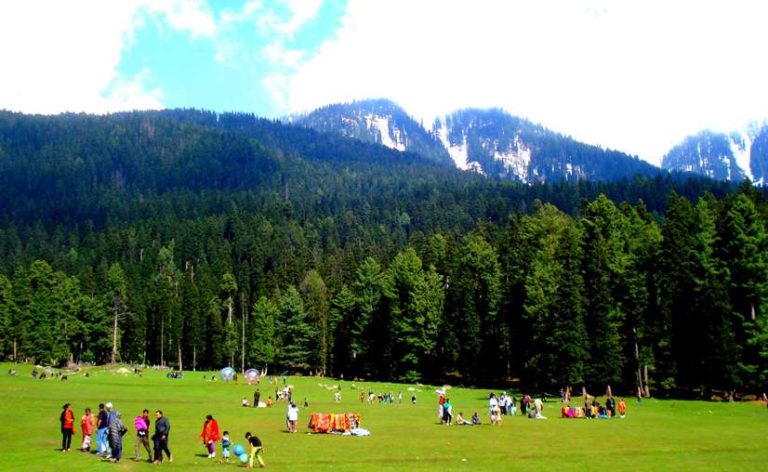
On April 22, Terrorists attacked tourists at Baisaran meadow in Pahalgam on April 22, killing 25 Indian nationals and one Nepali citizen while leaving several others injured.
(This news report is published from a syndicated feed. Except for the headline, the content has not been written or edited by OpIndia staff)
When horrid details of the Pahalgam massacre came out, most of us reeled in horror — not just at the loss of innocent lives, but also at the sheer brutality with which the terrorists singled out men, asked them to recite Kalma, forced them to strip to segregate non-Muslims and subsequently execute them in cold blood, even as their family members watched in utter horror the carnage underway.
But what unfolded a day later, on The New Indian Express in its recent opinion piece, was no less insidious—a thinly-veiled justification of terror by peddling an irresponsible and frankly absurd narrative that Pakistan’s attack on Indian civilians was somehow a “retaliation” to a train hijack by Baloch rebels in Quetta.
Source: NIE
Authored by Neena Gopal and titled “End of the Kashmiri summer: Is Pahalgam the payback for the Jaffar Express hijacking?”, the opinion column was a stunning illustration of practicing yellow journalism—facts and gravity of the matter taking a back seat as sensationalism and canards took precedence.
This isn’t journalism. It’s parroting Pakistan’s press releases.
What is even more alarming is that it was penned by an Indian author, a day after the ghastly terror attacked claimed the lives of 27 people. There seems to be no moral responsibility among the leftwing intelligentsia and their footsies to be rational and empathetic at a time when the nation was collectively mourning the loss of innocent lives. Yet, they carried on with their intellectually dishonest dissection of the tragedy—exploiting the attack to provide a cop out to Pakistan, and instead place the blame of the carnage at the feet of the Indian security apparatus, for purportedly orchestrating a train hijack in Pakistan, of course, with no evidence to support it.
Let’s call this out for what it is: a textbook case of legitimising state-sponsored terrorism against India by inventing false moral equivalencies. The article not only implicates India in a struggle that is inherently indigenous — the Baloch fight for freedom from Punjabi hegemony — but also subtly validates the Pakistani military’s long-standing, evidence-free accusations of Indian interference in its internal matters. It’s like handing your enemy ammunition and then pretending it’s an olive branch.
A fifth columnist doing Pakistan’s bidding: Deflecting attention from Pak COAS’ anti-Hindu bigotry
By weaving a causal thread between the Jaffar Express hijack in Balochistan and the massacre in Pahalgam, the writer inadvertently does what Pakistan’s Inter-Services Public Relations (ISPR) couldn’t have dreamed of achieving — provide an Indian byline to their propaganda. The suggestion that “Pahalgam was payback” is not just intellectually dishonest, it’s morally bankrupt.
Pakistan has always cried hoarse about Indian involvement in Balochistan, ever since Prime Minister Modi had the audacity to mention Balochistan in his Independence Day speech in 2016. But till date, it hasn’t presented a shred of credible evidence to the world. What it has done, however, is nurture terror factories in its backyard — from the Lashkar-e-Taiba to the Jaish-e-Mohammed — whose only export is jihad and whose only customer is terror in Kashmir.
Drawing a false equivalence between the Pahalgam massacre and the Jaffar Express hijacking not only distorts the moral clarity required in condemning terrorism, but also conveniently serves Pakistan’s agenda of deflection. By equating a brutal, targeted attack on innocent Hindu pilgrims in Kashmir—allegedly triggered by Pakistan Army Chief Gen. Asim Munir’s incendiary rhetoric—with a criminal hijacking incident, the narrative is diluted and accountability is blurred. Munir’s reference to Kashmir as Pakistan’s “jugular vein,” laced with sectarian undertones and anti-Hindu sentiment, has dangerously emboldened jihadist groups like Lashkar-e-Taiba.
Instead of confronting the consequences of state-sponsored Islamic terrorism, the opinion pieces helps Pakistan to muddy the waters, drawing baseless parallels to mask the direct ideological link between its military leadership’s provocative speeches and the bloodshed of innocent civilians.
Let’s be clear: Balochistan is not Kashmir
The comparison between Kashmir and Balochistan is laughably lazy, and dangerously misleading. Balochistan is a province under the jackboot of the Punjabi-dominated Pakistan Army. It is denied basic rights, its resources plundered, and its people “disappeared” in broad daylight. The Baloch struggle is not propped up by any foreign hand — it is a grassroots movement against a colonialist military that treats its citizens like chattel.
Kashmir, on the other hand, is a democratically governed territory, part of the Indian Union — with regular elections, courts, and constitutional protections. What it has suffered for decades is not a freedom movement, but an externally fuelled jihad that seeks to Islamise and balkanise India. There is no equivalence here — not morally, not politically, not historically.
So what if India did support the Baloch cause?
Even if, for the sake of argument, India has offered diplomatic or covert support to Baloch separatists (which New Delhi officially denies), why shouldn’t it? Pakistan has bled India for decades through proxy terror, proudly boasting of its “strategic depth” policy using non-state actors. From Kandahar to Kargil, from Parliament to Pulwama — India’s streets are red with the blood of its citizens because Rawalpindi’s generals have made it their life’s mission to “bleed India by a thousand cuts.”
Is it not within India’s strategic right to strike back, not with suicide bombers or madrassas, but with support to oppressed nationalities yearning for freedom? If the Pakistani establishment can’t bear the heat in its own backyard, maybe it should stop setting fires across the fence.
The Real danger: Undermining India’s global standing
Opinion pieces like the one in The New Indian Express may sell well to a bleeding-heart crowd eager to believe in moral symmetry, but in the international arena, they do tangible harm. They will be gleefully waved at the UN by Pakistani diplomats, used as “evidence” that India justifies terrorism and meddles in Pakistan. This is not just academic folly — it’s a strategic own goal.
At a time when India is painstakingly building global partnerships, deepening its ties with the Gulf, and tightening counter-terror coordination with the US, such pieces undermine its moral authority. They offer Rawalpindi a fig leaf to cover its crimes, and give the impression that India and Pakistan are mirror images — both sponsors of violence, both equally culpable. That’s not just wrong, it’s dangerous.
We must reject false narratives, Not reinforce them.
Terrorism, by its very nature, is never justified. But even more important is to understand what terrorism is. The Baloch rebels in Balochistan have been waging a fight against the repressive Pakistani rule for decades as part of their freedom struggle. To categorize it as “terrorism” akin to the unprovoked and wanton massacre witnessed in Pahalgam is to insult their years-long struggle and understate the tragedy that befell the victims of the Pahalgam terror attack. The notion that a targeted civilian massacre of Indian tourists was somehow provoked by a freedom struggle action against a tyrannical military personnel in another country is not just flawed — it is despicable.
What we need now is clarity, not intellectual dishonesty. Strength, not self-doubt. Strategic vision, not rhetorical vandalism.
To those trying to find balance where there is only brutality, here’s a simple reminder: the Pahalgam massacre wasn’t about Balochistan. It was about Pakistan’s desperation, its diminishing relevance, and its perennial addiction to terrorism as state policy. And it’s high time we stopped pretending otherwise.