Home Blog Page 4566

After Uyghurs, minority Muslim community Utsuls in Hainan Island faces religious persecution by the Communist government in China

Even as China is facing a lot of heat over its persecution of minority Uyghur Muslims in the Xinjiang province, another major allegation of human rights violation has surfaced against the country. While China continues to oppress Uyghur Muslims, Beijing has now shifted focus on another Muslim minority – the Utsuls of Hainan Island.

According to a report by The New York Times (NYT), the Chinese government has imposed new restrictions on the Utsuls residing in the Chinese city of Sanya to “erode the religious identity of even its smallest Muslim minorities”.

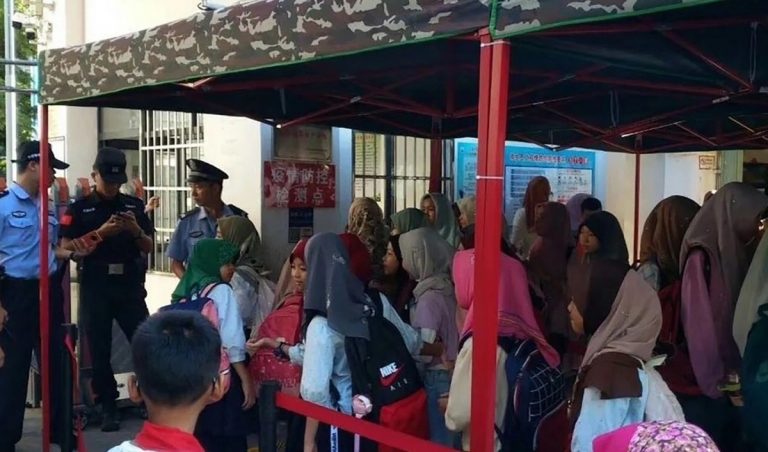
Utsuls, a Muslim community with less than 10,000 population in the Chinese city, are the latest to be targeted by the Chinese Communist Party’s (CCP) campaign against foreign influence and religions. The ethnic minority of Utsuls of Hainan Island in China faces increased surveillance and religious persecution similar to that of the Uyghur Muslim minority of Xinjiang.

The Utsuls are Sunni Muslims, believed to be descendants of the Cham, the long-distance fishermen and maritime traders of the Champa Kingdom, that ruled the country for centuries along Vietnam’s central and southern coasts. After fleeing the country in the 10th century due to continuous wars, Cham refugees reached Hainan, a tropical island the size of Maryland.

“The new restrictions in Sanya, a city on the resort island of Hainan, mark a reversal in government policy. Until several years ago, officials supported the Utsuls’ Islamic identity and their ties with Muslim countries, according to local religious leaders and residents, who spoke on condition of anonymity to avoid government retaliation… Their troubles show how Beijing is working to erode the religious identity of even its smallest Muslim minorities, in a push for a unified Chinese culture,” the NYT report stated.

Utsuls faces persecution, mosques demolished

The Utsuls maintained strong links with Southeast Asia and continued to practice Islam largely unfettered for a long time. With the coming of the Cultural Revolution of the late 1960s and early 1970s, the Chinese Army destroyed mosques in Utsul villages on Mao’s instructions. As China opened to the world in the early 1980s, the Utsuls began reviving their Islamic traditions.

However, the Communist Party of China (CCP) has used the same rationale to clampdown on religious minorities such as Utsuls just as it had justified the actions against Uyghurs citing “curbing of violent religious extremism”.

The imposing of restrictions over the Utsuls “reveals the real face of the Chinese Communist campaign against local communities,” said Ma Haiyun, an Islamic expert. “This is about trying to strengthen state control. It’s purely anti-Islam,” Haiyun added.

The report suggested that the Chinese government has repeatedly denied that it opposes Islam. However, under Xi Jinping, the party has torn down mosques, ancient shrines, Islamic domes, and minarets in northwestern and central China. The crackdown is mostly focused heavily on the Uyghurs, a Central Asian Muslim minority of 11 million in Xinjiang, many of whom have been held in mass detention camps and forced to renounce Islam.

Yusuf Liu, a Malaysian-Chinese writer who has studied the Utsuls, speaking to NYT, said that the minority group had been able to preserve a distinct identity because they were geographically isolated for centuries and held firm to their religious beliefs. He noted that the Utsuls were similar in many ways to the Malays.

“They share many of the same characteristics, including language, dress, history, blood ties and food,” Liu said.

No permission to use loud speakers, no Arabic designs in mosque construction

Further, the Chinese government has forced the local mosque leaders to remove loudspeakers that broadcast the call to prayer from the tops of minarets and place them on the ground. Recently, they have been asked to turn down the volume as well. The construction of a new mosque was also stopped in a dispute over its “Arabic” architectural elements. Most importantly, the city administration has barred children under 18 from studying Arabic.

However, the Utsuls claim that they want to learn Arabic not only to better understand Islamic texts but also to communicate with Arab tourists who came to their restaurants, hotels and mosques before the pandemic hit. Some residents have expressed anguish over the new restrictions, saying they called into question China’s promise to respect its 56 officially recognized ethnic groups.

“The mosques in the Middle East are like this. We want to build ours like that so they look like mosques and not just like houses,” he said, speaking on condition of anonymity because some residents had recently been briefly detained for criticizing the government.

In September last year, Utsul parents and students protested outside schools and government offices after the authorities had banning wearing of headscarves to class. The orders were relaxed after a few weeks.

In addition to the hijab ban, mosques must now have a member of the Chinese Communist Party sitting on their management committees. The restaurants are not allowed to use any Arabic words, such as “Halal”.
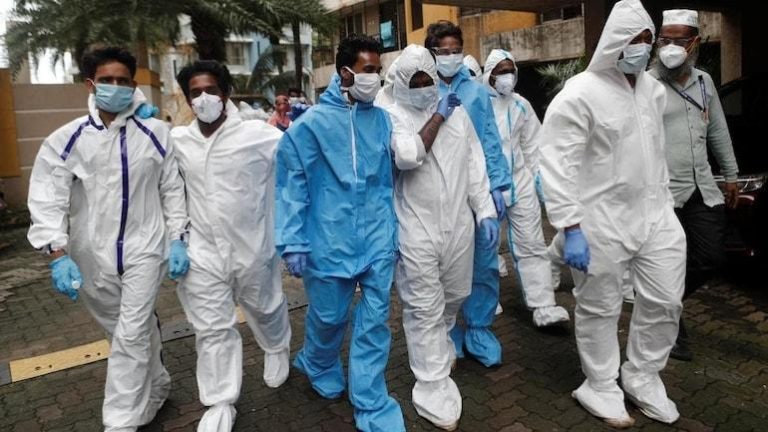
Maharashtra: Coronavirus cases see a sharp rise, govt warns of another lockdown

After briefly controlling the inexorable spread of the coronavirus outbreak, Maharashtra is once again witnessing an alarming rise in the daily number of coronavirus reported across the state.

The recent surge in the COVID-19 cases has forced the state government to reintroduce restrictions on the assembly and movement of people. Chief Minister Uddhav Thackeray even warned that the state government could reimpose the lockdown if it is deemed necessary to blunt this latest wave of coronavirus cases.

“As of now Maharashtra and Kerala are the two states witnessing a steady rise in the number of cases. “Kerala and Maharashtra with 61,550 and 37,383 active cases respectively account for 72% of the total active cases in the country,” Union health secretary Rajesh Bhushan had stated recently.

For the first time since mid-January, Maharashtra reported about 3,000 new coronavirus cases every day of the last week. On Sunday itself, Maharashtra reported 4,092 new coronavirus cases. The new cases in the second week of February were at least 14 per cent more than the first. In the week ending Sunday(February 14), 20,207 cases were registered across the state., compared to 17,672 in the week(February 1-7) before that and about 17,293 cases were reported in the week(January 25-31) prior to that.

Mumbai mayor Kishori Pednekar issued a lockdown caution on February 16 saying that a lockdown might have to be reintroduced in the city if people continue to flout basic COVID-19 guidelines.

“It’s a matter of concern. Most people travelling in trains don’t wear masks. People must take precautions else we’ll head towards another lockdown. Whether a lockdown will be implemented again is in the hands of people,” Pednekar said.

Mumbai, Pune, Nagpur, Thane and Amravati emerge as hotspots of the second wave of coronavirus

Mumbai and its surrounding region were amongst the worst-affected by the first wave of the coronavirus pandemic when more than 3.14 lakh Covid-19 cases were reported. This number included around 2.96 lakh recoveries and 11,420 deaths.

Infection is steadily on the rise in Mumbai and Pune, another metropolitan city that reported the highest number of coronavirus cases in the country. The sharp rise in COVID-19 cases in Pimpri Chinchwad, an exurb of Pune, has forced the local authorities to convene a meeting to deliberate on measures to be taken to curb the spread.

Along with Mumbai and Pune, the Vidarbha region has contributed the maximum to the new surge. Almost 60 per cent of the total coronavirus infections in the second week of February were reported from Mumbai, Pune and Nagpur, Thane and Amravati.

In Maharashtra, Amravati and Nagpur have emerged as the most potent coronavirus hotspots, just behind Pune. While 3,228 cases were reported in Pune in the second week of February, Nagpur racked up 2,628 cases while Amravati registered 2,420 cases. The number of cases registered in Mumbai during this period was 2,195.

On February 16, Maharashtra reported 3,663 COVID-19 cases. The areas under the Municipal Corporation of Greater Mumbai registered 461 new cases. As per data from BMC, the testing number have remained nearly same as earlier, suggesting that the rate of infection have increased dramatically.

Deputy CM Ajit Pawar warns of “harsh decisions” in the wake of surging coronavirus cases

Deputy chief minister Ajit Pawar has expressed alarm over the rising number of coronavirus infection and warned people to be prepared for some “harsh decision”. Pawar was dismayed with the growing tally of coronavirus caseloads and attributed the surge to the carelessness of people, who he claimed are not following the COVID-19 guidelines.

Pawar, who also holds Finance ministry, was in Aurangabad to chair a review meeting of eight districts under the Marathwada region.

“I have come across ((reports that) people are not following the COVID-19 guidelines which are aimed at checking the spread of the infection. If the situation worsens, we may need to pay a heavy cost for this carelessness. The number (of new cases in the state) is alarming. We have seen that lockdown was imposed in many parts of the world again in view of the second wave of the pandemic,” he said.

Priyanka Gandhi Vadra claims a sugarcane farmer in UP has not received payment, the farmer comes forward to fact-check her

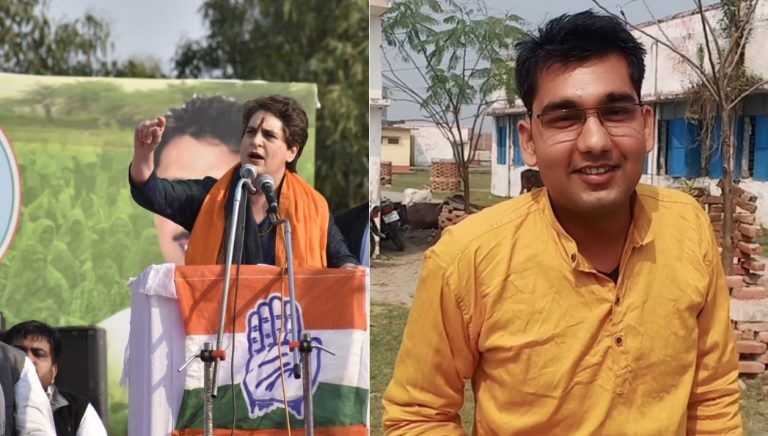
Priyanka Gandhi Vadra took to Twitter today in order to denounce and condemn the Central Government for apparent non-payment of outstanding dues to sugarcane farmers in Lakhimpur Kheri. In her tweet, Mrs. Vadra took note of a sugarcane farmer named Alok Mishra and declared that he hasn’t been paid his outstanding dues. In the tweet quoting a report by Gaon Connection, Mrs. Vadra clearly stated that Alok Mishra has an outstanding payment of Rs. 6 lakhs due to him.

However, the story took an interesting turn when Rubika Liyaquat, TV news host for ABP News, reported that the sugarcane farmer Alok Mishra himself has an issue with Mrs. Vadra’s tweet. After finding out about his reference being used by Priyanka Gandhi Vadra in order to score political points, Alok Mishra made it perfectly clear that he has received his payment dues from the sugar mill for last year i.e. 2020. In a criticism of Mrs. Vadra, Alok Mishra said, “Priyanka ji has to do her politics, and she will do it. But she should’ve at least seen the entire news before speaking out.”

After the farmer set the record straight on Mrs. Vadra’s unfounded tweet, the official Twitter account of INC Uttar Pradesh mobilized on Twitter in order to shield her. In a now-deleted tweet, the INC Uttar Pradesh account accused Rubika Liyaquat of mischaracterizing Mrs. Vadra’s initial tweet, prompting a reply from the ABP journalist with the video of Alok Mishra himself castigating Priyanka Gandhi Vadra. This pressured the official INC Uttar Pradesh account to delete its tweet accusing the journalist of any malpractice.

In the Gaon Connection article itself which Mrs. Vadra had cited, Alok Mishra is quoted as saying, “Last year whatever my outstanding dues were, were paid this year by the Khamaria Sugar Mill”. Therefore Alok Mishra’s advice to Priyanka Gandhi Vadra of ‘reading the full news’ makes perfect sense. It is highly probable that this faux pass on the part of Mrs. Vadra was because either her or someone in her social media team just read the headline and the first paragraph from the Goan Connection article and went with it.

It is also notable that while the article by Gaon Connection states that Alok Mishra has received the payment from the sugar mill, the article still mentioned in the headline that he had due amount of Rs 6 lakh to be received.

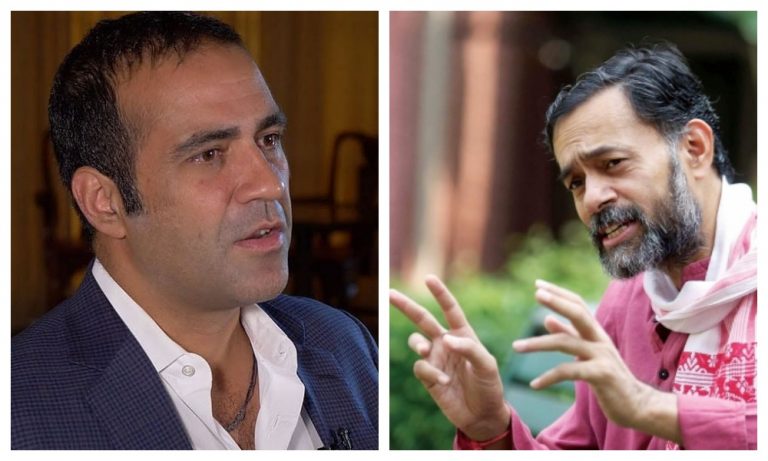
Aatish Taseer draws inspiration from Yogendra Yadav, ‘Aandolanjeevis’ now go international

British-American writer of Indian-Pakistan origin Aatish Taseer seems to have taken inspiration from Indian professional protestor Yogendra Yadav. In a tweet today, Taseer said that he has voiced his opposition to the new Indian farm laws as he ‘comes from farming family’.

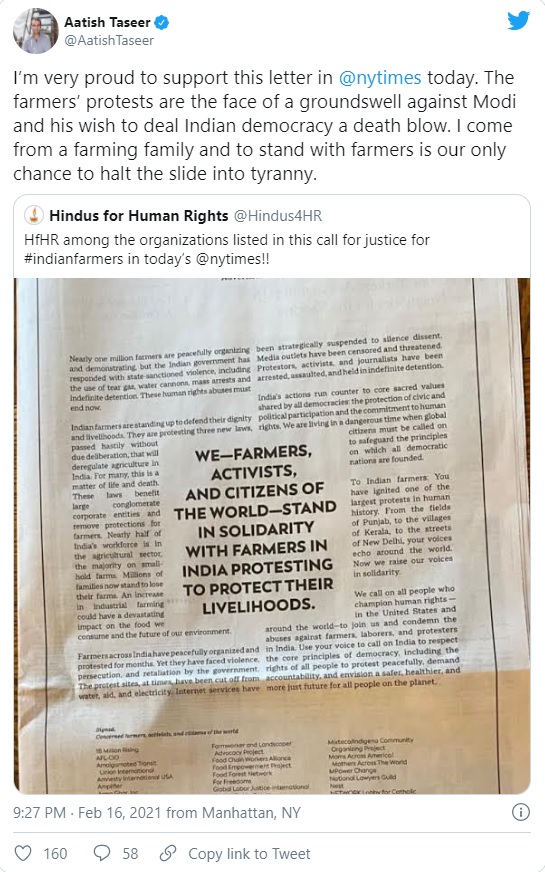
Aatish Taseer’s tweet on farm laws

Taking to Twitter on Tuesday, Aatish Taseer said that he was very proud to support an advertisement published in American newspaper New York Times that extended solidarity towards the ‘farmer’ protests. In his tweet, Aatish Taseer said that the alleged ‘farmer’ protests were the face of a groundswell against the Modi government and his ‘wish’ to deal Indian democracy a ‘death blow’.

Interestingly, in his tweet, Taseer also claimed that he came from a farming family and to stand with farmers is his only ‘chance to halt the slide into tyranny’.

This is shocking considering his father, Salman Taseer was a politician in Pakistan and his mother, Tavleen Singh, a columnist in India. Salman Taseer was assassinated in Pakistan for voicing against blasphemy laws.

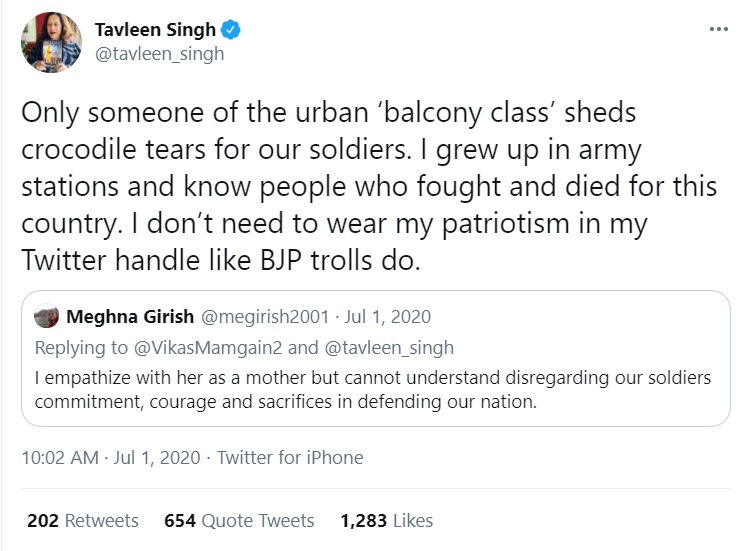
Salman Taseer’s father, Muhammad Din Taseer was a professor in pre-partition India and very little is know about his mother to conclude whether she was a farmer before she met Aatish Taseer’s grandfather. On his mother’s side, Tavleen has previously claimed that she grew up on Army stations, which would imply that either one or both of her parents were some how associated with the Indian Army.

Tavleen tweeting about having grown up on army stations

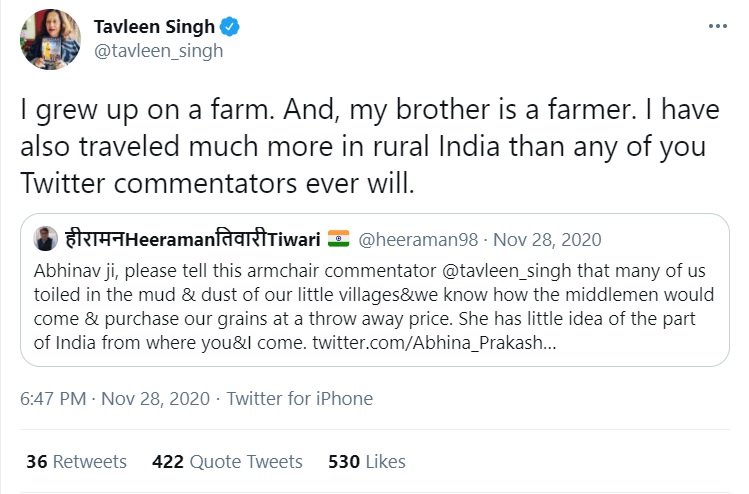
However, just few months later, during the farmers’ agitation, Tavleen Singh proclaimed that she had also grown up on farms and has ‘travelled in rural India’.

Tavleen on growing up on farms

Perhaps Taseer has taken up his mother’s ‘growing up on farms’ and ‘travelled in rural India’ as being from ‘farming family’

Aatish Taseer once dated Lady Gabriella Windsor, daughter of Prince and Princess Michael of Kent. Perhaps he mistook the lawns of the place for farming.

Despite tracing all his family ties, it is not clear whether Aatish Taseer really is a farmer or not. If indeed he is a farmer, he could dethrone Robert Vadra, the son-in-law of Congress President Sonia Gandhi as India’s true ‘farming’ icon.

As the support for the ‘farmer’ protests, both within the country and also the global assistance is dwindling gradually, some dubious organisations in the United States have put up an advertisement in the controversial left-wing ‘news’ outlet New York Times to express solidarity with the ‘farmer’ protests. Attached to the paid advertisement was an essay that was laden with lies and false propaganda, that claimed that Indian government was carrying out brutal ‘persecution’ against the ‘peaceful’ farmers.

It is rather funny that Aatish Taseer is now trying to be a free trial version of multi-faceted far-left ‘protestor’ Yogendra Yadav’. Except, he has now taken the game international.

Crackdown against Islamic extremism: French parliament passes the anti-radicalisation bill in lower house

0

In a major shot-in-the-arm for French President Emmanuel Macron, who had vowed to act against rising extremism in the country, the French legislators in the lower house of the parliament on Tuesday overwhelmingly supported in favour of a bill that would strengthen the supervision of mosques, schools and sports clubs as a measure to guard against radical Islam and to ensure respect for French values.

The voting in the lower house was the first impediment for the bill after two weeks of intense debate that went into its formulation. The bill was passed with an overwhelming majority of 347 as opposed to 151, with 65 abstentions.

The draft bill was introduced by President Macron last year after a series of attacks by radical Islamists convulsed the country. Titled “Supporting respect for the principles of the Republic,” the legislation intends to protect French values, including secularism and harmony.

The bill reportedly covers broad aspects of French life that have been fiercely contested by some purist Muslims, legislators and others who are fearful of state’s intrusion on essential freedoms and its cornering of the country’s number 2 religion—Islam. However, the bill whizzed through the lower house of the parliament, where President Emmanuel Macron’s centrist party enjoys a majority, without facing any sizeable resistance.

The legislation was passed with an urgency, especially in the aftermath of the horrifying beheading of a teacher in October followed by a lethal attack on a basilica in Nice. The bill, known as Art. 18 is named as “Paty Law” after the slain teacher Samuel Paty, who was decapitated outside his school west of Paris for reproducing the caricatures of Prophet Muhammad printed in the weekly satire magazine ‘Charlie Hebdo’.

The bill will empower law enforcement officials to swiftly arrest a person for spreading hate online. The bill will enable agencies to charge a person with online hate speech law, which will be punishable by up to three years of imprisonment and a fine of 45,000 euros. The bill will ban the wearing of hijab in private and public offices. It is notable here that the bill mentions neither Muslims nor Islam by name.

As per the legislation, it is criminal to endanger the life of a fellow citizen by providing details of their whereabouts and their private life. Paty was killed after information about was made available through a video. The supporters of the bill have touted the legislation as a solution to counter the growing fundamentalism in the country that has subverted the French values, most notably the foundational French values of secularism and gender equality.

The bill is referred to as “separatism” bill, a term used by Macron to characterise radicals who are seeking to create a parallel society in France. According to people privy to the details of the bill, top representatives of all religions, including the government’s leading Muslim conduit, the French Council for the Muslim Faith, also extended their support to the legislation.

The measures entailed in the Bill included banning virginity certificates, abolishing polygamy and putting an end to forced marriages, practices that are not formally tied to faith. Other important measures include ensuring that children attend regular school starting at the age of three, a means to target religious seminaries where children are usually brainwashed right from their tender age. Besides, training all public employees in secularism is also included in the provisions of the bill.

In yet another reference to the murdered French teacher Samuel Paty, the bill also proposes prison sentence to those who threaten a public employee. The bill makes it obligatory for the bosses of the public employee who has been threatened to take action if the employee agrees.

Furthermore, the bill introduces a mechanism to ensure that mosques and associations that run them are not operated under the influence of foreign entities or homegrown radical Islamists with an uncompromising interpretation of Islam. Associations are mandated to sign a charter of respect for French values and are liable to pay fines and penalties if they are found crossing the line.

While many supported the bill, some naysayers claim existing laws are enough to counter radicalisation

The bill serves to reinforce the French efforts to tackle Islamic extremism, especially security-based. The naysayers, however, lament that the measures introduced in the bill are already covered in the existent laws and insinuate that the bill might have a hidden agenda by a government that is trying to woo the right-wing voters ahead of the presidential elections that are slated to take place next year.

Ahead of Tuesday’s vote, Interior Minister Gerald Darmanin, who has been the main sponsor of the bill, accused the opposition leader Marine Le Pen of being “soft” on radical Islam and said that she needed to take vitamins. The comment was made to highlight that the ruling party was more severe than the opposition parties in dealing with radical Islamists. However, Pen slammed the bill as too weak and offered what she called her own, tougher counter-proposal.

The head of the Foundation for Islam of France, Ghaleb Bencheikh, voiced support for the bill, stating that though the bill was unjust, it was necessary to fight the menace of radicalisation.

Rahul Gandhi promises Union Ministry of Fisheries which Modi Govt already delivered in 2019. Here is what happened

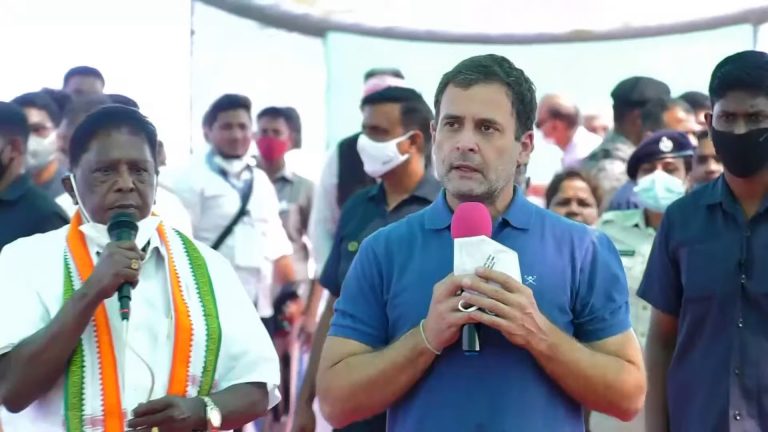
Former Congress president and four-time MP Rahul Gandhi displayed a shocking ignorance about the government of India, when he claimed that the union government does not have a ministry for fisheries.

Rahul Gandhi made this claim on Wednesday while addressing fishermen in Puducherry, where he referred to them as ‘farmers of sea’ and promised a ‘ministry of fisheries’.

He said that he was discussing the farm bills with fishermen folks in Puducherry because he considers as farmers of the sea. He then asked, if ‘farmers of land’ can have a ministry in Delhi, why ‘farmers of sea’ don’t have the same.

If only Rahul Gandhi, who was the President of Congress back then, would have paid attention when Modi government came to power for the second time he would have known that a separate Ministry of Fisheries was carved out in 2019. Presenting the Union Budget 2019-20, Finance Minister Nirmala Sitharaman said, “fishing and fishermen communities are closely aligned with farming and are crucial to rural India,” and allocated Rs 3,737 crore for the newly carved out Ministry of Fisheries, Animal Husbandry and Dairying.

Giriraj Singh is currently the Union Minister in charge of Fisheries, Animal Husbandry and Dairying.

After the comments of Rahul Gandhi went viral on social media, the departmental minister Giriraj Singh used the opportunity to take a jibe at him. He posted a tweet in Italian, which translates to, “Dear Raul (@RahulGandhi ), There is no separate Ministry of Fisheries in Italy. It comes under the Ministry of Agricultural and Forestry Policies.” The minister also included the link to the website of the said ministry in Italy.

Following Rahul Gandhi’s gaffe, netizens wondered if he makes these goof-ups on his own or whether he has hired a team to help him.

Netizens were also amused to see how Rahul Gandhi never fails to entertain us.

Perhaps it should have been named ‘Ministry of Sea Farmers’ to avoid the confusion in Rahul Gandhi’s beautiful mind.

USA: Republican Congressman tables resolution urging the US to boycott 2022 Winter Olympics in Beijing

0

On February 15, Republican Representative Michael Waltz introduced a resolution urging the United States to boycott the scheduled Winter Olympic Games in Beijing. Waltz said that the US, in its good conscience, cannot send American athletes to celebrate an event hosted by ‘a brutal dictatorship’. He further warned that the Communist Party of China would gain from the event.

In the resolution, Waltz proposed that the United States Olympic Committee should propose to transfer the 2022 Winter Olympic Games to a site outside the People’s Republic of China. He further said that if the International Olympics Committee rejects the proposal, the United States Olympic Committee and the Olympic Committees of other countries should boycott the 2022 Olympic Games.

In the resolution, Waltz said considering the alleged heinous acts carried out by China Communist Party in the last one year alone should have disqualified them from hosting 2022 Winter Olympics. He further added, “The world cannot legitimize the CCP’s acts of genocide in Xinjiang, destruction of the democratic rights of Hong Kong, and dangerous suppression of the coronavirus outbreak in Wuhan that cost lives by sending delegations to Beijing.”

‘Allowing China to host the Olympics will be immoral, unethical and wrong’

The resolution further stated that the Olympic Games is a celebration of international culture, a festival of humanity and is intended to be independent of political, ideological and diplomatic disagreements. If China is allowed to host such an event while organized atrocities in the XUAR are ongoing; where the freedoms of Hong Kong’s citizens are being trampled; where the fundamental right to worship is brutally persecuted; and where evidence of Covid-19’s origin was allegedly intentionally hidden, it would be immoral, unethical and wrong.

Calls for ‘clean Olympics’

Earlier this week, a human rights activist, writing for a USA paper, had written that China does not deserve the honour of hosting the Winter Olympics. He had urged for clean Olympic Games and urged that the International Olympic Committee should consider changing the venue.

Recounting the innumerable atrocities the dictatorial regime of the Communist Party in China has committed over the years, Teng Biao, a Chinese human right activist, wrote that the world should at least this time, organize a “Clean Olympics” elsewhere.

“Since 1949, China’s Constitution has guaranteed basic freedoms. The regime has signed many international human rights documents to deflect foreign criticism. In 1997, Beijing promised no change in Hong Kong for 50 years”; however, all this has been just an eye-wash, claimed the activist.

Activists had called to shift Winter Olympics to October 2020

In October 2020, activists had compared upcoming Winter Olympics in China to the Olympics Germany hosted under the leadership of Adolf Hitler. Hashtag #MoveTheGames trended on Twitter with an aim to urge the organizers to move the venue for Winter Olympics 2022 out of China.

In October 2020, UK also announced that it might boycott Winter Olympics 2022 if more evidence makes it clear that there has been a gross violation of the Human Rights of Uyghur Muslims in China. The foreign secretary Dominic Raab has said, “Generally speaking, my instinct is to separate sport from diplomacy and politics, but there comes the point when it is not possible.”

Guwahati: Journalists Taufiquddin and Iqbal arrested for spreading photo of Himanta Biswa Sarma with his daughter with malicious claims

0

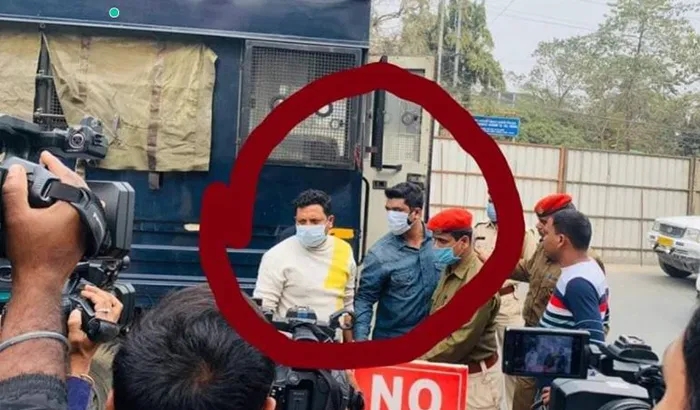
Assam police have arrested two journalists associated with a Guwahati based web portal for trying to malign the character of senior minister Himanta Biswa Sarma using a photo of the minister with his daughter. Taufiquddin Ahmad, editor in chief of the portal Pratibimba Live, and its News Editor Asif Iqbal Hussain has been arrested for spreading fake news about the minister.

Yesterday, the portal had published a photograph of Himanta Biswa Sarma embracing his minor daughter in his home. But in a mischievous manner, the portal had claimed that the minister was with an unknown woman, thereby making a serious allegation against him. Following the news report, the photograph was widely shared on social media by other users, questioning the character of Mr Sarma.

When a social media user had pointed out the rumours being spread, Himanta Biswa Sarma tweeted, “Kindly tell her that the little girl in picture is my daughter”.

After the false allegation went viral on social media, especially on Facebook, the police stepped in to contain it. As informed by ADGP of Assam Police GP Singh, the two journalists have been arrested under section 509 of the IPC (intending to insult the modesty of any woman), read with section 14 and 21 of the POCSO Act, as the minister’s daughter is minor. The police have taken them in custody to investigate the conspiracy behind airing such malicious news.

Apart from Taufiquddin Ahmad and Iqbal of Pratibimba Live, police also have other persons who had further published or forwarded the photo with the same misleading claim. Puli Muchchary associated with a portal named Bodoland digital and Nang Noyonmoni Gogoi associated with Spotlight Assam have been detained by police in this regard. Along with them, social media users named Najrul Hussain, Najmul Haque and Mijul Ali have also been arrested, as per reports.

Warning everyone not to spreading such fake news under a conspiracy, GP Singh tweeted, “Action shall be taken against all persons irrespective of their place of residence who use any of the social media platforms to maliciously use such platforms for furthering this conspiracy.” He said that posting such pictures with malicious intention attracts provisions of POCSO Act, and Assam Police
would take strong action against all such attempts under stringent provisions of POCSO Act.

More people who had circulated the photo with the malicious claim may be arrested by the police.

After airing the malicious report, which they have deleted now, Pratibimba Live has now posted another report, offering apology for their original. However, ironically, they blamed others for spreading the false claim. They reported that people are trying to malign the minister by making the photograph viral on social media.

The portal begged forgiveness for their ‘unintentional mistake’, and claimed that perhaps someone with vested interested circulated this photograph of the minister with his daughter.

Sexual harassment allegations: Delhi court acquits Priya Ramani in defamation case filed by MJ Akbar

0

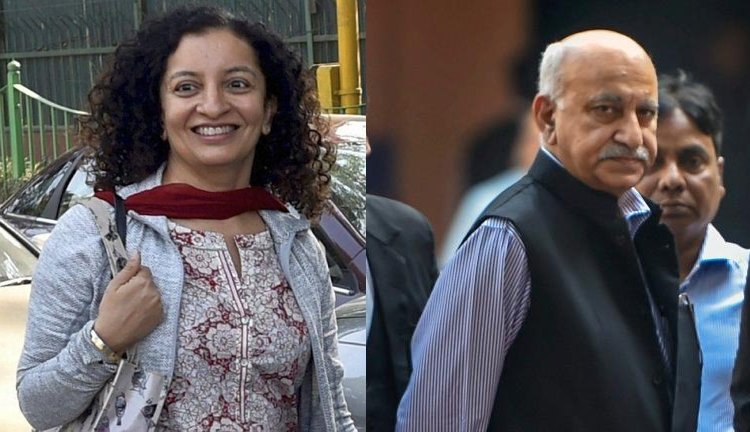
On Wednesday, a Delhi court acquitted journalist Priya Ramani in the criminal defamation case filed by former Union Minister MJ Akbar over her #Metoo allegations.

According to the reports, the Court observed that a man of social status can also be a sexual harasser and woman has the right to put her grievance even after decades.

Additional Chief Metropolitan Magistrate Ravindra Kumar Pandey, delivering the judgement said sexual abuse takes away dignity and self-confidence. Hence, the right of reputation cannot be protected at the cost of the right to dignity, the Court held.

“The society must understand the impact of sexual abuse and harassment on its victims”, the Court said, adding the defendant had the rights under Article 21 that is guaranteed under the Constitution. She has full right to put up her case in any platform of her choice, the court said.

Further, the court also said that time has come for our society to understand that sometimes a victim may for years not speak up due to the mental trauma. The woman cannot be punished for raising her voice against sexual abuse, Justice Pandey noted.

The Court also accepted Ramani’s contention that MJ Akbar’s claim of a stellar reputation was demolished by Ghazala Wahab’s testimony, who was also allegedly sexually abused by Akbar.

Interestingly, in its order, the court also cited an instance of Valmiki Ramayan saying when Shri Laxman, when asked to describe Sita, mentions he never looked beyond her feet, to establish that reverence to women is essential in Indian ethos.

Senior Advocate Geeta Luthra represented MJ Akbar while Priya Ramani was represented by Senior Advocate Rebecca John.

MJ Akbar had filed a defamation case after Priya Ramani had accused him of sexual harassment in the wake of the #Metoo movement which had gathered considerable attention in 2019, to which the journalist pleaded not guilty. Following the allegations, he was forced to resign from the Union Cabinet on 17 October 2018.

The South American connection to Tagore’s armchair, lies about which were peddled by Congress to attack Amit Shah: Read details

Last week, Congress, in its bid to mount an attack against Amit Shah and in an attempt to tarnish the image of the BJP ahead of the West Bengal assembly elections resorted to lies to allege that the Union Home Minister sat on the hallowed chair of Bengali icon Rabindranath Tagore.

Speaking at Lok Sabha on February 8, Congress leader Adhir Ranjan Chowdhury claimed that Amit Shah sat on Tagore’s chair and disrespected the poet and revolutionary.

In his address, starting at 21.20. Chowdhury says, “The government belongs to every single one of us. BJP leader Amit Shah and JP Nadda went to Bengal ahead of the state elections. They visited Rabindranath Tagore’s Santiniketan. They claimed he was born there. People are laughing at such erroneous claims. First read where Tagore was born and then visit such places. We are ashamed of this. They are leaders of the ruling party. Our Home Minister Amit Shah goes and sits on Rabindranath Tagore’s chair. Don’t know who asked you to go and sit on Tagore’s chair. This is a grave insult to Rabindranath Tagore. While visiting such places, you should bear in mind the local sensitivities and ethos of the place.”

Claims about Amit Shah sitting on a chair belonging to Rabindranath Tagore instantly went viral on the social media websites, with many users, mostly those sympathetic to the Congress party, enthusiastically disseminating the assertion that Shah sat on Tagore’s chair and disrespected the Bengali cultural icon.

Union Home Minister Amit Shah refutes allegations levelled by Congress leader Adhir Ranjan Chowdhury

However, Union Home Minister Amit Shah rubbished the allegations levelled by Congress’ Adhir Ranjan Chowdhury, stating that charges levelled against him are devoid of facts. A day after Chowdhury accused Shah of sitting on Tagore’s chair and disrespecting the Nobel laureate, the Union Home Minister said in the Lok Sabha that the Congress leader had presented “incorrect information” in the House.

“He isn’t aware of the facts. I am keeping the facts on record. The truth is that Jawaharlal Nehru sat on Rabindranath Tagore’s chair and former Prime Minister Rajiv Gandhi had tea on his sofa,” Amit Shah said, along with presenting photographs as evidence in the House.

Even the Vice Chancellor of the Visvabharti University, where Santiniketan is located, shot off a letter to Adhir Ranjan Chowdhury informing him that his allegations are “patently untrue”.

Source: India Today

In his letter, the vice-chancellor wrote, “You have unfortunately been misinformed, as this is patently untrue. In the past, during their official visits to Uttarayan, a number of dignitaries, including the former Chancellors, Pandit Jawaharlal Nehru, Madam Pratibha Patil, Shri Pranab Mukherjee, and the Prime Minister of Bangladesh, Madam Shiekh Hasina, among others, have sat in that makeshift seat, which is actually just the edge of a window on which cushions are placed. This fact has been documented in photographs.”

The South American connection to Rabindranath Tagore’s hallowed armchair

There is a South American connection to Tagore’s armchair, which was used by the Congress party to portray BJP and Amit Shah in a bad light ahead of the West Bengal elections. The chair which is currently preserved at Santiniketan was gifted by Tagore’s Argentine admirer, Victoria Ocampo.

In 1924, Tagore was on his way to Peru to attend the centenary celebrations of independence when he had to take a medical rest in Argentina’s Buenos Aires. Victoria came to know about Tagore’s stay and offered to take care of him. She reportedly mortgaged her jewellery to rent a beautiful mansion in San Isidro, a suburb of Buenos Aires, where she housed the Indian literary giant. The 63-year-old Tagore was revitalised by the charming 34-year-old Ocampo during his 58 days of recuperation at Buenos Aires.

When it was time for Tagore to leave, Ocampo gifted him an armchair to take to India from Buenos Aires. But there was one problem—the chair was too big to get into Tagore’s cabin in the ship. However, Ocampo was determined to not give up. Ocampo told the the captain of the ship to break the door of the cabin to accommodate the chair. She also got arranged a two-bed room cabin for Tagore through her contact.

‘Thinking of Him’ movie captures the special bond between Rabindranath Tagore and his Argentine muse Victoria Ocampo

This anecdote was also captured in a movie named ‘Thinking of Him’ which explores Rabindranath Tagore’s relationship with Argentinian feminist, writer and activist Victoria Ocampo.

Directed by Pablo Cesar, the movie attempts to recreate the fascinating Tagore-Ocampo encounters based on real-life incidents. Ocampo was an ardent admirer of Rabindranath Tagore, from whom she reportedly drew a spiritual awakening and literary inspiration. She was familiar with his writings and began to idolise him after she read the French translation of Gitanjali.

In an Argentine Daily, Ocampo later wrote an article titled “The joy of reading Rabindranath Tagore”. She was overawed by his intellect and serenity and felt like a shy child in front of him. She listened to him mostly and remained inhibited in his presence.

For Tagore, Ocampo was a muse for his Purabi poems in which he called her Bijoya (for Victoria) and dedicated the poems to her. The two shared a deeply emotional but platonic bond. Tagore lovingly addressed Ocampo as Bijoya. The two continued to exchange letters till Tagore’s death in 1941.