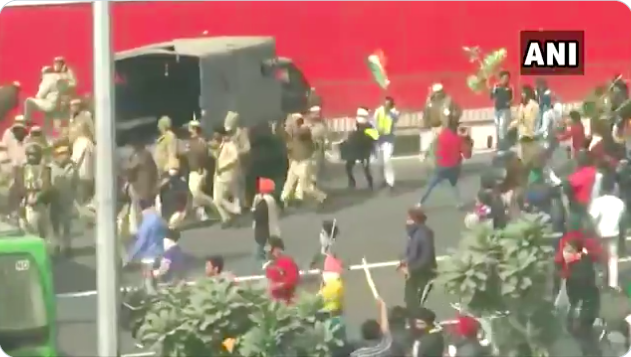
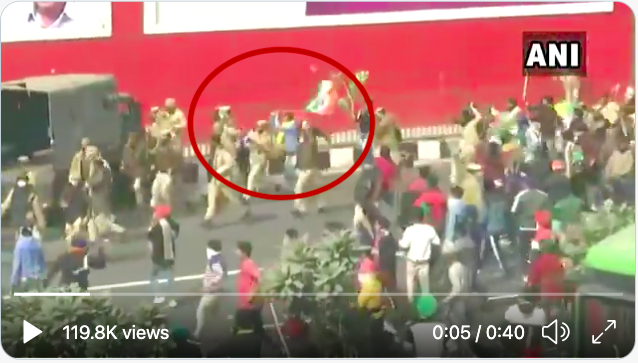
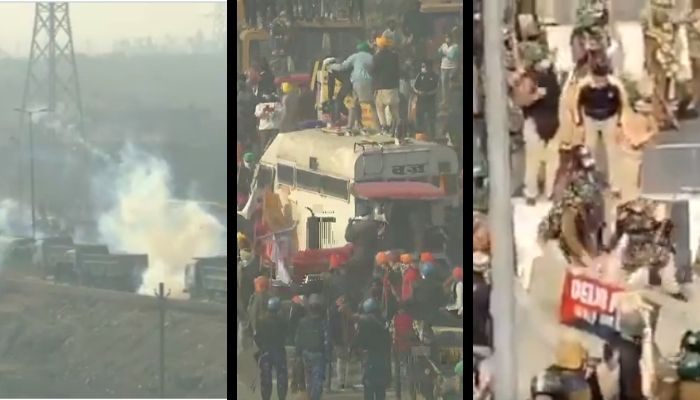
Shocking visuals have emerged from the tractor rally carried out by protesting ‘farmers’ from Punjab. In one of the videos shared by news agency ANI, one of the ‘farmers’ carrying the Indian flag can be seen beating up the police with the same flag.
#WATCH Protesters break barricade, attack police personnel and vandalise police vehicle at ITO in central Delhi pic.twitter.com/1ARRUX6I8E
These ‘farmers’ are also holding the national flag as they attack the Delhi Police.
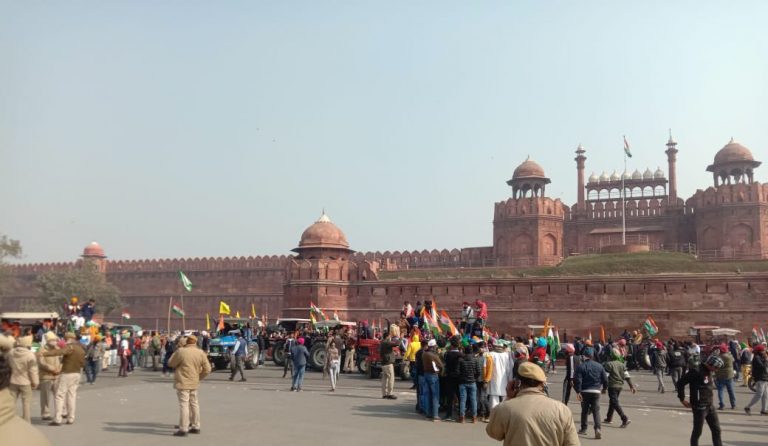
Earlier in the day, the ‘farmers’ breached the security barricades put up by Delhi Police and entered the national capital while unleashing violence on the cops. Videos of the ‘farmers’ wielding swords while riding horses have gone viral on social media. As per reports, the farmers have also reached the Red Fort where they plan to unfurl a flag.
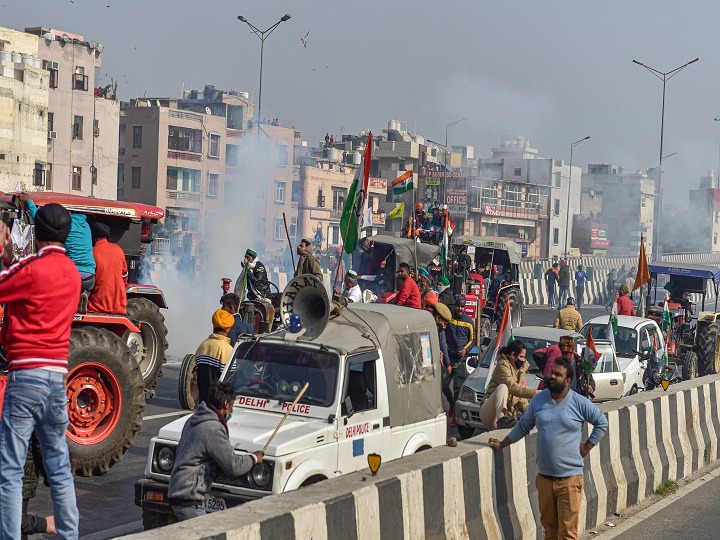
Thousands of farmers breached barricades and proceeded towards Delhi amid huge police presence as they kicked off their tractor rally on Republic Day. Chaos was unleashed on the streets leading to the national capital as farmers flouted the designated route and marched towards the Parliament and Red Fort.
The participants of the tractor rally also resorted to vandalism as they ran amok on the highways, attacking the trucks and breaking the barricades that were put up by the Delhi police to control their route. As disorder swept over the city’s borders, protesters were baton-charged and tear-gassed by the policemen on duty.
The upheaval was primarily caused after the protesters who were allowed to hold the “Kisaan Parade” between 12 to 5 PM, started the march much before the allotted time and veered away from the agreed-upon routes. The security personnel had tried in vain to convince the farmers to stick to the plan of holding the tractor parade after the conclusion of the Republic Day parade at Rajpath. But, their requests fell on deaf ears as the protesters ran riot, breaking barricades and vandalising vehicles on their way.
Protesters break barricades and unleash chaos along the borders in Delhi
A group of protesters at Karnal bypass broke police barricading to enter Delhi as farmers tractor rally is underway in the national capital Farm laws. Another mob of protesters removed barricades at Muberka Chowk. Similar scenes were witnessed at the Delhi-Meerut Expressway near Pandav Nagar where protesters broke the police barricading.
An unruly mob of demonstrators opposing the newly introduced Farm Bills crossed ITO in Delhi and would soon be reaching the Parliament. It is pertinent to note that this was not the designated route finalised by the farmers’ union and Delhi Police personnel.
Farmer tractor rally defies agreed-upon route to reach Red Fort and India Gate
Defying agreed-upon route, a batch of protesters have reached the Red Fort in Delhi. It must be noted that the route decided by the Delhi Police for allowing the demonstrators a peaceful march on the Republic Day did not involve the route to Red Fort. In fact, it was banned SFJ’s call for the protesters to march towards the Red Fort.
SFJ had also announced a cash reward of USD 2,50,000 for hoisting the Khalistan flag on January 26 at the India Gate on Republic Day. Meanwhile, the Government of India has blocked the website shared by Khalistani group Sikhs for Justice in a letter to farmers protesting against Centre’s agriculture laws.
Interestingly, the farmers during the tractor rally are also approaching the India Gate, just as Sikhs for Justice had wanted.
#LIVE updates | "From ITO, we are proceeding towards India Gate": Protesting farmer tells NDTV's Arun Singh, who is reporting from Delhi's Pragati Maidan area #FarmersProtestpic.twitter.com/EkxNTnQ0mY
Besides, the Pro-Khalistani secessionist outfit Sikhs for Justice (SFJ) had also urged the protesters to display life-size portraits of secessionist Jarnail Singh Bhindranwale and Beant Singh – Indira Gandhi’s assassin – during the tractor rally on January 26 in Delhi.
The route map of farmers’ tractor rally on Republic Day was finalised on Sunday after the Delhi Police formally gave permission for the Kisan tractor rally to be held on January 26. The police had made special security arrangements and set the terms for the farmers’ rally. However, the protesters disobeyed the terms for the tractor rally and flouted the defined routes.
The farmer protesters in Delhi have taken to using swords against the Delhi Police. Violence has been underway at the proposed ‘tractor parade’ after the protesters defied the routes they had received permission for from the authorities.
Swords were used against Delhi Police personnel. How do you spin this? How much longer do you let Delhi be taken hostage like this?
Videos have surfaced that show protesters wielding their swords during the tractor parade and defying the law enforcement authorities. Some are also on horsebacks with a sword in their hands.
11 months ago, Delhi was witness to the same brand of ‘protests’ that it is seeing today. On that occasion, Delhi Police constable Ratan Lal had lost his life. He was shot by rioters when violence had erupted in Delhi.
Today, we see the same brand of ‘protests’ at the national capital where the Delhi Police is being attacked with swords and lathis. The Delhi Police has been forced to use tear gas shells and its own lathis to get the situation under control. But it does not appear the matter will be resolved anytime soon.
There is increasing concern among the populace that the current spate of ‘protests’ will end in absolute disaster just as the cycle of protests in 2020 by people with a malicious agenda caused immense destruction and devastation to life and property.
Pakistani Twitter users were busy spewing venom against India, especially Indian Army as they cheered violence unleashed by sword-wielding ‘farmers’ in Delhi on Republic Day.
Some Pakistanis also tried to further the separatist Khalistani agenda.
This is what happening in Endia Right Now… Kashmiri's Are fighting for there freedom and now sikhs are also wants freedom from india . Today its not India but only #RSSRepublicDay and yes also its #IndianRepublicBlackDay for minorities pic.twitter.com/kR3QTZXqxS
The protesting ‘farmers’ took to violence and attacked Delhi Police as they broke barricades and entered Delhi ahead of scheduled time. They even strayed from the route agreed upon and headed towards the Red Fort. Earlier there were reports which suggested they wanted to unfurl a flag at the Red Fort. However, they had denied such claims back then.
Meanwhile, the Pakistanis continued to spew hatred and venom against India, especially the Indian Army.
Young people are brutally killed daily in occupied Kashmir by Endians army. Why didn't the United Nations bring the facts to light with the help of an impartial team?@BKYMofficial@BBCUrdu@BBCWorld@UNHumanRights
Some even threatened to wipe out India from the map.
#EndiaRepbulicBlackDay 26 January is World Dirty in calendar,it is day of celebration of weapons of Terrorist countryEndia for killing of Humanity in IIOJK,but listen Endians learn it,You will become a history in world&map,we will finish your Hindutva, will finish your identity.
Pakistan’s ruling party, Pakistan Tehreek-e-Insaf also joined in to call Republic Day a ‘black day’ and used it to further the propaganda against Balakot air strikes.
Further, Pakistanis also indulged in spreading falsehoods that the Indian government was planning ‘false flag operations’ to crack down on protesting ‘farmers’.
The anti-farm law agitation, which began in November last year, reached its zenith on the occasion of India’s 71st Republic Day. When the protestors announced their plans to conduct a massive tractor rally and march to the National Capital to protest against the historic farm laws, aspersions were cast about the possibility of violence and destruction.
The worst fears came alive on Tuesday morning when ‘protestors’ from Punjab unleashed mayhem on the streets of Delhi. In a video shared by news agency ANI, two such protestors were seen laying siege on a police water cannon vehicle in Sanjay Gandhi Transport Nagar in the national Capital. The vehicle was gheraoed by protestors from all sides, who have been marching both on foot as well as tractor from the Singhu border. While others blocked the passage of the vehicle, the duo stood atop the vehicle in jubilation.
The Delhi police soon clamped down on the demonstrators, following the scuffle at the Sanjay Gandhi Transport Nagar. In order to restore the law and order situation, the cops resorted to firing tear gas shells to disperse the unruly mob. A video shared by ANI showed a large mass of smoke rising to the sky after the police unleashed tear gas in the crowd.
Delhi: Police used tear gas shells after isolated incidents of scuffle between protestors and police took place at Sanjay Gandhi Transport Nagar and protestors took over a police vehicle pic.twitter.com/bbu8nMnHNp
In a video posted by Navbharat Times, the so-called farmers were seen pelting shells at the cops after they used tear gas shells to pacify the situation. The incident took place at the Ghazipur border after protestors tried to breach security barricades and forcibly make their way to the National Capital.
दिल्ली के गाजीपुर बॉर्डर पर किसानों और पुलिस के बीच भिड़ंत
‘Protestors’ attack Delhi police personnel with swords
In a shocking incident, an anti-farm law protestor was seen brandishing his sword and attempting to inflict severe injuries at police personnel. While the cops used sticks to defend themselves against the onslaught of violence, an aged ‘farmer’ pulled out his sword to attack a police official. Following the intervention of other protestors, the ‘farmer’ was forced to retreat.
In another video that has now come to light, a protestor was seen wielding his sword while riding a horse at the Singhu border. The ‘farmer’ on his horseback attempted to scare police personnel, standing beside a barricade, by wielding it in his direction. At the last minute, the protestor had a change of mind and he rode away without injuring the cop.
Farmer tractor rally: Anti-farm law protestors resort to vandalism
In a video uploaded by Sudarshan news, one so-called ‘farmer’ was seen vandalising a truck. The protestor, wielding a stick in his hand, destroyed the glasspane of a truck that was parked on the road as a mark of protest against the historic farm laws. “An attempt to disrupt the law and order situation in the National Capital. Rioters unleash havoc under the pretext of being farmers. They not only destroyed the vehicles of Delhi Police but also also targeting trucks belonging to poor drivers,” the tweet by Sudarshan News read.
राजधानी दिल्ली को अस्त व्यस्त करने की भीषण साजिश..
किसानों की आड़ में छिपे दंगाईयों का नंगा नाच..
शर्त, नियम, कानून सब तोड़े..@DelhiPolice ही नहीं बल्कि रास्ते मे खड़े गरीब ट्रक ड्राइवरों व ट्रकों को बना रहे निशाना.
In another video, protestors from Punjab were spotted vandalising a bus belonging to the Delhi Transport Corporation (DTC) at ITO, Delhi. Armed with sticks and rods, the ‘farmers’ also tried to physically overturn the bus to protest against the farm laws on the occasion of India’s 71st Republic Day.
‘Farmers’ during tractor rally break barricades to intrude into Delhi
In visuals shared by ANI, protestors were seen trying to enter Delhi through the Karnal bypass. In a desperate attempt to reach the National Capital and take the government to ransom, the so-called farmers were seen attempting to break the police barricades with sticks and rods.
#WATCH Protestors at Karnal bypass break police barricading to enter Delhi as farmers tractor rally is underway in the national capital#FarmLawspic.twitter.com/pzfJs6Ioef
Earlier, protesting ‘farmers’ from Punjab broke the police barricades at Tikri and Singhu borders ahead of the tractor rally. As seen in visuals, the ‘protesting farmers’ not only broke barricades but also jumped over the barrier to enter Delhi.
It must be mentioned that the Delhi Police had earlier granted permission to the anti-farm law protesters to conduct a tractor parade at the national capital on the occasion of Republic Day. Dependra Pathak, Special CP, Intelligence, Delhi Police informed that the rally will enter Delhi from Tikri, Singhu and Ghazipur borders and return to its originating points.
Threats of violence by Khalistani terror outfit SFJ
In a recent phone call to the control room of the Central Industrial Security Force (CISF), Khalistani terrorist organization Sikhs For Justice (SFJ) had warned of violence. As per reports, the phone call was made on behalf of designated terrorists and SJF Chief Gurparwant Singh Pannu. In a bid to intimidate the Centre to further its sinister agenda, the Khalistani terror outfit said that the government would be responsible for any outbreak of violence on Republic Day.
Besides the threat call, SFJ terror group has also asked anti-farm law protestors to display large portraits of Khalistani terrorist Jarnail Singh Bhindranwale and Beant Singh, the assassin of PM Indira Gandhi. In a video provoking Sikhs to disrupt peace on Republic Day, Gurparwant Singh Pannu provoked farmers from Punjab to cut the electricity supply to Delhi on January 25 and 26. Pannu provoked the farmers to destroy the grids owned by BSES Rajdhani Power Limited and BSES Yamuna Power Limited, which provide electricity to the Delhi region.
On January 11, SFJ had released an incriminating videoon its YouTube channel to provoke Sikh individuals living in India. Pannu had asked the Sikh youth to hoist the Khalistani flag and ‘remove and crush’ the Indian flag India Gate as well as from every corner in Delhi.
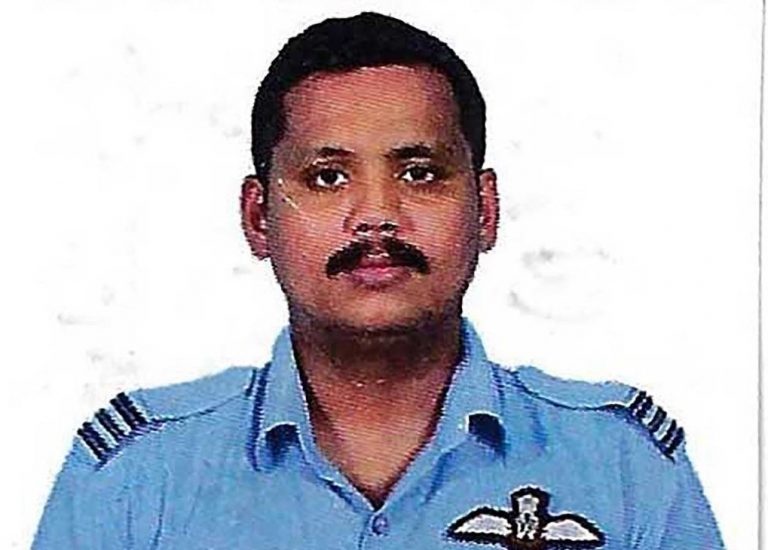
Ahead of the Republic Day, the Government of India announced a list of defence personnel chosen for awards for their exceptional achievement in a particular field/discipline, gallantry and bravery. Squadron Leader Vivek Gairola is among those who have been conferred with Vayu Sena Medal(Gallantry) for safely bringing out his Su-30MKI fighter plane from a critical situation during mid-air refuelling and landing it back safely during a mission in June last year.
Holy hell… Here’s why IAF Su-30 pilot Squadron Leader Vivek Gairola will be decorated with a Vayu Sena Medal (Gallantry) tomorrow. pic.twitter.com/3Gr2NNSihS
Gairola, a Four Aircraft Leader and trainer captain with nine hundred hours of accident/incident free flying, is on the posted strength of a front line Su-30 MKI squadron. Last June, Gairola was authorised to fly Night Air to Air refuelling sortie during which the refuelling drogue went below the aircraft nose. The aircraft immediately experienced a strong pitch-up and longitudinal oscillations along with associated Fly By Wire(FBW) failure warnings.
However, unfazed by the daunting challenge, Gairola displayed excellent flying skills, decision-making ability, crew resource management and courage in the safe recovery of the aircraft. For this exceptional act of courage and bravery, Gairola has been awarded Vayu Sena Medal (Gallantry).
The citation to Gairola’s Vayu Sena Medal read: “Sqn Ldr Vivek Gairola controlled the aircraft and continued to fall back to the astern position thus steering clear of the FRA (Refueller) and other fighter aircraft in close vicinity. Displaying composure in face of a critical emergency, he decided to divert to the nearest airbase and took correct subsequent actions to rule out other system failures. During the recovery, he delegated the duties of Radio Telephony (R/T) and throttle management to the Weapon System Operator (WSO) as both his hands were required to overcome the strong stick forces.”
It further stated, “With great human effort and skill he flew the aircraft by night, avoiding disorientation and executed a safe landing. Despite the difficult situation, Sqn Ldr Vivek Gairola was able to correctly identify the indications of a critical emergency, assess the options available and take timely corrective action thus saving precious combat asset.”
Months after the Bihar police resorted to brutality on a Durga idol Visarjan procession, all the suspended officers have been reinstated back in service, reported Dainik Bhaskar. During the infamous Munger incident on October 26 last year, several people were injured and a young man by the name of Anurag Poddar was mercilessly killed when police opened fire on devotees.
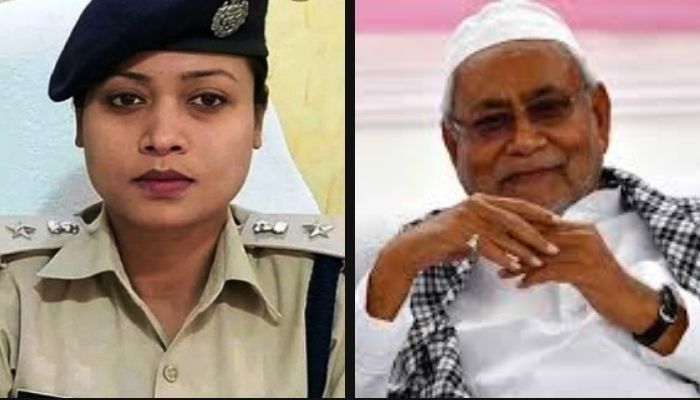
As per reports, the Election Commission had earlier ordered the removal of Lipi Singh as the Superintendent of Police (SP) of Munger. However, she has now been appointed as the Saharsa SP. Similarly, the then-District Magistrate Rajesh Meena has been appointed as the Registrar in the Cooperative Department. At the same time, police chief (Qasim Bazar station) Shailesh Kumar has been transferred to Naugachia police station.
The Bihar government had earlier ordered a large scale transfer of IAS and IPS officers. Twelve districts magistrates (DM) along with 13 superintendents of police (SP) have been changed in a late-night notification. At the same time, the then Deputy Inspector General of Police (DIG) Manu Maharaj has ordered the constitution of a Special Investigation Team (SIT). The incumbent DIG Shafiul Haq informed that the viral video of police brutality is being investigated and that appropriate action will be taken against the accused.
What does the CISF report say?
Although former Munger SP Lipi Singh had initially denied any instance of firing, the CISF report made it clear in their internal report that the police and the CISF had open fired at the devotees. As per the report, a scuffle broke out between the police and the devotees during the Durga Visarjan procession, which later culminated into stone-pelting. The CISF report claimed that the police fired shots at the devotees to control the crowd, following which the 20 CISF personnel also fired 13 rounds.
Inquiry report of Magadh Commissioner, no compensation for victim’s family
The Election Commission had sent Magadh range Commissioner, Asangma Chua Awo, to Munger to investigate the case and submit a report on the findings in 7 days. Asangma had visited Munger and interrogated the locals and the security personnel. Dainik Bhaskar reported that the inquiry report has been submitted to the Election Commission but has not been made public as of yet. Citing sources, the Hindi daily stated that the Magadh range Commissioner has accused Munger SP Lipi Singh and DM Rajesh Meena of reaching the crime spot late by at least 1 hour.
Amarnath Poddar, the father of deceased Anurag, informed that they are yet to receive any compensation from the Bihar government. This is despite the fact that he had identified one accused, named Sushil Kumar, who is the OP-in-charge of Vasudevpur. According to him, instead of naming Kumar in the First Information Report, the police lodged a case against unidentified people. Meanwhile, the villagers and the relatives of the victim have accused the Bihar police of shielding the accused and brushing the case under the carpet.
Death of Anurag Poddar
Lipi Singh had earned the title ‘General Dyer’ after the Munger firing. People associated with the Durga Puja Committee claimed that Singh oversaw the beatings meted out to the devotees involved in immersion. The idol of Durga Mata was lying deserted on the road that night.
A young man named Anurag Poddar was killed in the firing that night after police crackdown against the devotees. An FIR was filed in this case against the policemen based on the statement given by Anurag Poddar’s father. In his complaint, Anurag’s father blamed the police firing as the reason for his son’s death.
Ahead of the assembly state elections in the state, Bihar was shaken with a horrifying episode of violence when the police personnel mercilessly attacked Durga Procession devotees in the Munger district. The devotees were charged with batons and shots were fired at them, claiming the life of one 18-year-old Hindu boy.
As the nation celebrates Republic Day, honouring the day on which the Constitution of India came into effect on 26 January 1950, mobs have taken over the streets right outside the borders of Delhi. As the so-called farmers break barricades and march inside Delhi and one saw horrific visuals of policemen being attacked and swords being drawn by the so-called farmers, prominent journalist Sagarika Ghosh, who is widely known as a propagandist, often spreading fake news, is in a jolly mood, celebrating the display of mobocracy by farmers during the tractor rally.
Tweet by Sagarika Ghosh
At 11:17 AM, just as news of the violence started trickling in, Sagarika Ghosh picked up the visuals of so-called farmers breaking the barricades to enter Delhi and rejoiced about the mob putting the ‘public’ back into the ‘Republic’. Almost mocking the people of India who choose to follow the law and take pride in their nation, she tweeted the violent visuals with the hashtag #HappyRepublicDay.
It is important to notice the kind of violence that Sagarika seems to be celebrating here.
Visuals appeared where these so-called farmers were seen attacking the police with sticks, breaking the barricade to enter Delhi while the security, as is the norm, was put on high alert for Republic Day celebrations.
#WATCH Protestors at Karnal bypass break police barricading to enter Delhi as farmers tractor rally is underway in the national capital#FarmLawspic.twitter.com/pzfJs6Ioef
After farmers became violent, the police was even forced to use tear gas.
Delhi: Police used tear gas shells after isolated incidents of scuffle between protestors and police took place at Sanjay Gandhi Transport Nagar and protestors took over a police vehicle pic.twitter.com/bbu8nMnHNp
While these visuals emerge, as the nation celebrates Republic Day, one has to truly wonder what mindset would let someone celebrate, rather emphatically and publicly, the nation descending into anarchy because certain elements and political parties cannot stand to lose power to the will of the people. The farm laws were enacted by the elected government of India and in all respects, it is a law that will uplift farmers from being taken advantage of by middlemen. Large parts of the nation’s farmers support the farm laws and have extensively spoken about how it helped them.
However, for the past 3 months, it is only the Punjab and some elements from Haryana who have been protesting continuously, demanding that the farm laws be taken back. As the protests progressed, it became exceedingly clear that the ones protesting were not really farmers, but several vested interests who wanted the nation to burn.
From Congress’ Rahul Gandhi to Mamata Banerjee of the TMC, Sharad Pawar of NCP and several leaders of other opposition parties have encouraged the tractor parade by these so-called farmers.
Terrorist organization Sikh For Justice has announced Rs. 1.8 crore award for hoisting the Khalistani flag at India Gate on Republic Day. Gurpatwant Singh Pannu of the SFJ said, “On January 26, Sikhs should roam in Delhi on their tractors and remove every tricolour. The Indian flag is the symbol of suppression that Sikhs have faced in India. Every Indian flag must be removed and crushed.”
Rakesh Tikait, one of the prominent figures involved in the protest, had then announced a march from Red Fort to India Gate but that appears to have been abandoned. Several instances have occurred where the protesters raised Kahlistani slogans and indulged in violence.
It is quite worrying, really, that everyone who has encouraged the tractor parade is working towards the same goal as Khalistanis. The core agenda for all the actors involved is embarrassing the central government which, under current circumstances, would amount to an embarrassment for the Indian Republic. Sagarika Ghose celebrating the violence that is now erupting on Republic Day is symptomatic of this greater malaise that stopped these journalists from calling out the charade that was playing out right in front of our eyes for months.
It is pertinent to note that on the 24th of February, Dependra Pathak, Special CP, Intelligence, Delhi Police has announced that permission has been granted to the farmer protesters to conduct a tractor parade at the national capital on the occasion of Republic Day. He said that sanctity and security of the Republic Day celebrations will be maintained. Pathak said, “We have finally decided, we have agreed that we will have tractor rally also on that day (Republic Day) maintaining the sanctity and security arrangements of the Republic Day celebrations.”
However, the so-called farmers seem to have broken that agreement and started indulging in violence and marching inside Delhi even while the Republic Day parade was on. Earlier, the government of India had offered to suspend the implementation of farm laws for a year to a year and a half to talk to these farmers and talk, clause-by-clause, what they would want amended. However, through several rounds of talks, these farmers have adamantly refused to budge and demanded that they will not stop protesting till the farm laws are repealed completely.
Farmers tractor rally: What are the farm laws that farmers are protesting against
One of the biggest factors plaguing the growth of agriculture sector in the country is the inability of the farmer to find a market and to get a fair price to his produce. To address the issue, the erstwhile governments of different states enacted the Agricultural Produce Market Regulation Acts (APMC Acts), which authorised them to set up and regulate marketing practices in wholesale markets.
The objective of these markets was to ensure that farmers get a fair price for their produce. However, with each passing year, the APMCs turned out to be inefficient with increasing cartelisation of middlemen, ban on private players to enter the trade, increasing corruption etc.
The Modi government recently introduced three bills to promote much easier trade for the farm produce and to provide a competitive market for the producers outside the existing APMC system. The three laws were:
The Farming Produce Trade and Commerce (Promotion and Facilitation) Bill, 2020: This law aims at creating additional trading opportunities outside the APMC market yards to help farmers get remunerative prices due to additional competition
The Farmers (Empowerment and Protection) Agreement on Price Assurance and Farm Services Bill, 2020: This law relates a framework for contract farming through an agreement between a farmer and a buyer prior to the production or rearing of any farm produce.
The Essential Commodities (Amendment) Bill, 2020: This law aims to regulate the supply of certain food items only under extraordinary circumstances.
It is pertinent to mention that the farm laws are set of three laws that allow farmers to sell their products outside APMC act (most states make it compulsory for the farmers to sell at APMC mandis). It also allows farmers to directly have a contract with corporate houses.
That farm laws don’t do away with APMC, and if someone is not willing to trust markets outside the current system, they are free to stick to the ongoing system. It doesn’t do away with MSPs either. However, the prevalent narrative that seems to be motivated by political concerns falsely claims that APMCs and MSP are being done away with.
They also allege that due to these laws, big corporations would have the upper hand in a deal with farmers, however, that again is a lie. In fact, The Farmers (Empowerment and Protection) Agreement on Price Assurance and Farm Services Bill, 2020 ensures that a contract is agreed upon and gives the farmer the power to even cancel contracts.
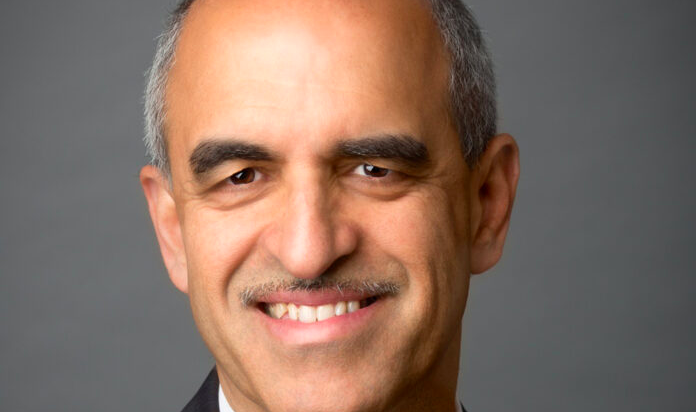
Srikant Datar, who became the 11th dean of Harvard Business School on 1st January 2021 is one of the recipients of the Padma Awards in 2021. He has been bestowed with the Padma Shri, the fourth highest civilian awards in India. Along with him, two other Indian Americans have been awarded the prestigious Padma awards.
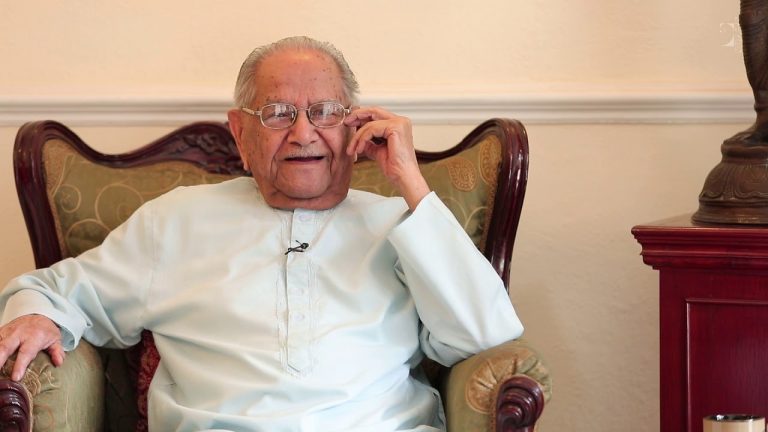
Narinder Singh Kapany, known as the ‘father of fiber optics’, will be given the Padma Vibhushan posthumously. He passed away in December 2020 in the US. Ratan Lal, a citizen of US of Indian descent, is professor of soil science at the Ohio State University and has been awarded the Padma Shri.
Datar, during his tenure, has served as Senior Associate Dean for University Affairs (including Faculty Chair of the Harvard Innovation Lab), for Research, for Executive Education, for Faculty Development, and for Faculty Recruiting as per the Harvard profile.
He has graduated from University of Bombay and also received gold medals upon completing his post-graduation from Indian Institute of Management, Ahmedabad and Institute of Cost and Works Accountants of India. He is also a Chartered Accountant and holds two Masters degree and a PhD from Stanford University.
Earlier, former NDTV employee Nidhi Razdan had claimed she was going to be an Associate Professor at Harvard University to teach journalism. However, she later claimed she was a victim of phishing attack and the job offer was not real. Razdan is daughter of former Editor-in-Chief of news agency Press Trust of India (PTI), Maharaj Krishan Razdan. She graduated from Delhi University and did a post-graduation course in mass communication from Indian Institute of Mass Communications, Delhi.
Renowned archaeologist Professor Braj Basi Lal who led a team of archaeologists to the Ramjanmabhoomi site and unearthed the existence of a temple of Lord Ram beneath the Babri structure at Ayodhya has been conferred with the Padma Vibhushan award this year by the government. Professor Lal is among the 7 eminent personalities who have been selected by the government for the second-highest civilian award.
Padma Vibhushan award is conferred by the government for ‘exceptional and distinguished service’. Every year during the ceremonial functions held at Rashtrapati Bhavan in the month of March/April, the President of India presents the Padma awards to recipients. This year 119 people have been selected for the three categories of Padma Awards. This year’s list of Padma awards comprises of 7 Padma Vibhushan, 10 Padma Bhushan awards and 102 Padma Shri award recipients.
Professor Lal had contested the Aryan Invasion Theory
Professor Lal, former director-general of Archaeological Survey of India (ASI), had started his career as a trainee under Sir Mortimer Wheeler in 1943. He had contested the Aryan Invasion Theory put forward by Wheeler. Regarding the excavation of evidence related to Ram Mandir at Ayodhya Professor Lal said, “In my autobiography, I had written that though god’s grace, I had come to realise that I was only a typist and the dictation giver was someone else”. According to Professor Lal, the period around 1950s was the best period for archaeology in India. That was when he started the excavation of sites associated with Mahabharata. Encouraged by the success at excavating Mahabharata sites, he started excavating Ramayana sites in 1970s.
Professor Lal led the project called Archaeology of Ramayana
The veteran archaeologist had led a project named Archaeology of Ramayana between 1975 and 1976 to examine certain sites having reference in Ramayana. There were nine members in the team out of which five archaeologists namely, Professor Lal, Dr. KP Nautiyal, SK Srivastava, RK Chaturvedi and KM Asthana were from Jiwaji University, three members namely, Mahdava N Katii, LM Wahal and MS Mani were from the ASI and one member named Hem Raj was from the Department of Archaeology, Uttar Pradesh.
According to Professor Lal, a five-site excavation project was carried out at Ayodhya, Nandigram, Shringaverapur, Bharadwaj Ashram and Chitrakoot to date the sites associated with Ramayana. He said that while excavating the area immediately south to the Babri structure, he found pillar bases. He wrote a seven-page preliminary report about the discovery of pillar bases near Babri structure. However, following the discovery, all technical facilities were withdrawn from the area and the project was halted. It was not resumed despite repeated requests of Professor Lal and remained suspended for 10-12 years. The final report was never submitted but his preliminary report was published by the Indian Council of Historical Research in 1989 in its volume on Historicity of Ramayana and Mahabharata.
Professor Lal’s excavation of Mahabharata sites
As part of the project on excavation sites associated with Mahabharata, Professor Lal launched the first excavation at Purana Qila site in 1954-55. There he found structures dating back to Gupta, Kushana and Shunga period. He found painted grey wares from an open area between the South of Purana Qila and Humayun’s Tomb. According to Professor Lal, the painted grey wares were the earliest common pottery collecting all Mahabharata sites like Hastinapur, Kuruskshetra, Mathura and Kampilya. The evidence established that the Purana Qila and its southern neighbourhood represented Indraprastha of Mahabharata period.