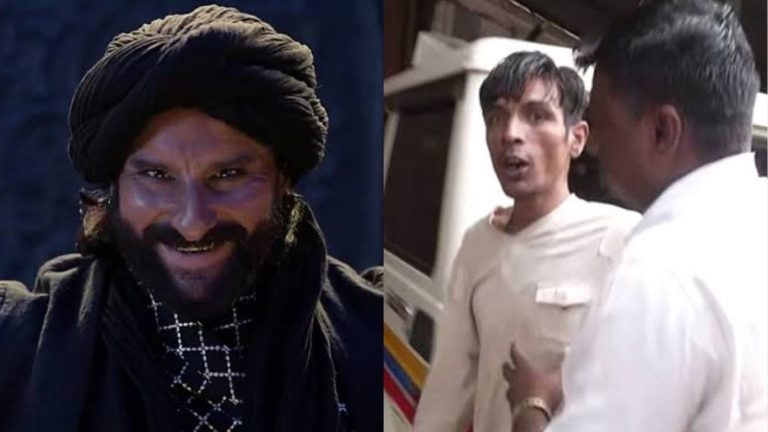
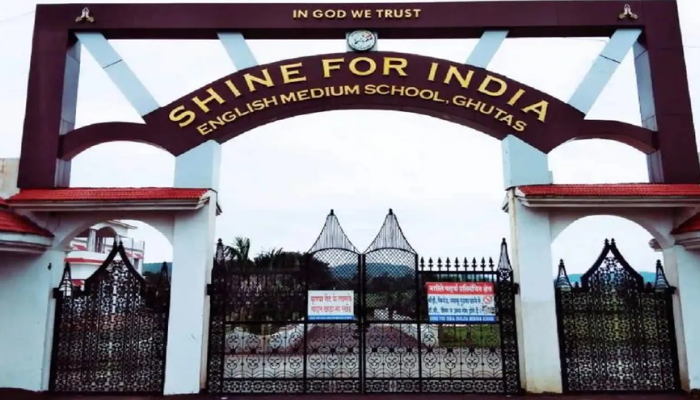
Anger is mounting across the state in protest against the rape and blackmail case that took place in Bijaynagar, Beawar district of Rajasthan. As a result, a shutdown was called in Ajmer, Beawar, and Bhilwara on Monday. Since morning, protests and demonstrations have been ongoing at various locations in these districts, with demonstrators demanding the death penalty for the accused.
The case came to light on February 15, involving minor students of a private school in Bijaynagar who were allegedly raped and blackmailed using obscene photos and videos. The victims’ families filed a complaint, also alleging that the girls were forcibly subjected to religious practices and pressured to convert.
So far 11 accused taken into custody
In this case, the police have registered a case under POCSO and other sections and started an investigation. So far 8 accused have been arrested, while three minors have been taken into custody. Former independent councillor Hakim Qureshi was also arrested on 23 February. He was produced at the residence of the judge of the POCSO court in Kotda on the same day and sent on a 5-day police remand. Qureshi is accused of assisting other accused.
Other accused arrested by the police include Shravan (cafe operator), Karim and Aashiq, who are on a 7-day remand. At the same time, Lukman alias Soheb (20), Sohail Mansoori (19), Rihan Mohammad (20) and Afraz (18) have been taken on a 5-day remand. At the same time, three minors have been sent to the juvenile correction home.
Governor Haribhau Bagde’s reaction
On February 23, Governor Haribhau Bagde reacted to the Bijaynagar case in Nawalgarh, Jhunjhunu. Addressing the female students at Dundlod Girls School in Balwantpura, he said that any kind of unjust incident should be faced boldly. He said, ‘If someone targets us, we will also respond.’
The Governor advised the female students to be aware of self-defence and face every situation with courage. He said that instead of being afraid, one should respond with confidence and it is necessary to counter any kind of unfair action.
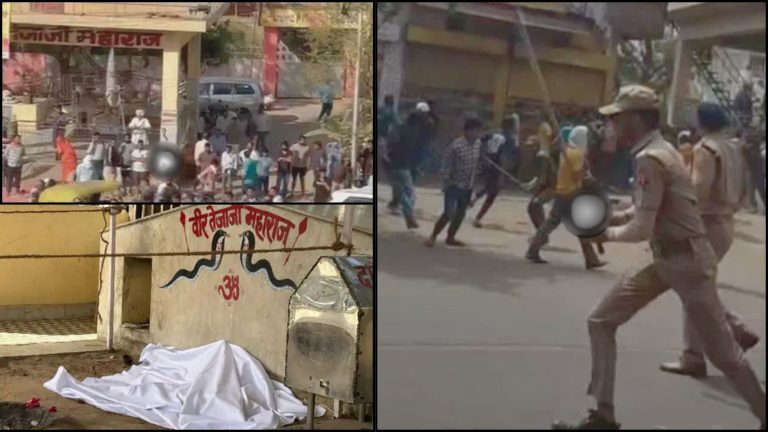
Islamists have threatened Hindus against celebrating Holi in Bareilly, Uttar Pradesh. Some members of the Hindu community were planning to celebrate the festival in Hajiapur locality of Baradari police station area when Muslim youths attacked them. They assaulted the Hindus and threatened, “If you celebrate Holi, we kill you.” The incident has resulted in tension in the area. The authorities have also taken the situation seriously and registered a First Information report (FIR) against six people and started a search to nab them.
According to media reports, Laxman, Munna, Shani and Akash who live in Hajiapur were trying to organise a Holi programme in their locality when young Muslim men including Ayan, Salman, Aman, Rehan, Bhura and Alam reached there and launched an attack. The victims were reportedly thrashed with sticks and received death threats. The former stated that there was a conspiracy to vitiate the atmosphere before Holi. Afterward, police were notified.
Cops rushed to the scene and brought the situation under control. Both Hindus and Muslims live in the neighbourhood. The police were careful due to the sensitivity of the scene. The police informed that further inquiry is underway after a case was submitted and already arrested two the perpetrators.
थाना बारादरी, बरेली पर प्रकरण के संबंध में प्राप्त तहरीर के आधार पर अभियोग पंजीकृत किया गया है। दो आरोपियों को गिरफ्तार कर 170 BNSS के अन्तर्गत नियमानुसार कार्यवाही की गयी है।
It’s not the first instance. Kanwariyas in the Jogi Navada region were subjected to firing and stone-pelting earlier in the sacred season of Saavan in 2022. People are now apprehensive because a new conflcit might arise prior to Holi. There have previously been communal conflicts in the Baradari neighborhood of Hajiyapur, Jogi Navada and Chak Mahamood. The cops are currently attempting to maintain peace especially in the wake of Holi.
Russian consulate on Avenue Ambroise-Paré in Marseille came under attack on Monday, February 24. Unidentified attackers threw Molotov cocktails in the garden of the Consulate.
A report by Belarusian media house NEXTA confirmed that unknown persons threw two Molotov cocktails into the garden within the premises of the consulate. NEXTA further added that a stolen car was found near the scene of the attack and that no casualties were reported.
Authorities have launched an investigation to determine the reason behind the attack on the Russian Consulate.Following the explosion within the Consulate Grounds, the area has been cordoned off by local police, with nearly 30 firefighters and law enforcement working at the scene.
“The explosions on the territory of the Russian Consulate General in Marseille have all the hallmarks of a terrorist attack,” Russian state news agency TASS quoted Foreign Ministry spokeswoman Maria Zakharova as saying.
Russia has asked France to investigate the attack and apprehend the people behind the attack.
Anti-Russia sentiment has grown in mainland Europe during the last 3 years since Russia-Ukraine war started. Almost all the European countries have supported Ukraine in this war supplying them with weapons and other support.
USAID has come under significant scrutiny for its shady operations and providing financial assistance to jihadis and other vested interests in order to meddle in different countries, including India, and advance American interests around the world. The Department of Government Efficiency (DOGE) headed by Elon Musk, is now looking into the misuse of American tax dollars. On the other hand, the “government industrial complex” fiercely opposes all attempts to foster accountability and transparency in the manner in which those funds were used in a system that is beset with issues.
Paul Vallas, who was invited by then-Haitian President Rene Preval to help in rebuilding the country after the devastating 2010 earthquake, provided first-hand experience with USAID and other international aid organizations, including the World Bank, United Nations Educational, Scientific and Cultural Organization (UNESCO) and the Red Cross, during his more than 40 trips to Haiti. Together with other non-governmental organizations (NGOs), USAID fell short of its commitments and failed to organize relief efforts as well as even embezzled money, reported New York Post.
At the very least, what transpired in Haiti demonstrates the incapacity, if not open corruption, of these international assistance agencies. USAID is allegedly the most corrupt government organization out of them. The United States government has sent around $4.4 billion in foreign aid to Haiti since the 2010 earthquake, which killed up to 300,000 people, but just 2% out of that reaching Haitian people..
An additional $3 billion was allocated for development, recovery and reconstruction, while at least $1.5 billion was doled out for immediate humanitarian assistance. Haitian groups or businesses received less than $50 million or 2%, of the at least $2.13 billion in contracts and grants for projects related to the country. The US capitol’s neighboring businesses have received $1.3 billion or 56%, in contrast. Hence, it is understandable why the sudden inquiry is so concerning to USAID.
The precise use of the billions and the long-term effects of US tax funds are still unknown. USAID and its vendors have not disclosed such information to the public. The distribution of donations has been ineffective and frequently dishonest as a result of this ambiguity. It is not necessary for USAID, other international aid agencies and their non-governmental partners to release financial and budget breakdowns in addition to project results.
It is practically hard to assess the effectiveness of the application and impact of these relief amounts on reconstruction and recovery with the little monetary information available. A year after the earthquake, in 2010, the Nonprofit Disaster Accountability Project made an effort to compile a report on the transparency of NGOs in Haiti. Only eight of the 196 groups they examined had easily accessible information regarding their operations in the nation. Only 20% of the organizations ultimately answered the poll.
According to the responding groups, they received almost $1.4 billion in donations overall, but only spent roughly $730 million or half of that amount on relief activities in Haiti. The answers are not forthcoming for the others. The absence of accountability is not unique to USAID. After the earthquake, the Red Cross, one of the biggest nonprofits involved in the Haitian emergency response, raised an astounding $500 million for the country.
Five years later, however, many people including former Haitian Prime Minister Jean-Max Bellerive questioned whether the majority of these funds truly made it to the Haitian people. The Red Cross, for example, claims to have housed more than 130,000 people, although they have only built six confirmed homes. On their website, the Red Cross merely breaks down the funds into broad, undescript “sectors” refusing to provide a list of the exact tasks they carried out in Haiti.
The Campeche neighborhood’s shelter sector, which promised people new dwellings, health facilities and sanitization systems, turned out to be especially deceptive. Nevertheless, none of these pledges were fulfilled three years later. According to a Center for Global Development report by Vijaya Ramachandran and Julie Walz, the “trickle-down” impact of humanitarian aid is the reason why USAID and its NGO partners like the Red Cross have underperformed.
Donation funds stream through “multiple layers of connected subcontracts and subgrantees” before they get to the people executing the actual work. Despite the significant sums of money expended, this virtually ensures that relief operations will eventually fall short of their goals. Money is lost when charities invest in other groups to implement their promised work. For instance, the Red Cross reserved a portion of the first Haitian funds for their own overhead costs after which a portion of their subsequent administration fees went to the outfits they had recruited. Lastly, the Red Cross imposed a supplementary cut defined as an oversight fee or “program costs incurred in managing third-party projects.”
The end result of this lack of transparency is that extensive donations that could otherwise have a significant impact on long-term relief are used in methods that are wasteful and deceptive. Further investigation of this money distribution and its long-term viability is further complicated by the absence of information that these organizations seek. With USAID as its principal agency, the United States gave $72 billion in aid to 180 countries in 2023. Since American resources have been regularly wasted, DOGE’s focus on USAID is well-earned and long overdue.
The finest example of the shortcomings of the American foreign aid program’s lack of accountability and openness is in Haiti. Governmental organizations like USAID and their non-governmental partners and collaborators behave as though they are independent entities with no obligation to report anything to anyone.
On Monday (24th February), Congress leader Jairam Ramesh falsely claimed that there is no evidence of USAID funding any project to ‘strengthen voter turnout’ in India.
He also alleged that all projects in India, sanctioned by USAID, are in partnership with the BJP-led Indian government. Earlier, The Indian Express also published a misleading ‘fact-check’ to negate any form of funding in India by the controversial US federal agency.
Jairam Ramesh shared a document by the Union Ministry of Finance and claimed, “None other than the Union Finance Ministry has thoroughly exposed the lies of the PM and his jhoot brigade, including his dapper External Affairs Minister.”
None other than the Union Finance Ministry has thoroughly exposed the lies of the PM and his jhoot brigade, including his dapper External Affairs Minister. As stated in the Finance Ministry's annual report for 2023-24, USAID is currently implementing seven projects in… pic.twitter.com/lS7BCJ0eXL
“As stated in the Finance Ministry’s annual report for 2023-24, USAID is currently implementing seven projects in collaboration with the Government of India, with a combined budget of approximately $750 million. Not a single of these projects has to do with voter turnout. ALL of them are with and through the Union Government,” he brazened out.
Jairam Ramesh attempted to suggest a ‘scandalous’ link between the Indian government and USAID, despite the fact that External Affairs Minister S Jaishanakar had himself conceded that the US federal agency was allowed to operate in India in good Faith.
The Modi government is not denying the fact that USAID operates in India. It had in fact ordered a probe into potential election interference by the US federal agency after the matter was highlighted by DOGE (Department of Government Efficiency).
The USAID funding for strengthening voter turnout in India is different from projects that it took up in partnership with the Indian government. This was highlighted by BJP spokesperson Amit Malviya.
The desperation of the Congress and its ecosystem of journalists and influencers to deflect from the controversial USAID funding—routed through various George Soros-linked fronts and a labyrinth of NGO structures to meddle with India’s electoral process—is a dead giveaway. It is… https://t.co/JnGrSfXsv6pic.twitter.com/wHAl3ehqaw
“Let us be clear—the USAID projects in question are official government-to-government partnerships, transparently executed as Externally Aided Projects (EAPs). The Centre simply channels these funds to states for development, which is well within the framework of cooperative federalism,” he pointed out.
“In fact, the very projects cited in the Finance Ministry’s 2023-24 report (uploaded in July 2024) trace their origins back to 2010-11. This isn’t new—even the 2014-15 report confirms the same,” Amit Malviya emphasised.
“The question is: why is the Congress defending covert interference by foreign donors and organizations linked to George Soros, which seek to destabilize our democracy under the guise of philanthropy? India’s sovereignty is not up for sale,” the BJP spokesperson pointed out.
Jairam Ramesh could not furnish any evidence which negates that USAID funded $21 million for strengthening voter turnout in India.
The Background of the Controversy
On 15th February, the Elon Musk-led Department of Government Efficiency (DOGE) announced that it was saving US taxpayers money by cancelling projects abroad. One of them was about strengthening ‘voter turnout’ in India.
A sum of $21 million (~₹182 crore) was set aside by federal US agencies for the project. DOGE confirmed the matter in a tweet. It also cancelled another project, which aimed to splurge $29 million to ‘strengthening the political landscape in Bangladesh.’
On 21st February, incumbent US President Donald Trump further confirmed the figures during a speech in Miami. He had said, “And $21 million for voter turnout in India. Why are we caring about India turnout? We got enough problems. We want our own turnout, don’t we? Can you imagine all that money going to India?”
Donald Trump added, “I wonder what they think when they get it. Now, it’s a kickback scheme. You know, it’s not like they get it and they spend. They kick it back to the people that sent it. I would say in many cases, anytime you have no idea what we’re talking about, that means there’s a kickback because nobody has any idea what’s going on there.”
There was evidently public uproar over the revelation, given that the controversial USAID had been trying to carry out regime change operations both in India and Bangladesh.
On 22nd February, journalist and husband of TMC MP Sagarika Ghose, Rajdeep Sardesai, published a video on his personal channel on YouTube titled “Election Commissioner Haazir Ho”. In the video, he tried to set a narrative that the current Central Government under the NDA, led by Prime Minister Narendra Modi, is “unconstitutionally controlling” the Election Commission, which is supposed to be an autonomous body to ensure fair elections in the country.
In the almost 15-minute-long video, Sardesai made several claims where he contradicted himself and concealed crucial facts that would have completely dismantled his narrative.
The appointment of the chief election commissioner
Sardesai began his monologue by claiming that the appointment of the Chief Election Commissioner (CEC) had been manipulated by the Modi government to consolidate control over the Election Commission. He claimed that the recent appointment of Gyanesh Kumar as the new CEC was compromised and had been designed to favour the ruling party at the Centre.
Interestingly, he cited the Supreme Court’s 2023 ruling, in which the apex court had recommended a selection panel comprising the Prime Minister of India, the Leader of the Opposition, and the Chief Justice of India. He claimed that the selection panel was suggested by the court to ensure fair appointments.
However, Rajdeep expressed outrage that the Modi government later amended the process by bringing in a law that replaced the Chief Justice with a cabinet minister. This law, thus, gave the ruling party a 2:1 majority in the selection panel. It should be noted that he himself pointed out that the Supreme Court had categorically stated that the suggested selection panel would function until a law was passed in Parliament for the same. Nowhere did the court state that the CJI must be on the panel.
Furthermore, Sardesai tauntingly cited pro-government voices who pointed out that before the apex court’s ruling, the CEC was selected solely by the government or, in the case of Congress, by Sonia Gandhi, without involving the Leader of the Opposition in the process. Opposition parties were merely informed about the new CEC.
How was the CEC appointed earlier and how PM Modi made the law more inclusive
In a recent report, OpIndia explained a petition in Supreme Court where advocate Prashant Bhushan’s organisation, Association for Democratic Reforms (ADR), has challenged the law brought to elect CEC.
While ADR and Prashant Bhushan target the Central Government and PM Modi specifically, the new law brought by the Modi government actually made the process of appointment of CEC far more inclusive.
The truth is before the Modi government passed a law, the law itself had no procedure for appointing members of the Election Commission. Article 324 of the Constitution vests the “superintendence, direction and control of elections” in an Election Commission. It also says the EC shall consist of the Chief Election Commissioner and such number of other Election Commissioners, if any, as the President may fix from time to time.
This procedure would be governed by any law that the Parliament would pass. However, for 40 years, there was only the provision for a CEC and not other members like ECs. In 1989, it became a multi member body but soo, the law was rescinded in 1990. A law was enacted in 1991 to fix the conditions of service of the CEC and the ECs, and amended in 1993. Despite the law being passed, there was no provision added for the appointment of CECs and ECs.
In the absence of any law enacted by the Parliament, for 40 years, the Law Ministry would recommend a few names to the Prime Minister who in turn would recommend one name for the EC to the President of India. It had become a convention to appoint officials as ECs first and then, on the completion of the tenure of the CEC, the senior EC was elevated to CEC. It is therefore evident that before the law was passed by the Modi government, which included the Leader of the Opposition, the government of India had the sweeping power to appoint the EC who had an automatic elevation process to become the CEC. The law brought in by PM Modi ensured the participating of not just the Government of India but also the opposition.
Despite the Modi government making the law more inclusive and fair, ADR and Prashant Bhushan have been approaching the court to target the government. However, it was the Supreme Court of India that had said that the arrangement where CJI would have been involved in selection of CEC would be in effect only till a law is passed.
Allegations of proximity to the ruling party
Sardesai attempted to discredit Gyanesh Kumar’s appointment by highlighting the key posts he had previously held under Home Minister Amit Shah. He claimed that his involvement in the abrogation of Article 370, the creation of the Shri Ram Janmabhoomi Teerth Kshetra Trust, and his recent role as Secretary of Cooperatives made Gyanesh Kumar an “Amit Shah Man”, effectively suggesting that the appointment was politically motivated.
He did mention that former CECs like M.S. Gill, Navin Chawla, and others during Congress’s tenure were embroiled in controversies. However, according to him, the recent appointments raised more red flags for reasons only known to him. For the unaware, M.S. Gill became a Union Minister under the UPA, and Navin Chawla’s role during the Emergency has always been under scrutiny due to his close proximity to Sanjay Gandhi. Not to forget, the BJP had written to the then-President of India requesting Chawla’s removal, pointing out several reasons that made it clear he was a “Gandhi Family Man”.
He categorically named TN Seshan to glorify the CEC appointed by the Congress government and claimed that “no one called Seshan a ‘Congress Man'”. While no one denies the reforms Seshan introduced in the Election Commission, it must be pointed out that he contested the 1999 Lok Sabha Elections on a Congress ticket against the BJP’s LK Advani from Gandhinagar—and lost. According to Election Commission of India (ECI) data, while Advani secured 4,53,229 votes, Seshan managed to secure only 2,64,285 votes. Seshan also attempted to contest the 1997 Presidential elections against KR Narayanan but lost.
Questioning the Election Commission’s neutrality
Moving further in his monologue, Sardesai claimed that the Election Commission under the Modi government has “lost its neutrality.” He alleged that there have been instances where the EC’s decisions favoured the ruling party, specifically regarding election schedules and Model Code of Conduct violations.
He claimed that Maharashtra, which has 48 Lok Sabha seats, was subjected to a five-phase election, whereas Tamil Nadu, with 39 seats, had a single-phase poll. Odisha, a smaller state with just 21 seats, was given a four-phase election. He framed this as an attempt to manipulate voting patterns but failed to provide any evidence of how these decisions benefited the BJP. Notably, the number of phases in which elections are held in any state depends on logistical, security, and administrative factors, and such delays are not unprecedented.
He further claimed that the EC delayed the Assembly Elections in Maharashtra, which benefited the BJP as the government rolled out welfare schemes like the Ladli Behna initiative, which, according to him, was a game changer. However, he completely ignored the fact that the Lok Sabha Elections in 1991 were postponed for a month after the assassination of Rajiv Gandhi.
Congress was virtually wiped out in the first phase of the Lok Sabha elections, held a day before Rajiv Gandhi was killed in a bomb blast. However, due to the delay announced after his assassination, Congress gained sympathy votes and swept the second phase. It was the then-Election Commissioner T.N. Seshan who delayed the elections for a month, giving Congress the opportunity to take advantage of the tragedy.
Voter roll manipulation claims
Sardesai then claimed that the voter list in Maharashtra had been manipulated, citing an increase of 40 lakh new voters between the Lok Sabha Elections in May and the Assembly Elections in November. He argued that this was an unusual spike, far greater than the previous five-year net addition of 32 lakh voters. By raising doubts over the legitimacy of this increase, he insinuated that the EC had allowed voter fraud to benefit the ruling party.
However, here is the catch. If we look at the historic data on the number of voters added between the past five Lok Sabha and Vidhan Sabha elections—without considering the results—the percentage increase in the number of voters between Lok Sabha Elections and Assembly Elections has remained almost the same four times, at around 4%, which can be attributed from the table below. As it is evident, while 4.26% voters increased in 2024, 1.31% increased in 2019, 3.48% 2014, 4.13% in 2009 and 4.69% (more than 2024) in 2004.
Source: Election Commission of India
Rajdeep Sardesai’s monologue was yet another example of selective outrage and fact-twisting. It was clearly aimed at discrediting the Modi government while conveniently ignoring similar or worse precedents set by past regimes. His attempts to portray the appointment of the Chief Election Commissioner as a “midnight coup” fell apart when his own statements confirmed that the selection process followed legal procedures. His criticism of Gyanesh Kumar’s appointment as politically motivated was undermined by his silence on Congress-era appointments that were blatantly partisan.
Some people are trying to create trouble and spread fake news amidst the ongoing Prayagraj Maha Kumbh. The attempts to perpetrate rumours on social media by the usual suspects have been called out by Uttar Pradesh Police. The video and photos which are unrelated to Maha Kumbh are being disseminated to create panic among the people and devotees. Now, in a recent incident, the police have taken action against a viral video from Bangladesh that was posted online in the name of the sacred religious event.
“Legal action is being taken by Kumbh Mela Police by registering FIR (First Information Reports) against 31 social media accounts identified so far for spreading rumours by misleadingly claiming that a video made by a vlogger while train surfing in Bangladesh is the last way to reach Maha Kumbh. Please do not post any misleading posts on social media without verifying the facts,” Kumbh Mela Police warned in a tweet on X (earlier Twitter).
बांग्लादेश में व्लॉगर द्वारा "ट्रेन सर्फिंग" के दौरान बनाए गए वीडियो को भ्रामक रूप से महाकुम्भ जाने का अन्तिम तरीका बताकर अफवाह फैलाने वाले अभी तक चिन्हित 31 सोशल मीडिया अकाउंट के विरुद्ध कुम्भ मेला पुलिस द्वारा FIR पंजीकृत करके वैधानिक कार्यवाही की जा रही है।… pic.twitter.com/1wTx6UMuLb
A person can be seen lying on a moving train in the footage which was recorded by an Indian blogger and published on Instagram in 2024, according to media reports. The video claims that the devotees have to travel on the rooftop of the train as the last resort to reach Maha Kumbh. The police looked into the video after they became aware of it. The inquiry showed that the video was not even of India and that the assertion was untrue. The authorities then initiated action against the accounts which shared the same.
Notably, travelling on the top of trains in India is not only against the law, but it is also highly dangerous. 25 KV current flows through the overhead wire used by Indian Railways to deliver electricity to the trains. There is even less space between these lines and the rooftop. A person could be reduced to ashes in a matter of seconds by this current.
There have been numerous instances of such instances concerning Maha Kumbh. A video of a burning train recently went viral as well. It was alleged that the disaster happened in Prayagraj and occurrence took the lives of 300 people. Afterwards, the police filed a formal complaint against 34 social media accounts. A similar rumour of individuals dying from heart attacks during Maha Kumbh was also circulating on social media earlier.
The Karnataka High Court recently criticised the state police for recklessly filing a case against Republic News Editor-in-Chief Arnab Goswami, stating that it was done solely to target him due to his prominence in the media.
The Court noted that Goswami was unjustly implicated without any valid reason, seemingly just to create the impression of criminal proceedings against him, calling the police action irresponsible.
The bench headed by Justice M. Nagaprasanna dismissed a criminal case against Goswami, who was accused last year of broadcasting a fake news report about Chief Minister Siddaramaiah.
The FIR against Arnab Goswami was filed based on a private complaint by Karnataka Congress member Ravindra MV.
Ravindra alleged that on March 27 of the previous year, Republic TV Kannada aired a news report claiming that traffic on Bengaluru’s MG Road was halted to allow Chief Minister Siddaramaiah’s convoy to pass, preventing an ambulance from moving. However, the complainant pointed out that Siddaramaiah was in Mysuru at the time, not Bengaluru.
Goswami was booked under Section 505(2) of the Indian Penal Code (IPC) for allegedly making statements that could incite enmity or hatred between different groups. He then approached the High Court seeking to quash the case.
The Court questioned the State on why Goswami was named in the case when he was not directly involved in Republic TV Kannada’s daily operations. When asked what specific offence Goswami had committed, the State did not respond.
The Court concluded that Goswami was unfairly implicated, despite not personally being involved in the operations of Republic TV Kannada or making any comments on air. The court noted that dragging Goswami in the case was an act of settling scores and highlighted the recklessness behind the complaint’s registration.
The Adani Group will invest up to Rs 2,10,000 crore in Madhya Pradesh across pumped storage, cement, mining, smart meters and thermal energy, creating more than 1,20,000 jobs by 2030.
Out of the 2,10,000 Crore, 1,10,000 Crore is planned while remaining 1,00,000 Crore is in discussion stage.
Addressing the Madhya Pradesh Global Investors Summit 2025 in Bhopal, Gautam Adani, Chairman of the Adani Group, reaffirmed the Group’s commitment to the state, highlighting what he said was Madhya Pradesh’s transformation into one of India’s most investment-ready states under the leadership of Prime Minister Narendra Modi and Chief Minister Dr Mohan Yadav.
Guatam Adani said, “These are not just investments. These are milestones in a shared journey — a journey that will make Madhya Pradesh a national leader in industrial and economic growth. They reflect our deep confidence in the leadership of the Prime Minister and the Chief Minister and our unwavering commitment to this state’s extraordinary rise.”
The Group has already invested over Rs 50,000 crore in Madhya Pradesh across energy, infrastructure, manufacturing, logistics and agri-business, generating more than 25,000 jobs. The new investments will further strengthen the state’s industrial ecosystem, aligning with India’s vision of self-reliance and innovation.
Gautam Adani also announced that the Adani Group is in advanced discussions with the state government for additional investments of Rs 1,00,000 crore, which would include a greenfield smart city project, a major airport project and a coal gasification project.
“Today, I am proud to announce new investments of over Rs 1,10,000 crore in the areas of pumped storage, cement, mining, smart-meters and thermal energy. These multi-sectoral investments will create more than 1,20,000 jobs in Madhya Pradesh by 2030. Besides these investments, I am pleased to state that we are in further discussions with the state government for a greenfield smart city, an airport project and a coal-gasification project that would involve an additional investment of Rs 1,00,000 crore,” Gautam Adani said.
The Adani Group Chairman said that the group remains committed to supporting the economic ambitions of Madhya Pradesh and that the Group’s investments will drive large-scale employment, enhance connectivity and position Madhya Pradesh as a key economic hub.
The Madhya Pradesh Global Investors Summit 2025, attended by industry leaders, policymakers and global investors, is a platform for discussing new economic opportunities and driving investments across sectors.
Earlier this month, on the occasion of his son Jeet’s wedding, Gautam Adani announced a donation of Rs 10,000 crore to social causes, focused on creating affordable and accessible world-class infrastructure for the underprivileged in the education, healthcare and skill development sectors.
In Uttar Pradesh’s Lakhimpur Kheri district, a finance company agent Aheem Khan harassed a Hindu man for not repaying his motorbike loan. The accused Muslim man was pressuring the Hindu man Puttu Lal to get his daughter married to him and in exchange, he would pay the remaining EMI. Based on the Hindu victim’s complaint, an FIR has been registered against the accused at Bhira Police Station.
In his complaint, the victim Puttu Lal stated that he had purchased a motorbike on loan and was regularly paying its instalments. However, he could not pay the last instalment for some reason, after which the accused loan recovery agent Aheem Khan began harassing him.
The complainant alleged that Aheem Khan used to abuse him over phone calls and one day, the accused asked him to get his daughter married to him. Aheem Khan told Puttu Lal over the phone, “I will pay the last instalment, just get your daughter married to me.”
An audio clip of Aheem Khan making these threats is also going viral on social media. In the clip, Aheem Khan is allegedly abusing the complainant. However, this audio could not be confirmed. Tired of this harassment by Aheem Khan, Puttu Lal has complained to the police and demanded action.
After the complaint, an FIR has been registered against Aheem Khan in the Bhira police station. OpIndia has a copy of the FIR in this case. We have also spoken to the Bhira police station in-charge in this matter.
Excerpt from the FIR accessed by OpIndia
Speaking to OpIndia, the Bhira police station in-charge said, “The exact details about the accused are not yet known. As soon as the complete information is revealed, raids will be conducted against him. A case has been registered for action. The victim was constantly harassed over the phone. The location of the harasser is being traced through his phone.”