Home Blog Page 482

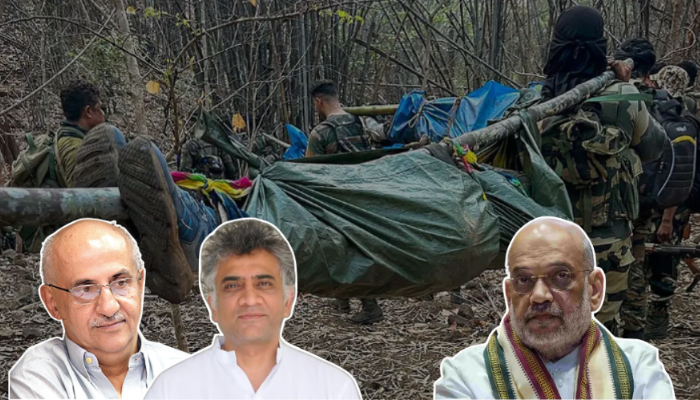
“Activists” trying to negotiate on behalf of Maoists: As Left-wing terrorism faces a wipeout, “Urban Naxals” try to build pressure on Govt for a “ceasefire”

Union Home Minister Amit Shah has declared to eradicate Naxalism by March 2026 as the security forces are making notable strides in their campaign to eradicate red terror from the regions impacted across the country. The achievements in the anti-Naxal operations stem not only from encounters but also from the surrenders of dreaded terrorists who had huge bounties on their heads.

The development transpired as they witnessed the corruption and injustice within their ranks, alongside the commendable efforts of the Modi government, even in the most remote areas. As of 2015, approximately 106 districts across 10 states were classified as naxal-affected. This number was reduced to 38 by 2024 and further to 18. Out of these, 12 were considered the most impacted by naxal activities, yet this figure has now fallen to just 6.

While the government is on the brink of delivering on its major promise, the usual suspects, Urban Naxals, have once again reappeared from their holes, discredit the government and defend the harbours of leftist extremism. On 28th March central committee of the outlawed Communist Party of India (Maoist) indicated its willingness to engage in peace negotiations with both the central and state governments, provided they cease the current “Operation Kagar (Final Line).”

The campaign seeks to eradicate naxalism in Chhattisgarh, Maharashtra (Gadchiroli), Odisha, Jharkhand, Madhya Pradesh and Telangana as well as installing new camps as part of the military offensive by security forces. The left-liberal ecosystem viewed this as an opportunity to mount pressure and undermine the government’s anti-Naxal efforts. A broad coalition comprising 150 alleged activists, more than 50 trade unions and leftist organizations called for immediate ceasefire and peace negotiations between the two sides, on 4th April.

A sininster appeal

The central committee’s inclination to dialogue and the Chhattisgarh government’s conditional approval led to the issuance of the open letter. It read, “We, the undersigned organisations and individuals, welcome the CPI (Maoist) offer of peace talks and the Government of Chhattisgarh’s response keeping the door for talks open. However, the government needs to demonstrate its intent by stopping the war on the ground immediately. We further call upon both parties to keep the best interests of the Adivasis and other villagers in mind, and to engage in peace talks keeping in mind the constitutional, democratic and human rights of citizens within the broader framework of the Constitution of India.”

From the outset of the letter, the leftists made their support for the Maoists evident, asking the government to cease its actions against the terrorists. They adeptly included references to indigenous groups, known as “Adivasis” and local villagers to create an emotional appeal rooted in humanitarianism while invoking terms such as constitution, democracy, and human rights. Notably, they craft this emotional narrative to justify terrorism, driven by their ideological beliefs rather than any genuine concern for these issues.

A genuine commitment would have prompted them to denounce the killings of security personnel and others by the Maoists. Moreover, equating terrorism committed by a group or individuals with government action to counter the same is not only unreasonable and outrageous but also implies a malevolent intent.

The letter pointed out that the “Adivasi dominated districts of Bastar division in Chhattisgarh, West Singhbhum in Jharkhand and Gadchiroli in Maharashtra are currently at the epicenter of this conflict.” It reiterated that their lives must be prioritized in all discussions. However, their rhetoric is not only repetitive but also devoid of emotional depth.

Sermons for the government

“We appeal to both sides to accept and announce a ceasefire to stop the use of violence in any form with immediate effect. There should be no more hostilities from either side whether in the form of operations, extra-judicial killings and encounters, IED blasts and killing of civilians or any sort of violence,” it added. It is noteworthy that while the letter is directed at both parties, the sermons are exclusively aimed at the government, as if the weapons wielded by Maoists shoot flowers instead of bullets.

The letter demanded, “The government, which has been constituted under the Constitution of India, is obligated to be the first to observe, respect and function based on constitutional principles and values. In the spirit of the Constitutional vision and ethos, a major responsibility vests with the government not to view the situation as though it is a ‘war’ with an external adversary but as an internal conflict involving our own citizens which requires to be brought to an amicable settlement at the earliest. Crucial to this process is for the government to demonstrate its magnanimity of spirit and commitment to constitutional values by taking the lead to call for peace talks with the Maoists without imposing prior conditions.”

The activists emphasized that the government has to bear full responsibility, as it is required to function in accordance with the Constitution, consistent with the essence of the letter. Essentially, what they are conveying is that while the Maoists control the streets with violence, establish parallel governments, flout the country’s laws and behave as sovereign entities in the territories they occupy, the government must practice restraint because of its allegiance to the Constitution. They are advising the government to handle successionist forces with kid gloves, leveraging the constitution to exert pressure.

The letter stated that the the violent struggle, fueled by the political and military ideologies of the Chinese Communist Party and Maoist revolutionary movements globally, should be regarded as an “internal conflict,” warranting a magnanimous response from the government. Nevertheless, there is no such call directed towards the forces that are the primary instigators of this bloodshed. These groups which already oppose India and its Constitution, appear to evade any accountability, values or principles associated with it. The letter not only belittles the decades-long battle against Naxalism but also implies that the responsibility for maintaining peace lies entirely with the government, while the Maoists should be allowed to act without consequence.

Attack on anti-Maoist operations

The activists subsequently drew parallels between the initiation of the disbanded “Salwa Judum” (a militia utilized in counterinsurgency operations in Chhattisgarh, active from 2005-2011) and its aftermath, contrasting it with the ongoing “Operation Kagar” to further criticize the government’s actions.

The letter then highlighted, “According to an official estimate, 16,733 people have been arrested in the last 25 years, and 10,884 surrendered. The government claims that Maoists will be finished by March 2026, and there are only 400 armed cadre left now. The bulk of the weaponry recovered (a mere 263 weapons) is country-made pistols, crude 12 bore guns or muzzle loaders. The number of ‘severely affected’ districts has come down to six. Under these circumstances, the Maoists are hardly such a security threat as to warrant the kind of offensive that we are seeing in terms of militarization.”

They conveniently neglected to mention that the decline in Maoist numbers is not attributable to any generosity on their part but rather to the long-term actions of multiple governments which have intensified and yielded improved outcomes under Prime Minister Narendra Modi. If there had not been a consistent commitment to eliminate Naxalism, these groups would have continued to unleash bloody turmoil as they did during the period of a powerful “Red Corridor.”

The letter advocates for the government to withdraw its aggressive campaign against naxalism, which would enable the latter to consolidate their forces, enhance their abilities and potentially negate the advancements made in combating the menace, over the years.

The activists then invoked the apex court’s decision and claimed, “Instead of observing the directions of the Supreme Court to disband SPOs and stop engaging surrendered/arrested Maoists in any form in counter-insurgency operations, the government has expanded the use of District Reserve Guards and Bastar fighters consisting of ex-Salwa Judum recruits. They are the ones most responsible for human rights abuses, and their own human rights are abused in the process. Hardly any civilians have been compensated for their losses since Salwa Judum and no prosecutions have taken place despite Supreme Court directions.”

The court’s order should be implemented and it is apparent that no rational person would ever support the infringement of human rights against innocent civilians. However, what is particularly intriguing is that these groups only consider human rights when it involves defending their most notorious offenders including naxalites and jihadis. The concept of human rights is nothing more than a manipulative tool to protect their ideological allies for them.

Shooting off the shoulders of Adivasis

The letter revealed itself in layers, much like an onion, exposing the demonic agenda at play. It mentioned the native population and alleged, “More than 160 security camps have come up across Bastar. Most of these are on the common lands and in some cases private lands of villagers, and are causing severe distress to the Adivasi inhabitants. There is approximately one security personnel per 9 civilians.”

“The pace of schools, health services, public transport and other welfare schemes has not kept pace with that of roadbuilding. Instead, the government has signed a number of MOUs with mining companies, which villagers fear will lead to widespread displacement and environmental degradation. Their constitutional struggles against mining and other forms of displacement have been suppressed, both in the normal course and under the excuse of fighting Maoism,” it further accused.

The activists are not only troubled by the government’s initiative to remove naxalism from India but also against the initiatives aimed at developing remote areas that have remained stagnant due to Maoist influence. They frequently employ similar strategies to impede development, citing environmental concerns and alleged encroachment on local land. Moreover, they invoke the term “Adivasi” to promote their anti-development agenda, which is presented as a concern for the community.

However, the same is conspicuously absent when it comes to the underdevelopment caused by the Maoist presence in these regions, leaving local villagers to endure substandard living conditions. The truth has never been the priority for left-liberals, who thrive on their preferred narrative of alarmism and hindering development for their propaganda.

Moolvasi Bachao Manch

The letter claimed, “Villagers who have been peacefully protesting at various sites asking for their constitutional right to be consulted under PESA and other provisions have suffered severe repression, their protest sites have been demolished and villagers beaten. Mortar shells and bombs have been used indiscriminately causing panic among villagers who are no longer able to live normal lives. The Moolvasi Bachao Manch has been banned and its young leaders have been arrested, on serious charges like UAPA. The official justification is merely that they protested against security camps and extra-judicial killings, even though the Constitution guarantees the right to assembly and protest. The government has closed off any room for peaceful dialogue.”

It is noteworthy that “The Moolvasi Bachao Manch” was outlawed by the Chhattisgarh government, which outlined that it had been consistently against the development programs of the centre and state government in Maoist-affected areas as well as the camps set up to house security forces. The organization has also been urging the public to oppose these actions. “The organization has interfered in the judicial administration, promoting disobedience of legally established institutions, which has led to disturbances in public order and peace, putting citizens’ safety at risk. These actions have been deemed detrimental to the security of the state,” the official order declared.

At least three cases had been filed against Moolvashi Bachao Manch members for their involvement in the transfer of supplies and money to the Naxal formations, according to Sunderaj P, the inspector general of police for the Bastar Range. “Law is very clear that if any person or organisation either directly or indirectly supports the activities of the banned and prohibited CPI (Maoist), they also would be subjected to stern legal action,” he voiced.

These organizations and individuals often champion environmental causes when it comes to development and the betterment of people, especially in Naxal or terrorism affected areas, yet they appear to have no qualms about the challenges faced by those who spend their lives in impoverished conditions.

The act of monkey balancing

After assigning blame, delivering lectures and attributing all responsibility for the peace negotiations and violence to the government, the letter tried to do the predictable act of monkey balancing by briefly mentioning the kangaroo courts operated by the Maoists. “The Maoists should cease hostilities against state forces and the use of IEDs which endanger ordinary villagers, including children and cattle. They should put an end to the ‘death sentences’ handed out in jan adalats (public courts),” it stated.

“In the conditions of armed struggle and state repression the real issues that concern the people are relegated to the background, such as food security, land and forest rights, education, health and cultural rights besides their multi-faceted exploitation. Any mining that comes up on their lands requires their consent. All these issues need to be immediately addressed, which is only possible under conditions of peace and justice,” the letter swiftly reverted to its initial agenda after a momentary deviation.

It subsequently issued demands portrayed as (unsolicited) advise. “We welcome all initiatives towards peace. As concerned individuals from various parts of the country, we once again demand peace talks within the ambit of the Indian Constitution. We propose some simple yet urgent demands for which the government must initiate the process:

  • The government should stop the offensive in Adivasi areas, in order to facilitate a ceasefire.
  • The CPI (Maoist) should cease all hostilities against the state forces to facilitate a ceasefire.
  • Dialogue must begin between Government and CPI (Maoist).
  • Free access to the affected areas should be provided to the independent civil organizations and media.
  • People’s livelihood needs and constitutional rights must be addressed urgently.
  • The state should immediately release Adivasis and other activists jailed for asserting their democratic rights and disagreeing with state policies inimical to Adivasis so that they can participate in the talks and remain equal stakeholders in this dialogue. (For example the activists of Moolvasi Bachao Manch).”

The letter not only equated a democratically elected government with anti-India elements, urging them to agree to a ceasefire and engage in dialogue but also called for media and independent civil organizations to be permitted access to Maoist-affected areas, disregarding the sensitive nature of these regions and potentially exposing them to propaganda from vested interests as well as endangering lives as well as the progress made by the government.

Additionally, it demanded the release of those imprisoned, regardless of the severity of their charges, indicating that their agenda supersedes the importance of national security and law and order. The letter projected as if involvement with Maoists in the name of anti-development or anti-government protests is a democratic right of the people and should be respected. Those participating in actions detrimental to the country do not qualify as stakeholders and should not be recognized as such.

Who wrote the letter

The letter was released in the name of groups like All India Feminist Alliance (ALIFA), All India Krantikari Kisan Sabha (A.I.K.K.S), All India Lawyers Association for Justice, Association for Protection of Civil Rights and 50 such organistions. Notorious individuals like former Amnesty India supremo and Umar Khalid fan Aakar Patel, Delhi riots accused Harsh Mander along with Ashima Roy Chowdhury, Dr. Walter Fernandes, Dr. Sebastian Joseph Professor and Fawaz Shaheen were among 149 “concerned citizens” who were also behind the letter.

Conclusion

It is significant when an individual renounces violence and integrates into society, however, this does not imply that unrestricted freedom should be granted to all. On the contrary, it is imperative to establish a precedent for others to follow regarding the consequences of engaging in anti-national activities and violating the laws of the country.

As expected, “Niya Nellanar” (your good village), launched by the government in Chhattisgarh to deliver fundamental amenities and advance development in isolated tribal villages impacted by Naxal activities, with a focus on improving quality of life and increasing government interaction, were absent from the letter. Many Naxalists even gave up arms after witnessing the positive outcomes of the scheme.

The letter appeared intent on blaming the government for the violence and unrest failing to consider the merits, demerits and effectiveness of the government’s strategies or the actions of the Maoists.This, like many left-liberal efforts, was essentially a smear campaign disguised as an open letter. With the Bharatiya Janata Party in power in both Chhattisgarh and at the centre, it became even more crucial for the ecosystem to launch this outrageous attack which lacked factual basis and was rich in rhetoric.

The letter, in fact, almost resonated with the sentiment, “Gandhians with guns,” expressed by the beloved author of both ultra leftists and jihadists, Suzanna Arundhati Roy who later tried to distance herself from the statement.
Muslim mobs go on rampage in Bengal: As Mamata Banerjee vows to protect Muslims and their Waqf properties, Islamists join protests to show support for TMC

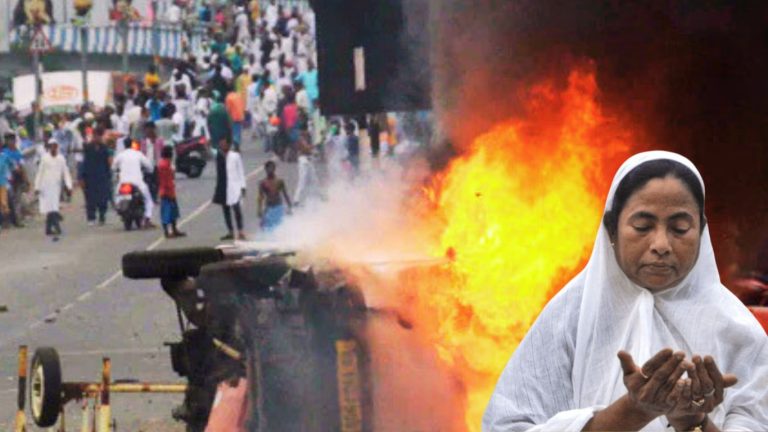
Muslim mobs have been organising violent demonstrations in different parts of West Bengal against the recently implemented Waqf Act, which has been portrayed as an ant-Muslim law by several Muslim leaders as well as opposition parties, including the TMC. Amidst the ongoing violence in the state, West Bengal Chief Minister Mamata Banerjee has voiced her opinion in support of Muslims agitating against the Waqf Act. Promising to protect the Waqf properties, Banerjee assured the Muslims in her state, “Please remember, when Didi is here, Didi will protect you and your properties”. Banerjee made the remarks on Wednesday (9th April), while speaking at an event of the Jain community in Kolkata.

Banerjee had earlier said that the Waqf Act will be repealed once the BJP led government in the centre goes out of power. “Once this government (BJP-led National Democratic Alliance) goes out of power and a new one comes to power, this bill will be nullified,” Banerjee said, speaking against the legislation. The TMC-ruled state has witnessed numerous incidents of violence led by Muslim mobs in several areas, including Murshidabad, Malda, Nadia, and Berhampore, over the past few days.

Stones pelted and vehicles torched in Murshidabad

In what began as a demonstration against the Waqf Act, mobs of Muslims pelted stones and torched vehicles in several areas of the Murshidabad district, including Jangipur and Umarpur, on Tuesday (8th April). The violent mob clashed with the security forces and pelted stones at them on the National Highway 12. Several police personnel sustained injuries in the stone pelting. The security forces had to use force and tear gas shells to disperse the mob.

Restrictions were imposed by the district administration in the Raghunathganj and the Suti police station areas, including a market shutdown and suspension of internet services. Teams of over 800 police personnel have been deployed in the district to prevent any law and order situation. “Prohibitory orders have been clamped across all sensitive areas, and it will continue till 6 pm on Thursday, April 10. The state secretariat has also ordered that all Internet facilities will remain suspended within the limits of the Jangipur subdivision till 6 pm on April 11. This step has been taken to prevent the spread of any misinformation and panic. The situation is now under control,” said a senior district police officer was quoted as saying.

Jangipur SP Ananda Roy said that the police have arrested 22 people in connection with the violence in which 2 police vehicles were set on fire. 8 out of the arrested persons have been taken into police custody. An investigation is being carried out by the police. “Violence erupted here yesterday. There had been a law and order problem. The Police took action and made arrests. 163 BNSS is in effect here. The internet is suspended here. Things are under control…Stone pelting had indeed occurred. Two police vehicles of the Police were torched. We have taken all legal actions. 22 miscreants have been arrested, 8 of them are being taken into Police custody for further investigation, a case has been registered,” said SP Roy.

State governor C.V. Ananda Bose has sought a report from the state government on the incidents of violence in the Murshidabad district.

Muslim mob chases police personnel in Nadia

Similar incidents of violence were alleged to have taken place in the Kanai Nagar area of the Nadia district on Tuesday (8th April). BJP IT Cell head Amit Malviya shared some videos of violence on X, claiming that Islamist mobs attacked police personnel in the area. Malviya accused the Mamata Banerjee government of not just enabling the violence and failing to protect the police in the state. The video posted by Malviya showed a mob chasing a police officer who managed to save himself by taking shelter in a petrol pump.

“The situation in Kanai Nagar, Nadia, in West Bengal, last evening was nothing short of horrific. Incited by Mamata Banerjee, Islamist mobs launched a violent attack on the police. In a desperate attempt to save their lives, police personnel were forced to take shelter at a nearby petrol pump. Despite the gravity of the incident, Mamata Banerjee, who also holds the portfolio of Home Minister, is choosing to mislead the public with diversionary statements about the Waqf Board, rather than addressing the breakdown of law and order. She has failed to even safeguard her own police force. It is time for police personnel across West Bengal to stand up against this political misuse of the force and work to restore law and order in the state, ” Malviya wrote on X.

Islamist mob blocked trains in Malda

In the Nimtita railway station in Malda, Mulsim mobs protesting against the Waqf Act reportedly blocked trains for hours on Monday (7th April). The protestors stopped the Azimganj-Malda passenger train at Nimtita station. A press release by the Railway Malda Division said that protestors also blocked trains at Sujnipara. The situation was brought under control after the intervention of the Railway Police Force (RPF).

The recent instances of mob violence in West Bengal against the Waqf Act paint a picture strikingly similar to the anti-CAA protests that started in December 2019 in Murshidabad. The anti-CAA protests also began with violent demonstrations in which ‘protestors’ set ablaze a railway station complex in Murshidabad and assaulted RPF personnel at Beldanga railway station. Similar instances of vandalising train stations and obstructing trains were reported from different areas of West Bengal. The protests soon escalated into the horrifying 2020 anti-Hindu riots in Delhi. From the anti-CAA protests to the anti-Waqf Act protests, it seems that West Bengal has been providing a perfect breeding ground for violence led by Islamist mobs on the pretext of opposing one legislation or the other.

Media, Mohammad Zubair lied that Delhi court ordered FIR against Kapil Mishra, only further probe was ordered, now stayed by special court

On 1st April, several media houses reported that a Delhi court ordered the registration of an FIR against BJP leader and Delhi minister Kapil Mishra in the 2020 Delhi riots case. It was reported that Additional Chief Judicial Magistrate Vaibhav Chaurasia accepted the petition of Yamuna Vihar resident Mohammad Ilyas seeking FIR Mishra, along with the Station House Officer (SHO) of Dayalpur police station and five others.

The media reports quoted the judge as saying that a cognizable offence was made out against Mishra. Md Zubair, an Islamist propagandist posing as a fact checker, also amplified such a report, saying that the court ordered an FIR against the BJP leader.

However, now it has emerged that the court never ordered the registration of any FIR against Mishra in the case. The court had only ordered a further probe on the allegations against him. The order issued by Magistrate Vaibhav Chaurasia said, “Let the further investigation be initiated with respect to proposed accused no. 2 and his associates with respect to first incident only and cognizable offence has been disclosed by the complainant.”

There is no mention of ordering any FIR in the order dated 1 April 2025. The court had also noted that FIRs were already registered in regard to other incidents mentioned by the petitioner.

Notably, Delhi Police had opposed the plea, saying that Kapil Mishra was being framed and he had no role to play in the riots.

Kapil Mishra had appealed against the Additional Chief Judicial Magistrate’s order for further probe against him, and Additional Sessions Judge (ASJ) Kaveri Baweja of the Rouse Avenue Courts today accepted the plea and stayed the order. The court noted that Magistrate Vaibhav Chaurasia ordered a further probe against Kapil Mishra and his associates despite the fact that FIRs had already been registered in the Delhi riot cases mentioned in the petition against Mishra, and the trial was pending in the concerned Courts.

The court stated, “Let notice of the revision petition be issued to the respondents returnable on 21.04.2025. The record of the court of Ld. ACJM be also requisitioned for the next date fixed. In the meantime, the operation of the impugned order shall remain stayed till the next date of hearing.”

Delhi: BJP government cancels 177 nomination appointments made by previous AAP govt to govt boards, committees and other bodies

The BJP government on Wednesday canceled 177 nomination appointments made by the AAP government in the government institutions of Delhi, an order stated.

Most of the appointments were political, from current MLAs to former MLAs, office bearers and members.

These appointments were made in AAP’s Delhi Government Boards, committees and other constitutional bodies where the Delhi Government nominated members and officers.

According to the order, the Delhi government has canceled its nominations in 17 constitutional institutions, including the Delhi Jal Board, Animal Welfare Board, Delhi Haj Committee, Pilgrimage Development Committee, Urs Committee, Hindi Academy, Urdu Academy, Sahitya Kala Parishad, Punjabi Academy, and Sanskrit Academy.

In 2024, the AAP government appointed AAP MLA Pawan Rana chairman of the Delhi Jal Board, AAP MLA Vinay Mishra vice Chairman, and AAP leader Jitendra Tomar’s wife, Preeti Tomar, member.

Similarly, former AAP MLA Abdul Rahman and Haji Yunus were nominated as members of the Delhi Haj Committee. AAP MLA Jarnail Singh was appointed as the Vice-Chairman of the Punjabi Academy in the previous government.

Former MLA Ajesh Yadav was appointed Chairman of the Agriculture Marketing Board, and member Aadil Ahmad Khan was appointed vice chairman.

Sources in the Delhi government argued that all these government institutions were political appointments of the previous government, which were made to benefit their leaders, and should be scrapped.

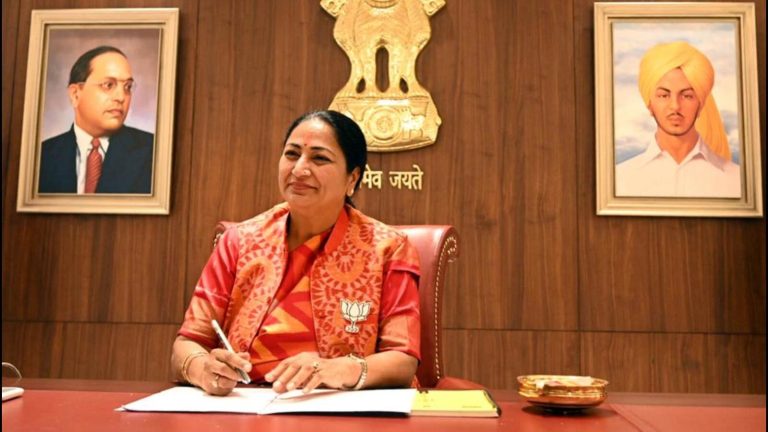
On April 8, Delhi Chief Minister Rekha Gupta inaugurated several development projects in her constituency, Shalimar Bagh. She stated that ‘achhe din’ is beginning for slum dwellers as work will ‘actually’ be done for slums and colonies. The Chief Minister stated that the funds of Rs 700 crores in Delhi Urban Shelter Improvement Board (DUSIB) is especially for the welfare of slum dwellers, and 52,000 flats that were made 10 years ago will now be given to them after renovation. Slamming the previous governments, CM Gupta asserted that they didn’t work for slum dweller and misled people that the BJP government wouldn’t work for them, but today, the BJP government is taking care of every poor and is ensuring basic facilities, water, parks, and toilets for them.


(This news report is published from a syndicated feed. Except for the headline, the content has not been written or edited by OpIndia staff)

UK: Two teens found guilty of killing 80-year-old Indian origin man in Leicester, assaulter racially abused Bhim Kohli before punching him to death

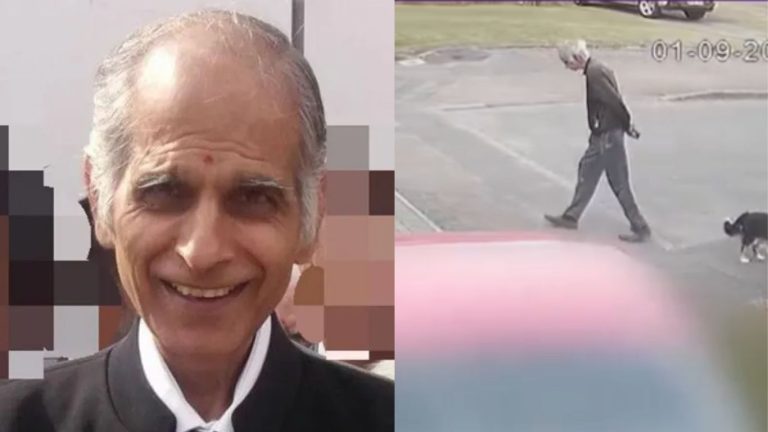
Two teenagers, a girl and a boy, were found guilty on Tuesday (8th April) by a Leicester crown court of killing an 80-year-old Indian origin man, Bhim Kohli, in a public park near Leicester in September last year. The octogenarian was reportedly brutally attacked by the two teenagers while he was walking his dog near the entrance of Franklin Park, a few metres away from his home. The boy, who was 14 at that time, cast racial slurs at Kohli before fatally punching him without provocation, and the girl, who was 12 at that time, recorded the incident on the phone while laughing and encouraging the boy.

As per reports, the brutal attack left Kohli’s neck and three ribs fractured. He was admitted to a hospital, where he succumbed to his injuries the next day. After the attack, Kohli told a paramedic that the boy had racially abused him and was pushed, punched and kicked. The video of the incident recorded by the girl was played before the jury. It showed Kohli on his knees and the boy slapping him with his slider.

The teens attacked Kohli without any provocation

From the side of the prosecution, Harpreet Sandhu KC, drew the jury’s attention to the callous manner in which Kohli was attacked. Sandhu told the jury that the teens had no reason to attack Kohli, who was defenseless and vulnerable. “You heard that slap, you heard the slider making contact with Mr Kohli’s face. There was nothing for the boy to fear from an 80-year-old man who was on his knees. It was pure violence used by the boy, pure violence encouraged by the girl,” said Sandhu. He added that the girl was aware of what was about to happen. “The girl made a noise. That noise was her laughing. She laughed as the boy assaulted Mr Kohli. She knew there would be violence, and she had a desire to capture it – and capturing it provided encouragement for the violence to be meted out, ” Sandhu asserted. The boy has been remanded, while the girl has been let out on bail. The sentencing in the case has been scheduled for 20th May.

Police confirm racial element in the attack

Leicestershire Detective Chief Inspector Mark Sinski, who led the investigation in the case, termed it the ‘most shocking case’ of his career. Detective Chief Inspector Sinski said that the case was unusual and had an element of racism. “He was just enjoying a stroll with his dog during the course of that evening, and he was set about totally unprovoked in what was a vicious and fatal attack. There was a racial element – and Mr Kohli told us that himself. He said he had been racially slurred, and I won’t use the term, it’s a repugnant term. It certainly doesn’t fit in with that community. That was a community that was extremely close, happy and they all lived in harmony. Racism didn’t feature, Sinski was quoted as saying.

Kohli’s family has been left shaken to the core by the attack. Kohli is described as a gentle, social and non-aggressive person by people who know him. Kohli’s daughter, Susan Kohli, said that the family felt anger towards his attacker. “We feel anger and disgust towards the teenagers who took Dad away from us. They humiliated an 80-year-old man, assaulted him, filmed it and laughed at him,” said a grieving Susan.”It was horrendous, we have never seen him like that before. We all thought he would go to the hospital to be treated, and he would then be fine. We never imagined he wouldn’t return home. My dad passed away before our eyes, surrounded by his family,” she said. “Dad did not deserve this, and we wouldn’t wish this pain on anyone else,” she added.

Domestic terrorism: US DoJ probes network behind attacks on Tesla, Geroge Soros funded radical group also behind anti-Musk protests

The world’s richest man and close aide to the Unites States President Donald Trump, Elon Musk, declared on 8th April that the suspected “financers” of the attacks against his multinational automotive company Tesla “will go to prison.” He made his comment in response to a post that mentioned Attorney General Pam Bondi could start an investigation into George Soros and his son, Alexander (Alex) Soros, for reportedly financing assaults on Tesla property.

Tesla has been subjected to intense attacks due to the billionaire’s ties to the Trump administration. His position as head of the Department of Government Efficiency (DOGE), which has resulted in the loss of federal jobs and the defunding of several government aided initiatives and departments, including the USAID (United States Agency for International Development), infamous for regime change operations and endorsing global jihad, has provoked significant backlash against both the Trump administration and Musk.

The latter wrote “FAFO (F**k around and find out) time,” in reaction to another post which claimed, “Now, the Department of Justice is digging deeper. Investigators are pursuing not just the arsonists, but also the shadowy networks that may have financed the crimes.” The user also quoted Bondi who warned, “No one, not the foot soldiers, not the financiers, will escape justice.”

In a letter, DOGE subcommittee Chairwoman Marjorie Taylor Greene asked (FBI Federal Bureau of Investigation) Director Kash Patel and Attorney General Pam Bondi to look into a “wave of organized attacks” that are directed at Elon Musk and Tesla. Tesla dealerships, charging stations and vehicles have been the targets of protesters because Musk has reduced government spending on the Department of Government Efficiency. According to Greene, assaults on Musk and his business “must be investigated as domestic terrorism.”

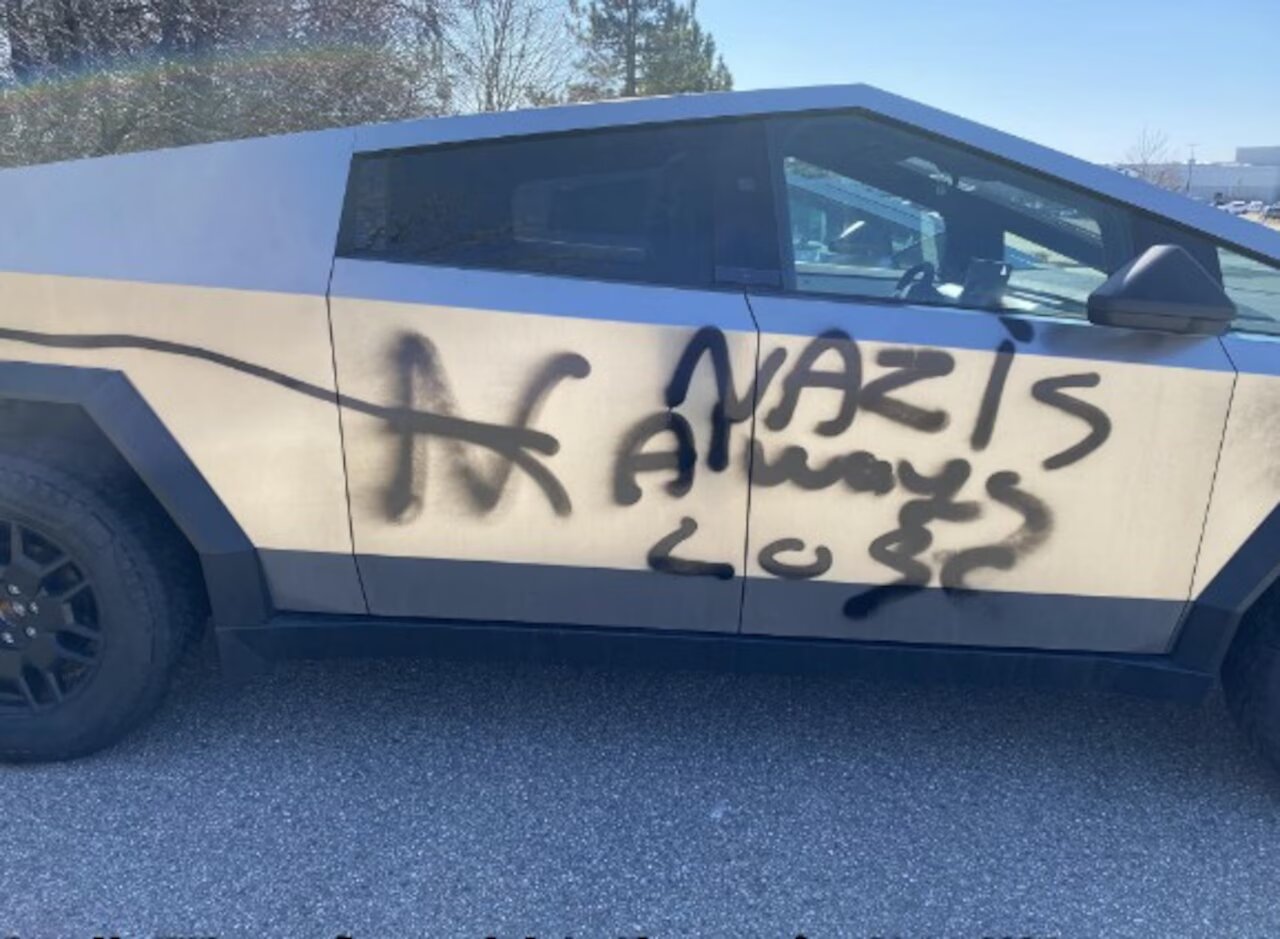
According to the letter, recent attacks on Tesla and Musk “seriously threaten public safety” and entail “coordinated acts of vandalism, arson, and other acts of violence.” It also cited some incidents including a shooting at a Tesla dealership in Portland in Oregon, on 6th March damaged the building’s windows and multiple vehicles. In a separate instance, a woman in Colorado sprayed “Nazi” on cars. Greene added that the attacks are connected to organizations that she asserted are Democrat-funded, including the Democratic Socialists of America, Troublemakers, and Rise & Resist. Musk has also blamed these groups.

Ties to George Soros and Bondi’s warning

Notably, between 2017 and 2023, Open Society of George Soros donated more than $7.6 million to the radical leftist organization Indivisible Project, which is largely responsible for the demonstrations against Musk. It was first established in 2016 as a protest against Donald Trump’s election.

On 18th March Bondi stated, “The swarm of violent attacks on Tesla property is nothing short of domestic terrorism. The Department of Justice has already charged several perpetrators with that in mind, including in cases that involve charges with five-year mandatory minimum sentences. We will continue investigations that impose severe consequences on those involved in these attacks, including those operating behind the scenes to coordinate and fund these crimes.”

She pronounced charges against three people on 20th March in relation to the violent destruction of Tesla facilities. They set Tesla vehicles and charging facilities on fire with Molotov cocktails. One person was caught after hurling about eight Molotov cocktails at a Tesla dealership in Salem, Oregon, while brandishing a suppressed AR-15 rifle. Another was arrested in Loveland, Colorado, for trying to use Molotov cocktails to set Teslas on fire. Later, the defendant was discovered to be in possession of supplies needed to make more incendiary devices.

A third individual in Charleston, South Carolina, posted derogatory remarks about Trump near Tesla charging stations before using Molotov cocktails to set the premise on fire. Serious charges against each defendant attract a minimum sentence of five years and a maximum sentence of twenty years in prison.

“The days of committing crimes without consequence have ended. Let this be a warning: if you join this wave of domestic terrorism against Tesla properties, the Department of Justice will put you behind bars,” Bondi declared. According to her office, they are “resolved to eliminate all acts of violence and arson targeting Tesla properties and other related incidents.”

FBI forms task force

The FBI has created a task force to find the culprits after receiving an increasing number of reports of damage at Tesla stores and charging points throughout the United States. The director of the bureau, Kash Patel, made the announcement and mentioned that the attacks constituted “domestic terrorism.”

Ben Williamson, the assistant director of public affairs for the FBI, announced the establishment of a task force via a tweet, stating that it would collaborate with the ATF to coordinate investigative efforts and address violent incidents involving Tesla. The development transpired hours after many incendiary devices were found at a Tesla facility in Austin, Texas.

Protests against Musk, Tesla

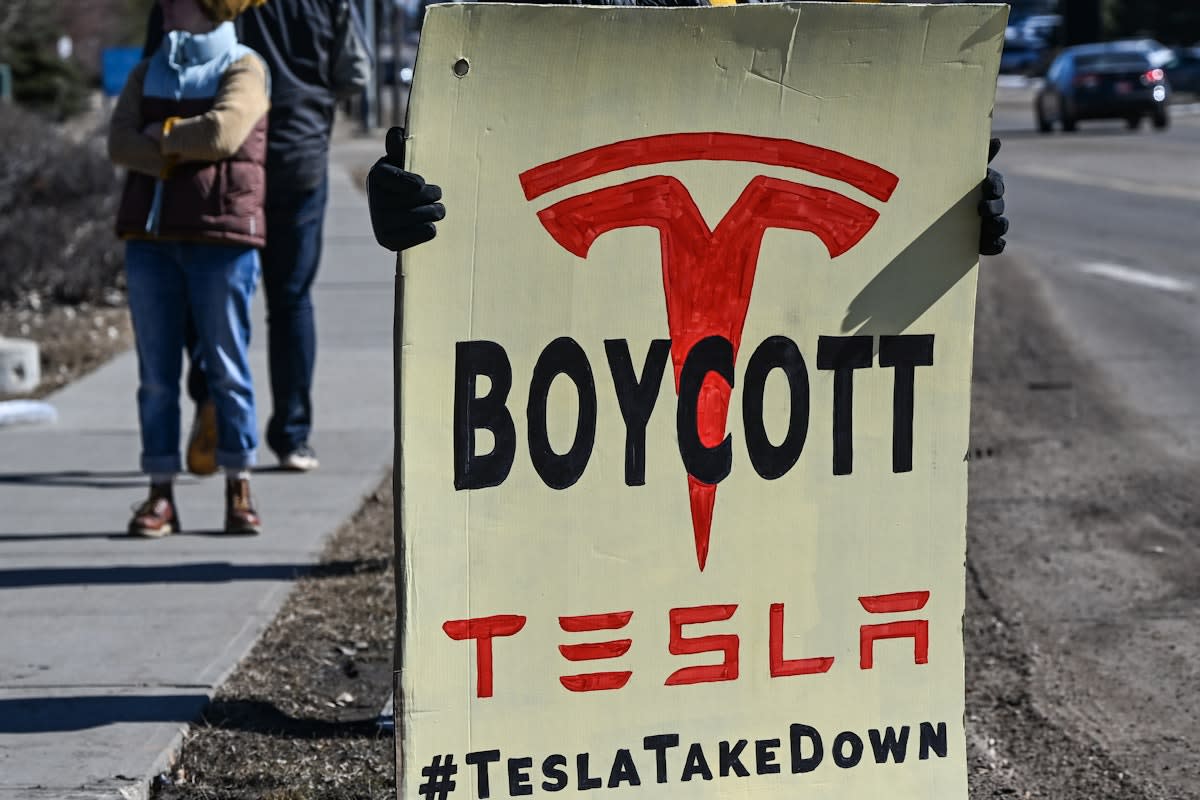
As criticism of CEO Elon Musk for his involvement in cutting costs at the Department of Government Efficiency intensifies, over 60 protests were scheduled for 5th April and another dozen for the following day at Tesla showrooms around the United States. A week following over 200 demonstrations at Tesla sites in the United States, Canada, and Europe, which were part of the grassroots “Tesla Takedown” movement, several locations also served as “Hands Off” rally sites on 5th April, coinciding with a nationwide day of organized protests.

The Tesla Takedown campaign urges Tesla owners to divest from their vehicles and prompts company stakeholders to liquidate their stock holdings, aiming to impact the wealth of the world’s richest individual, whose fortune is largely linked to the company.

Image via Yahoo News

DOGE has implemented significant reductions across various federal agencies by terminating contracts and either laying off employees or providing them with buyout options to exit their positions. According to the DOGE website, these actions have resulted in savings of $140 billion for taxpayers. The organizers of the Tesla Takedown initiative, currently in its eighth week, believe that the campaign will persist in gaining momentum, even in the face of opposition from Musk and the Trump administration.

Violent attacks on Tesla

Over the past few weeks, numerous protests have been held at various dealerships of the electric vehicle company, with many taking on an alarming turn including in West Palm Beach, Florida, close to Trump’s Mar-a-Lago resort, a man was charged with aggravated assault after attempting to drive into a crowd of demonstrators. Notable assaults on Tesla in the United States include an incident on 18th March in Las Vegas, where police reported that 36-year-old Paul Hyon Kim employed a Molotov cocktail to set fire to multiple Teslas at a dealership.

He is also accused of damaging surveillance cameras with a firearm and spray-painting the word “resist” on the front doors of the Tesla center. Authorities indicated that his social media presence suggested possible connections to communist organizations and Palestinian movements. Last month, a total of four Tesla Cybertrucks were set ablaze in a Seattle Tesla lot, while two others ignited at a local dealership in Kansas City.

A fire was started at a Tesla Collision Center in Las Vegas. (Source: ABC News)

A 24-year-old named Cooper Jo Fredrick was arrested on 7th March for igniting and throwing an incendiary device at a dealership in Loveland, Colorado. The device landed between two cars, igniting a fire. Fortunately, there were no injuries, as individuals were inside the building at the time. On 13th March, a Tesla dealership in Tigard, Oregon, saw more than a dozen gunshots fired at it, the second such incident in a week.

Daniel Clarke-Pounder, 24, is accused of writing derogatory remarks about President Donald Trump and supporting Ukraine at Tesla charging stations in Charleston, South Carolina, before setting three of the charging stations on fire with Molotov cocktails on 7th March. Adam Matthew Lansky (41) is accused of throwing about eight Molotov bombs at a Tesla showroom in Salem, Oregon, on 20th January due to which s everal cars were damaged and one was totally wrecked.

Five Tesla trucks were damaged at a Kentwood lot. (Source: MLive.com)

The reported incidents involving attacks on Tesla vehicles, dealerships and charging stations have exceeded 50 along with Elon Musk’s increasing prominence within the Trump administration. A Fox News analysis indicates that there have been a minimum of 51 targeted attacks in the United States, alongside at least 17 similar incidents occurring internationally. These attacks vary in nature, from minor acts of vandalism like keying and graffiti to more severe incidents such as arson and drive-by shootings that are reportedly aimed at Tesla vehicles. There are currently at least five federal lawsuits connected to these attacks.

At least 80 instances of vandalism or arson of Tesla vehicles have been reported in the US and Canada in recent weeks, per an NBC News story from last month. According to reports, at least ten Tesla showrooms, charging stations and other establishments were targeted by vandals. Many of the perpetrators set fire to the vehicles. Tesla cars, infrastructures and offices have become frequent targets of vandalism as these assaults are not solely restricted to the US but they are also happening in European nations as well.

A drone view shows charred Tesla vehicles following a fire at a Tesla dealership in Rome. (Source: Hindustan Times)

Trump has referred to acts of vandalism like burning Tesla cars or charging stations as domestic terrorism and declared a boycott of Tesla goods to be “illegal.” He threatened to sentence “sick terrorist thugs” convicted of burning or other violent crimes targeting Tesla dealerships to 20 years in prison in El Salvador.

Kanpur: Cab driver Wasim and his associates attack retired Army officer for his opinions on Waqf Bill, two arrested

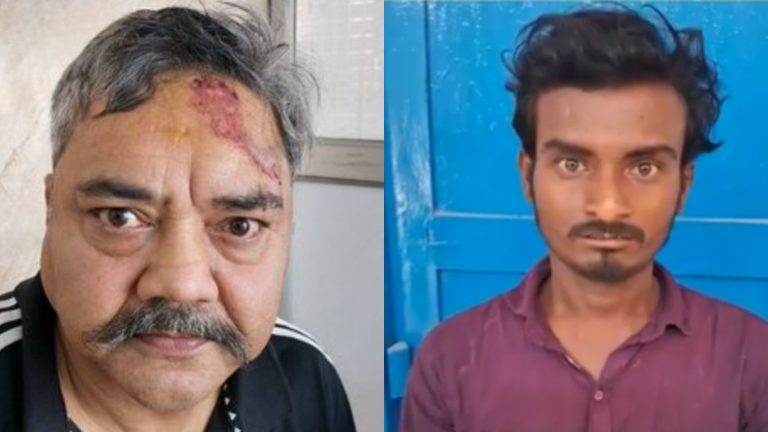
A retired Army Officer was attacked by a cab driver and his associates on Saturday (5th April) in Unnao, Uttar Pradesh, after a heated argument over the Waqf Bill turned violent. Retired Colonel Surya Pratap Singh, who is currently serving in the District Sainik Rehabilitation Welfare Board in Kanpur, was travelling in a cab from Lucknow to Kanpur on the day of the incident.

As per reports, during his journey, the retired colonel got a call from a friend, and the two started having a discussion regarding the recently passed Waqf Bill. The cab driver, Wasim, overheard his phone conversation and took serious offense. He called his acquaintances and asked them to reach the Azad Nagar intersection in Unnao. Wasim stopped the car at the Azad Nagar intersection and started arguing with Singh, who was unaware of Wasim’s plan. Soon, Wasim’s acquaintances arrived at the spot, dragged Singh out of the car, and physically assaulted him. The cab driver allegedly looted some documents and cash from the retired colonel.

An FIR has reportedly been filed by the police, and the accused, Wasim and his associate Anuj, have been arrested. The police are searching for the others involved. An investigation is underway. “Agitated over Singh’s stand, Wasim called his associates at the Azad Nagar intersection in Unnao. While Singh was unaware of the ploy, Wasim stopped the car at the intersection and resumed arguments. After some time, a group of men reached the spot and assaulted Singh,” said the police. The attackers reportedly left the retired colonel unconscious on the road. He was later admitted to a hospital by the police.

Additional Superintendent of Police, Unnao, Akhilesh Singh said, “During questioning, Wasim and Anuj claimed that the retired officer was intoxicated. Further investigation is on”.

Karnataka MGNREGA Scam: Men dress up in sarees, pose as women to claim wages using women labourers’ job cards

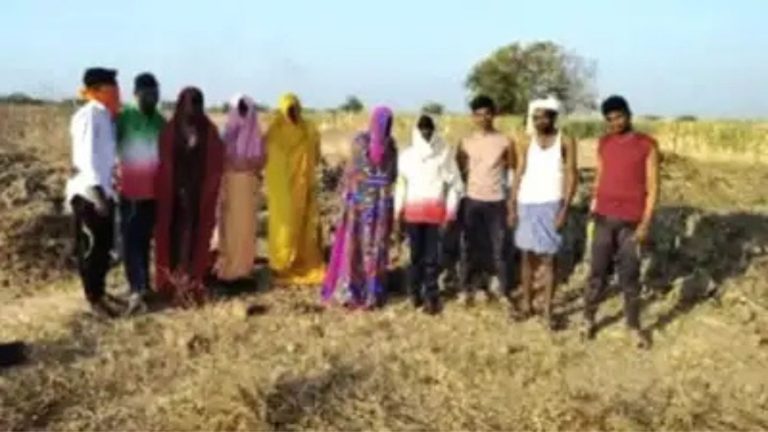
An incident of fraud in the Mahatma Gandhi National Rural Employment Guarantee Act (MGNREGA) has surfaced in Malhar village of the Yadgir district of Karnataka. According to reports, some men dressed in sarees and posed as women to claim wages under the MGNREGA scheme.

Men dressed as women to claim benefits worth ₹ 3 lakh

A picture was reportedly uploaded in February this year on the National Mobile Monitoring Service (NMMS), an attendance monitoring system, in which some men and women labourers were seen standing near a canal dredging site. However, it was later revealed that the women labourers in the picture were men masquerading as women. These men were reportedly employed in place of women under the MGNREGA scheme, and misleading attendance photos were uploaded to show that women labourers were provided employment. Illegitimate benefits worth ₹3 lakh were reportedly claimed under the scheme by defrauding the government and depriving women labourers of employment opportunities.

Local Panchayat denies involvement

The incident caused much embarrassment to the concerned officials, and an investigation was ordered into the matter. The local gram panchayat denied having information about the scam and defended the concerned officials, alleging that some outsourced workers were involved in the incident. “I have no role in this case. An outsourced employee did this, I was unaware of the entire scam. When it came to my notice, I suspended the employee. Now, the MGNREGA work is going seamlessly in the village. We have given work to 2,500 workers,” Chennabasava, Panchayat Development Officer of the Malhar village, said.

What is MGNREGA?

MGNREGA is a social welfare scheme to address unemployment and poverty in rural areas. It is a centrally sponsored scheme where the centre and the state share the funding and implementation responsibilities. The scheme guarantees 100 days of employment annually to every eligible rural household. The funds for the wages are provided entirely by the central government, while 75% of the material cost is borne by the centre, and the remaining 25% is borne by the state.

Telangana HC upholds death penalty given to 5 IM terrorists including Yasin Bhatkal in Hyderabad bomb blast case of 2013

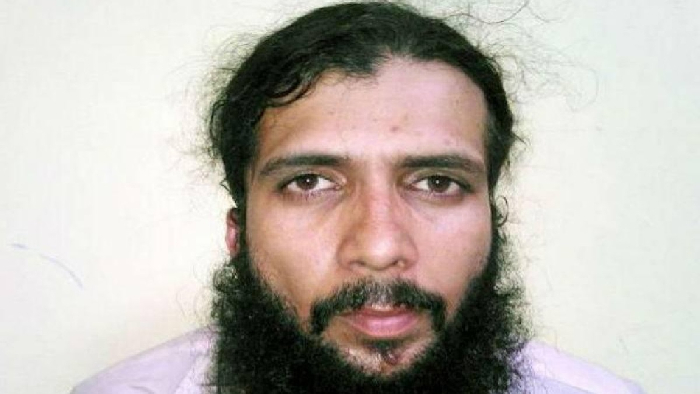
Telangana High Court on Tuesday confirmed the death penalty of five people awarded by the NIA Special Court in the Dilsukhnagar bomb blast case of 2013. The High Court dismissed their criminal appeal petition.

In the bomb blasts, 18 people lost their lives, and 131 people sustained injuries. The NIA court delivered its final judgment in December 2016.

The counsel for one of the convicts said that they would approach the Supreme Court in an appeal against the High Court order.

“High Court has confirmed the judgement passed by the Trial Court, confirming judgement of the trial court. I am the counsel for accused number 6. We are definitely going to appeal against the order in the Supreme Court as we believe in the justice system of our country. Definitely, we will go to appeal. Because the judgement copy has not yet been given and the judge has stated that the copies will be available today,” Advocate Mohd Shujaullah Khan told ANI.

The criminal appeal petition was filed in 2016. The petitioners wanted the High Court to set aside the judgment pronounced by the special court on December 13, 2016.

The Dilsukhnagar bomb blast case was investigated by the NIA. The petitioners who were awarded the death penalty are Ahmed Siddibappa Zarrar alias Yasin Bhatkal, Ajaz Shaikh, Zia Ur Rahman alias Waqas, Asadullah Akthar alias Haddi, and Mohammed Tahseen Akthar alias Hassan.

“On 21-02-2013 at 18:58:38 hrs and 18:58:44 hrs, two bomb blasts took place at Dilsukhnagar, Hyderabad, resulting in the death of 18 persons and causing injuries to 131 persons. The first blast took place at a bus stop in Dilsukhnagar, and the second near A1 Mirchi Centre, Dilsukhnagar,” the NIA said.

The first accused in the case, Mohd Riyaz alias Riyaz Bhaktal, is still absconding. The five convicts were alleged Indian Mujahideen operatives.

2008 Jaipur Blast convicts smirk as lawyer recites poetry in court: Rehman, Saif, Salman & Azmi sentenced to life for killing 71

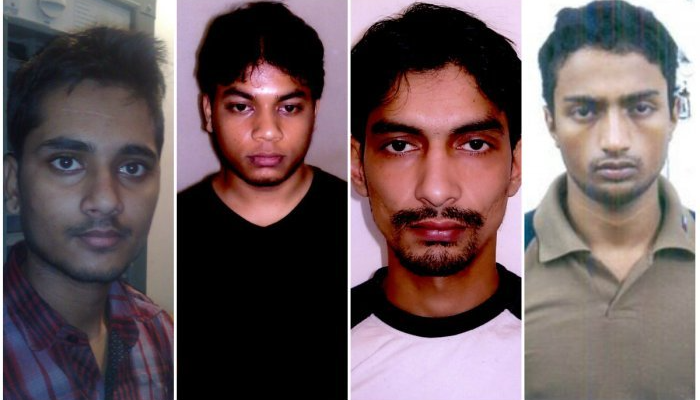
On 8th April, four convicted individuals in the 2008 Jaipur serial bombing case were given life sentences by a Jaipur special court. The court convicted them on 4th April under the Explosive Substances Act, the Unlawful Activities (Prevention) Act and other sections of the Indian Penal Code. The men have been identified as Saif-Ur-Rehman, Mohammed Saif, Mohammed Salman and Sarwar Azmi. The case relates to the recovery of an unexploded bomb planted in Chandpole on 13th May 2008.

Mohammed Saif and Saif-Ur-Rehman were detained in Jaipur Central Jail in connection with the live bomb detection case. However, Sarwar Azmi was free on bail. Meanwhile, the trial court had acquitted Shahbaz Ahmed who was also deemed culpable in the same case. He faced charges of dispatching emails from a cyber café to various news channels, asserting that the terrorist attacks were orchestrated by the Indian Mujahideen.

What shocked many in court wasn’t just the gravity of the crime, but the demeanor of the convicts—smirking, laughing, and utterly remorseless even as their sentence was read out. One even flashed a finger at onlookers from the police van, while another smiled for the cameras. During the hearing, their lawyer quoted poetry to argue their innocence:
“Tumhara shahar, tum hi qatil, tum hi mudda’i, tum hi munshif—humein yaqeen hai, galti hamari hi niklegi.”

But Judge Ramesh Kumar Joshi responded in kind, reminding everyone that true justice lies in the conscience:
“Kudrat ke faisle par kabhi shak mat karna, agar saza mil rahi hai toh gunaah bhi hua hoga…”

2008 Jaipur blasts

Nine explosives detonated over busy marketplaces and tourist destinations such as Manak Chowk Khanda, Chandpole Gate, Badi Chaupad, Chhoti Chaupad, Tripolia Gate, Johri Bazar and Sanganeri Gate in 15 minutes on 13th May 2008 in Jaipur. Authorities defused another unexploded bomb that was found close to Chandpole Bazar. The bombings were executed with bicycles loaded with metal splinters, RDX, and ammonium nitrate to increase the number of casualties.

Over 71 people were killed and more than 185 were injured by the explosions. Later, one unexploded live bomb was discovered, which played an essential role in tracking down and identifying the perpetrators. Shortly after the incident, the Indian Mujahideen issued an email to media outlets claiming responsibility for the attacks. Cross-border terrorism was raised by investigations that revealed potential ties to Harkat-ul-Jihad-al-Islami Bangladesh (HuJI).

A Rajasthan special court pronounced four people guilty of involvement in the explosives in December 2019: Saifur Rehman, Mohammad Saif, Sarwar Azmi, and Mohammad Salman. They received death sentences in accordance with certain provisions of the Explosives Act, UAPA and IPC. Another person named Shahbaz Hussain, however, benefited from the doubt and was acquitted during the first trial. Due to procedural errors and a lack of evidence, the Rajasthan High Court reversed the death sentences in March 2023.

The court listed a number of the investigative team’s mistakes, including “insufficient legal knowledge” and inadequate evidence and ordered the Rajasthan DGP to take action against the negligent officers. The court also maintained Shahbaz Hussain’s acquittal. The Supreme Court is currently considering special leave applications that the state government and blast victims submitted in opposition to the high court’s ruling.

After 16 years of court cases, witness testimony and evidence analysis, the sentence was finally handed down. The four defendants were found guilty by the court of carrying out terrorist acts in a public setting and plotting to wage war against the country. Aatif Amin, the mastermind behind the explosions, was slain in September 2008 in Delhi during an encounter at Batla House.